
As a result of the transatlantic flight delay, our first stop in Santiago felt very brief. My last blog entry outlining it was written up on our flight out to Calama in northern Chile and similarly this one has been written on the return leg. In the meantime, as a format note, I’ve decided to isolate any food and drink observations to the bottom of the post (unless they are narrative-relevant) as not everyone is interested in digesting what we’ve been…digesting. For those that are (hi mum and dad!), just keep reading right to the bottom. Anyone else can tune out when they see the subtitle!
We’ve done so much since we arrived in Chile that it is hard to believe we’ve only been here two weeks.
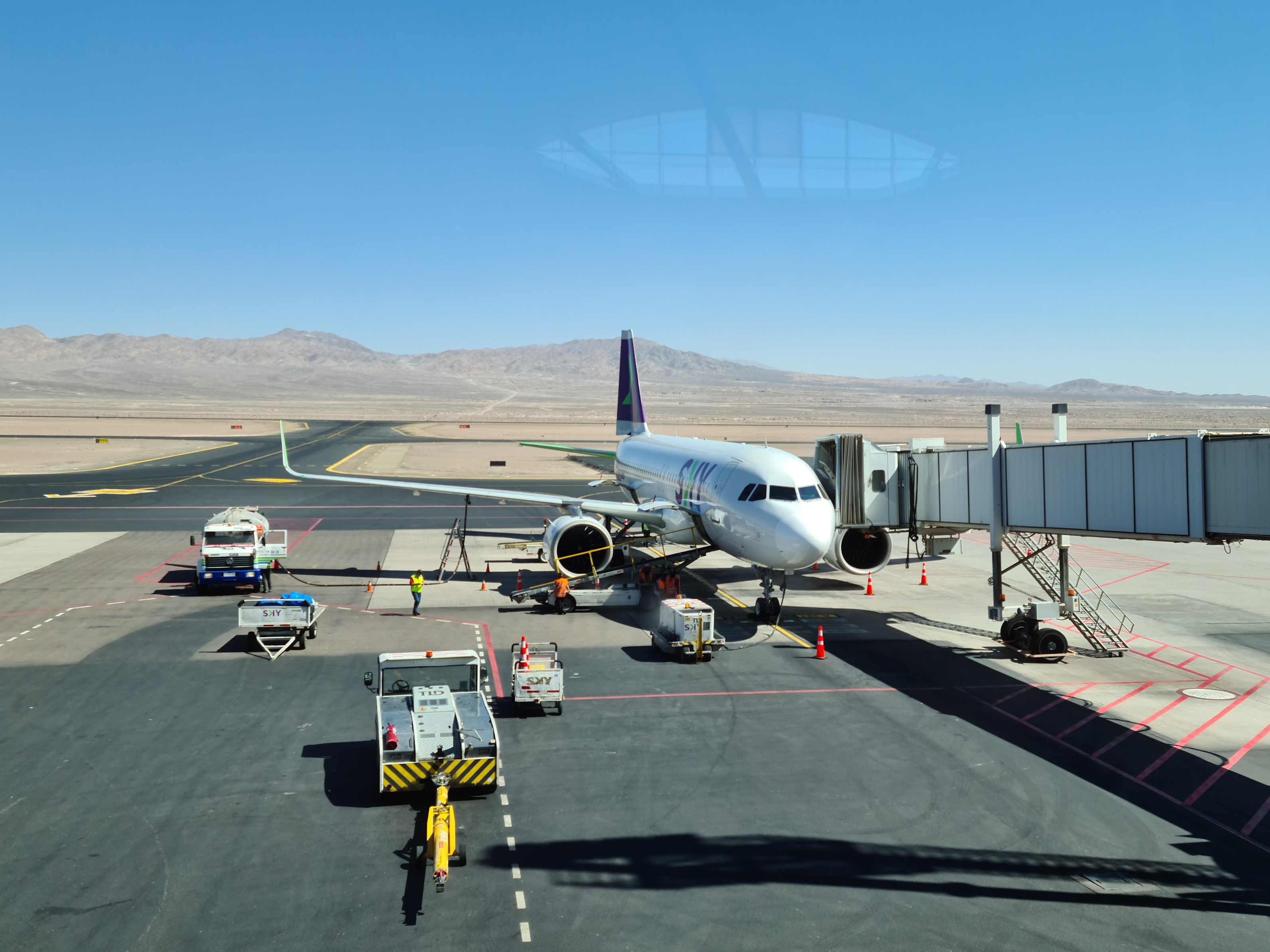
In between my plane writing, I was enjoying glimpses out of the window to take in the incredible (and slightly nerve racking!) views of the Andes. Unfortunately, we didn’t have the window seat and my neighbour had her hand/mobile out in front of her the whole time, so I wasn’t able to get any good pics. The best I can do is this photo from our arrival in Calama, where it was already very clear we had hit the Atacama desert.
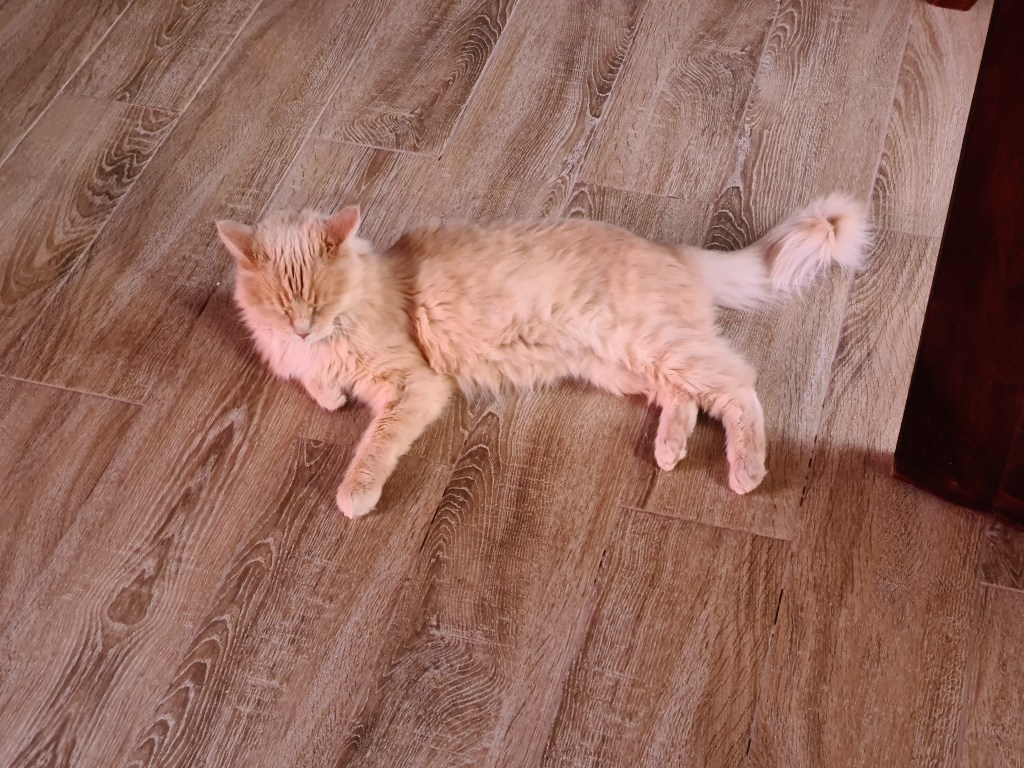
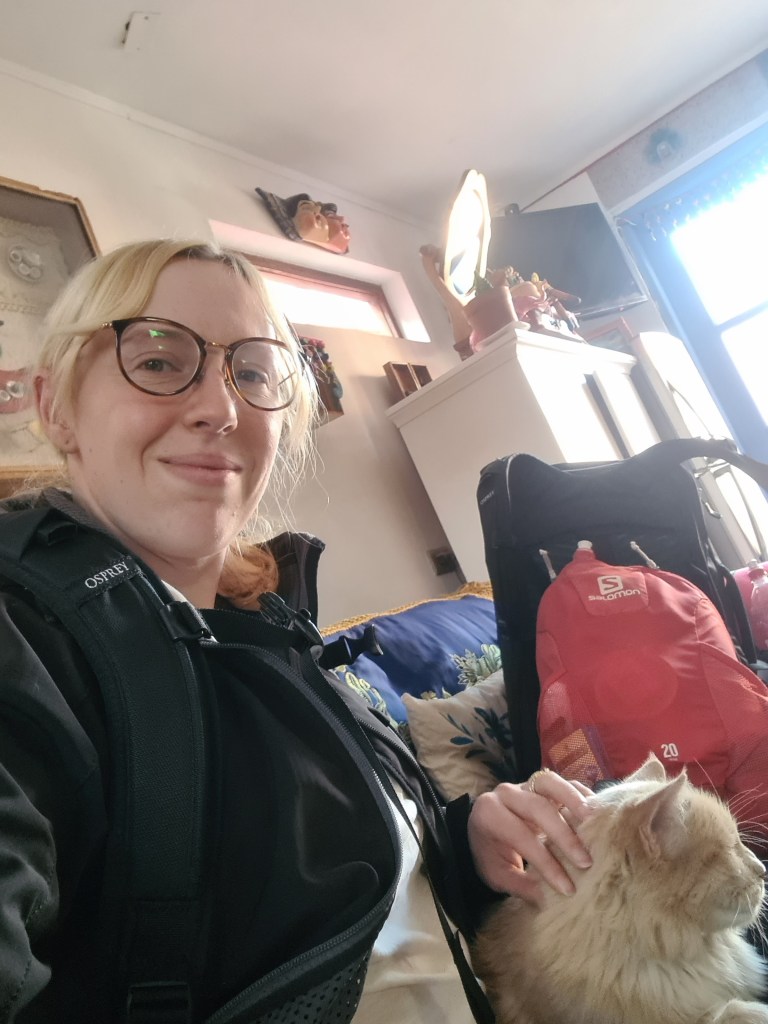
An hour in a minibus took us even deeper, to our destination of San Pedro de Atacama. It seems to be a requirement that each hostal in Chile has a resident feline. No sooner had I sat down while Ricki sorted check in, than I was given a warm welcome by a fellow blonde1.
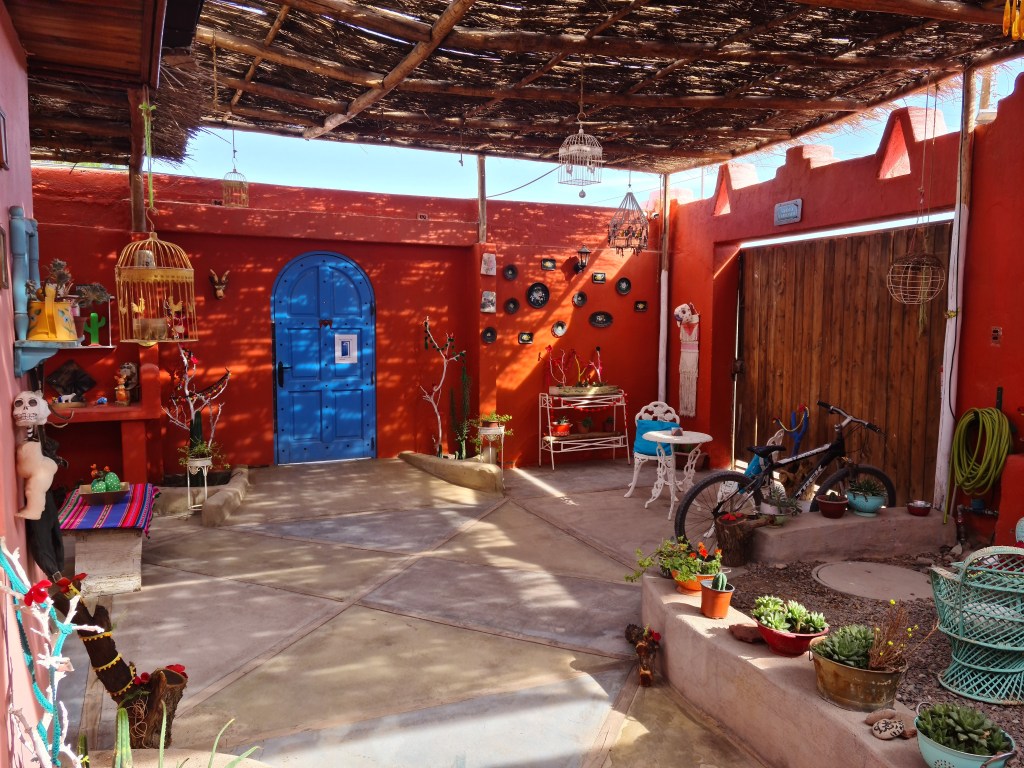

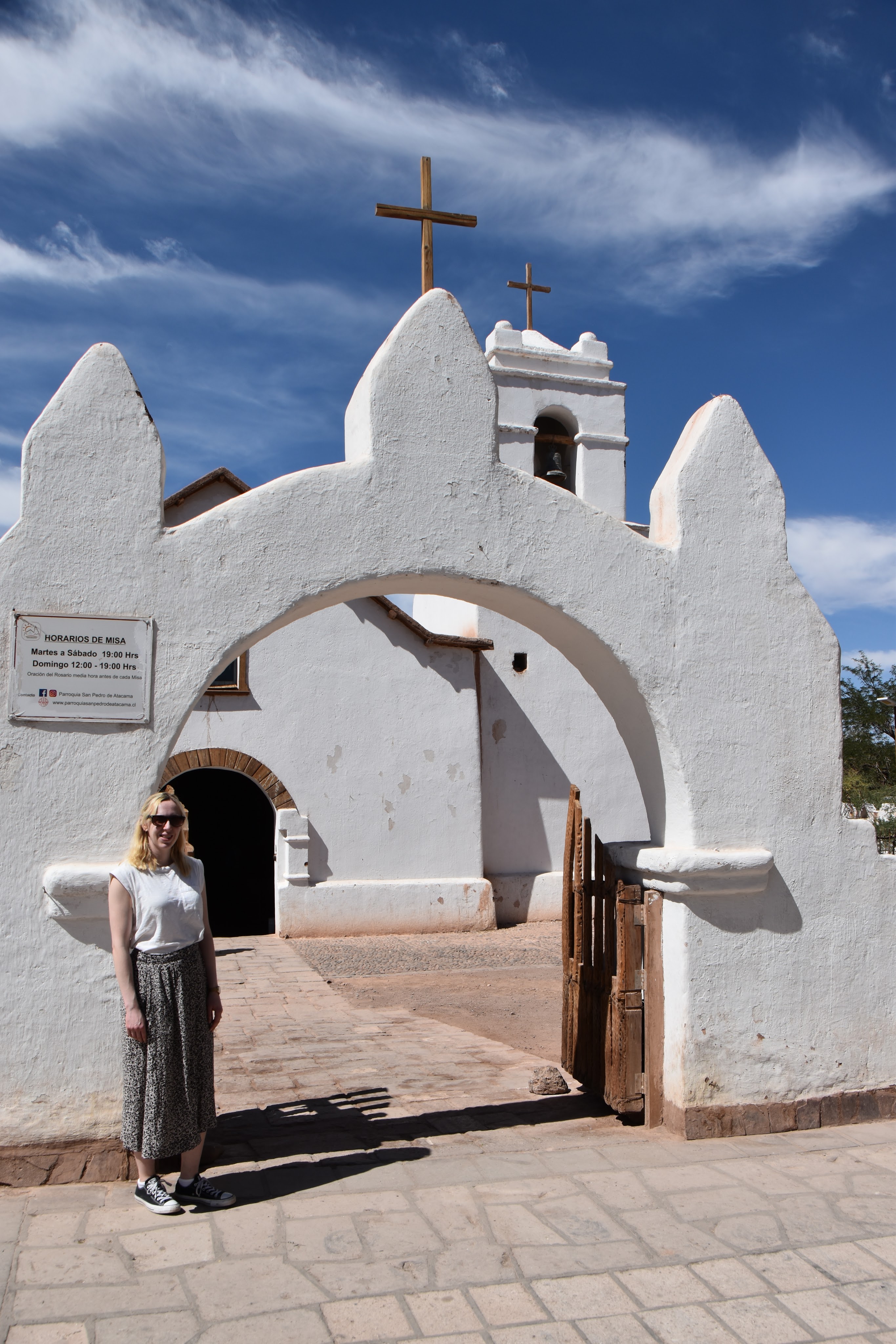
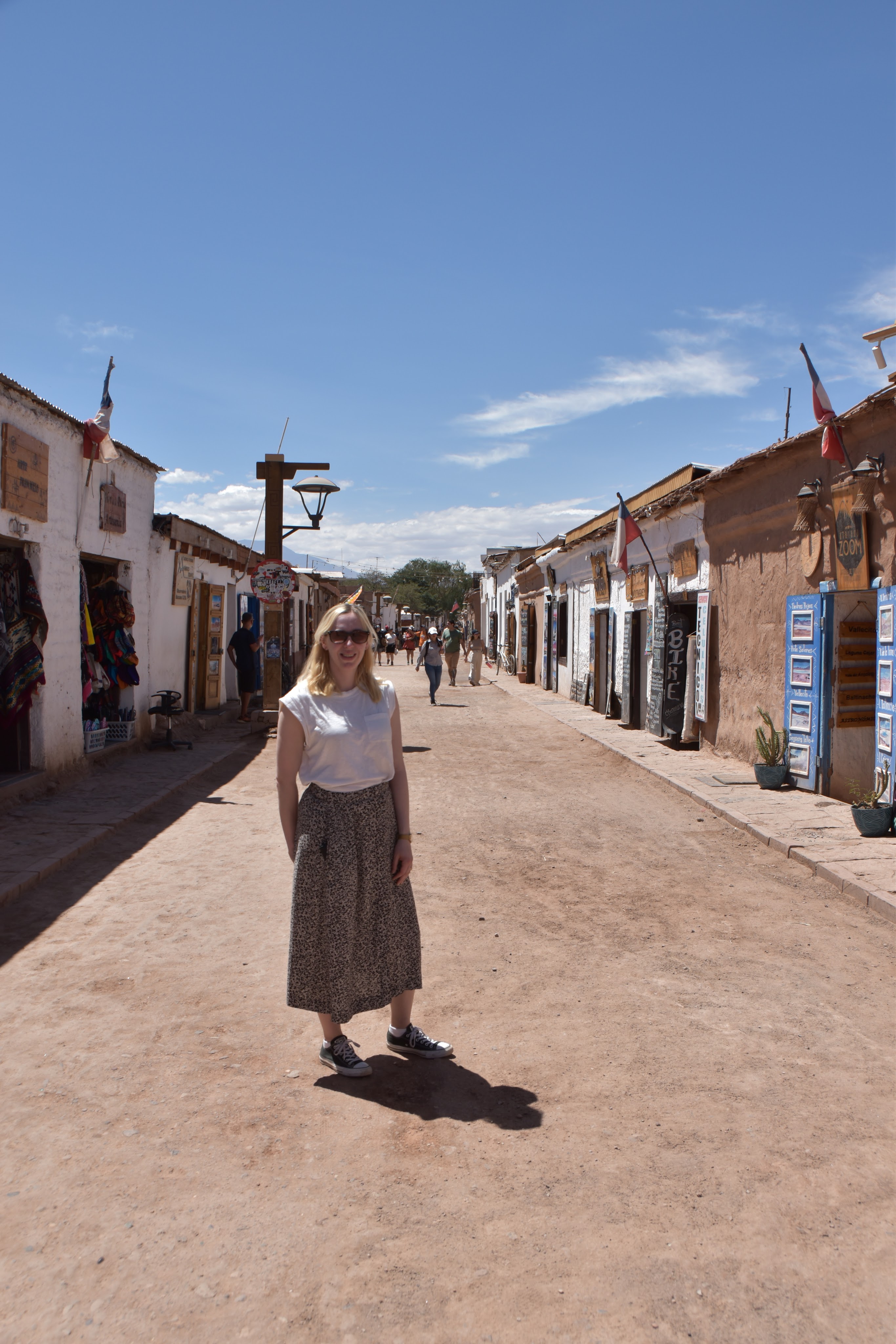
San Pedro is essentially a tourist outpost in the middle of the desert. There isn’t much to see and do in the town itself, save for a church, people watching in the town square and an “artisan” market (the handicrafts at each stall are remarkably similiar to each other and to those in the stores on the town high street, Caracoles).
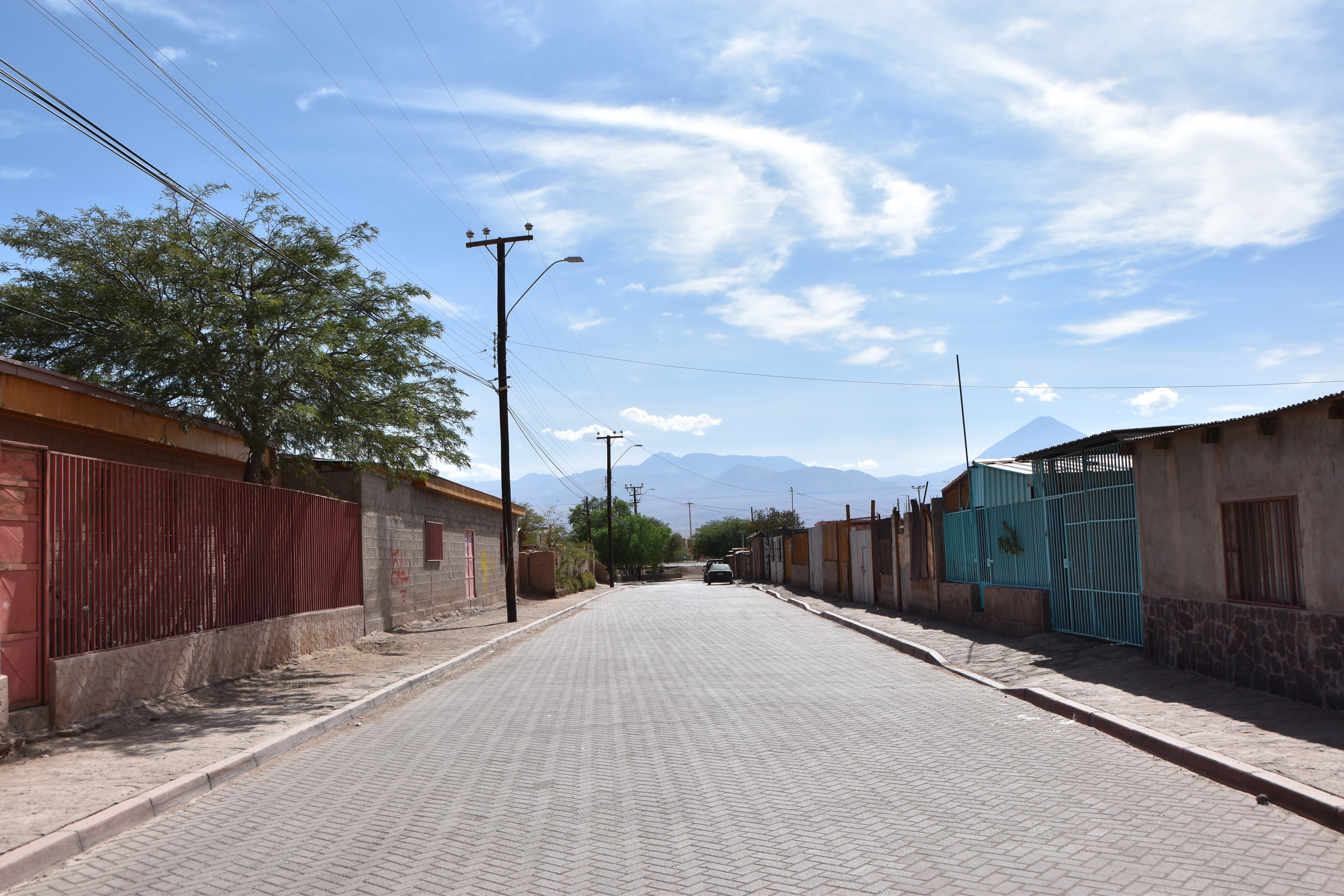
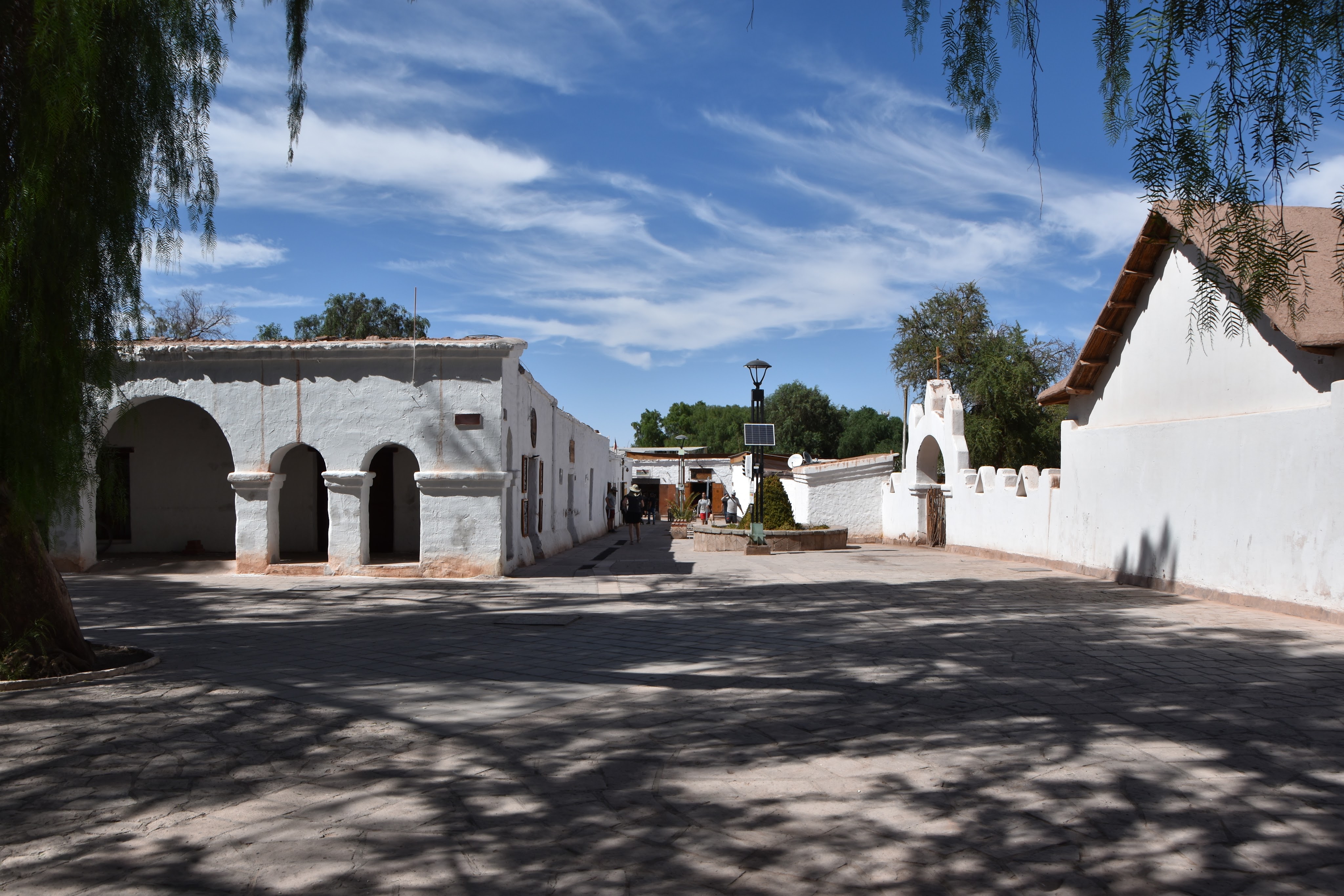
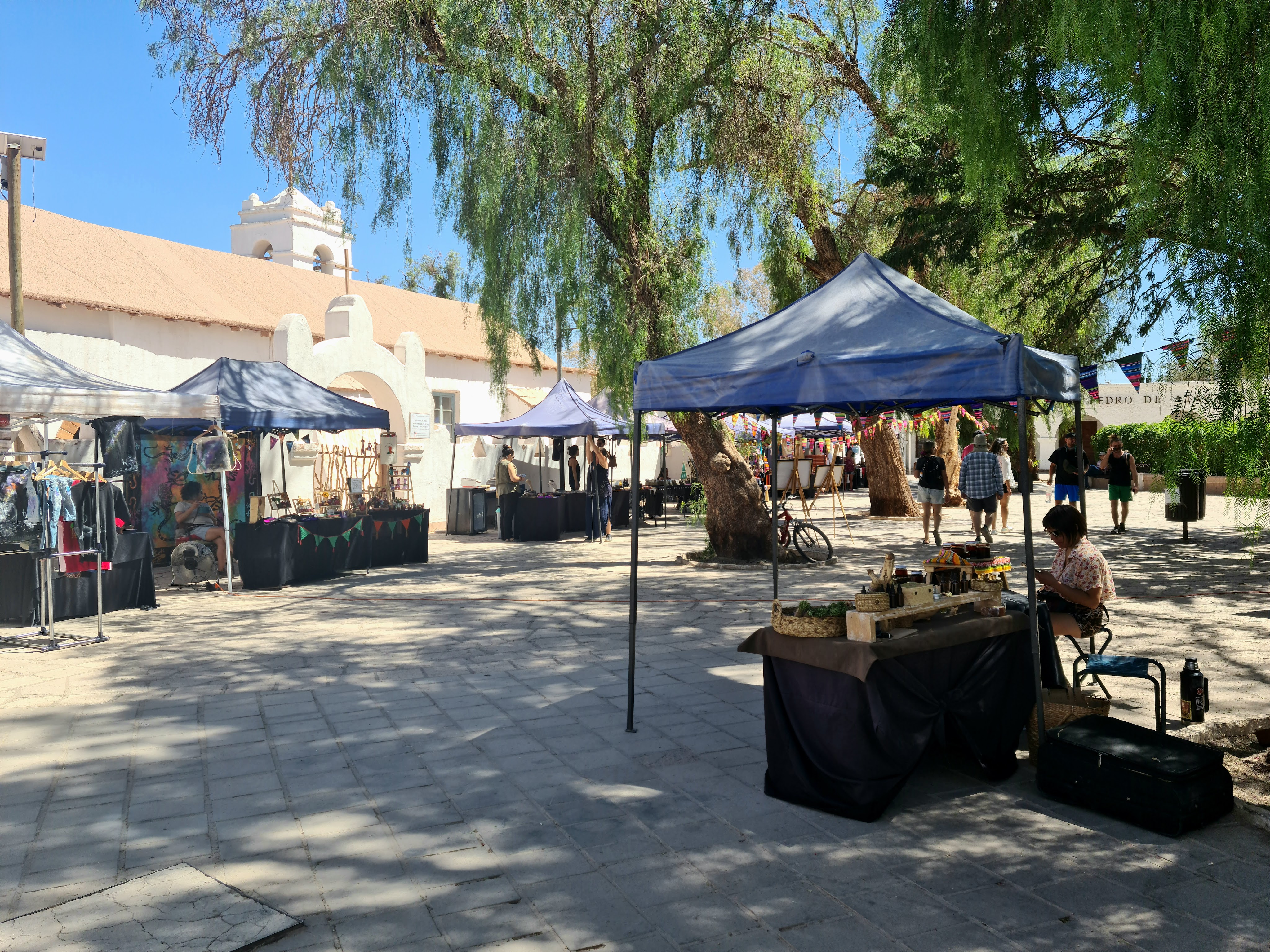
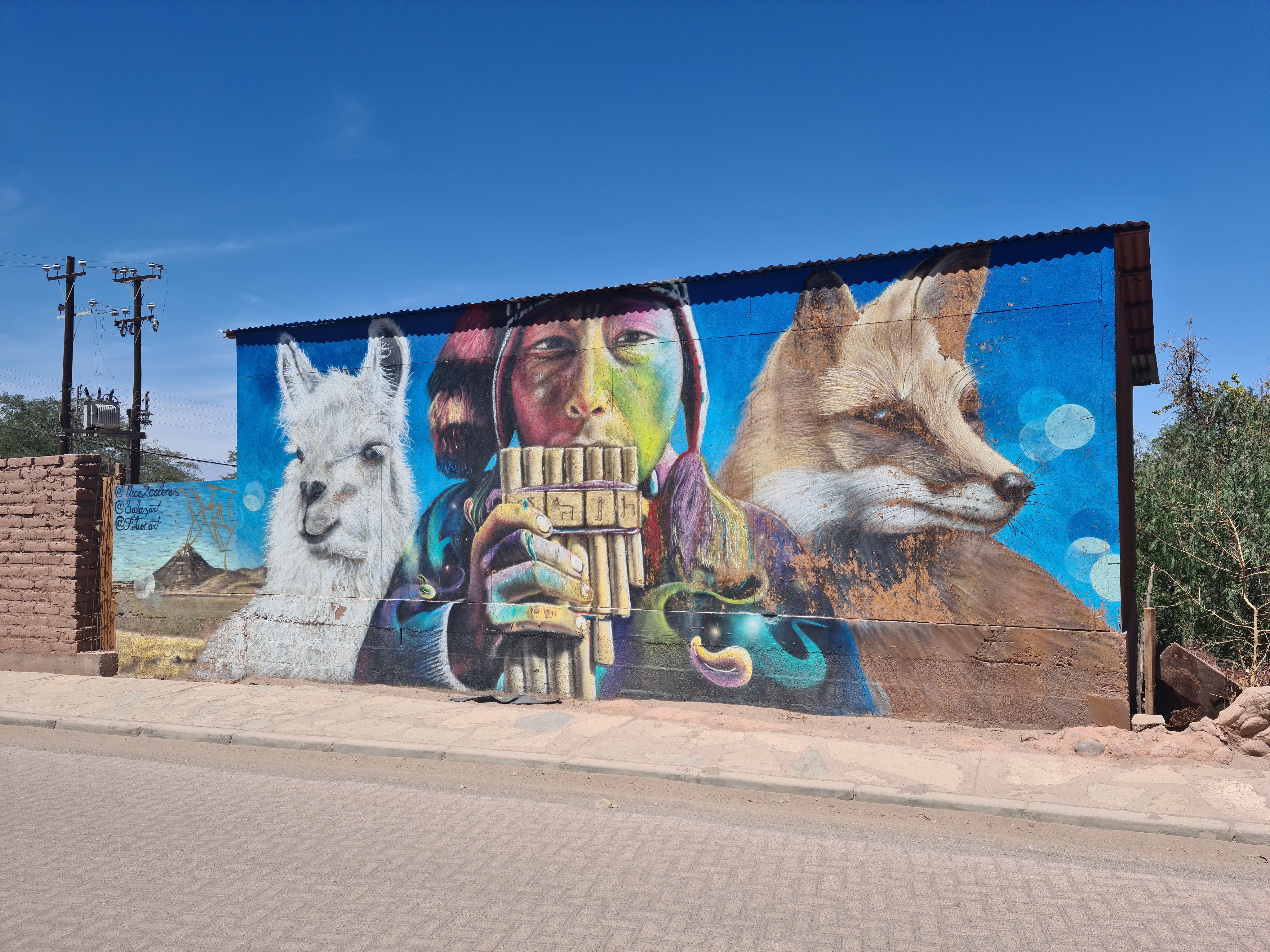
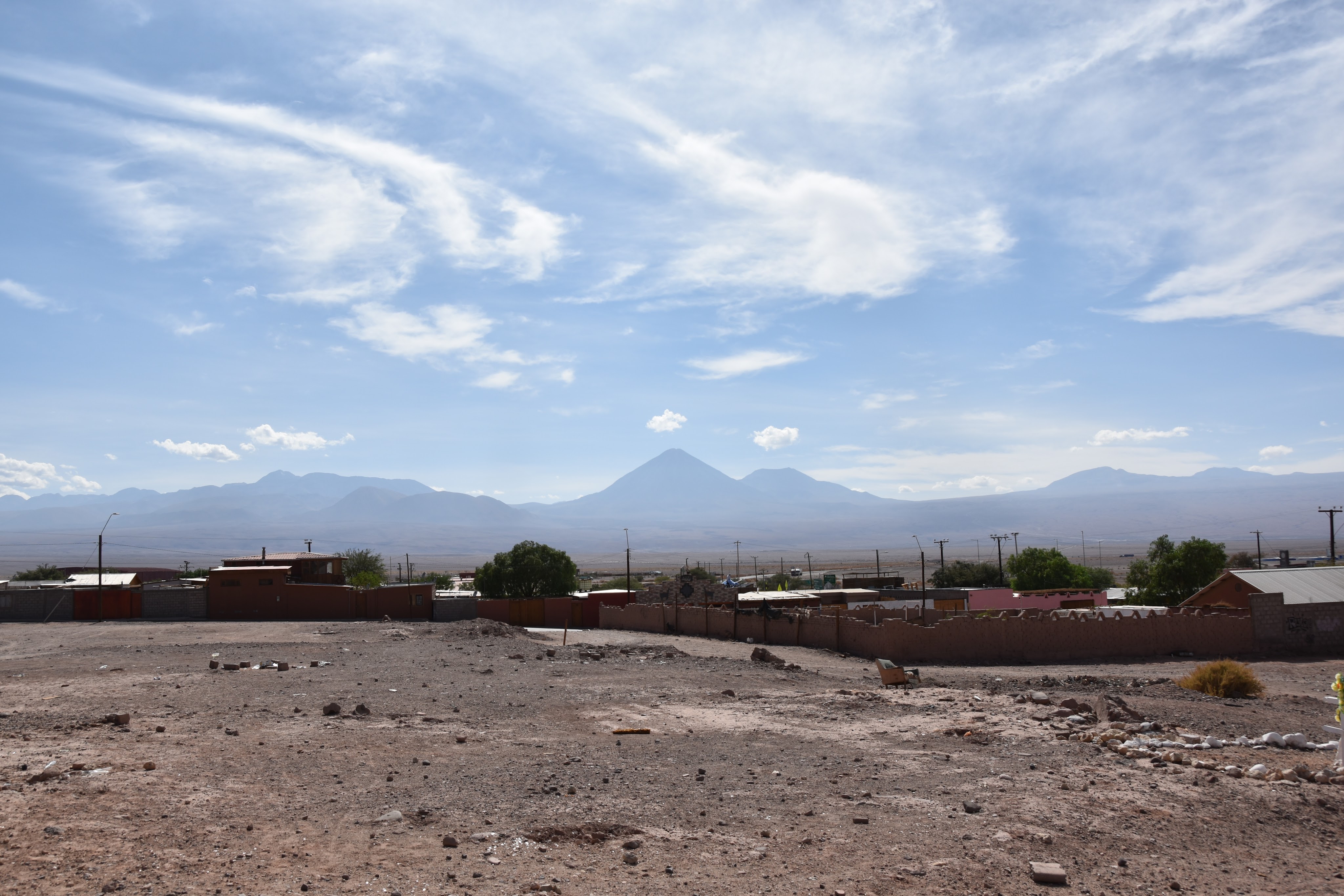
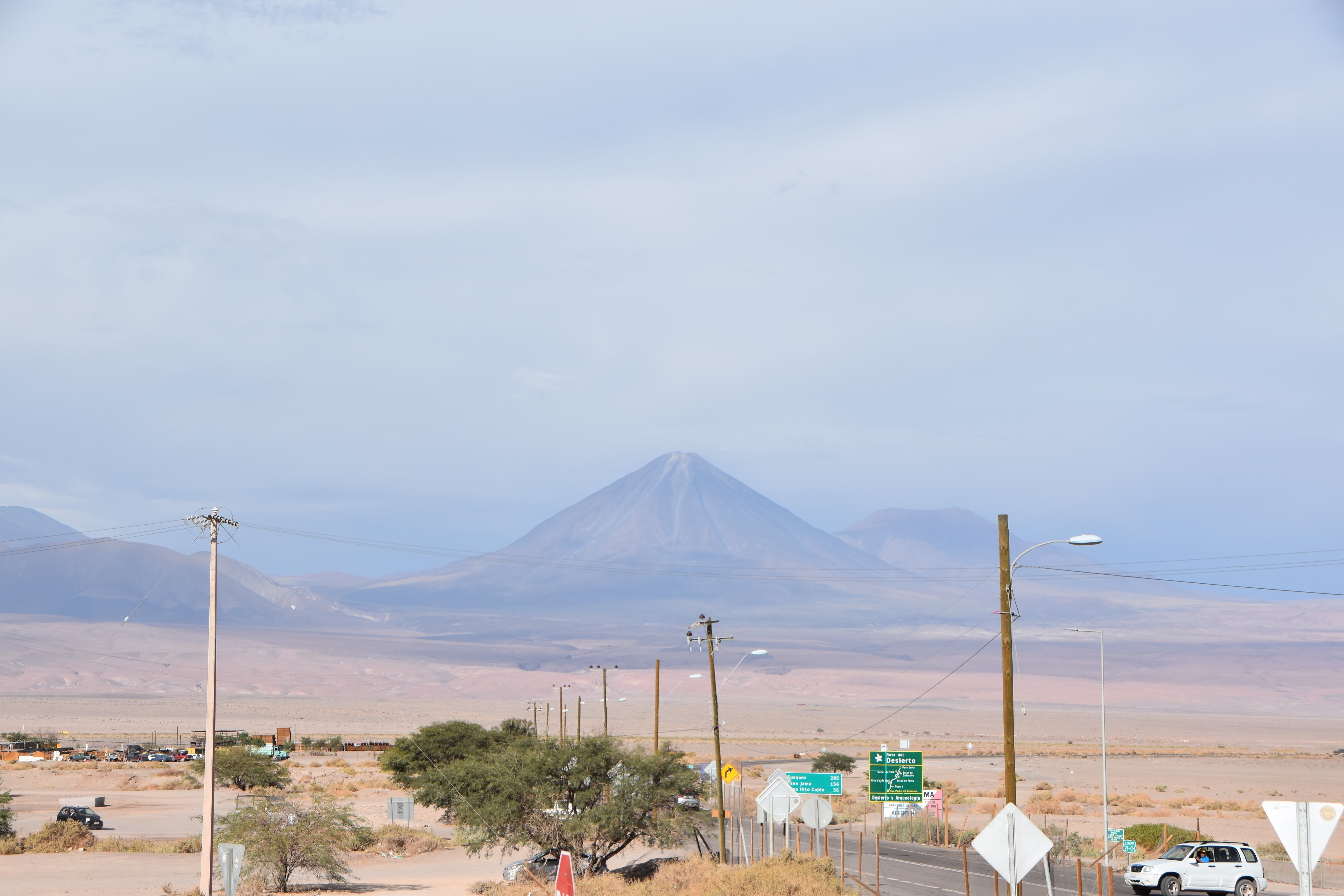
SPDA has it’s own charm though, and it is surrounded by views towards the desert and the Andes, including Licancabur volcano. The distant scenery just looks like it is a big painted backdrop, and I felt like I was on a Truman Show-esque set.
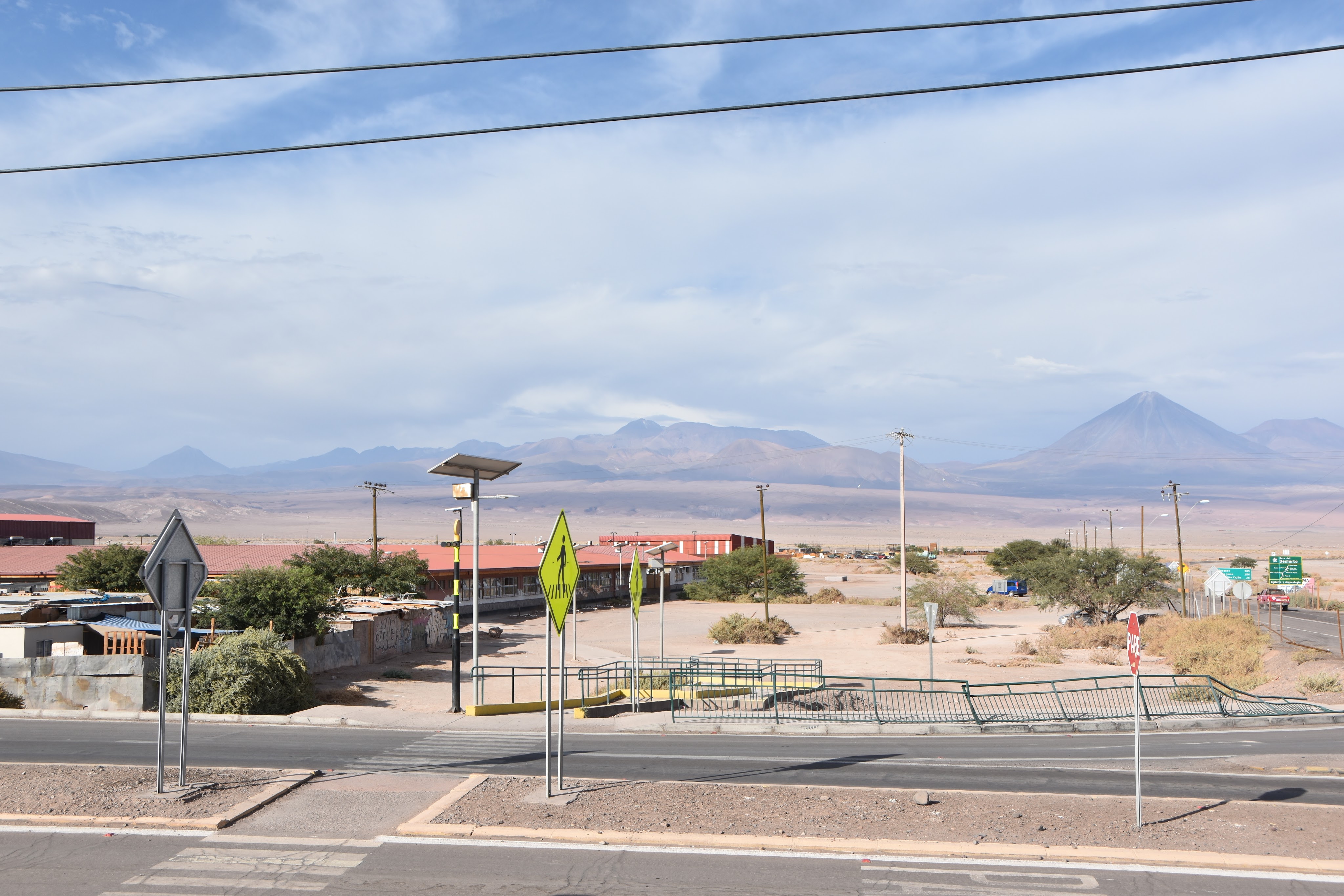
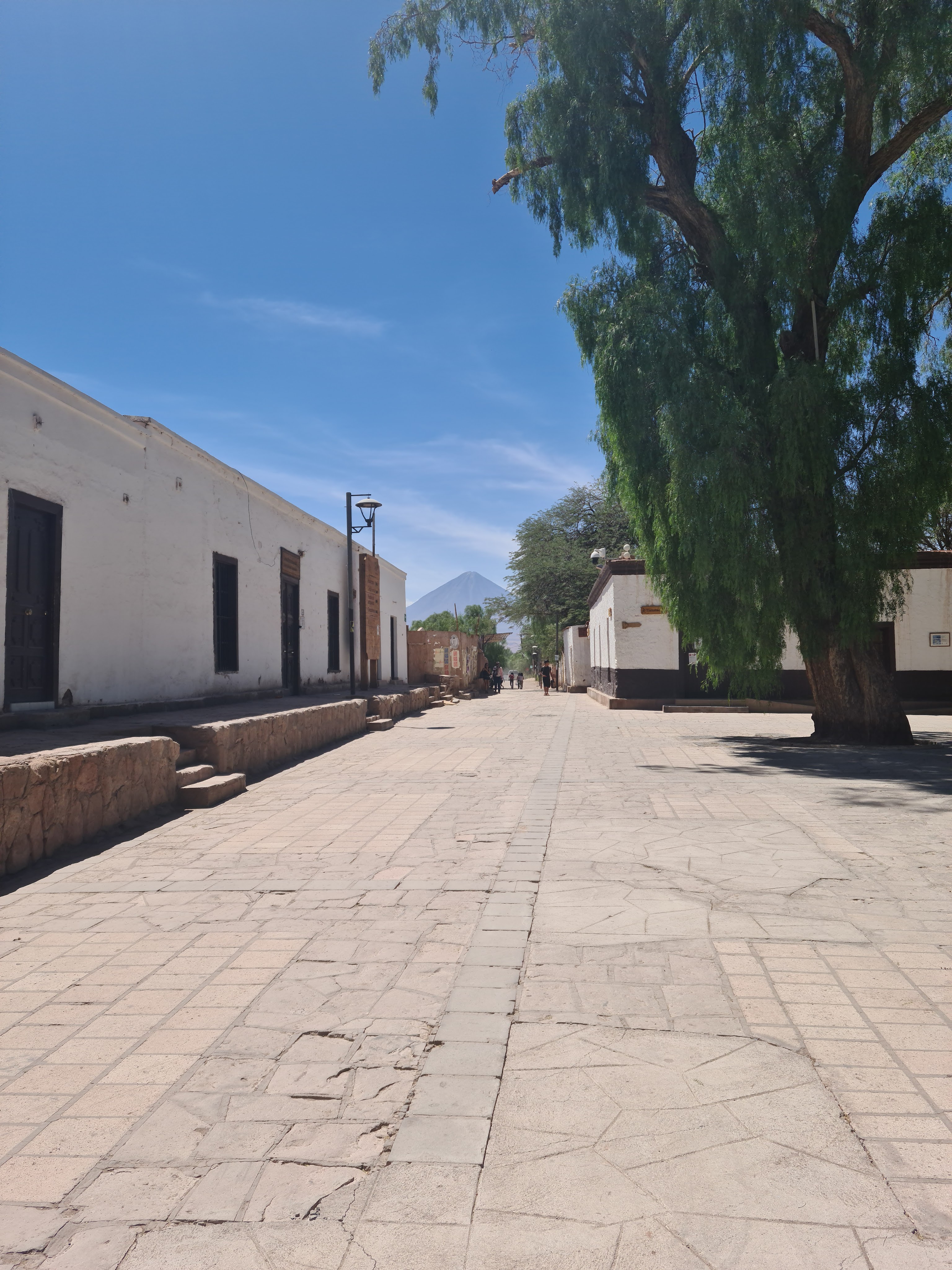
The benefit of the touristic status is there are plenty of hostals and restaurants. Most attractions are found in the desert or further afield, and so there is also a huge number of tour operators lining the streets, making it easy to book anything short notice. Given the captive demographic, all business mentioned could probably get away with charging more than they do, and we found most things, especially the excursions, to be really good value.
I’m going to mess with the blog chronology a little, and focus this post on everything we did in SPDA, beginning and end. We had a 4 day excursion to Bolivia in the middle, which warrants a post (or two!) of its own.
One of reasons we were keen to see the Atacama desert is its reputation for stargazing. We had loved a stargazing tour we did in Tenerife a few years ago, where it was mentioned that Chile is possibly the best place in the world for astronomy. The Atacama desert is home to one of the foremost observatories in the world, ALMA. Sadly, nobody seems to have let them know that the covid pandemic is over, and visitor tours have not yet resumed.
We were content with a night outside in the desert though. In brilliant timing, the night of our arrival was just one night after the new moon, making it the best time of the month for stargazing. Some agencies, including the one we went with (and probably the most reputable ones) won’t even offer the tours around full moon, as it reflects too much light for meaningful astronomy.
We were taken 6km into the desert, and as with our Tenerife trip, it was a real wow moment as we stepped off the bus and looked up to the heavens. Once all lights were turned off and our eyes adjusted, we were treated to the most sparkling sky, with more stars visible than you can imagine – and some mulled wine.
Our guide Renet, who was as comic as he was knowledgeable, lead us through three activities.
First, naked eye observation and highlighting of the key celestial features of the southern hemisphere. Second, telescope observation, which neither of us have done in the “wild” before. We were able to see nebula, stars and clusters in incredible detail. My favourite was a star which changed colours as it twinkled – a giant discoball as Renet put it. All the while, we were keeping our eyes out for a few shooting stars. I completely missed these in Tenerife, so was delighted to catch a few this time.
Finally, our evening was rounded off with a souvenir photo. We were ushered up first, so didn’t have a chance to discuss/practice poses, or see what others were trying. As a result, we’ve ended up with some kind of school yearbook pose. Not that it matters – who is going to be looking at us, when there is that backdrop?!

The next day was spent wandering around the town and catching up on some travel admin at our hostal, resting up before an action packed few days in Bolivia. In addition, SPDA sits at an altitude of 2,450m, and you are advised to take it easy until you acclimatise.
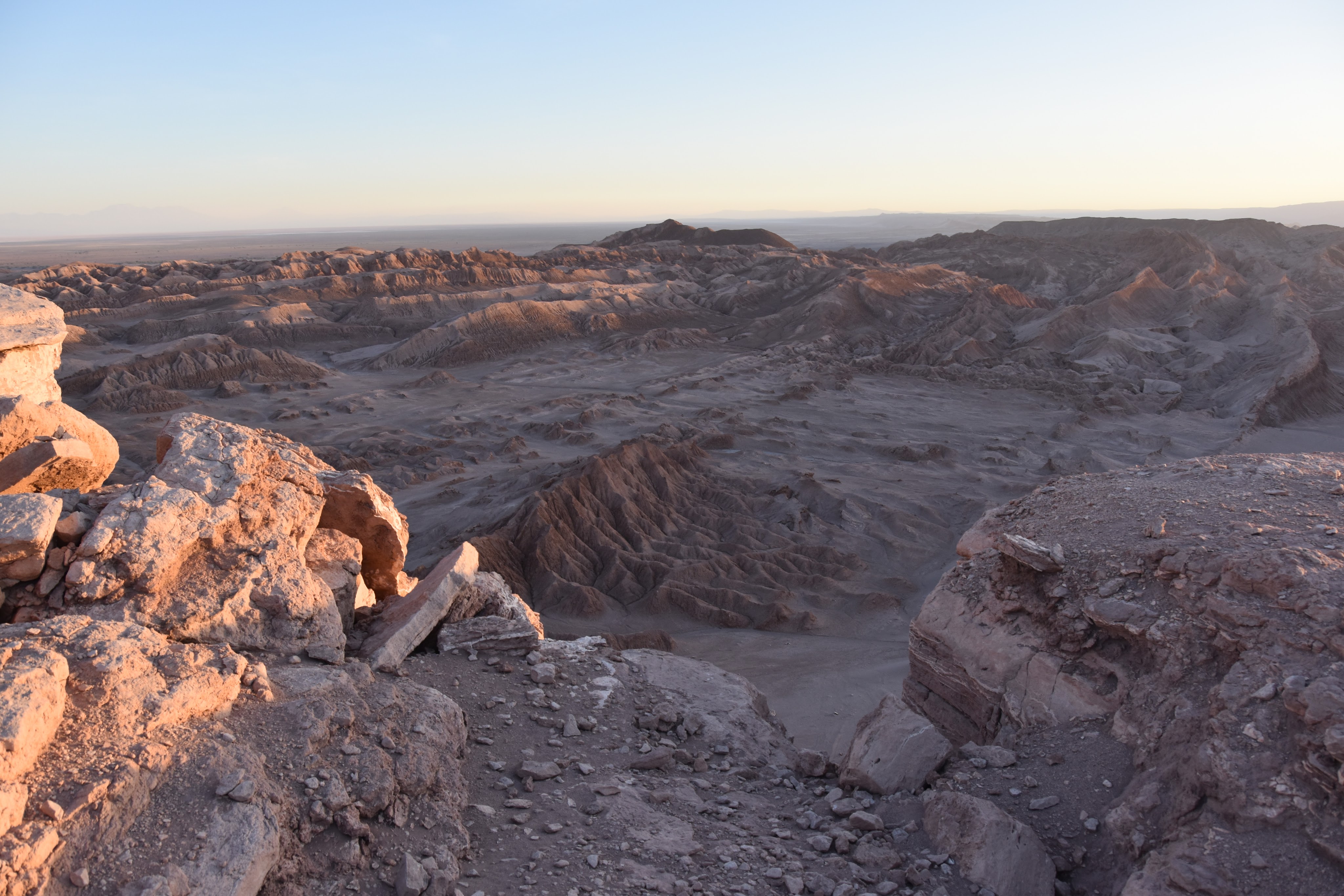
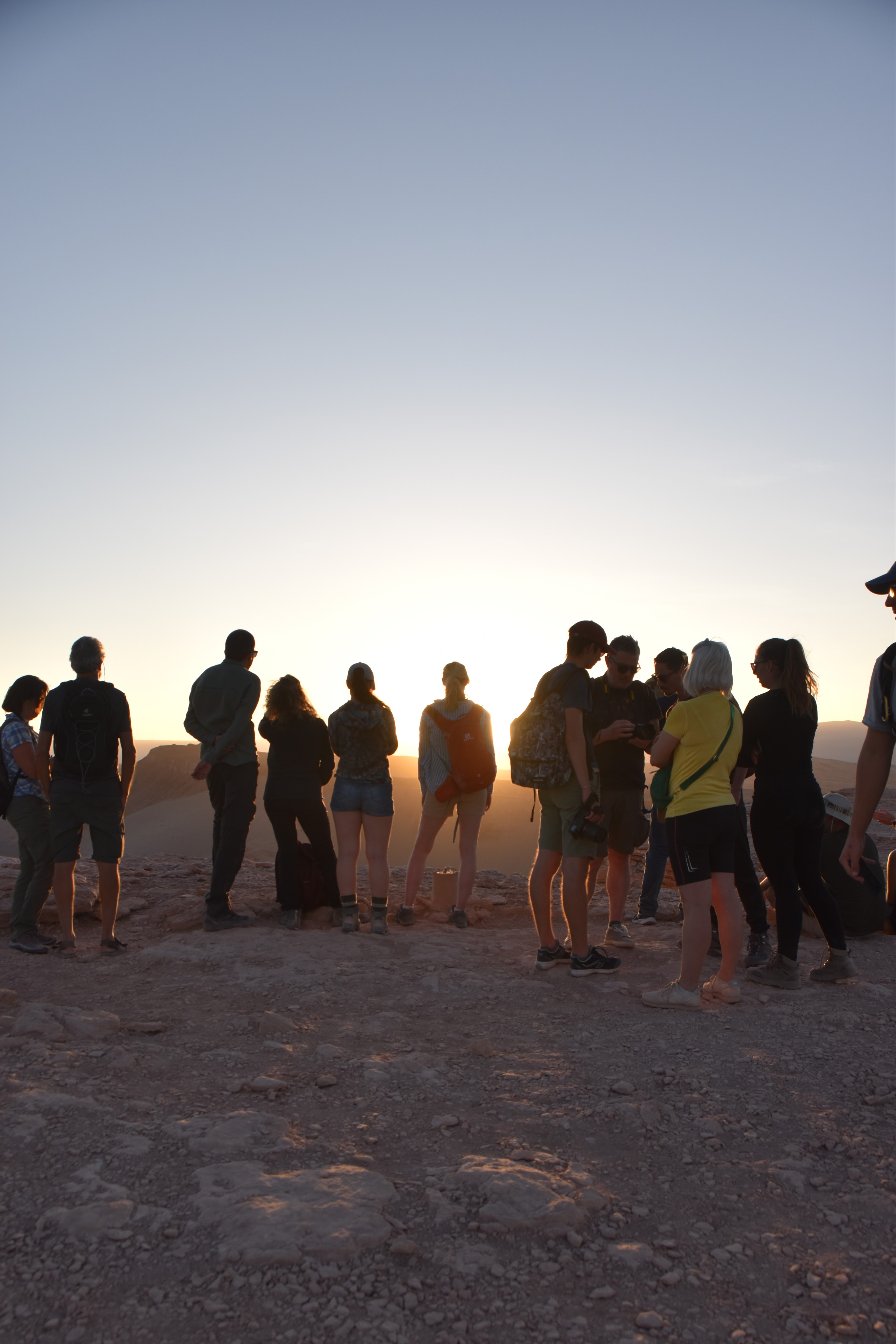
On return at the end of the week, we took possibly the most popular tour – a sunset visit to the Valle de Luna.
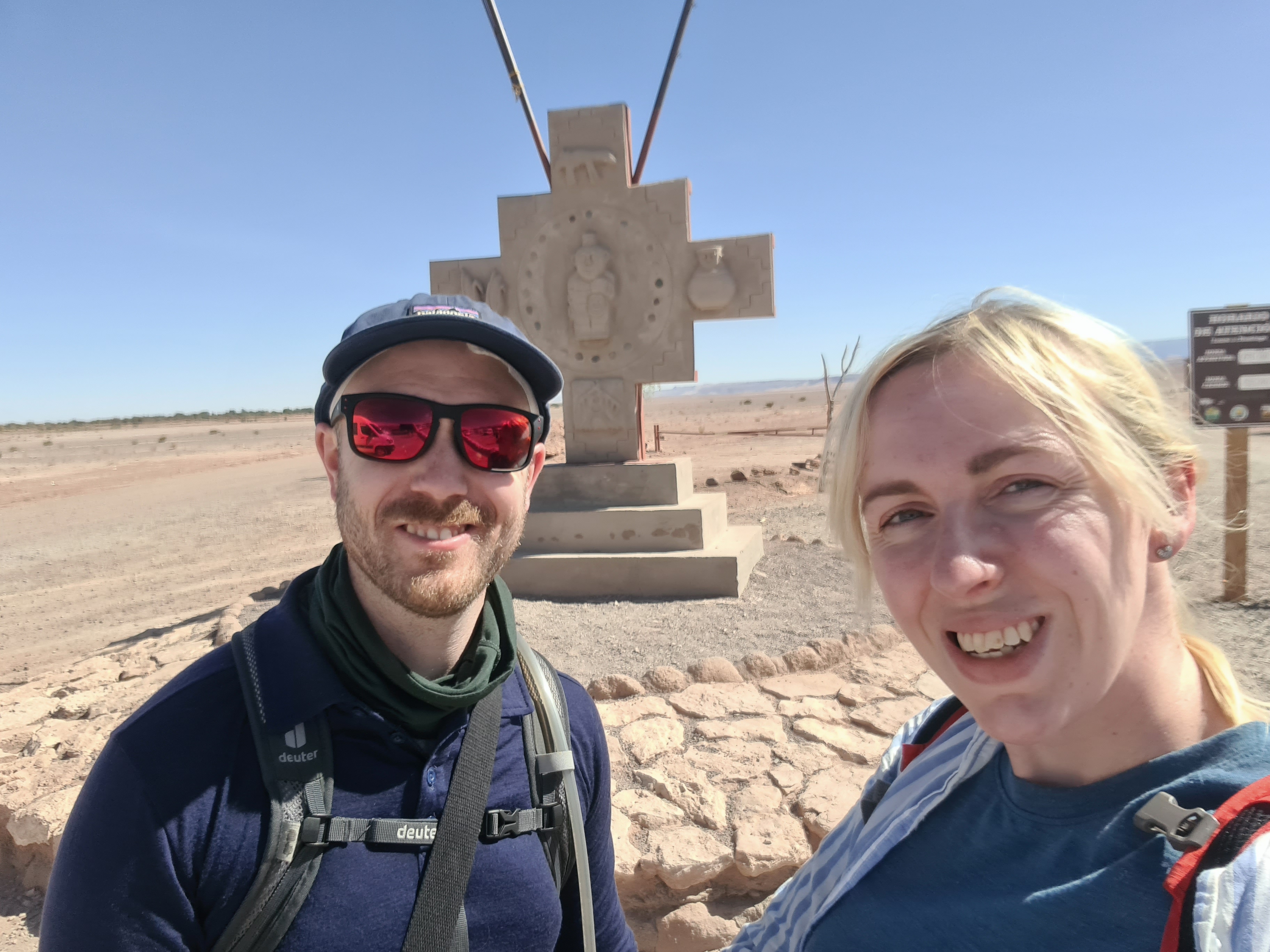
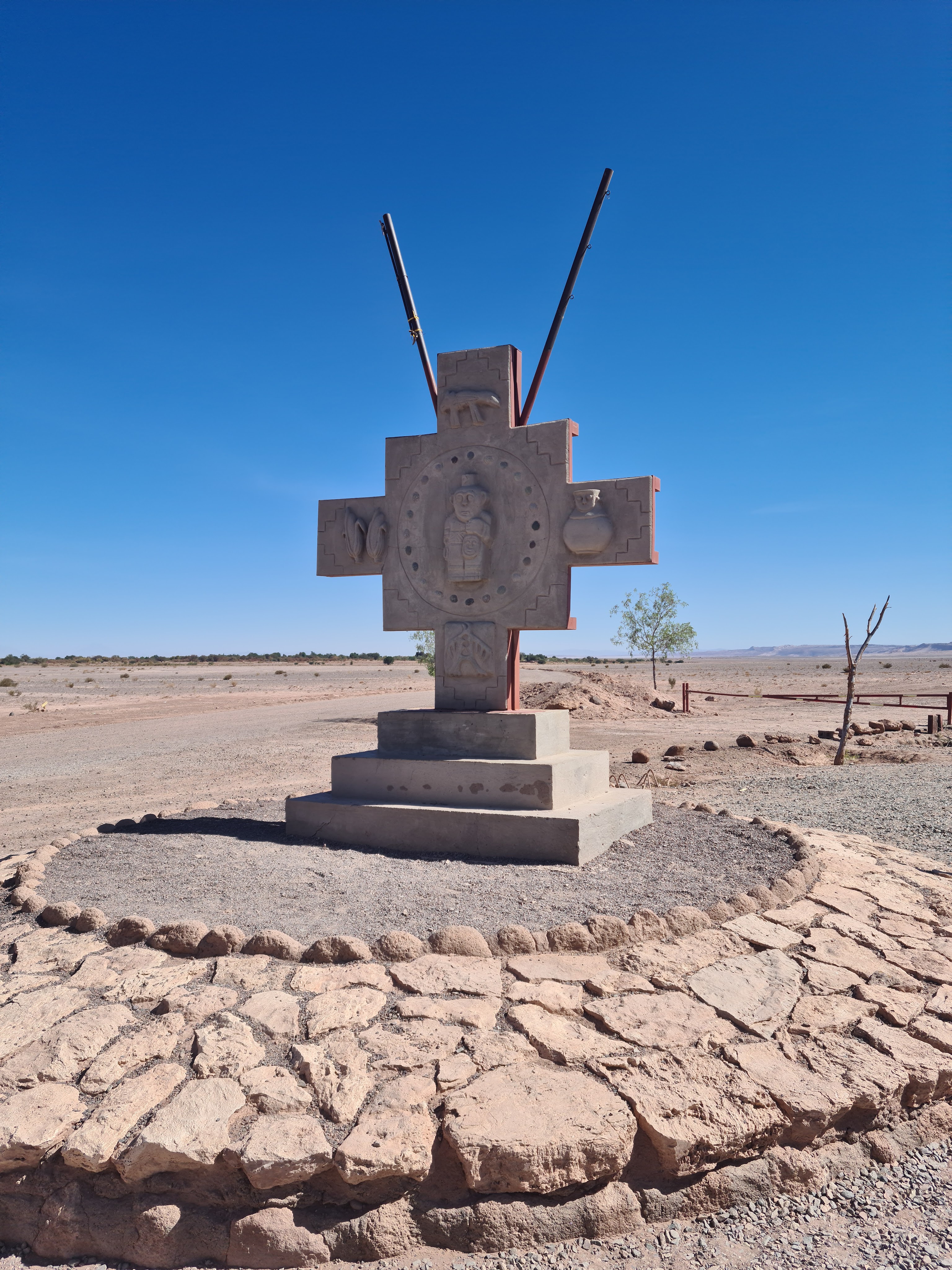
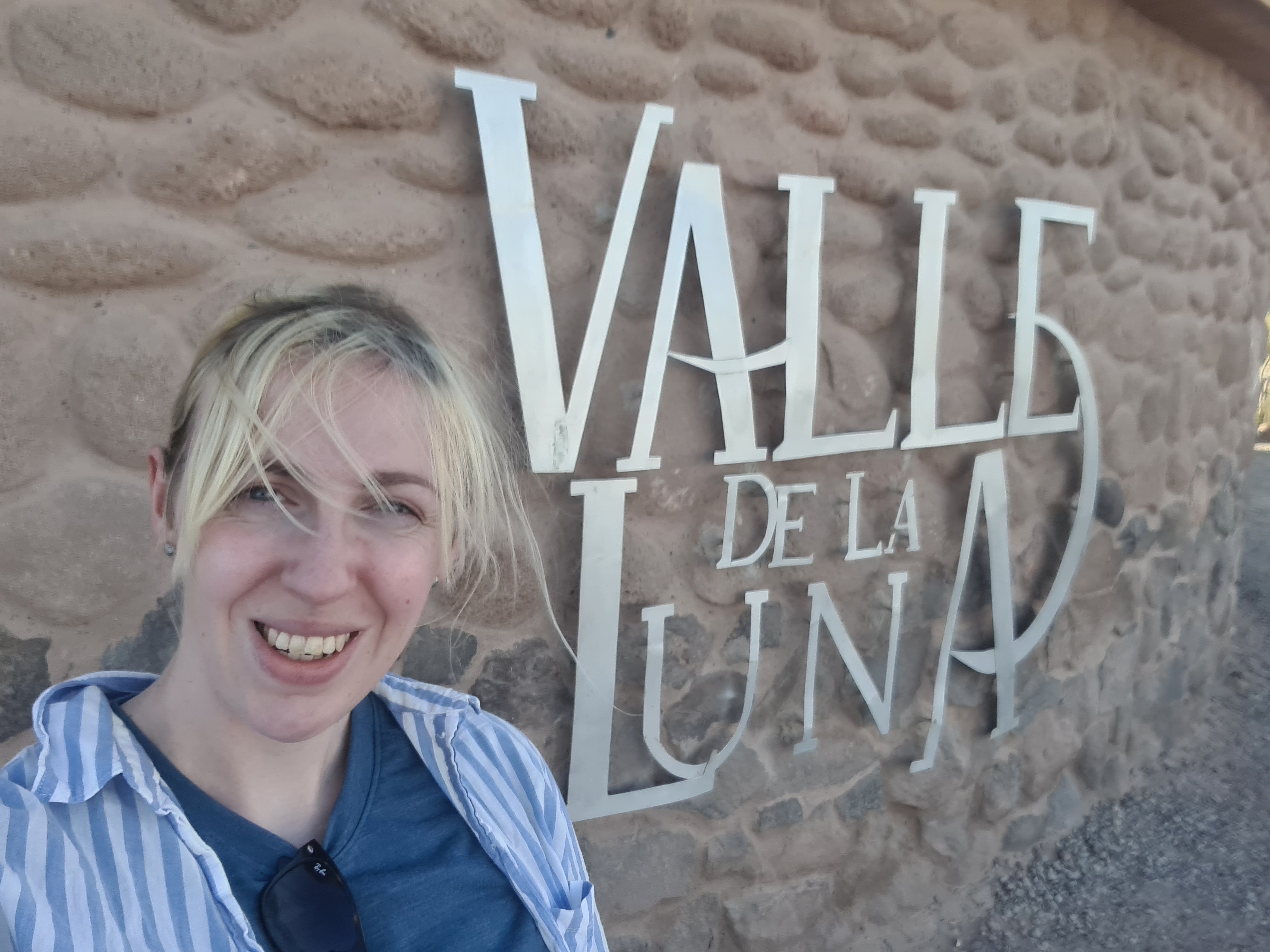
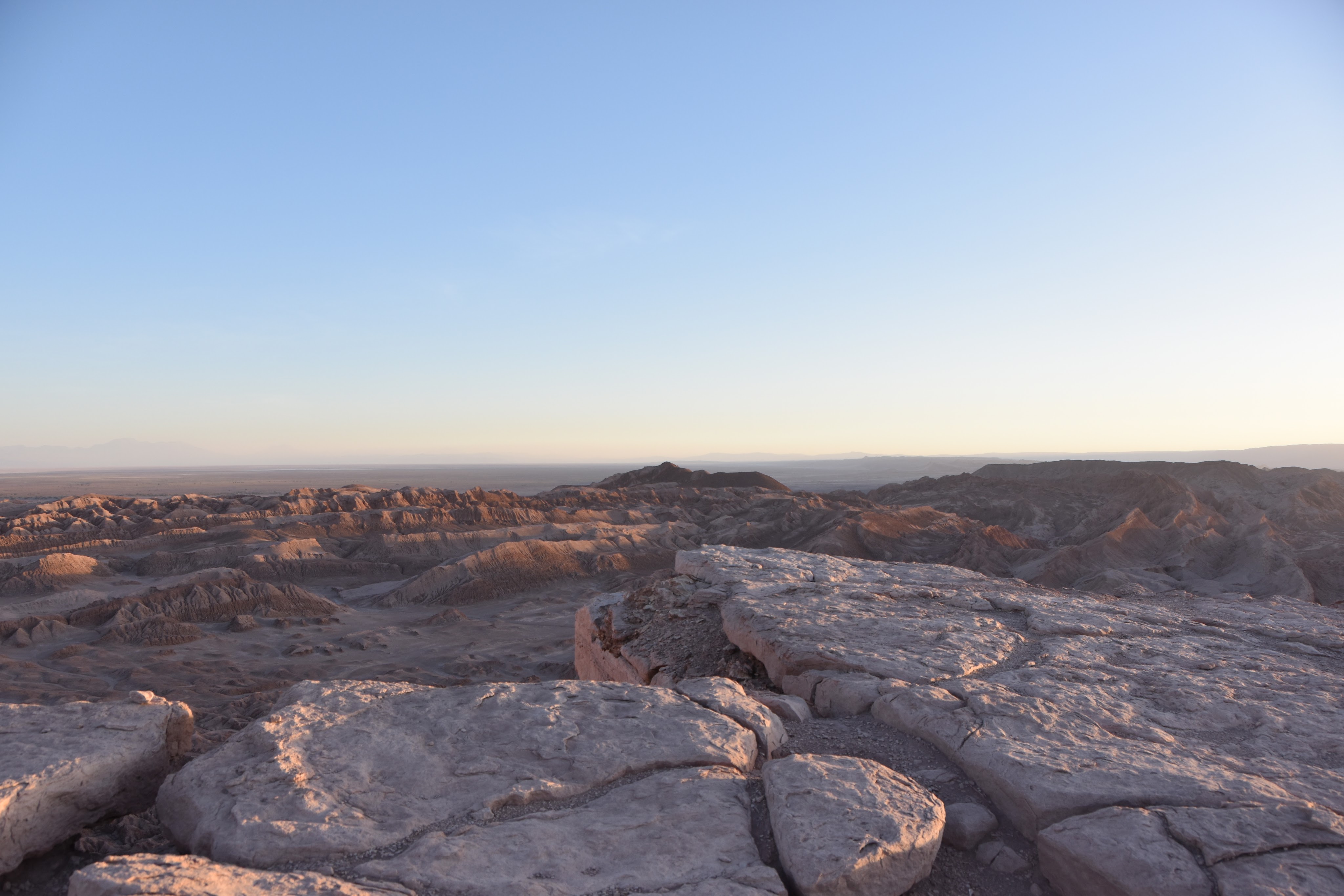
This was our chance to see the Atacama desert proper. A land of Star Wars settings and lots of geology.


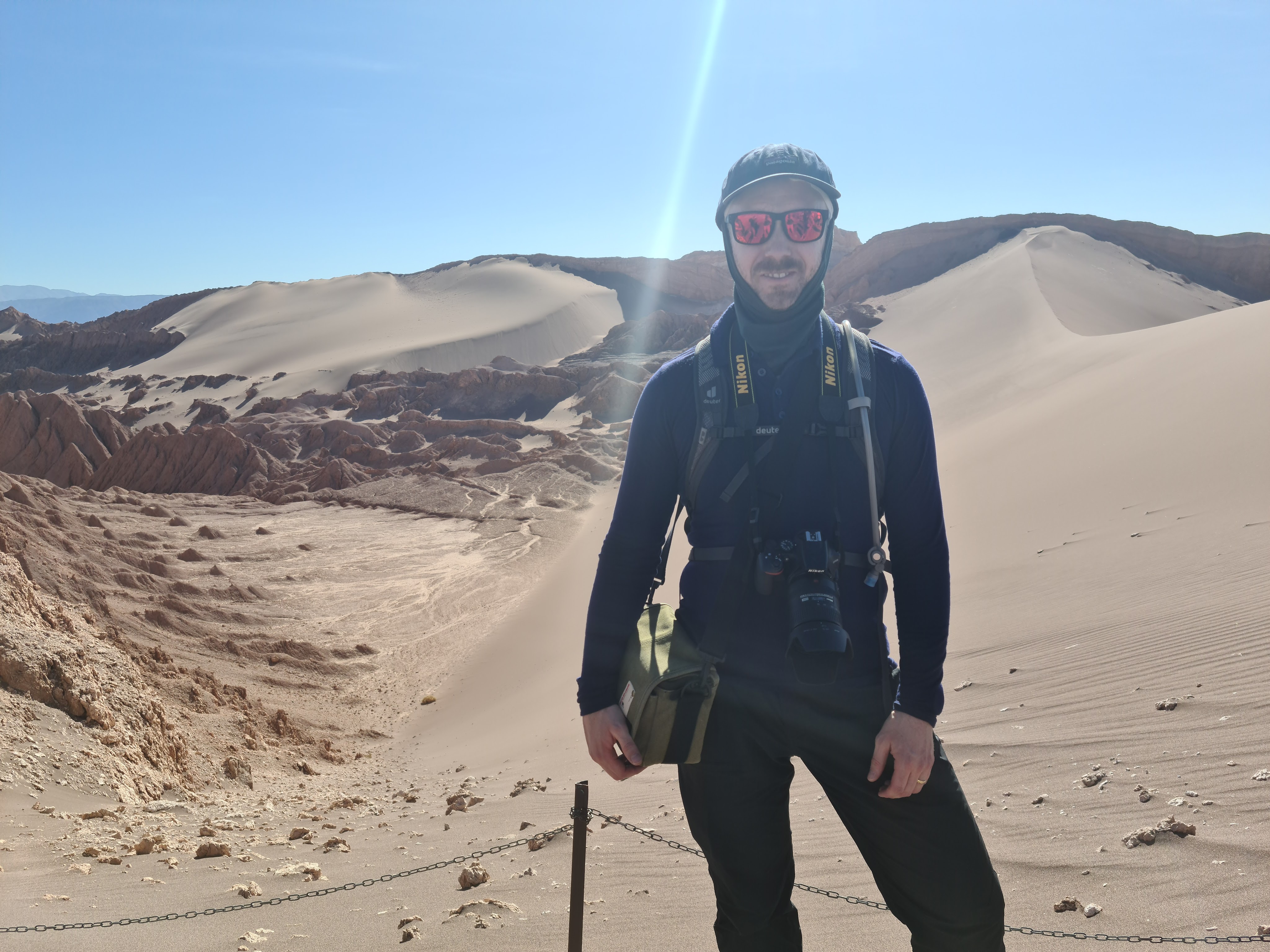
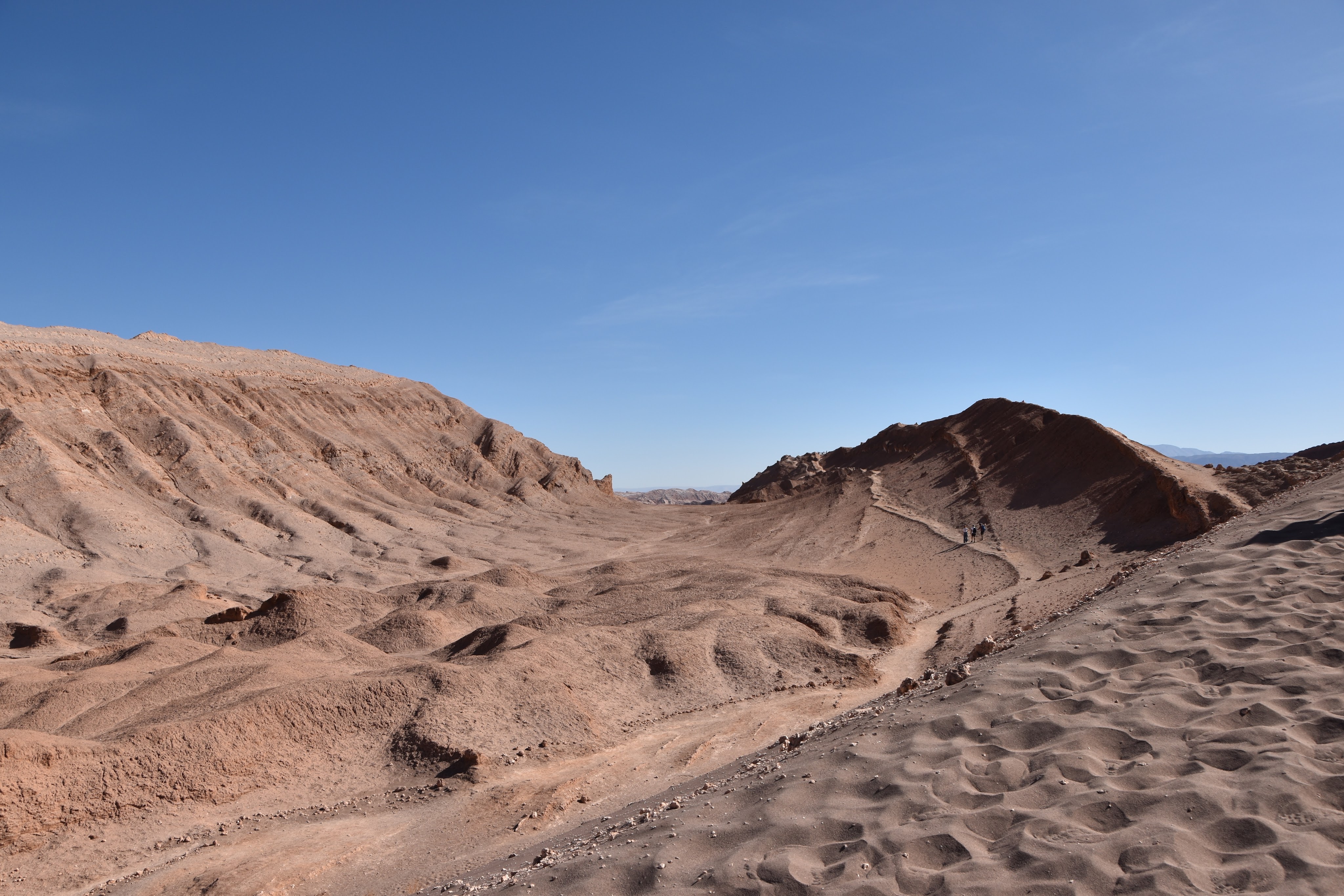
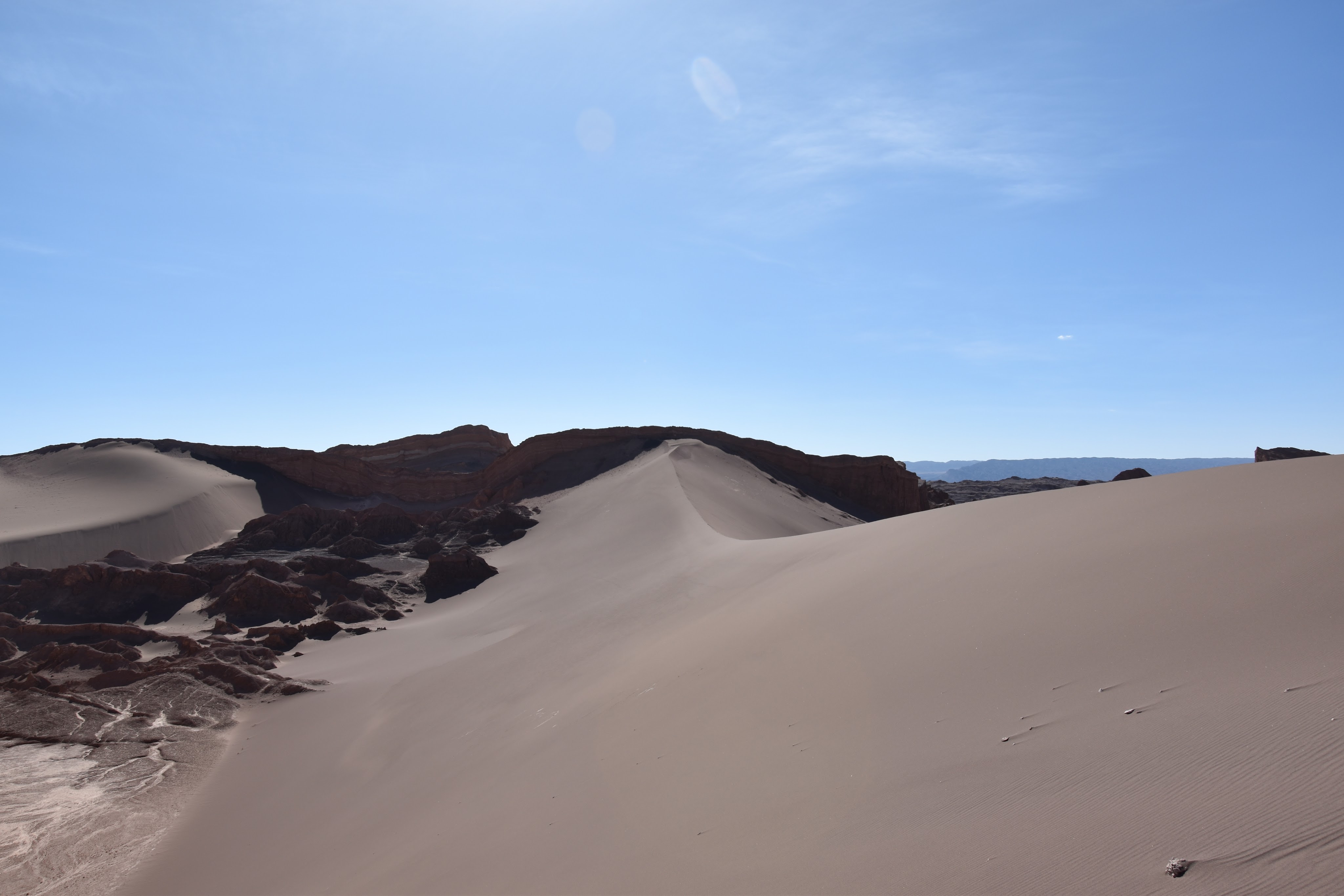
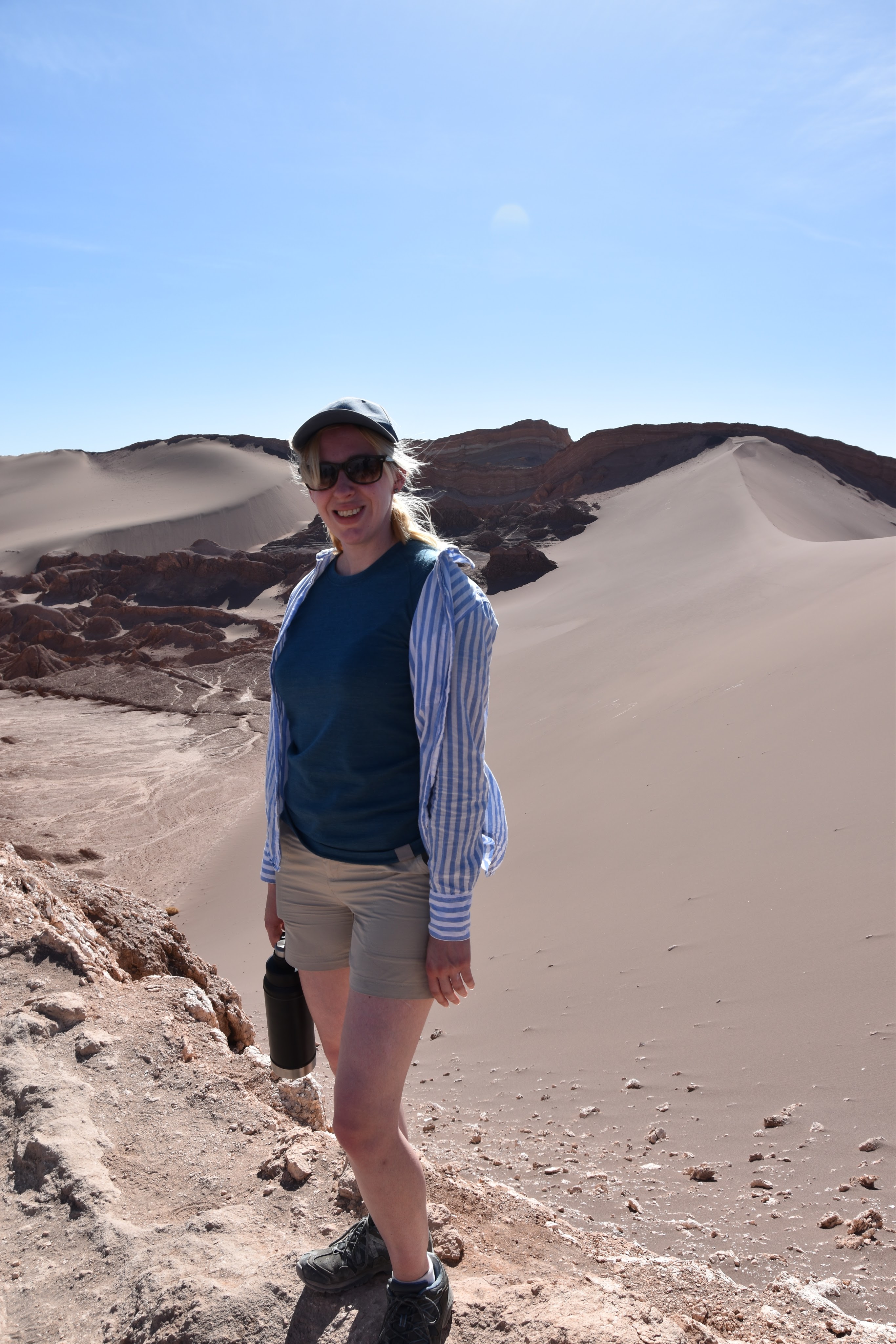
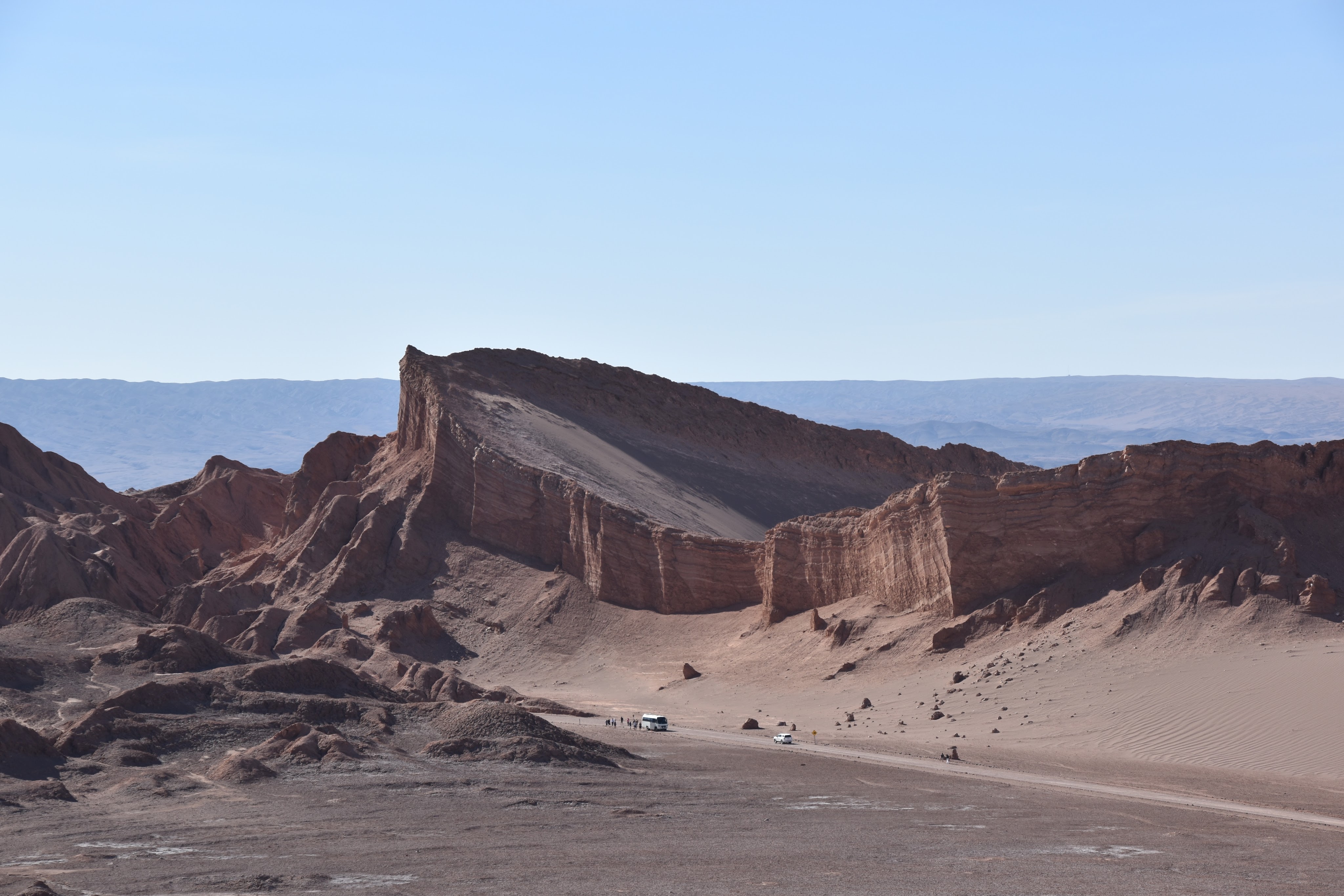
Our guide, Jonathan, did a great job of keeping it interesting, teaching us about salt, gypsum and selenite. We were also taken to an area where we could hear thermoplastic reactions in progress – the rocks cracking around as the ambient temperature was starting to cool down for the evening. It was really unusual, sounding like a loud car radiator cooling down, and you almost expected fractures to open up in the walls in front of us.
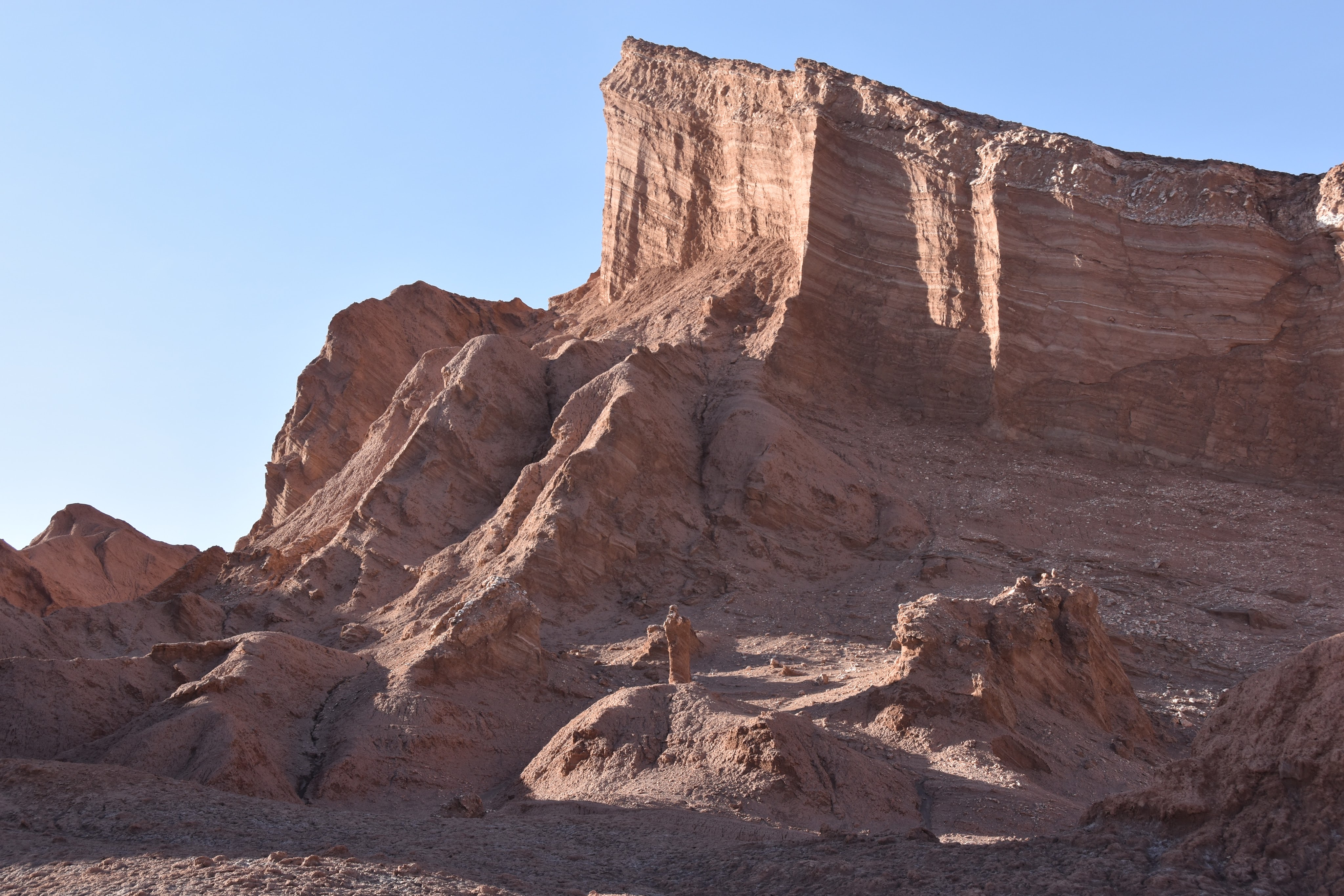


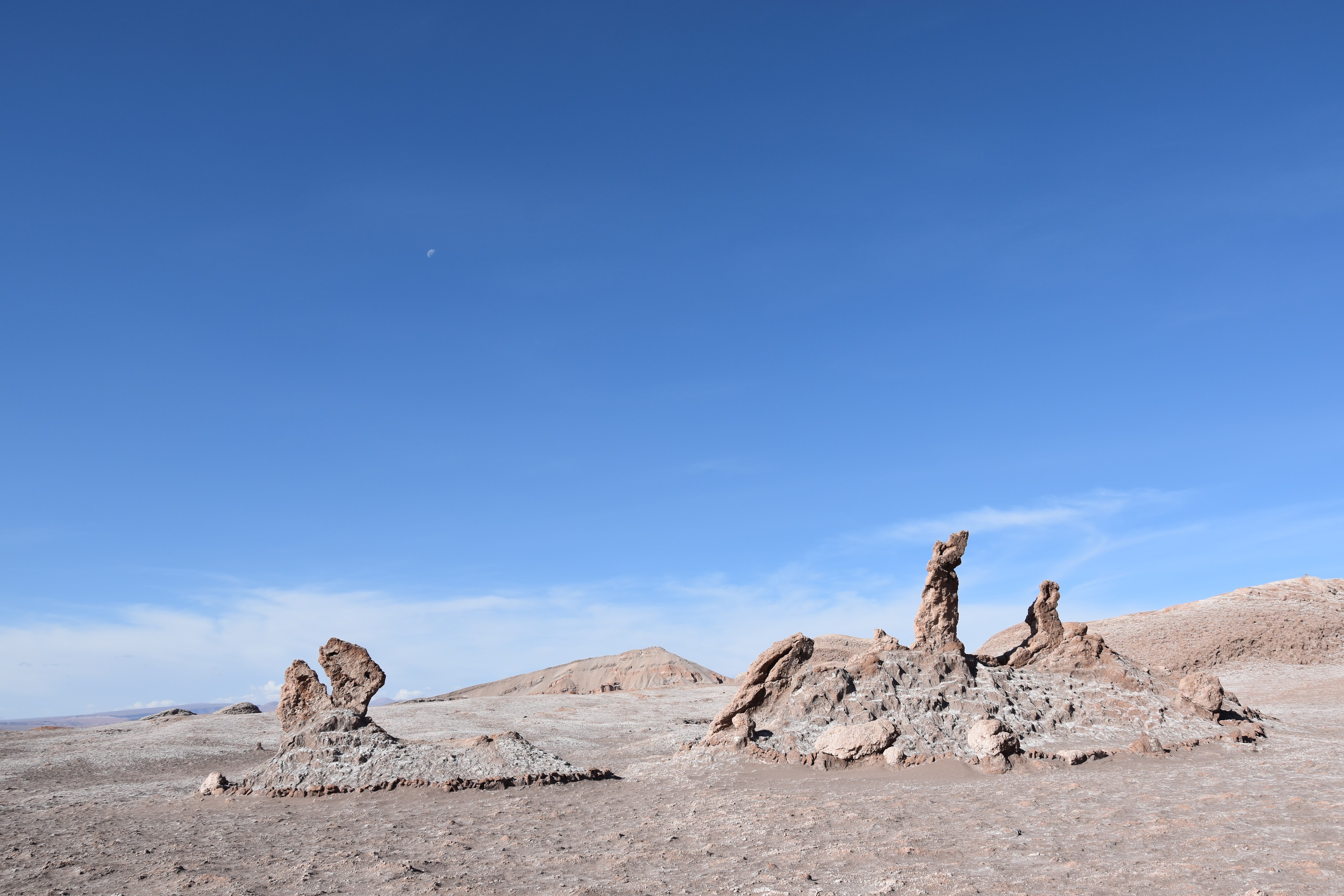
I hadn’t realised the Atacama desert has “wet” season, or altiplanic winter, and it hadn’t been a given we would actually get to do this tour. Jonathan explained that two weeks prior the tours had all been cancelled as the resulting clay rivers make vehicle access impossible.
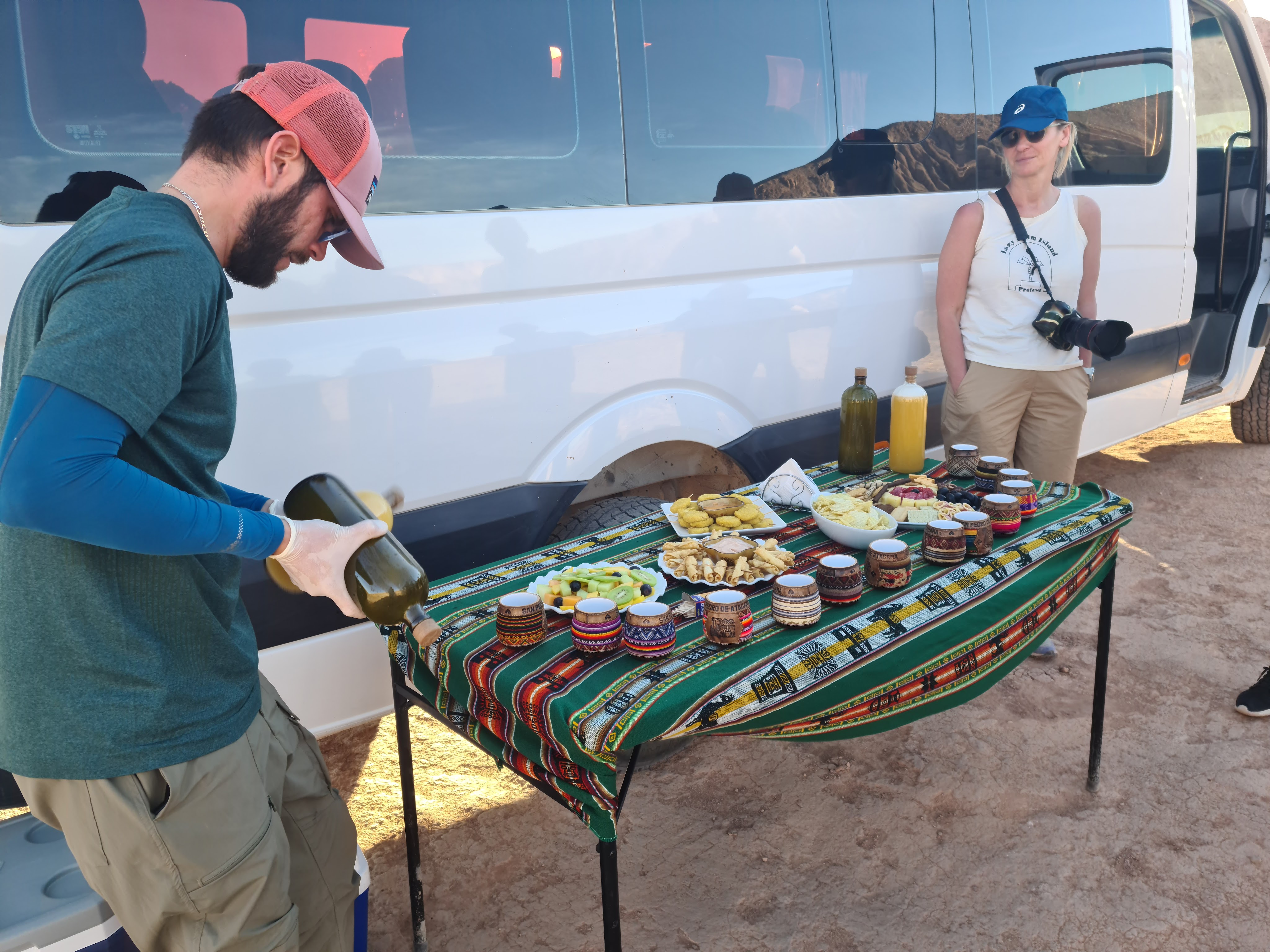
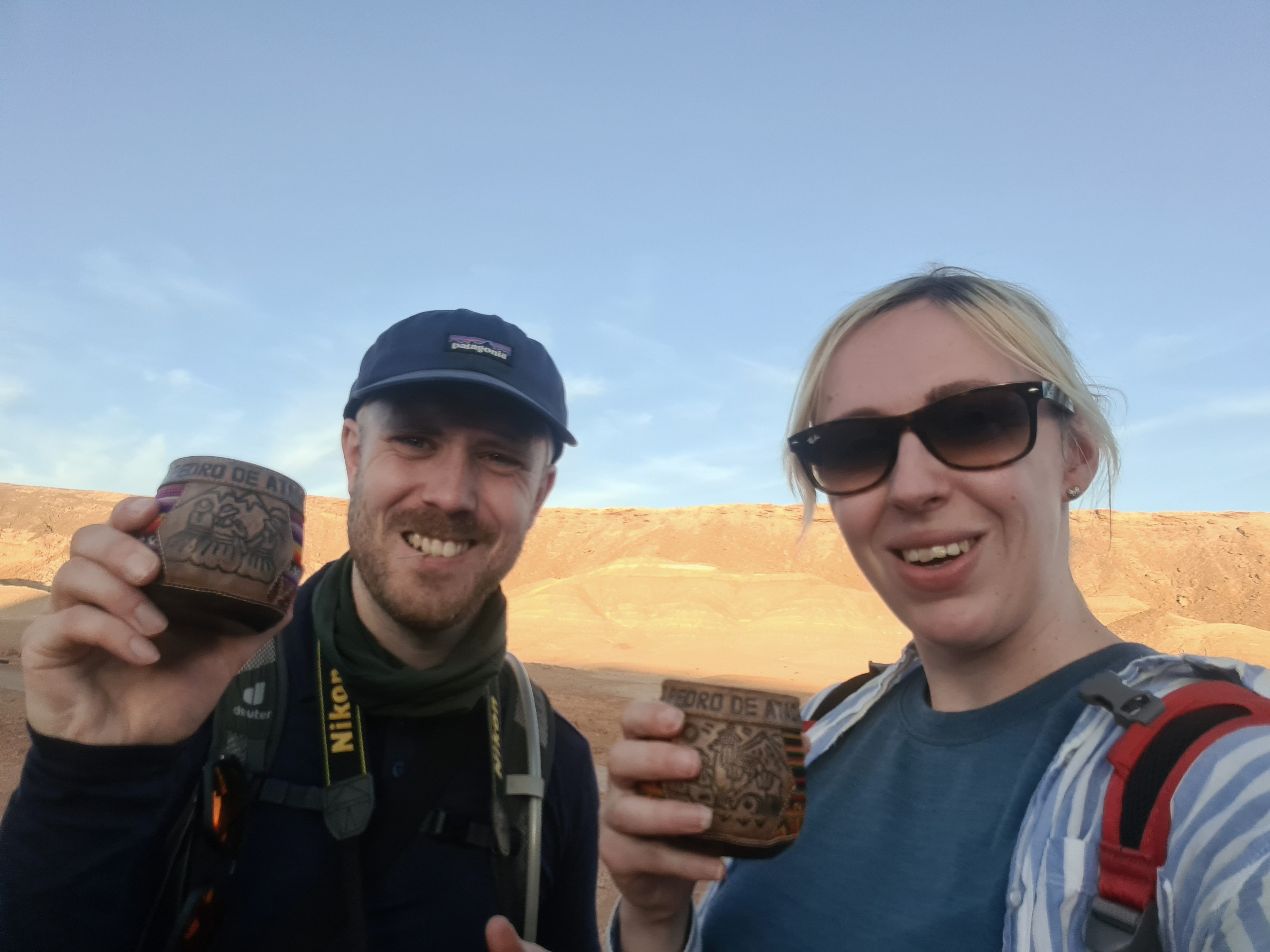
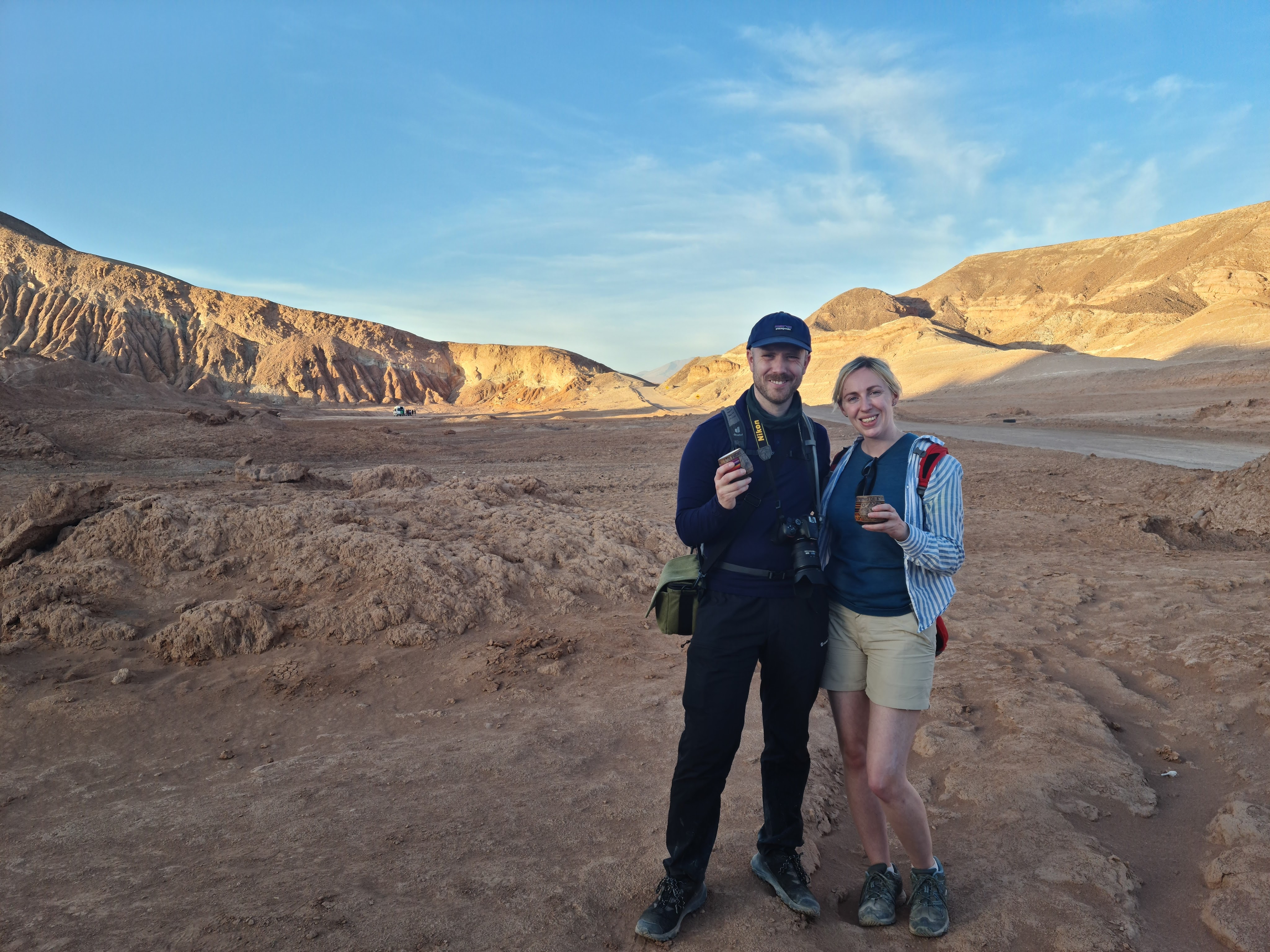
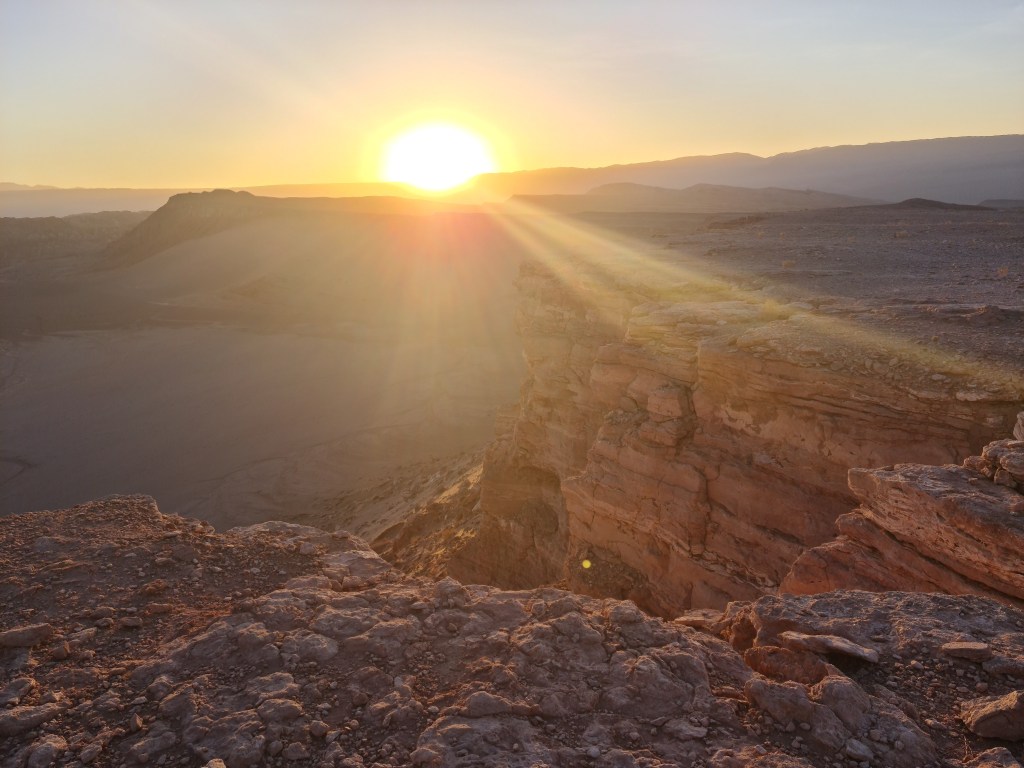
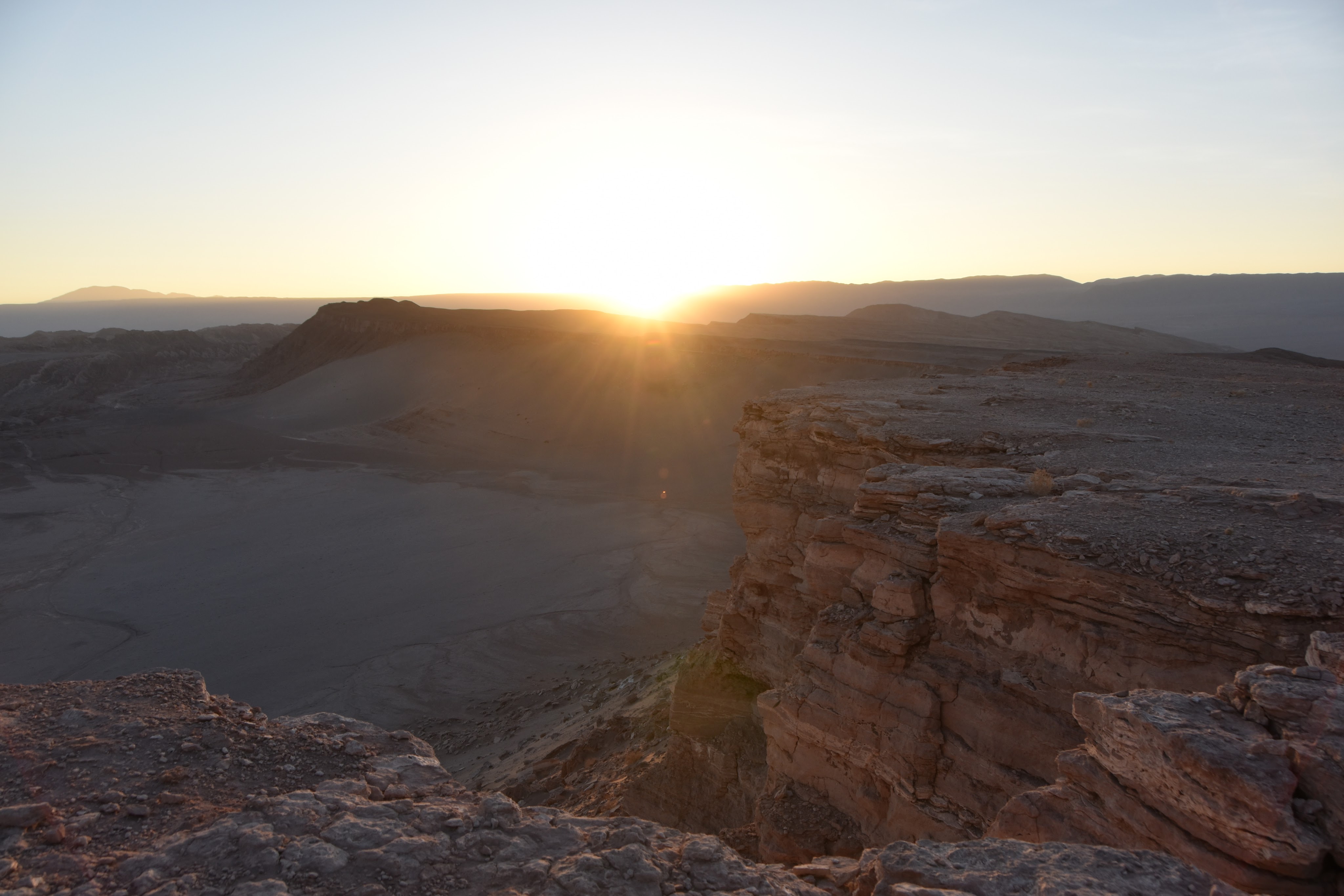
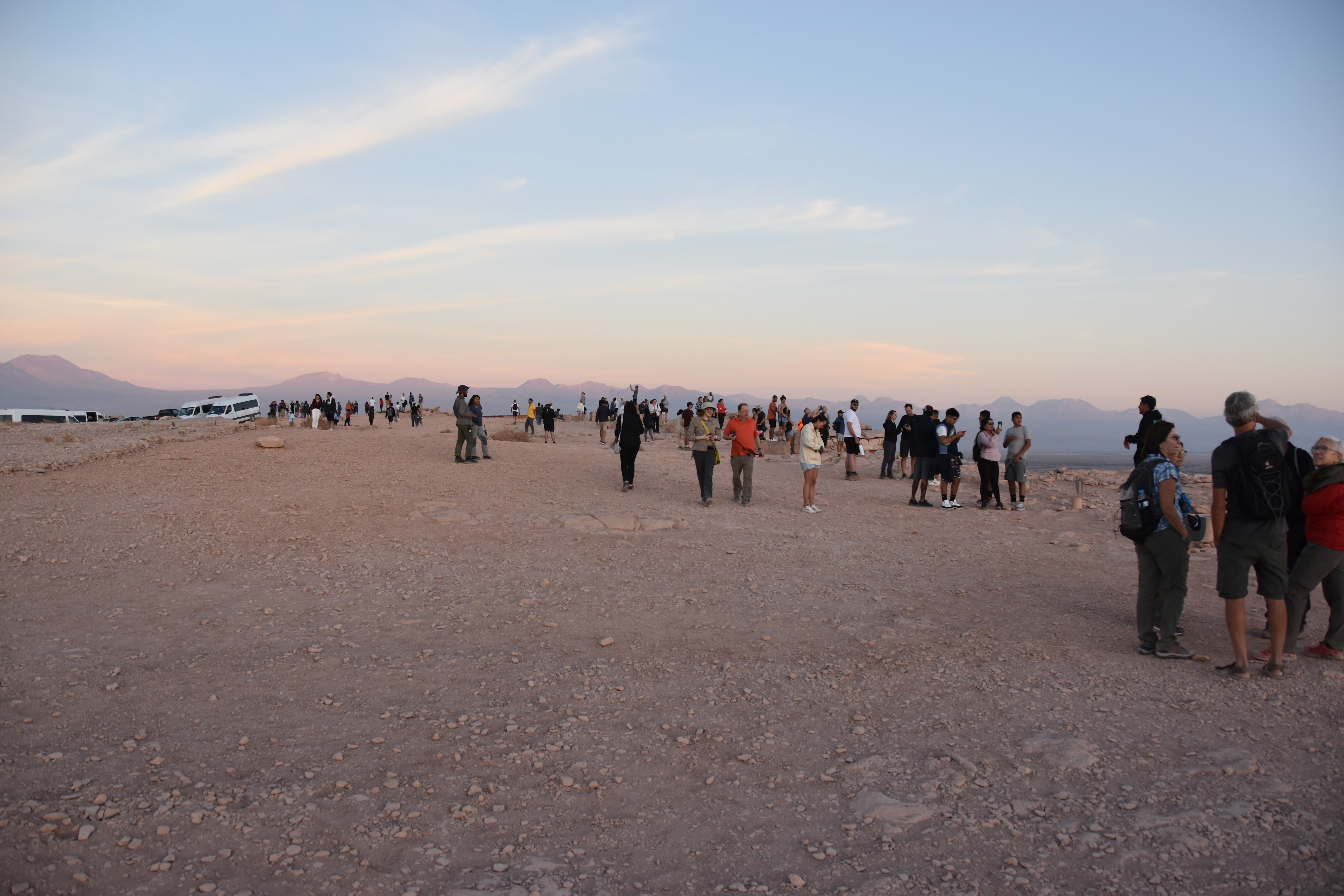
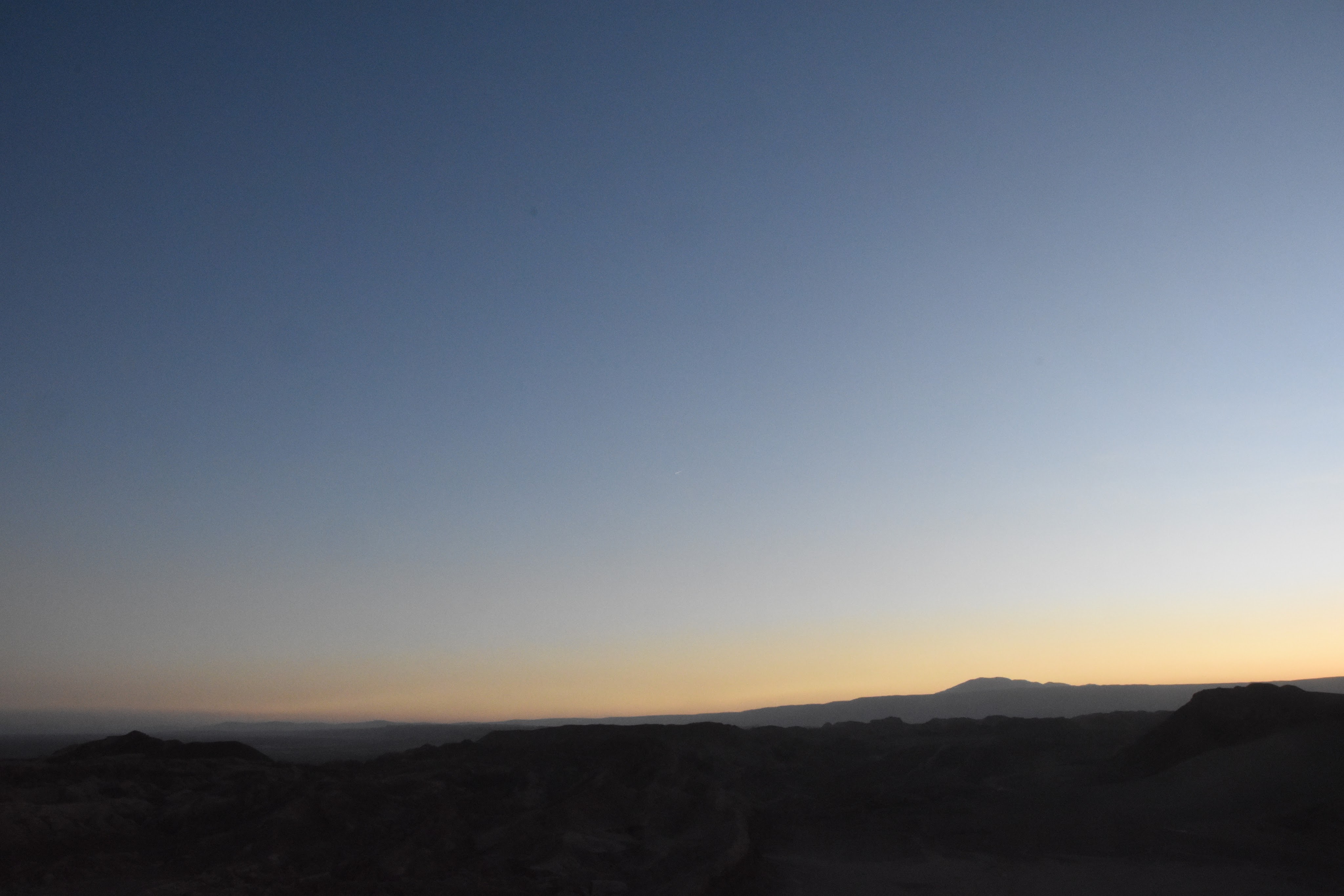
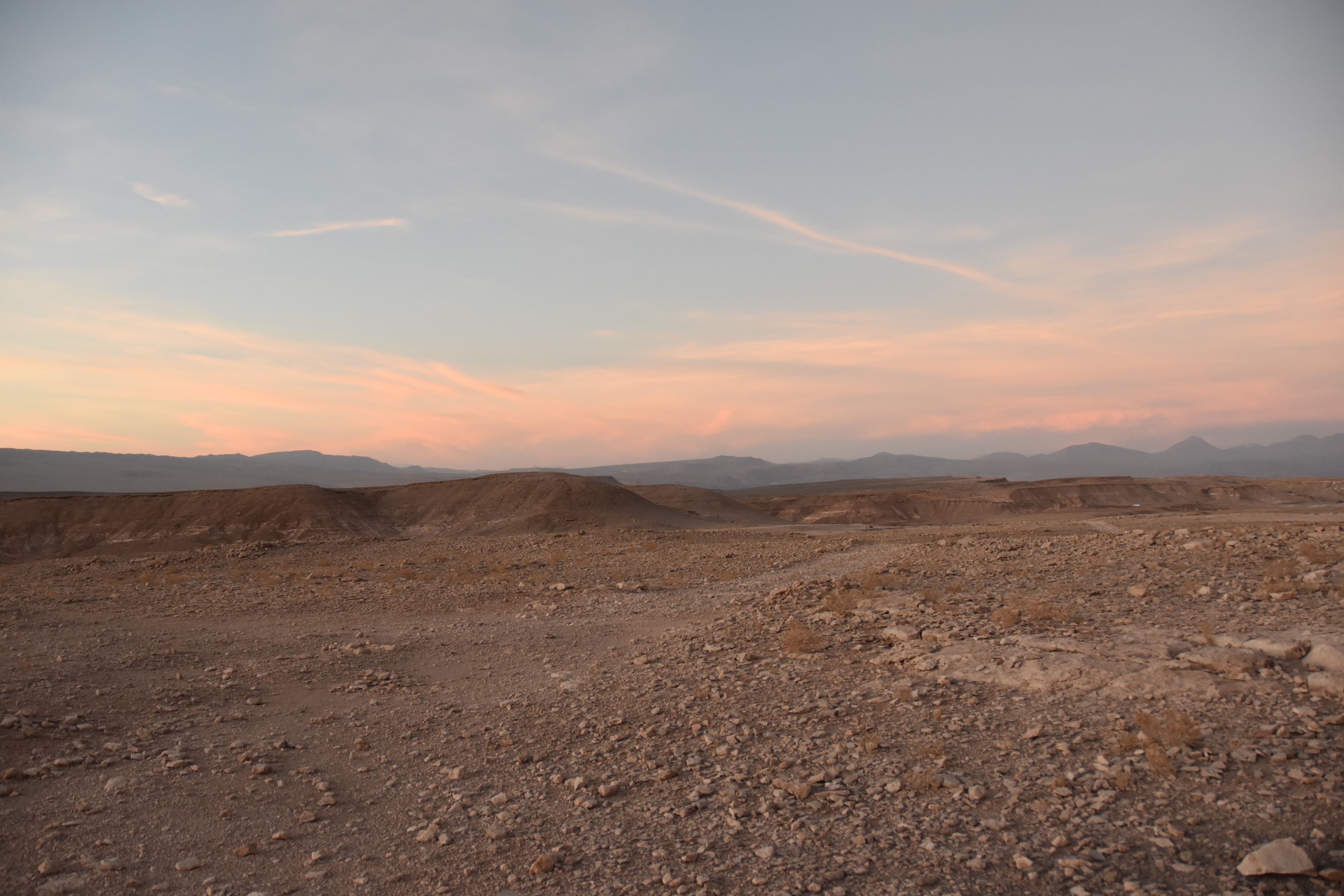
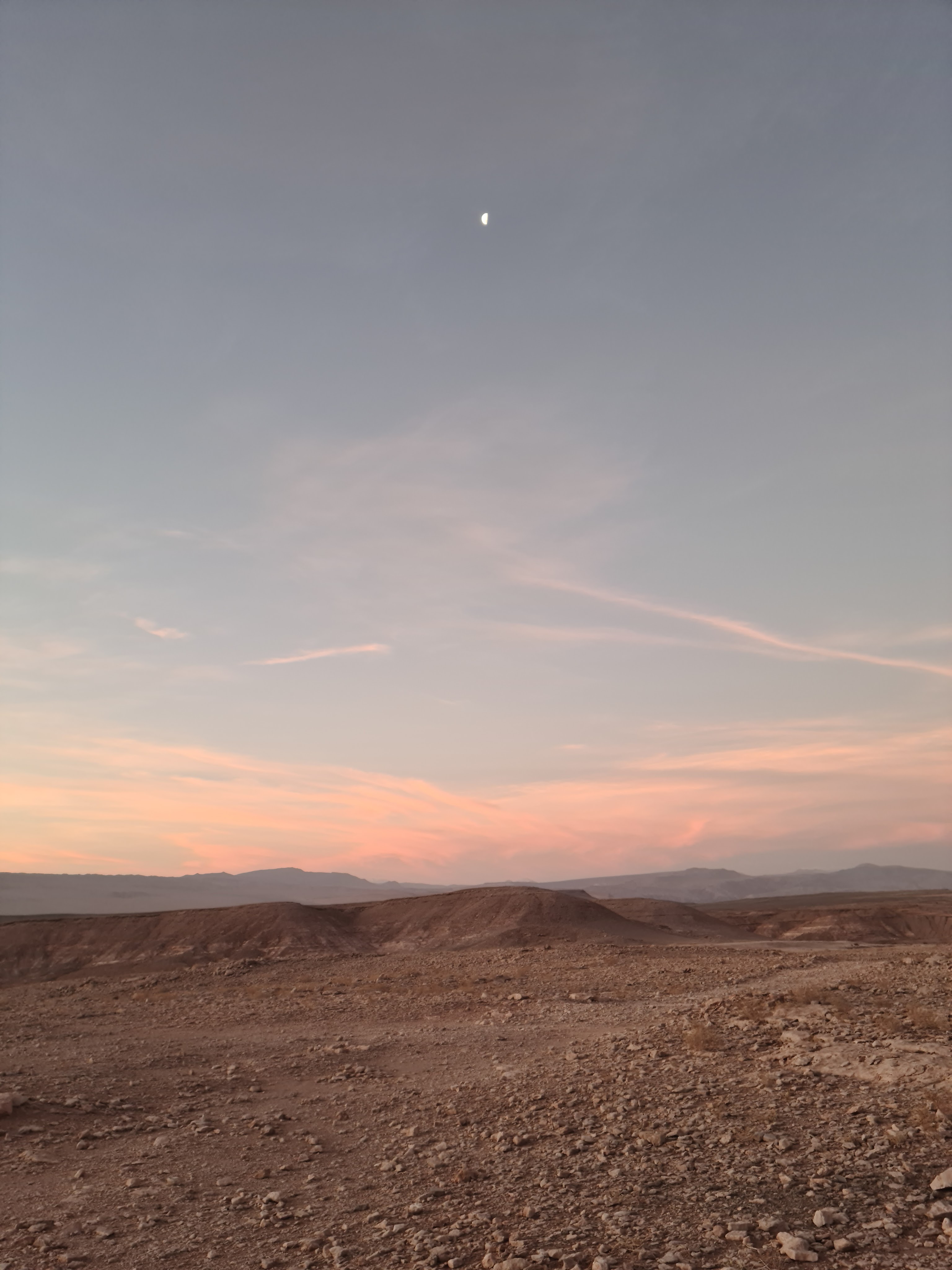
After a generous snack and cocktail break, we were taken to see the focal point of the evening – the sunset. Jonathan explained that sunset is earlier at altitude, so in SPDA you get a 10 minute advance look at the changing colours compared to the rest of the country.
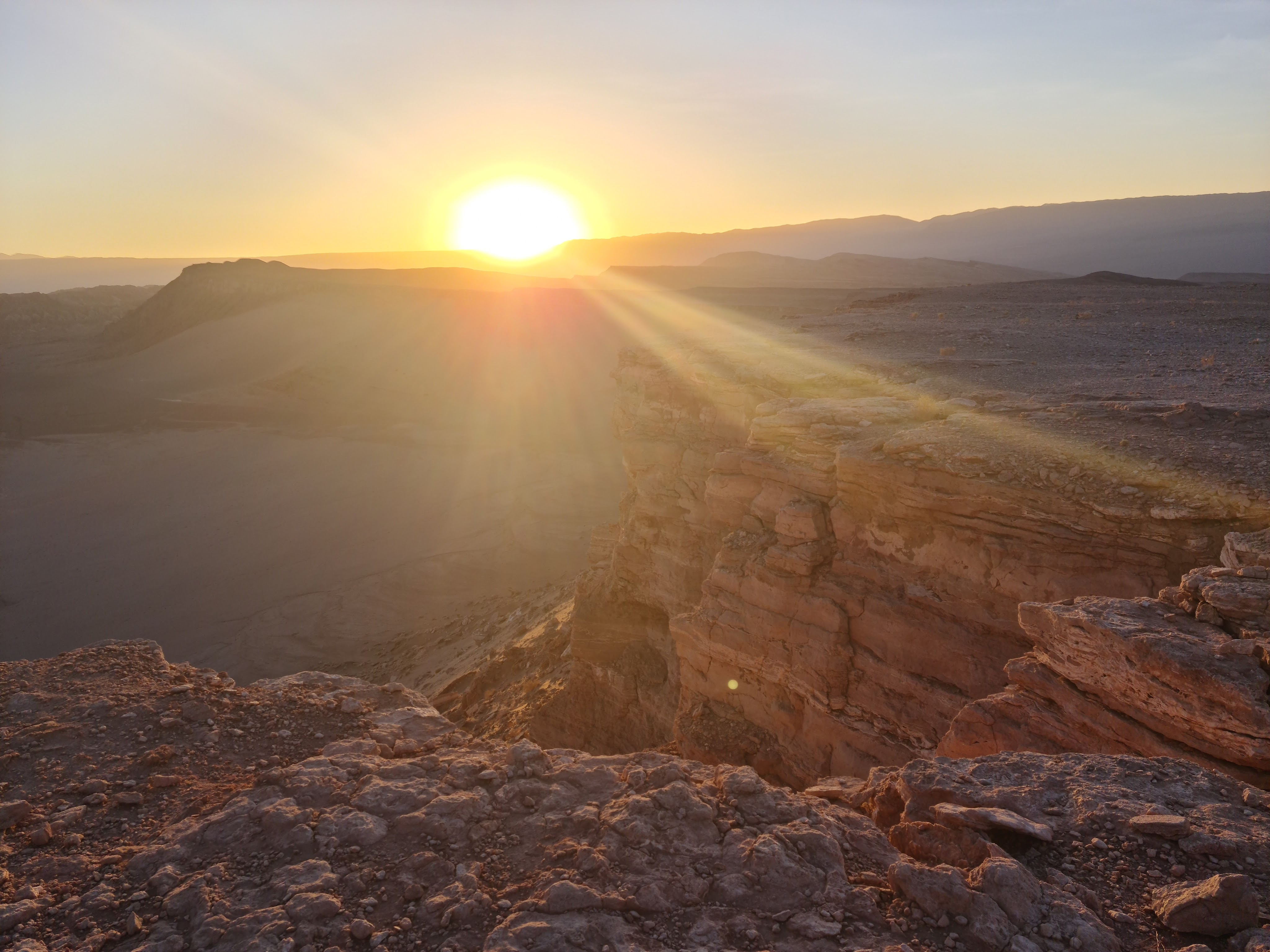
It was so calming and enjoyable watching nature’s finale to the day. It was the perfect way to round off our journey to northern Chile.

The food and drink bit (poll for a snazzier name at the bottom!):
A trip to Chile wouldn’t be complete without a pisco sour. Although it’s Peru’s national drink, Chileans make their own version with the addition of the rica rica herb. Similar in flavour to thyme, this is meant to add an extra level of refreshment. I can’t quite comment on this, and will just have to try the two side by side before I can confirm!
In the heat, an ice cream or two is definitely recommended, and we followed a Lonely Planet tip to Babalu, a small parlour with an abundance of interesting local flavours.
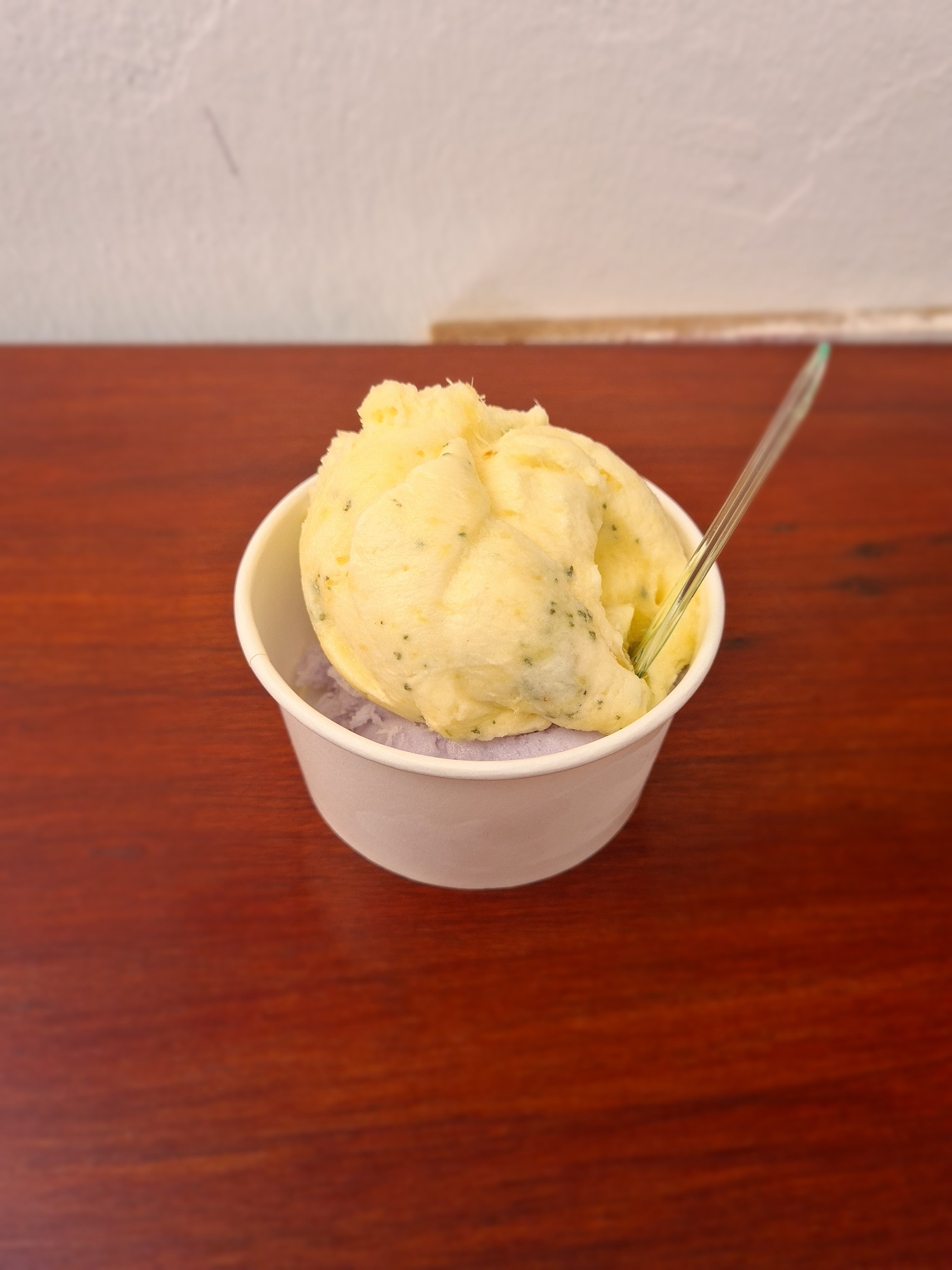
The yellow scoop pictured on top is pinapple with rica rica (very refreshing), and peeking out below in purple is flor de desierto / flower of the desert. Given the beautiful violet colour, it didn’t surprise me at all to find this tasted just like parma violet sweets. Not pictured are Ricki’s choices – pisco sour and quinoa tres leches. Due to the full grains, the latter would make an excellent breakfast ice cream! It was Ricki’s favourite of the two, though the pisco sour might have won out if we had been doing a lot of exertion.
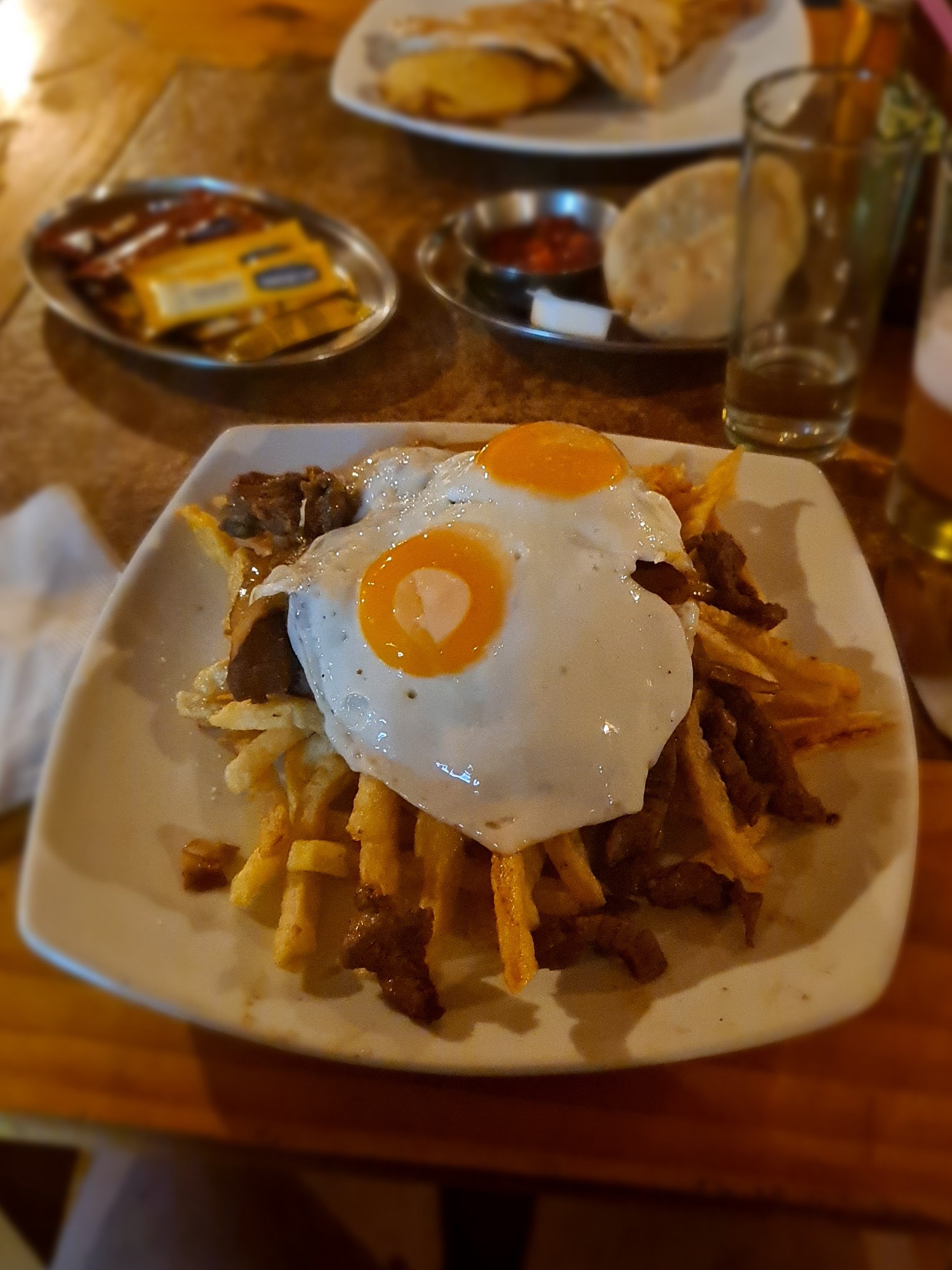
If that doesn’t seem substantial enough, my last dinner in SPDA was chorrillana – fries topped with beef and eggs. And substantial is definitely the word. I only managed just over half of this artery clogger.
As if this wasn’t calorific enough already, I accompanied it with a terremoto, Chile’s other wine based cocktail – white wine, pineapple ice cream and grenadine.
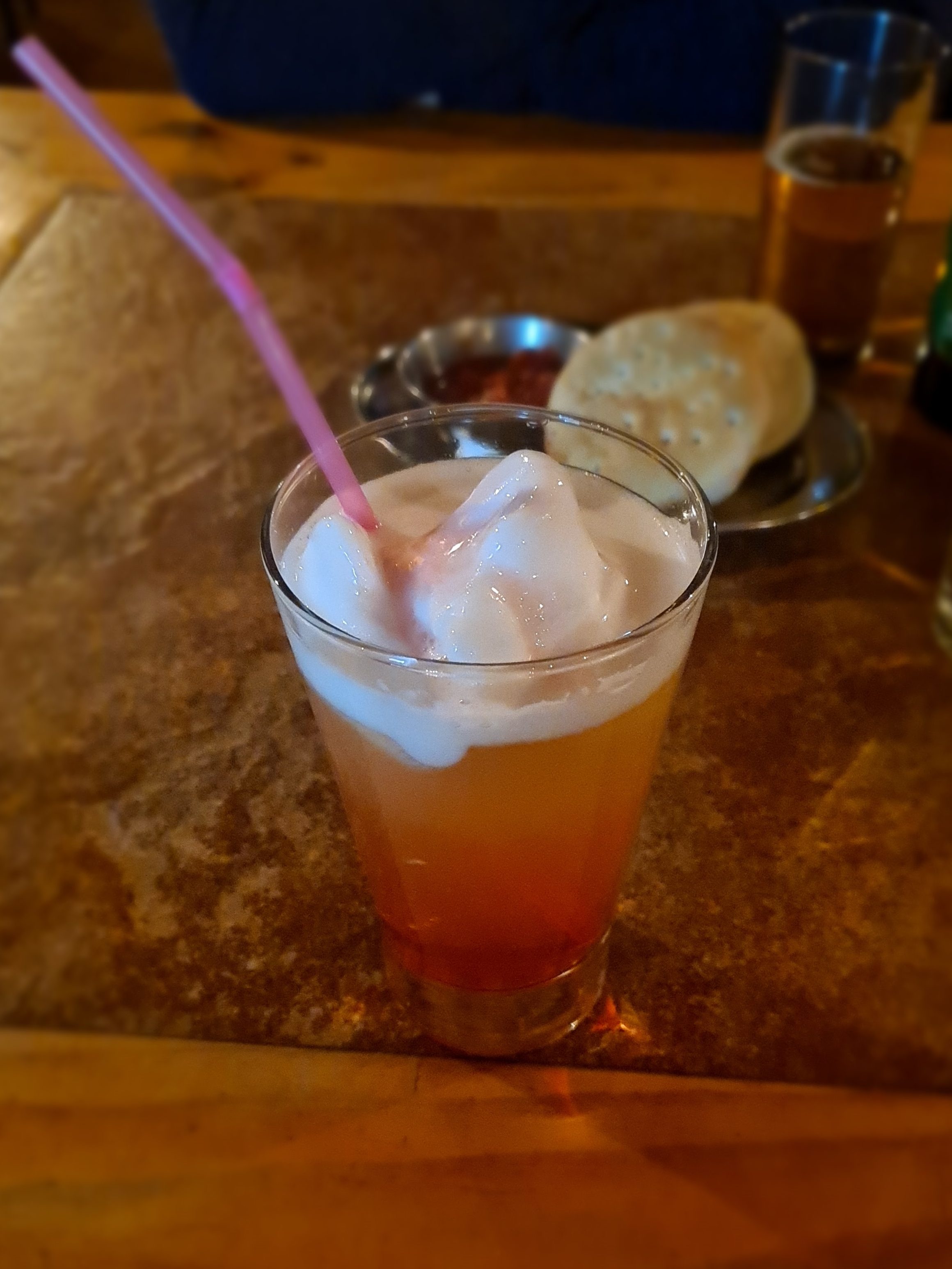
It’s nicer than it sounds, but I think I prefer the borgoña mentioned in my last post. Thankfully I still have another week in Chile to find one!
Now, your chance to influence the blog…
- This blonde is gradually growing out ↩︎
 A Place Both Wonderful and Strange - Tash & Ricki's Career Break Travels
Leave a comment