
Soon after arriving in Mendoza, we were enjoying the design of the city.
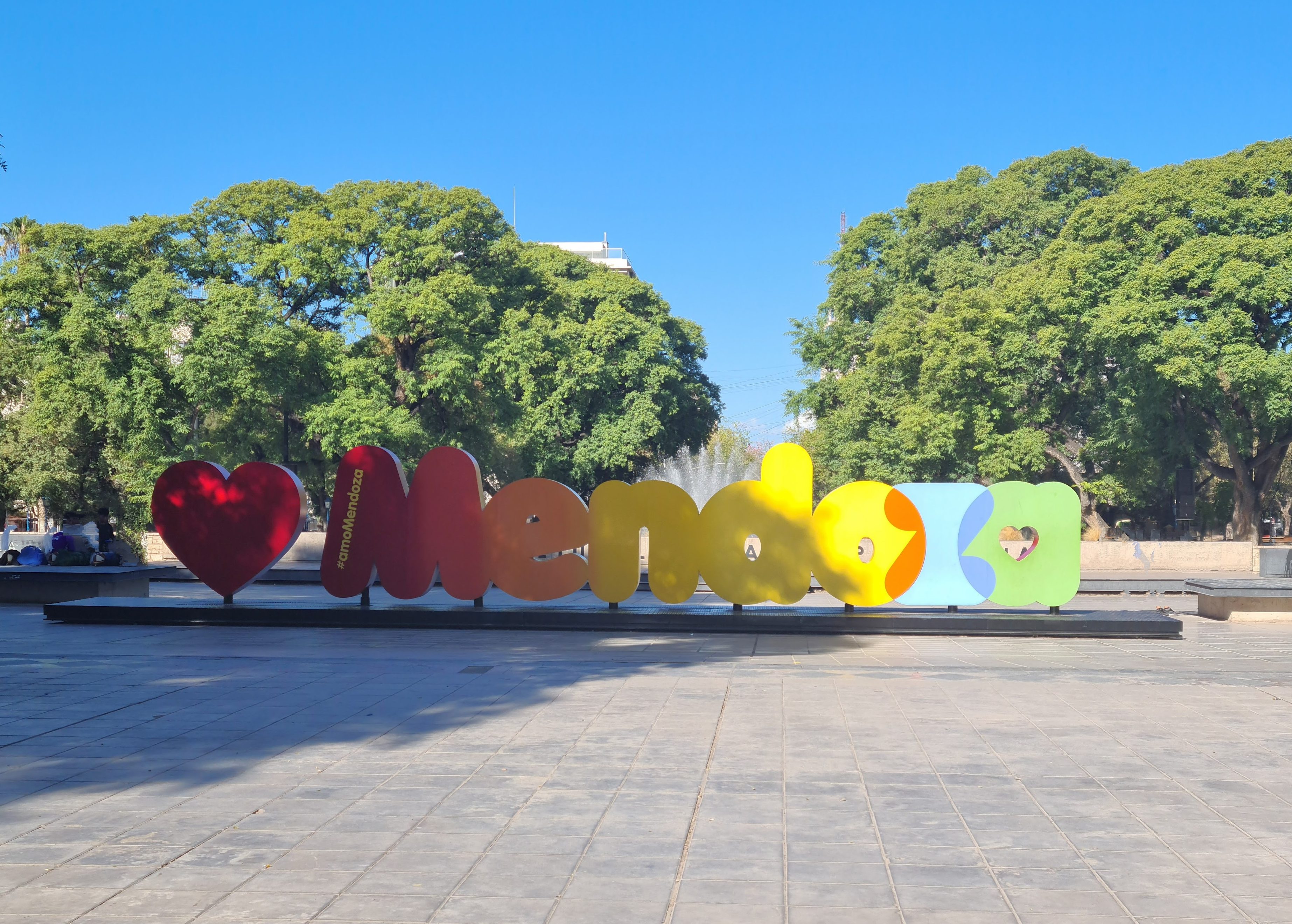
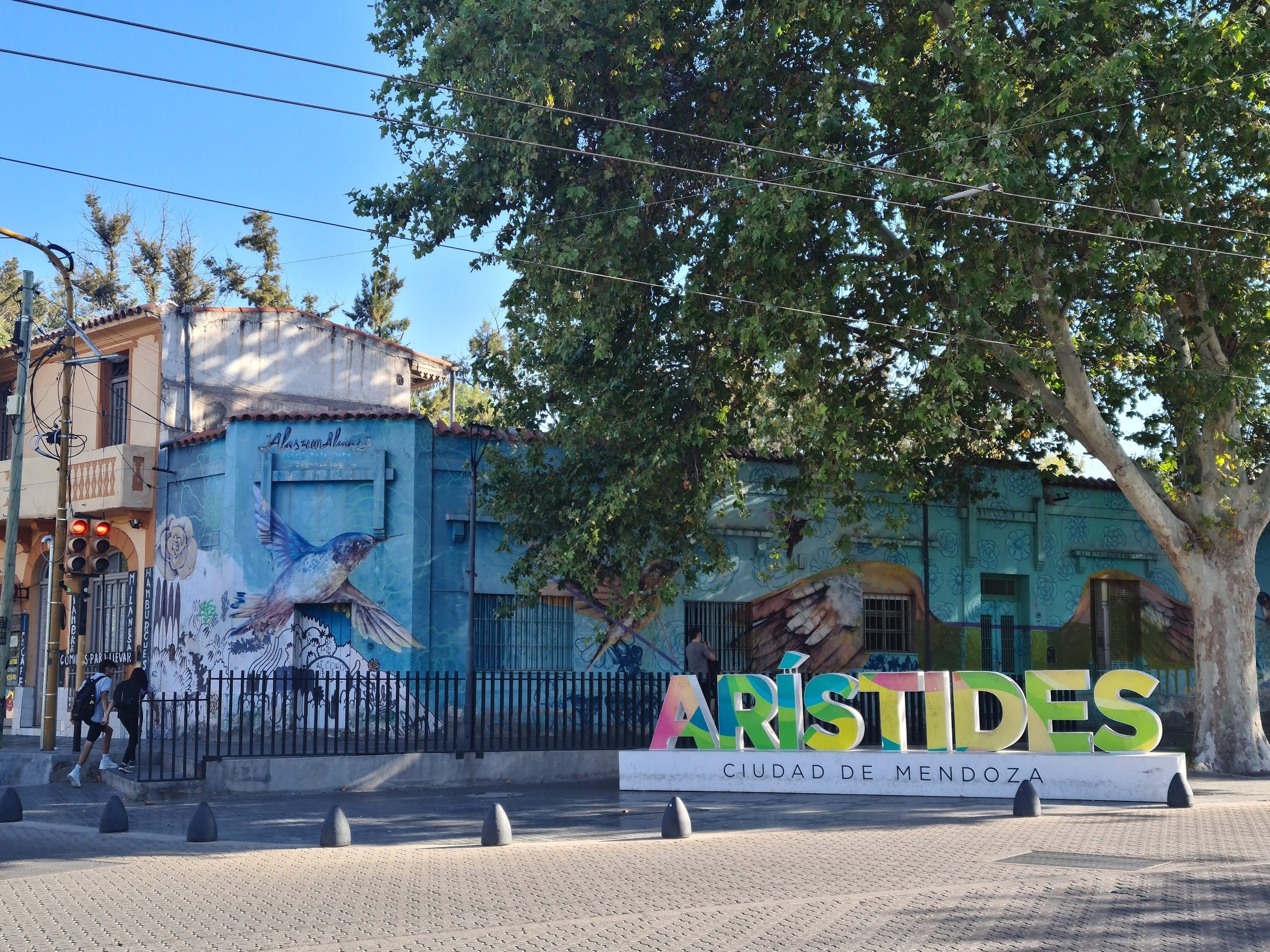
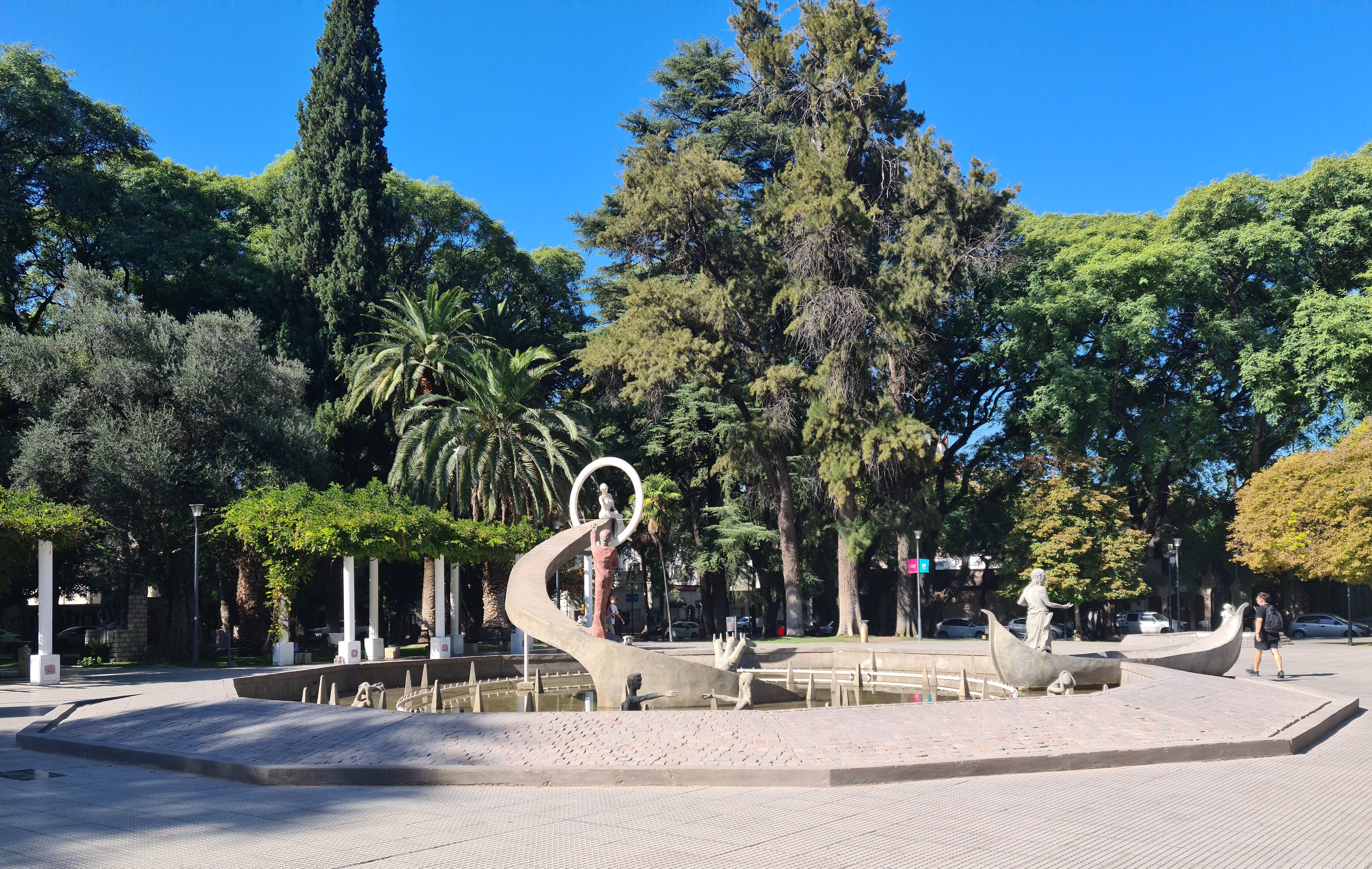
After an earthquake in 1861, the city was rebuilt with lower buildings and wider streets so that it could better withstand any future seismic activity. The grid layout is also dotted with various plazas, each relating to a different person, country or event in Argentine history. The plazas typically have some greenery and statues or sculptures, and are very pleasant to pass through as you walk your way from A to B.
What was a bit more disconcerting was just how security conscious Mendozans are. All houses seemed to have windows barred up and obvious alarm systems. Our own Airbnb host advised us to keep our doors and front gate locked, including a large chain and padlock round the gate. This in addition to electric wiring around the perimeter. In the evenings, we also kept hearing a high pitched sound, which we eventually discovered was a policeman on night patrol with a whistle to alert residents he was around.
Happily this all just seemed to be preventative dissuasion tactics – we never saw or heard of any crime while we were in Mendoza.
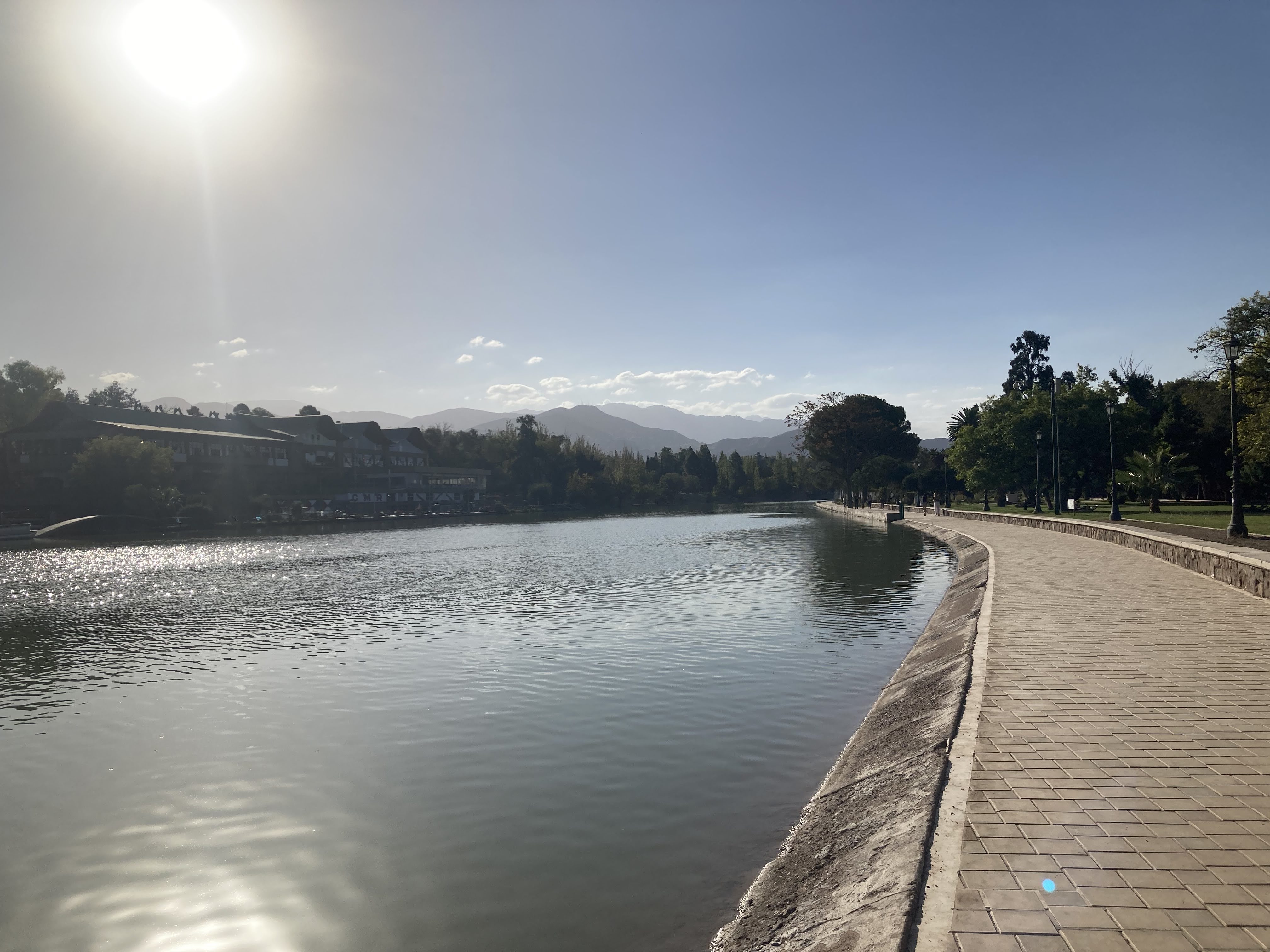
A much more appealing feature of our neighbourhood was our proximity to Parque General San Martin. This is an expansive green space with a variety of sports areas, including the large lake itself where we could enjoy watching rowers skim across the surface.
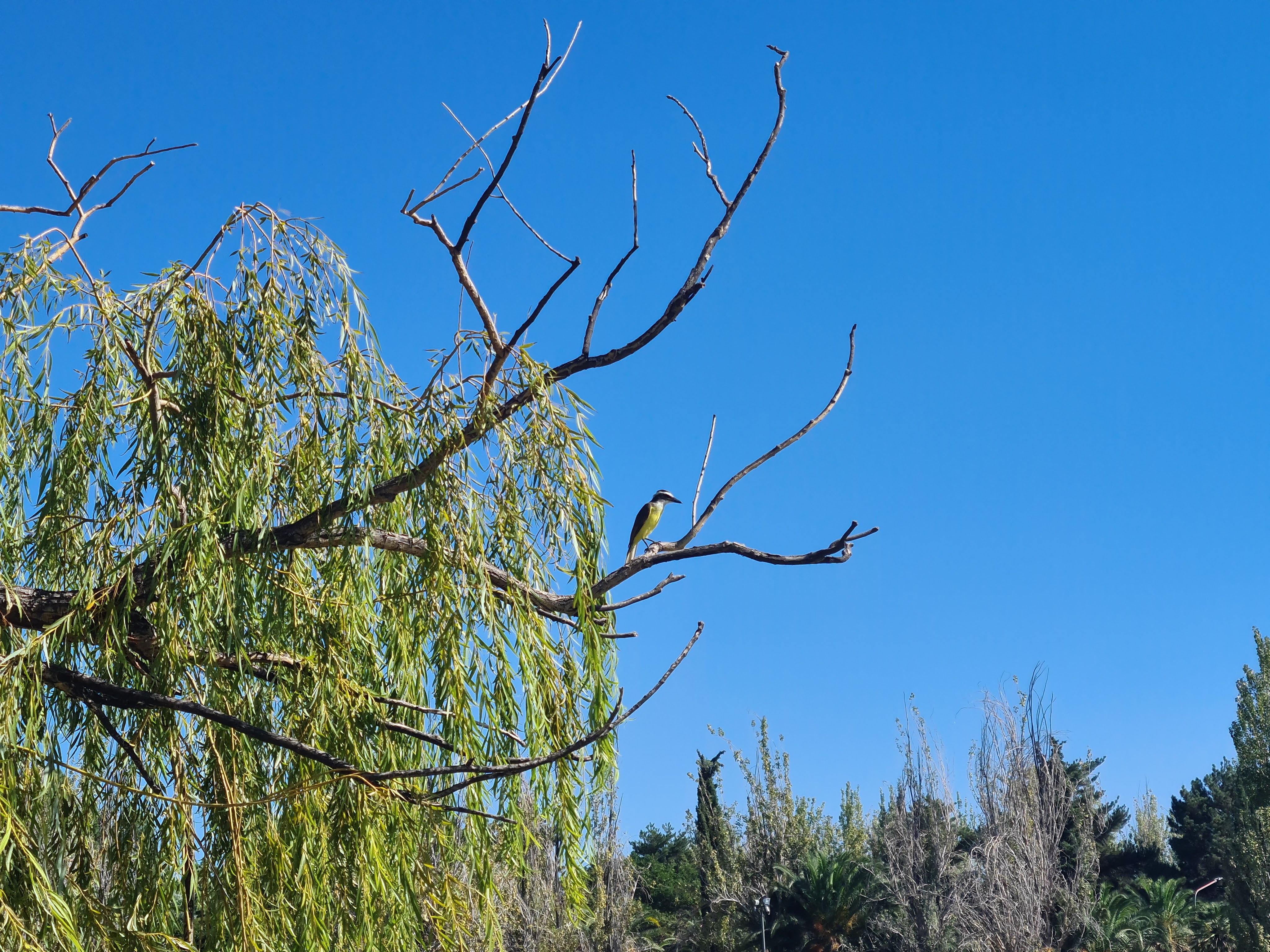
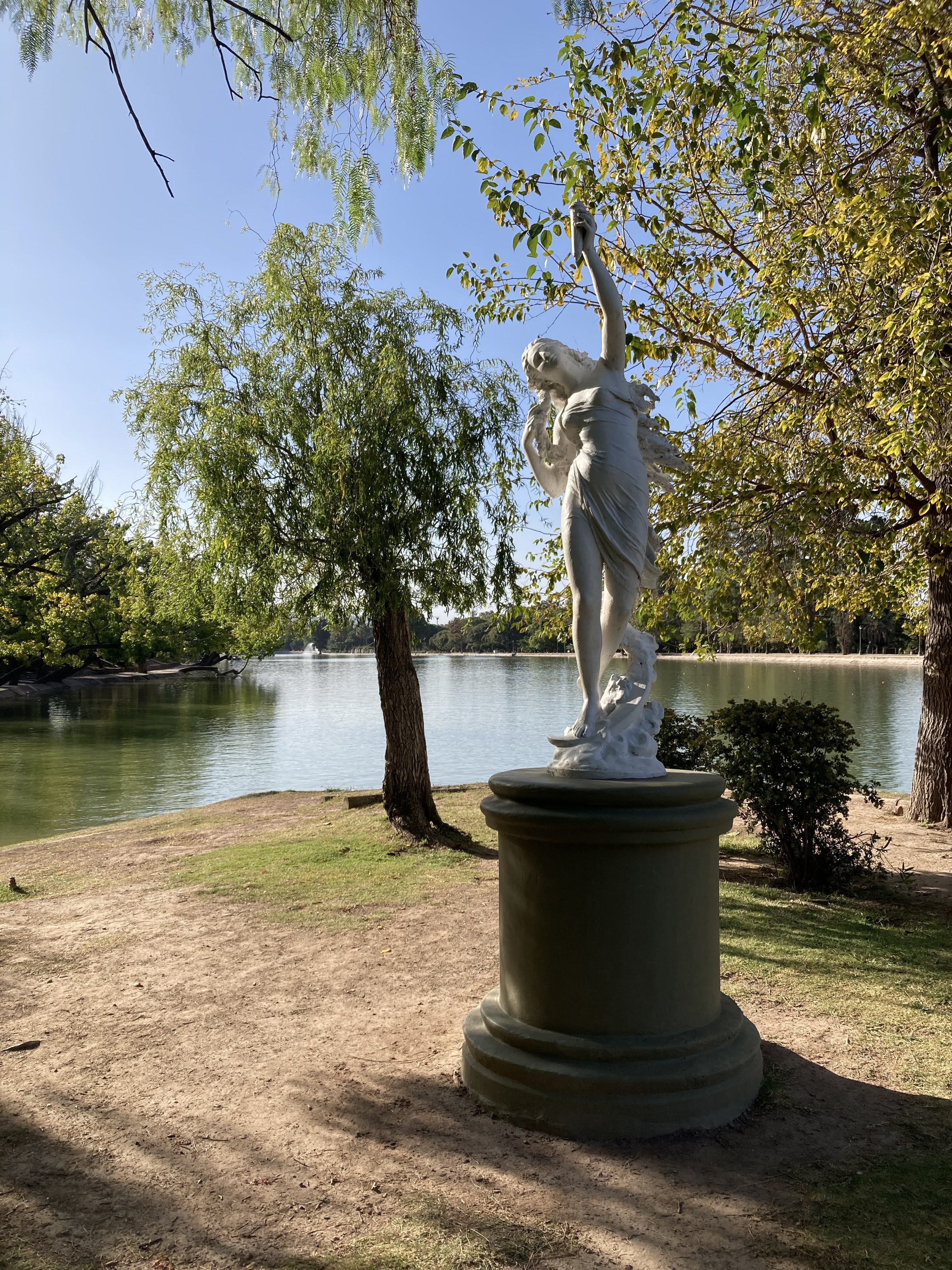
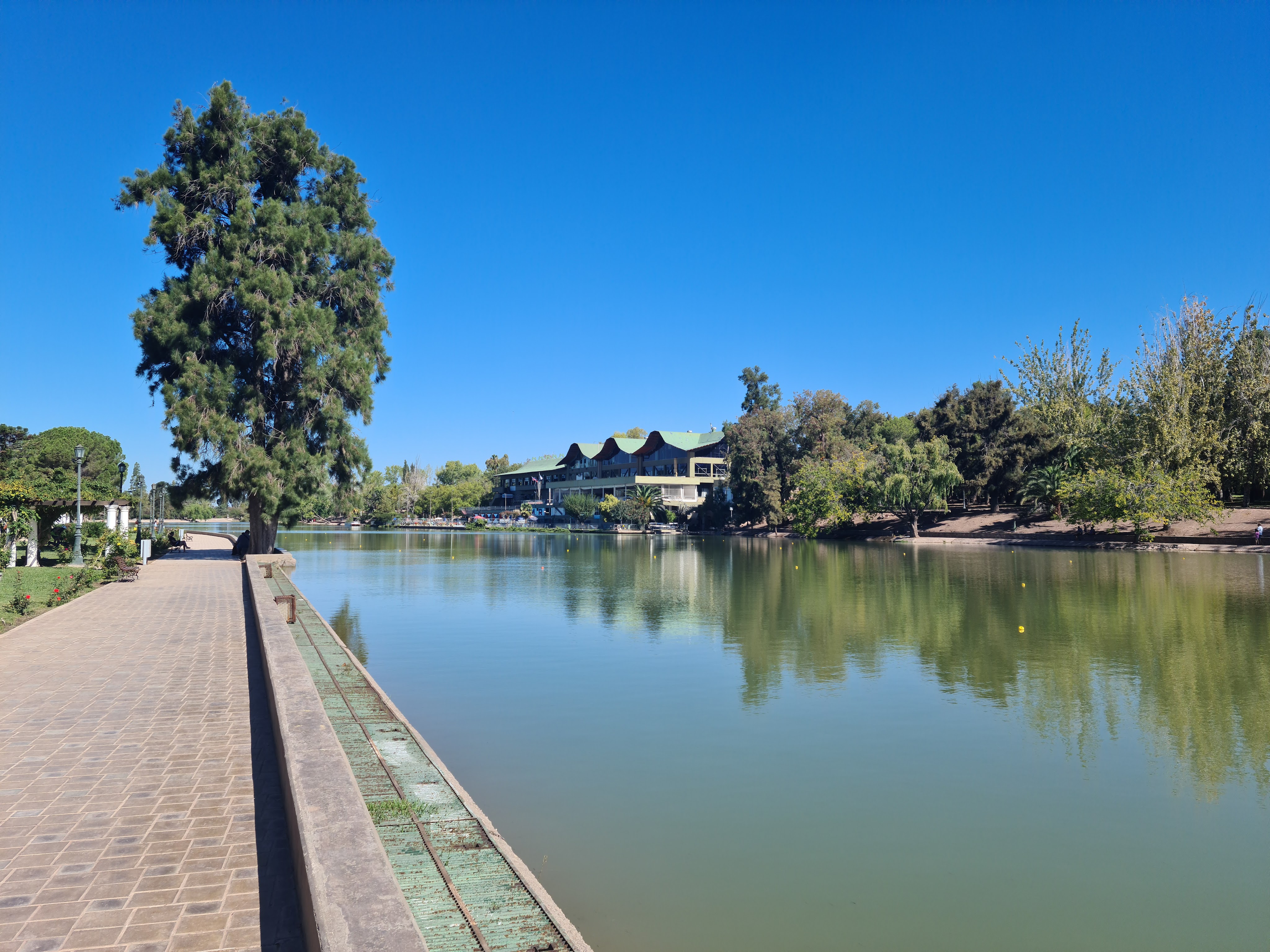
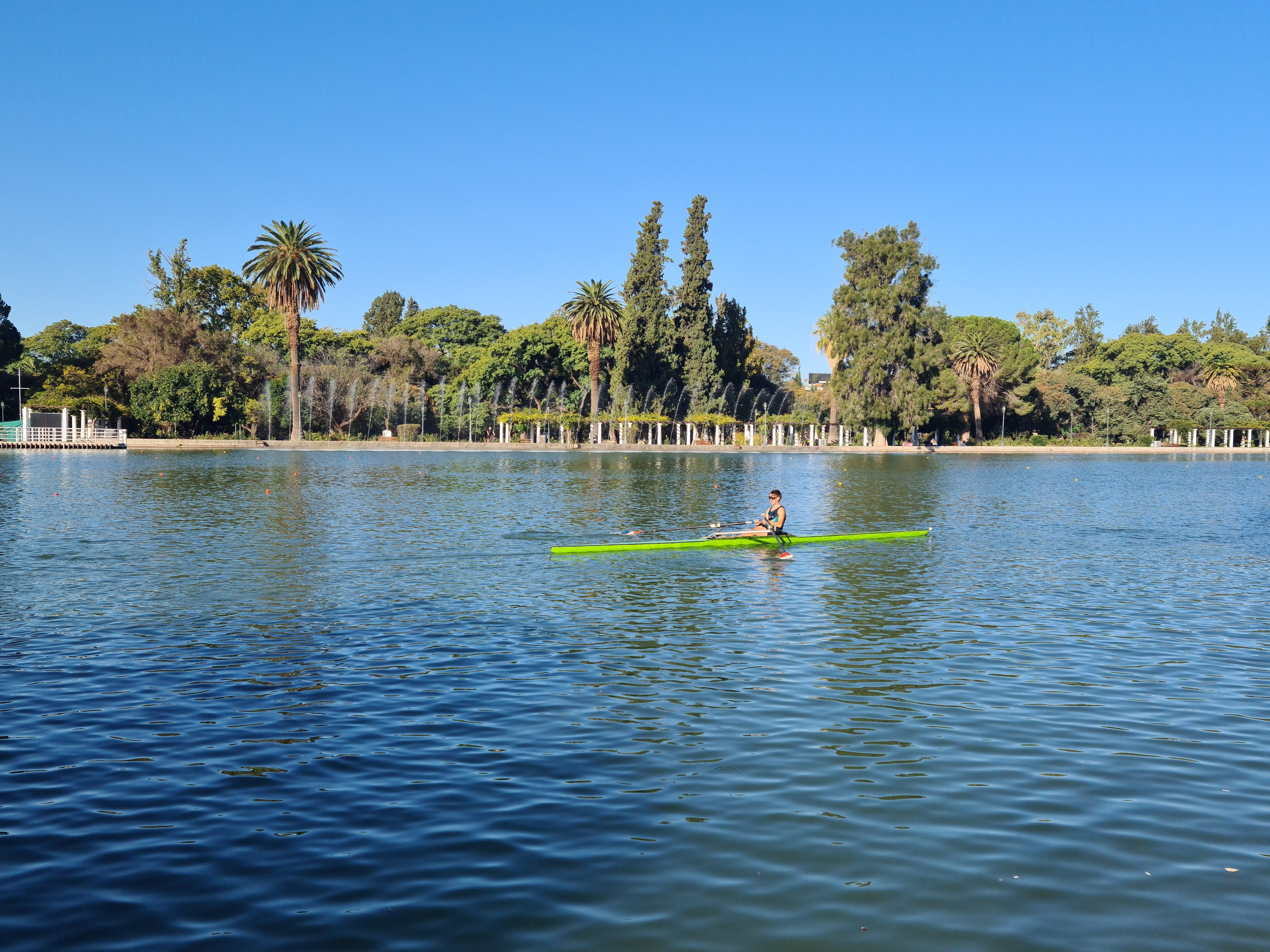
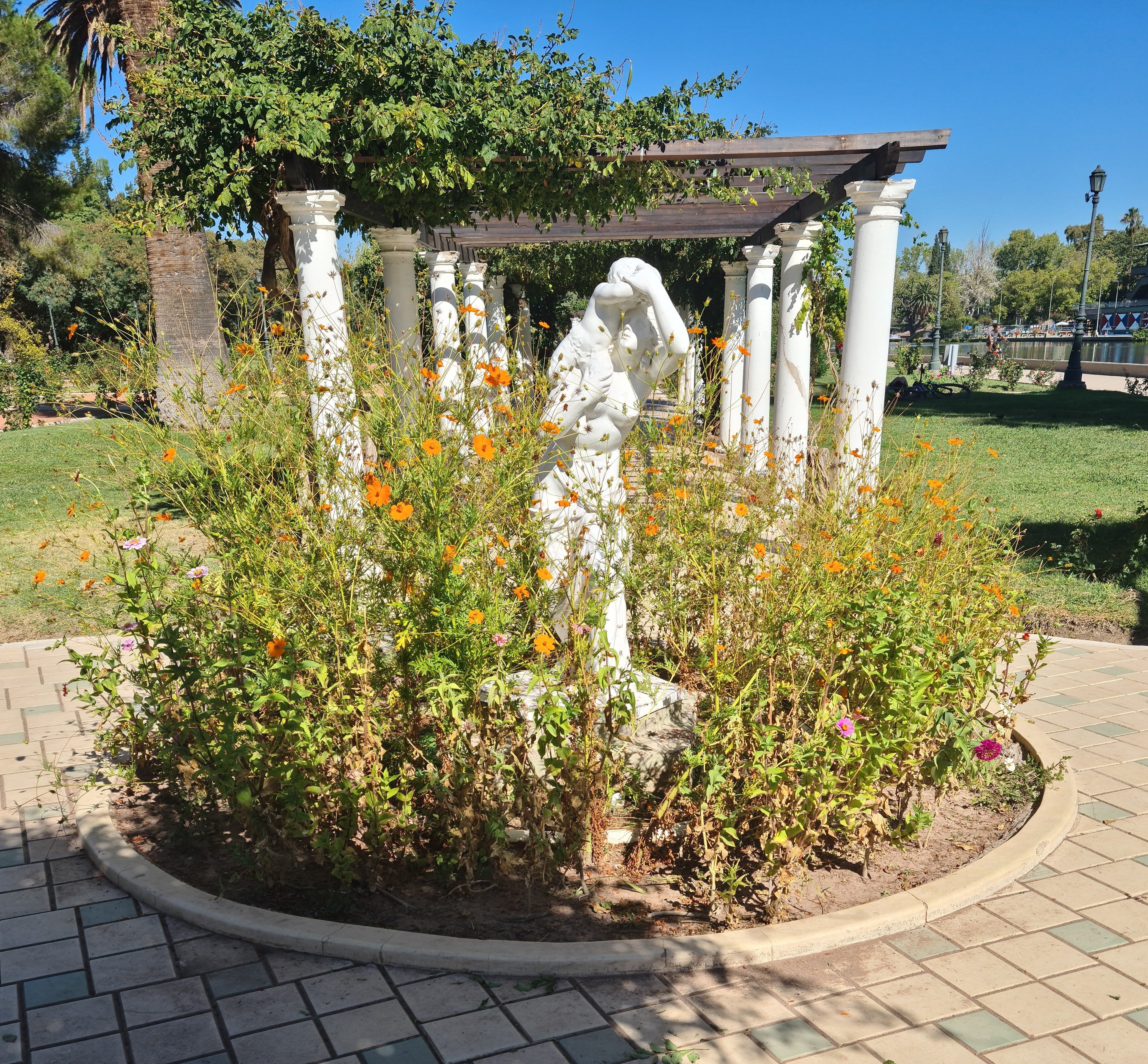
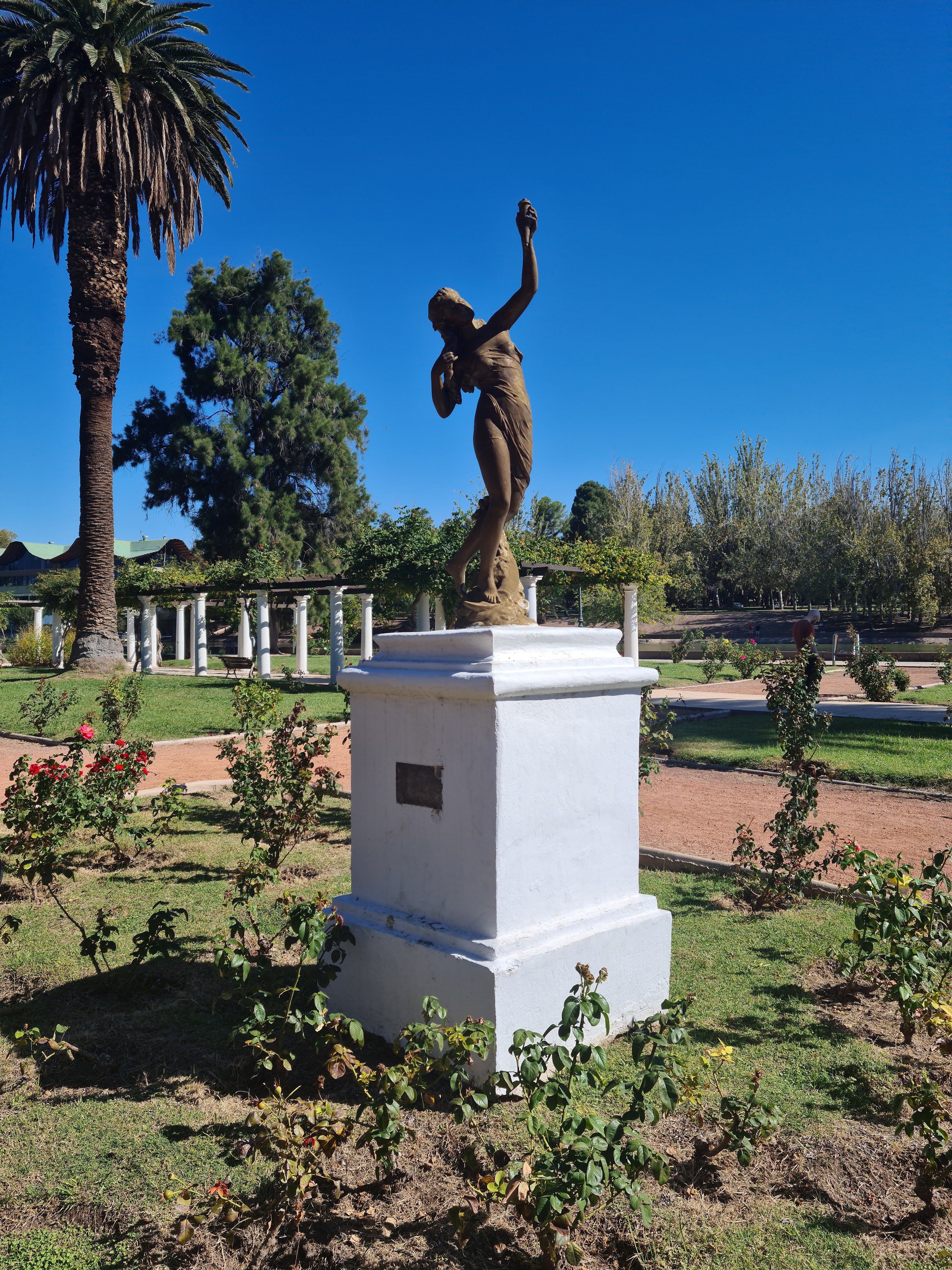
One of the nicest areas was the rose garden. After seeing so many parks in Europe in winter, it was great to finally see some colourful blooms!
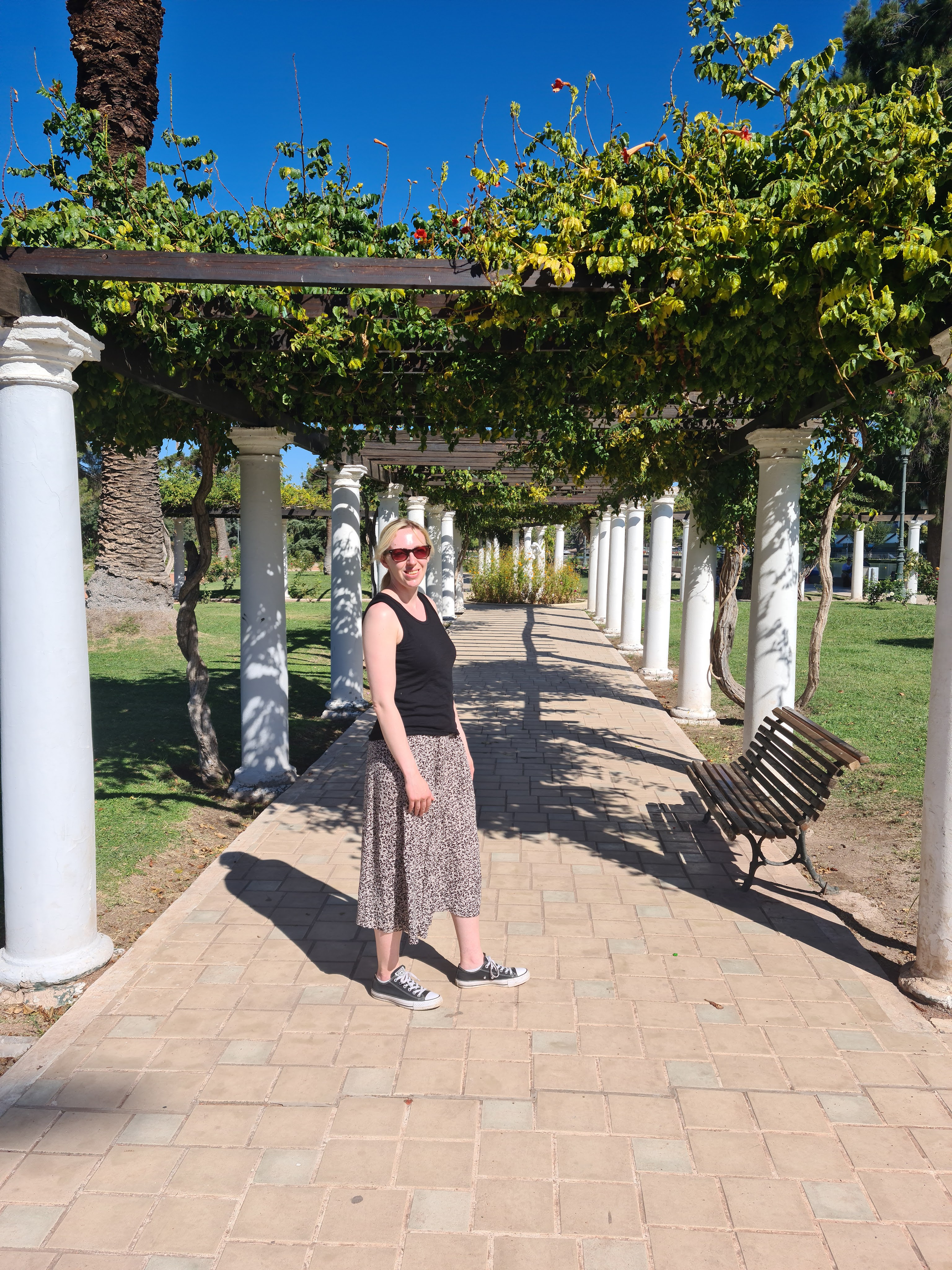

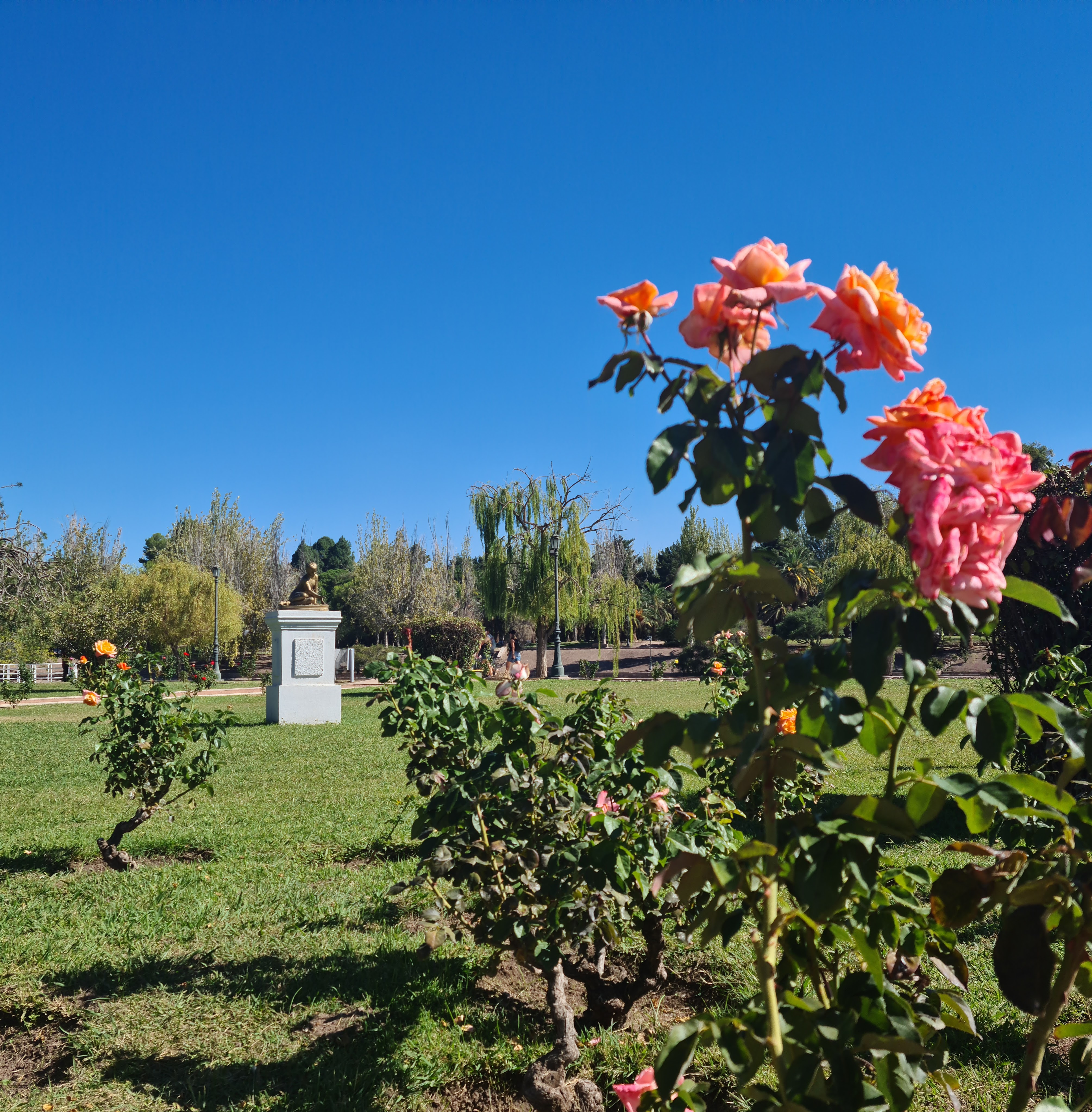
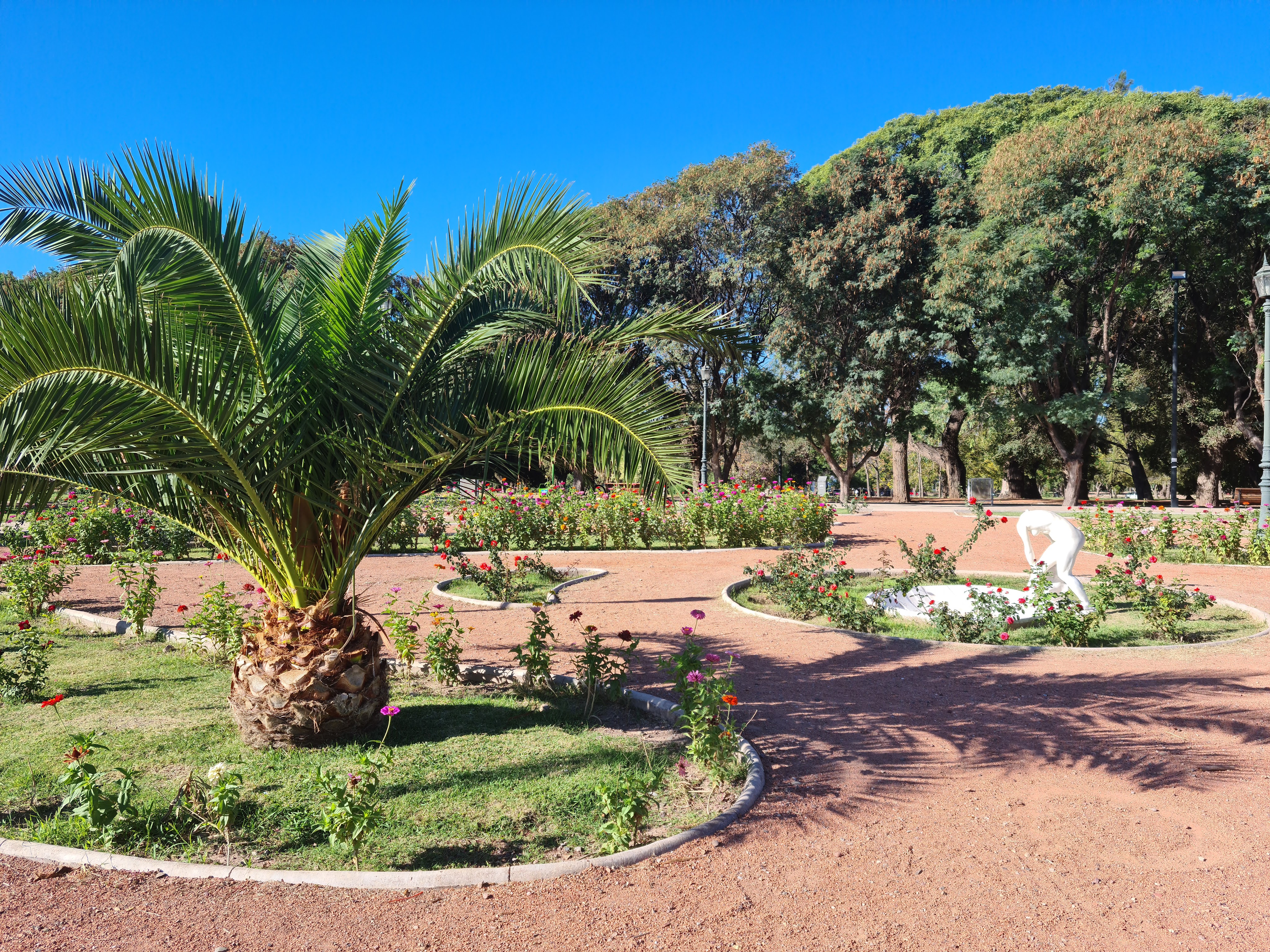
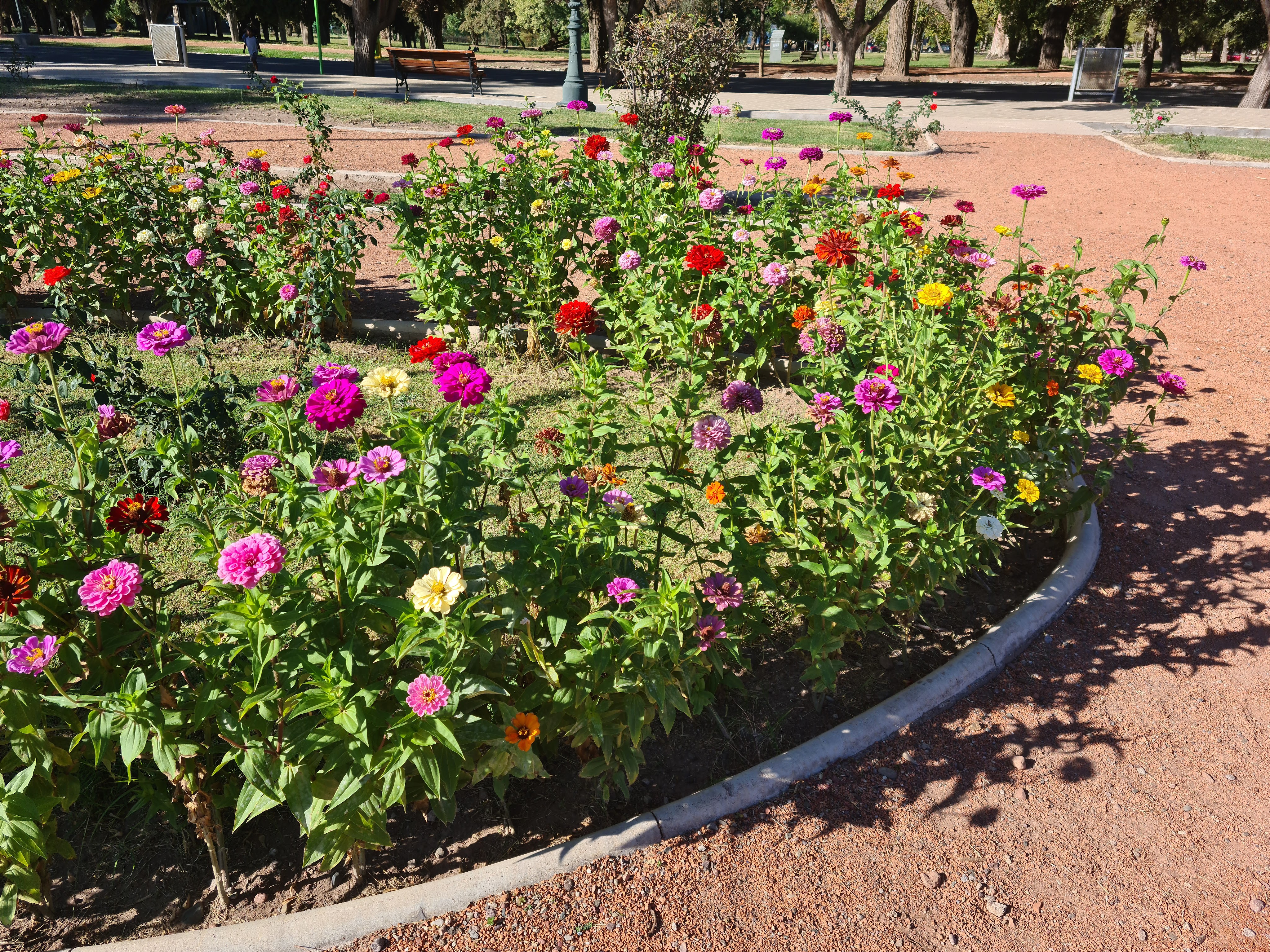
In the end, I think we only saw about half the park in total. The western side is more of a hill climb, and with Mendoza in something of a heatwave, wasn’t so appealing while we were there.
If I’m honest, we didn’t really get the best of Mendoza province in our two week stay. Easter weekend fell early on and includes the Thursday immediately preceding Good Friday. In Argentina it also led directly on to the commemorative day for the Falklands War (Malvinas Day). The city was set to receive a high number of visitors – I read online that the border crossing we had managed in about an hour on our way into Argentina was an 8 hour ordeal for travellers on Holy Thursday.
We were keen to avoid crowds, and in some instances businesses were closed anyway at various points over the 6 day holiday, so we had quite a few quiet days in our rental house. Quiet apart from the terrifying sudden noise of the fighter jets on Malvinas Day! Although it might have been interesting to go and watch the ceremony itself, as a pair of Brits that didn’t seem appropriate.
The high temperatures also kept us from a number of hiking options we might have looked into otherwise. And finally, Ricki took ill for the best part of a week. Having received a couple of mosquito bites, then coming down with a fever and headache, there is a good chance it was dengue fever which Argentina has been particularly affected by this year.
Happily, Ricki was recovered by our final weekend, both us now ailing only with serious cabin fever. Given our limited time remaining, we practically had the opportunity for just one activity, and it was pretty clear what that would be. You can’t come all the way to one of the most famous wine producing regions in the world and not do a vineyard tour!
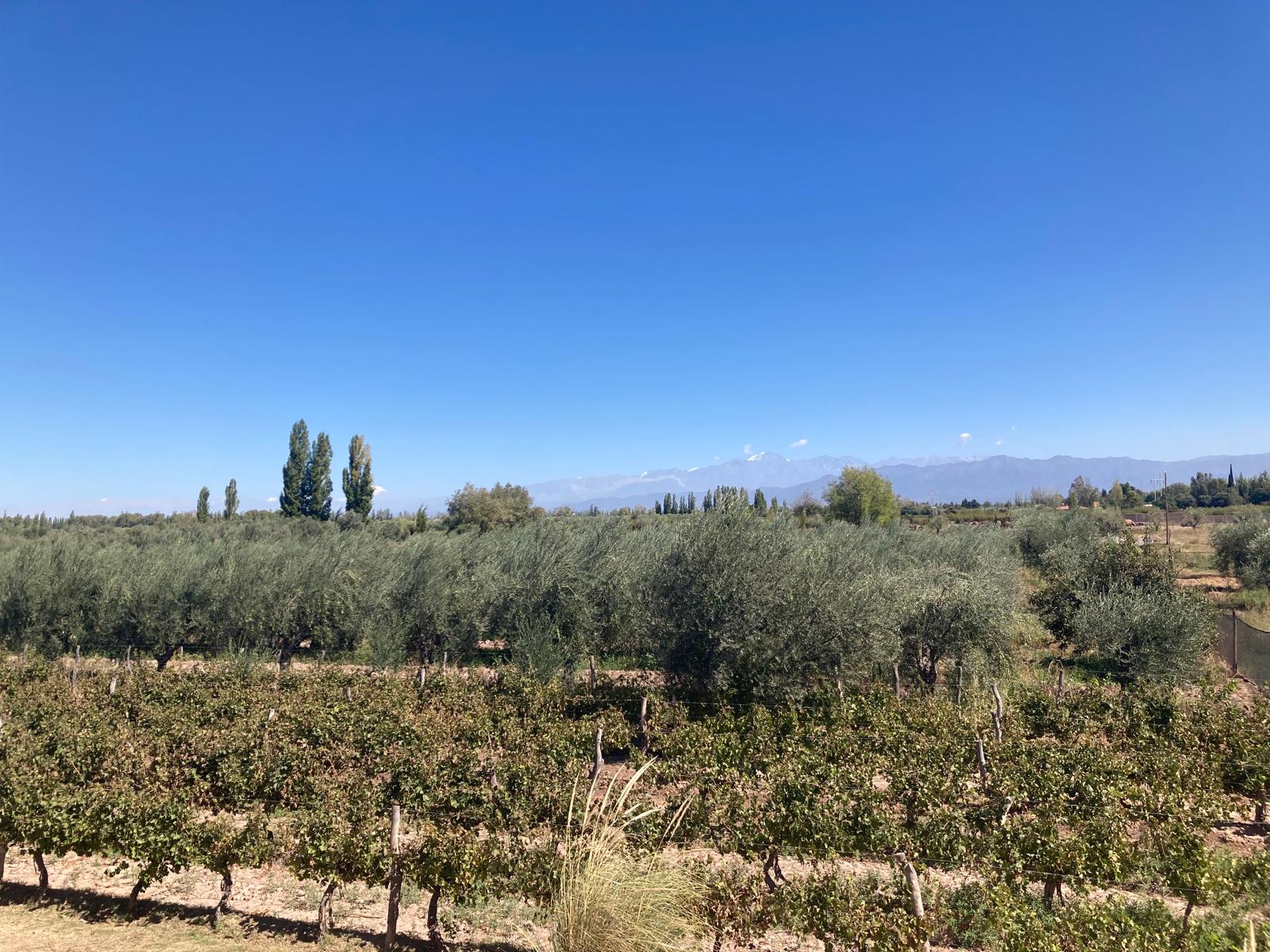
As many of the wineries and bodegas are clustered together in a small area to the east of Mendoza, Maipú Valley, it is really easy to do a self guided tour between them. And for maximum efficiency (and fun), we hired some bikes to take us across the trail.
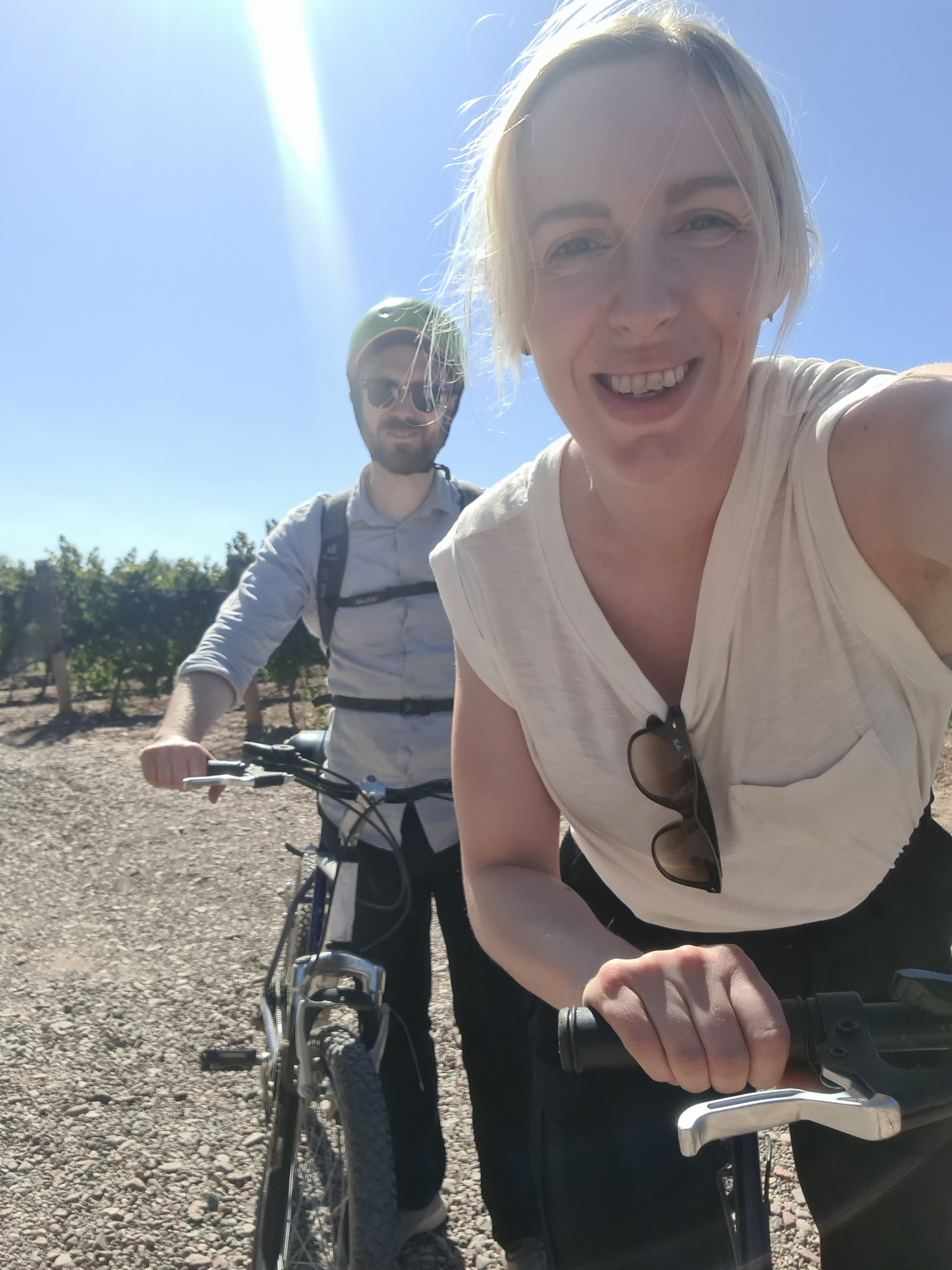
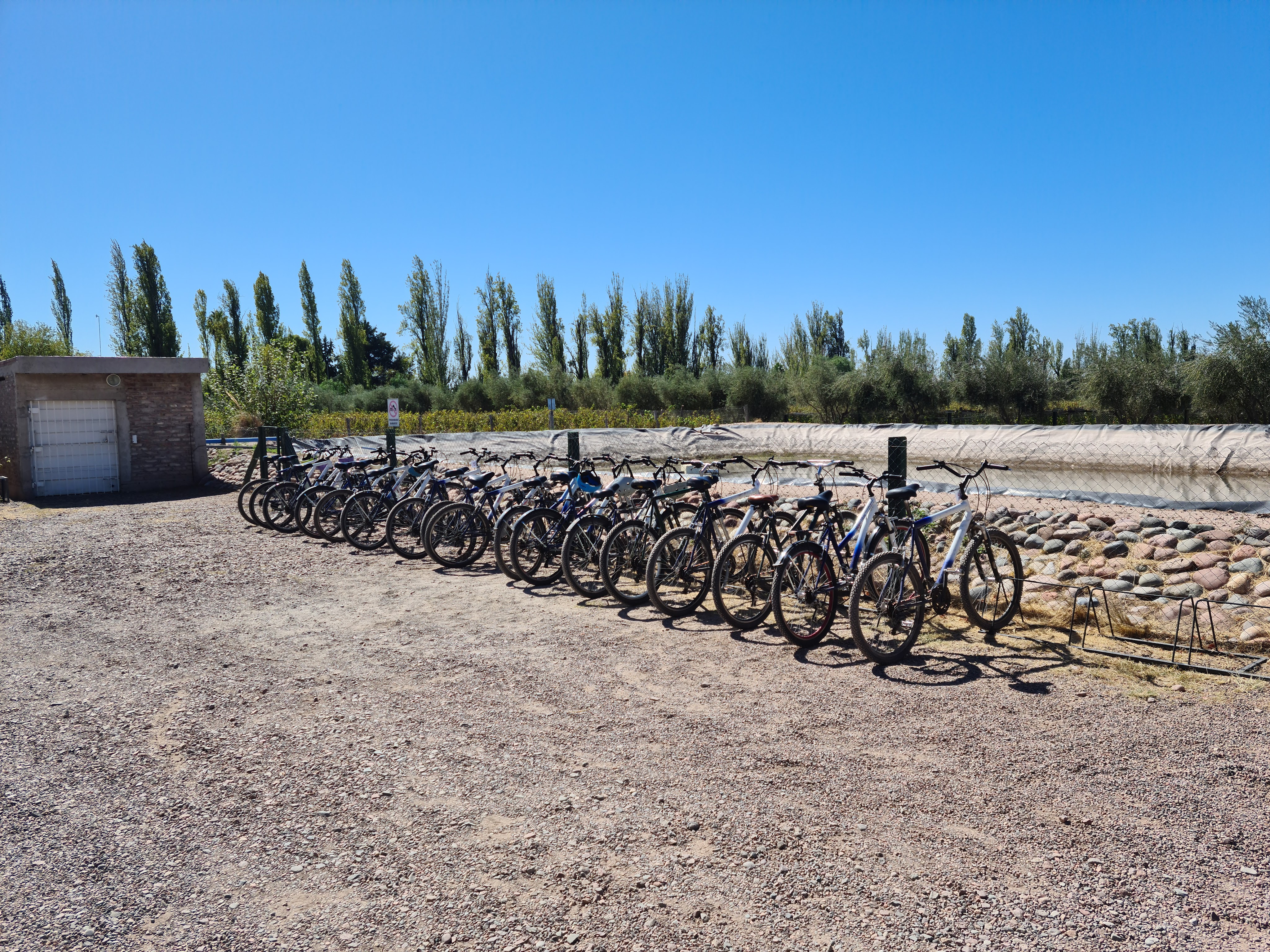
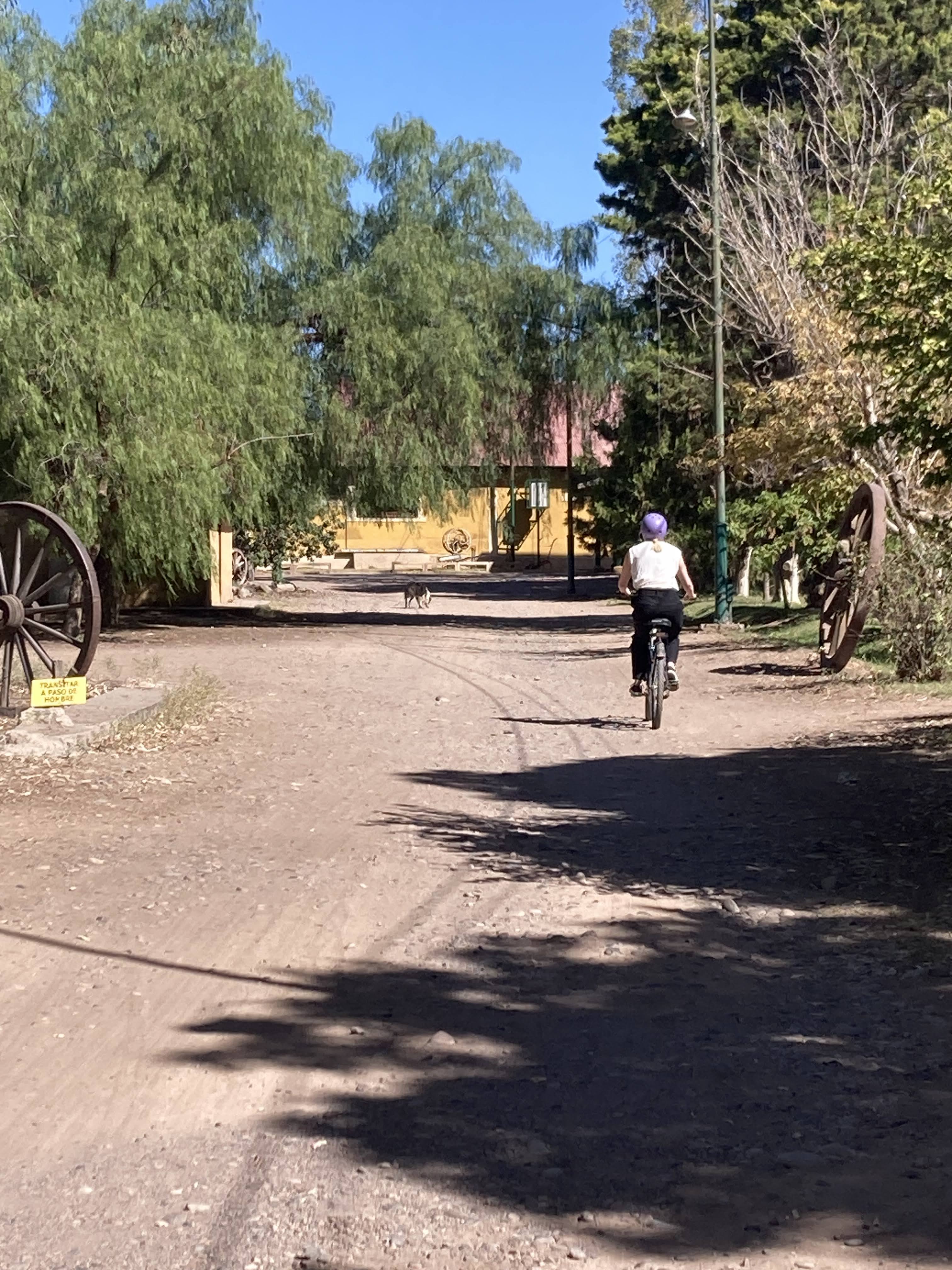
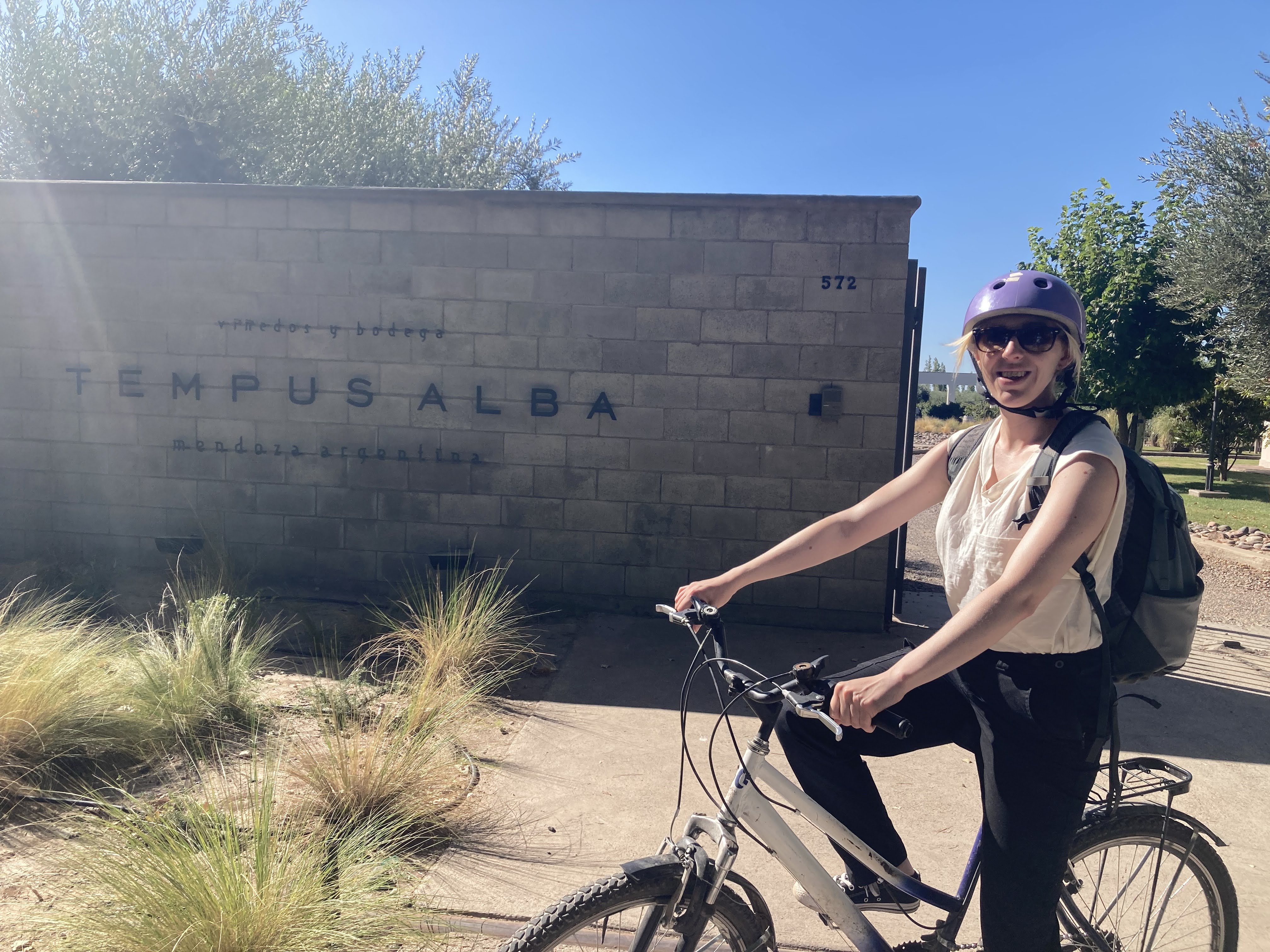
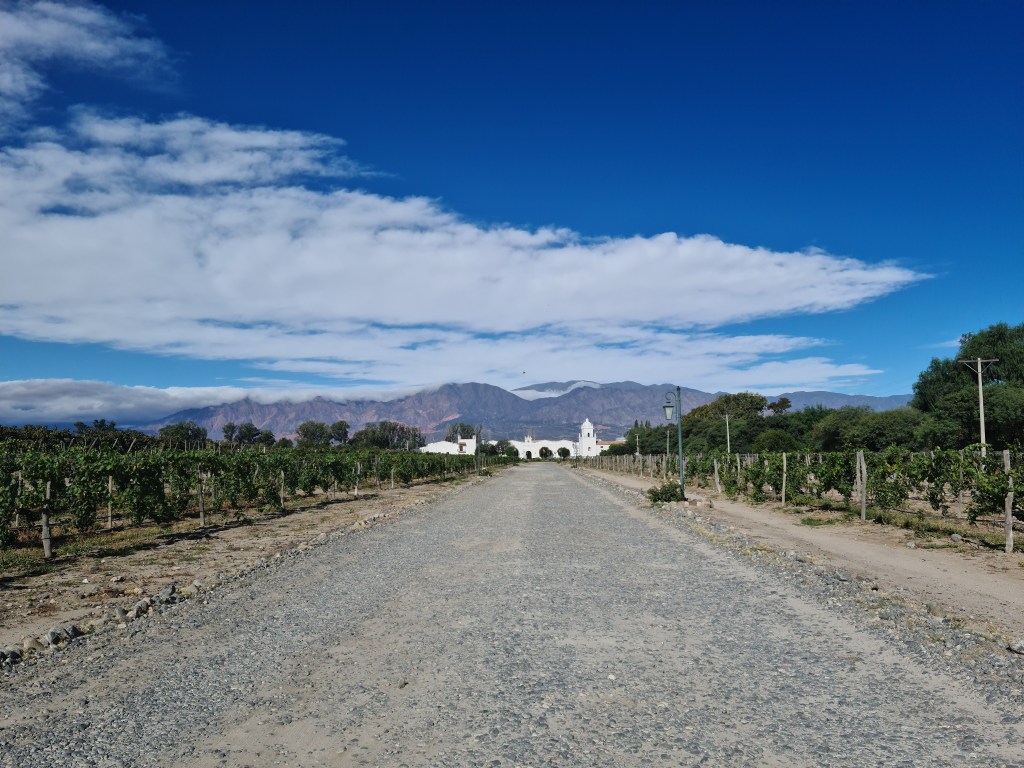
The Maipú area actually feels quite industrial, with a number of large lorries on the road, and so it was a major relief that there are clear cycle paths with divisions. It was so enjoyable to fly along the paths (as much as a seriously out of practice cyclist can) and hop into whichever bodega we fancied. It was much more peaceful inside the grounds than out on the roads, and there were often vines as far as you could see.
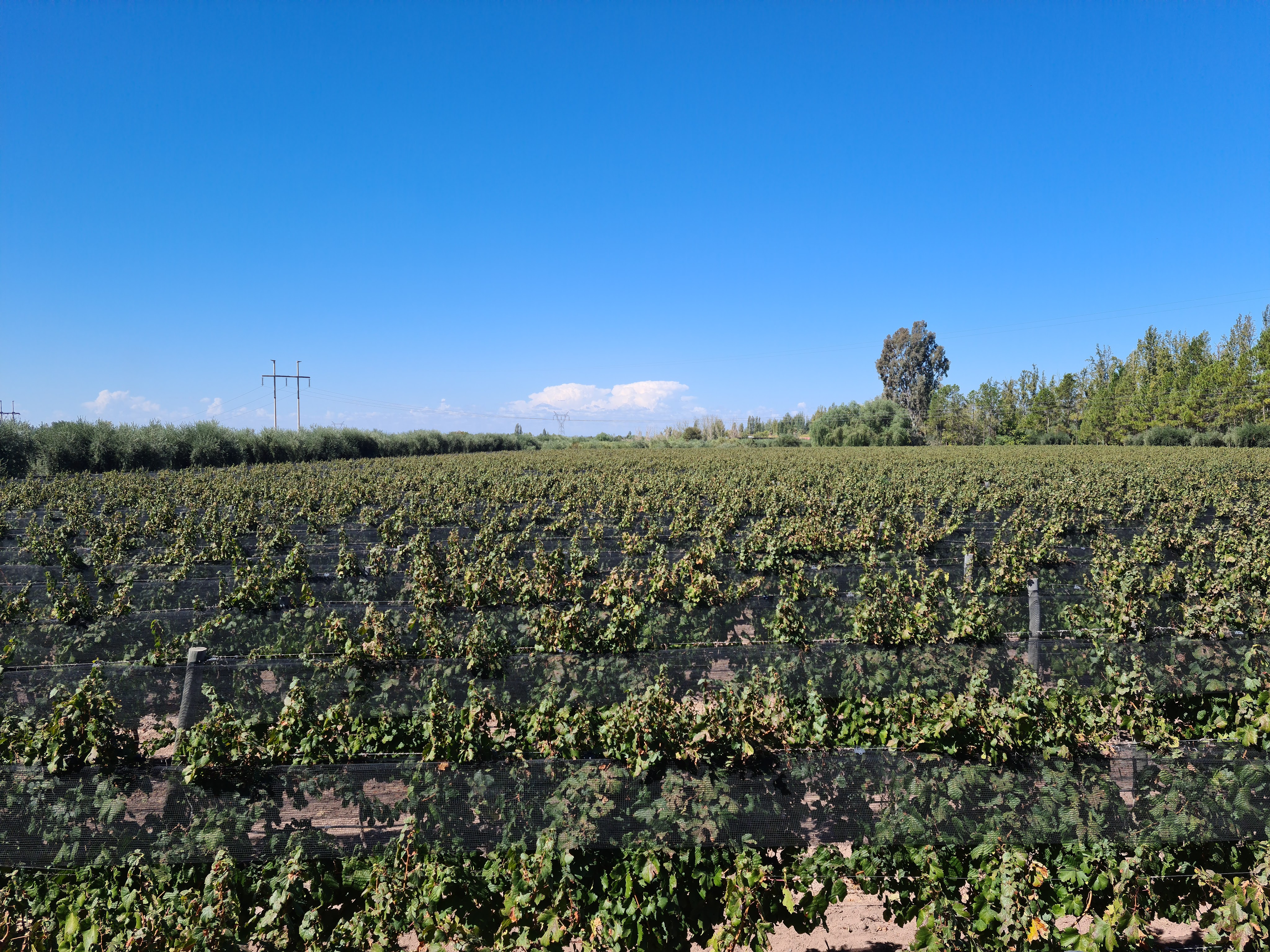
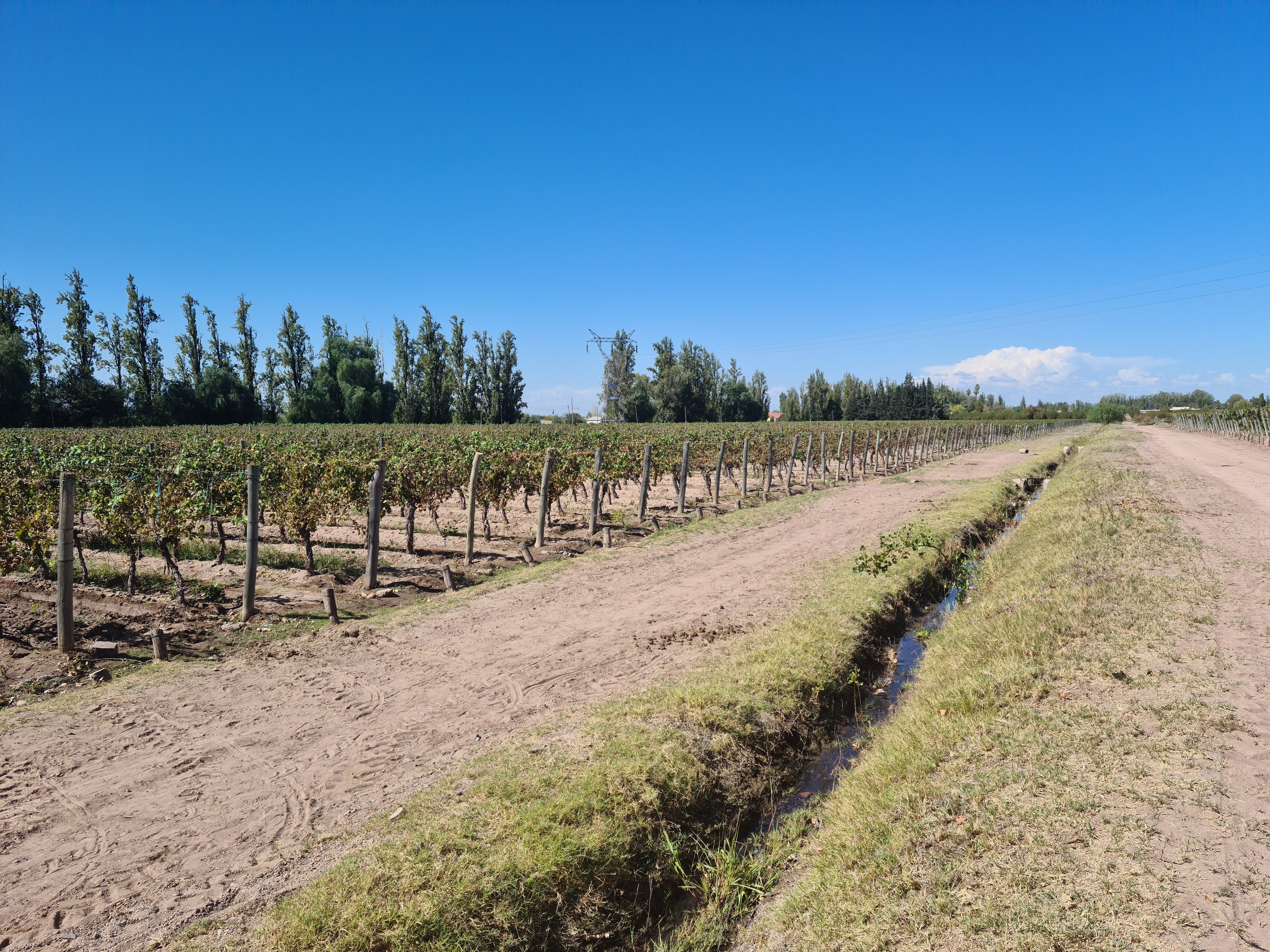
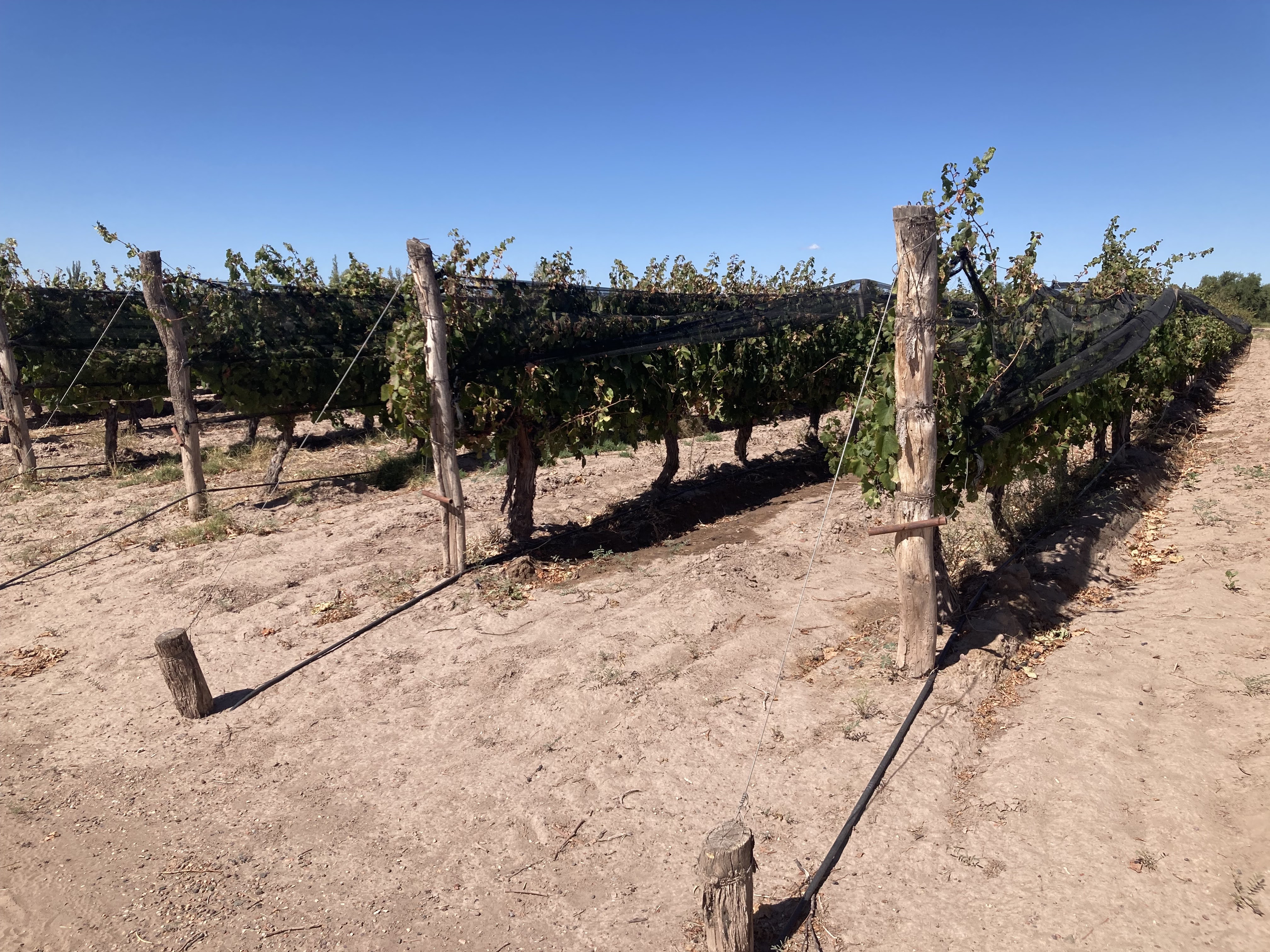
The main wines produced in the Mendoza region are reds, but at our first vineyard we were introduced to torrontés, one of the only white grapes in the region. It’s absolutely delicious and I can’t believe it’s not more popular elsewhere – perhaps the Argentinians have been keeping it for themselves!
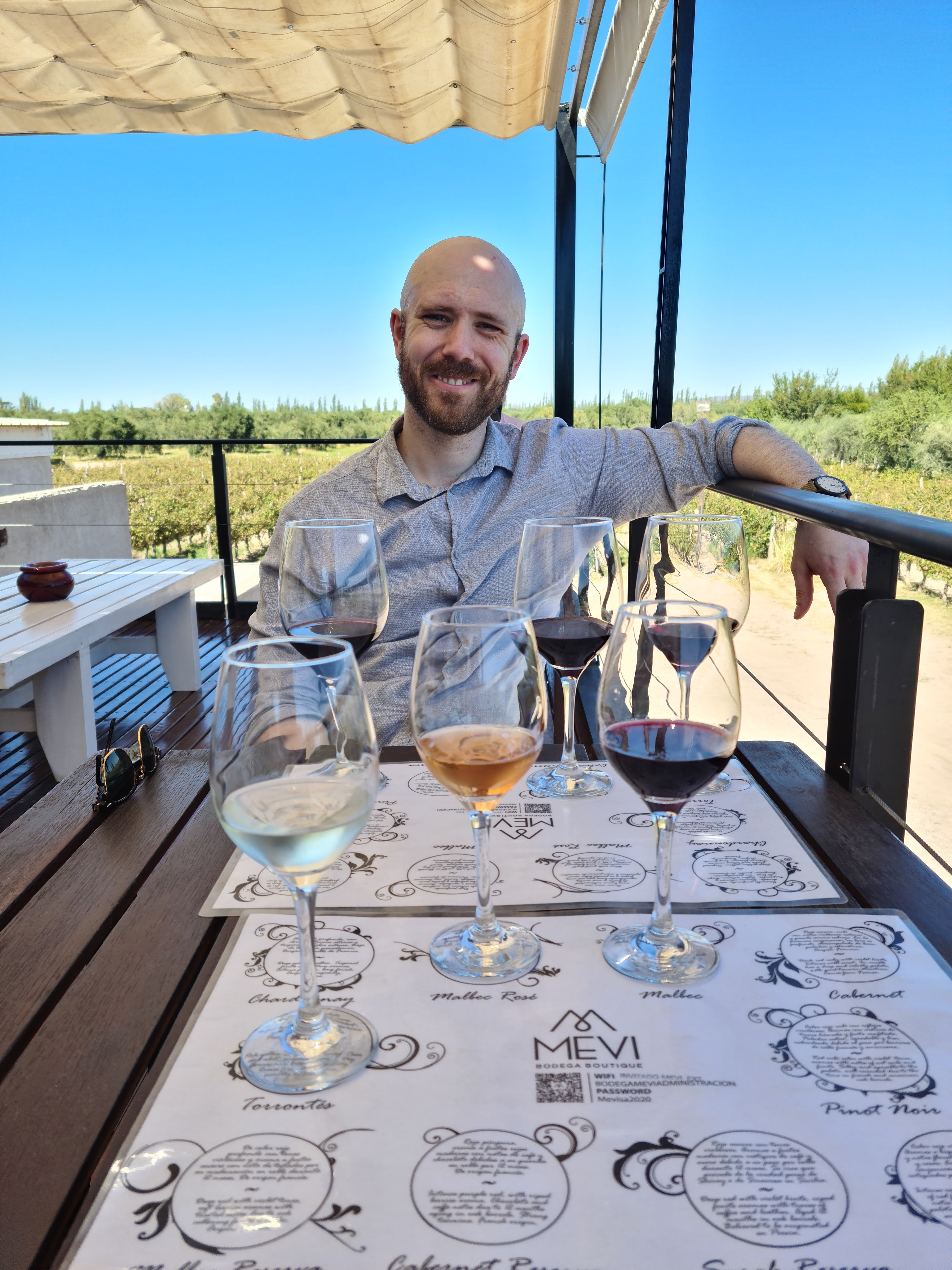
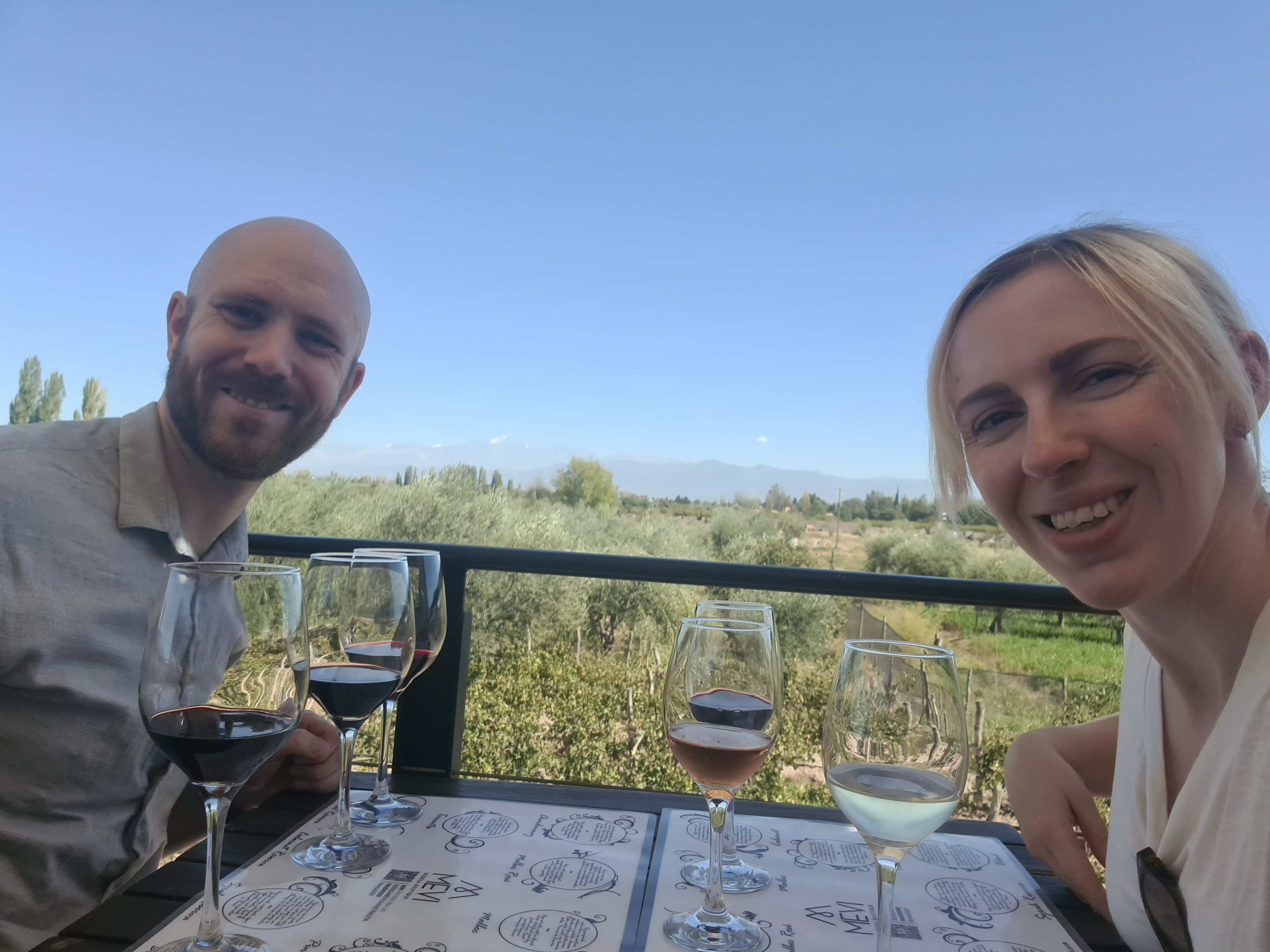
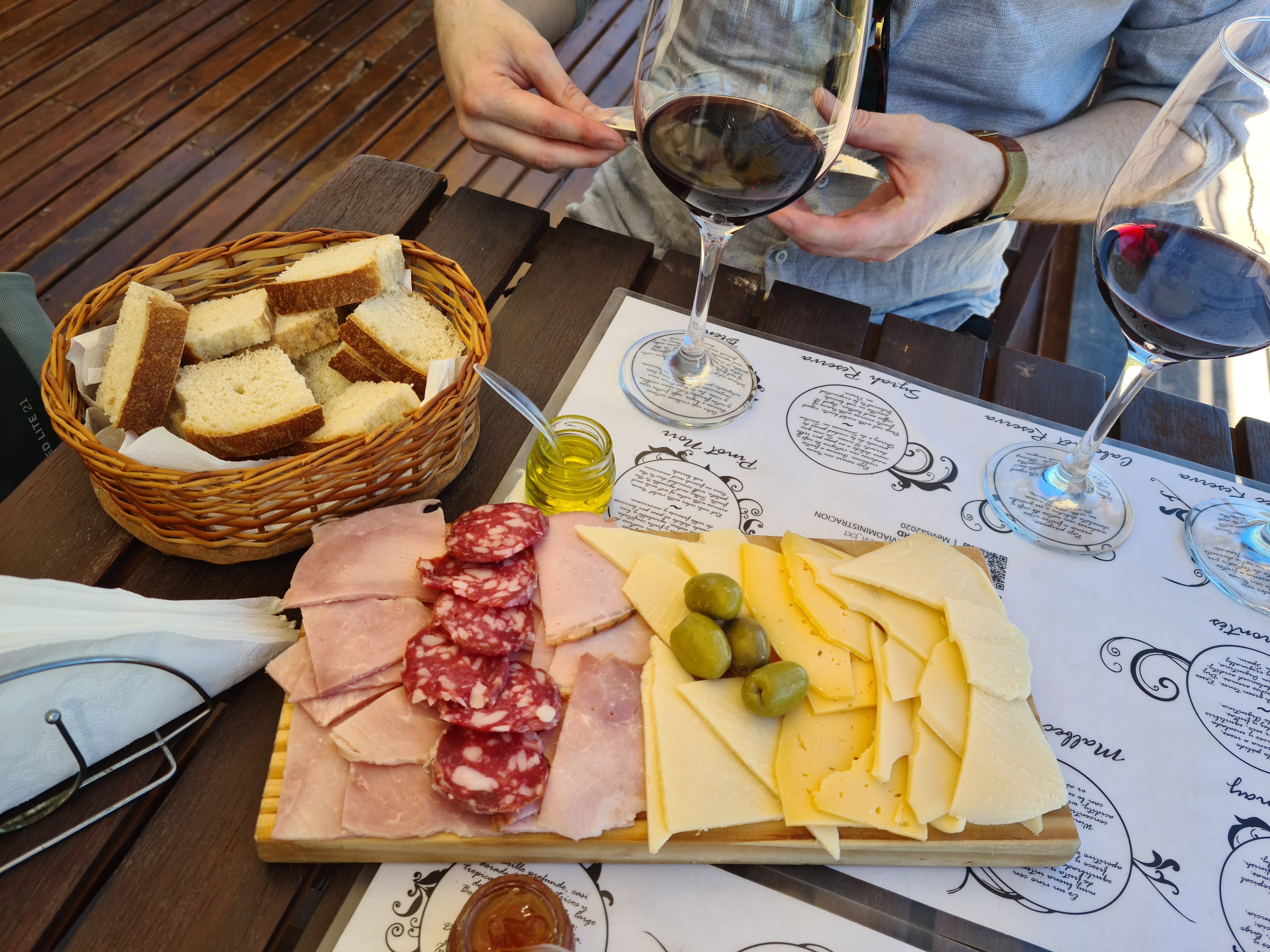
All in all, we made it to three bodegas including a prolonged stop for lunch, as well as a deli of sorts where we could try oils, olive spreads, chocolate and some liqueurs. Does this count as a balanced diet?
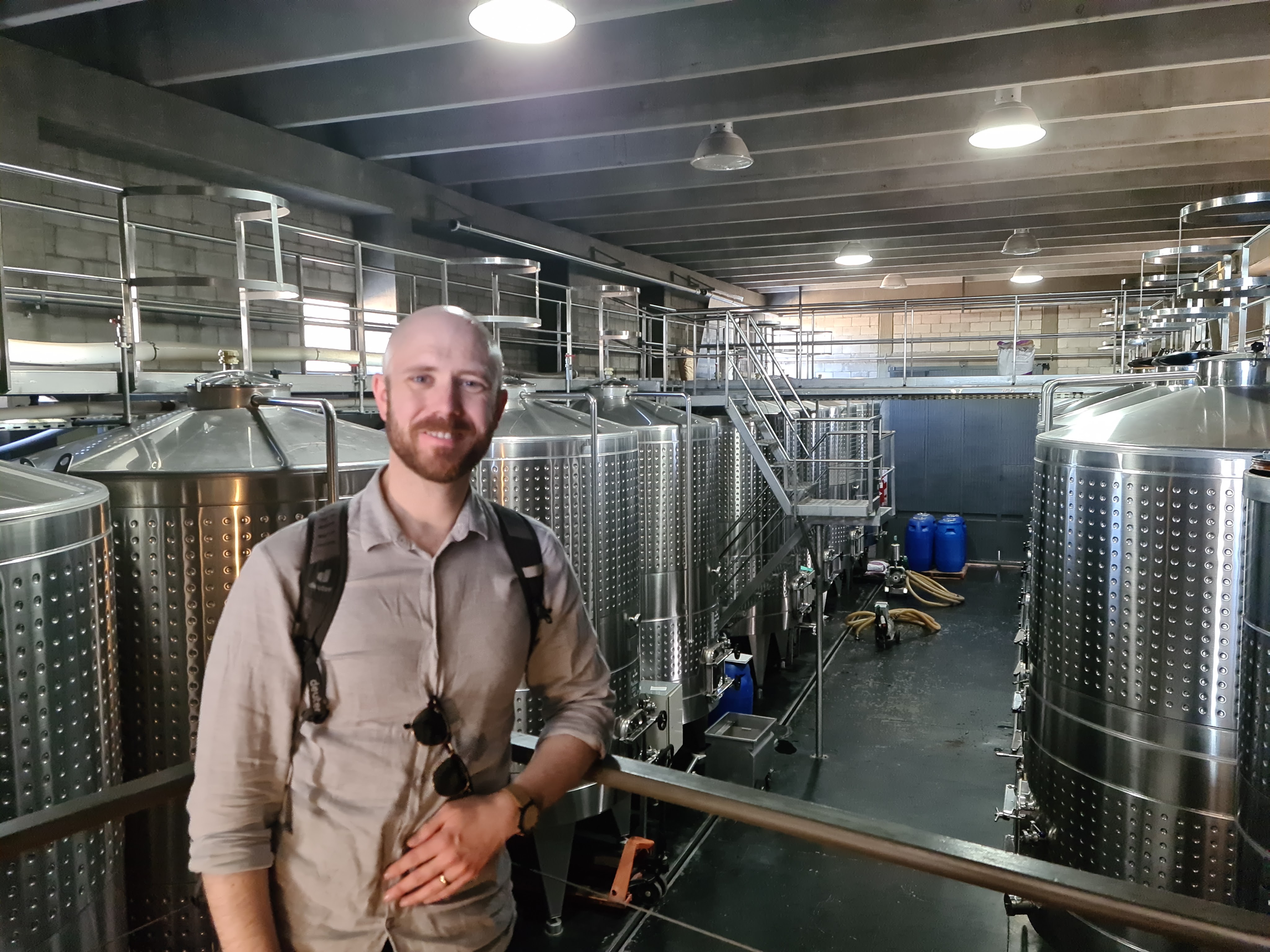
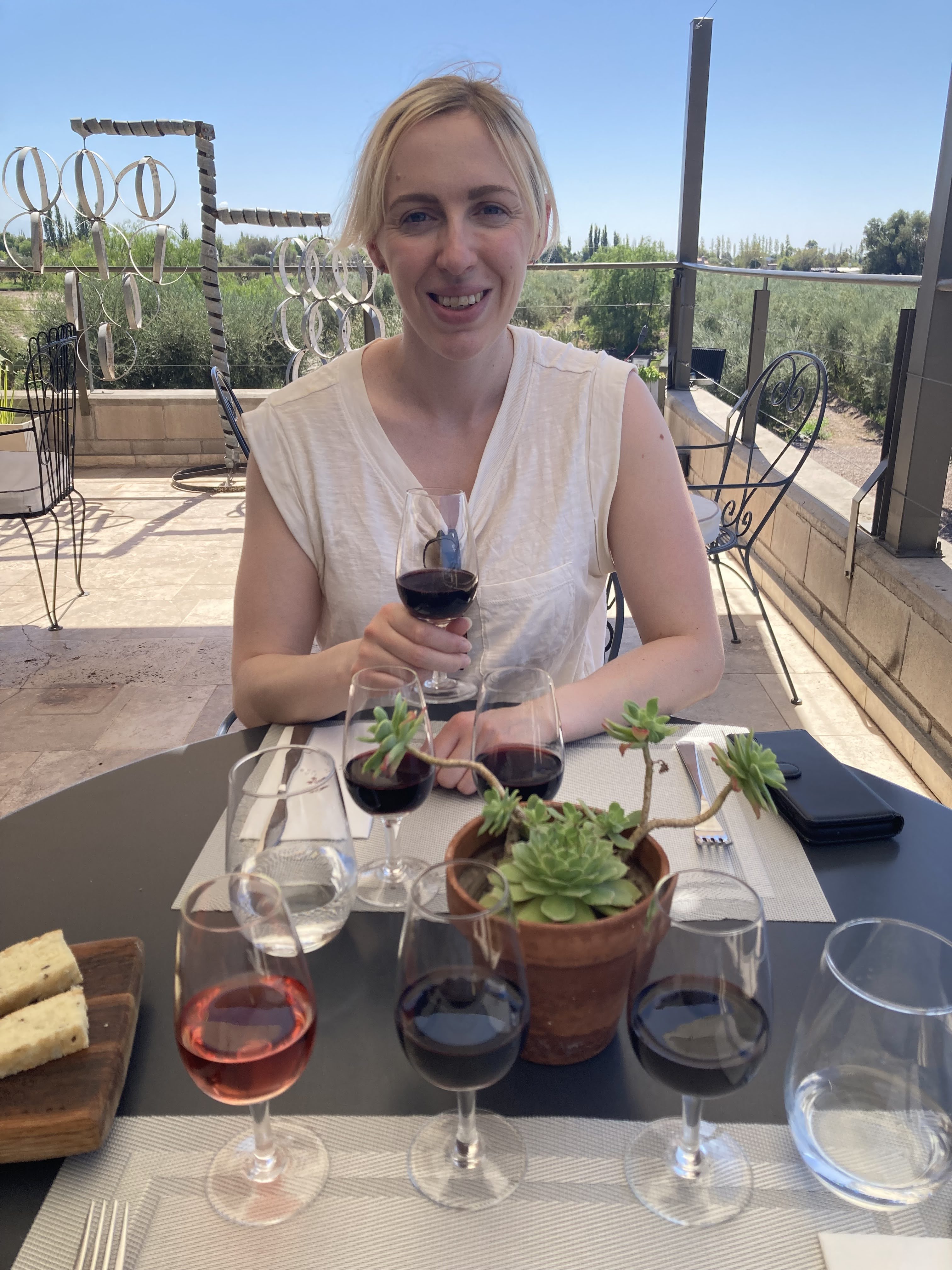

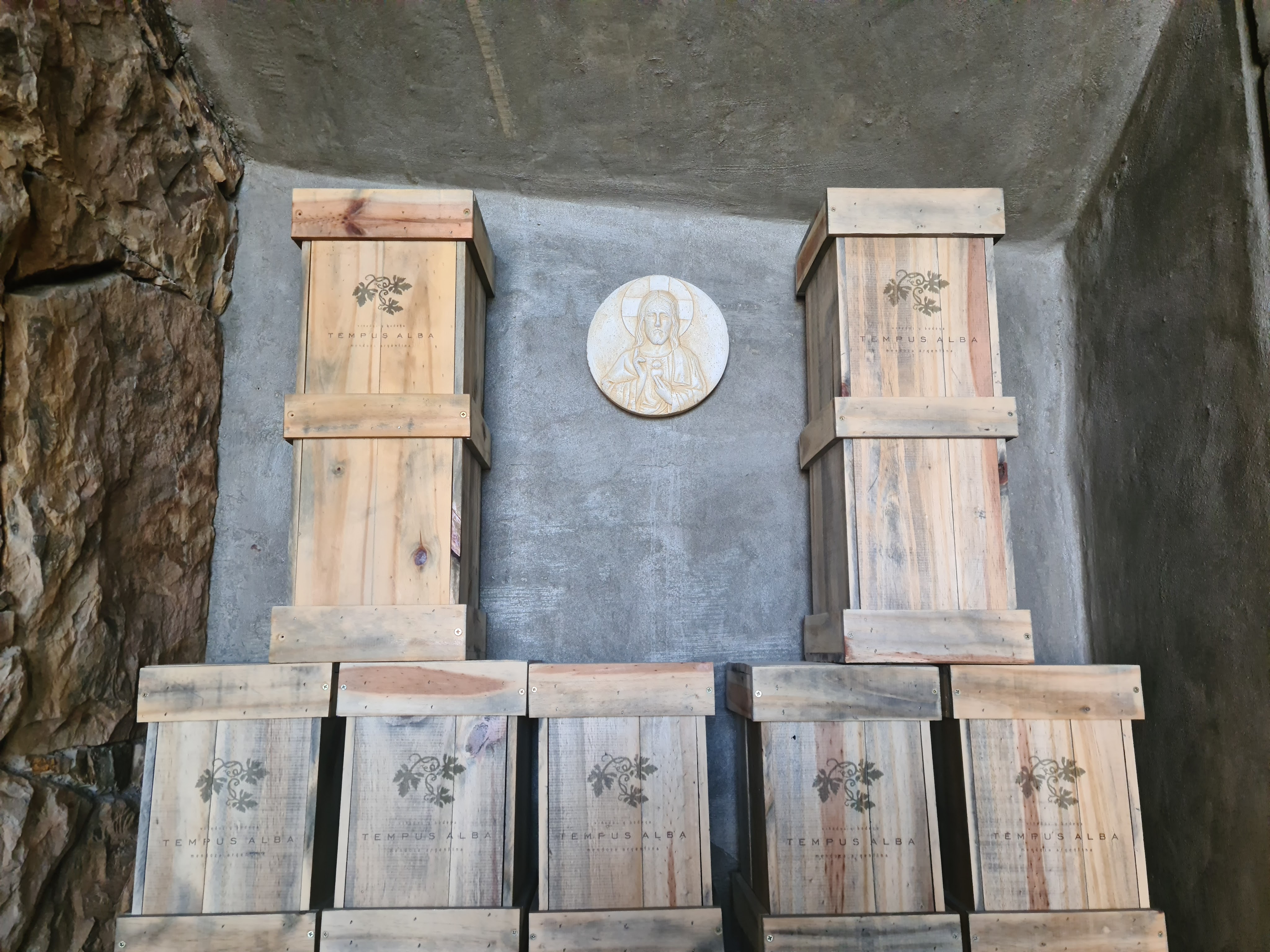
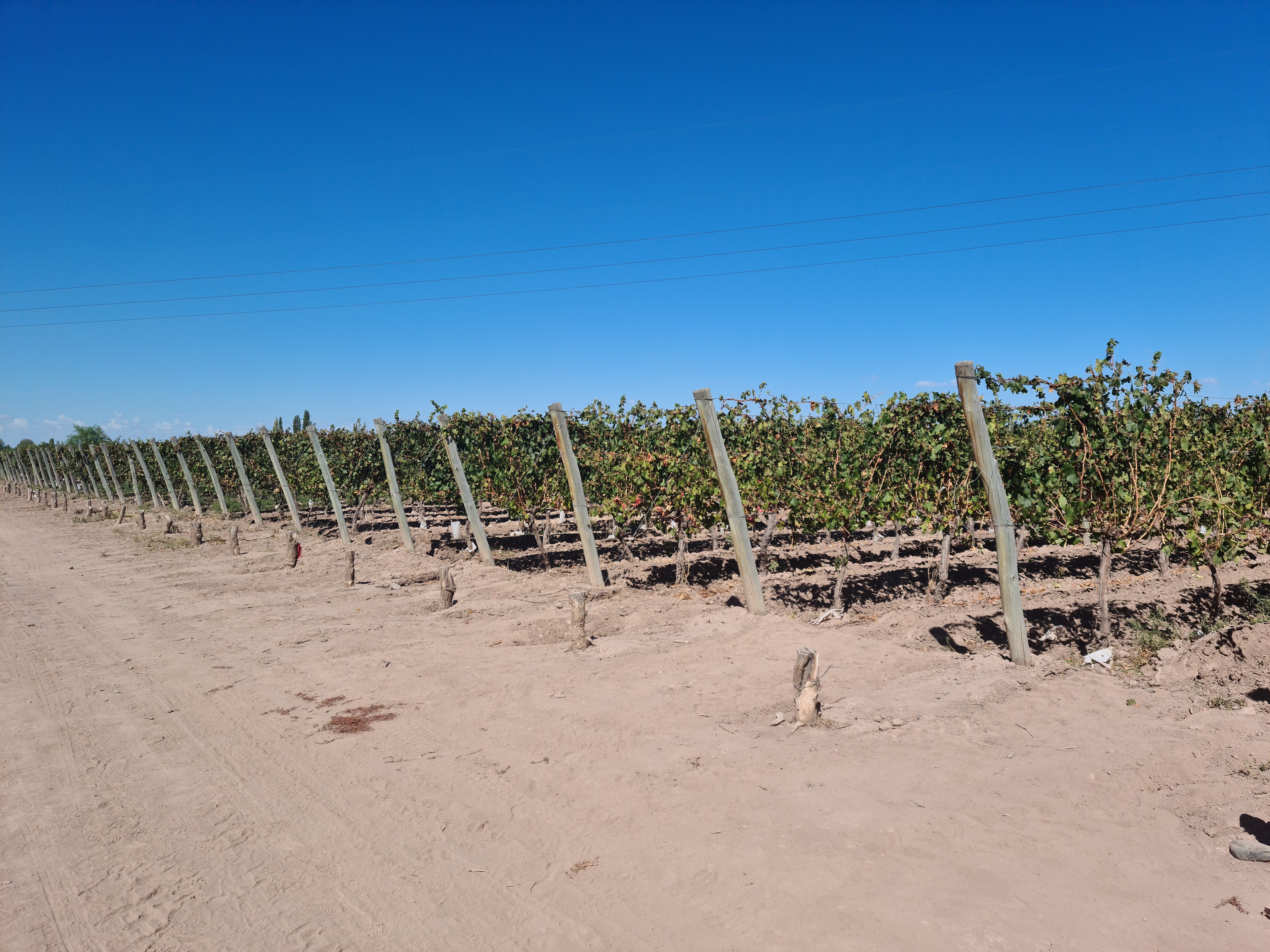
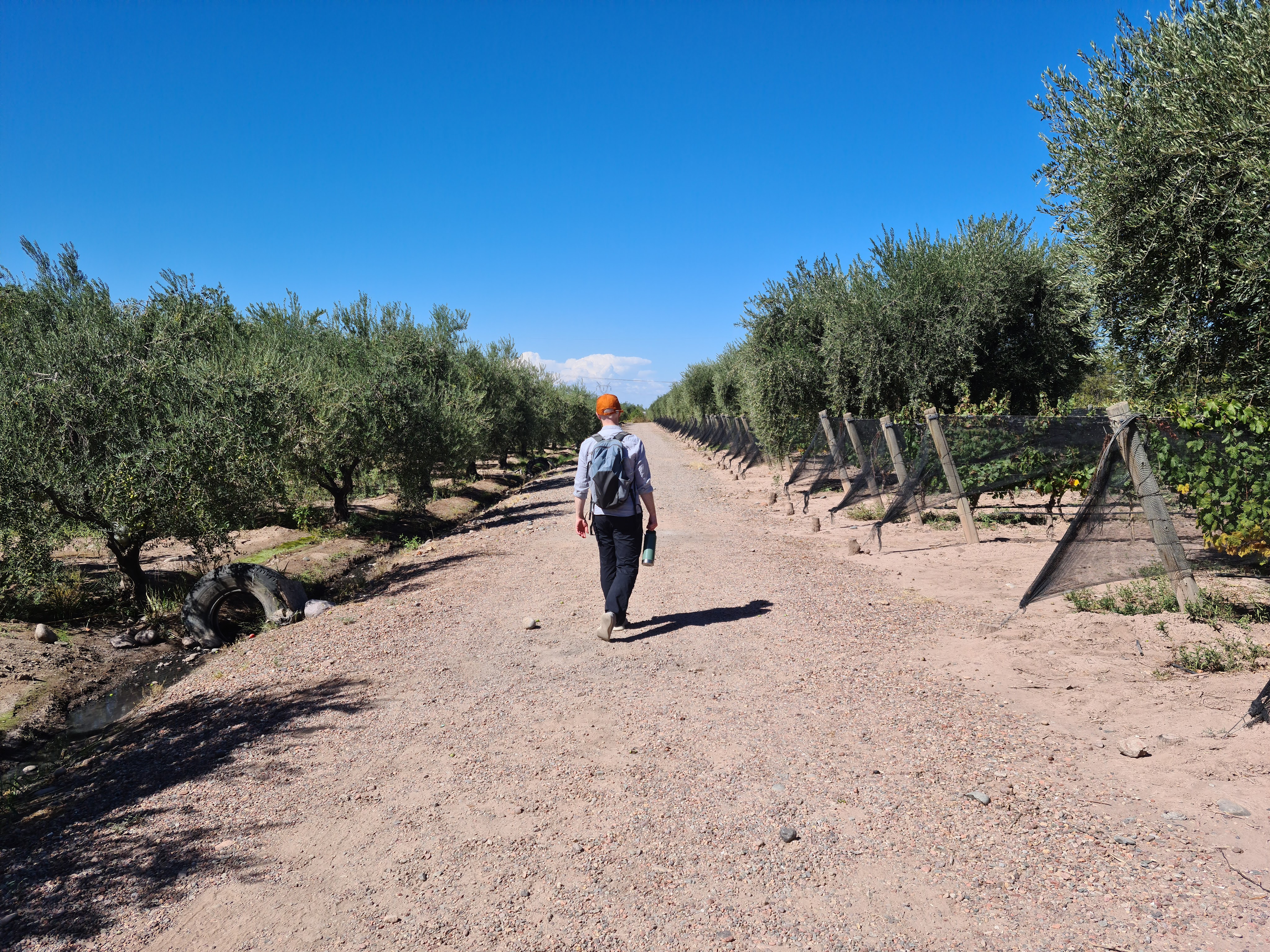
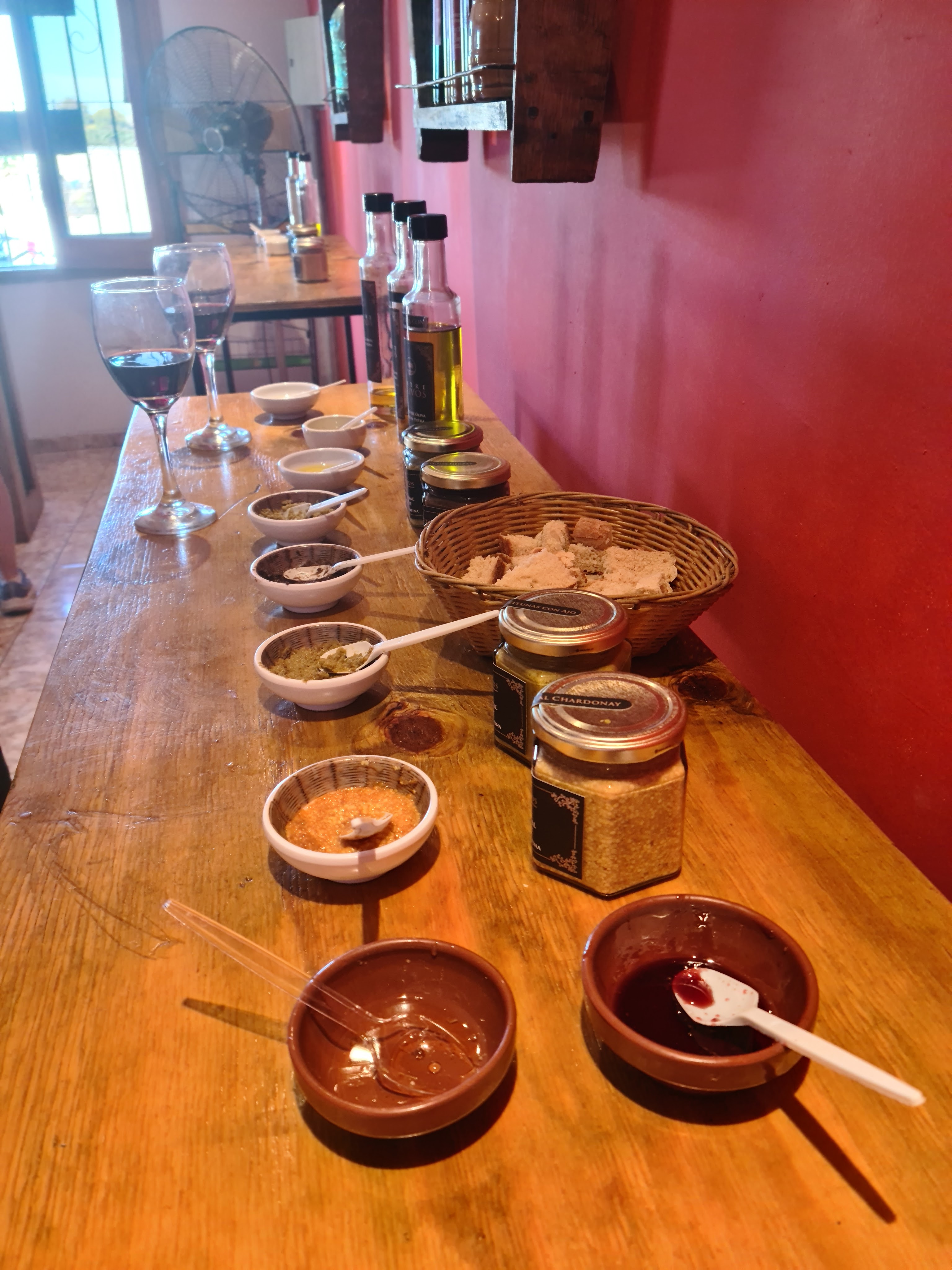
All too soon, it was back to the bike shop to return the bikes in time for their own happy hour. Our afternoon out definitely helped blow away the cobwebs, and I couldn’t believe how tired out I was that evening.
Aside from an art museum, general wanderings and managing to get back to the gym, that was pretty much it for our time in Mendoza. Many people manage to keep their visits to Mendoza as a long weekend, so I don’t think we missed out on too much other than some outdoor pursuits. It’s a good reminder to us to be grateful that we can take our time with travelling this year, when things like illness get thrown into the mix.
Thankfully we managed to get a lot more out of our next destination – Salta capital. Situated in the north west of the country, it is the capital of Salta province and is known for its colonial and Andean heritage. It wasn’t part of our original destination list, but when we cut our month in Valparaíso, Chile, we used the time recovered to extend our stays in Santiago and Mendoza (a fortuitous decision), and added Salta to the itinerary.
On arrival we noticed just how much greener it was than other landscapes we had seen in South America so far. With temperatures dropping slightly, it almost felt like being back in Scotland!
Salta also forms part of the Calchaquíes Valleys, a less renowned wine producing region than Mendoza. 70% of the wines in the valley are produced in the town of Cafayate, some 200km from Salta. As we started to research what we wanted to do in Salta, day trips to Cafayate frequently came up as a popular option. The thing is, the drive to Cafayate is pretty scenic in itself. From researching the various tour operators, we could see that although they billed themselves as wine tours, most of the time was spent on the road, with several sightseeing stops then only about two hours in Cafayate itself. Many reviewers mentioned only getting to visit one vineyard for a single glass of wine. Perhaps time to rename these tours…?
In any case, after confirming we could book a well rated apartment in Cafayate for an incredible steal of £16, we decided to suck up the cost of car rental and do the trip ourselves as an overnighter. Once we got to Cafayate, many of the bodegas were in walking distance of the town, so no designated driving would be required.
Picking up the rental car, we made conversation with the rental agent who seemed rather bemused to find out how long we would be in Salta for. “Nearly two weeks? Why would you stay here that long?!” with an expression that suggested she was considering offering us just to keep the car as a getaway vehicle. Personally I think she was underappreciating the capital and province.
Our trip to Cafayate alone was a delight.
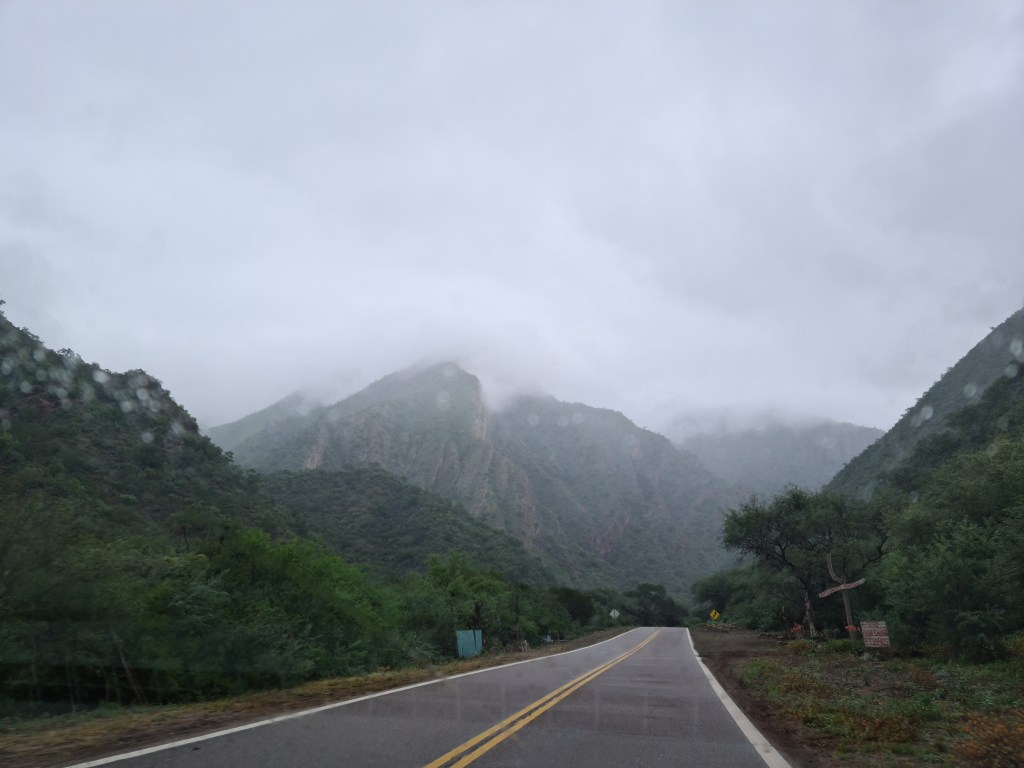
We left Salta capital on a cloudy, damp morning (as it had been much since we arrived). The first third of the drive took us through a series of cookie cutter towns and farmland of little excitement. Eventually we came through a valley and could see the promise of sunlight reflecting off the hills ahead.
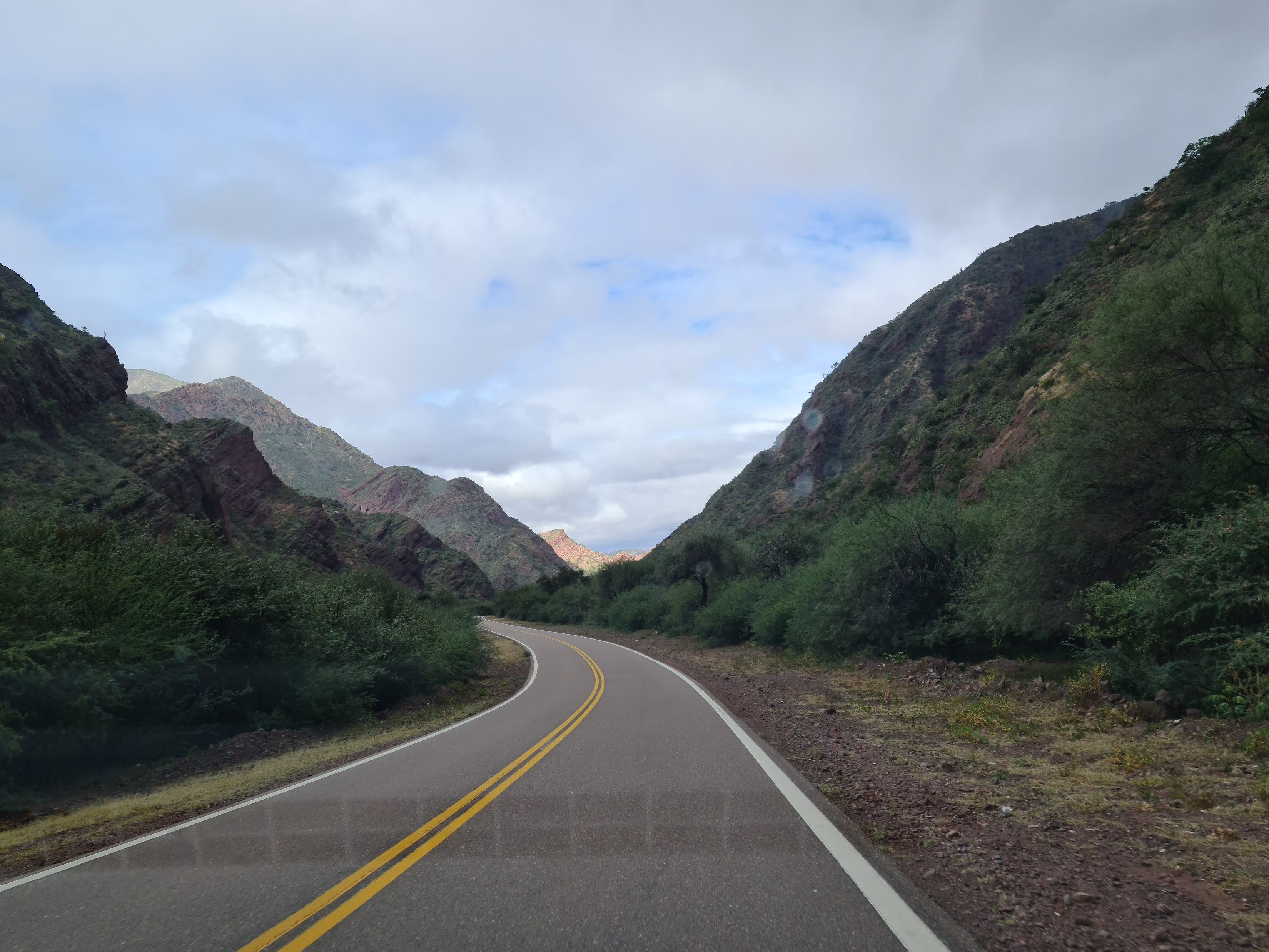
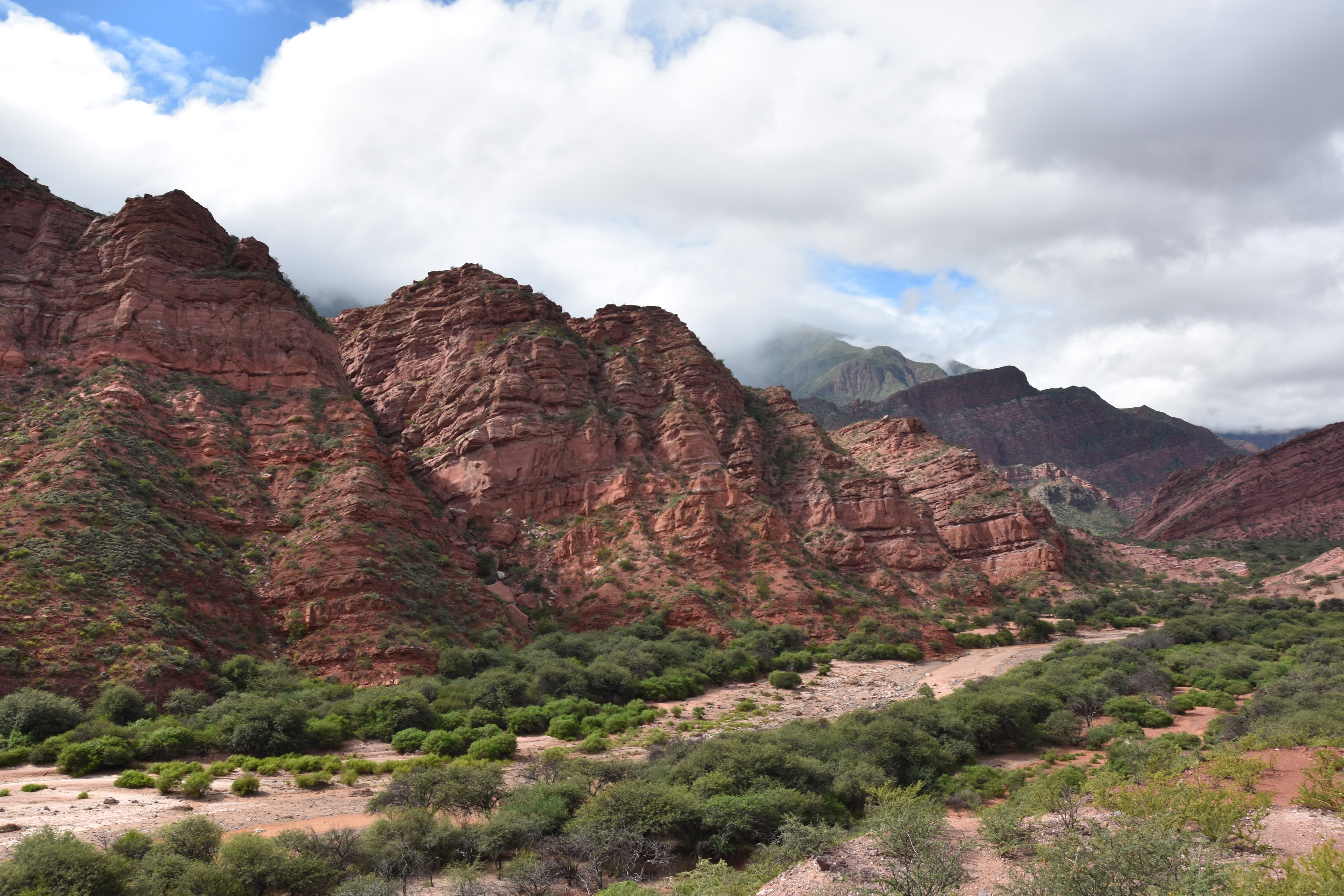
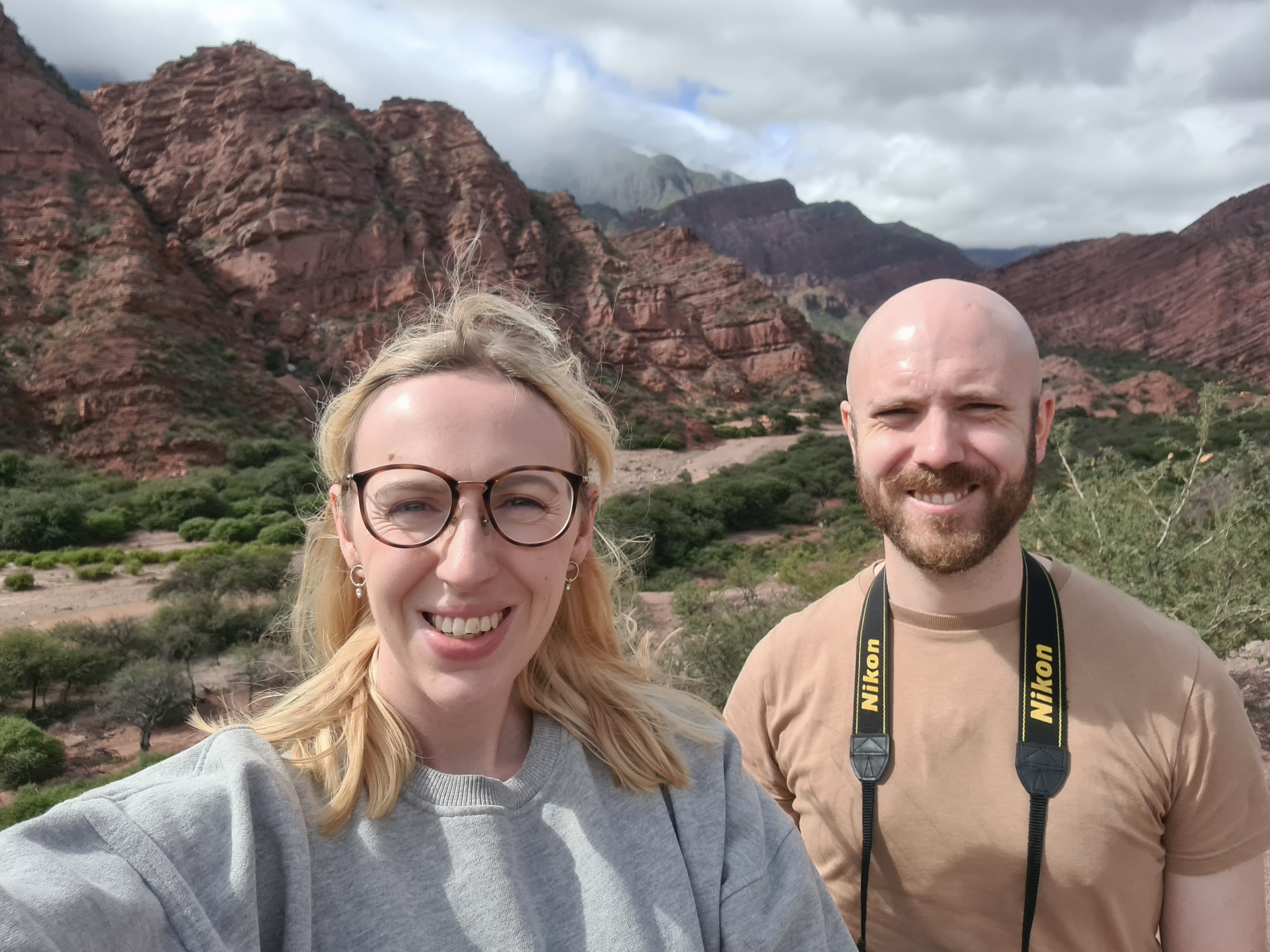
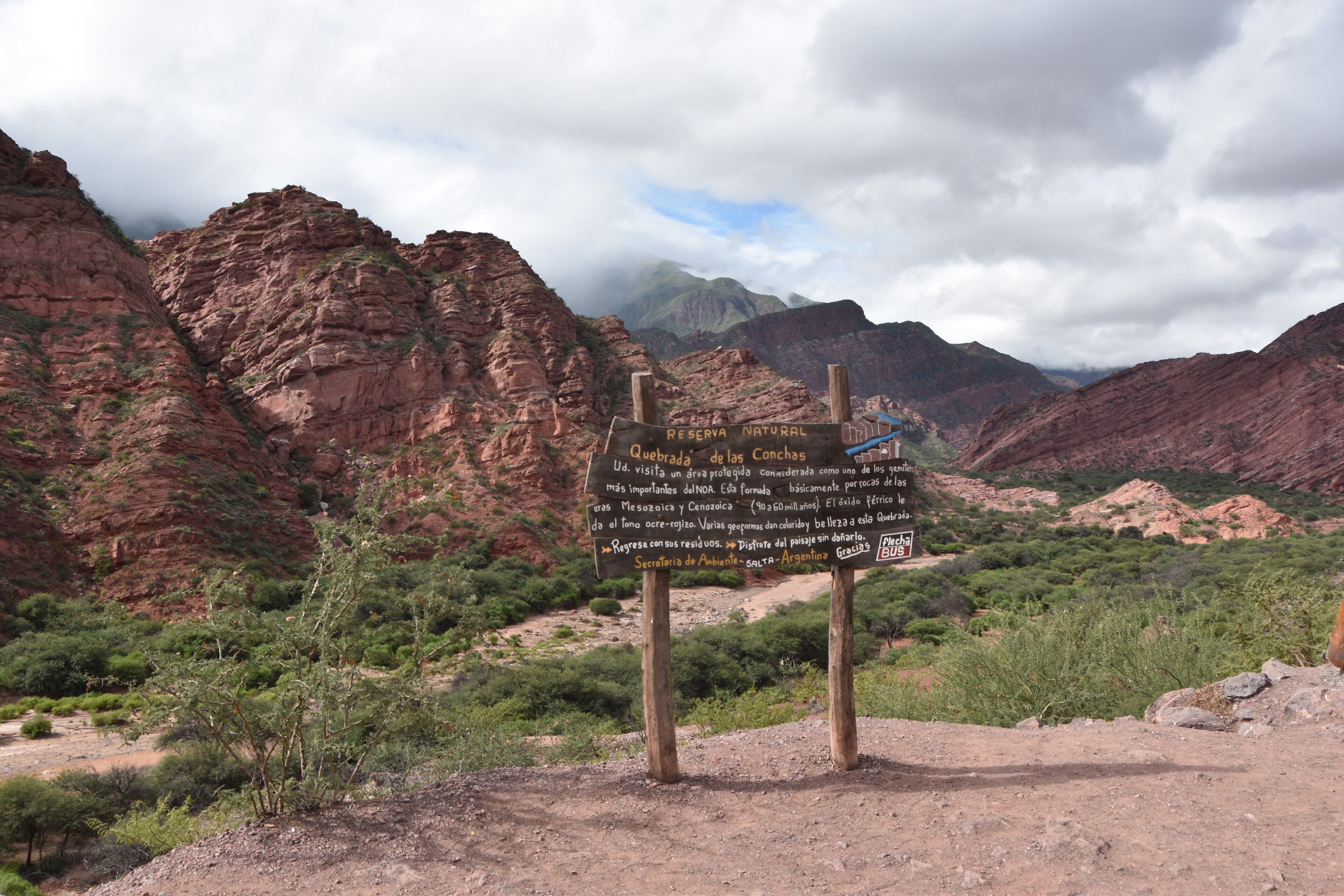
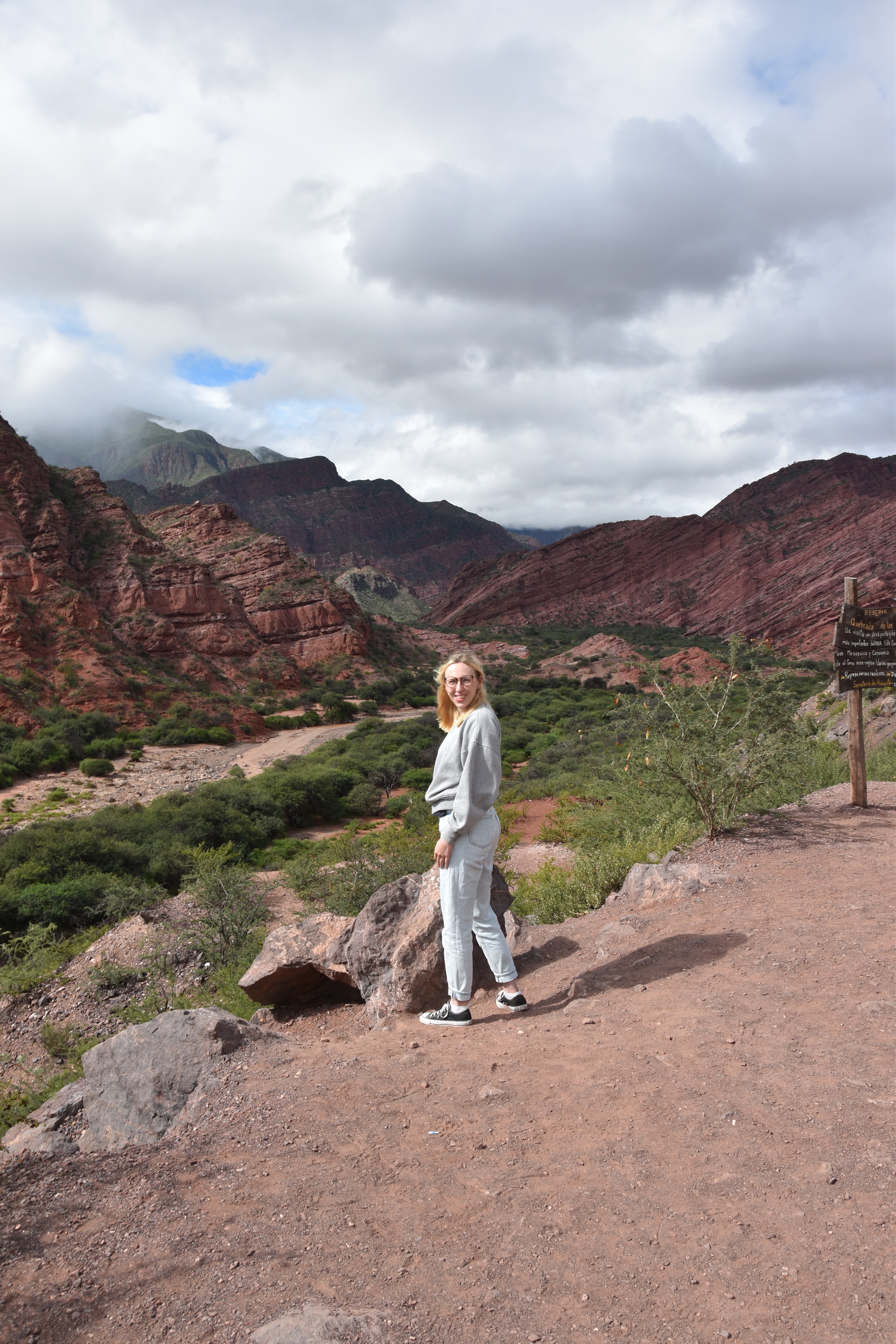
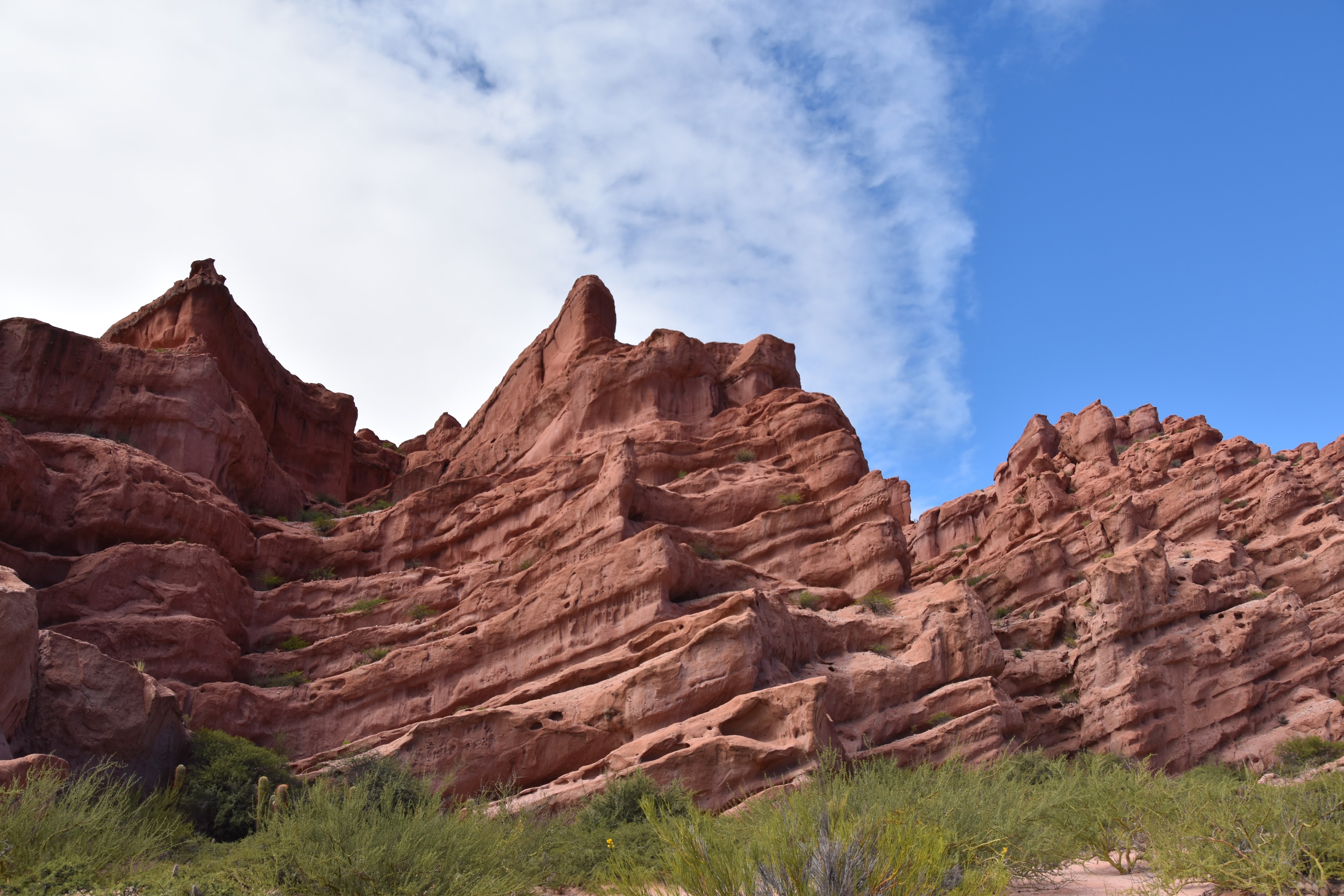
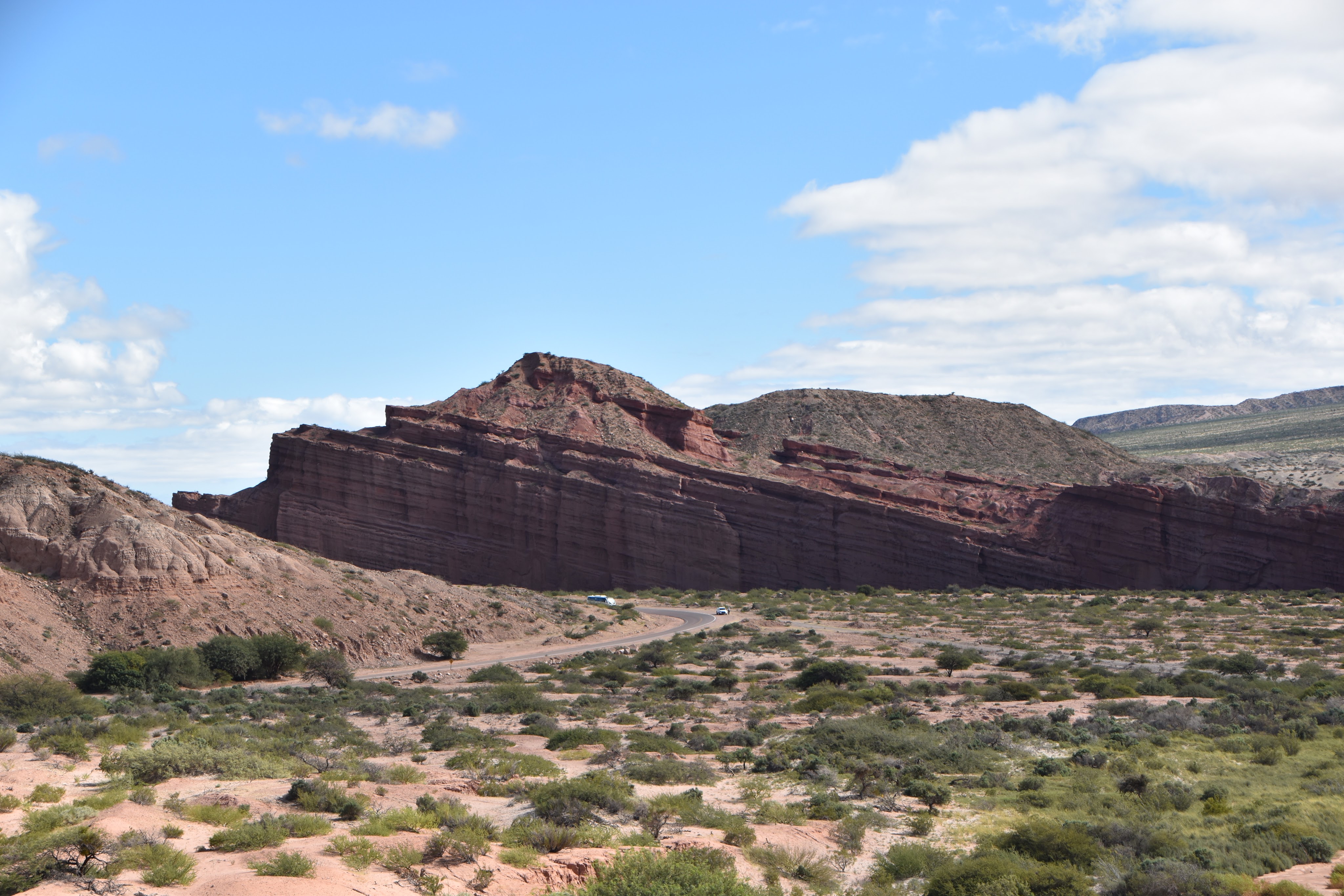
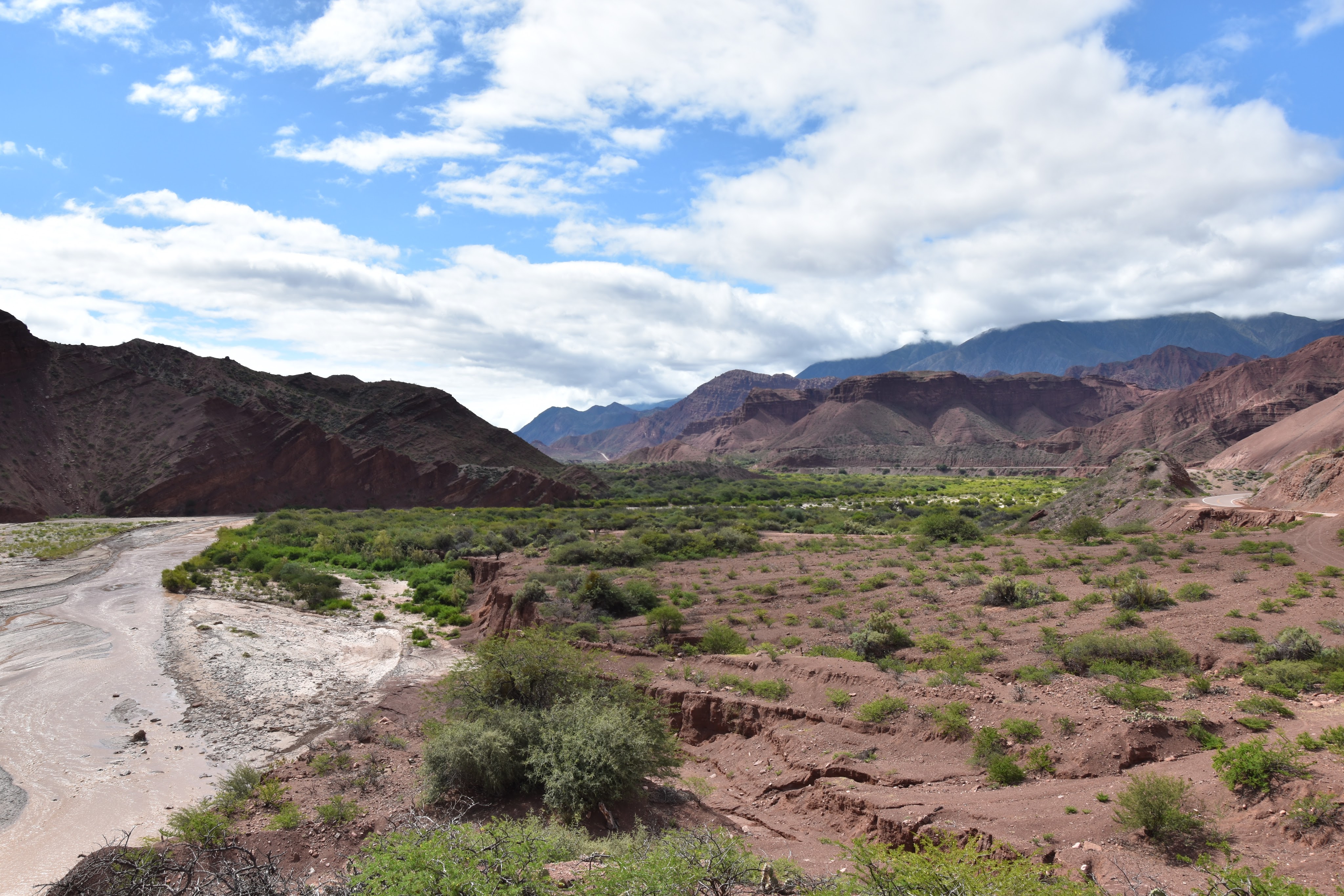
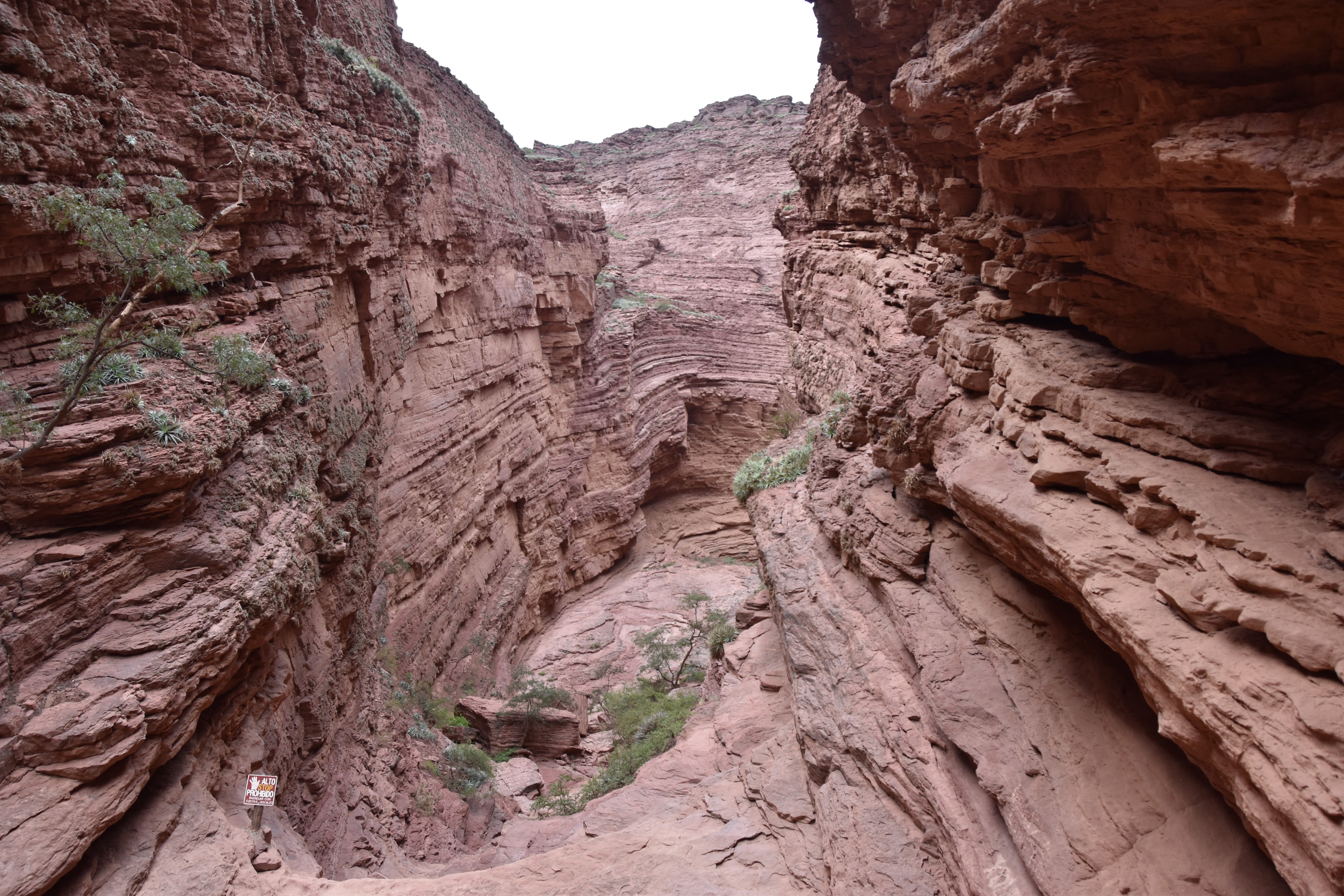
Suddenly the landscape completely changed and as well as brighter skies, we were treated to the red rock formations, dry river beds and shrubbery of the Quebrada de las Conchas. It felt like every curve of the winding road revealed another dramatic vista or natural landmark, and the highway was punctuated by “mirador” (“viewpoint”) signs.
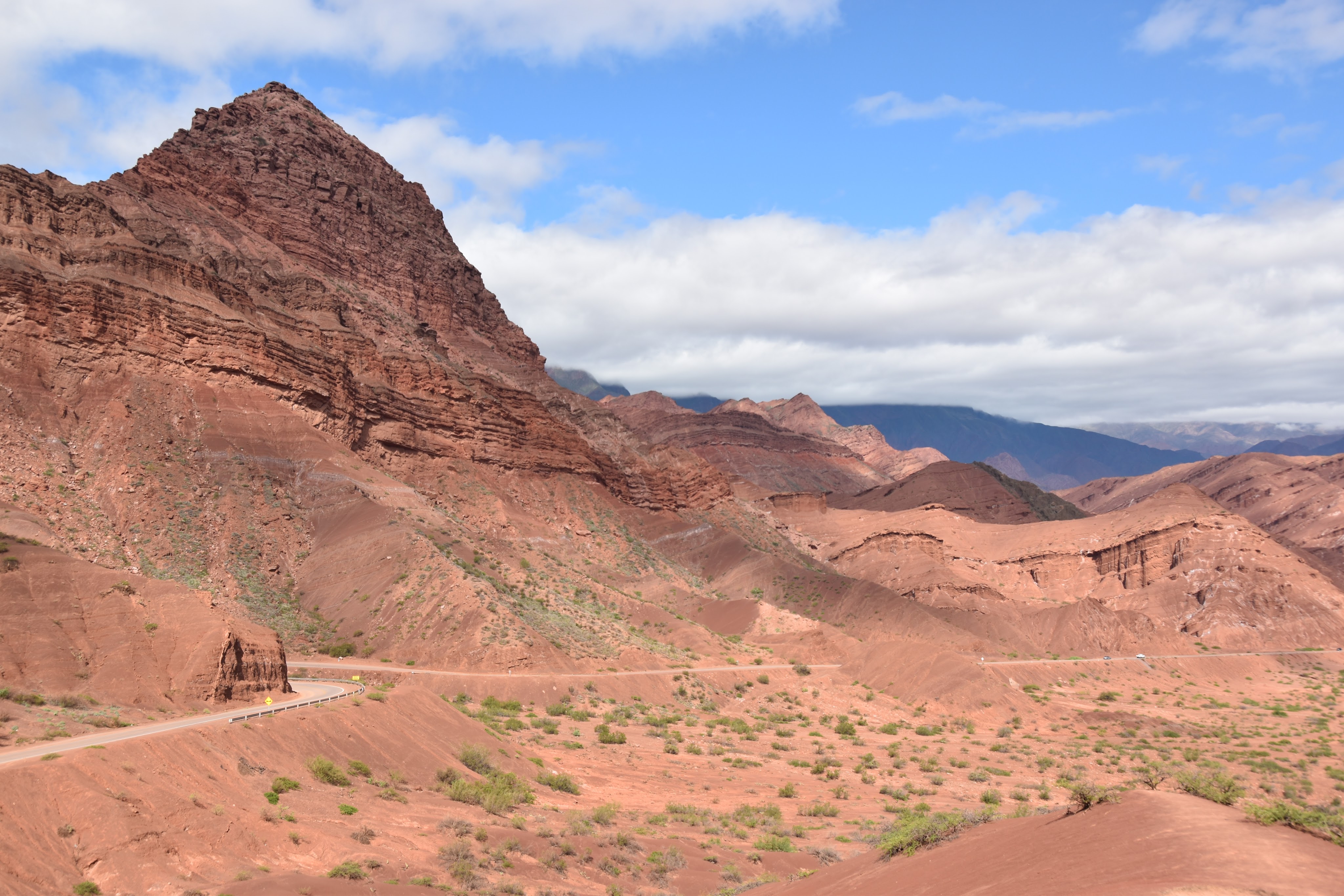
Aside from the very first one, we resisted temptation and ploughed on to Cafayate, sure that the rocks would still be around on our drive home the next day.
Very quickly we could see that Cafayate was a charming, rustic town.

Typically South American, a main square sat in the heart, from which several streets extended outwards. Our apartment block was situated right on the eastern boundary of the town, but it is a small enough place that you are probably never more than 15 minutes away from the centre. And even better, probably no more than 5 minutes from a bodega.
Unsurprisingly, we didn’t even make it round the corner from our apartment before popping into Bodega Nanni. In our defence though, the first stop was their onsite restaurant.
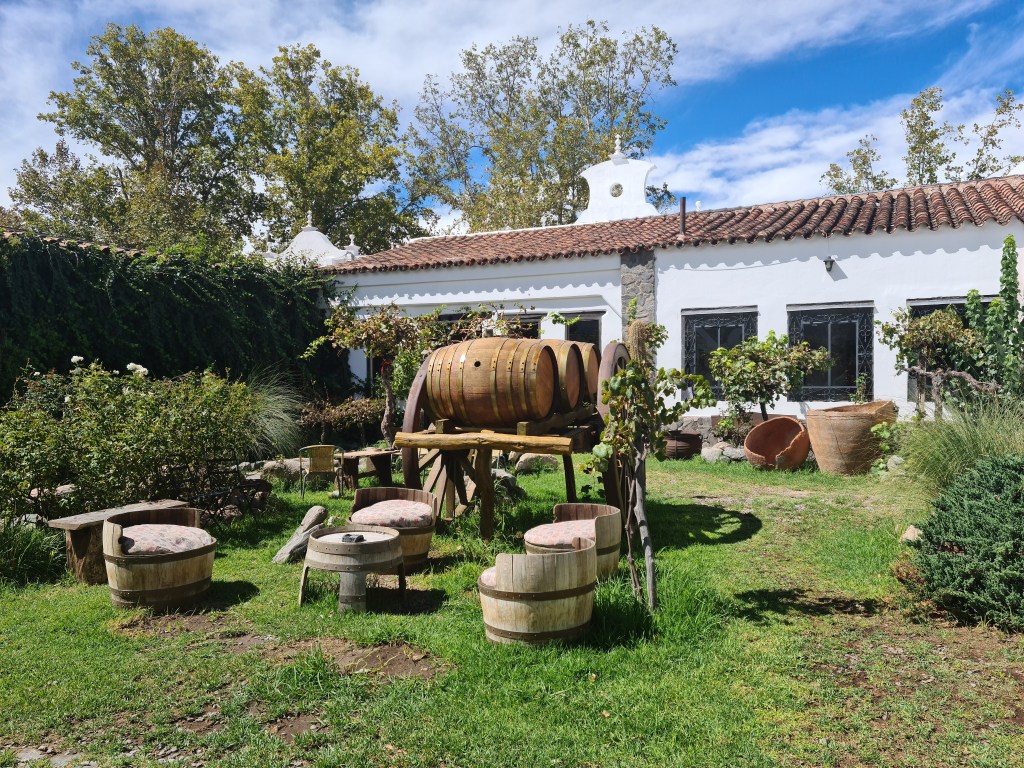
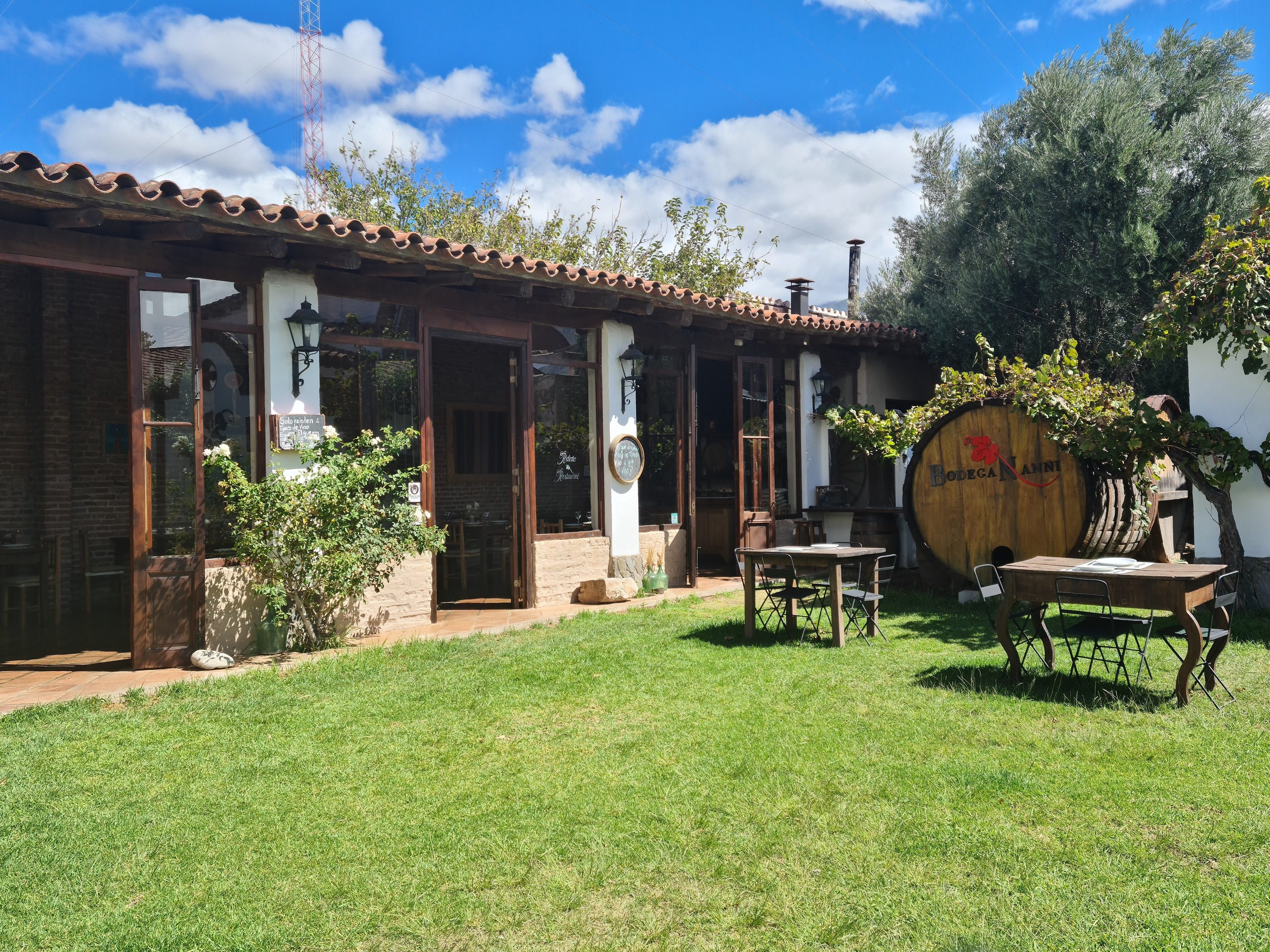
An unexpected, but probably helpful, pause followed lunch, as it transpired that many of Cafayate’s wineries follow the South American siesta tradition.
Thankfully the Cafayate Museum of Life and Wine remained open. I greatly underestimated it, thinking it would be one or two rooms at most with a grape press, some barrels and some bottles.
Those items were all there, but were part of a multimedia trail through several small interlinked buildings. There was also an artistic slant, with some poetry, a scale model of the town and an LED representation of the night sky. Altogether, I found it one of the most engaging museums we have seen this year – and at this point, we have already been to a fair few!
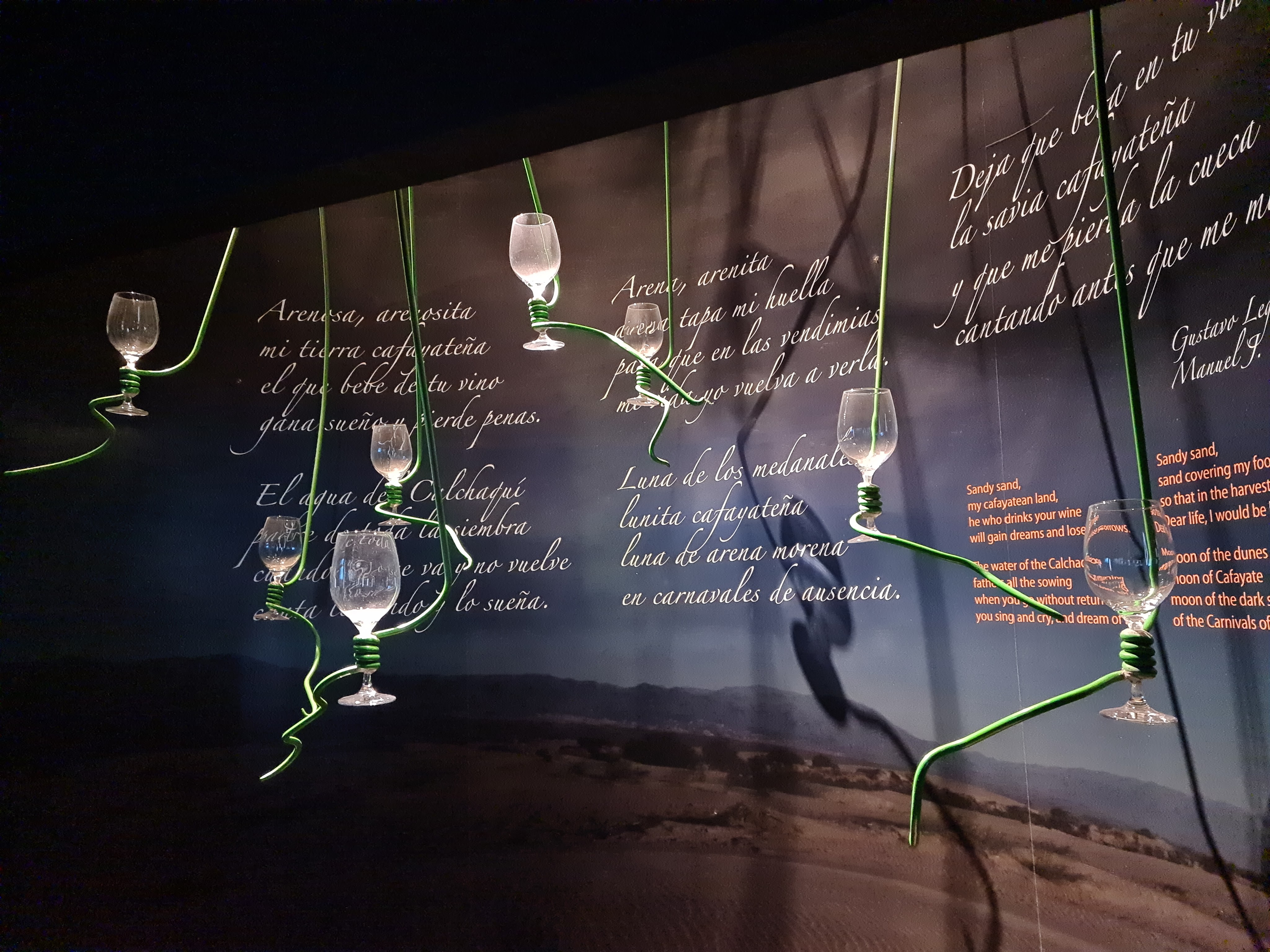
And I don’t just say that because of the tasting included in the price of entry. Ricki was slightly rolling his eyes by the end due to the repeated messaging that Cafayate wine is the best in the world. But you know what, I don’t necessarily disagree! And at least the museum gave some context and justification for these claims. Due to the high altitude of the town, it is one of the only places in the world where the vines get to experience chilled evenings, allowing the grapes to recover instead of receiving constant exposure to heat.
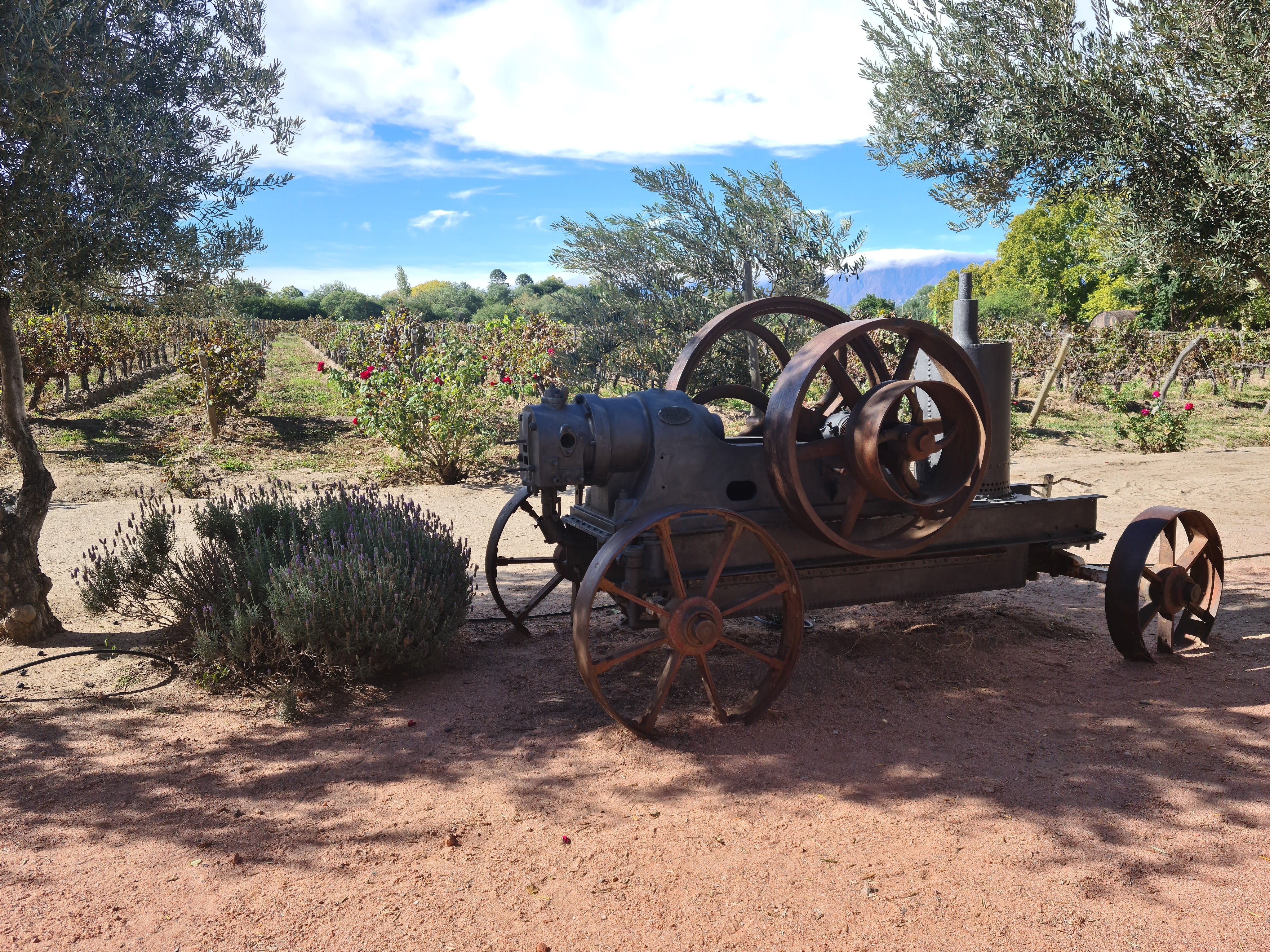
Our other stops for the afternoon were Bodega Vasija Secreta and Bodega El Esteco. Both technically in the northern outskirts of Cafayate, they were worth the walk, particularly Bodega El Esteco. They were surrounded by some gorgeous mountain backdrops.
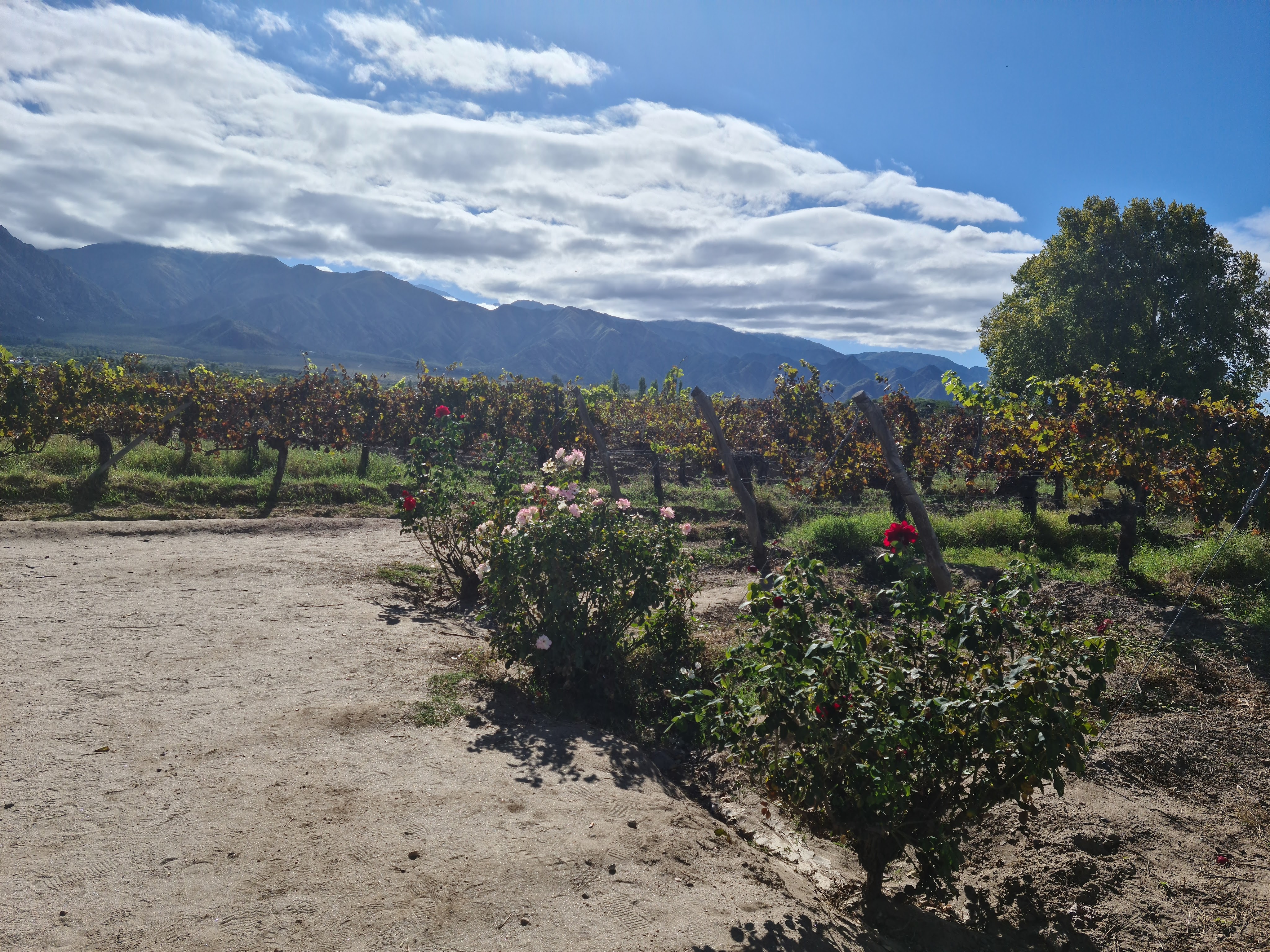
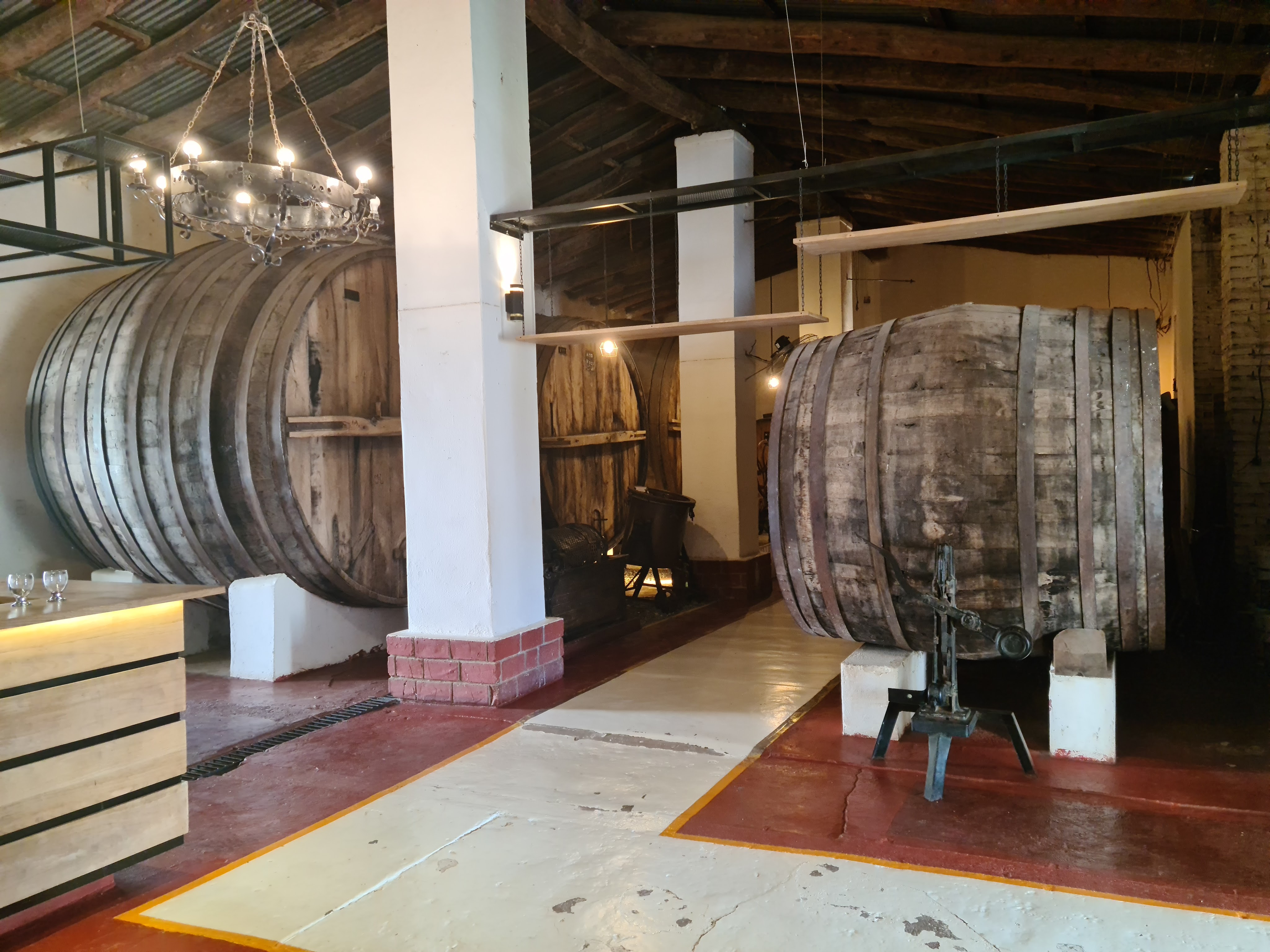
Bodega Vasija Secreta
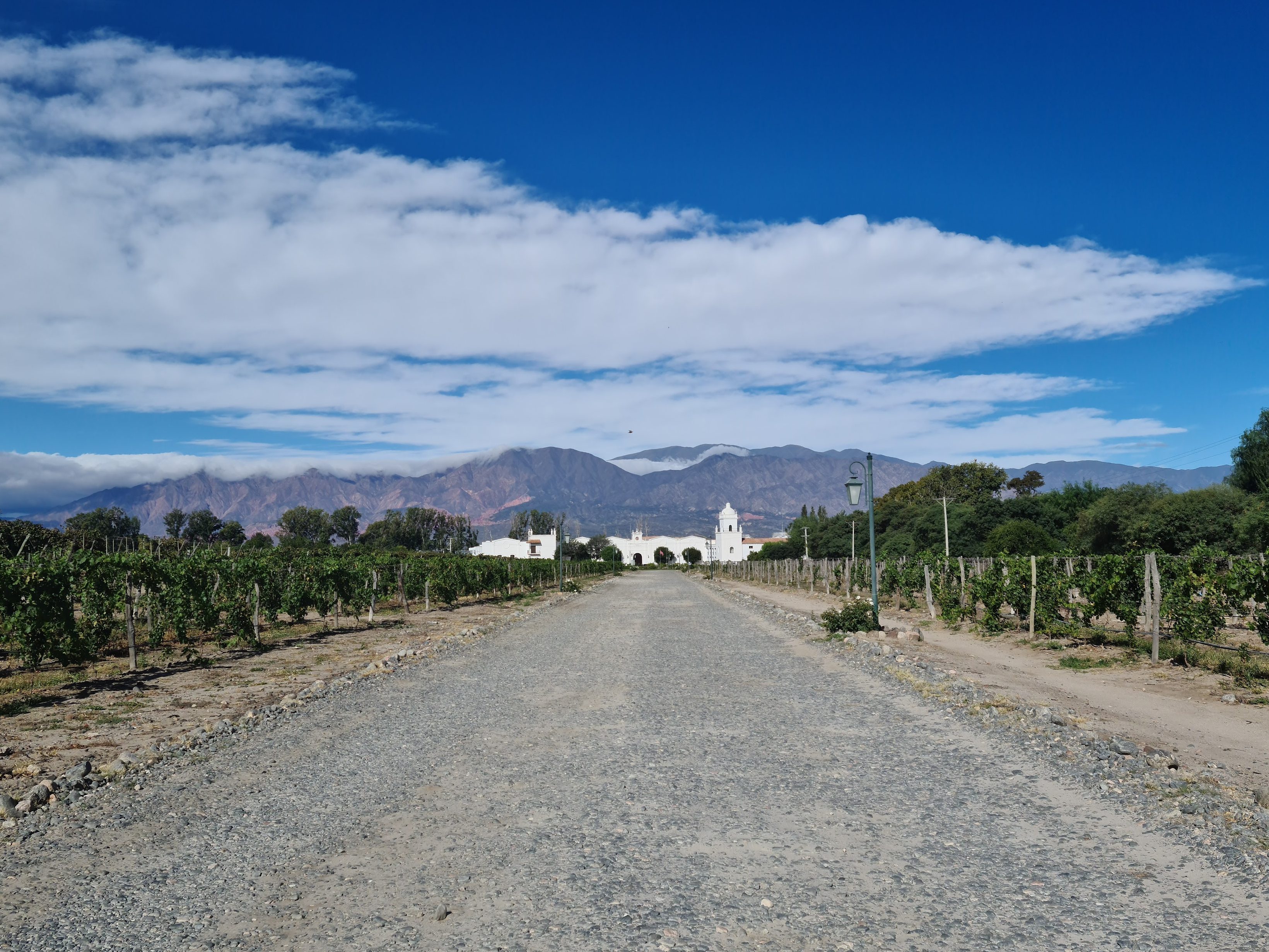


Bodega El Esteco
As well as being particularly scenic, Bodega El Esteco was also particularly dangerous. As guided tours and tastings were fully booked, we were invited to use what was effectively a self-serve wine vending machine. Of course that made it far too tempting to go back and forth between the shop and the pleasant outdoor courtyard, where we enjoyed our glasses in the late afternoon sun.
Overall, we were really glad we worked out a way to extend our time in Cafayate. After a few weeks of city life, it was lovely to spend time in such a small, picturesque town. Of course the predominant local industry didn’t hurt too much either! Although I do appreciate there is probably less to do in the immediate surrounding compared to larger scale Mendoza, we really think more people should recommend Cafayate.
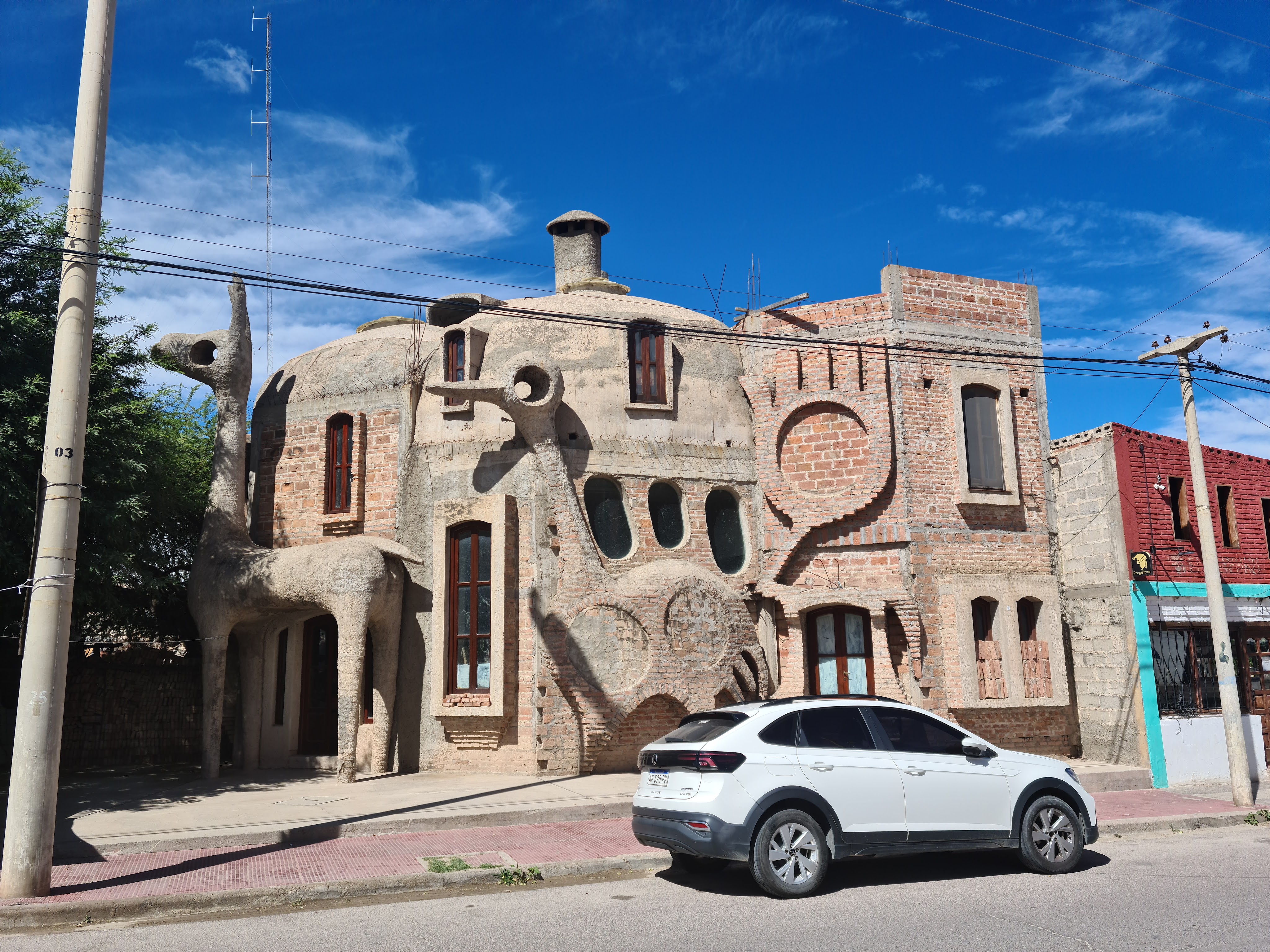
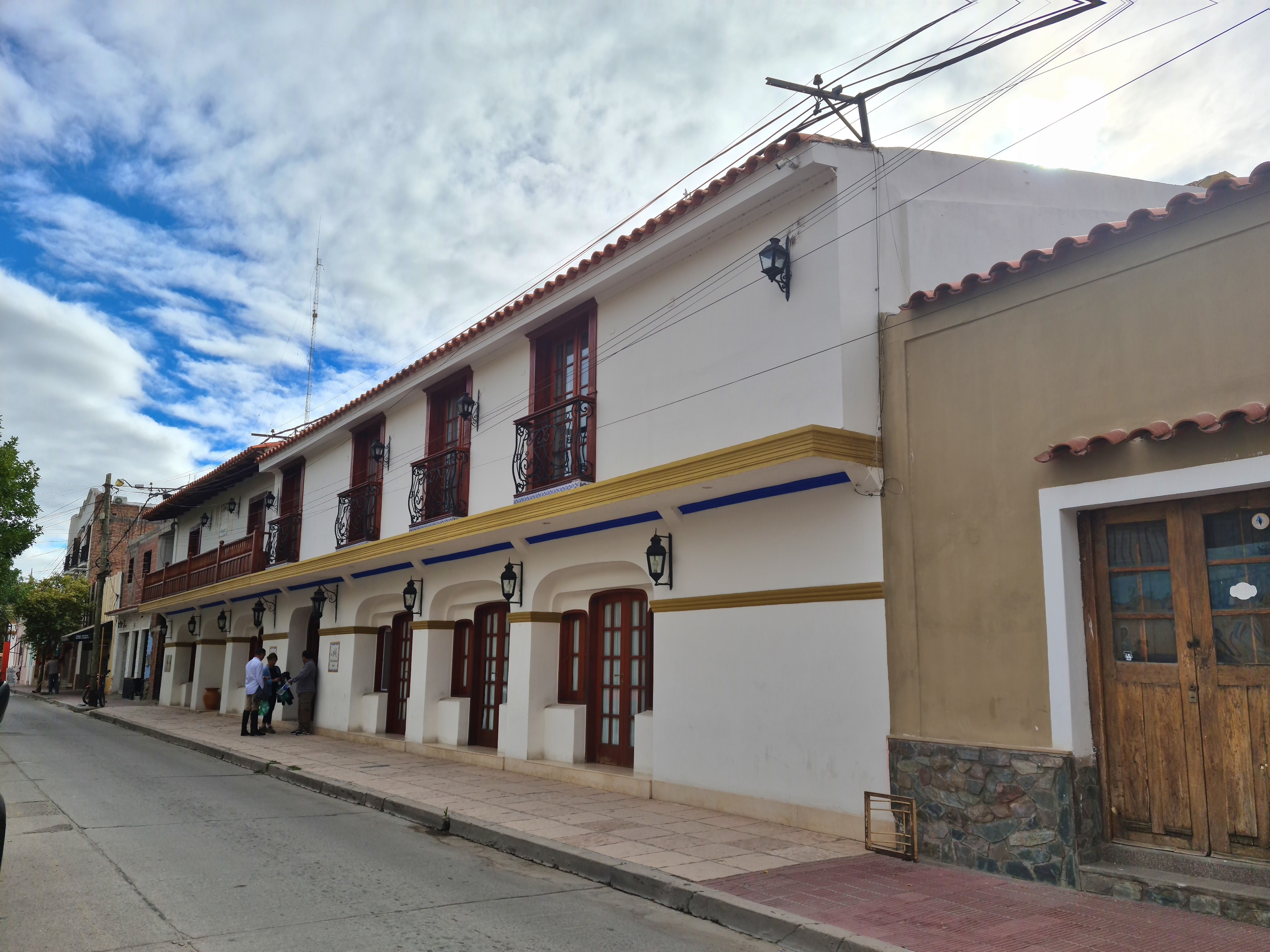

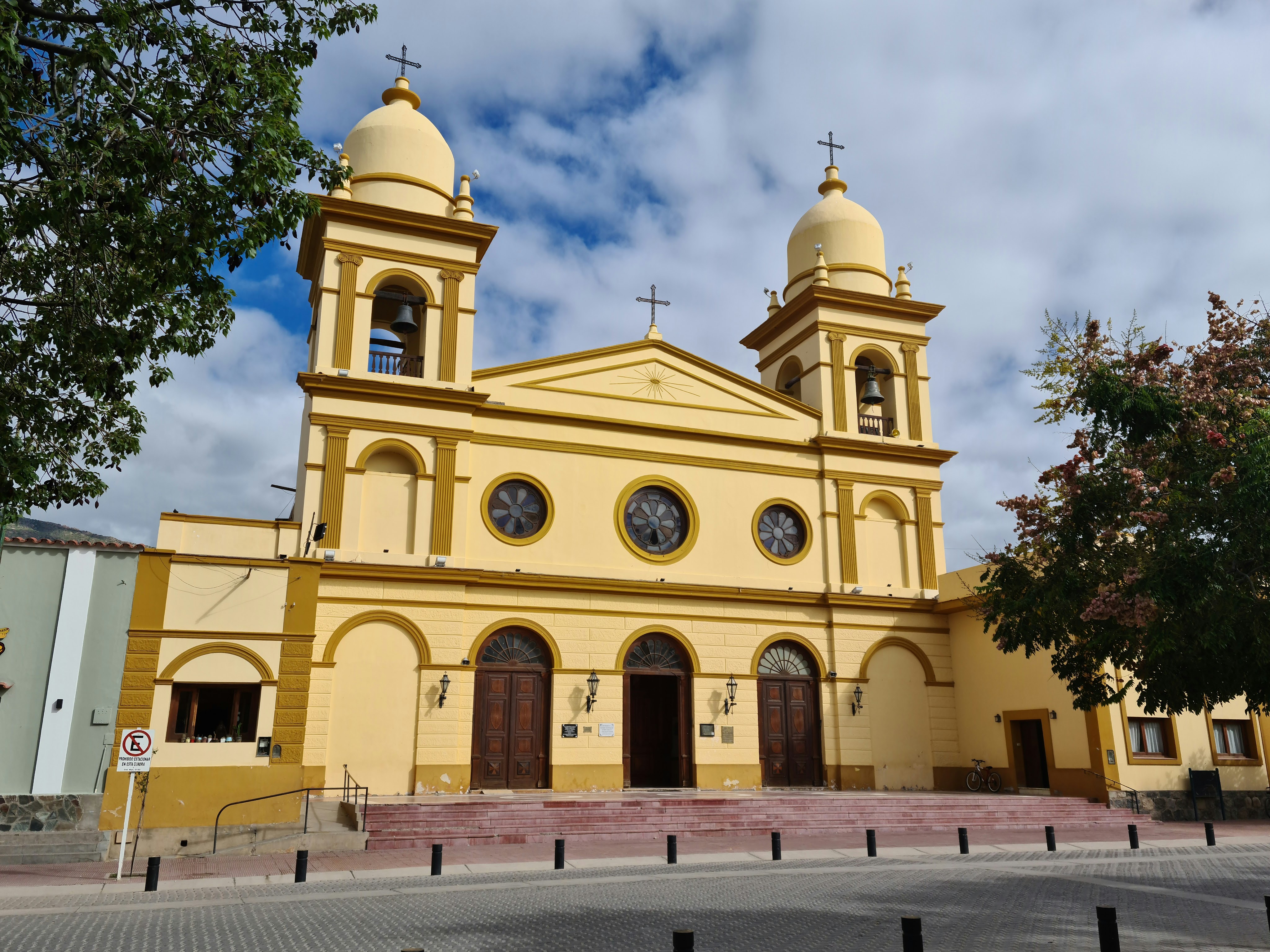
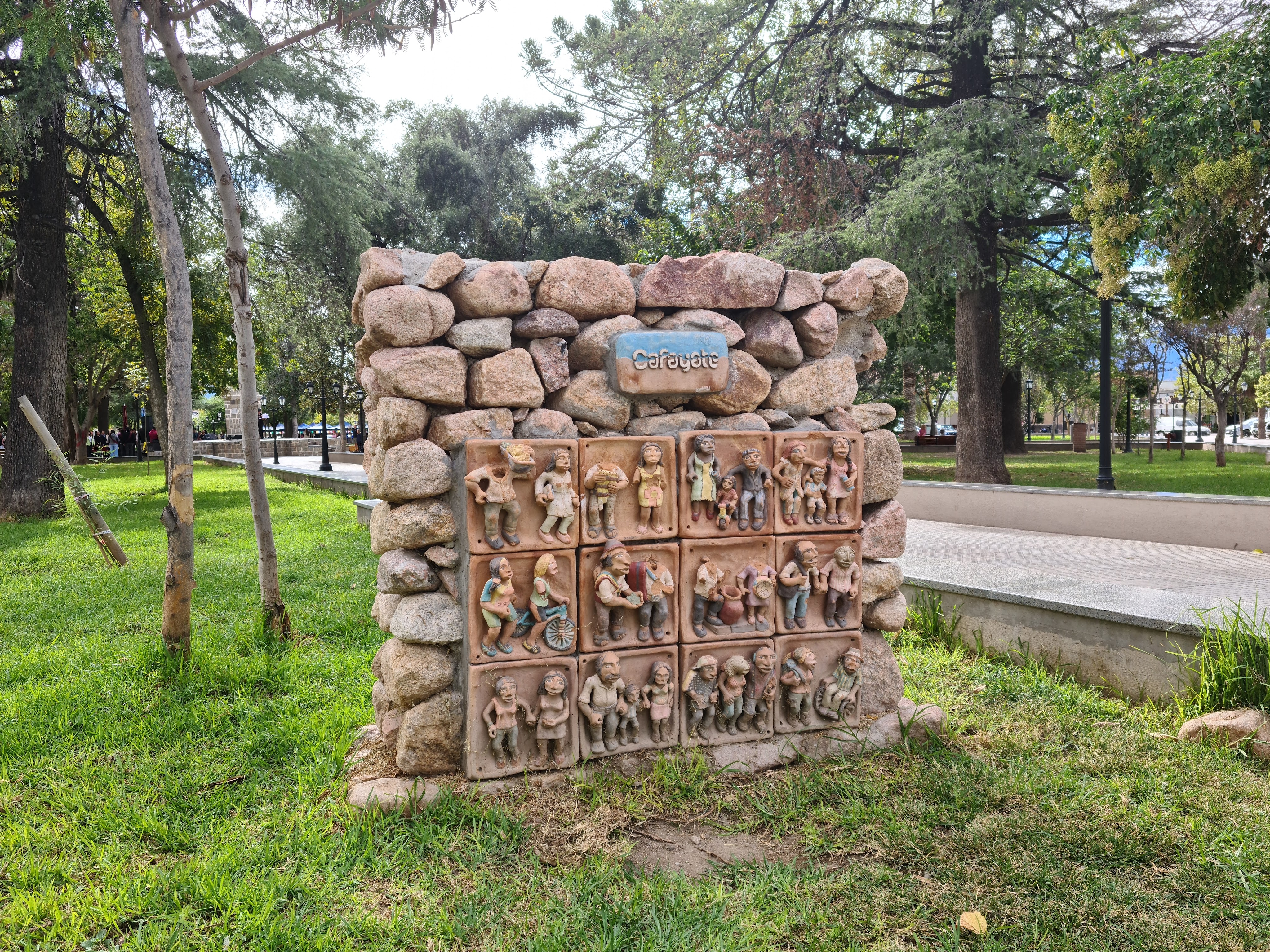
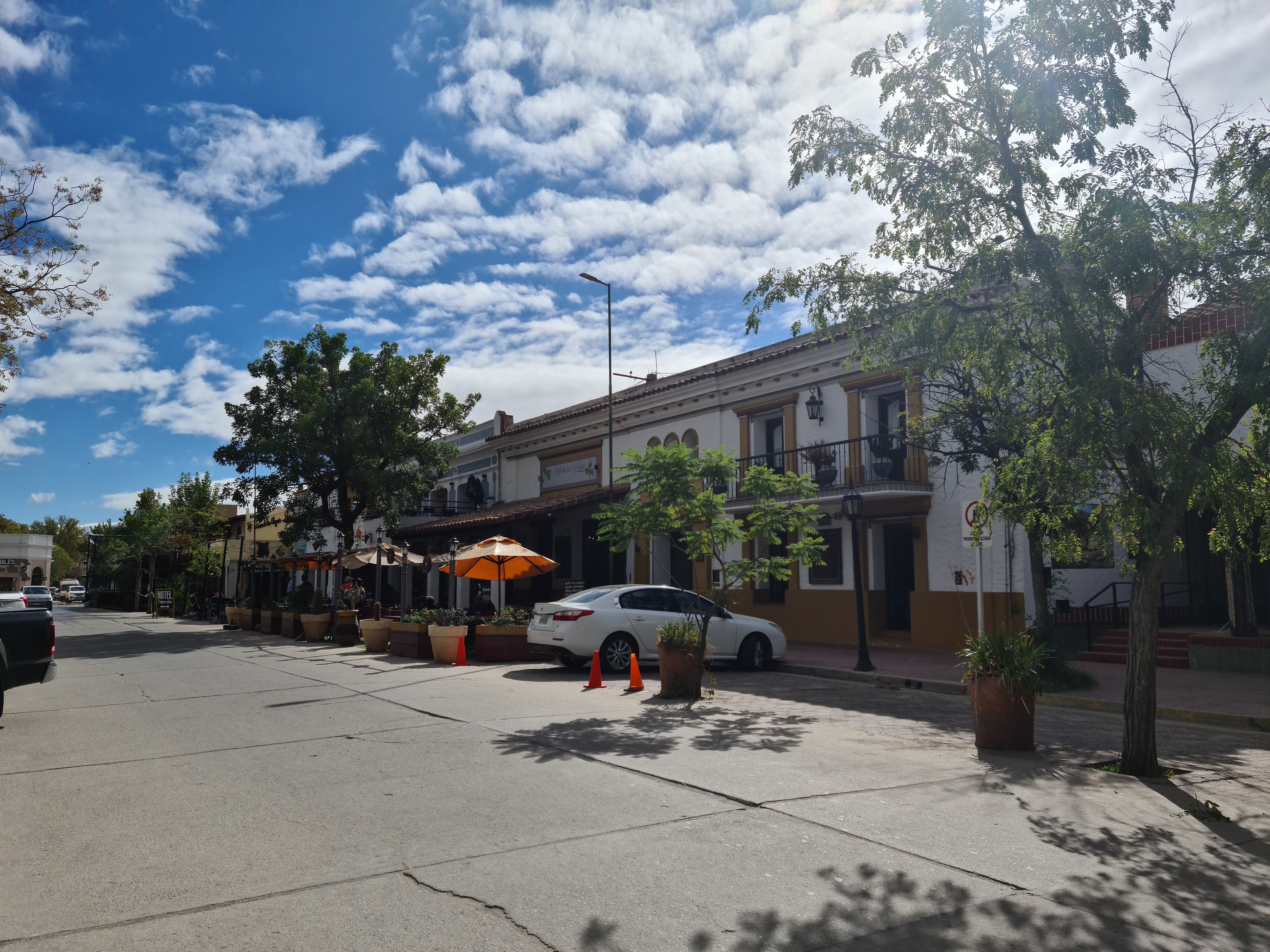
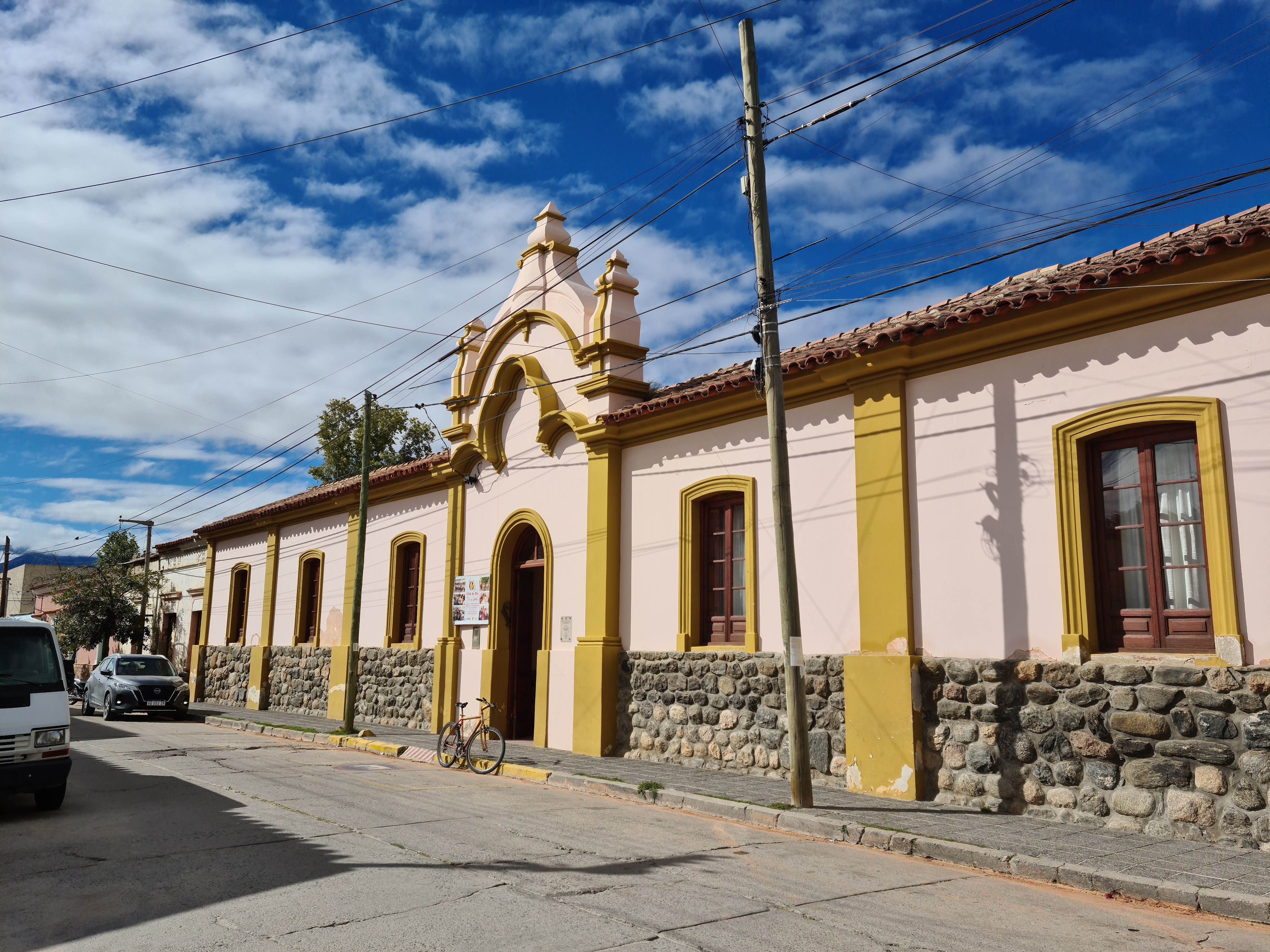
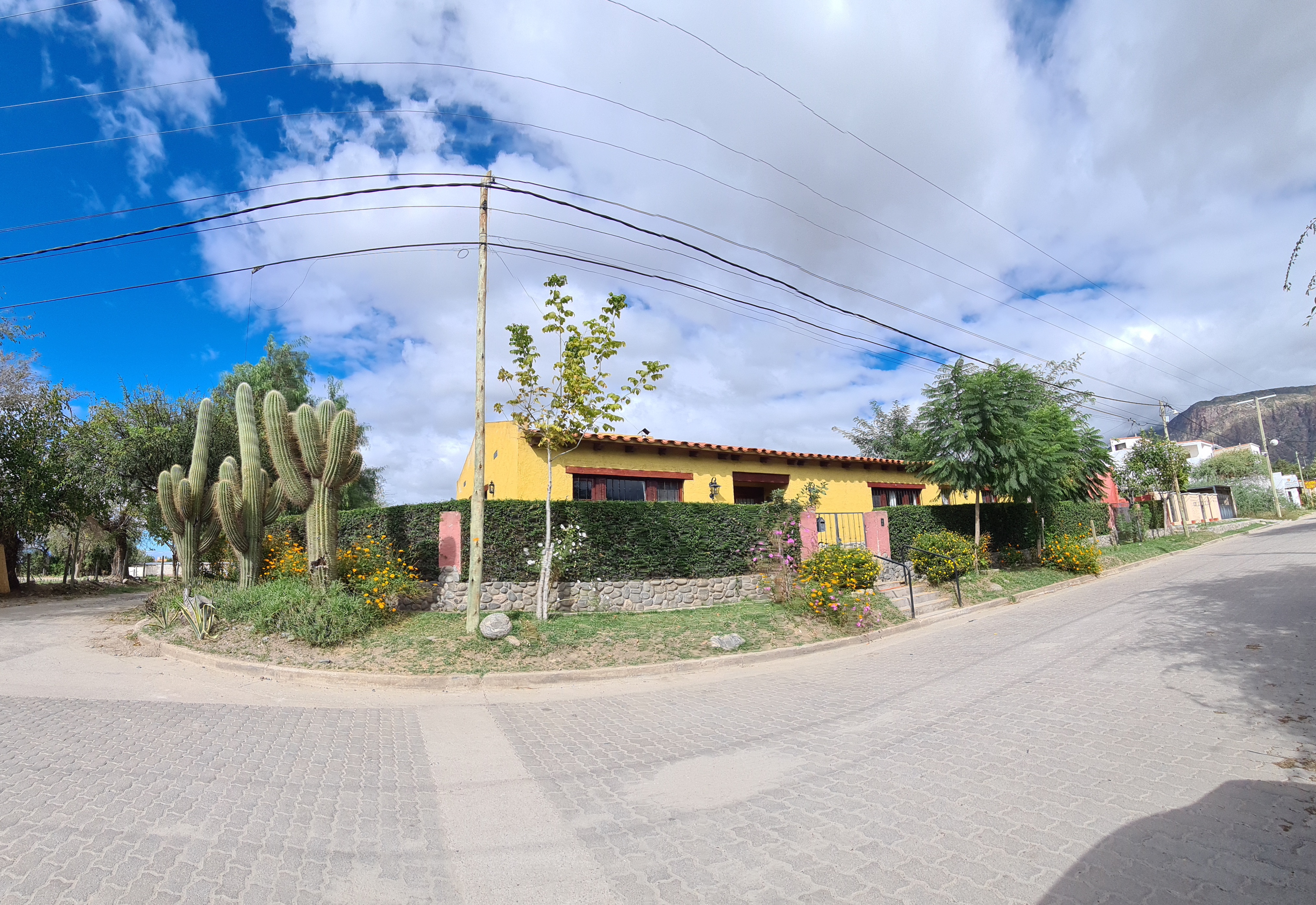
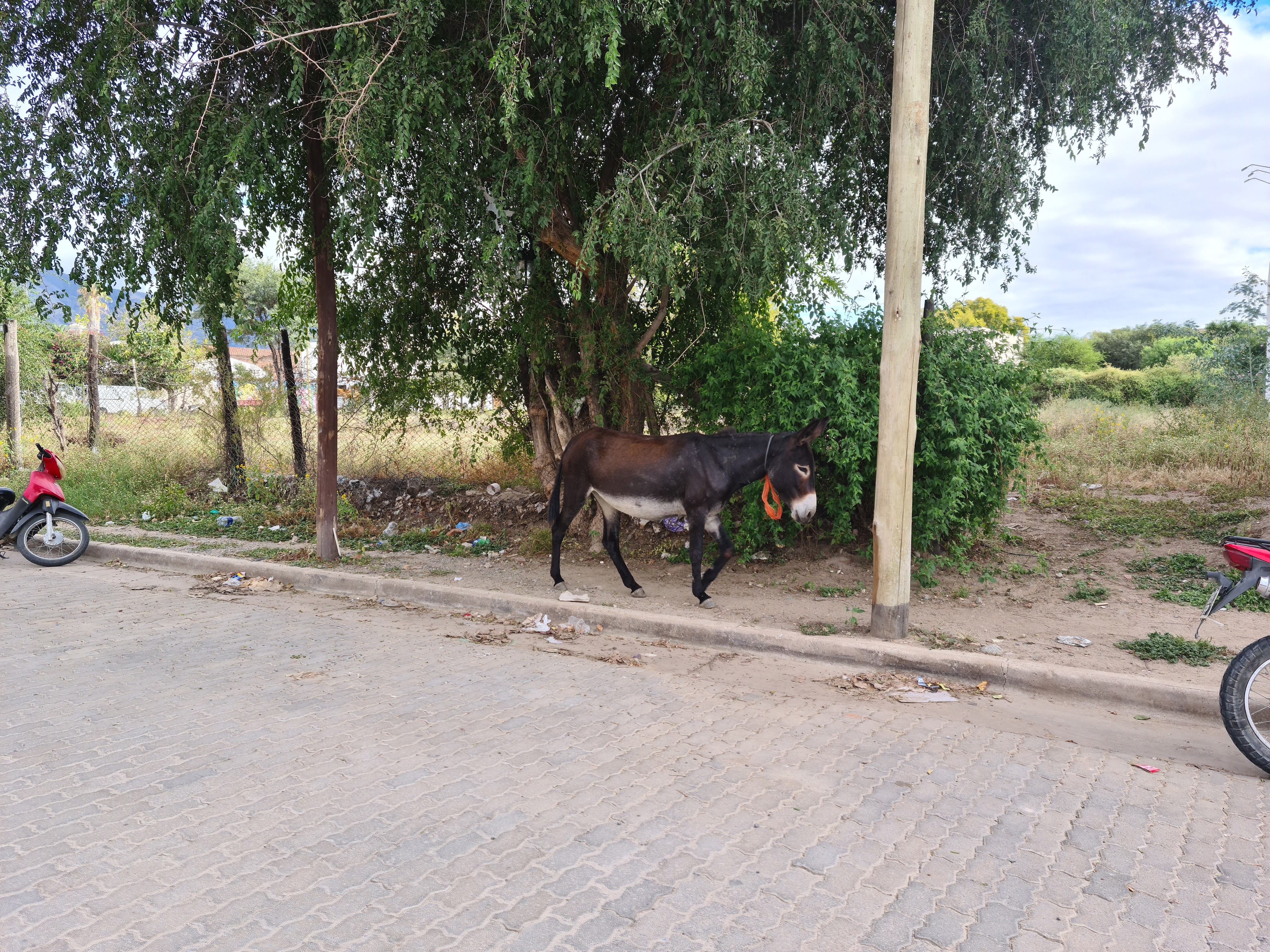
If anything, we could have spent even longer there so felt quite sad to be leaving the next morning. As we had one last circuit round the town square, a local brass band struck up, eliminating the quiet, sleepy morning vibes and sending us on our way.
We made very slow progress back through the Quebrada de las Conchas, on account of the various viewpoints.
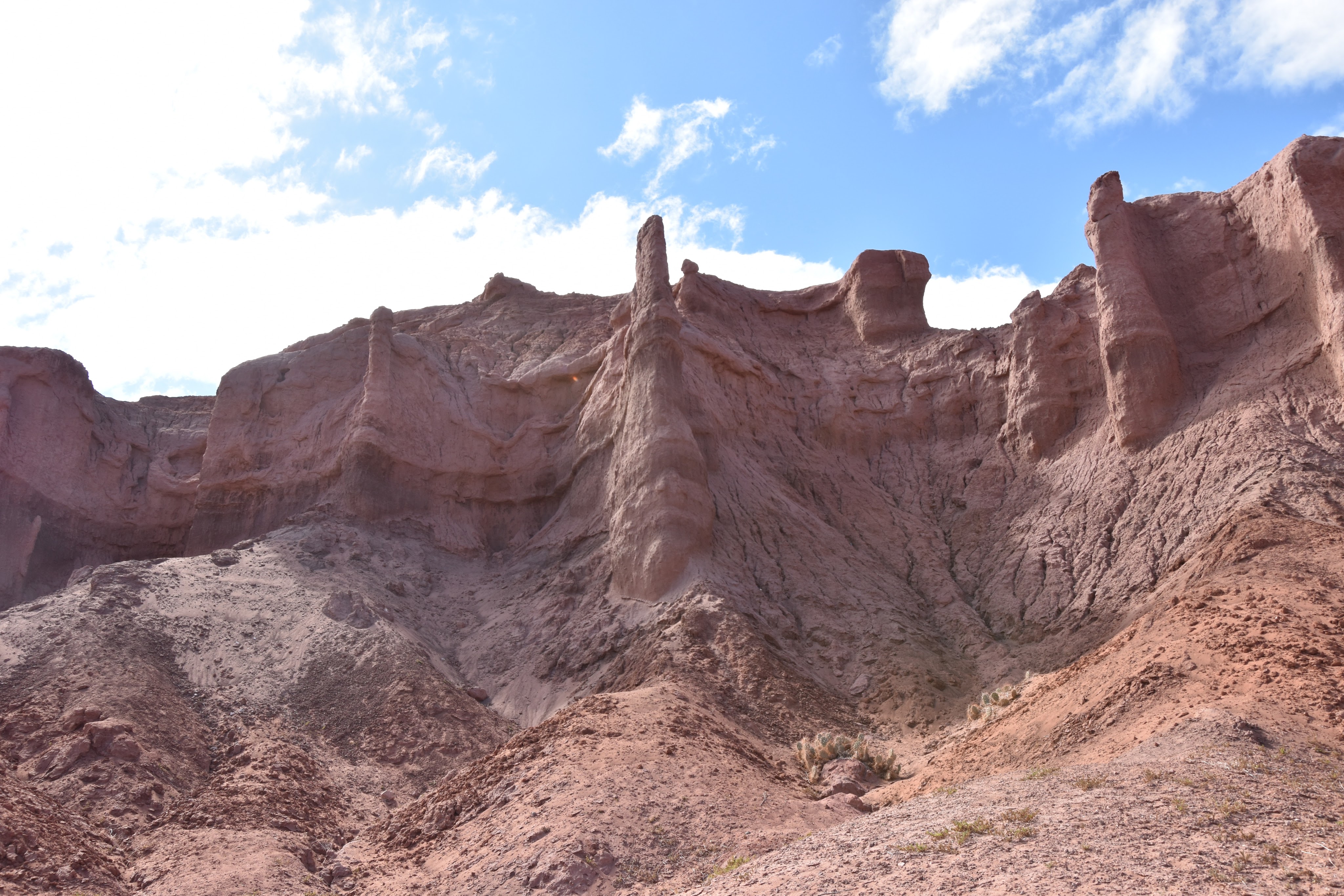

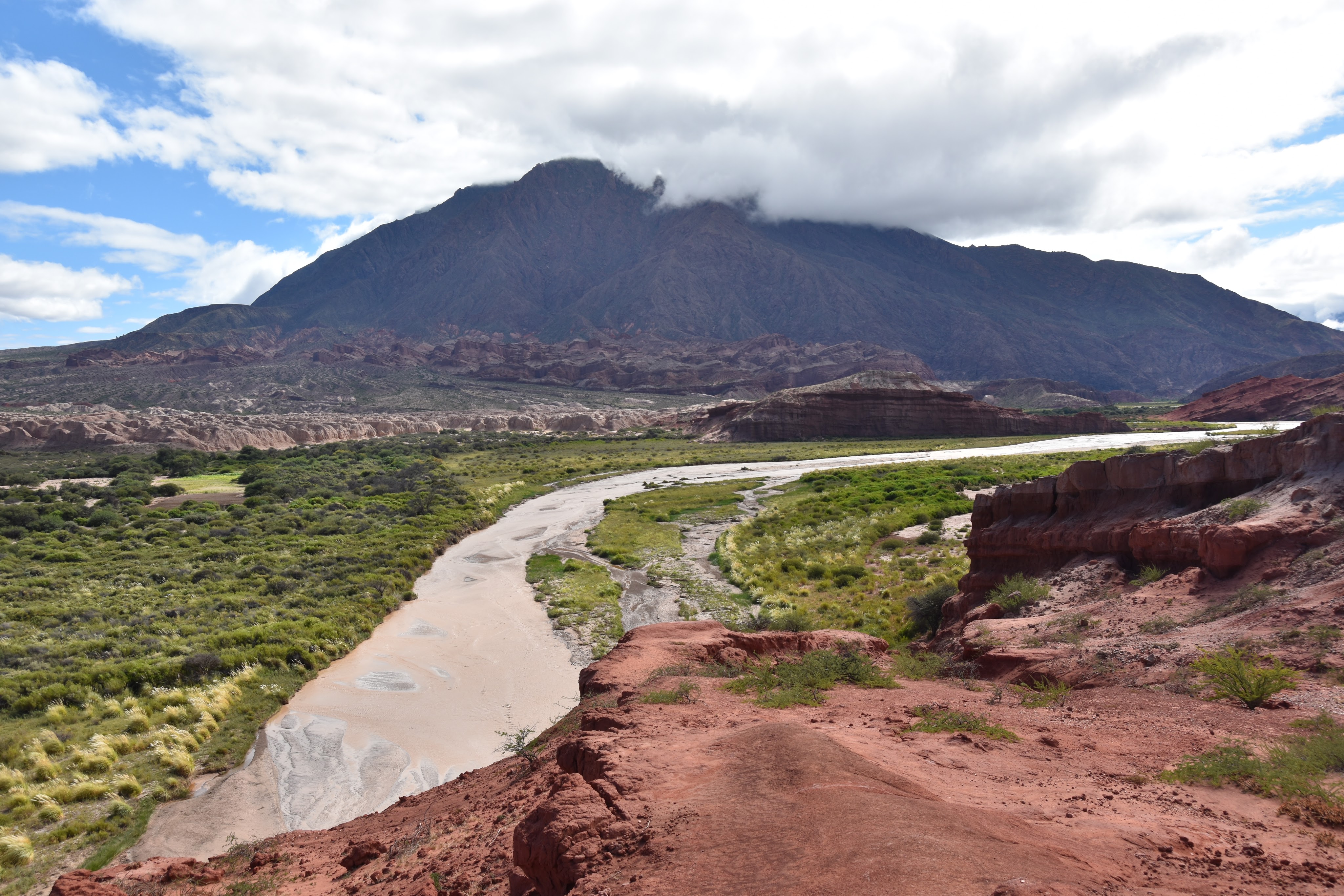
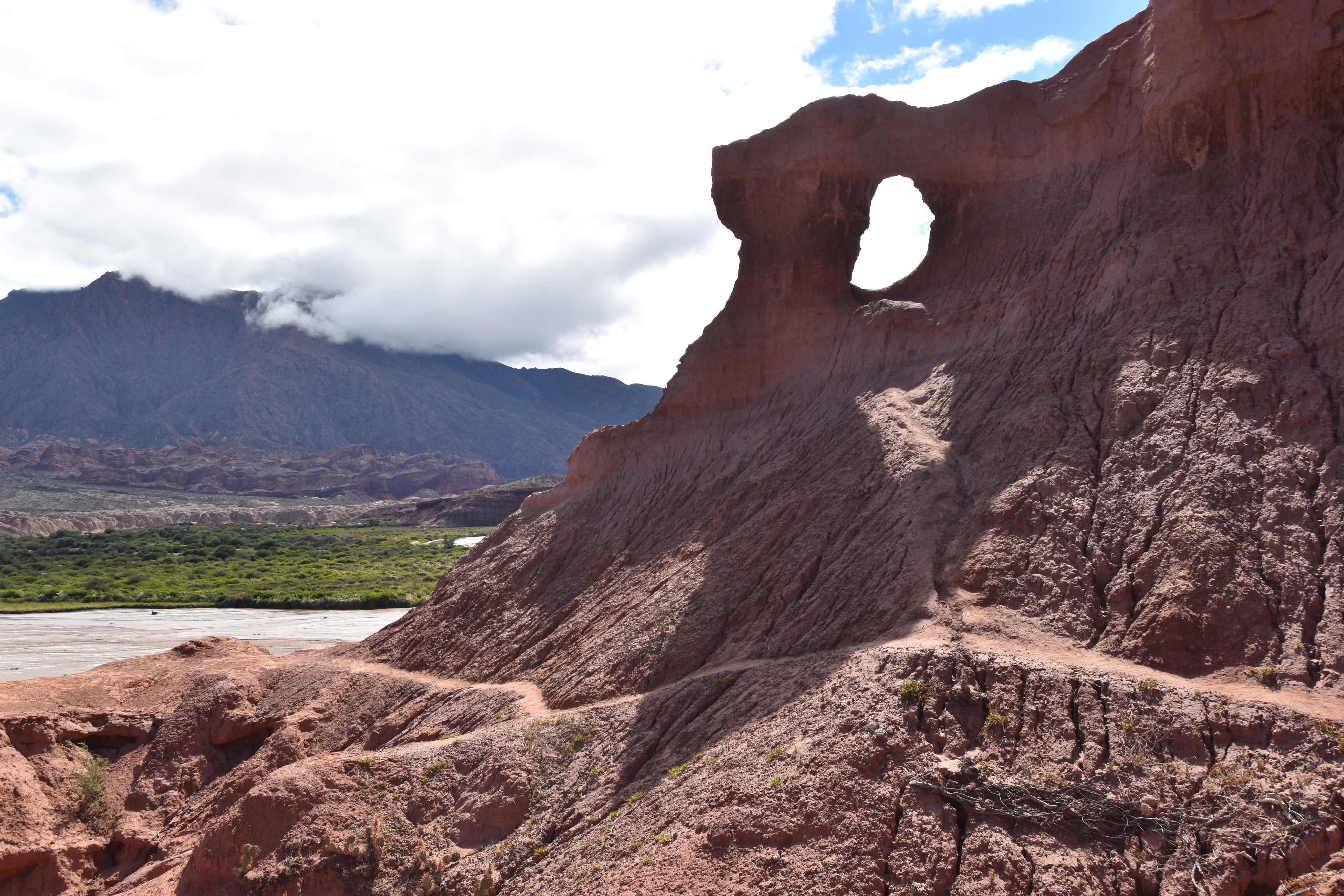
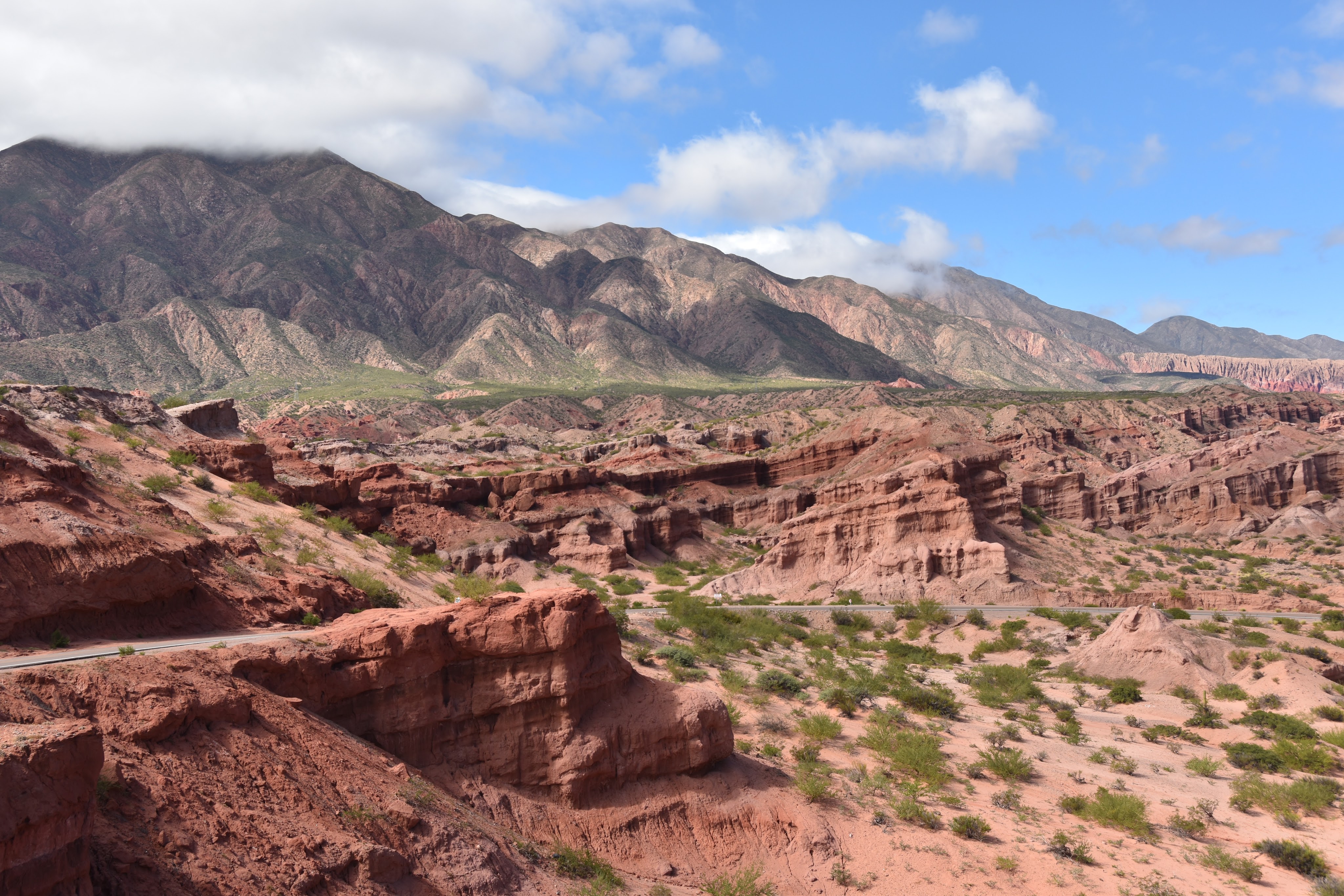
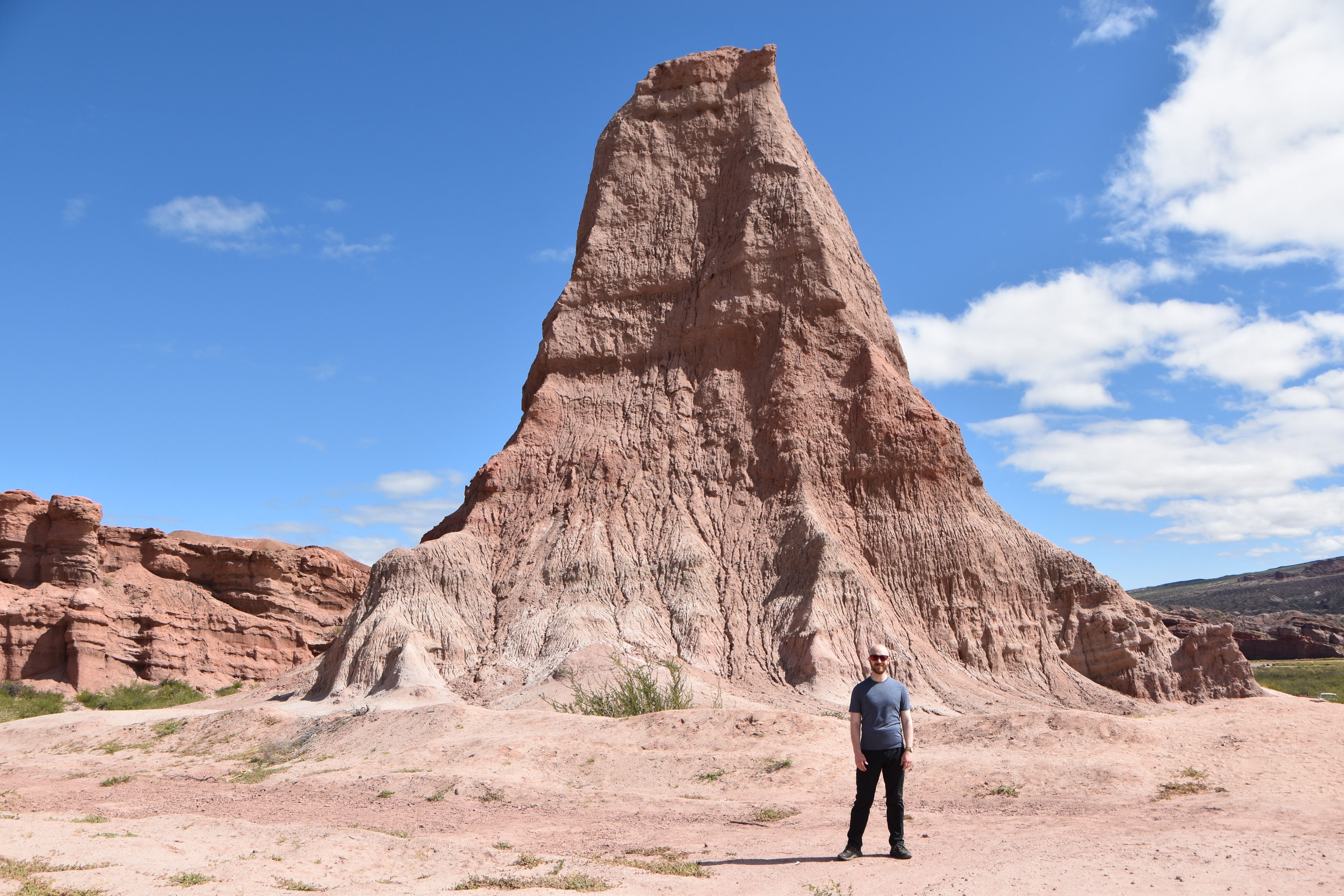
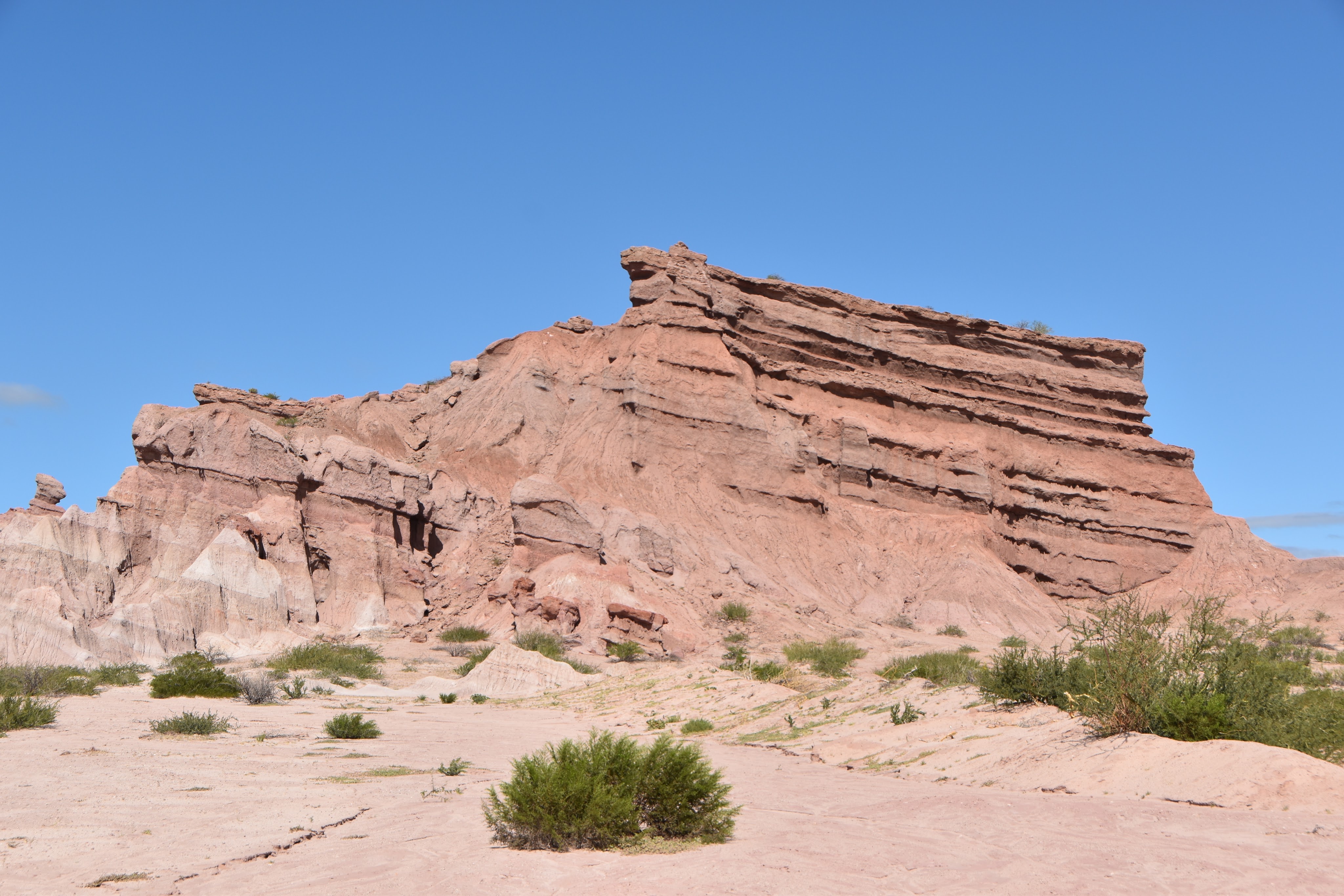
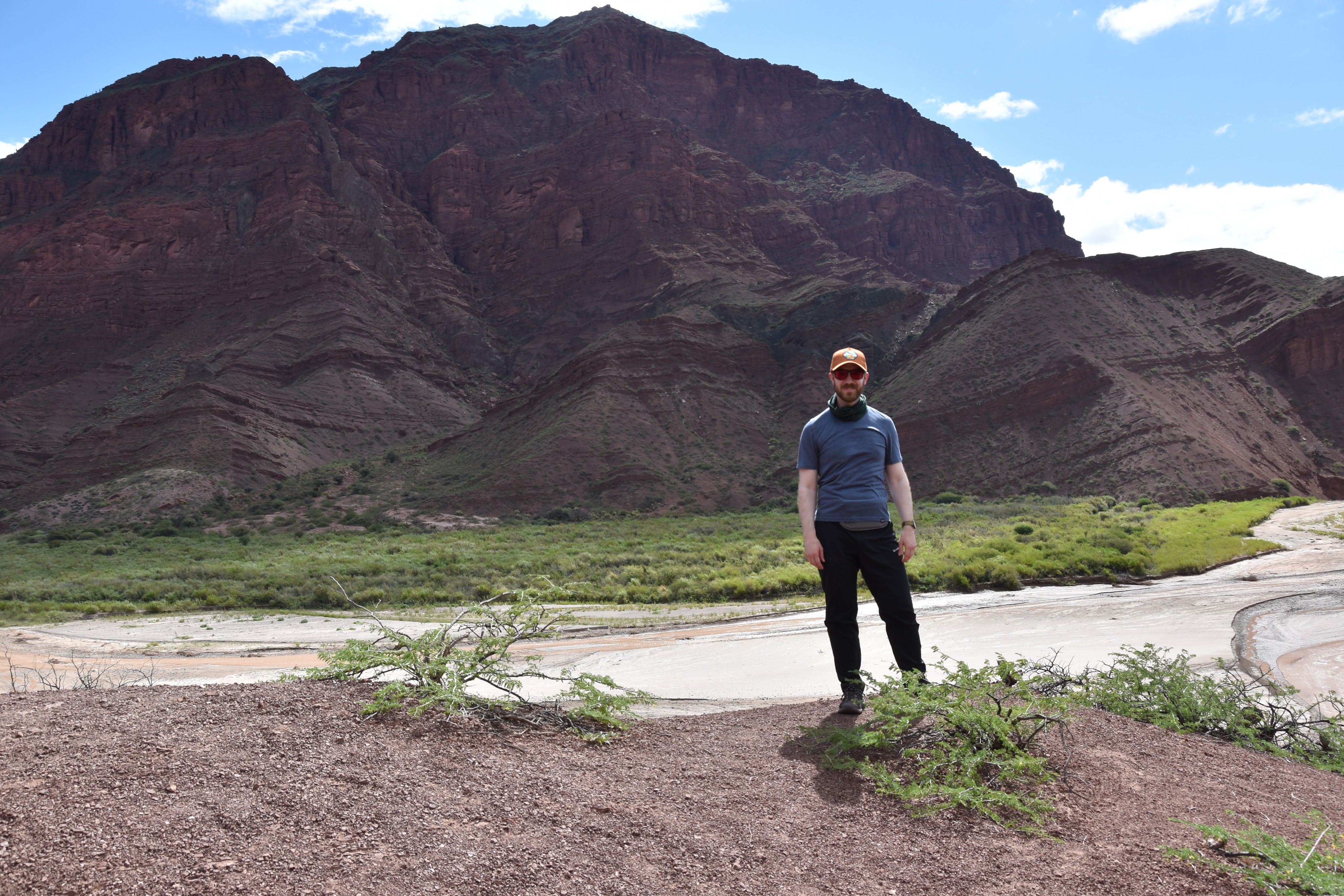
We had also decided to work off some of our many recent excesses, and start getting back into hiking practice, so embarked on a near two hour walk at the El Paso trail.
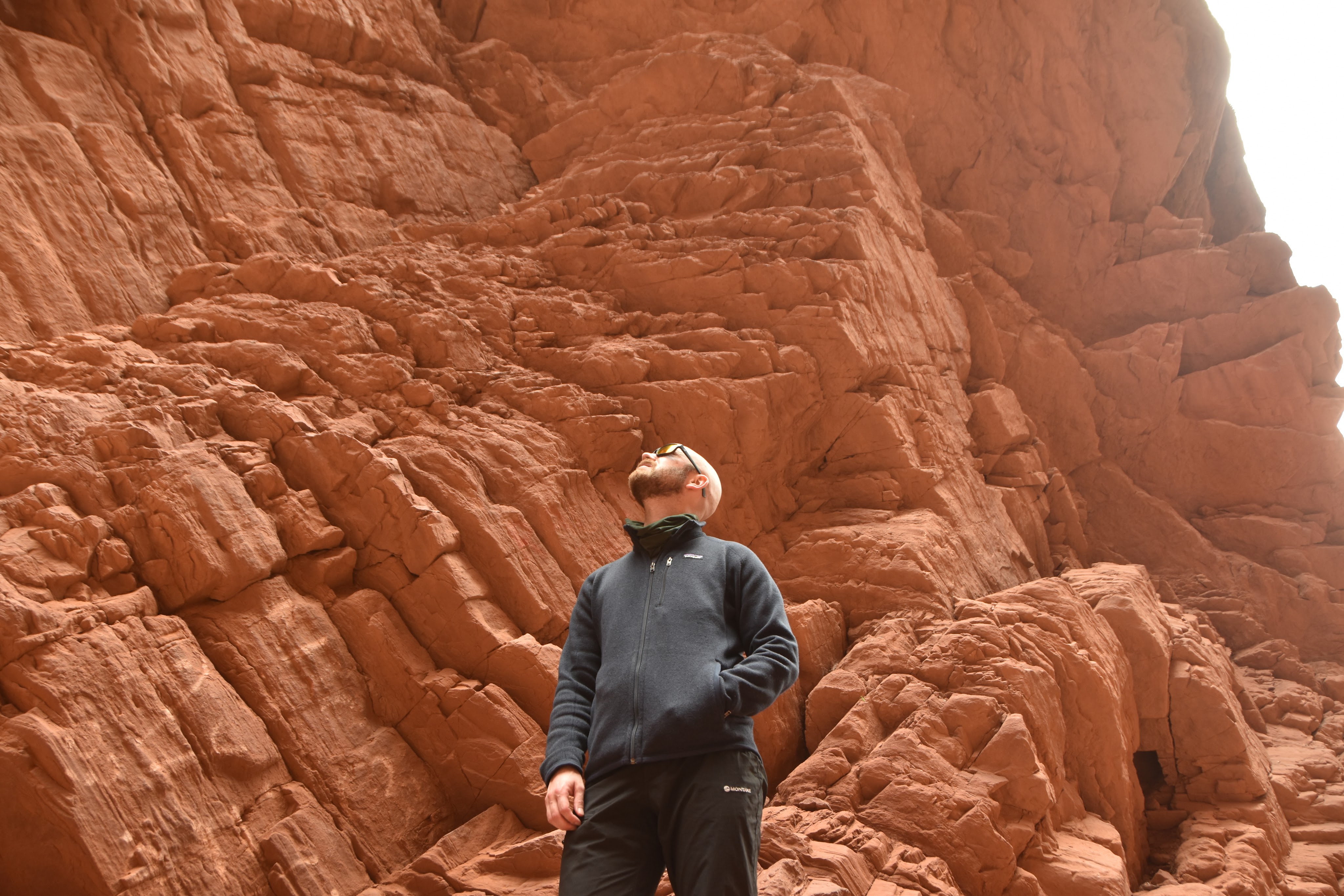
As we set off down the path, it all felt a little bit The Hills Have Eyes, with the alien rock formations stretching above us.
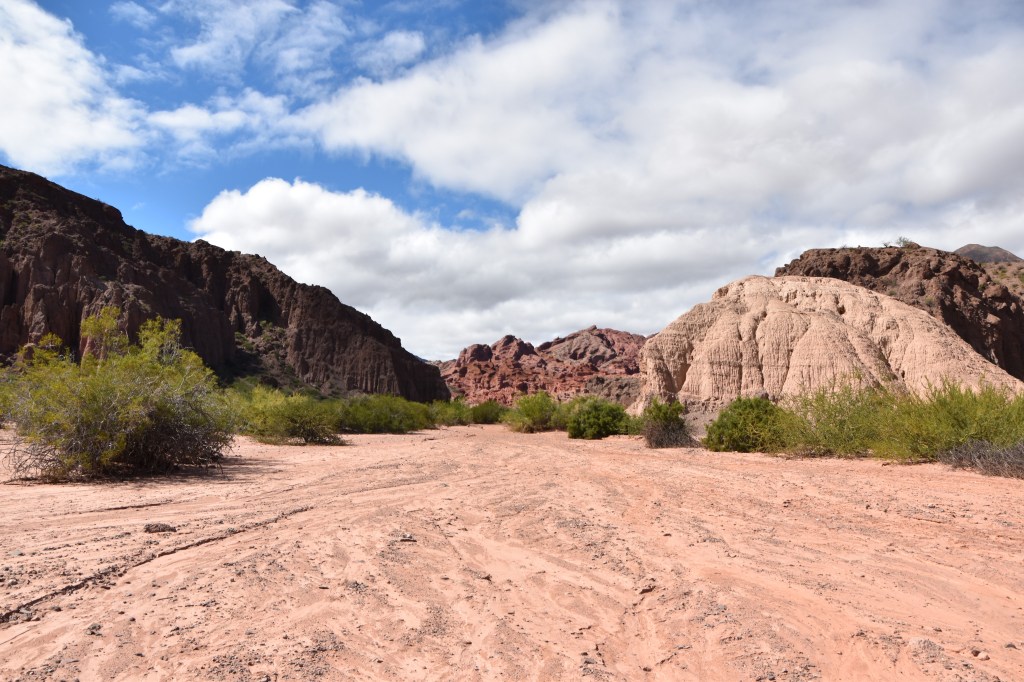
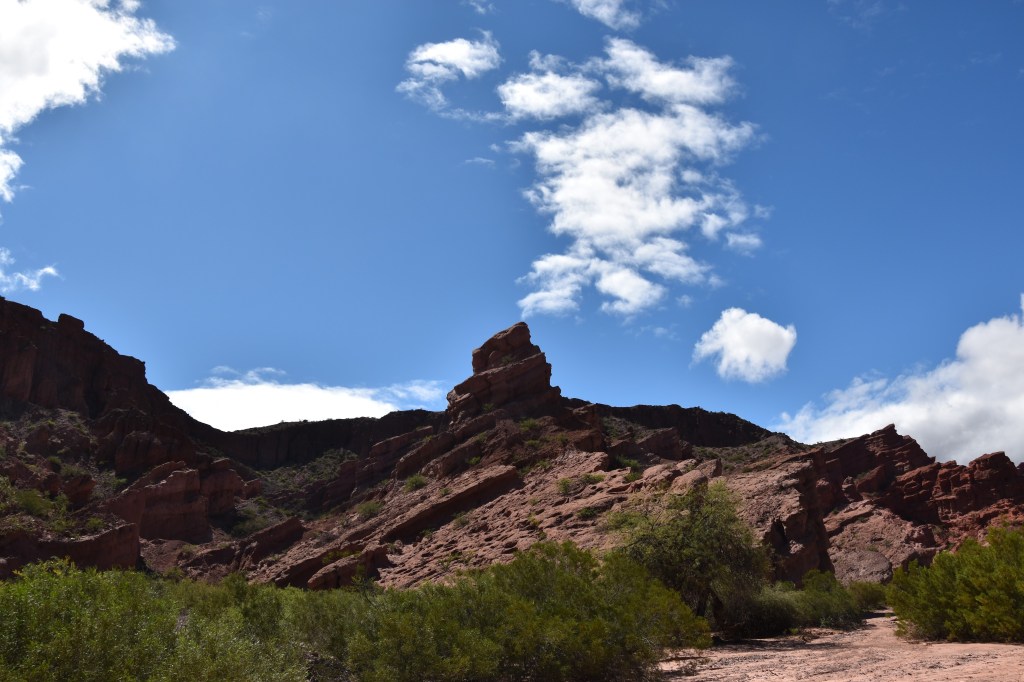
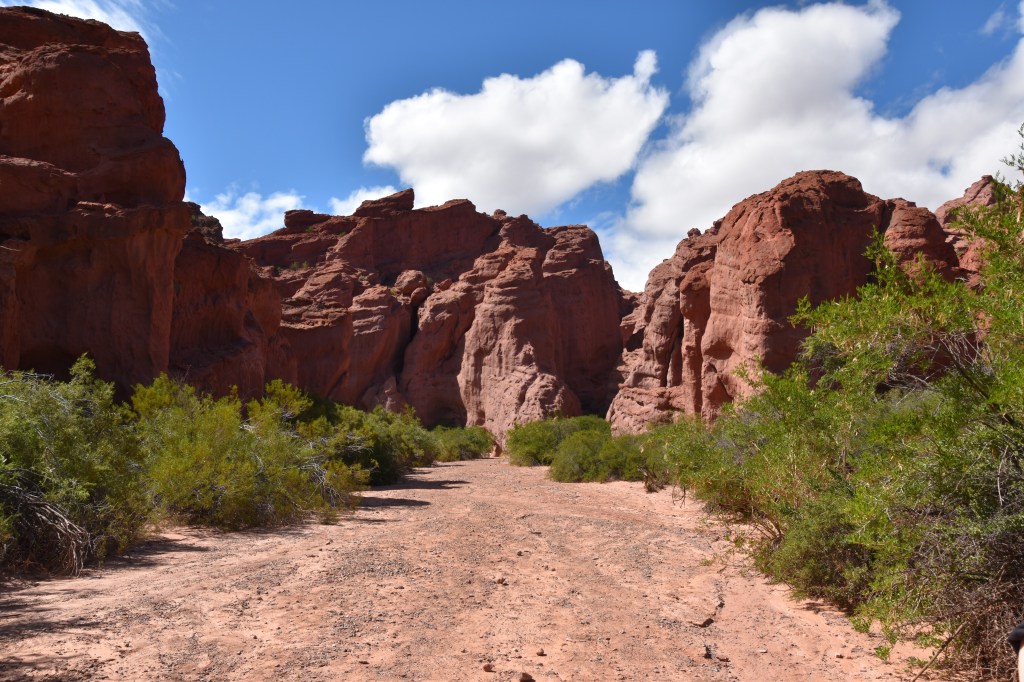
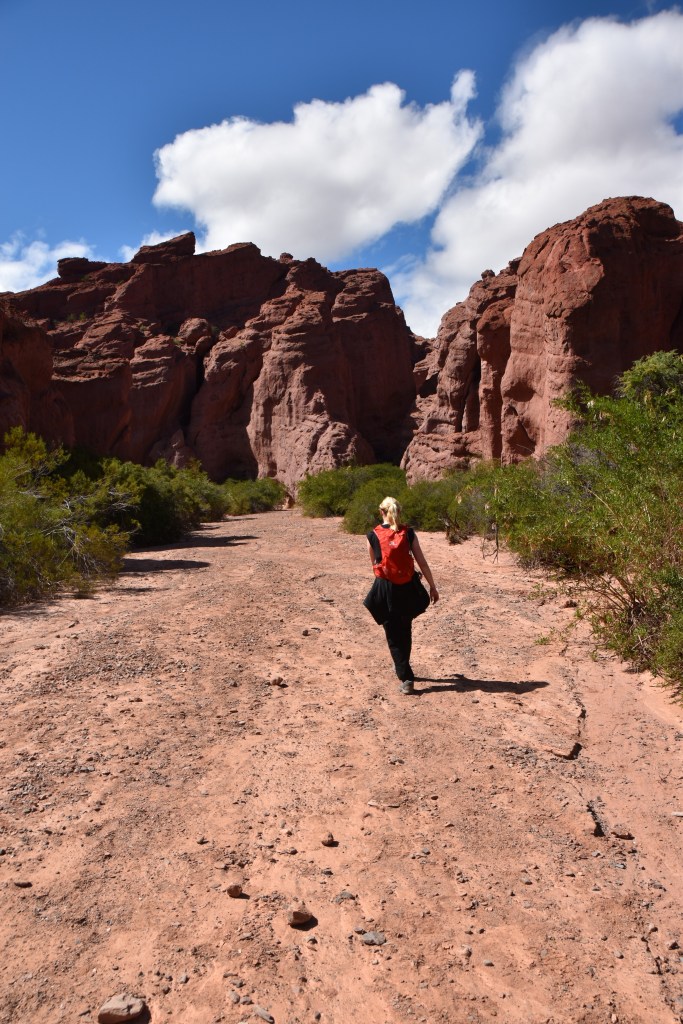
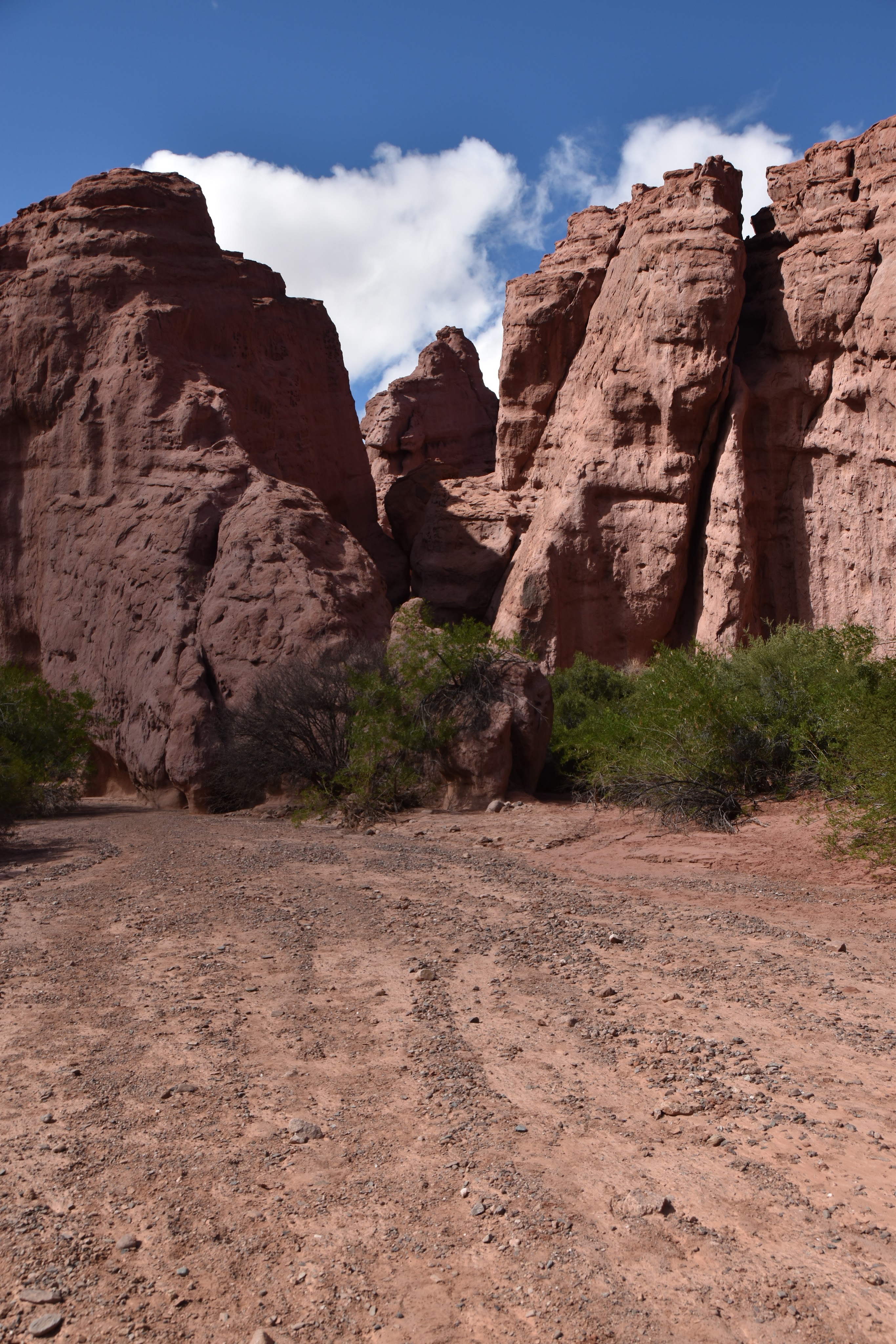
The walk itself was a lot more tranquil, and generally very flat (and I probably don’t need to confirm, cannibal free). We just needed to mind our heads passing under rocks every now and again. Ricki of course having already learnt that lesson the hard way!
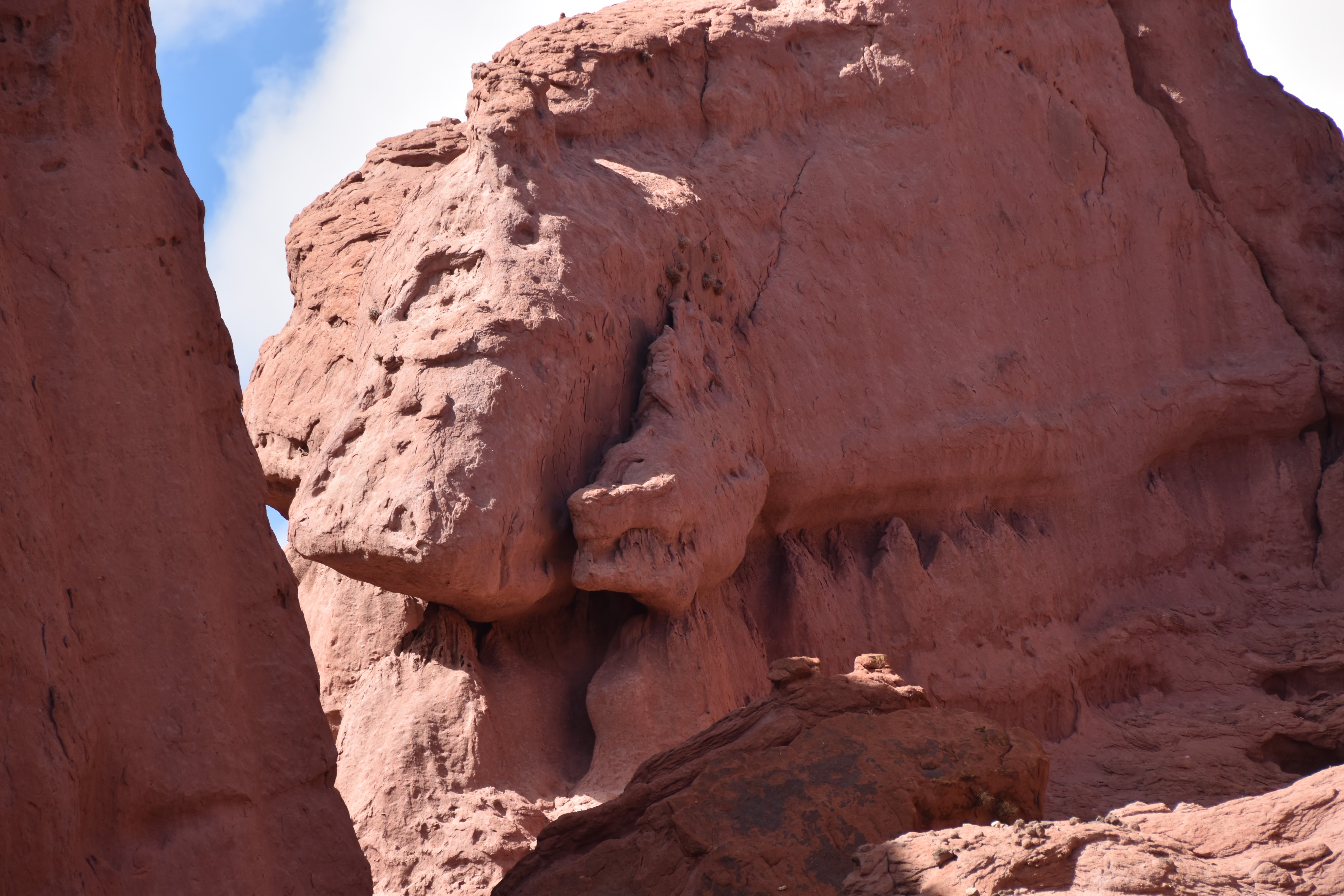

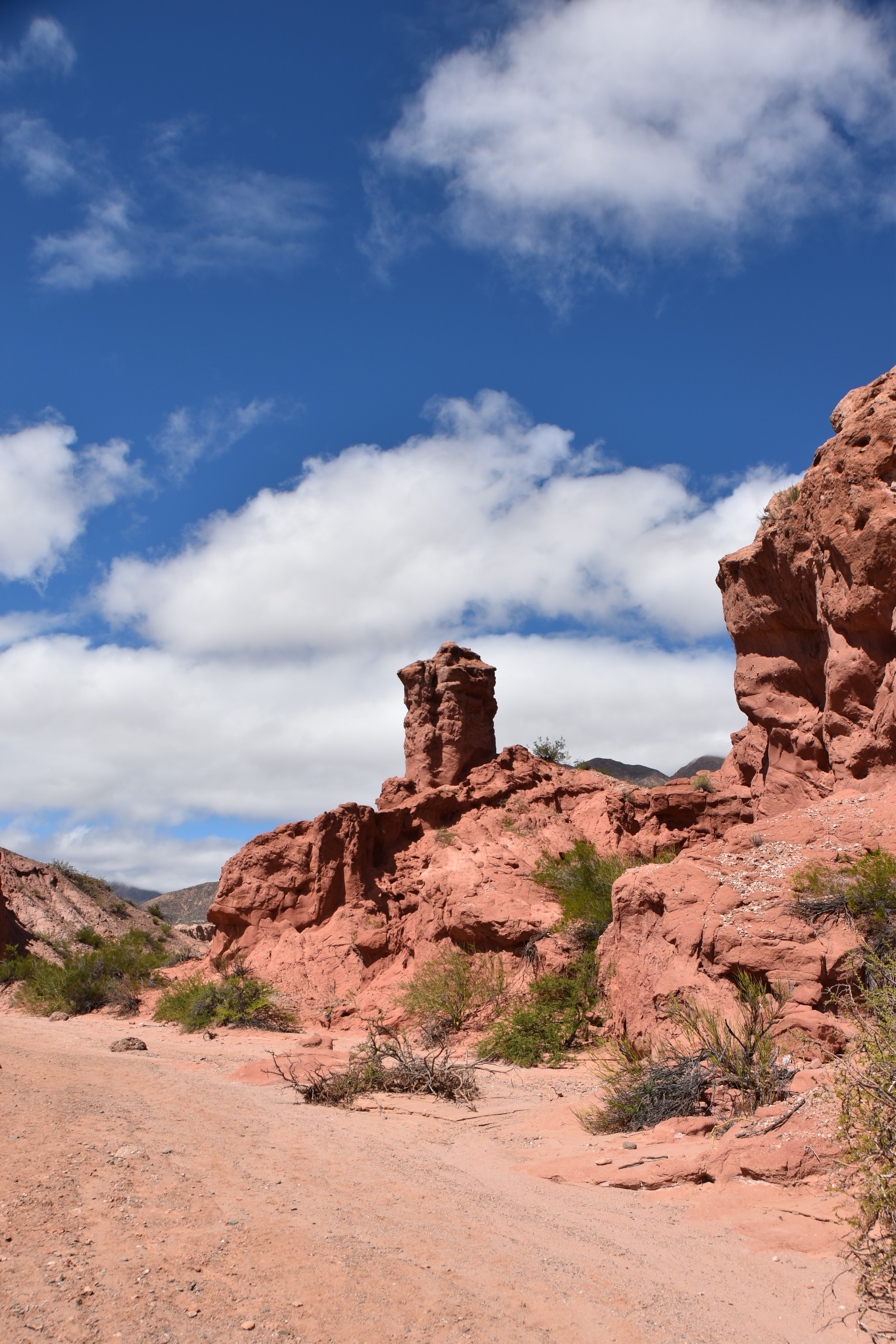
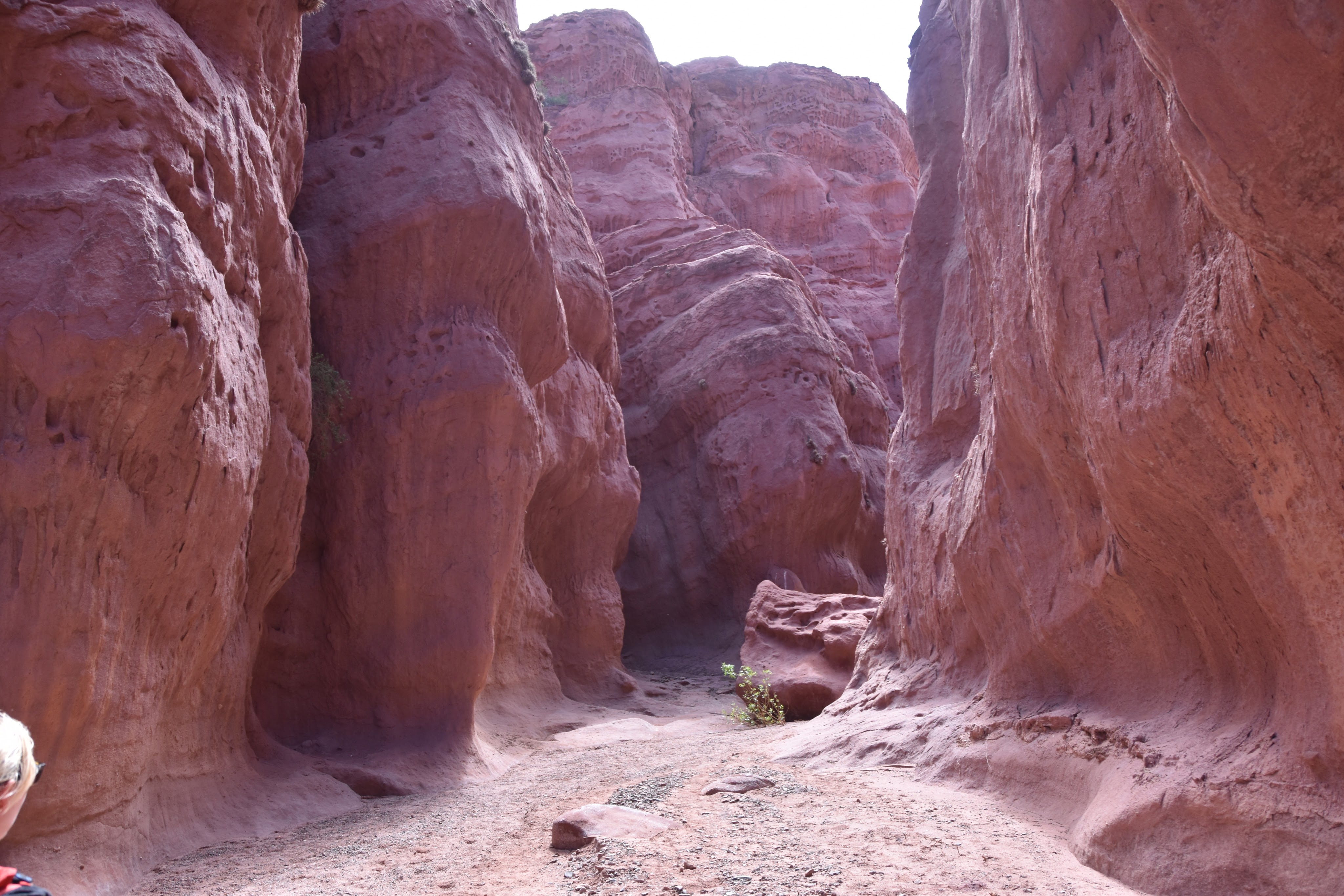

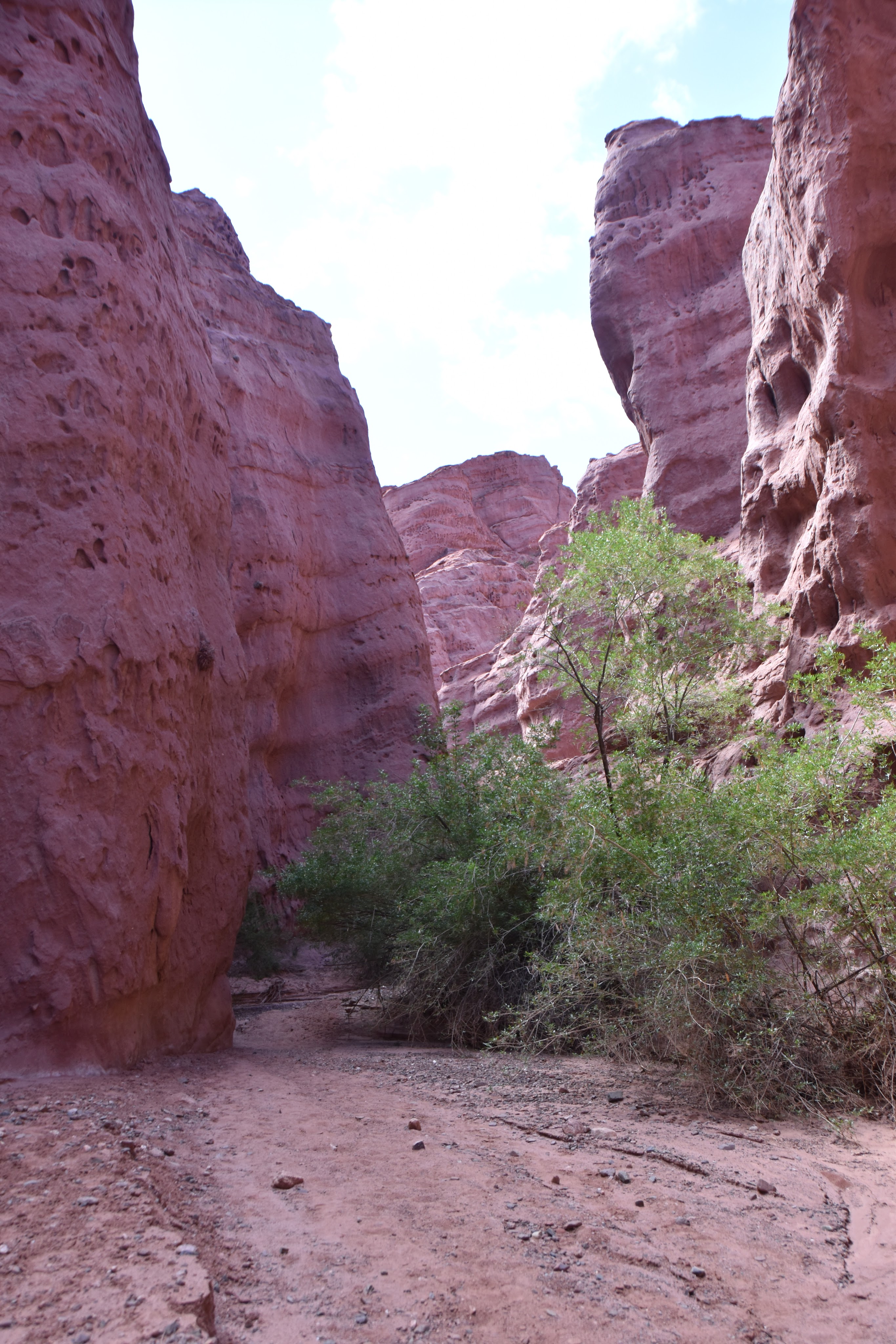
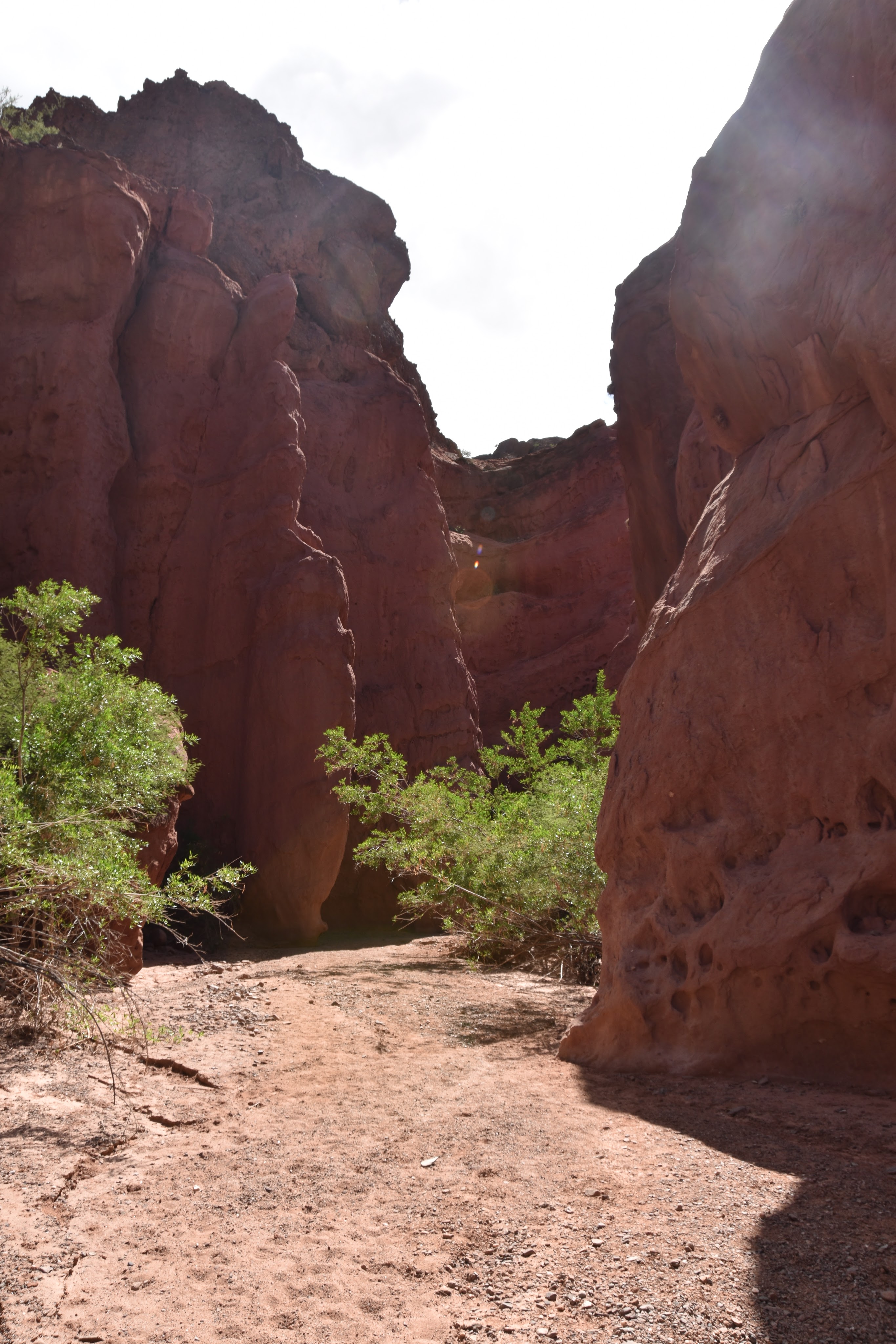
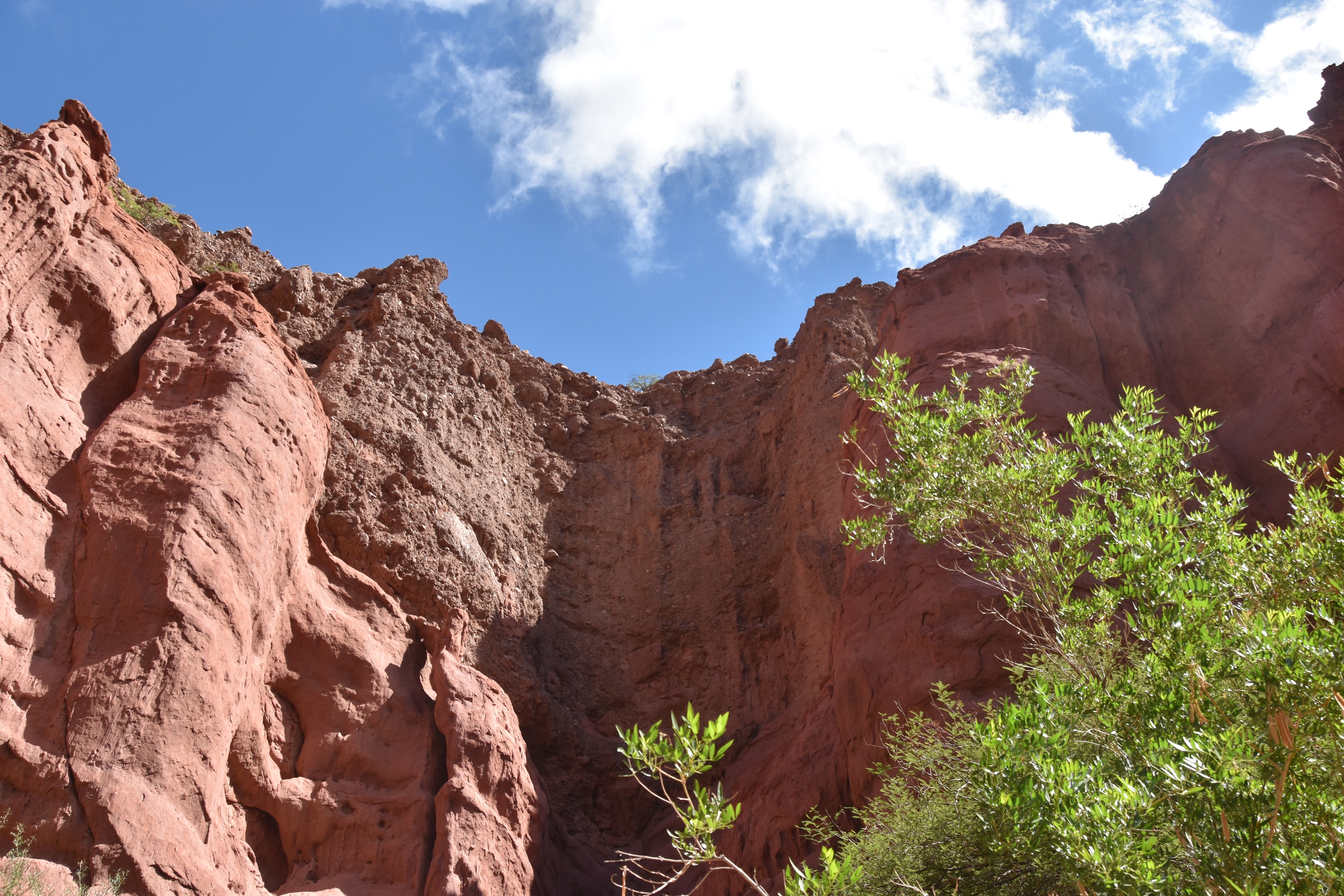
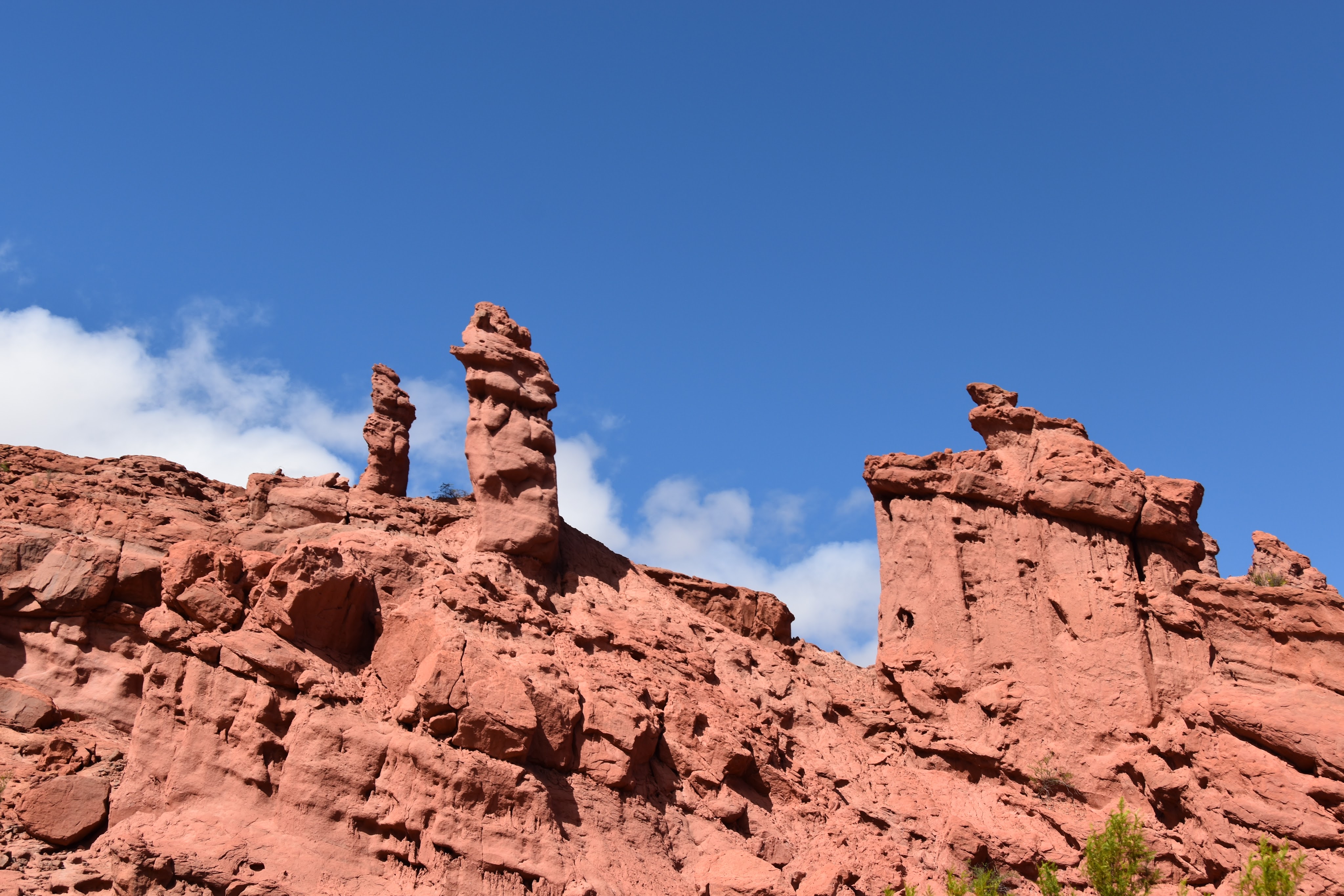
The only real strain challenge towards the end of the route, as a final push took us to the top of a bright red sandy dune, with rewarding views across the river valley.
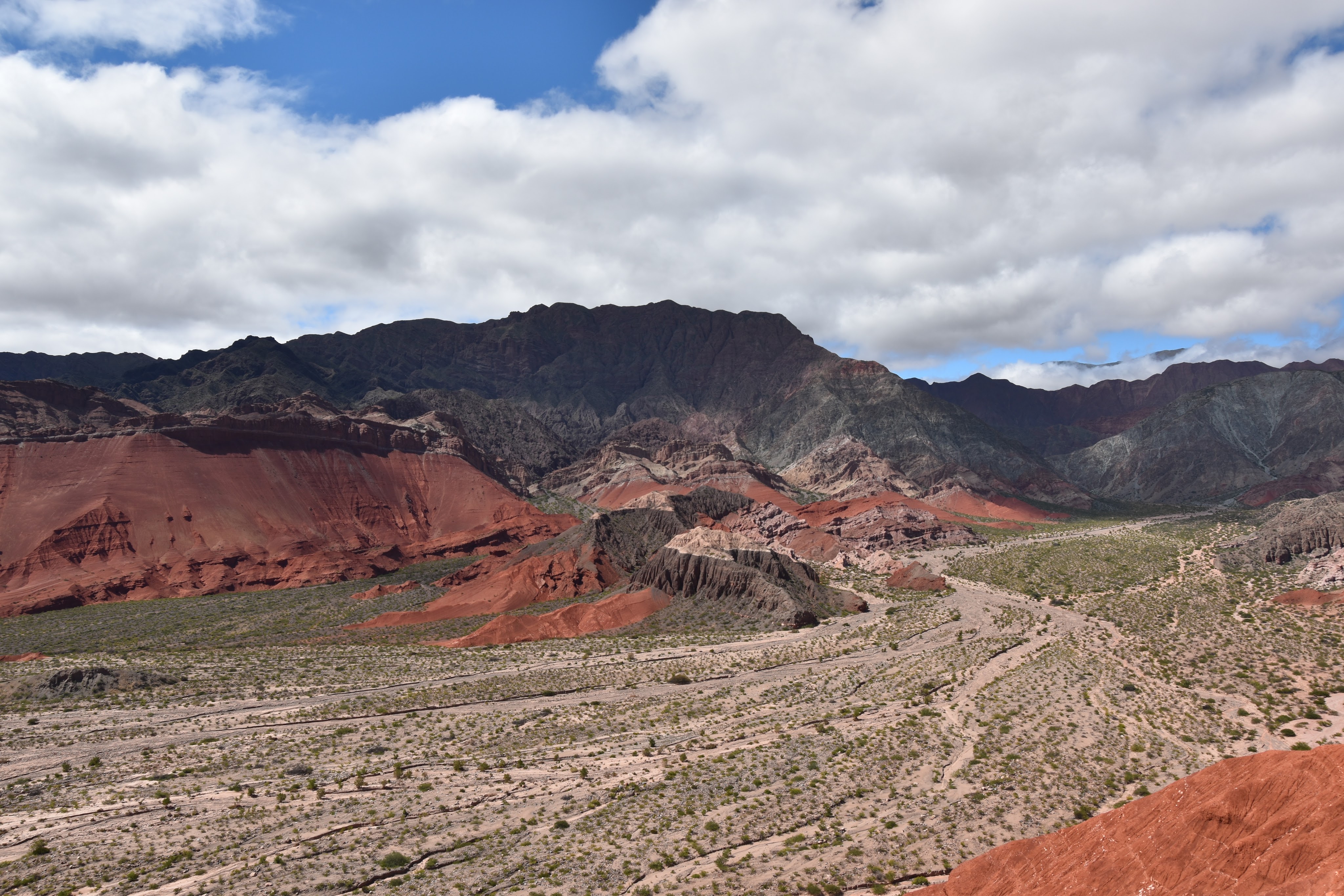
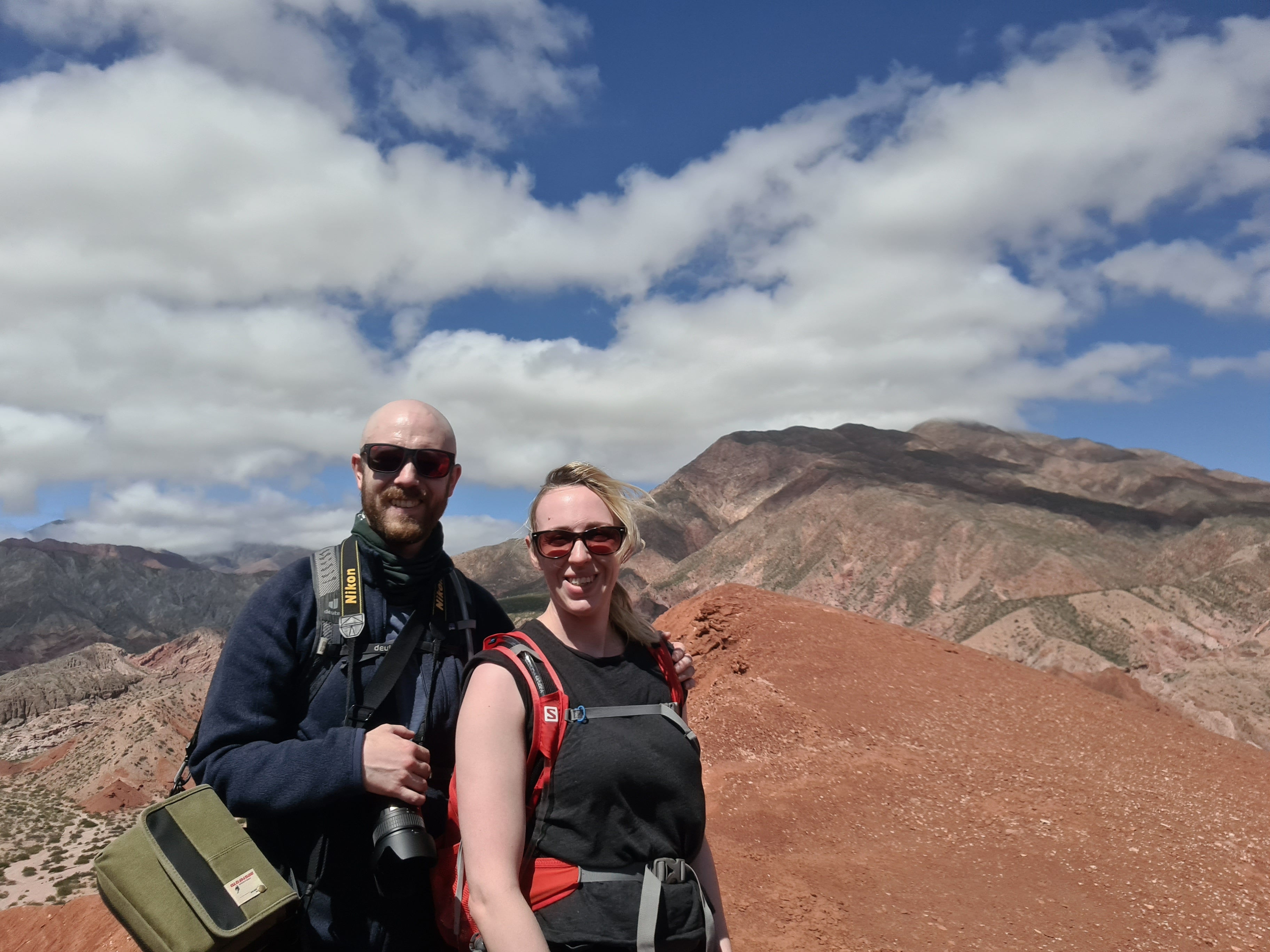
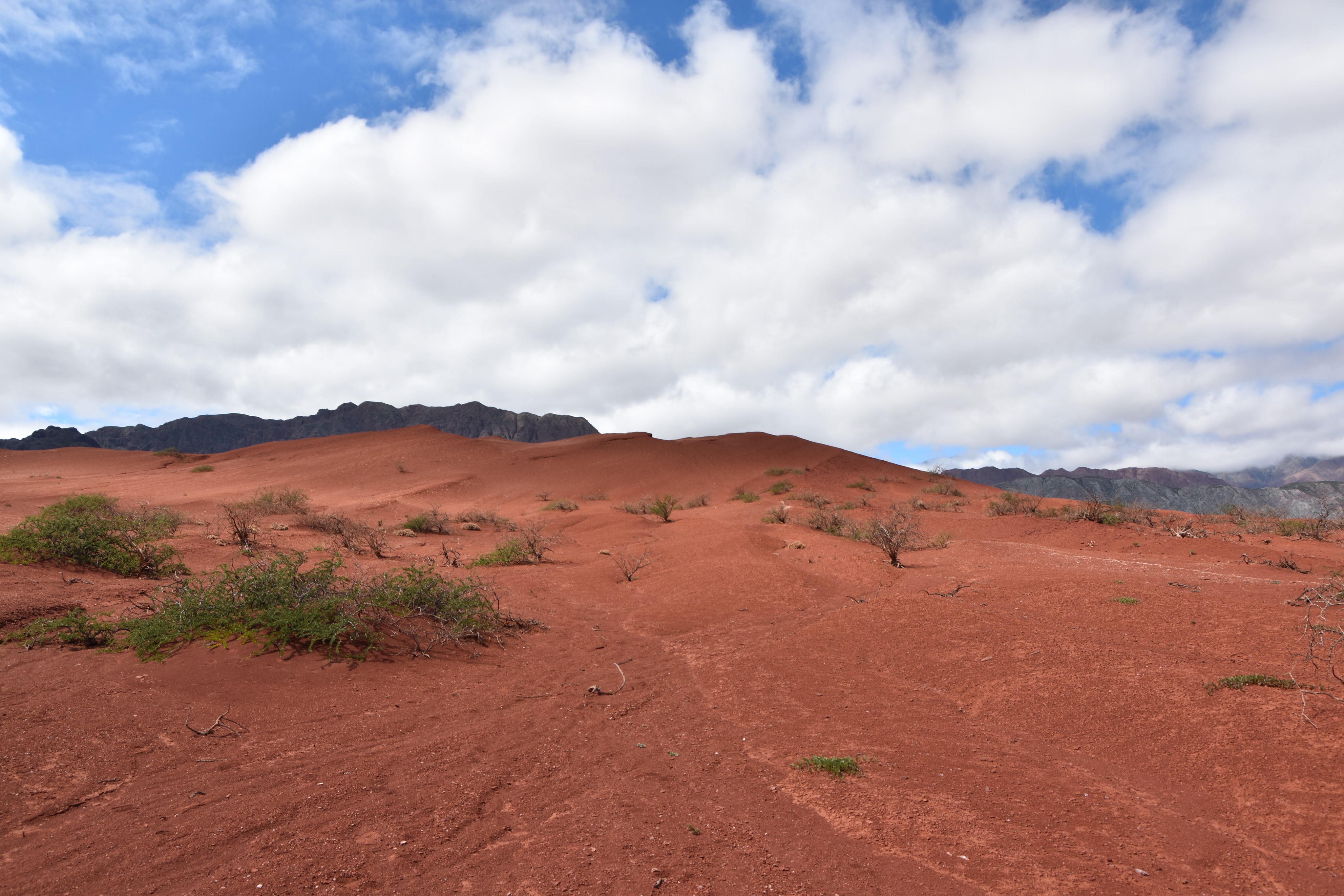
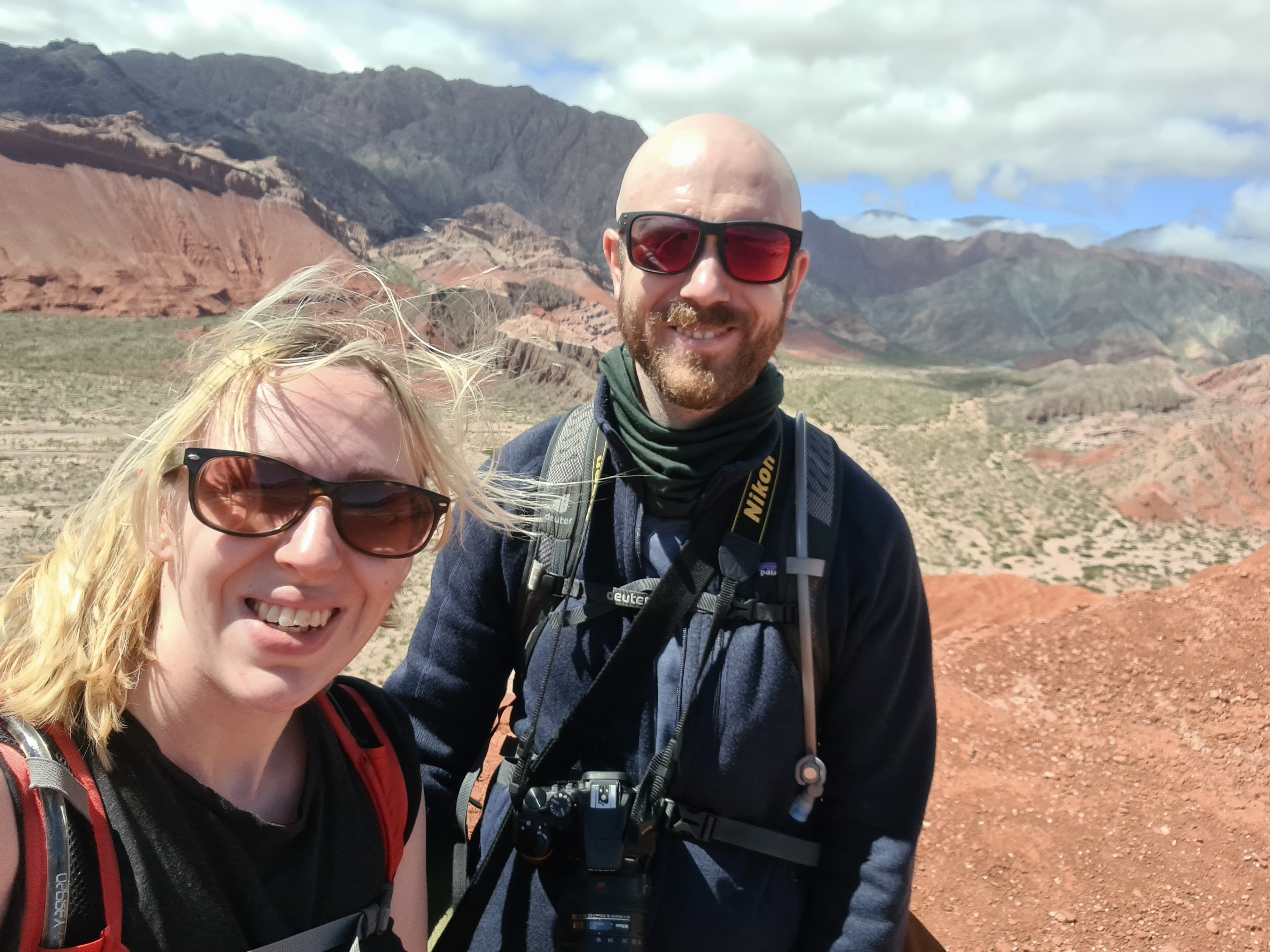

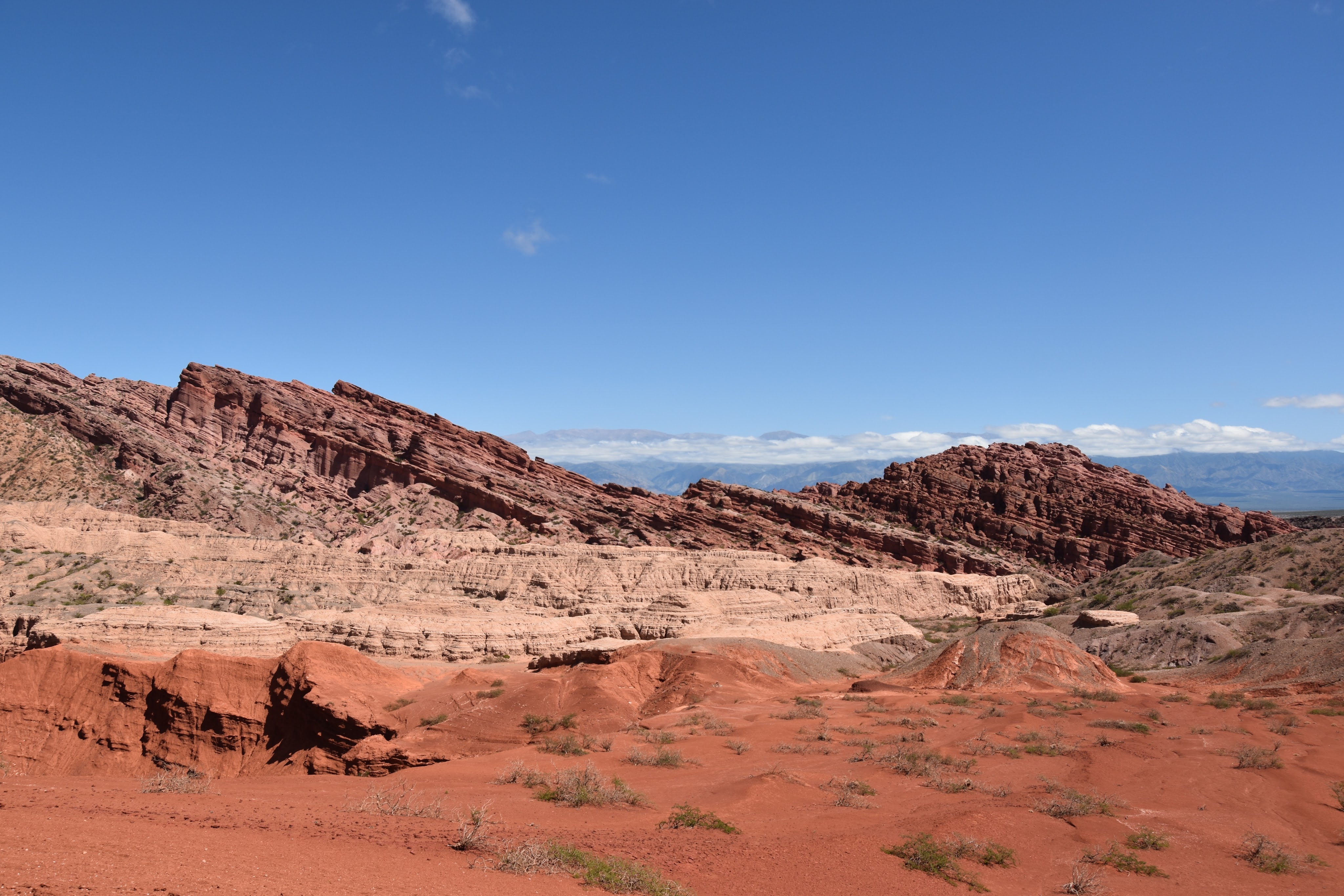
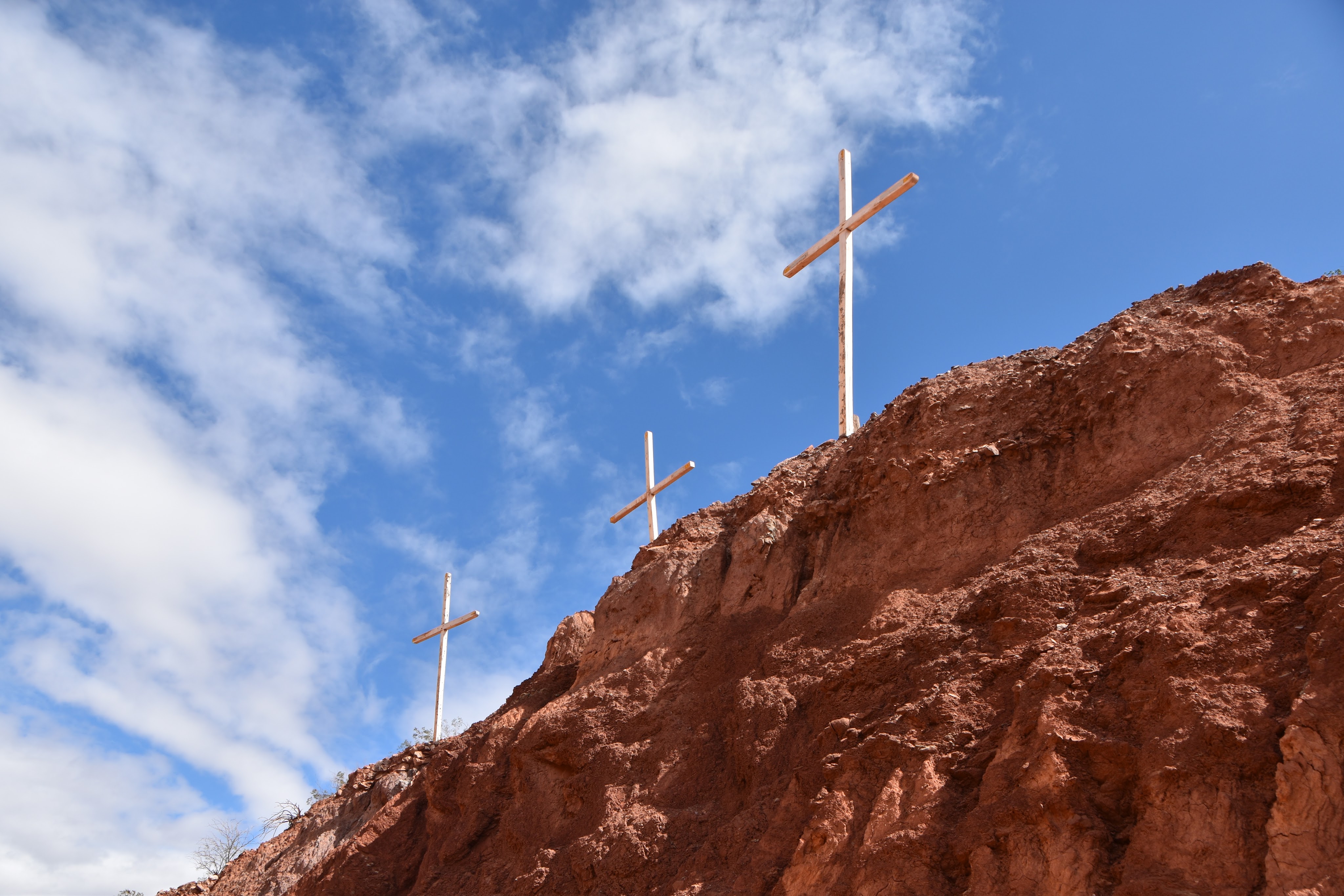
After returning to the car, we still had a few more stops to make as the most notable views of the Quebrada still awaited us.
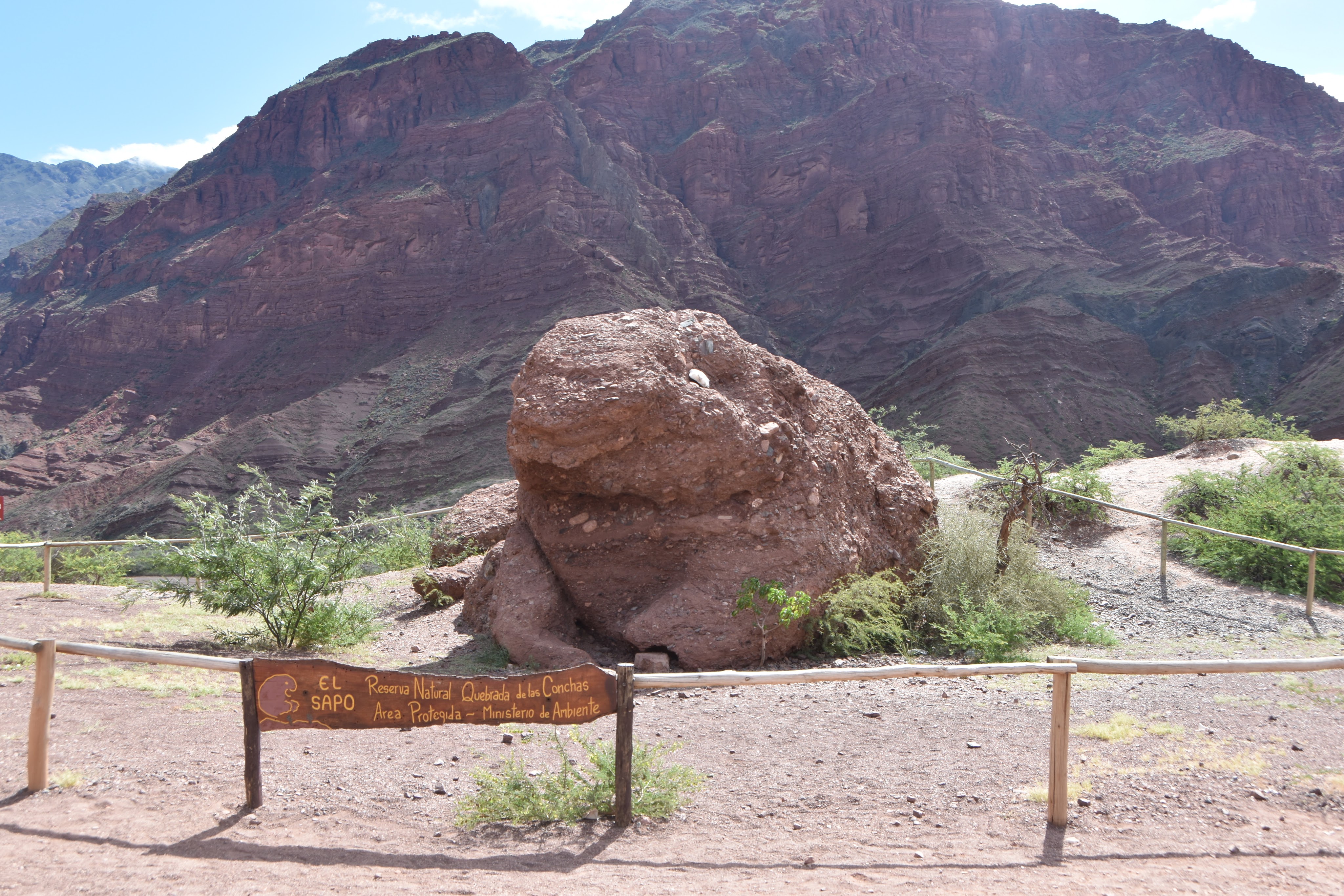
~~~
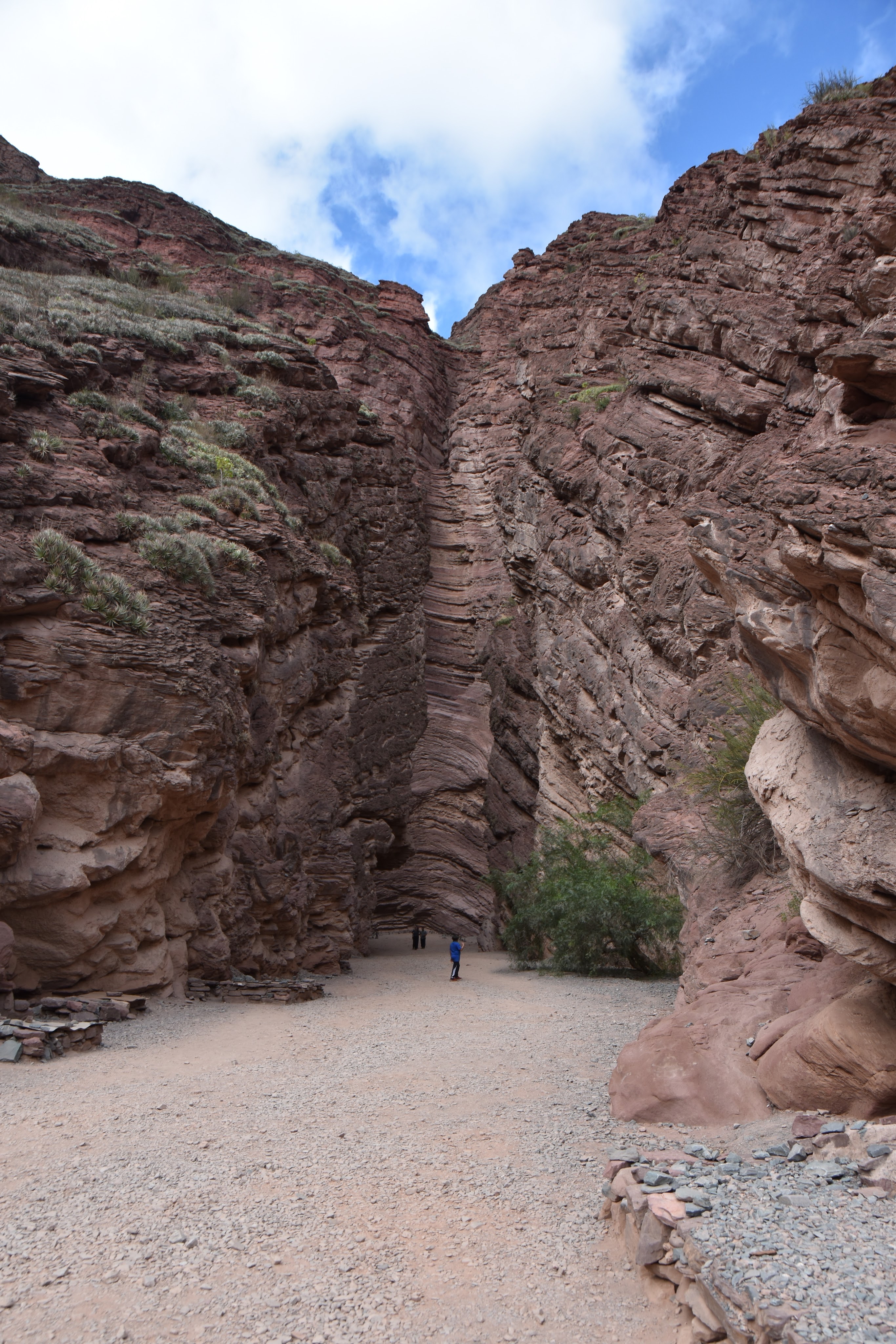
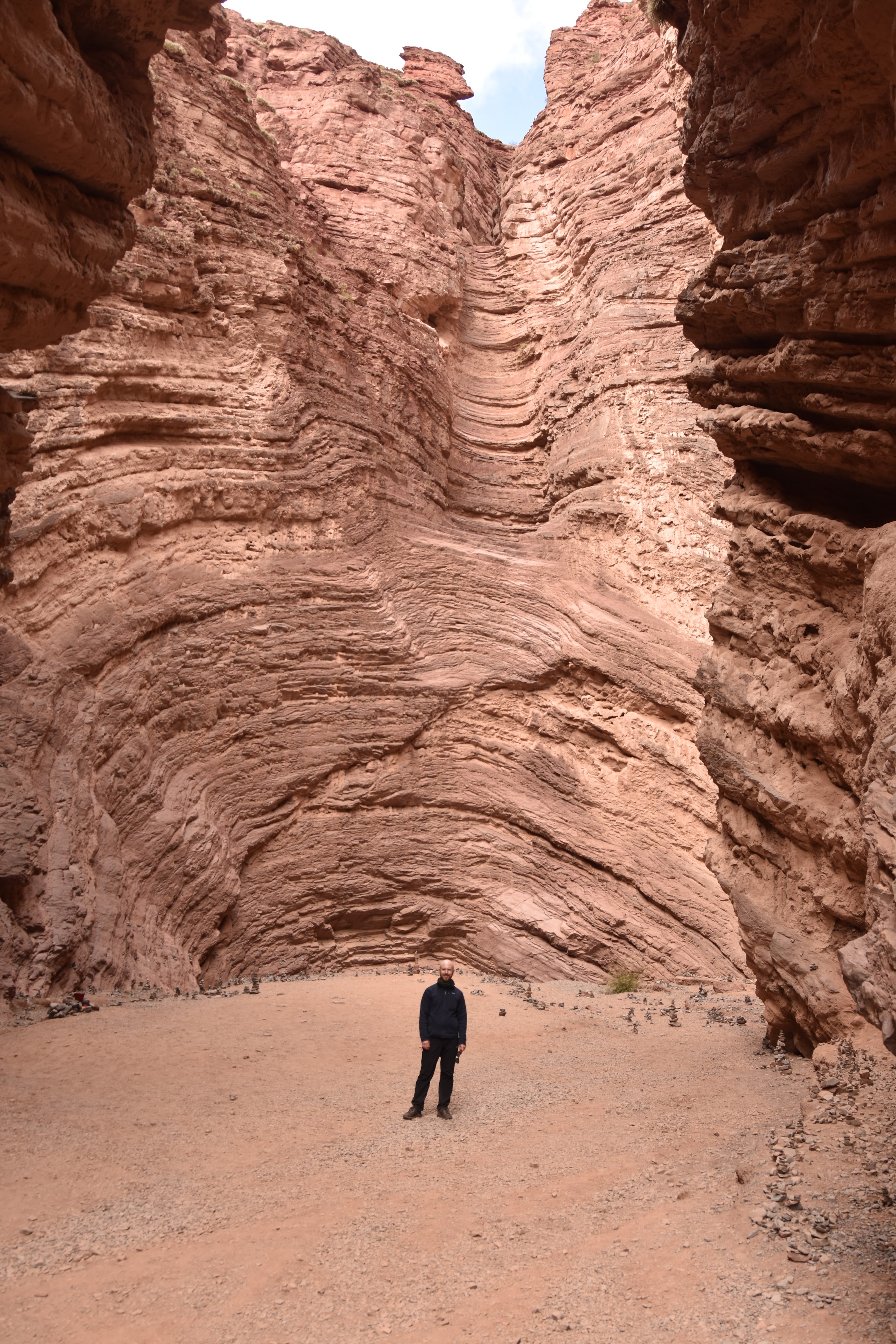
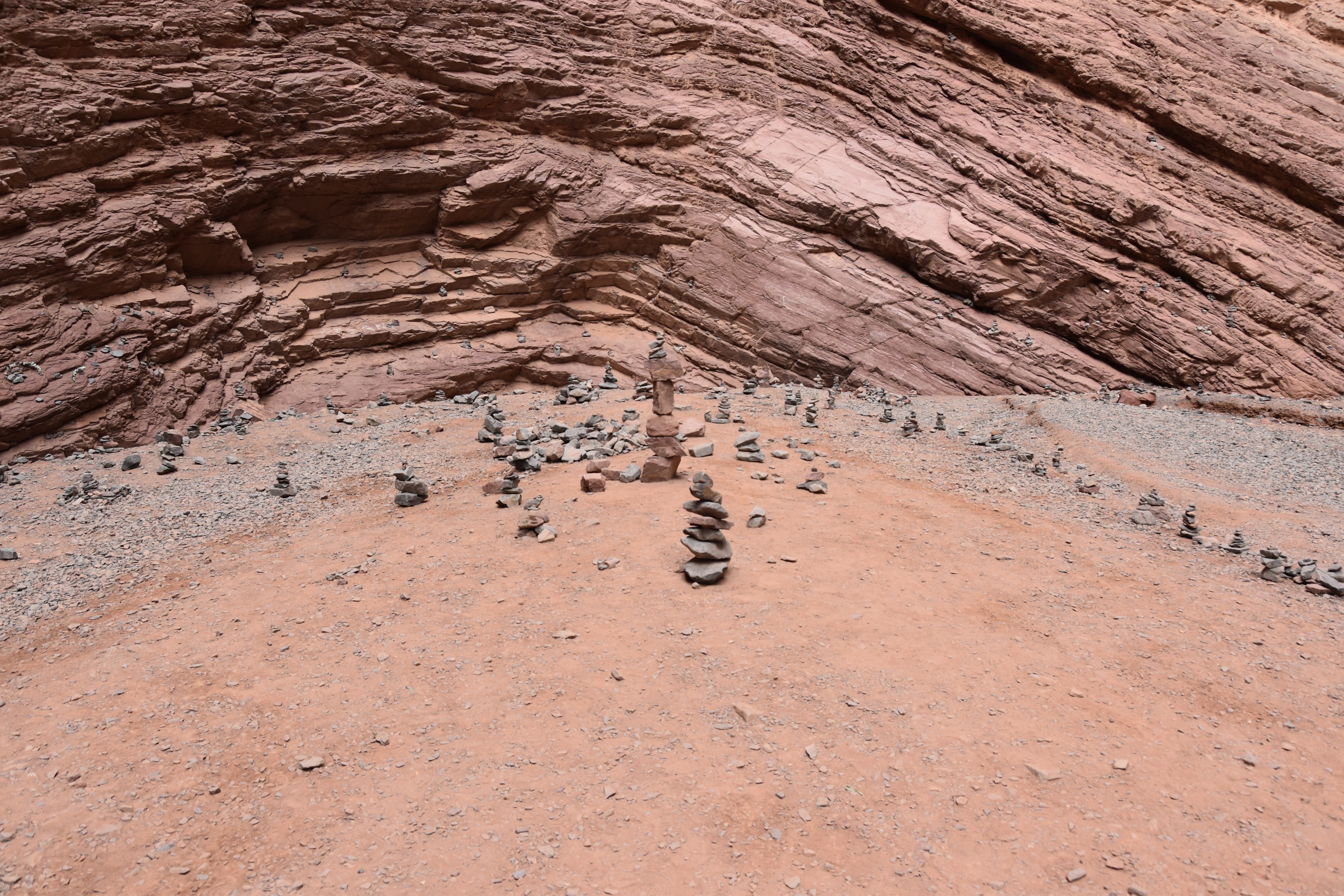
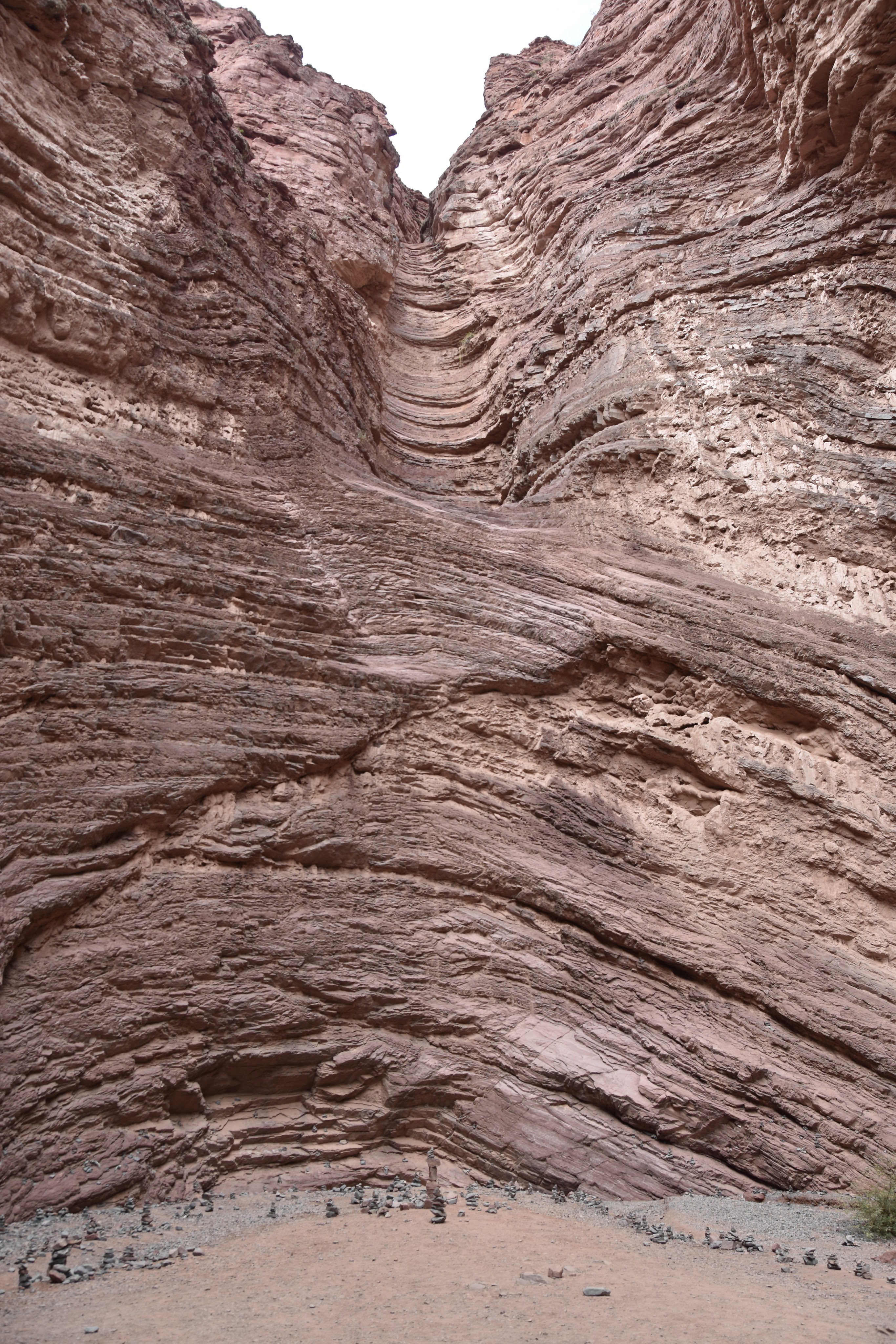
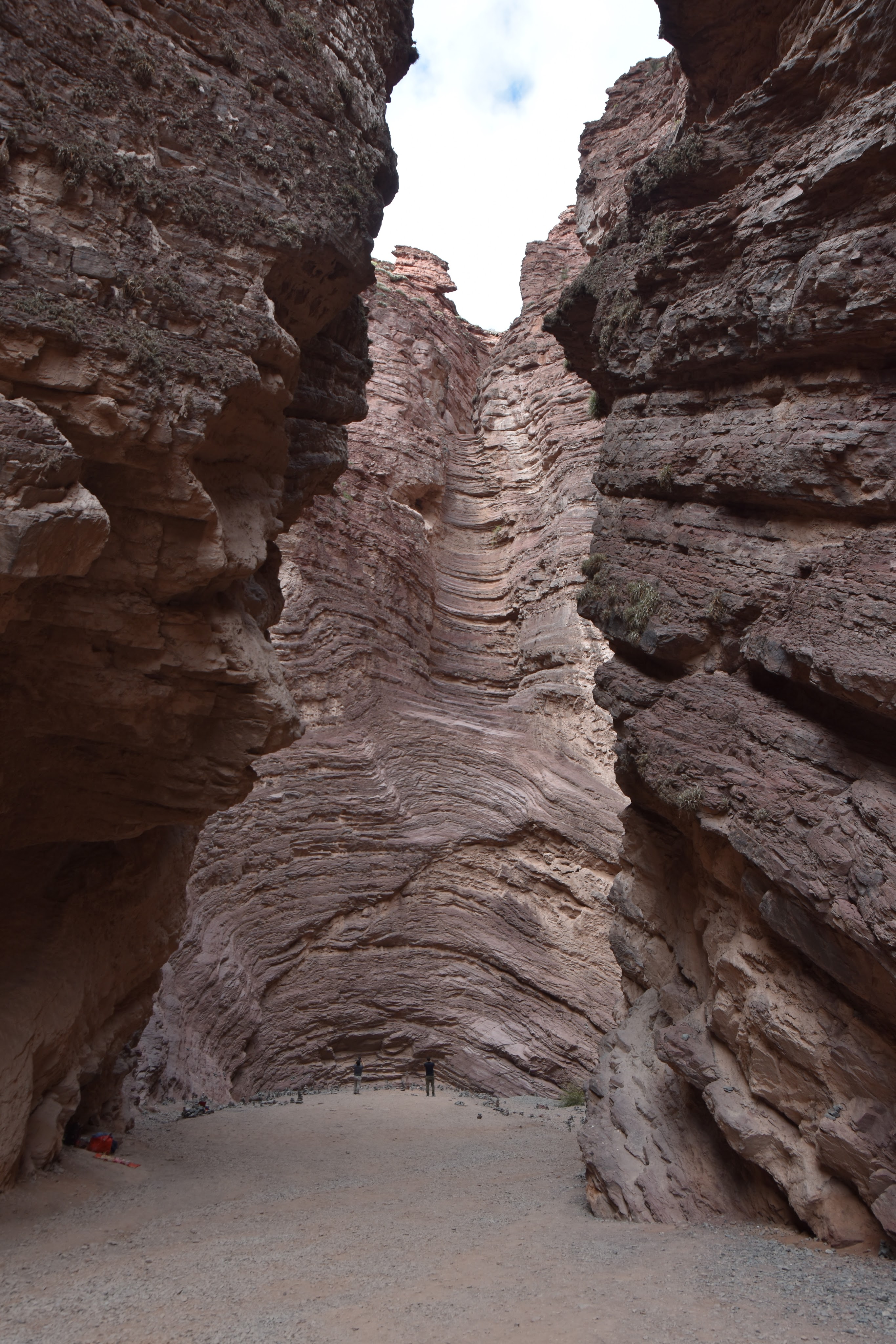
El Anfiteatro – we got very lucky here, and it was only as we were leaving that both a minivan and coach load of other visitors piled in
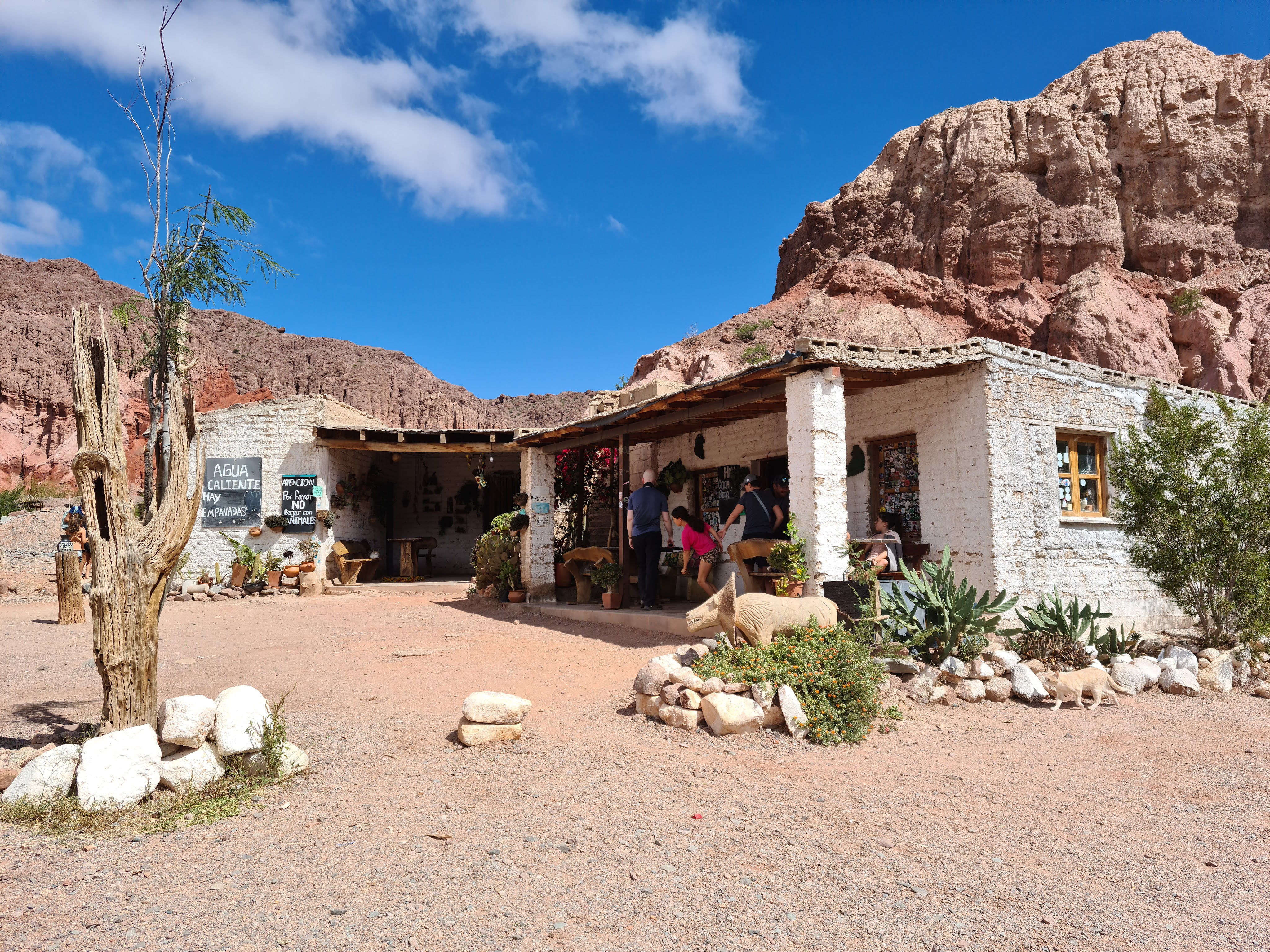
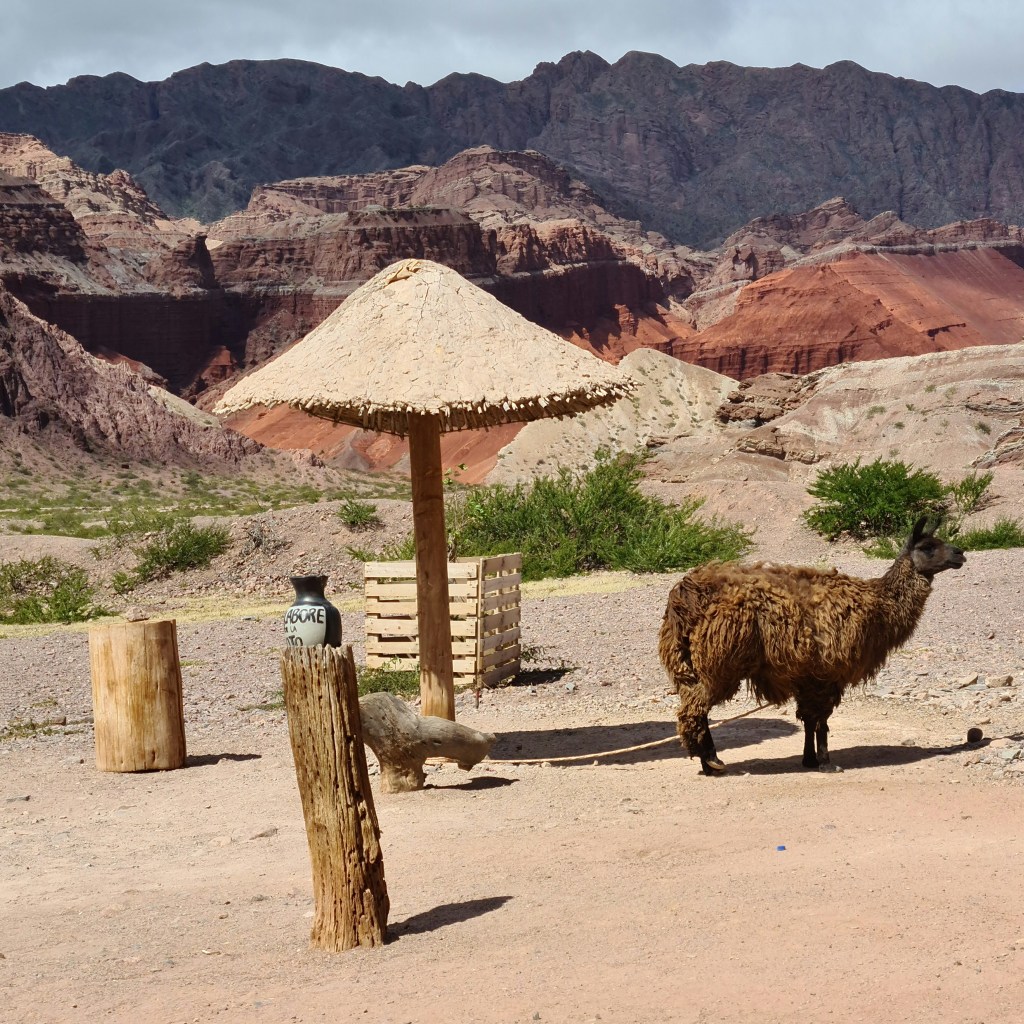
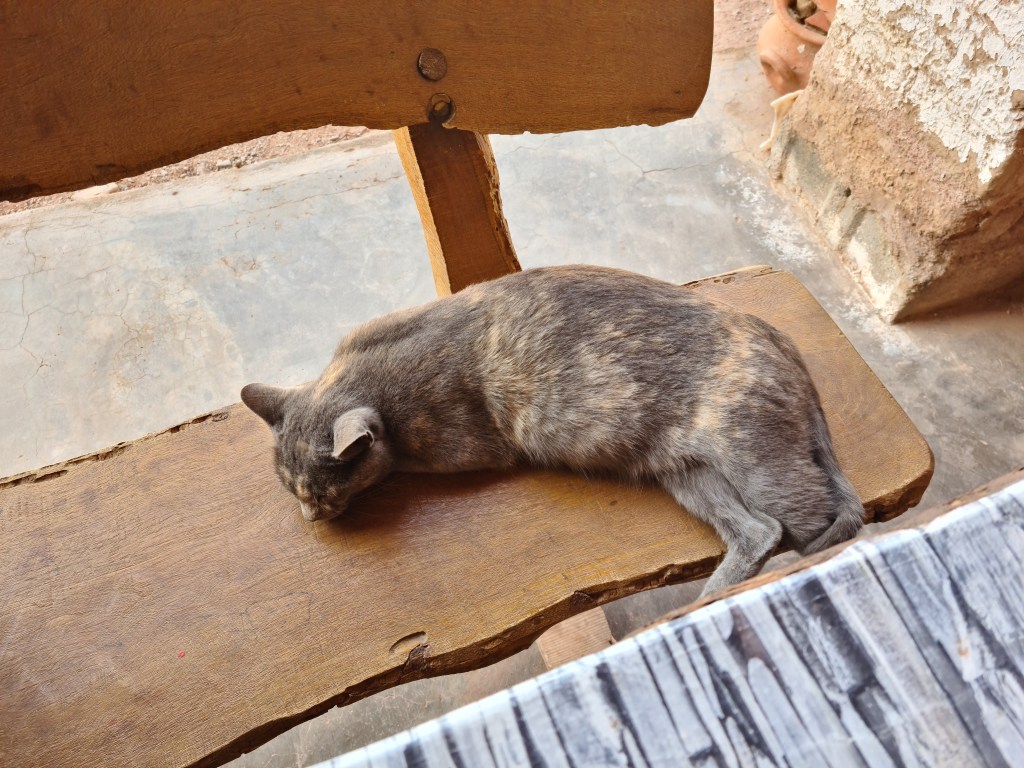
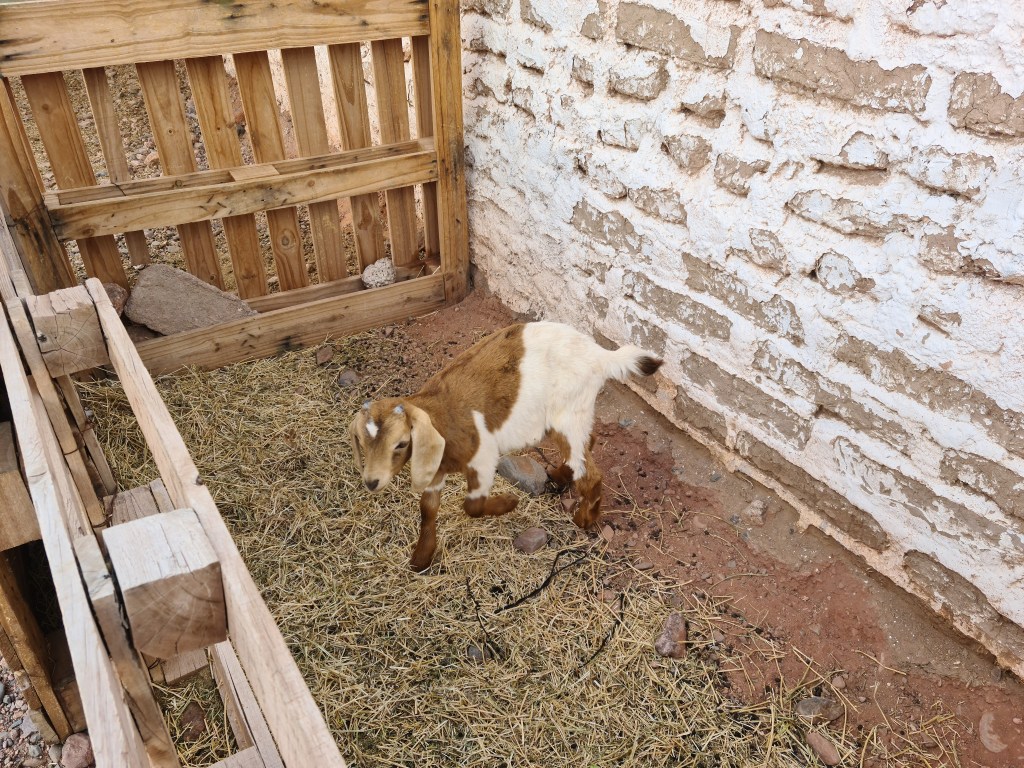
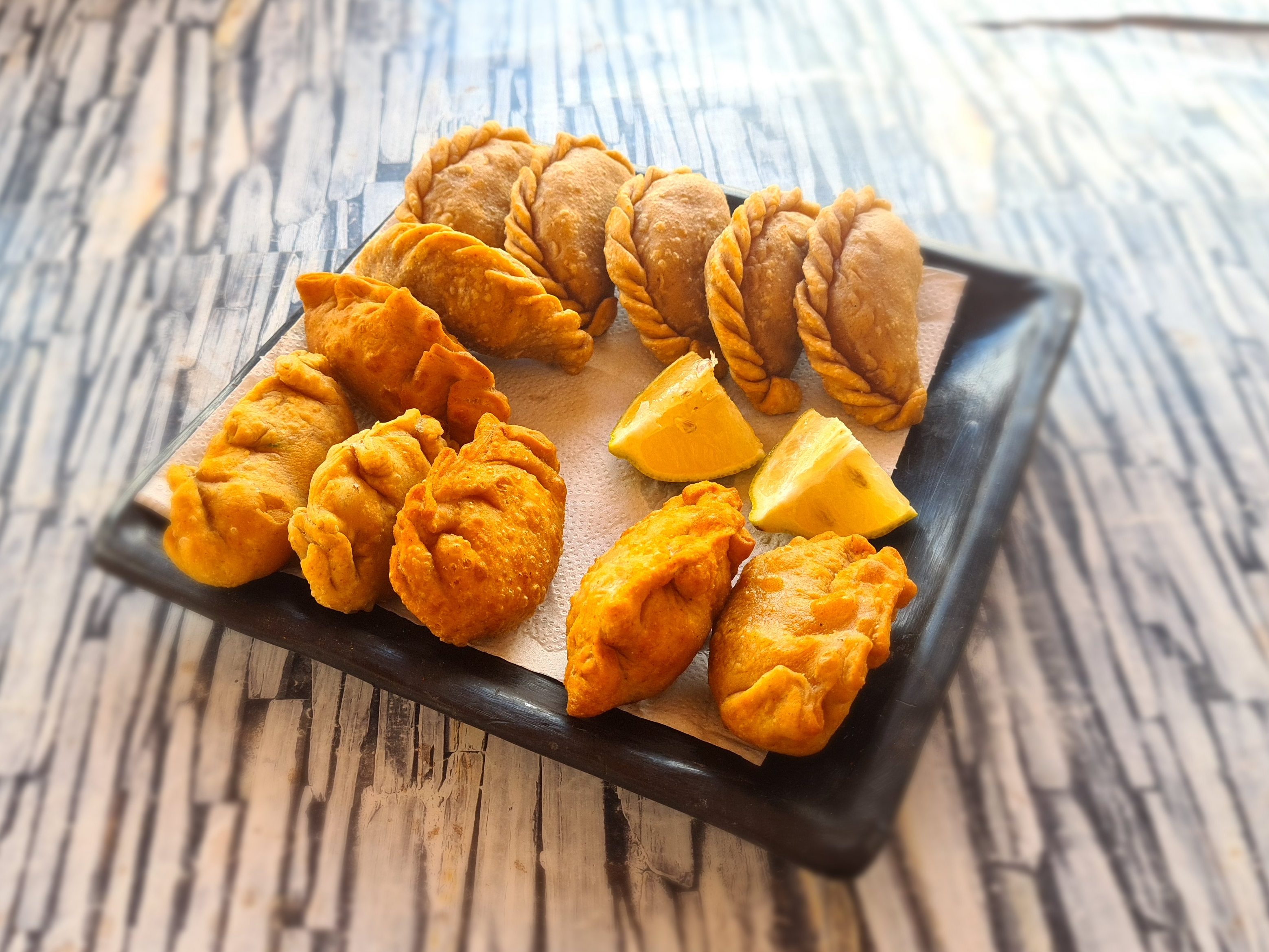
And perhaps the most important stop of all – lunch! The highway was dotted with various artisan craft shops, usually with a food vendor or two so we just decided to stop at the closest one. Housing a few farm animals, including the ubiquitous llamas, and serving up fresh empanadas, it was certainly more charming than a motorway service station.
All too soon (and one Sat-Nav based argument later) we were back in Salta. I appreciate this blog post was a very flying outline of the capital itself, so there is plenty more to follow in the next one!
 A Place Both Wonderful and Strange - Tash & Ricki's Career Break Travels
Leave a comment