
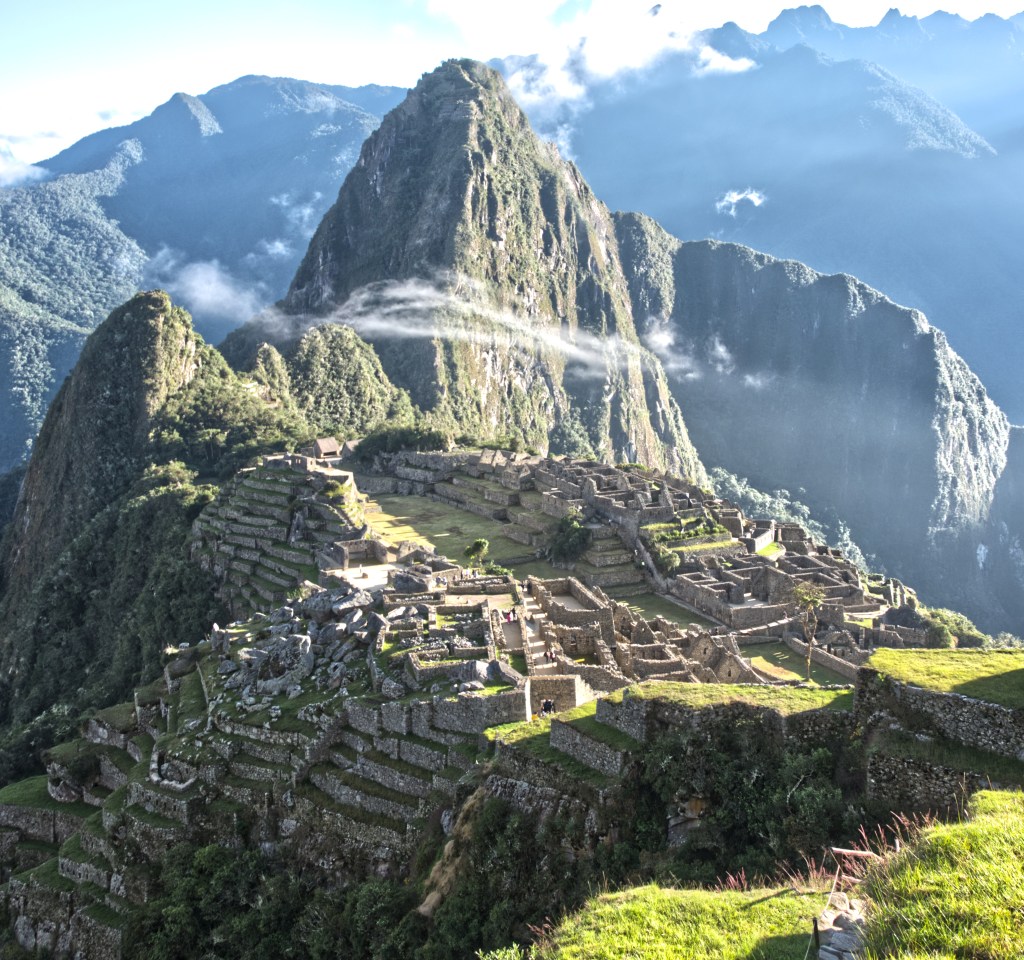
Having two full nights in Arequipa felt like a long stay compared to the blink-and-you’ll-miss-it of our first days of Peru Hop. And so it wasn’t without weariness that we found ourselves up at the crack of dawn on Sunday, ready to go again.
Rather than overnighting, this time we had the joy of a full day spent on the coach, as we would be starting to work our way upwards to Cusco in a bid to re-acclimatise. Yes, we had now been at altitude twice in as many months, but with the Inca Trail beckoning, we weren’t taking any chances with our physical health.
First, we had to actually get to the bus though. We’ve never had an Uber-driver no-show before, and could really have done without it at 4.45am on a Sunday morning, with onward transport at risk. To my immense relief, there was a surprising number of taxis passing us by on the main road. Expecting the worst on how much this might cost us, plus who knew if taxis in Arequipa were even safe, I mentally prayed for the best. If we wanted to catch our bus, we had no other option, and the driver effectively had us over a barrel. Thankfully he either didn’t realise this, or was just a decent person, and the ride cost us only a small amount more than the pre-booked Uber would have done. This was definitely amongst the most stressful moments we’ve had this year though.
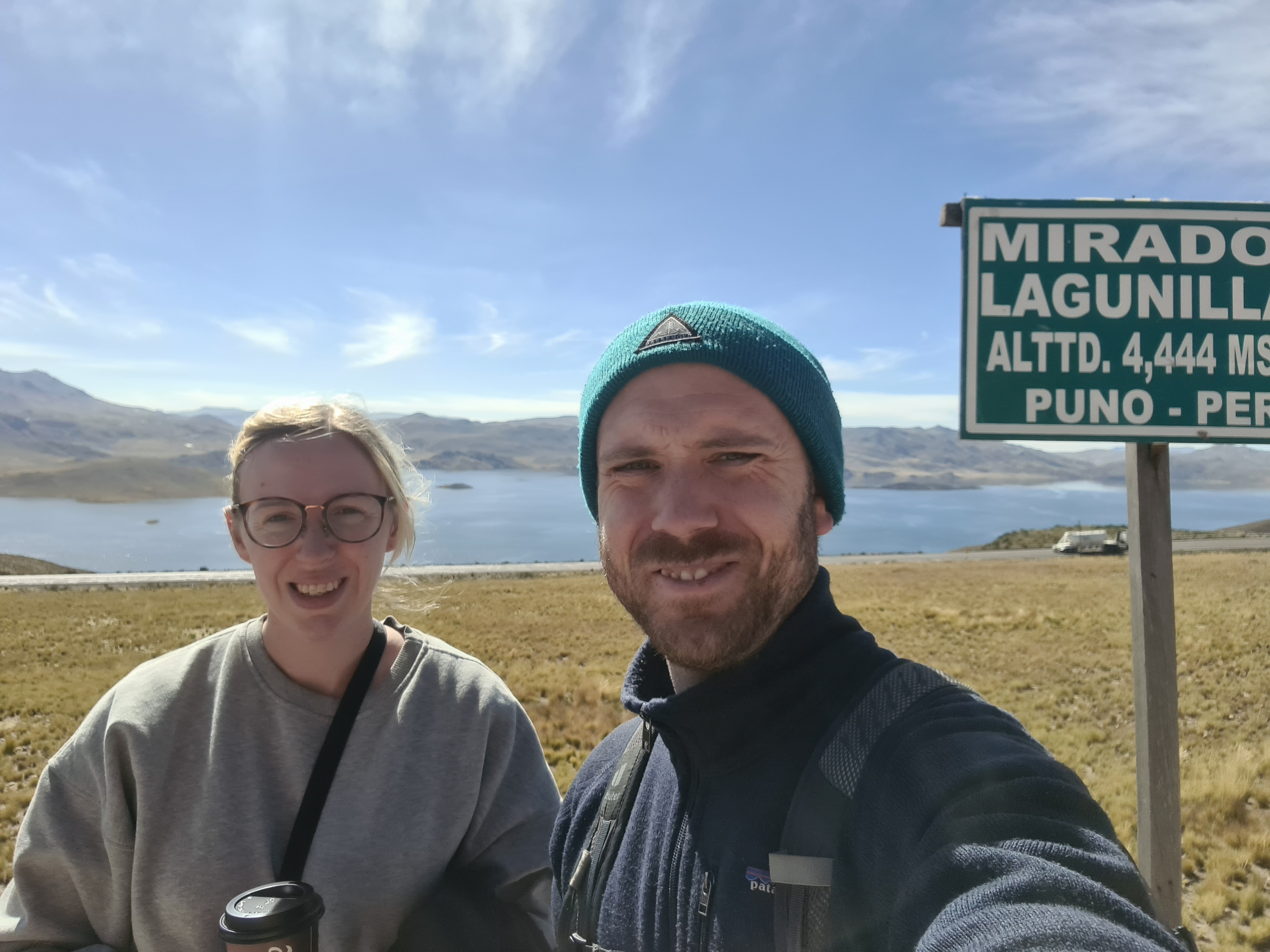
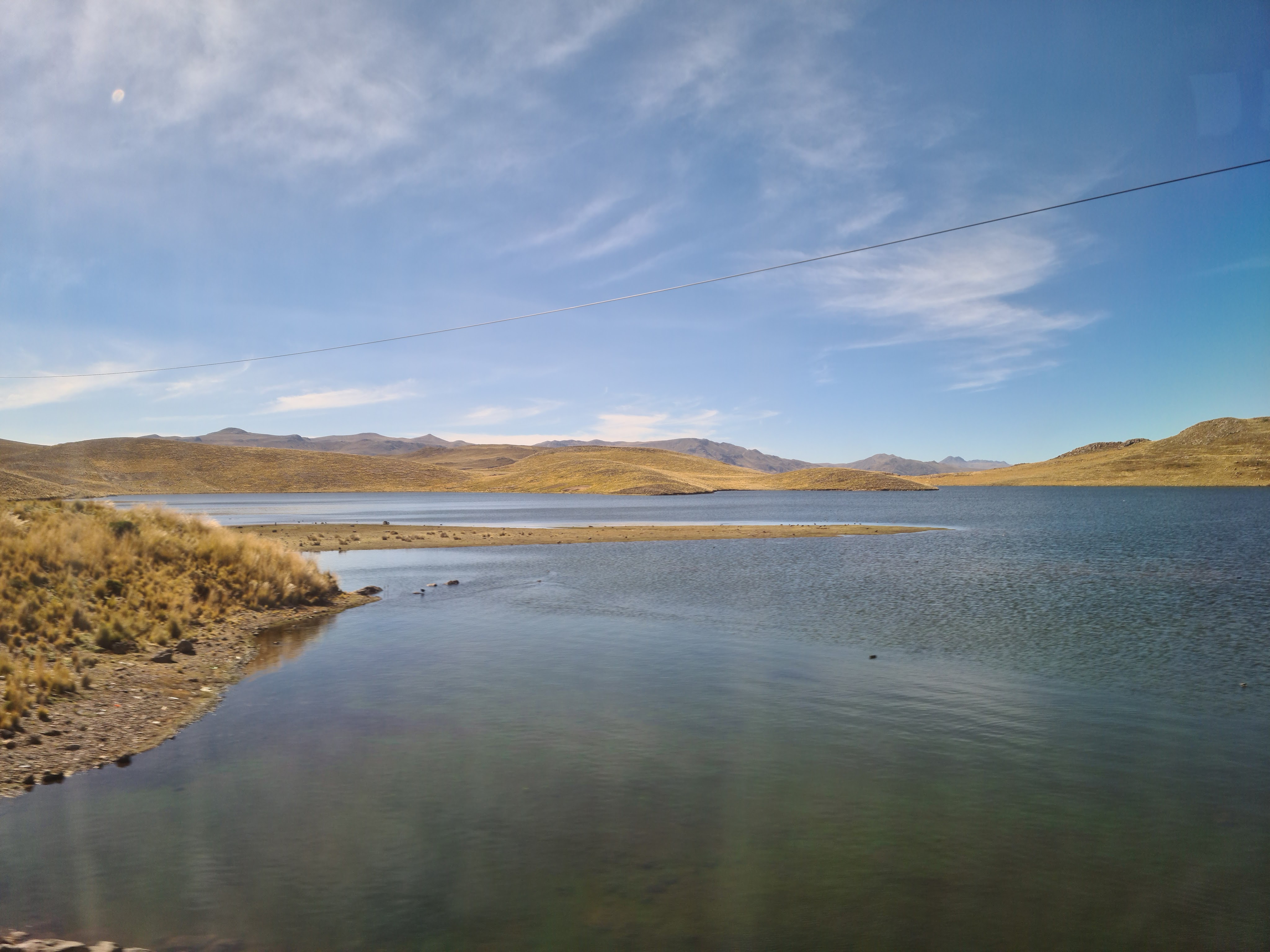
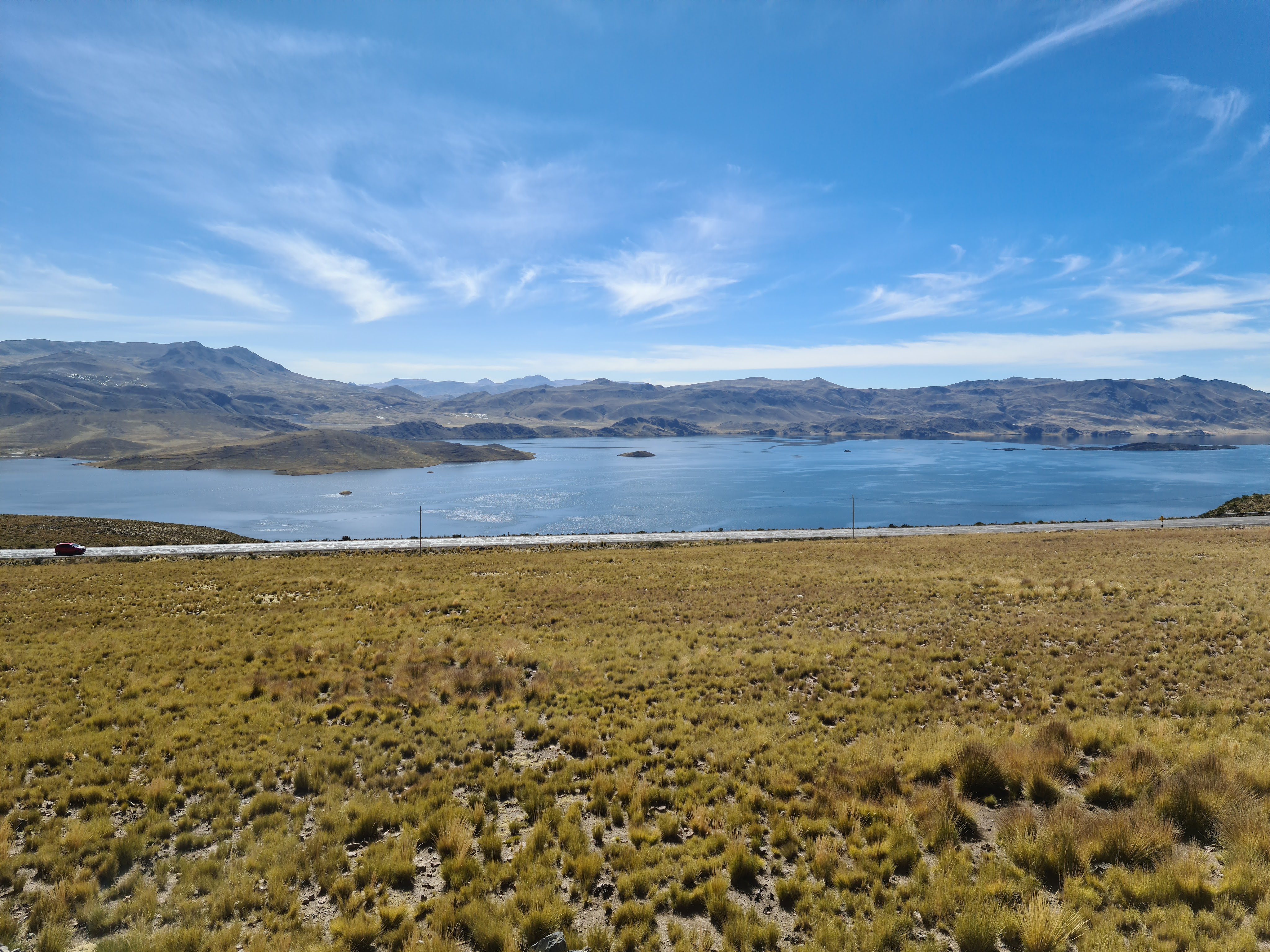
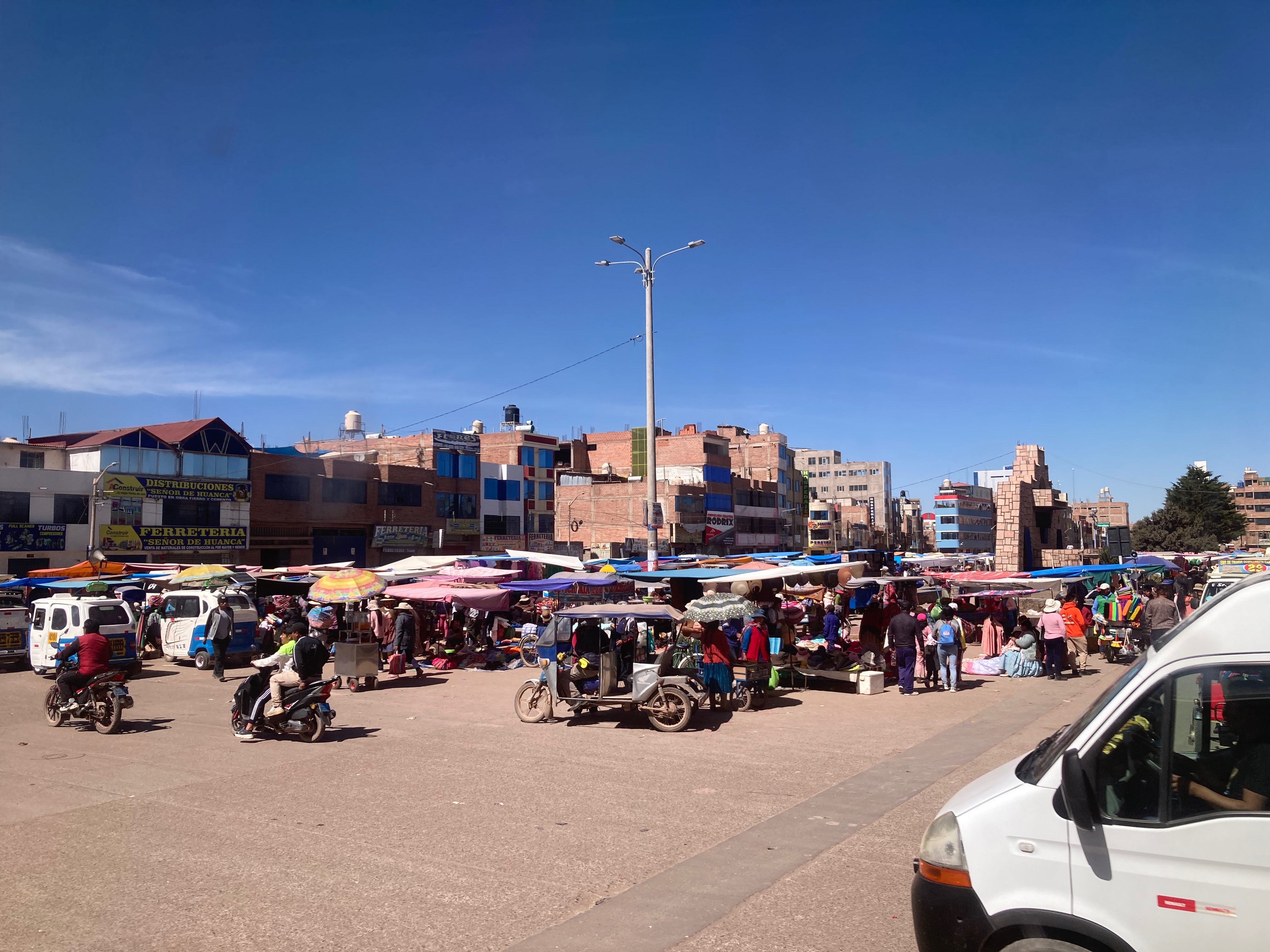
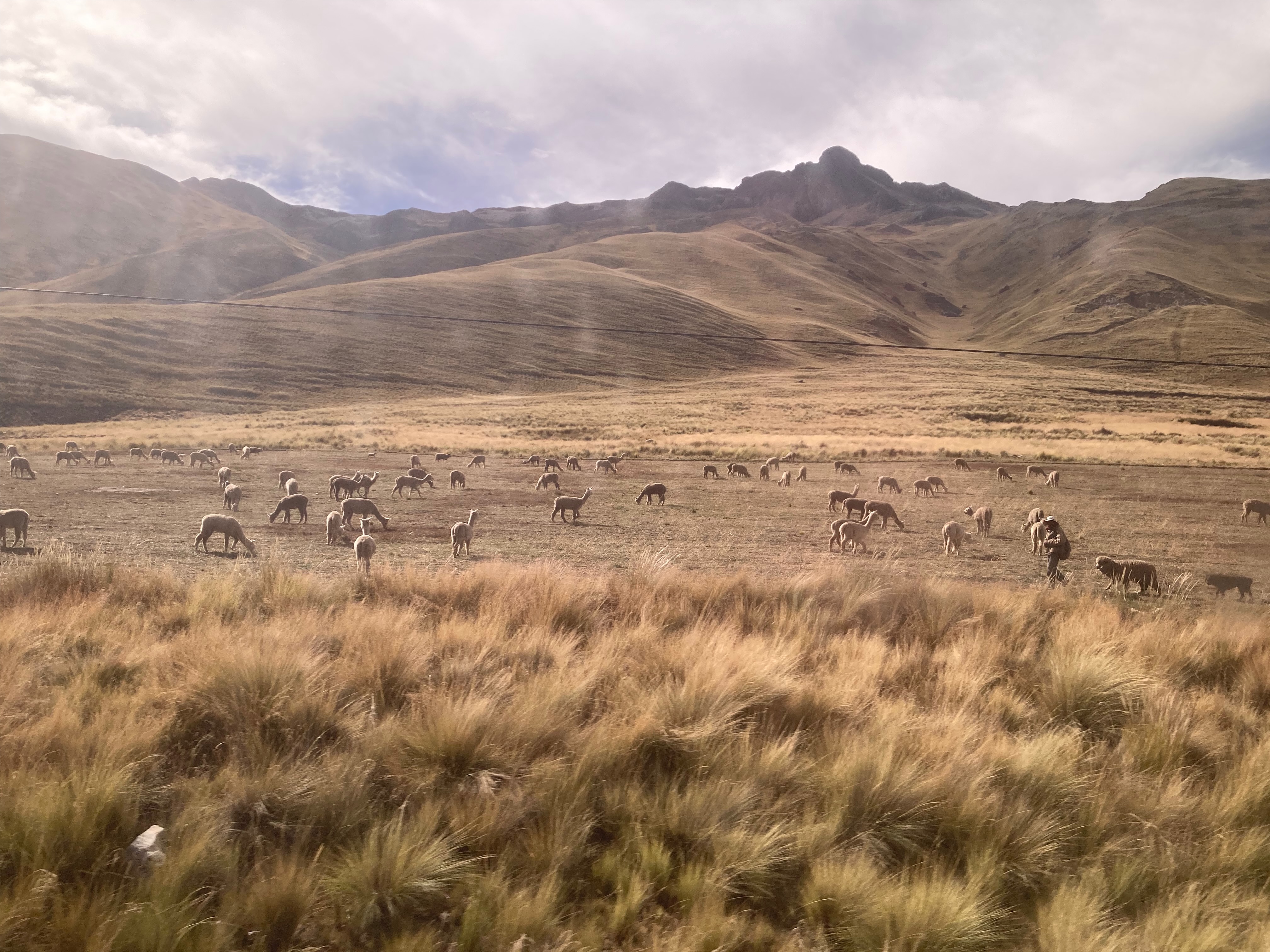
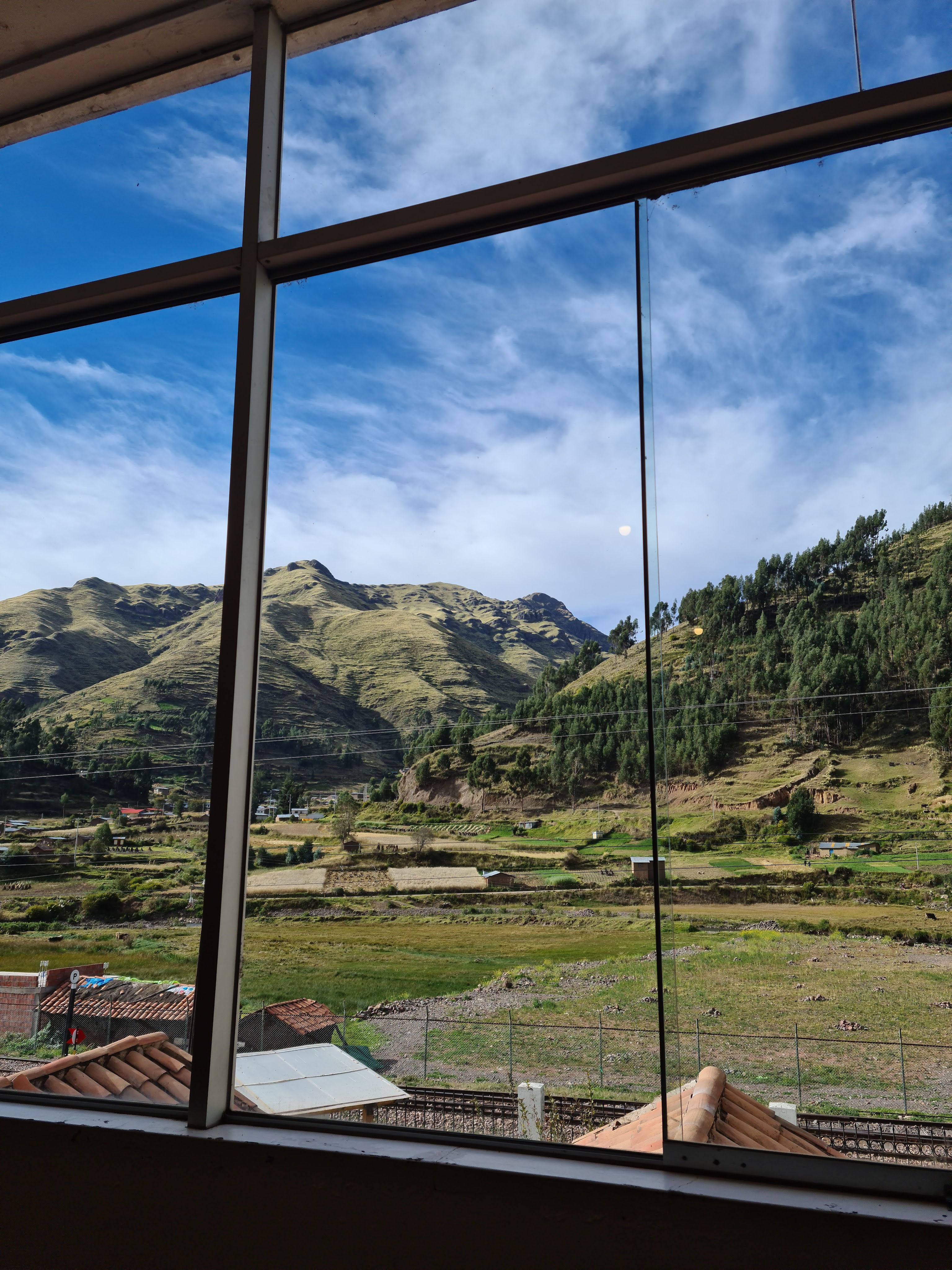
Sunday traffic meant a 14 hour bus journey. Thankfully the route was scenic/interesting and that time included a couple of enjoyable coffee/lunch breaks
We had a couple of days in Cusco both before and after the Inca trail, so knew we could, and should, take the first stay at an easy pace.
As well as getting our leg muscles gently warmed up on the city’s many stairs and hills, we could start learning about Cusco’s history at the centre of the Inca empire.
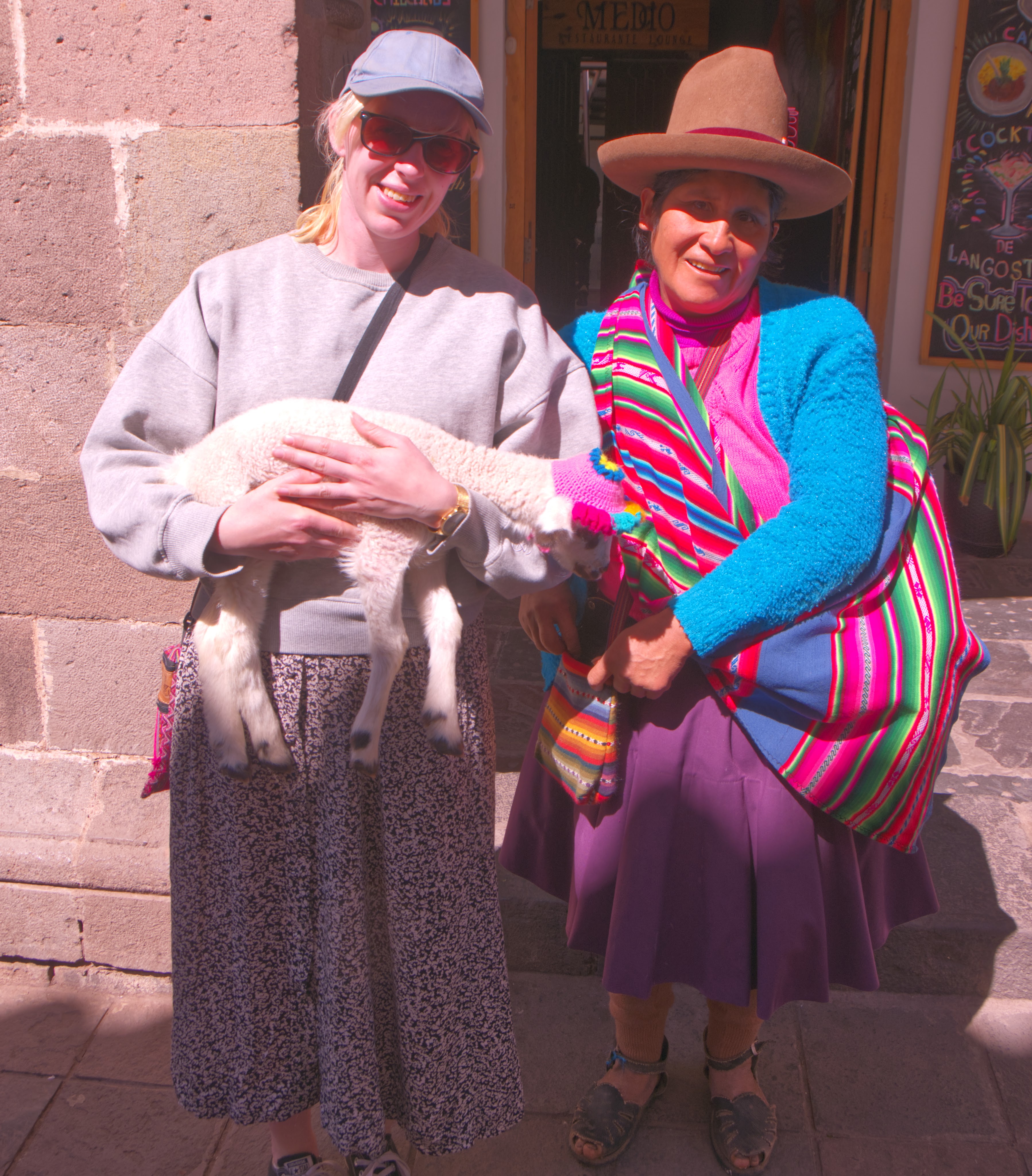
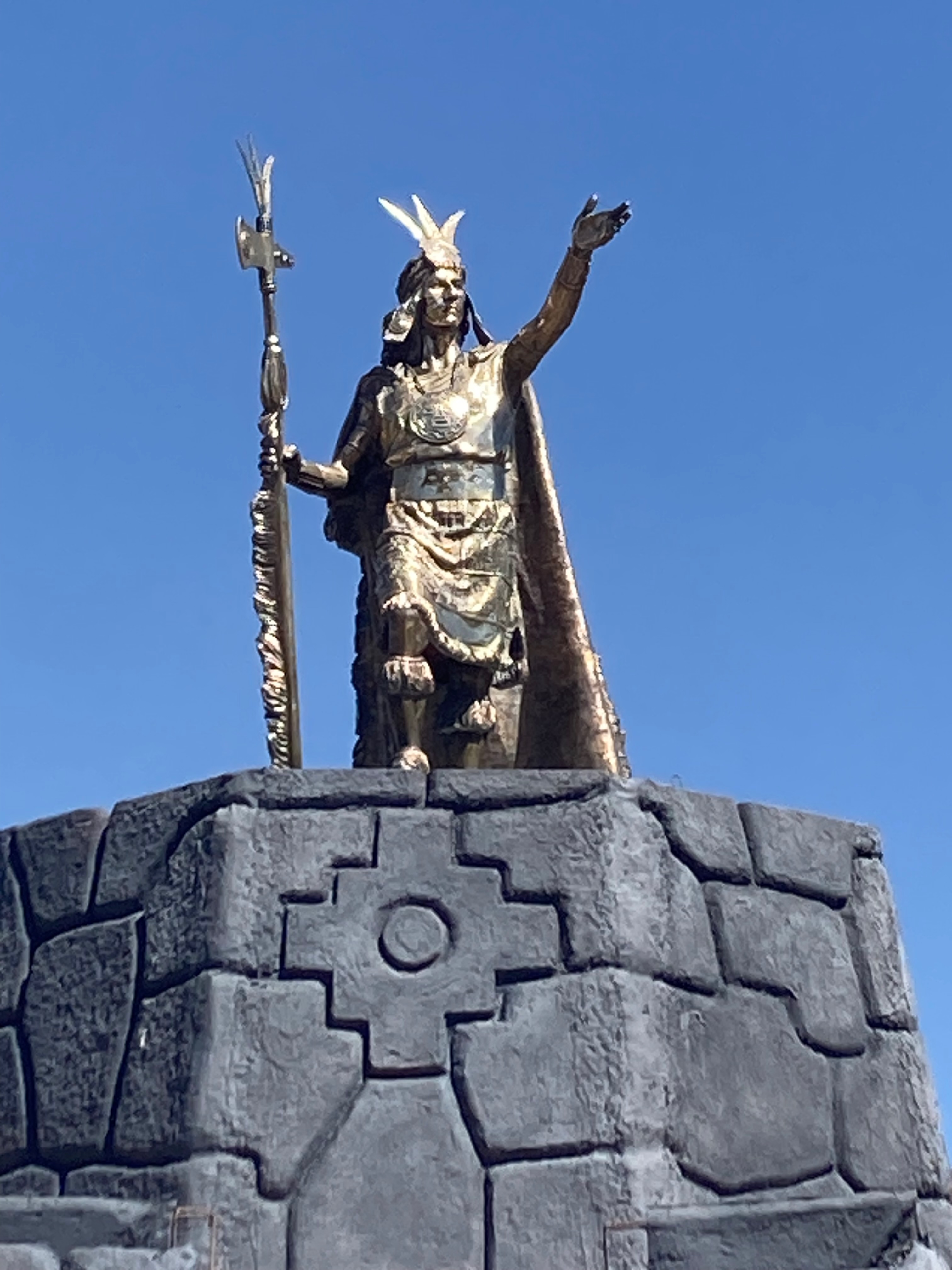
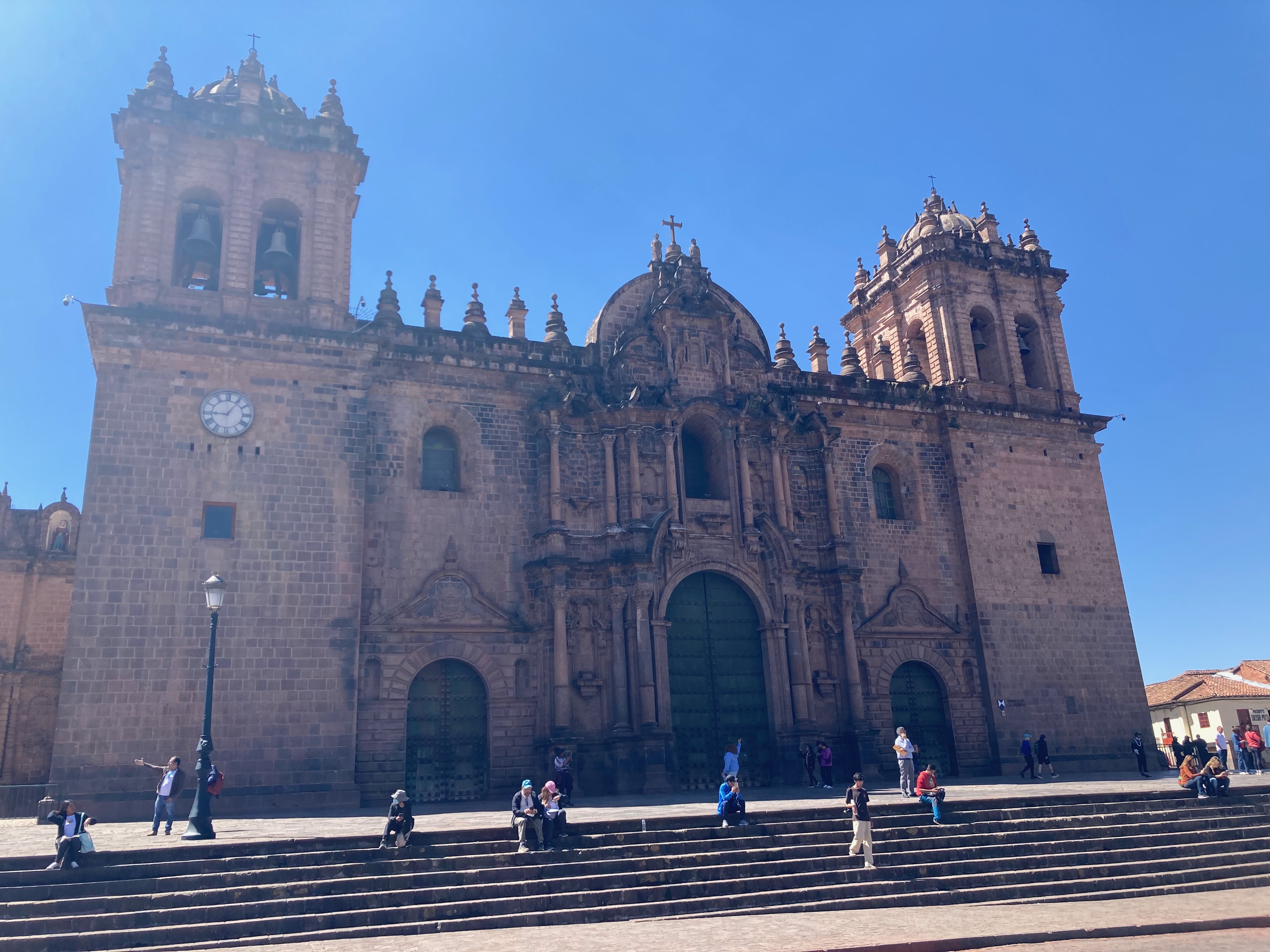
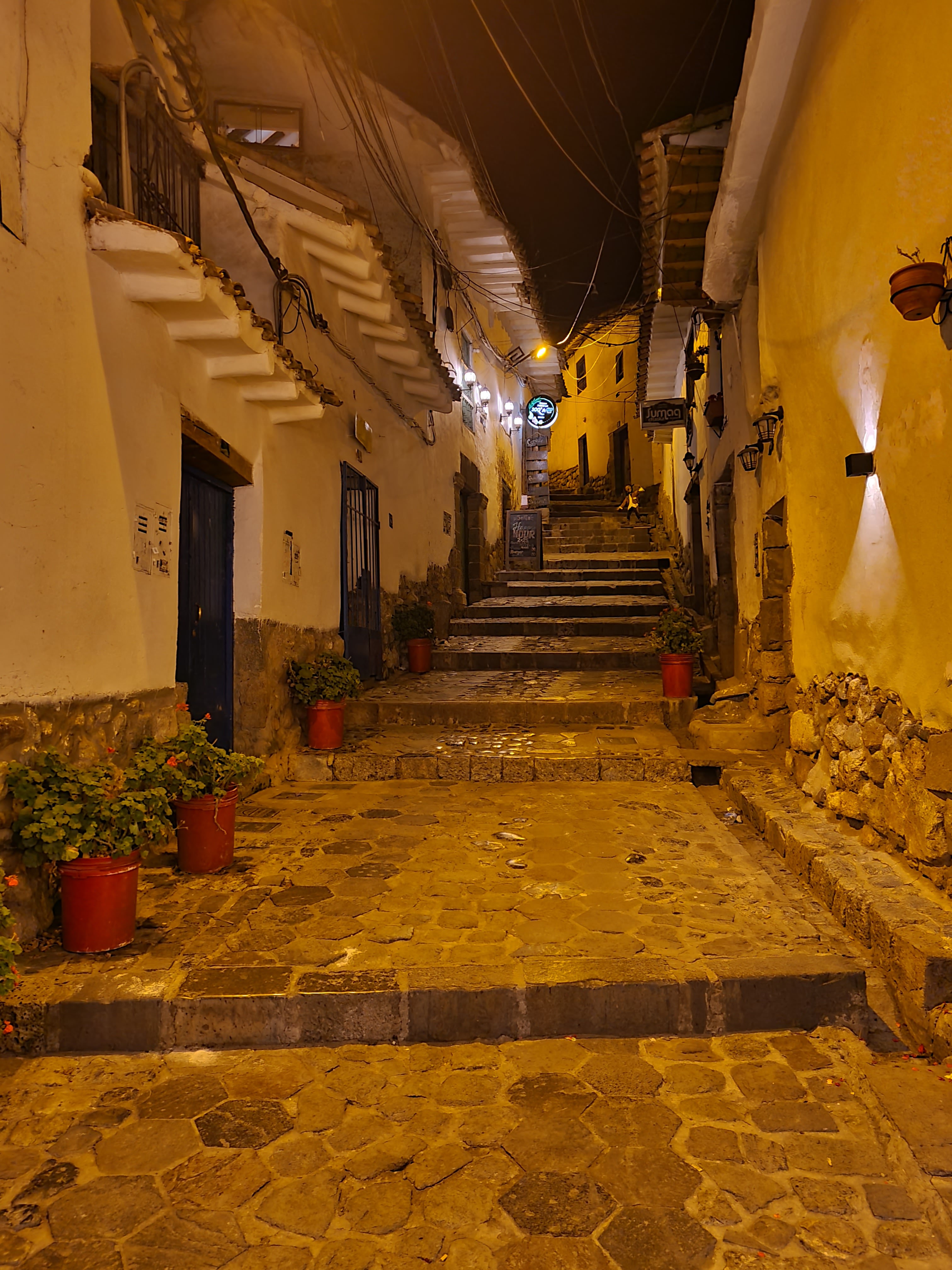
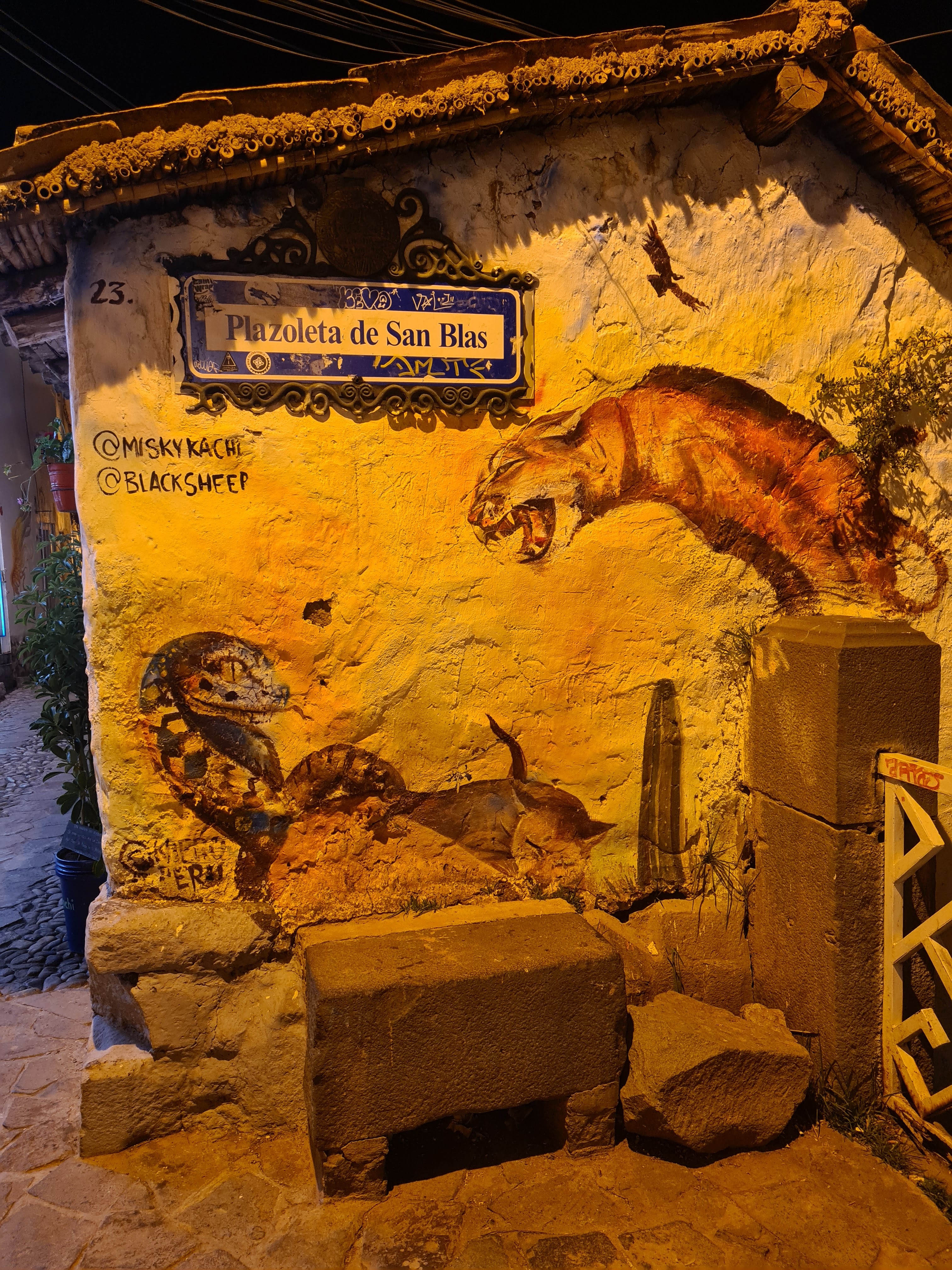
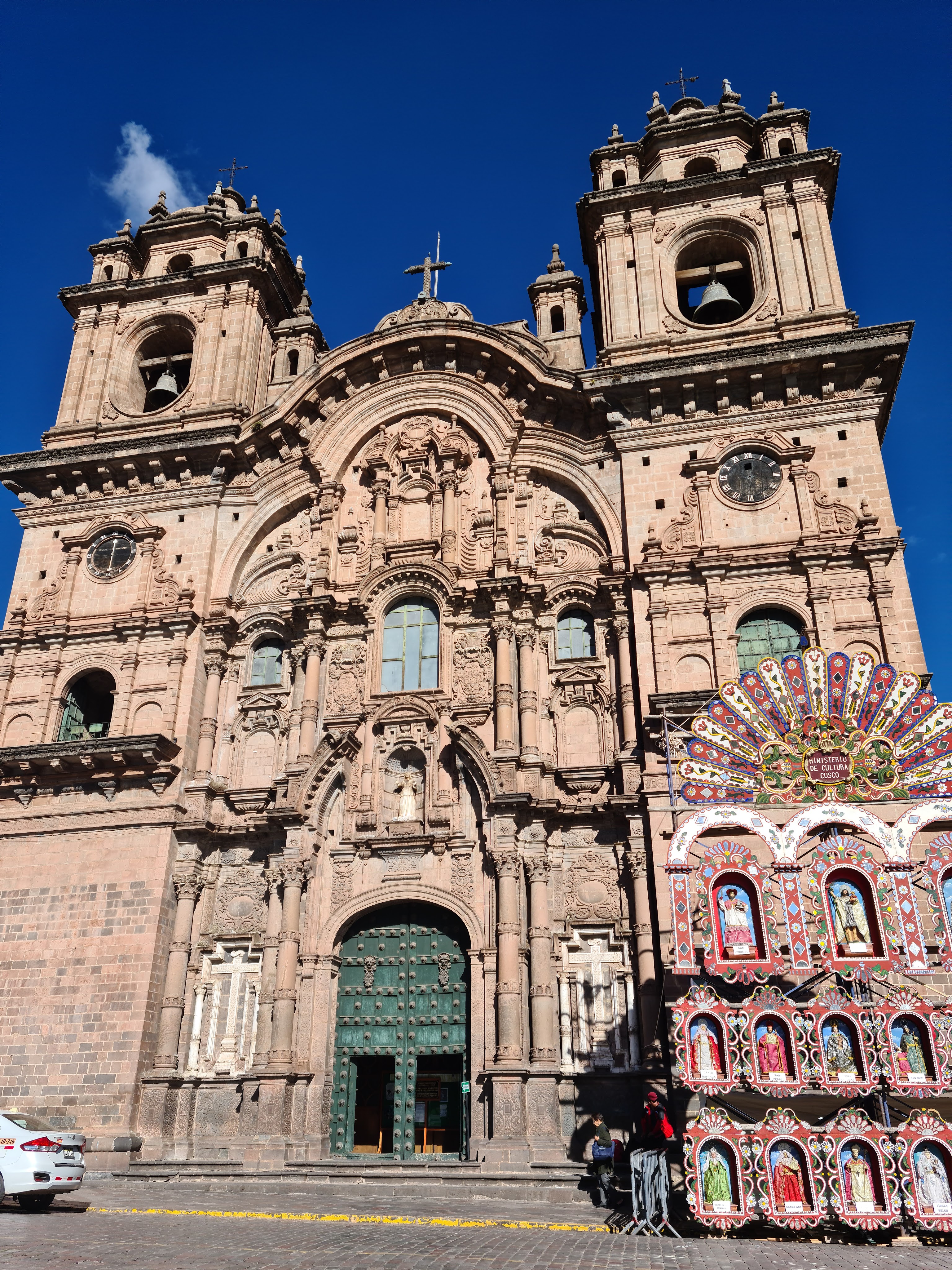
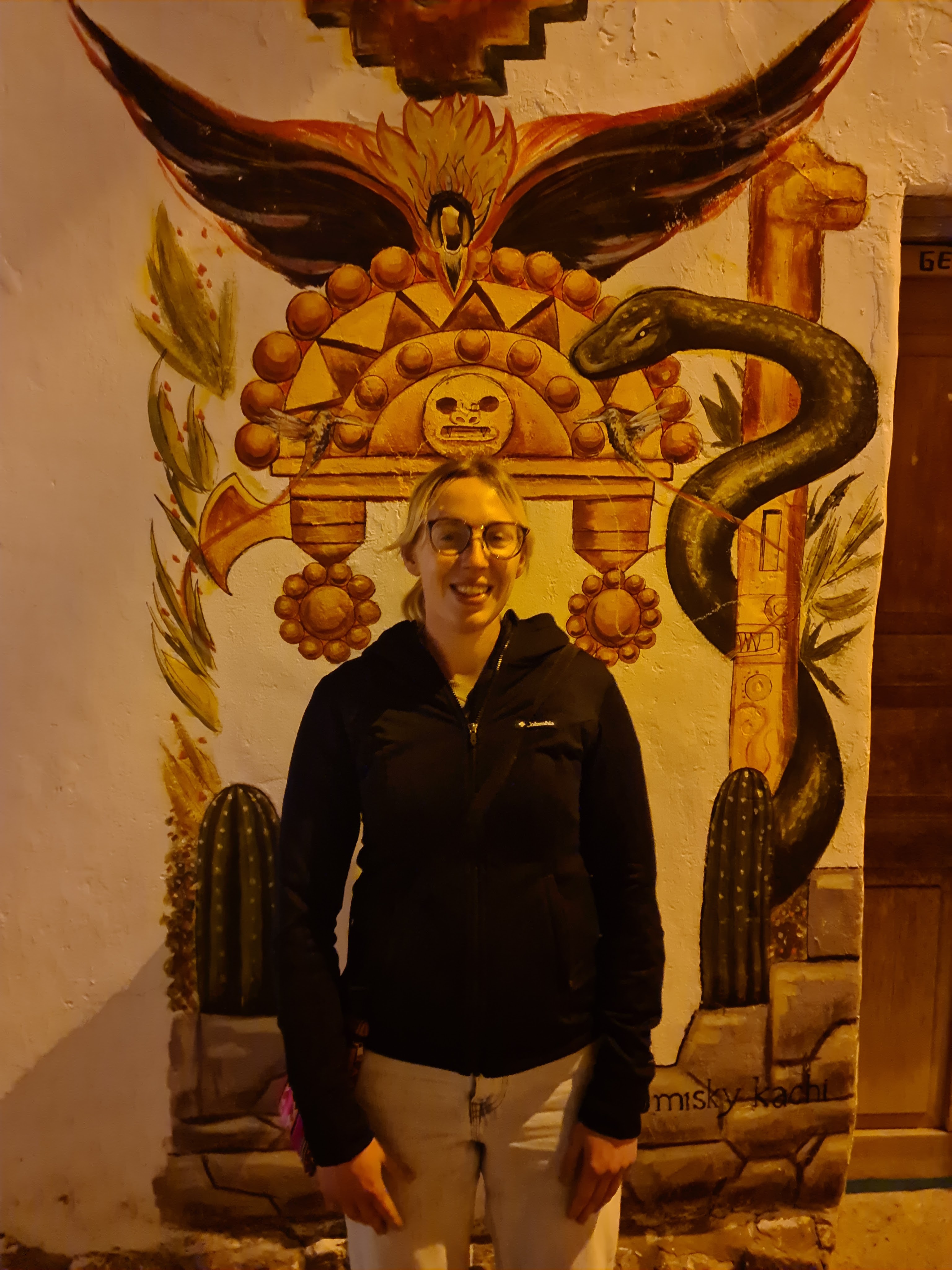
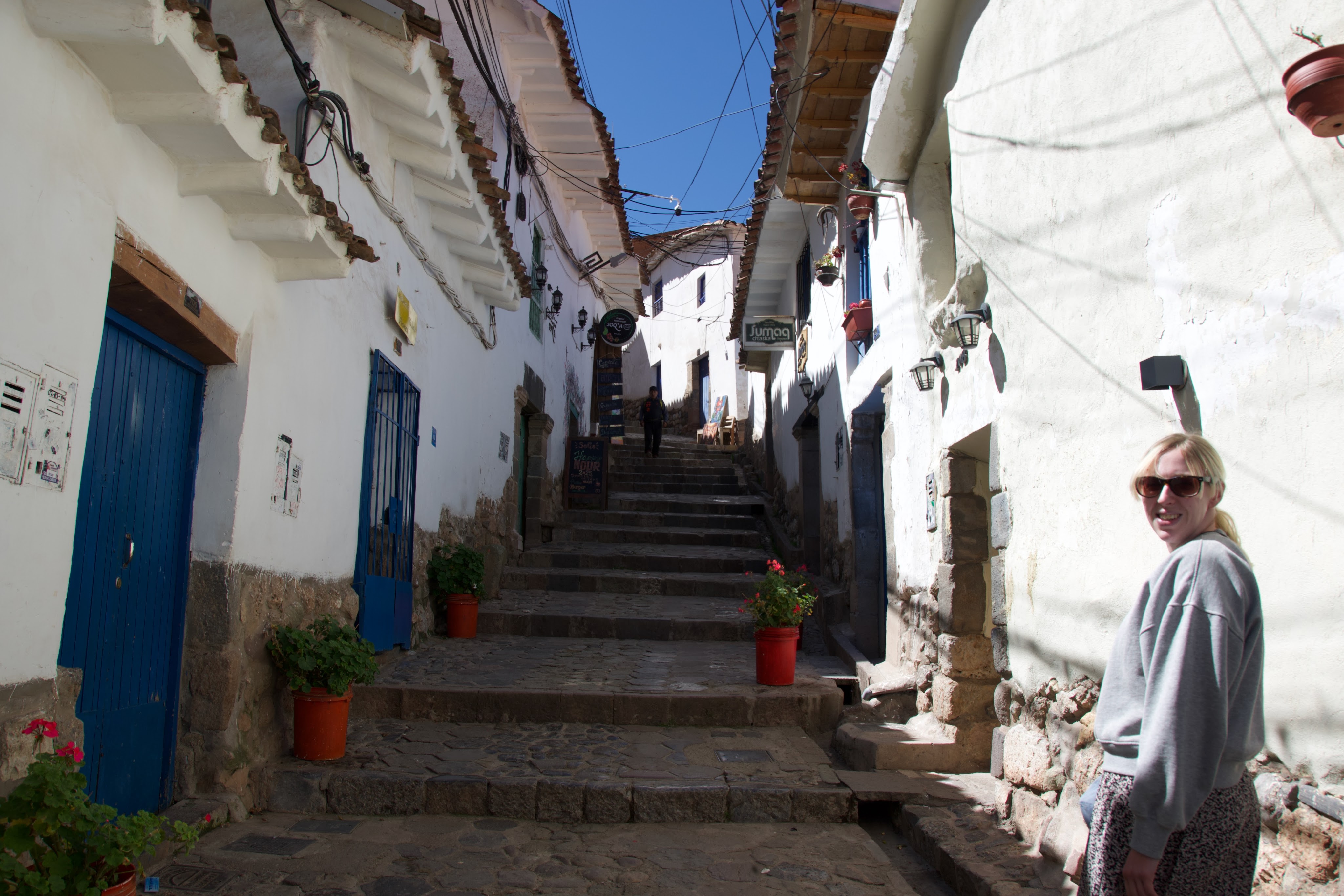
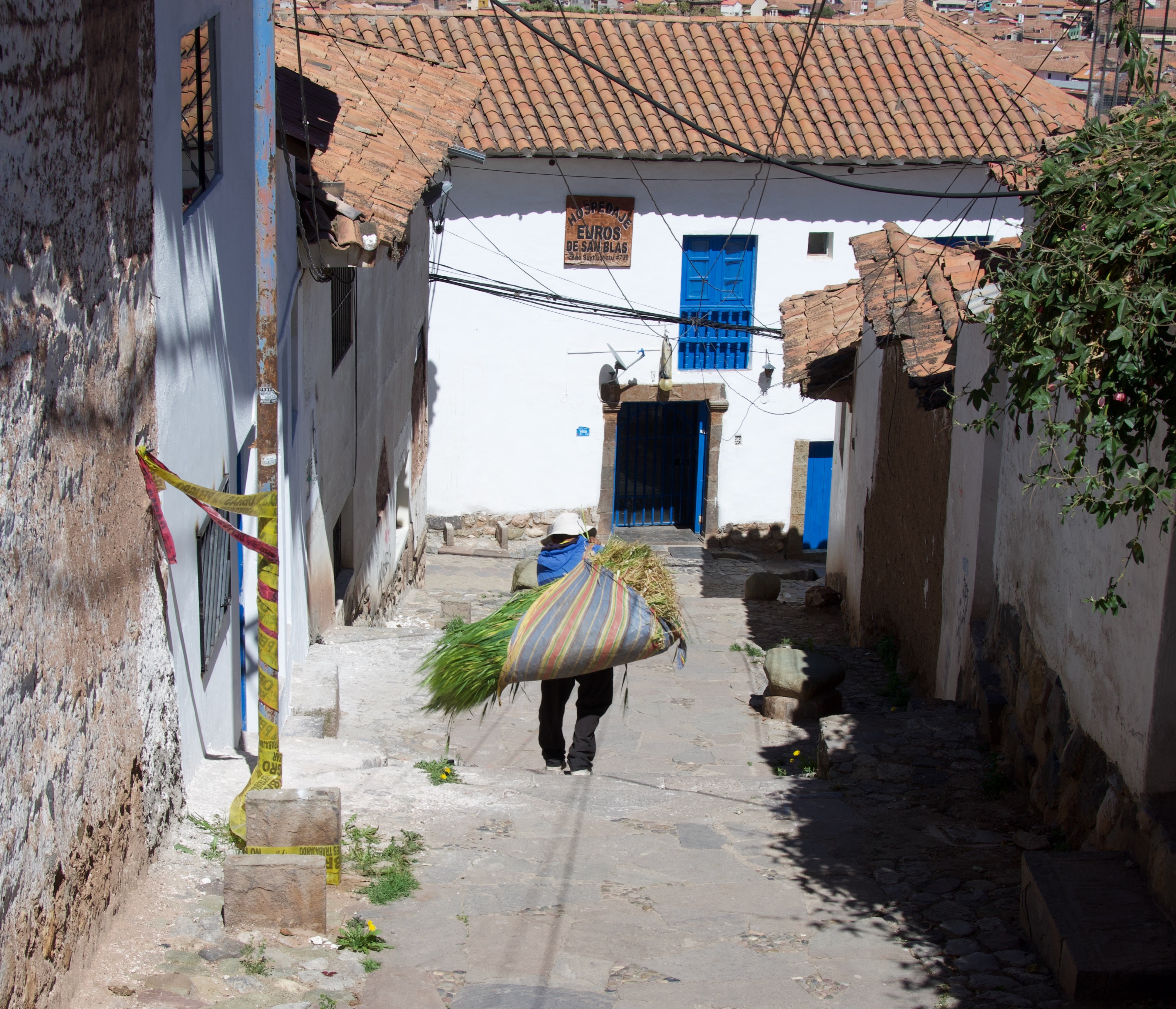
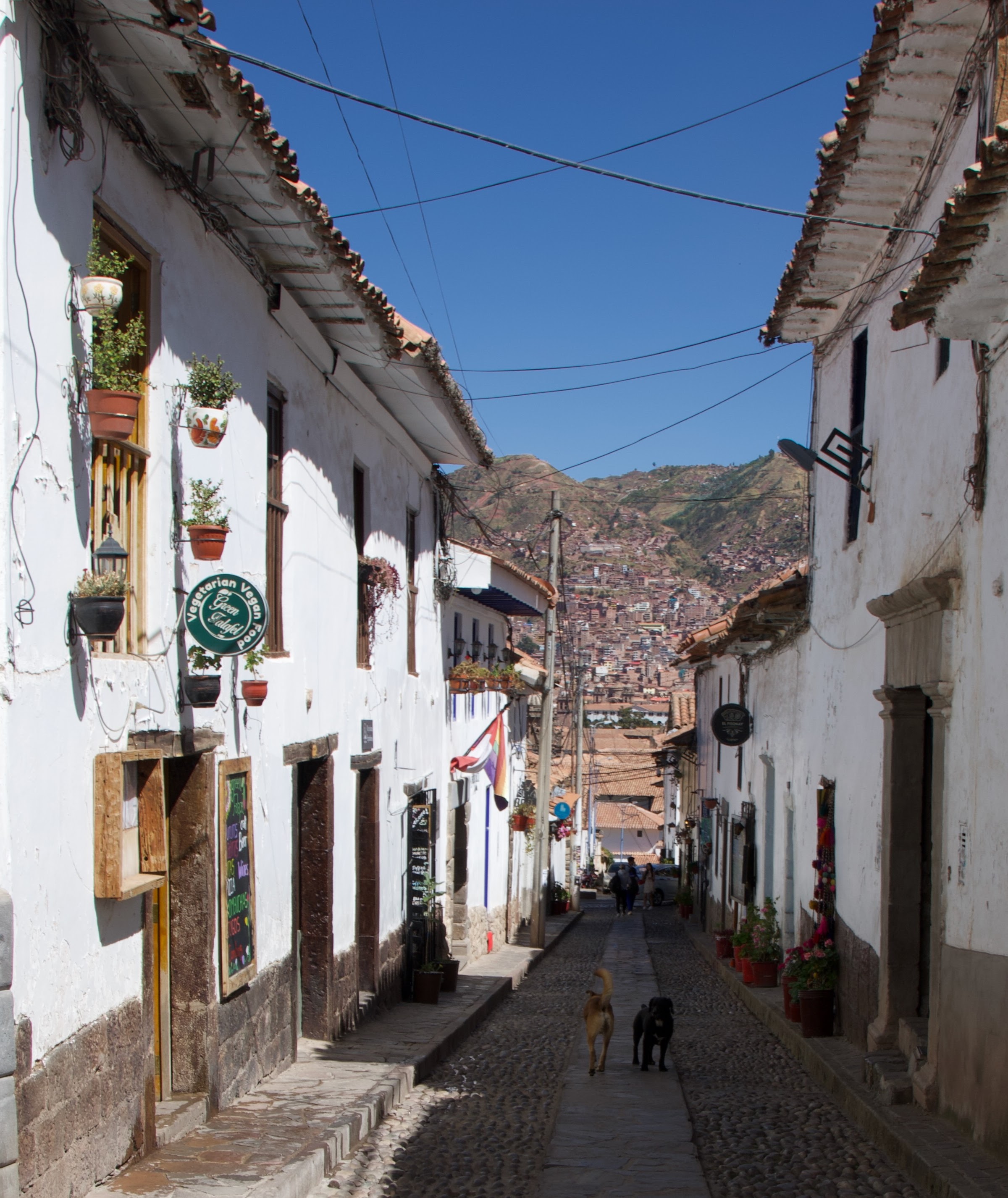
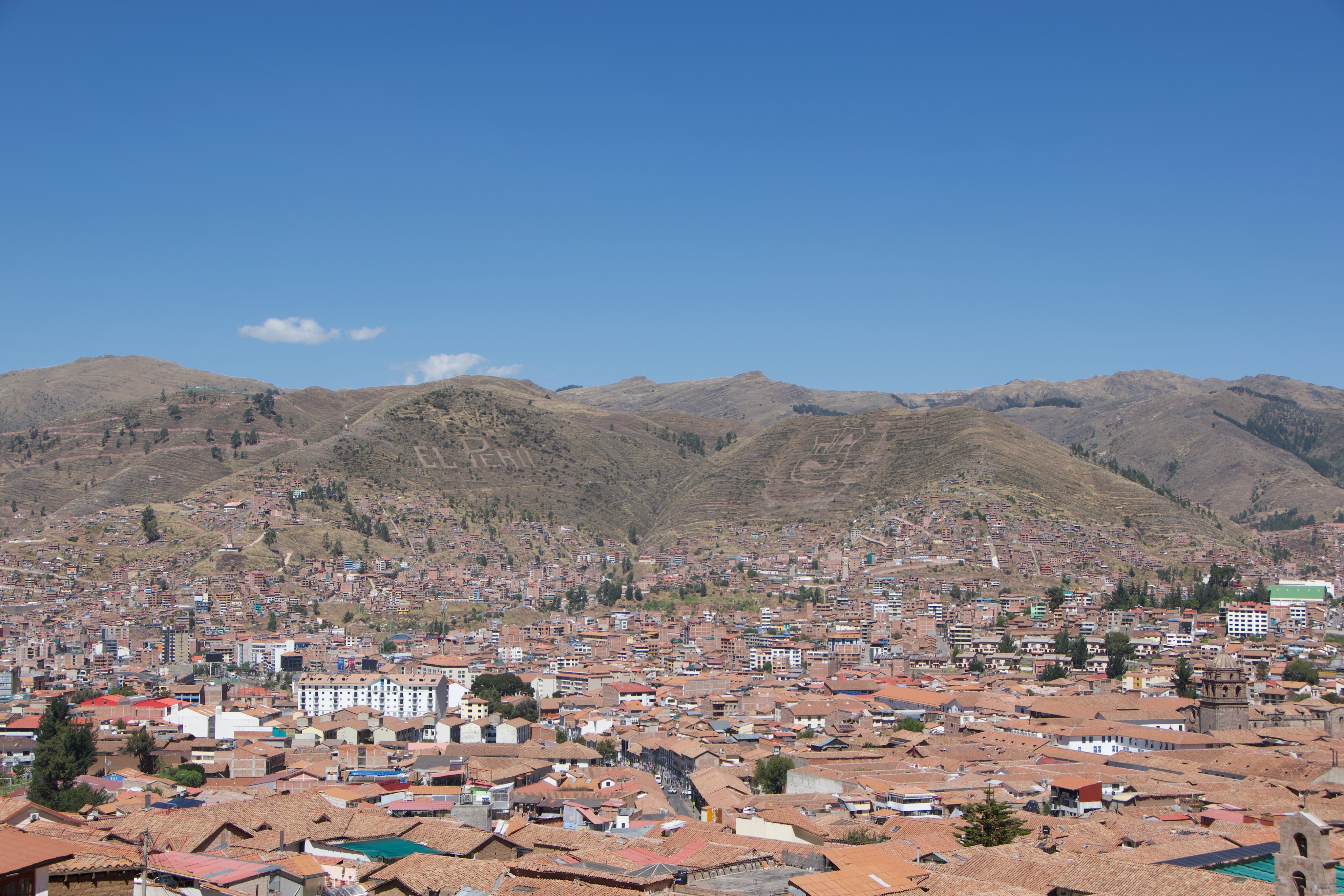
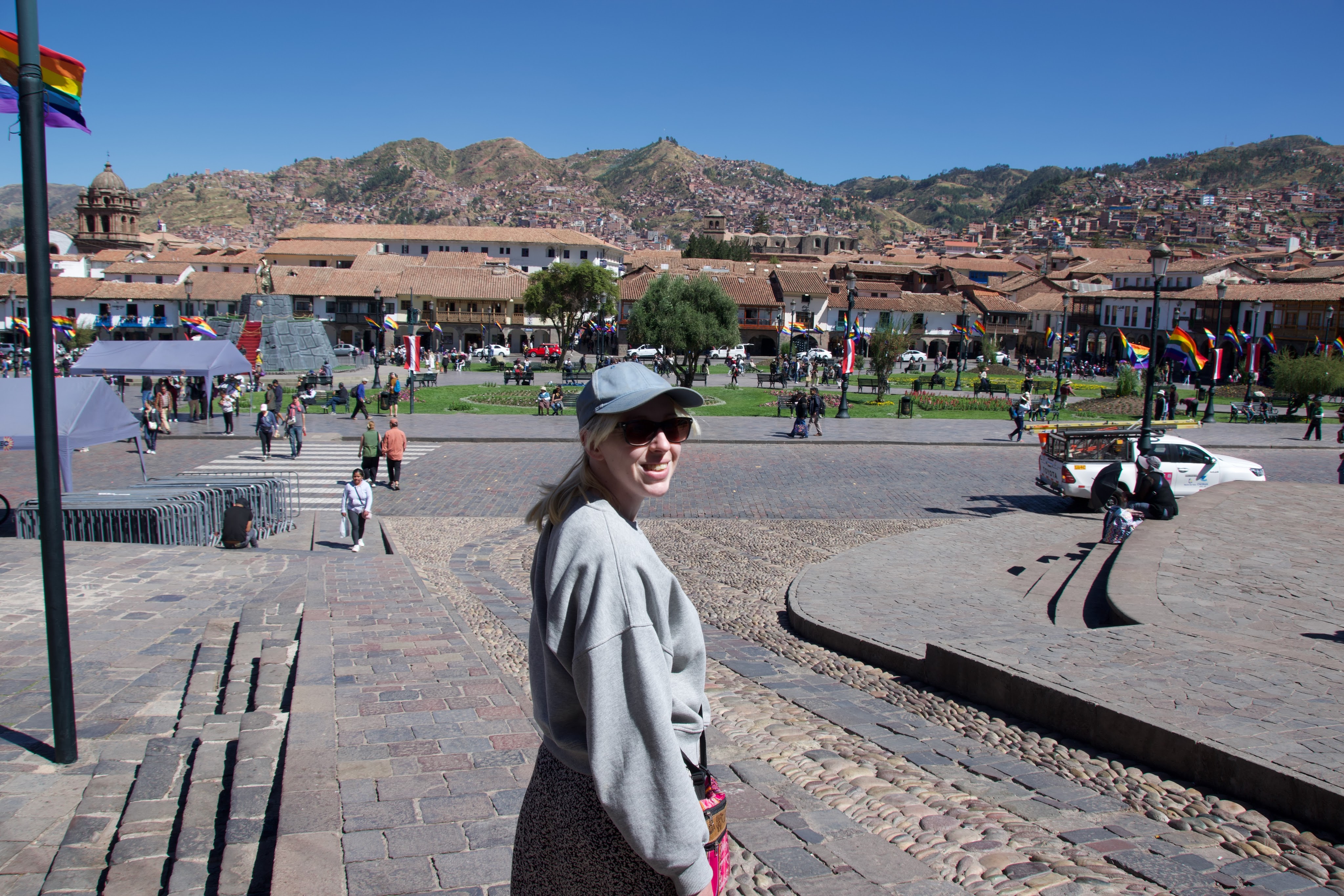
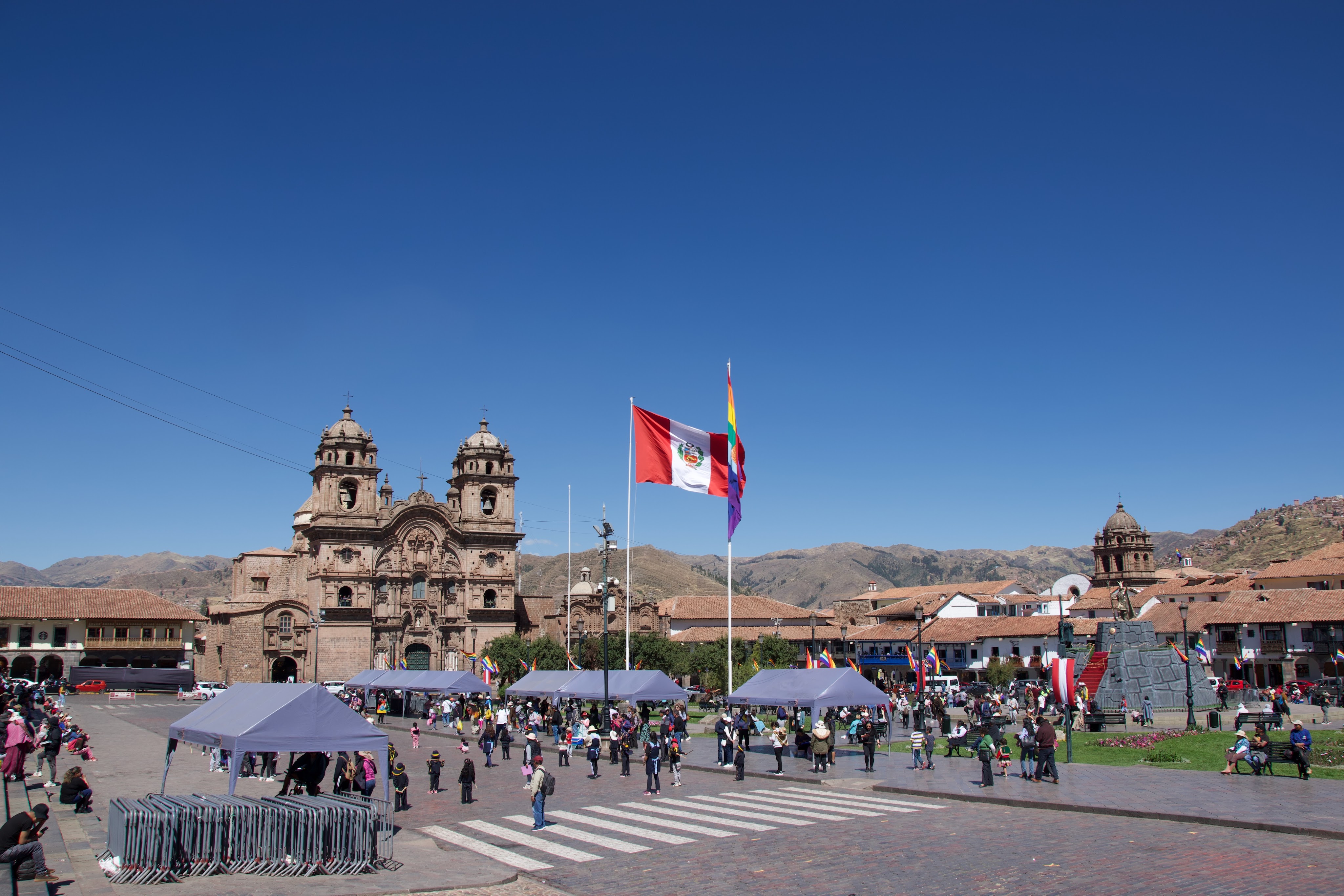
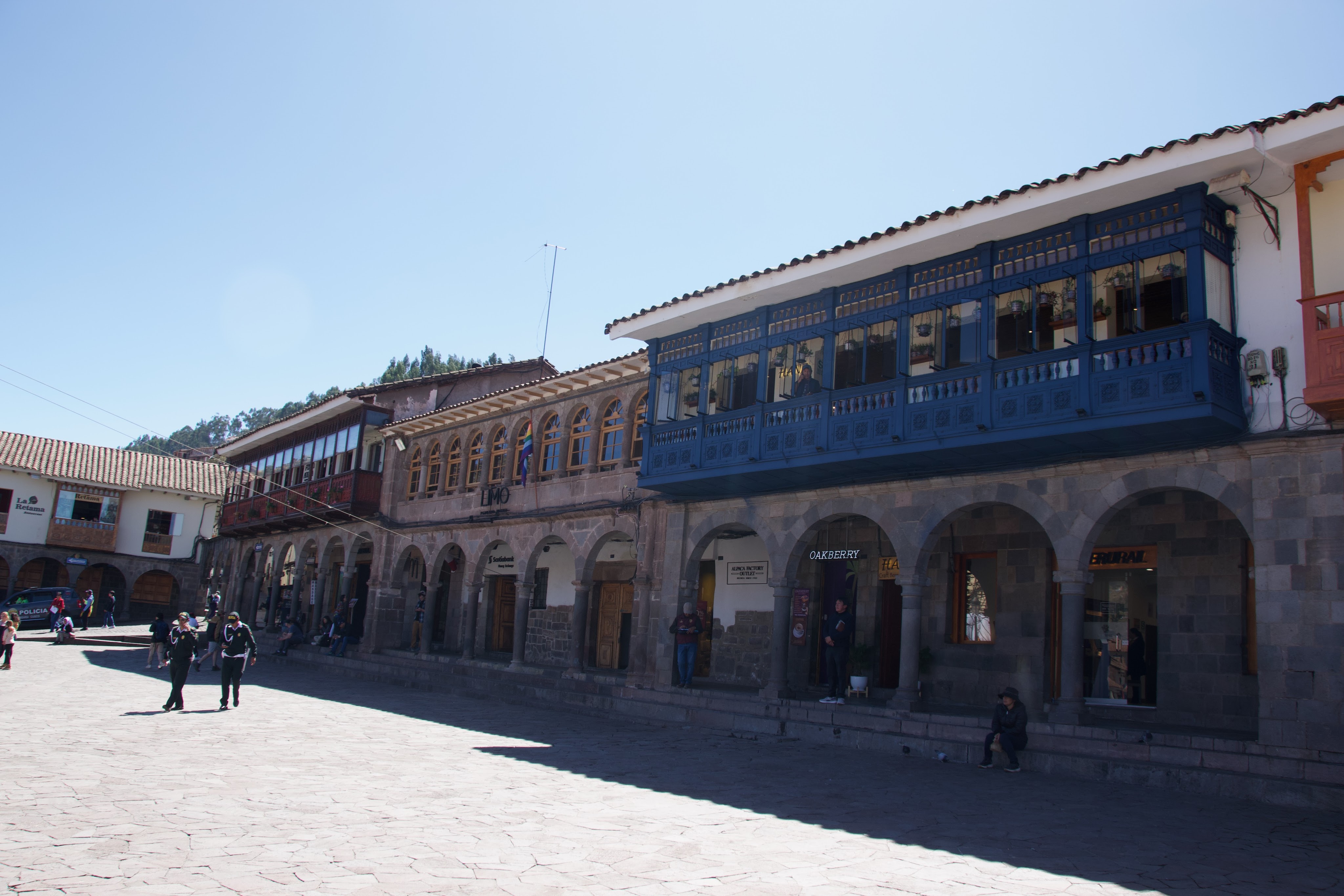
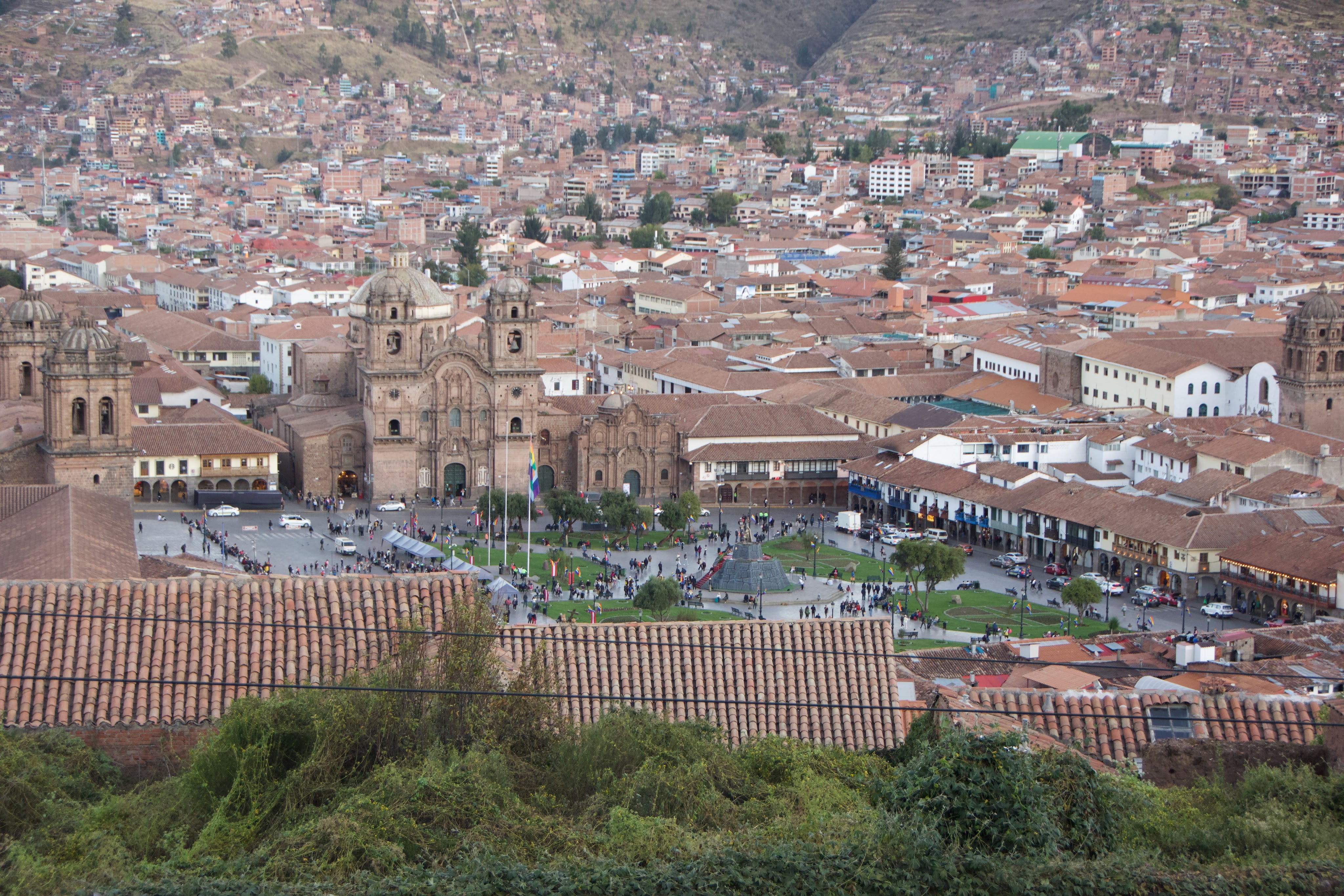
This included visits to the Museo de Arte Precolombino; Quorikancha and Museo Inka.
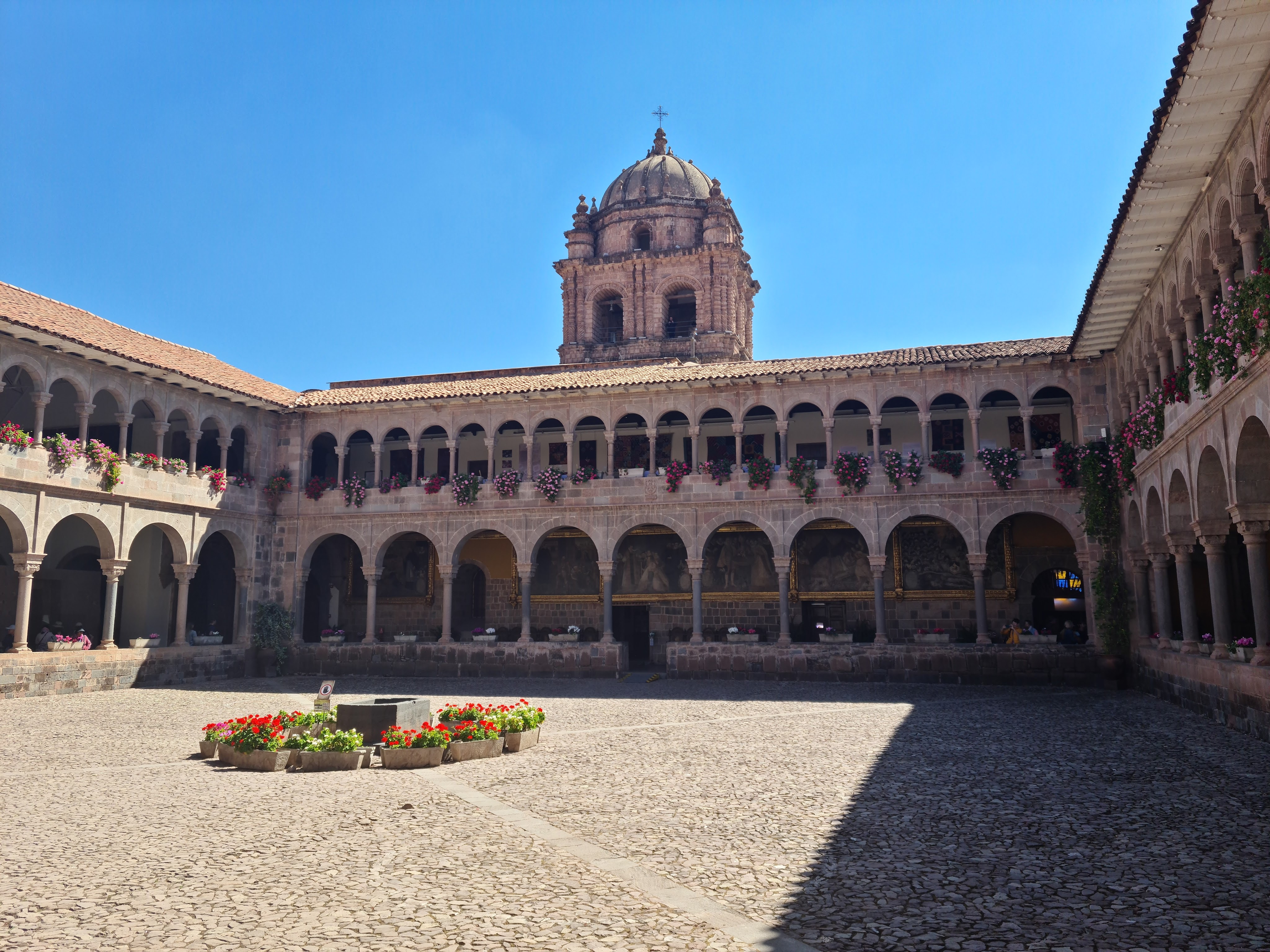

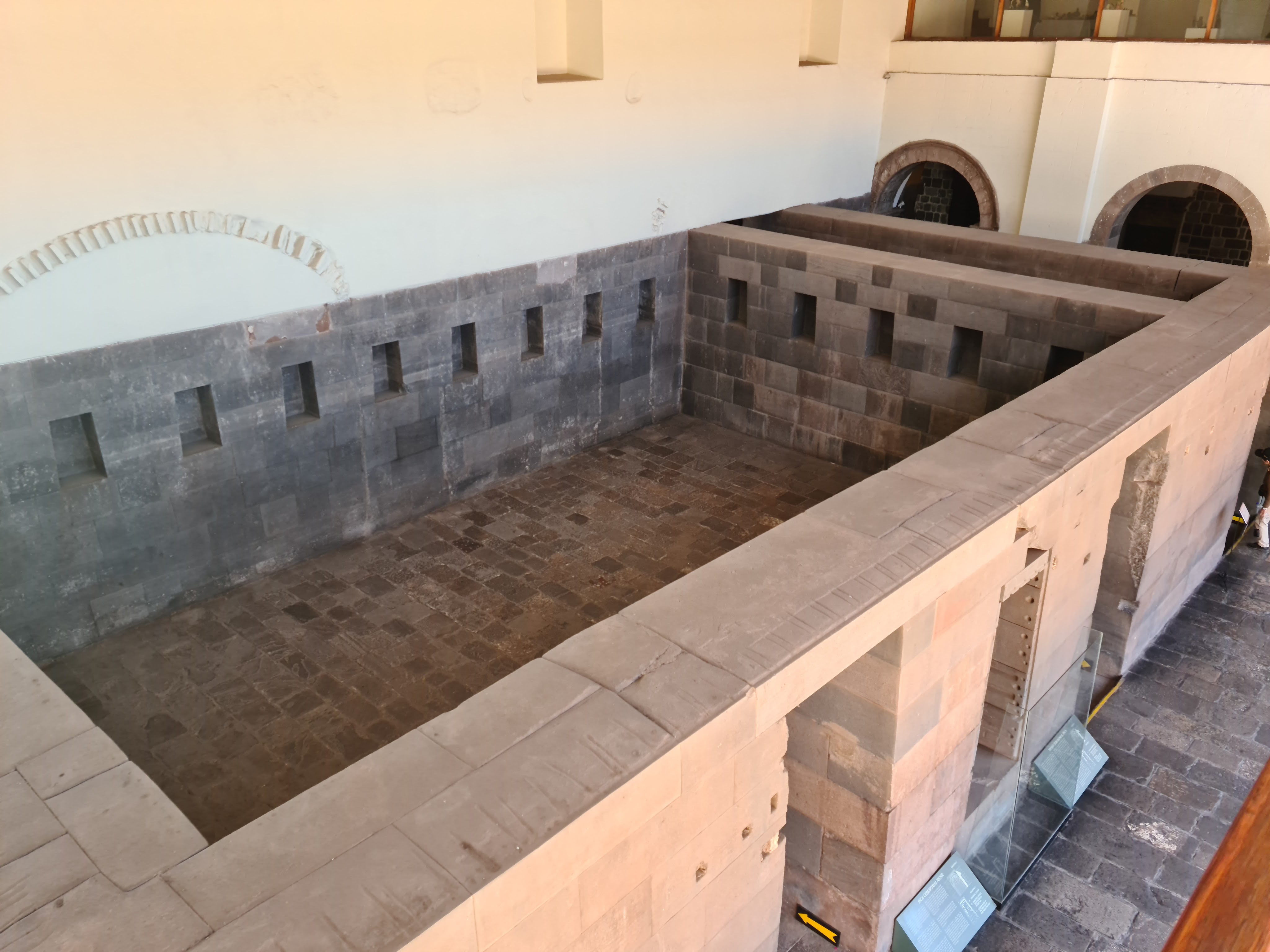
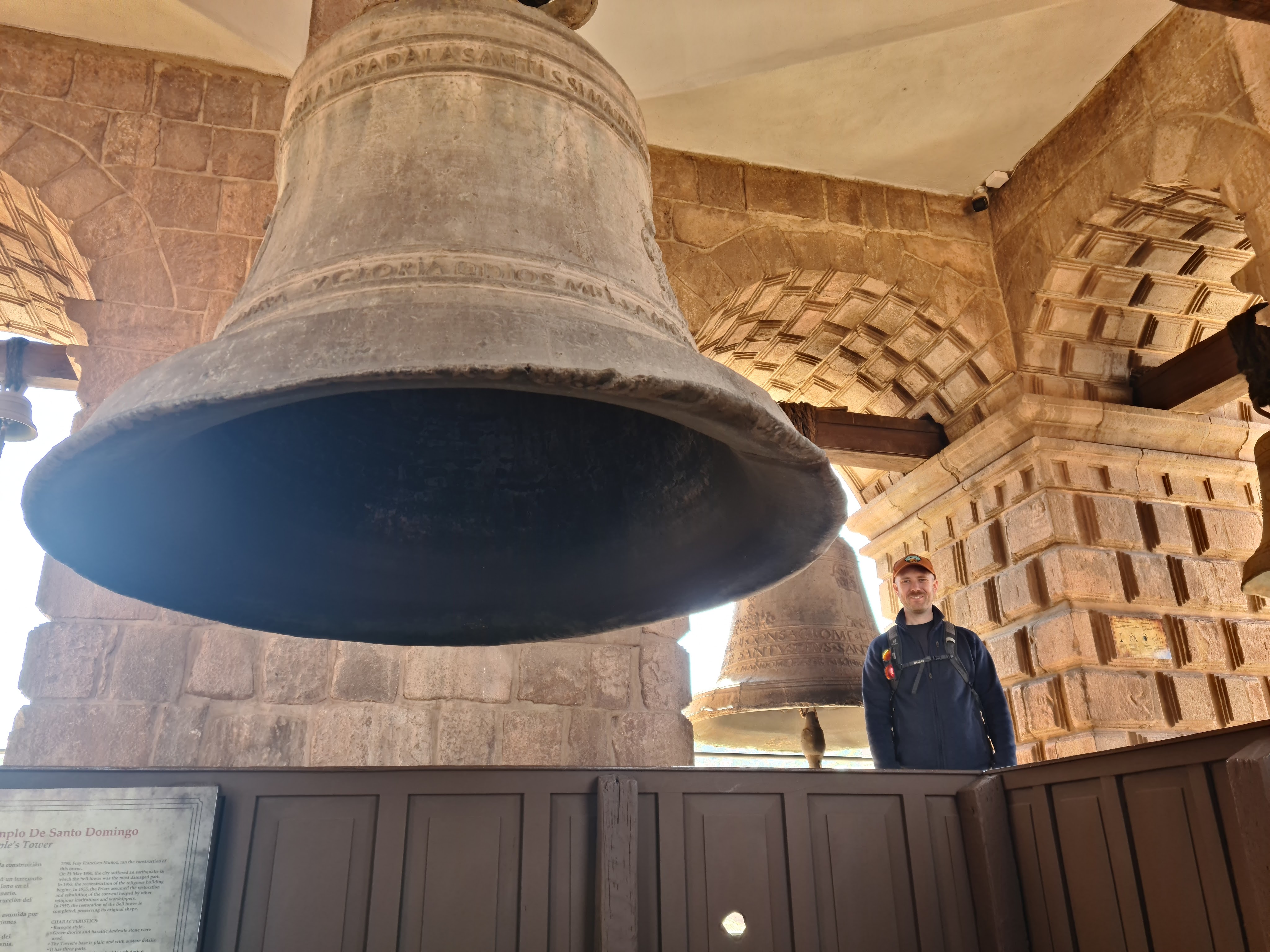
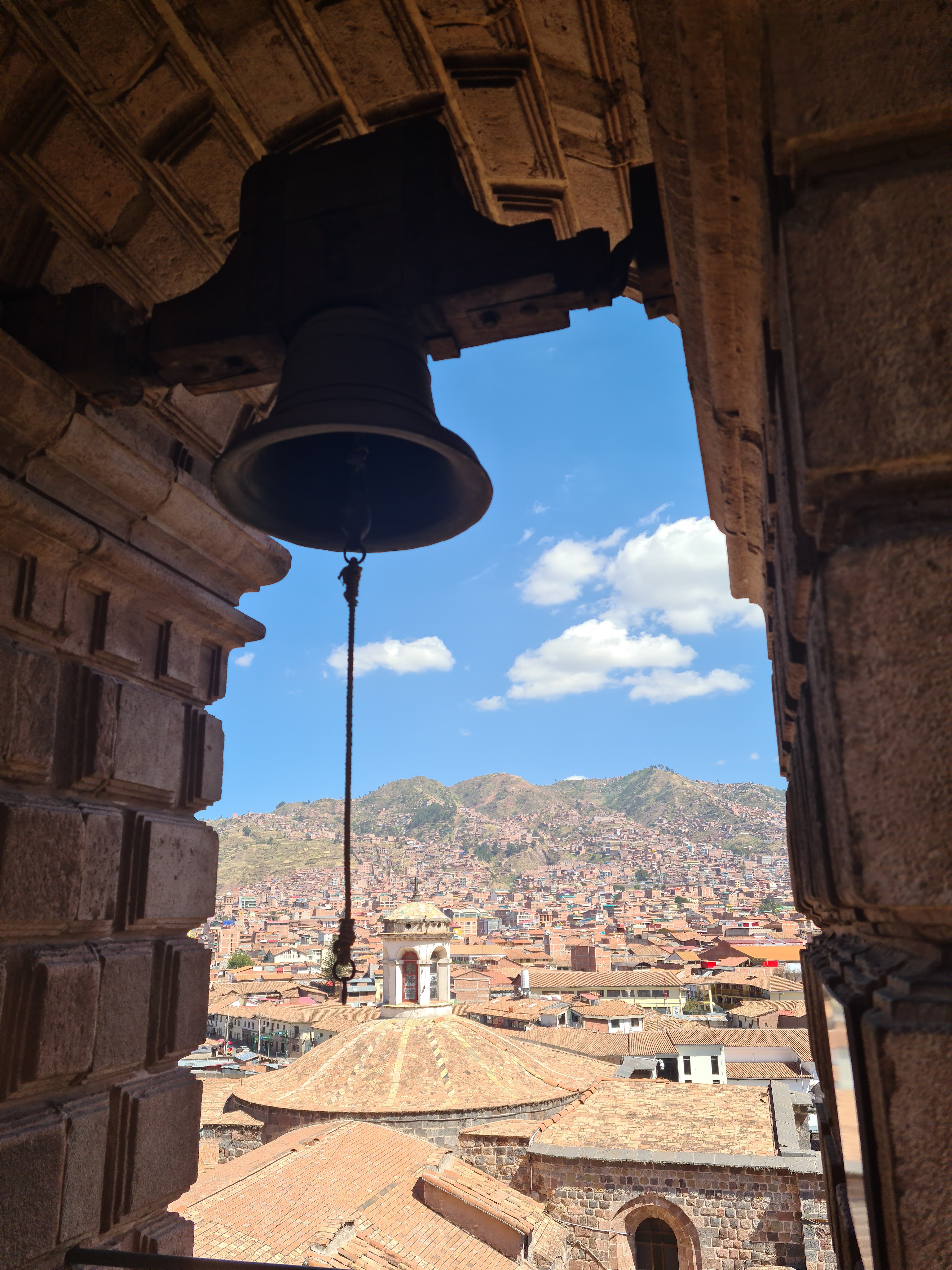

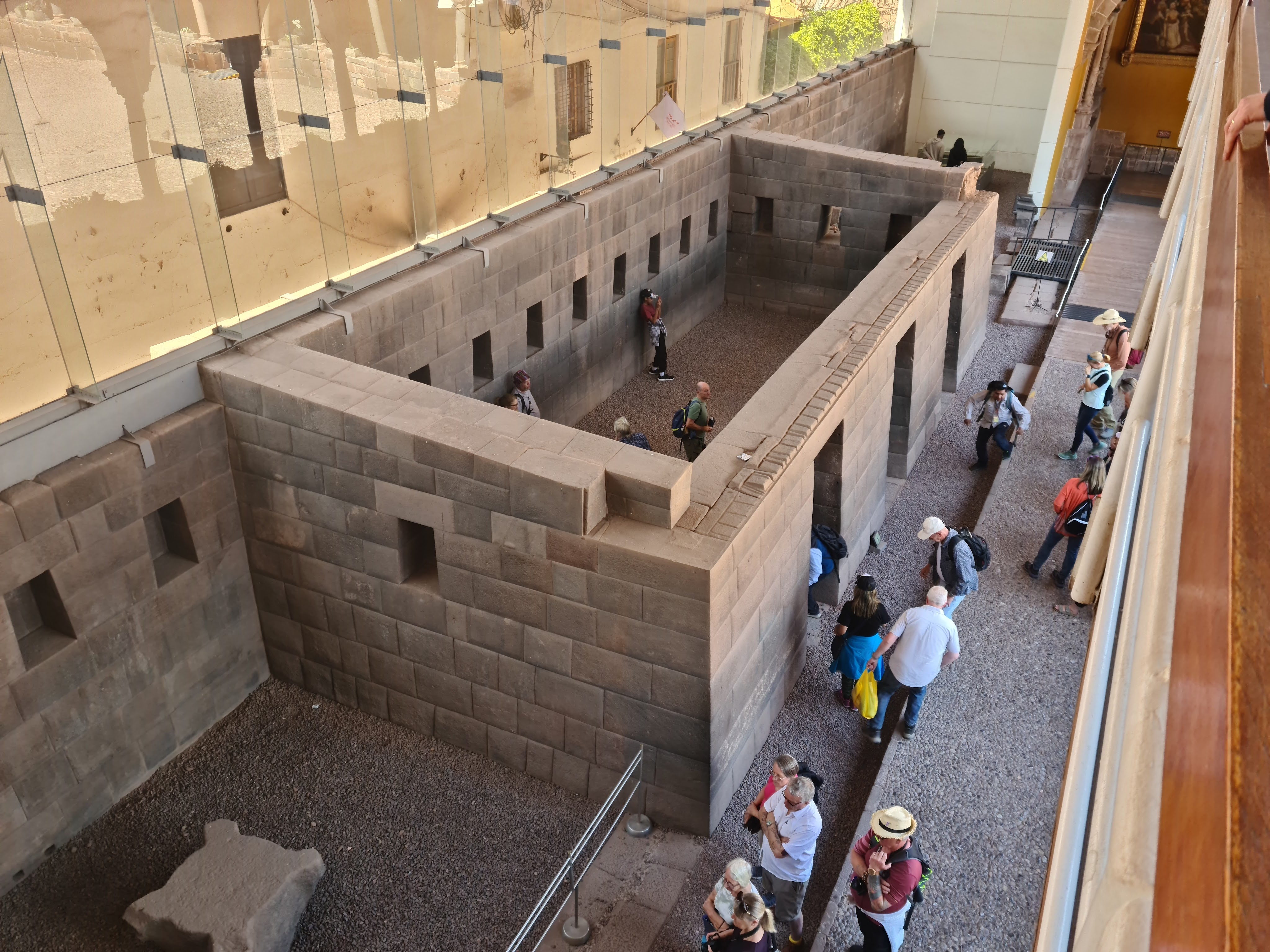
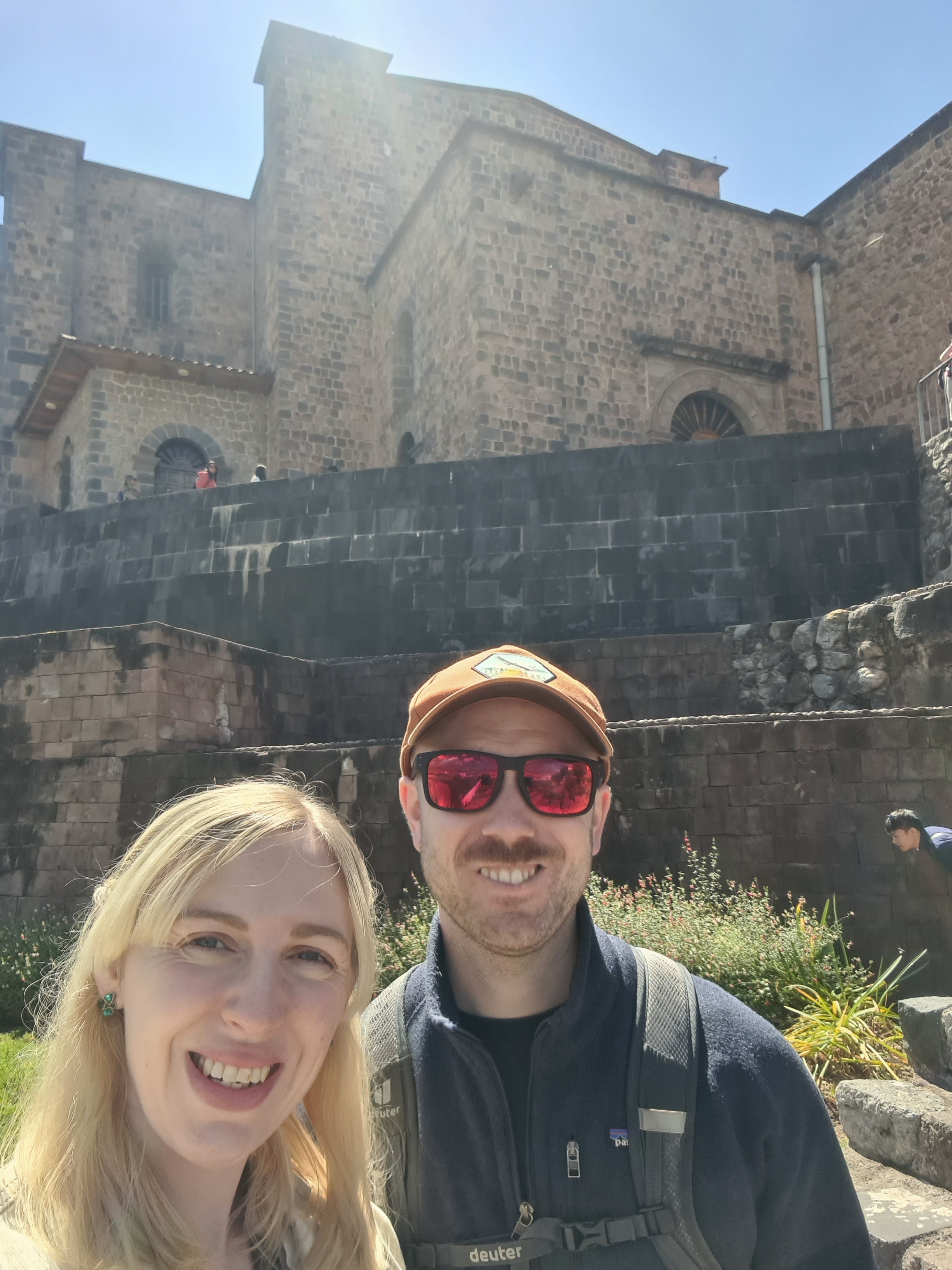
Two sites in one. Qorikancha was the most important Incan temple, which was then subsumed into the Santo Domingo Convent after the Spanish conquest

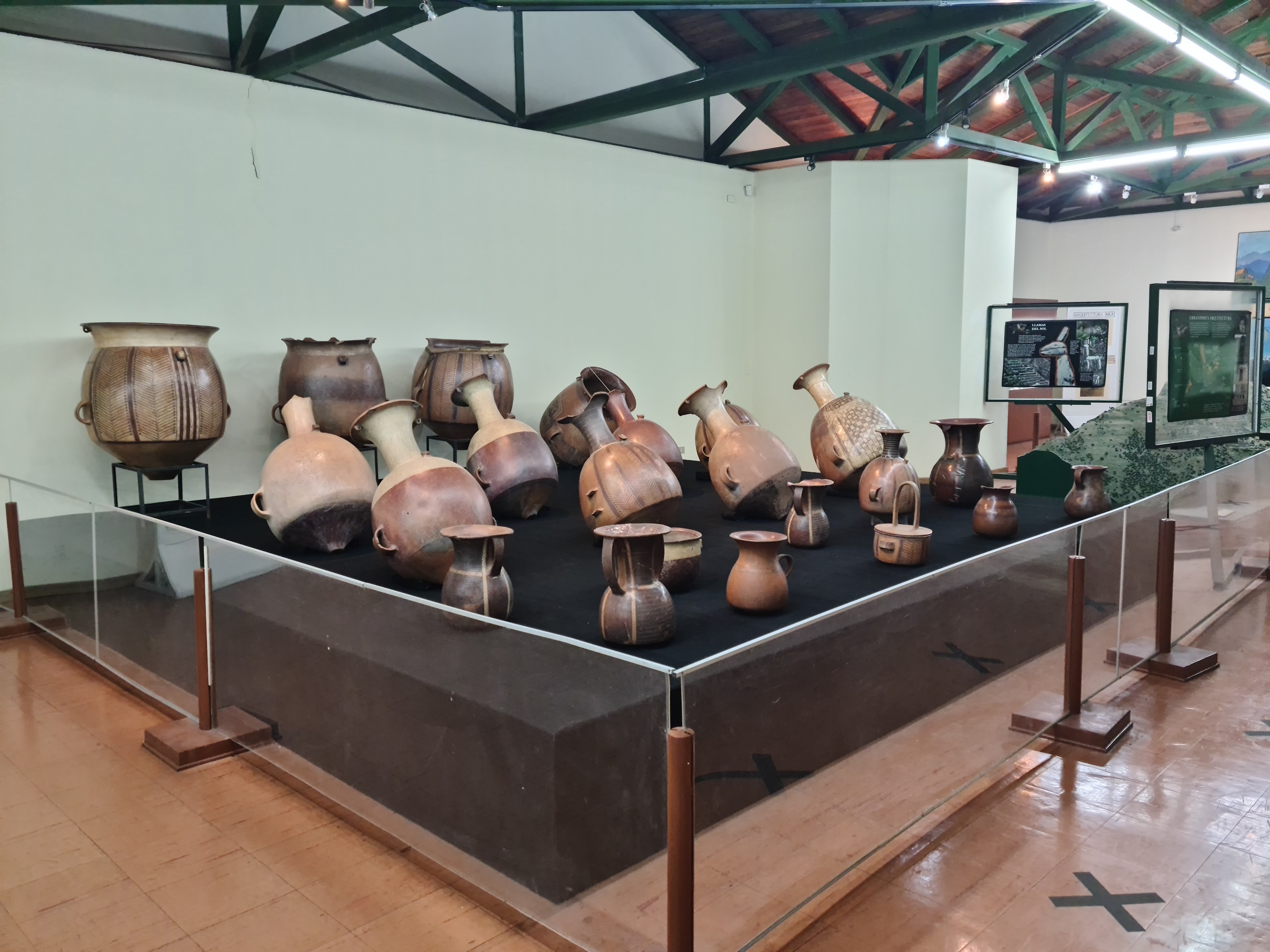
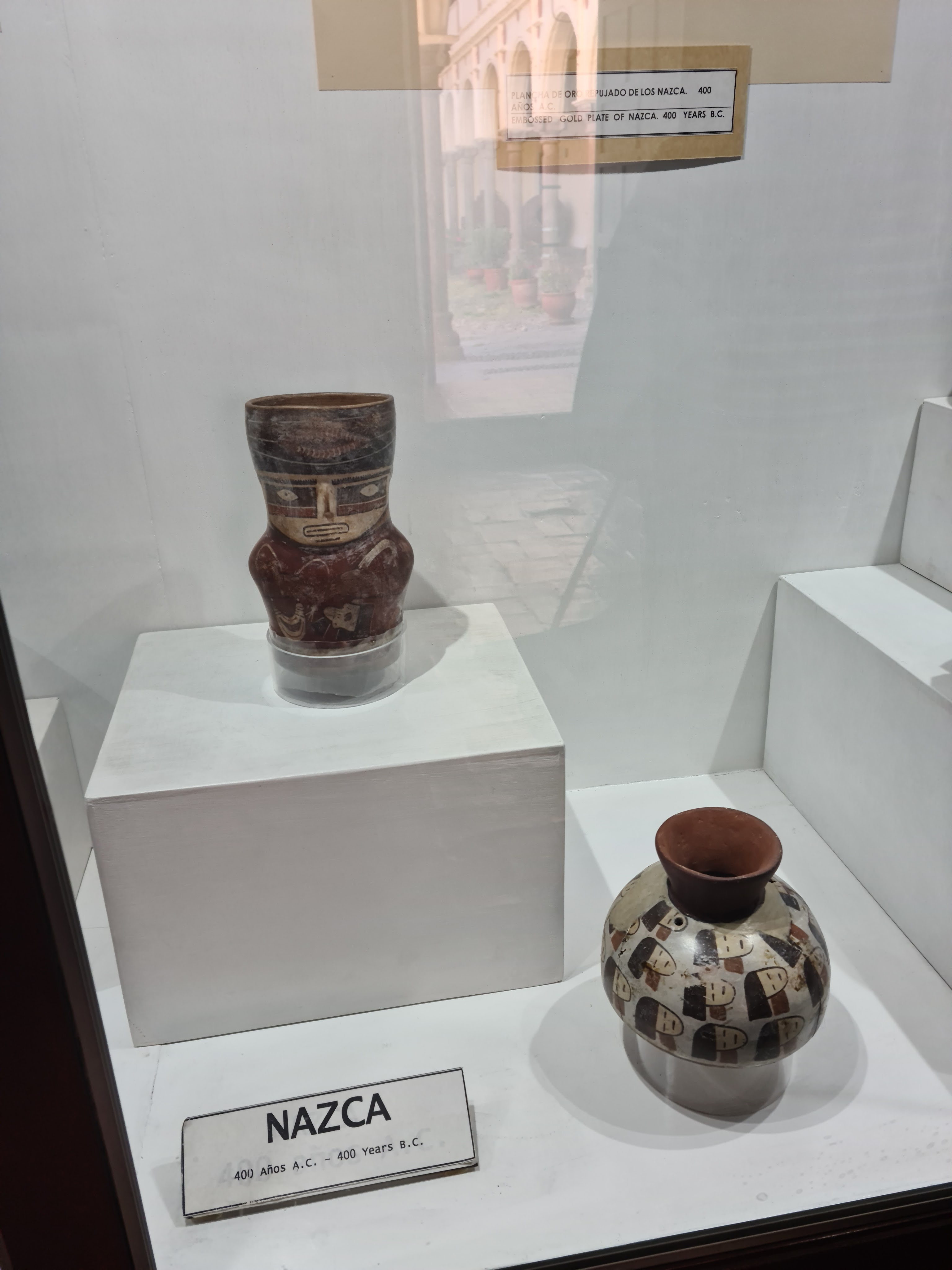
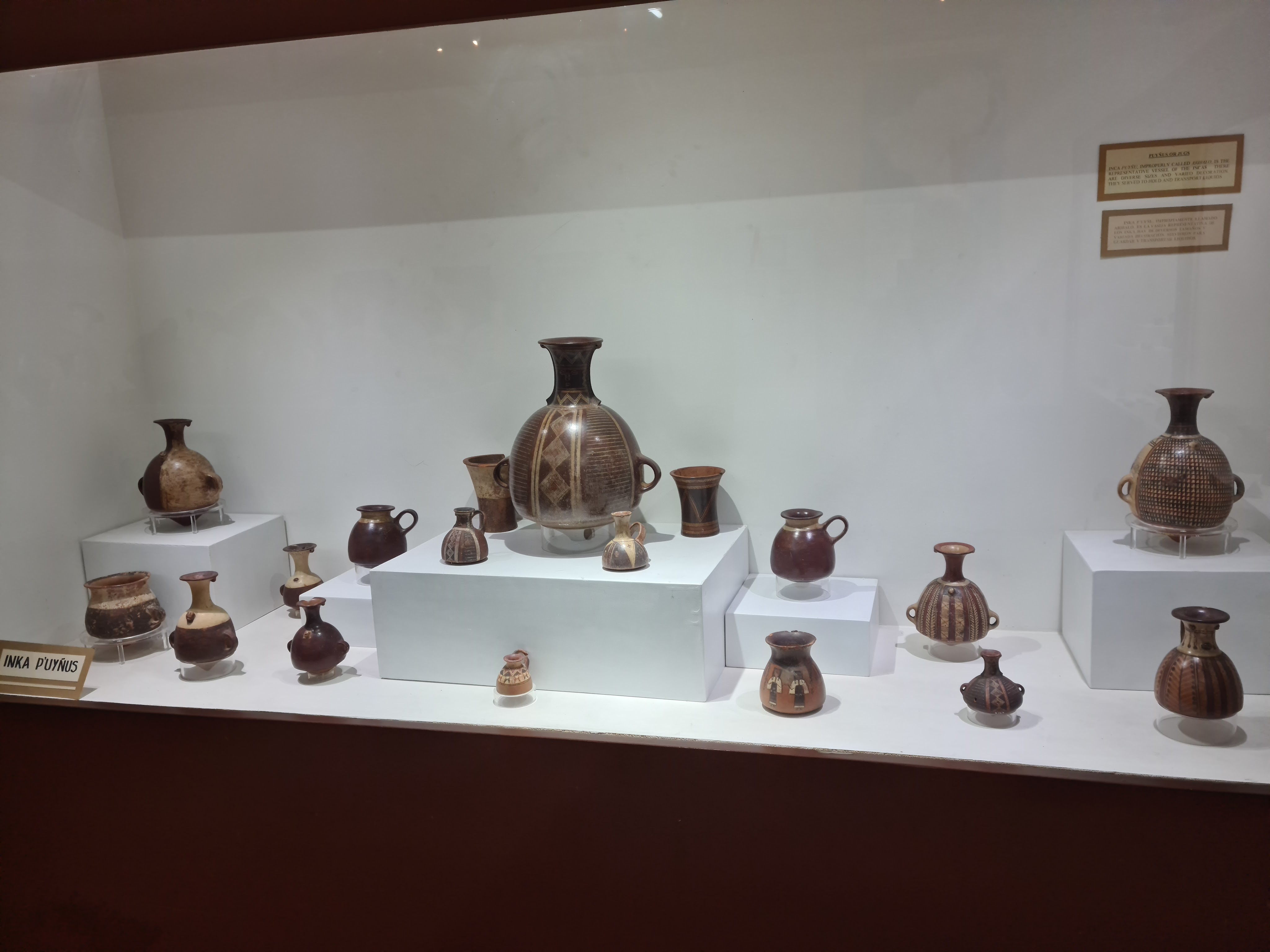
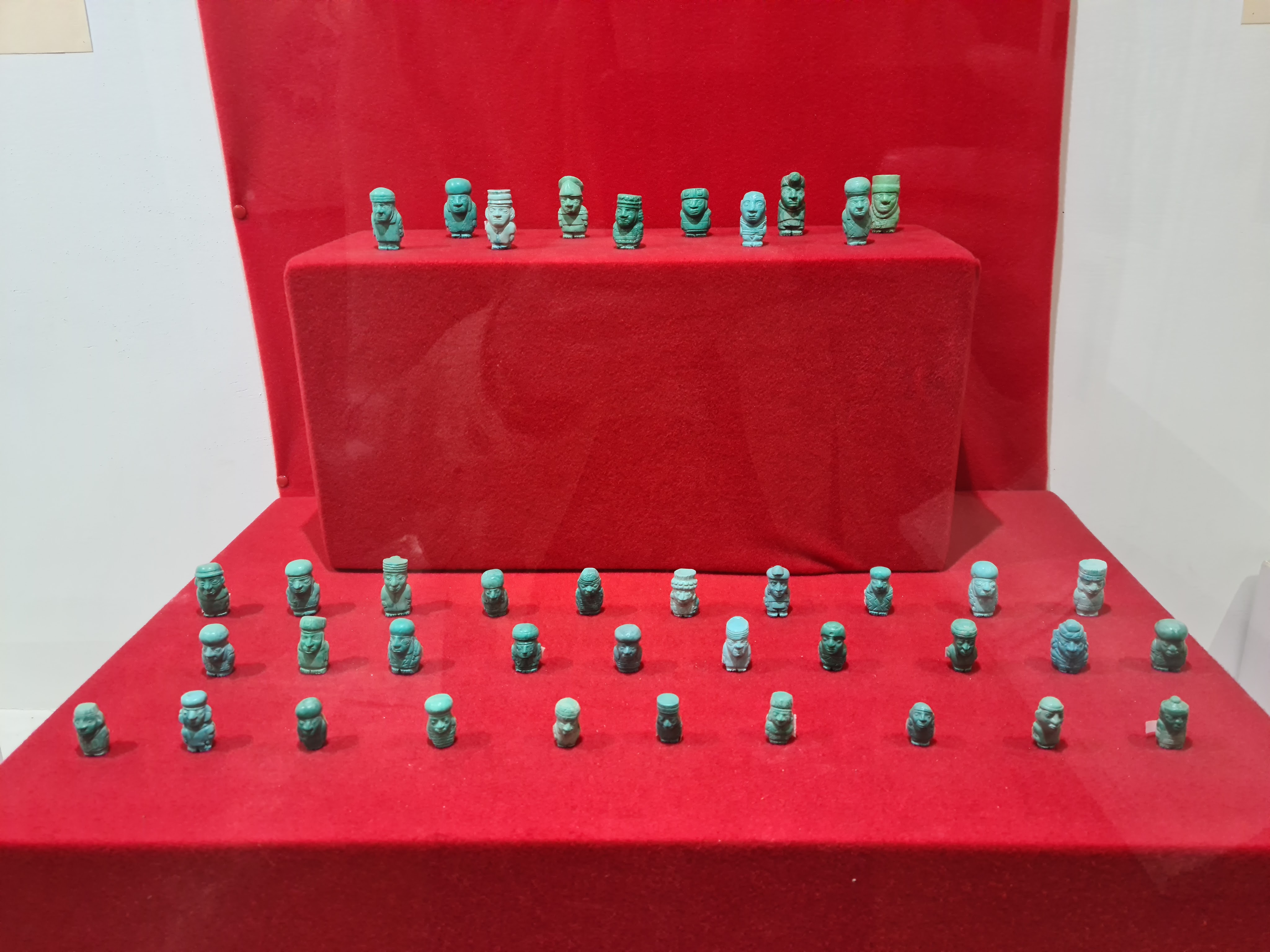
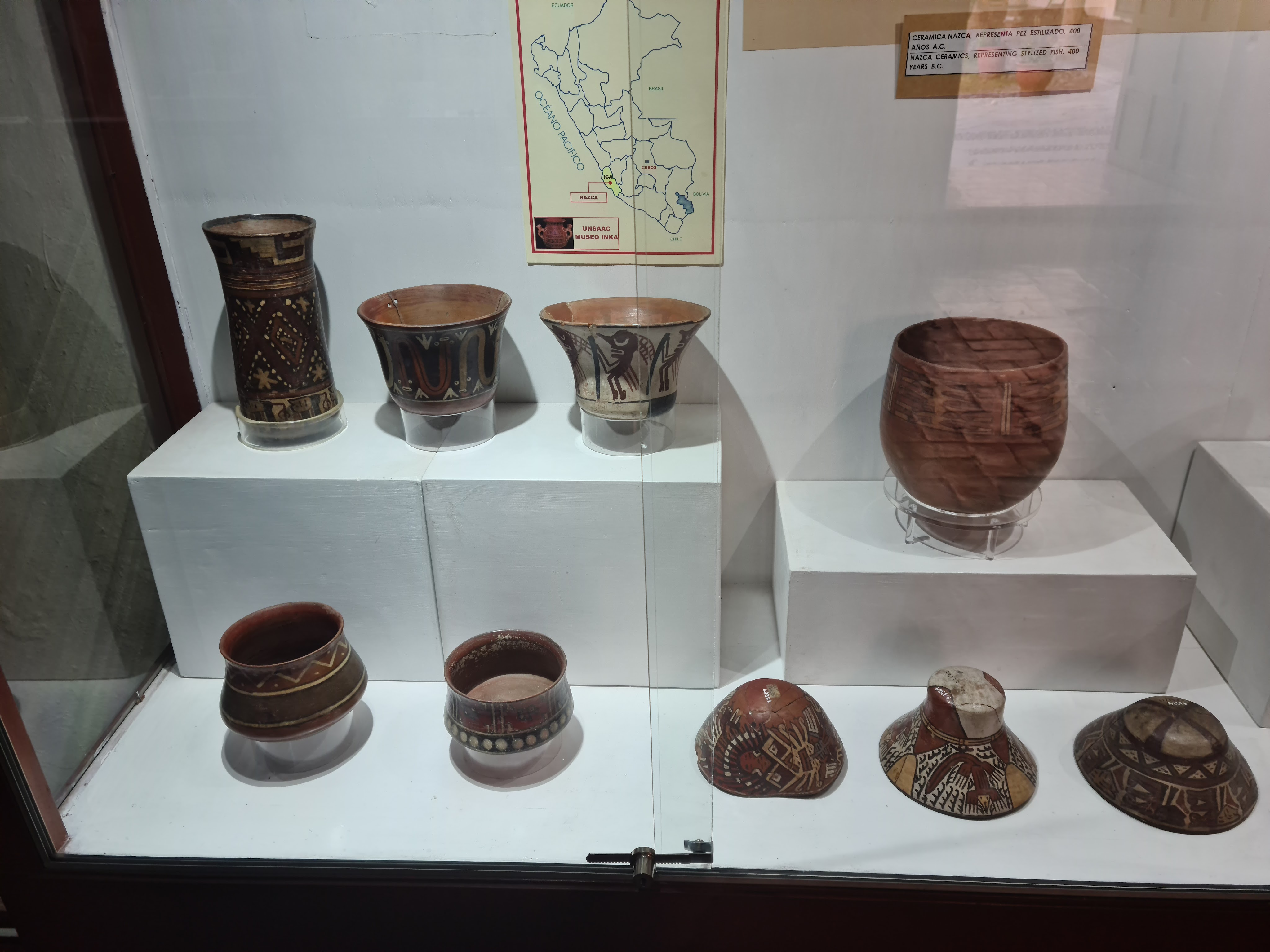
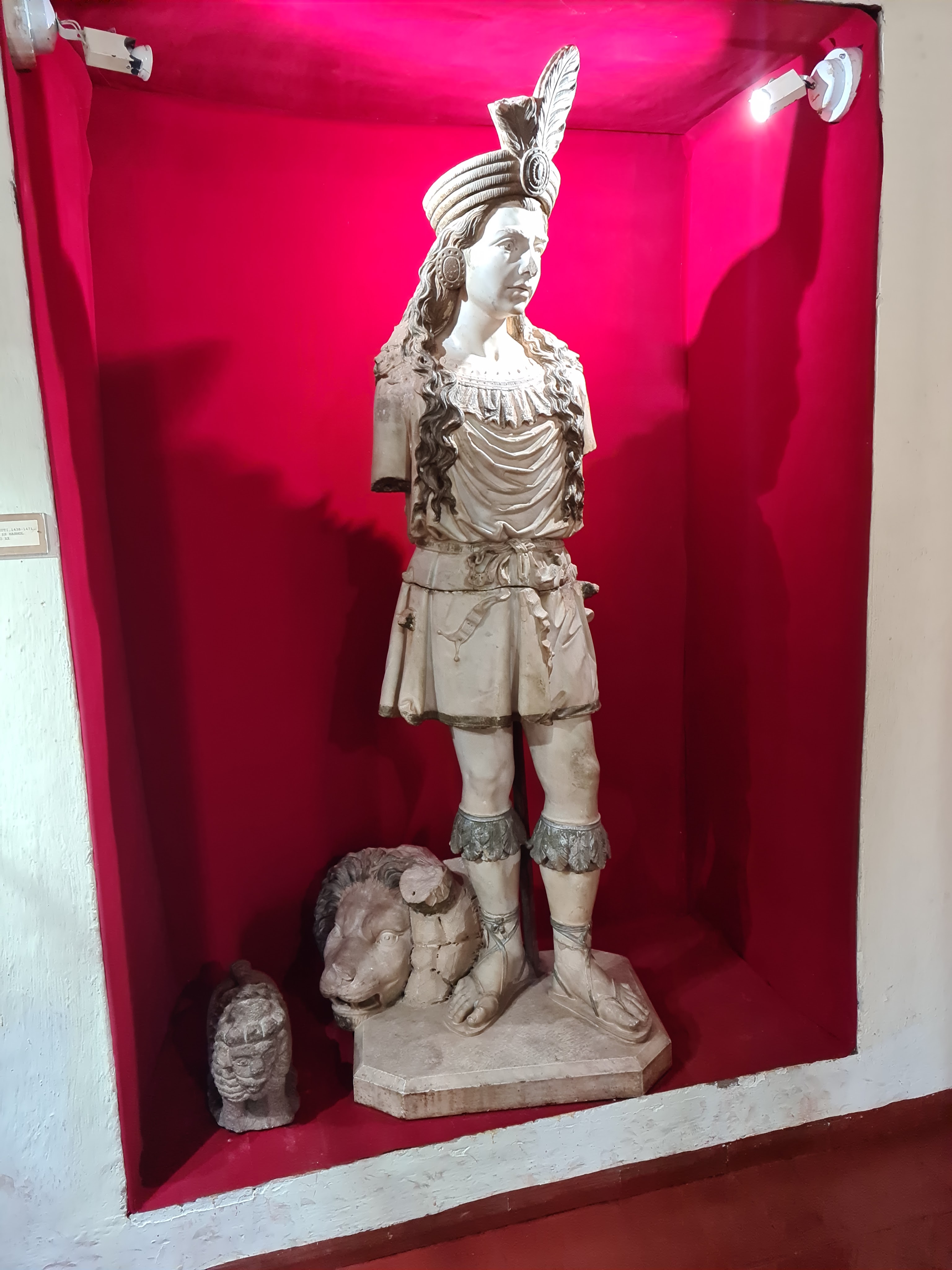
It does have to be said though that while that last one contained a huge wealth of artefacts, it wasn’t particularly detailed in its explanation of Inca history. No matter though, we would soon have four days where all we would hear about was the Incas!
After an advance briefing with our trek guide, Alpaca Expeditions, we returned post dinner to pack our duffel bags, daypacks and to try to get as much sleep as possible.
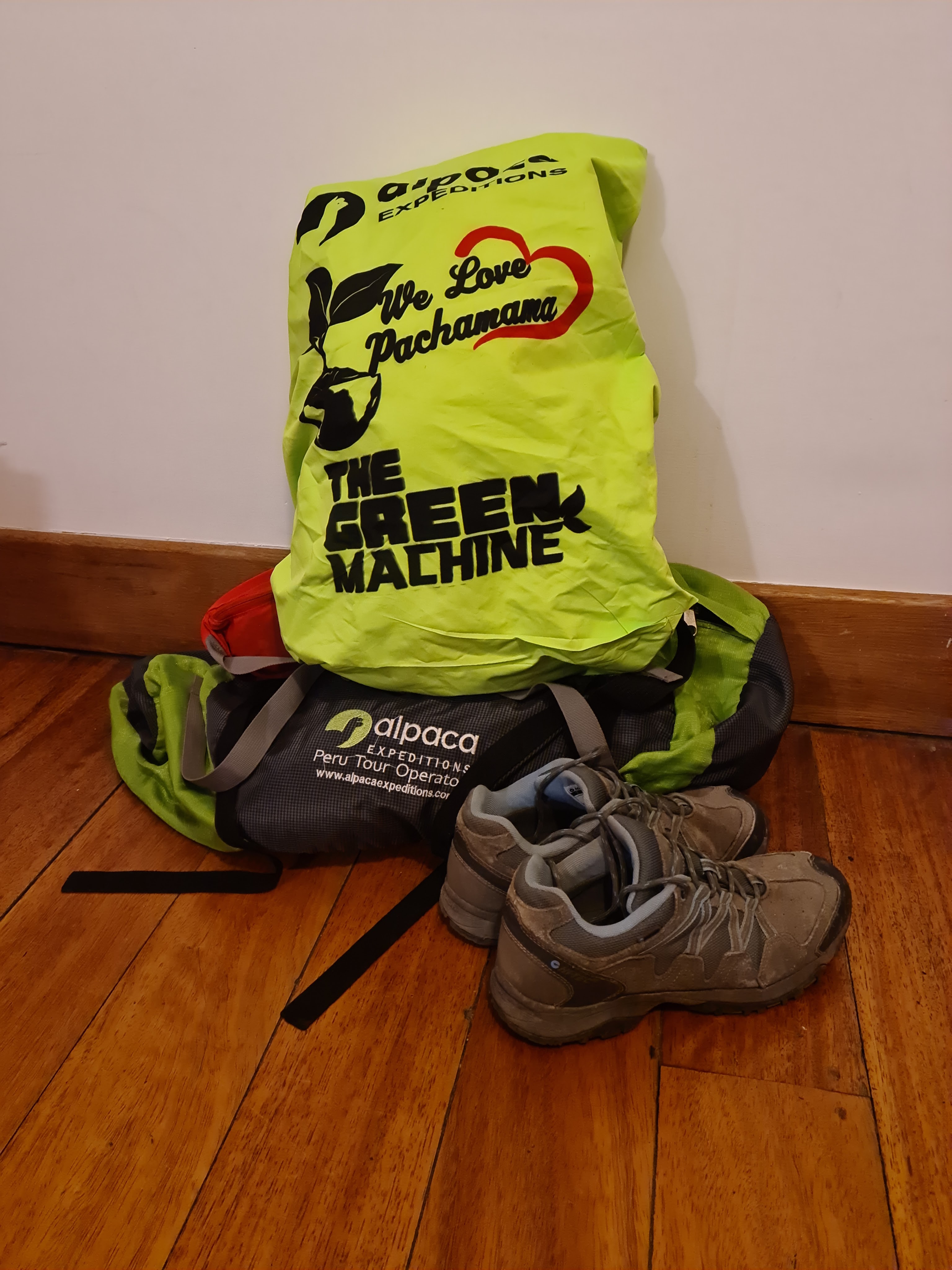
Of course, it was probably my most restless night of the whole year, possibly getting an hour or two of dozing at best. I was simultaneously nervous and excited. I’d barely read any negative experiences of the Inca trail, but with more than three days of physical activity, it was going to be a challenge unlike anything we had done before. The last proper hike we had done, Pico Huma in Malaga, had been more of a strain than I’d anticipated. Together with a complete lack of practice hikes since January, and never having done a multi-day hike, I hoped we weren’t biting off more than we could chew.
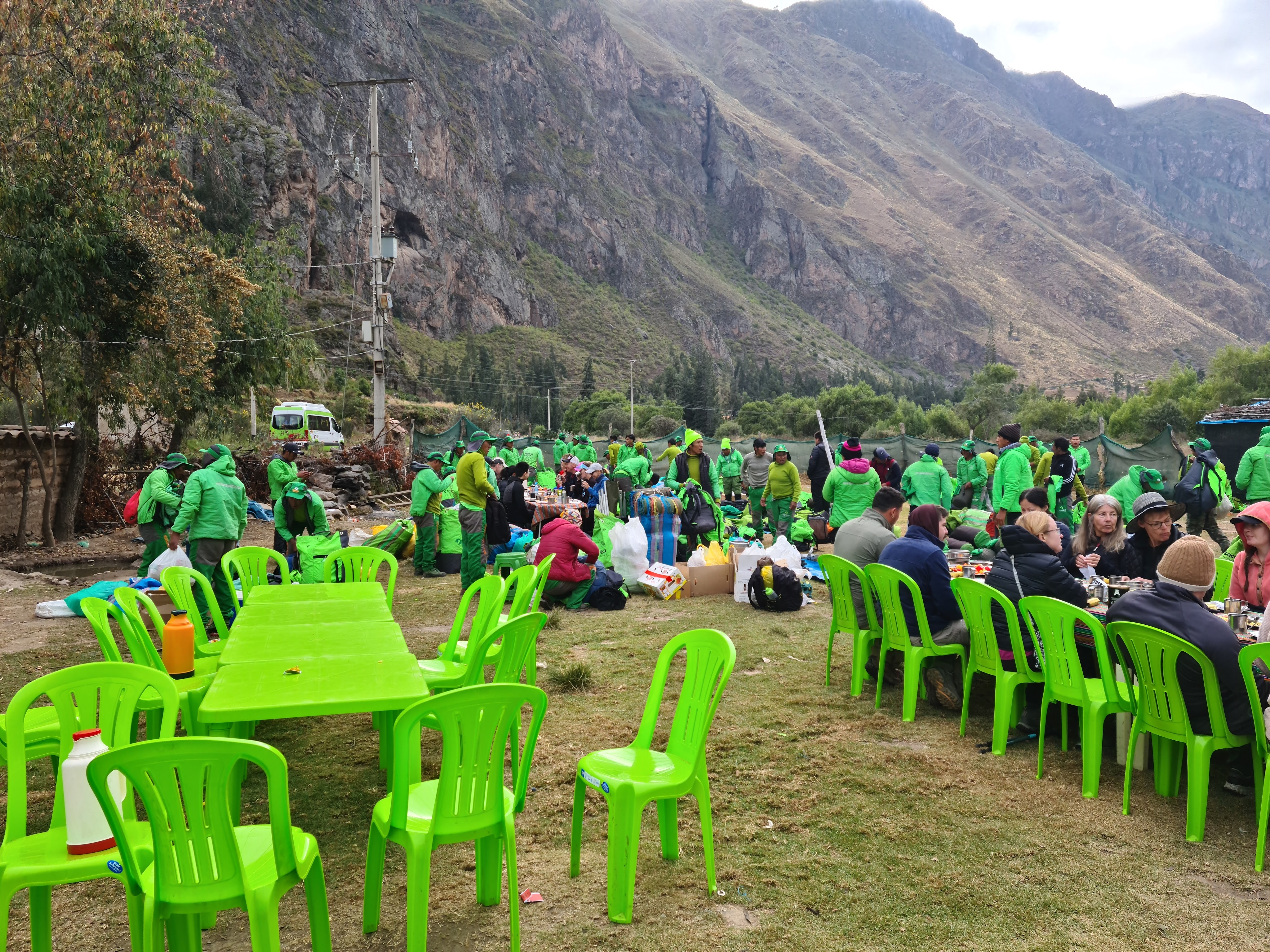
Despite the 3.45am wake up, there would still be an agonising wait before we could get going. We had a two hour minibus drive to Ollantaytambo, where sleep mostly eluded me again. There though, fresh air and food breathed some life into me, as we got introduced to our trailmates – Leola, Mike, Katy and Joel (Brits); Maggie, Tracye, John, Don, Luke, Arjun and Sunny (Americans) and Helen and Jono (New Zealanders).
It was also an early introduction to the ethos of Alpaca Expeditions. Although one of the more expensive operators, we had selected them as they are highly rated, not just in terms of guest experience, but also in sustainable practices. Here at Ollantaytambo, the porters, responsible for the literal heavy lifting of Inca trail hikes, are provided with accommodation. As they travel from their homes across the Cusco region, the house provides a place for them to rest up the night before a hike and give them a (relative to us!) lie in. Already hard at work, it was explained that we would be more formally introduced to the chef and porters later on the trek.
Fuelled up, it was another short drive before we reached the trailhead. From here, all travel over the next few days would be on our own two feet.
Amusingly, and giving you the chance to question your faculties, there is a real “and here’s what you could have had” moment here. For those visiting Machu Picchu who for some reason don’t want to walk 26 miles, there is the option of catching the train from Ollantaytambo to Aguas Calientes, and taking a bus from there direct to the Machu Picchu entrance. At the Inca Trail trailhead, you pass right over the train tracks and can look the Slacker Express in the face as it starts its journey…with comfortable seats…flushing toilet…onboard cafe bar (stop thinking about it, Tash!) – but hey, no sense of achievement, nor the best views in the house!
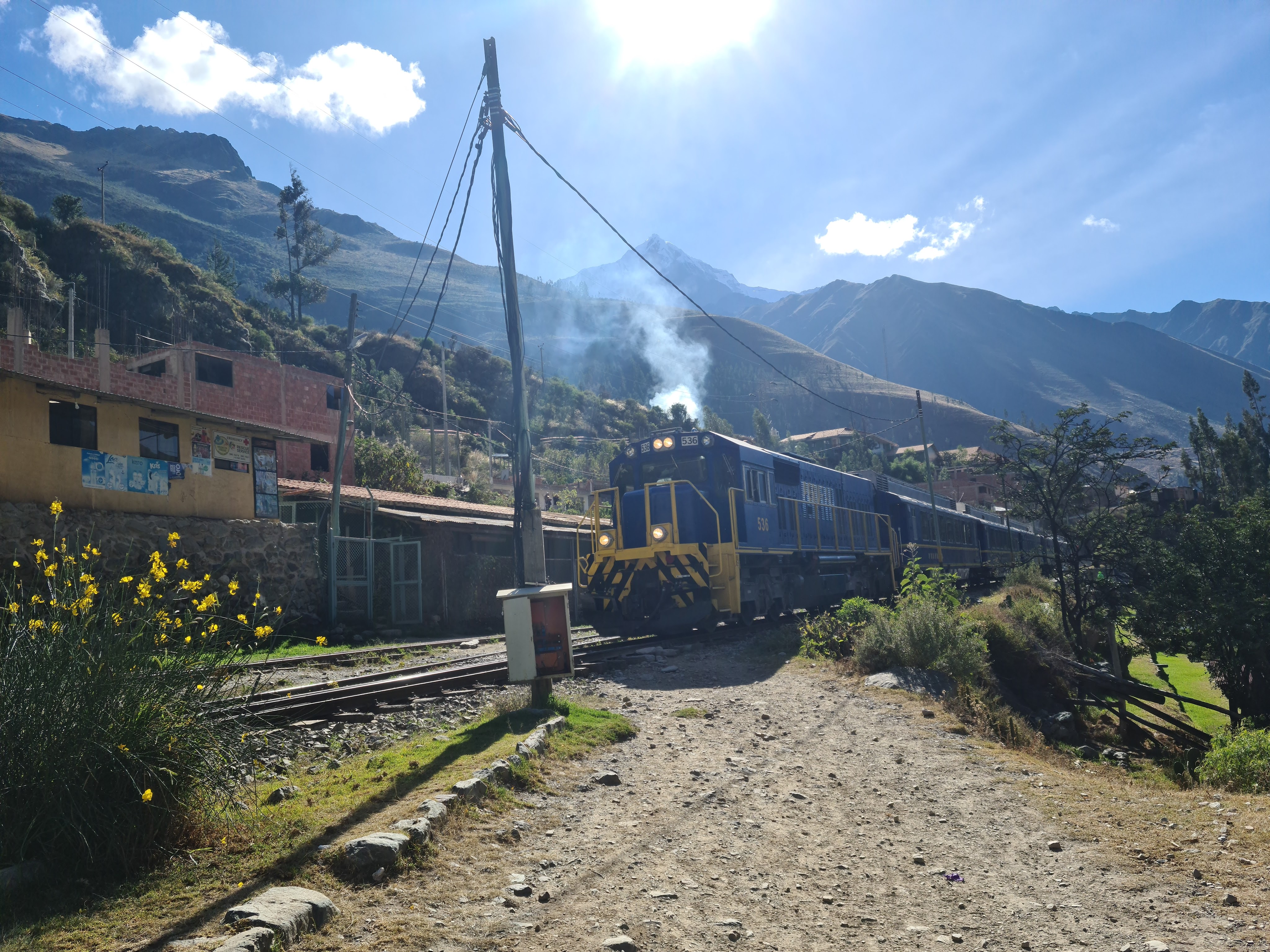
Passports checked, walking poles handed out to those of us that wanted them, we were finally good to go! All those, err hard months of training, about to be put into practice.
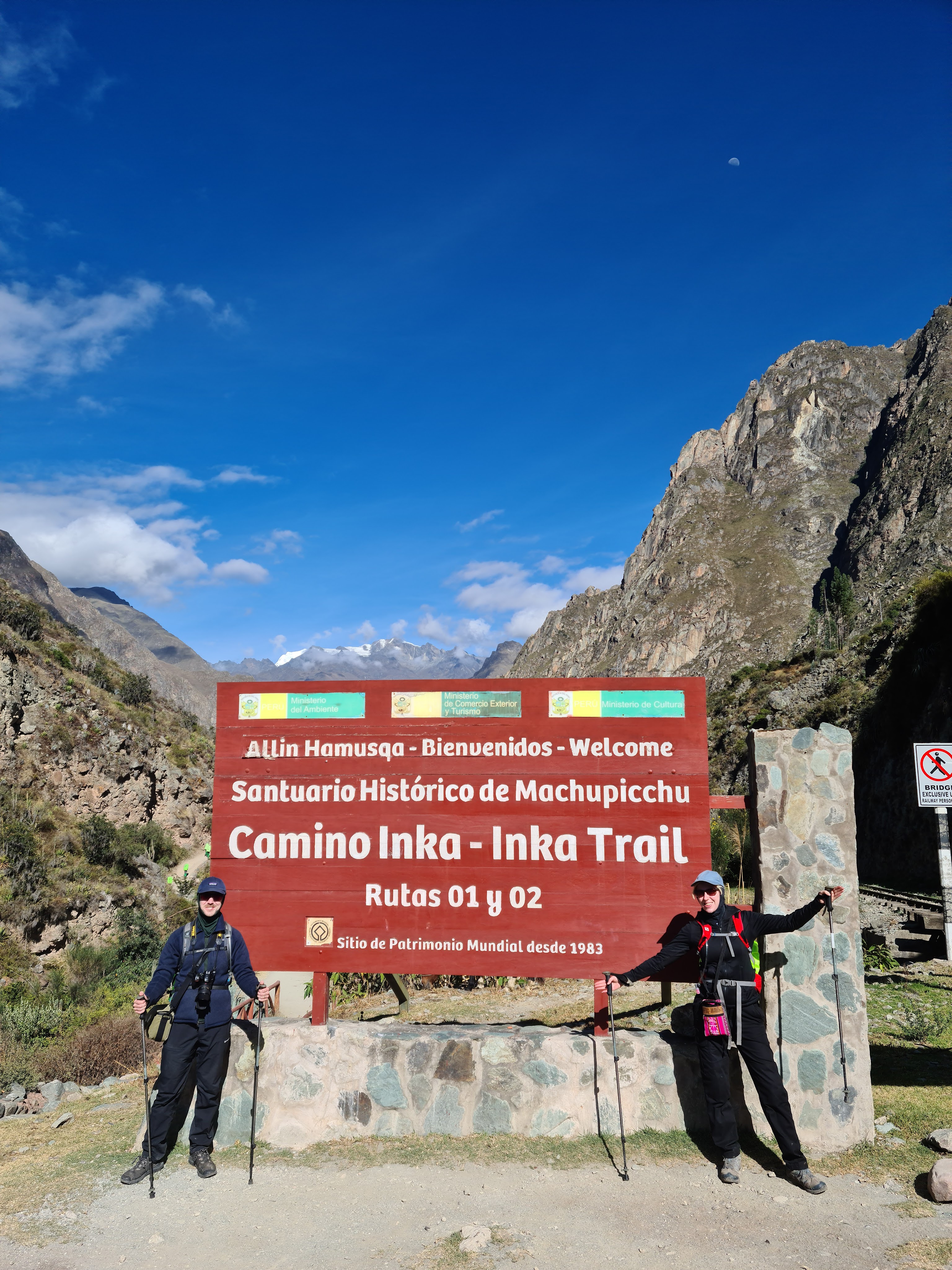
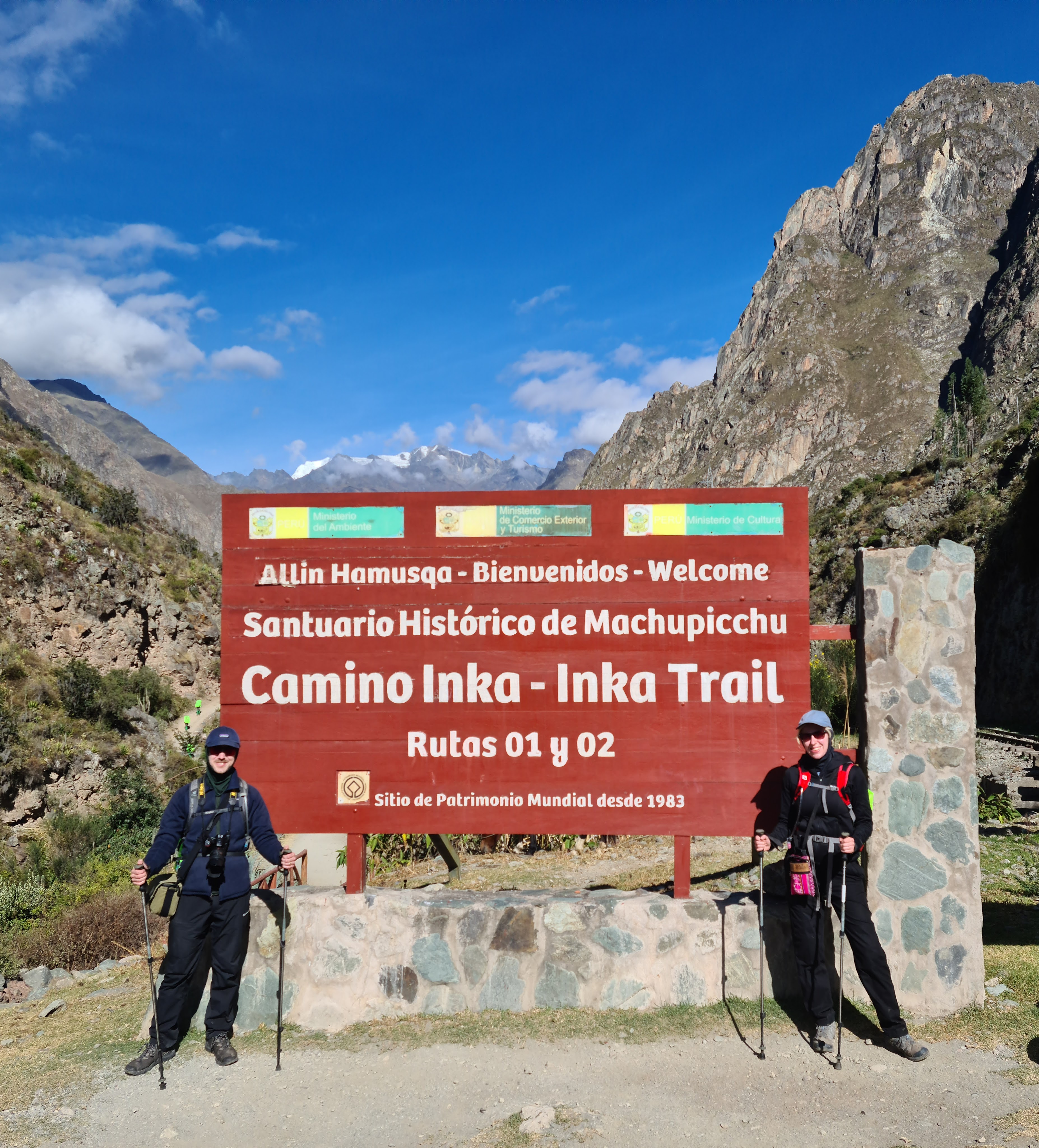
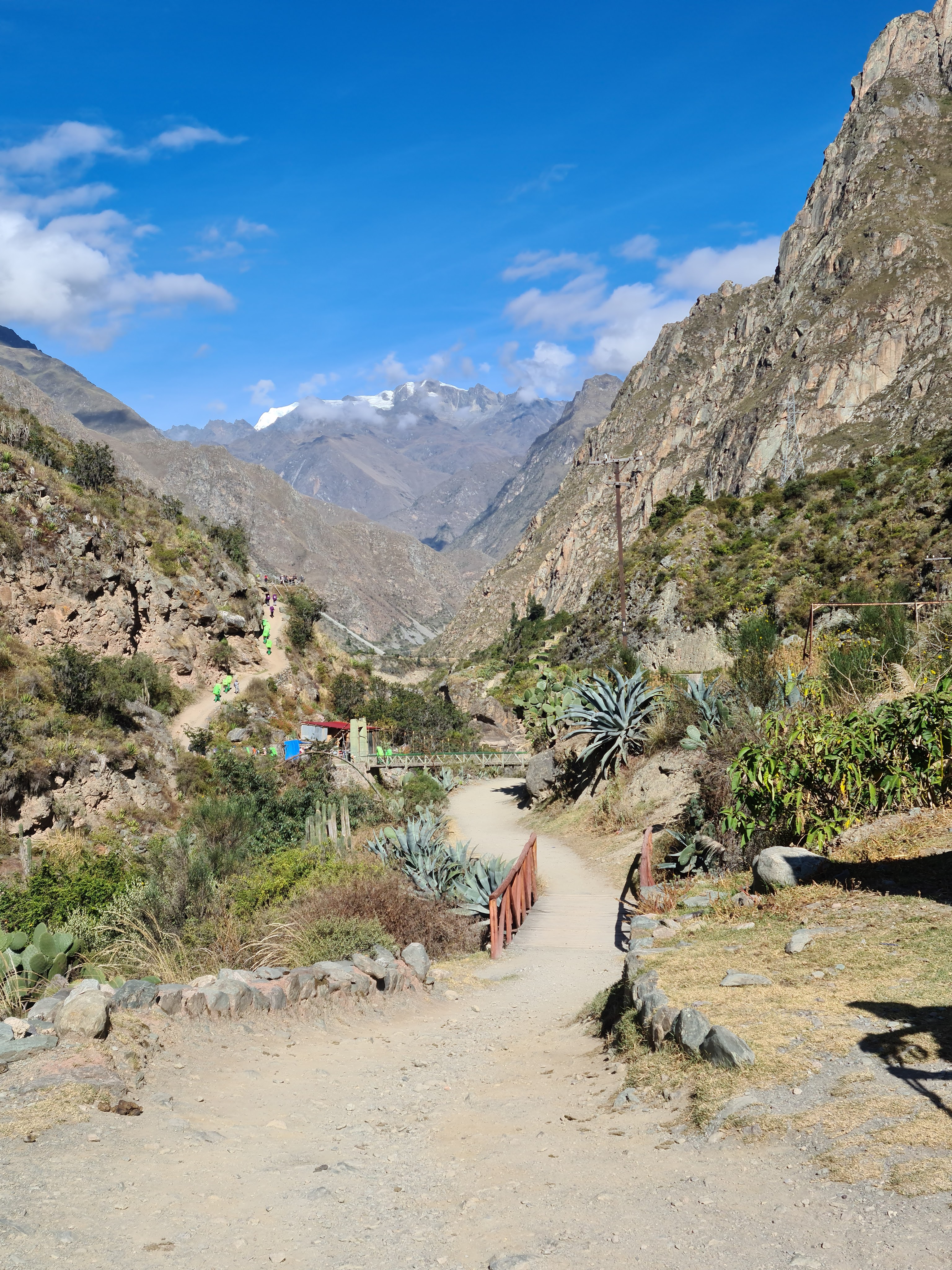
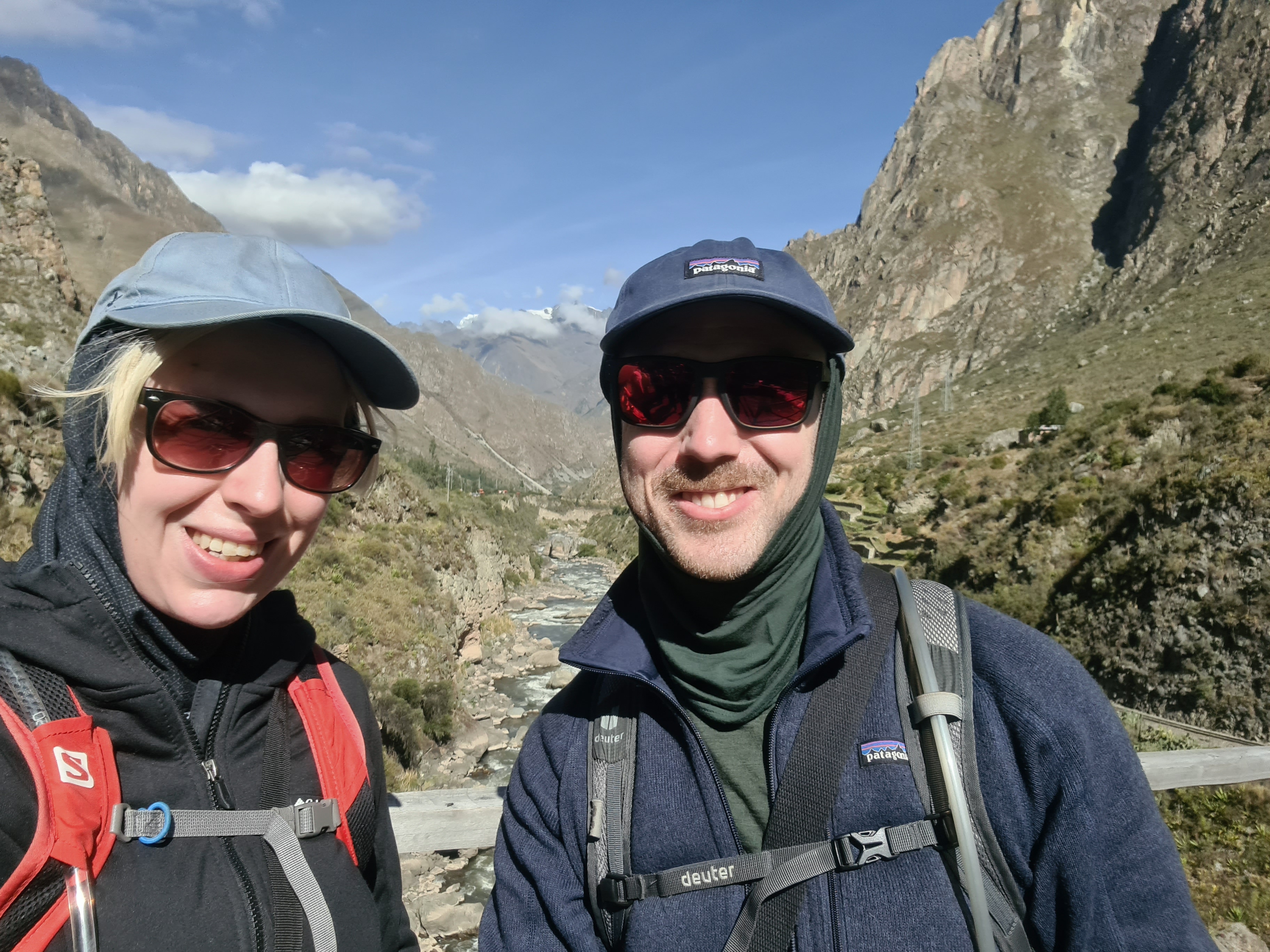
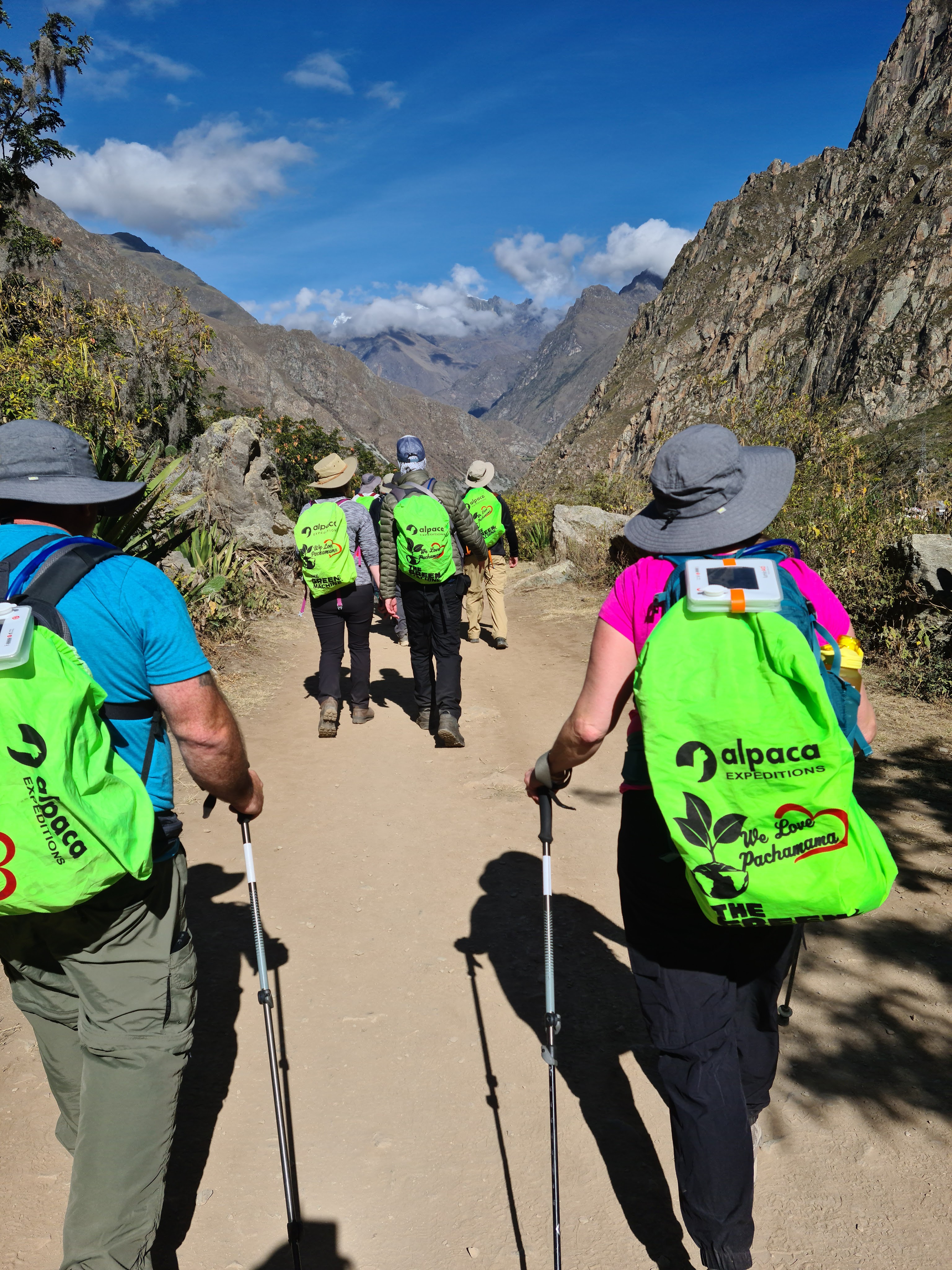
With regard to those walking poles, this was the first time Ricki or I had ever used them. Given the pressure we’d felt on our joints with Pico Huma, we had decided to take all the help we could get. The poles themselves took some getting used to, and in the first hour or so, you took your mind off them at your peril. A couple of shaky moments had me imagining the indignity of tripping myself up and breaking my ankle within the first few kilometres. By lunchtime though, we were happily at one with them.
To our surprise and delight, the Inca sights started to reveal themselves almost within minutes of setting off. Not only that, but after our first small incline, we looked back to be stunned with already amazing views of the mountain Veronica.
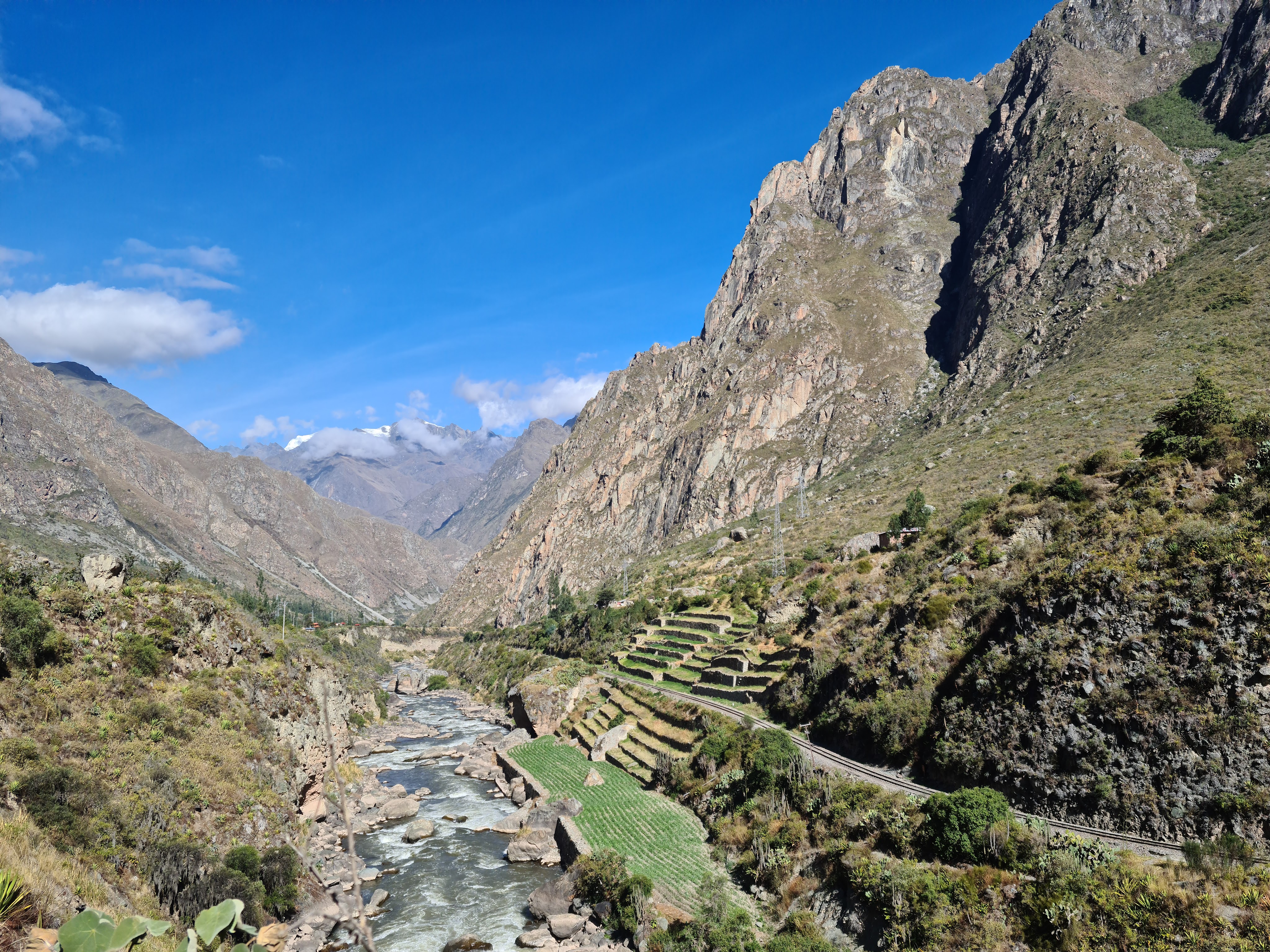
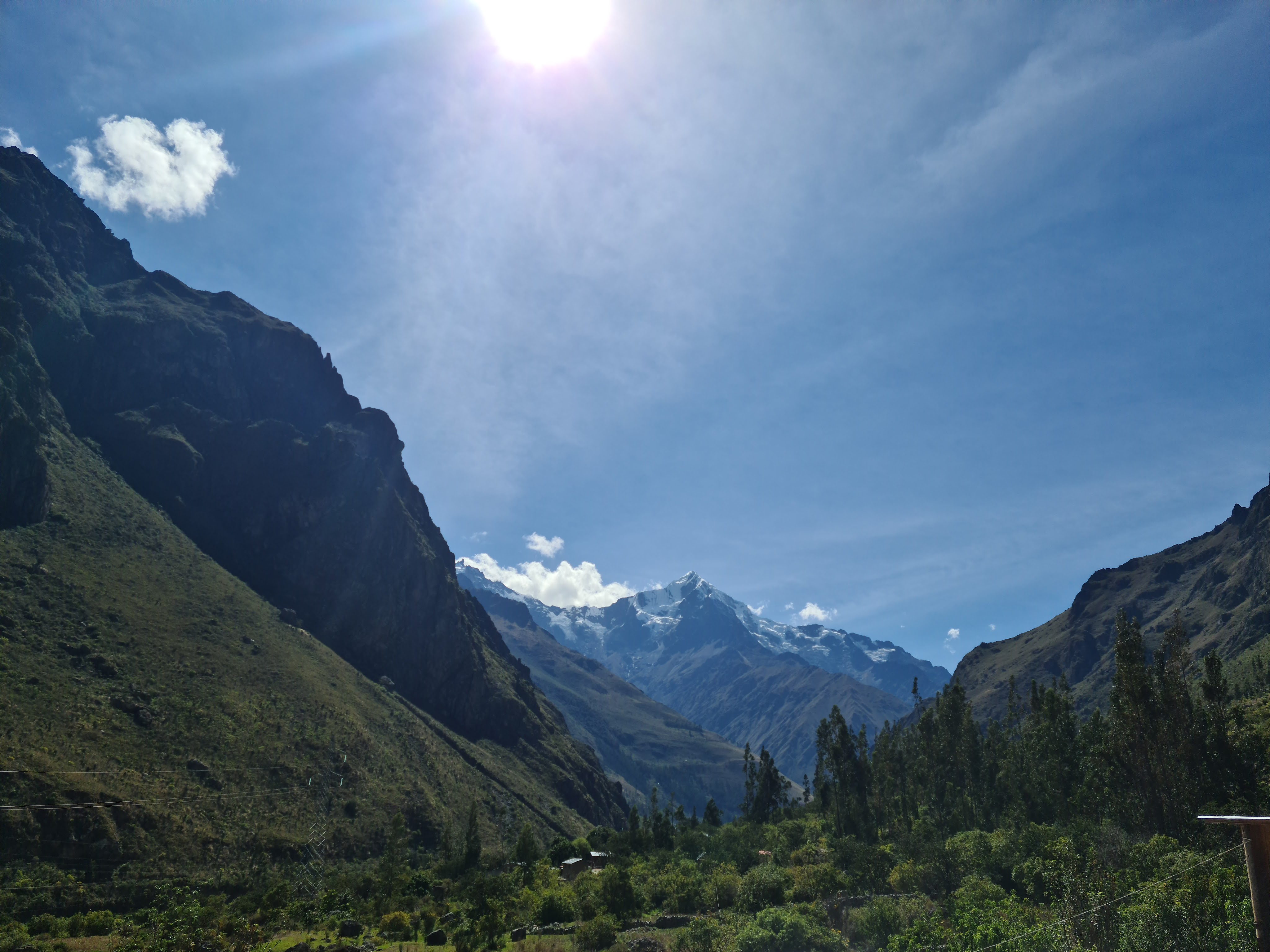
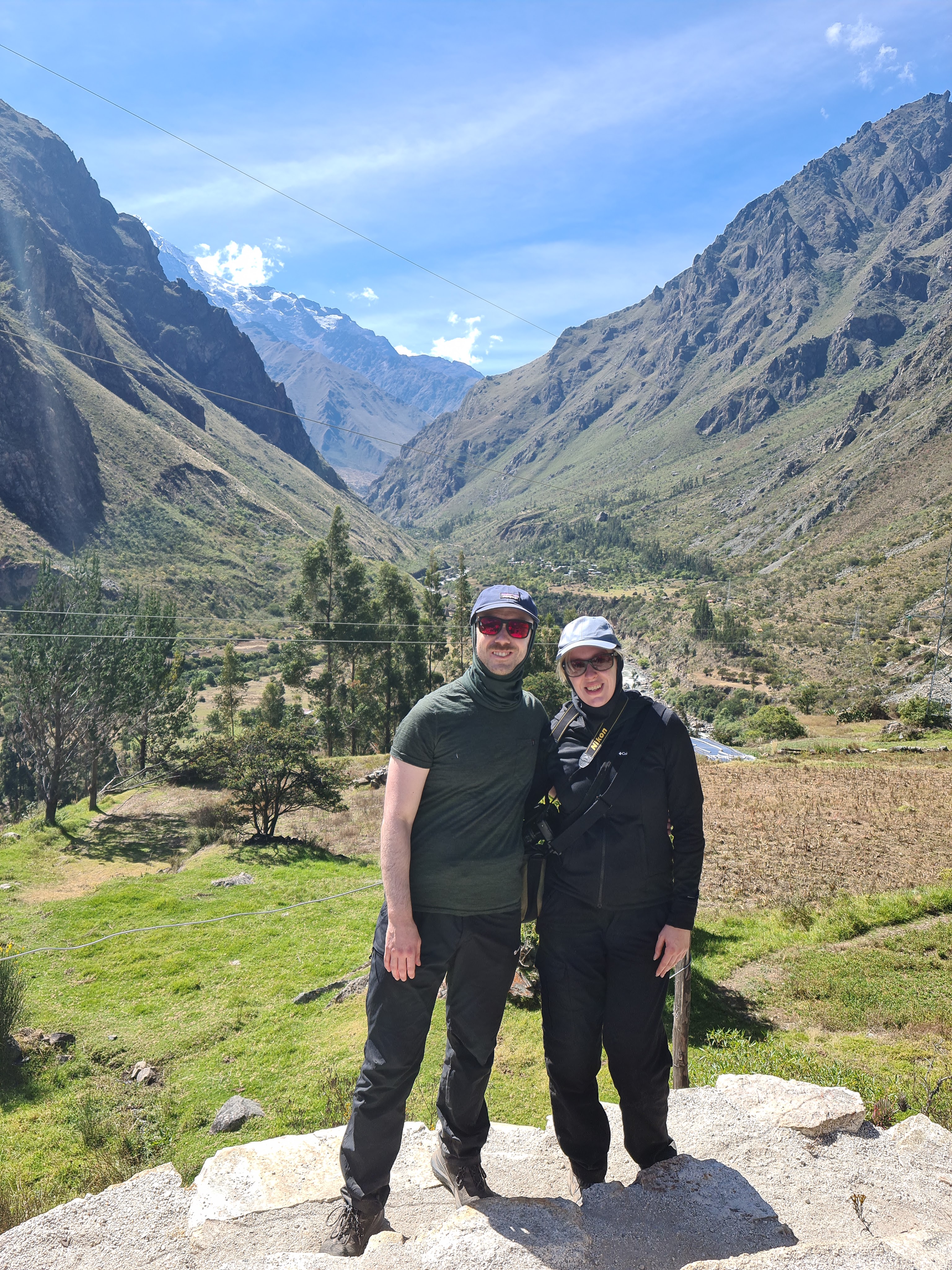
There was also the surprise every now and then of having to stop for donkeys. This first day we would actually pass through inhabited areas, and as such it wasn’t uncommon to come across locals transporting goods.

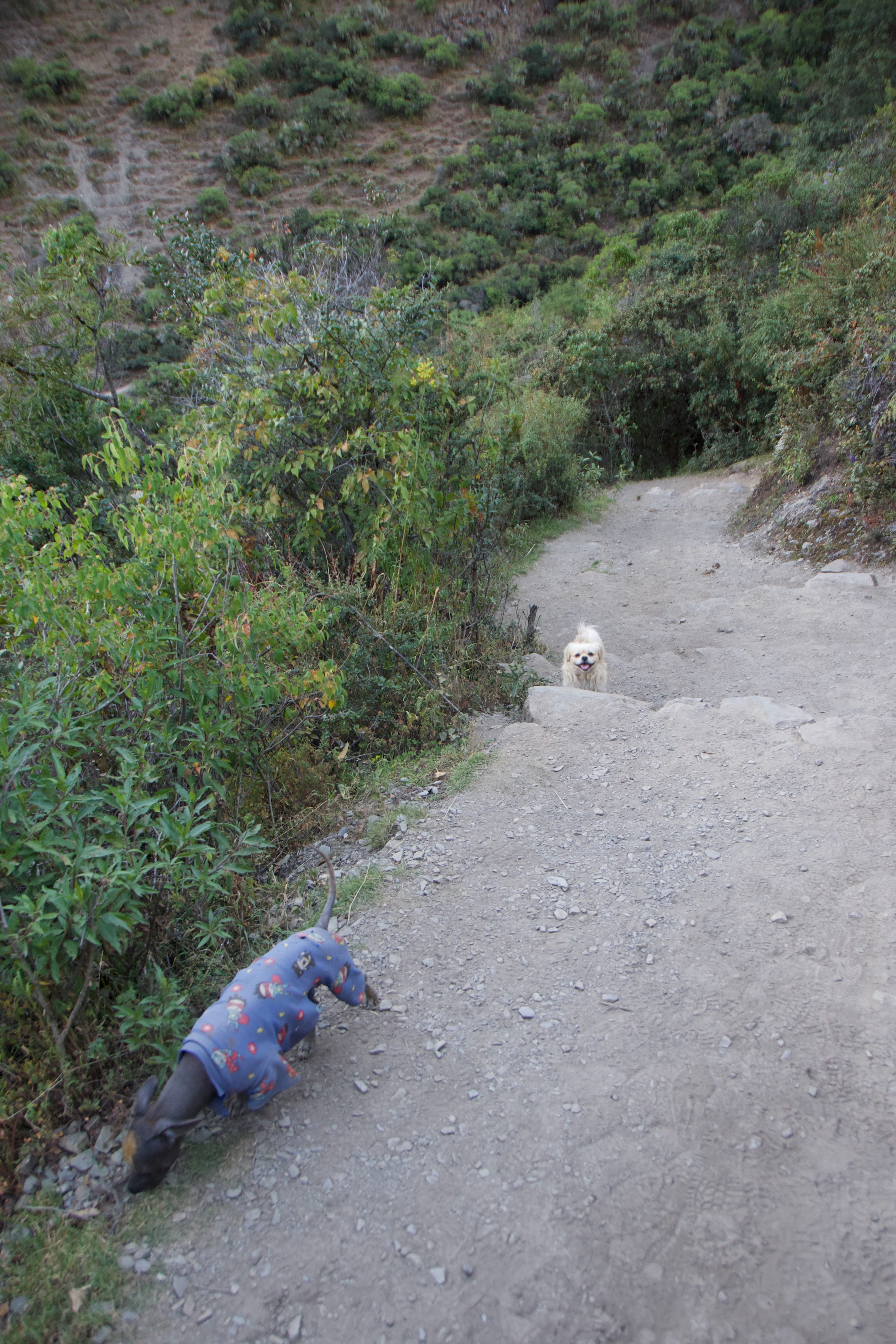
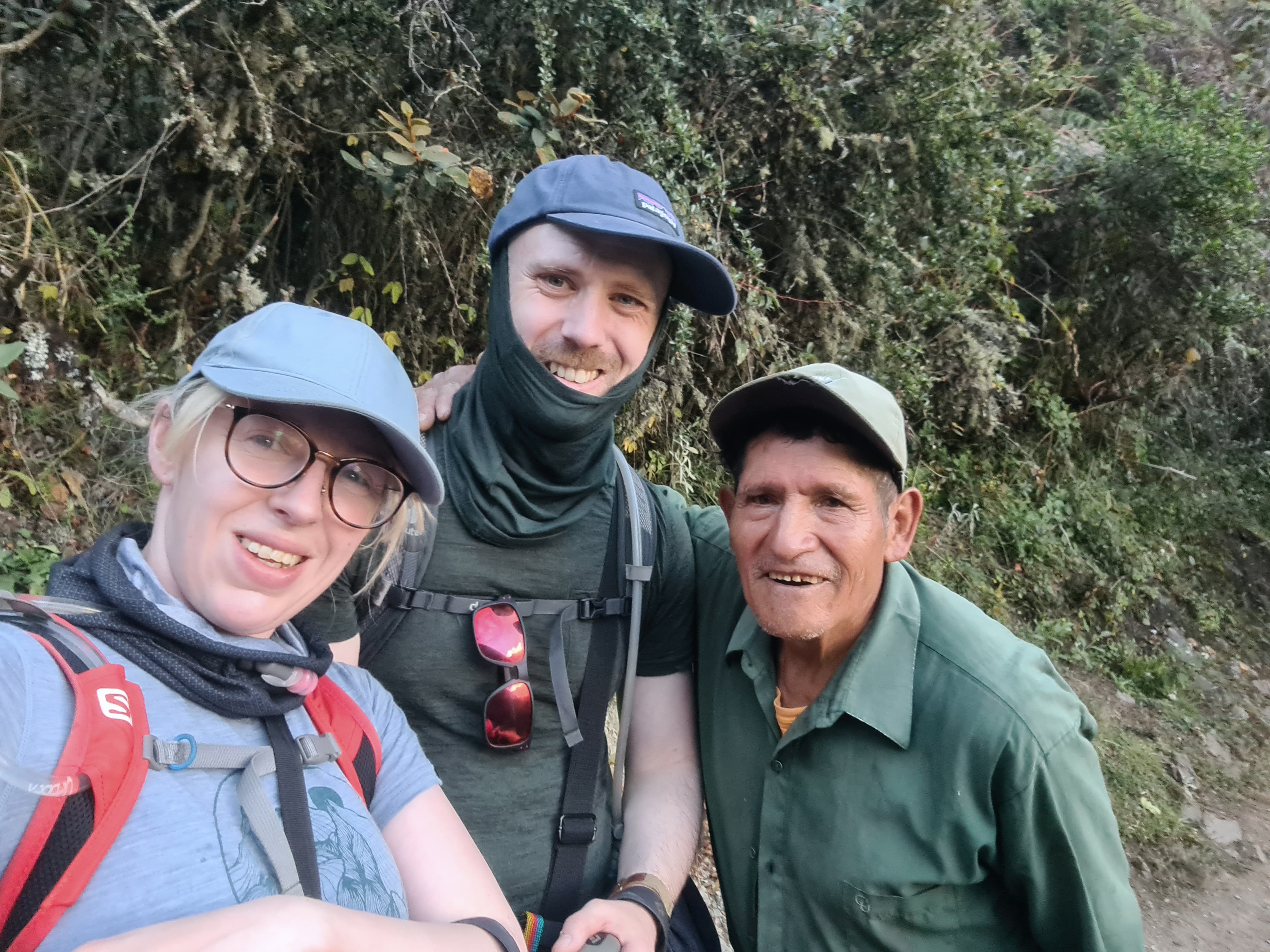
Donkeys, dogs and Sebastiano, a local who earns some extra income asking trekkers to pose for photos
Less surprising would be the strong patter of feet behind you and the requirement to step aside to let the porters pass. Benefitting from a lifetime of low oxygen air and what must be glutes of steel, they would power up the pass with huge duffel bags, tents, food, furniture (we saw literal folding tables on some) and goodness knows what else on their backs. It definitely made us with our daypacks feel quite weedy by comparison.
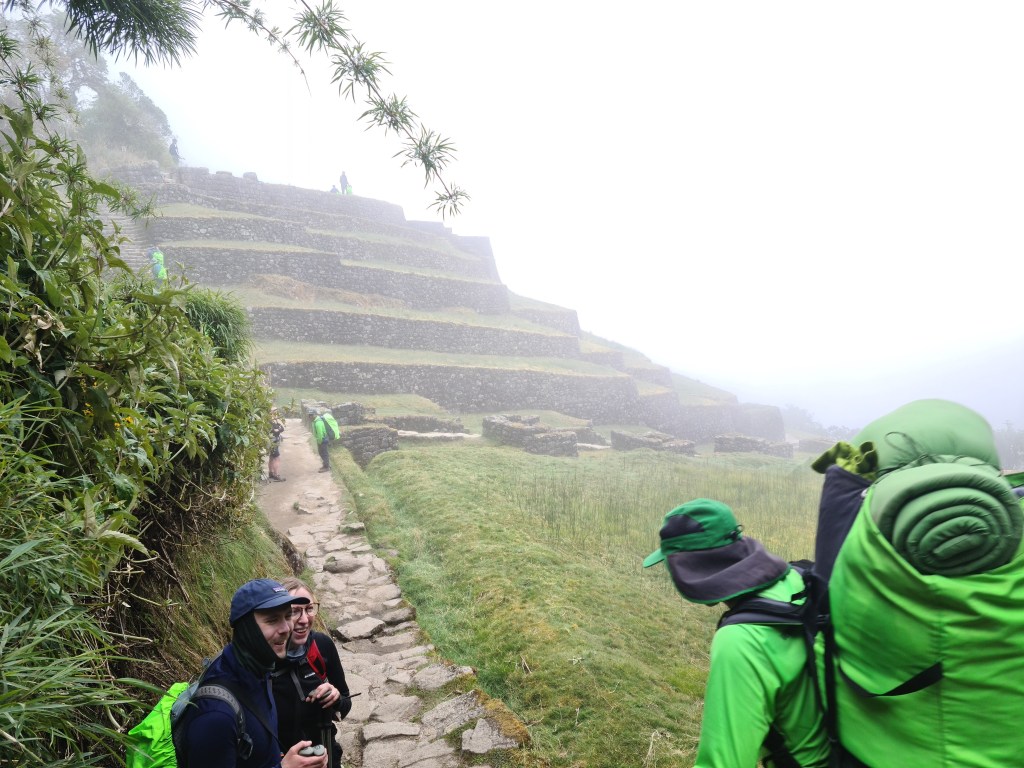
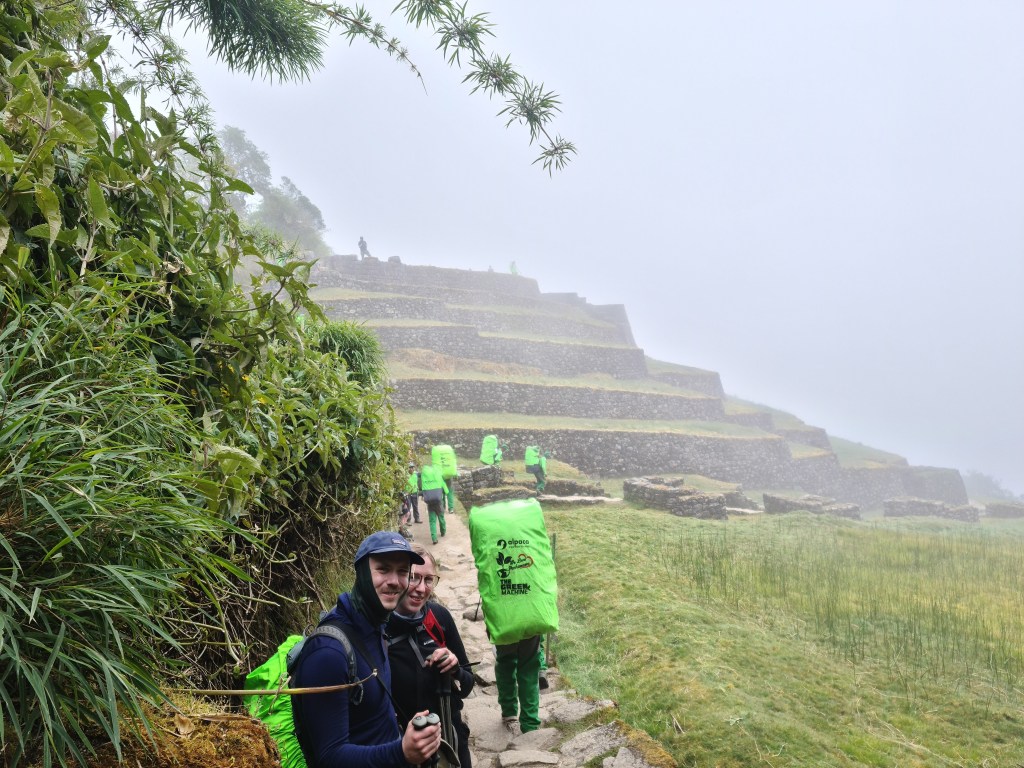
Stand aside…they aren’t called the “Green Machine” for nothing!
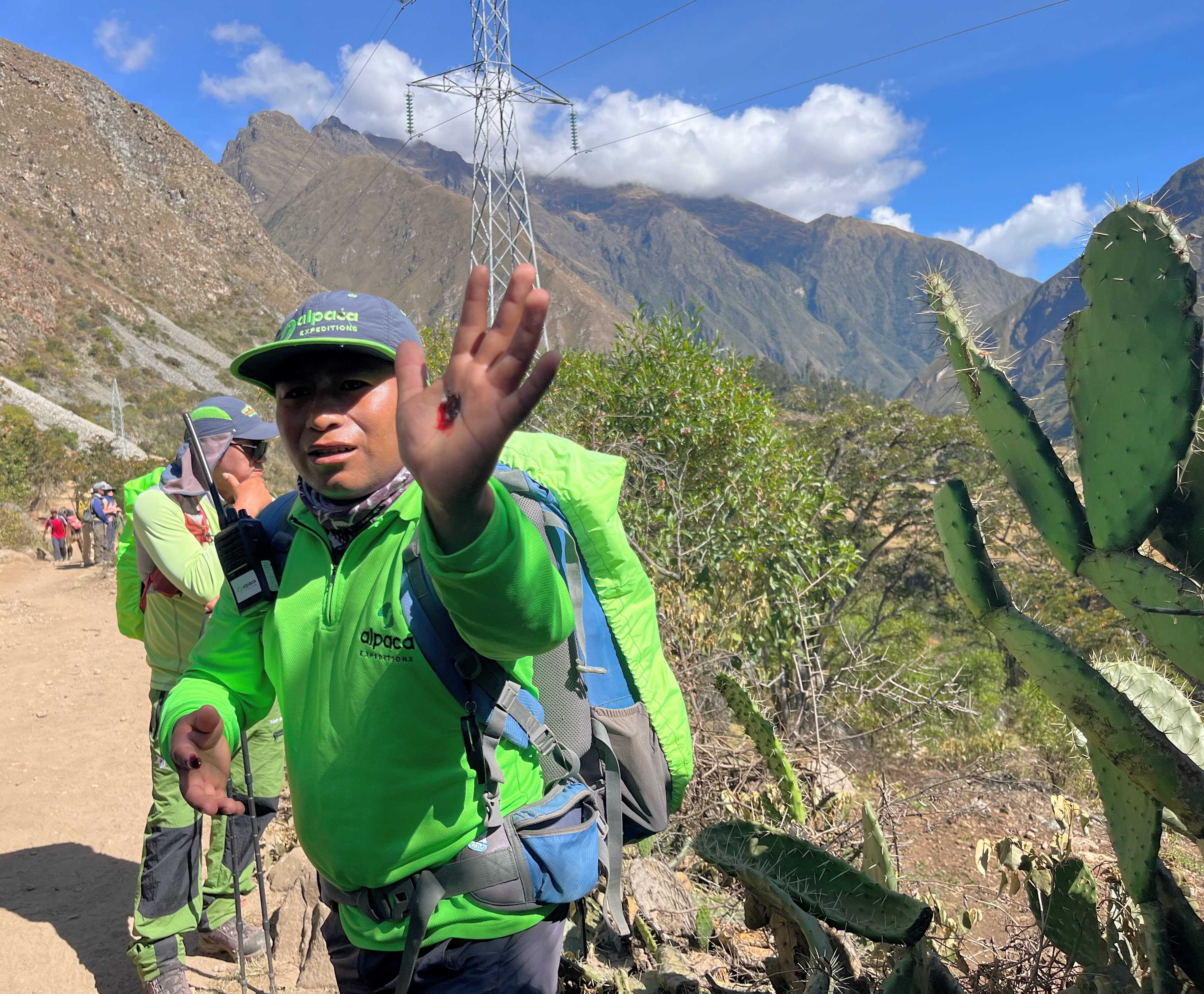
Cheering our own efforts on were our guides, and once upon a time porters, Rolando (who graciously ignored any mistaken references to Ronaldo) and Wilbert, one usually leading from the front while the other brought up the rear.
For the most part, the Inca trail is well demarcated, and you’d actively have to be trying to get lost to achieve such an outcome. But Rolando and Wilbert were there to make sure we were well, ensured we stopped for rest breaks and of course explained our surroundings and educated us in Inca and Andean history. They would even teach us bits of Quechua, the native language of the region and their mother tongue (many of the porters speak only Quechuan). And so the “vamos!” we have become so used to hearing on our South American travels was replaced by the question and answer “Haku?” “Hakuchis!” (“Ready?” “Let’s go!”).
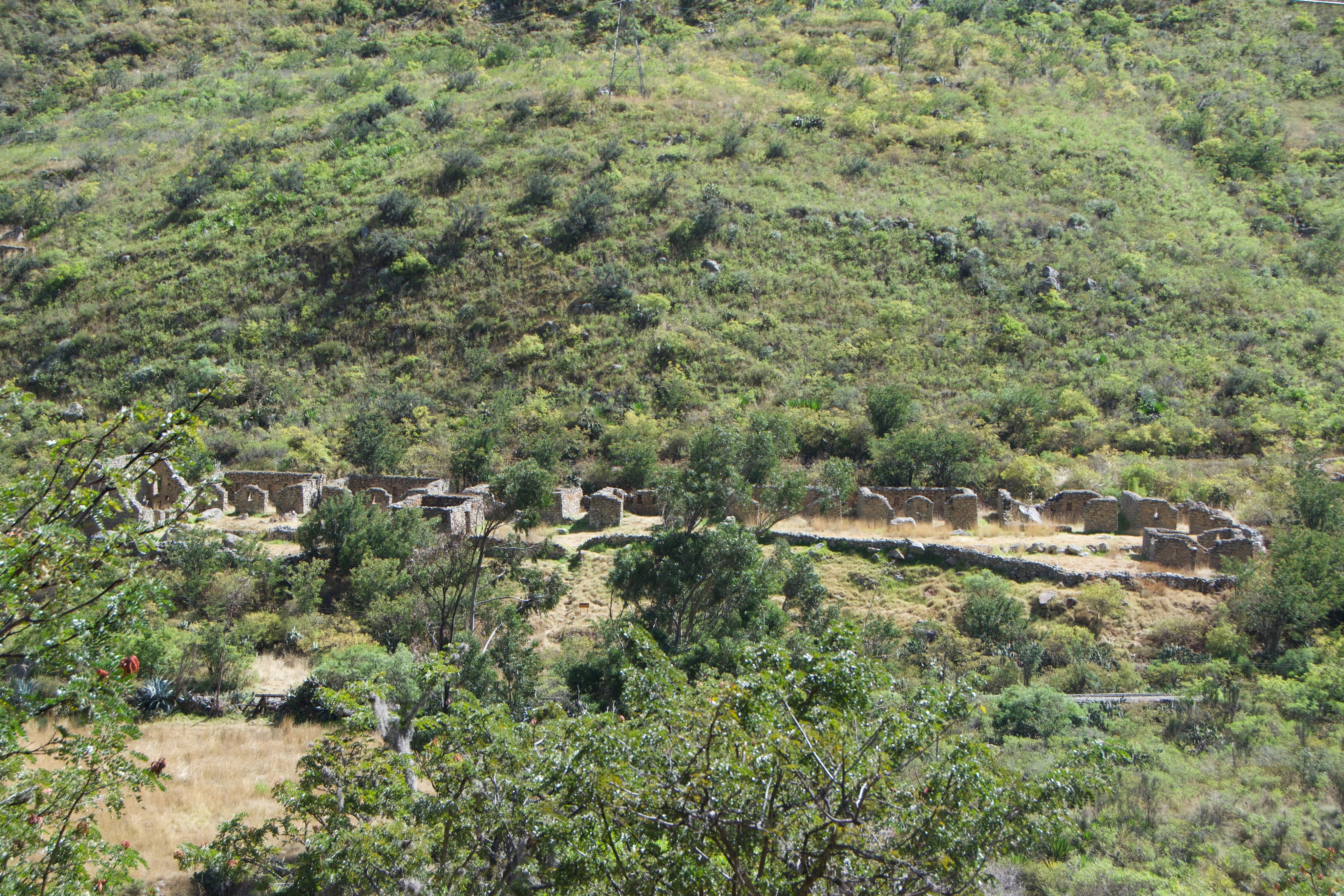
The first Inca site we would reach along the trail itself was Llactapata (Town at Height). Here Rolando explained the hierarchy of Incan civilization.
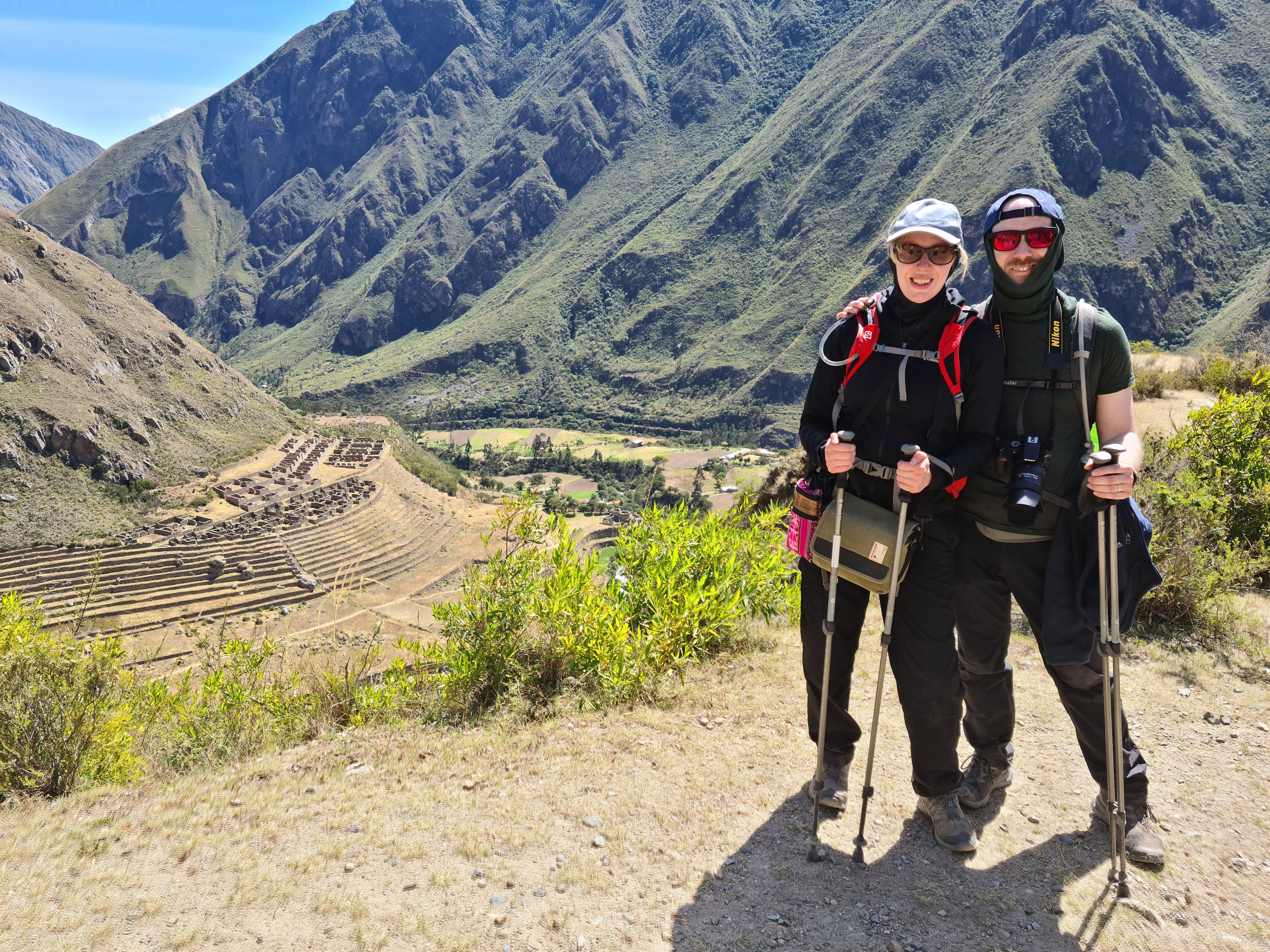
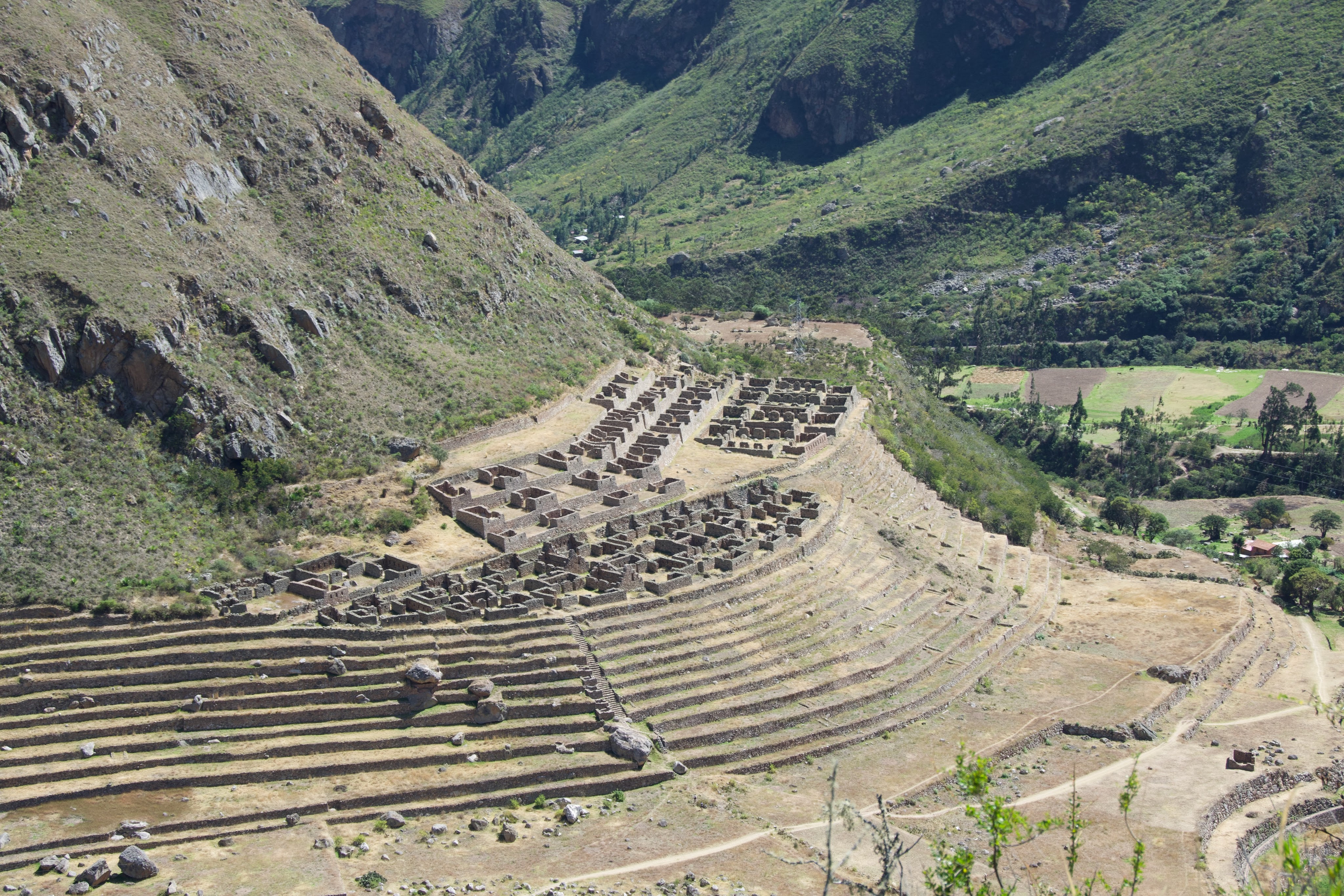
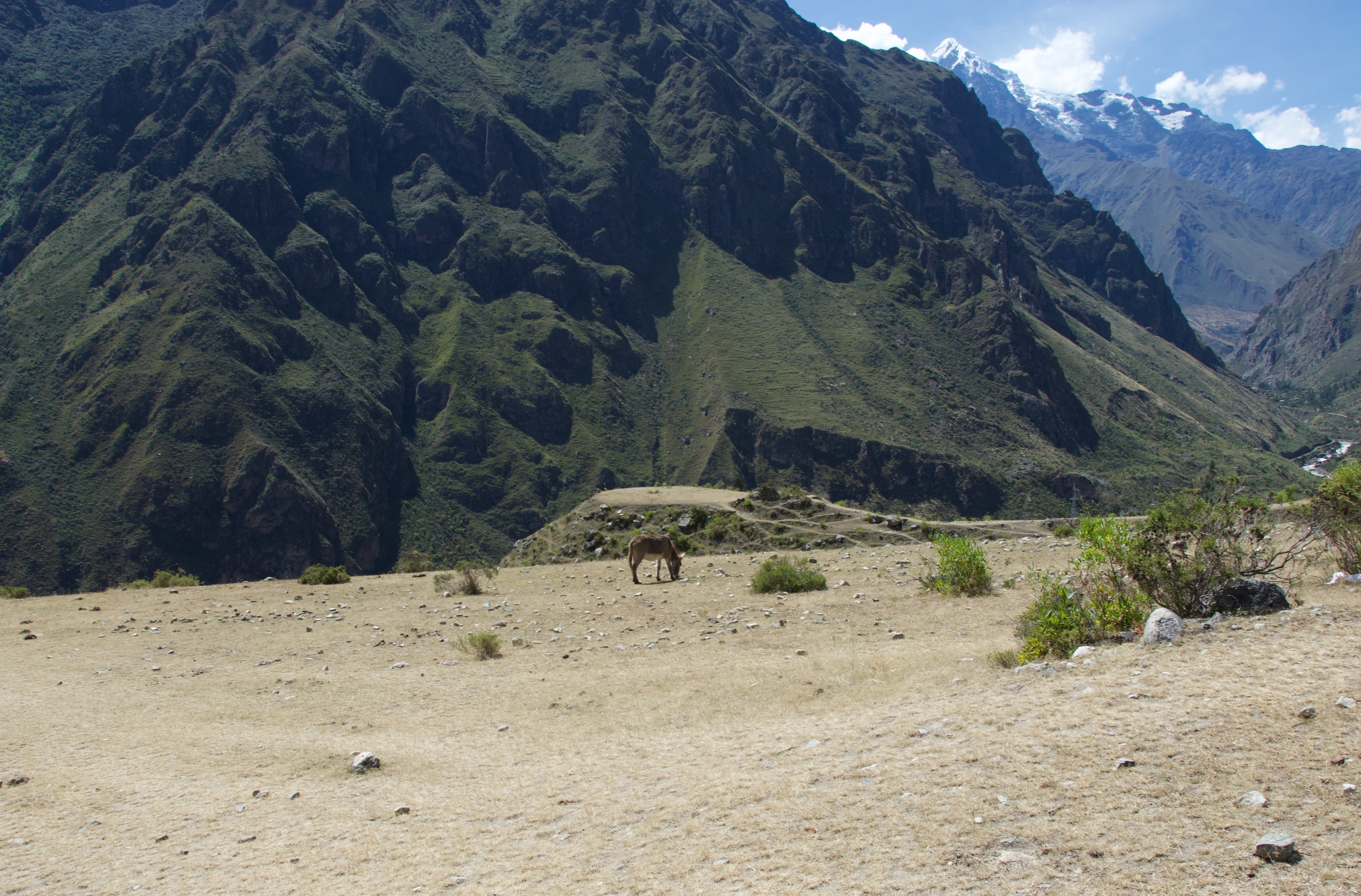

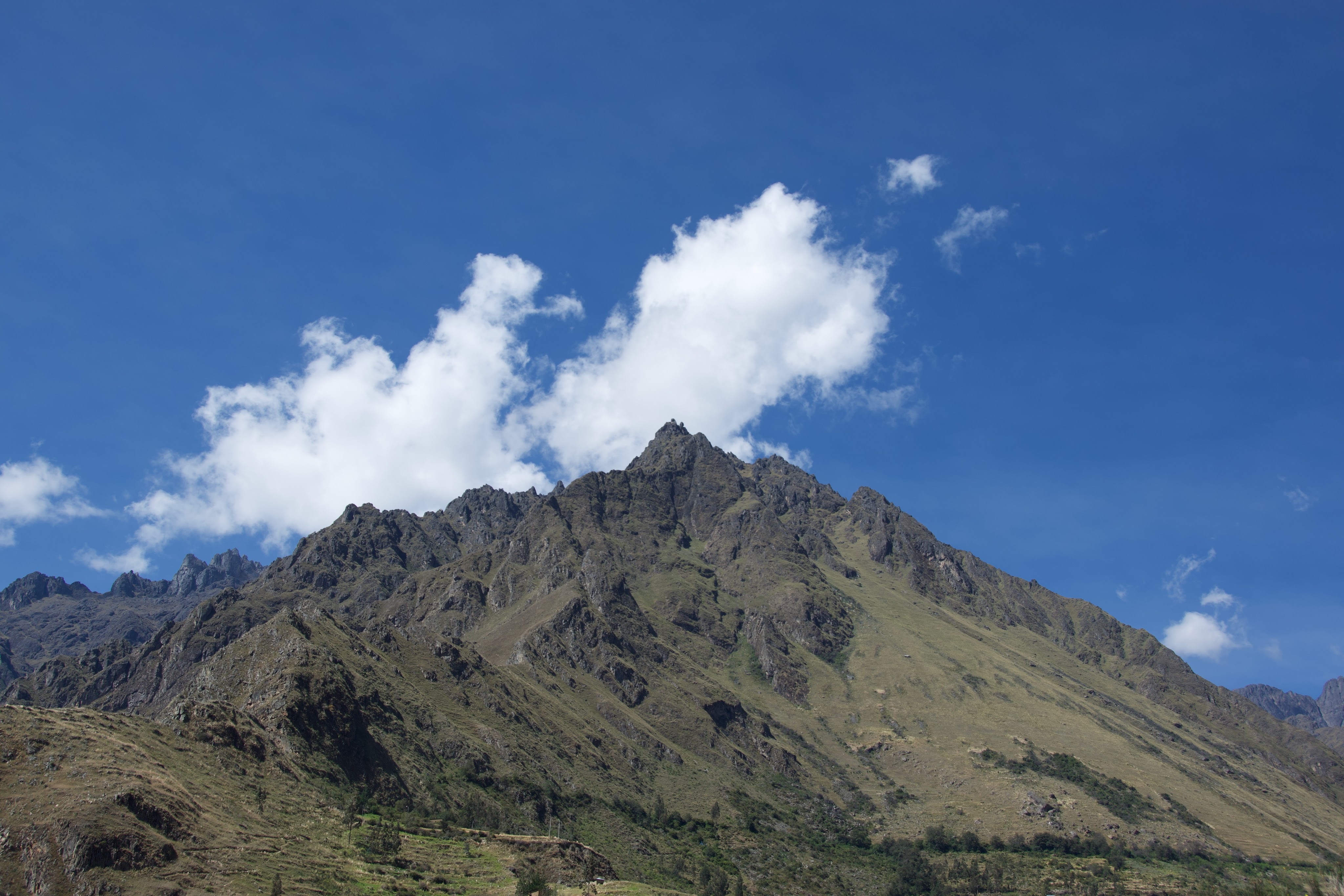
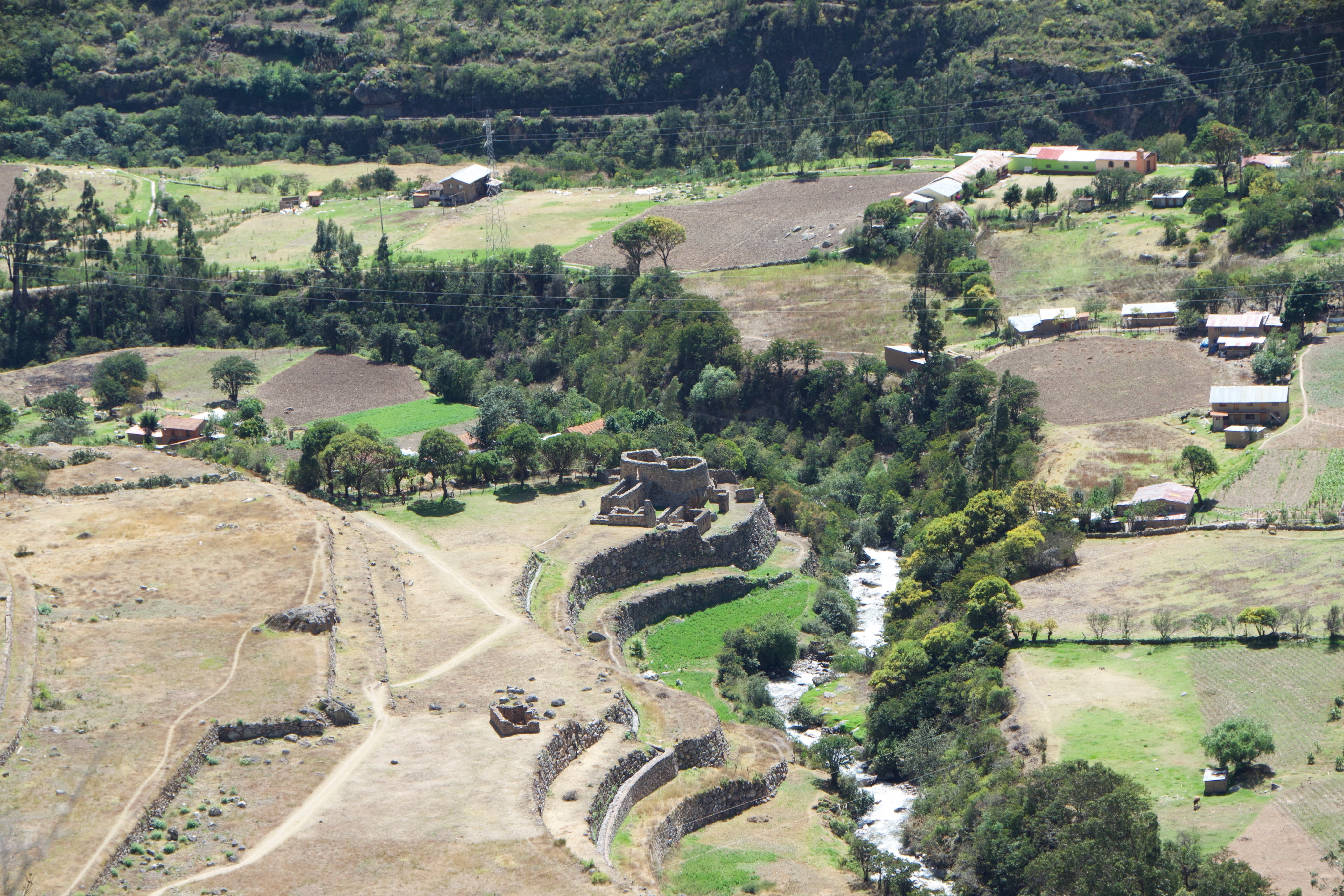
Really I should be calling it Quechuan civilization, as the word Inca in fact only relates to the King/Emperor. Afterwards we had a little bit of time to explore the building remains for ourselves, already getting to appreciate up close just how robust they were.

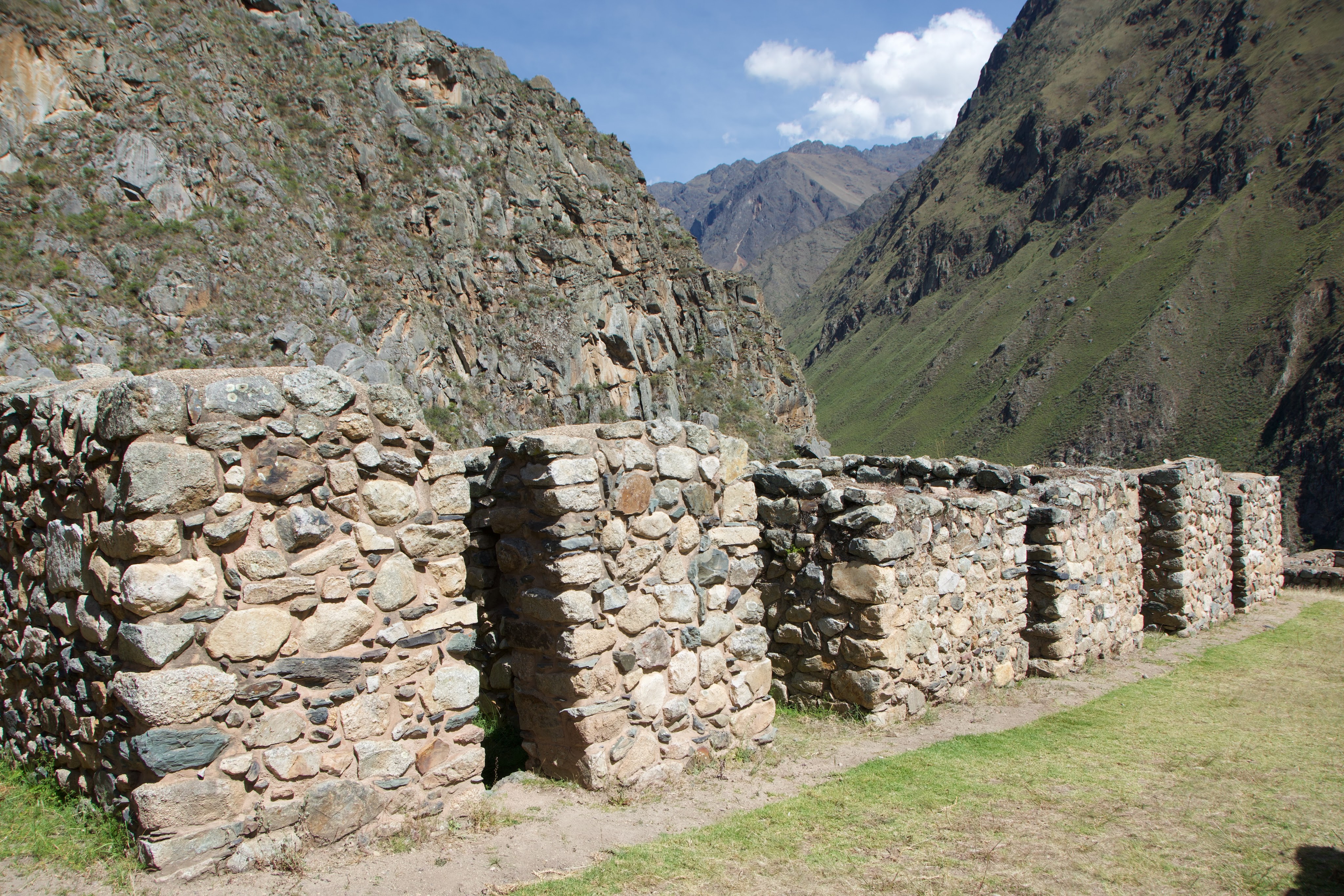
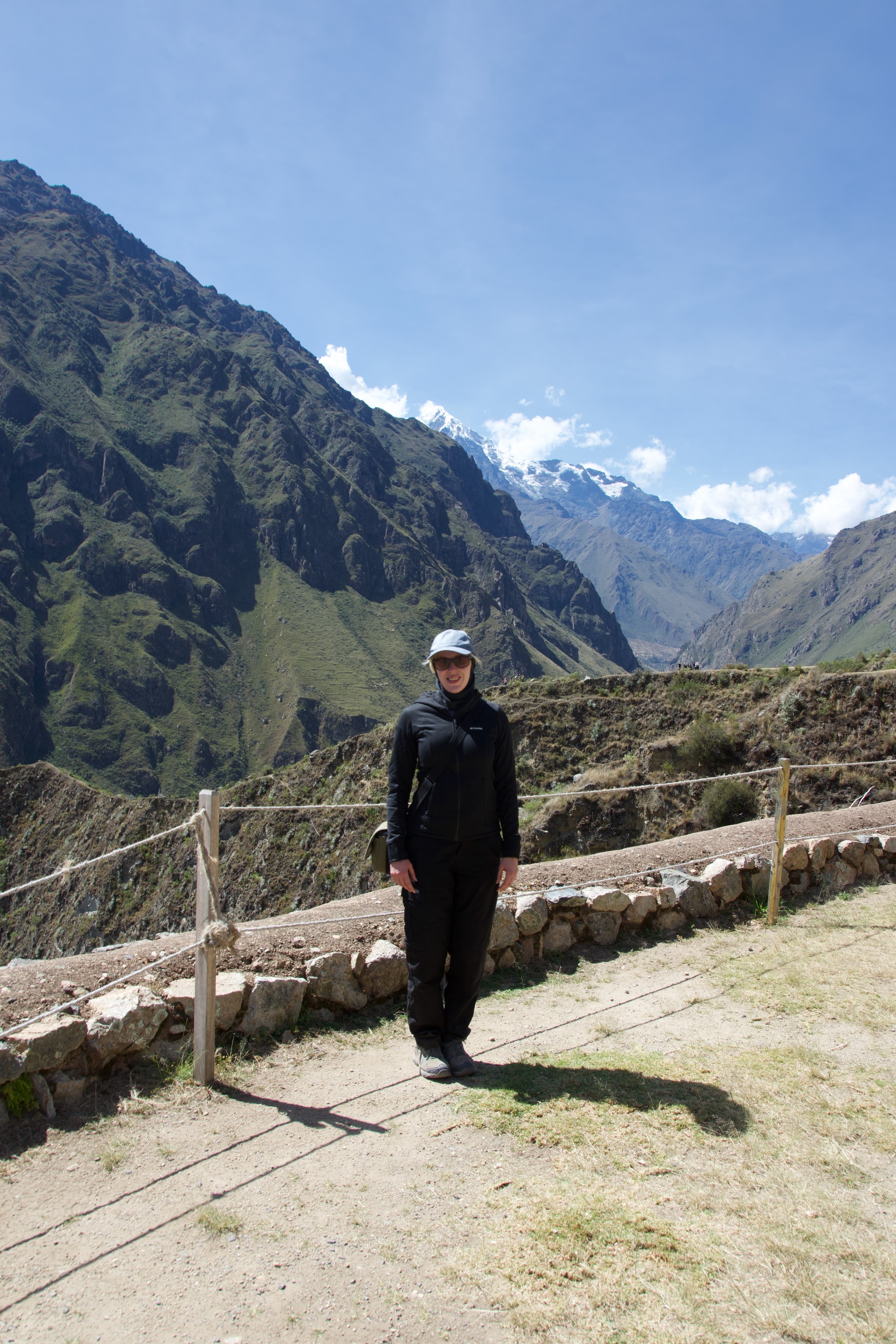
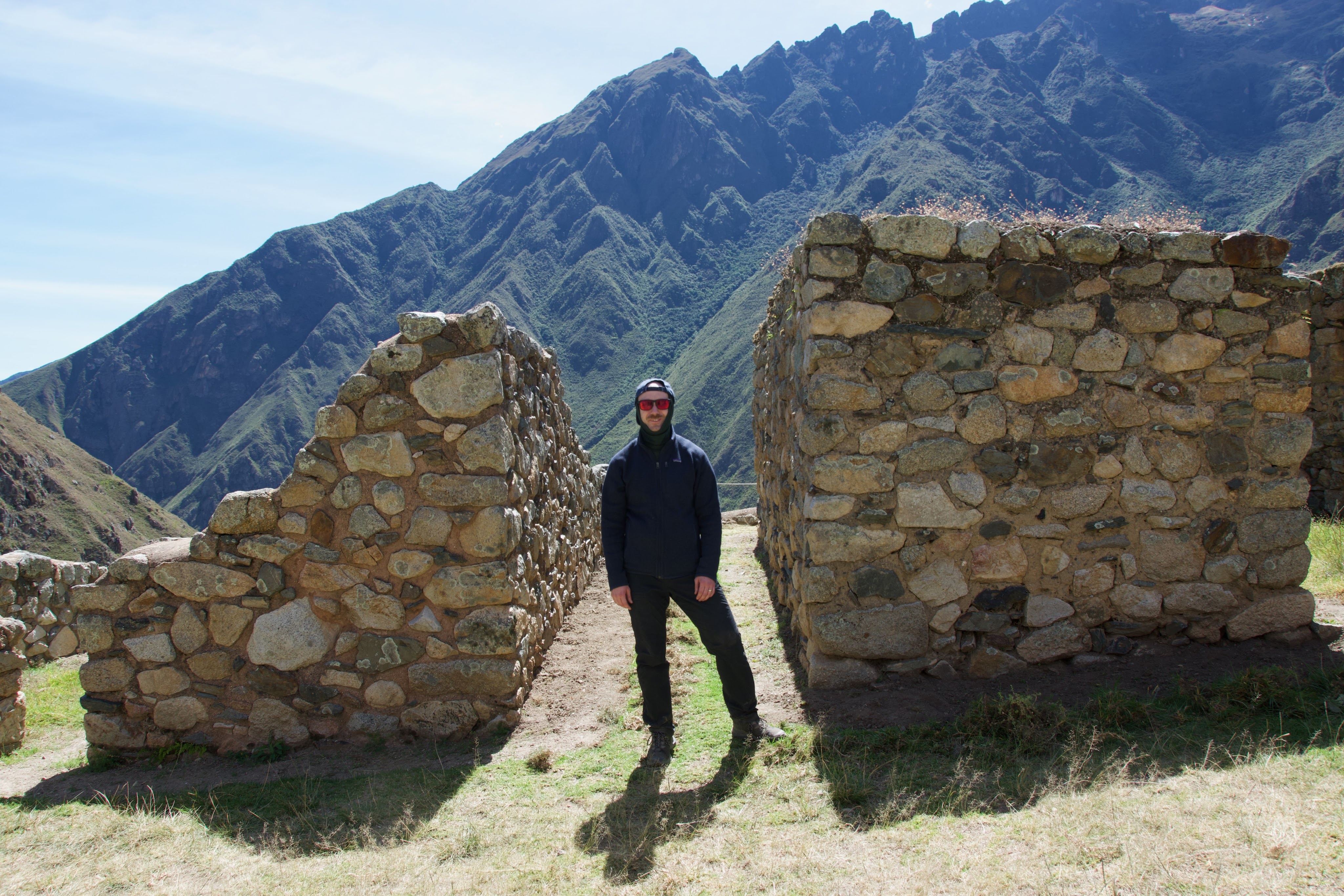

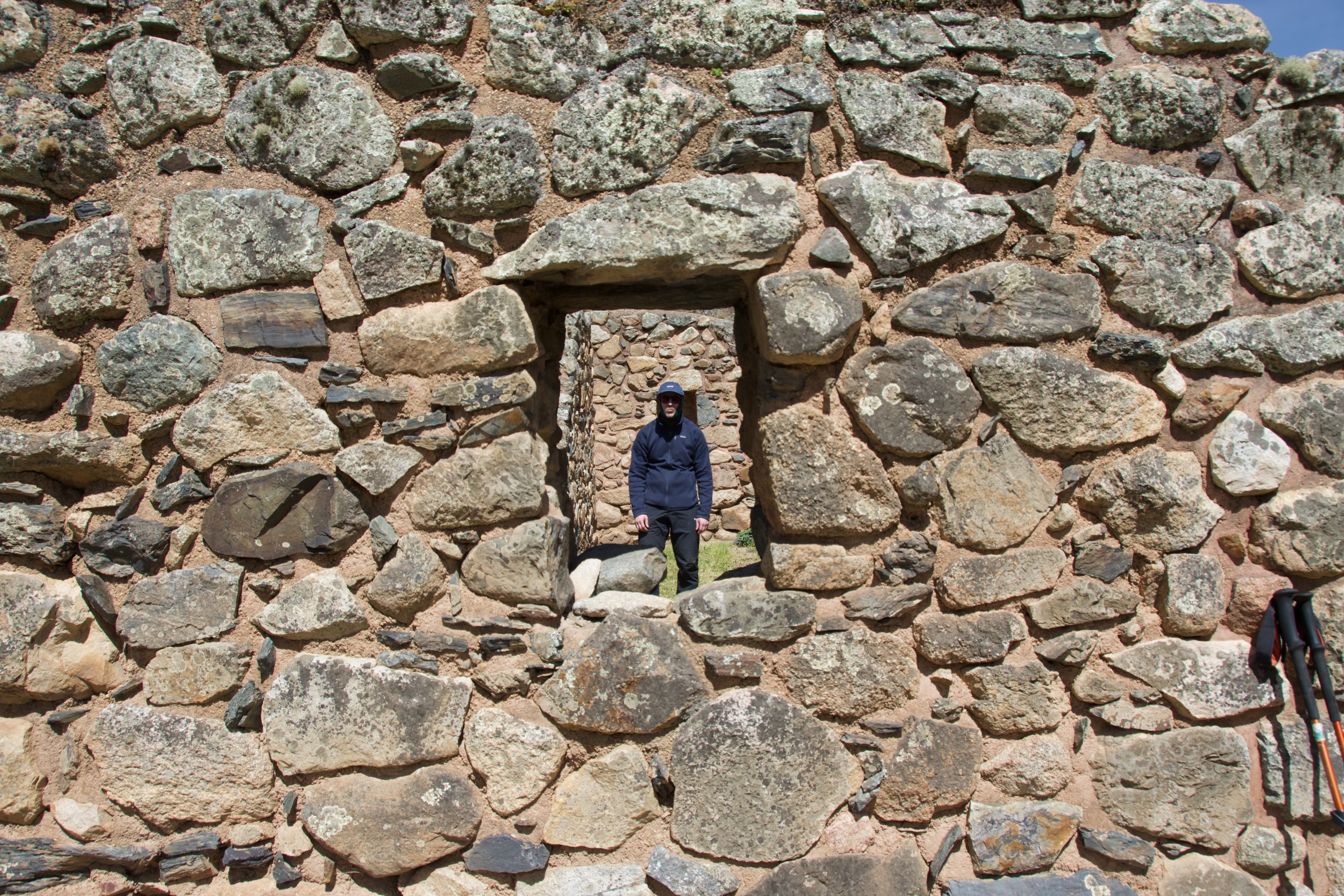
From here, the uphill stretches started. Although I consider myself to be physically fit, especially in the cardiovascular department, I have always struggled with hill climbing/ascents. I had mentally prepared myself for the reality that I might fall to the back of the pack. This didn’t quite come to pass, yet I was still frustrated with myself that much of the group were able to move at a quicker pace than me. Admittedly, I wasn’t doing myself many favours as I insisted on trudging on upwards, keeping my midlayer on for longer than was necessary. With the sun at its peak, I was trying to protect against sunburn, but in hindsight probably all I was accomplishing was cooking myself in a different way.
Just as a bit of serious fatigue was starting to set in, the sound of applause greeted us as we arrived at our lunch break. Somehow between getting everything set up, the porters would break to ensure every trekker got a warm welcome and encouragement as they arrived – which was much needed for me at this point.
After a refreshing cup of chicha morada (see Tash’s Treats in my last blog post), it was time to see for the first time what we’d be working with in terms of meals. We had read great things about Alpaca’s food offering, but even so we were still amazed at the variety, quantity and freshness of what was put out for us.

At some meals you could barely see tablecloth under the bounty of dishes. Rolando talked us through anything we might not have seen before, and given our breath along the trail was usually saved for, you know, breathing (or panting), this was where we could all get to know each other better and swap observations of the day. At the first lunch, we sympathised with Tracye who already had a dreaded blister on her ankle, no doubt each secretly glad it wasn’t us.
From the lunch stop there was only about two more hours of hiking left on our first day. It did feature the steepest portion of the day so far, but with the sun starting to drop, and a full stomach, it felt somewhat more bearable to me than the stretch before lunch. We knew day two was to be the most challenging day though, so certainly weren’t going to get complacent here.
While Ricki’s hunger had seen him stride ahead of me towards the lunch stop, he hung back with me now and we enjoyed the quiet of the forest, marvelling that we had almost completed our first day’s exertions.
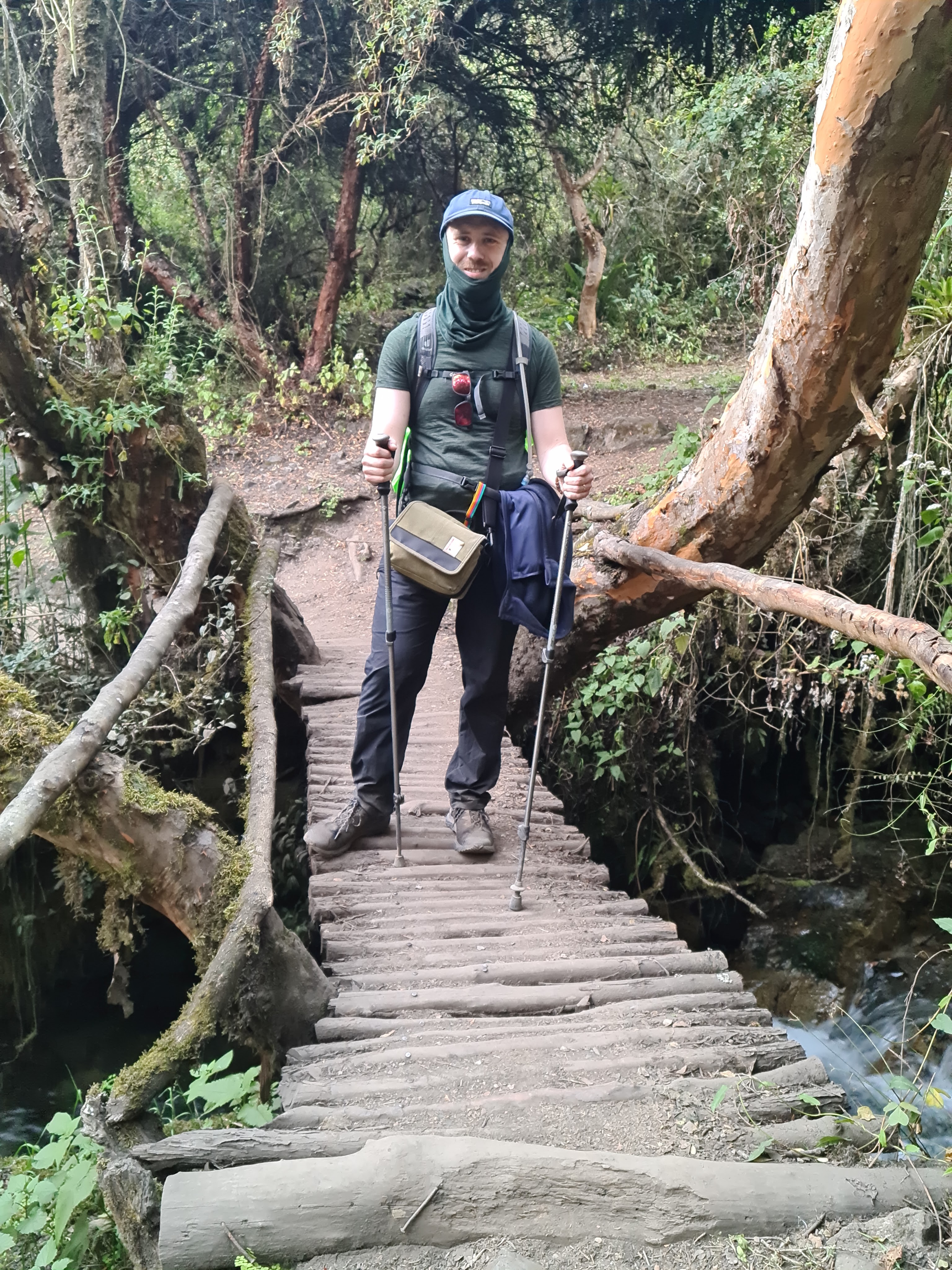
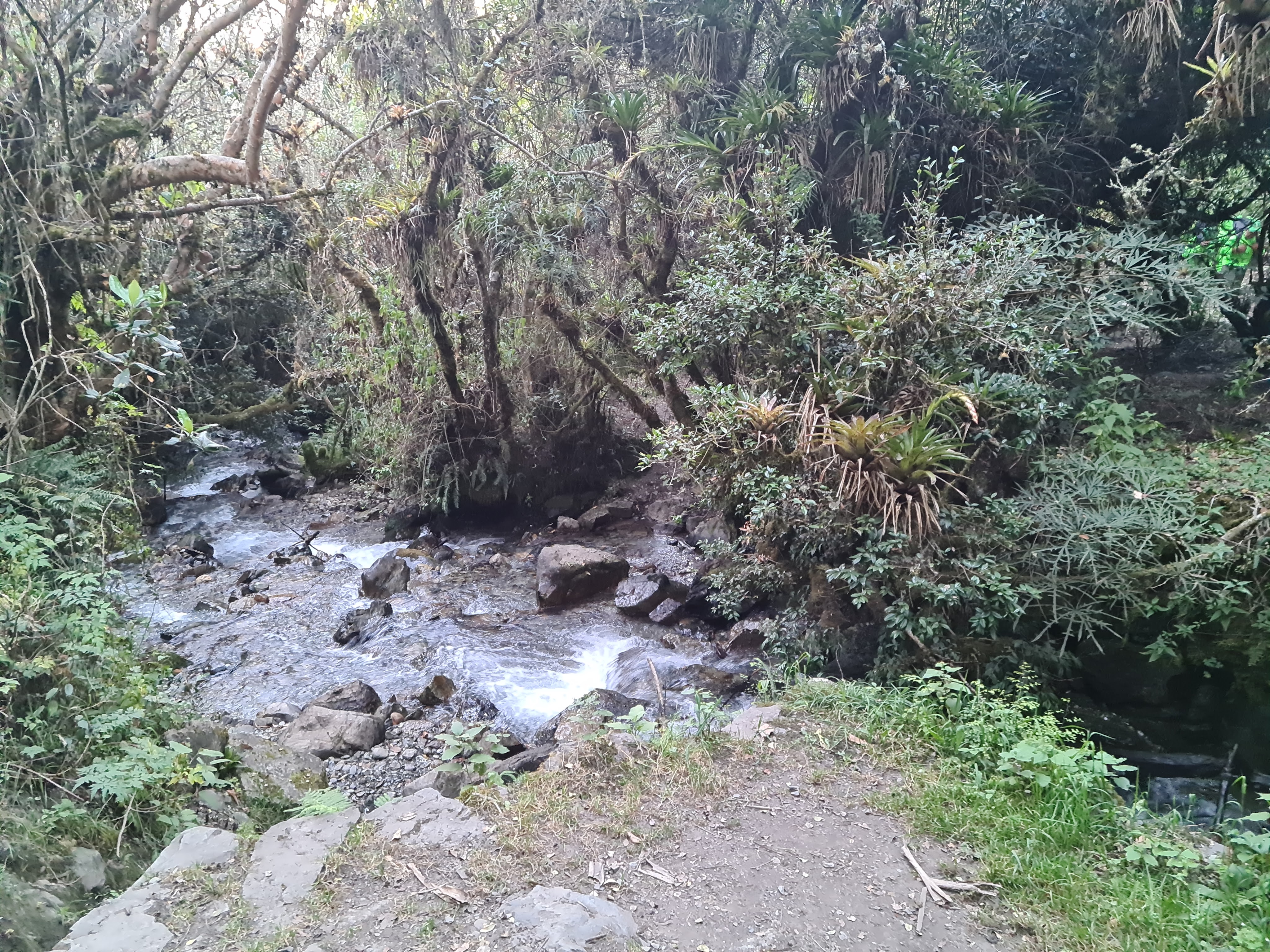
Again, we were greeted by applause as we reached camp at Ayapata. I always felt very grateful that the porters, who did this almost day-in-day-out, took the time to reward our efforts.
14km under our belt, it was now time to face our next challenge – camping. I don’t think I’d set foot in a tent since Leeds Festival 2012, and the closest Ricki and I had ever come to roughing it together was an off grid cabin on the Isle of Mull. And there we managed to forget to charge the solar lights and turned the cabin into a sauna with our overzealous use of the wood burner.
At least here, we were under the watchful eye of the Alpaca team. Tents were already assembled for us and as daylight started to fade, we quickly got our sleeping kit unfurled ready to collapse into later. Alpaca provide a camping mat, camping pillow, sleeping bag and sleeping bag liner as standard, and I had also paid to have an air mattress – you can’t put a price on a good night’s sleep! And the real luxury that Alpaca are also known for? A private camp chemical toilet! I can only assume it’s the rookie porters who get to deal with dismantling that after each overnight stop…
No longer moving, and at an elevation of 3,300m, our body temperatures quickly started to drop. So after a quick basin wash, it was time to layer up and get the head torches on.
Teatime of popcorn, crackers, butter and hot chocolate quickly led to dinner and Rolando encouraged us to share our highlights of the day. I didn’t mentally practise my offering first though, resulting in everyone bursting into laughter as I started “Whenever we got a rest….”. I was finishing it up with “and looked back to see a beautiful view and what we had already accomplished”!
After a very long day (I repeat my sentiment here – if you think reading this is long, imagine living it!), it was finally time for bed. I cannot remember the last time I have ever gone to bed at 8pm, but after the day we had just had, and with a 4.20am wake up scheduled, we needed all the hours we could get!
To my astonishment, I actually slept pretty well…but was certainly grateful for my ear plugs. How is it that snorers always seem to fall asleep first?!
The next morning we woke to the sound of the porters busying around camp. We had been instructed not to set our mobile alarms. Instead Wilbert was dispatched to call at each tent with some coca tea to wake ourselves up with before heading over to the food tent for breakfast.
Bracing myself as I got up, I expected to feel pain on the soles of my feet, or aching through the muscles but…nothing. In fact, this would prove to be the case over each of the next few mornings. I had thought Rolando was full of it when he said we would get stronger each day, but maybe he was right?
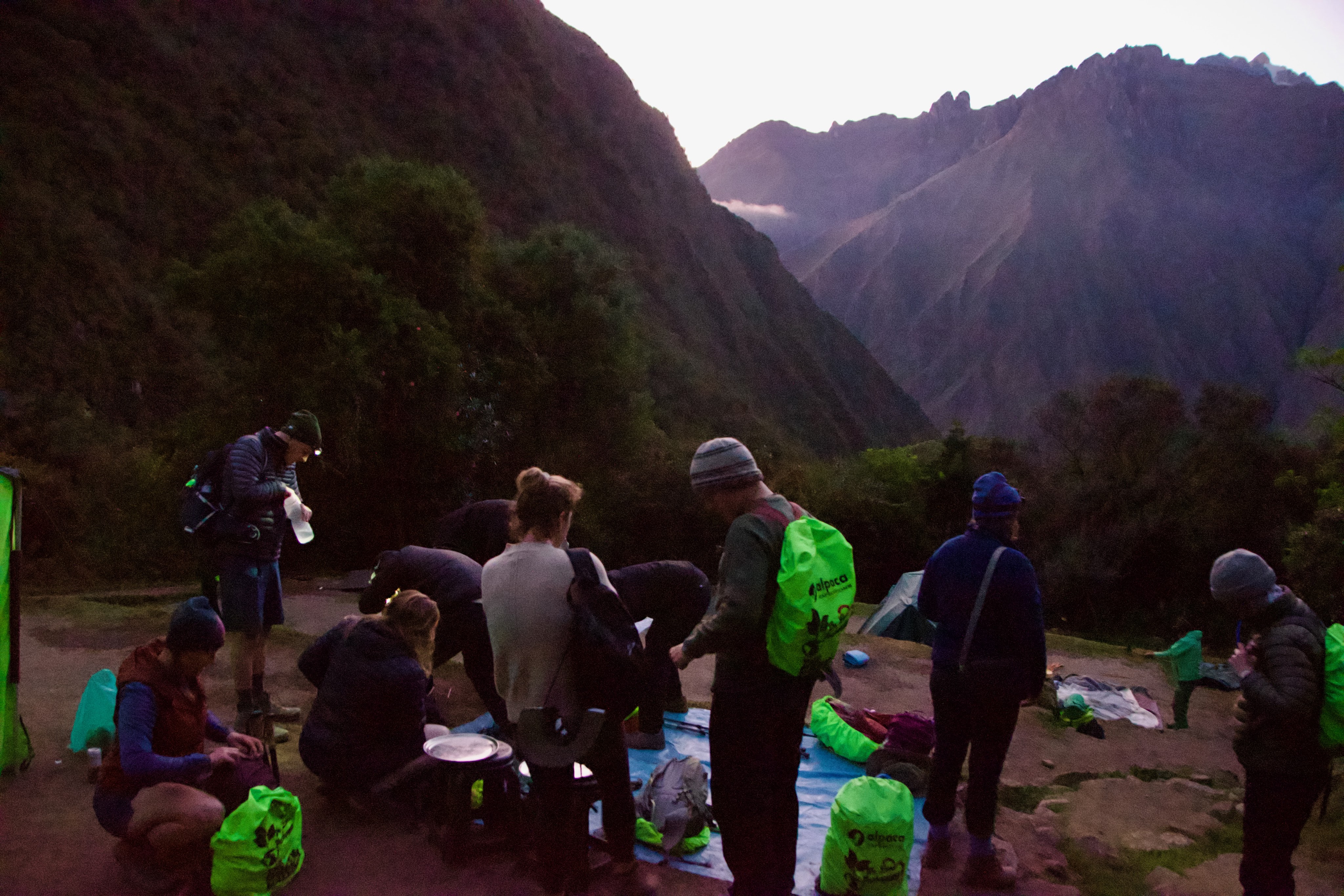
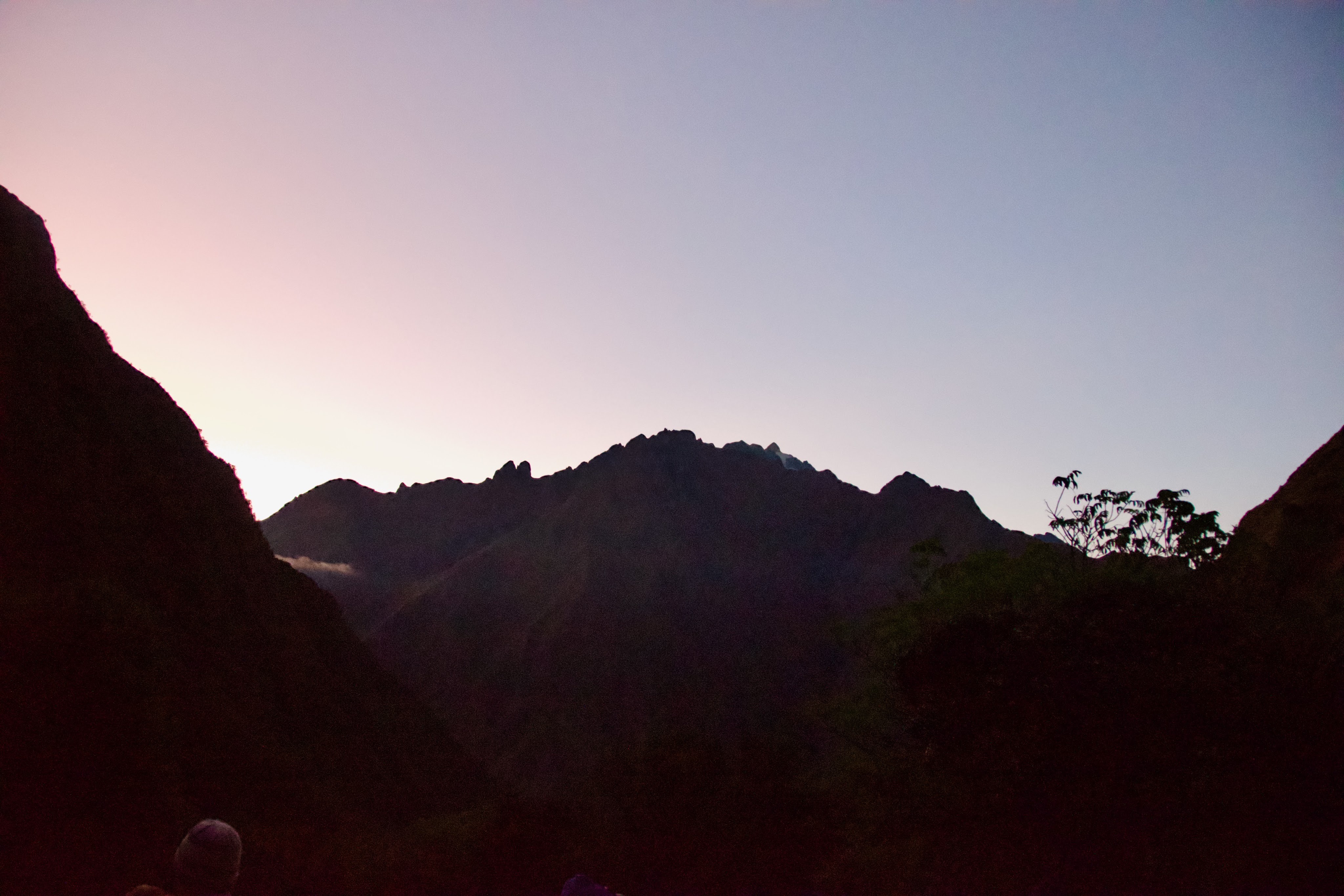
While day one was a nice, gradual introduction to the gradients of the trail, day two provided little rest for the wicked. We started right on to what is technically the hardest ascent of the entire trail, the Dead Woman’s Pass. Typical me though, I didn’t even realise we were doing the hardest bit until we had reached the top.
Not that it was easy at all. It just wasn’t as horrendous as I expected, in my head picturing that some massive steps or scrambling might be involved. Thankfully this wasn’t the case, but I’m not sure I’ve ever moved so slowly in my life.
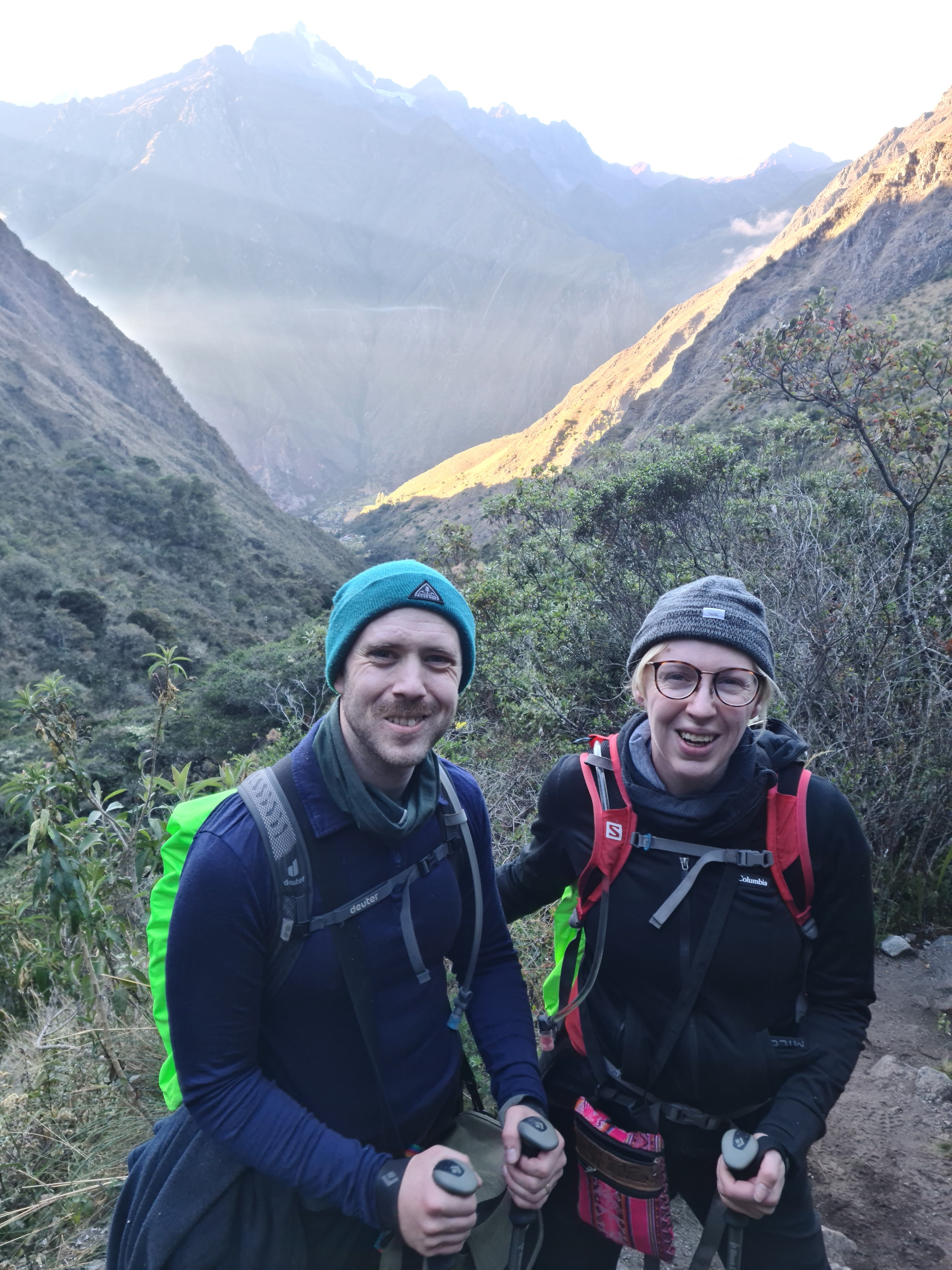

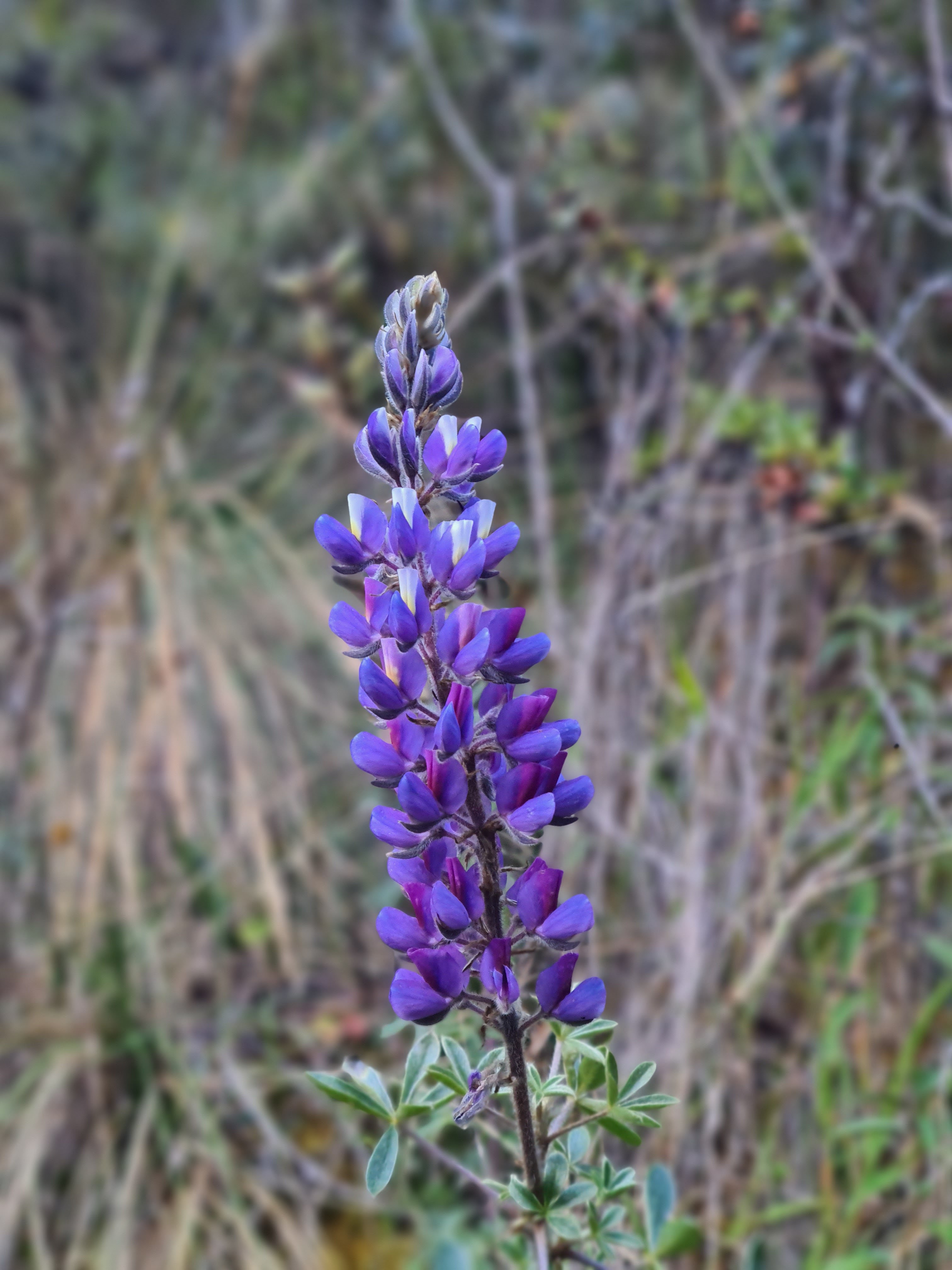

At first Rolando and Wilbert kept the group together, having us stop every 10 minutes or so for rest. This included pepping us up with the Andean remedies. By now we were used to chewing coca leaves1 . A new one for us was some kind of alcoholic spirit sprayed on our hands which we were instructed to inhale deeply. This is affectionately known as condor pee, after the common Andean bird and Incan symbol for connection between realms. Apparently it helps open up the airways, and it certainly woke up all the senses.
Remedies or not, it would still be a slog up the pass. Hearts pounding, we just had to focus on putting one foot in front of the other, pausing as often as we needed to open up our chest and inhale deeply. “I’m just stopping to let this porter past…honest.”
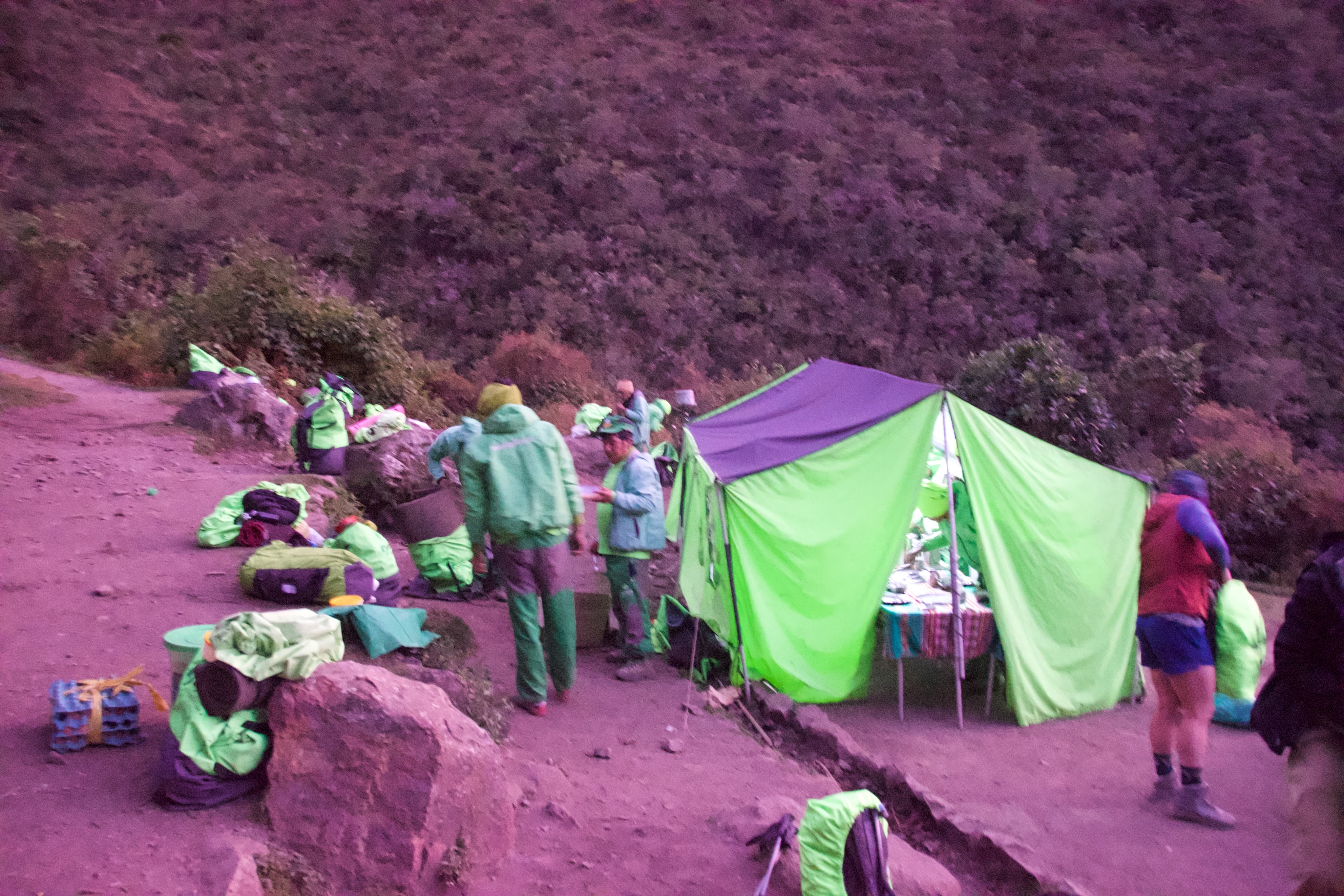
At about halfway up we had a longer rest stop, which was the last place locals visited to sell products – which probably says all there is to say about the rest of the pass. This was where we also lamented how visible the porters’ pack covers and t-shirts are. With the bright specks of green and orange darting about the peaks above us (see if you can spot them in the pics below), there was no blissful ignorance about how much further and higher we had to go.
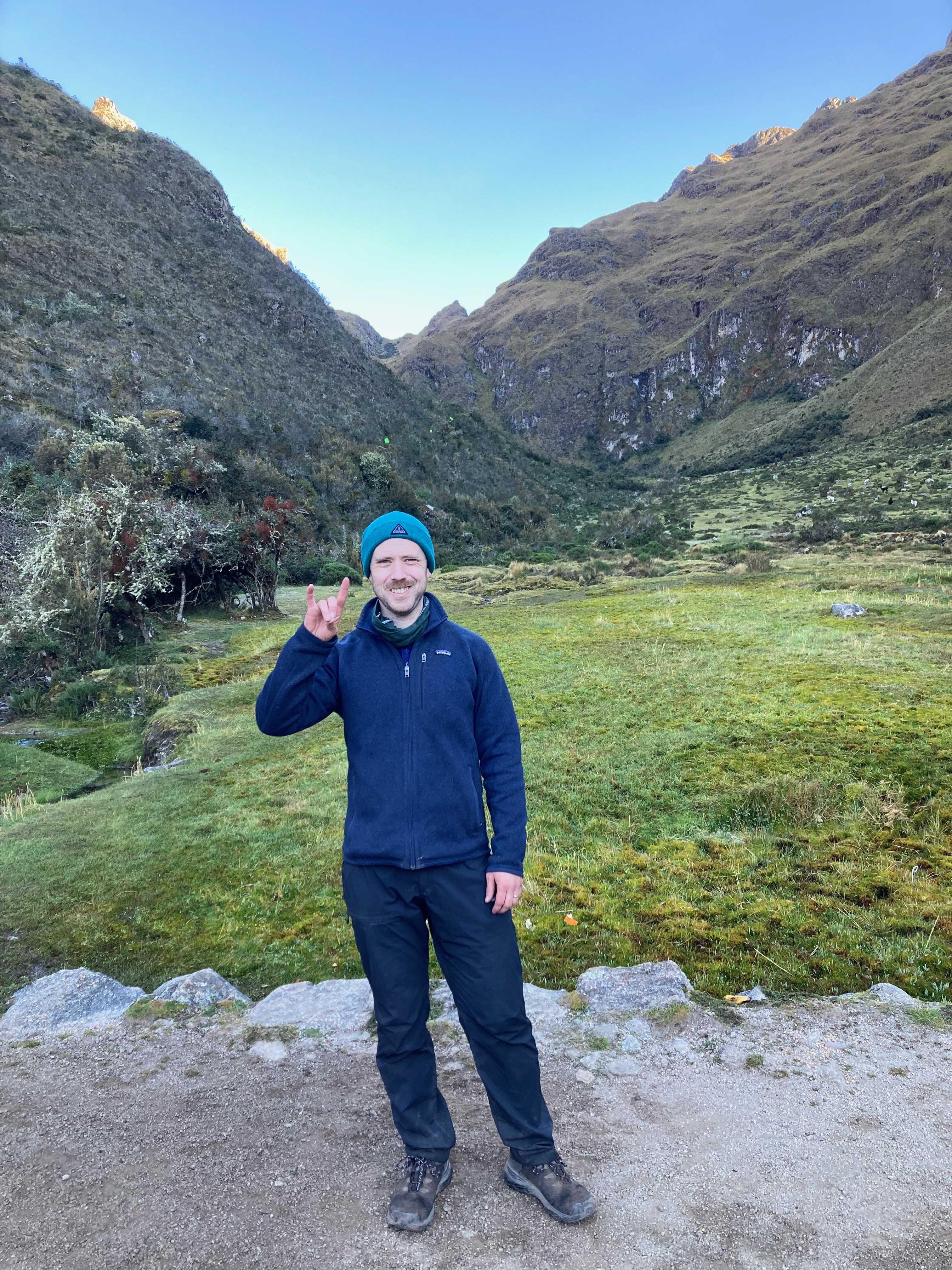
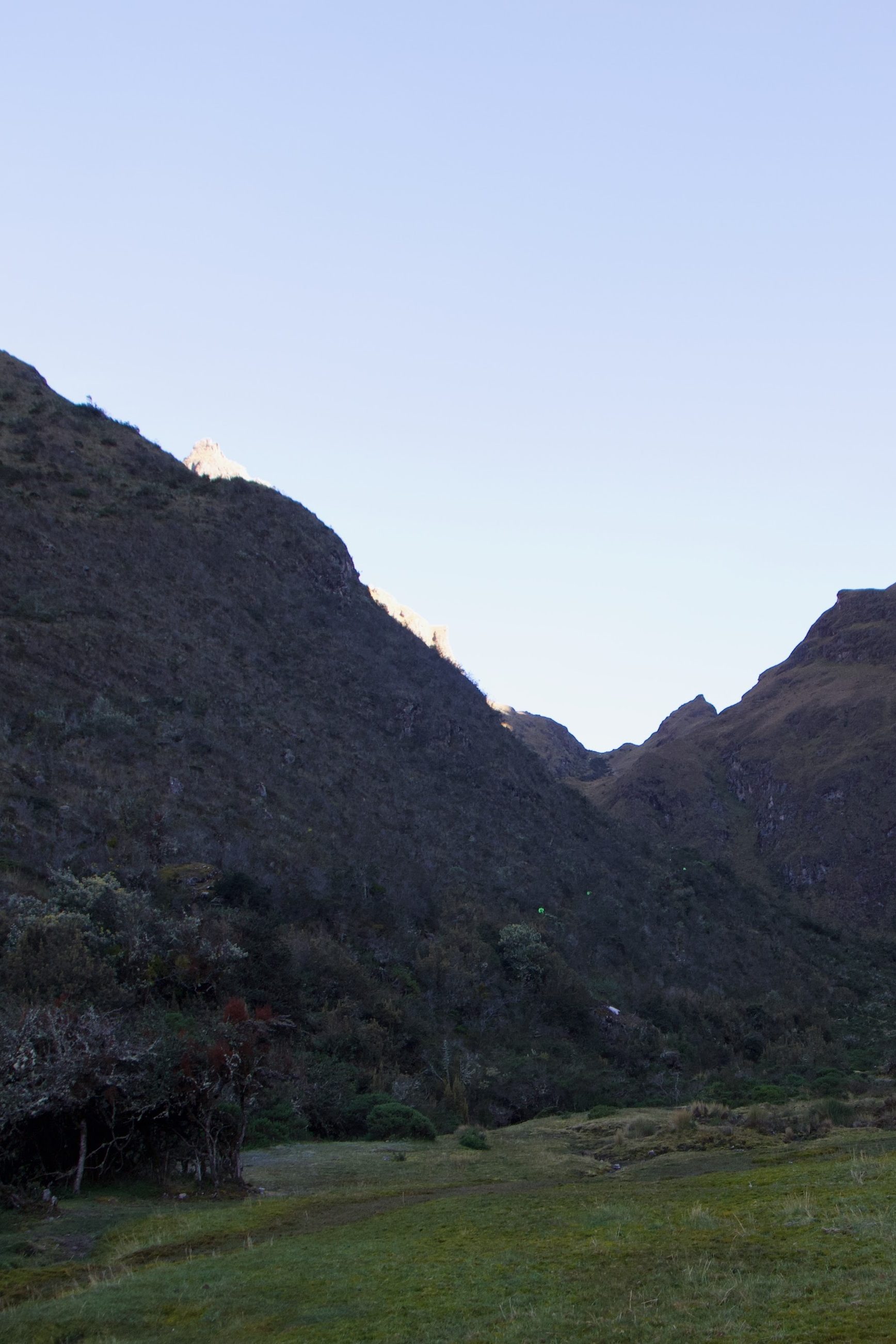
On we plodded again, stopping to breathe and look back, the increasing view downward reassuring us that we were making (glacial) progress. There wasn’t too much in the way of muscular or joint pain, the poles doing their jobs, but the cardiovascular effort as we approached 4,200m was simply unrelenting. It was easy to see why we needed such an early start for this day, as trying to conquer the Dead Woman’s Pass in the heat of the day would not be my idea of a good time.
With joy we reached the top of the pass, a big mental tick across a bold checkbox. If we could do that bit, we could surely do anything else that would be asked of us.
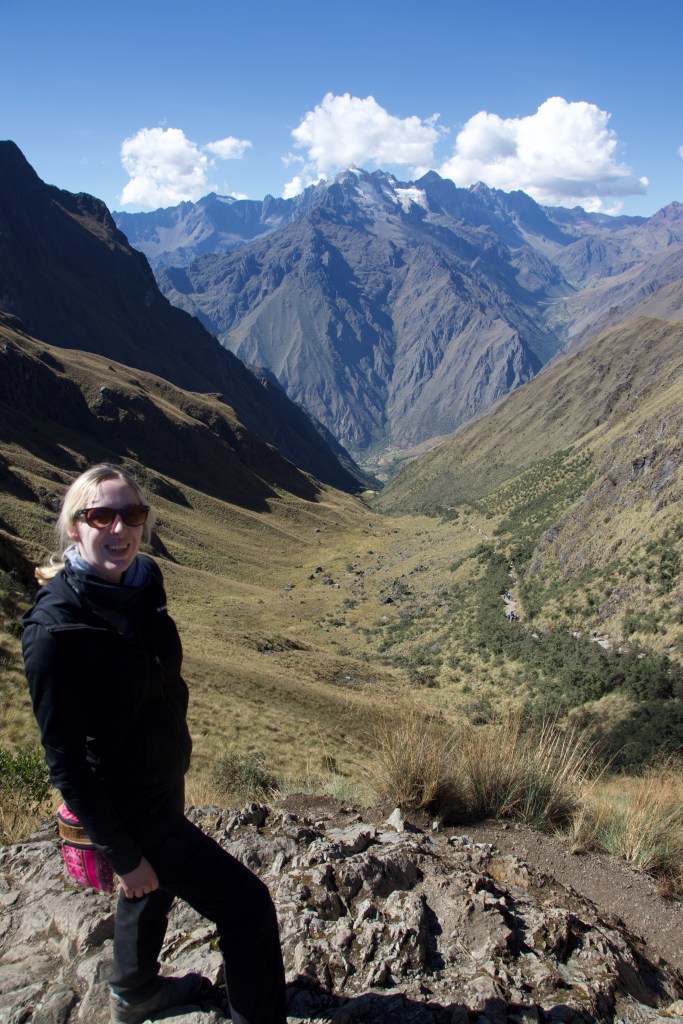
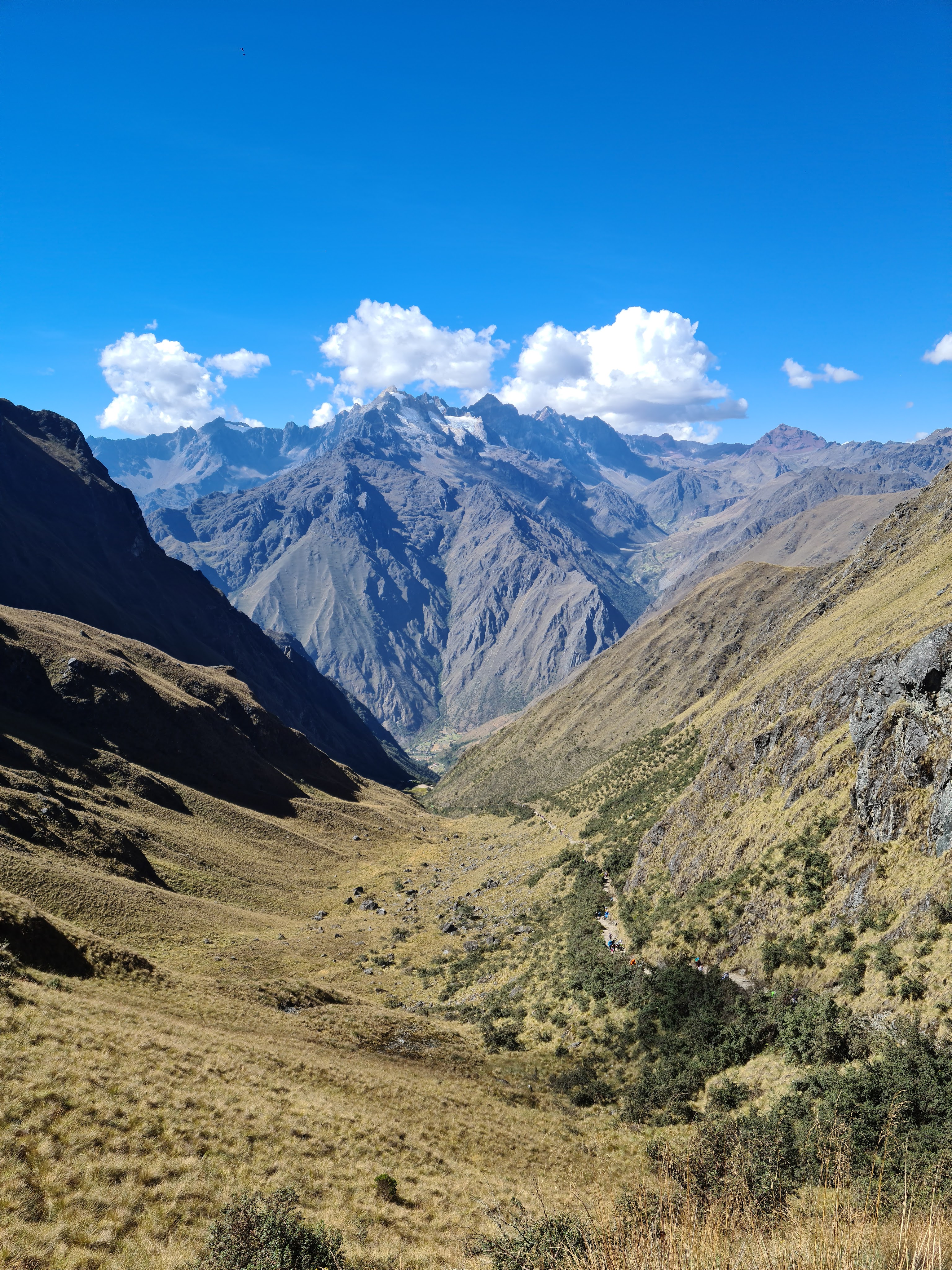
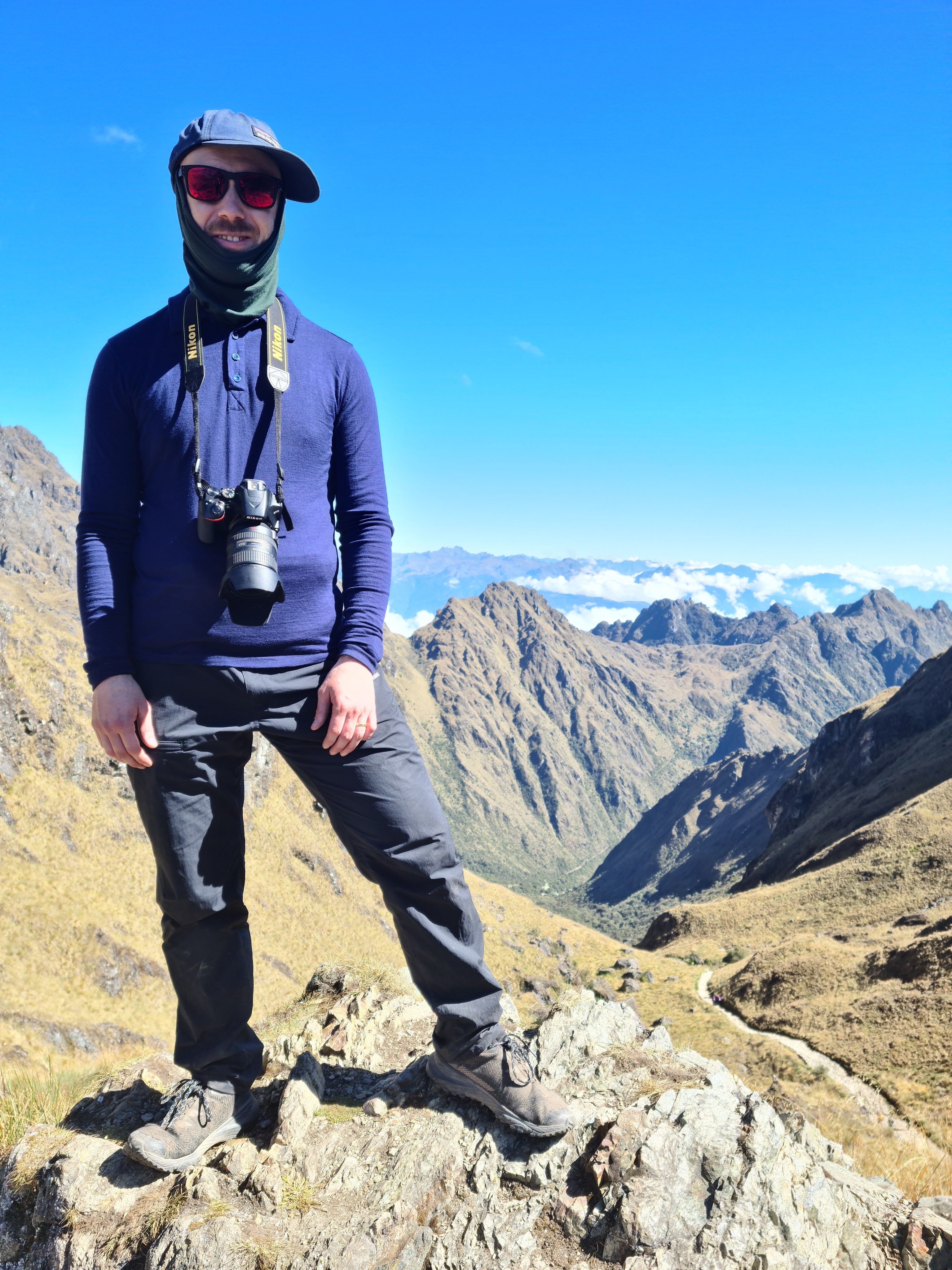
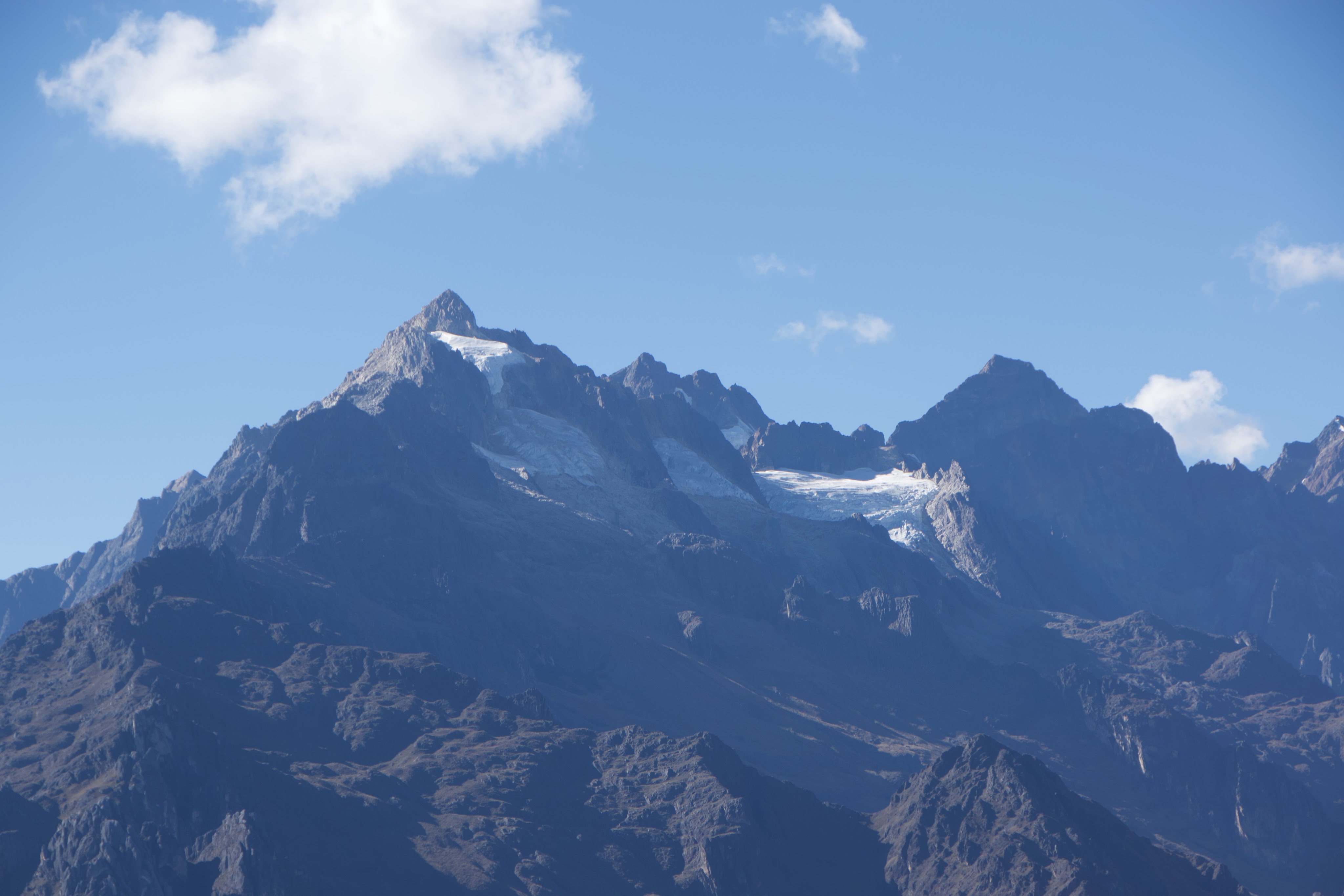
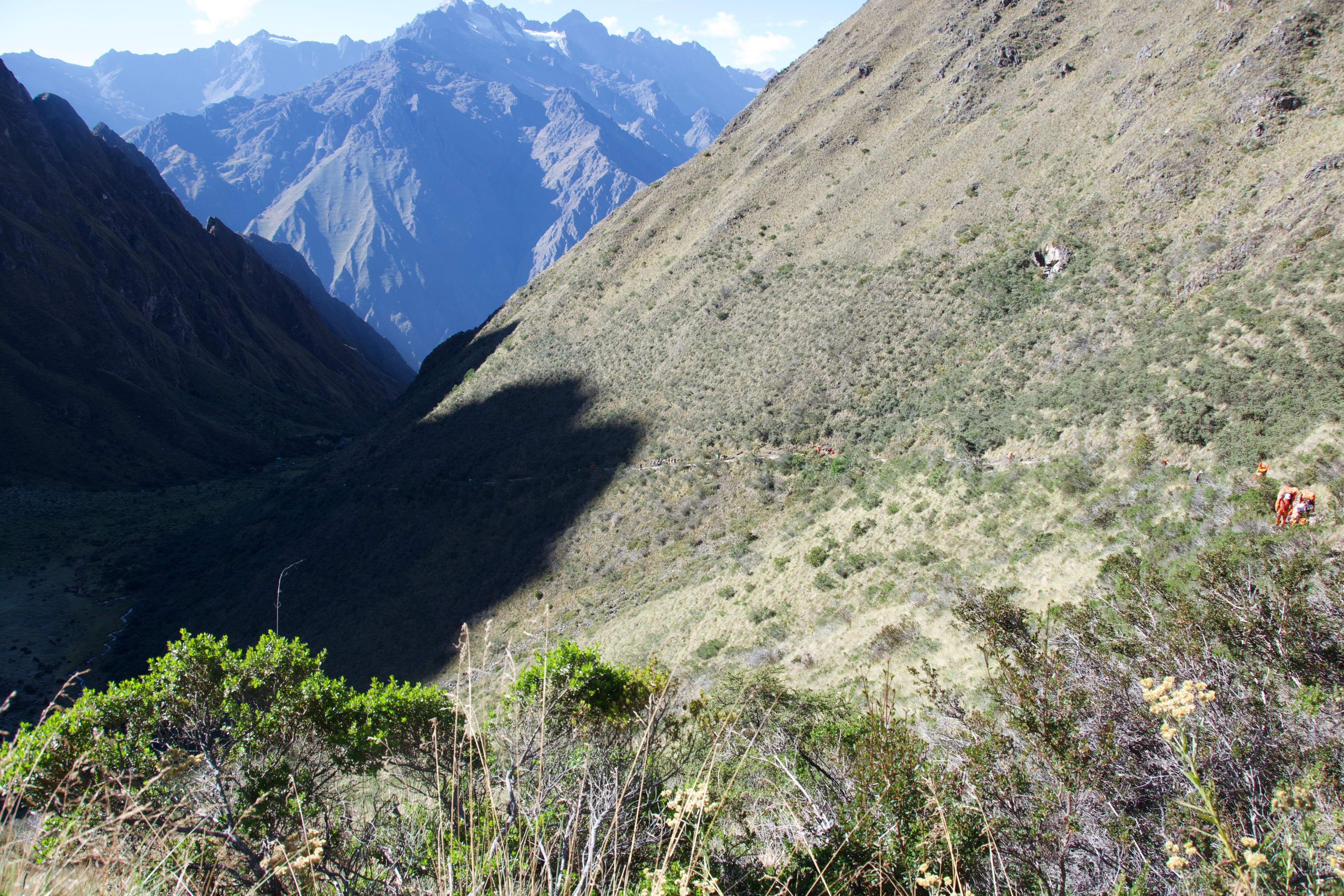
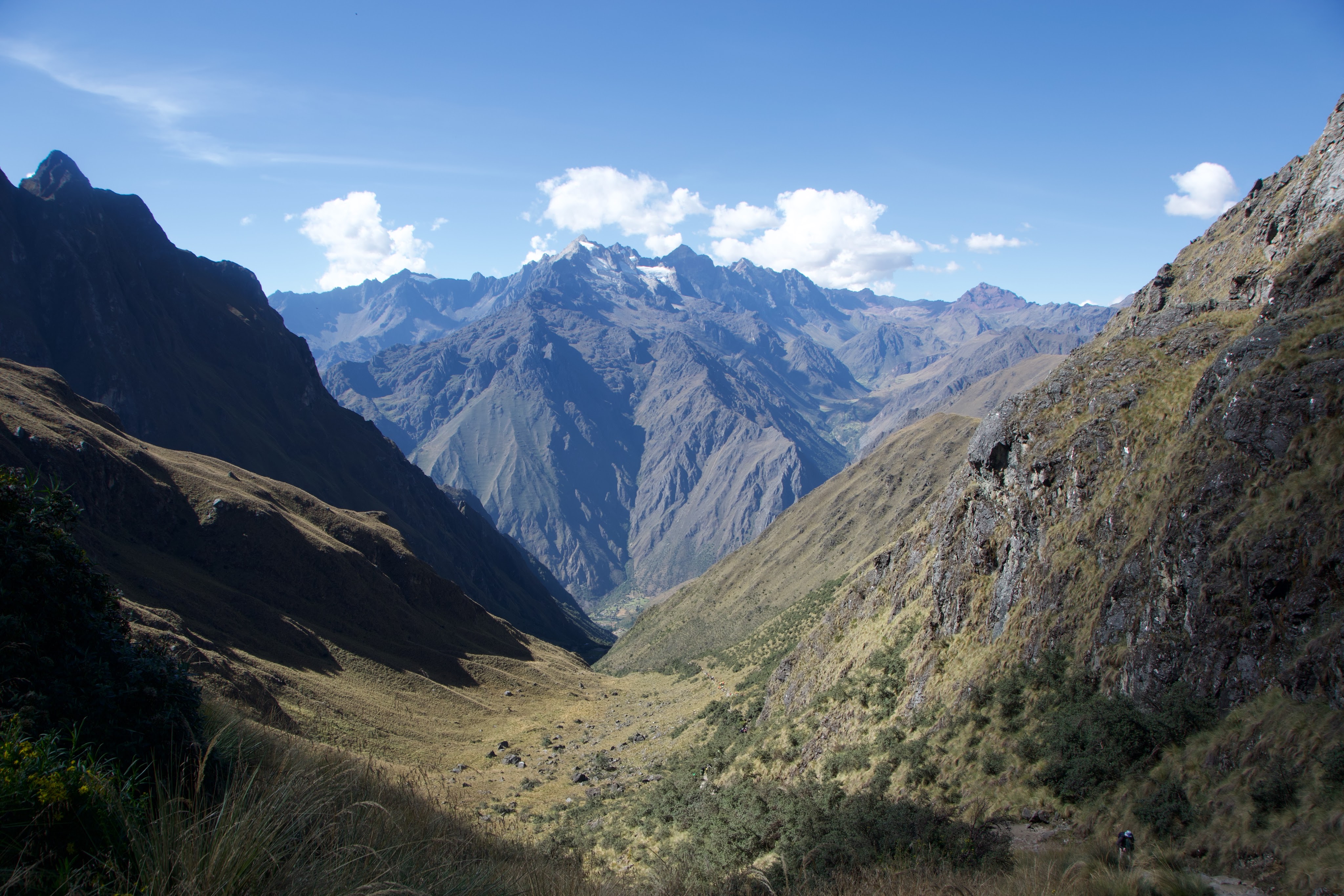
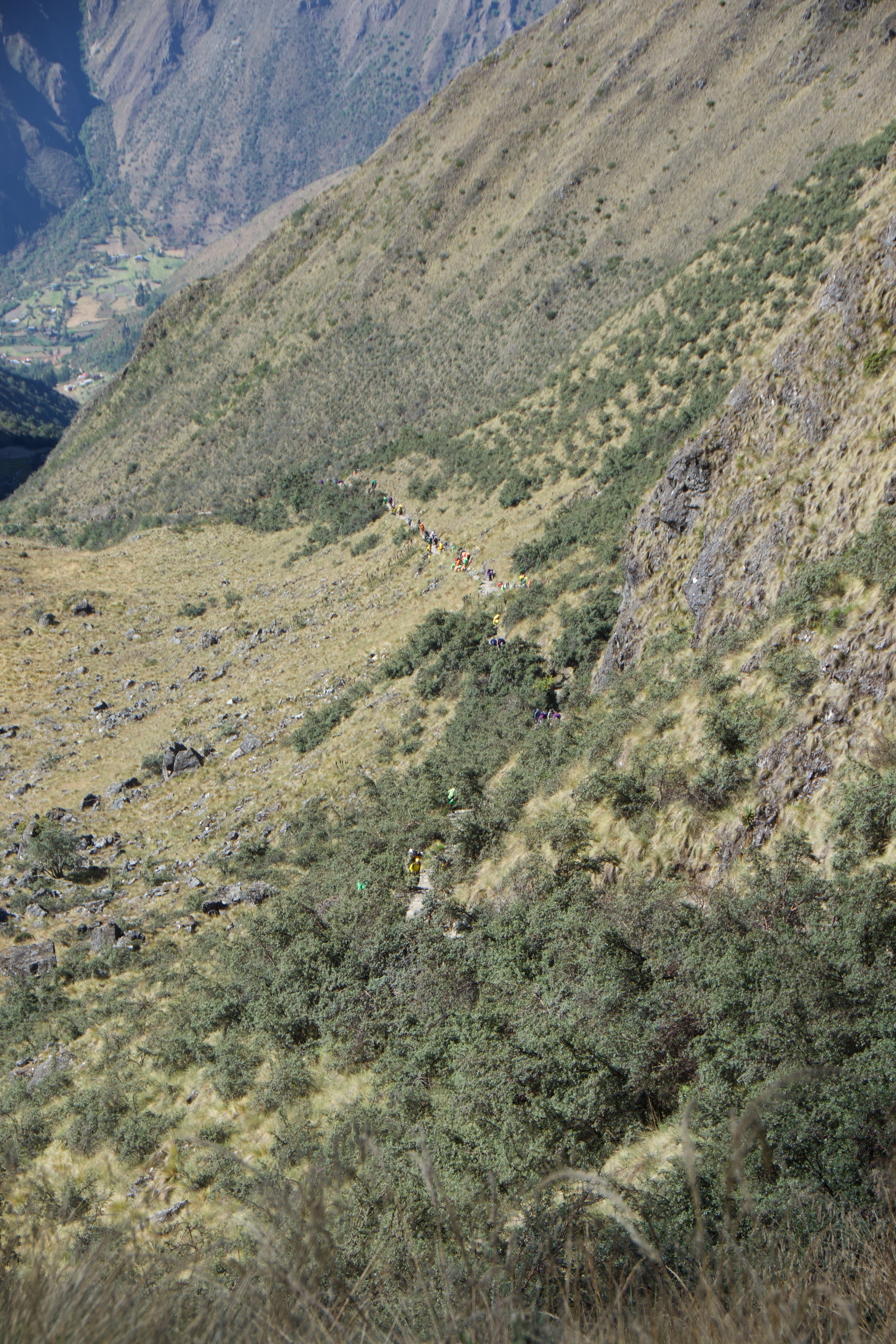
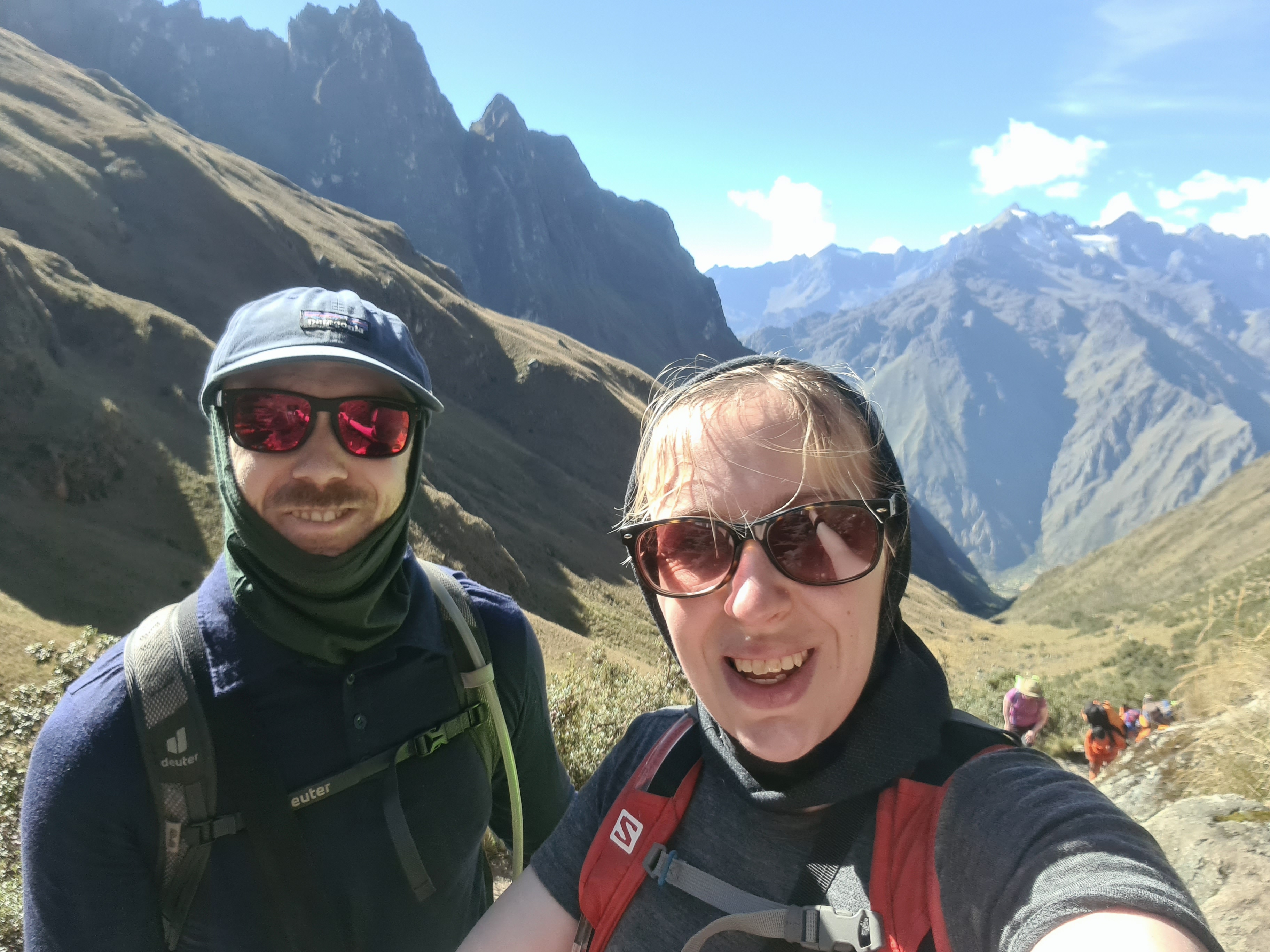
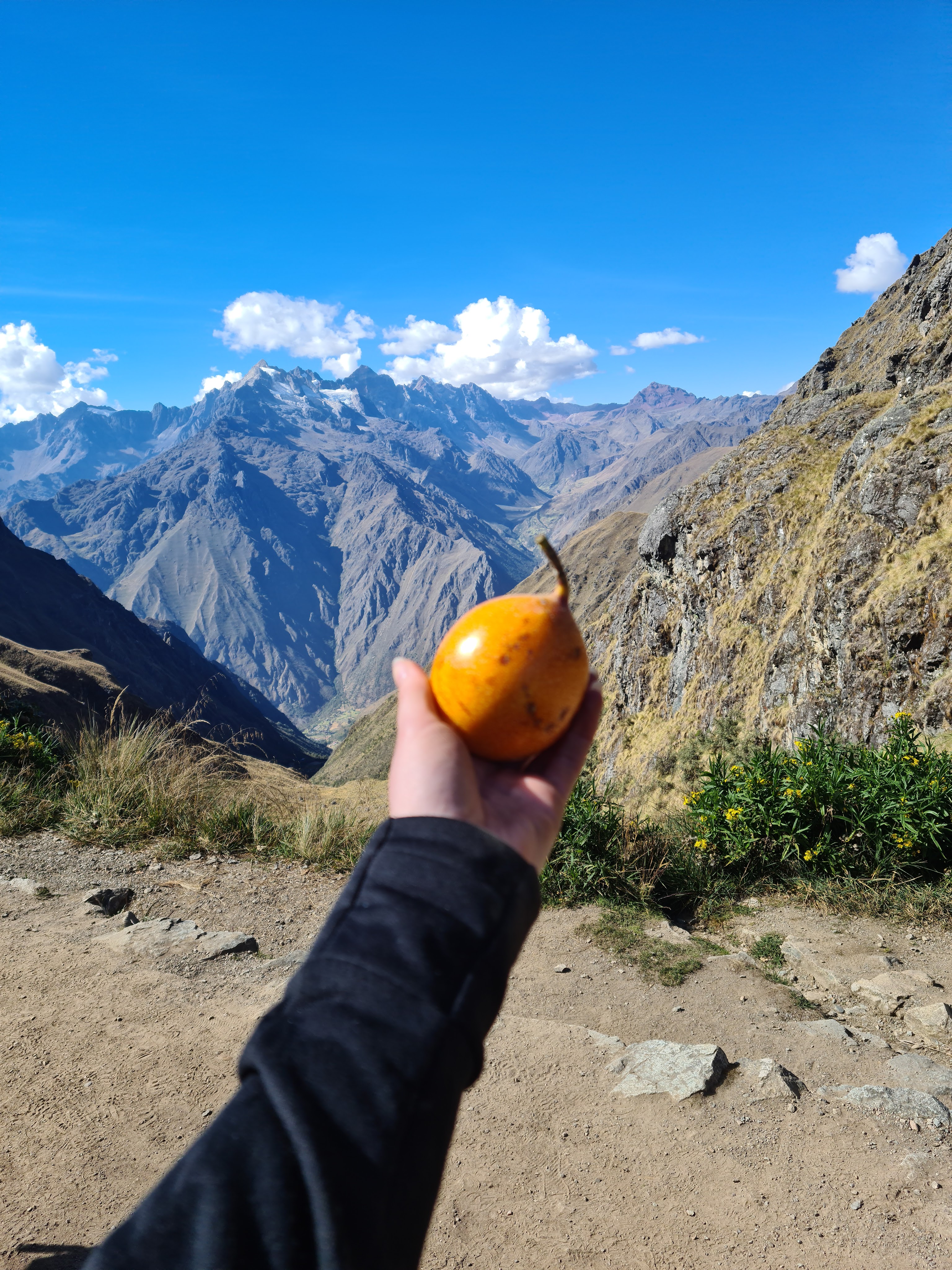
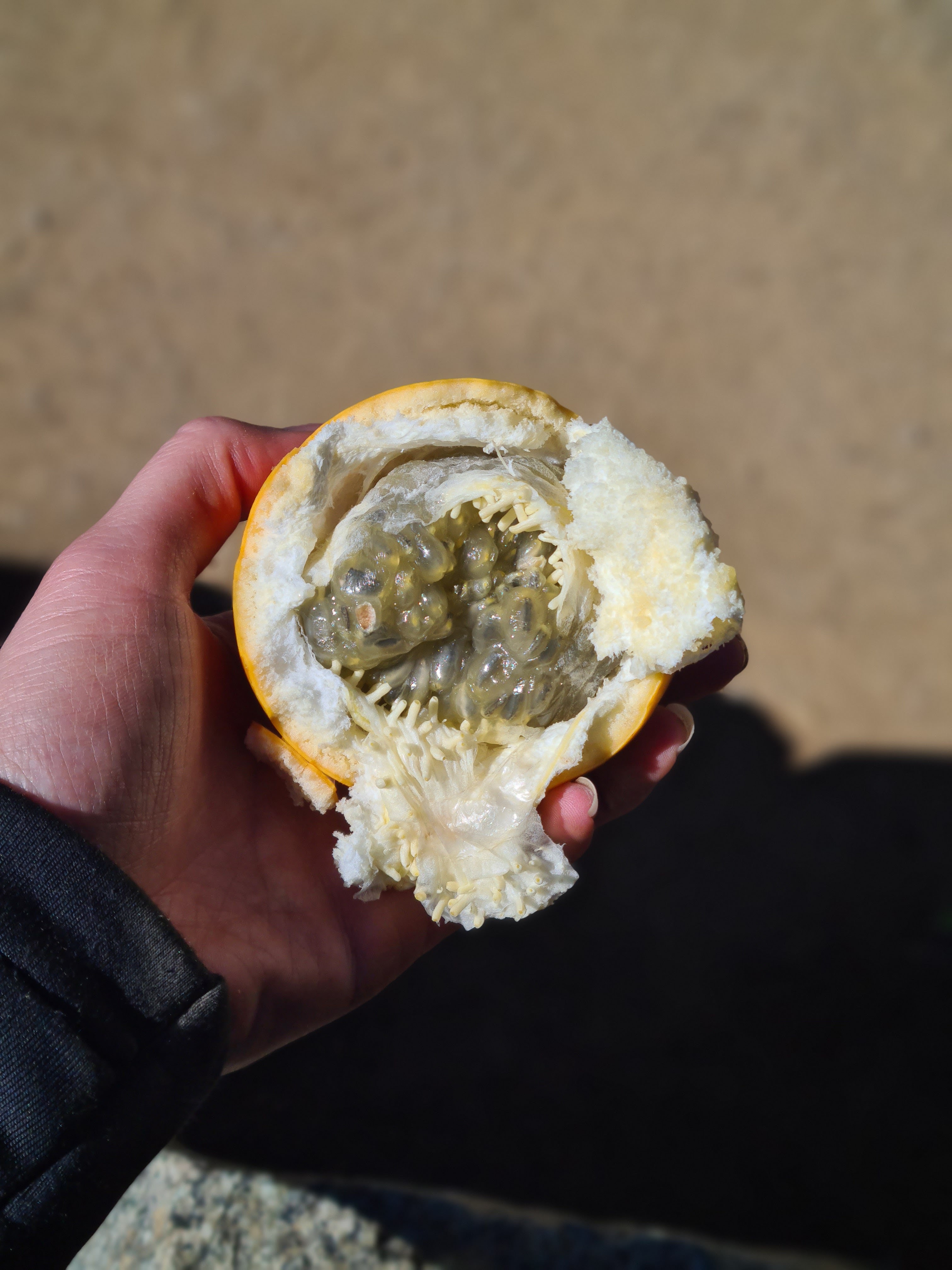
Of course we had a prolonged rest here, taking in the views. I also tucked into one of the snacks we’d been provided for the day, an orange-shelled fruit, which we’d later identify as granadilla. Cracking it open, it looked like some kind of alien spawn, but was one of the most delicious fruits I’d ever had. No doubt not least due to the past couple of hours’ efforts.
What goes up most come down though, and Dead Woman’s Pass has an appropriately challenging descent. This was the first proper test of how our knees would fare, and again the poles seemed to do their job.
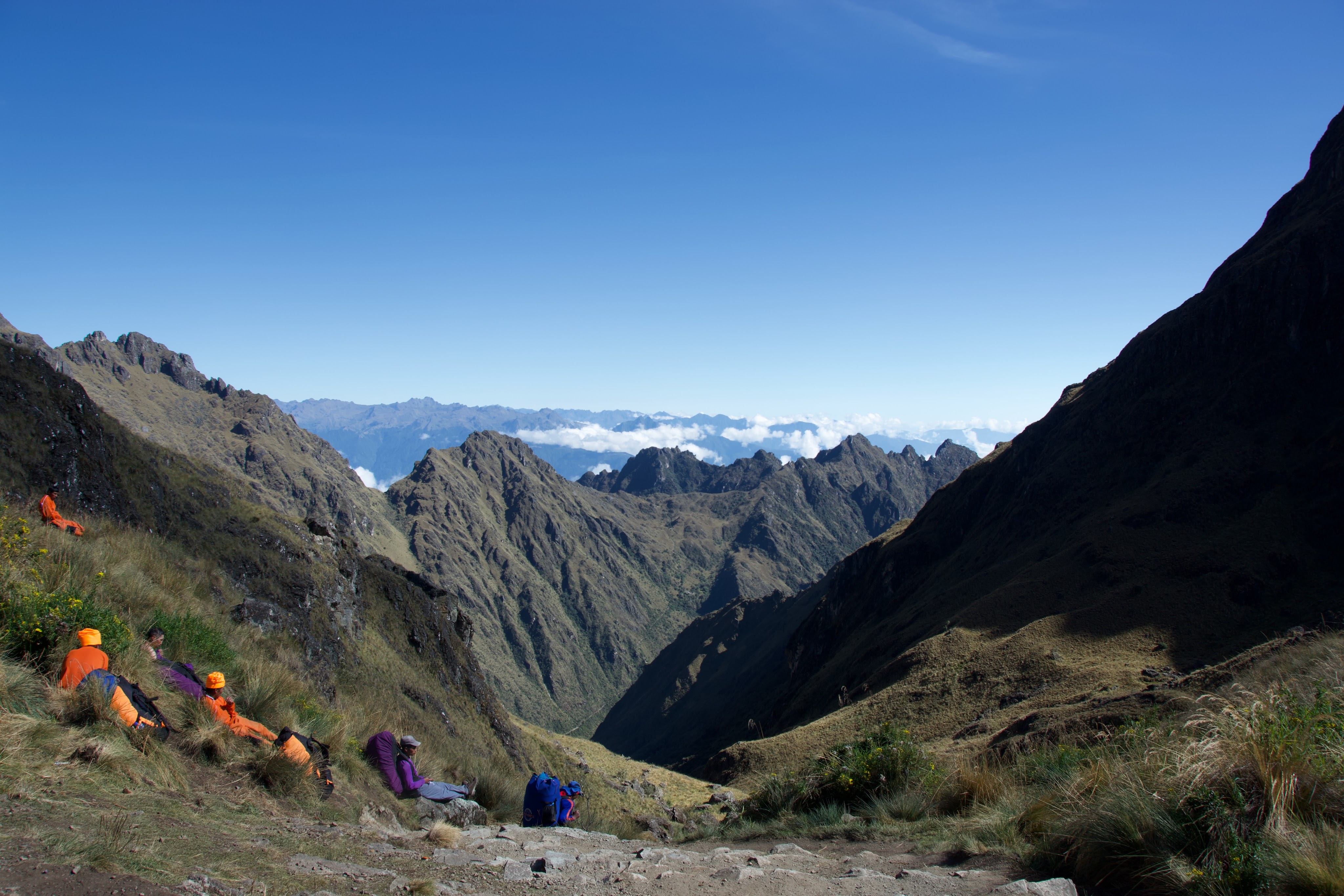
The steps are quite steep, narrow, and I did find them to be quite hard on impact underfoot. You needed to keep concentration, both on them and the fleet-footed porters who you would suddenly find bearing down on you. Although it would be a quicker way to the bottom, I don’t think a tumble would be the most enjoyable way to get there!
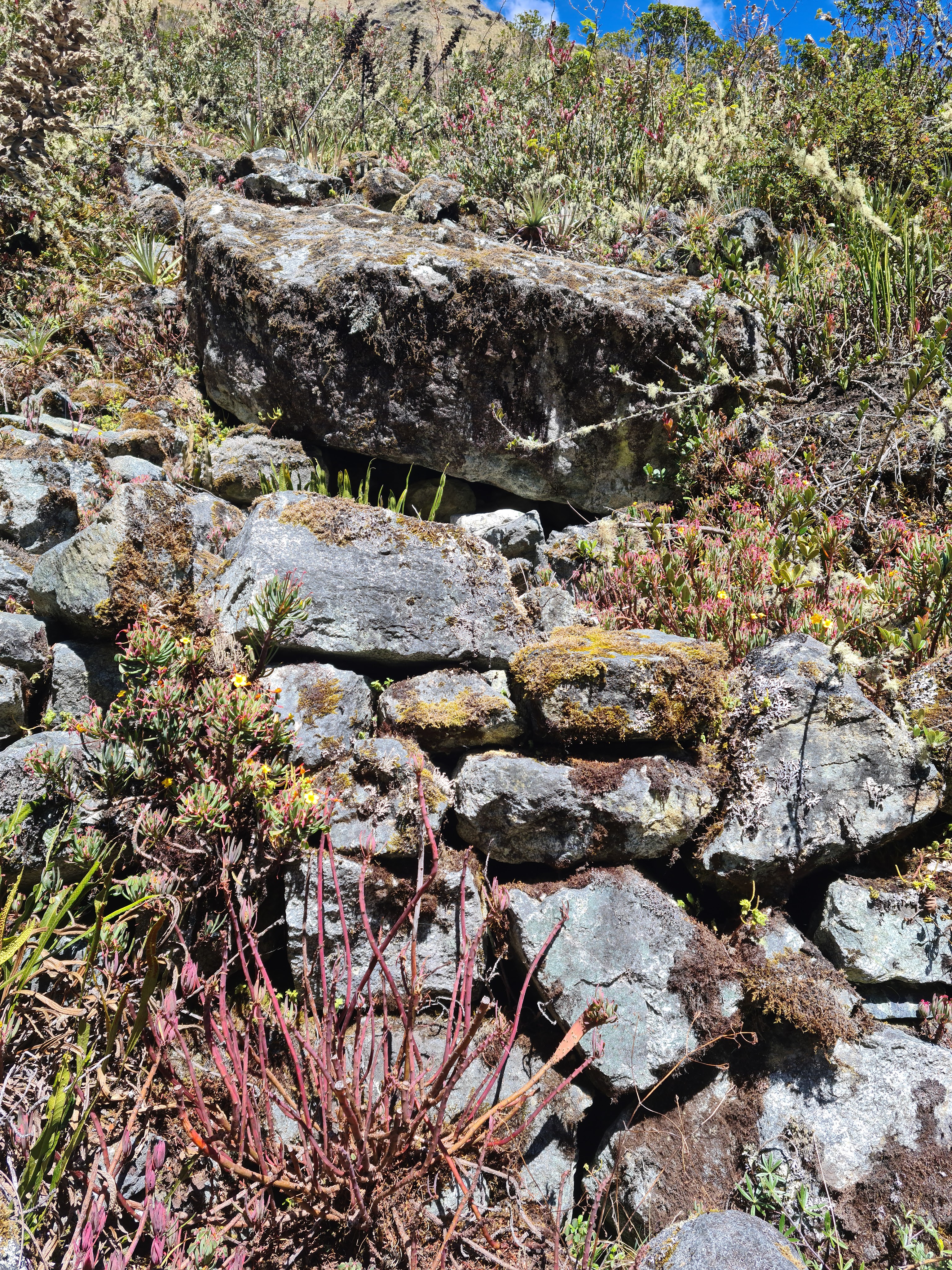
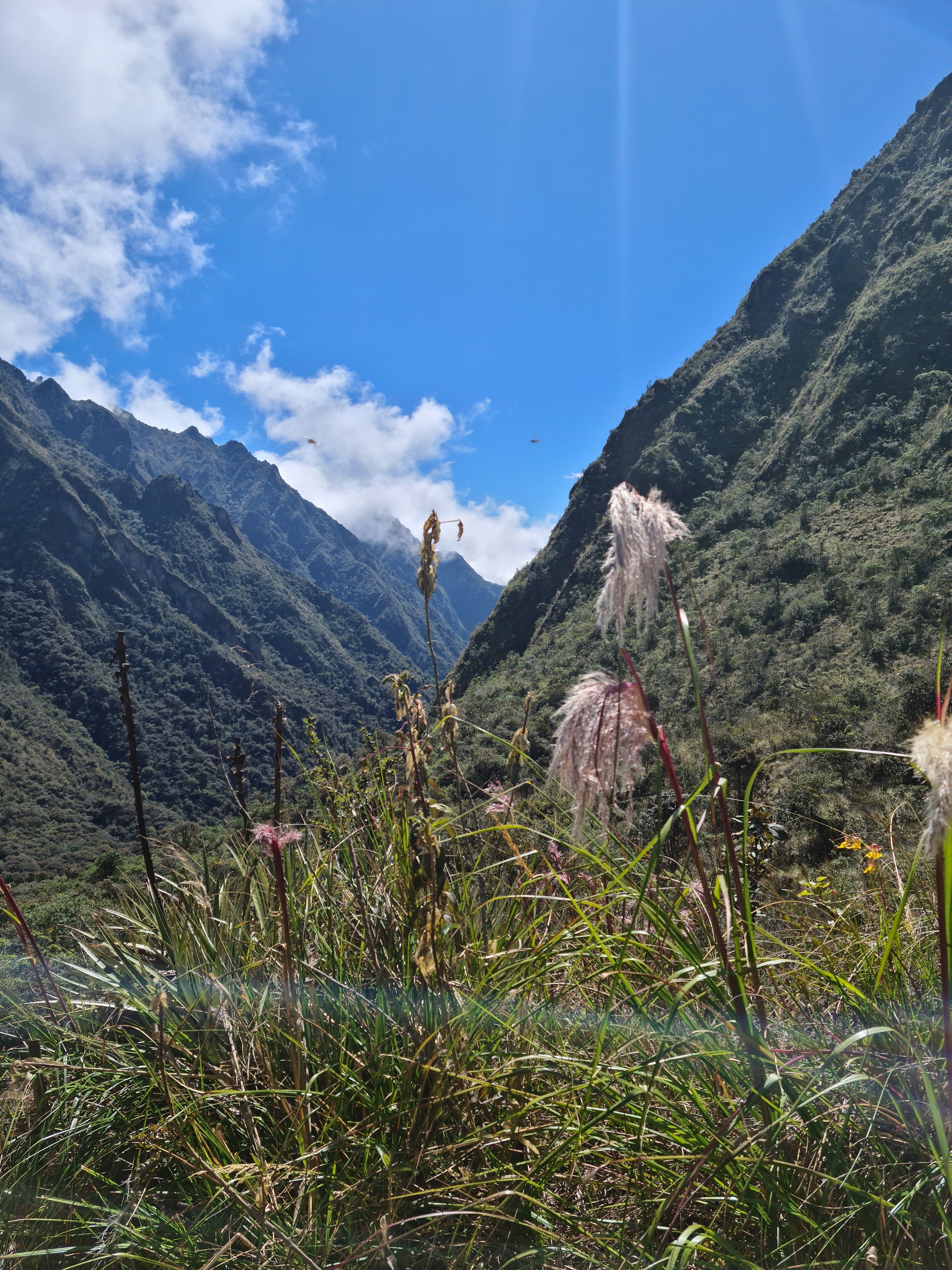
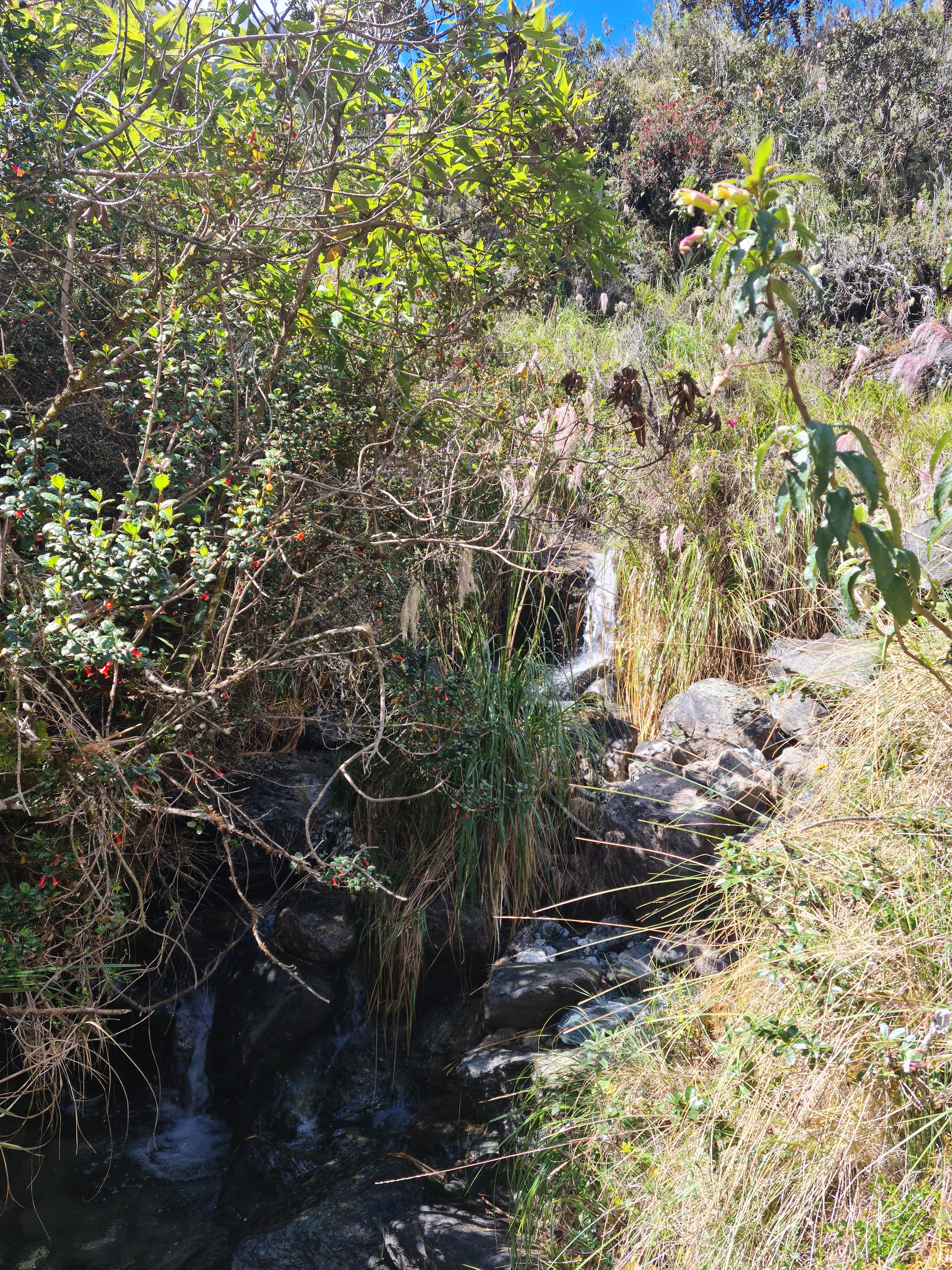
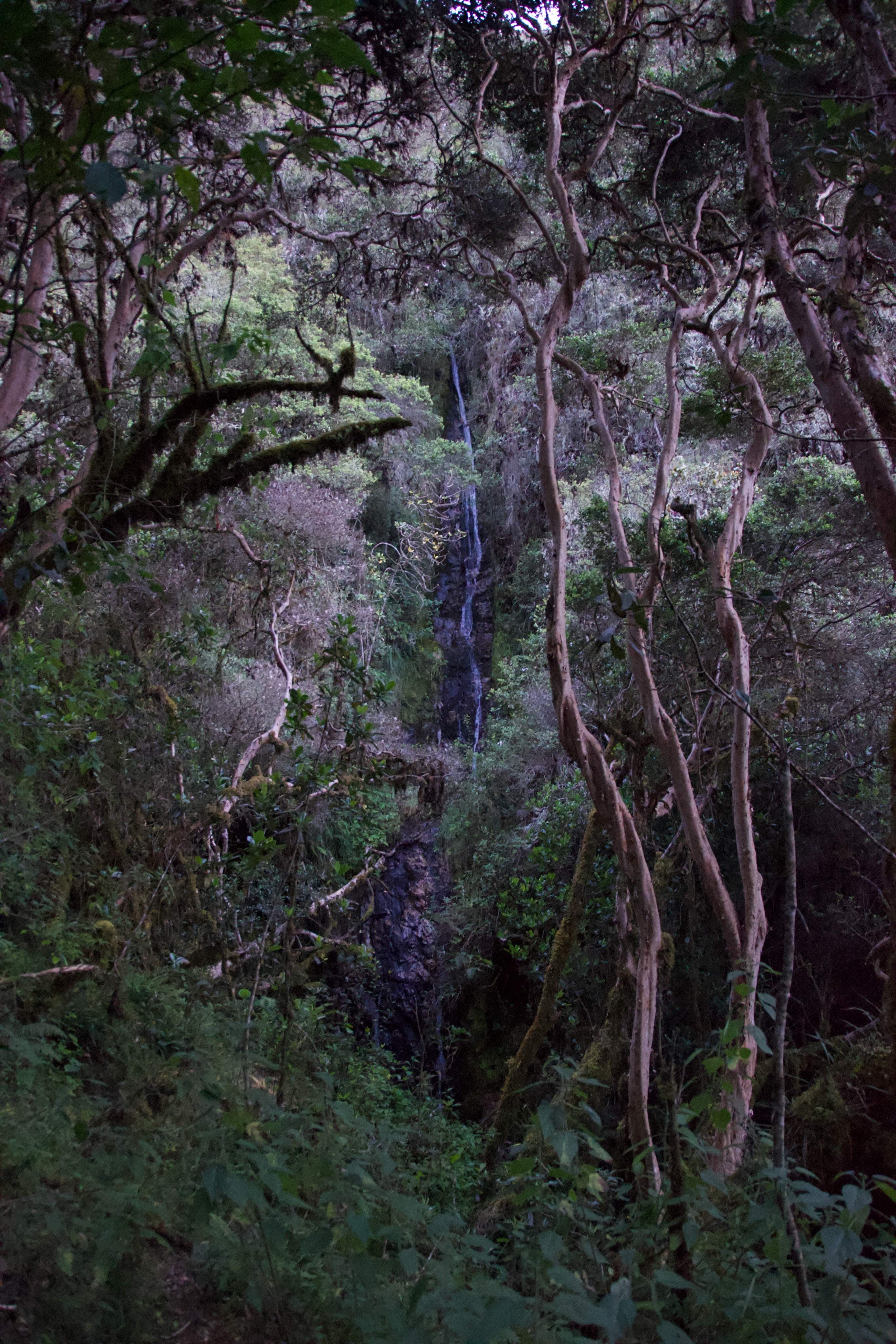
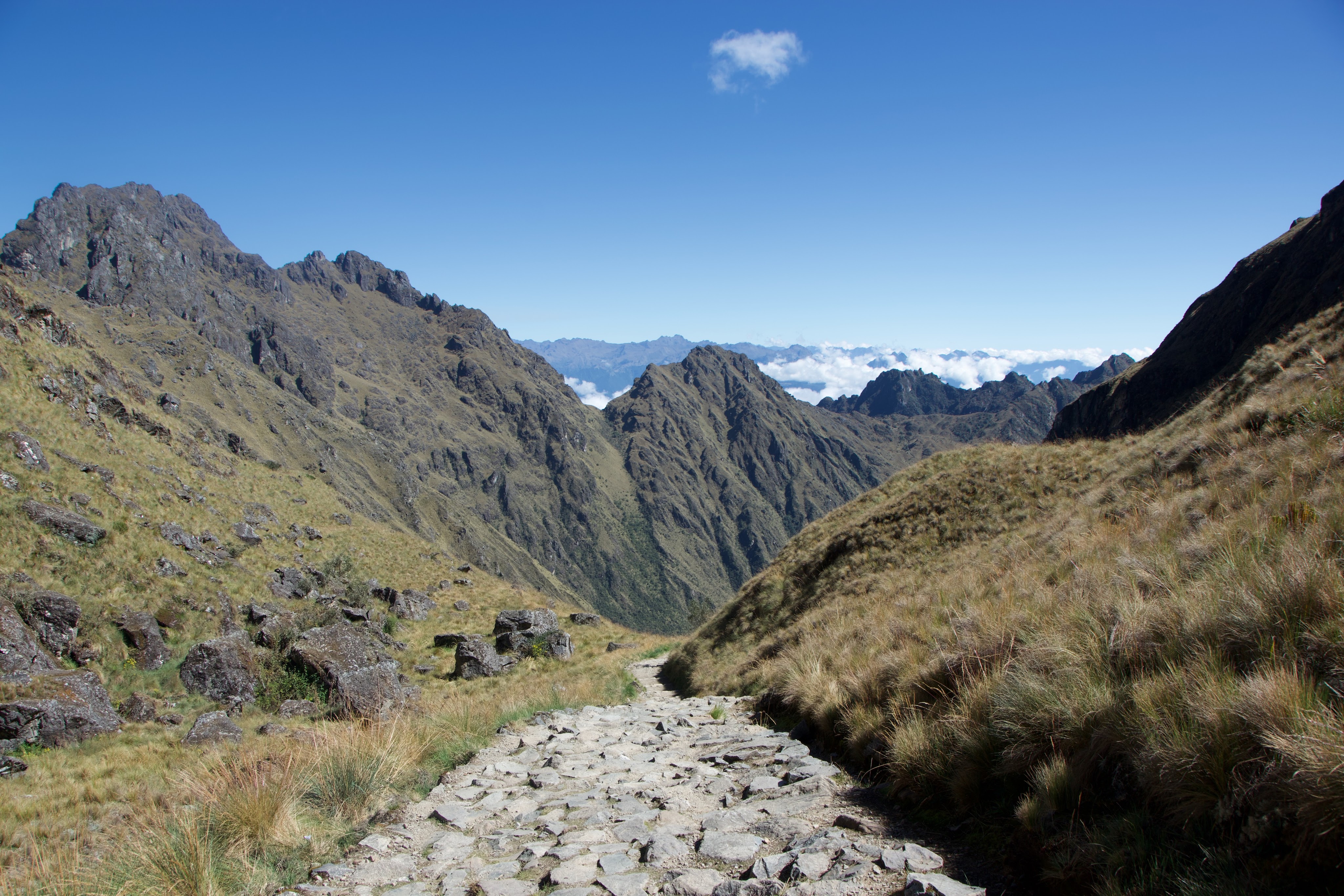
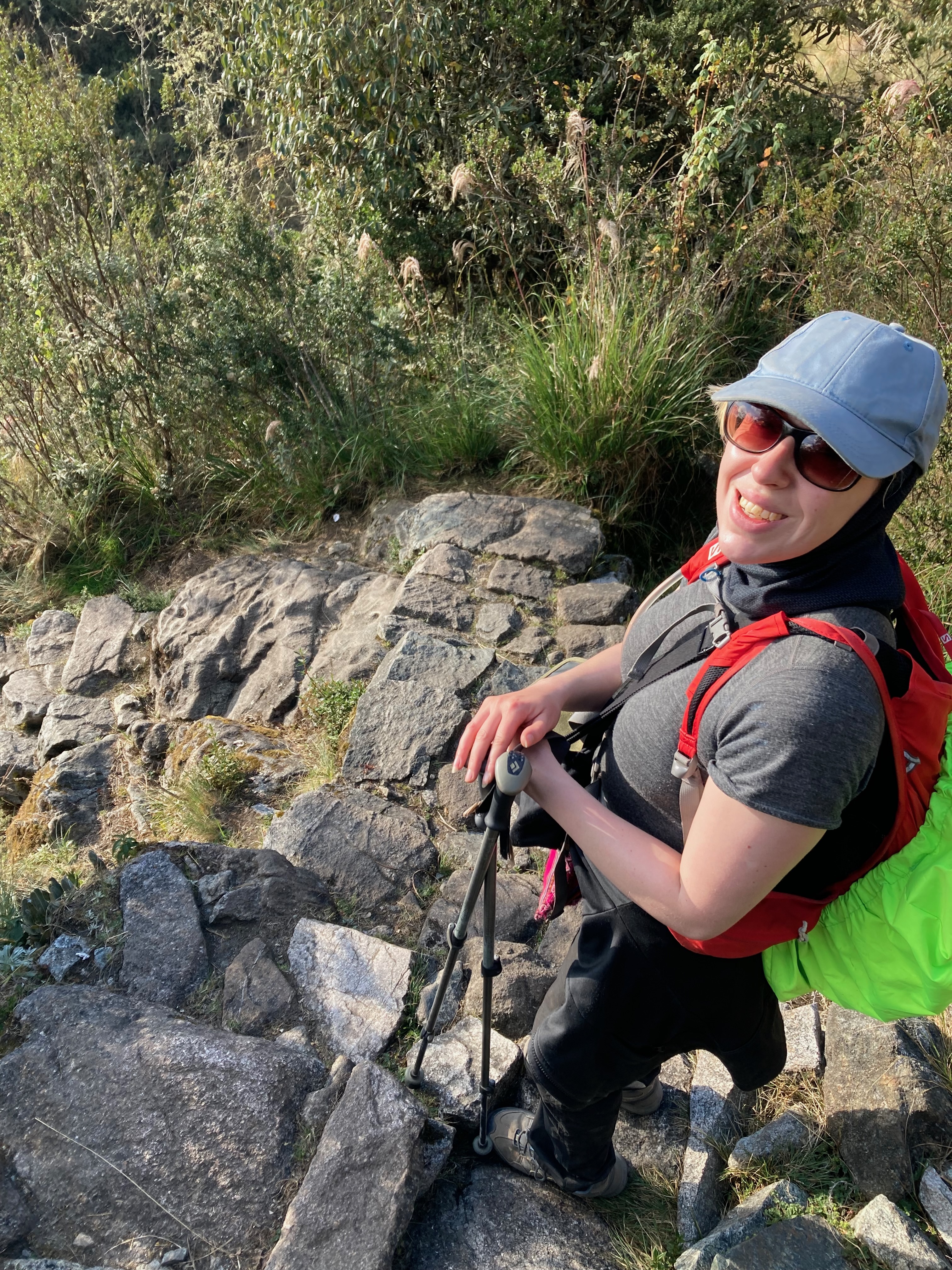
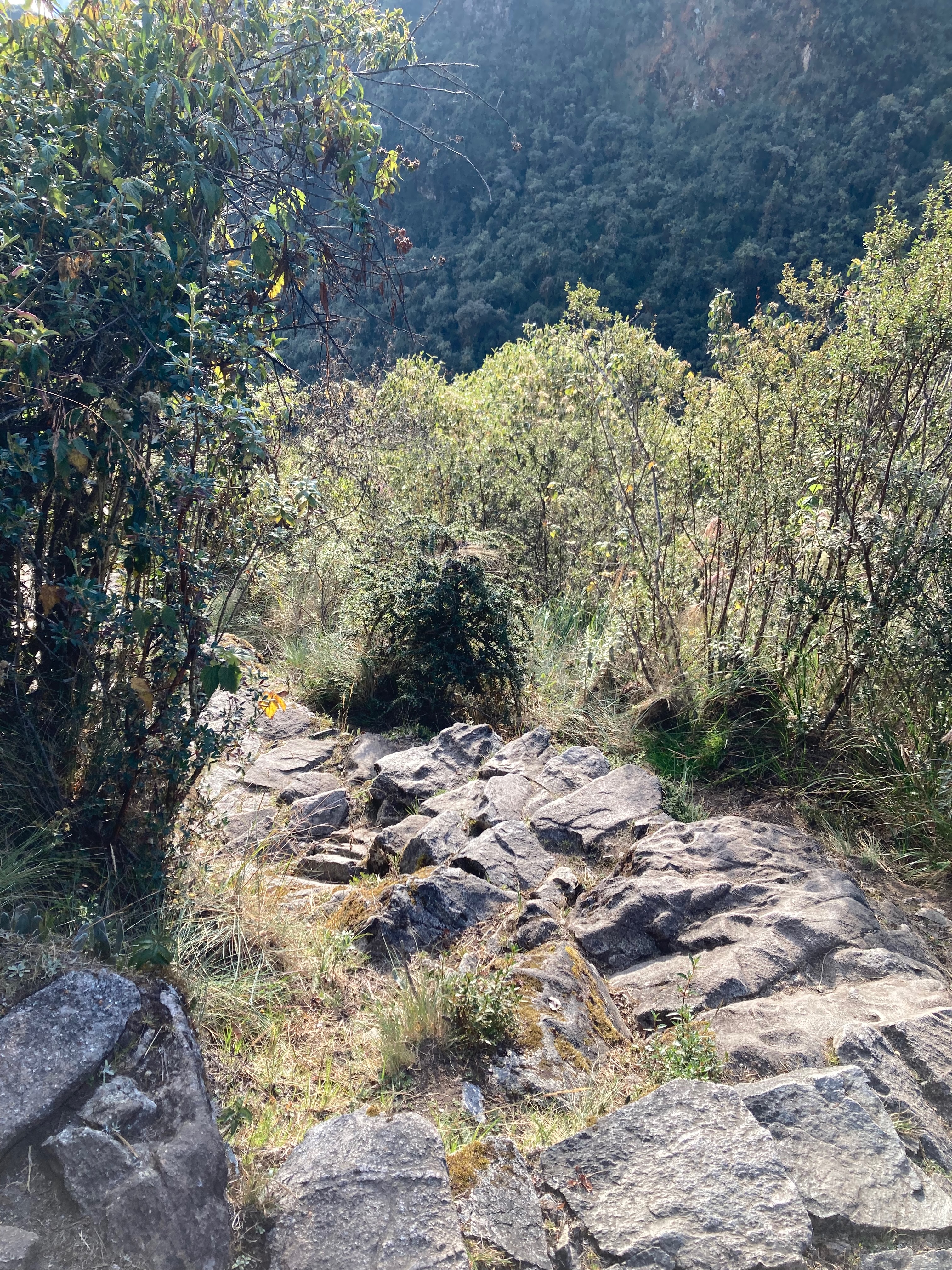
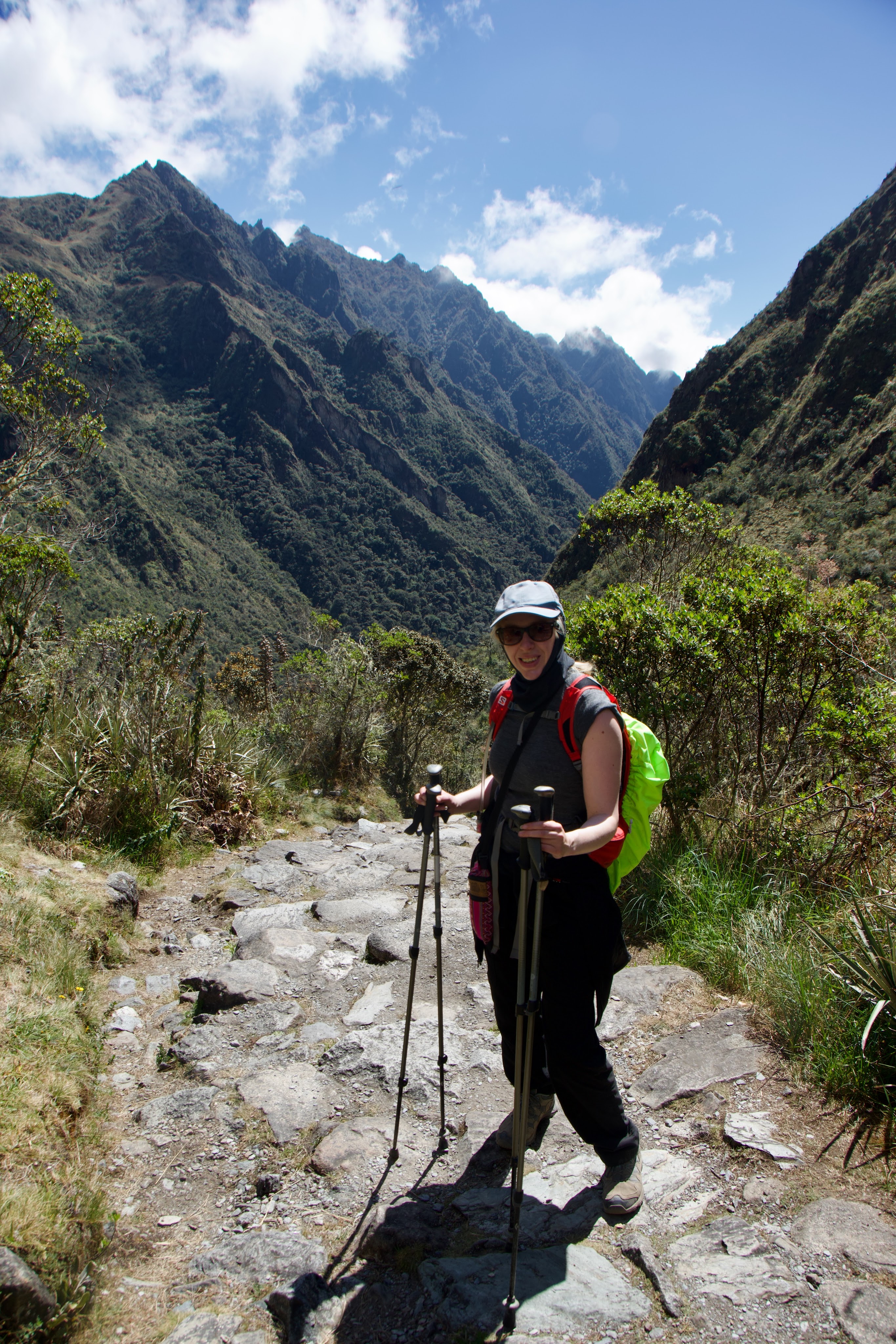
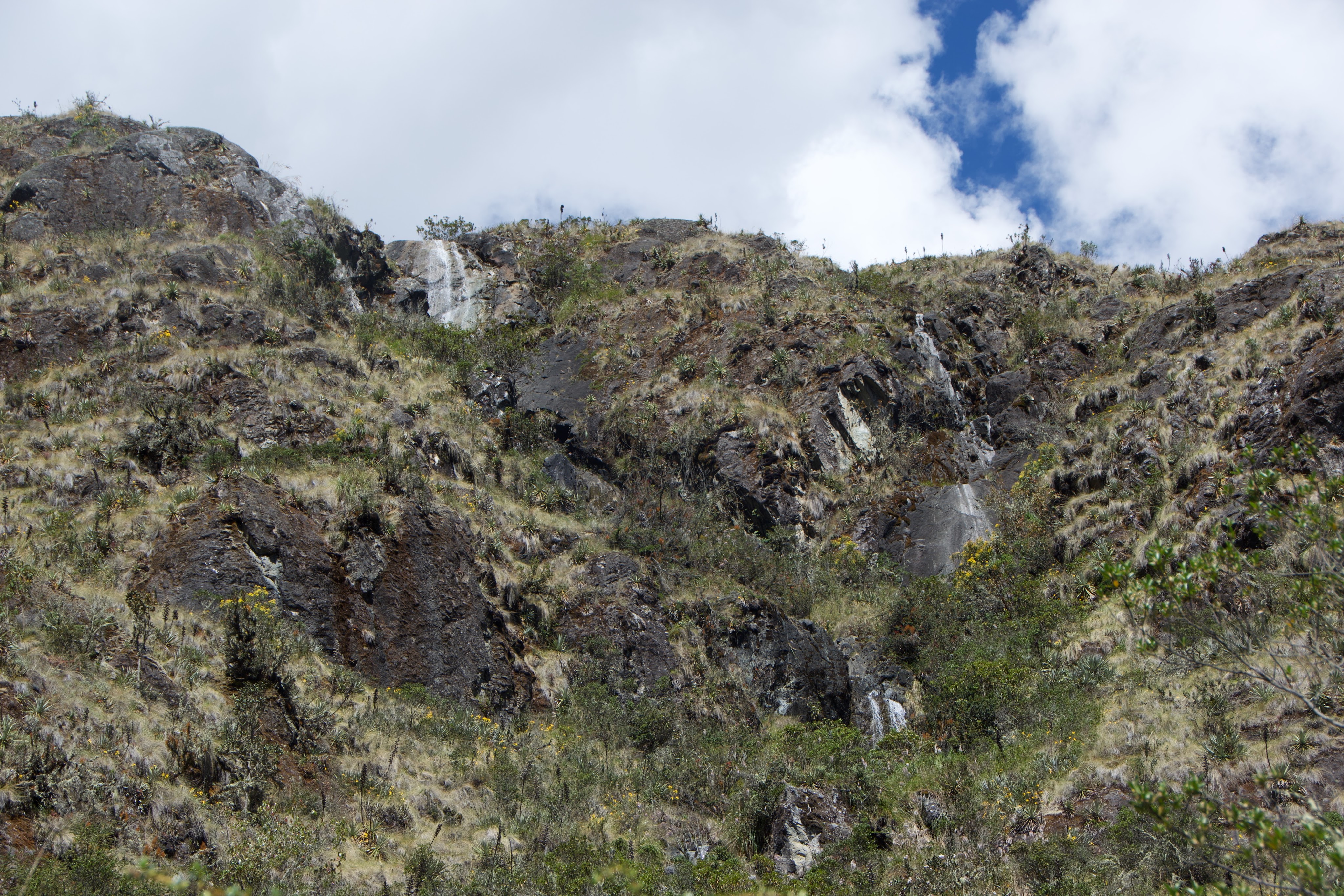
Reaching the lunch camp, we quickly realised the advantages to taking it slow, particularly that morning. At first the mats laid out on the grass looked inviting for a lie down, before noticing there was no shade on offer. Whilst we were amazed that the quickest of our group had been at site almost an hour ahead of us, and envious of the physical ability, it was a long time to spend in the exposed valley, waiting for the lunch tent to be set up. We had pretty much maintained the same positioning in the group as the day before. Although not earning the “Speedy Gonzales” label Wilbert lauded on the front of the pack, we were still feeling physically comfortable. That didn’t seem to be the case for everyone, and as some of the frontrunners started to look peaky, one even having to leave the tent during lunch, it was a good reminder this was a marathon not a sprint.
The afternoon played out like a reduced version of the morning. We had to ascend yet again, prompting jovial complaints at the earlier civilizations – why couldn’t they just go straight along the ridges?!
Only this time, the ascent was broken up by a stop at an archaeological site, Runkuracay.
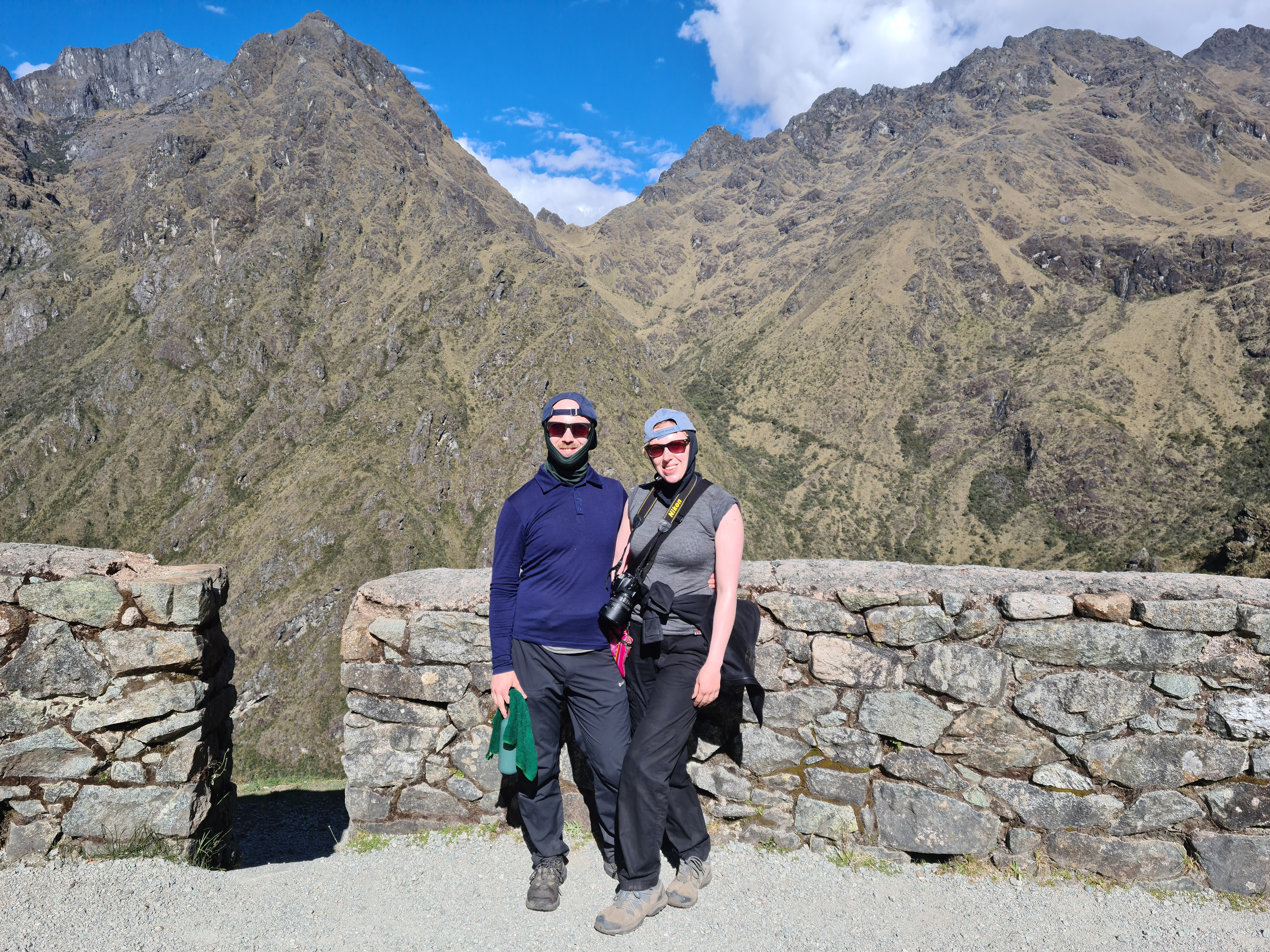
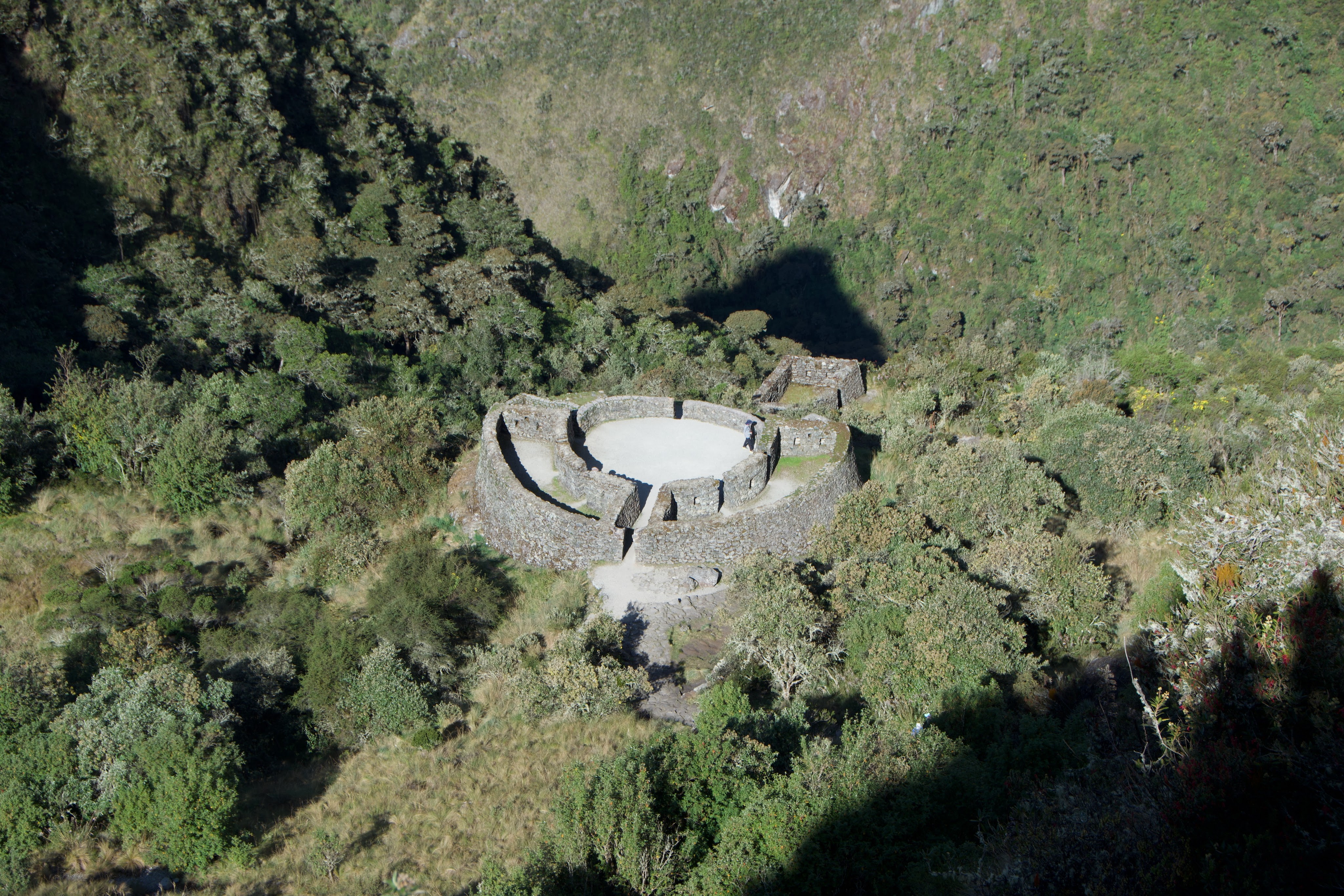
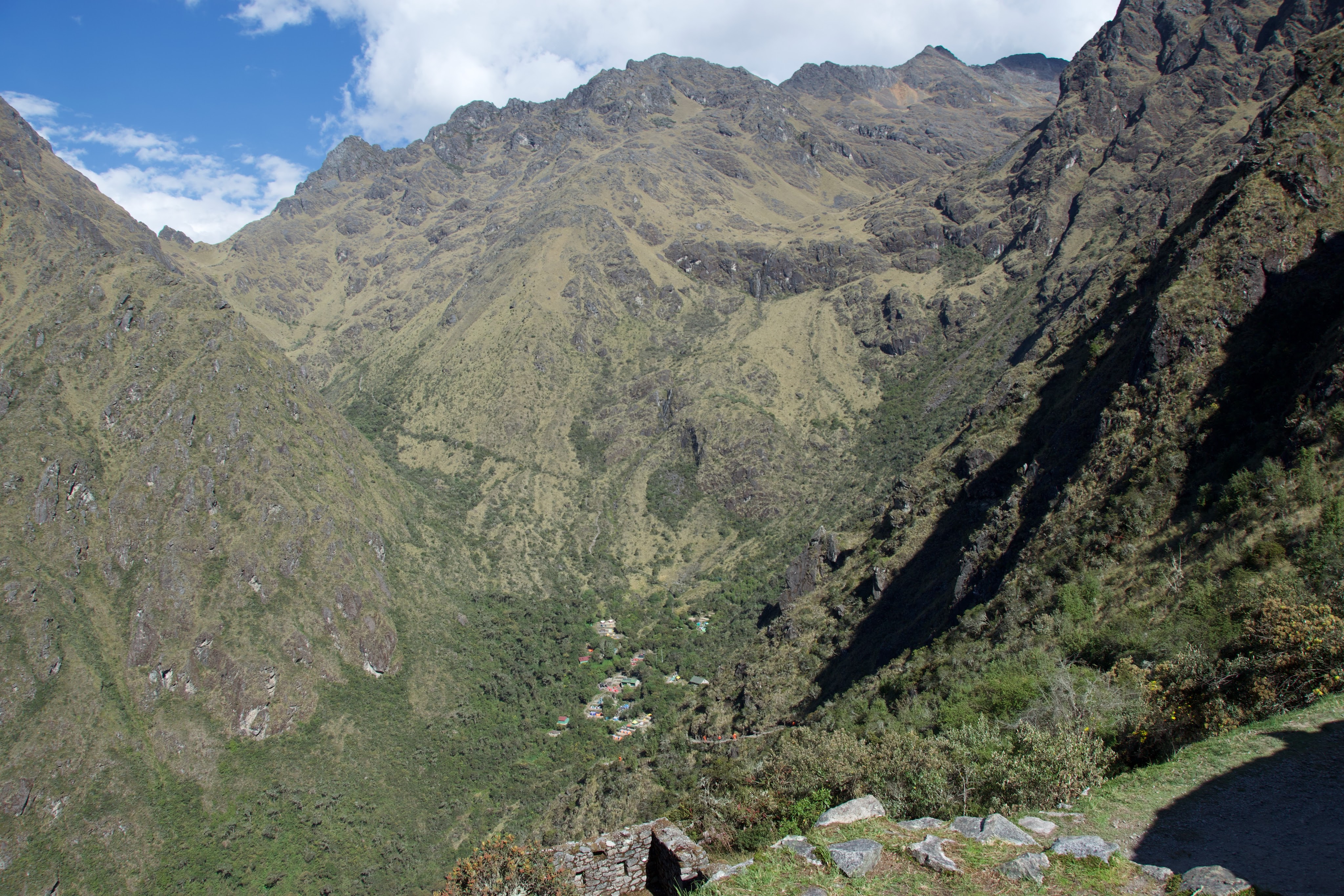
Rolando told us it was primarily used as a messaging post and explained the relay messaging system employed by the Quechuan. He also mentioned a race that had once been run through the Inca trail, the very one that, let me remind you, we were doing over 3 and a bit days. It was no surprise to learn that the race was won by a porter, but the time they did it in? 3 hours 20 minutes – simply astonishing.
You may also have been wondering why the Dead Woman’s Pass is so named. From here Rolando explained it was due to to the shape of the ridge – I’ve tried to highlight below. If you use your imagination, it shows an Incan woman with headdress reclined, feet at the left most side, headdress to the right.

Ricki must have been feeling inspired after learning of the race, and for the remaining ascent, he left me in the dust again. To his credit, he was largely able to keep up with the quickest in the group for this stretch, and I felt a little guilty if he’d been holding back on my account. Despite this climb being about a third of the time and elevation of Dead Woman’s Pass, I found it mentally more taxing, most likely due to the build up of fatigue. By this point we had been on the move for the best part of 9 hours.
At the top of this pass, Ricki “kindly” waited for me to climb a knoll that we were assured by Maggie offered even better views of what we had just climbed and what was coming up. If I’d realised just how much scrambling I would need to do, I might have been inclined just to leave it, but after my slow pace on the last stretch, I was pleased with myself for accomplishing the extra effort.
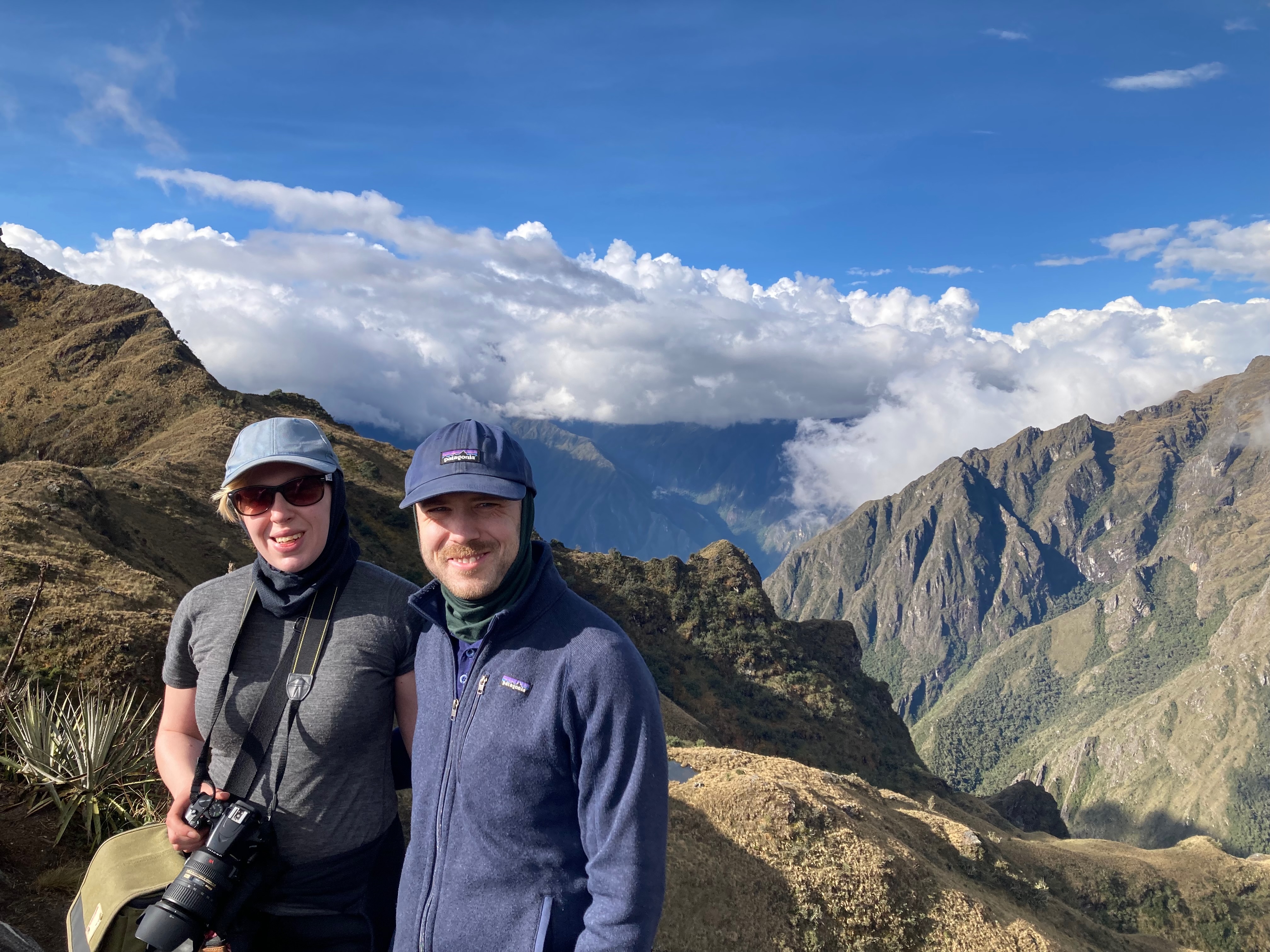
Would the detour come at a cost though? As we got back to the rest stop, Wilbert advised us that there was another archaeological site we could explore, but we had to be there by 5pm, otherwise we would have to bypass it due to the risk of having to walk in the dark.
Despite this time pressure, Ricki held back with me again. I was grateful, as the previous stretch had been a little lonely, wishing I had the ability to join those ahead. The terrain was also changing rapidly, with some steep drops to the side of the trail. It felt safer to be travelling as a pair, particularly when we were part of such a scattered group.
We were now entering the cloud forest, and I was looking forward to the change of scenery from mountainous highland, to lush jungle. It was at this point that I could also see the benefit of not sticking with the pack. Something about the ambience of the drifting clouds, the lowering sun and more audible sounds of wildlife felt better experienced in isolation. It also made bird spotting a lot easier, as with a few patient, quiet pauses we managed to catch sight of two varieties of hummingbird.
We couldn’t stop for too long though, as we had that 5pm deadline to meet.
Although we had now seen several archaeological sites, Sayacmarca delivered real wow factor, appearing through the clouds, perched on the hillside. You could easily imagine some mystical events taking stage here.
We had just enough time (if not enthusiasm) to climb the steep steps up to the site and have a look round, the surrounding cloud cover making it feel completely detached from the well traversed Inca trail.
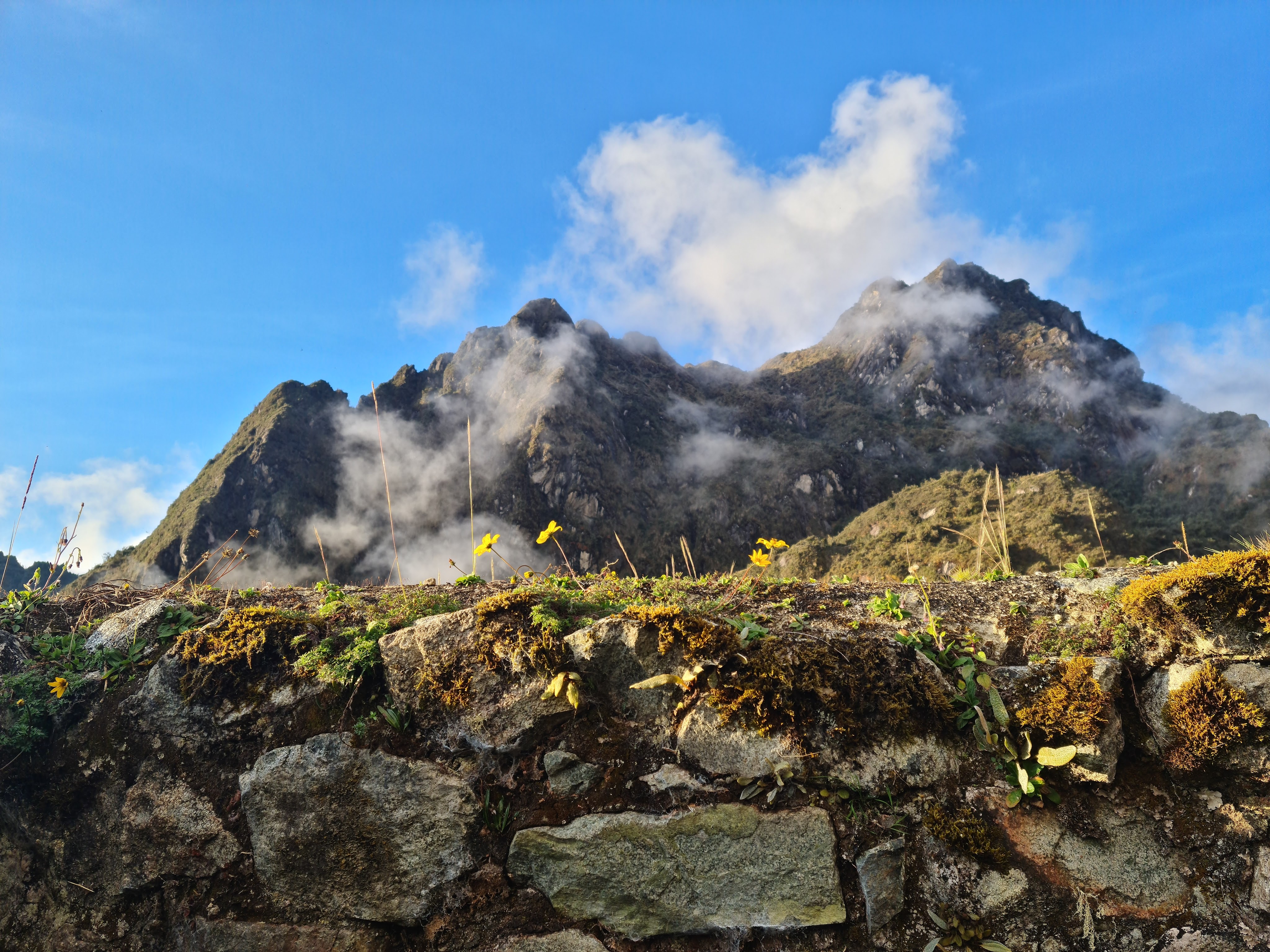
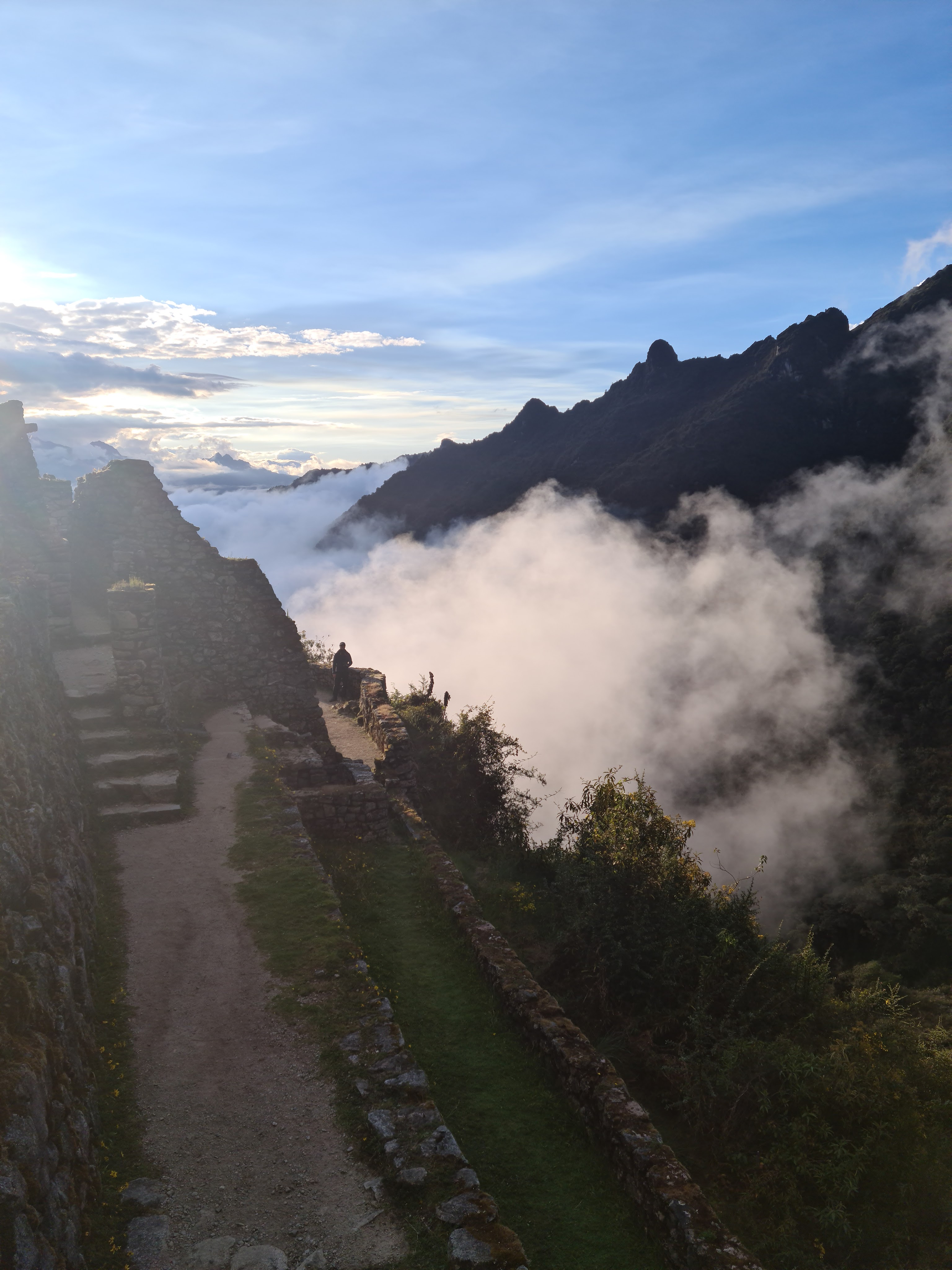
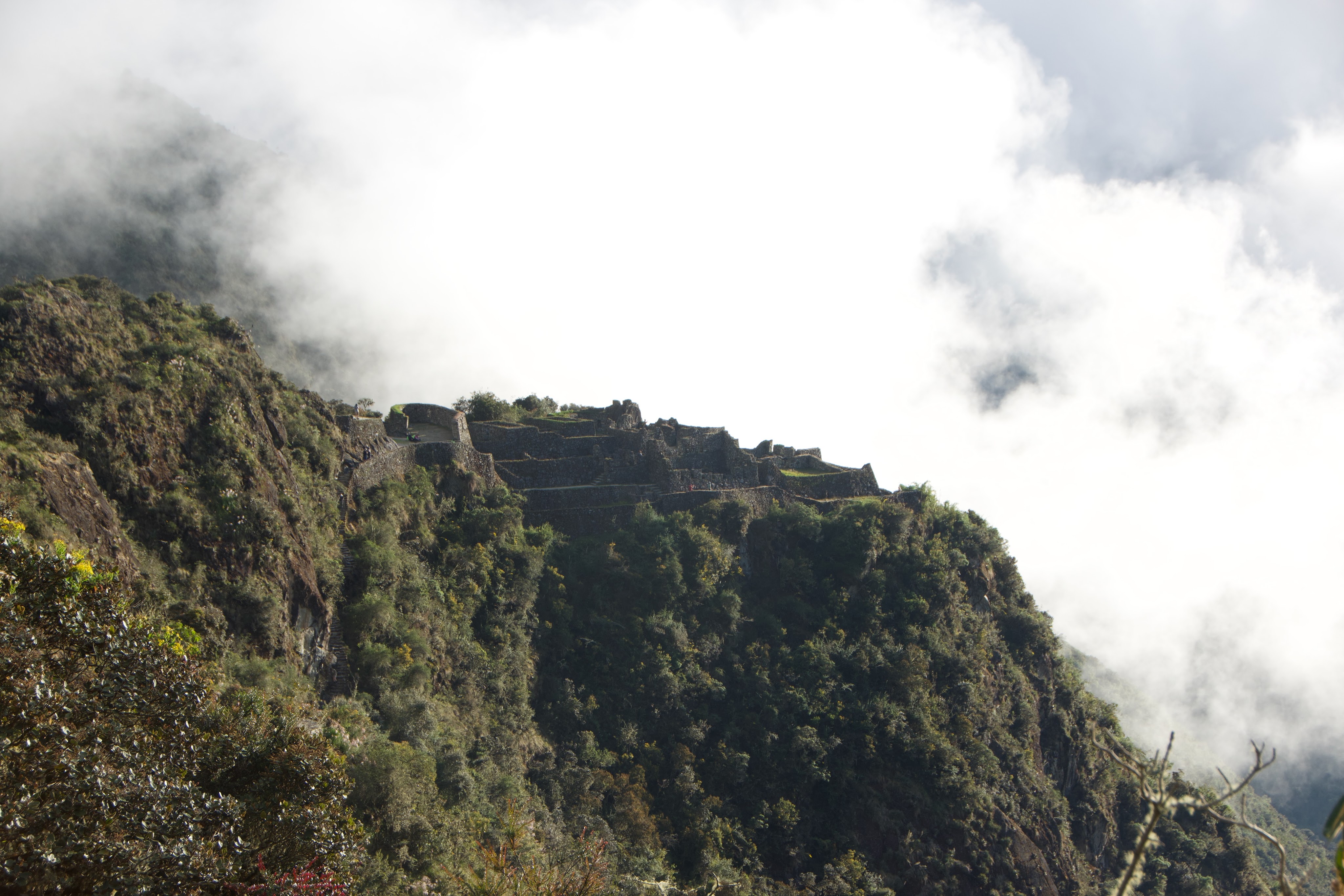
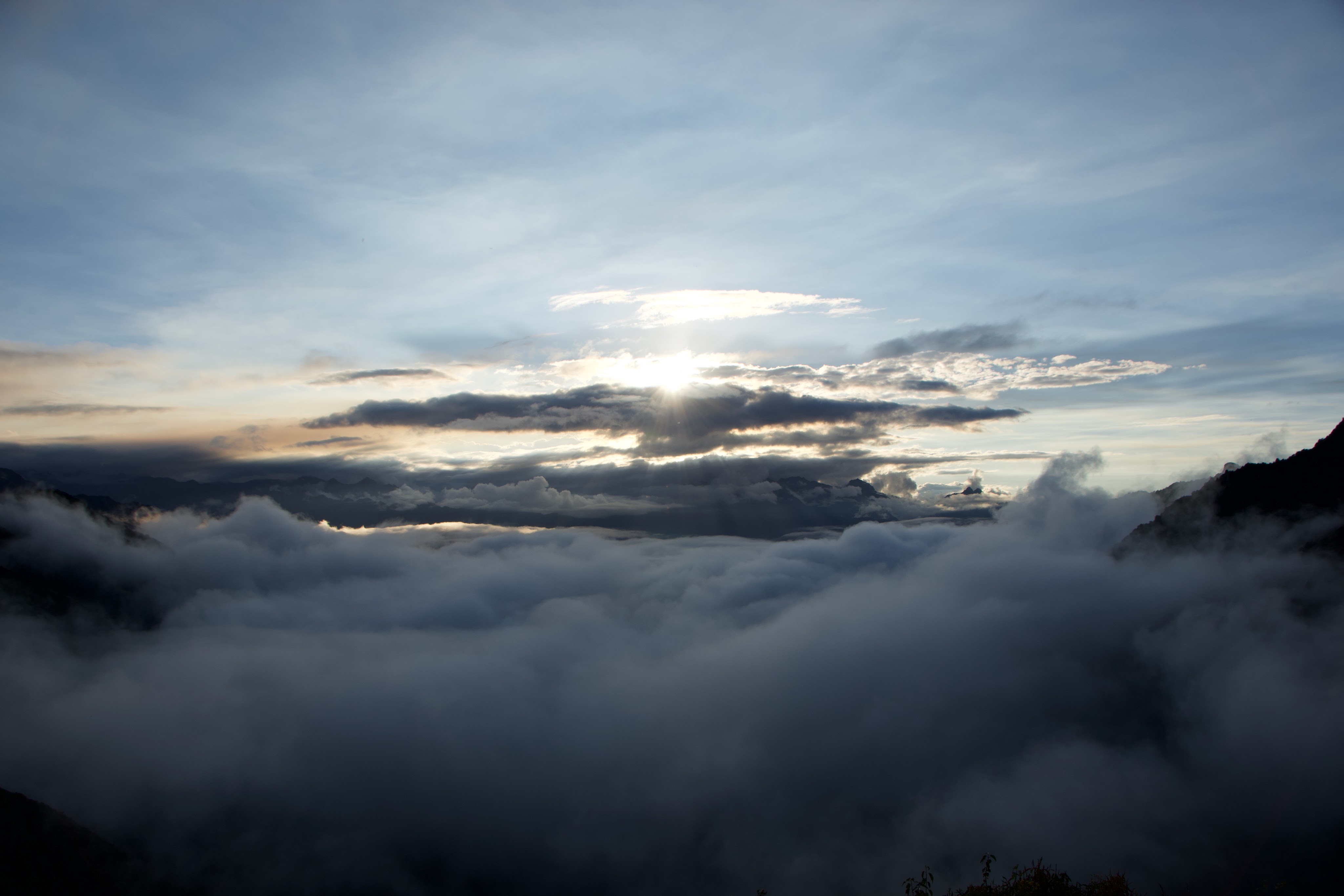

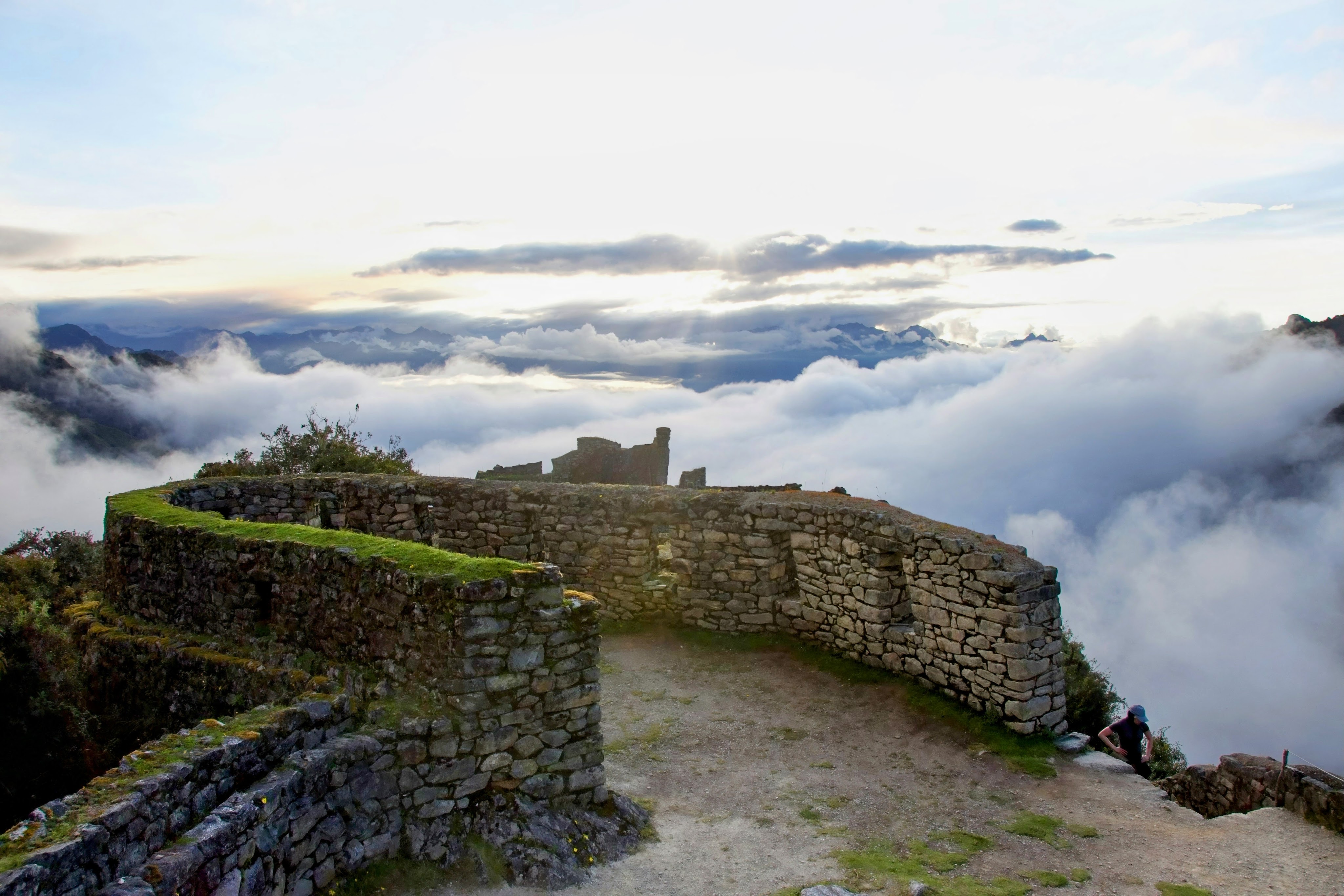
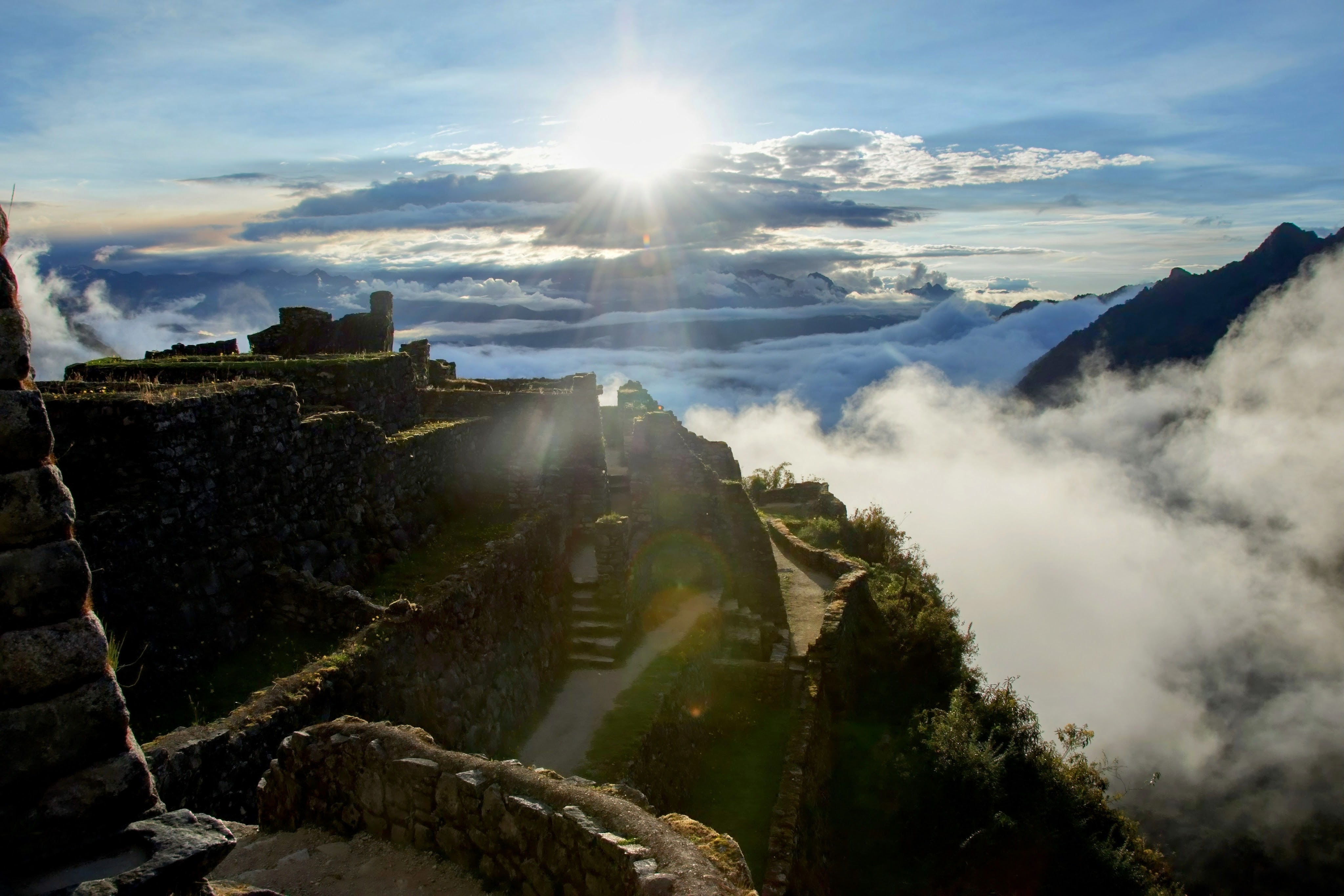
From there, we made a quick(ish) descent to camp before the cover of darkness arrived, the chirp of crickets now chorusing in surround sound.
I think this, Chaquicocha (Dry Lake), was the most picturesque of the three camps we had, with almost uninterrupted views over a valley. Looking up, rather than out, was also a treat at night once the stars had come out. It certainly made any midnight trips to the toilet tent a lot more bearable!
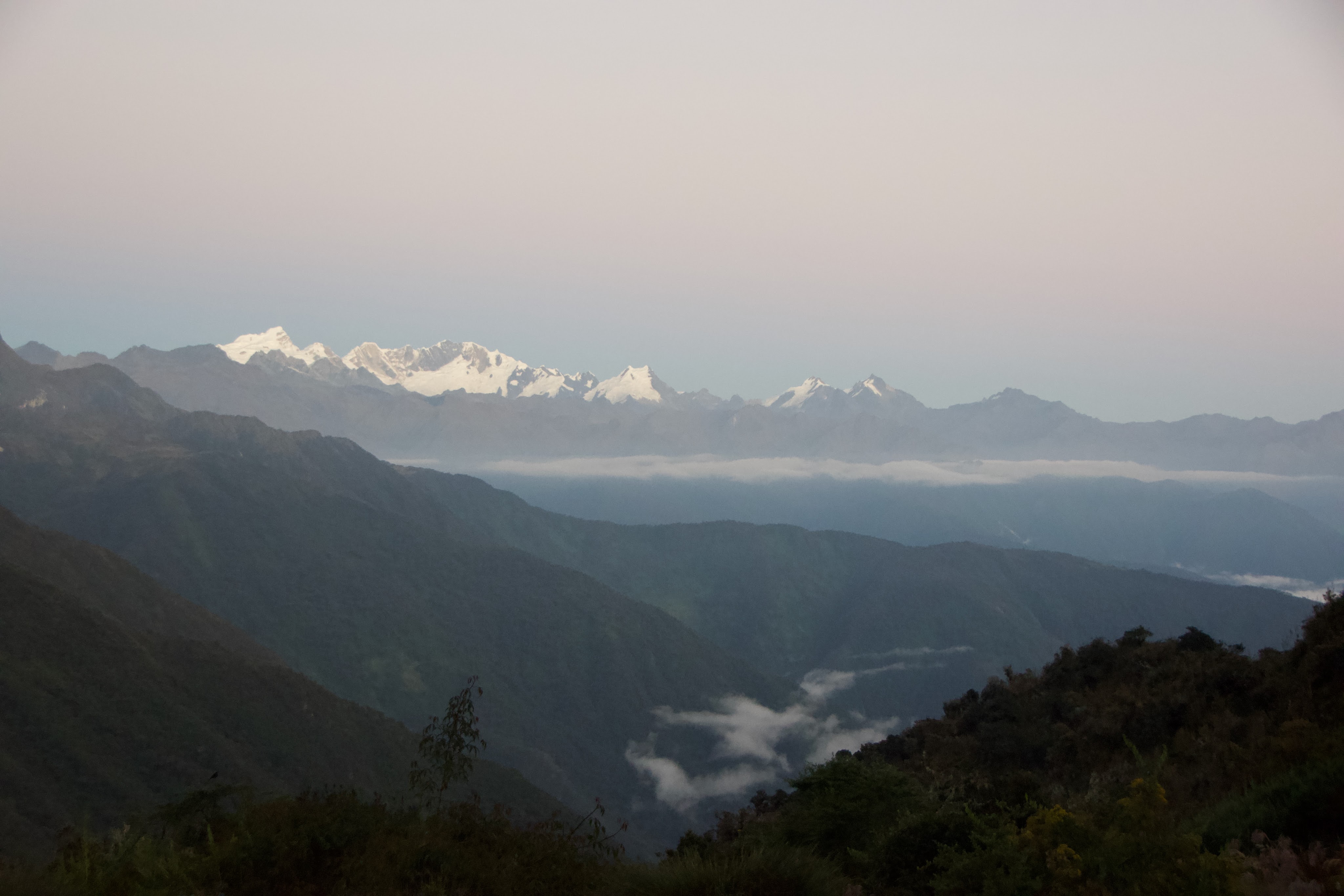
There was definitely a celebratory atmosphere that night, as although we weren’t done yet, we had now broken the back of the hike. The two hardest passes, vanquished in a single day.
In gratitude for our safe traversal, we completed a sacrificial ritual, offering up a flaming guinea pig to the Inca gods…Just kidding. Kind of. Chef Melquíades had distilled the camping experience of toasting marshmallows into vegetable form, and you’d think we were small kids from the reaction it received.


With less distance to cover, the next day we were treated to a long lie until 5.20am(!). Granted the worst of the trek was now behind us, we still had a further hour and a half of uphill effort to get through, broken up by some demonstrations from Wilbert, who then even serenaded us with an Andean flute.
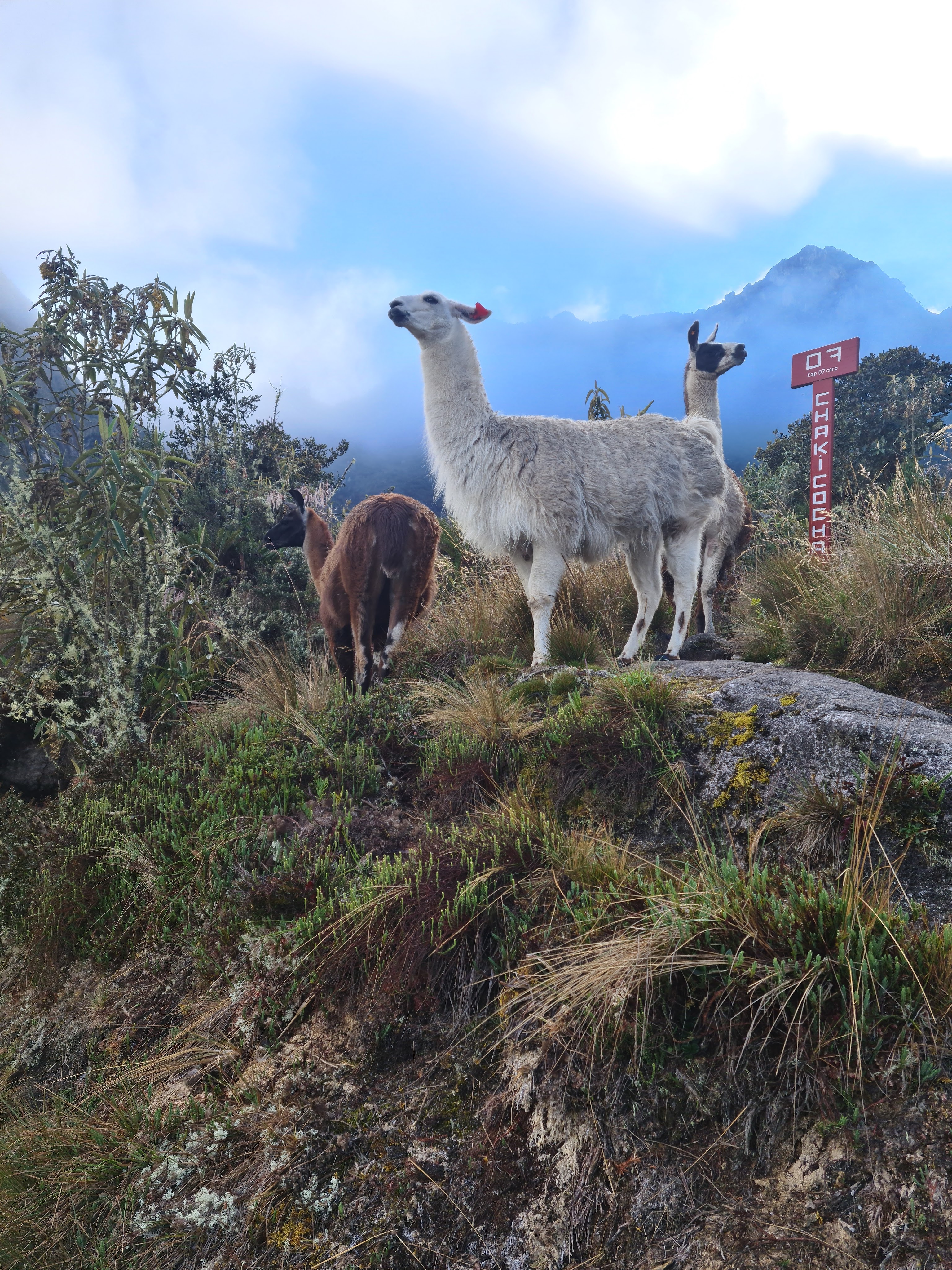
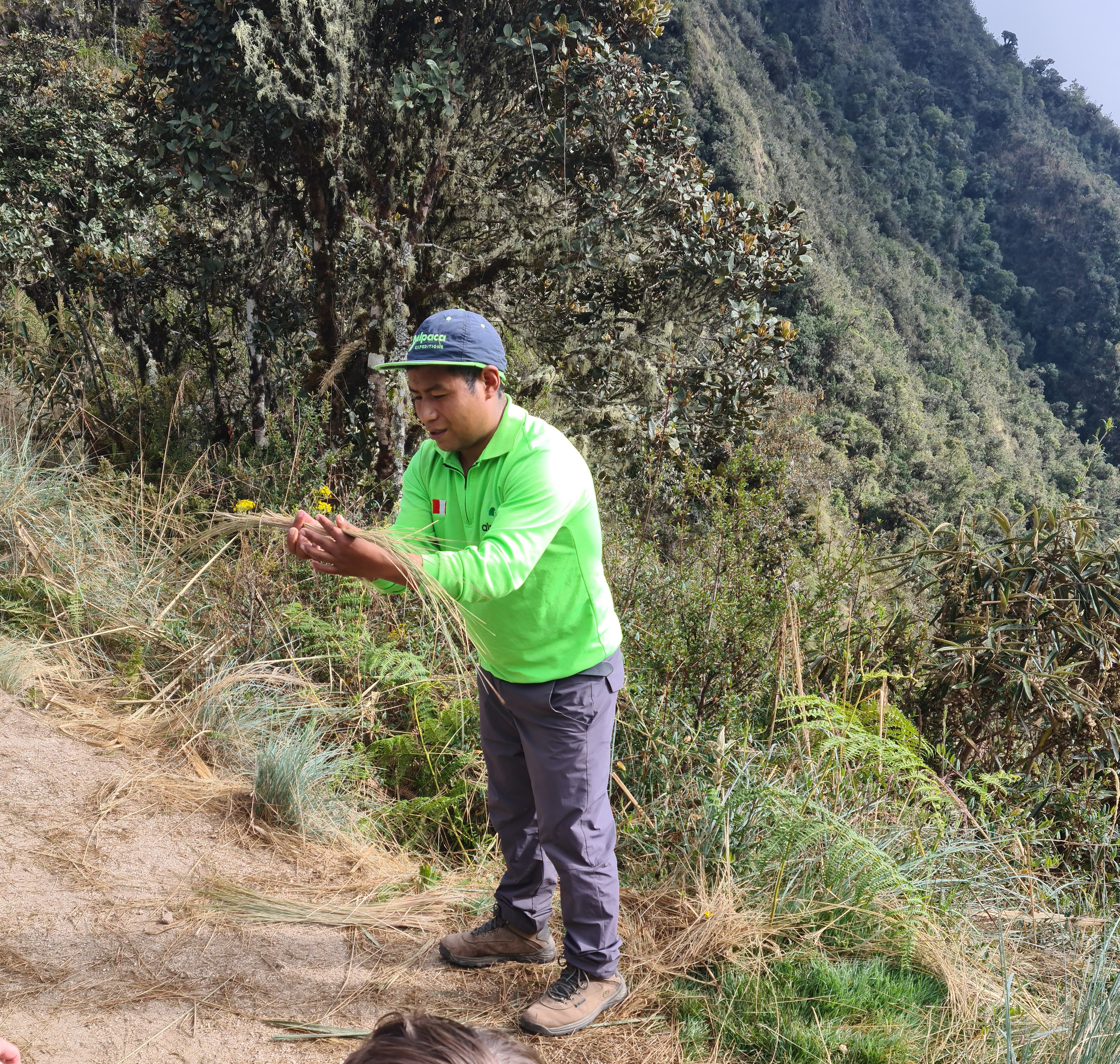
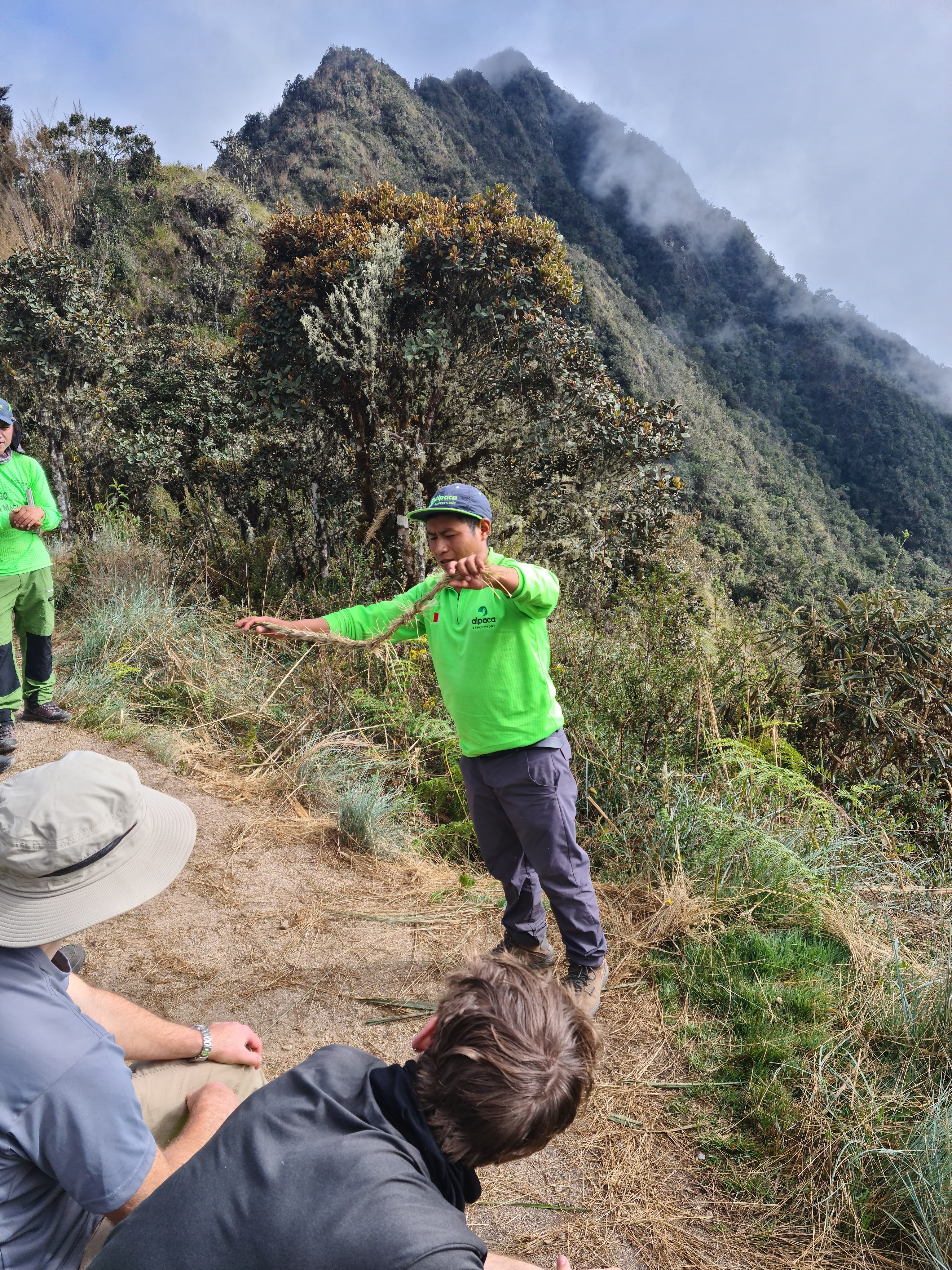
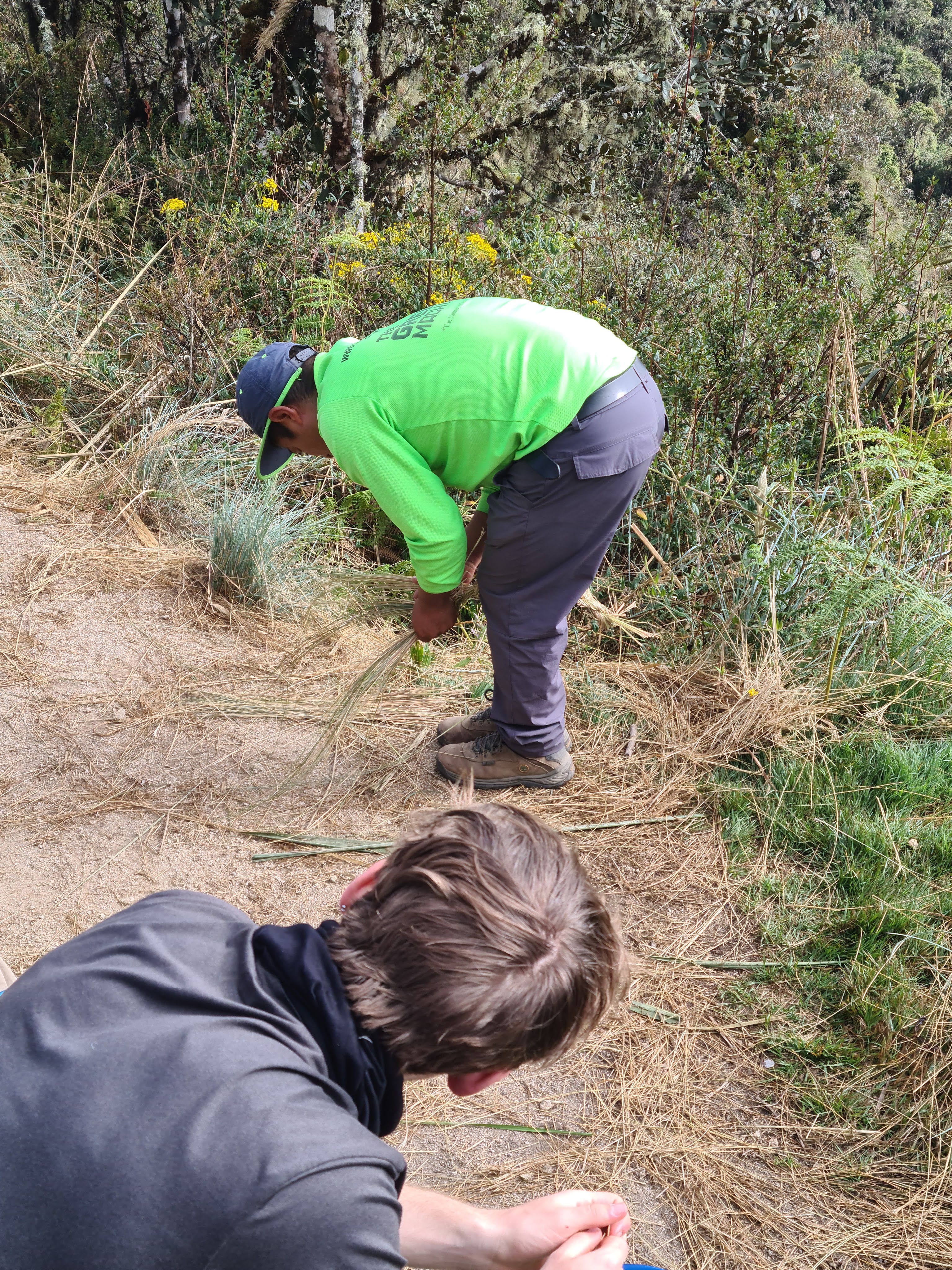
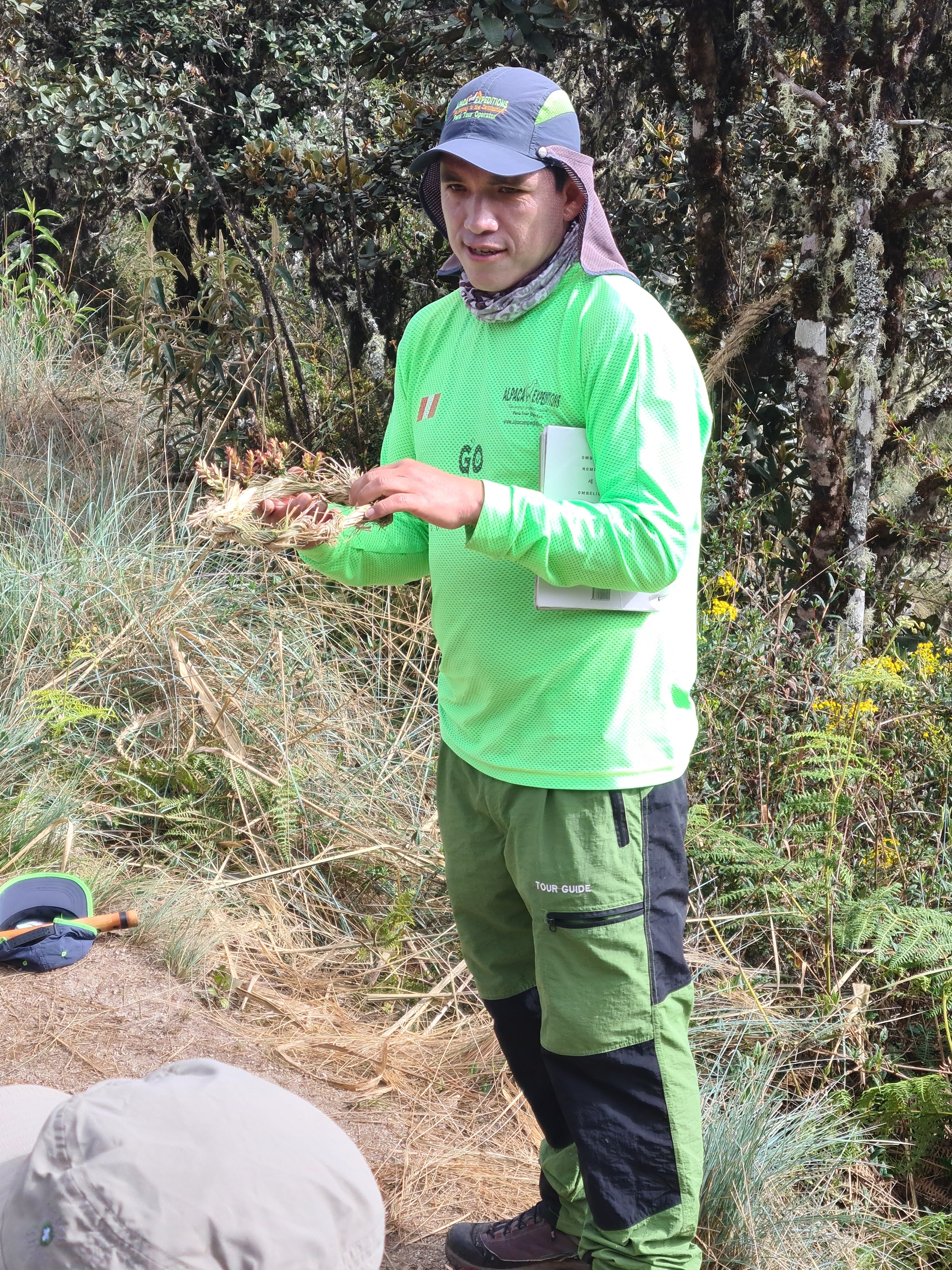
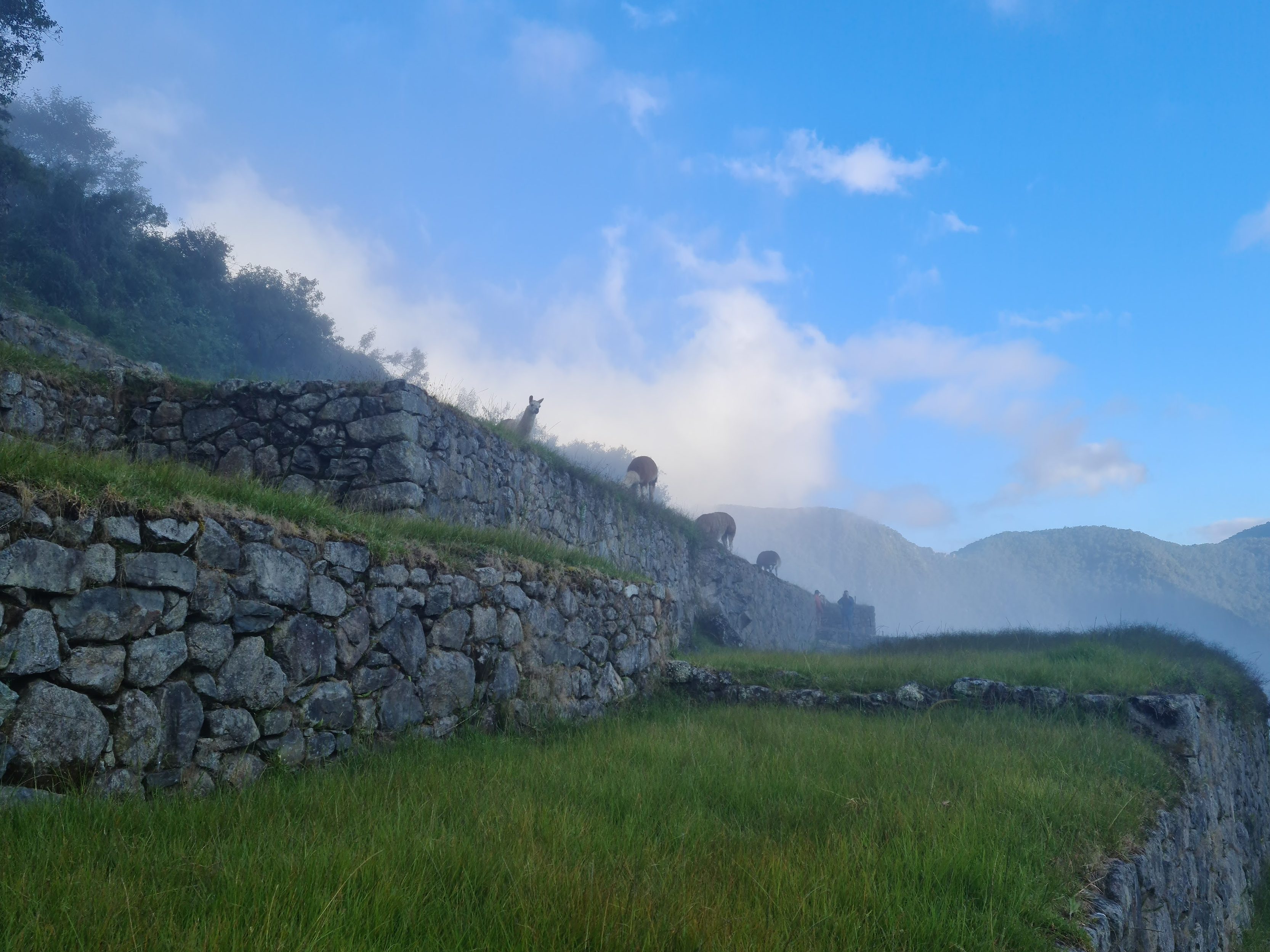
Some alpacas cheered us on as we set off in the morning; Wilbert braids grass reeds into rope; Rolando prepares a grass and flower crown
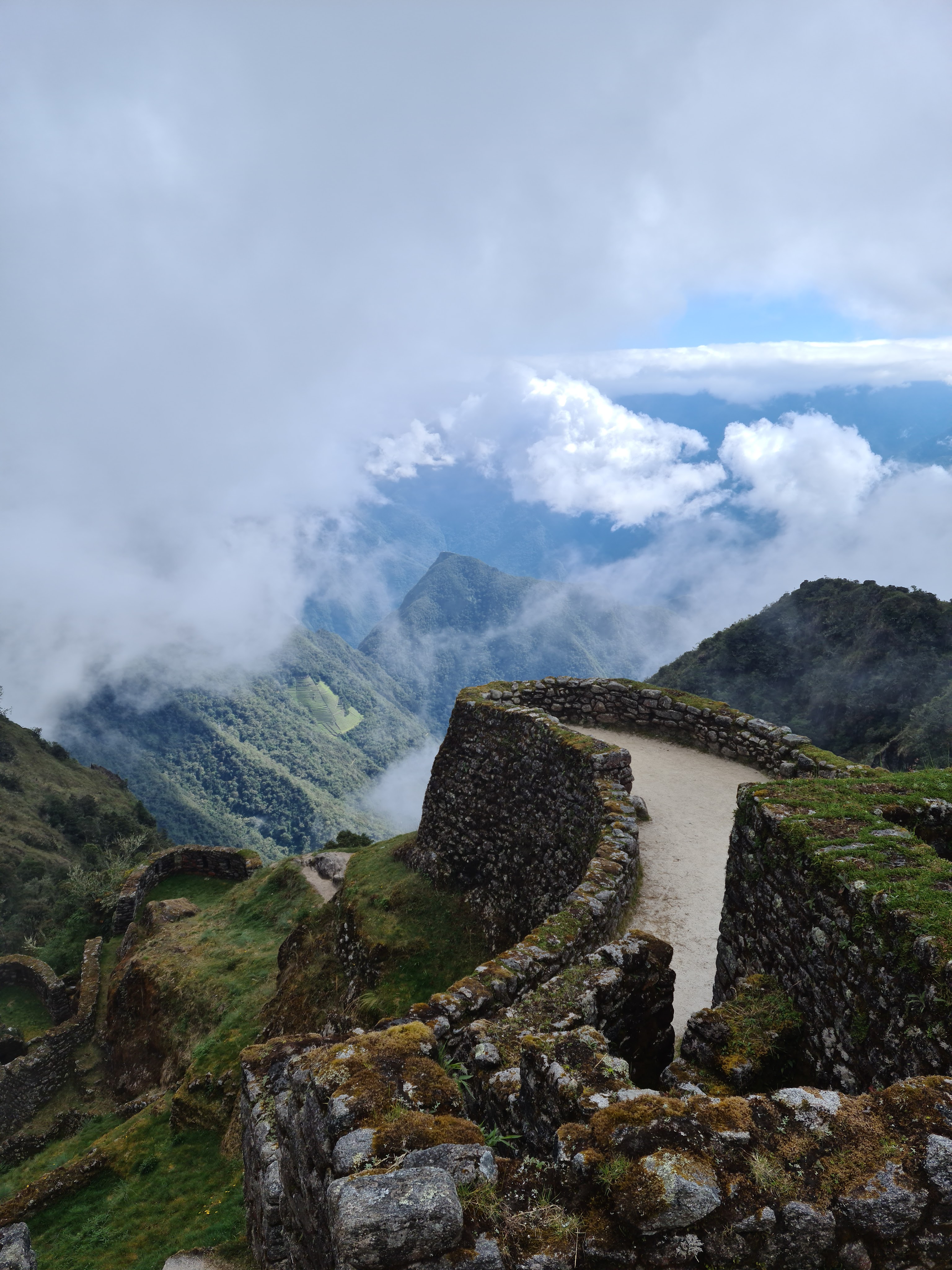

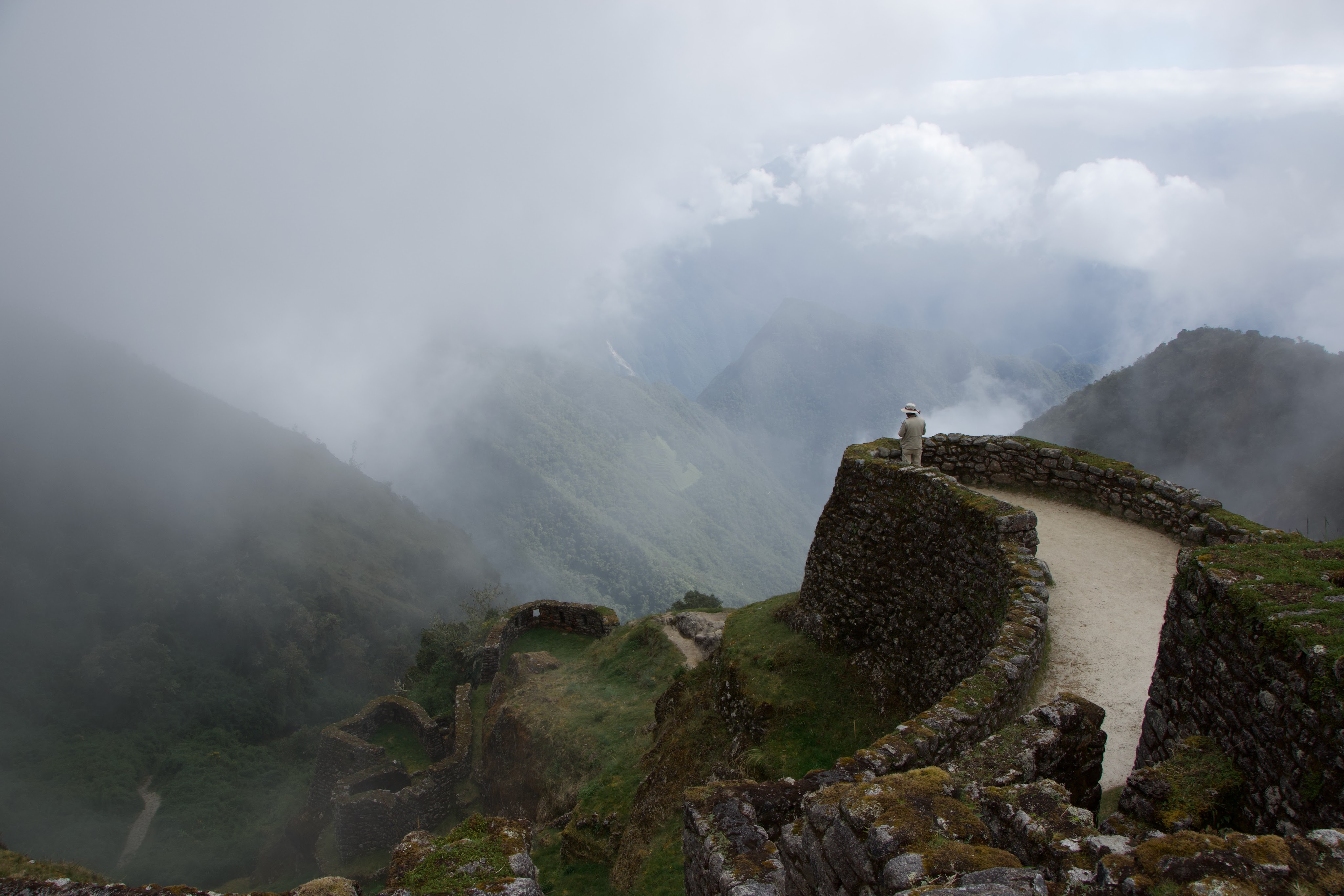
A short stop at Phuyupatamarca (Village above Clouds)
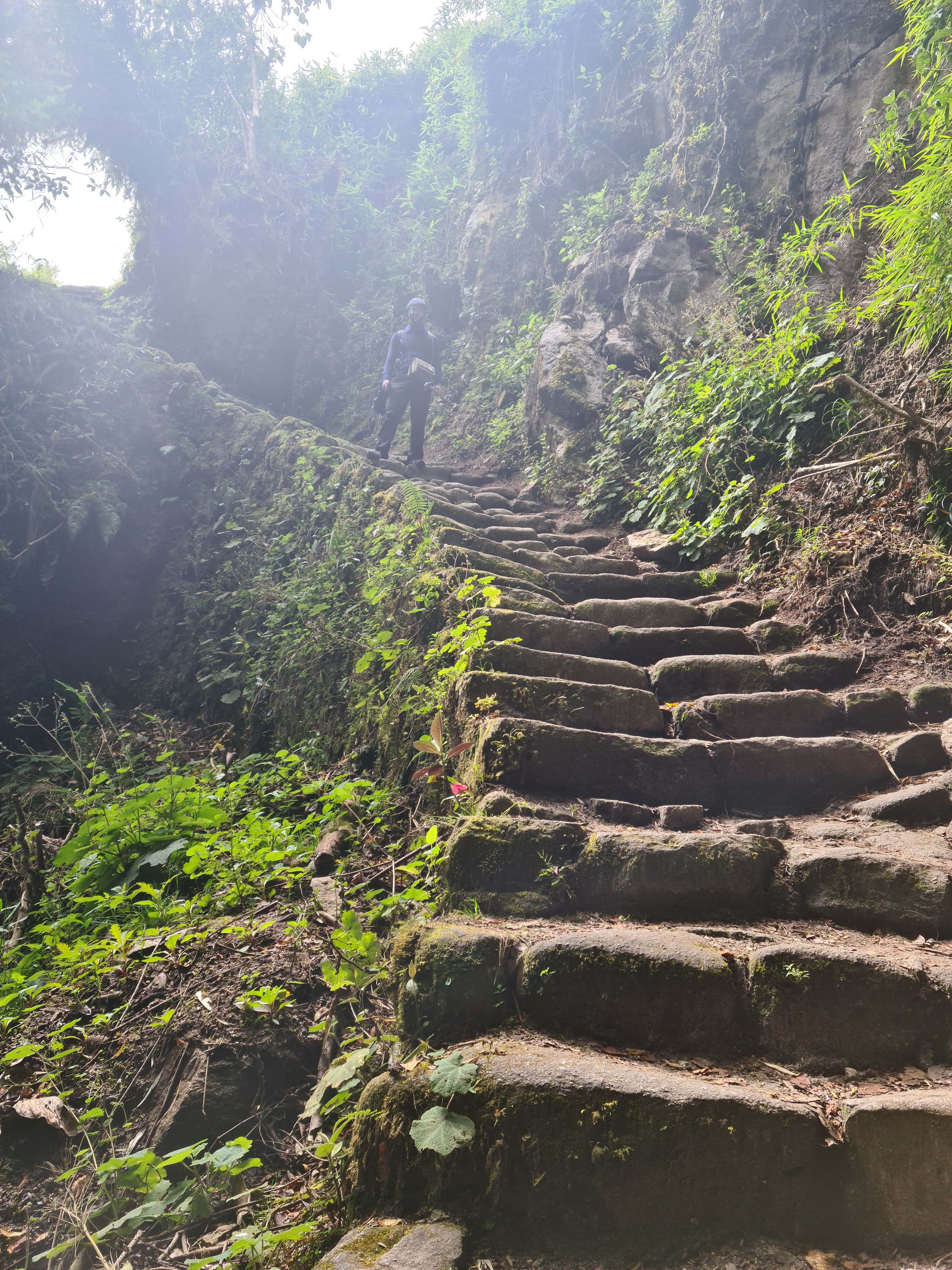
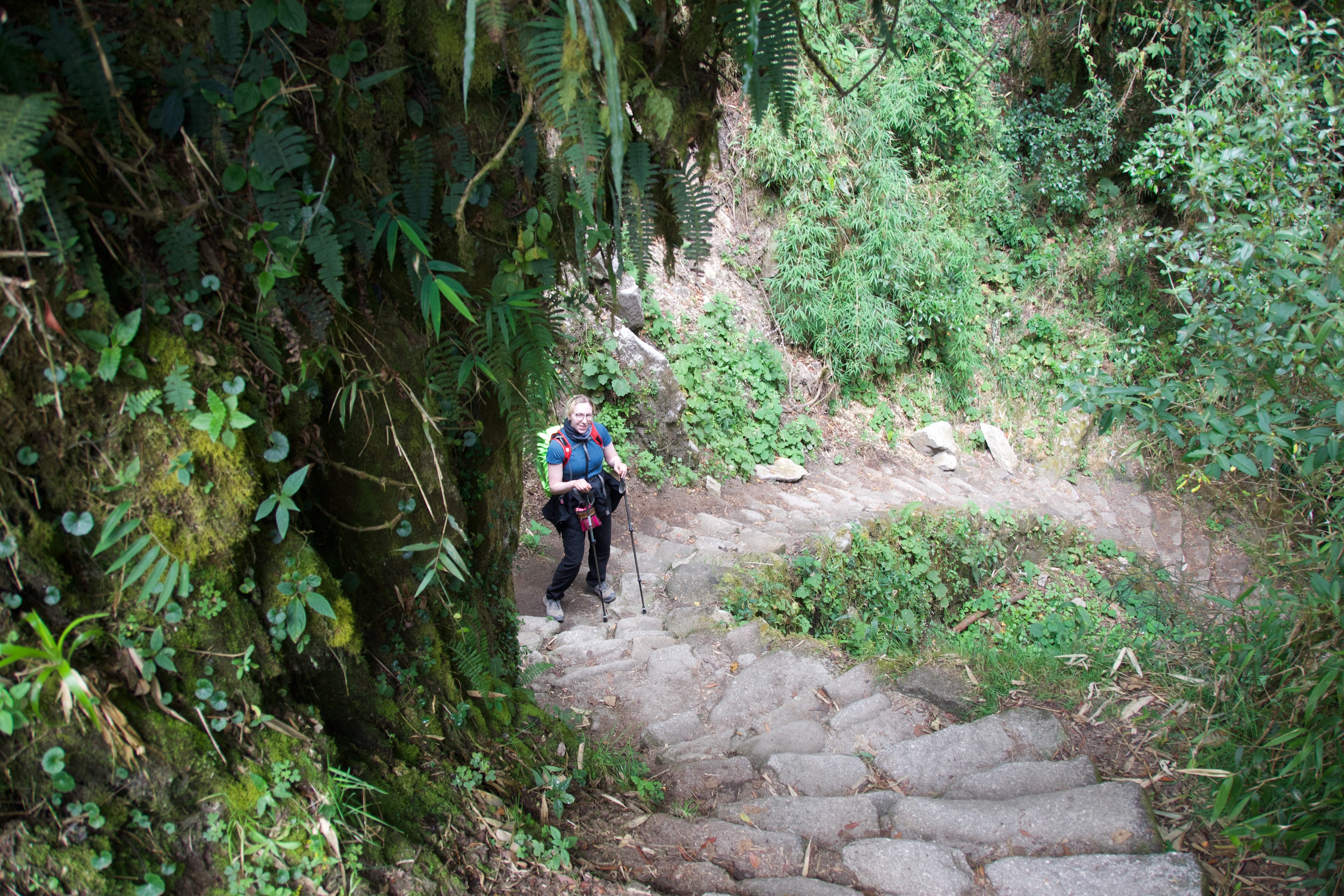
A steep, stepped descent through the jungle followed and it was here we were particularly glad of being on the trail during the dry season. Those stone steps would be treacherous in the rain. As it stood though, I was actually able to get a bit of a pace up here, even putting some distance between Ricki and I. Or perhaps he was just discreetly massaging my ego.
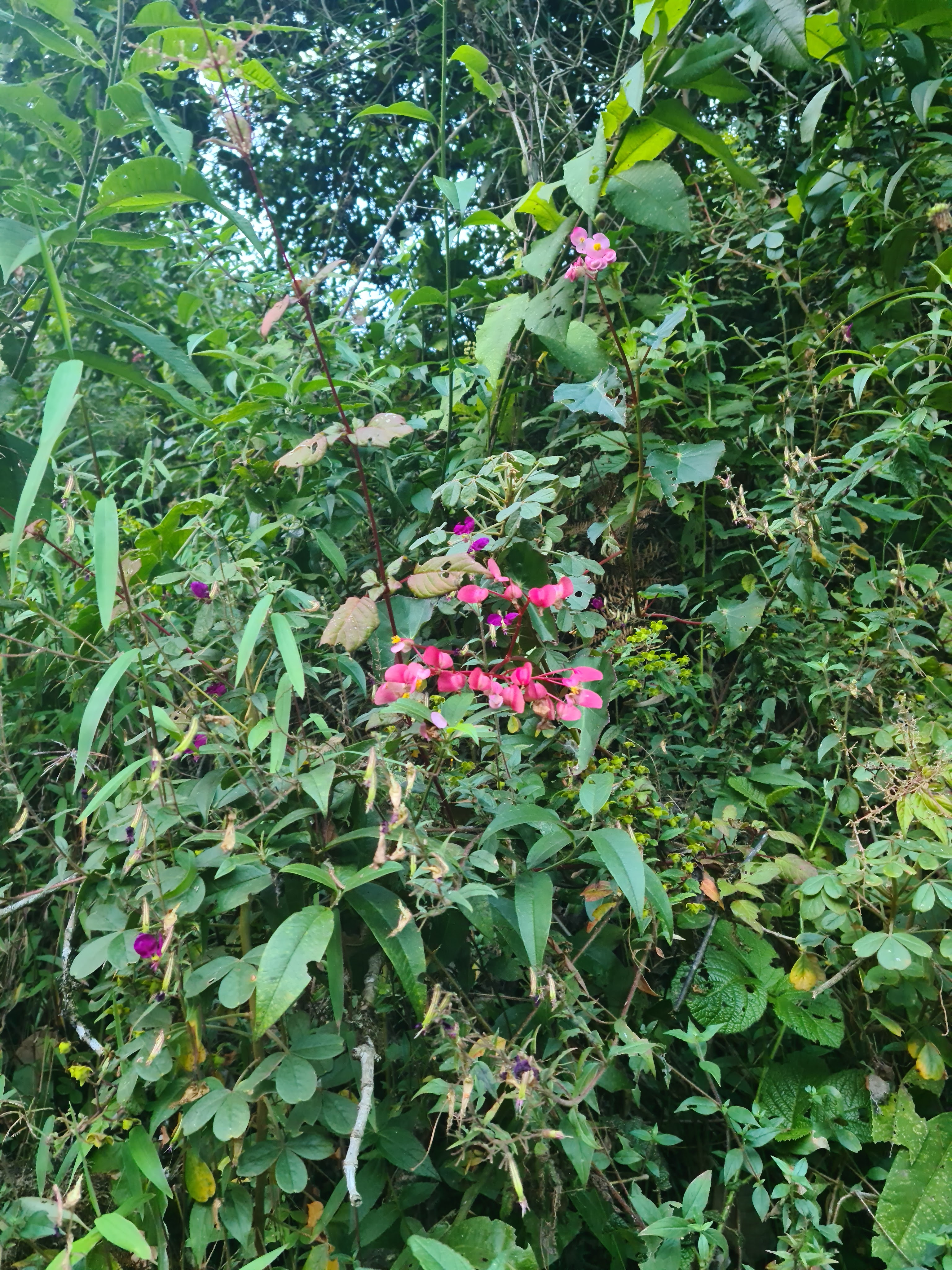
Not just because of feeling comfortable at pace, but I found this part of the trek particularly pleasing. The path was punctuated by varieties of small orchids. Through the foliage of the jungle plants, the beautiful views continued and some of the bravest butterflies I’ve seen this year would zig zag across the trail in front of us. Occasionally there would be fresh plant scents as well, which were an improvement on the “alpaca plants” we had been encountering in the first couple of days, nicknamed for their pungent aroma. Until they had been explained to us, I had just thought someone had been sneaking beans for breakfast!


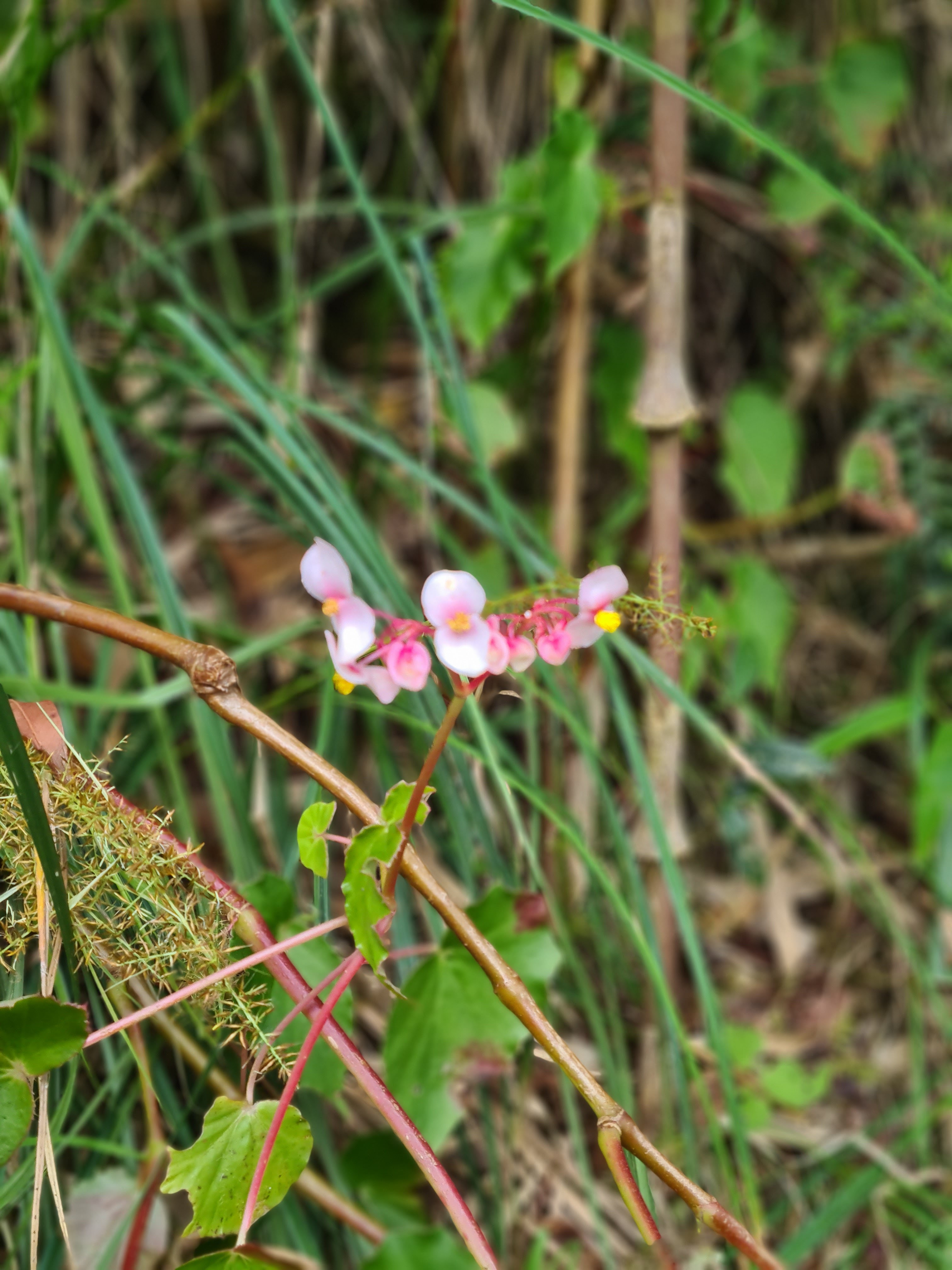
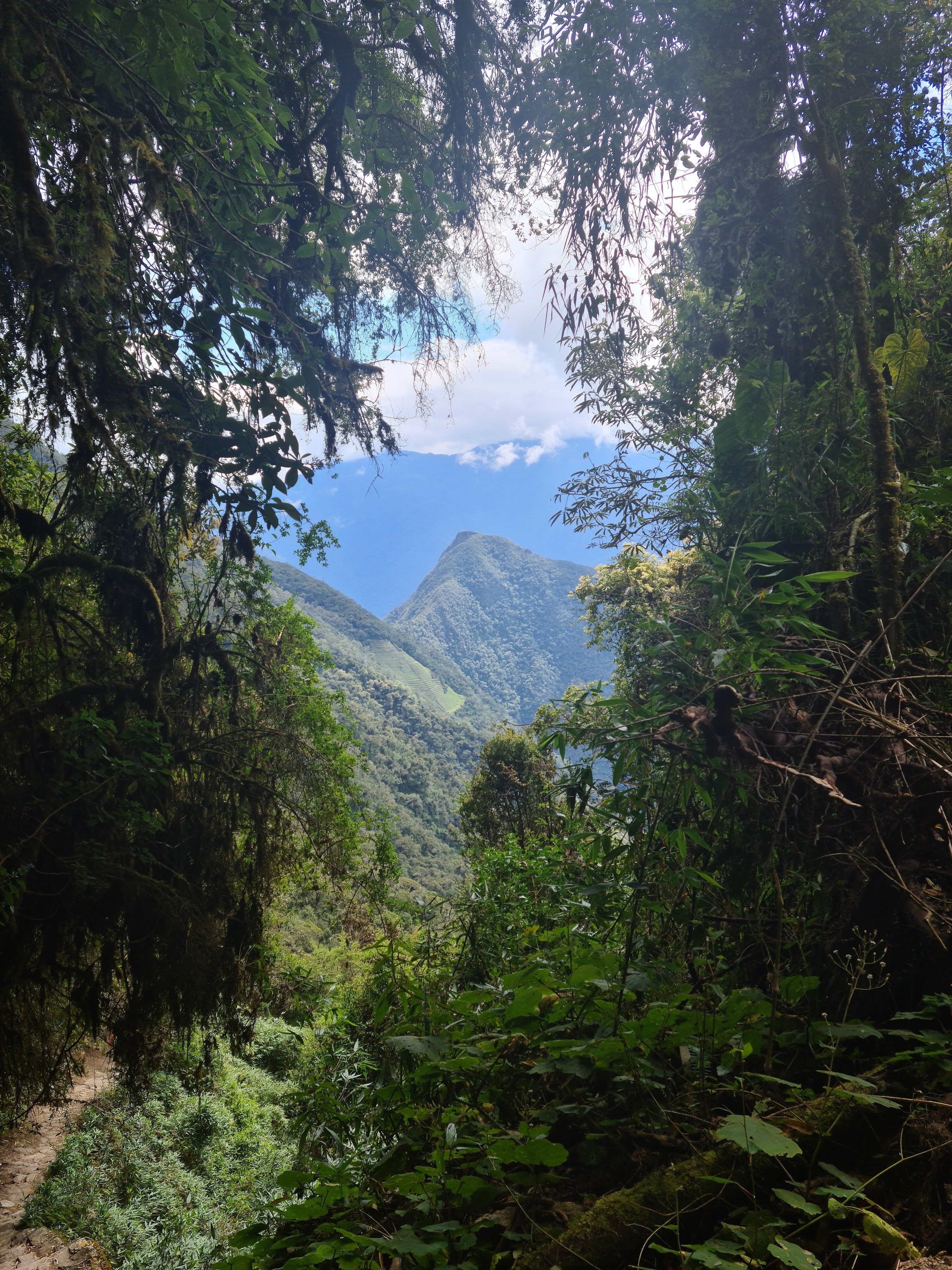
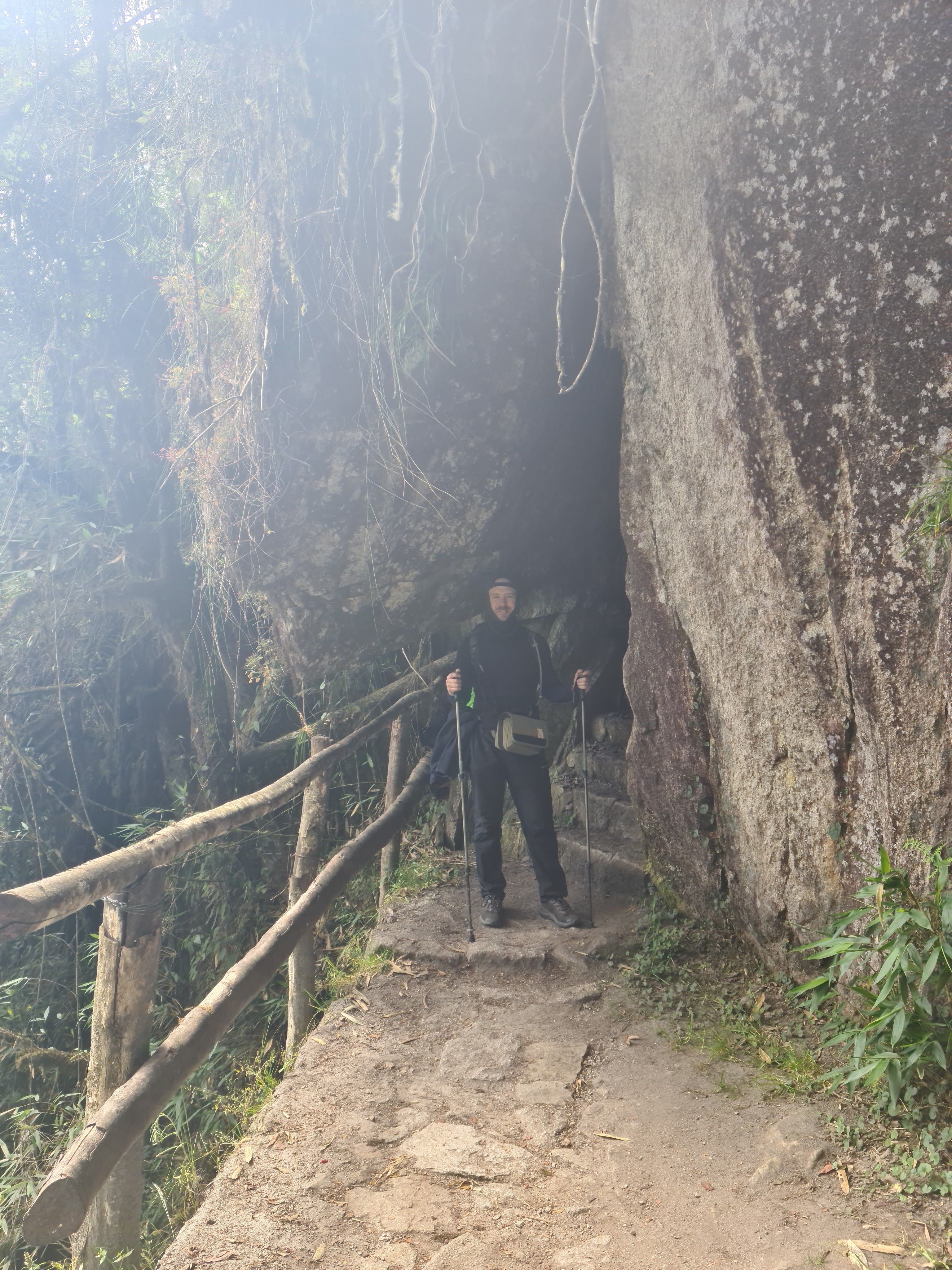
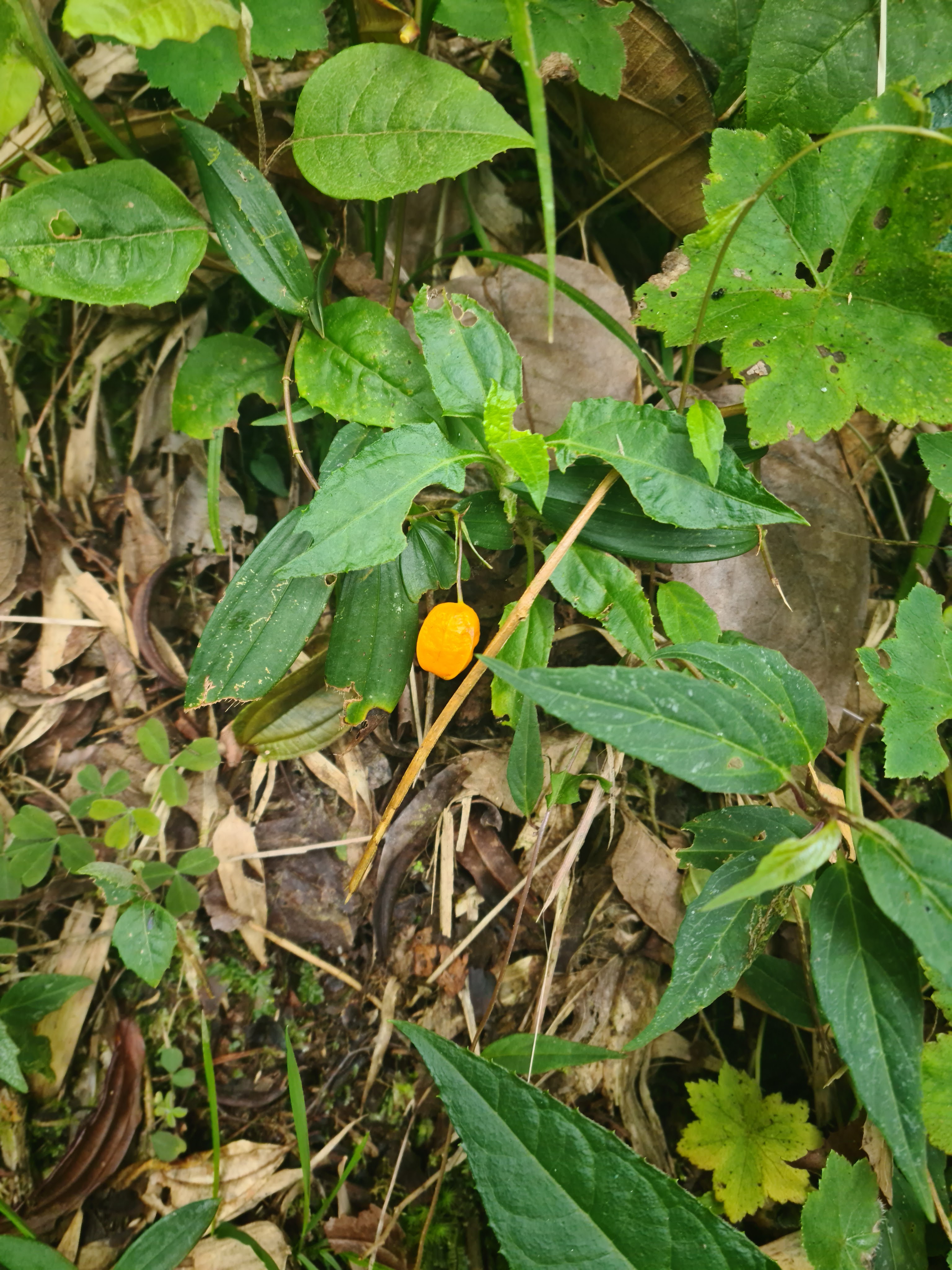
And just like that, not even at lunch yet, we were done with hiking for the day.
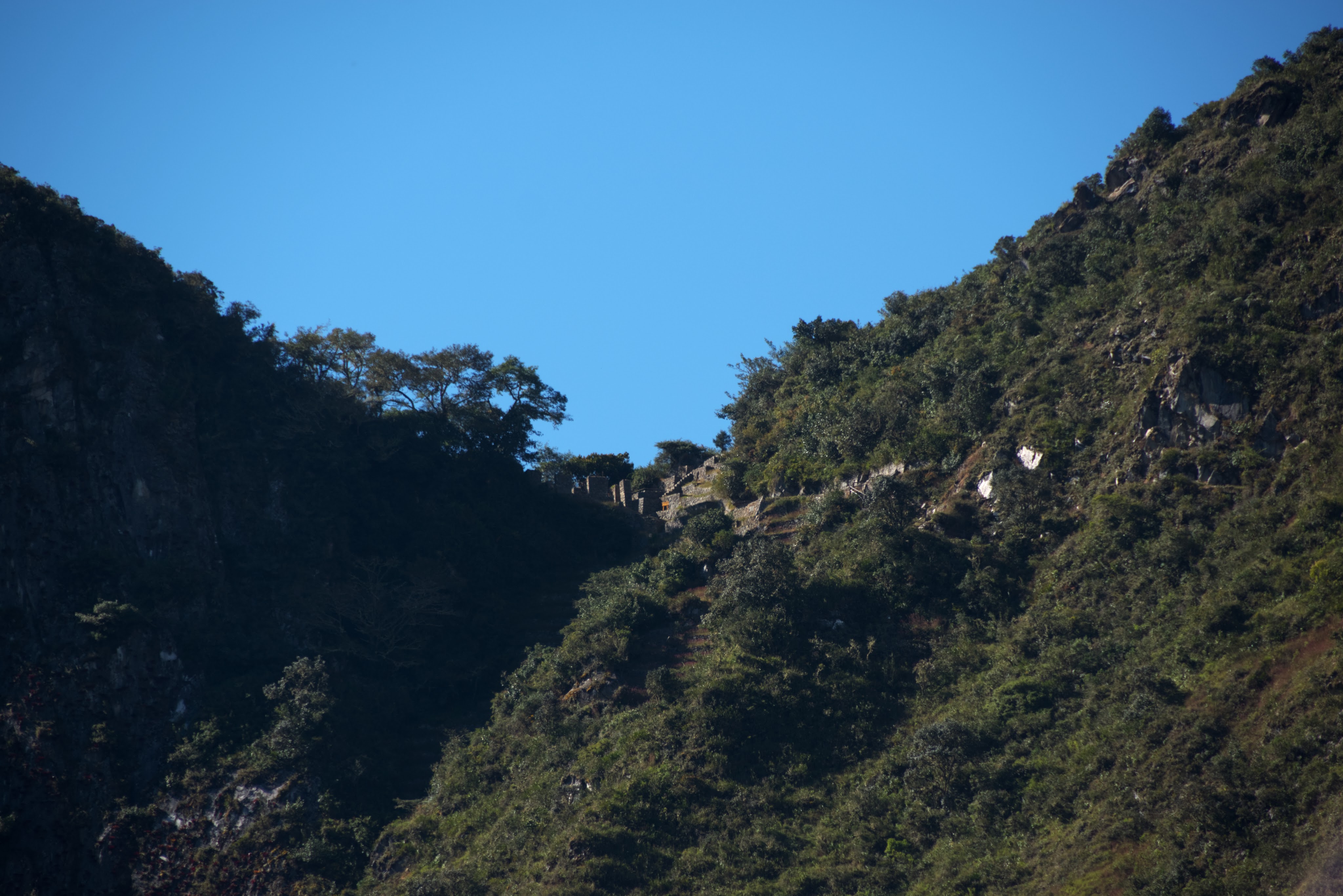
At Intipata (Terraces of the Sun), we sat unusually quietly, taking in the scenery below us and the swooping acrobats of swallows.
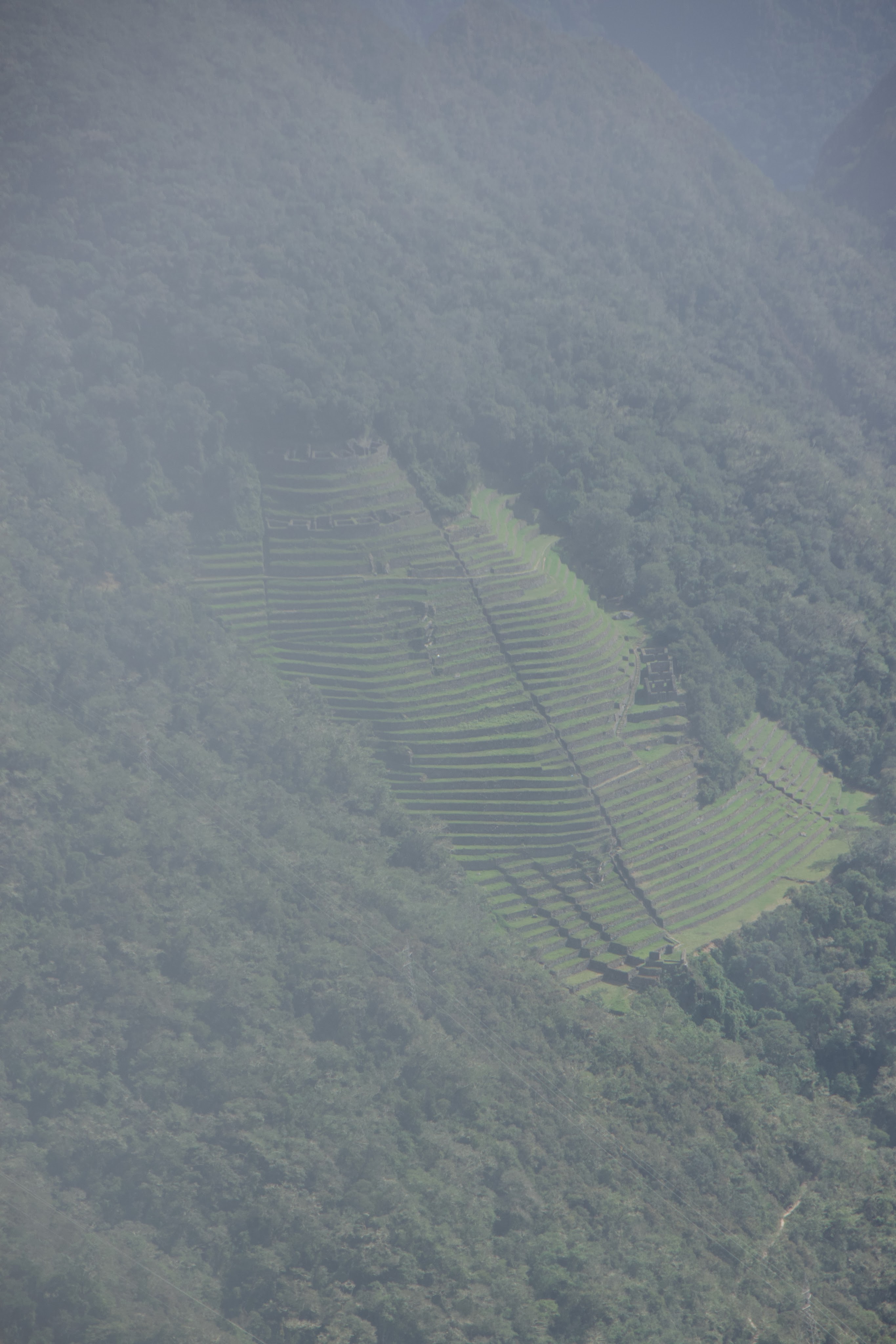
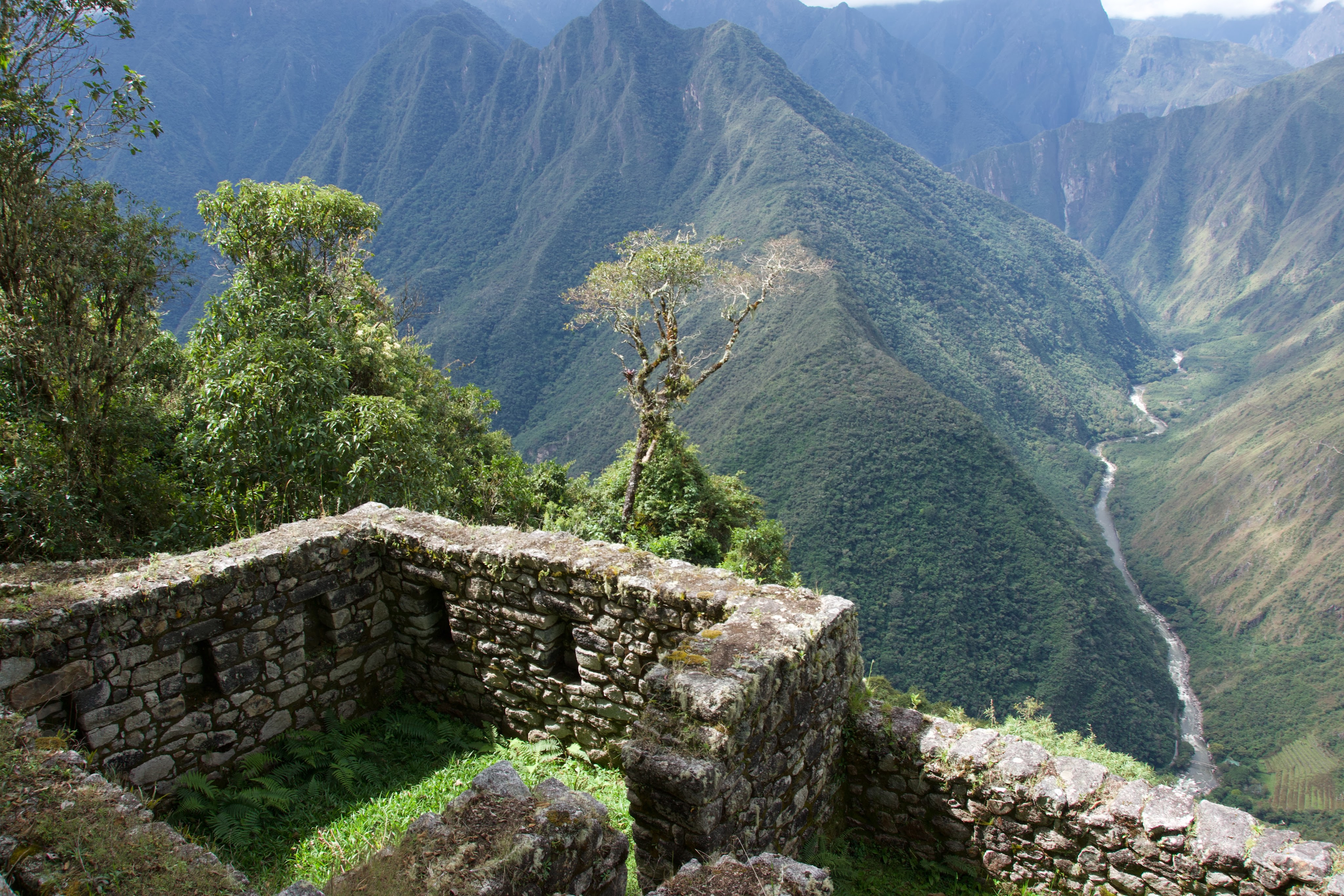
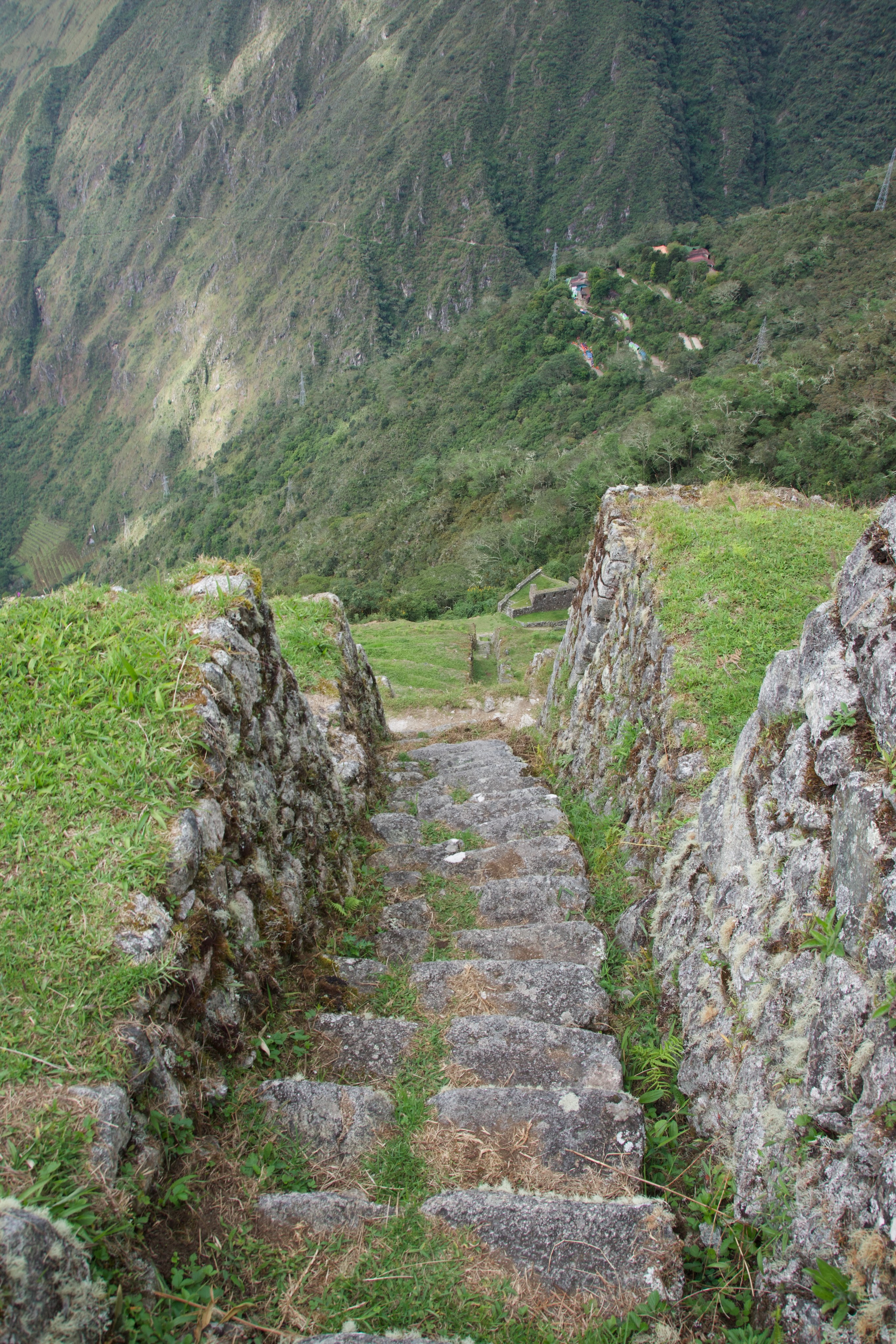

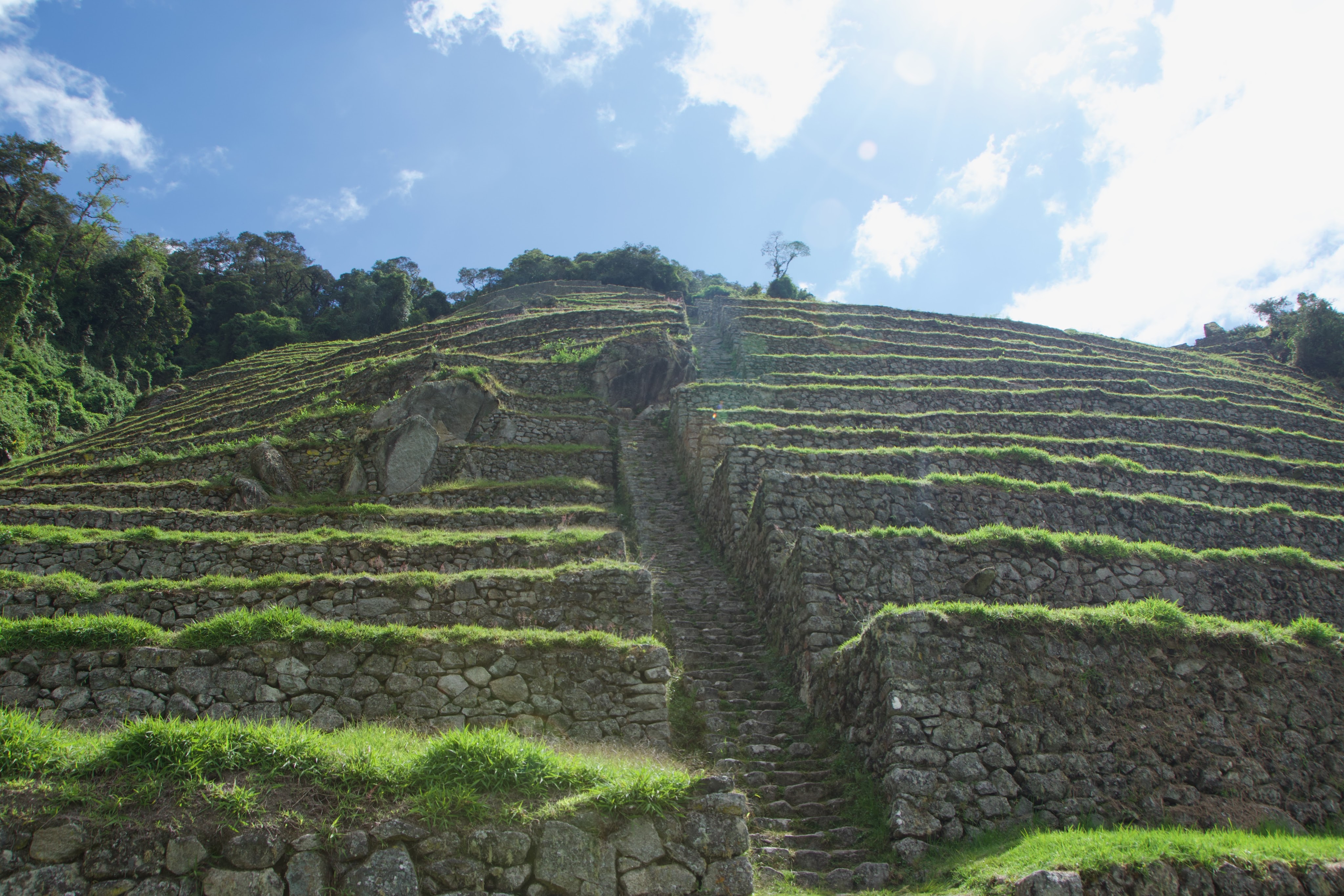
As with other points in the trek, every now and again the peace would be interrupted by the “choo chooooo” of the train service echoing through the valley, or the engine of an aeroplane above. By this point we felt so far from civilization that the latter interruption always caught me by surprise.
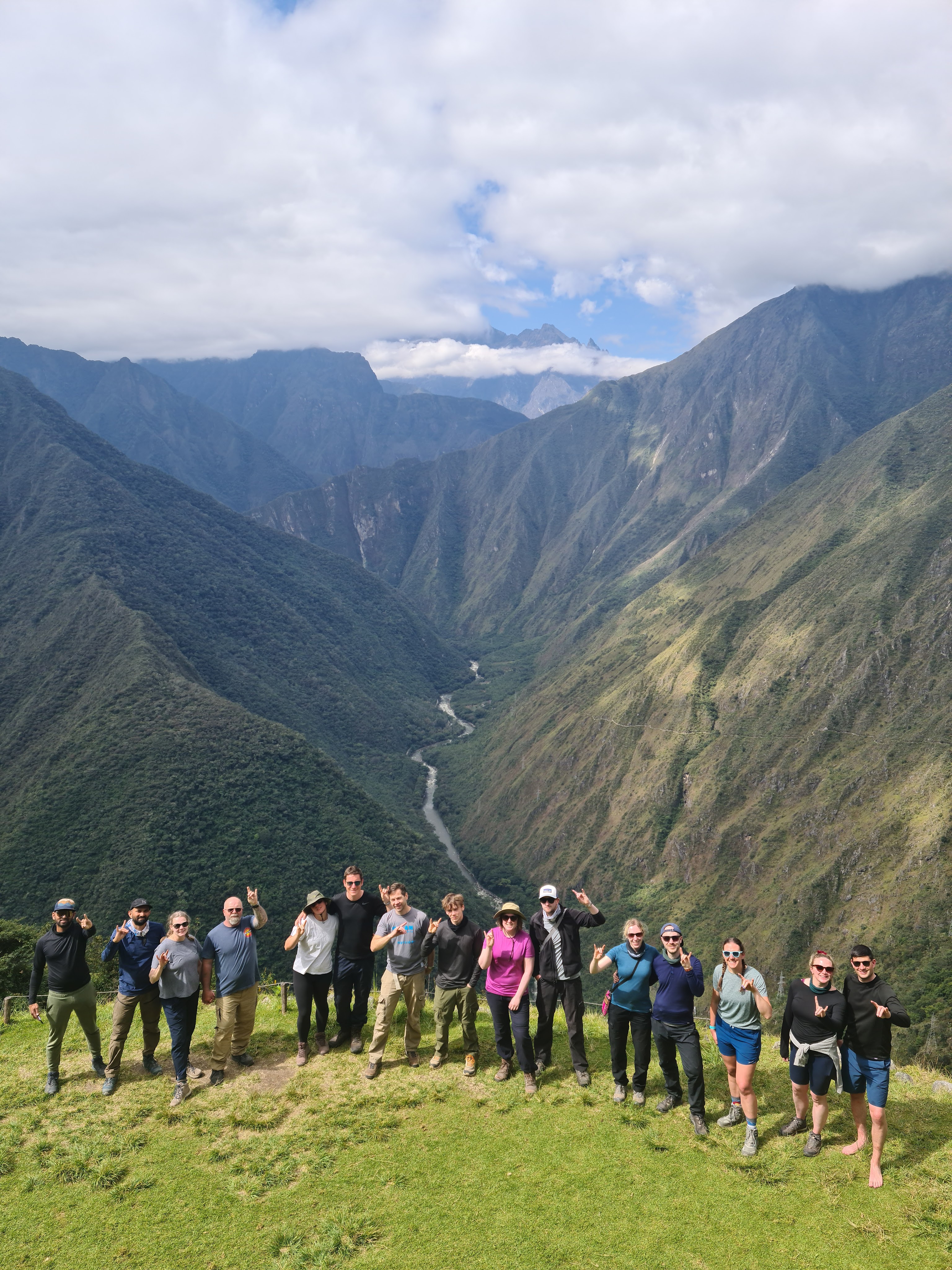
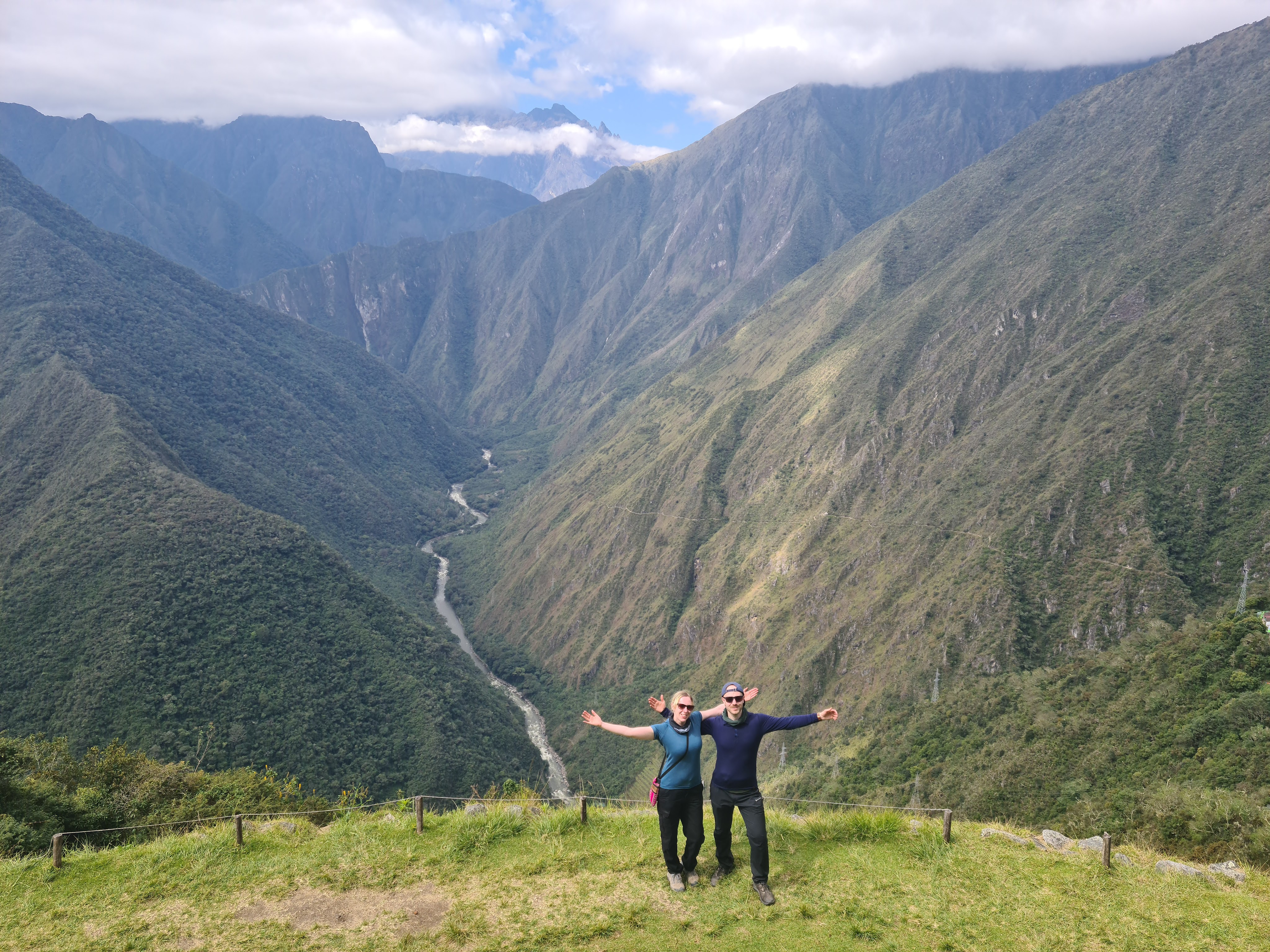
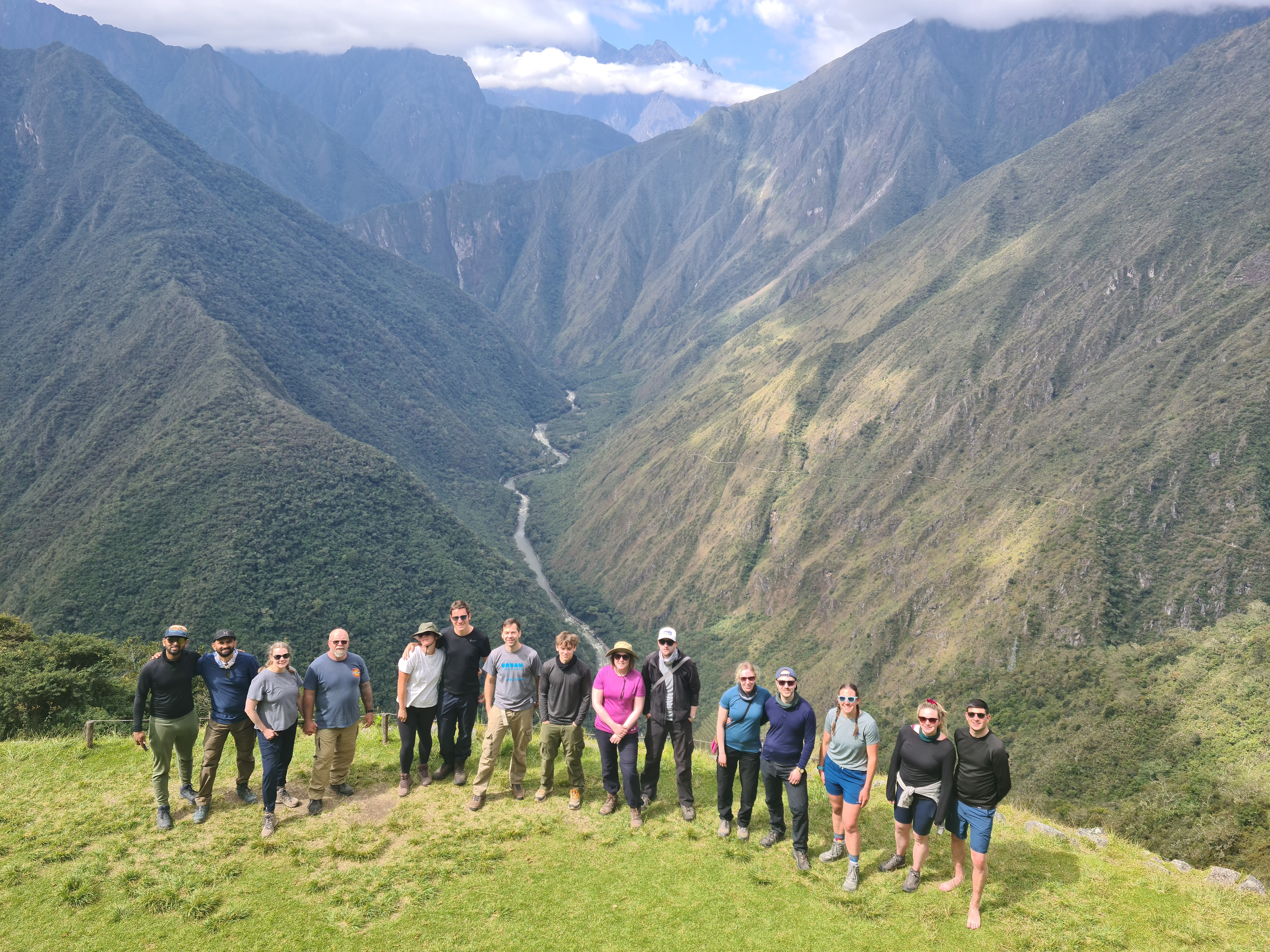
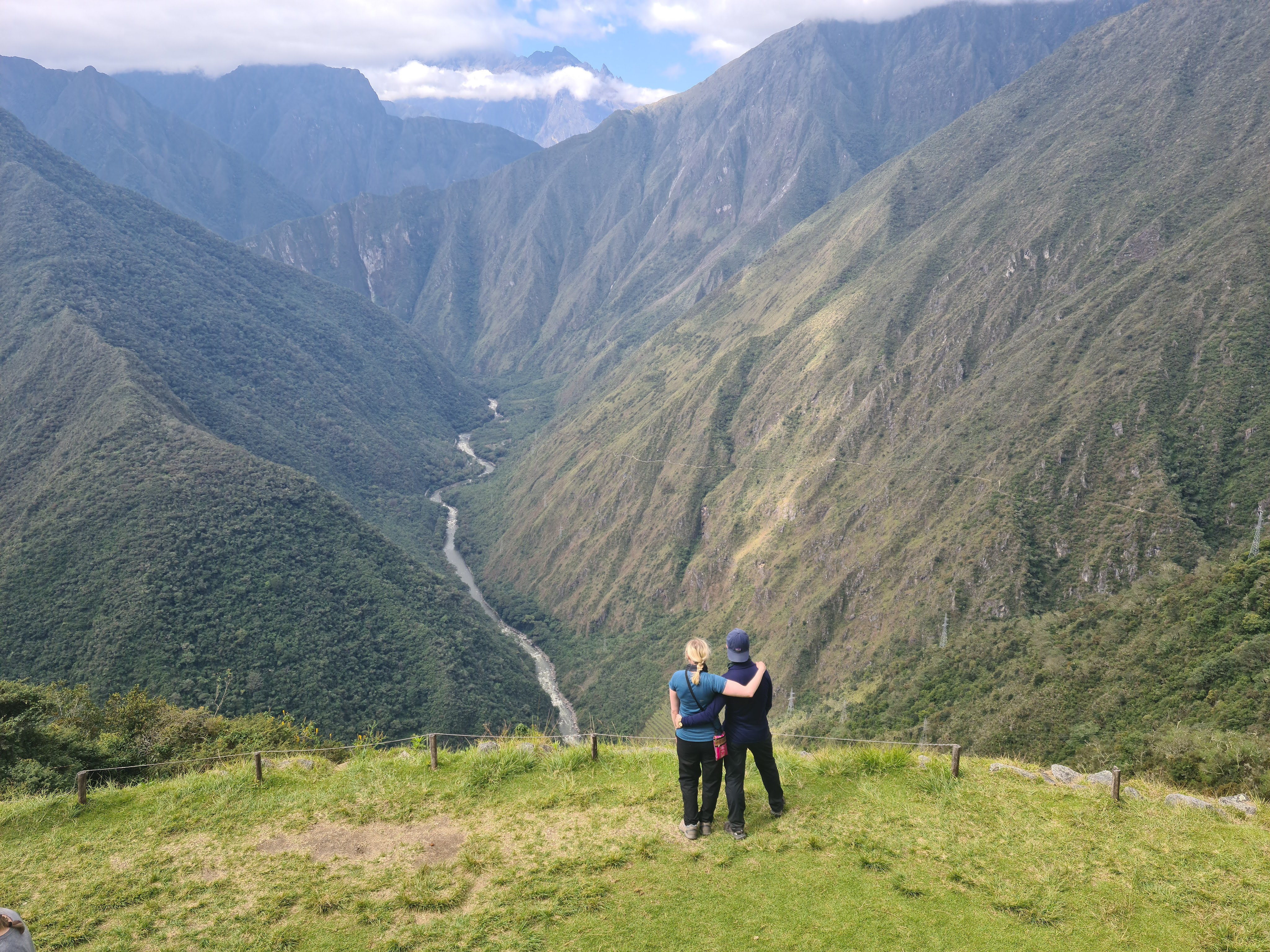
It was a short walk from here to our final camp, Wiñay Hauyna (Forever Young) where after lunch we were granted something unheard of for the trek so far…free time!
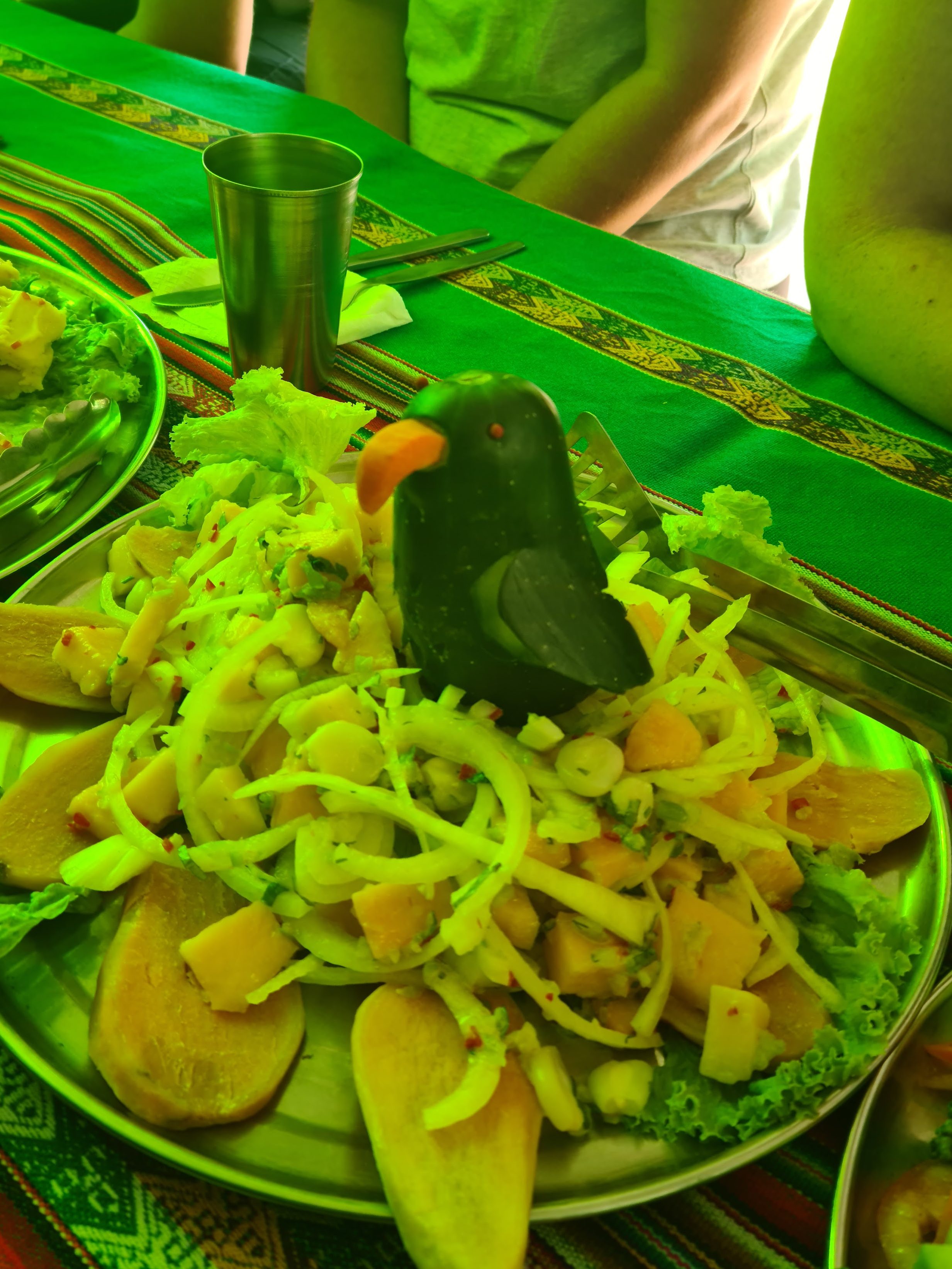
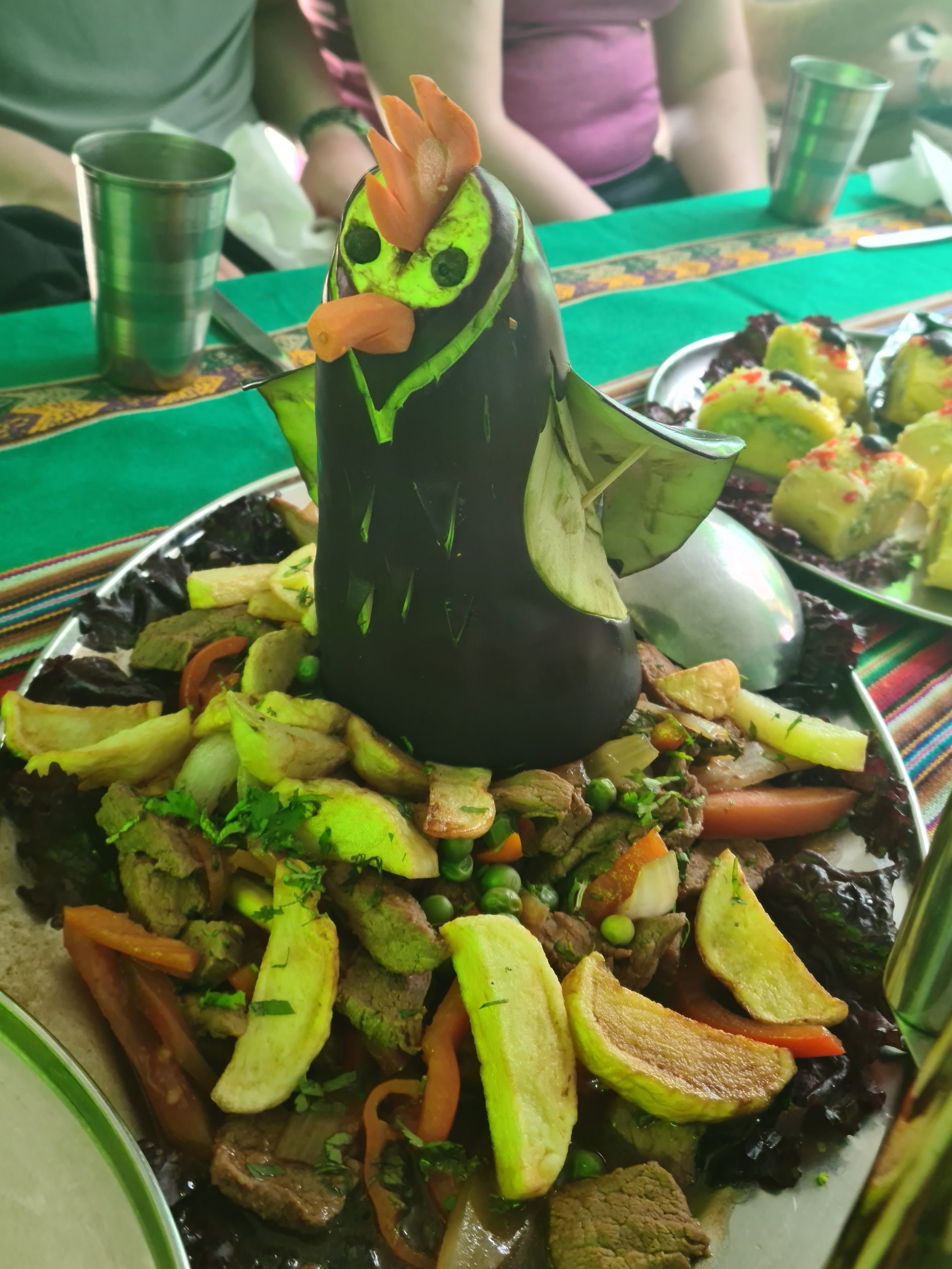

Some more Melquíades creations
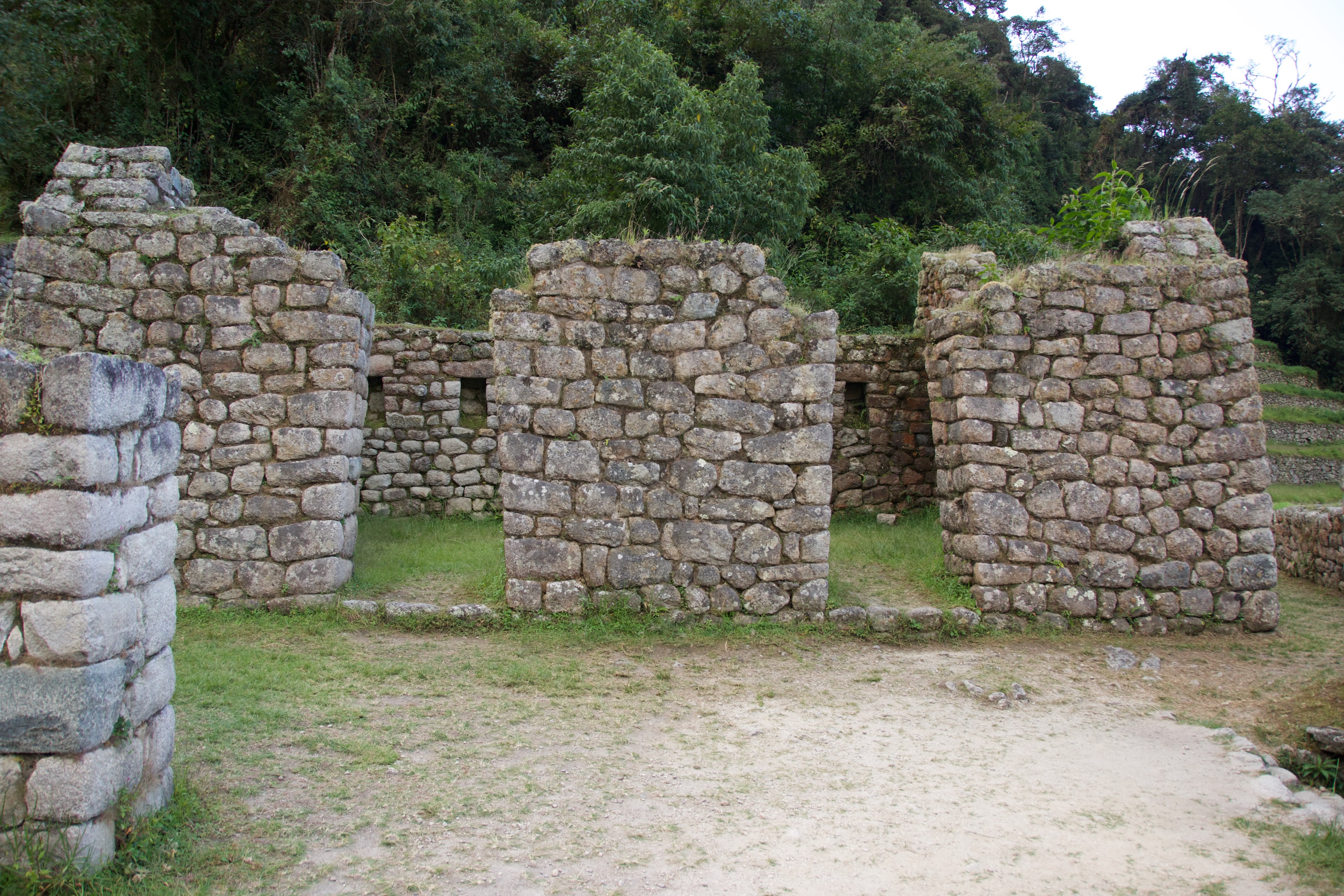
For those that wished, we had the option of visiting the nearby archaeological site which the camp was named after.
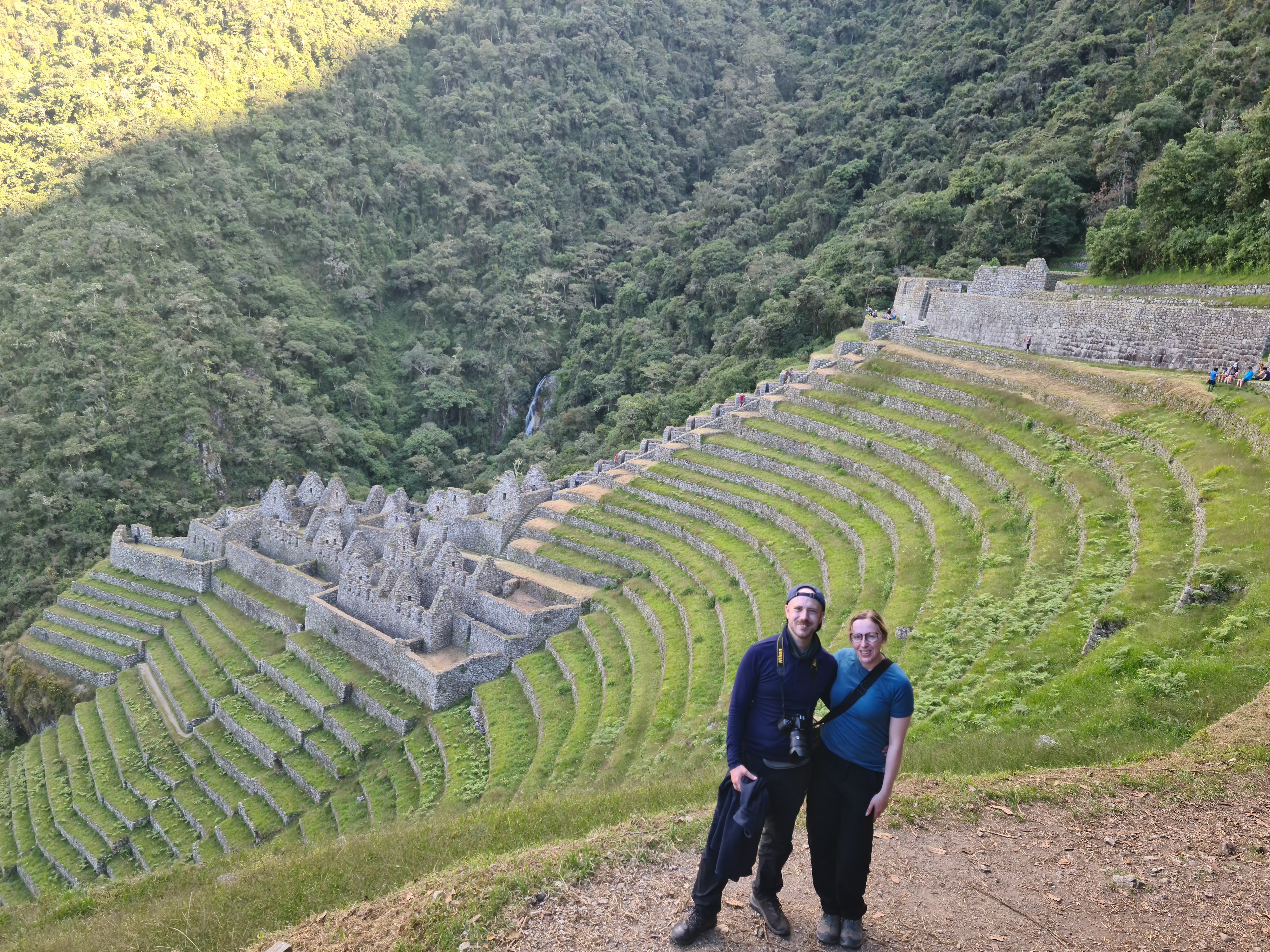
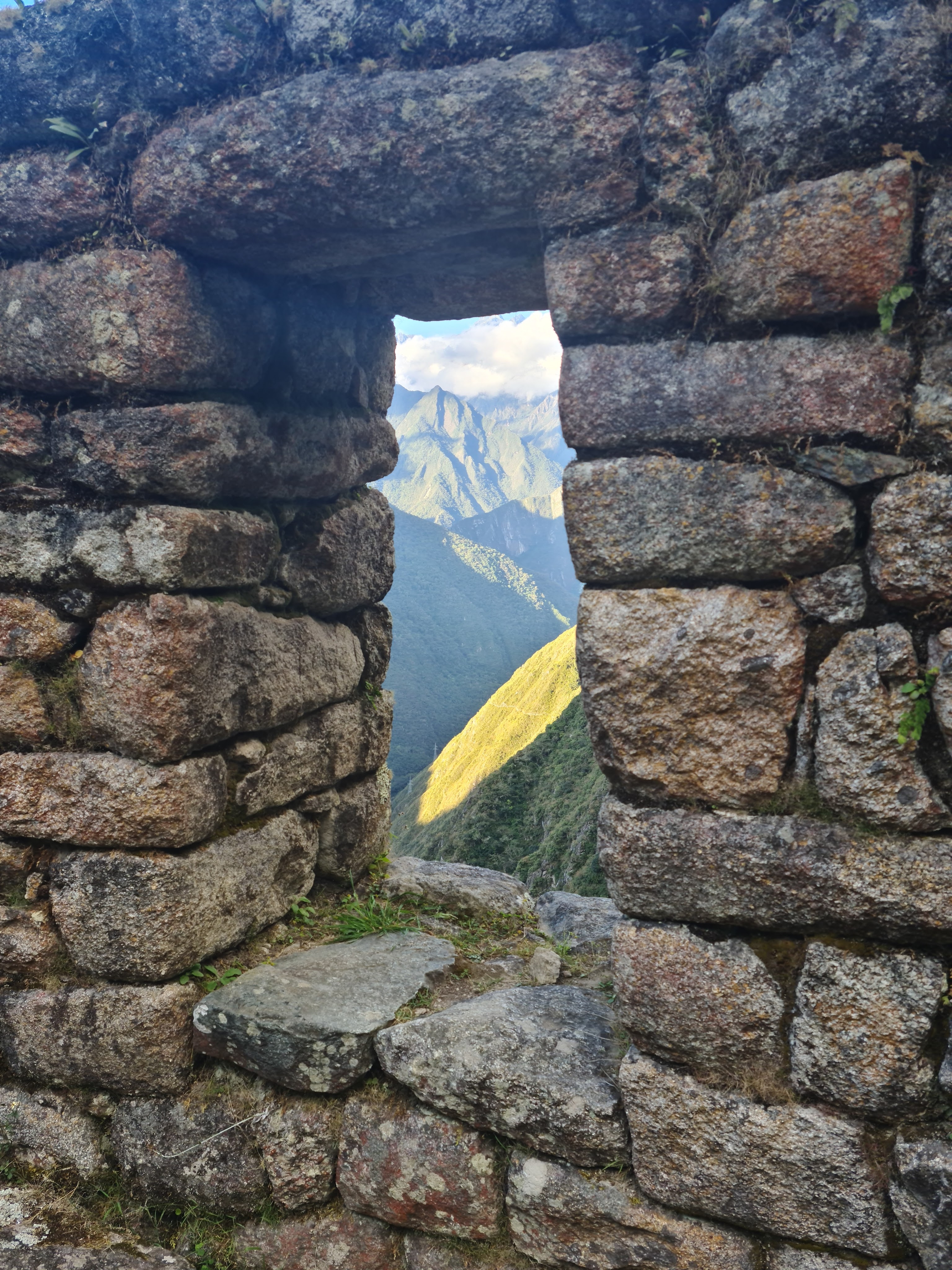
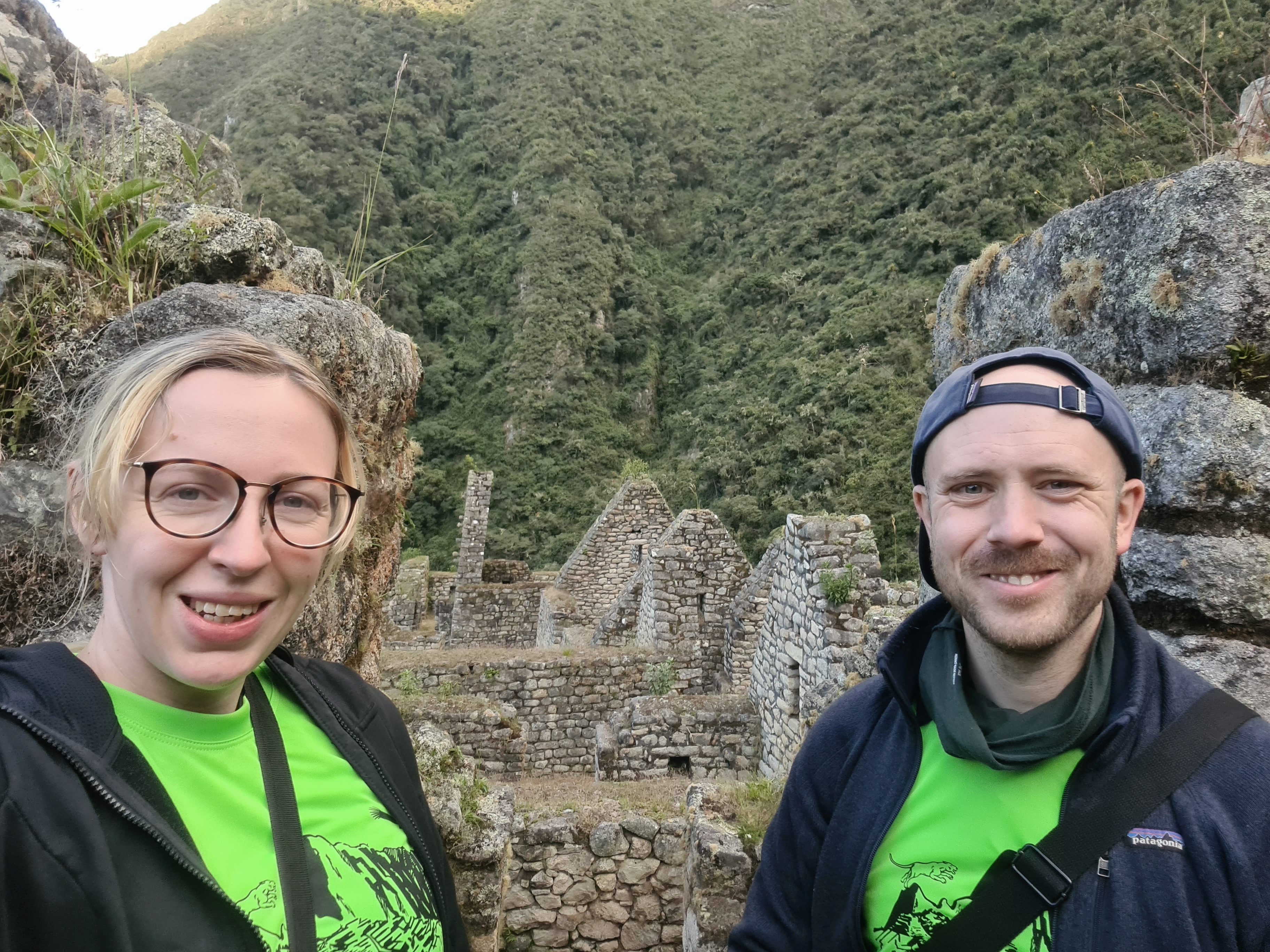
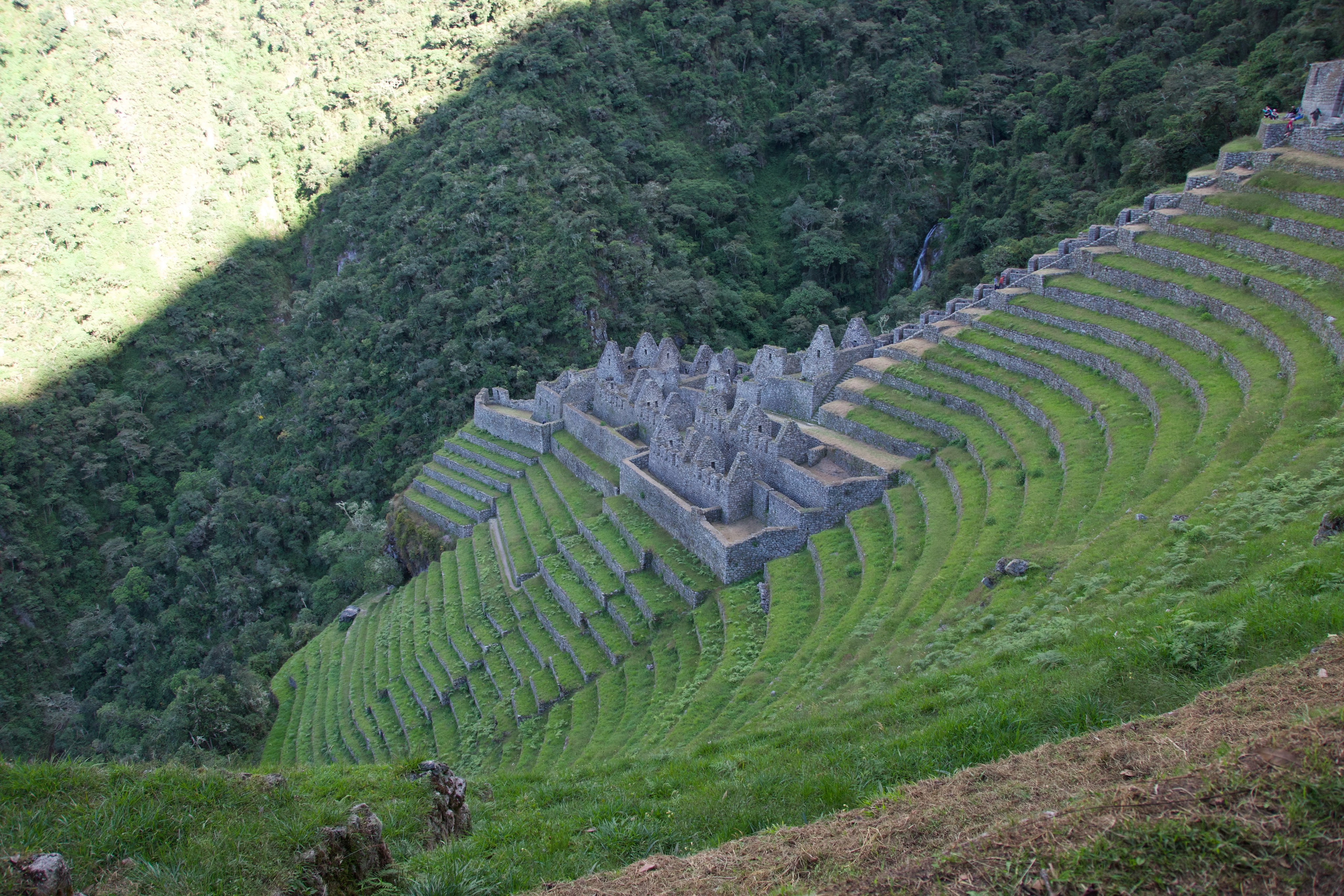
After pointing out various architectural features, Rolando’s advice was to make the most of our time there. While not of the same scale as Machu Picchu, it was impressive nonetheless and crucially, we would have it to ourselves – 20 or so visitors instead of hundreds.
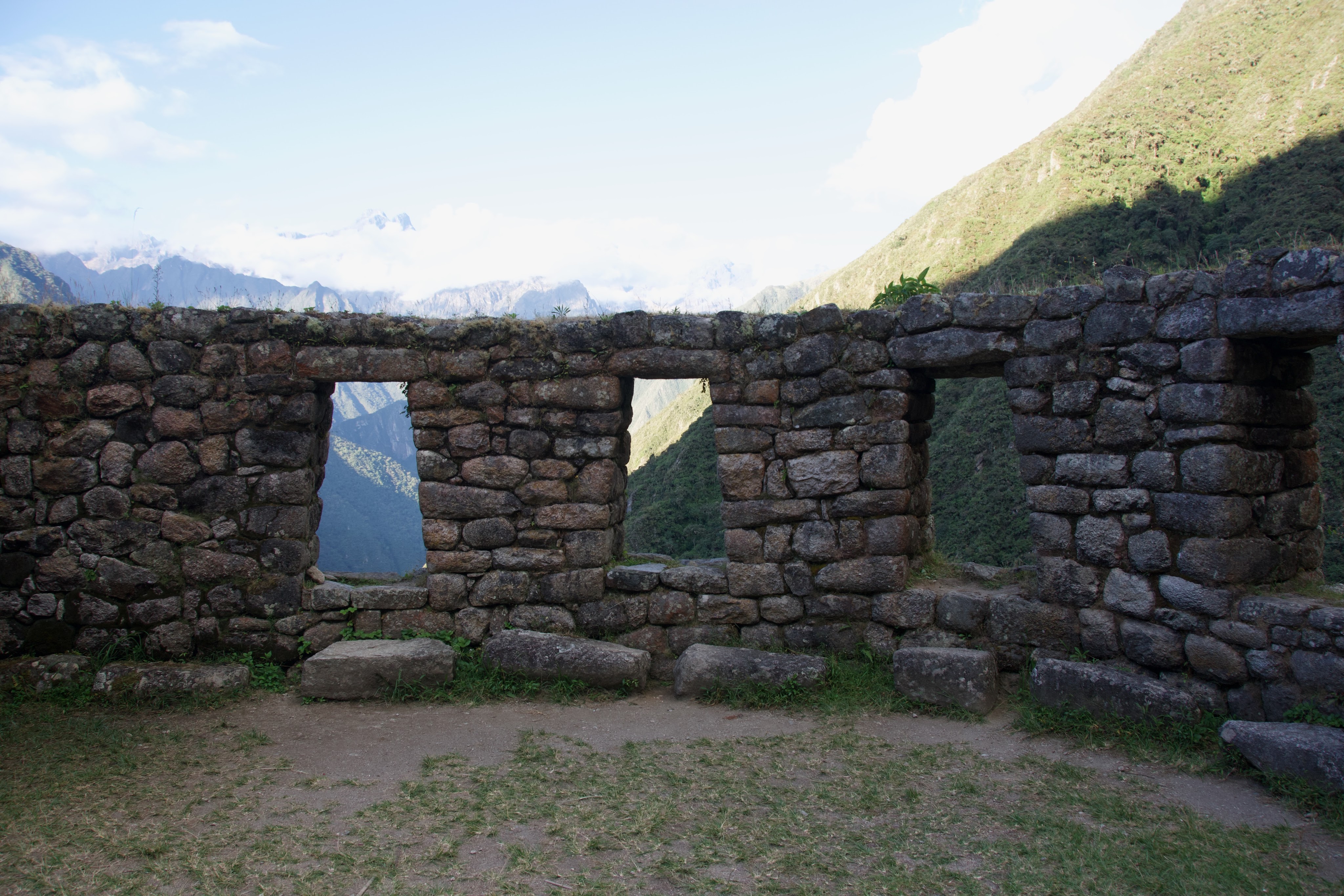
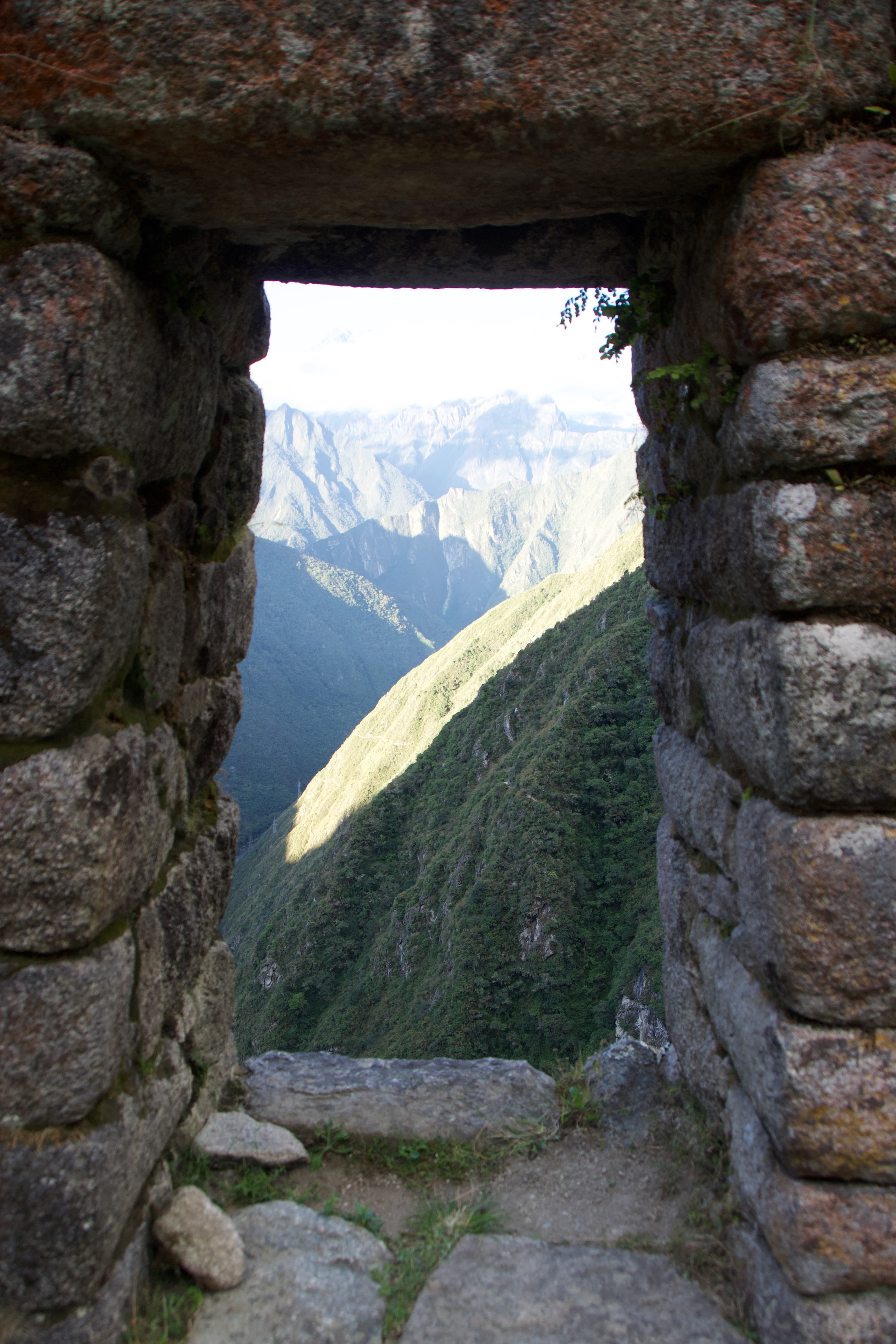
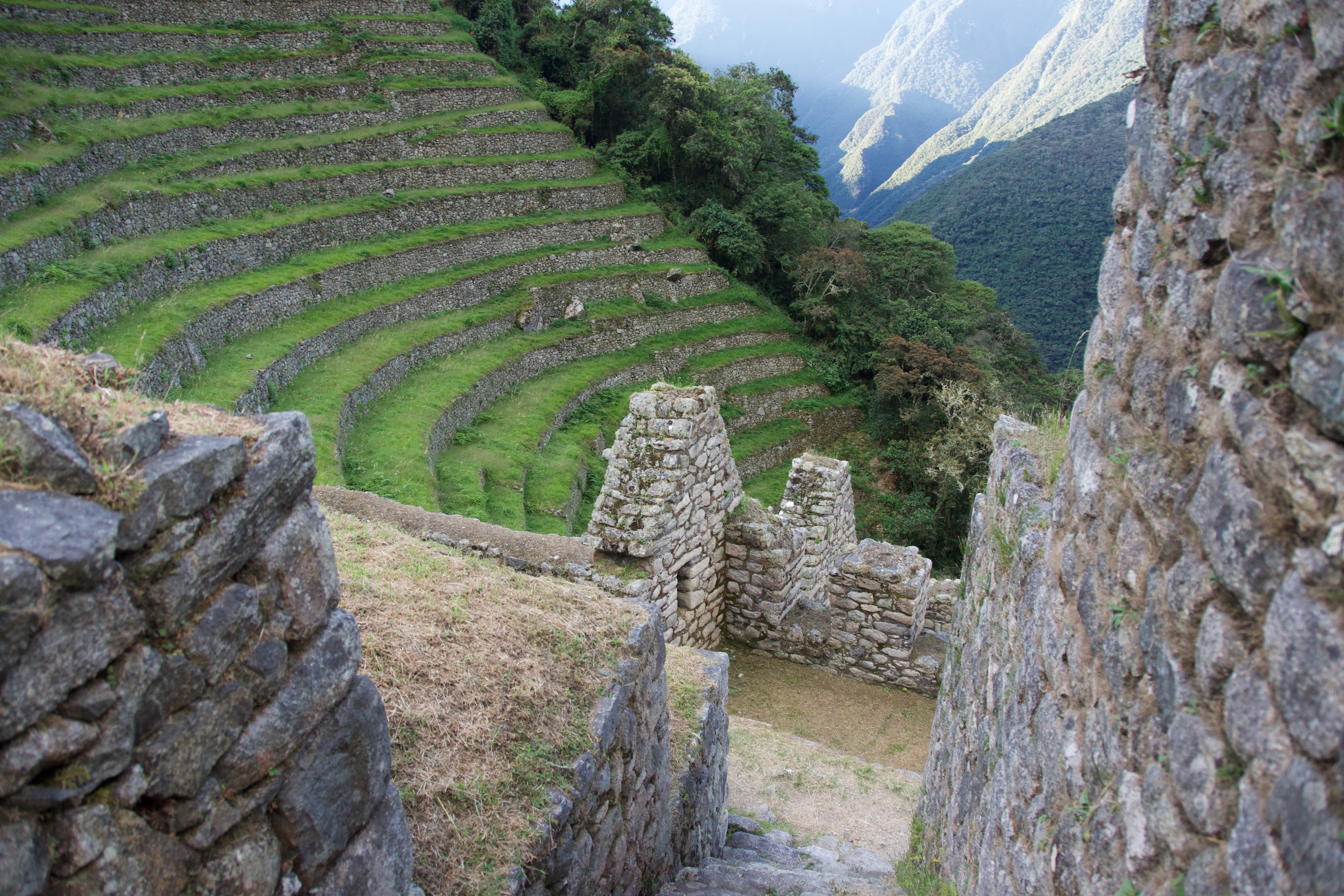
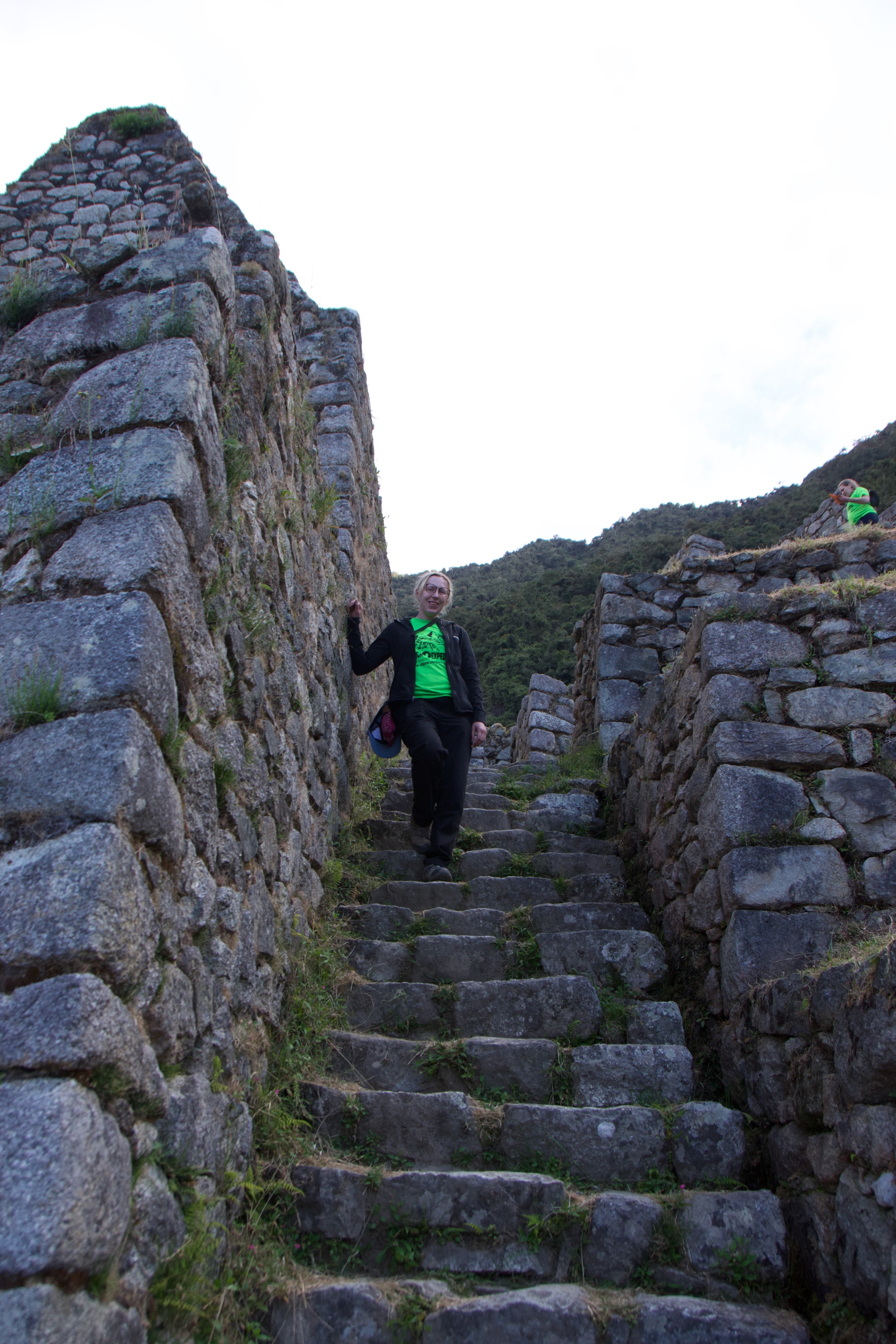

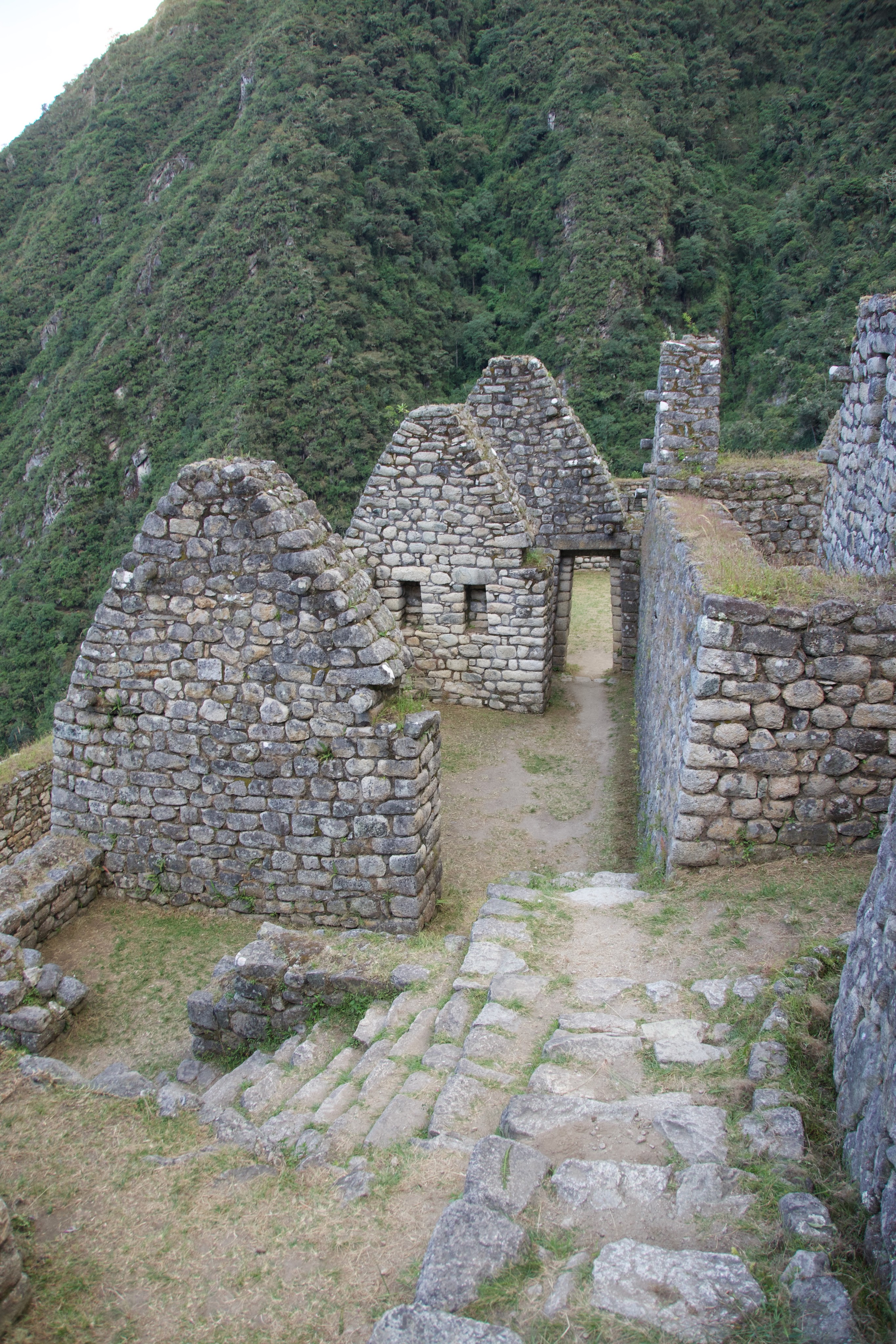
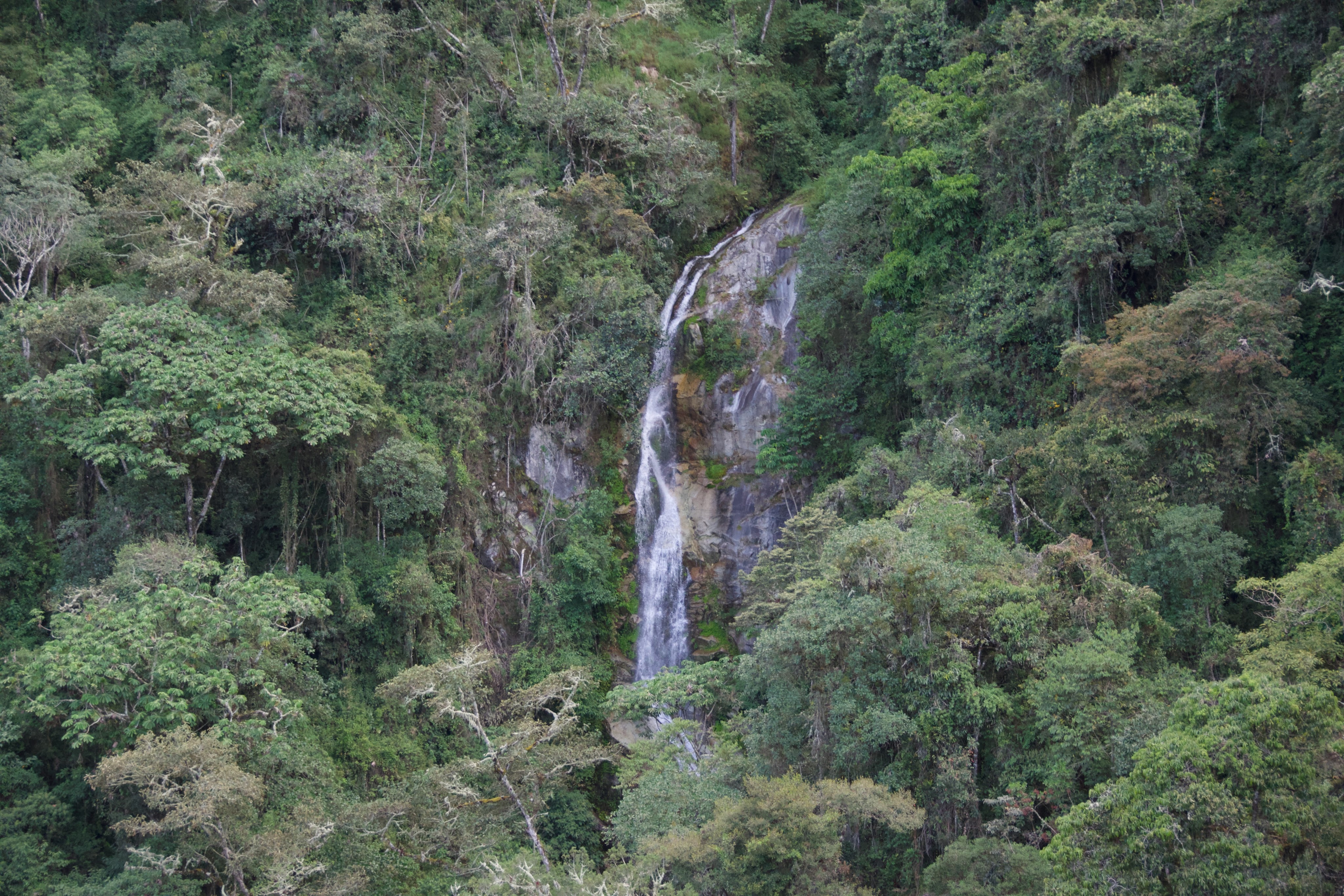
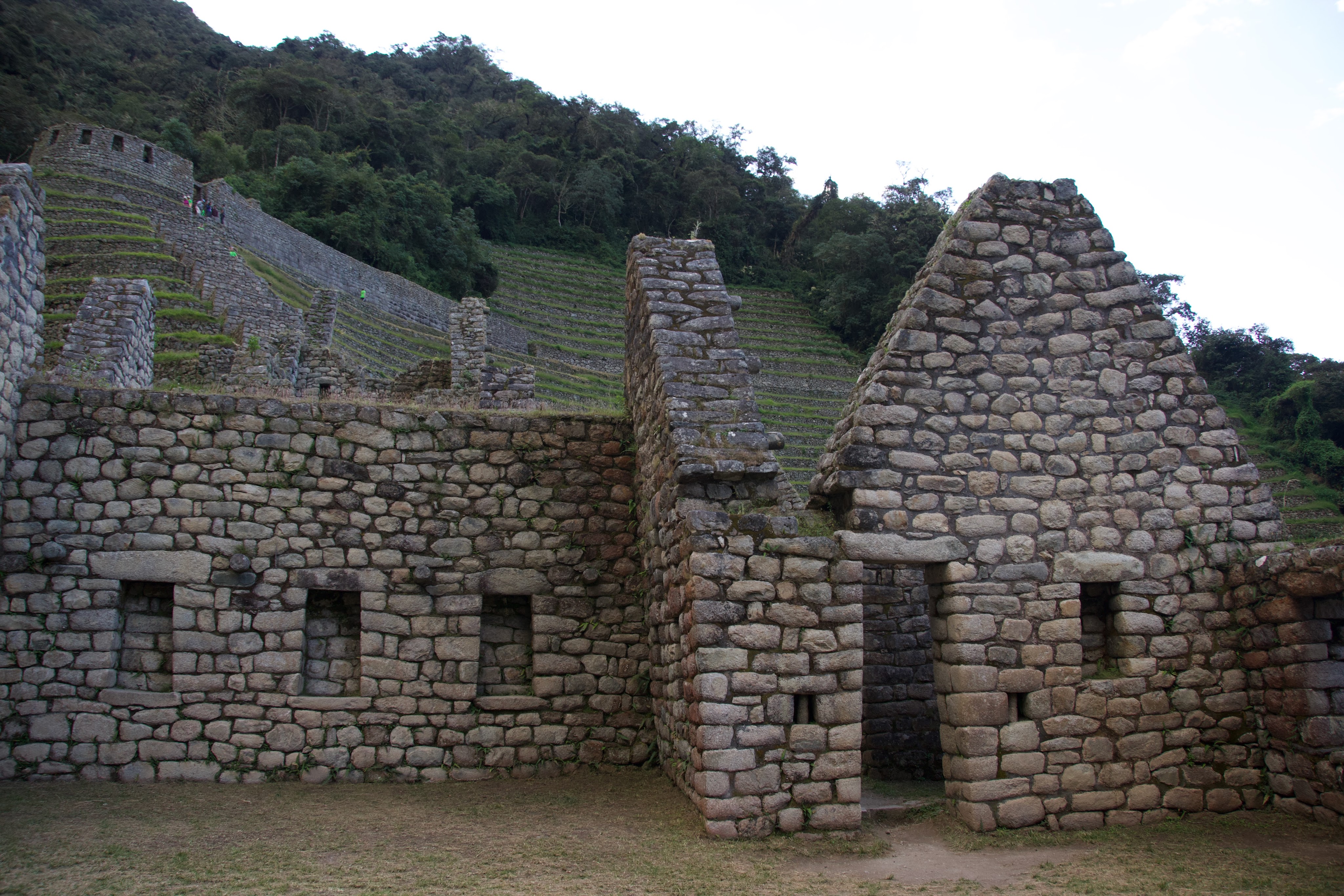

With the big day looming, and settling down to our final night, there was once more a festive atmosphere at camp. Despite having no access to electricity, Melquíades again surprised us, this time whipping up a cake only using a fire and no oven!

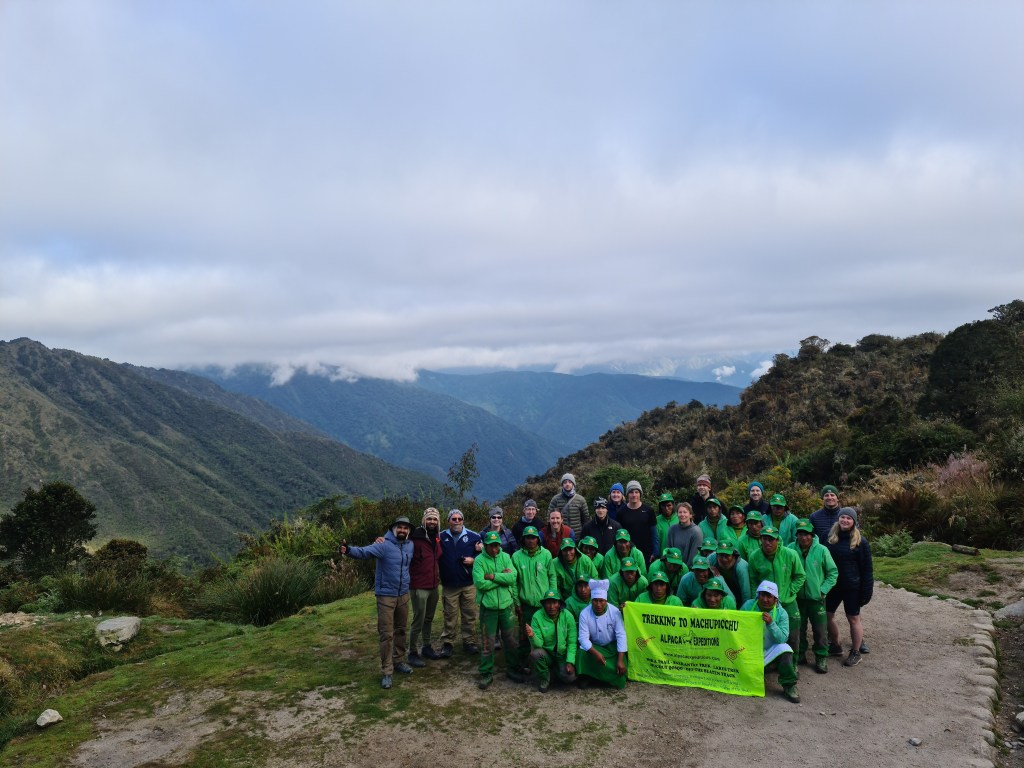
Having been introduced to each porter individually, and Melquíades, that morning, this evening was where we could share our gratitude in attempted Quechuan words.

That night was the first night I struggled to get to sleep in camp. Perhaps I’d become too used to full days of hiking and day three hadn’t tired me out enough. Or more likely, I was too excited about the pinnacle of the trek. Machu Picchu was now within striking distance.
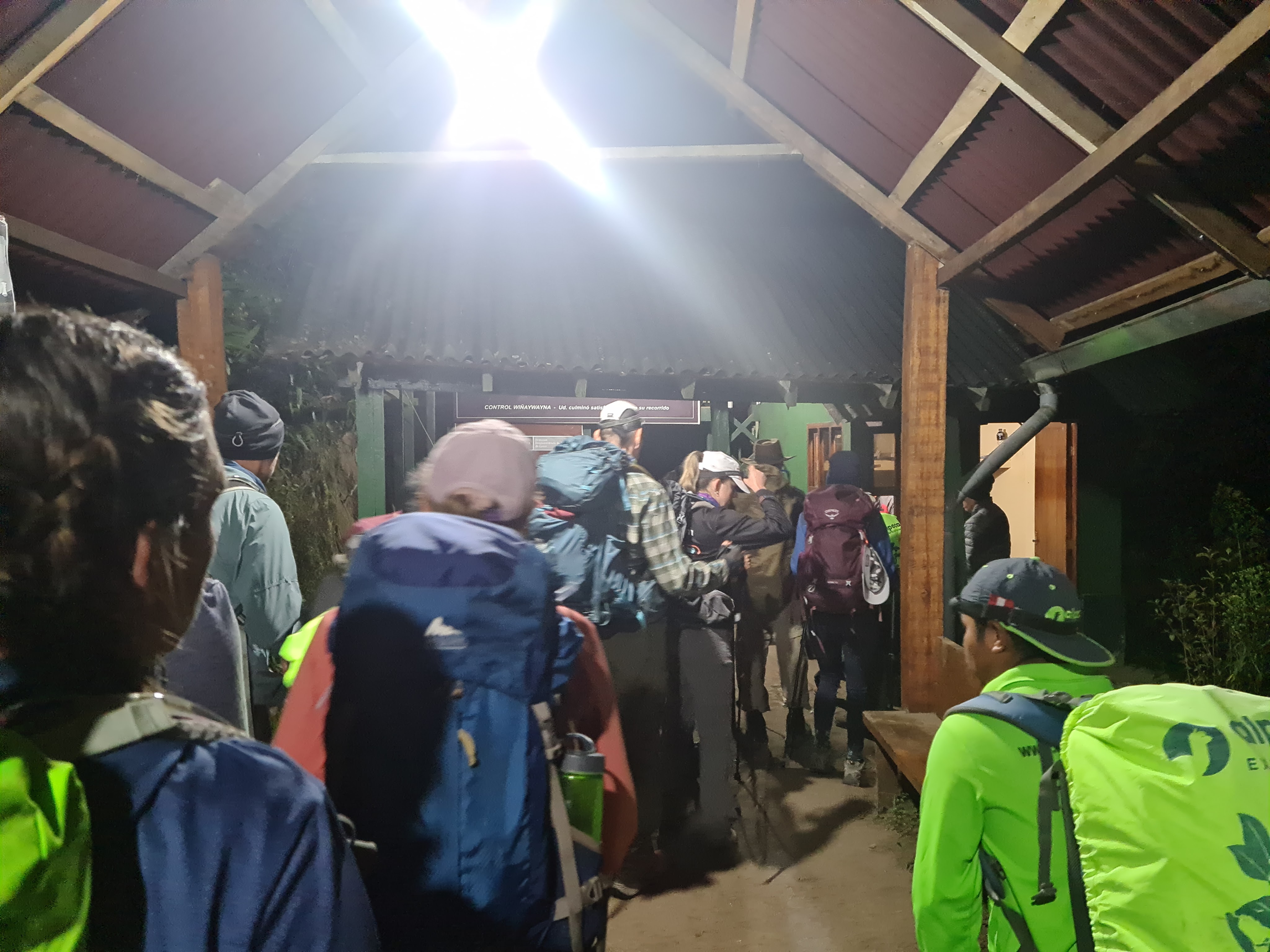
Despite the relative proximity, we were still awakened at 3.30am. The final section of the trail has a controlled access checkpoint, which wouldn’t open until 5.30am. Alpaca are one of many trekking companies on the trail at the same time, and Rolando wanted to get us as close to the front of the queue as possible. In the end, our group managed to be third in line, and as we waited quietly in the dark, I was glad I had downloaded some podcasts.
Anticipation sufficiently high, the checkpoint was surprisingly swift and so we were on to our final furlong.
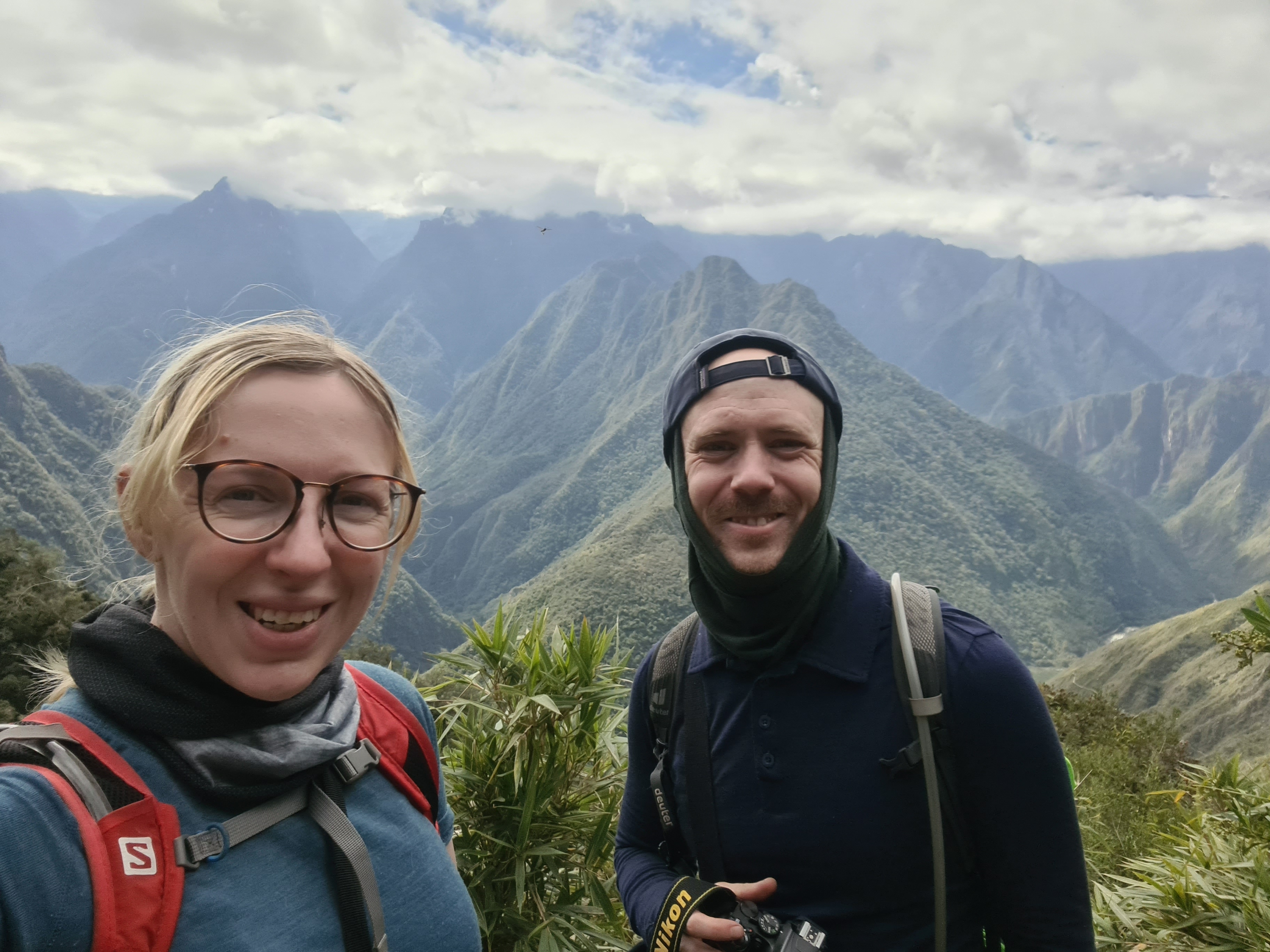
Here there was a change in tack. While we had previously been encouraged to go as fast or slow as we liked, the recommendation for this final stretch was to keep moving and get to the Sun Gate as quickly as we safely could. Still under cover of darkness, rushing through the jungle, it felt almost black ops-like in approach. And you may have noticed from our photos that I certainly had the outfit for that!
This was where our careful pacing over the previous three days paid off. Still with energy in the tank, we were able to navigate the trail with ease. This was the closest we had been to other groups, and as we started to overtake, even breaking into a jog every now and again, my faith in my fitness restored itself. I also felt vindicated in our overall approach. Our pace had allowed us to fully take in our surroundings over the previous days, spending as long as we wanted enjoying views and taking memento photos. By comparison we now had our heads down, ploughing onwards and I can barely tell you a single thing about this stretch of the trail (other than it included a particularly brutal set of steps known as the “Monkey Stairs”). Not to shade anyone who wants to blitz the Inca Trail in the quickest time they can, but for us, slow and steady definitely wins the race.
Reaching the Sun Gate, straight away we could see it had been worth it to give in to speed. This ancient viewpoint is only accessible to trekkers, and to my surprise, despite being the third group in line at the checkpoint, Ricki and I were amongst the first handful of hikers to reach it. Excitedly, we passed through the stone gateway. Still in the cloud forest, I’ve seen videos online where trekkers are rewarded for all their efforts with some lovely thick pea soup. Was the same fate awaiting us?
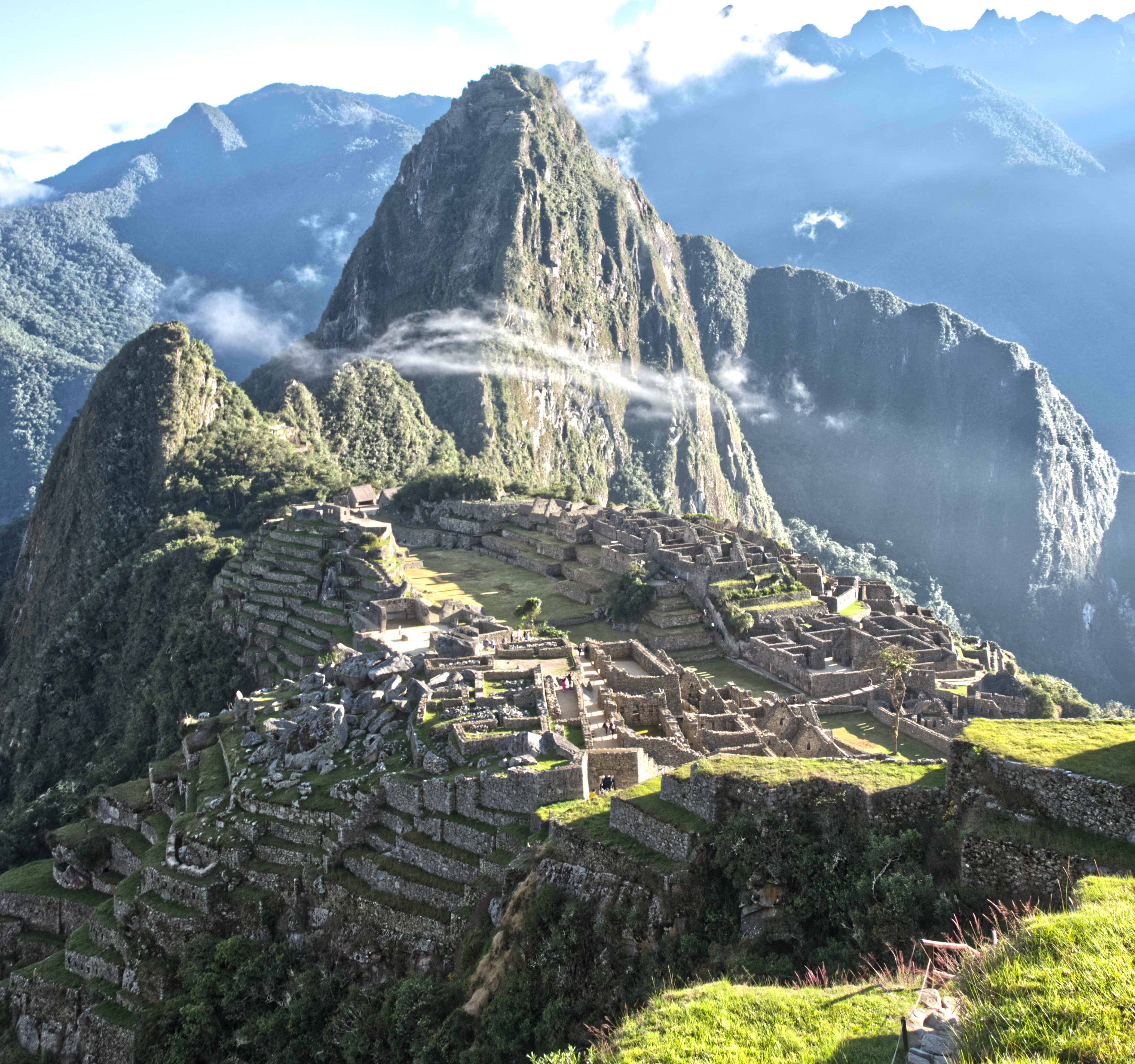
By this point I was already euphoric at having reached this landmark, proud of body and mind for making it through. That honestly felt worth more to me in that moment than any view would. And maybe that’s why the Inca gods were smiling down on us. After three and a bit days, there was Machu Picchu in all its majesty, standing proud as clouds swirled around rather than over it.
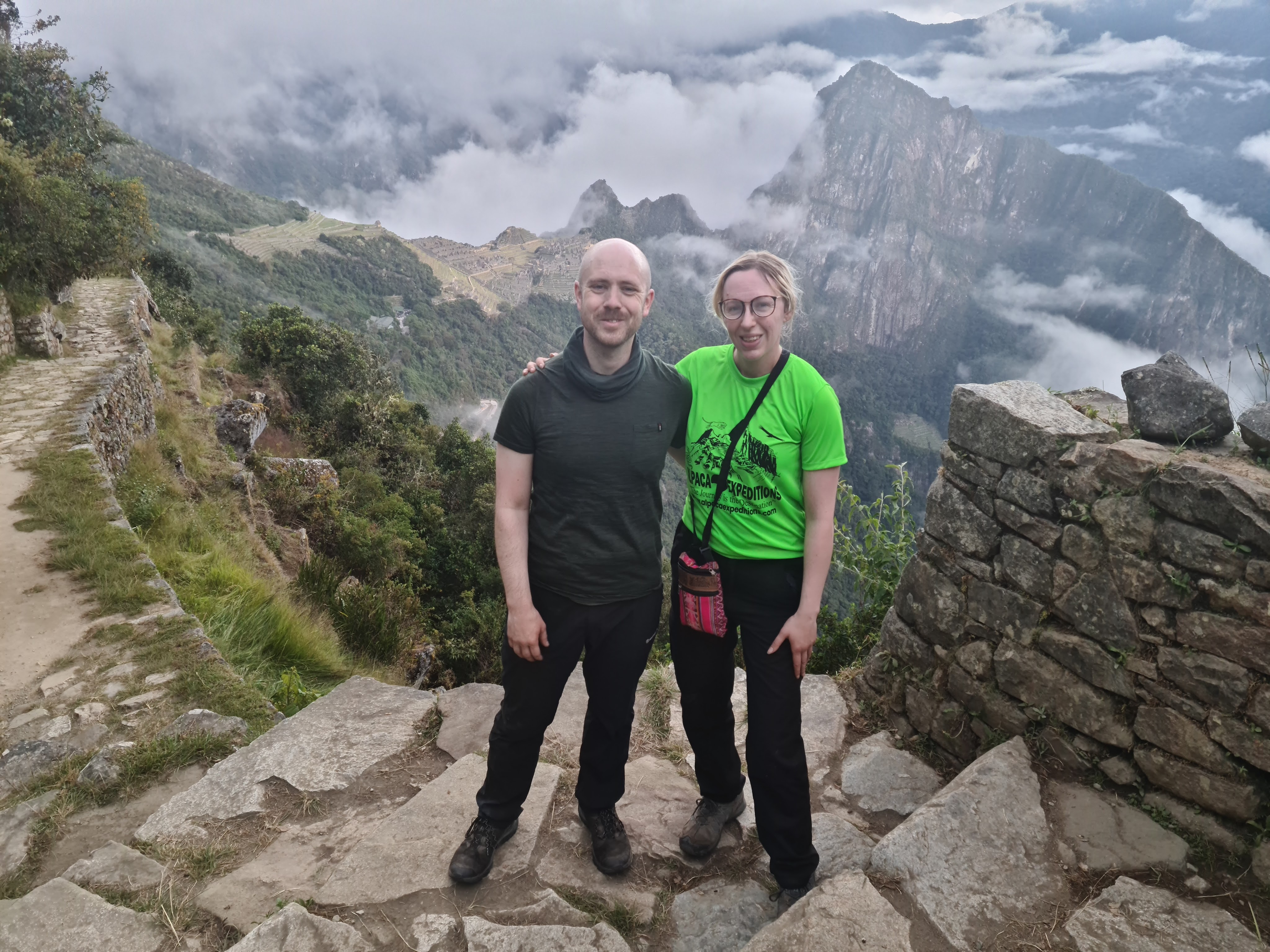

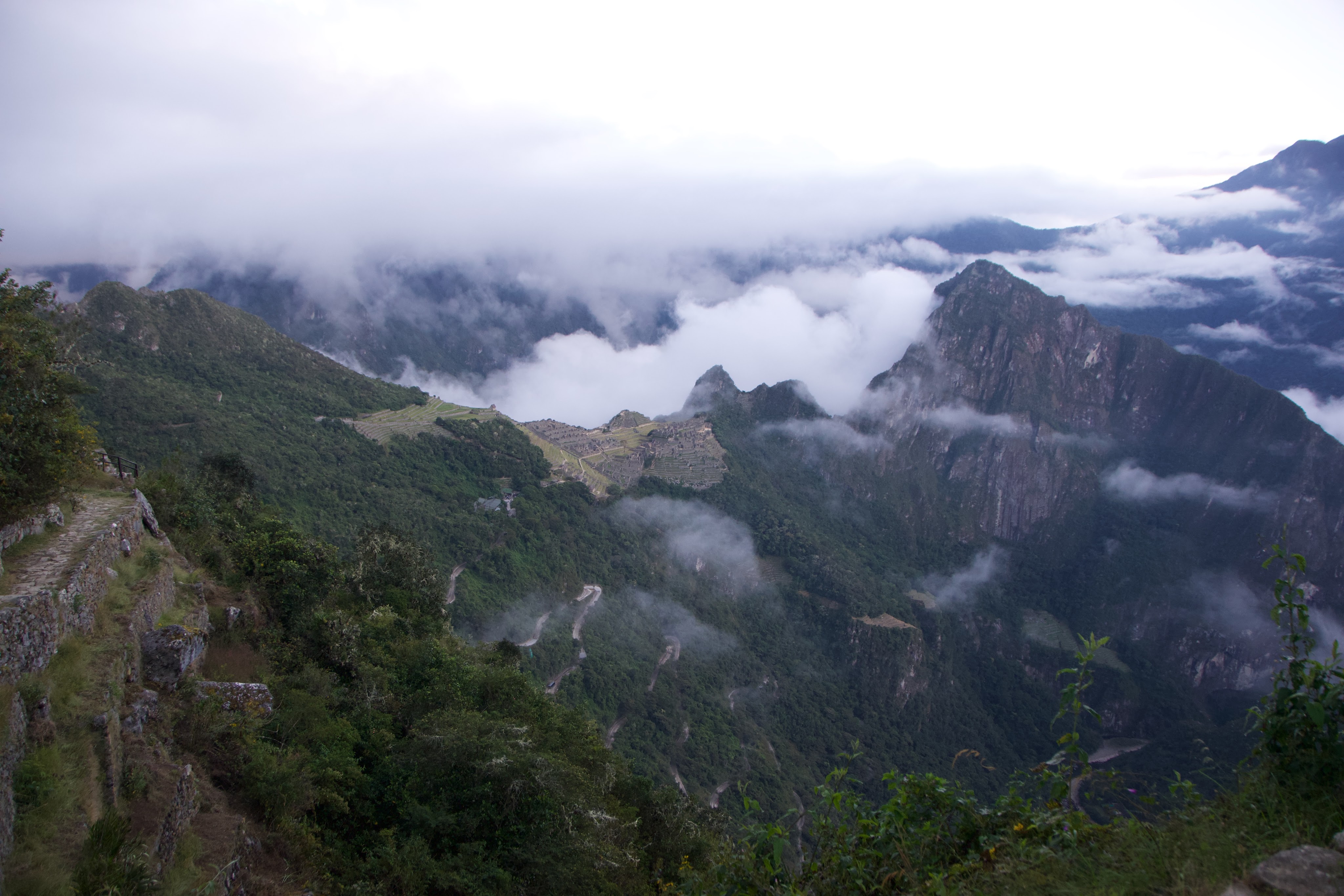
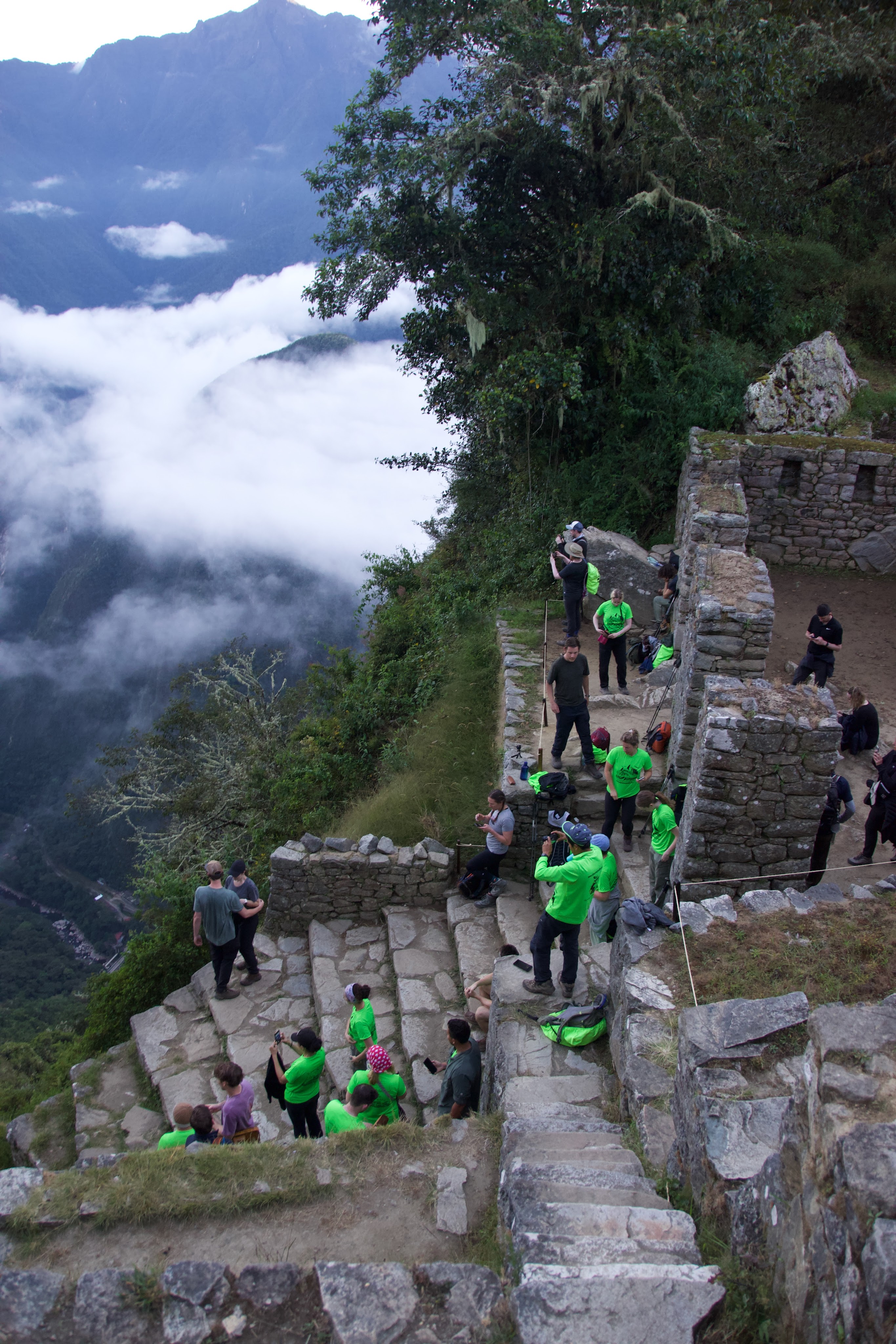
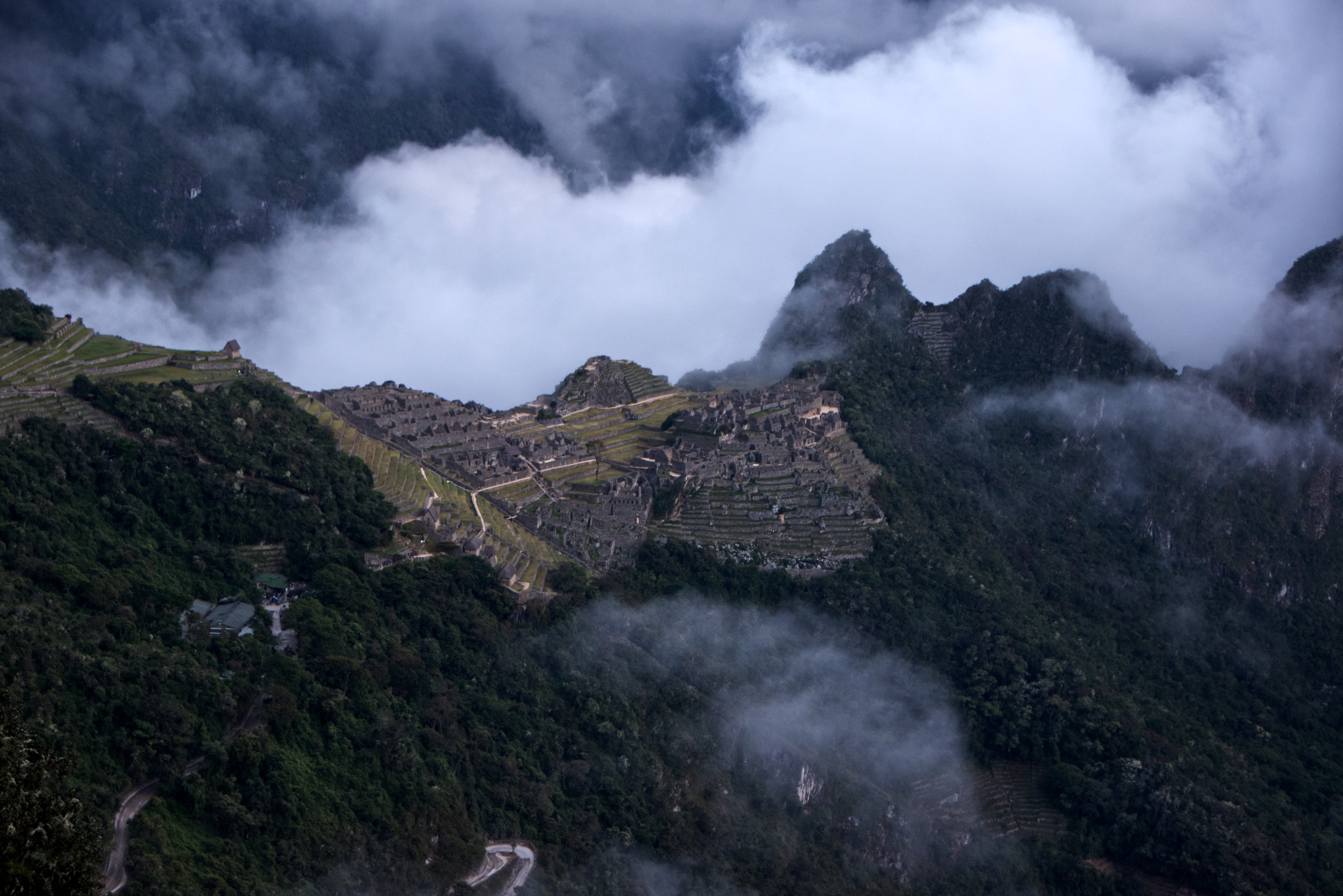
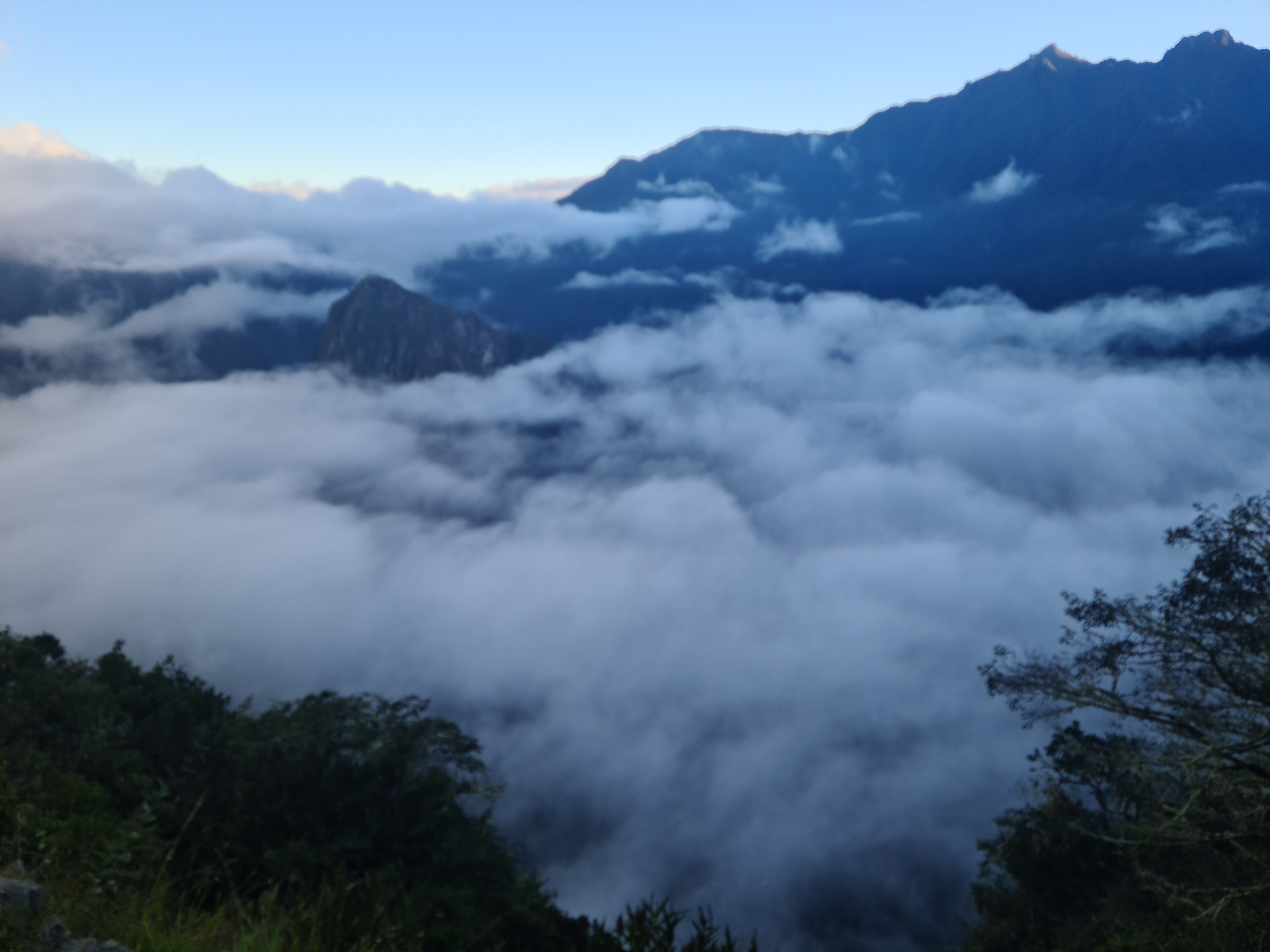
As we waited for the final members of our group, we were able to appreciate how lucky we had been, the Sun Gate becoming increasingly more crowded. And even luckier still when I heard someone ask “did anyone actually get to see it?”. Confused, I turned round and was taken aback to see the 32,500 hectare wonder of the world had vanished below the clouds. It made the preceding few minutes seem all the more magical.
We weren’t quite done walking, and despite having looked so tantalising close, it was another hour before we reached the sacred site.
In this time though, the sun had fully risen, and Machu Picchu was now bathed in light. We were able to bask in the privilege of further “trekker only” viewpoints, recovering our energies before our tour of the site.
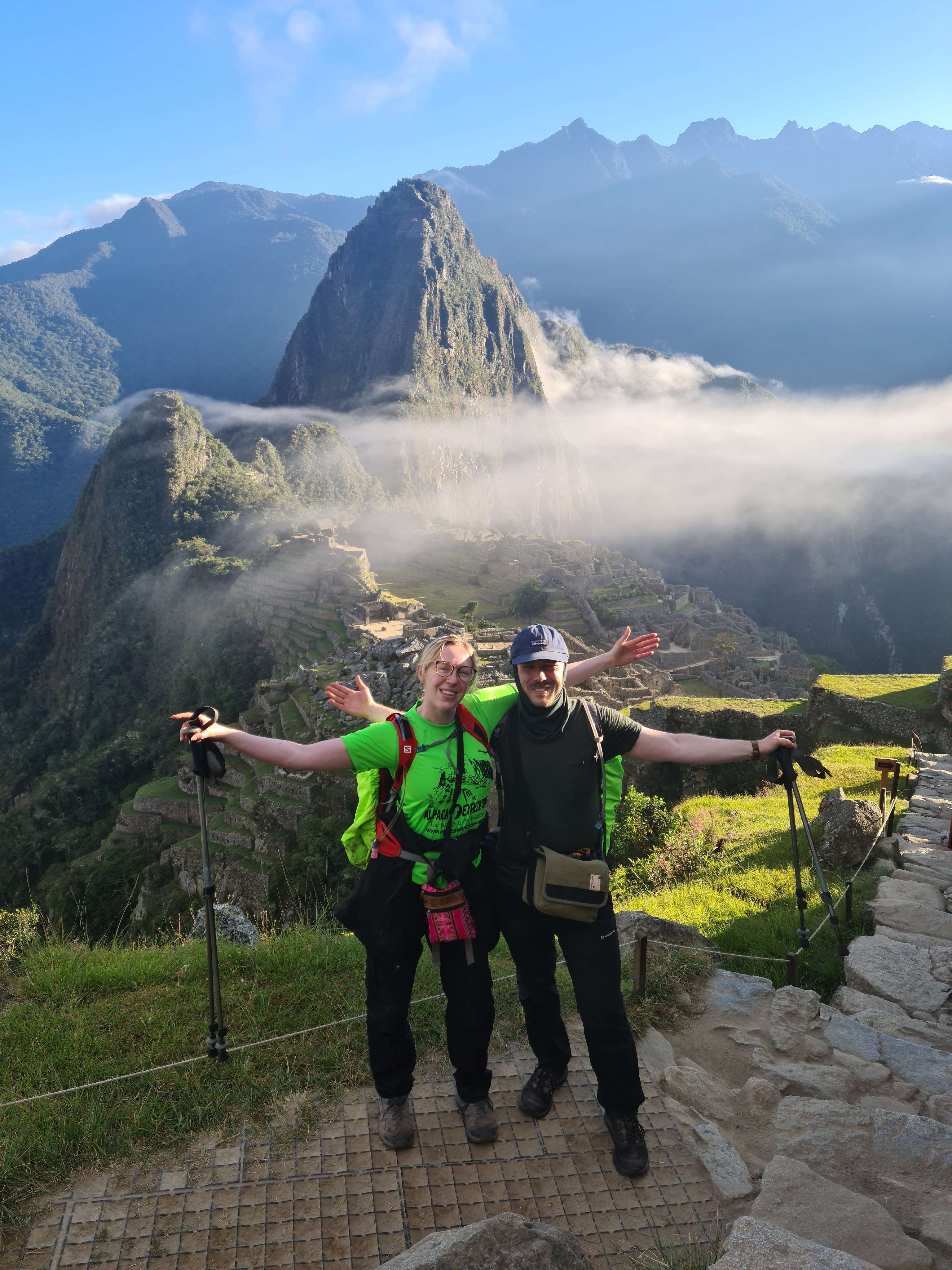
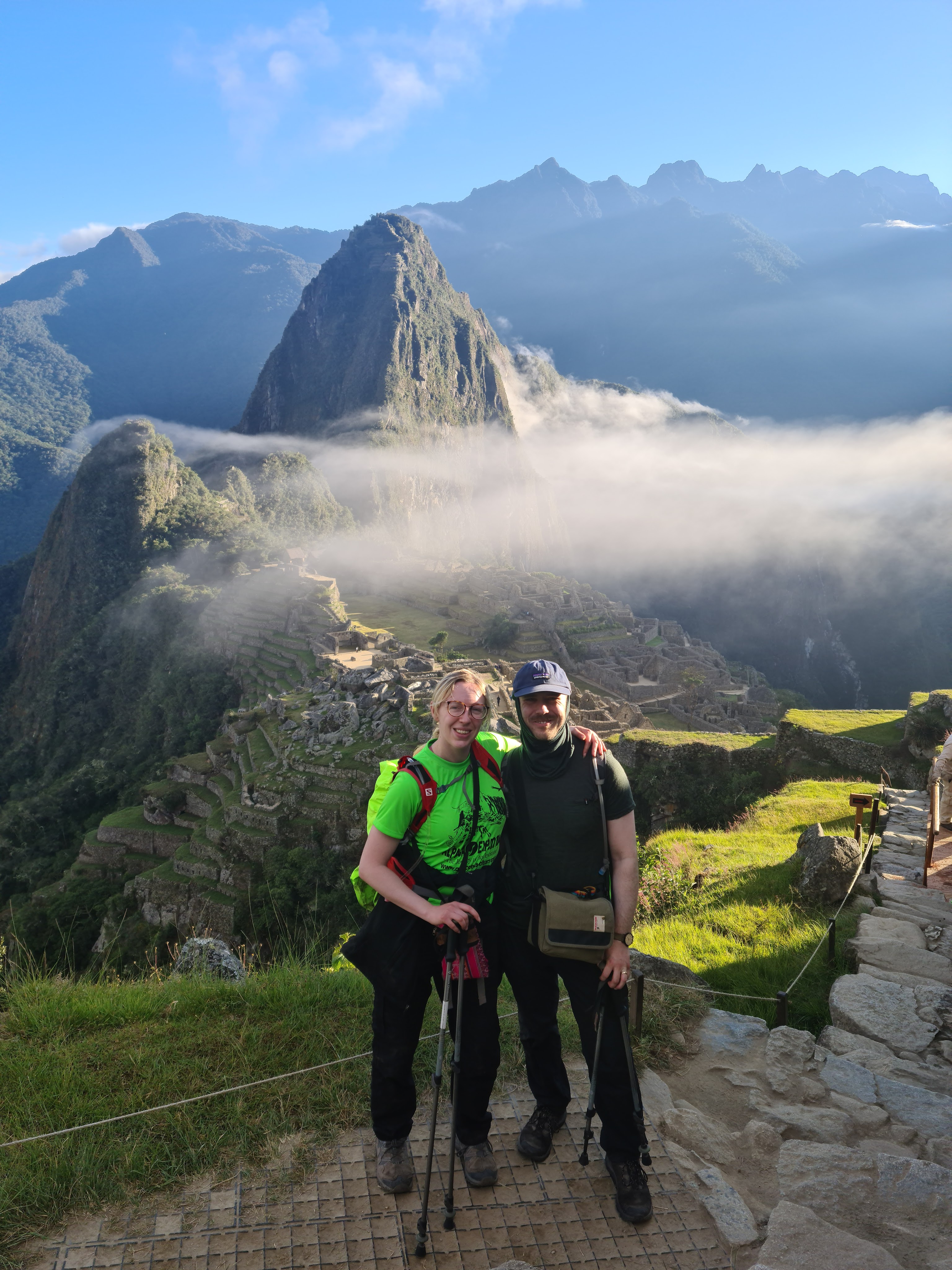
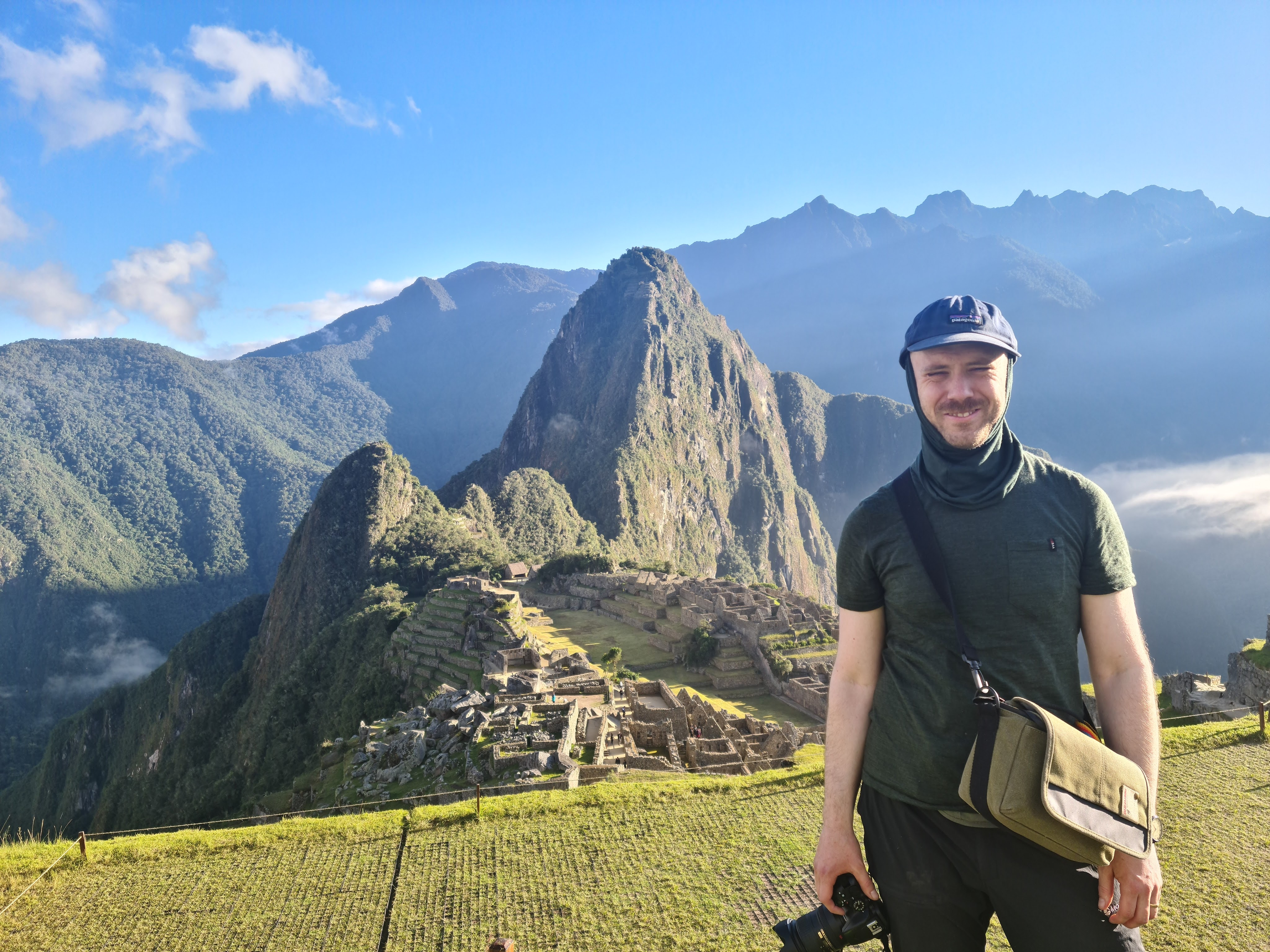
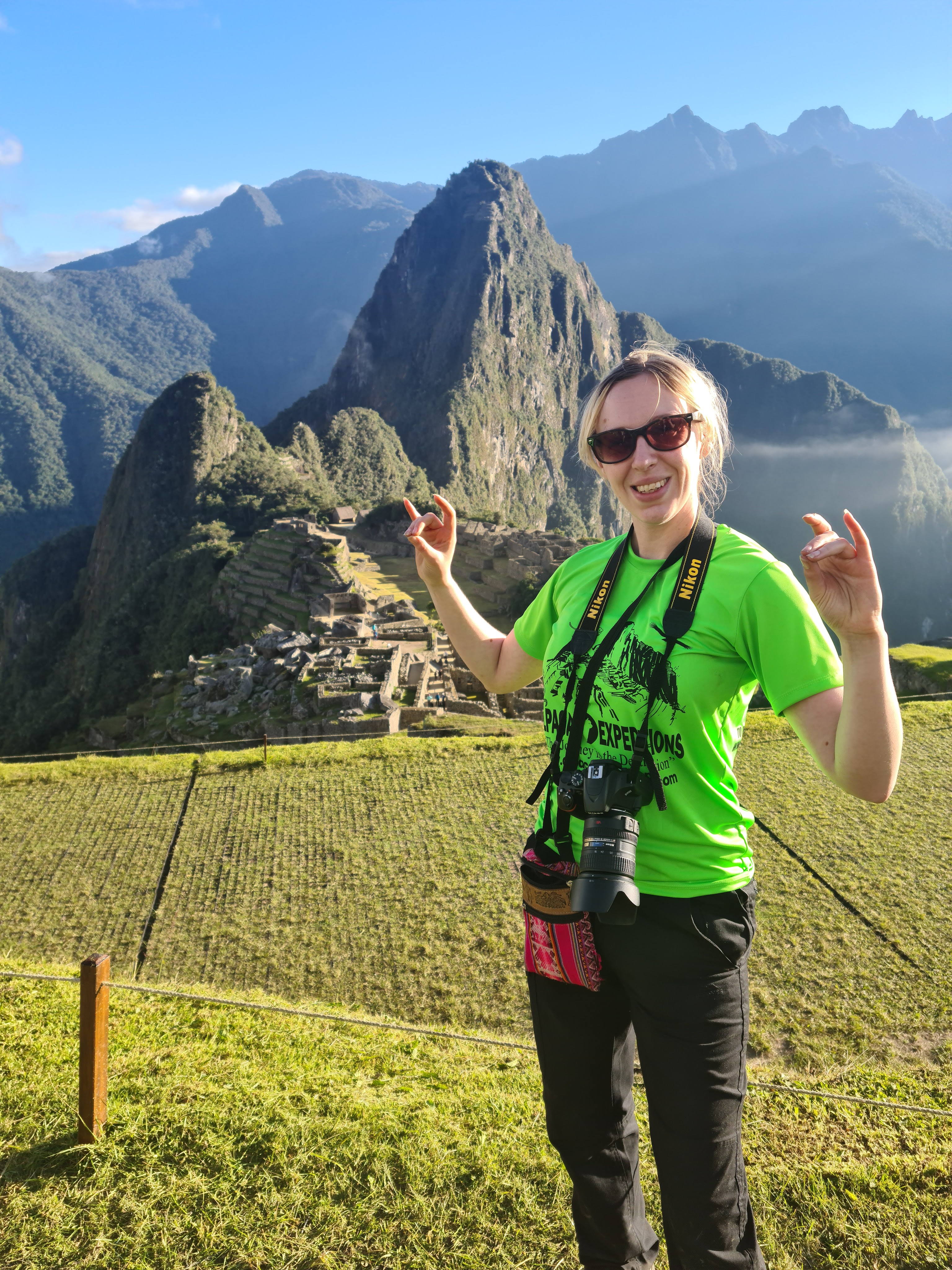
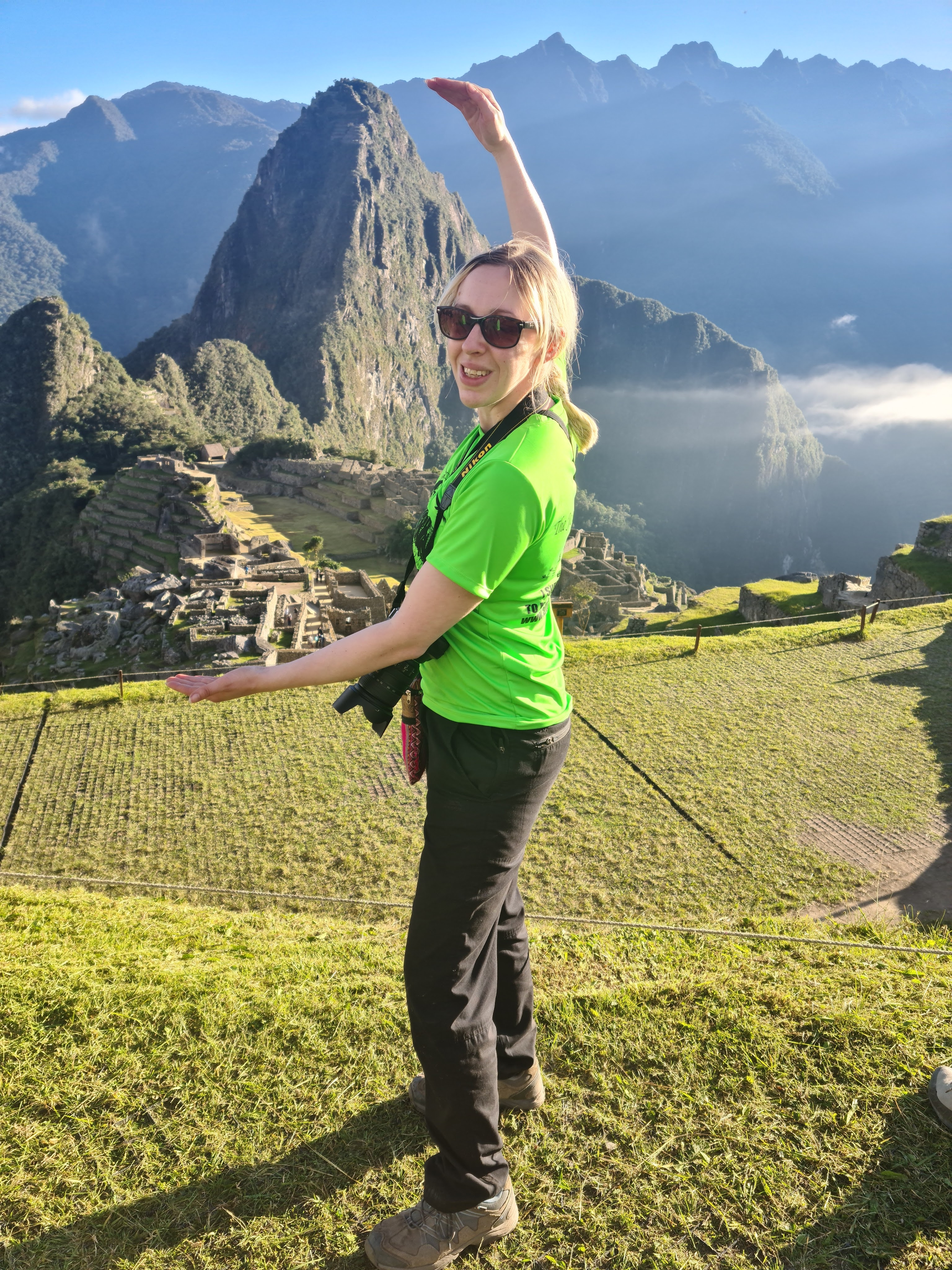
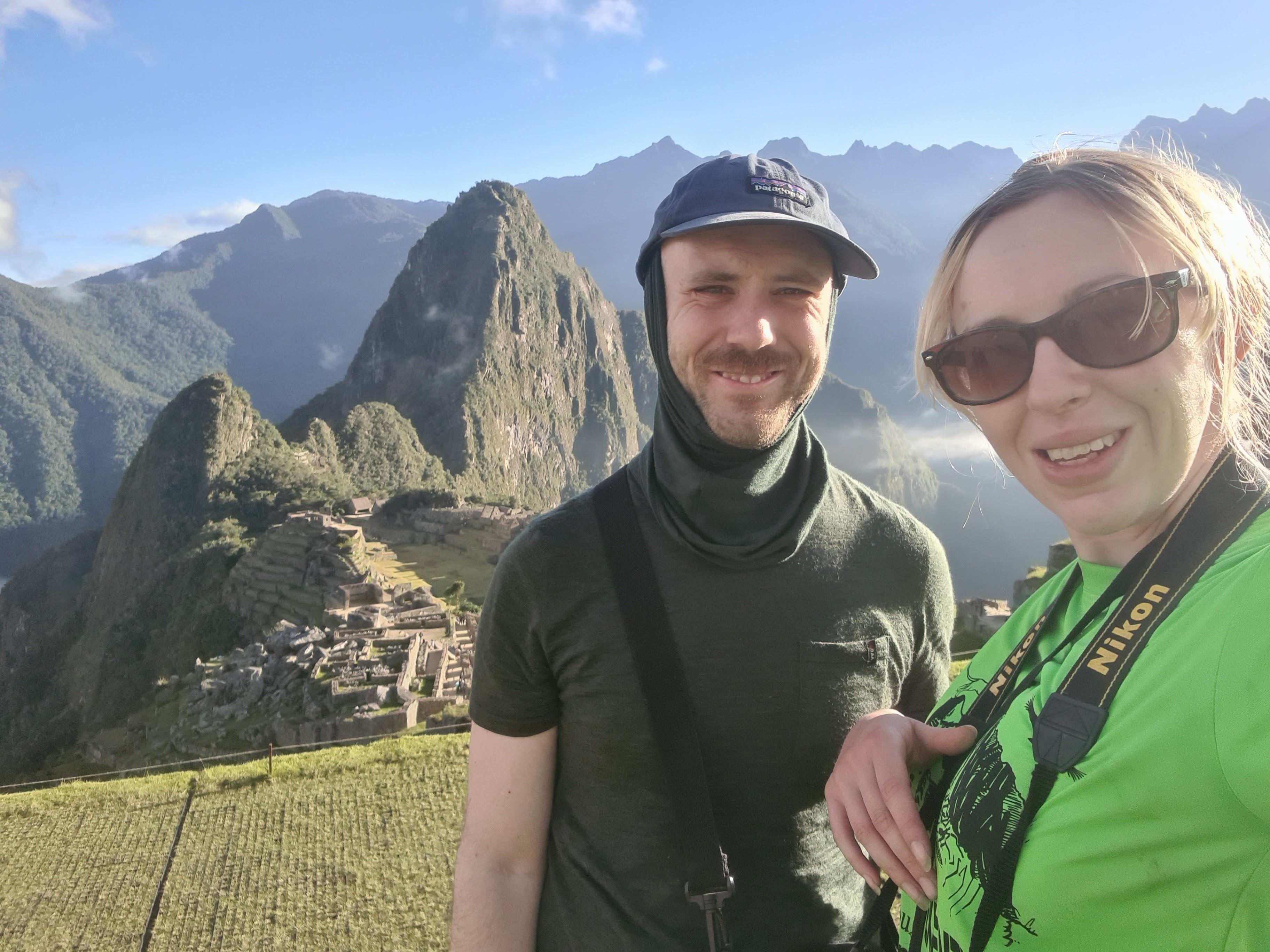
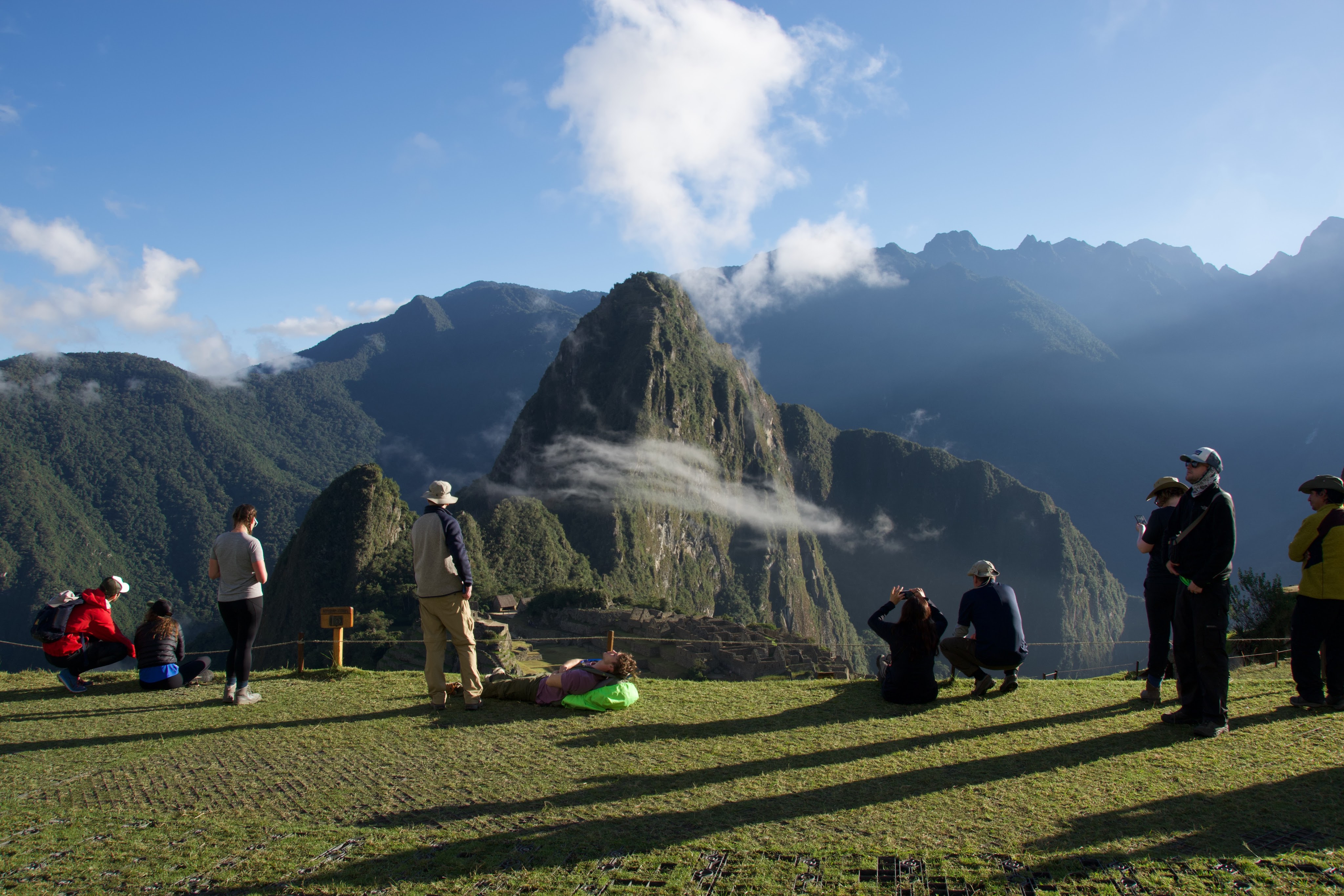
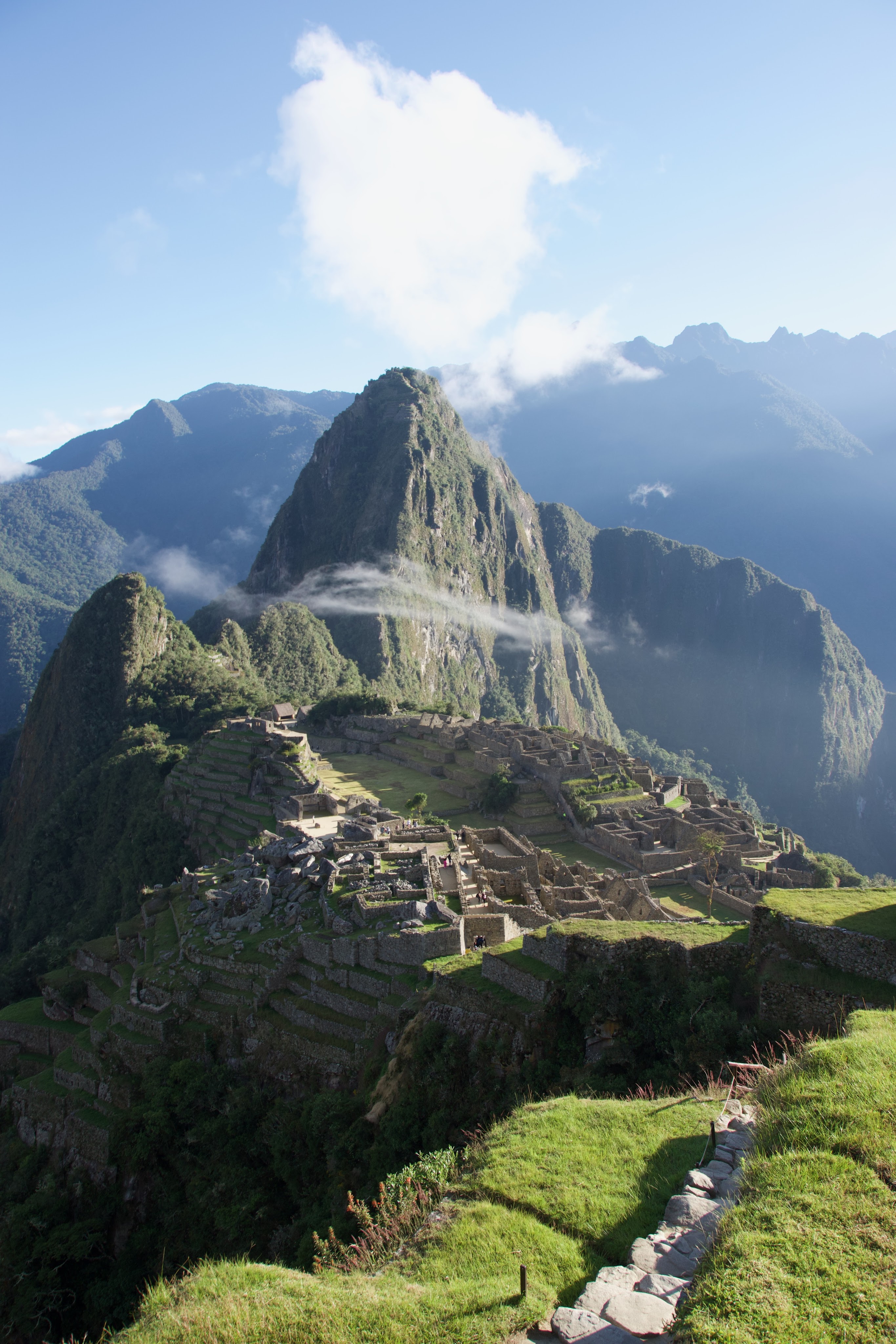
Yes, after the longest, and most physically demanding route we’ve ever taken to reach a sightseeing destination, and halfway round the world from home, we had finally made it.
So you can imagine our shock when there was a problem with my, Ricki and one other’s ticket which prohibited us from continuing.
I won’t bore you with details, but after a tense 10/15 minute wait while Rolando fought to get things resolved, during which I started to mentally work out how we could rejig our onward travel if we needed to stage a sit-in, we were thankfully permitted entry. Can you imagine if I had to finish this blog, after all the above, with “and then we had to turn around and go back to Cusco”?!
Now weak with relief, as well as fatigue, we could finally marvel at the stone empire from within.
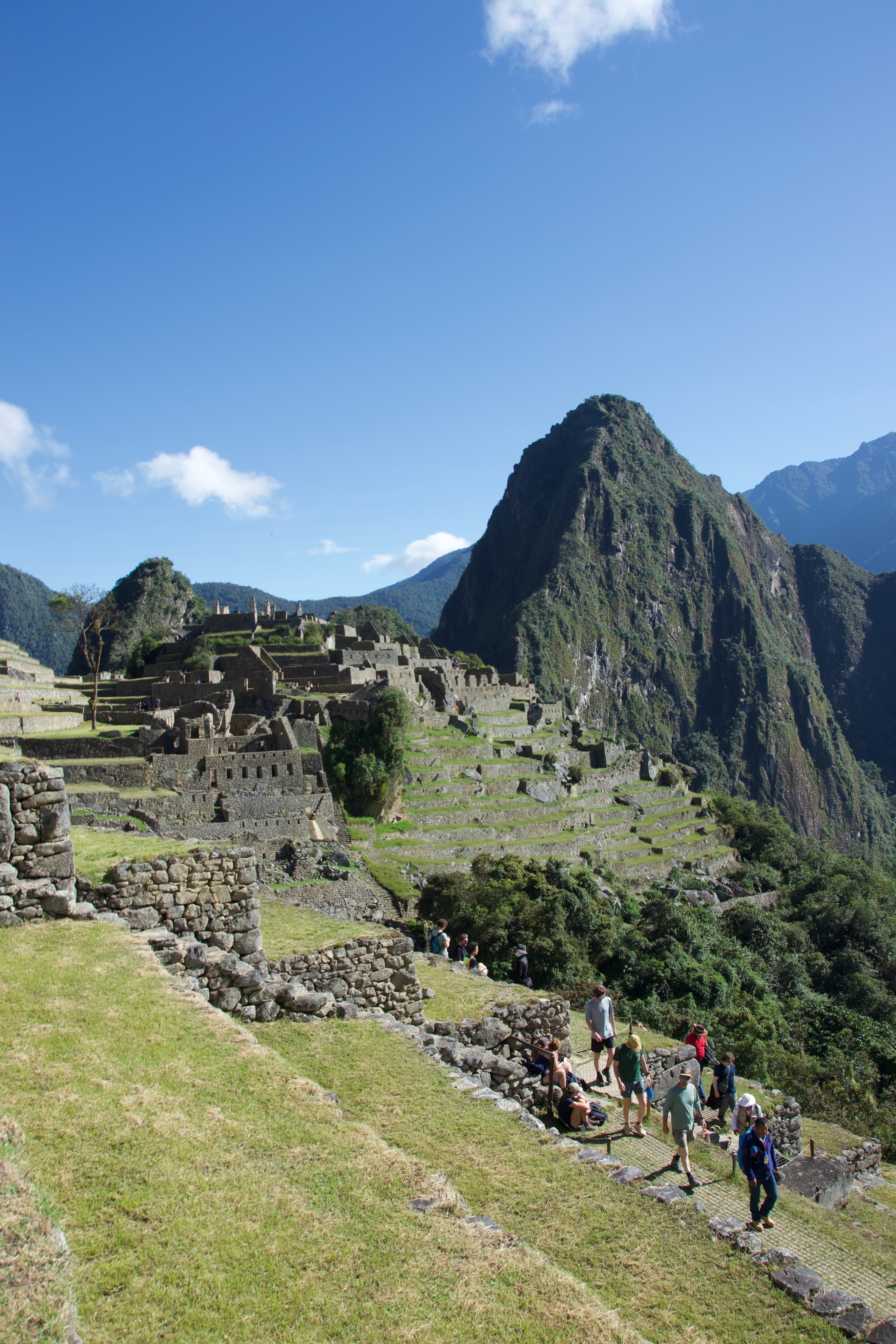
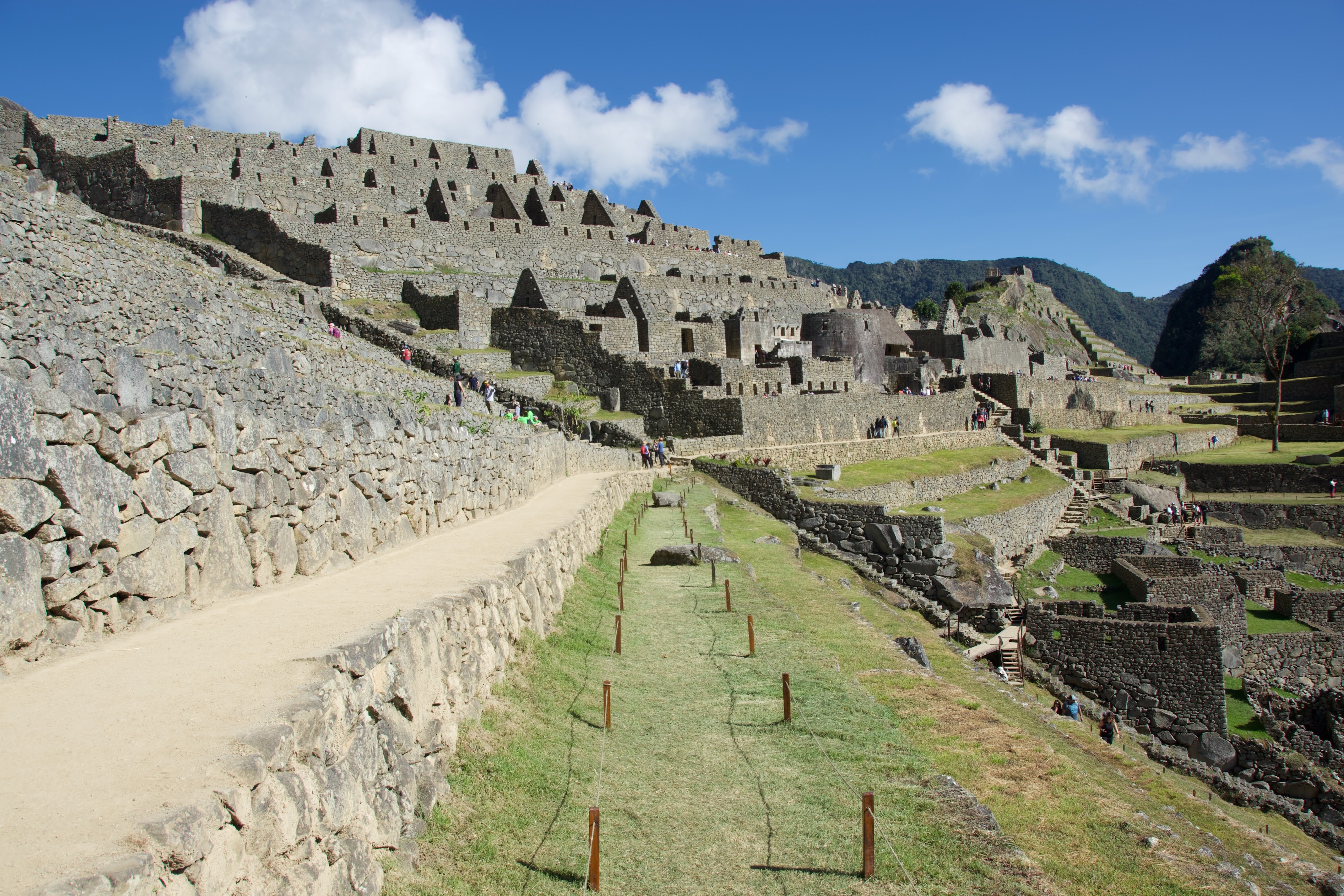
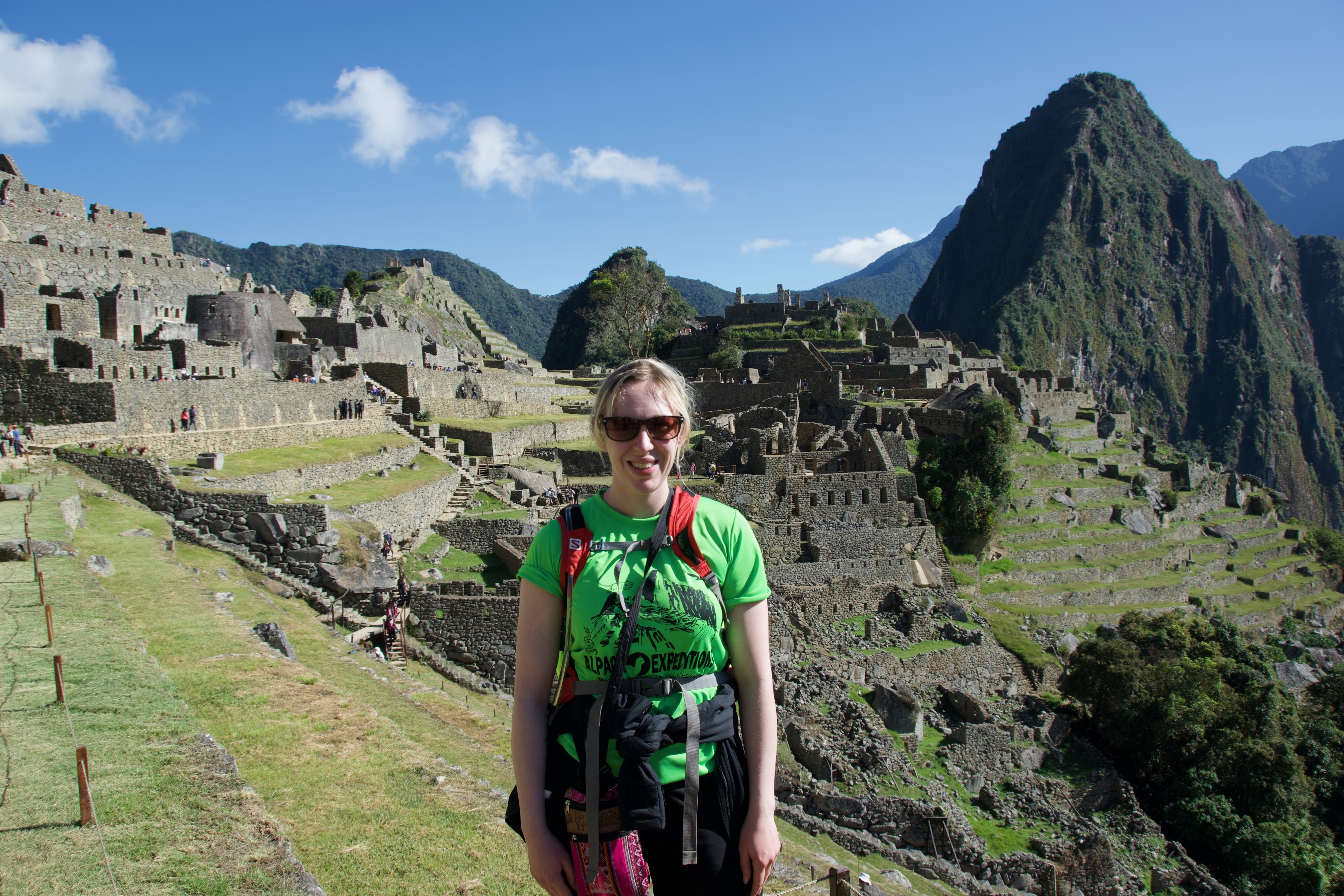
The preservation is incredible, with some thatched roofs even still visible. To the Quechuan’s credit though, I don’t doubt that the survival of the site is partly down simply to how well constructed it is. The stonework is robust, and the Quechuans were very advanced with their techniques.

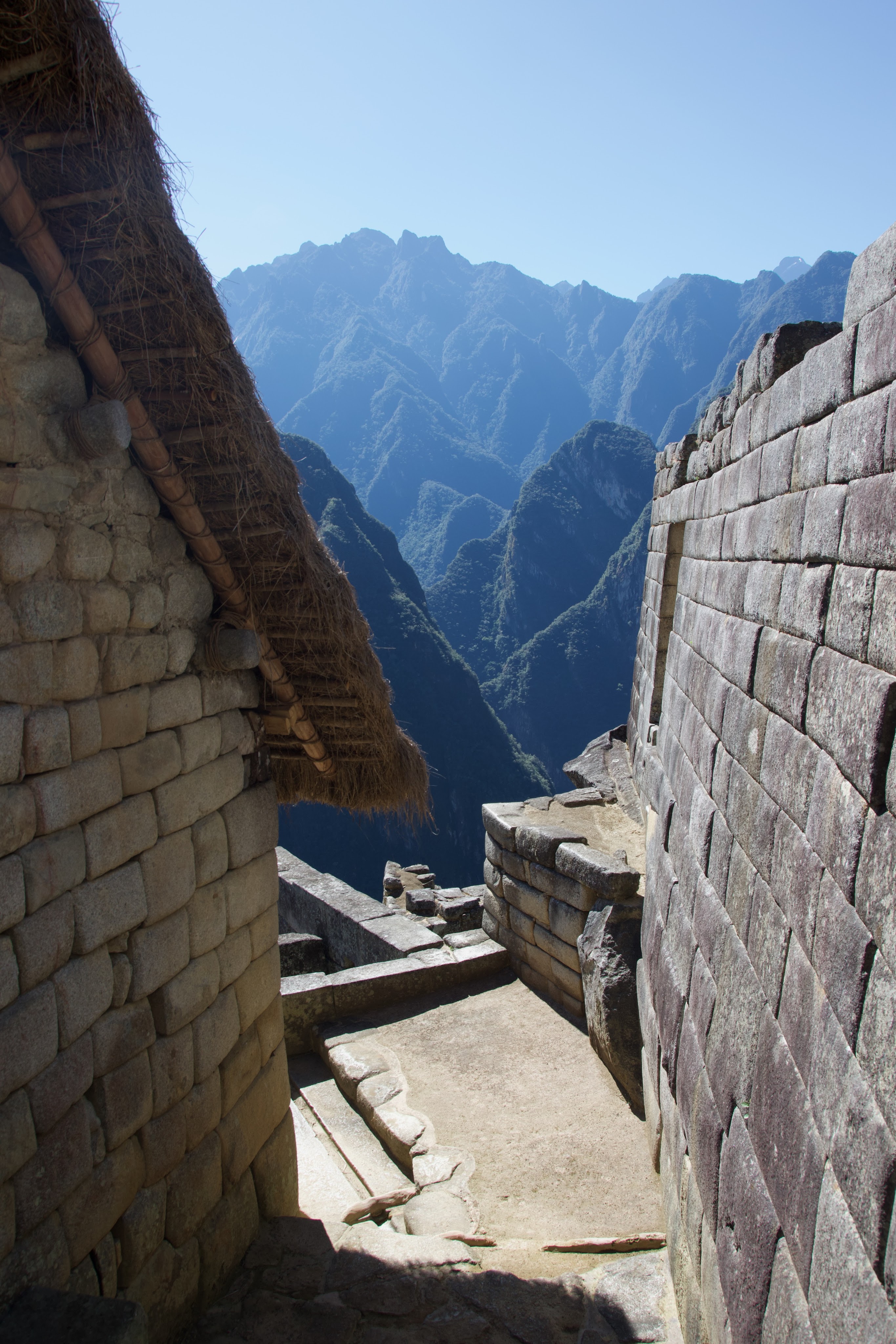
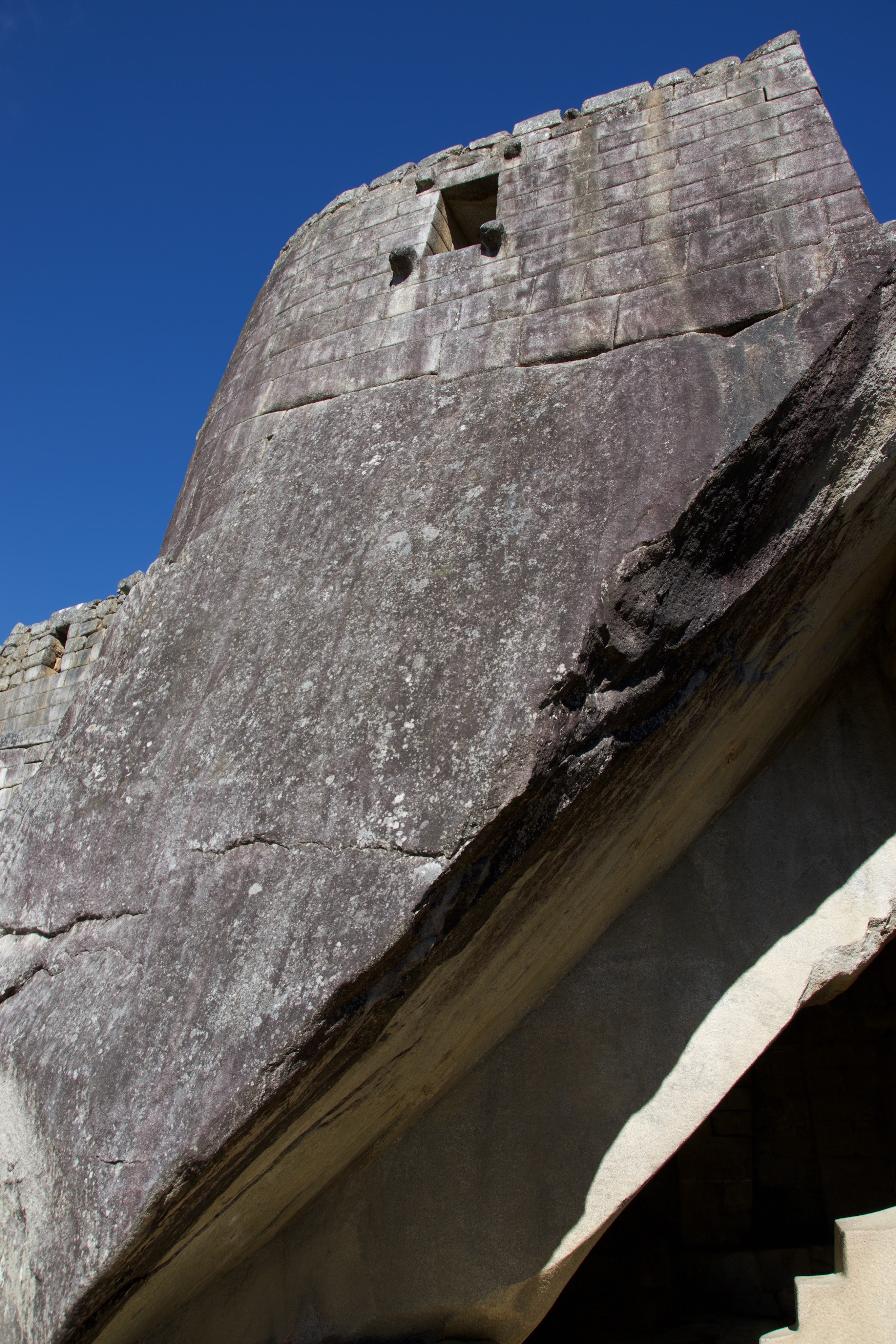
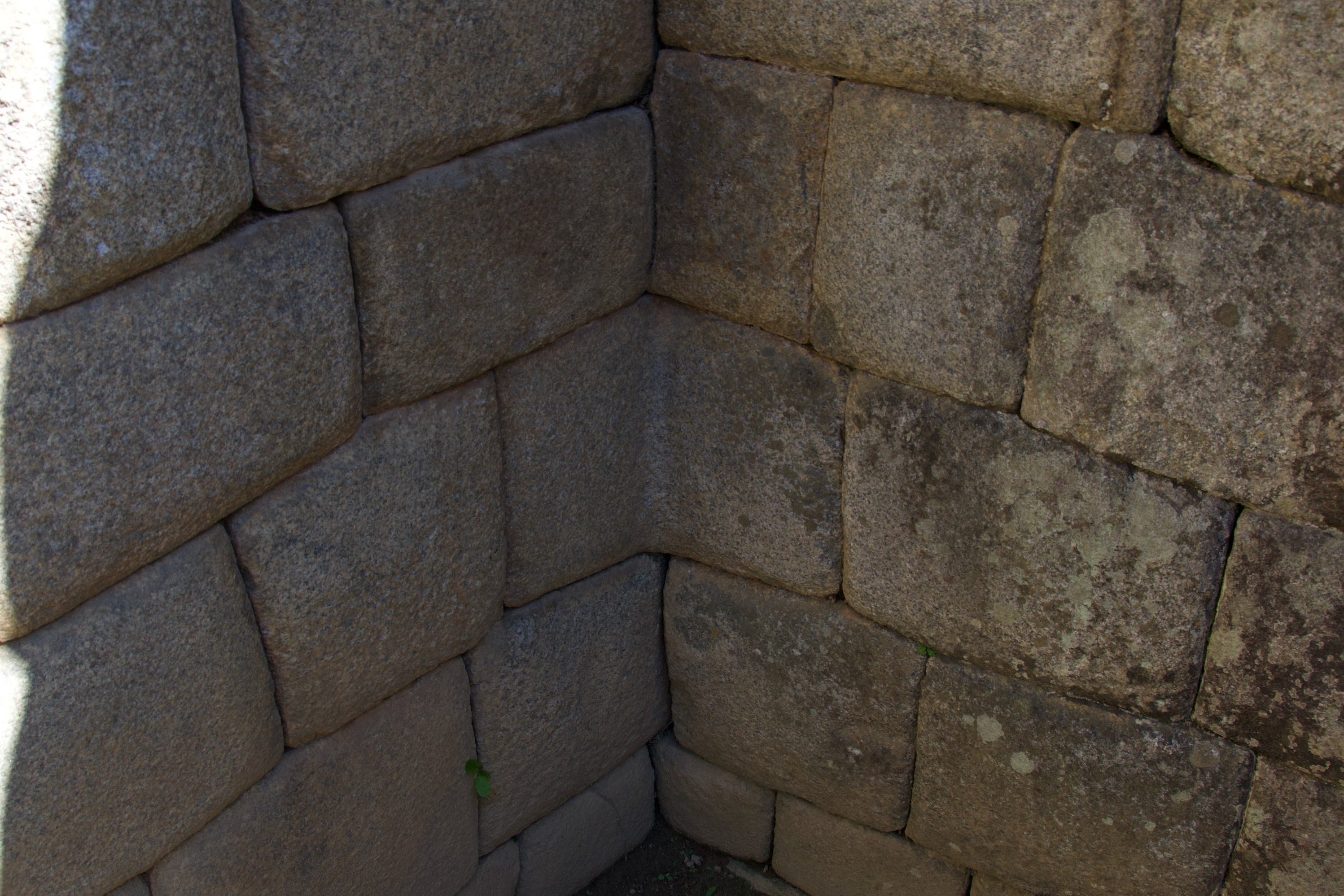
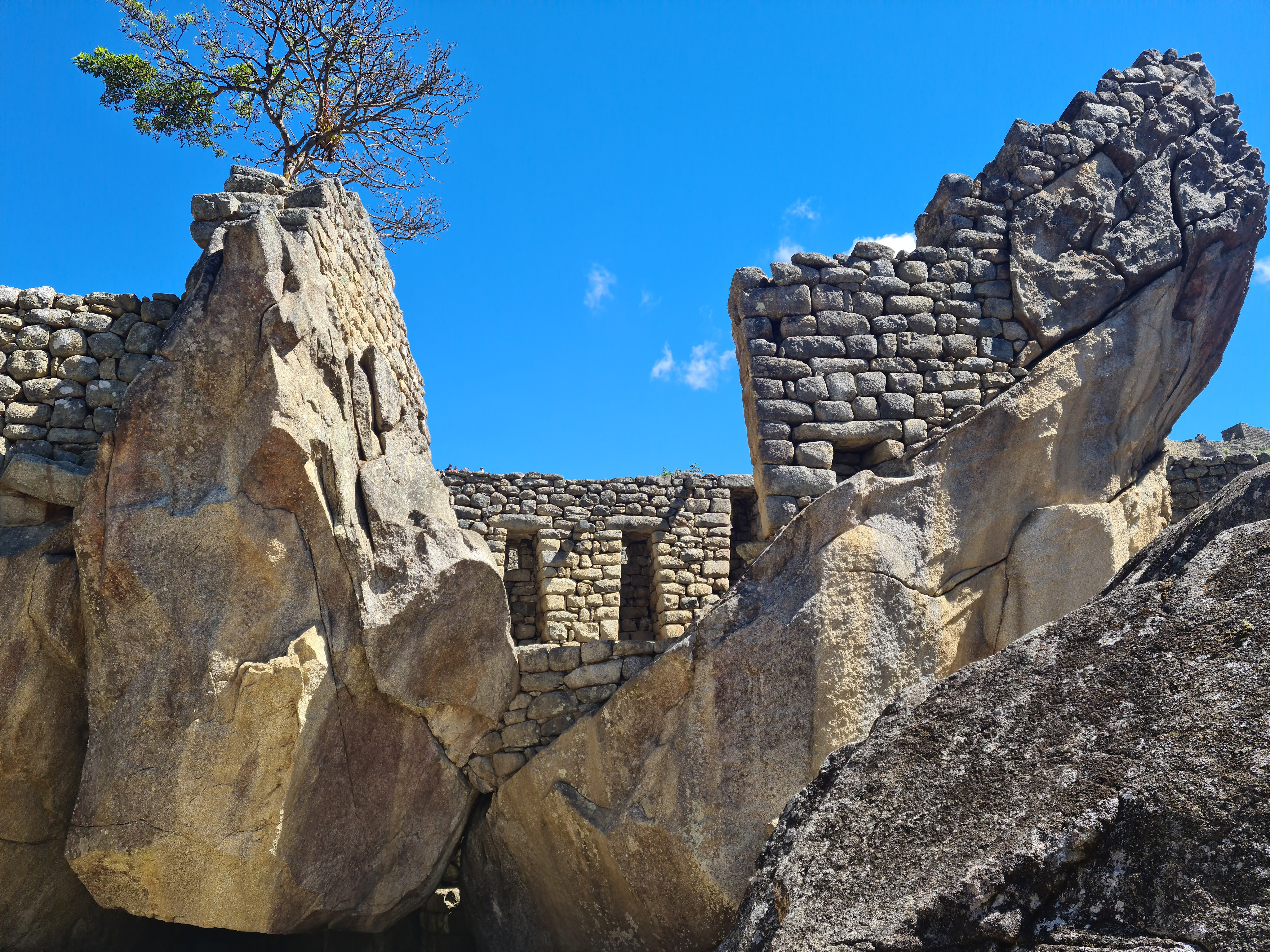
I hadn’t appreciated that Machu Picchu was only inhabited for about the same length of time it took to build. It seems so dispiriting after all the back breaking work that must have been required.
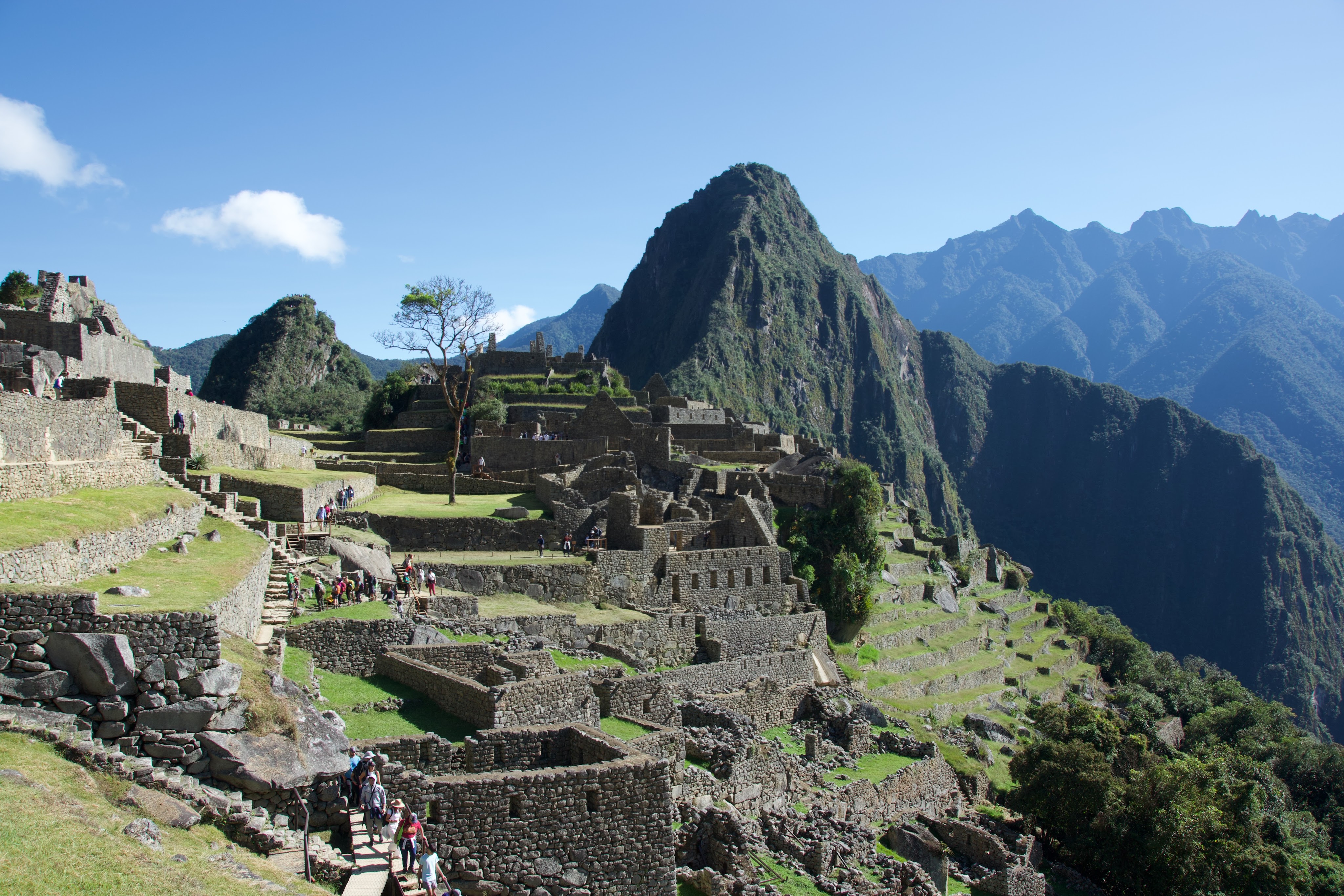
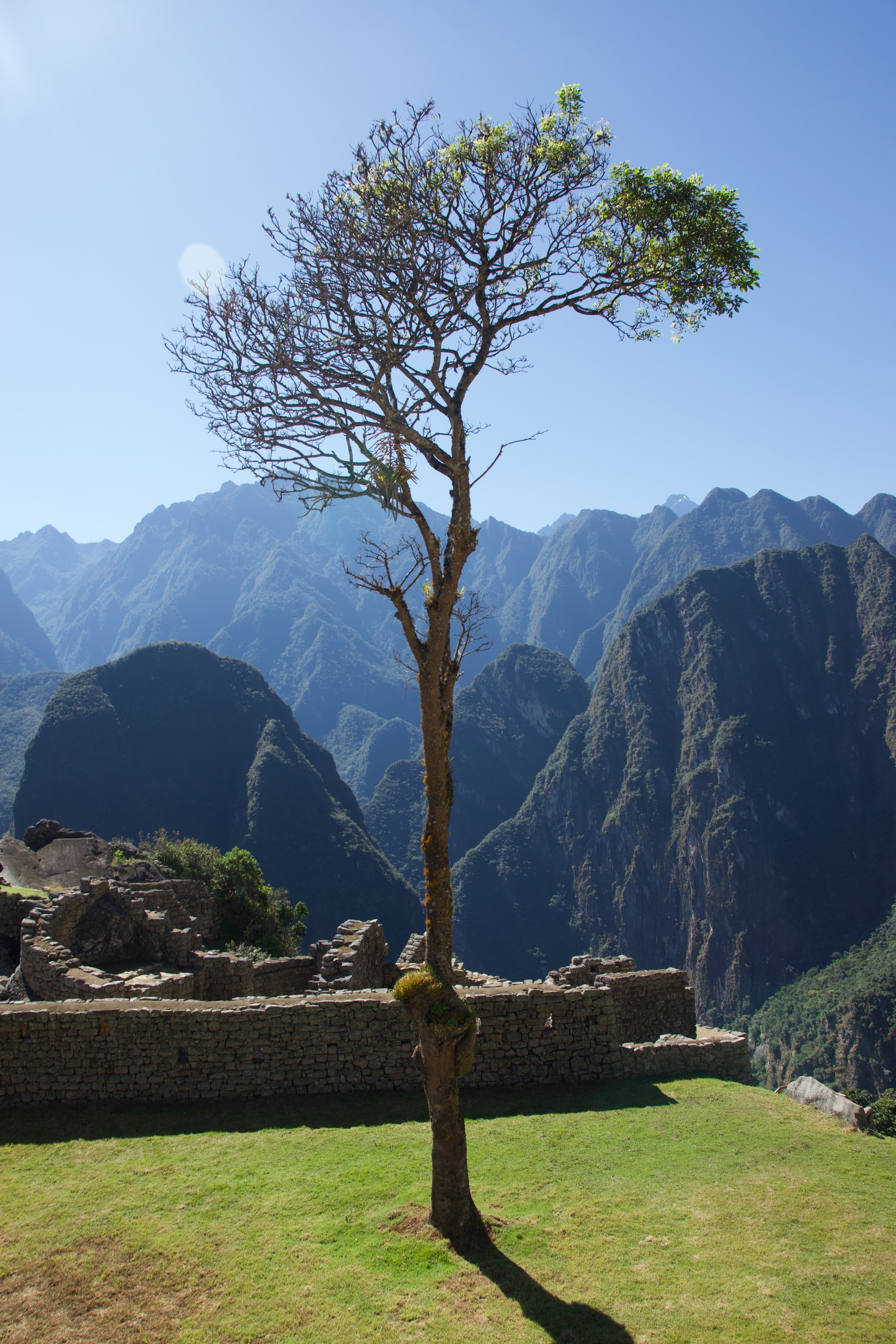
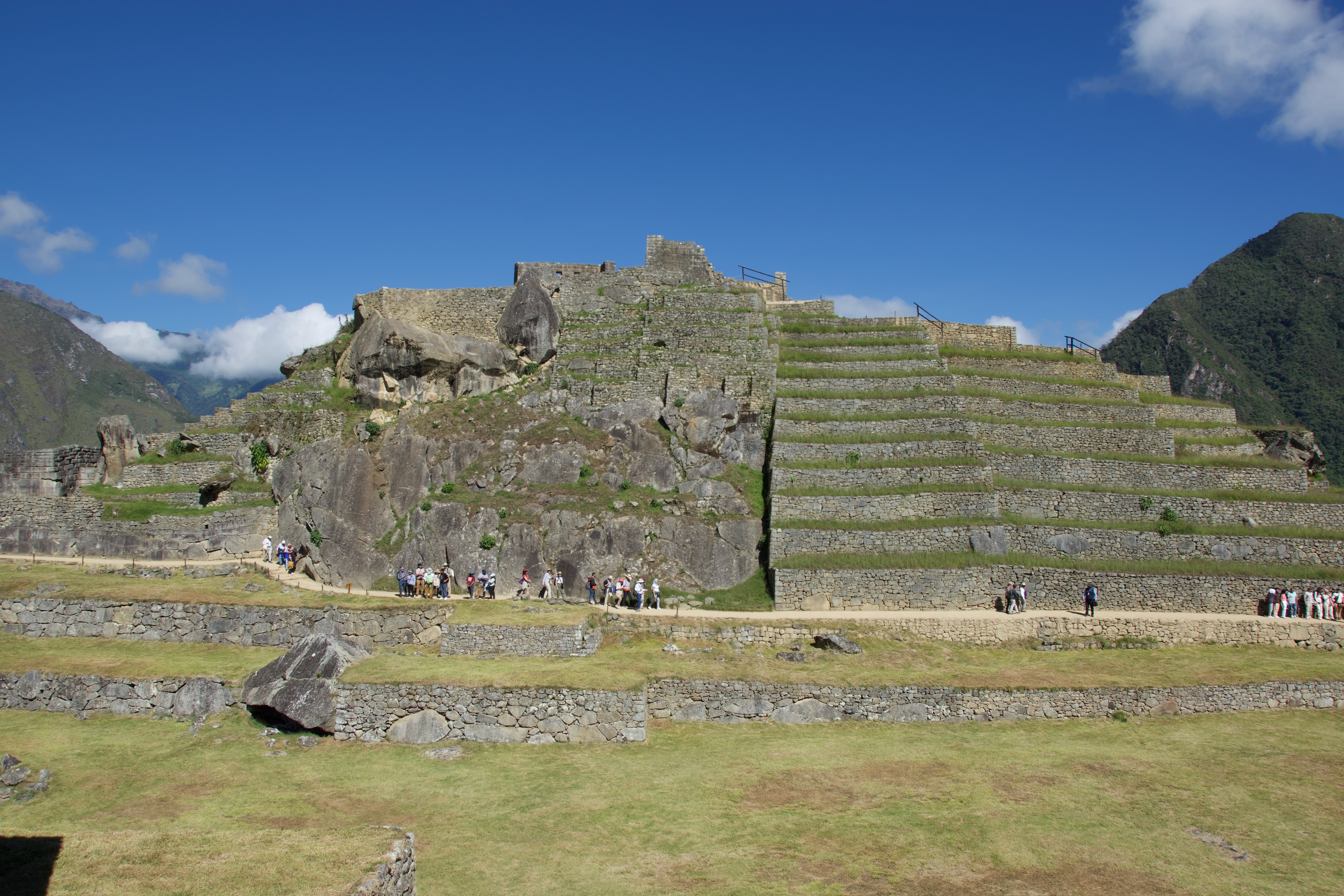
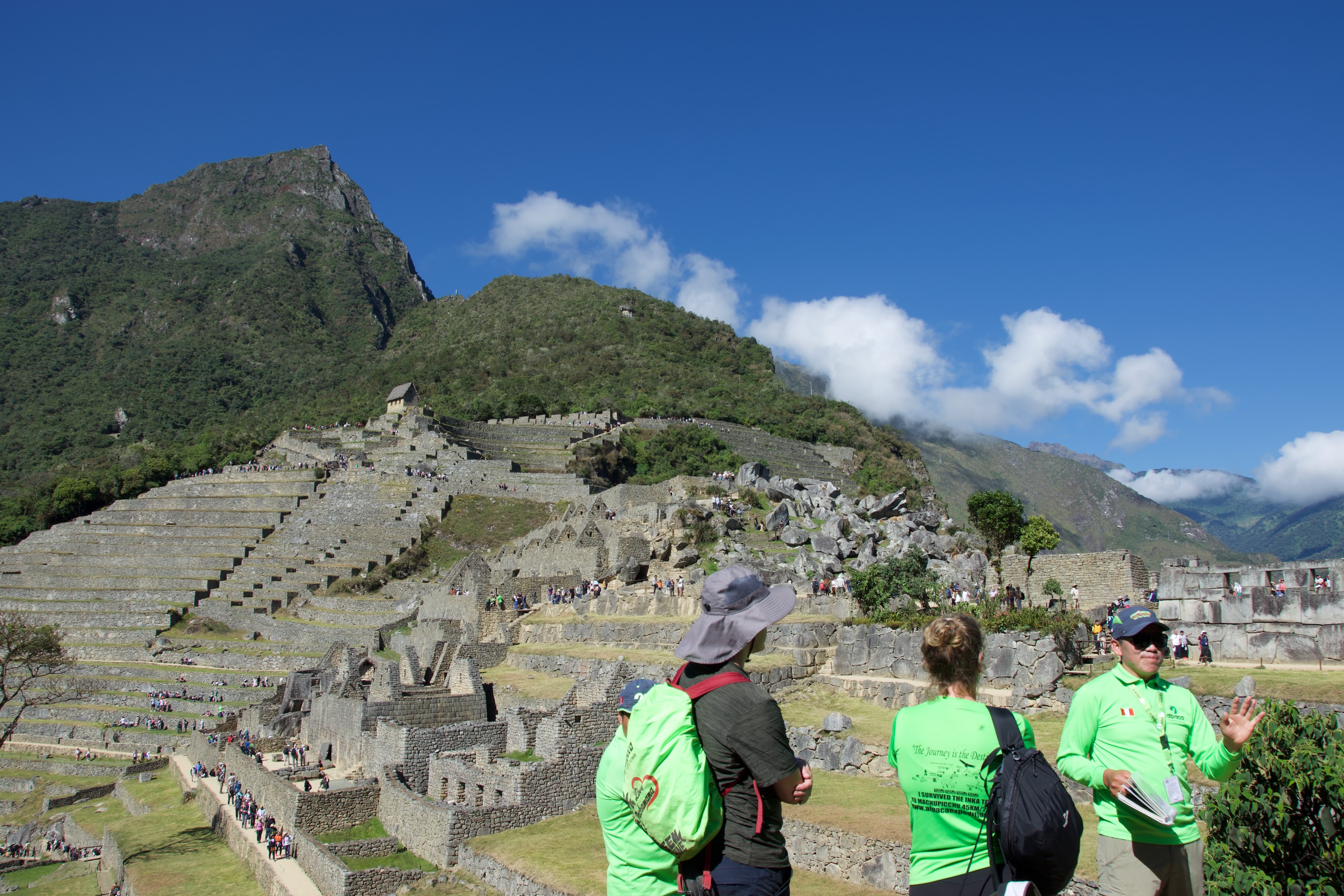
Our tour only took in a small percentage of the site, but it was still enough to build a huge appreciation for what the Quechuan accomplished. It truly is a wonder.
I’ll admit, it was difficult at times to fully focus during the tour. We were grateful that the previous day had been gentle enough to allow some energy recovery, but nevertheless the intensity of the trek was still making itself felt, with niggles of pain starting to creep in each time we had to use steps. And perhaps we were also a little distracted with the imminent onset of one remaining challenge. Yes, there is a sting in the tail.
At some point after booking with Alpaca, Ricki had received an email mentioning a package add-on where we would benefit from some of the most impressive and privileged views down on to Machu Picchu. The catch? Another climb, up the mountain named Huayna Picchu. Apparently the nickname “the Stairs of Death” wasn’t enough to put him off, and all gung-ho he clicked “Book”.
And wasn’t he regretting it now.
Amidst all the joy at arriving at Machu Picchu, I’d warily clocked the fearsome looking hills overlooking the site, and nervously asked Wilbert which one was Huayna Picchu. Wilbert was rather gleeful in confirming my fears – the biggest one.
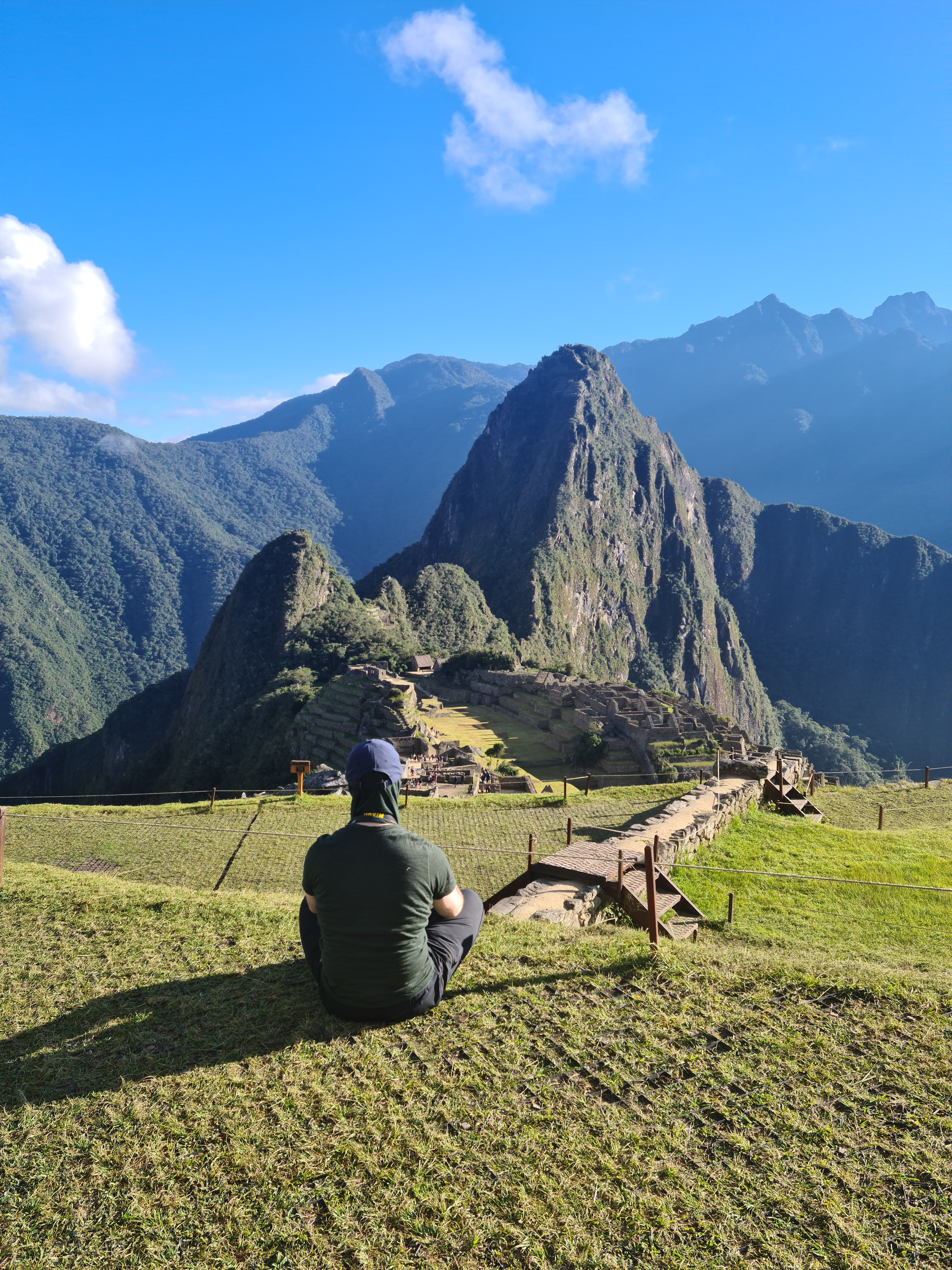
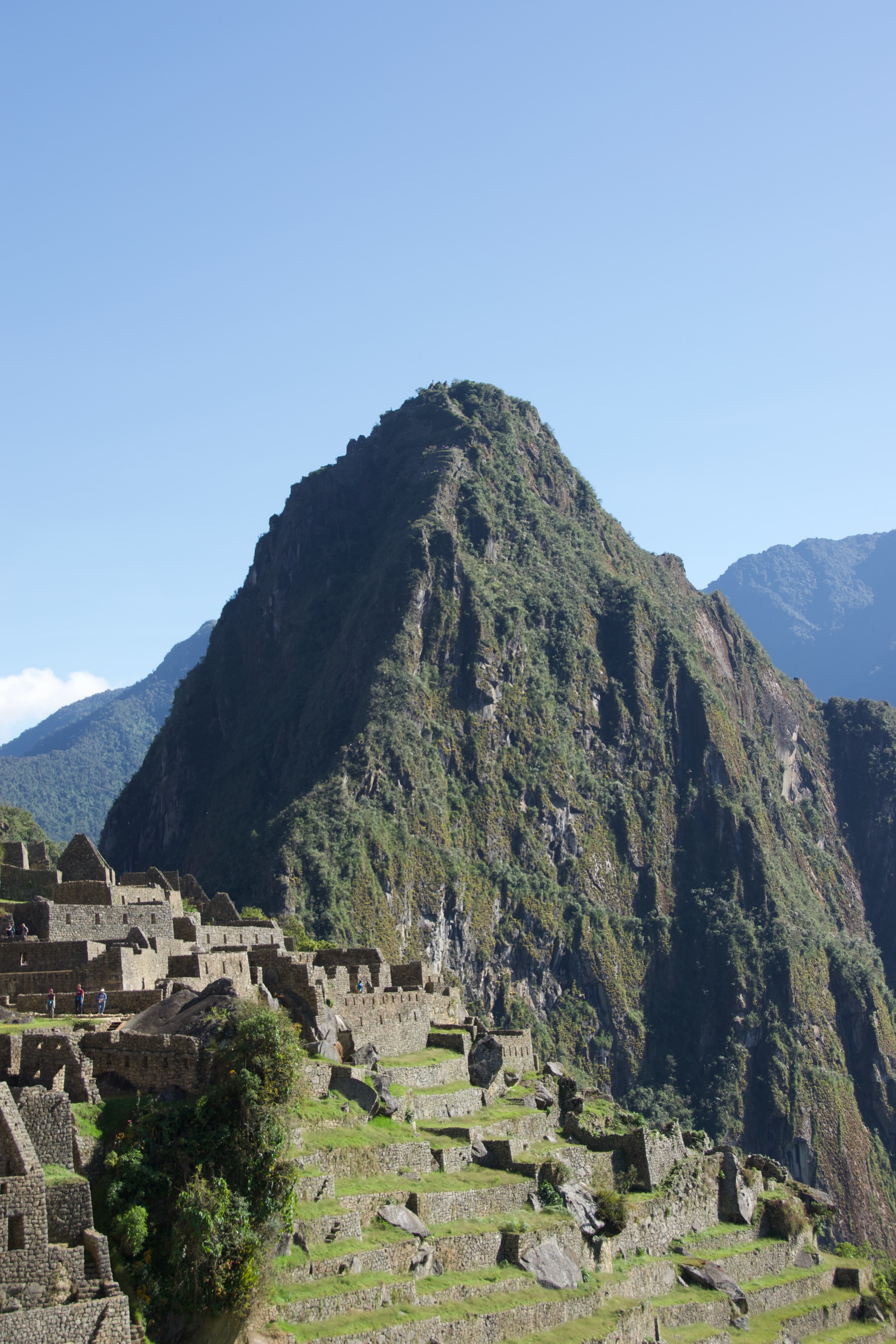

Yes, that f’ing thing in the middle
As the Spanish say, “ay, dios!”. Where’s a funicular or cable car when you need one?!
Only two others in the group had been brave/foolish/masochistic enough to sign up for this extra slice, and they had signalled their intent to back out almost immediately that day. While I had been maintaining a “let’s wait and see” approach for the duration of the trek, Ricki had been steadfast that he would be doing it.
Surprisingly, now the roles were reversed. Ricki was clearly tired and suddenly very charitably offering “if you don’t feel up for it, we don’t have to do it”.
Well, I was up for it. Already delighting in having completed our first three day hike, we were here and not likely to be back for the foreseeable future, if ever. Whilst I might not have been the fastest in the group, here was my chance to show some endurance. I was still standing, still with some energy to burn. I am Sir Edmund Hillary, hear me roar.
What I actually was, was cognisant of the fact that there is a limited number of tickets available for Huayna Picchu each day. If I’d deprived someone else of the chance to buy one, then I should at least use it myself.
And so Wilbert led us away from the group, the funeral march faintly ringing through our ears.
Wilbert did offer to accompany us on our bonus expedition, but by his own admission didn’t want to put us off with his pace. As we weren’t going anywhere offsite, and with a clear trail up and down, we were happy to tackle Hauyna Picchu alone. “Should have asked for more condor pee” I lamented after his departure. Add that to the list of sentences I never thought I’d say.
No poles allowed, this was entirely on us now. After a frustrating downward set of steps at the start “Why did they build this to take you further from the top?!”, we headed for the skies again, trying to keep Wilbert’s target time in mind. We only needed to endure 45 minutes.
That was if we could keep the descending tourists at bay. The path is narrow, with few passing places on certain flights of steps, and for most of the mountain the same path is used for those coming down as going up. At one point I made the mistake of indicating to a descending man that I’d hold back for him – only to then have a tour guide capitalise on the opportunity and send his twenty person group down in our way.
Hijo de puta….
Well, no more Miss Nice Tash. From then on, teeth gritted, I’d keep moving as far as my breath allowed, sometimes taking advantage of the hand rail and pulling myself up the endless sets of steps.
We did pause for one tour guide who clocked my t-shirt (let’s face it, how could you not in that shade) and excitedly started questioning us and telling his group about the journey we had completed. The man immediately behind him looked as if he could definitely not care less, Huayna Picchu clearly testing him enough as it was. You and me both, buddy.
My heart soared as approaching a platform, I heard someone from above encourage “Just a few steps more!”. Finally! We high fived and now could stop to take in the view.
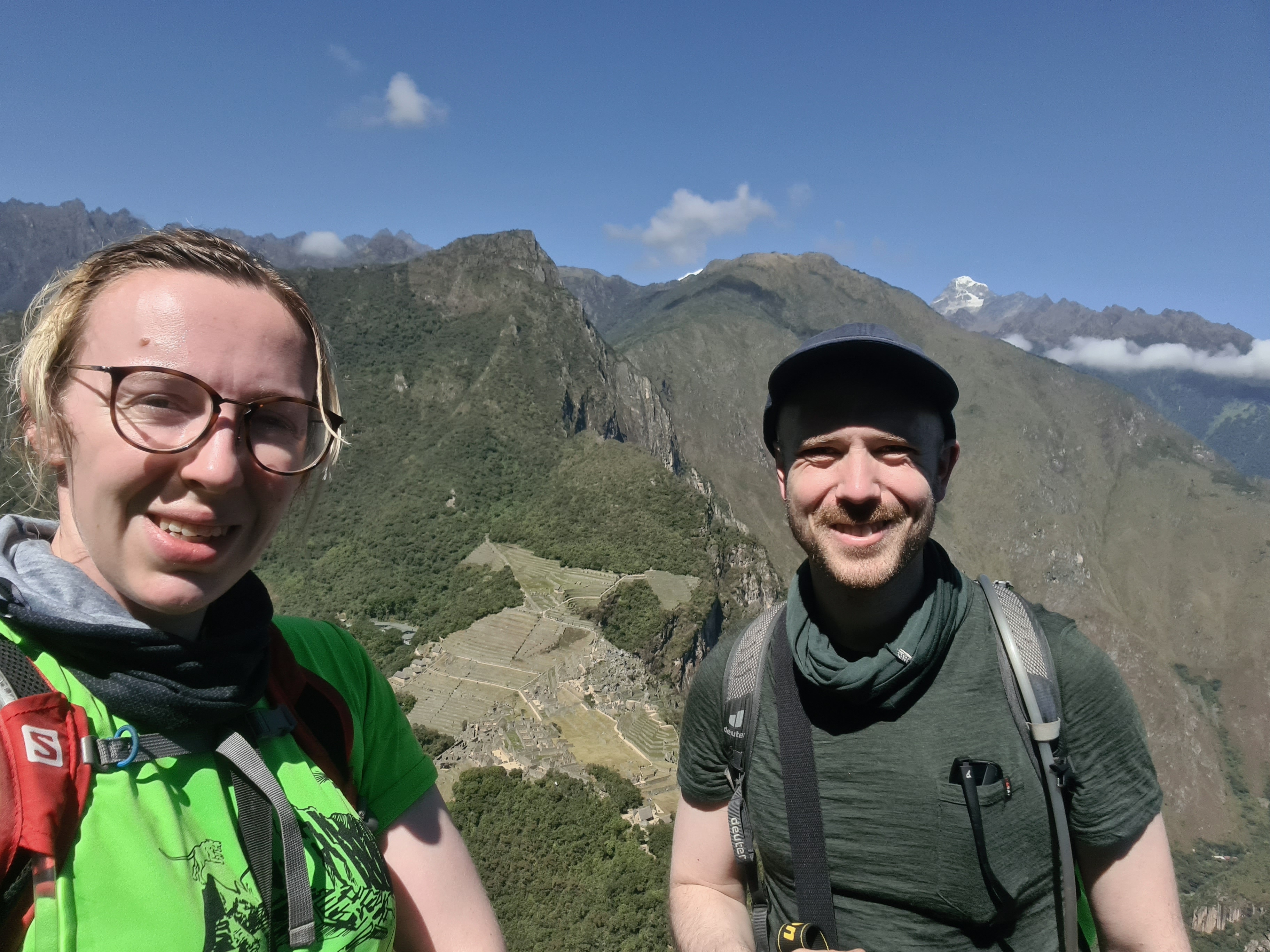
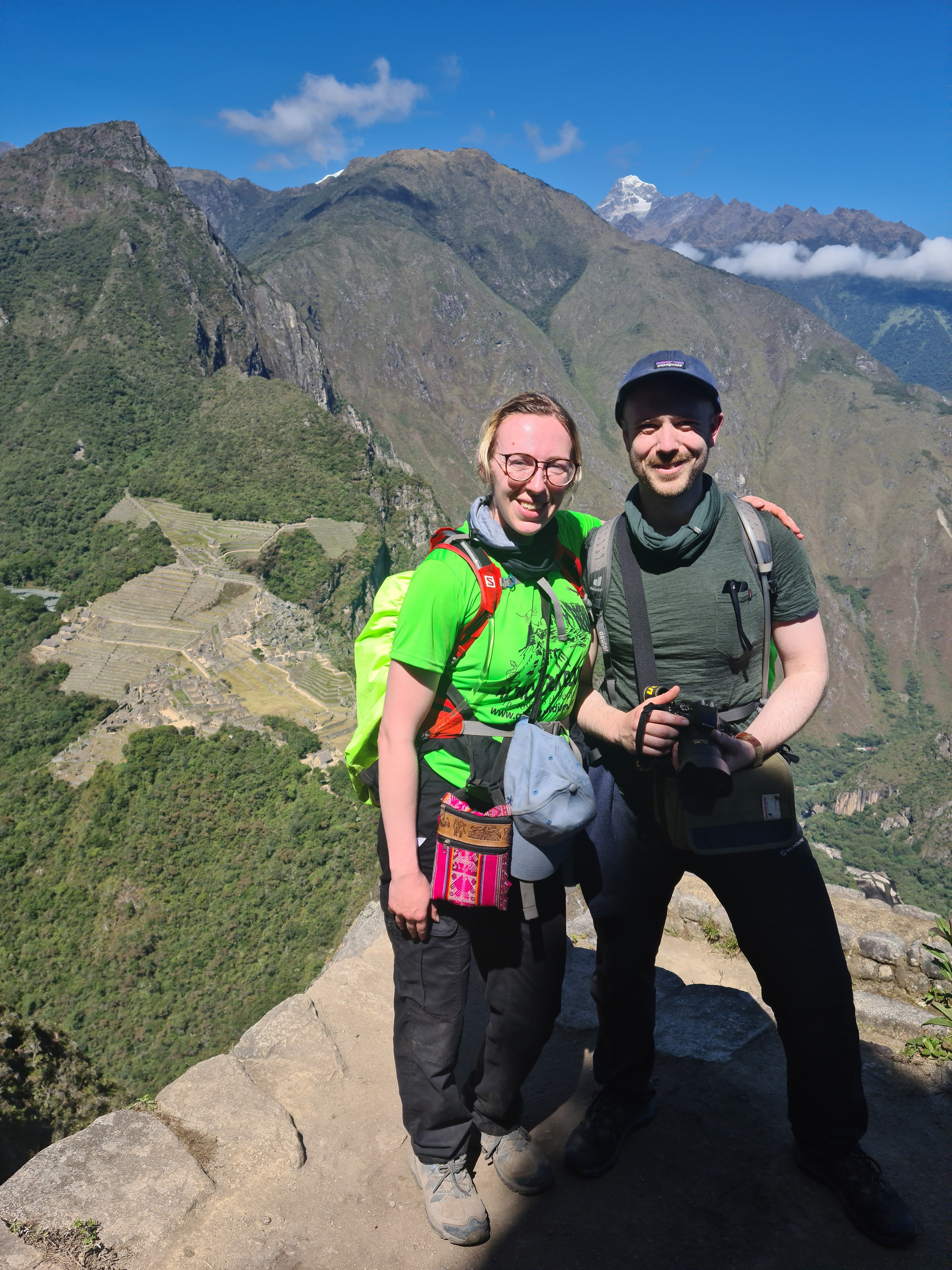
The celebration was short lived though. The sound of a whistle pierced the air. Looking up, I could now see that what we thought was barren rock face, was in fact surmountable, with a watchman and other tourists peering over.
Quickly we got back on the path, up another flight or two of steps and satisfied ourselves that with the signpost now in front of us, we must have made it. Further high fives, further photos. Just over the target 45 minute mark. Wilbert had warned us to try to get to the bus stop before noon, when lines would start to get long, so we opted not to bask in our success here for more than a few minutes.
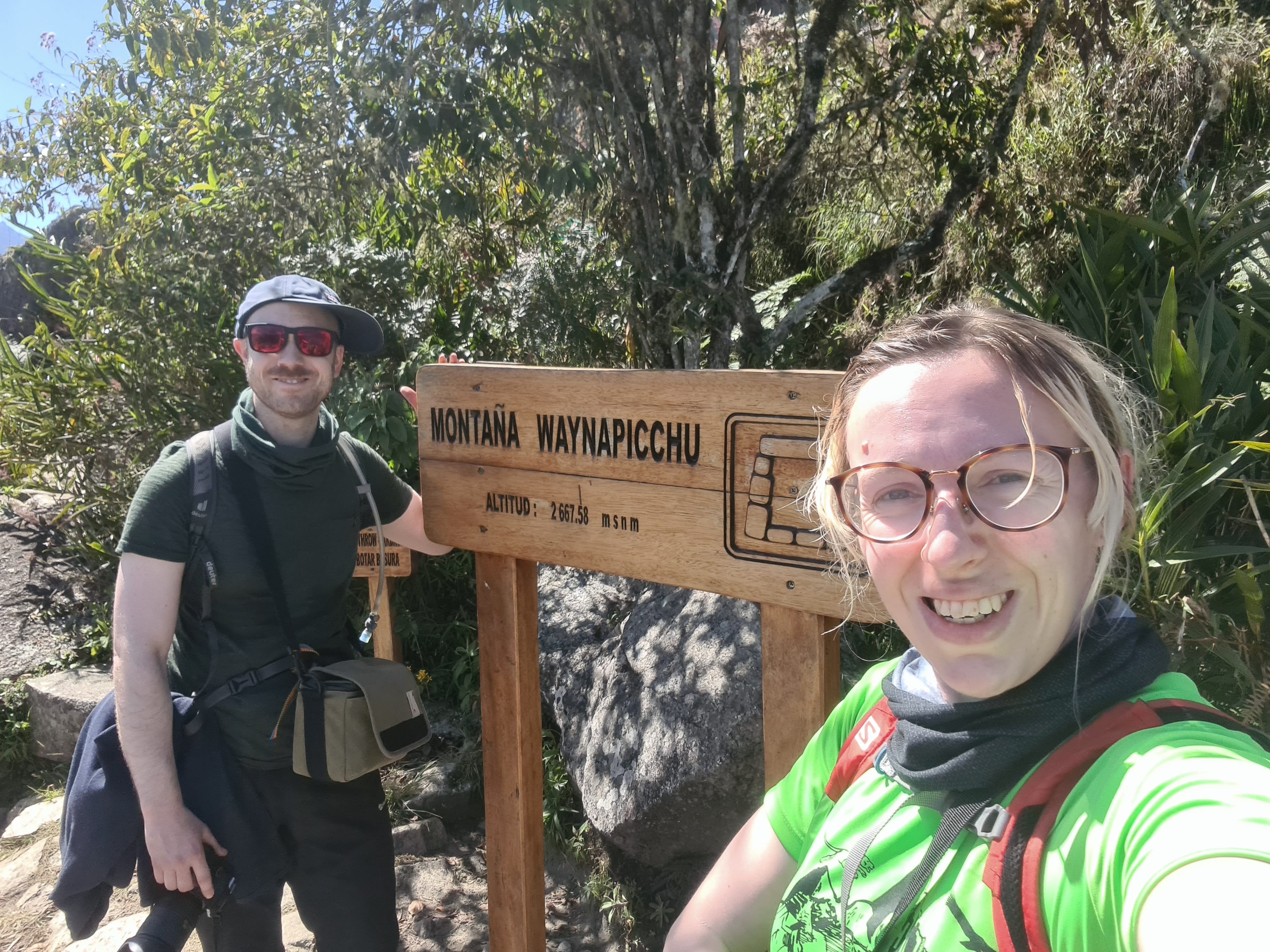
Time to find the split in the path that would take us back down.
Only instead, we rounded the corner to find…another set of stairs up. Was this some kind of Incan practical joke? At this point, I was practically delirious, laughing in frustration as I pushed myself up the steps on all fours.
Thankfully for us, and no doubt you as reader, this was the definitive end of our climb.
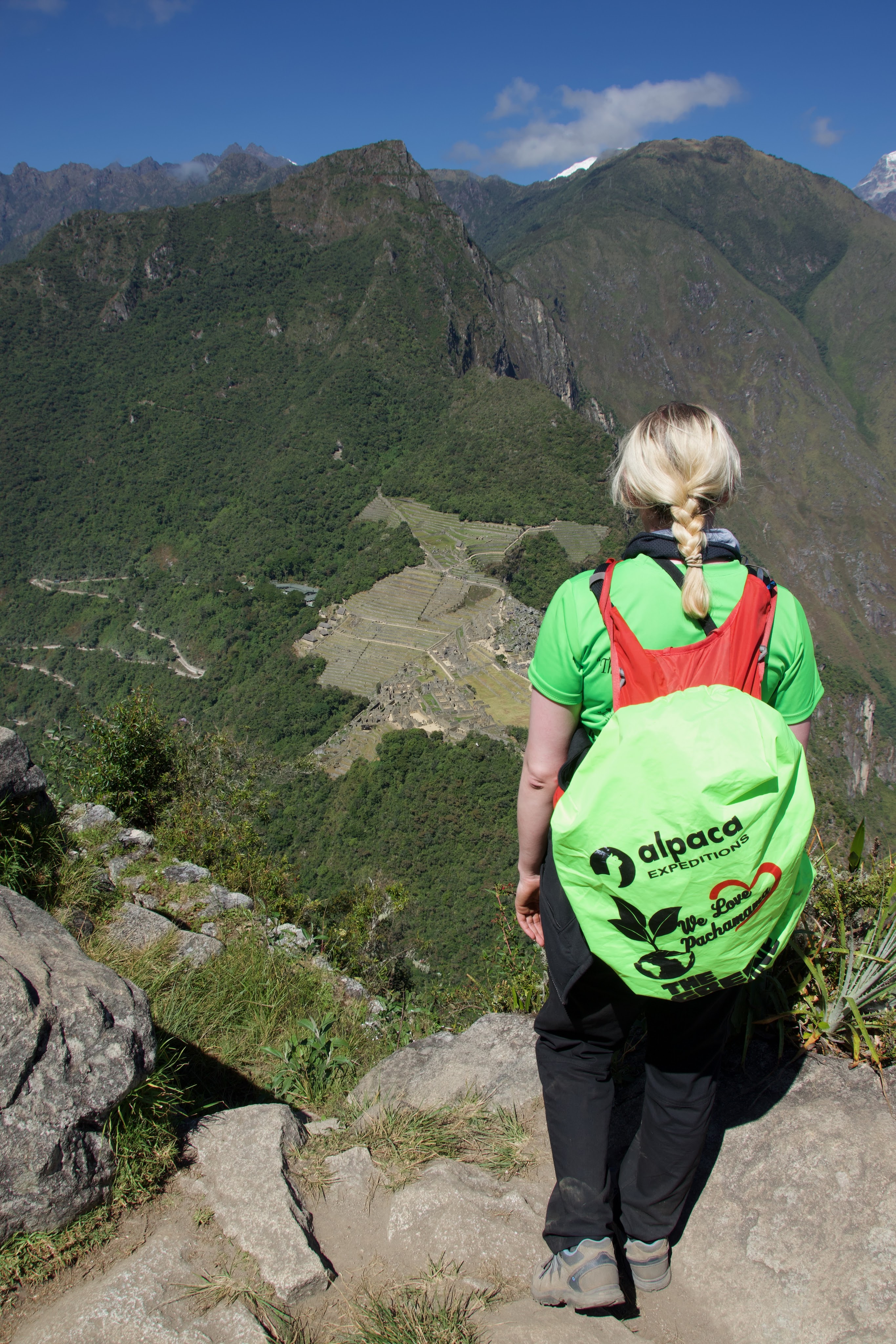
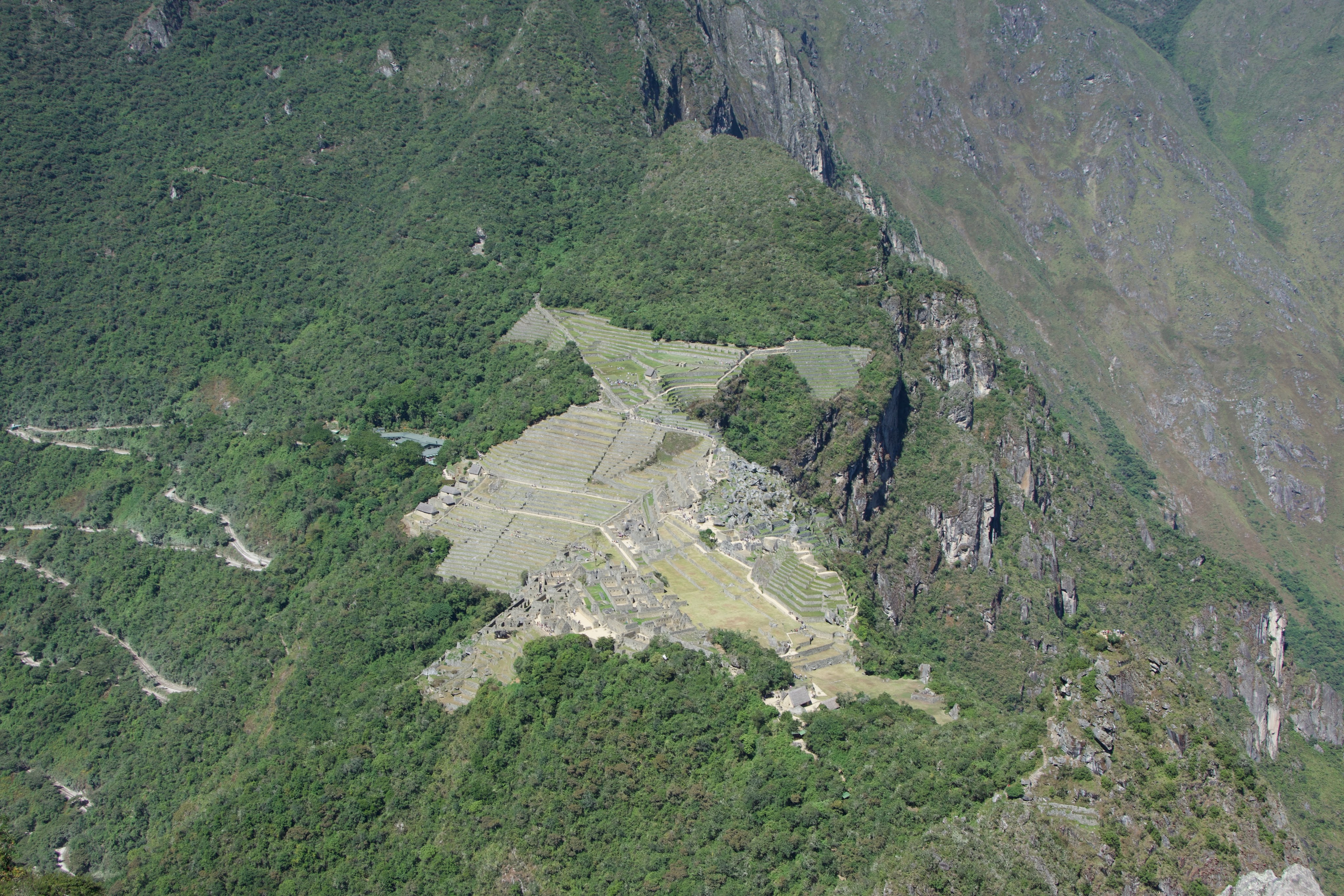
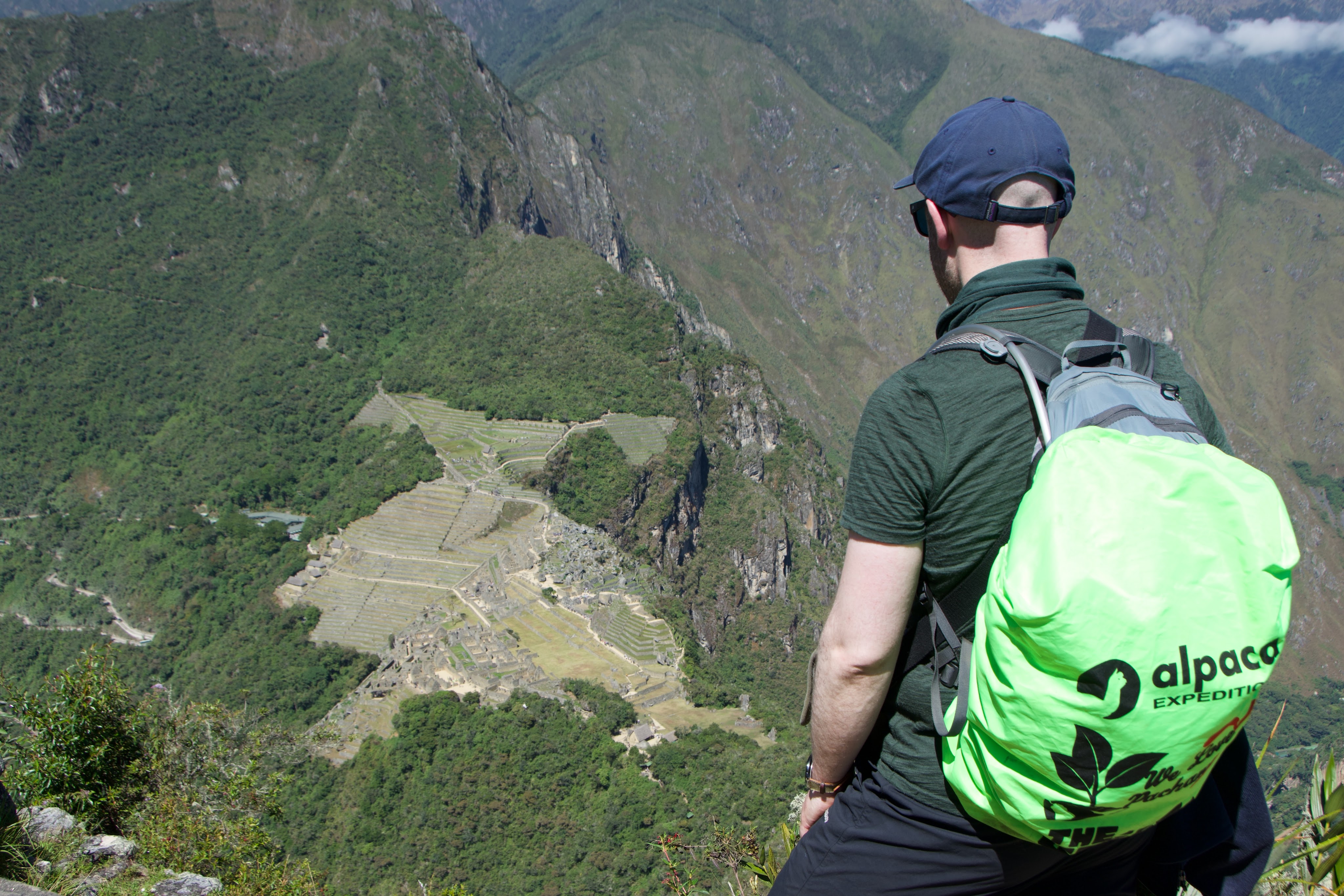
Aside from motoring our way down the mountain, and back through Machu Picchu to the waiting coaches, it was also the last of the physical exertions.
All that was left to do was get a well deserved beer and lunch, then check out the Perurail train again, this time from inside.
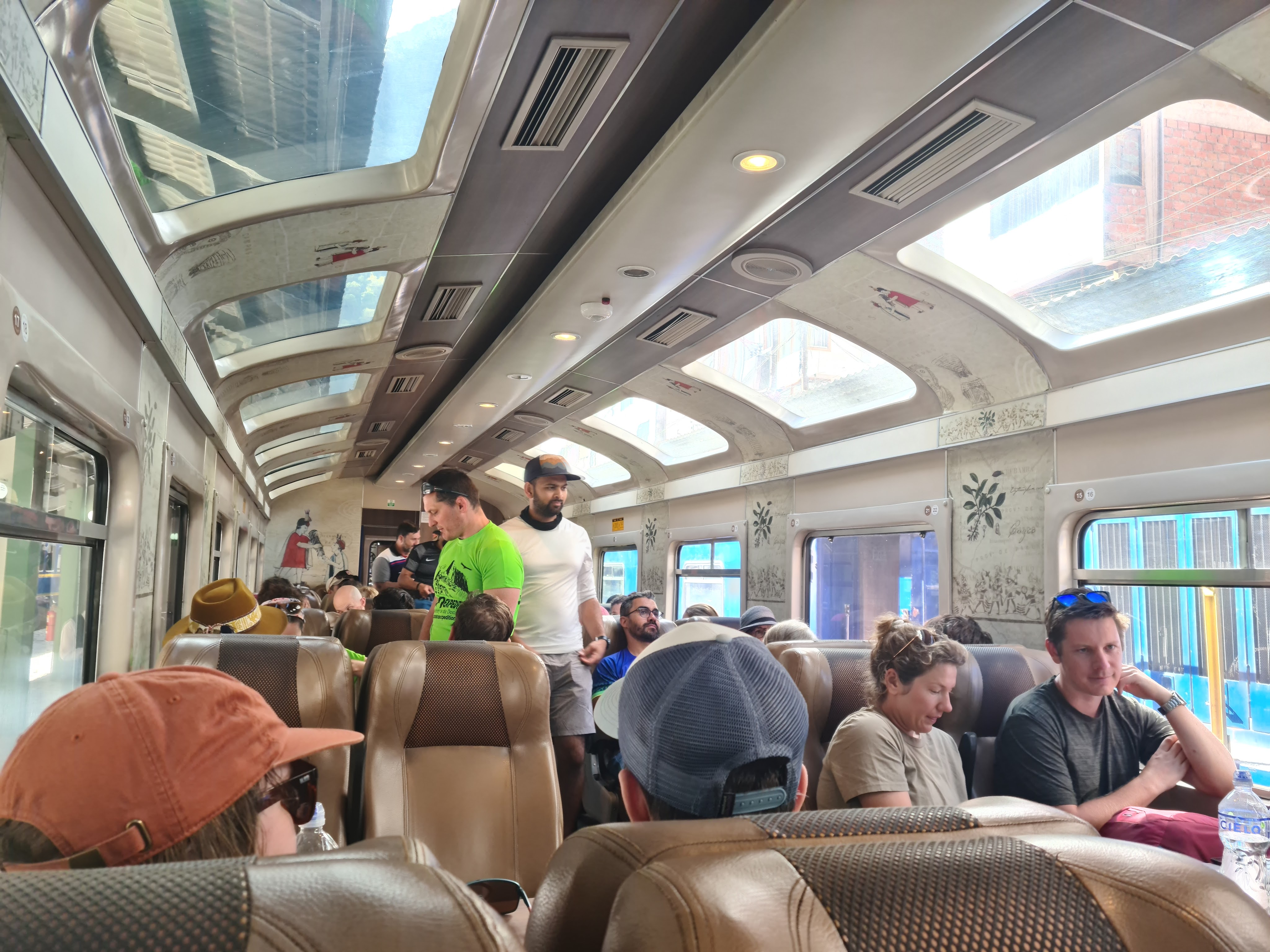
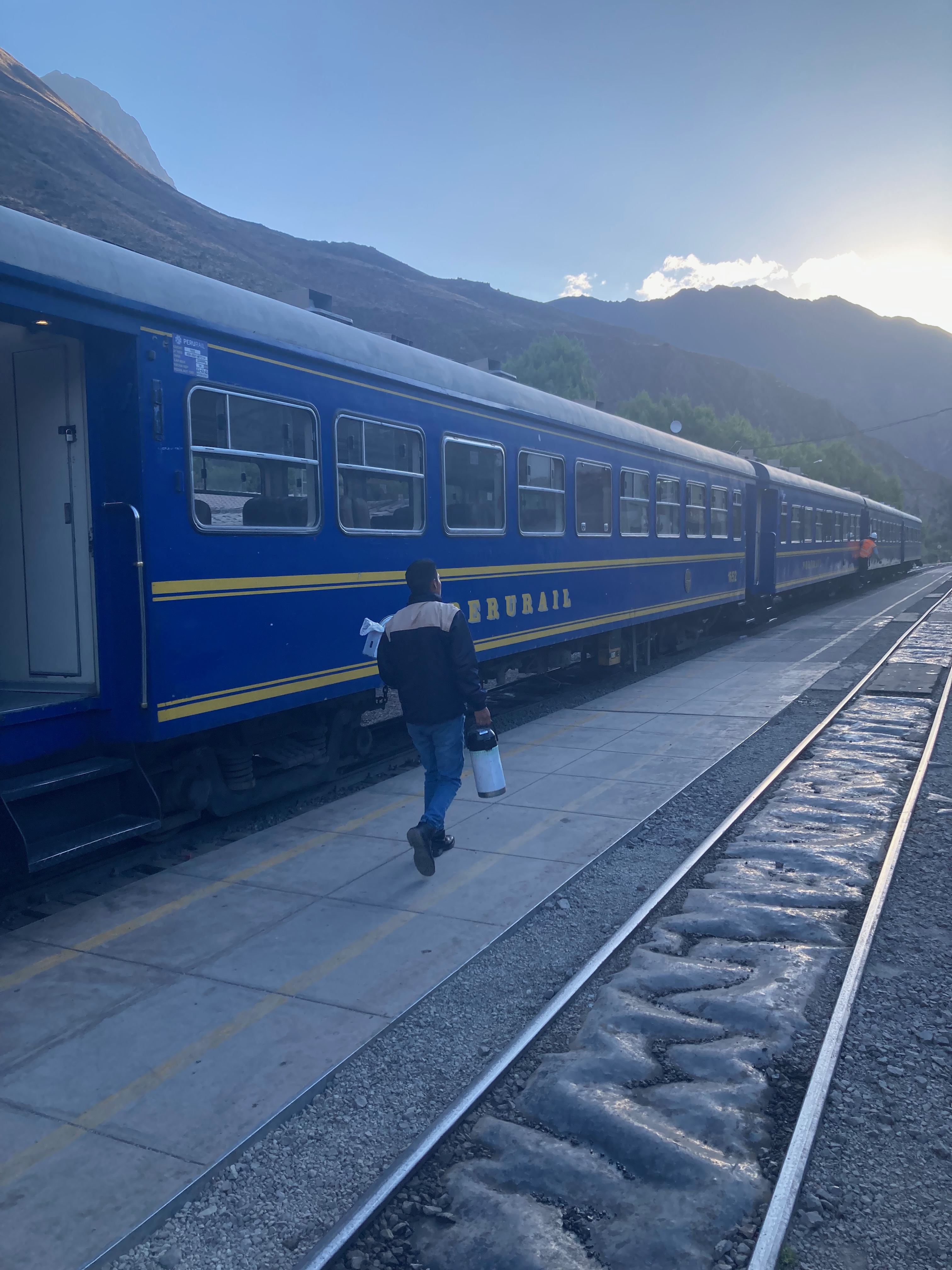
We were excited to be able to see the Inca Trail scenery from below. Well, one of us was…
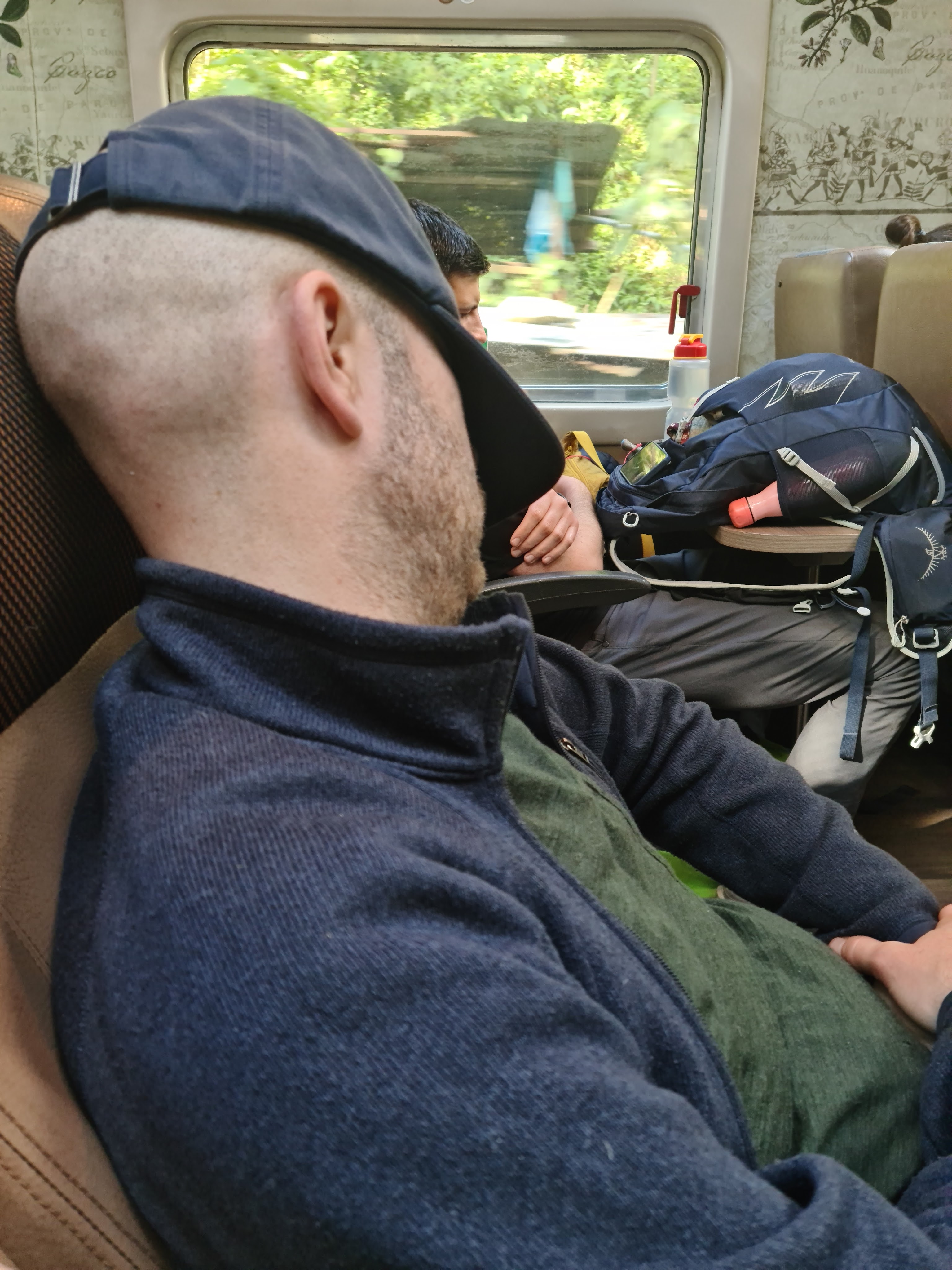
Although nothing could compare to being out in the open air, the return train journey was a great chance to reflect on the past few days as we rolled beneath some of the very passes we had just traversed.
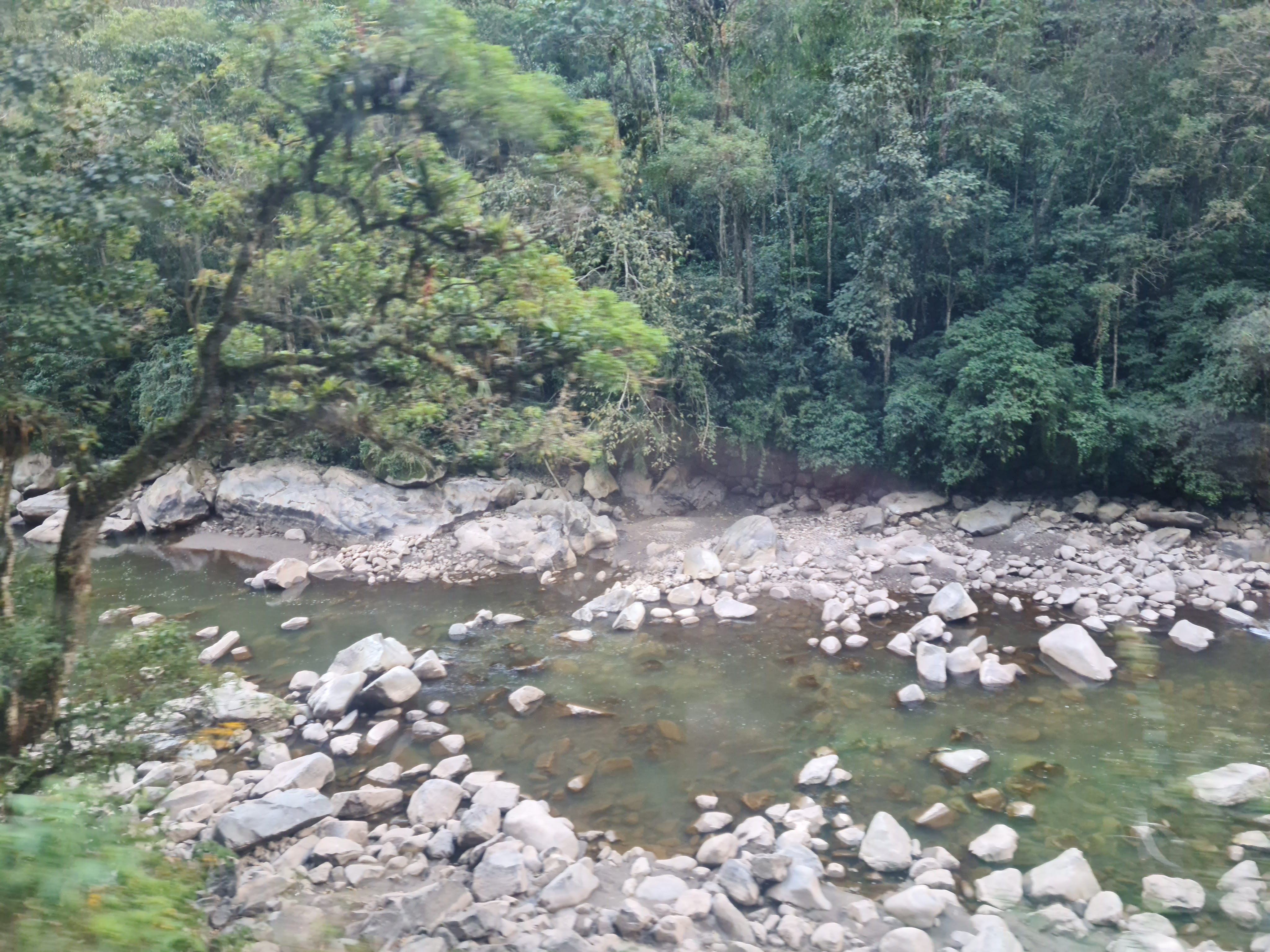
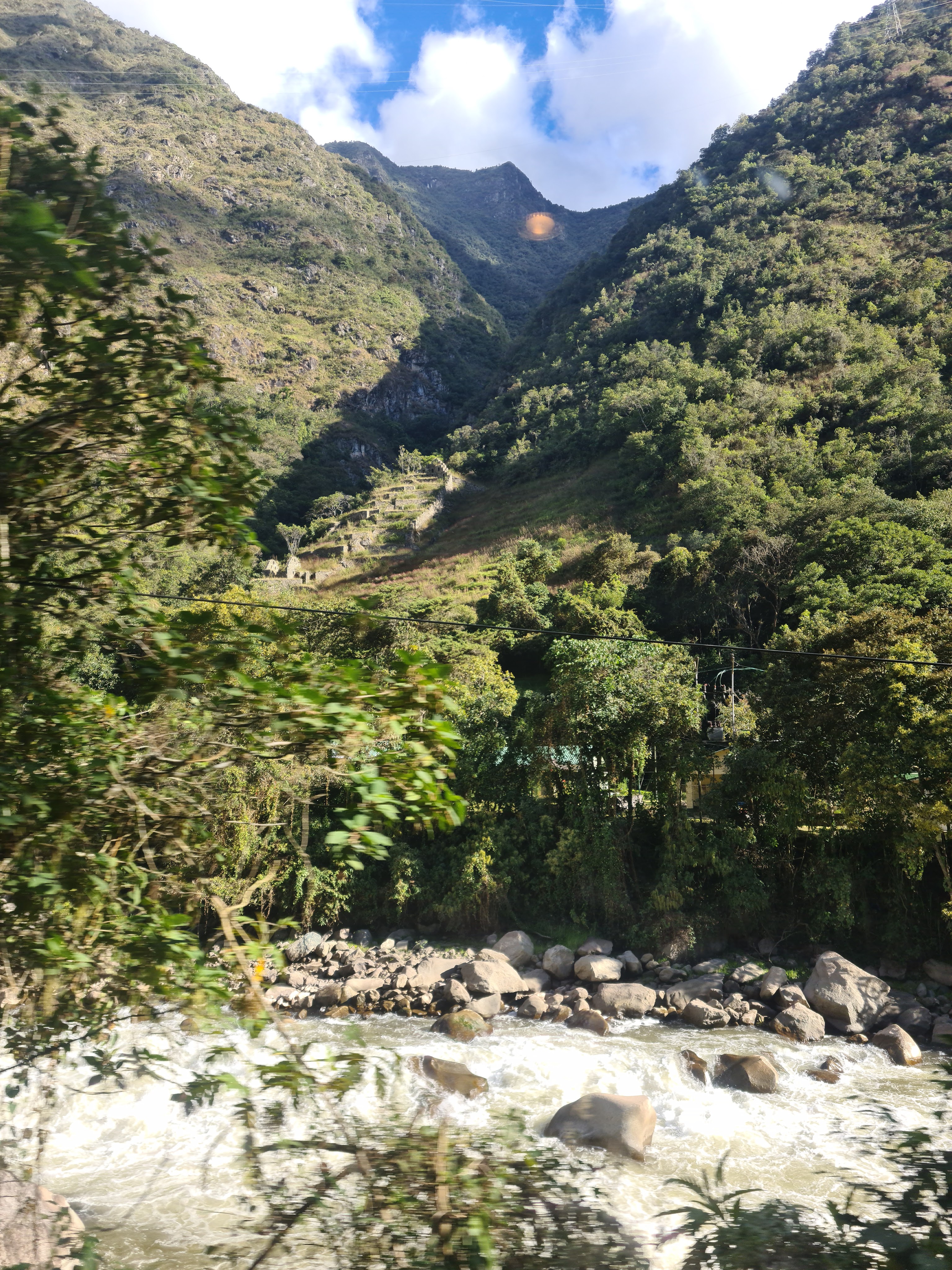

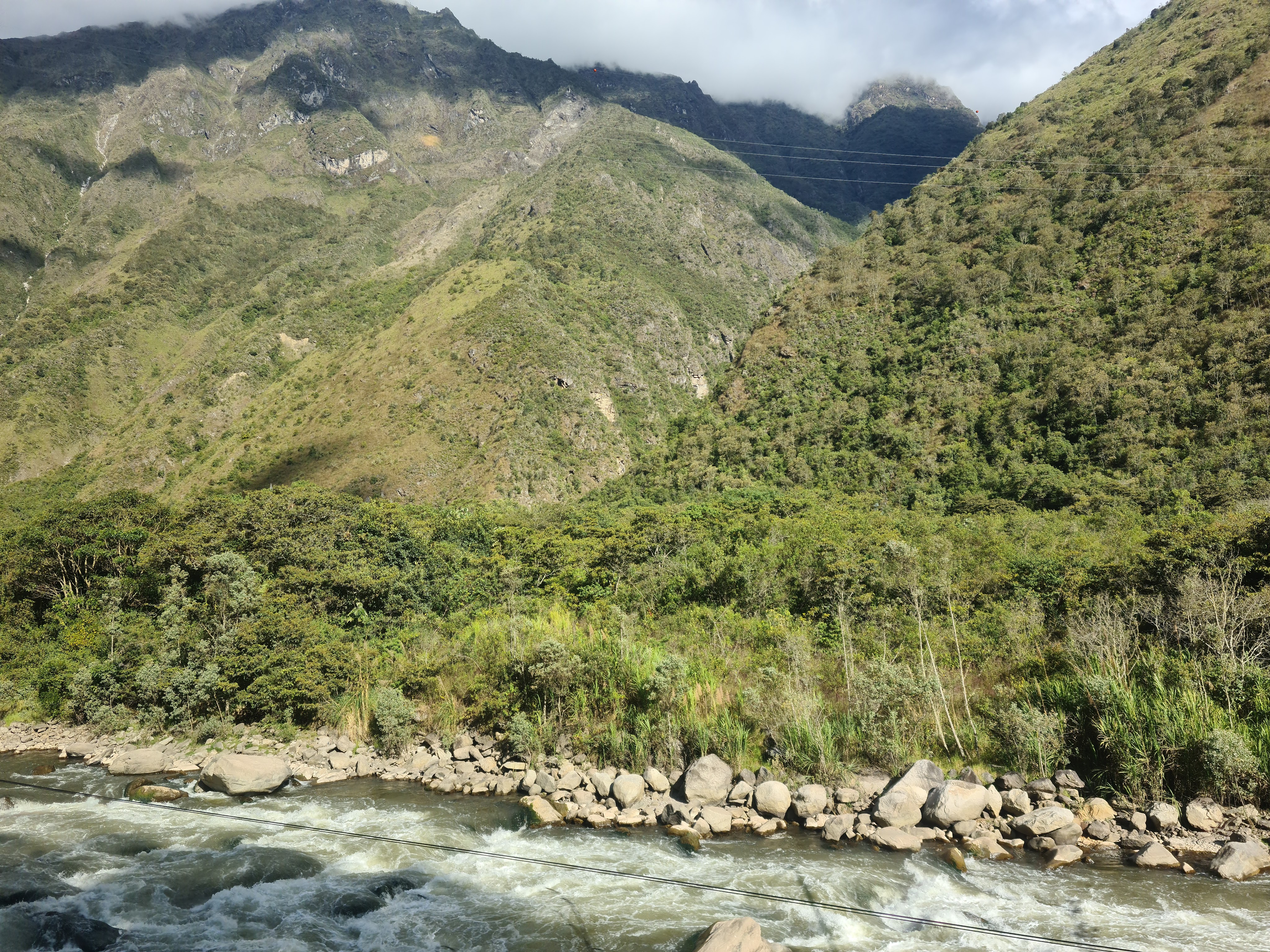
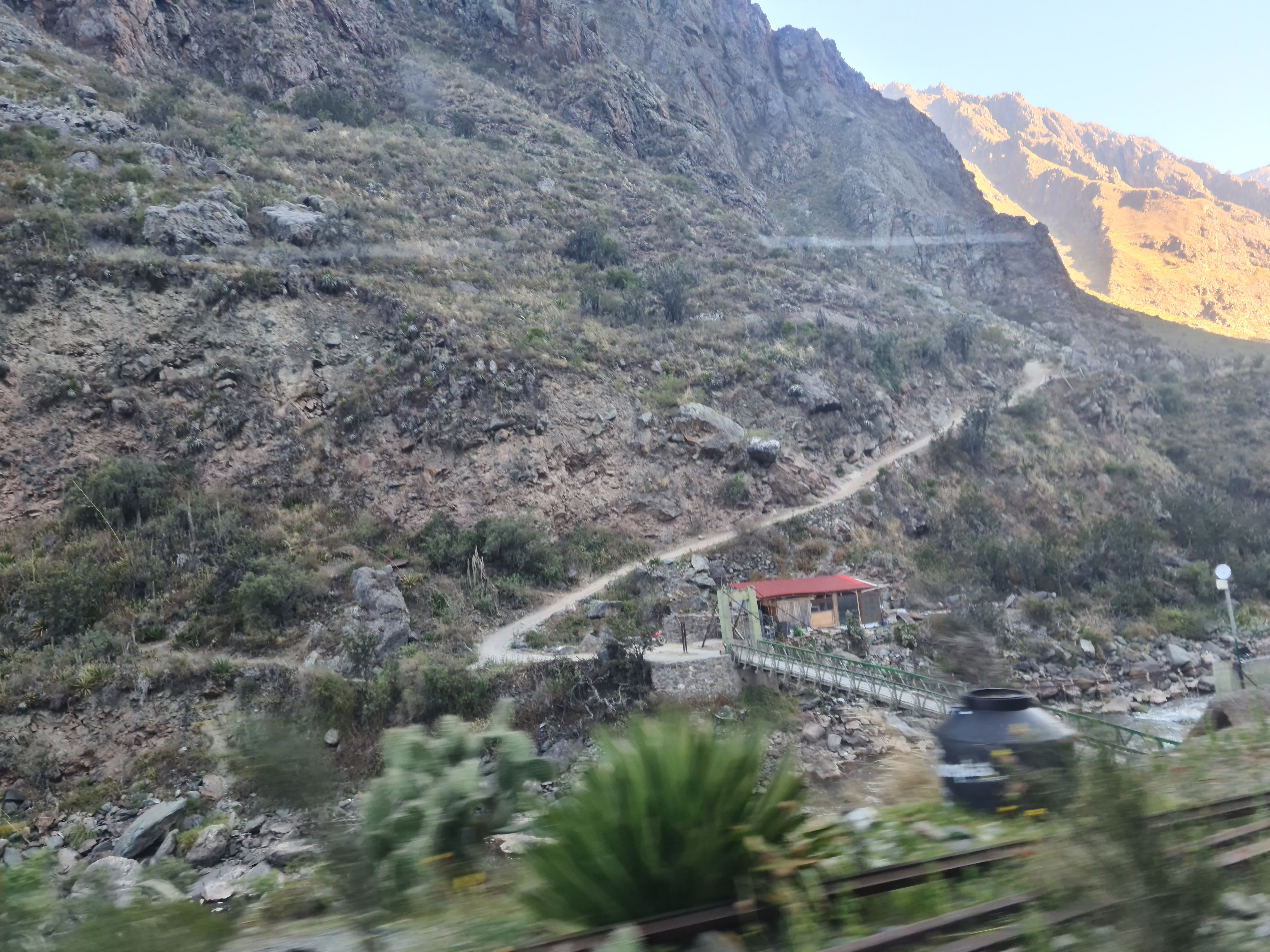
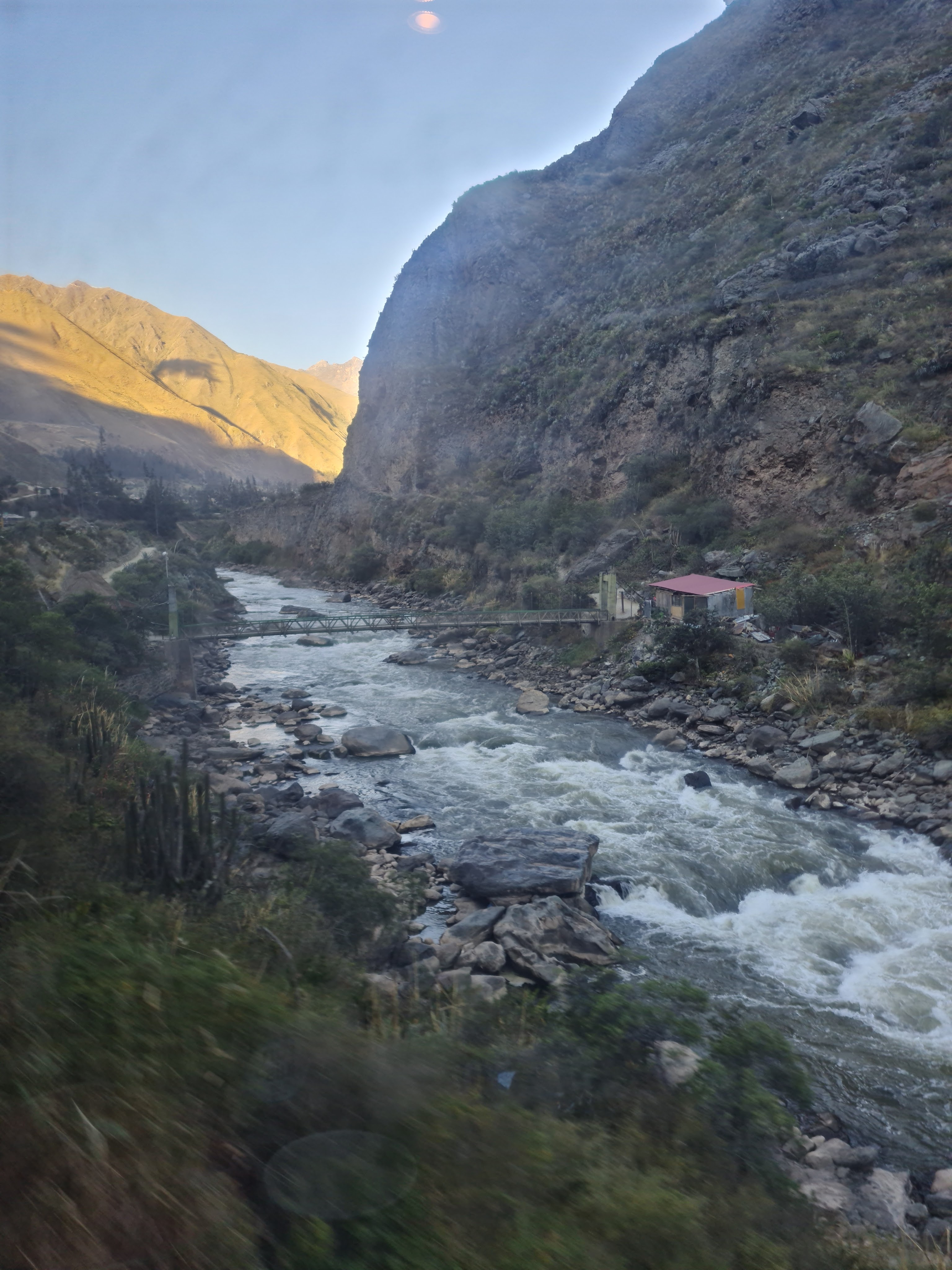
I had expected to spend about 70% of the trek questioning all my life choices, with my legs or joints screaming at me, but very happily this hadn’t been the case. Going at our own pace had allowed us to take in the once in a lifetime experience fully, and it hadn’t disappointed in any way. I felt more pride in myself than I had expected, perhaps more than I had in years. And it’s left me feeling able to take on even more challenges in future, hiking or otherwise.
I don’t think I could sum it up any better than Alpaca’s own slogan – “The Journey is the Destination”.
- Fun fact, you can test positive for drugs if you chew enough. Don’t worry, we haven’t learnt the hard way – though that would be a fun blog! ↩︎
 A Place Both Wonderful and Strange - Tash & Ricki's Career Break Travels
Leave a comment