

Walking through Arrivals at our next destination airport, balloons and large banners declaring “Bienvenidos!” dotted the space, citizens clamoured excitedly and a brass band even started to ring out.
No, the locals hadn’t been tipped off to our arrival, but with a fiesta in full swing, we had definitely reached lively Colombia.
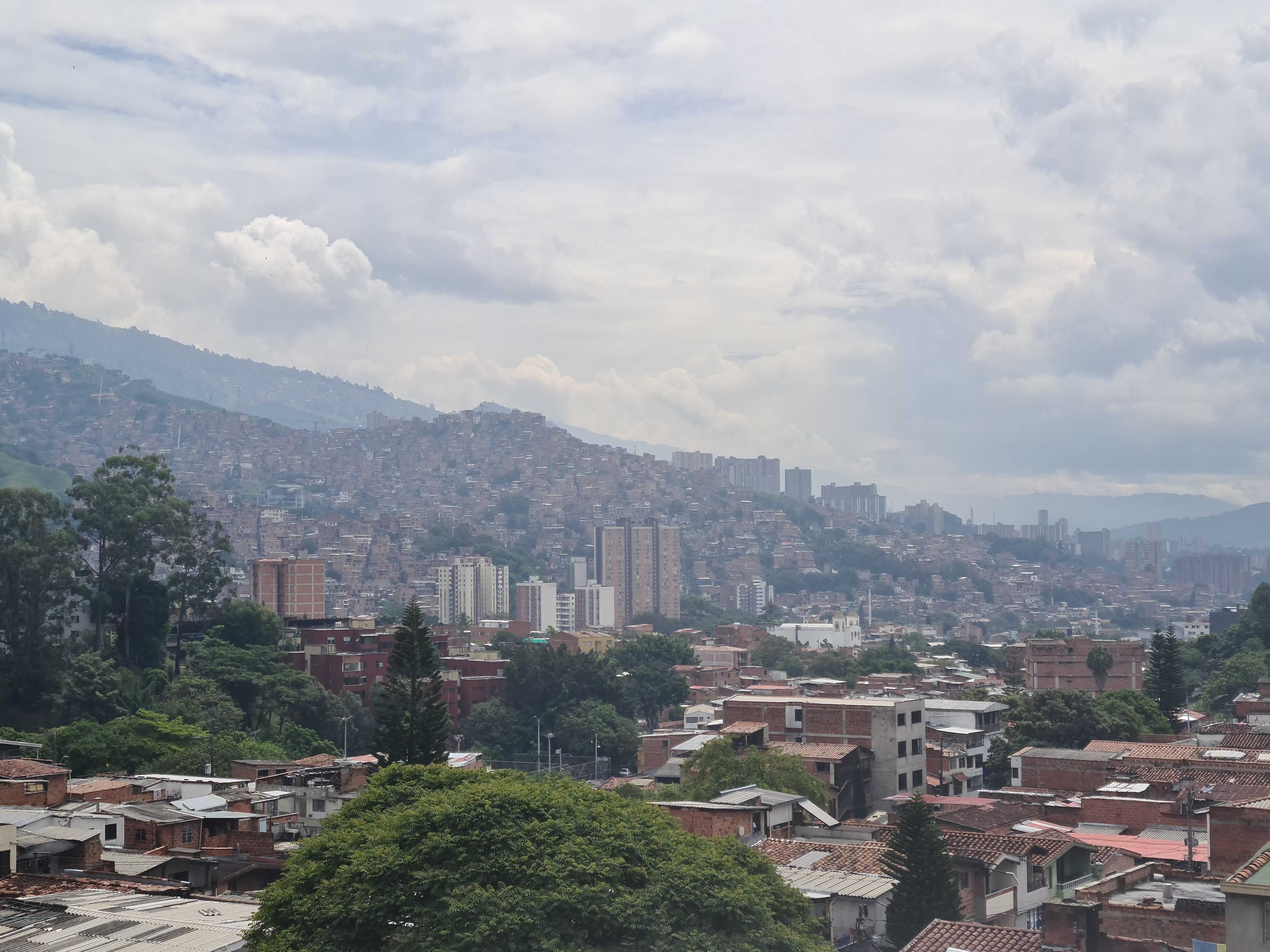
This is the country I had possibly been looking forward to the most, with it having sat high on my holiday wishlist for years. Of course it was also topping the parents’ worry list. We would be spending most of our month in Medellín, once one of the world’s most dangerous cities. As the epicenter of Pablo Escobar’s cocaine empire in the 1980s and early 1990s, the city was plagued by extreme violence. High murder rates driven by cartel wars, political strife, and rampant criminal activity peaked at nearly 400 homocides per 100,000 residents in 1991.
In the grand scheme of things, 30 or so years is not much time. So the transformation since then is all the more incredible, with Medellín now recognized for its vibrant cultural scene, dynamic economy, and inclusive urban development.
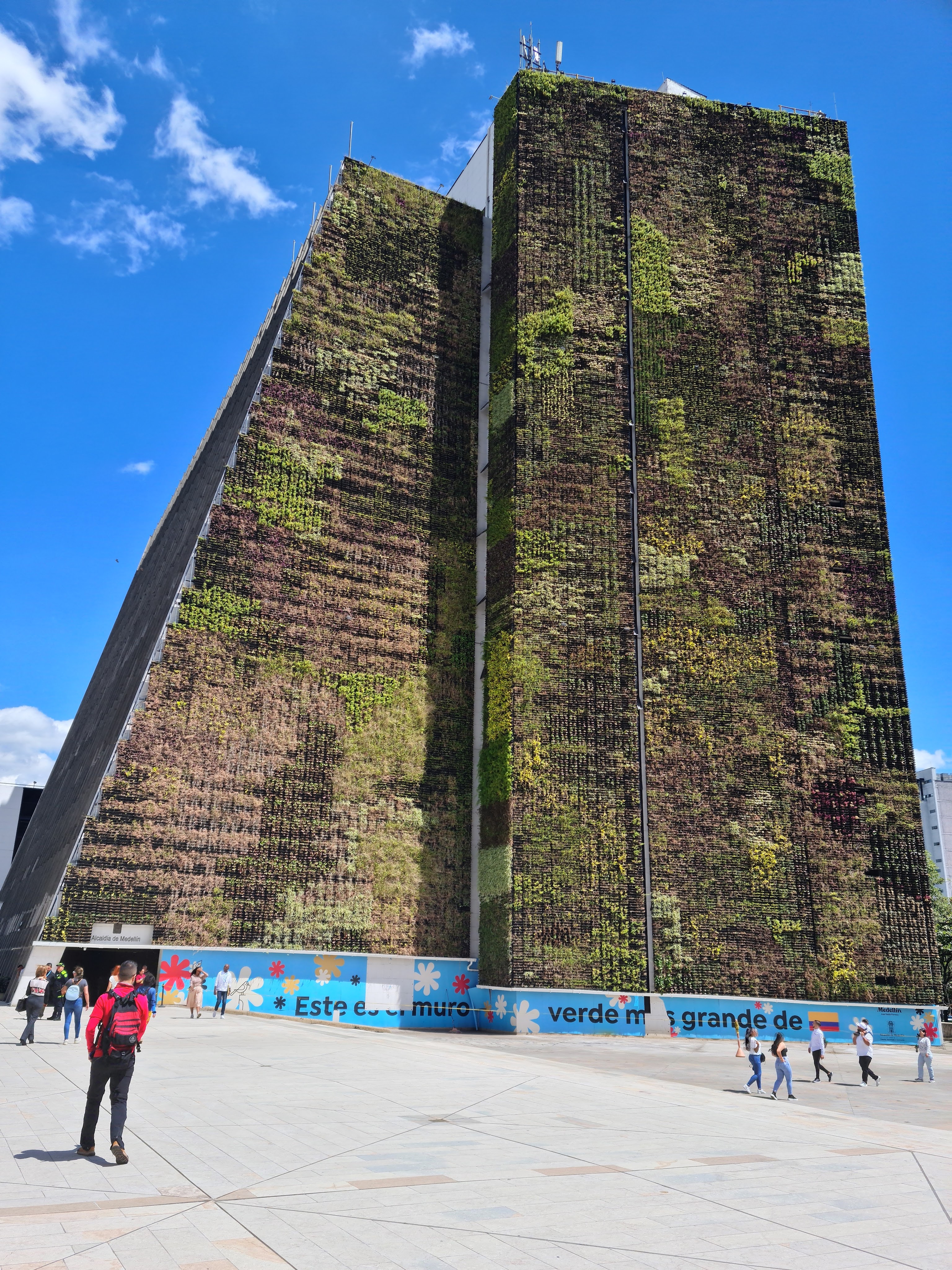
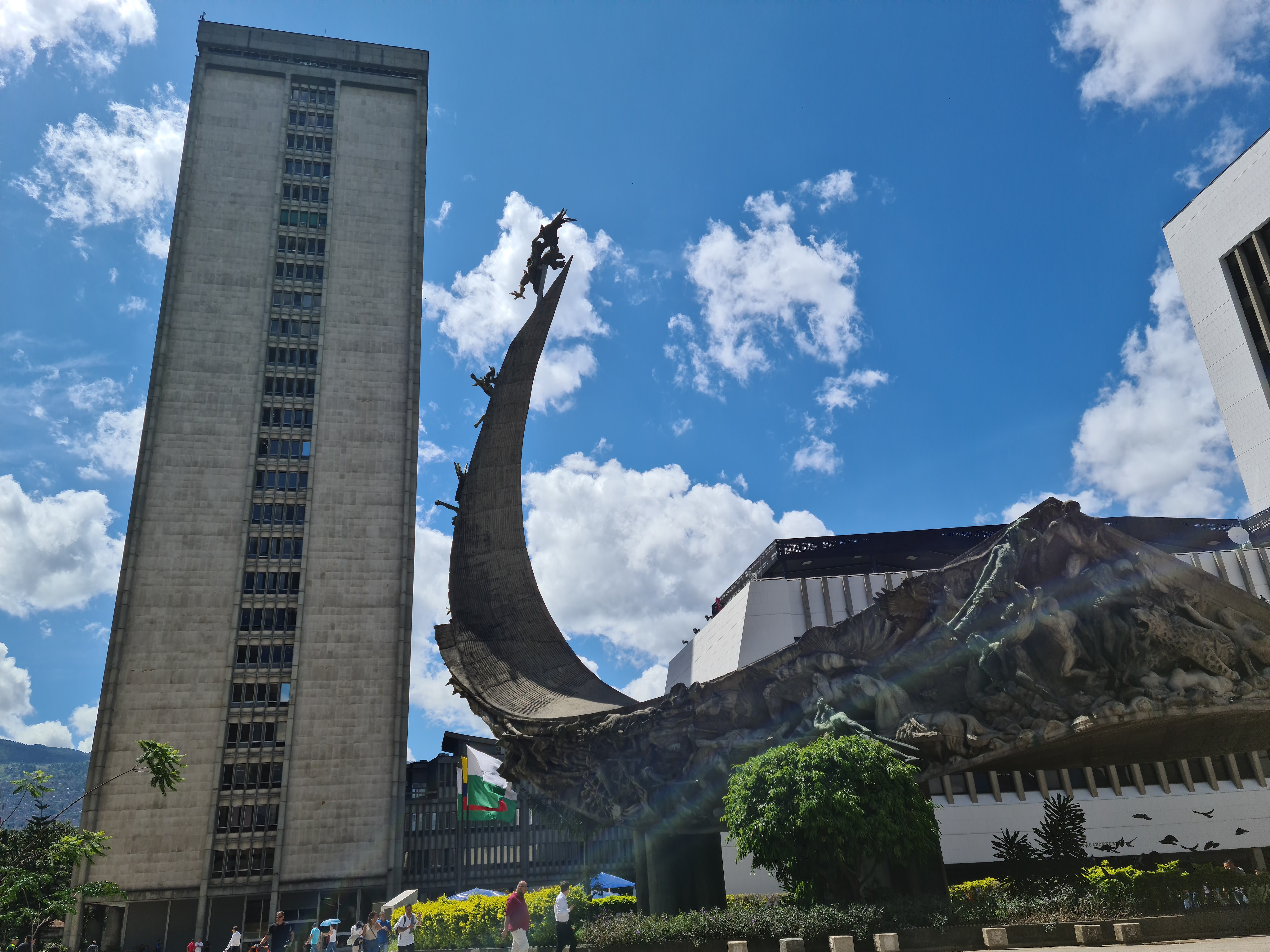
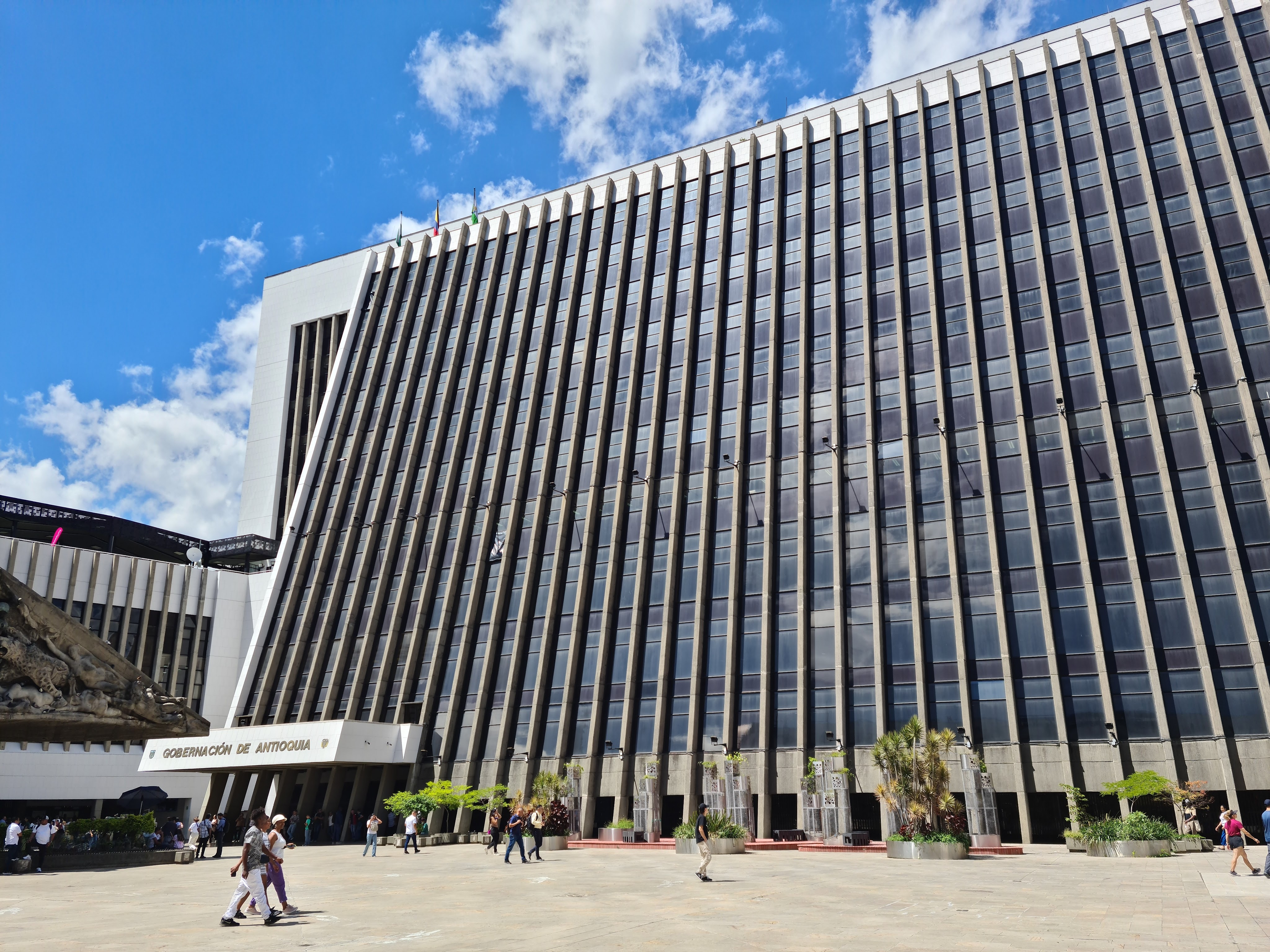
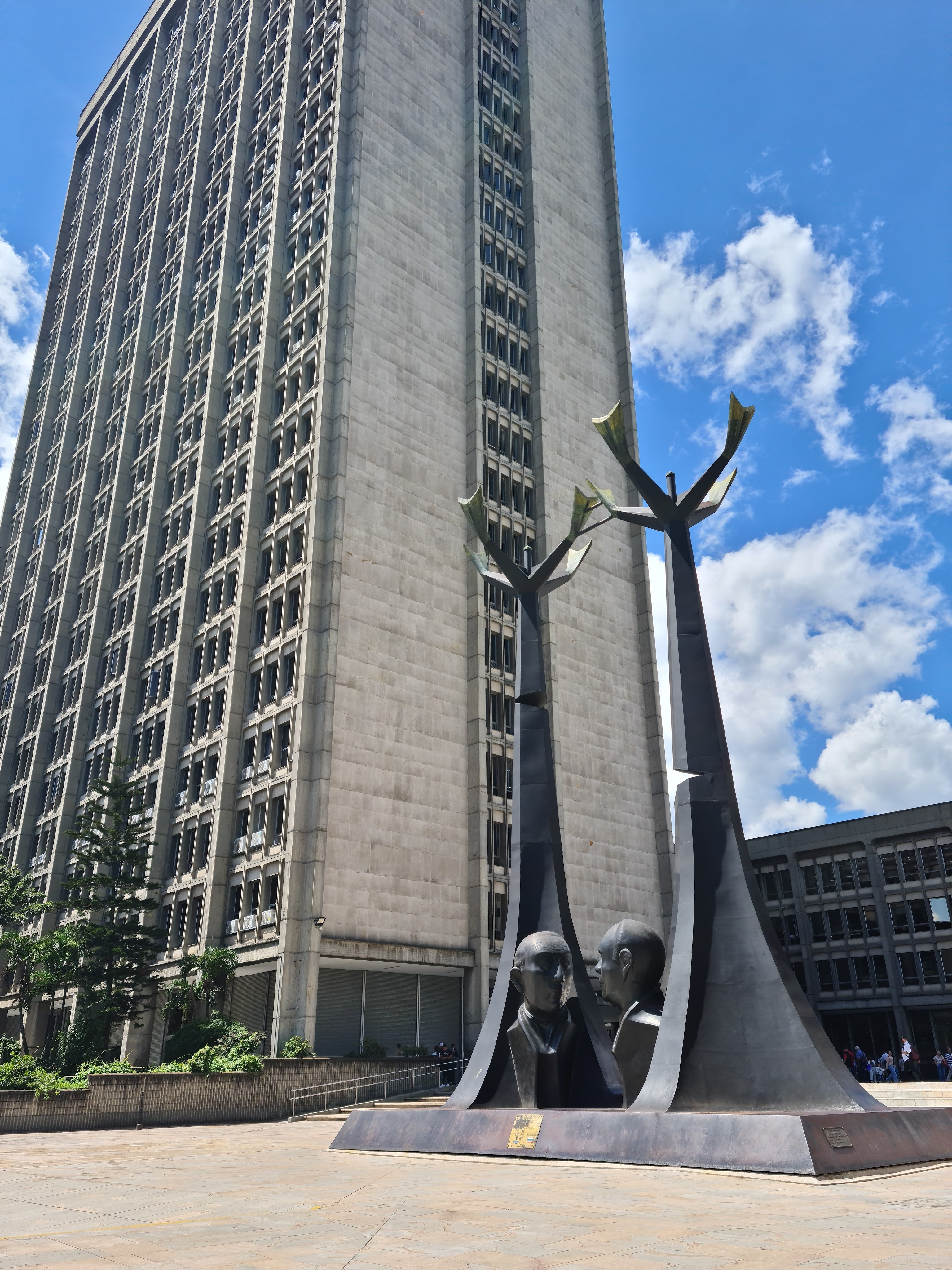
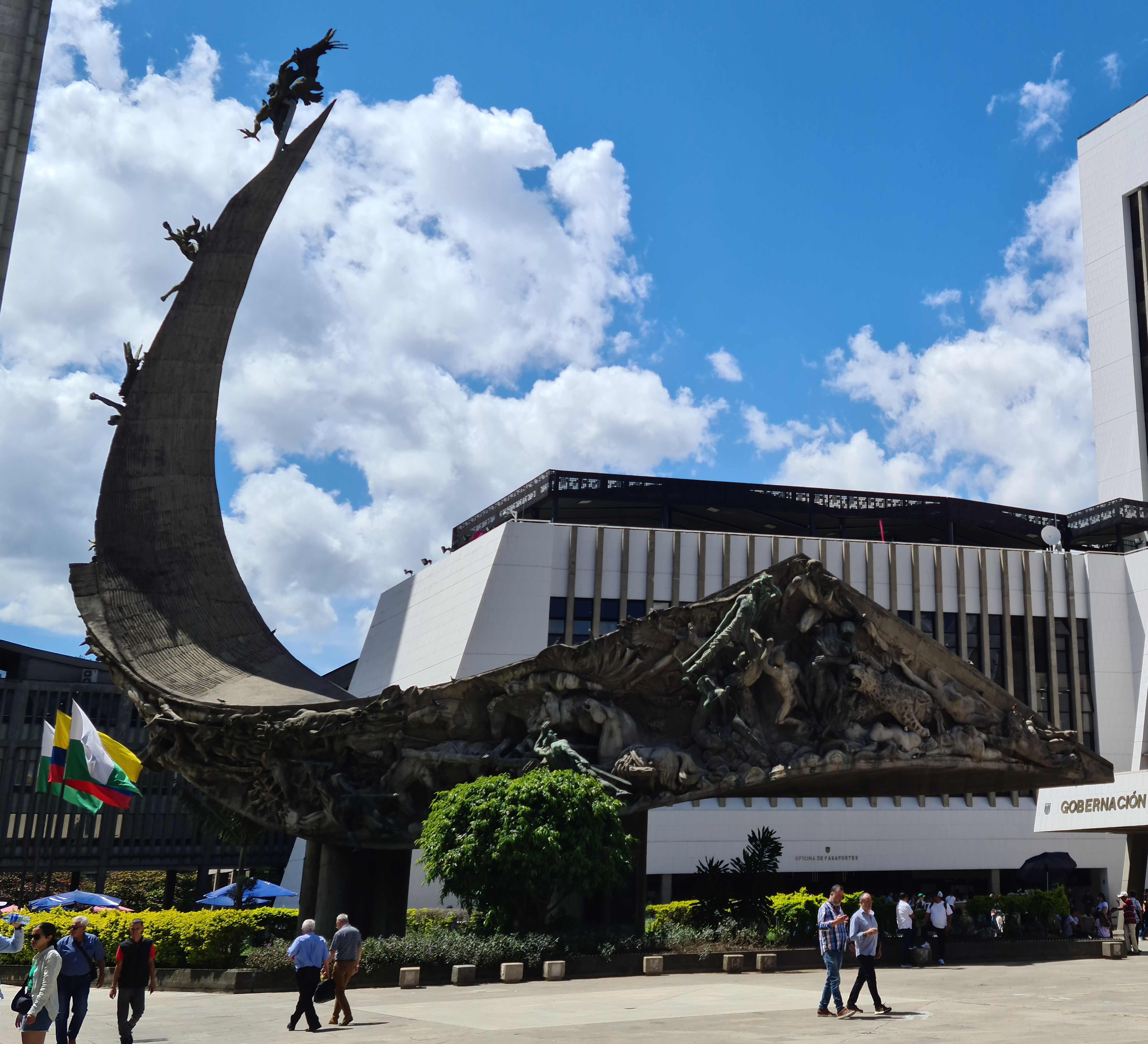
Government buildings – as you will see, Medellín loves a sculpture
There is an interesting, and understandable, dichotomy between those who acknowledge the events of the past, and those that would prefer to leave them firmly there. While the Casa de Memoria museum serves as a memorial to those who lost their lives or were “disappeared” (when you see dates in the 00s, it really hits home how recent this all was), tours focussing on Escobar are mostly frowned upon by locals. Remembering those who were lost is important, but there has been too much sanitization, and borderline glorification, of Escobar in pop culture.
Guides from younger generations explain the sensitivity, but are usually happy to invite questions anyone has about the previous conflicts. After all, it is hard to unpick the historic events from the city as it exists today.
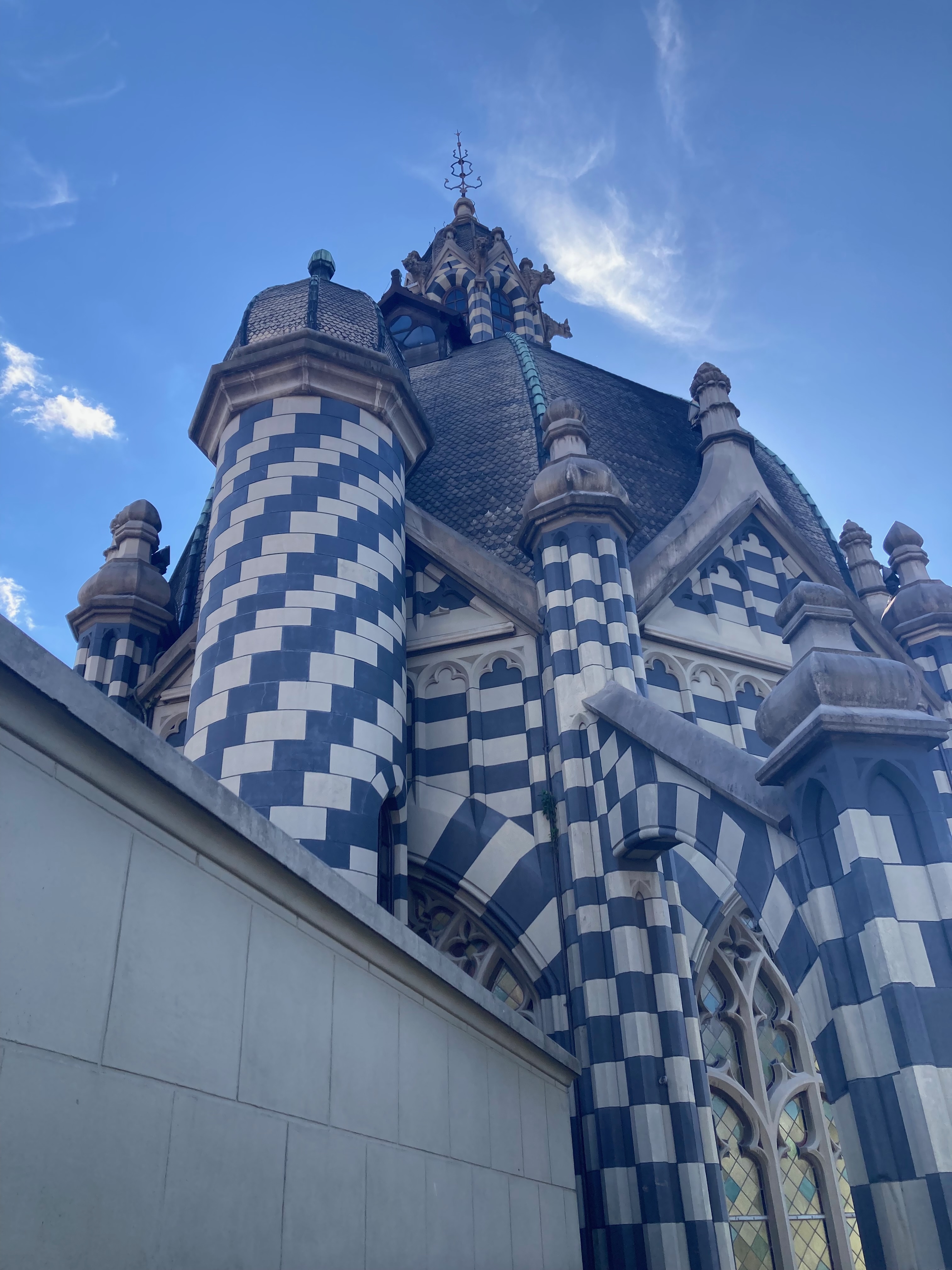
One of our first days saw us venture on what is now becoming a usual feature of our travels, a “free” city walking tour. Medellín is a relatively modern city, with very few buildings in the city centre over the age of 150 years.

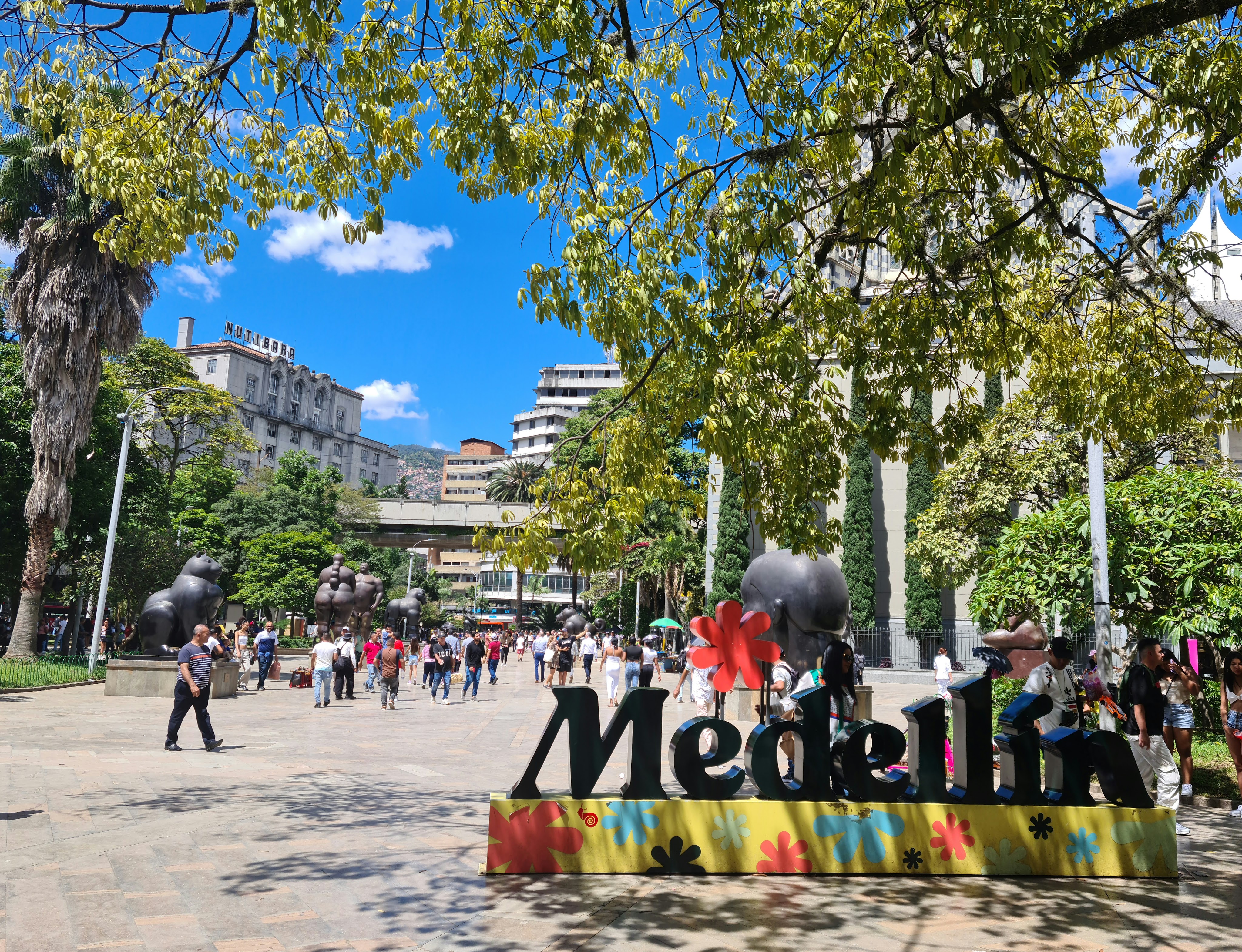
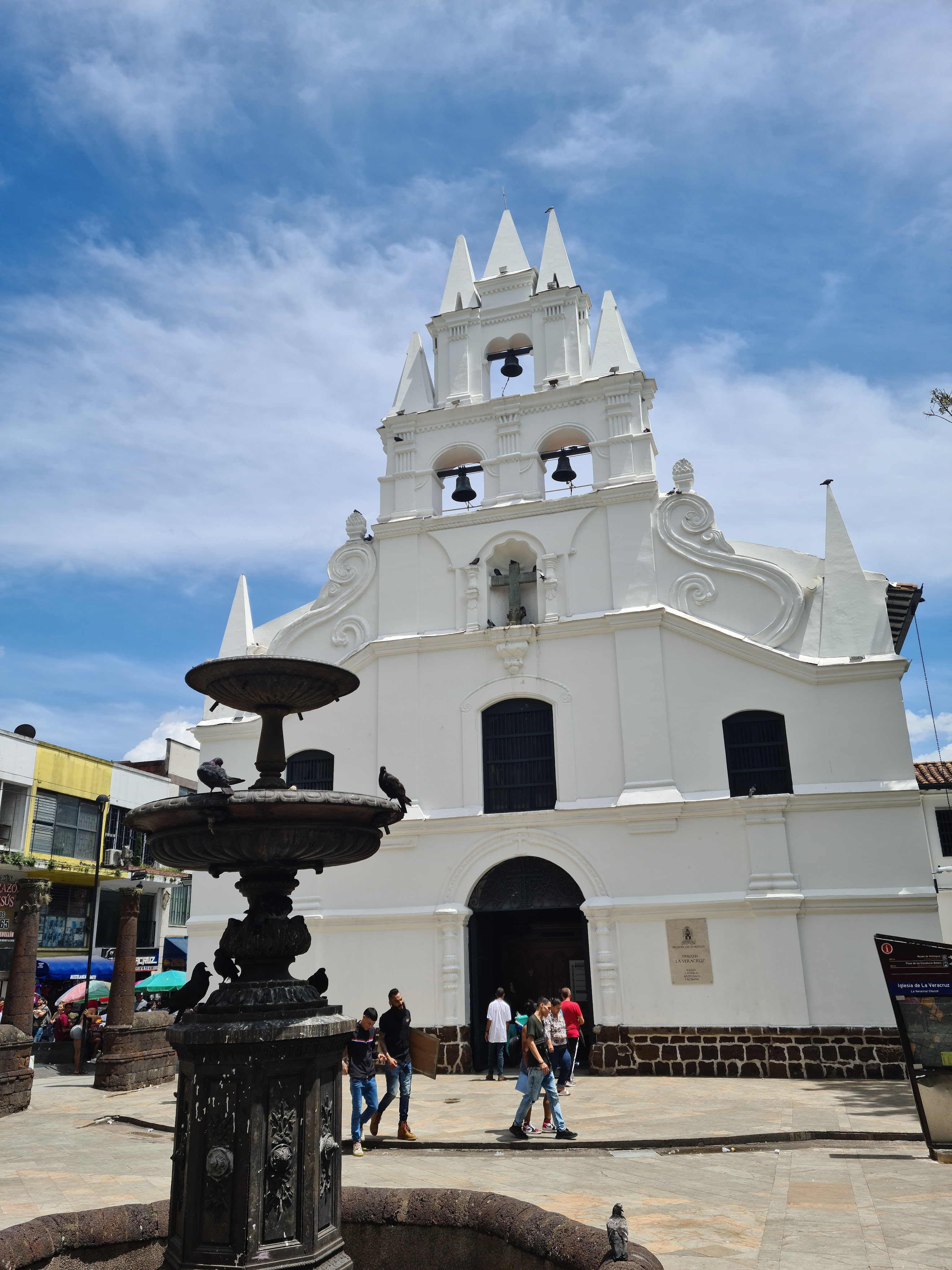
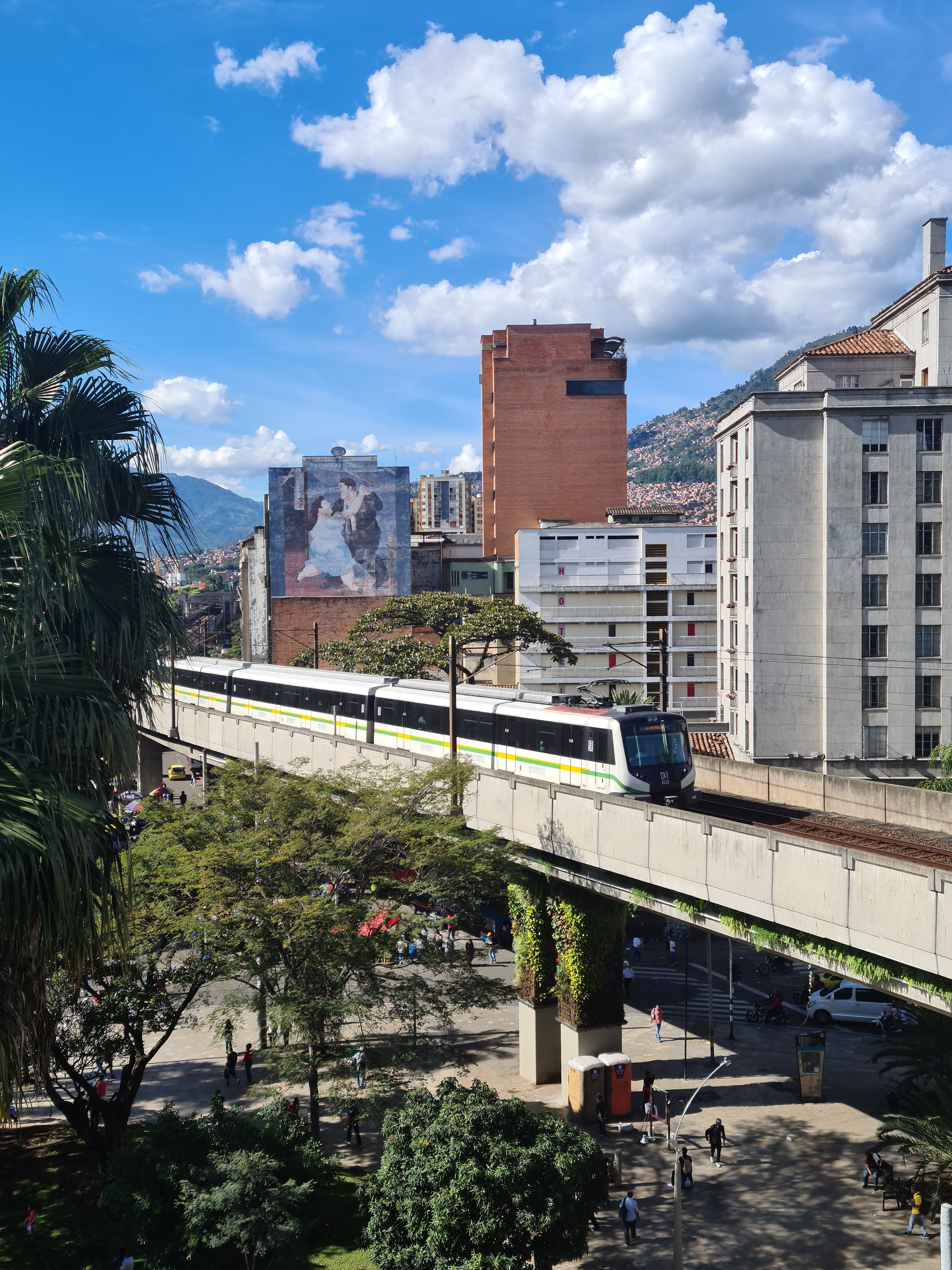
Much of the discussion centred around the transformation works in the last 50 years.
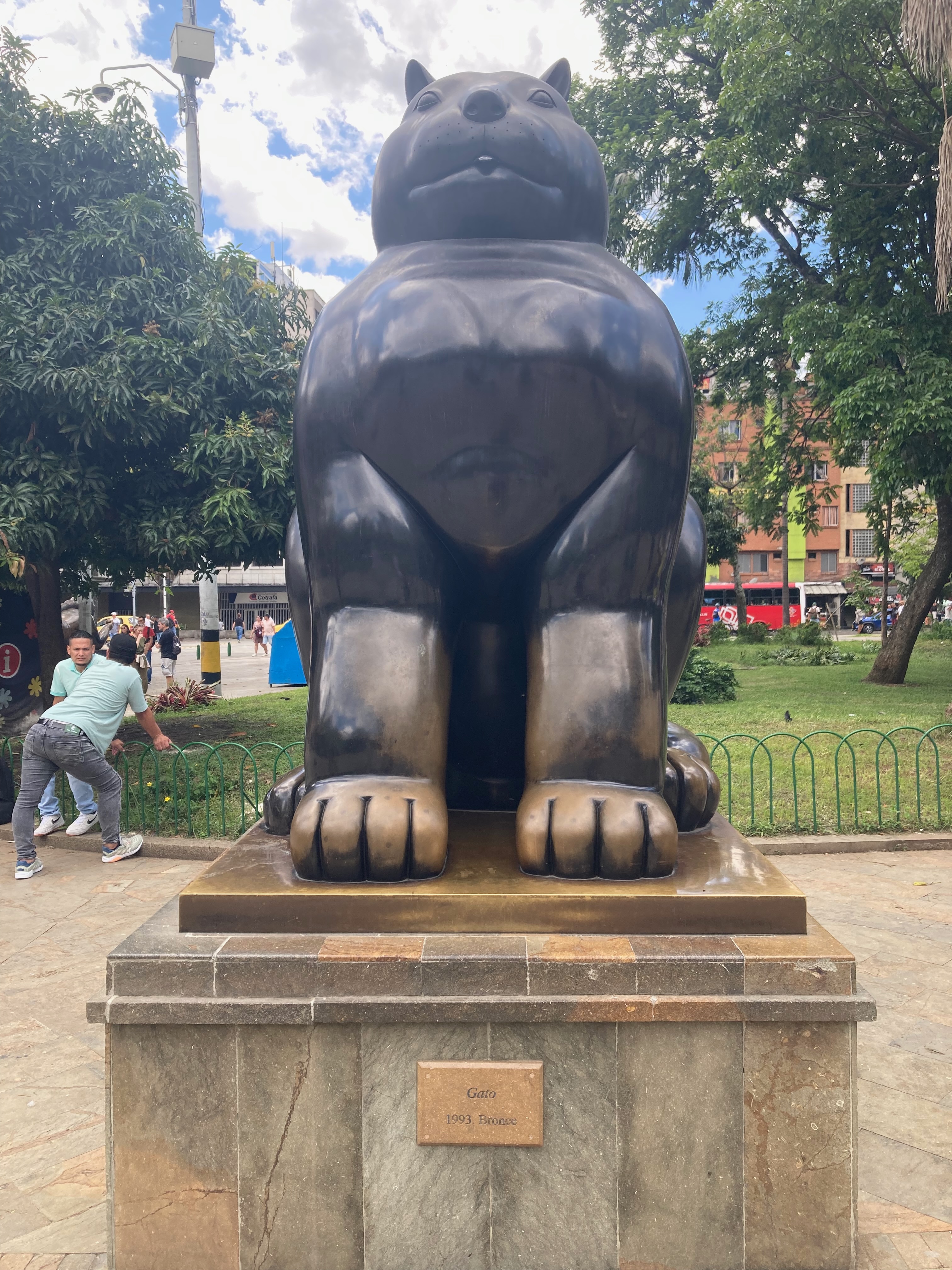
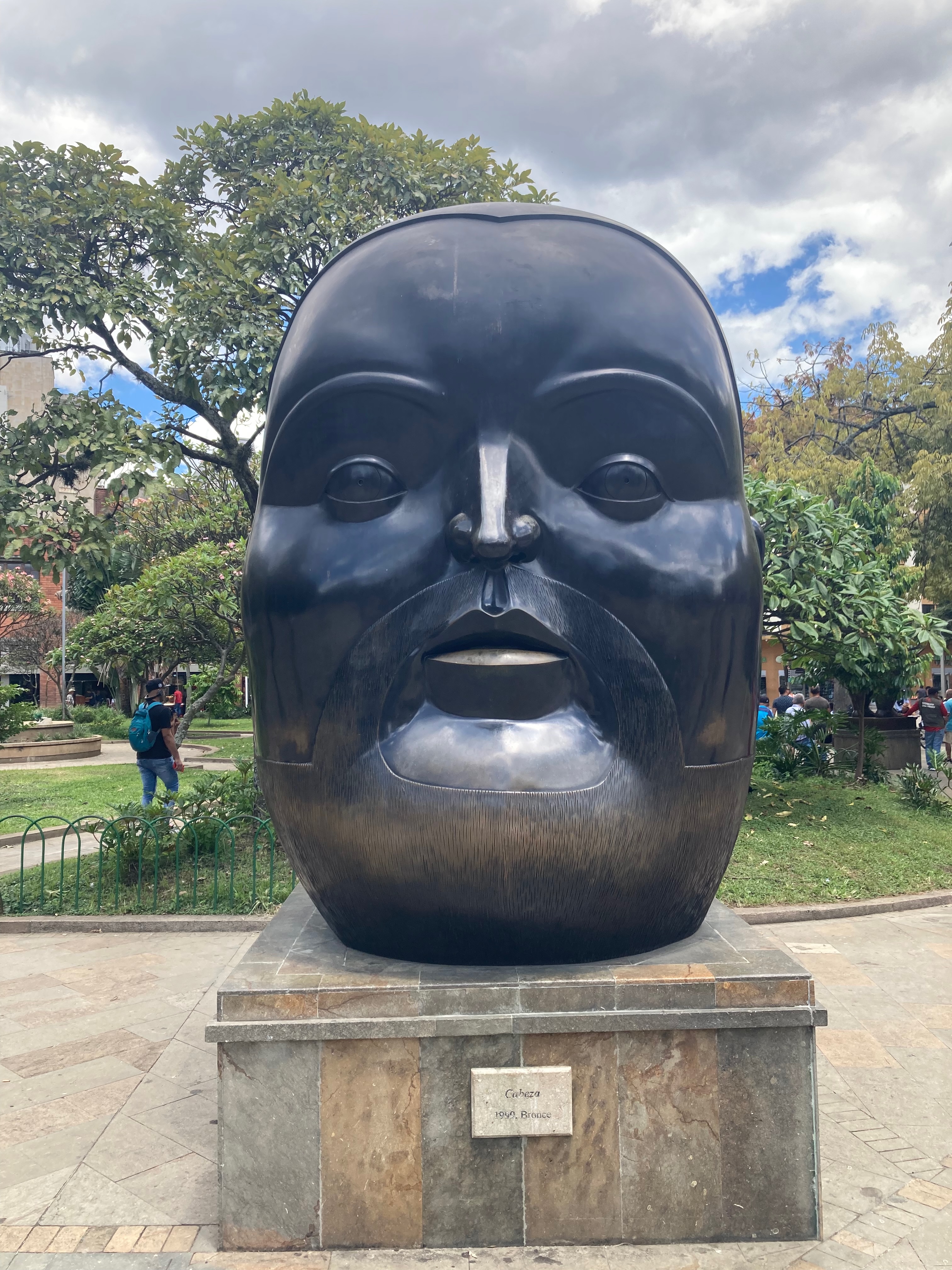
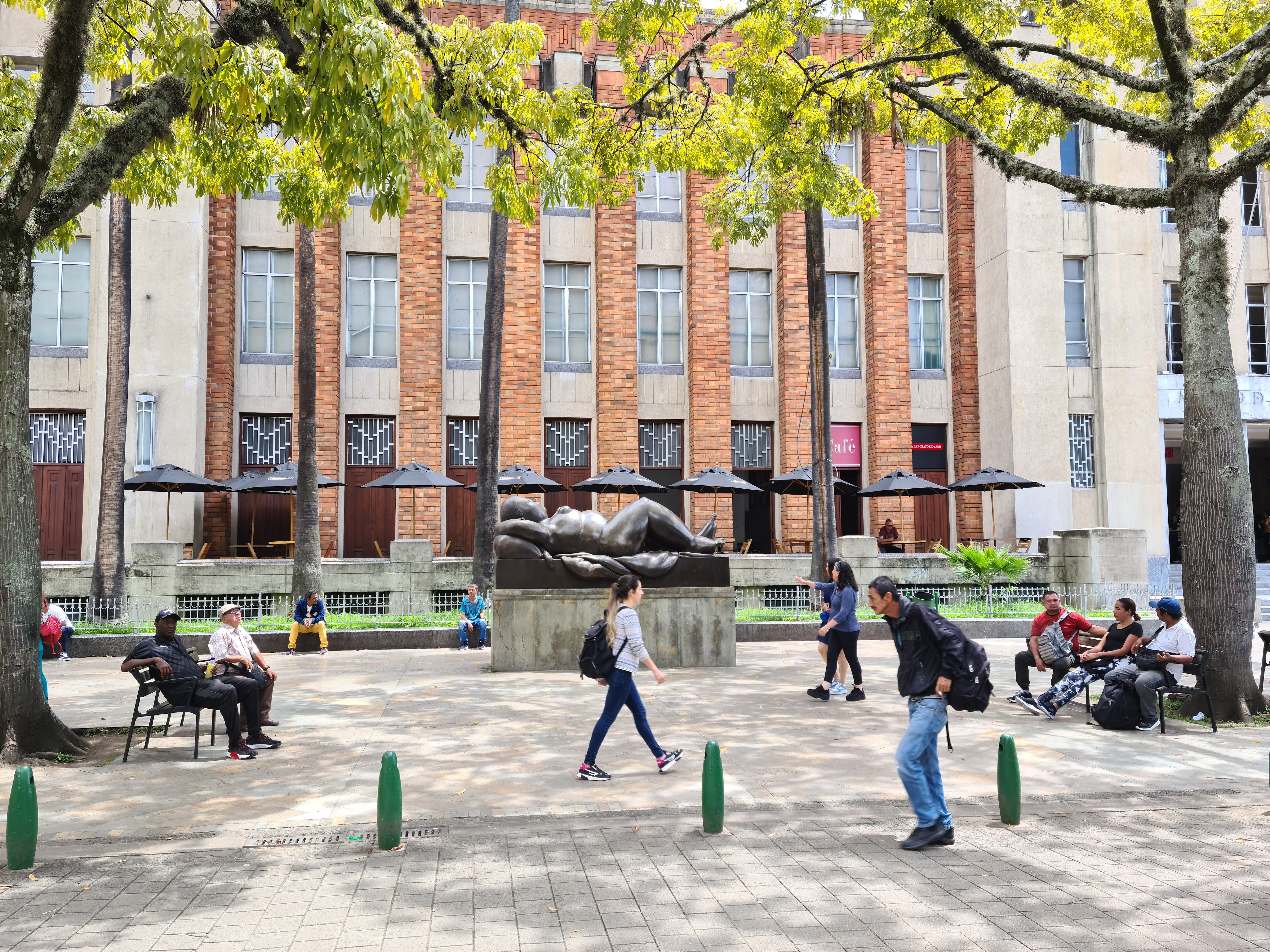
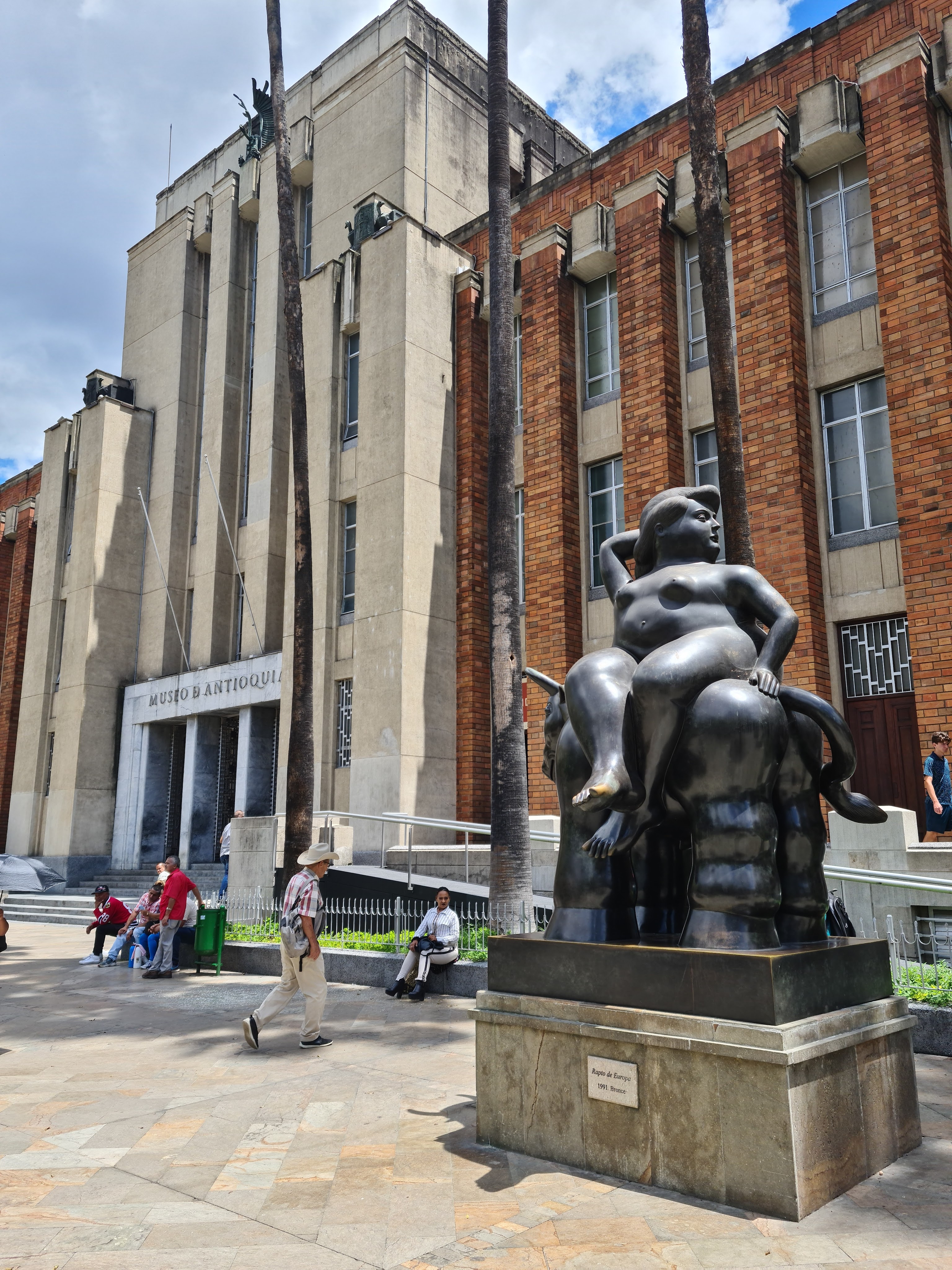
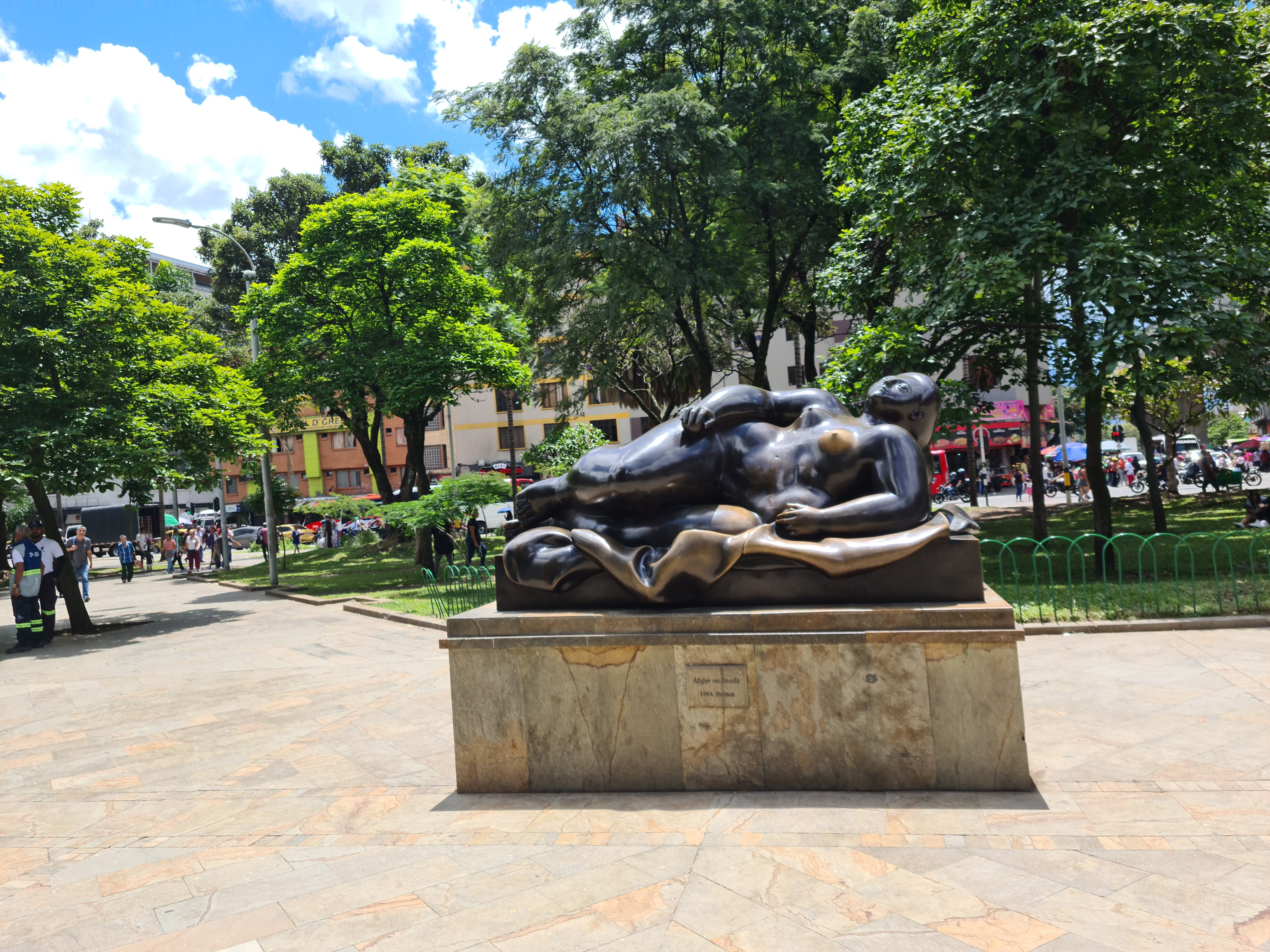
Various sculptures by Fernando Botero in the plaza surrounding the Museo de Antioquia. Botero is probably Colombia’s most famous artist, and a floor of the museum is dedicated to his paintings. You can also glimpse a mural of his work in the background of the metro further shot above.
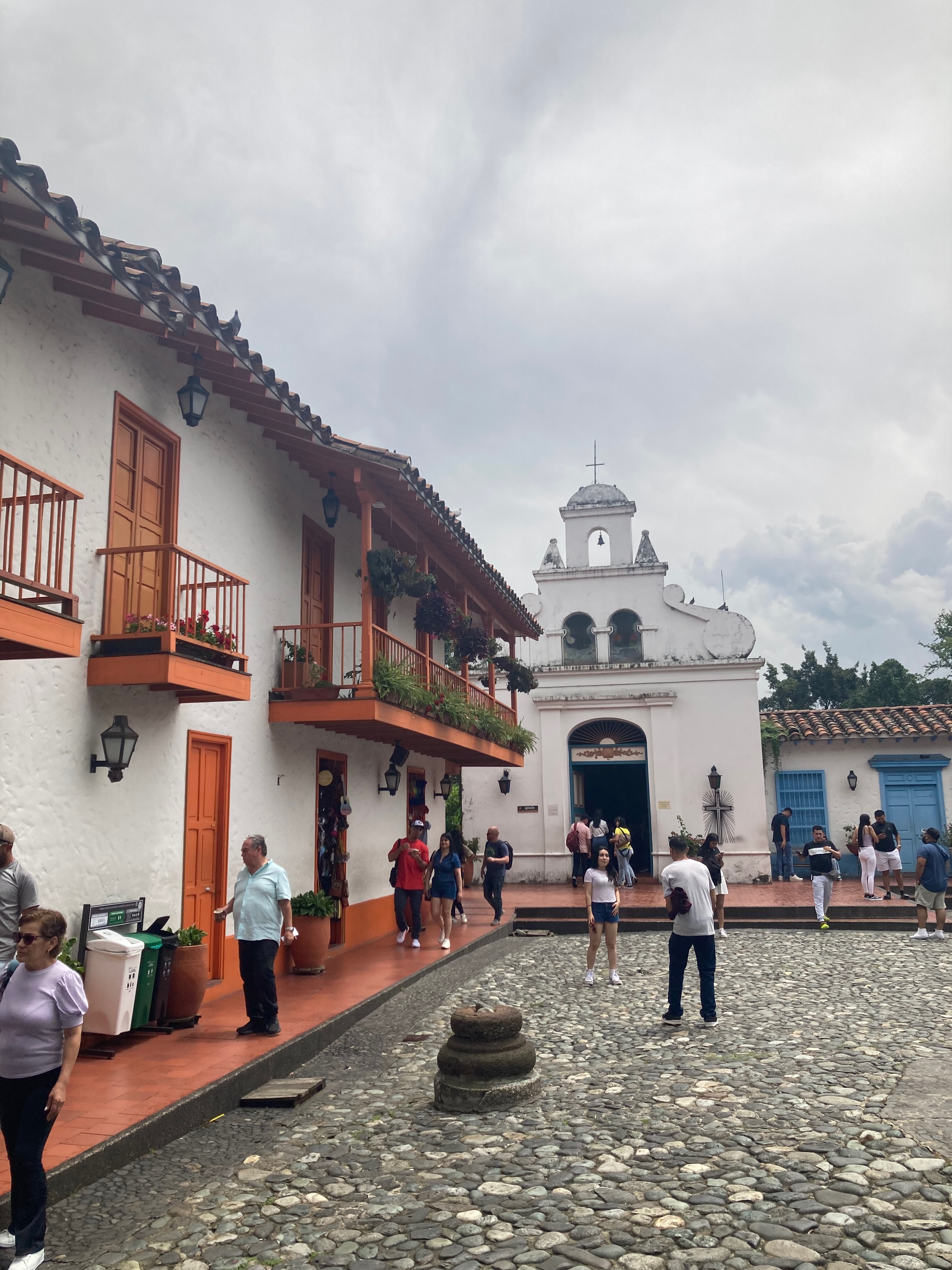
For a taste of something more historic, Pueblito Paisa sits atop Cerro Nutibara and is a miniature replica village of early colonial Colombia. To be honest, there wasn’t much to it other than shops and a museum with photos of Medellín through the ages. It made for a relaxing morning though.
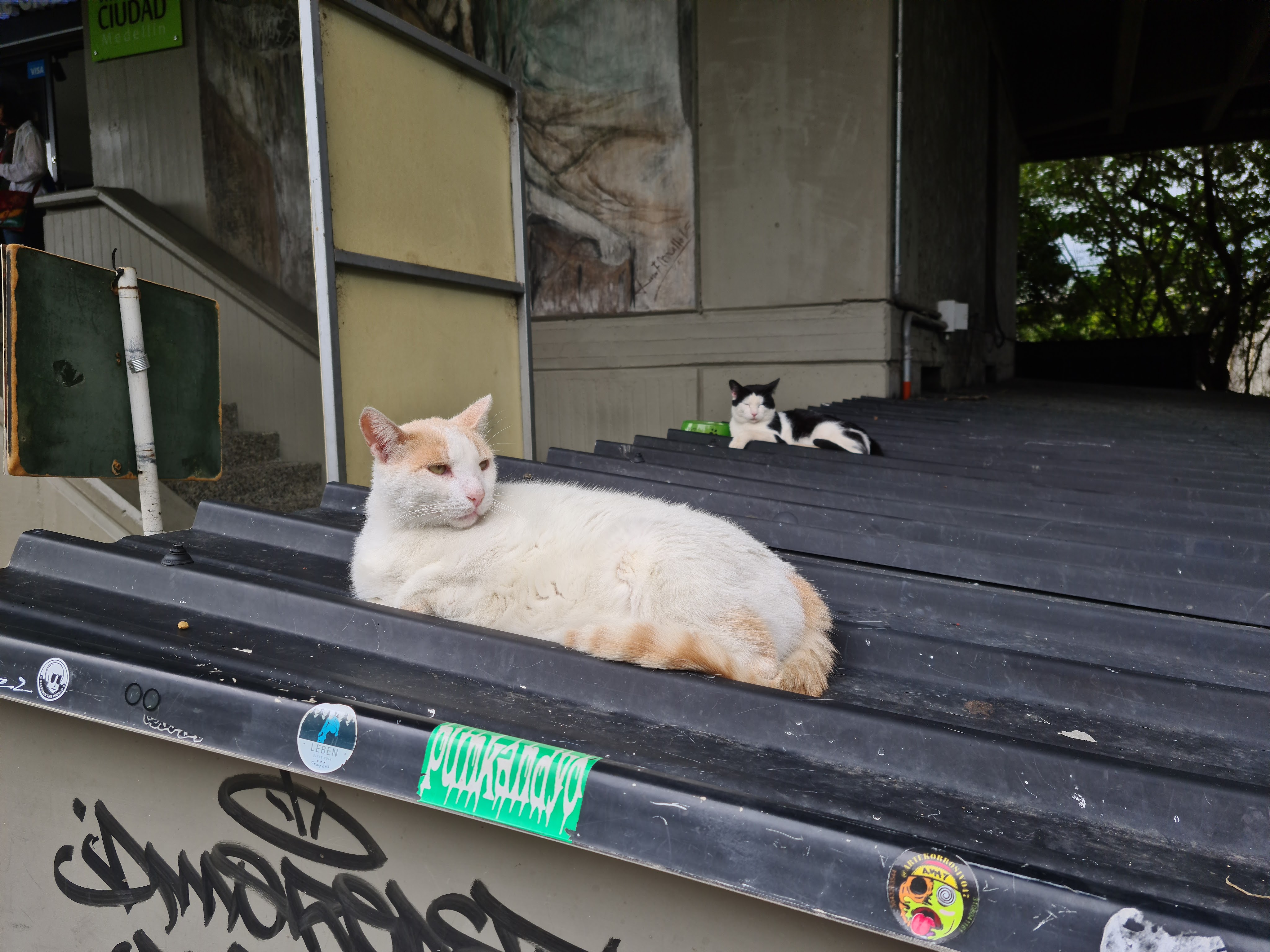
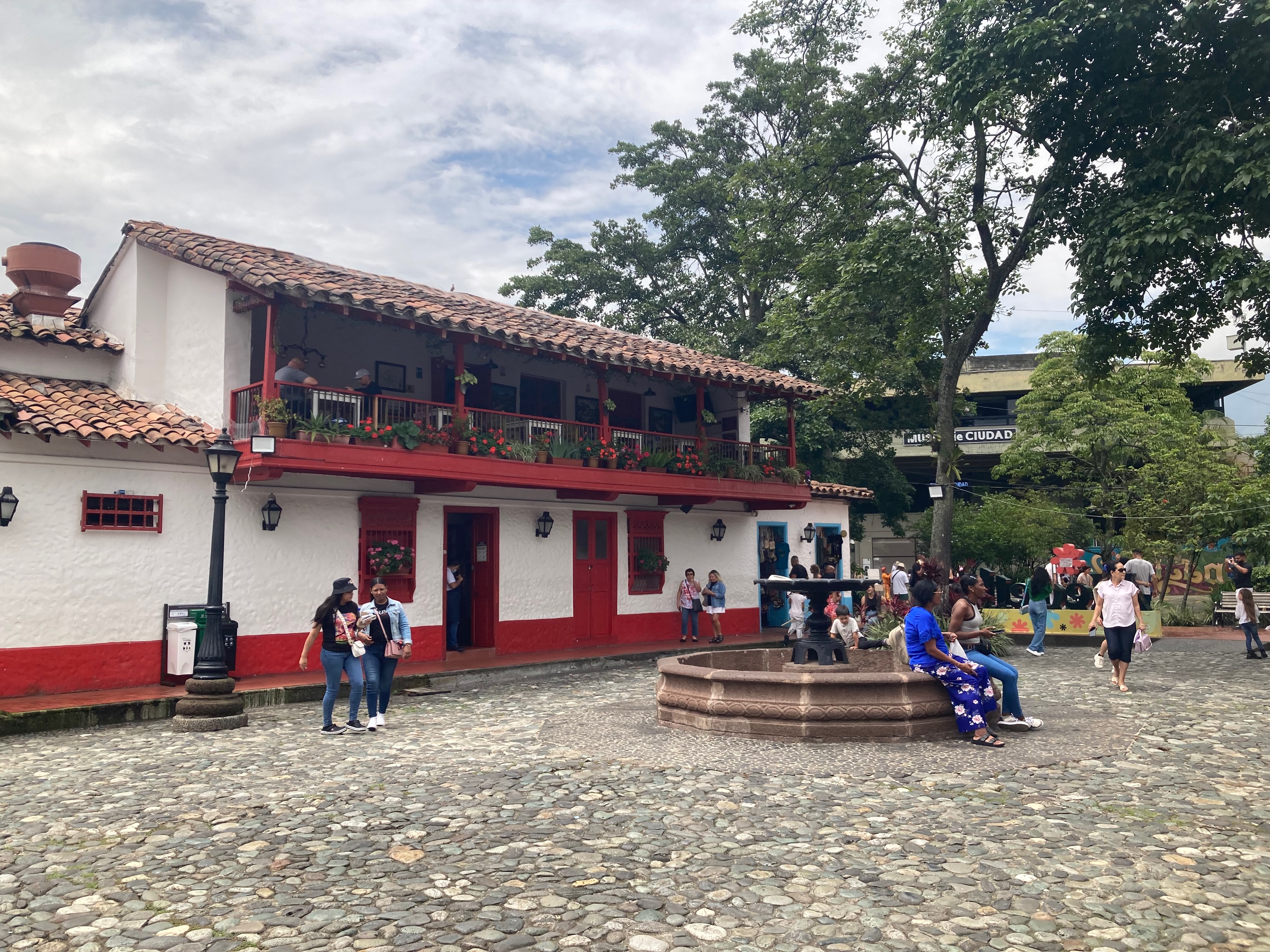
The surrounding parkland on the hill was more interesting to us, with a sculpture trail and the possibility to do some wildlife watching.
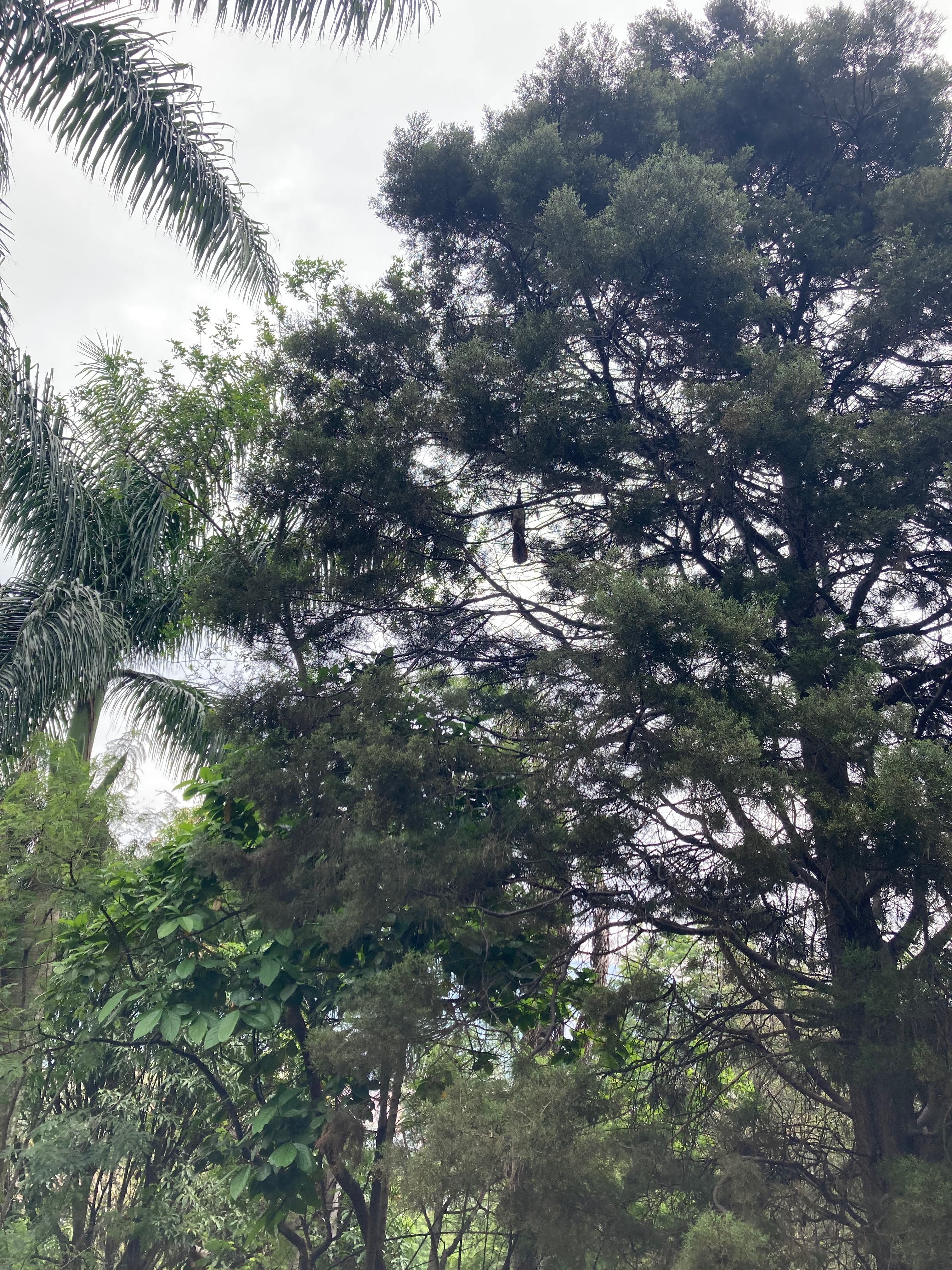
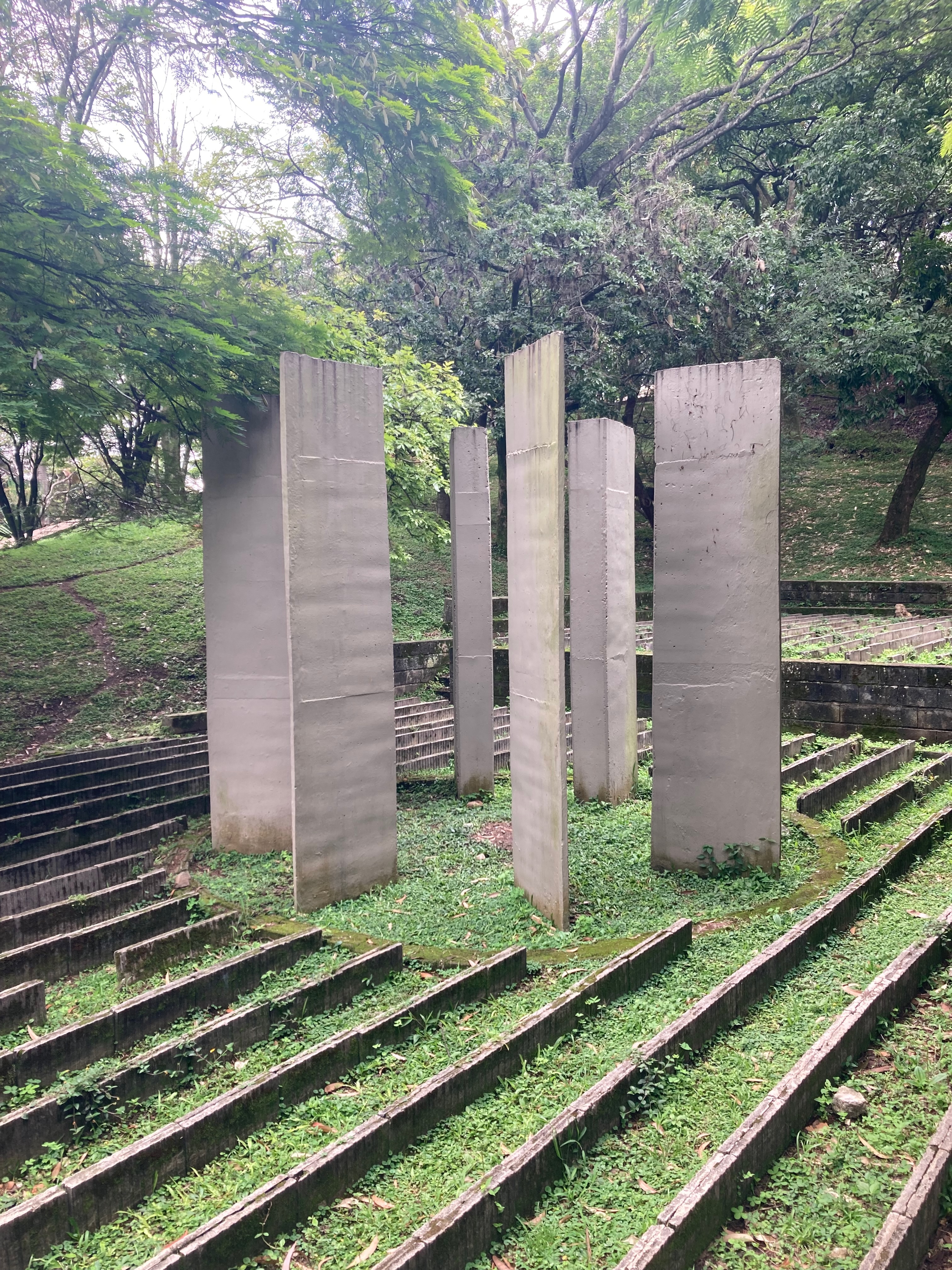
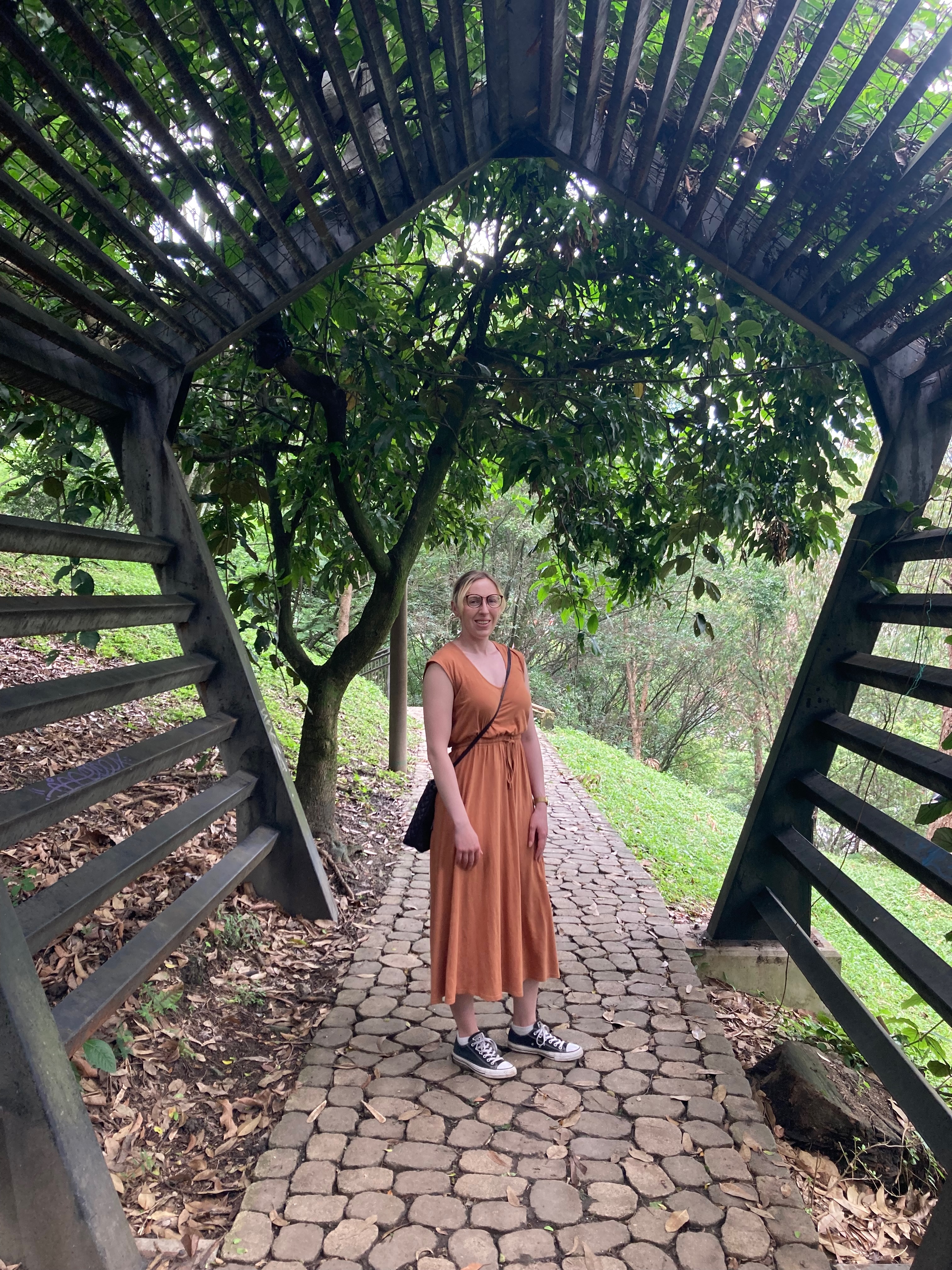
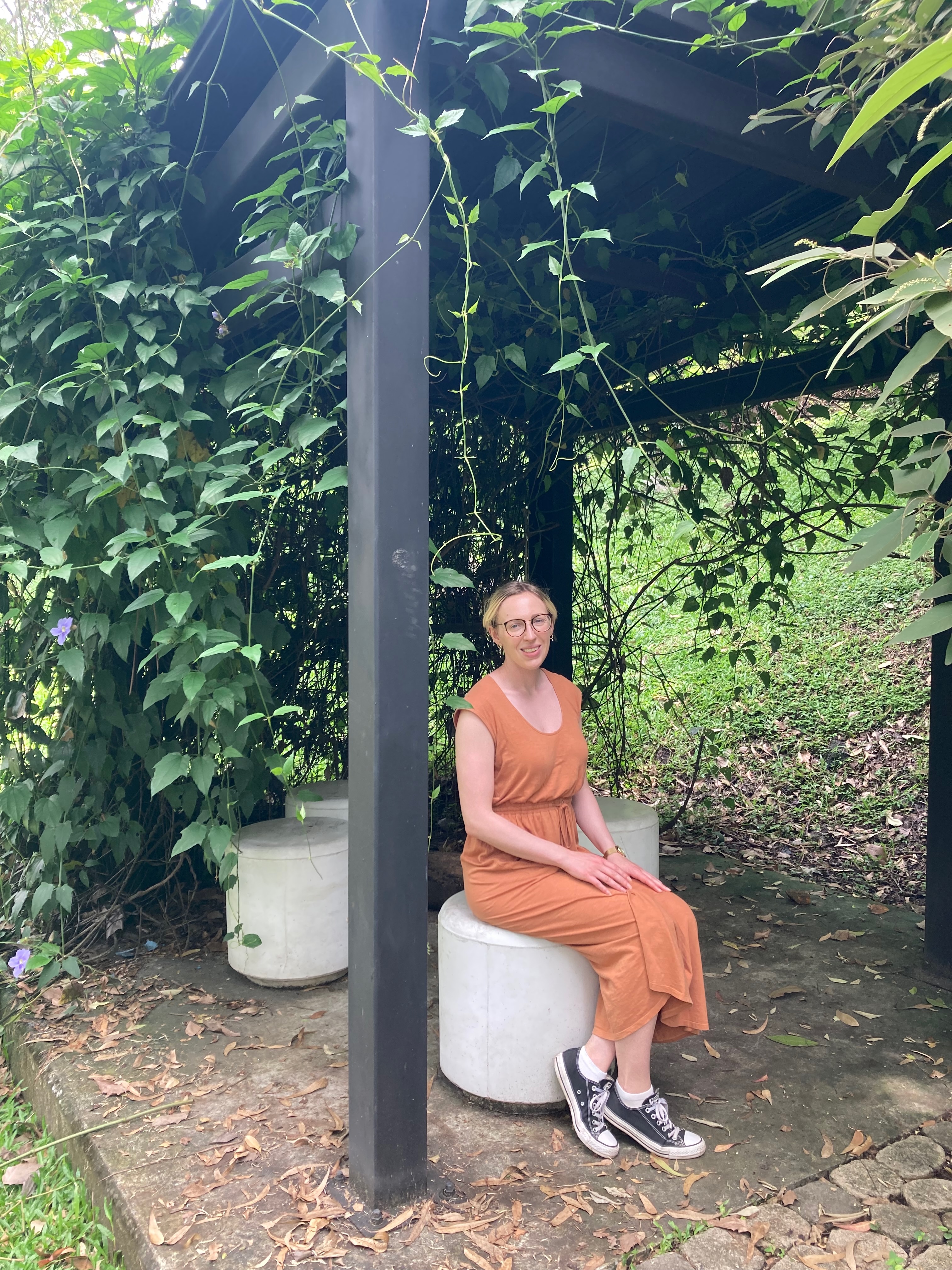
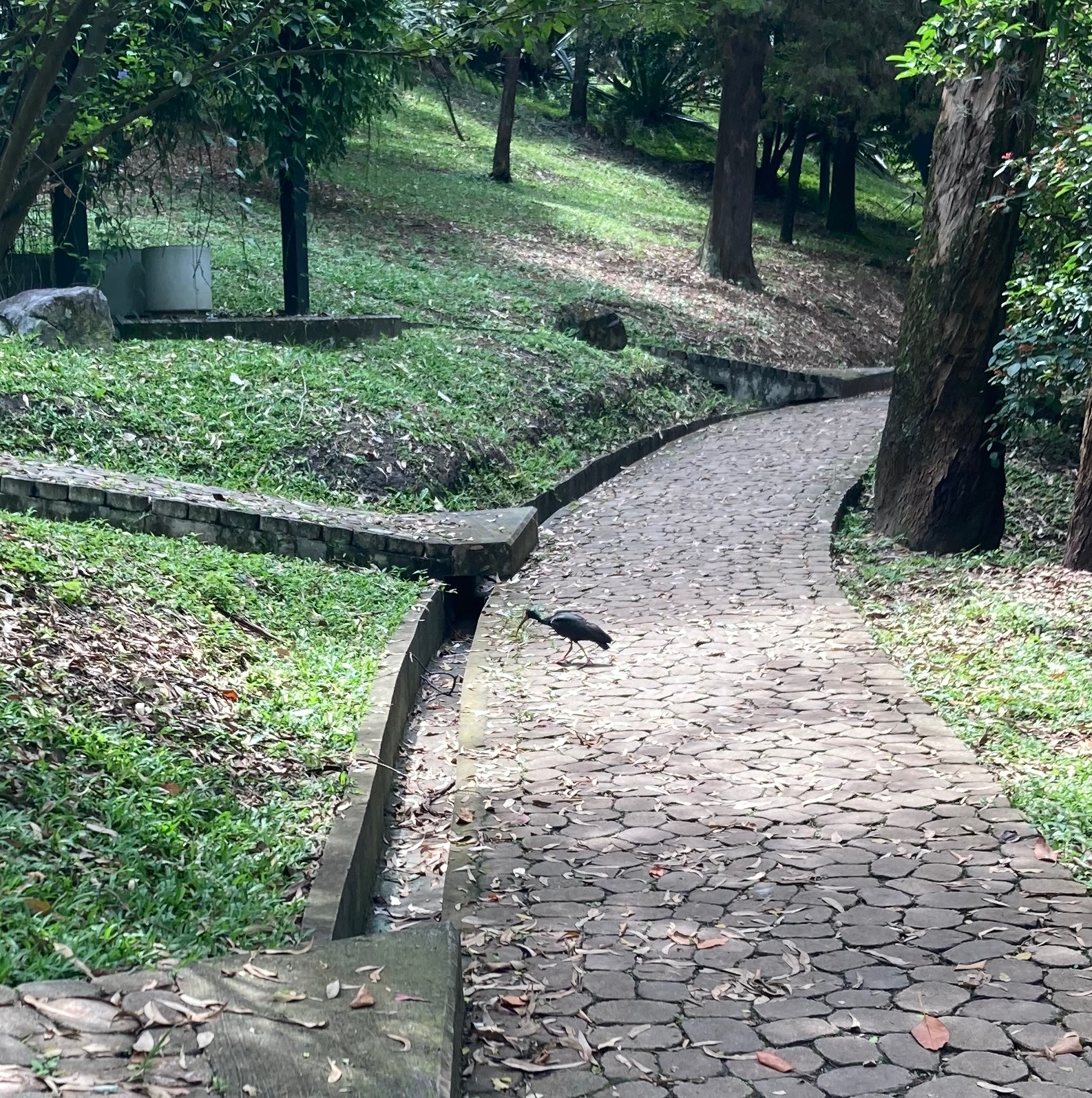
The unidentified wildlife in the orange dress doesn’t appear to be a native species
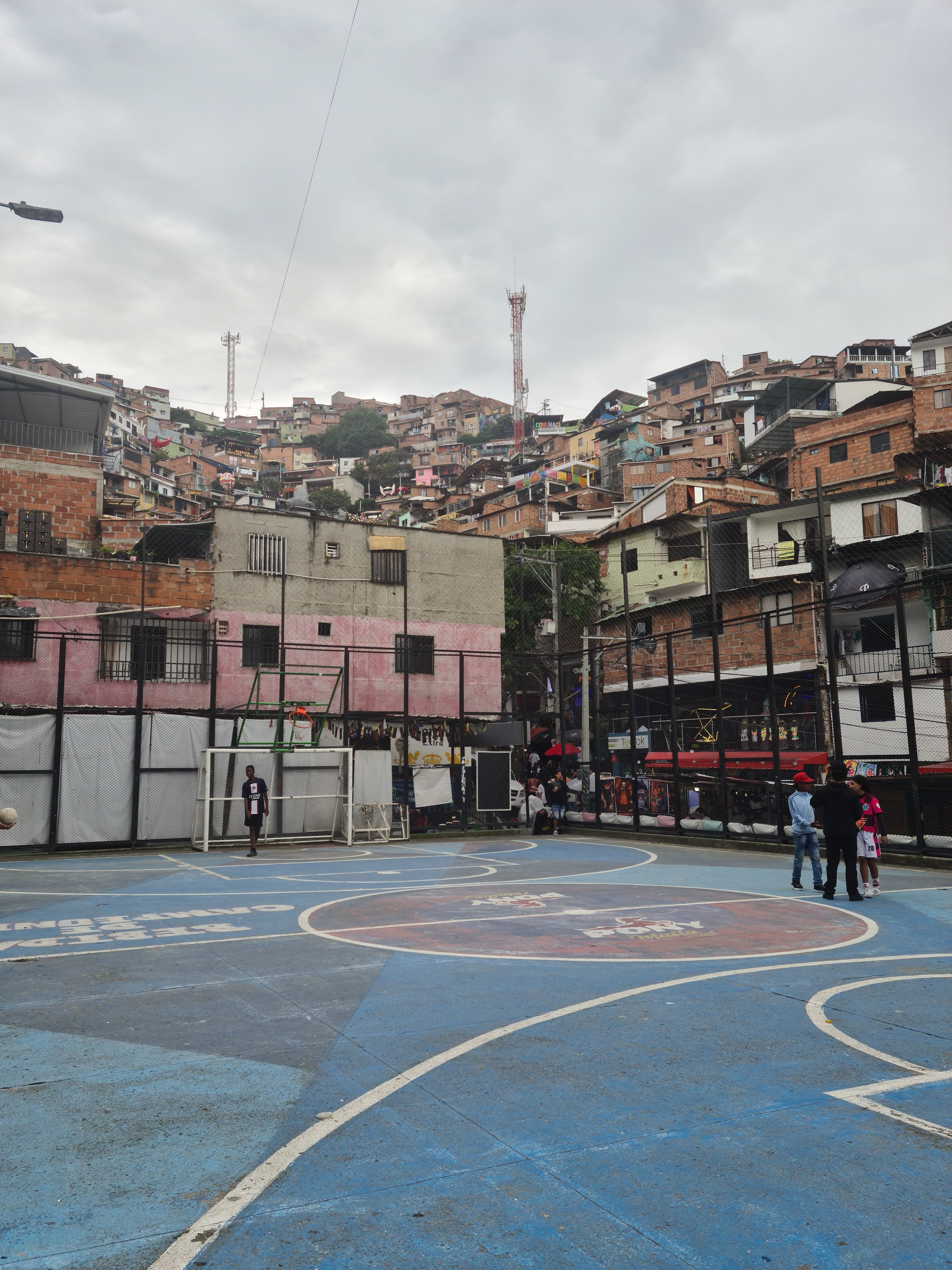
Coming back to the modern history of guerilla violence, we also took part in a neighbourhood specific tour. Comuna 13 was once one of the most dangerous barrios in Medellín, with our guide, Sergio, having seen dead bodies on the street when he was as young as the age of 5. Sergio has since founded a non-profit organisation, Insiders Foundation, providing social and cultural programs to the neighbourhood youth.
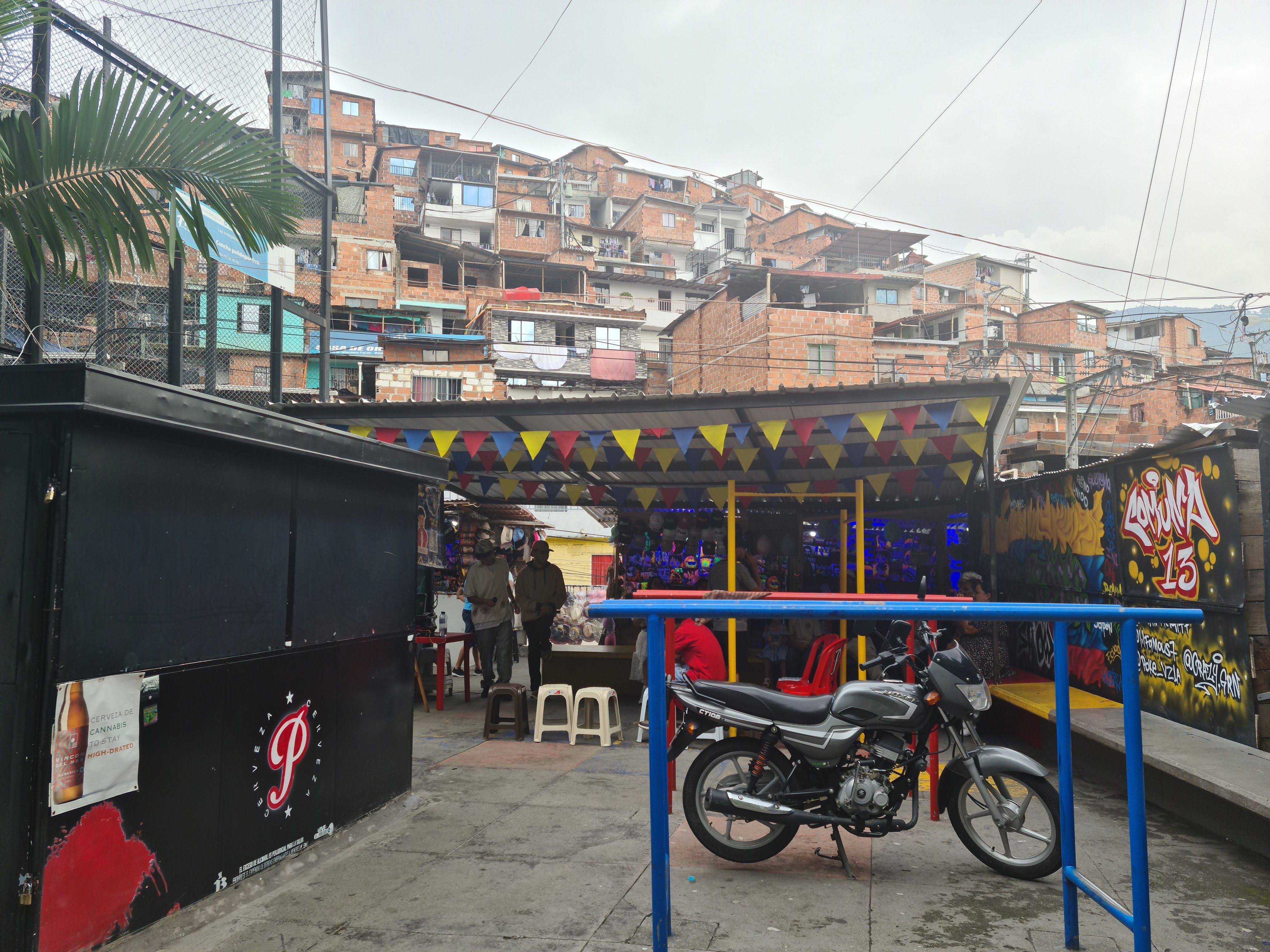
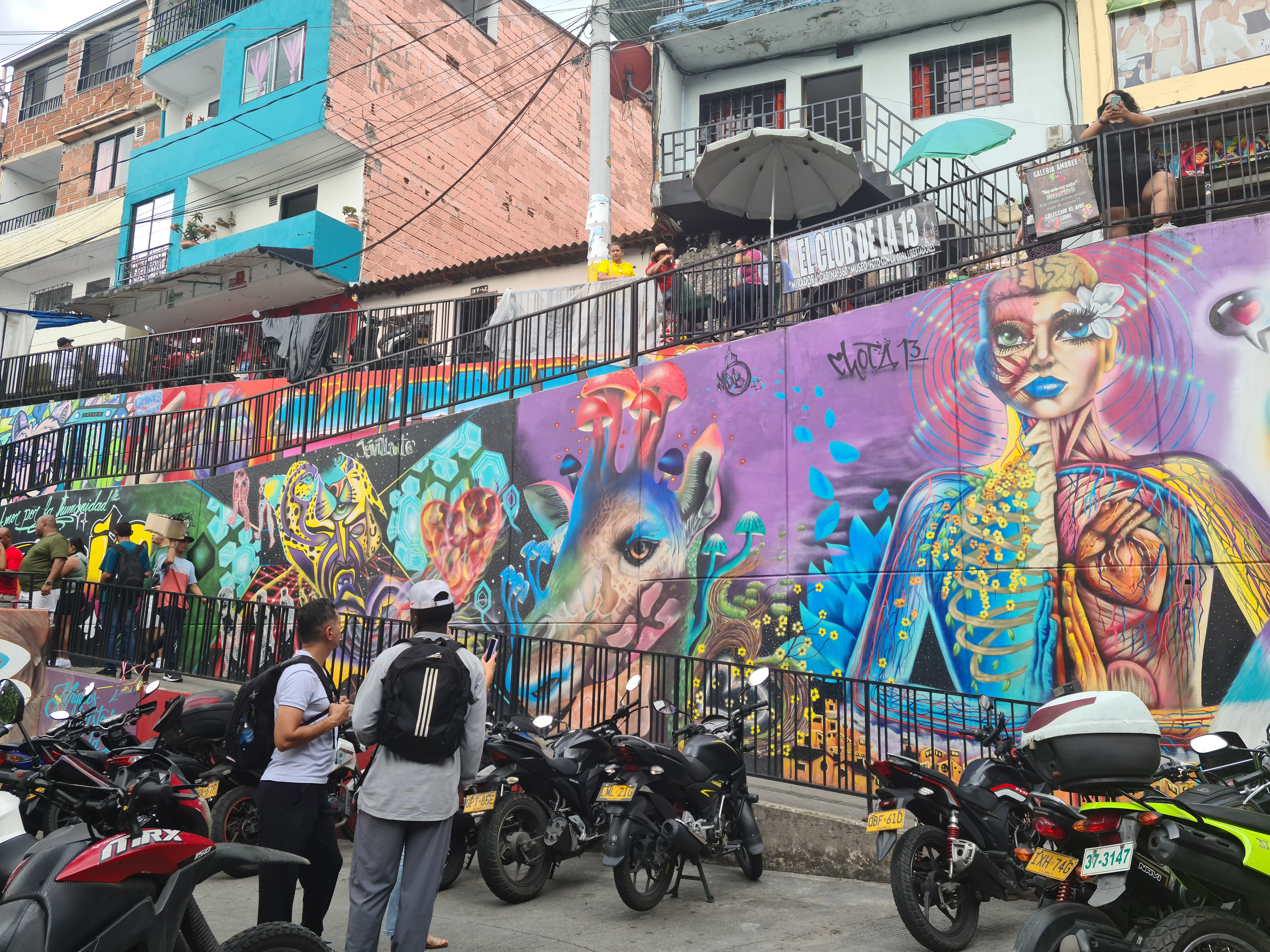

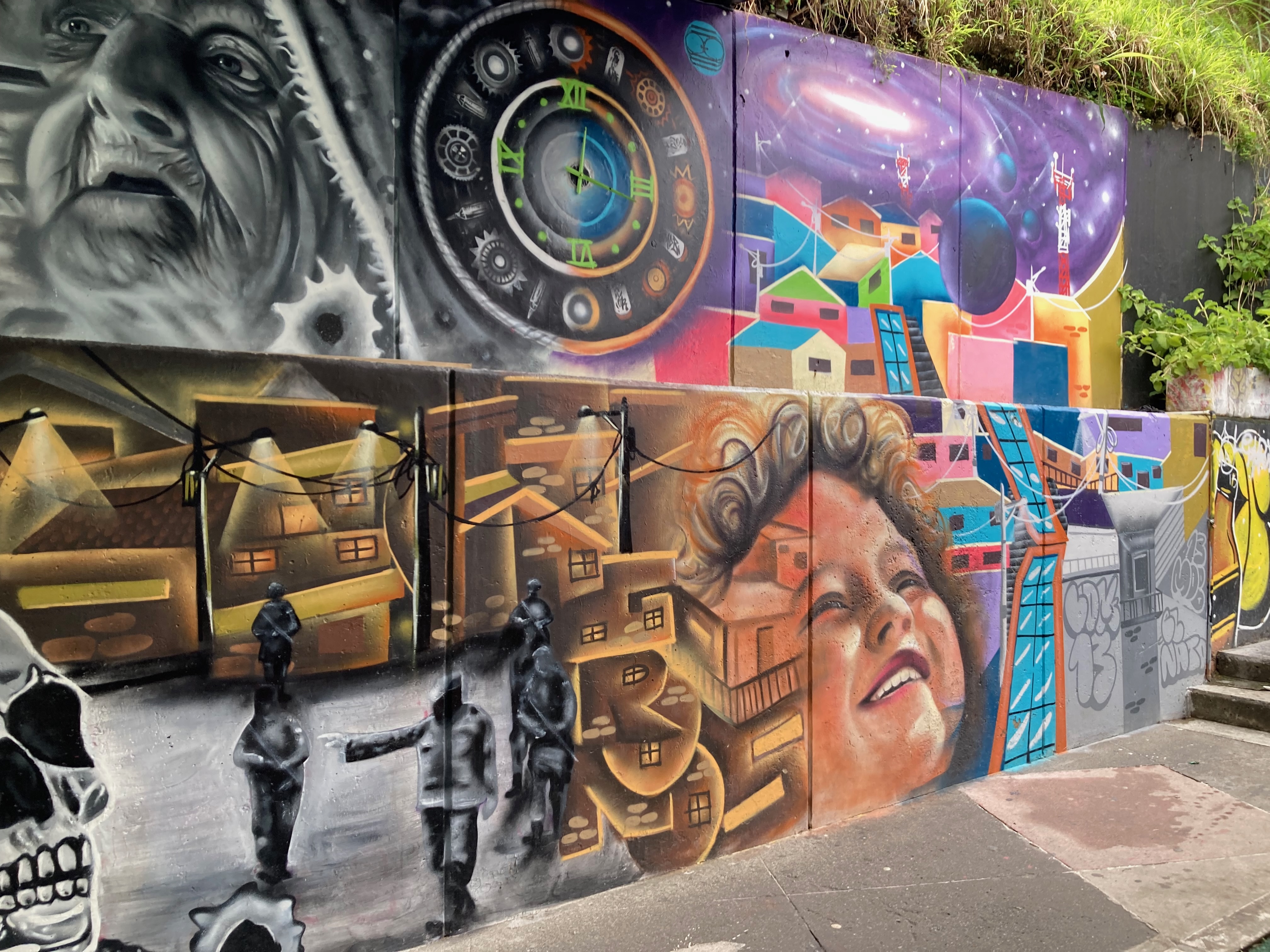
The mural at the bottom reflects transformation. Difficult to tell from the pics, but the boy in black and white is holding a real lamp.
This was one of the mechanisms which originally pulled Comuna 13 out of its troubles, as children who might otherwise have joined the gangs, were encouraged to take up street art, hip hop and breakdancing in a bid to keep them off the streets.
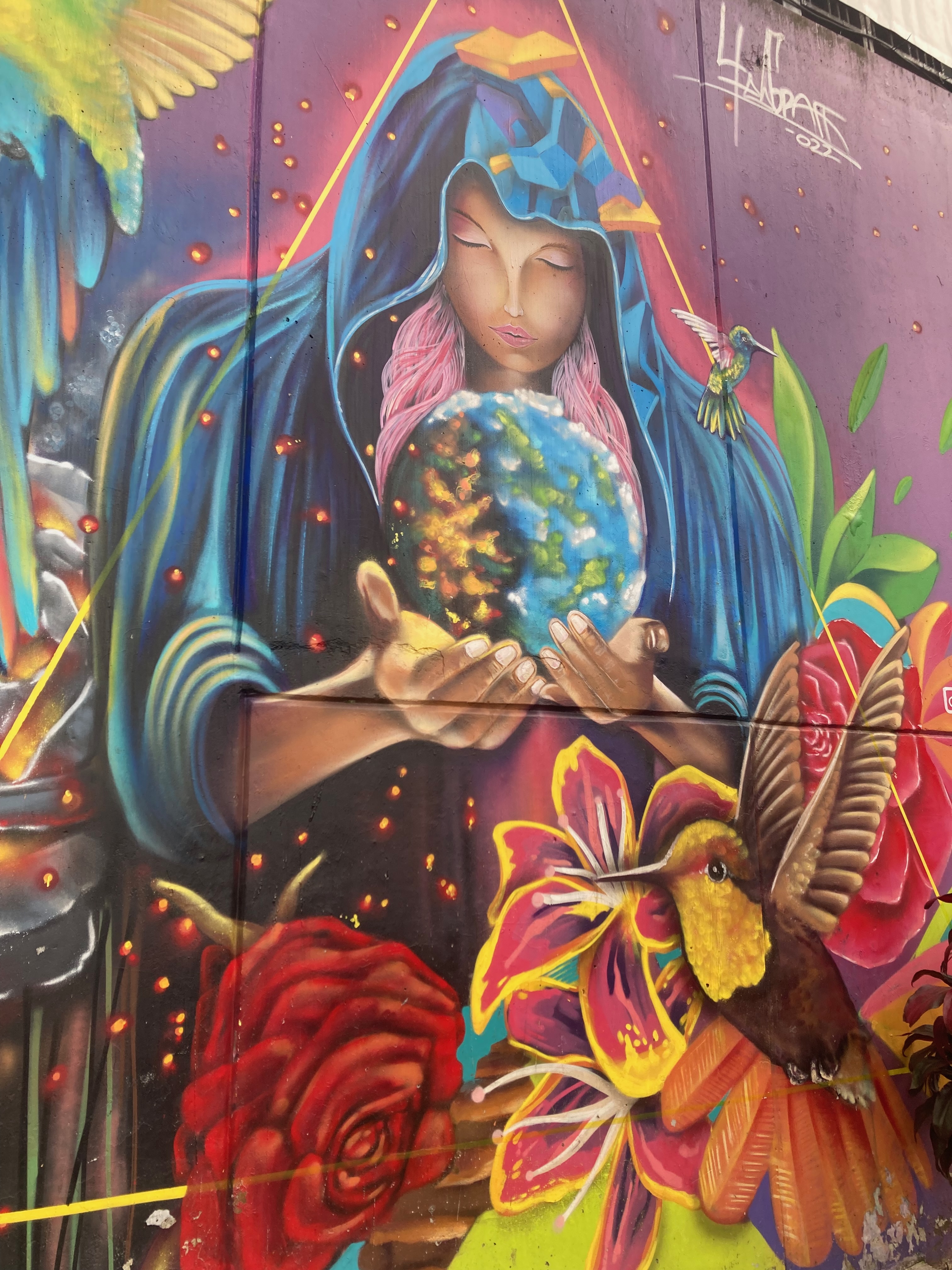
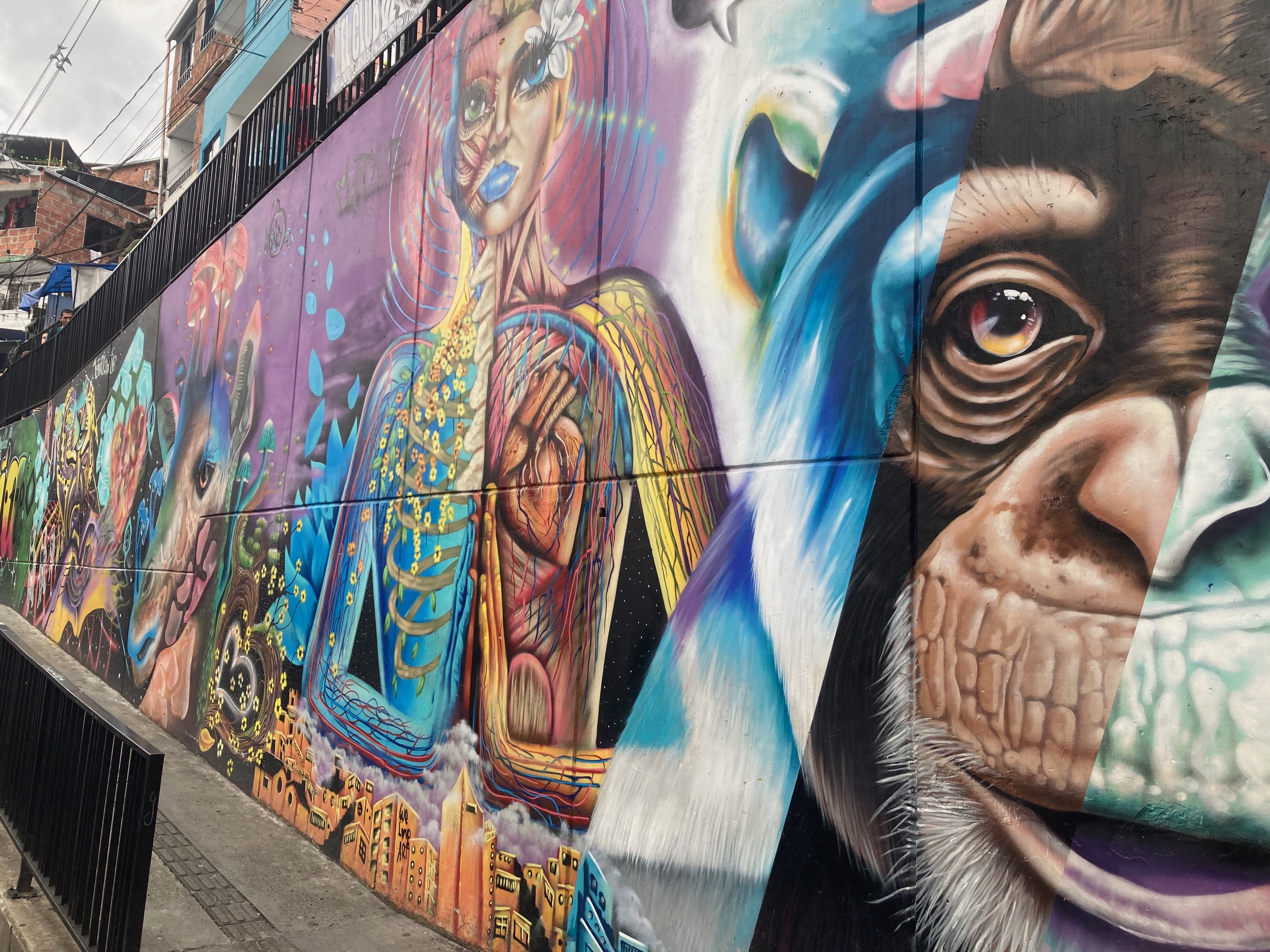
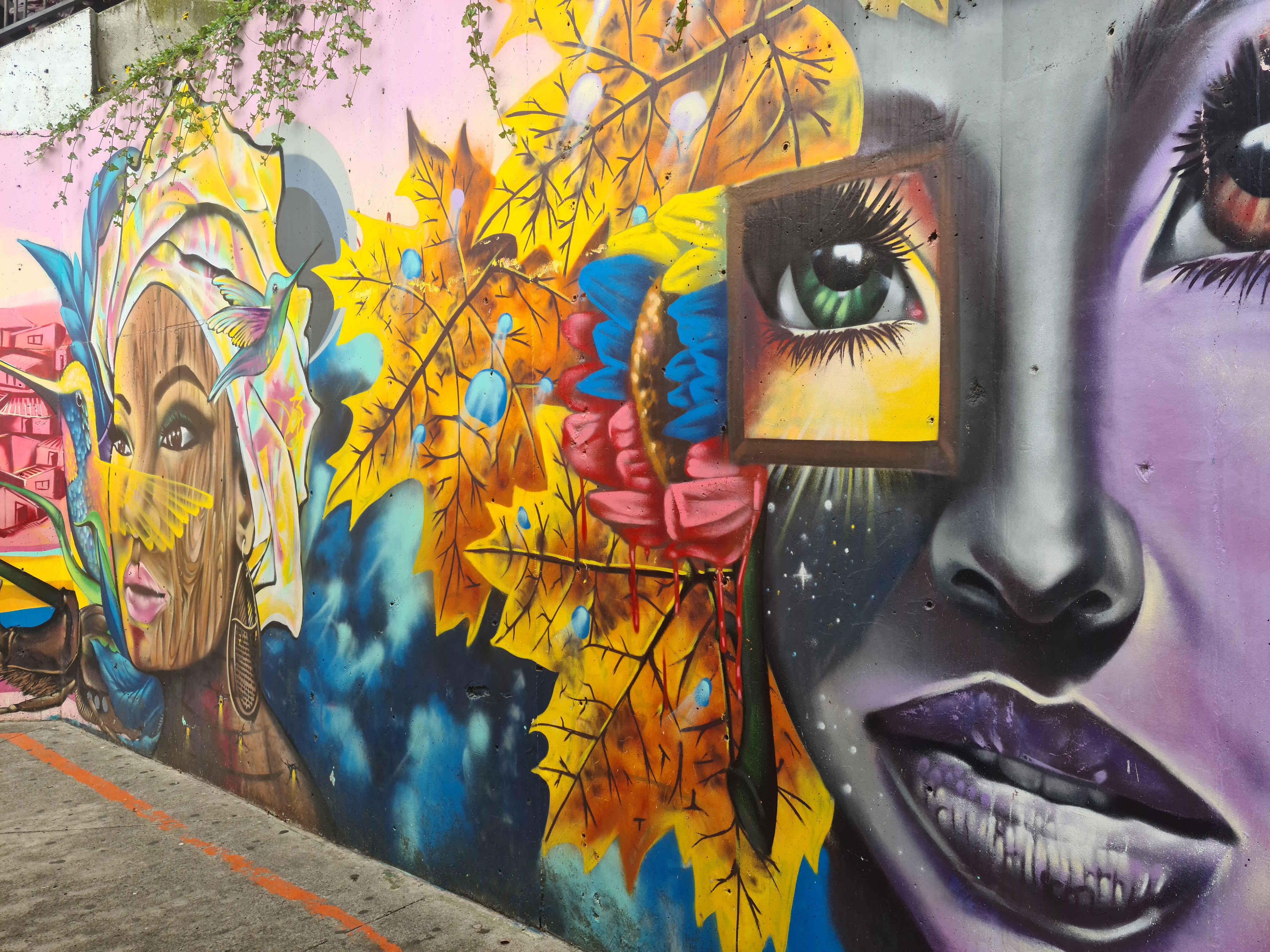
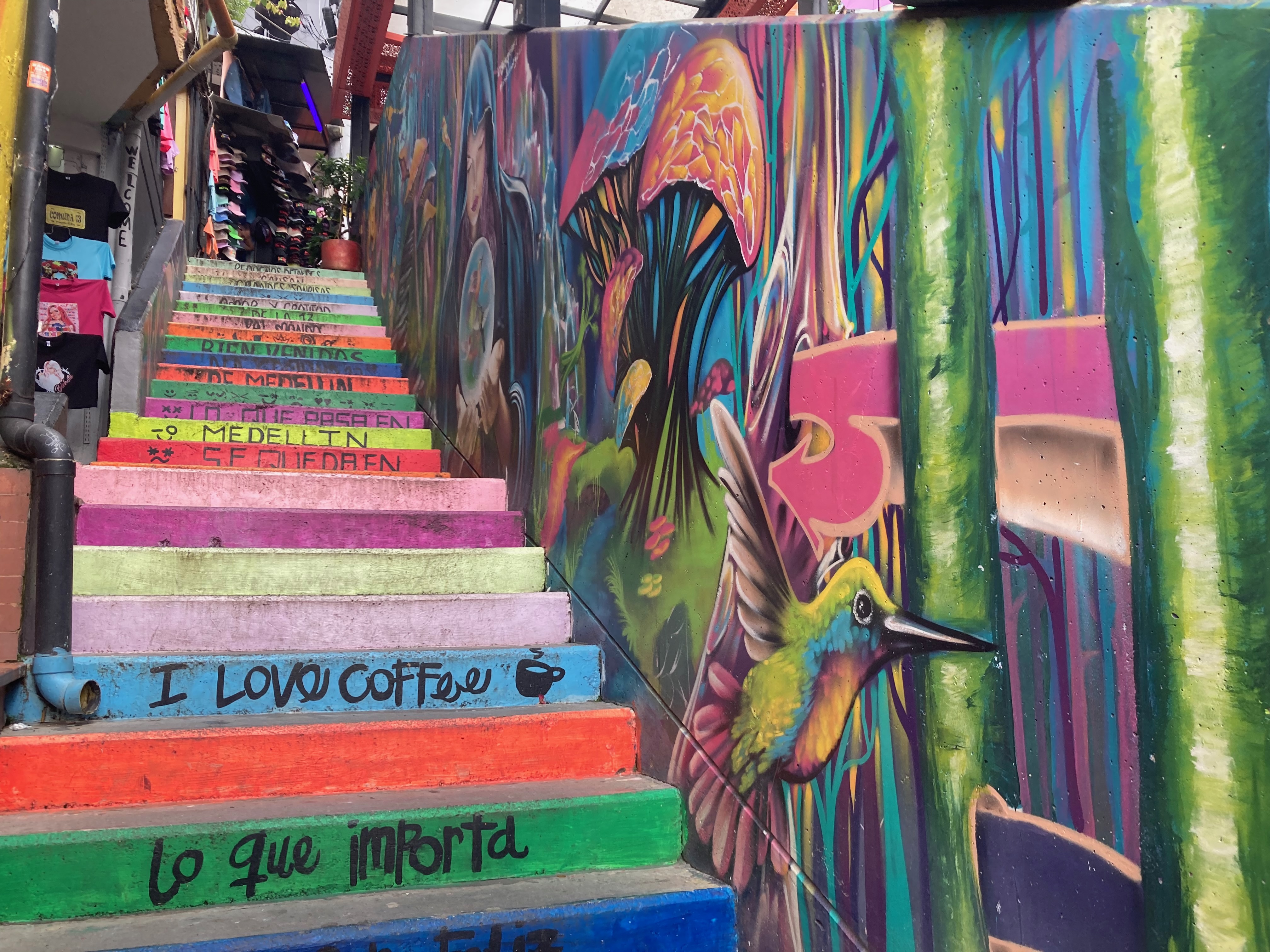
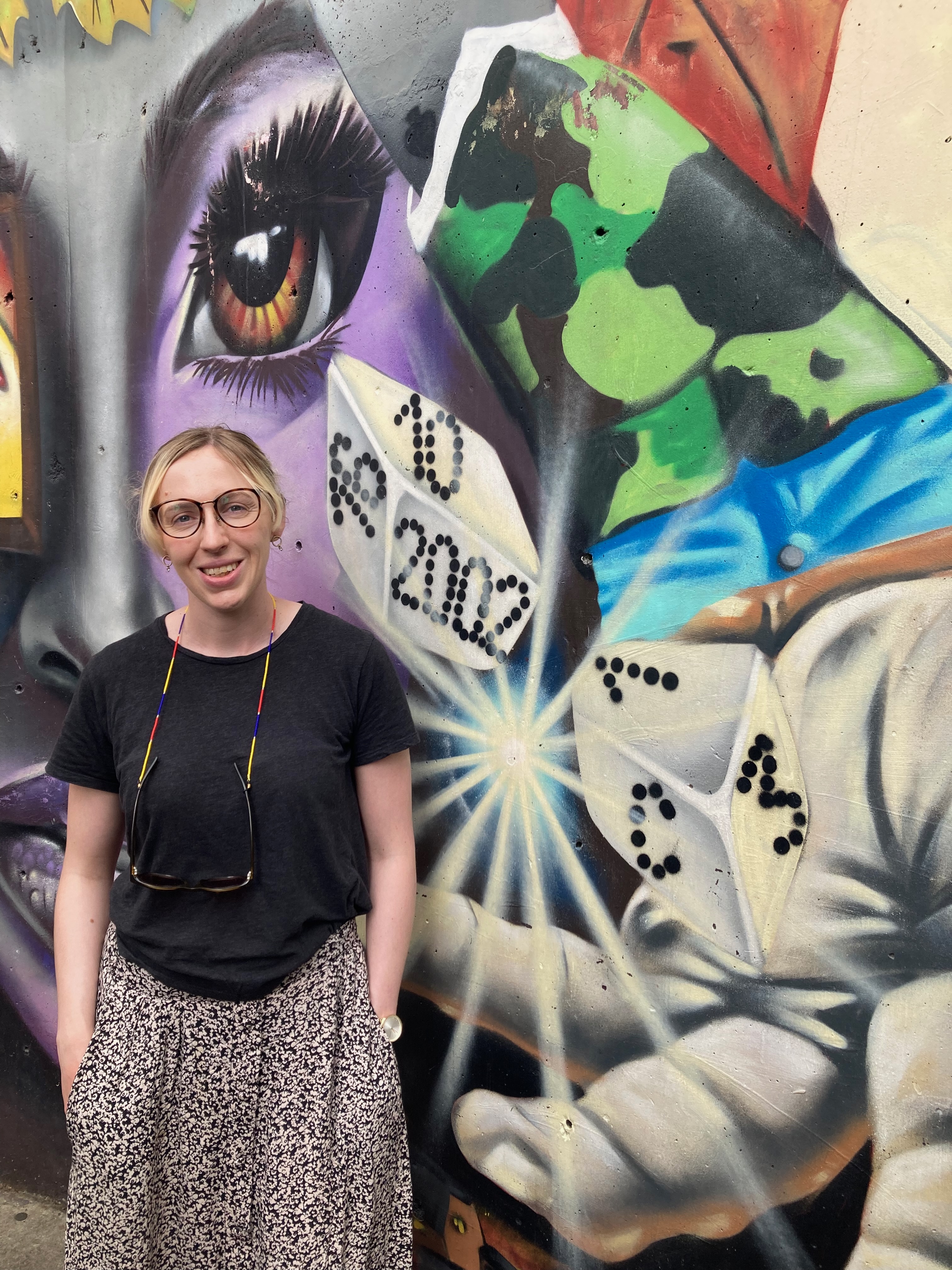

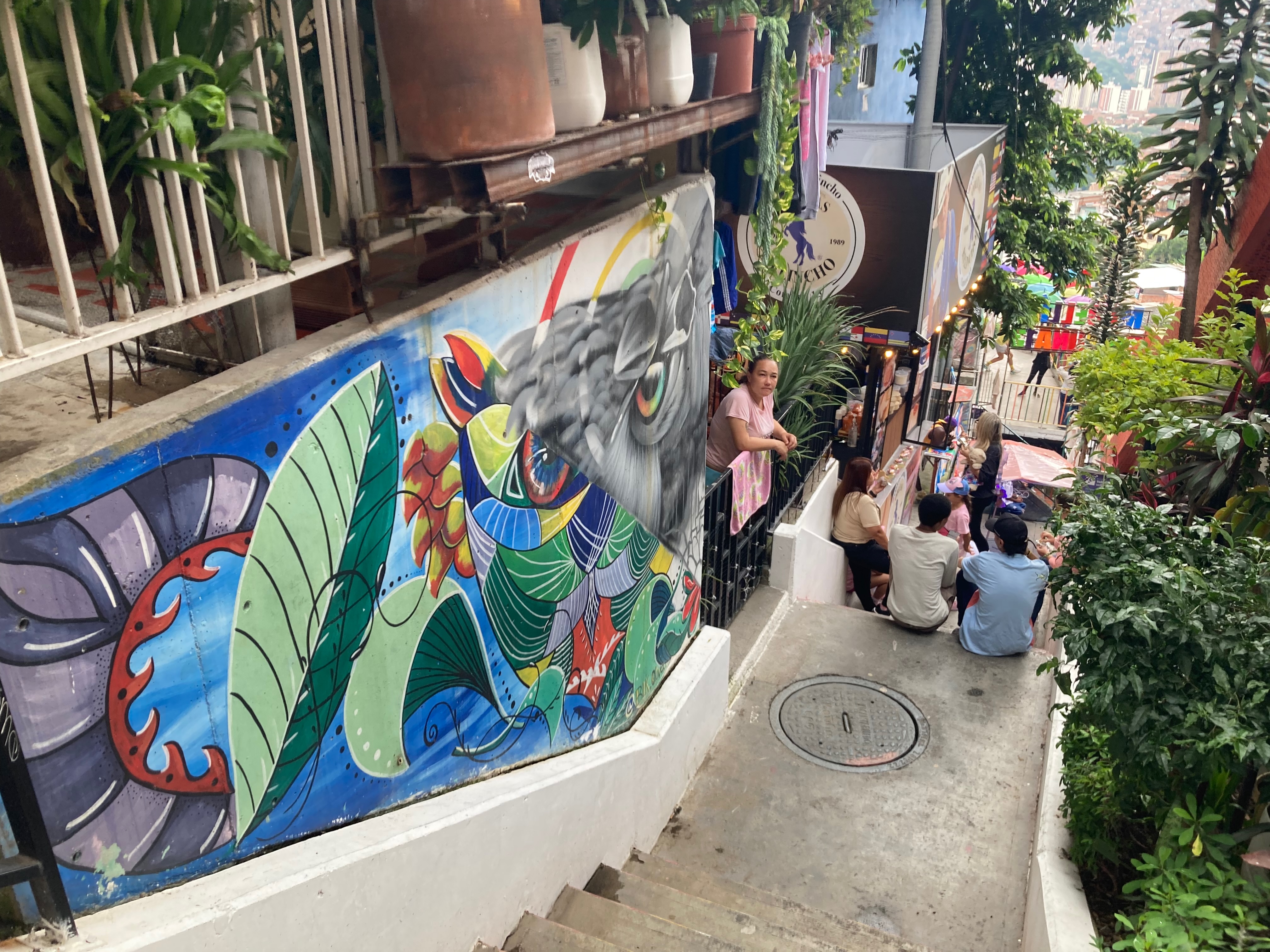
That ethos is now reflected throughout Comuna 13, and it has gone from overrun with gangs to overrun with tourists – it was much more of a hotspot than I expected.

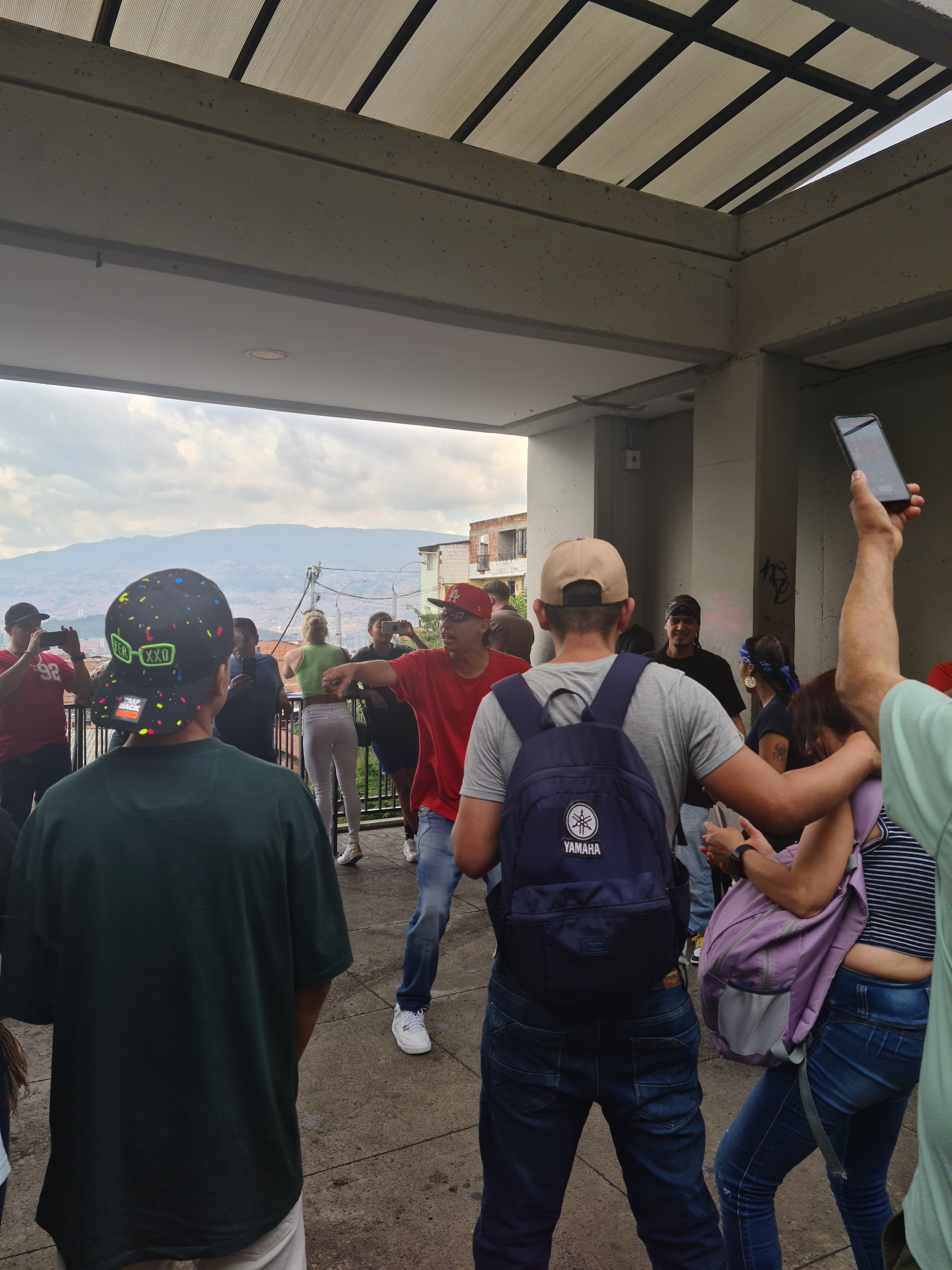
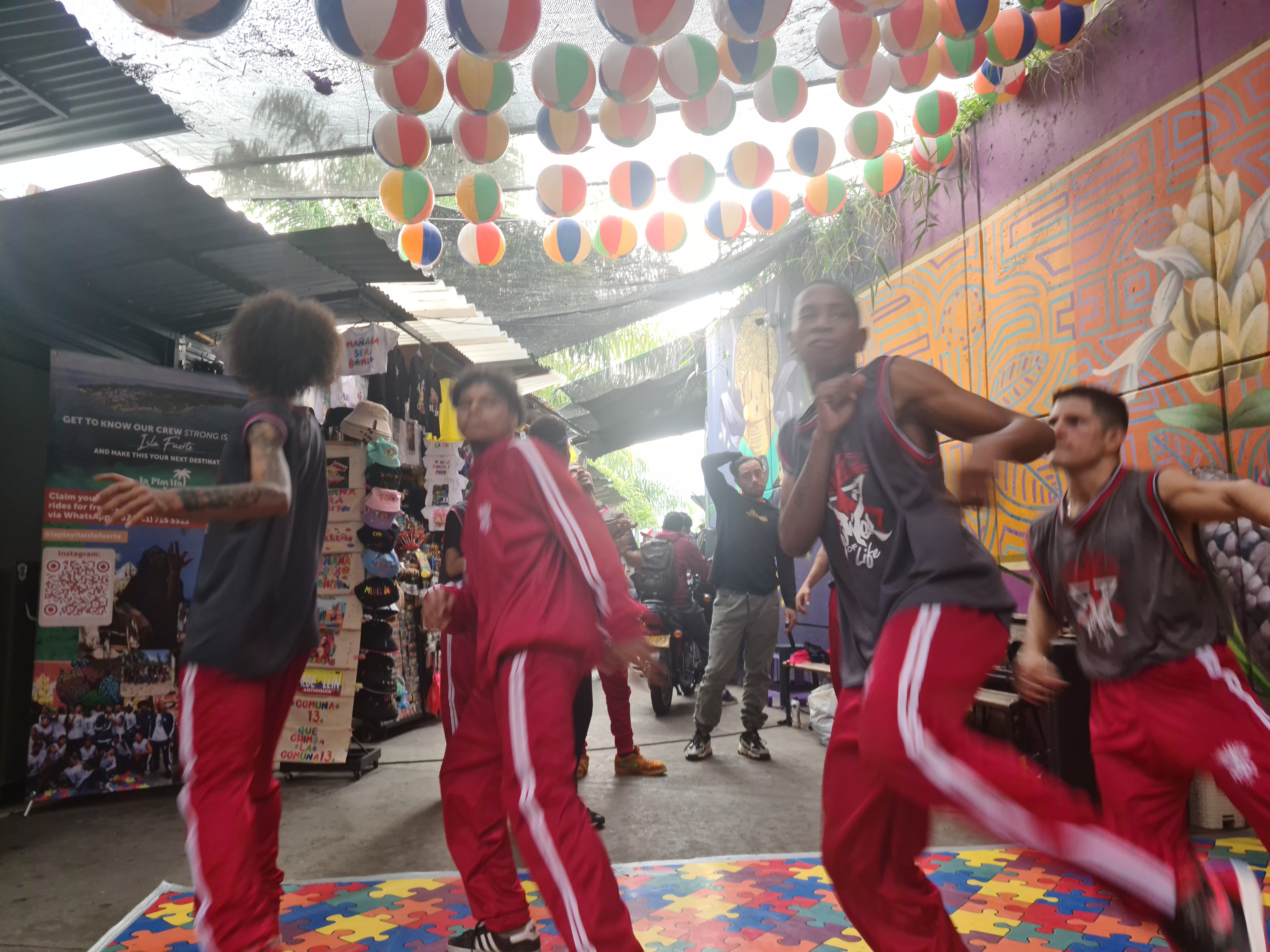
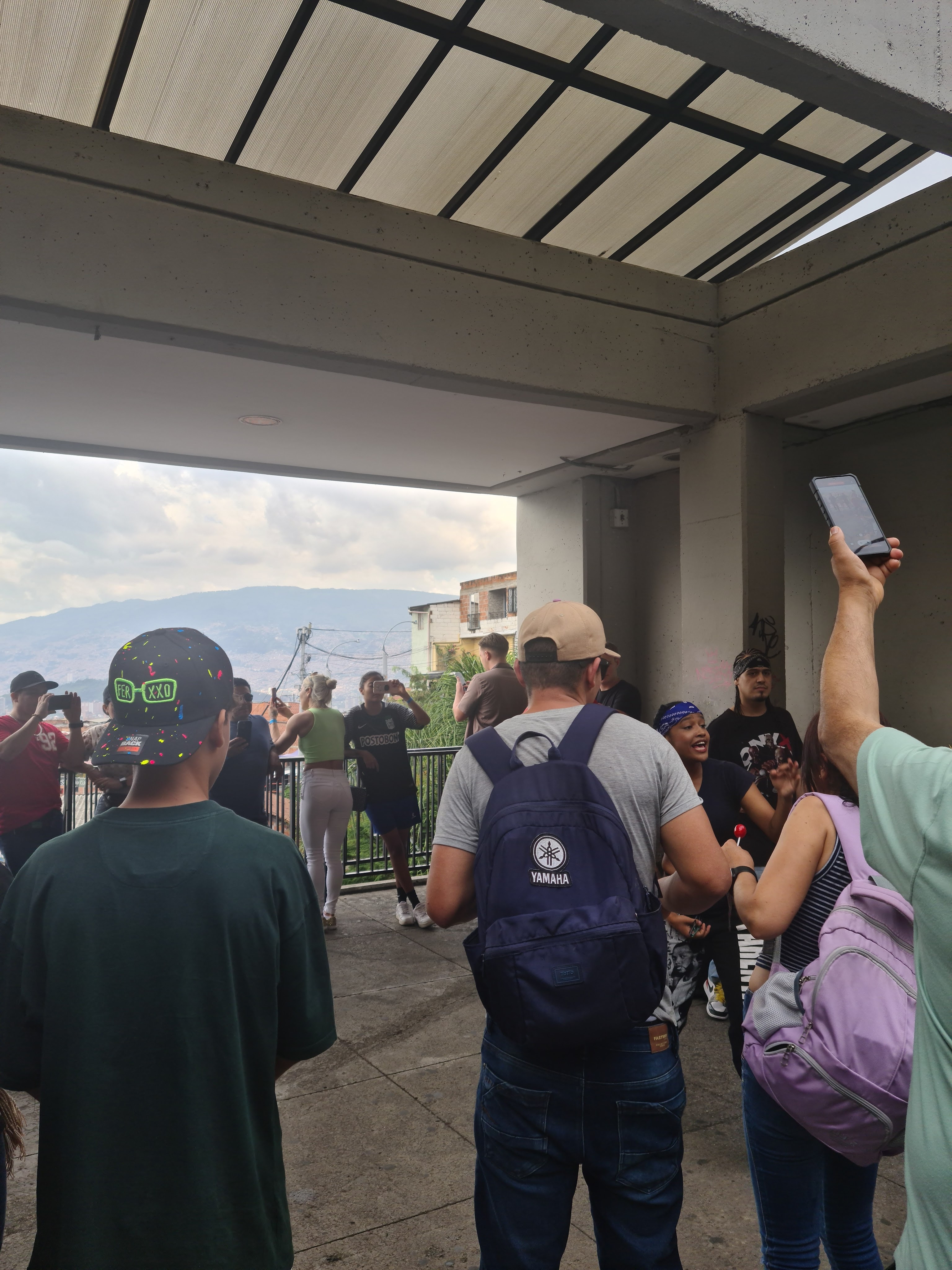
Beatboxers and break dancers
Nudging through its bustling alleys and past performers was reminiscent of Edinburgh Old Town in August. Especially with the accompanying rain showers!

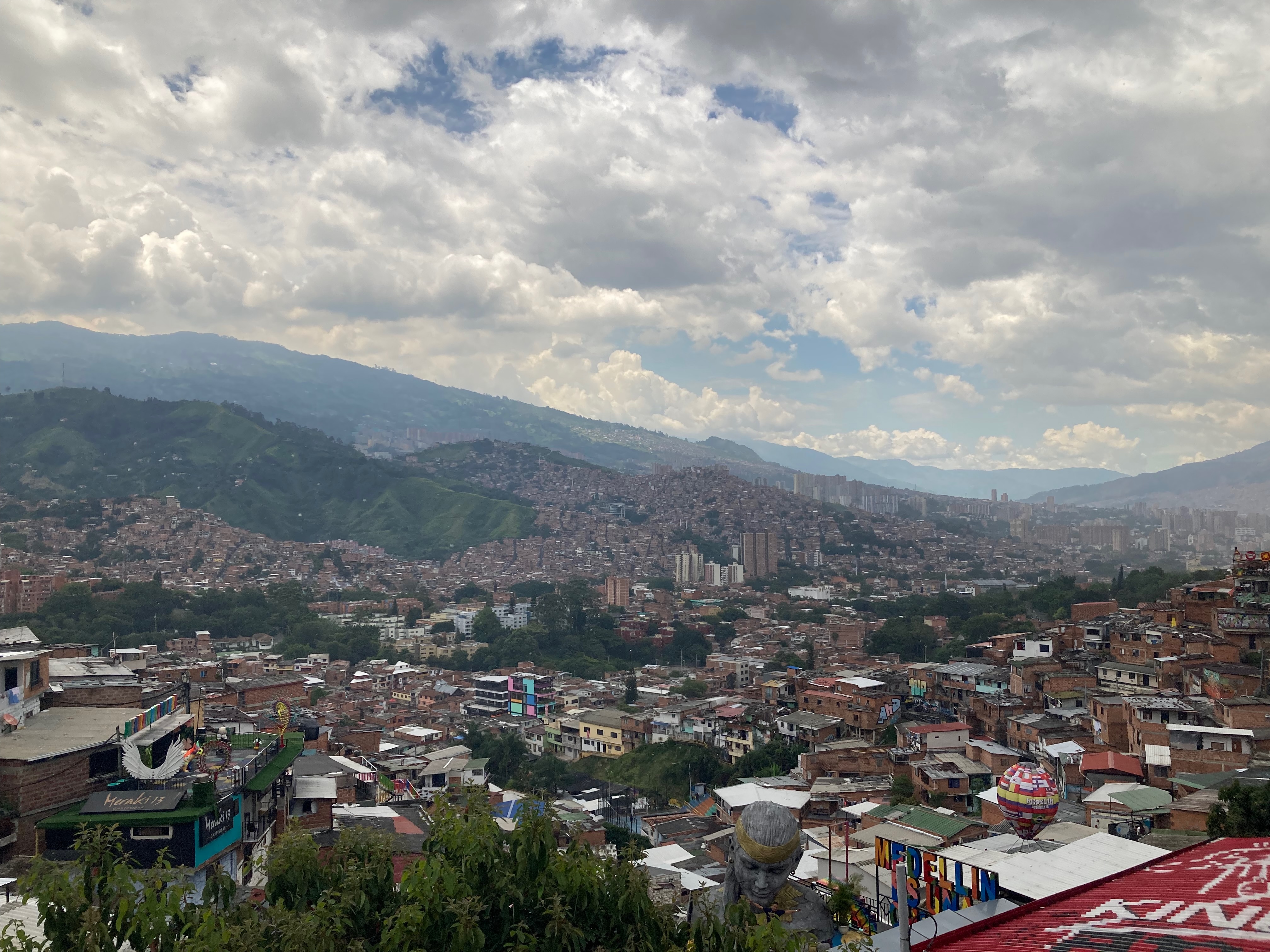

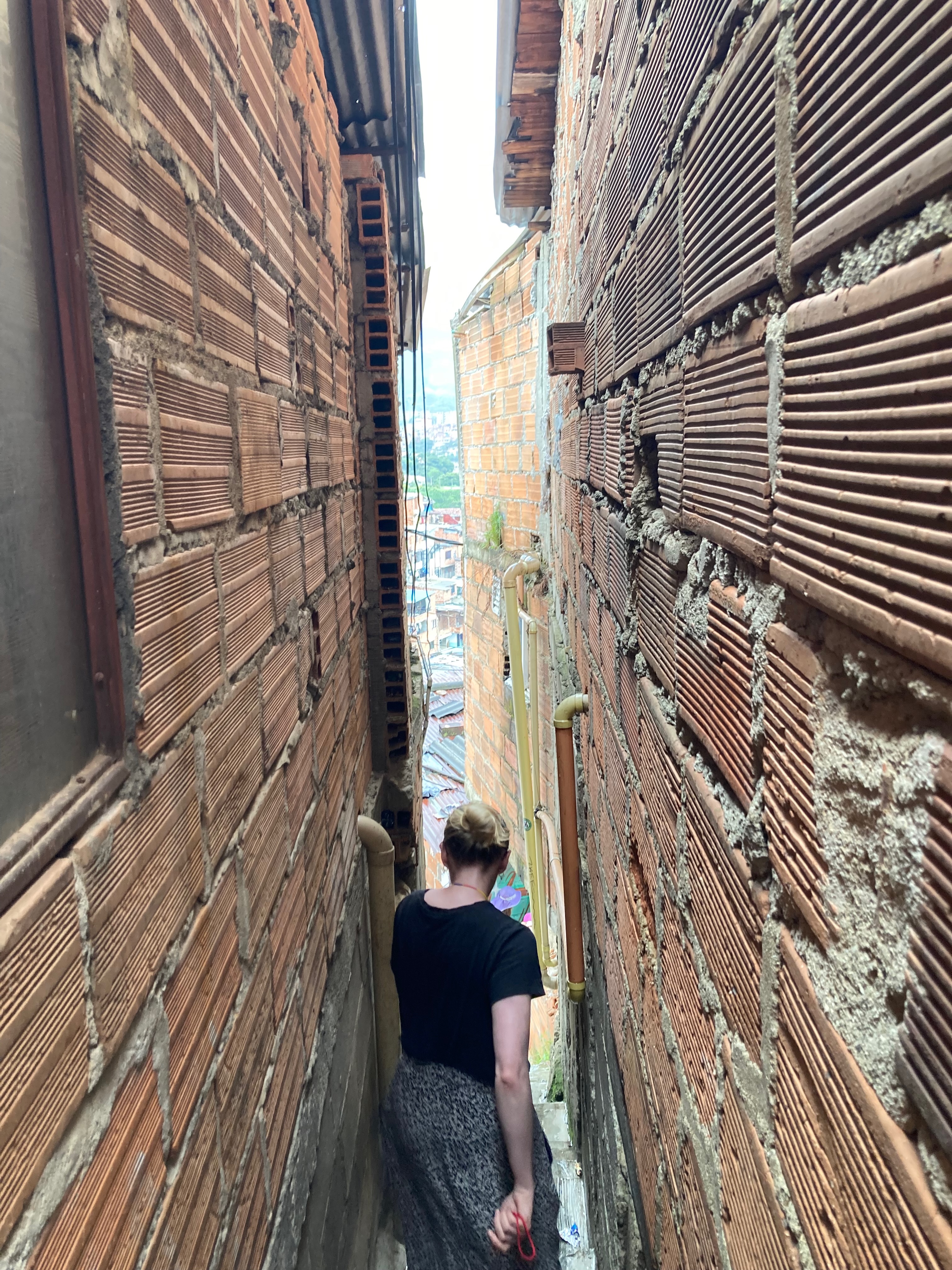

Outdoor escalators have been installed to allow those with disabilities easier movement through the neighbourhood, built into hillside. There are still plenty narrow passageways to navigate.

Another specialist tour was the fruit market tour. Colombia has a “megadiverse” status, hosting close to 10% of Earth’s biodiversity. So no surprise the range of produce is immense. Despite being foodies, we usually shy away from buying new things in markets due to lack of familiarity on how much to buy, best use and how to prepare. So it was great to have Diana show us the ropes.
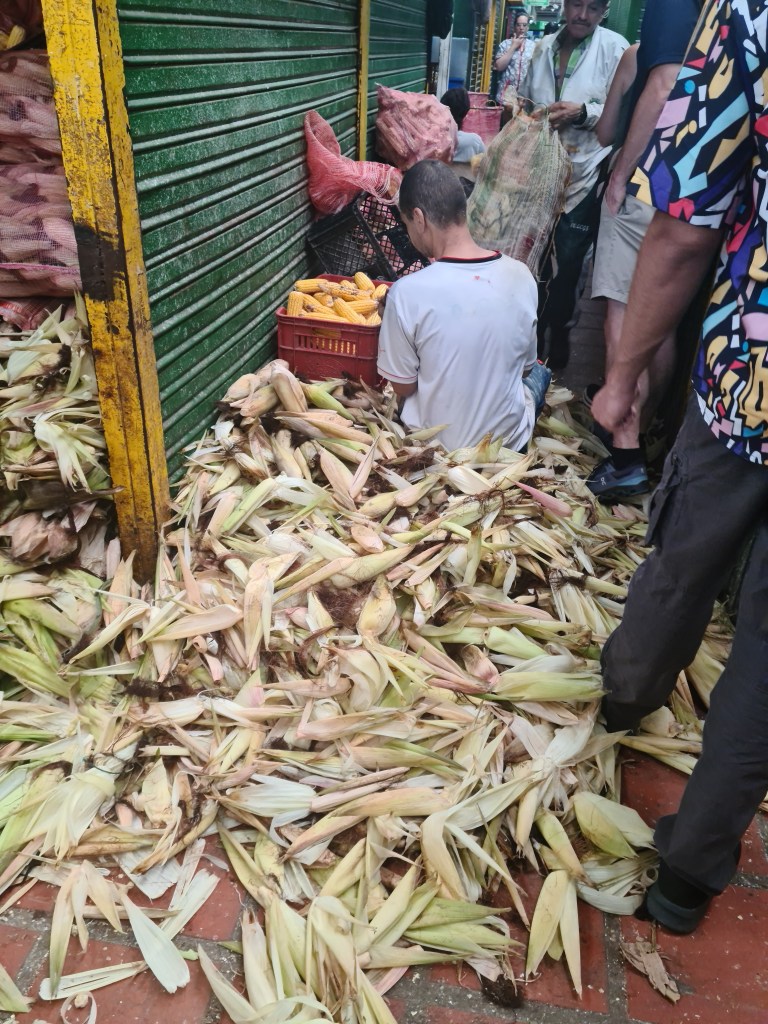

I did wonder if an “exotic fruits” tour would include the likes of mango and kiwi fruit. Not so. The only fruits that we had previously come across were dragon fruit, maracuya/passion fruit, lychee (though I’ve never seen it fresh) and the granadillas that I’d been scoffing since discovering in Peru.
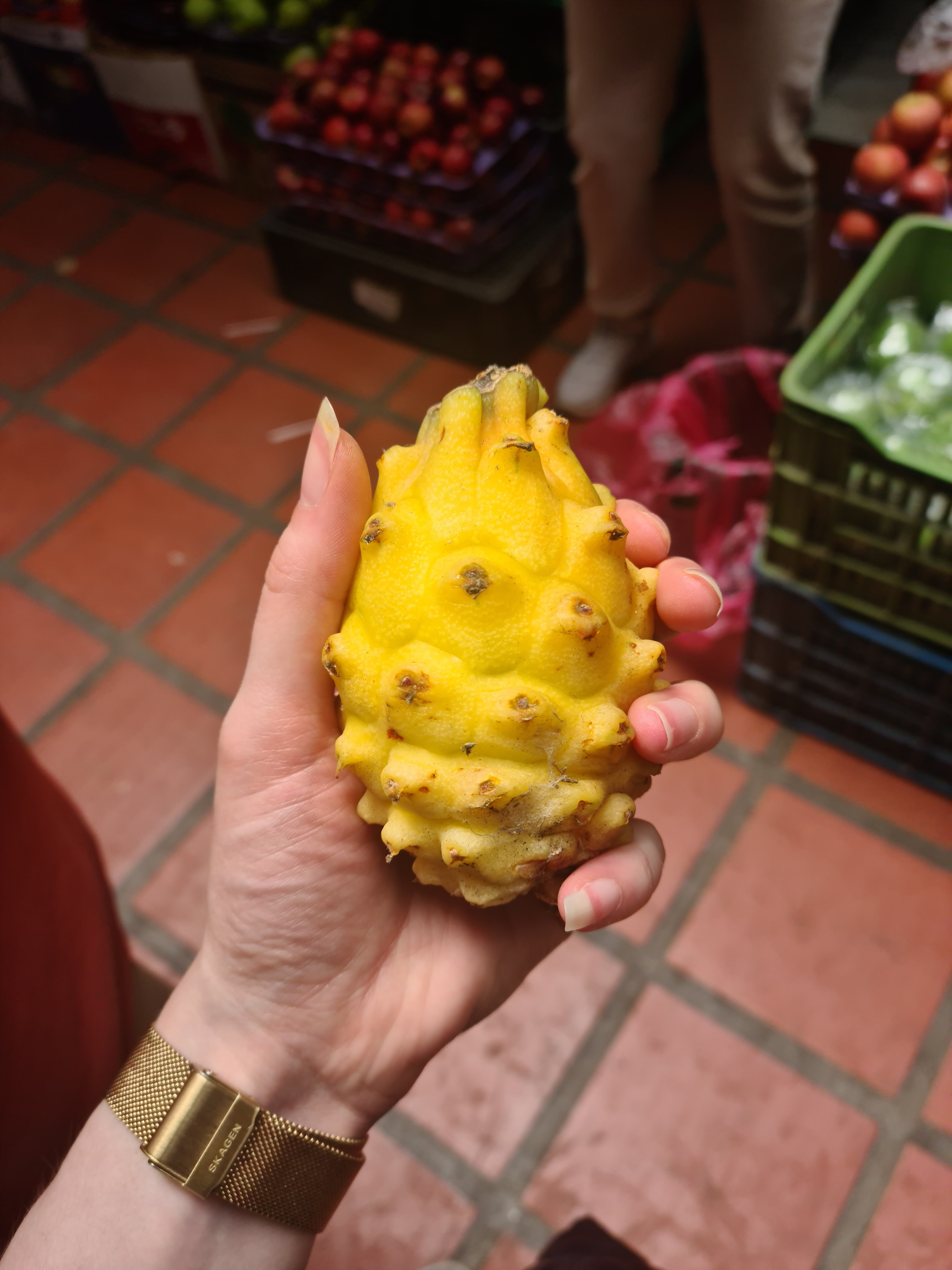
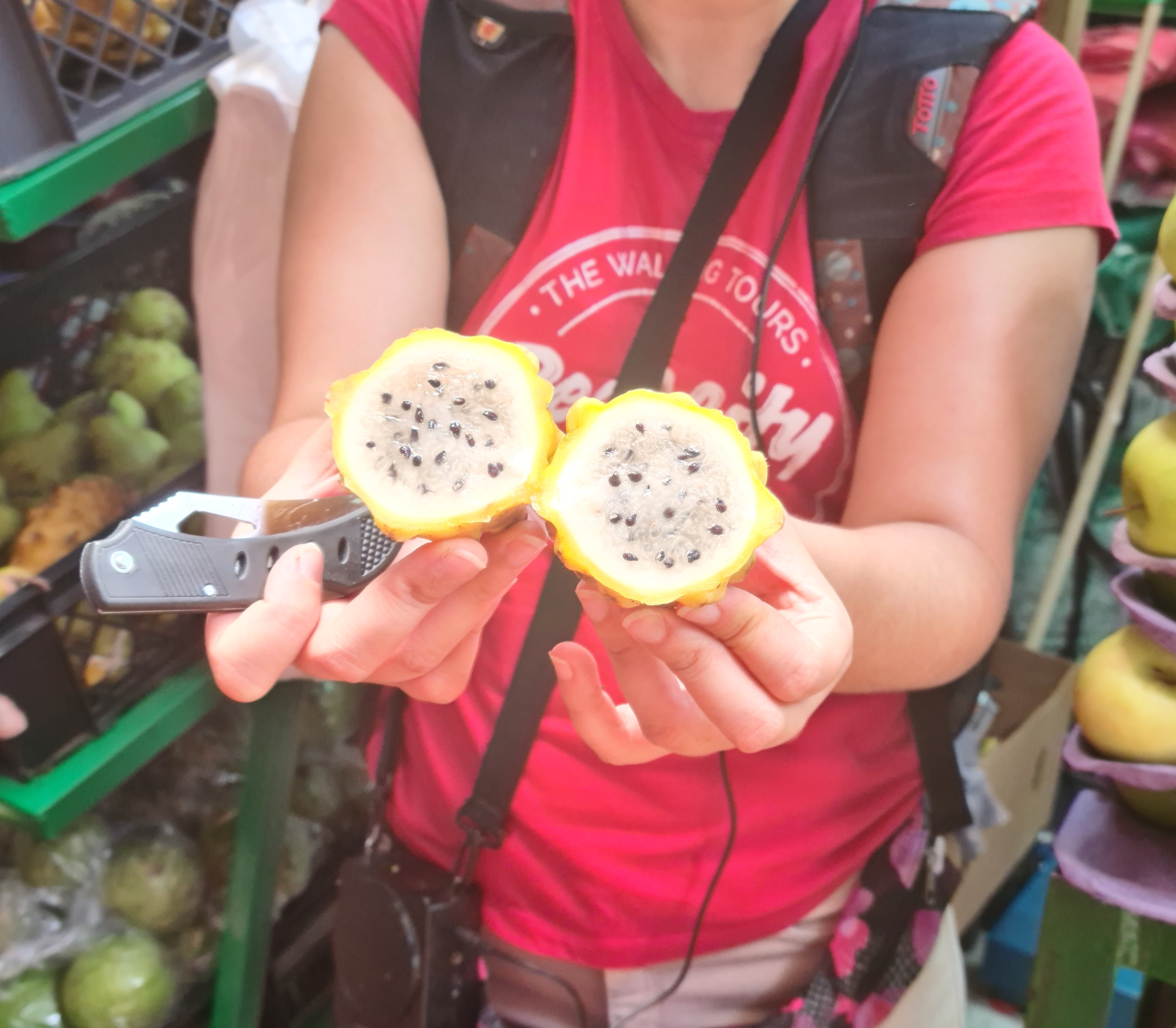
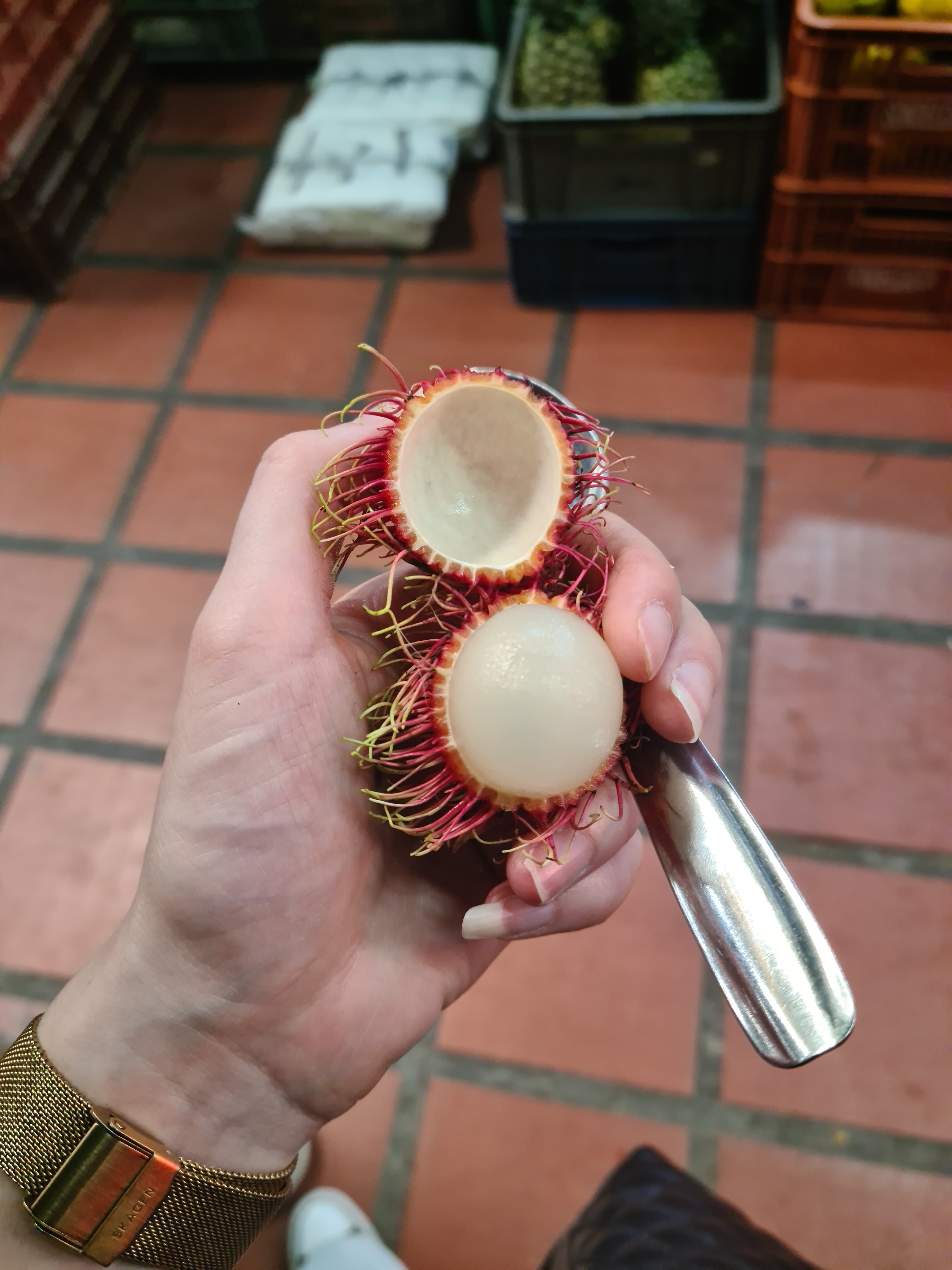
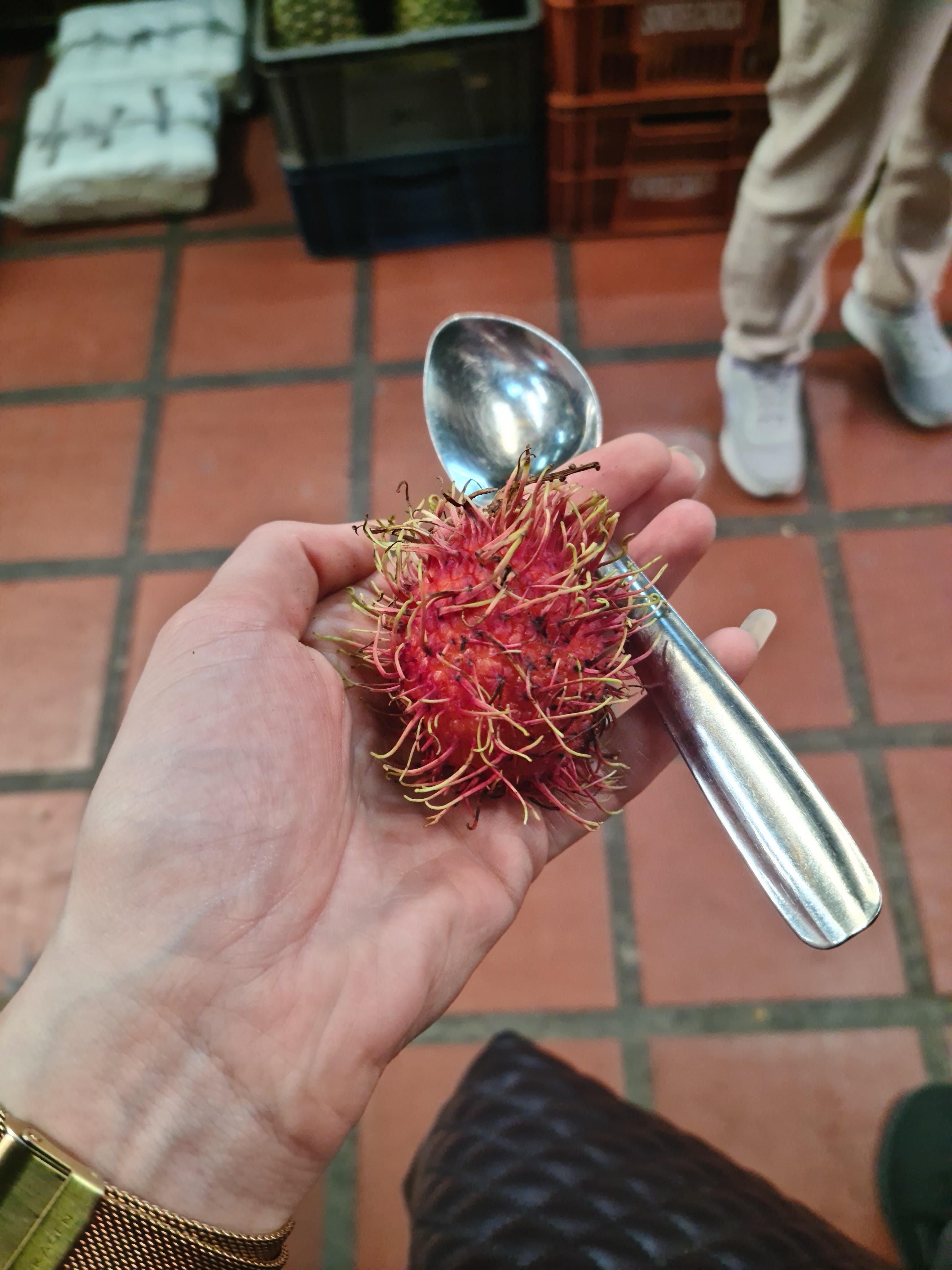
Dragonfruit and lychee
The rest we had never even heard of and were a mix of textures, juiciness and flavour type. It’s difficult to pick, but I think I enjoyed the sour green guavasteen best, while Ricki’s was sweet mangosteen.
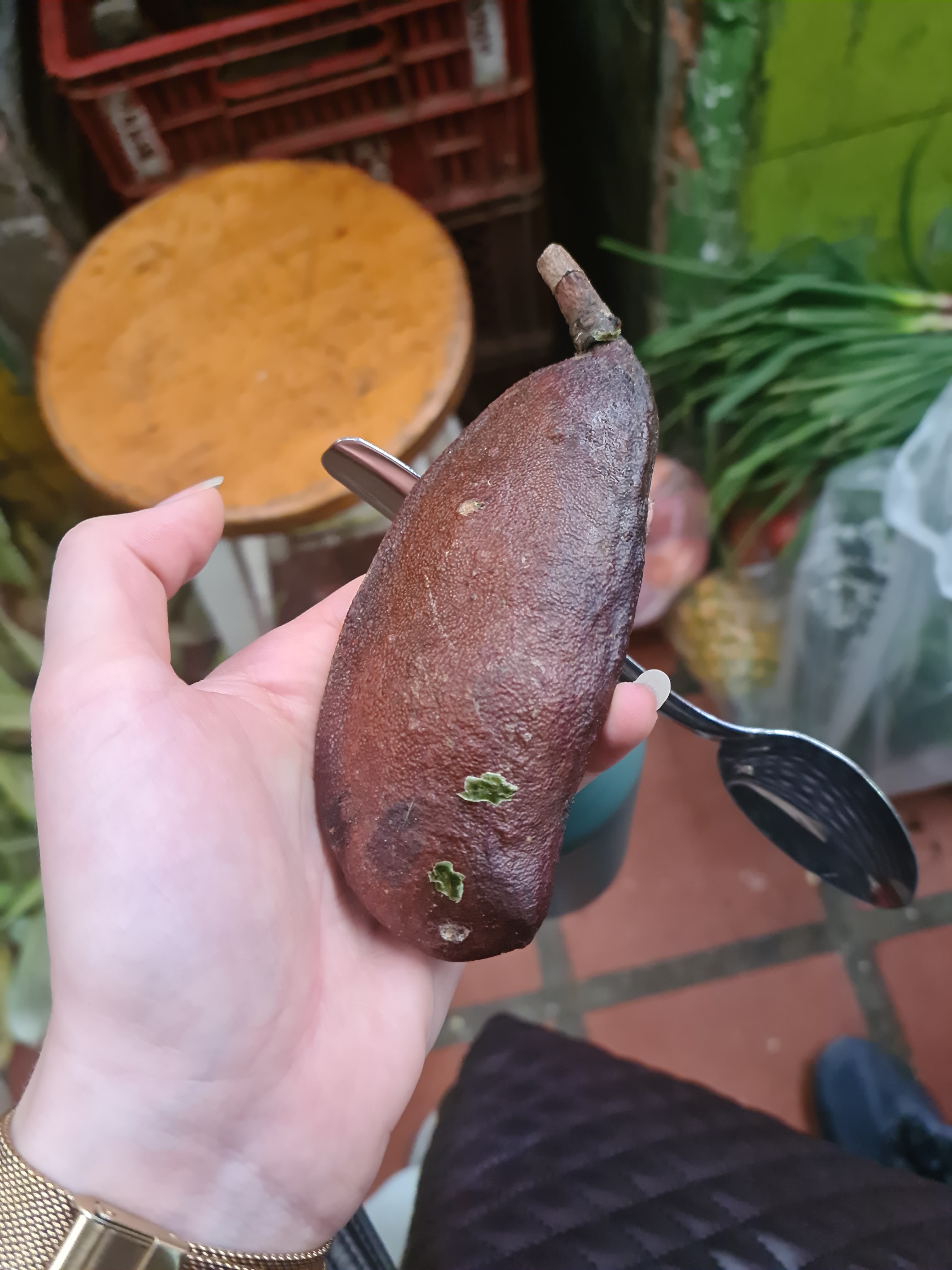
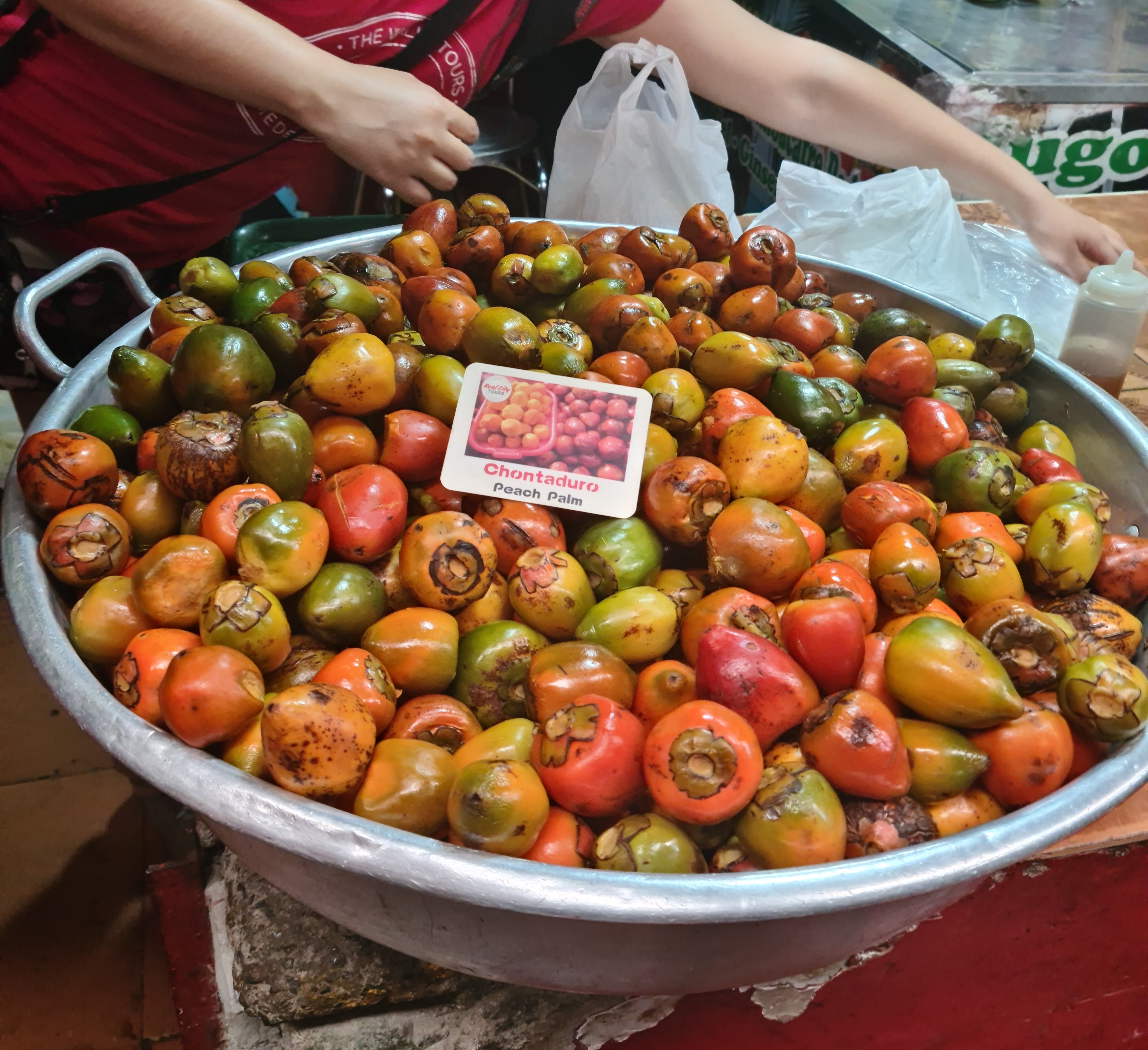
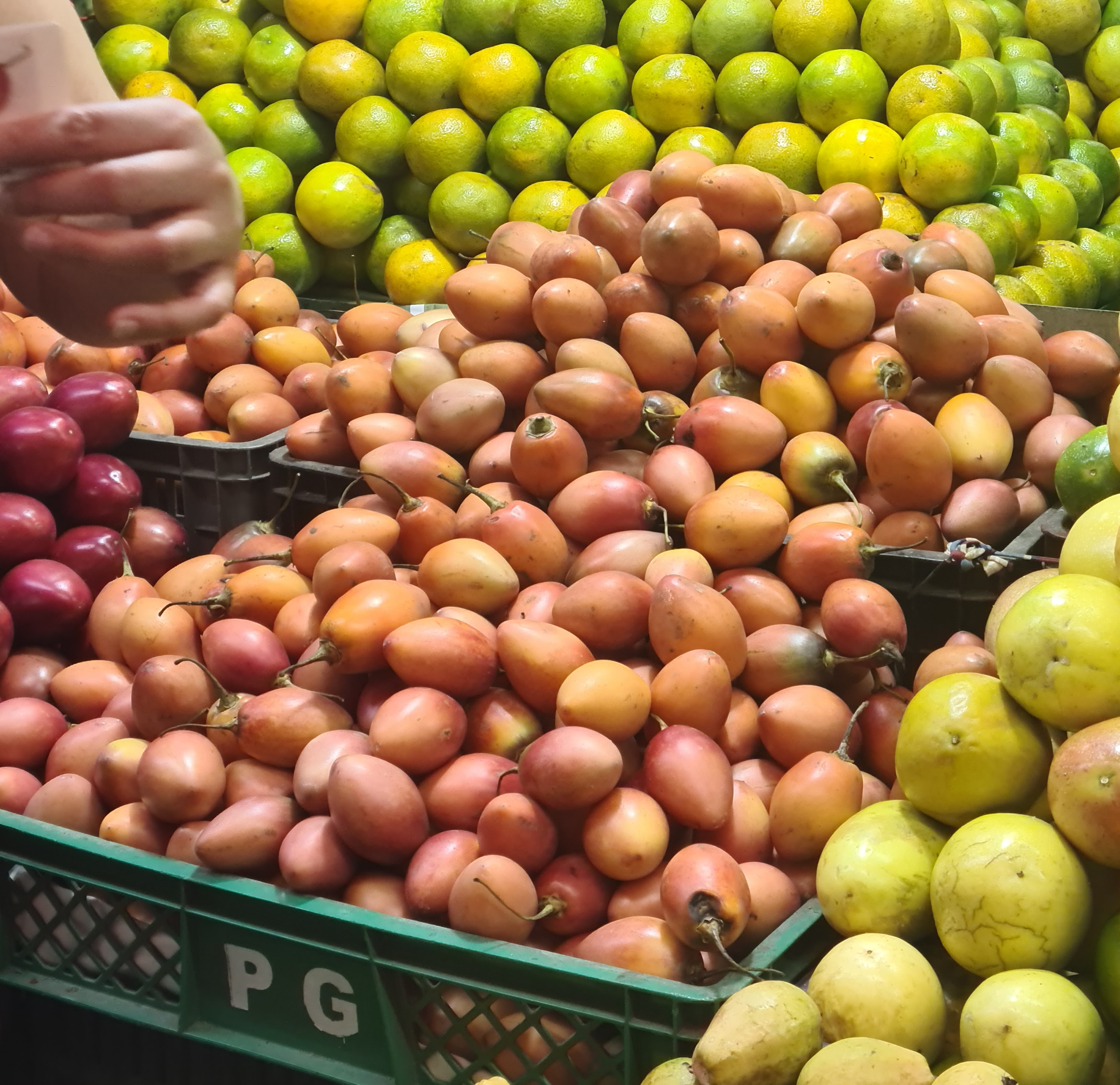
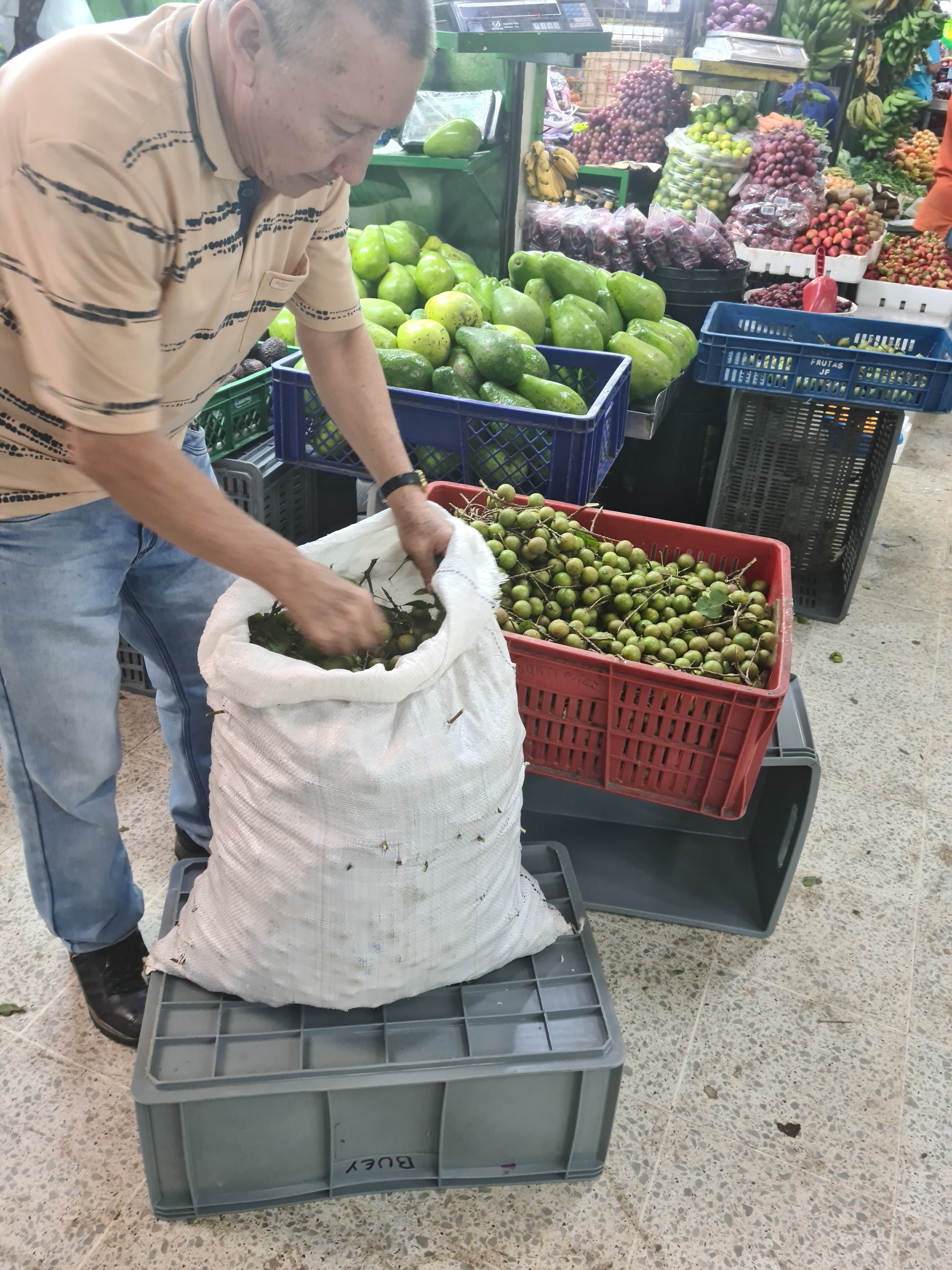
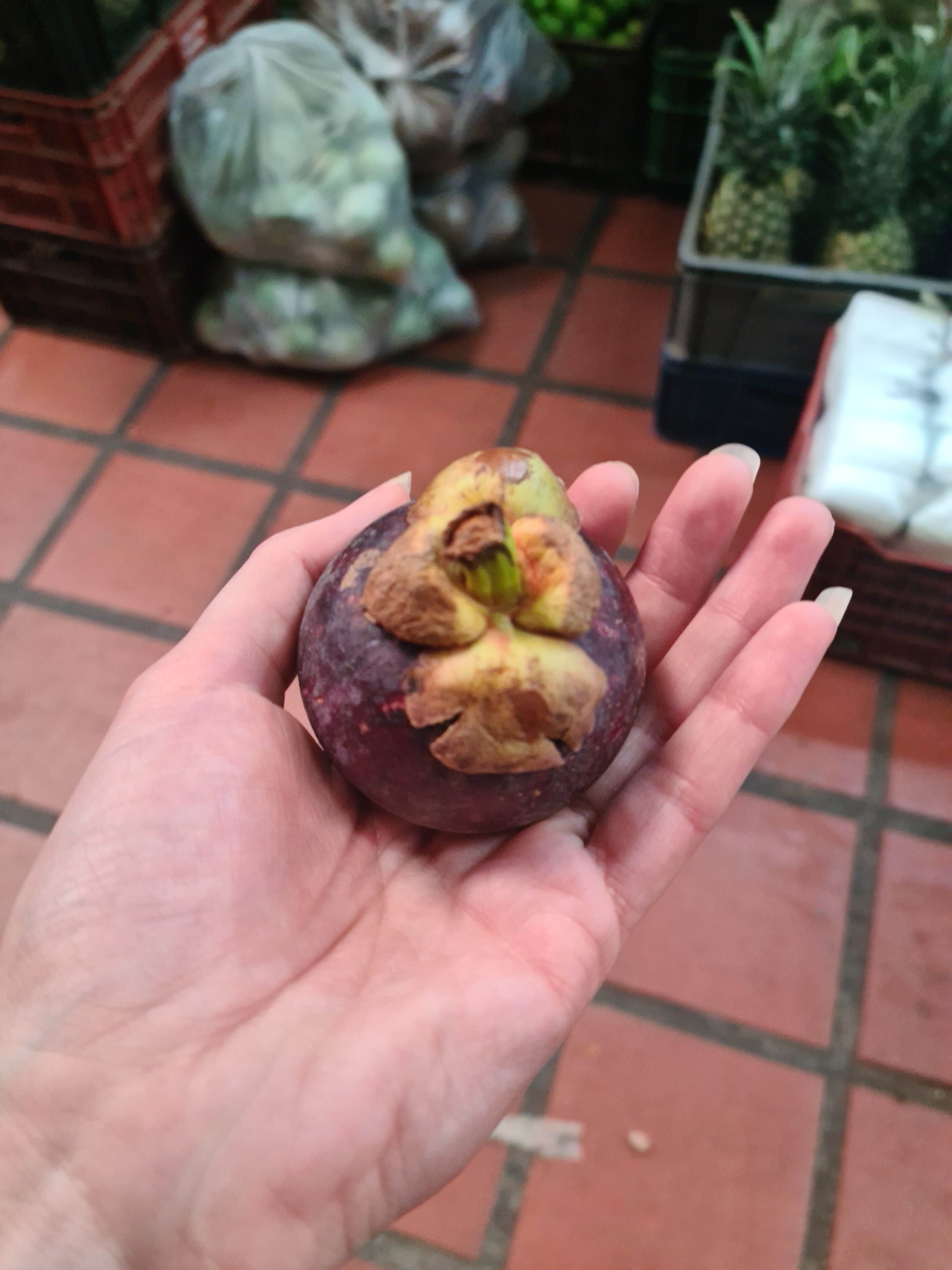
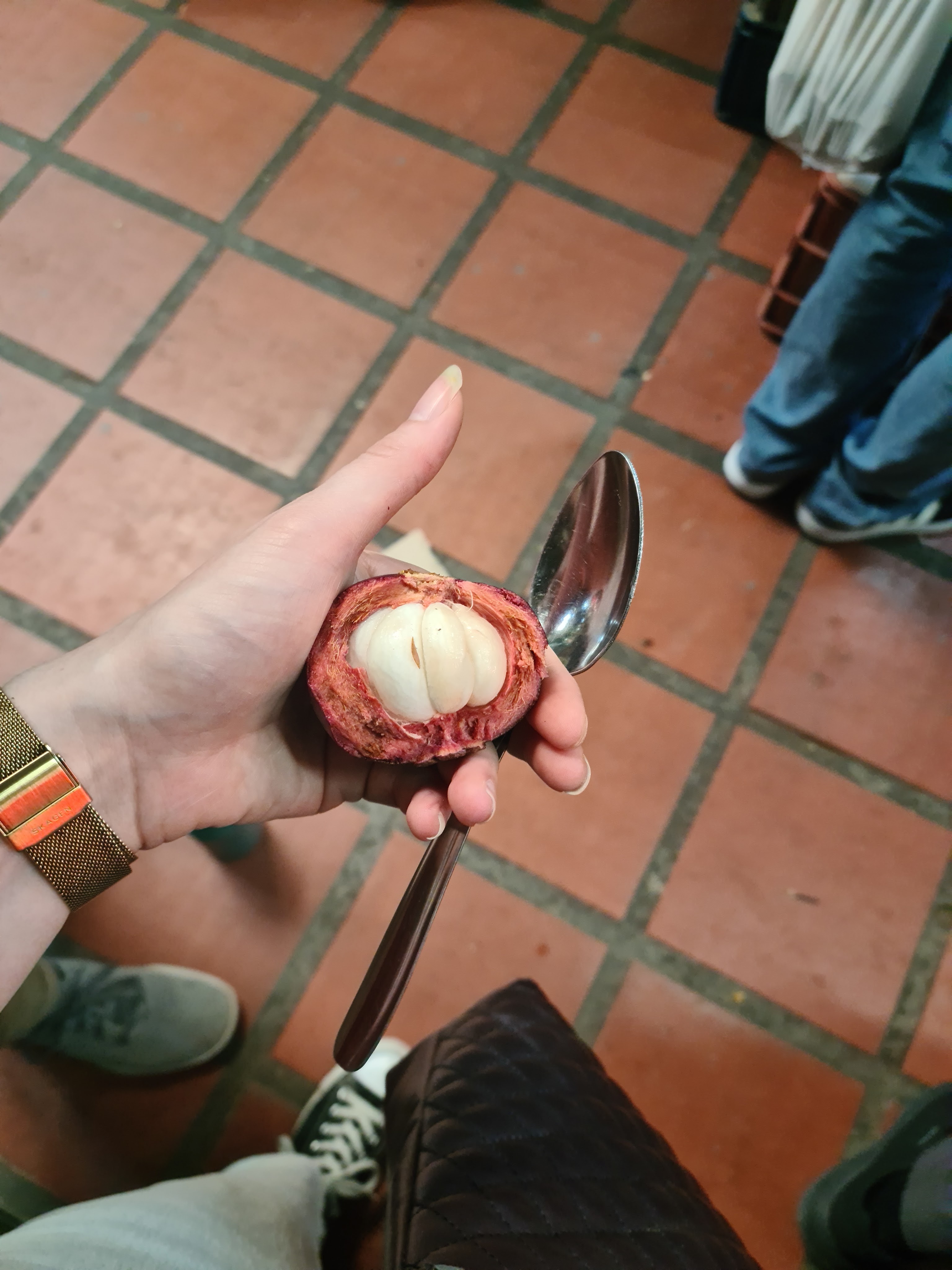
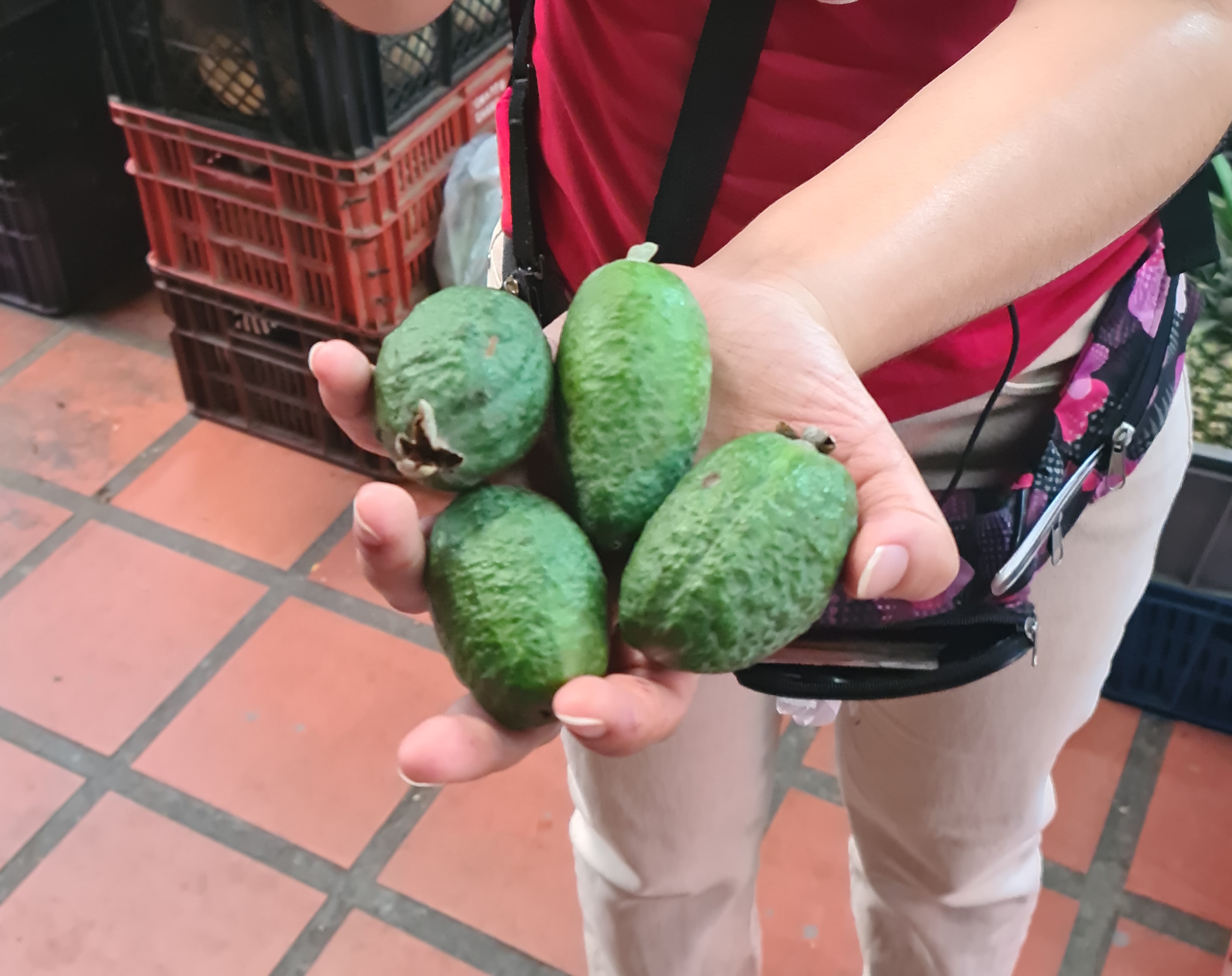
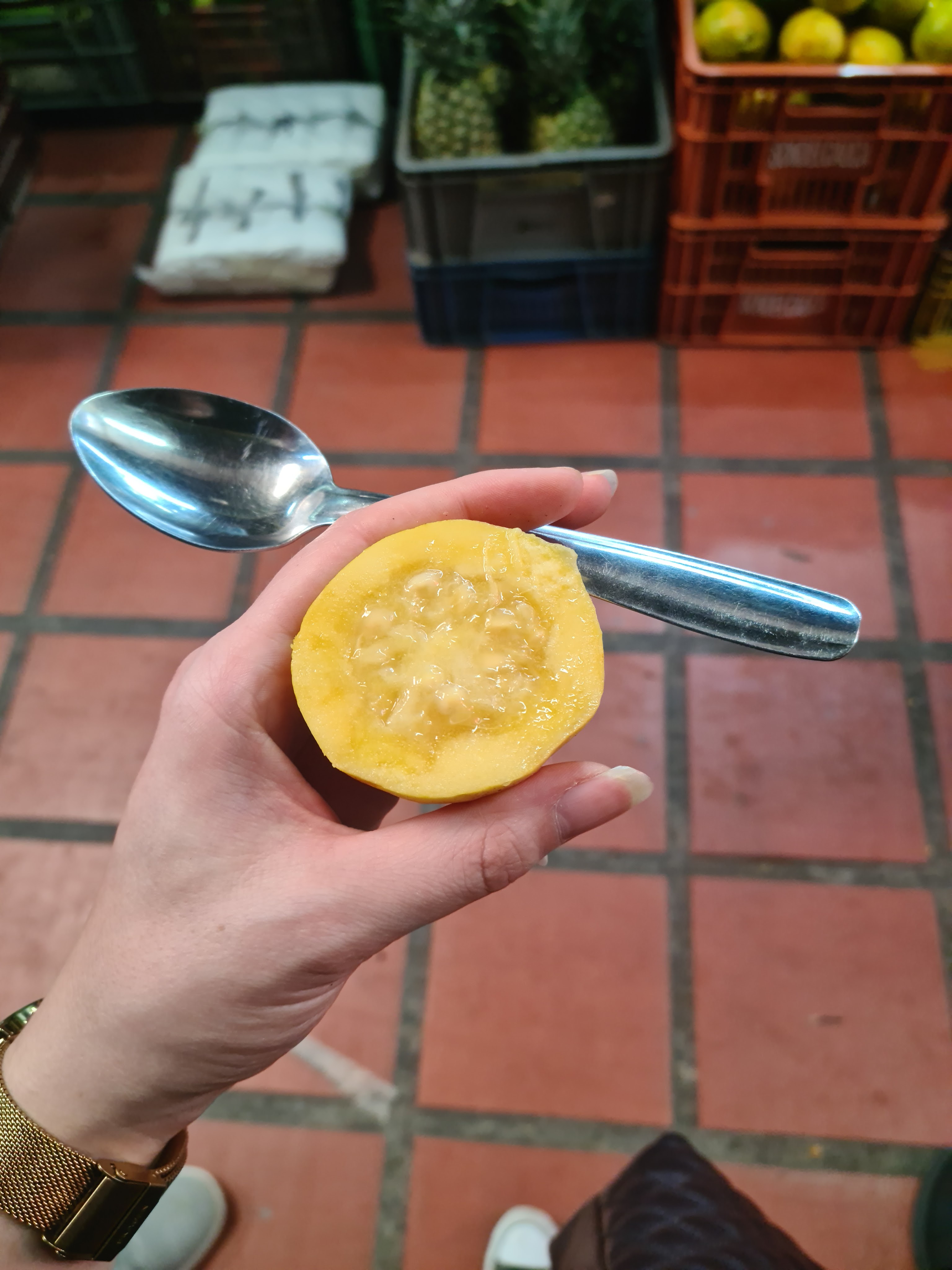
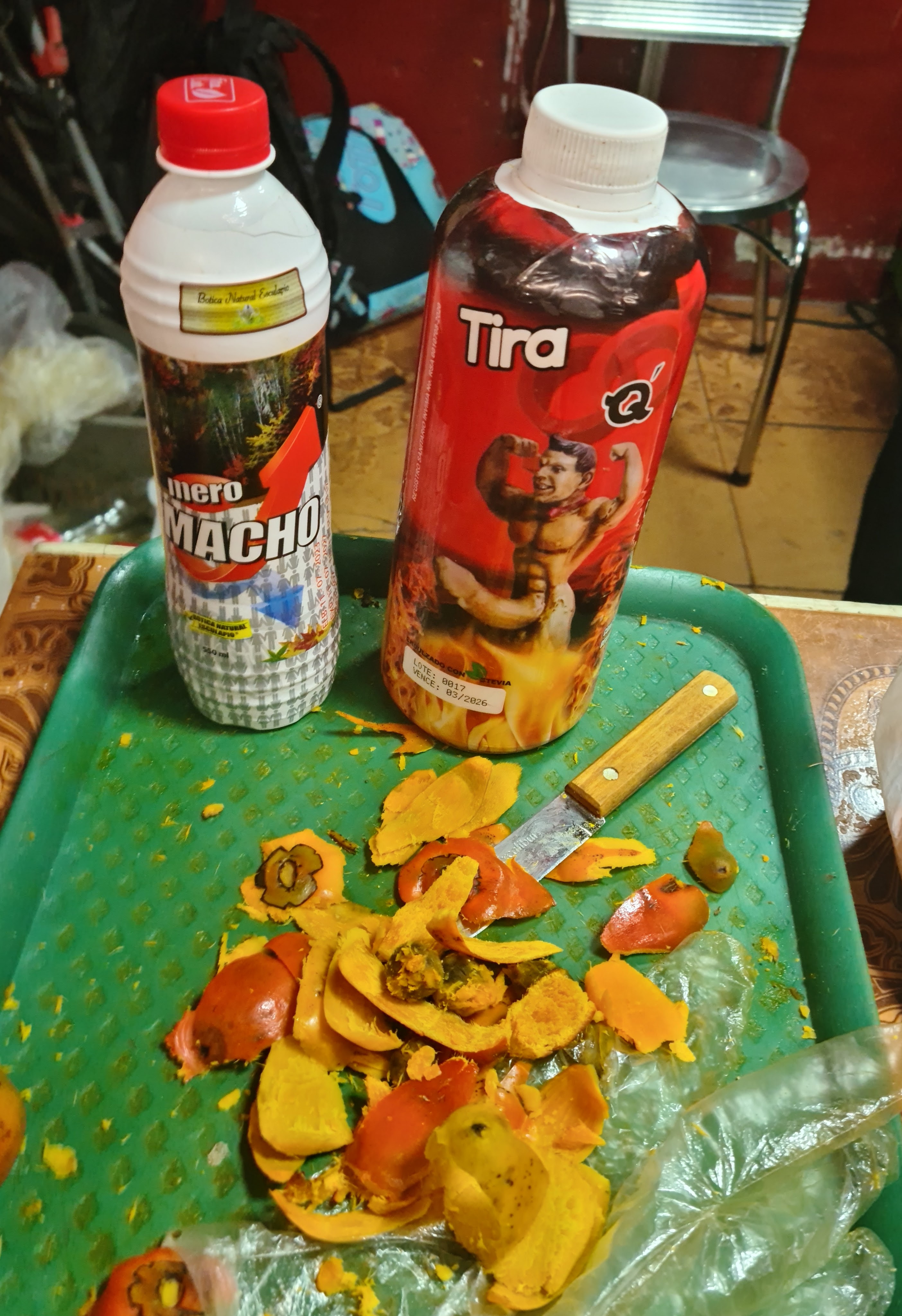
Clockwise from top: Algarroba, chontaduro, tomate de arbol, mamoncillo, mangosteen (whole and opened), guavasteen, guayaba
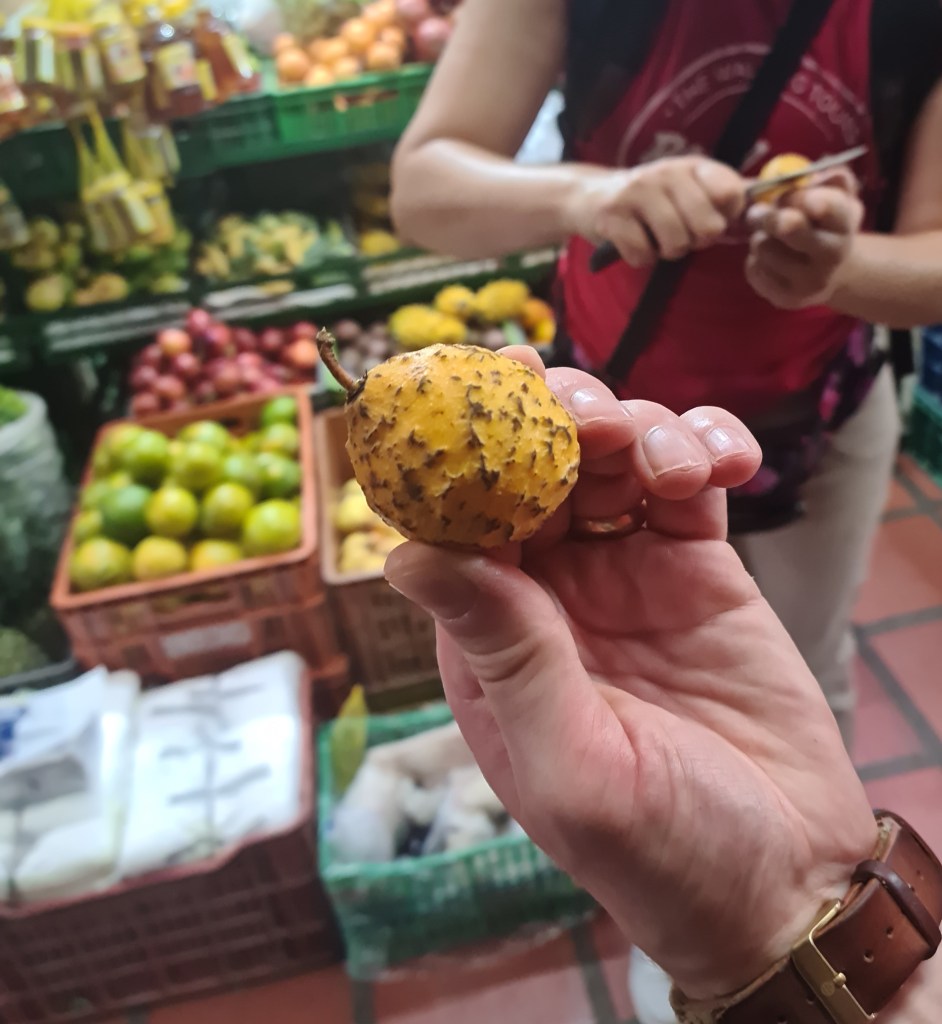
We even lucked out and were able to try achachairu, something that Diana has only seen six times in years of doing the tours.
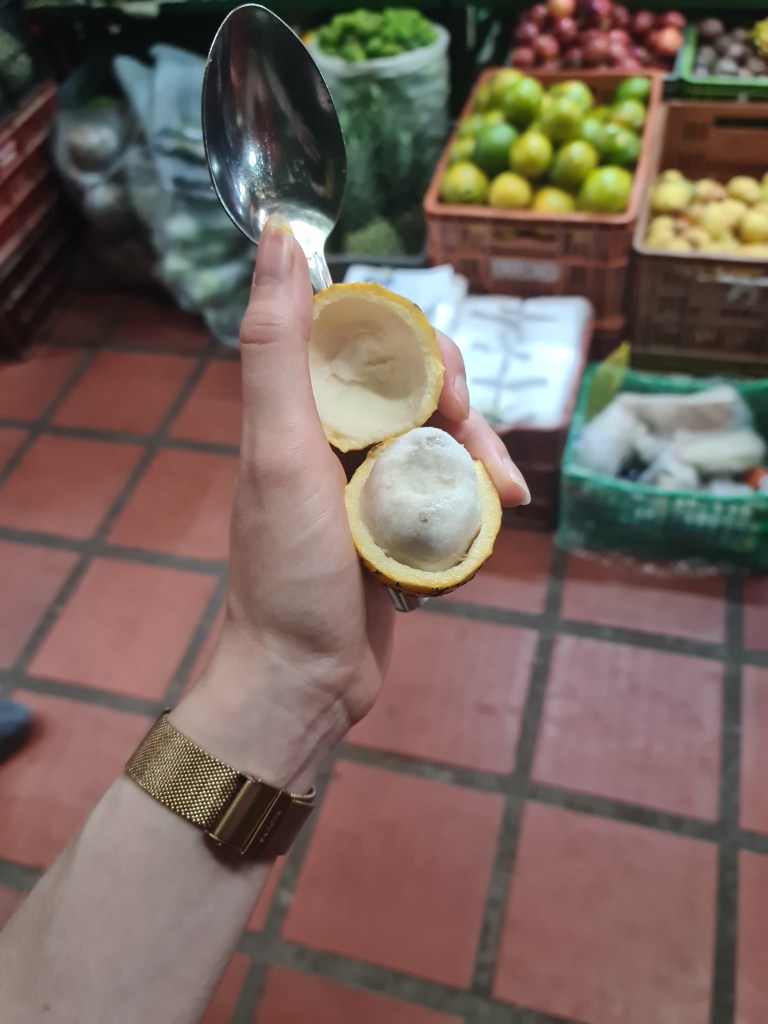
We finished up in the cafeteria area, where over fruit juices (maracuya for Ricki, tomate de arbol for me), Diana pointed out the Colombian fruit salads. Fruit, whipped cream, condensed milk, cheese…in Colombia, that counts as a healthy breakfast!
Continuing the theme of Colombian produce, our highlight of the month was a trip just outside the city. We were heading behind the scenes on production of one of Colombia’s most famous products, the one beginning with a C…coffee, of course!
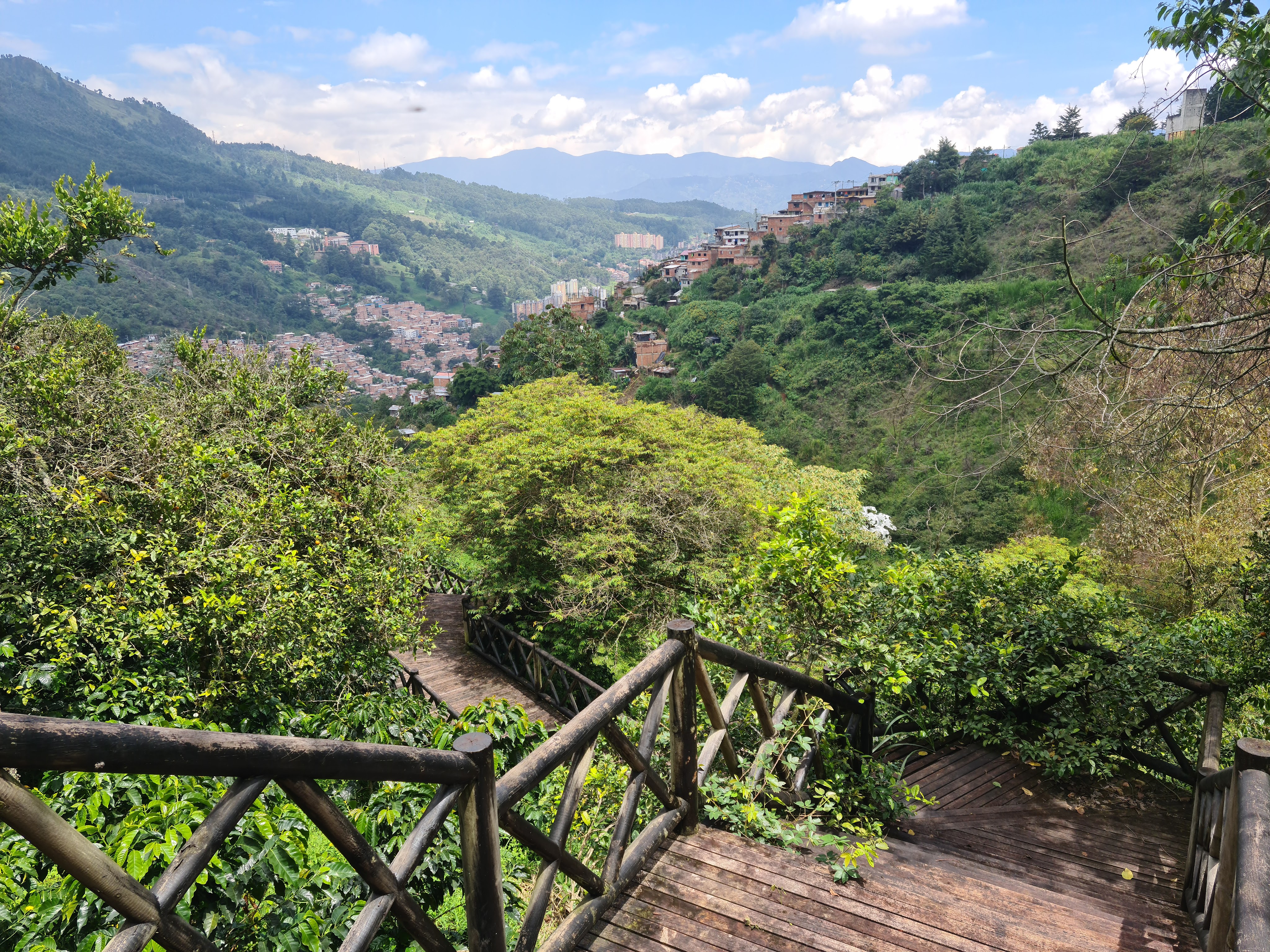
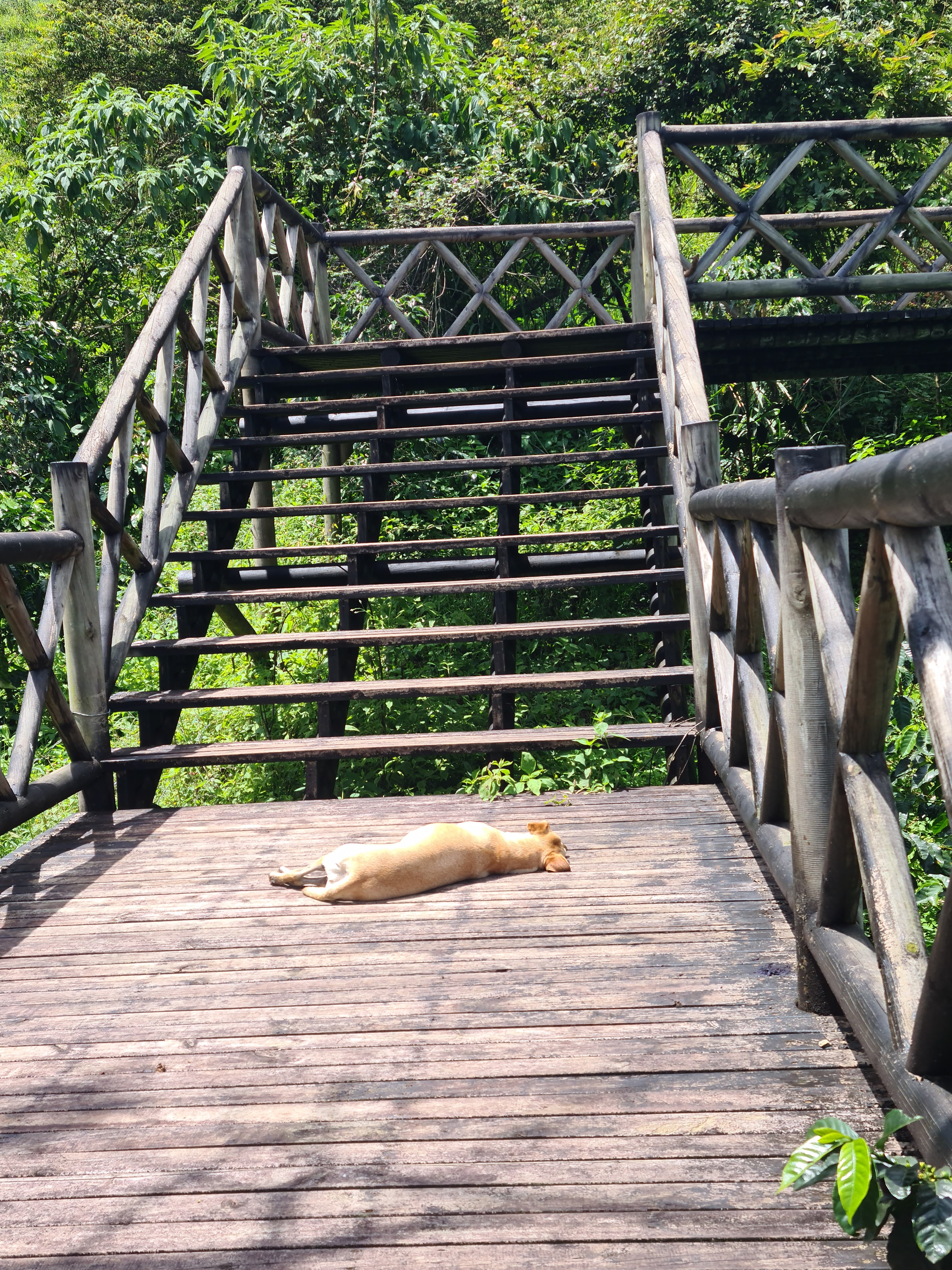
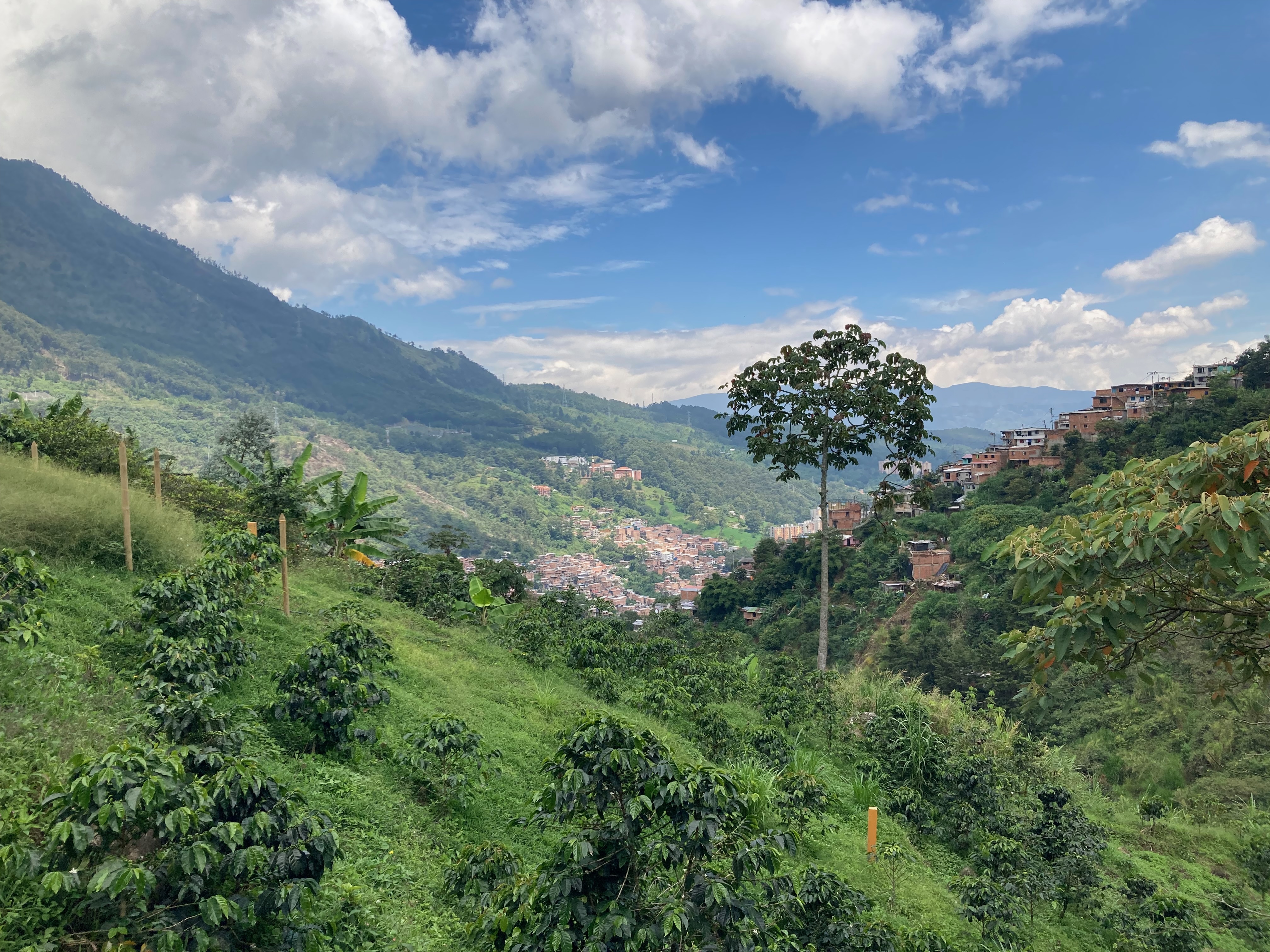
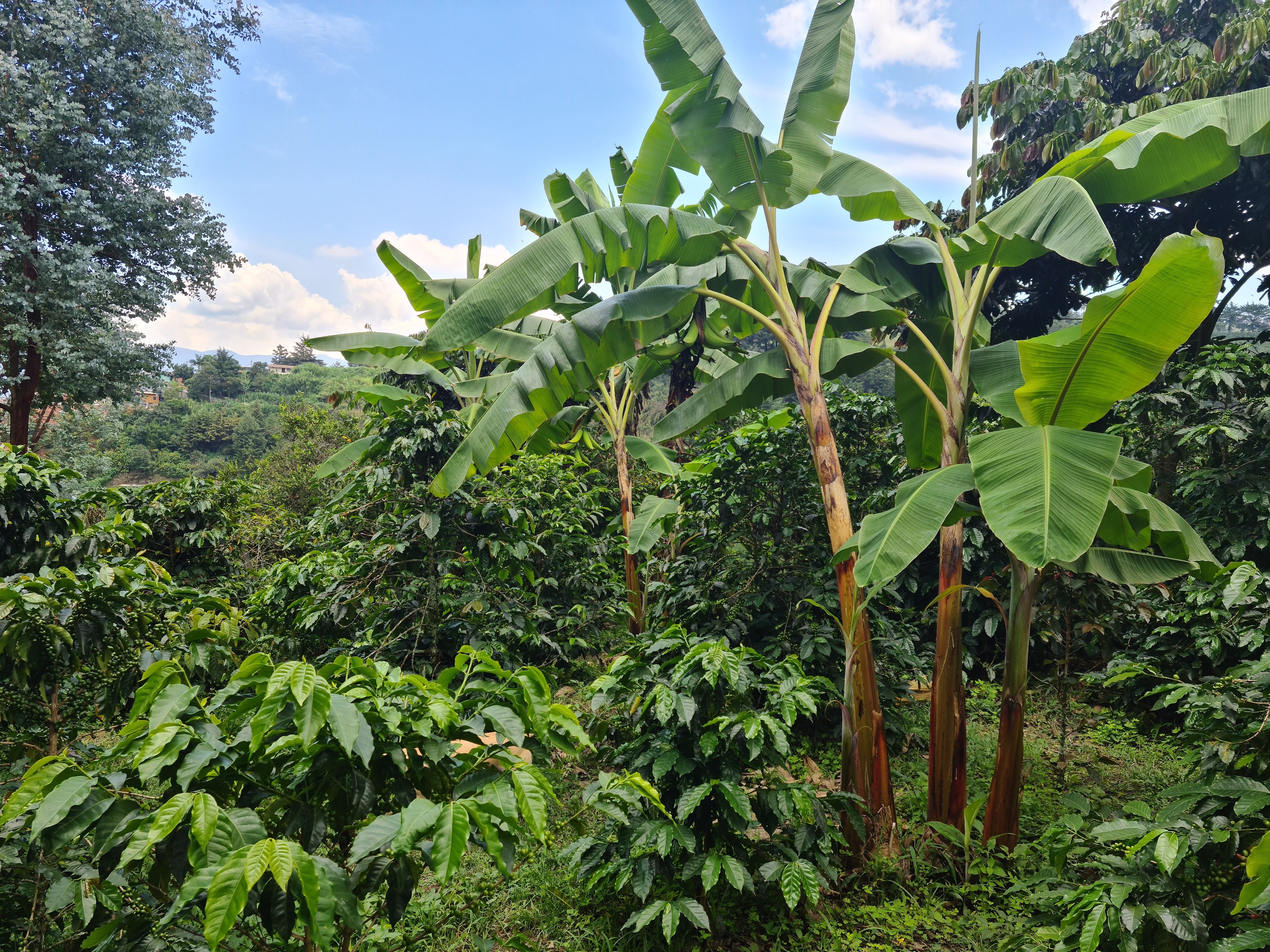
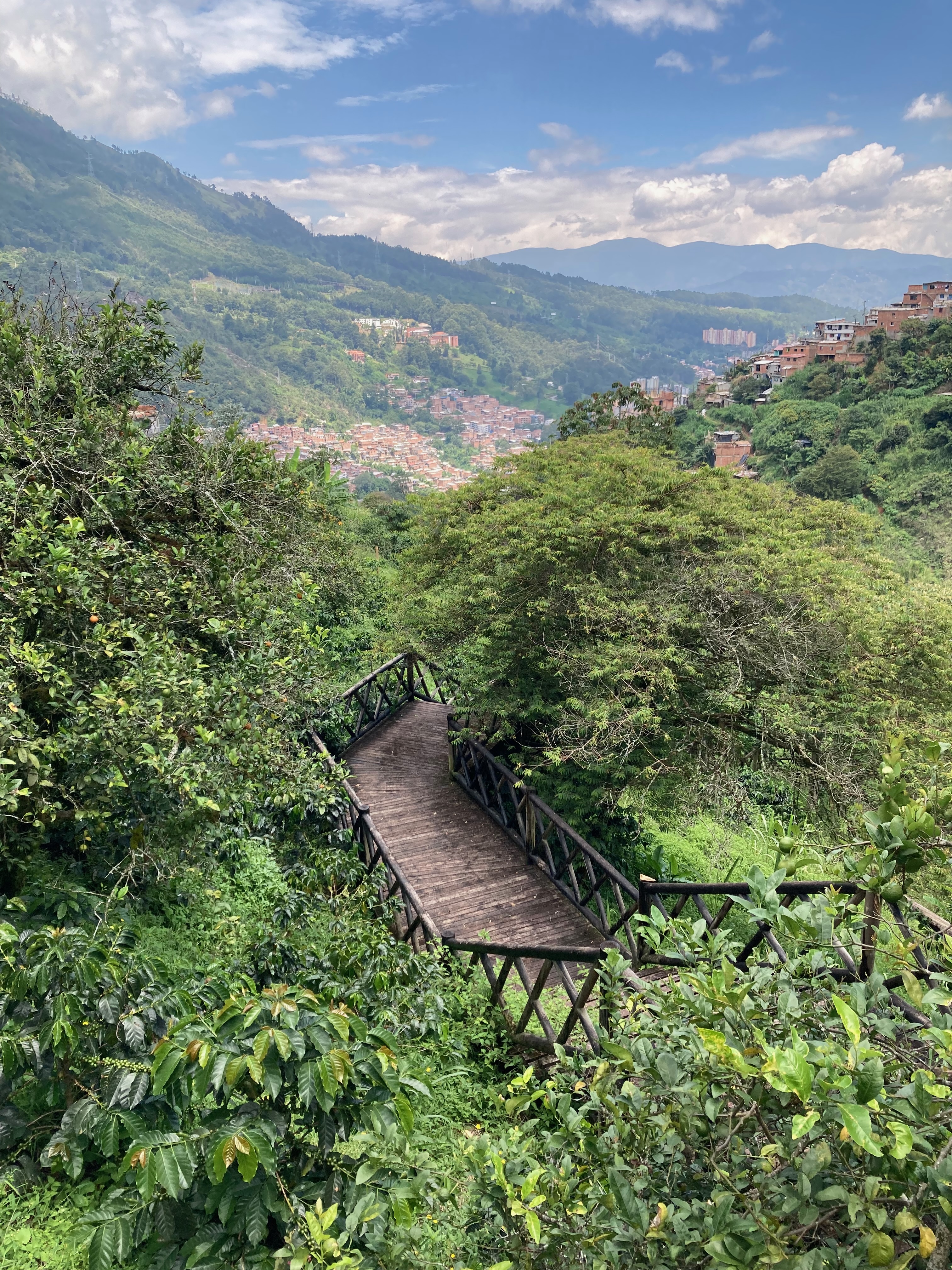
Seemingly we were the first Scots to visit Laura’s finca, and I hope that we will be the first of many. A group who were meant to join us cancelled at the last minute, and so we ended up with a private tour. We weren’t there just to look around the farm though. After getting geared up in some traditional farming attire, we actually got to take part in the process ourselves.
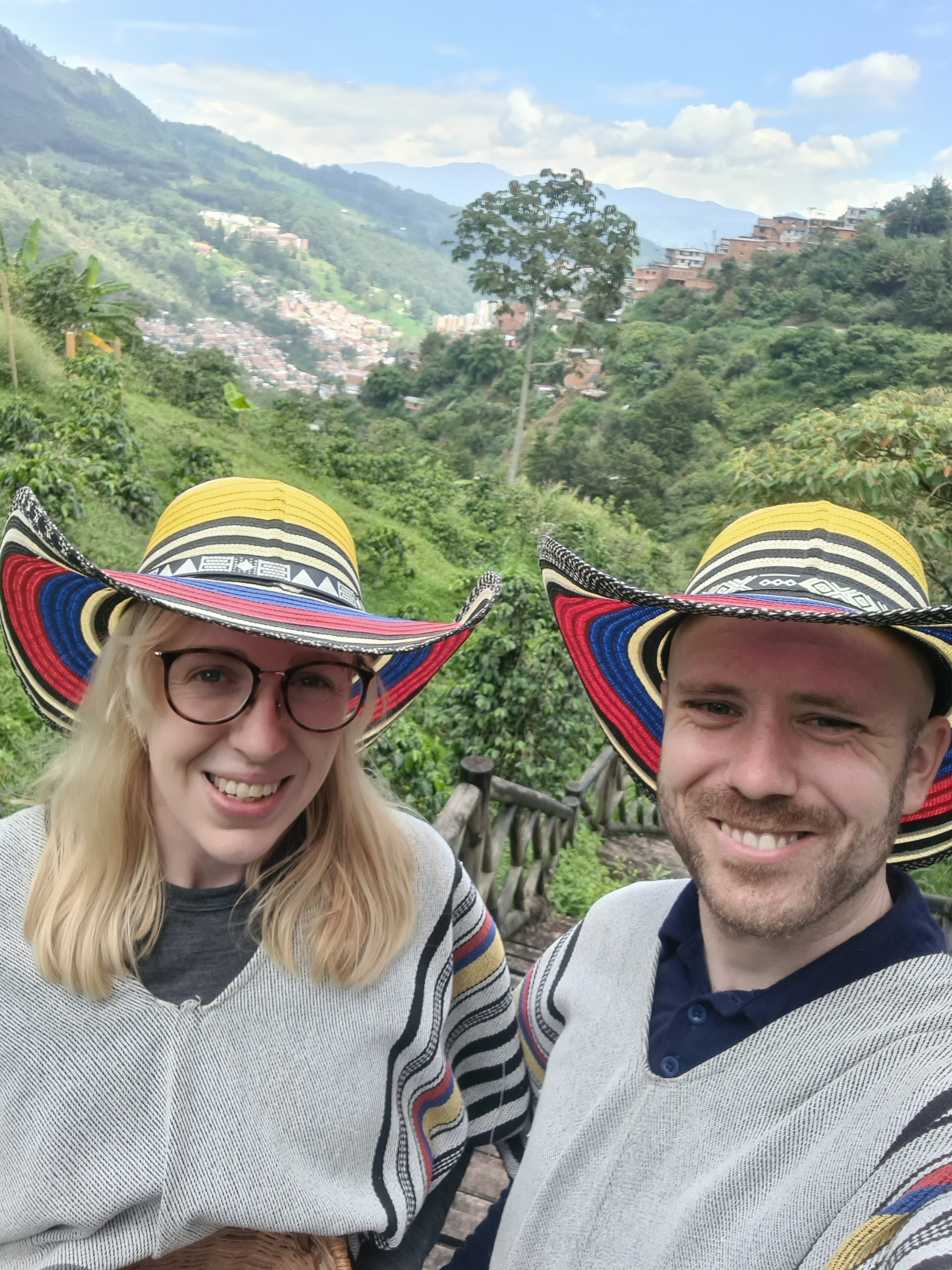
We planted some coffee beans, before harvesting from the established crop. This was a joy, getting to wander through the beautiful plantation and I possibly could have kept at it for hours. If I never return from this sabbatical year, you know where to find me!
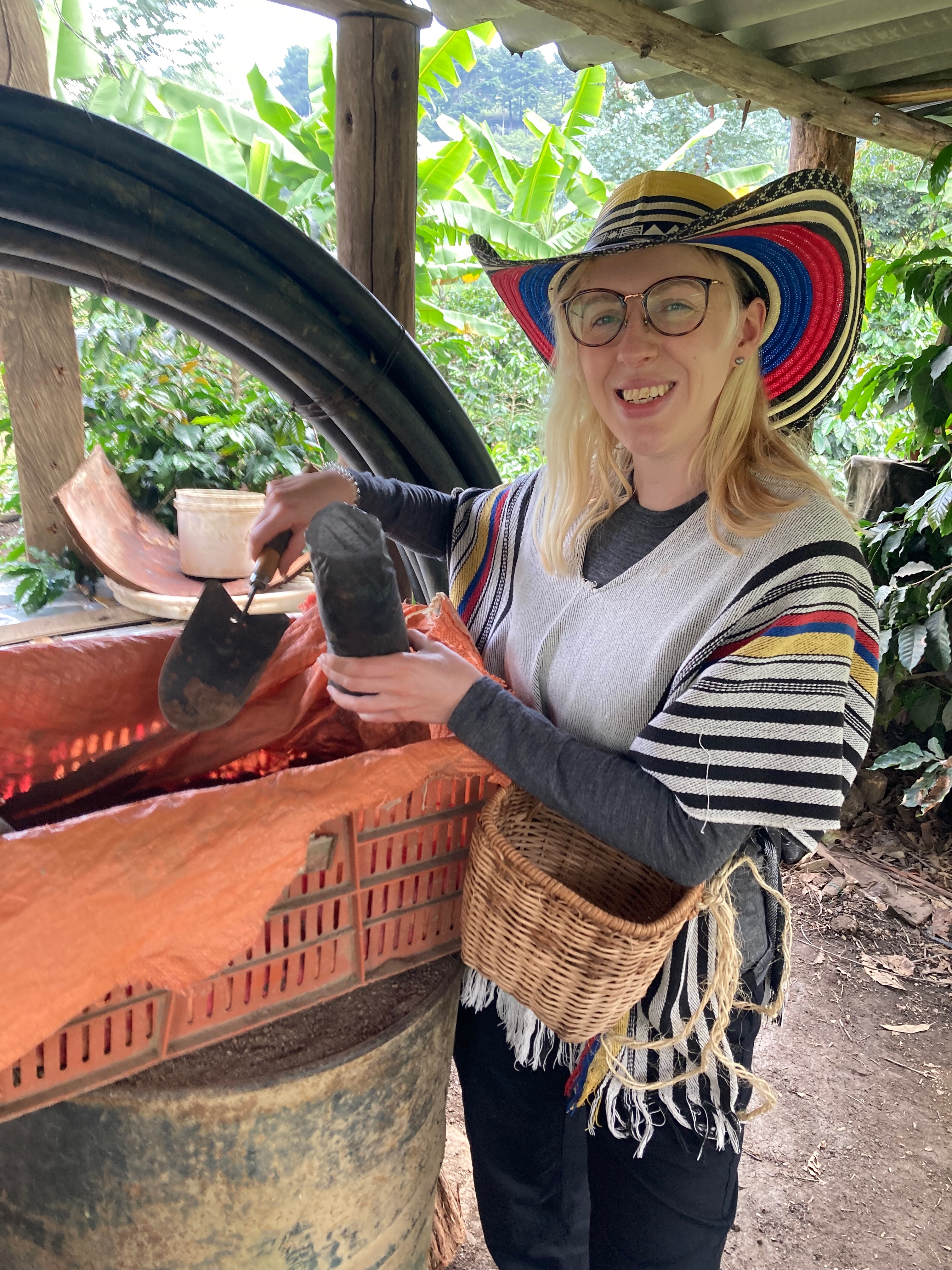
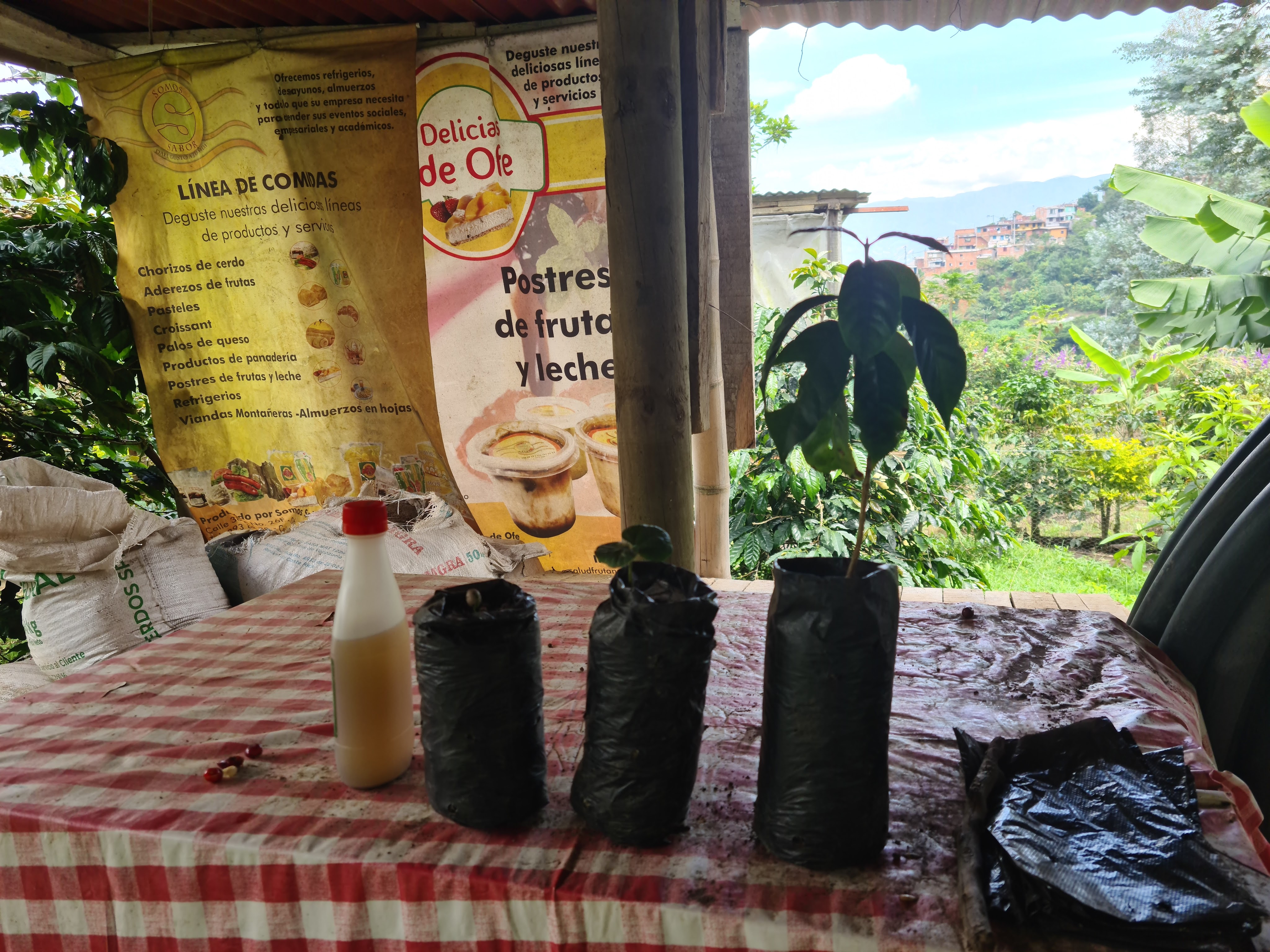
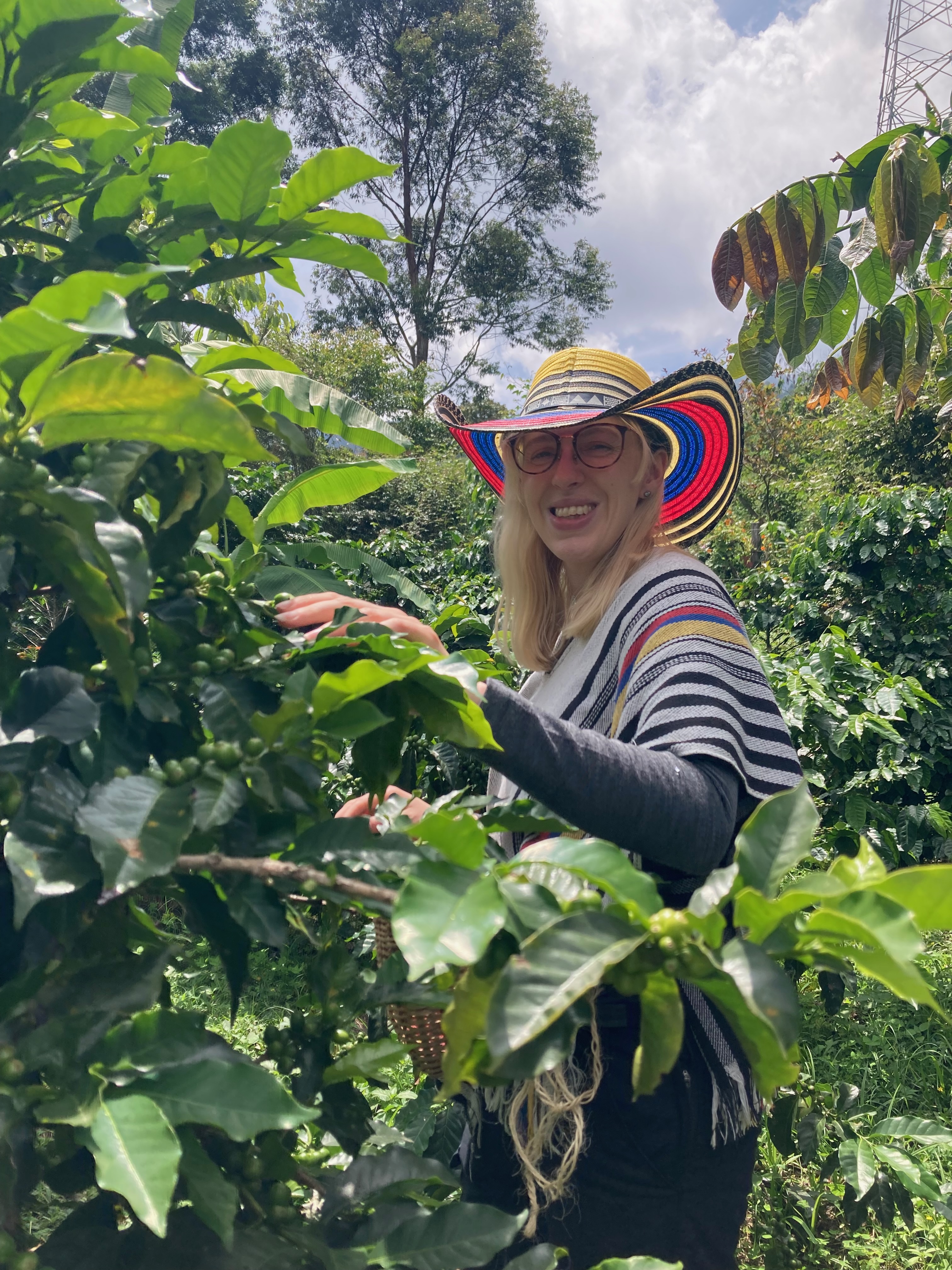
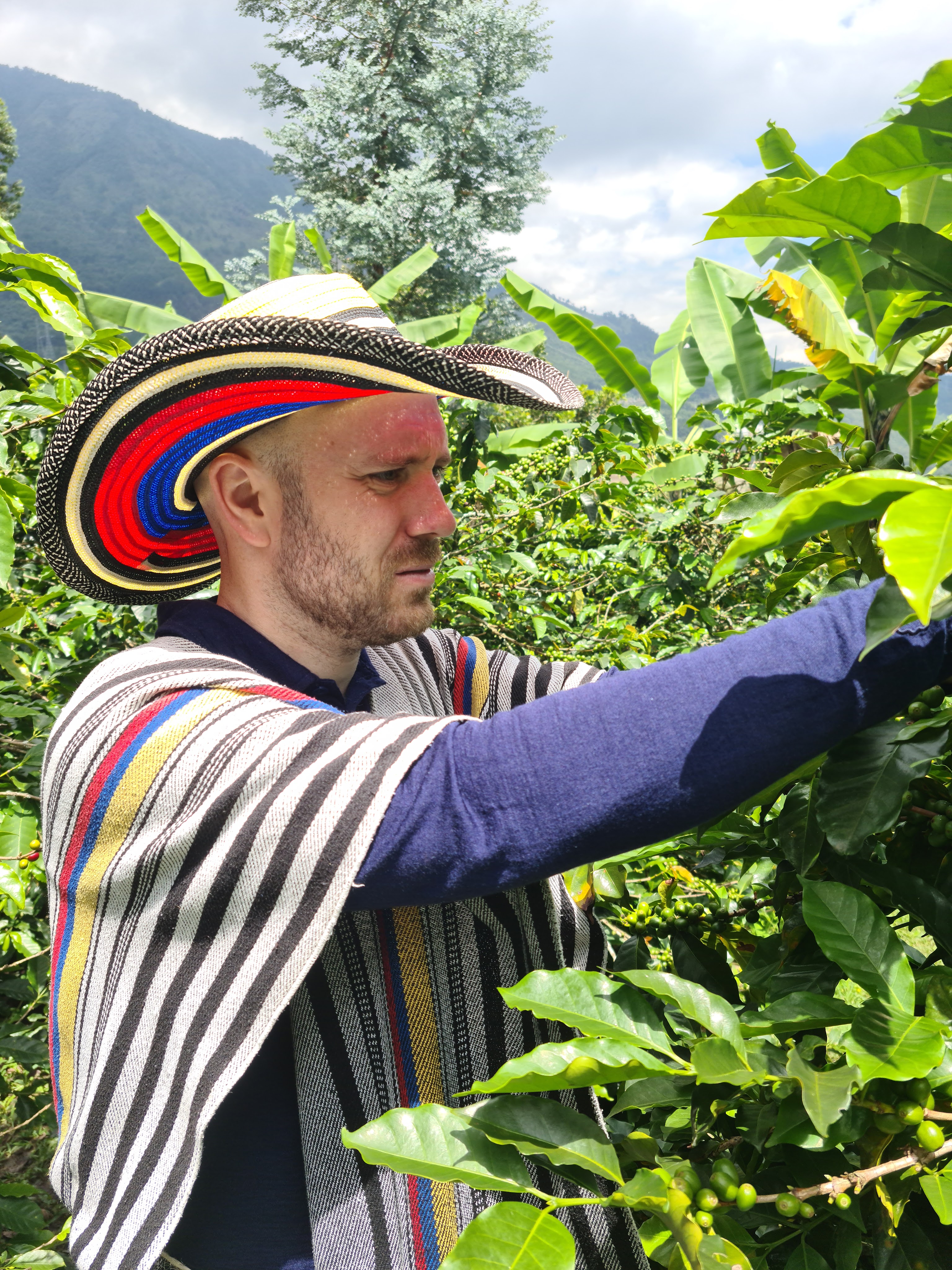
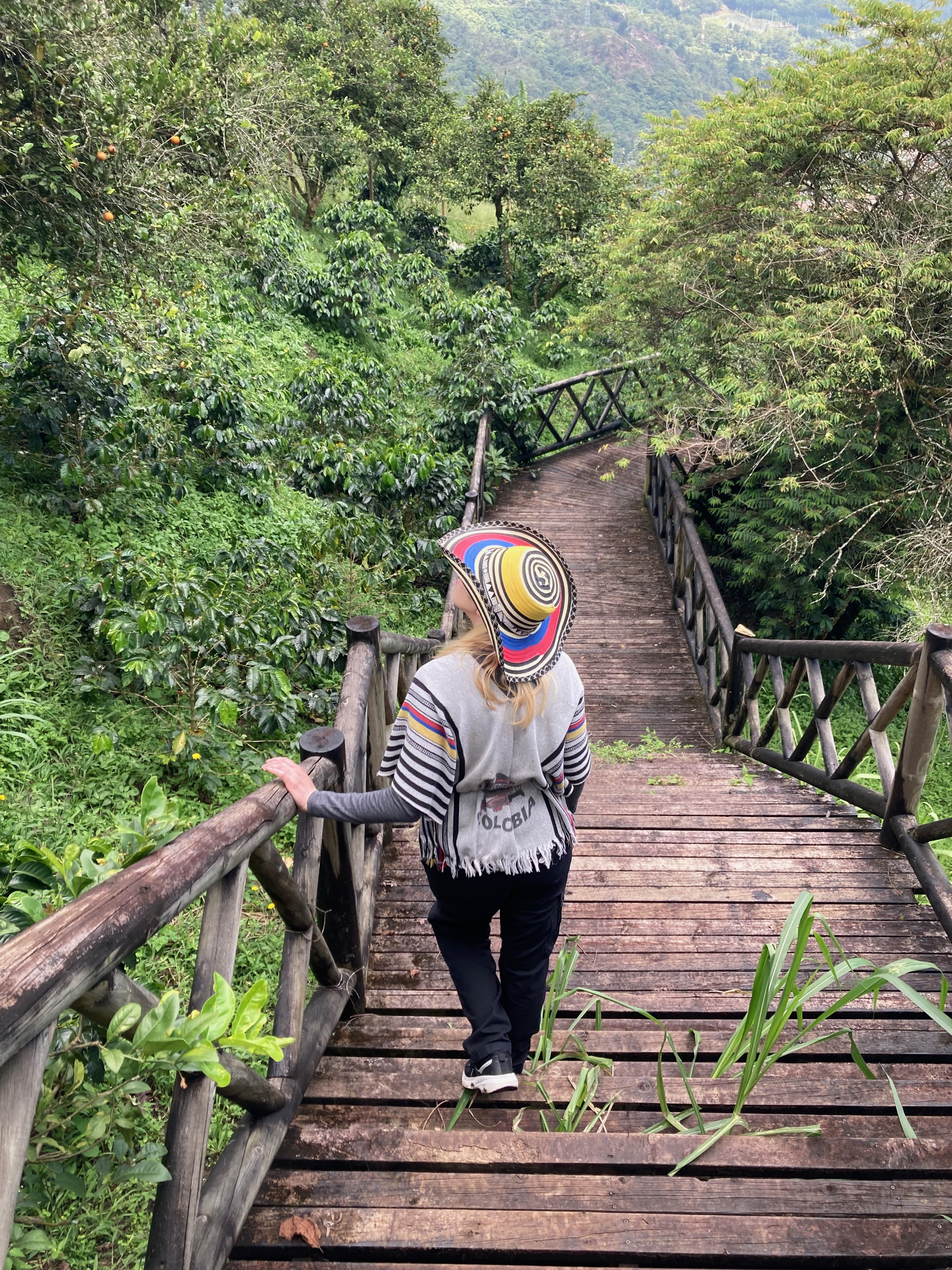
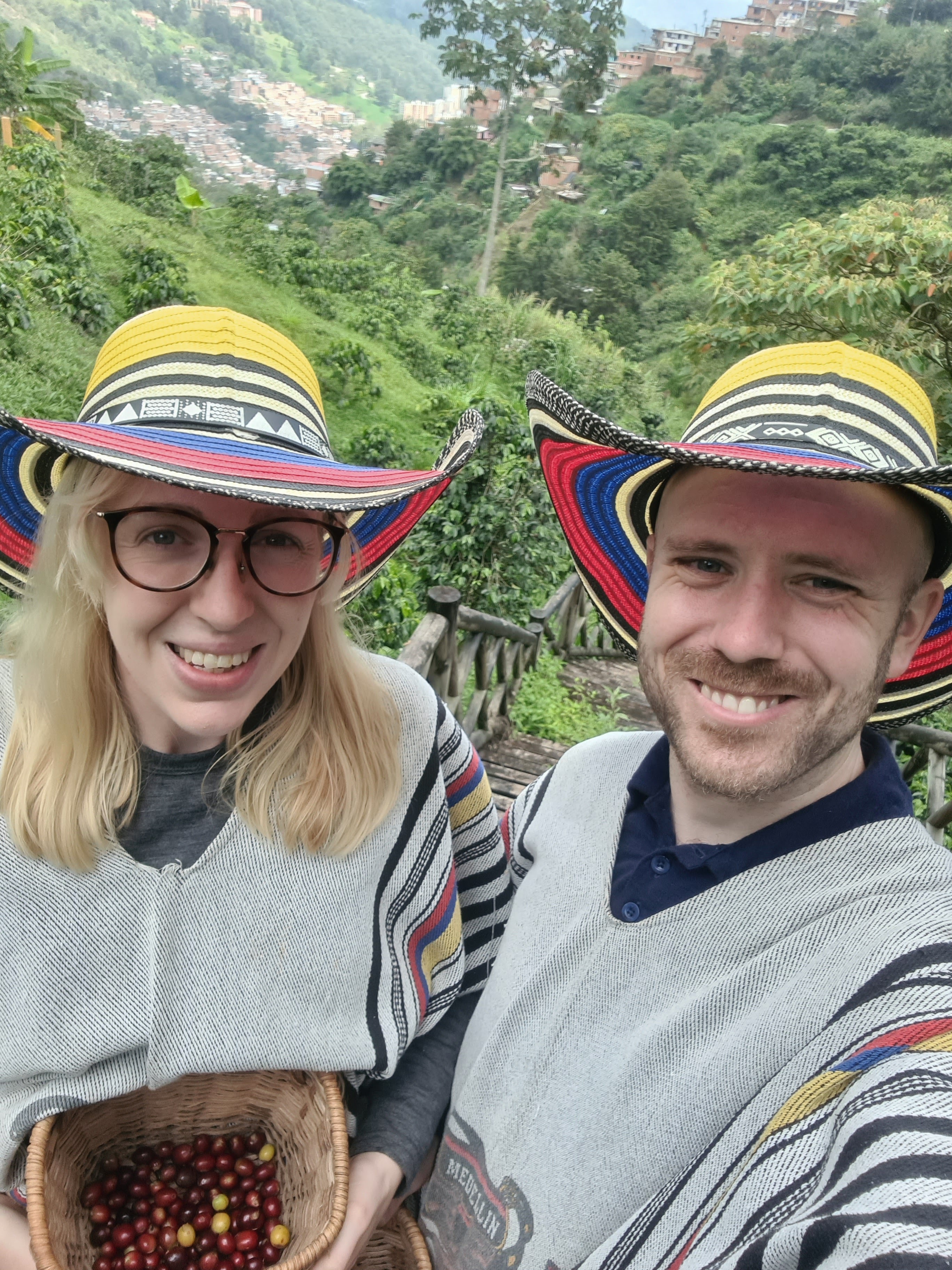
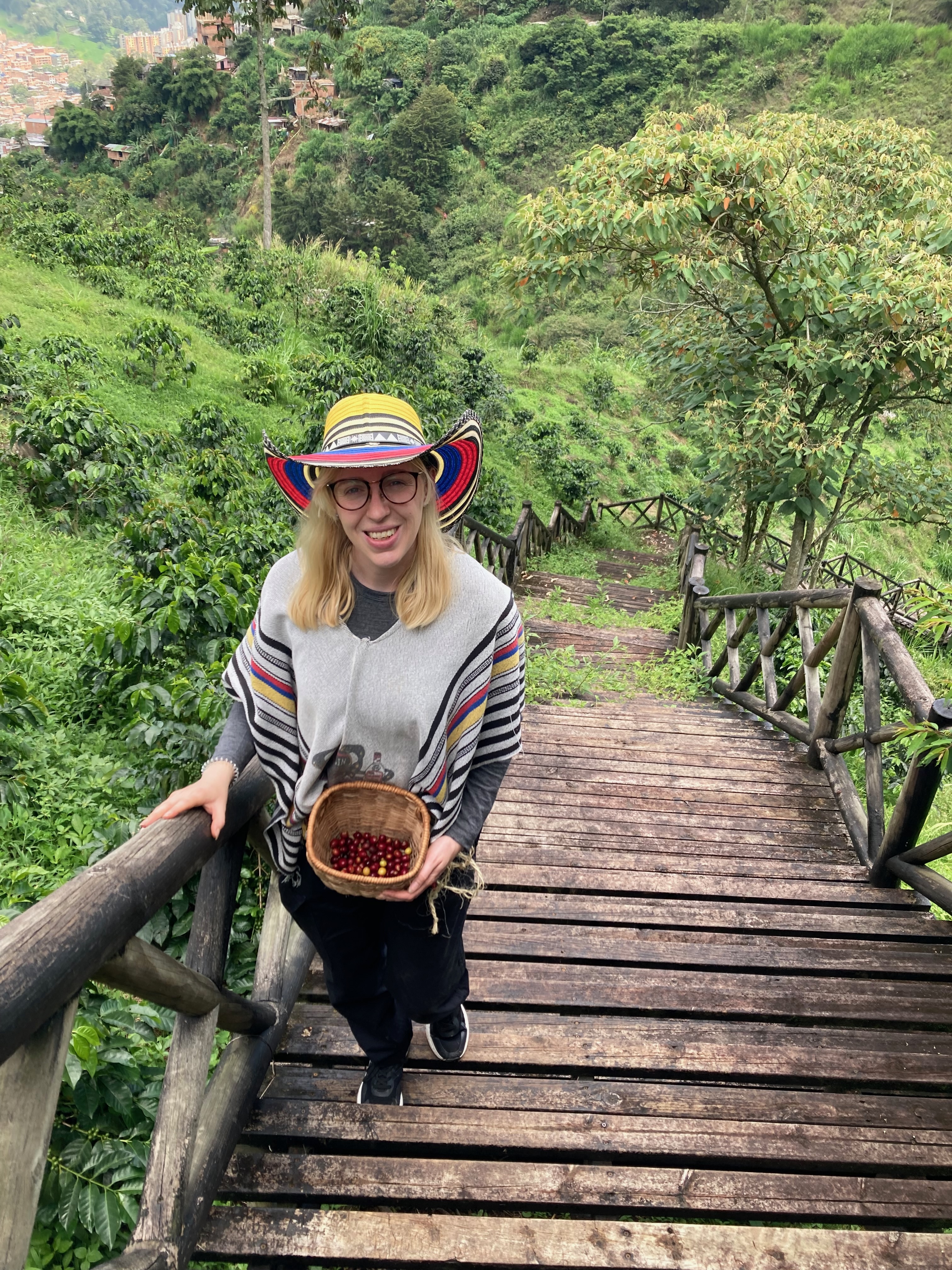
Planting, picking and posing. Who knows, maybe in the future you’ll have a cup of coffee hand grown or selected by us!
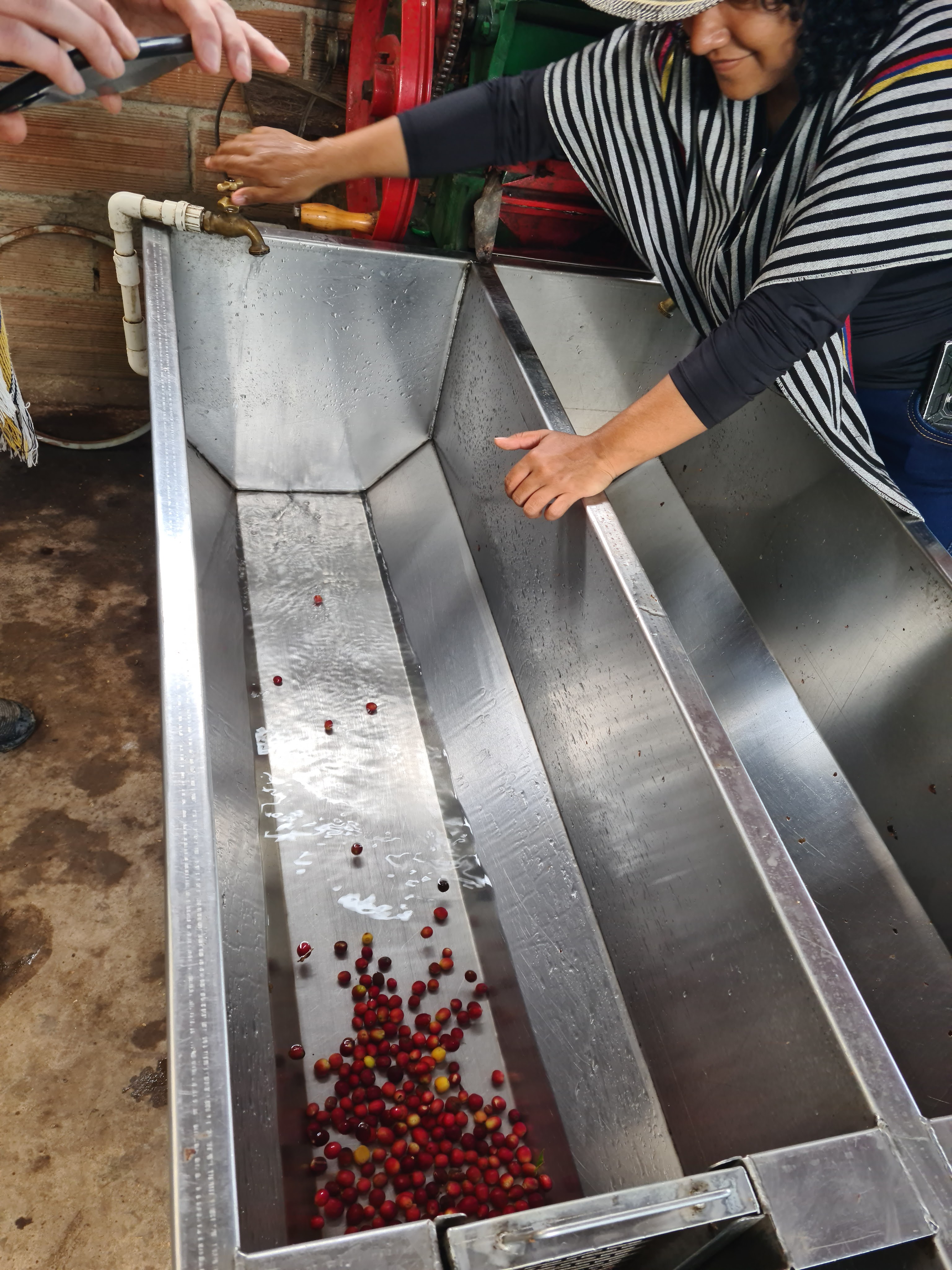
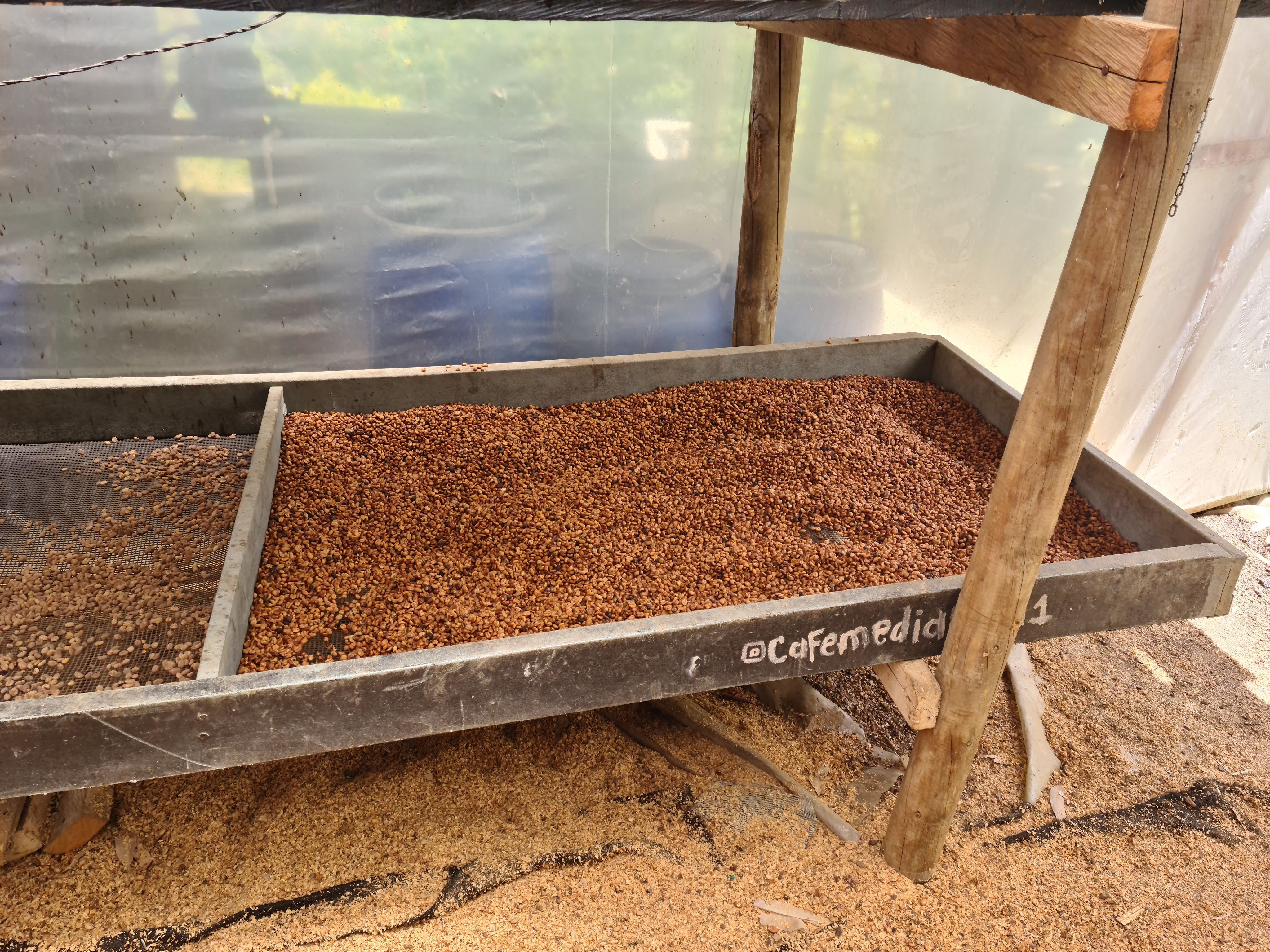
For once, I was better than Ricki at an activity, with my eye for detail resulting in a riper batch of beans. These were then sorted by eye and with a float test, and taken to the drying room. Funnily this area, complete with an aspect of fermentation, had a similar aroma to a whisky distillery. Finally we could see the coffee beans go through a roaster.
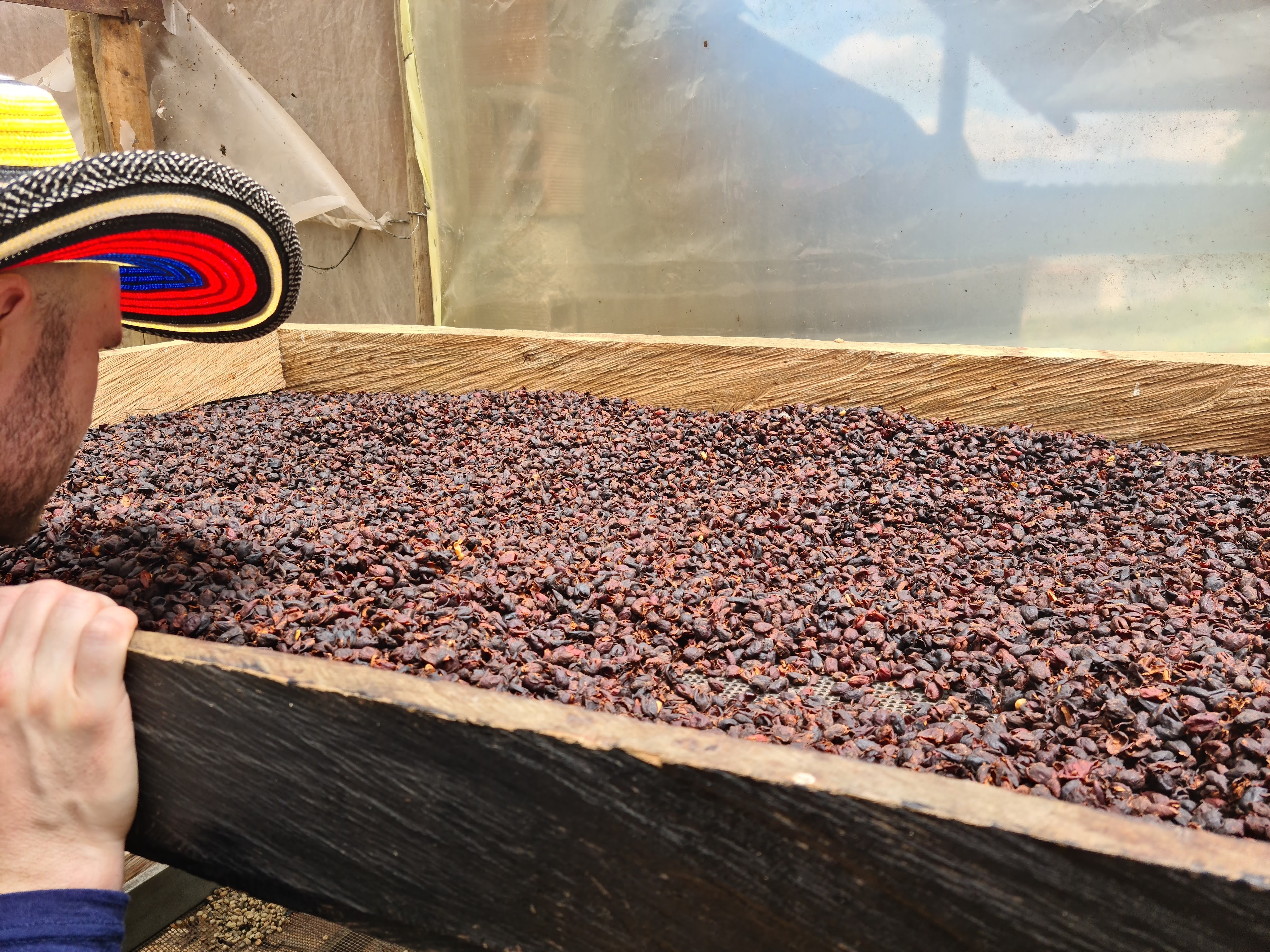
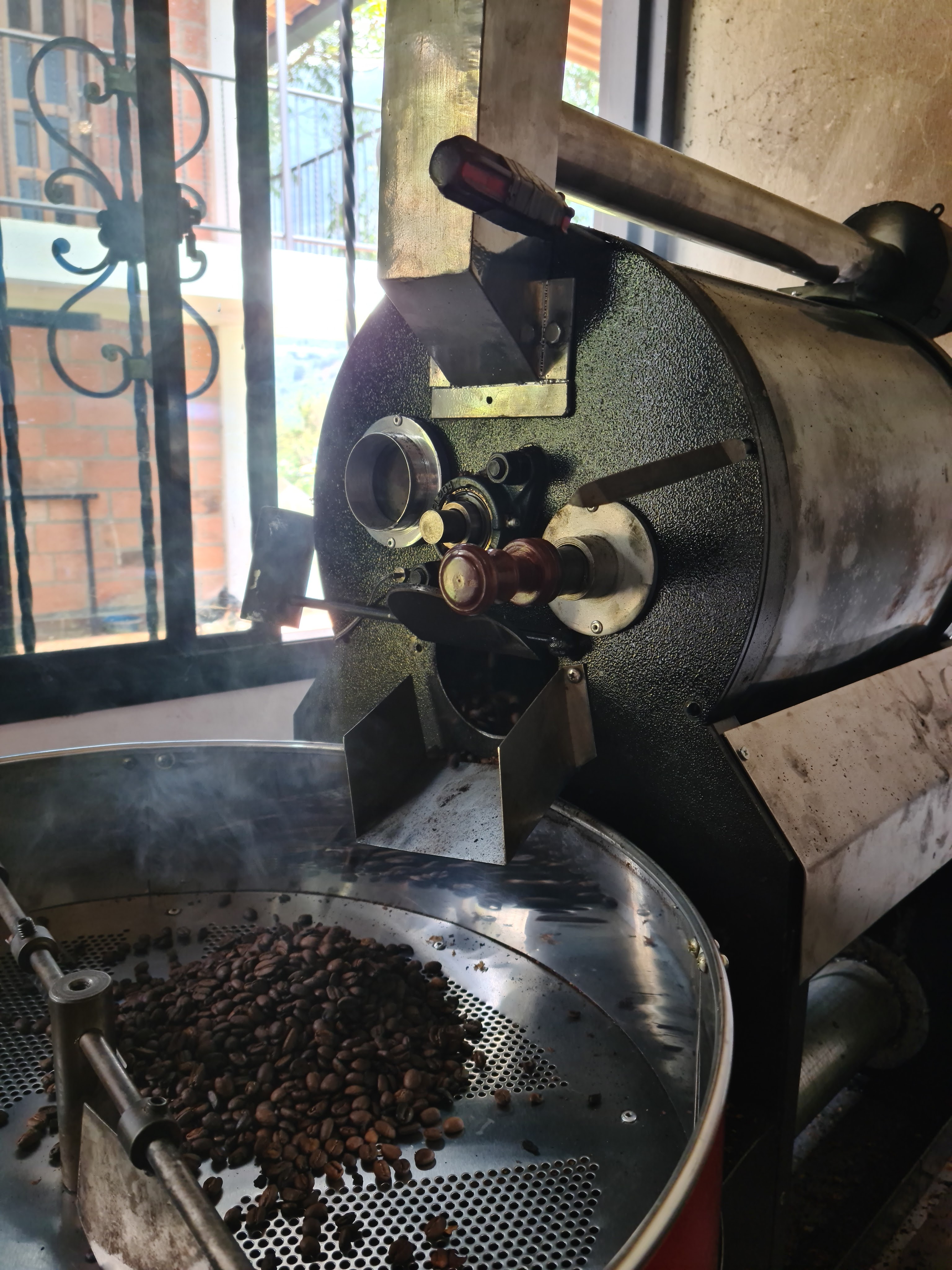
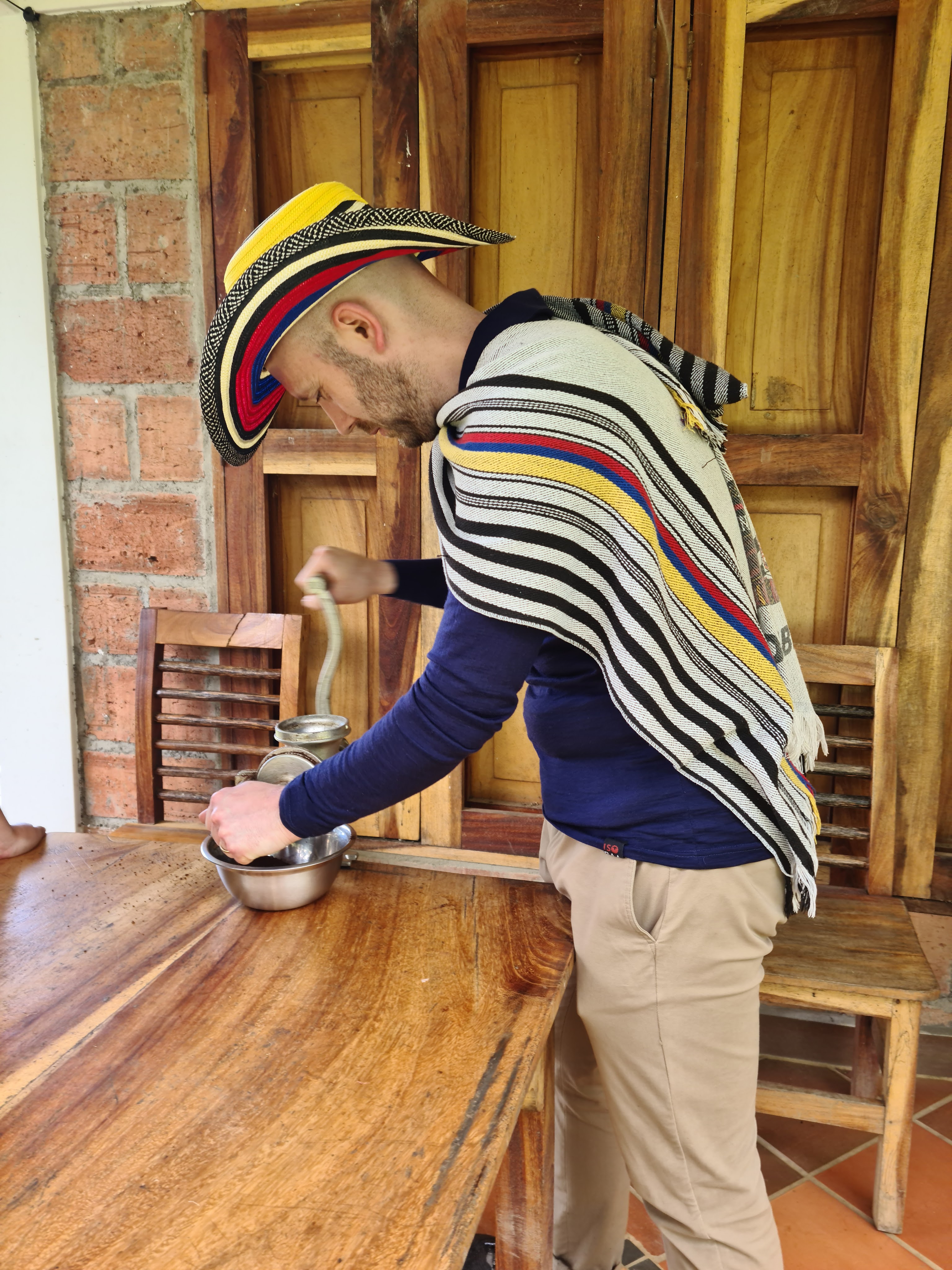
Of course, no coffee tour would be complete without a tasting. After a home cooked lunch by Laura’s mother, we were able to sample a whole range of roast types and brewing methods. I was slightly worried about this part, as by my own admission I’m a complete philistine when it comes to coffee. Sitting in an artisan roaster’s kitchen, it felt best not to mention that I’m quite happy with a cup of Nescafe Gold. I am still capable of enjoying different flavour profiles though, and even if they didn’t match up to the bitter notes of my cheap palate, I could still appreciate the variety. Considering the amount consumed, I’m surprised we weren’t bouncing off the walls afterward.
In a nod to sustainability, there was even a cold beverage made from the discarded bean skins, which was delicious in an entirely different way – it was more like a fruit tea. We’ll be keeping our eyes peeled for this idea spreading and hitting UK shores in future.
Overall it was one of my favourite experiences, not just in Colombia but of this year. It’s rare for a tour to be so interactive and it makes such a difference, as does the privilege of having full access to someone’s home business and passion.
Unsurprisingly for such a vibrant country, Medellín is filled with passionate people. Every guide we had has probably ranked among the most enthusiastic, knowledgeable and friendly of all we’ve encountered. And I’d say this is with good reason. Thirty, maybe even twenty, years ago the volatility of the city would have prevented us from being able to visit at all, never mind having all the great experiences we did. The transformation is amazing, and Medellín, quite rightly, has a lot to be proud of.

Tash’s Treats
As you may have guessed from the “healthy” fruit salad mentioned above, Colombians sure love an artery buster!
Before our walking tour, we fuelled up with some bunuelos, which are fried cheesy dough balls. We later learned on a food tour of our neighbourhood, Laureles, that bunuelos were a Jewish celebratory snack. But Colombians loved them so much, they made them an everyday snack.
Colombia’s own special occasion, and national, dish is “Bandeja Paisa”, due to the expensive nature of this plate of meats. Chorizo, chicharron (pork belly), blood sausage, beans, rice, plantain and avocado make up what’s a little like a cooked breakfast! I chickened out and ordered a Junior Paisa, and have to say I was a little envious of Ricki’s plate!
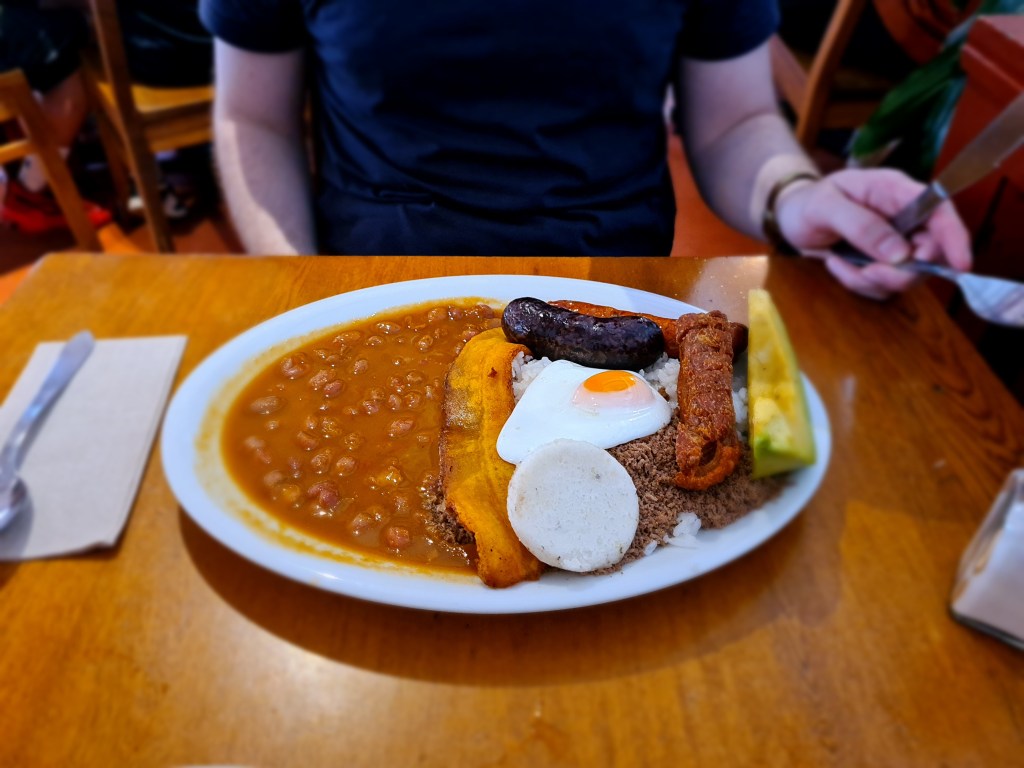
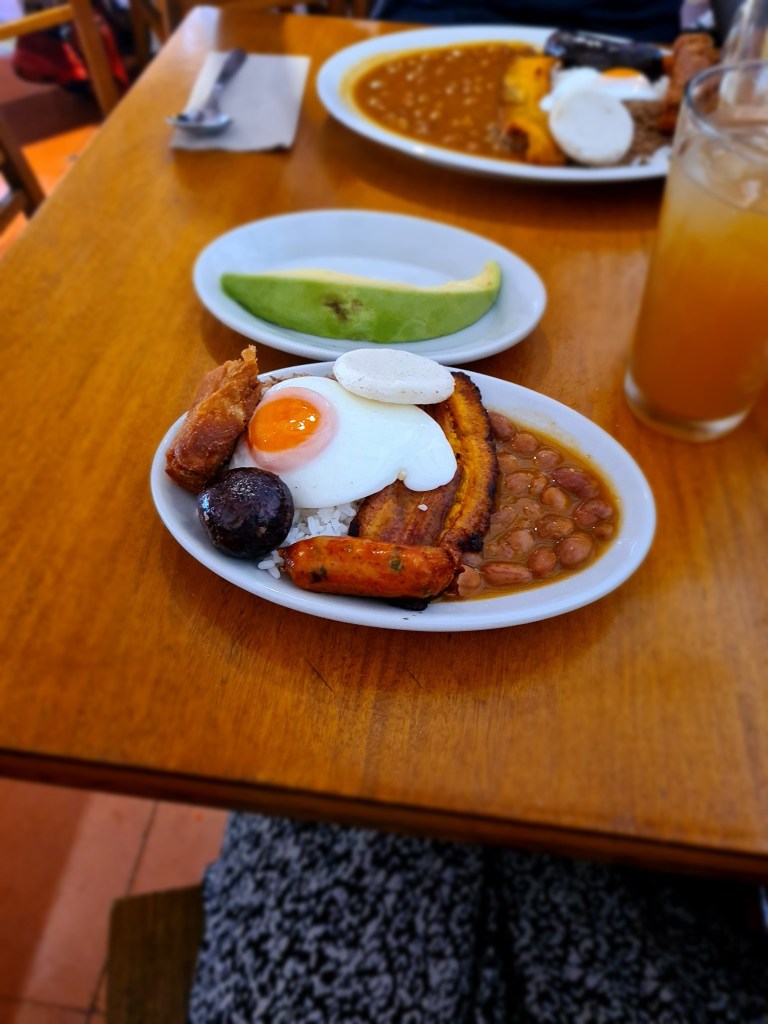
Also on the platter is an arepa, a Colombian breakfast or snack staple. It’s a simple corn cake, often topped with egg and cheese. We didn’t know what the fuss was about when we first bought some for making breakfast ourselves, but later learned we had picked the maize variety. The yellow corn type is where the flavour is at.
The chicharron was my favourite part of the Bandeja Paisa. After our Comuna 13 tour, on the recommendation of Sergio, we headed across the road from the charity centre to what was essentially a woman’s front yard where she serves up food from her own kitchen. For a total of about £5 each we each had a plate of soup, glass of guandolo and a whole plate of delicious crispy, salty pork.
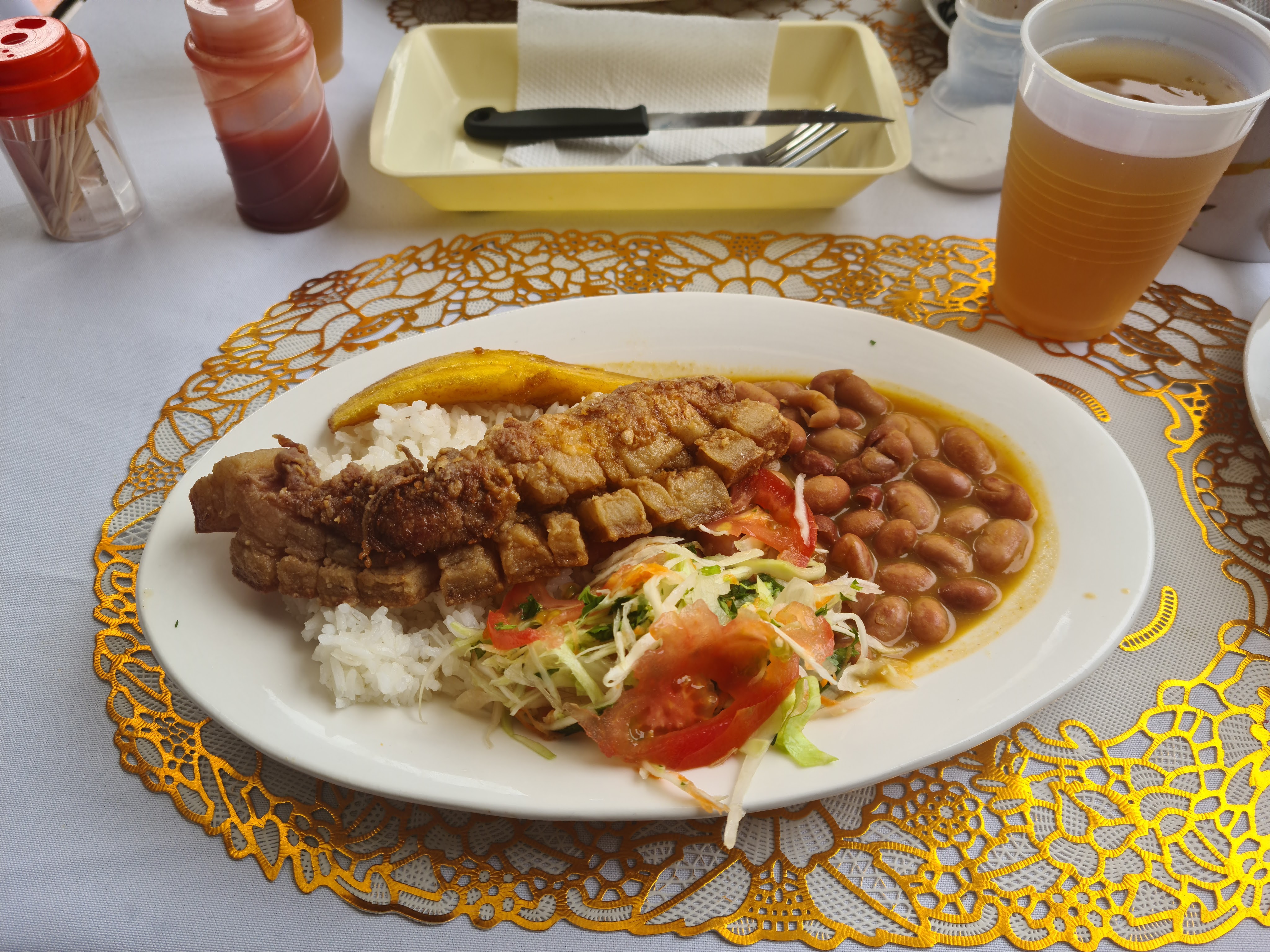
On guandolo, this is the local soft drink made with panela (cane sugar) and lemon.
Colombians don’t have any kind of national cocktail. The local spirit is aguardiente, which was originally made in slightly different versions by the various regional governments. We finished off our Laureles food tour with a couple of shots of these on the street. Its anise flavour, so tastes like sambuca…I have to say, this is one culinary area where Colombia should up the game!
When eating out we also tried mondongo, a tripe stew (why are so many countries in the world up on tripe, but the UK still turns its nose up?!) and ajiaco, a shredded chicken and potato stew.
More fruit was consumed when trying the popular street food, mango biche (green mango). We tried it the Colombian way, with lemon and salt added. It was ok, but possibly suffered for not being chilled. Which was completely remedied on the Comuna 13 tour when we were given it in ice lolly form, again topped with lemon and salt. With the ice, it was now like having a non-alcoholic margarita so I was loving it.
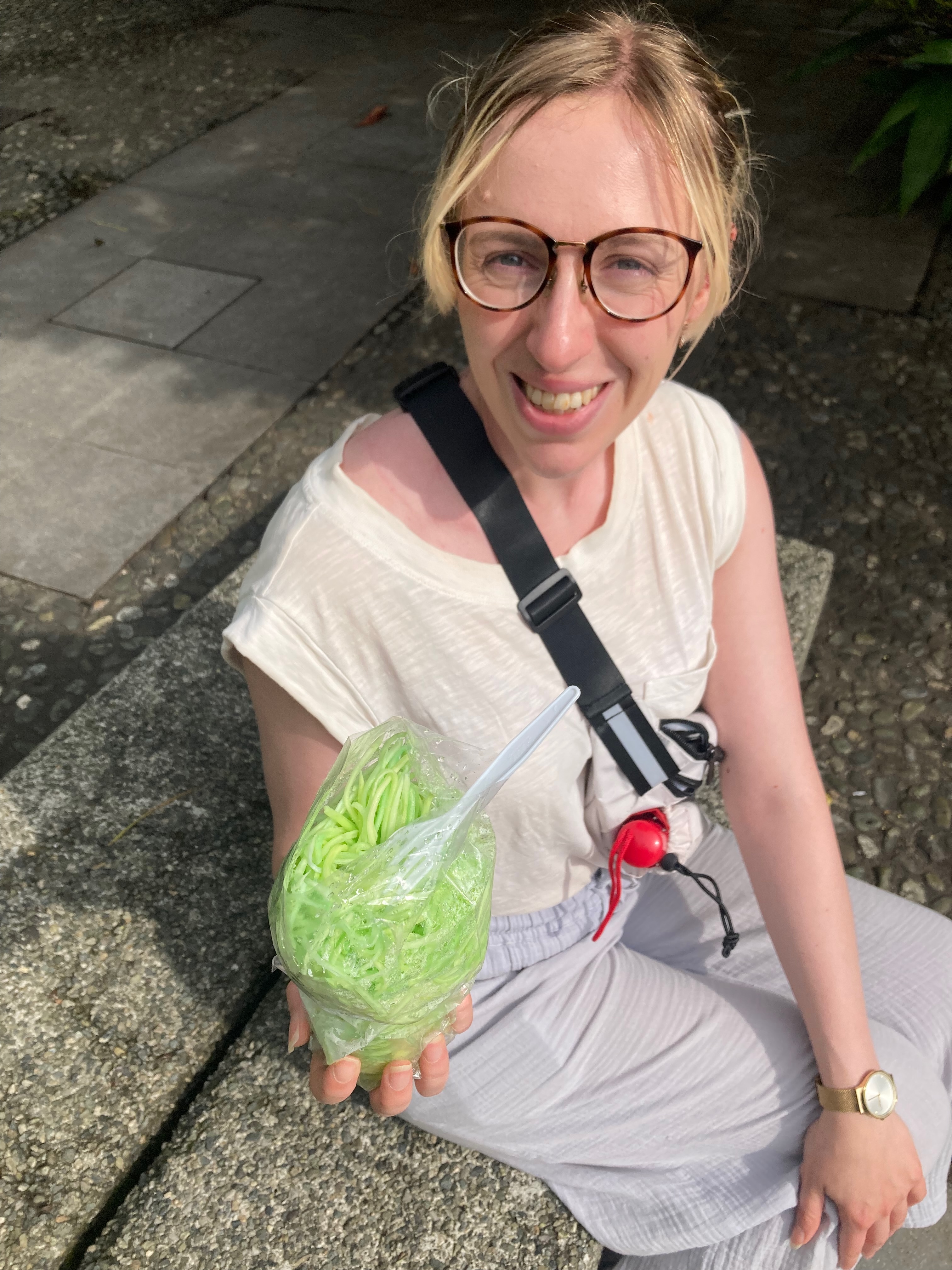
And as a good example of why the fruit market tour was a good idea, I got a bit too brave and bought some lulos in a supermarket, after having an ice lolly flavoured as such on the city walking tour. Turns out they are rather sour, and usually reserved for juices or ice cream.


 A Place Both Wonderful and Strange - Tash & Ricki's Career Break Travels
Leave a comment