
Our next destinations were perhaps the only unexpected pins on our map, as they were the only countries that weren’t on our list of possibilities at the start of the year.
If you remember from previous blog posts, there was a gap in our schedule where Brazil might have been. Extending our footprints further over Latin America, we were happy to sub in Guatemala, Honduras and El Salvador, some of the more budget friendly countries in Central America.
Unfortunately, disruption of plans didn’t end at Brazil and you are possibly already aware we never did make it to Honduras. As we were checking whether there were any customs forms we could complete in advance a few days before our scheduled departure, we were pretty stunned to see that only two days before, a visa requirement had been placed on UK citizens with immediate effect. This was Saturday and there was zero chance of being able to complete the now-required embassy visit before our Monday transfer. It really underlined how quickly situations can change while travelling1, and the importance of double checking entry requirements before setting off anywhere. We were just glad we discovered the visa requirement from the comfort of our Airbnb, rather than after journeying 8 hours in a shared transfer, which would possibly have had to leave us stranded at the border in order to transport those other passengers whose citizenships weren’t non-grata.
Now, on to the more positive reporting. Thankfully our accommodation options were flexible enough that we were able to cancel our visit to Honduras without cost, and we extended our stays in Antigua Guatemala and Santa Ana, El Salvador.

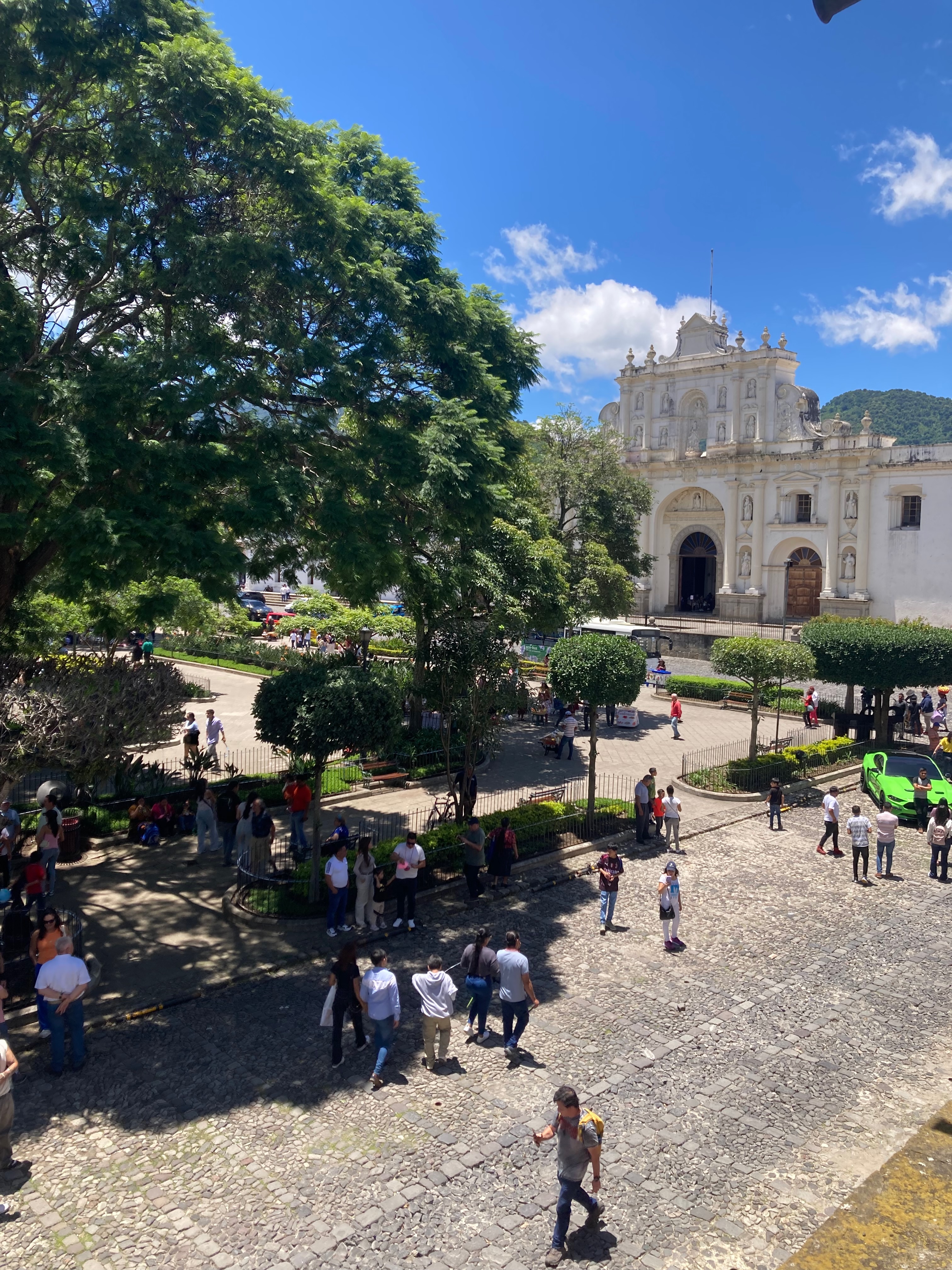
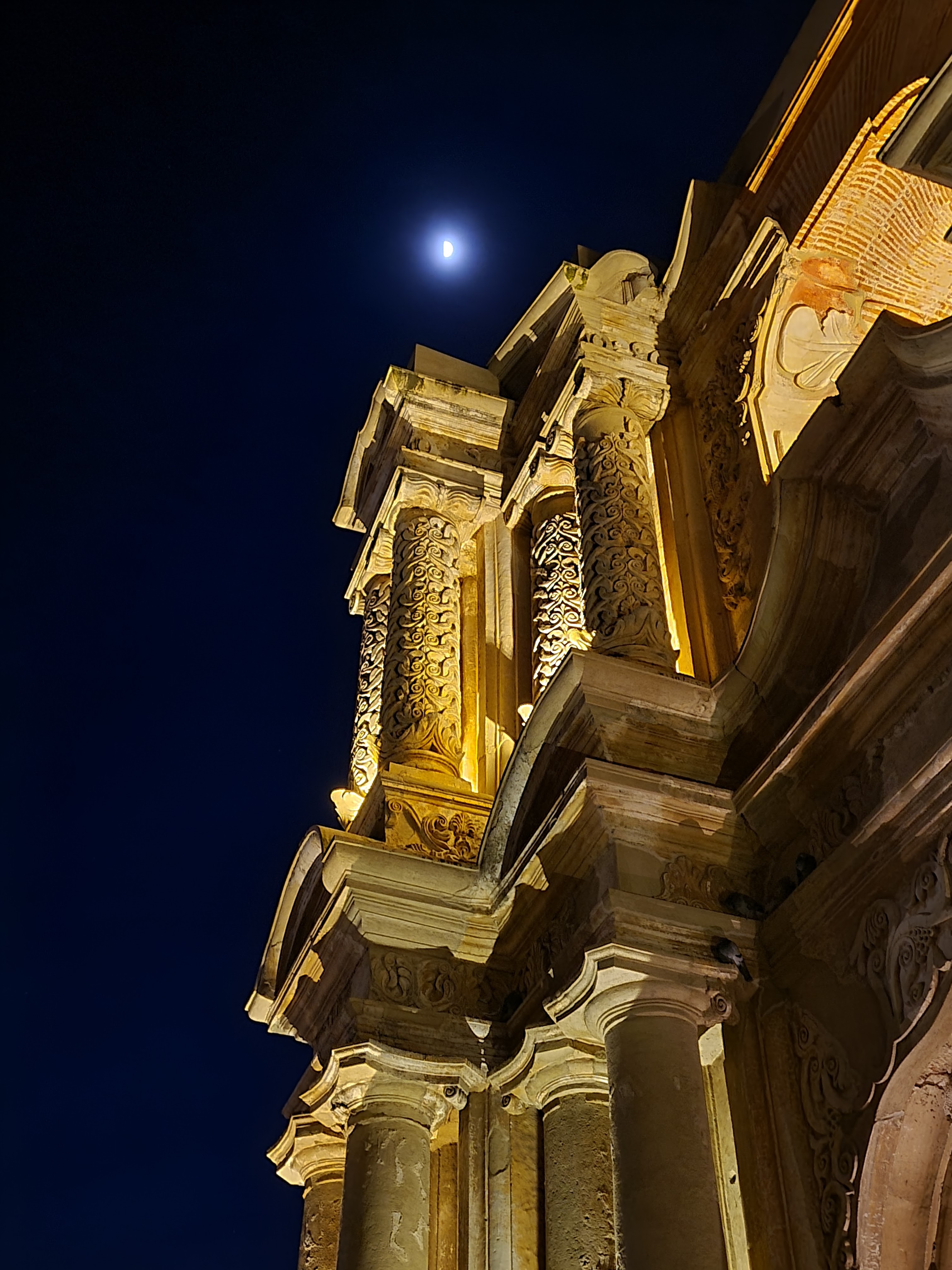
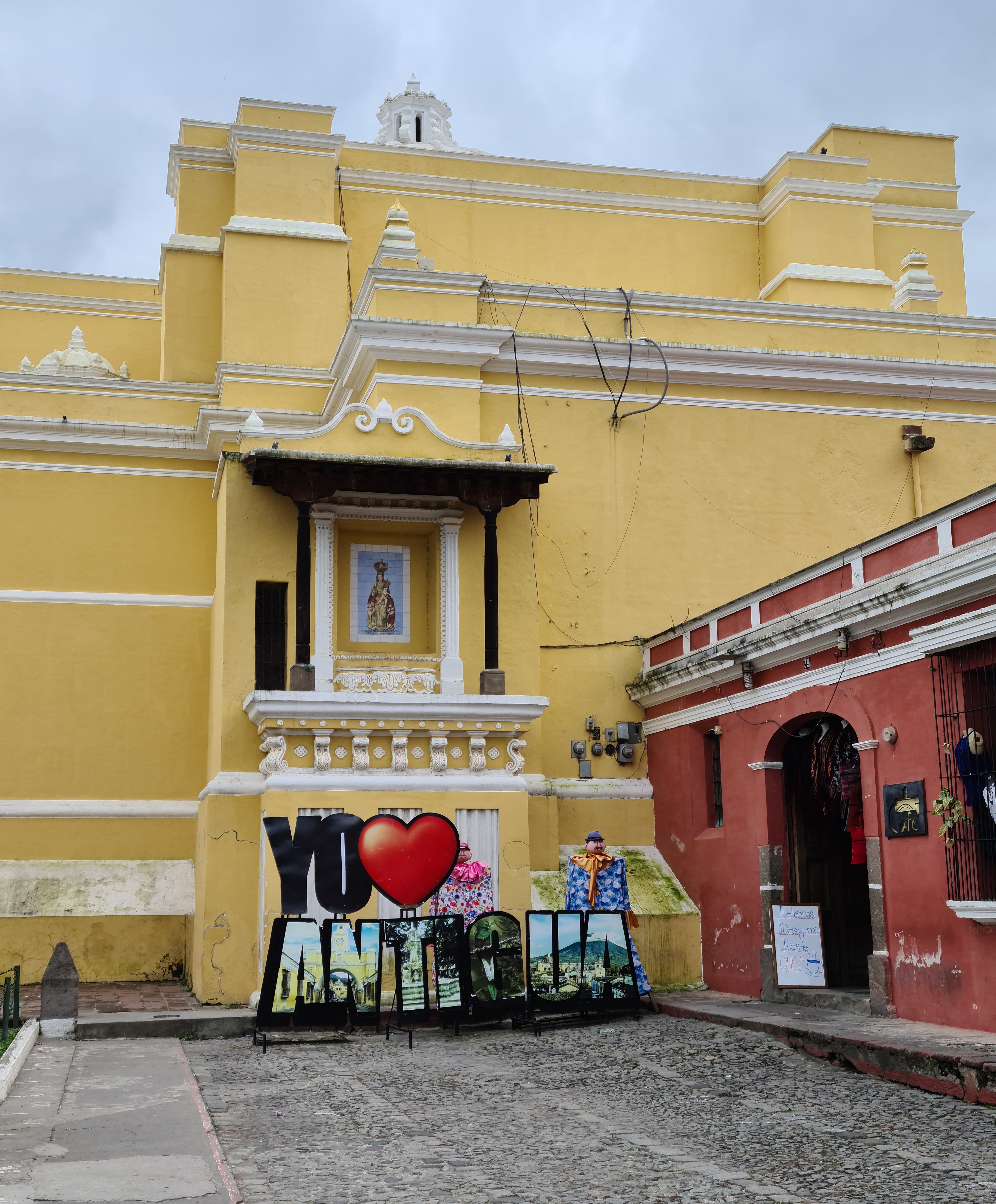
Antigua Guatemala
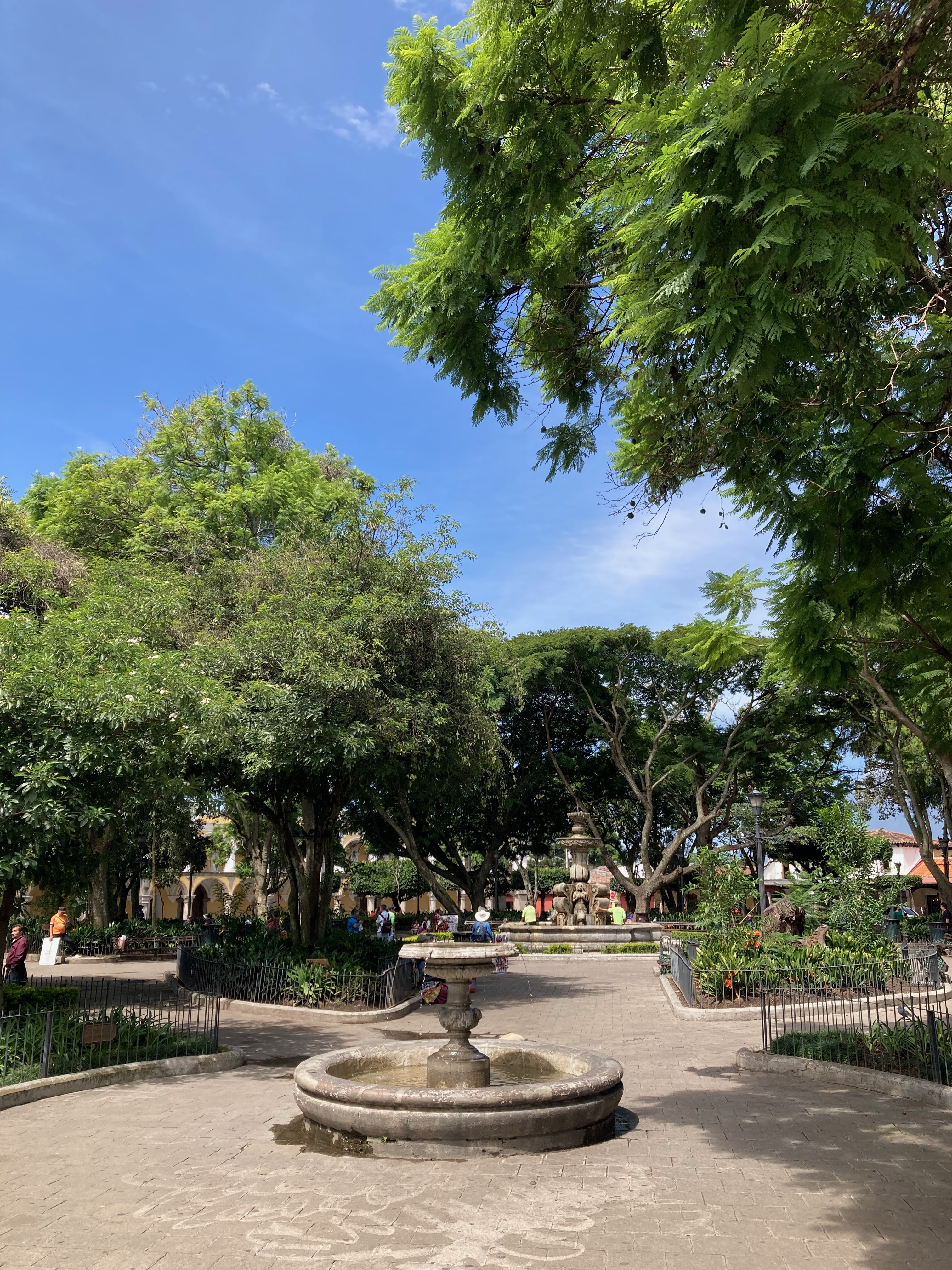
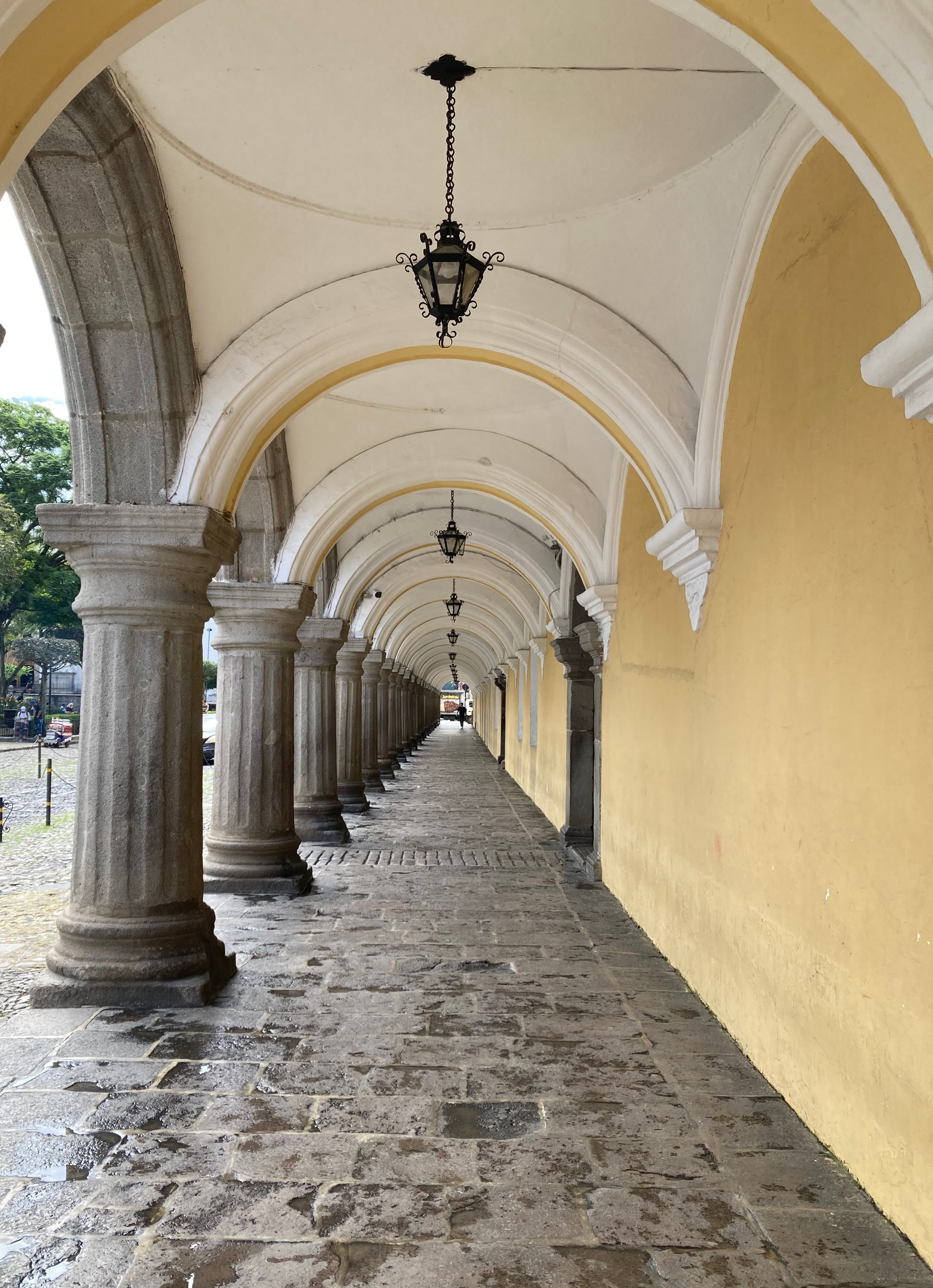
Of course we have seen many stunning landscapes and beautiful towns this year, but I think Antigua Guatemala might come close to topping the list for setting. While the architecture is attractive, it is the looming presence of Volcán de Agua, the extinct stratovolcano, on the horizon which really grabs the attention.
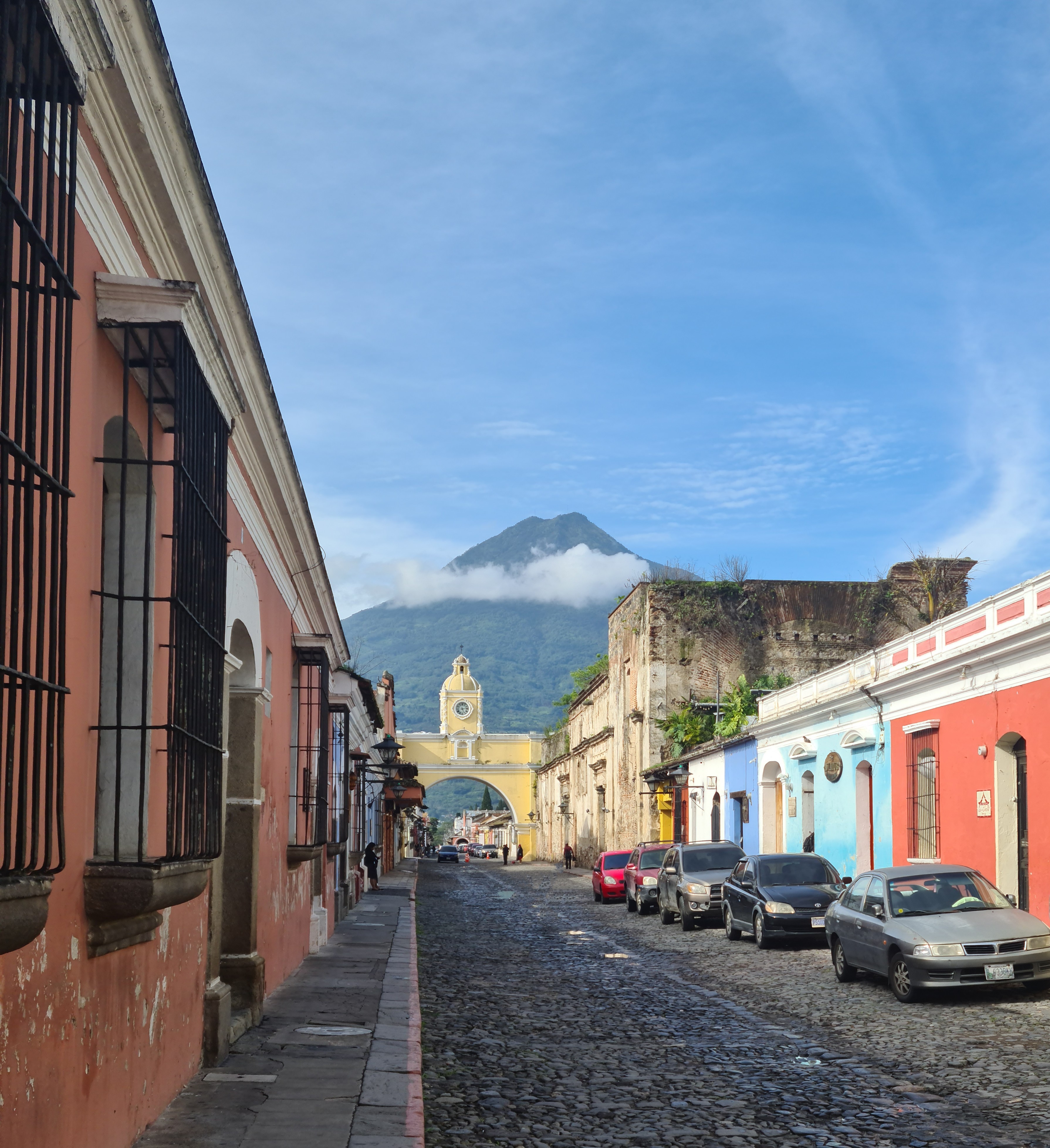
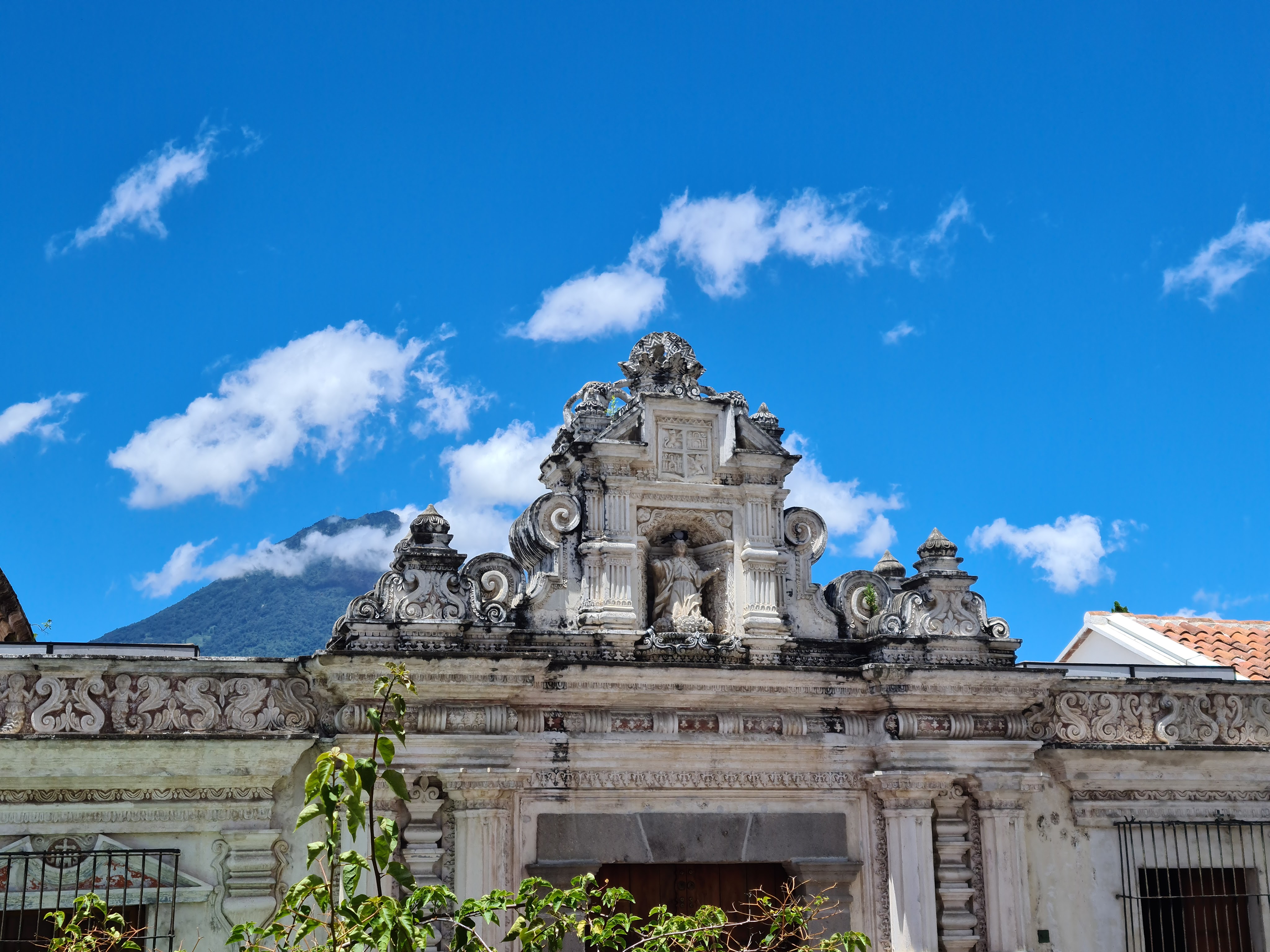
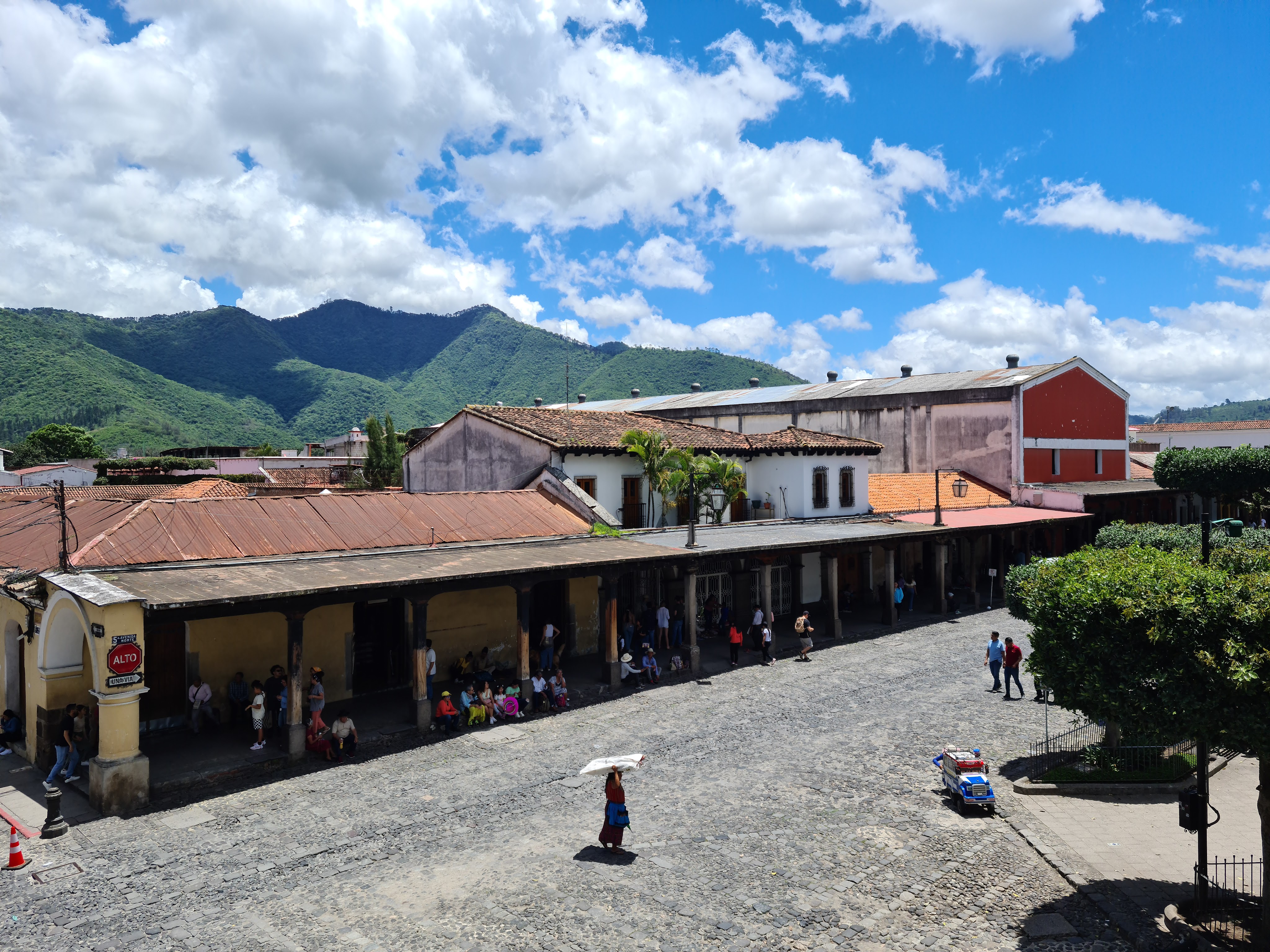
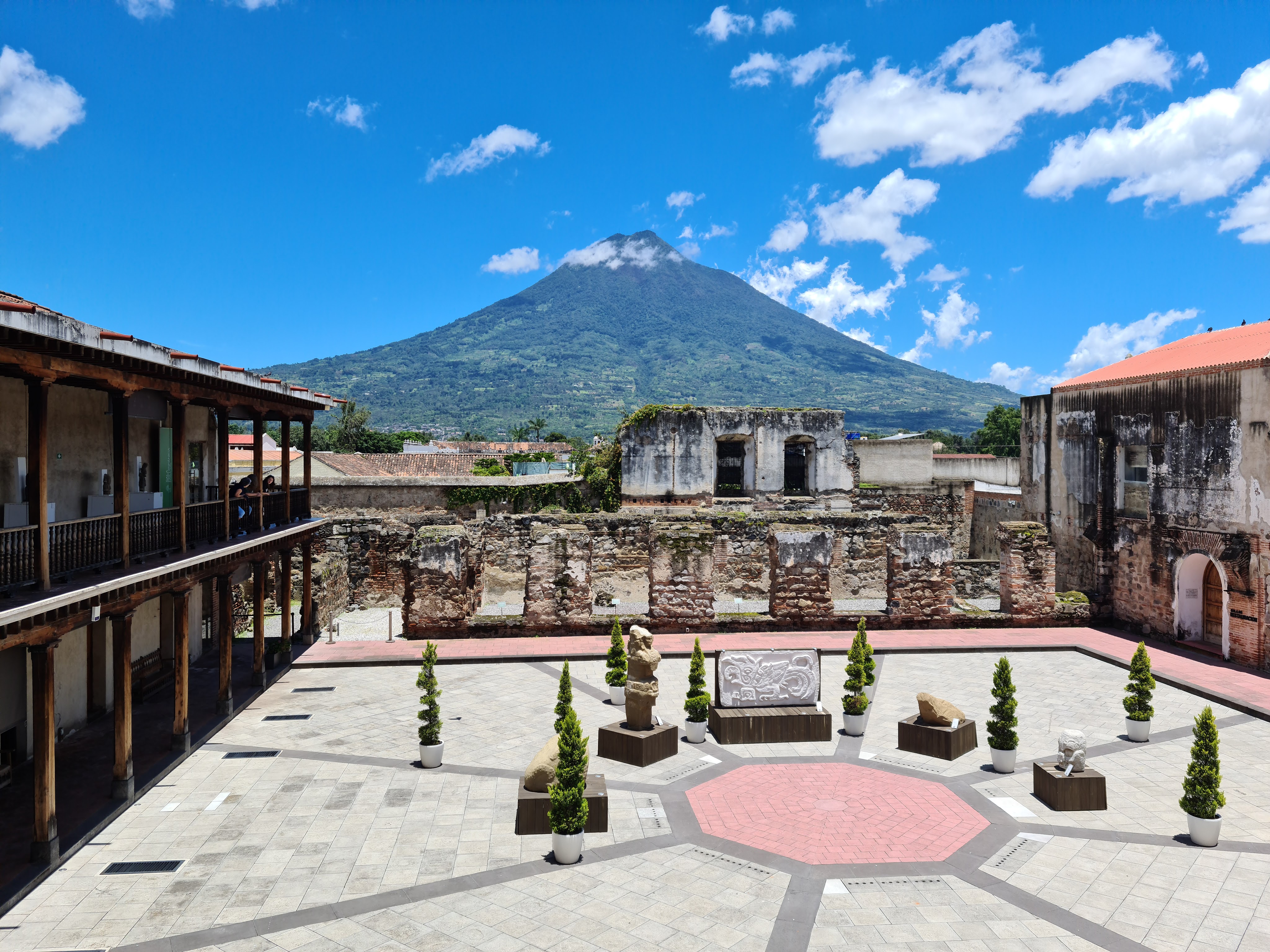
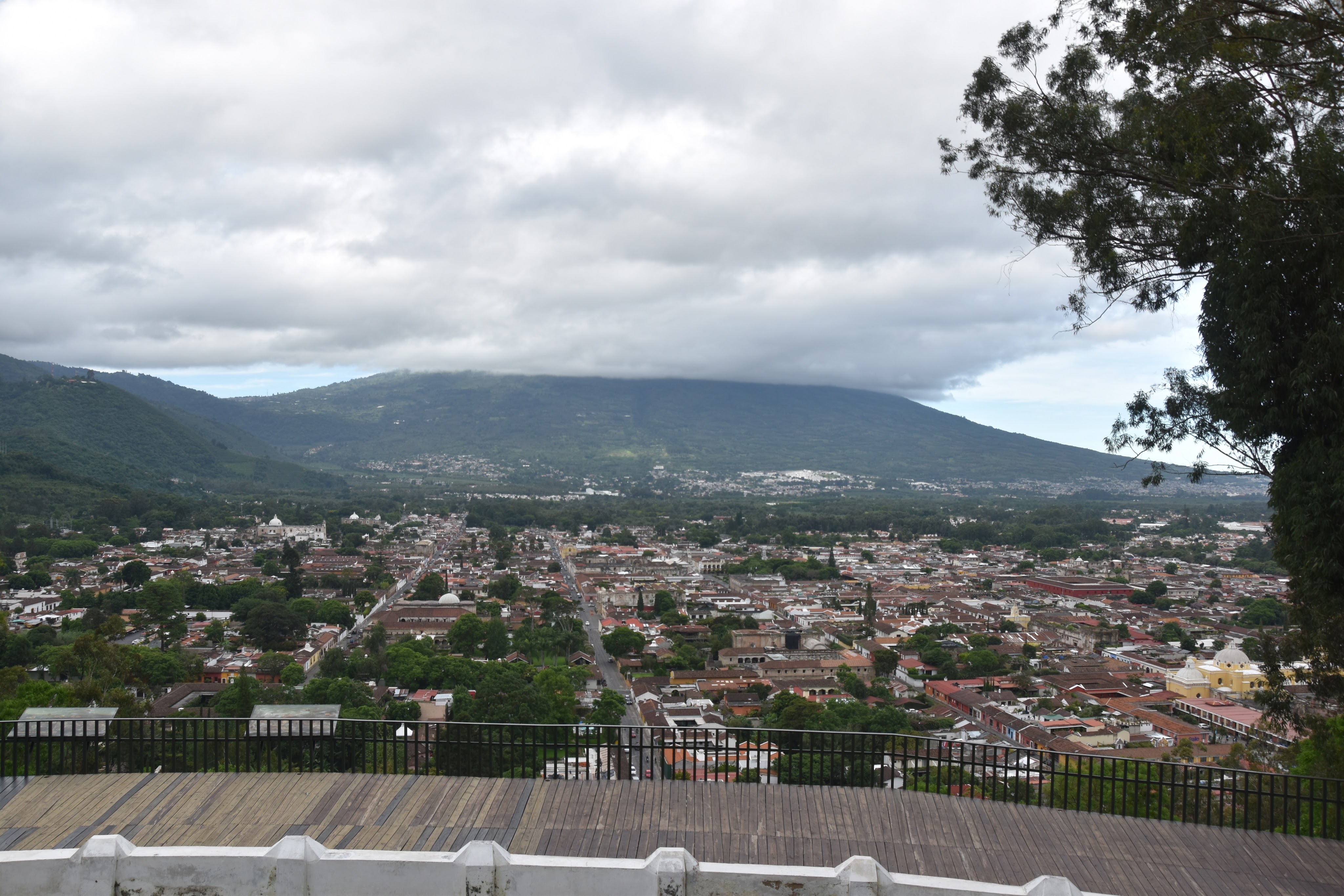
Unfortunately our visit up to the Cerro Verde viewpoint coincided with a cloudy day, but you still can just about get a sense of the scale of the volcano against the city.
I know this blog has already been peppered with visits to various religious sites. Antigua Guatemala was no different, so let me just drop in some photos of those, before returning to the volcanoes, which were more of a novelty for us.


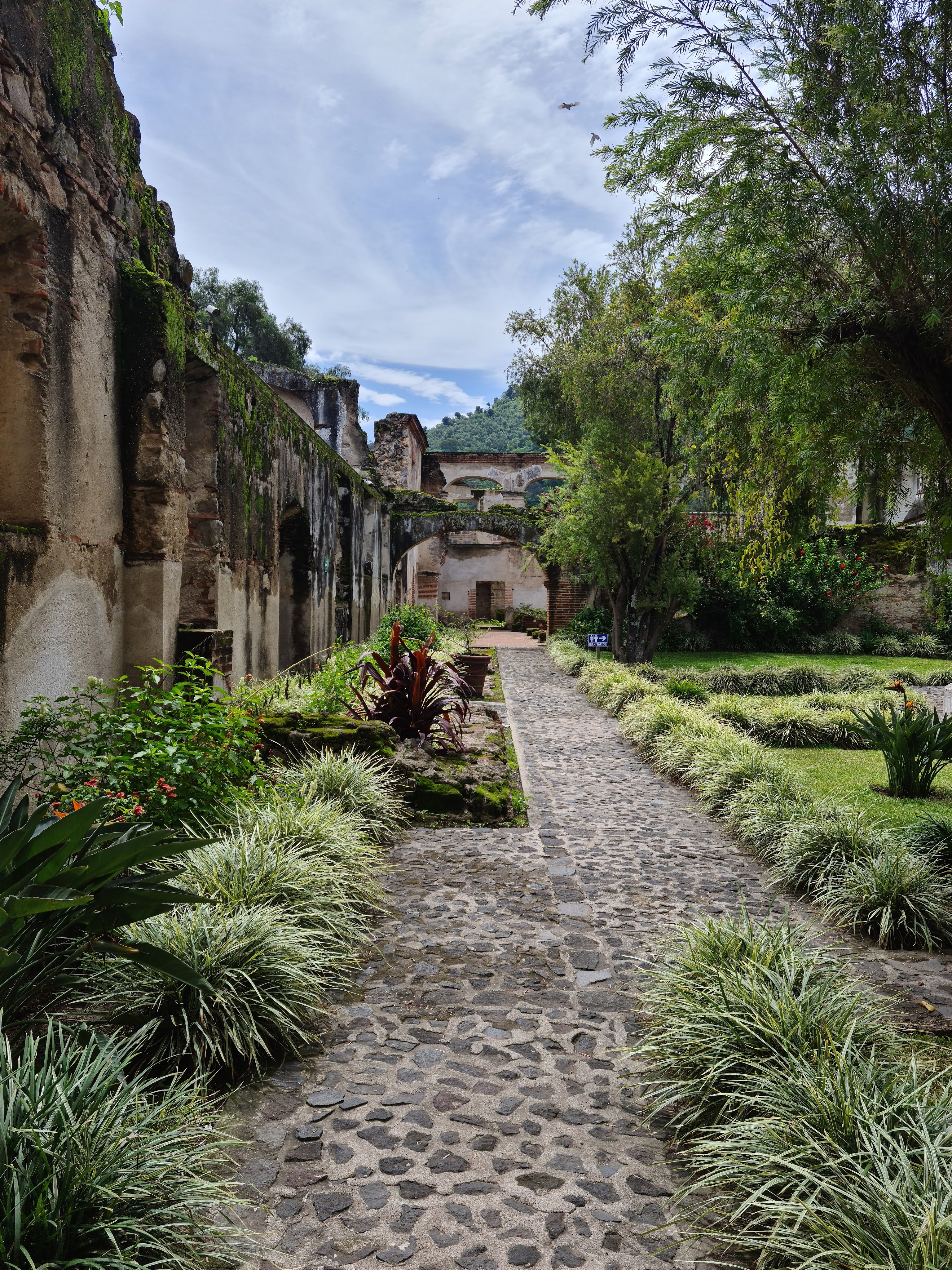
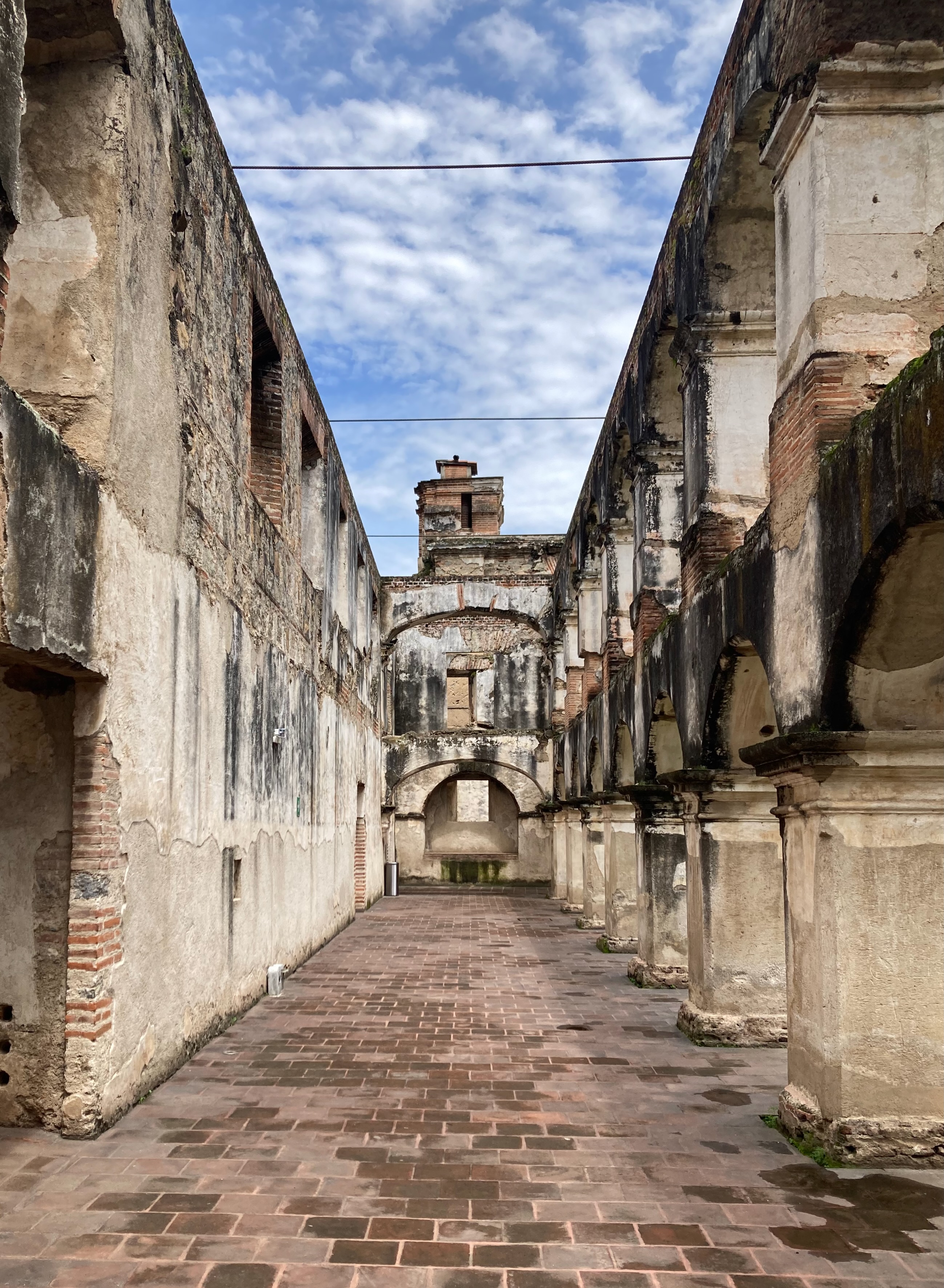
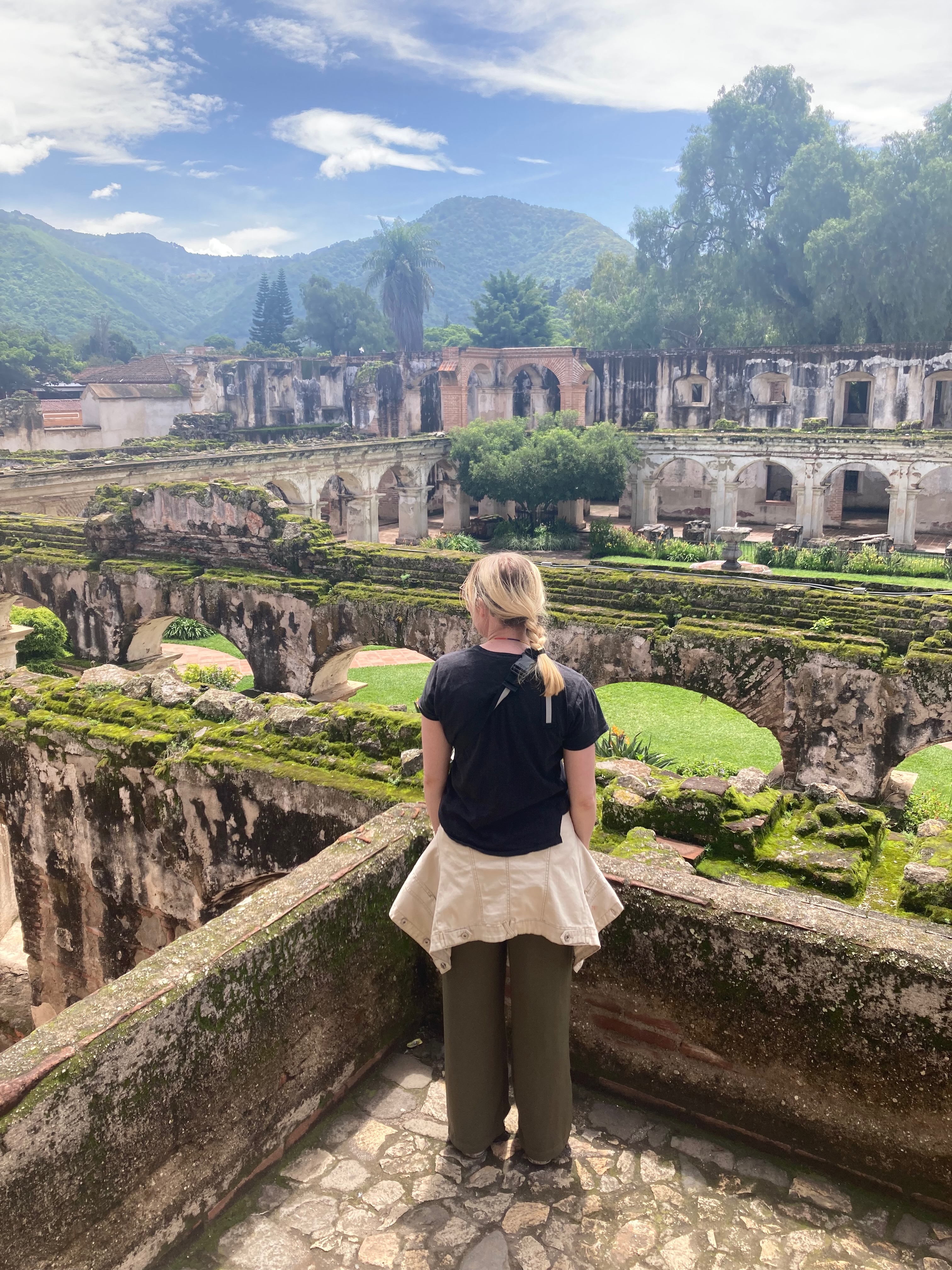
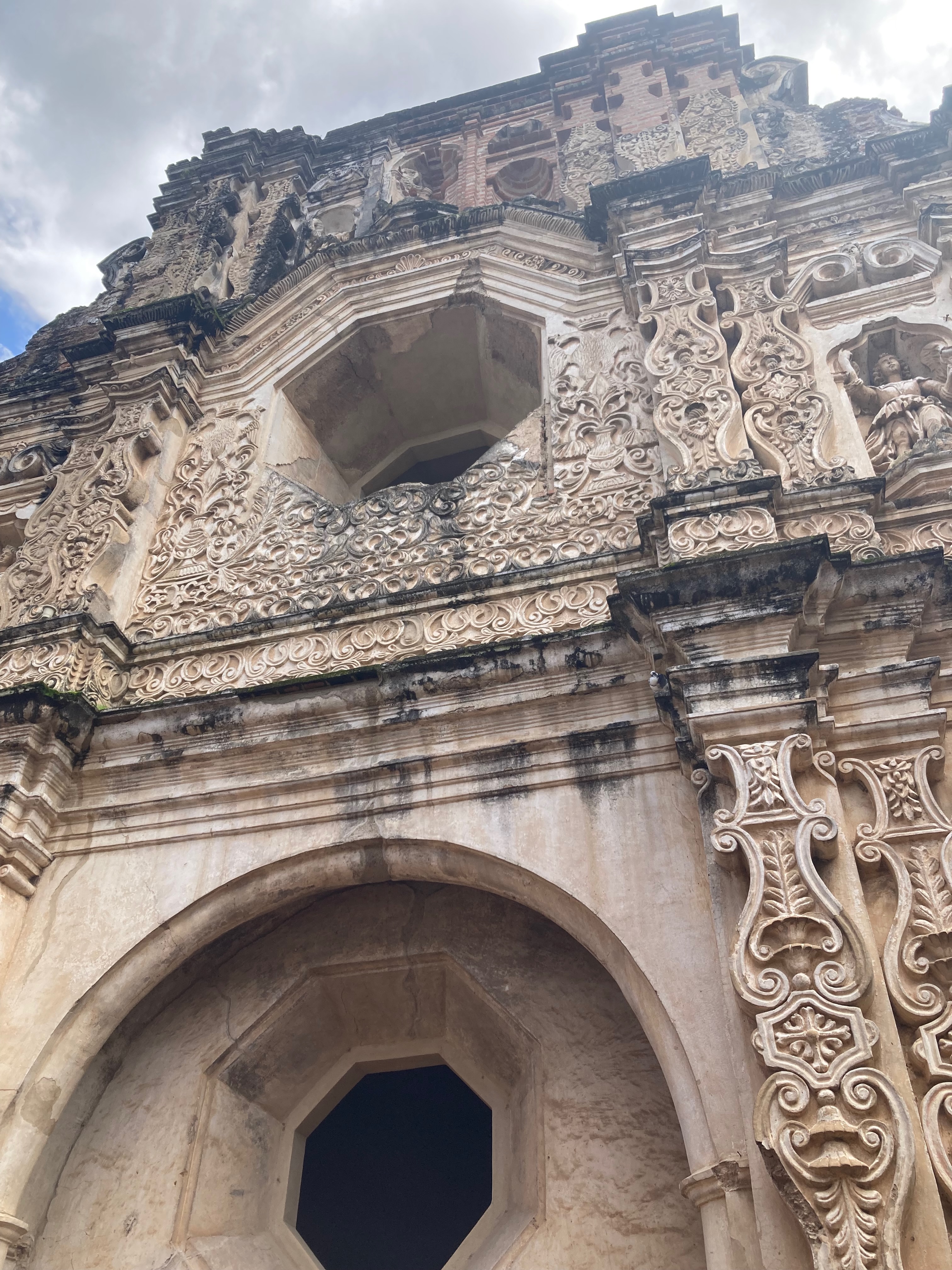
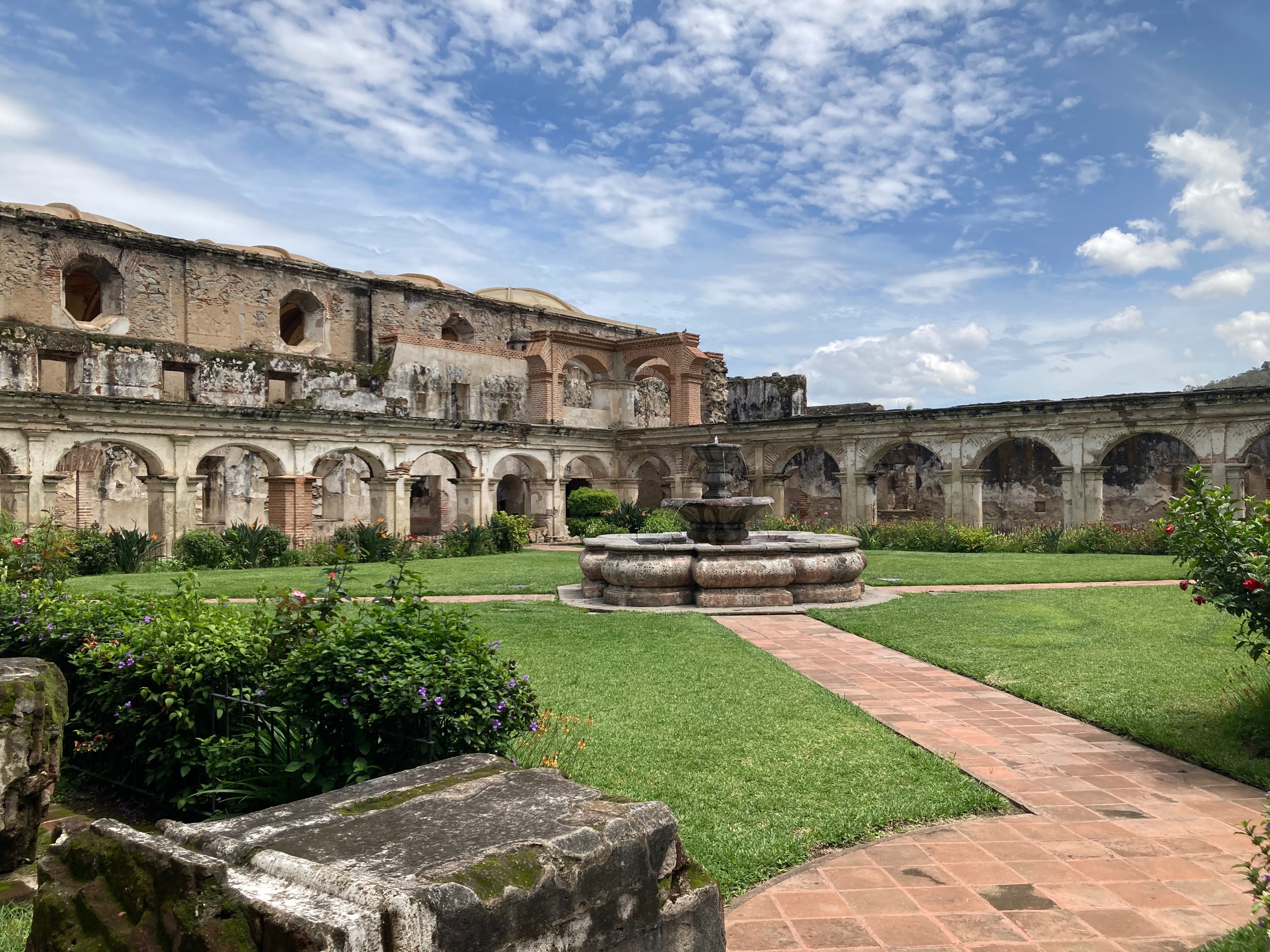
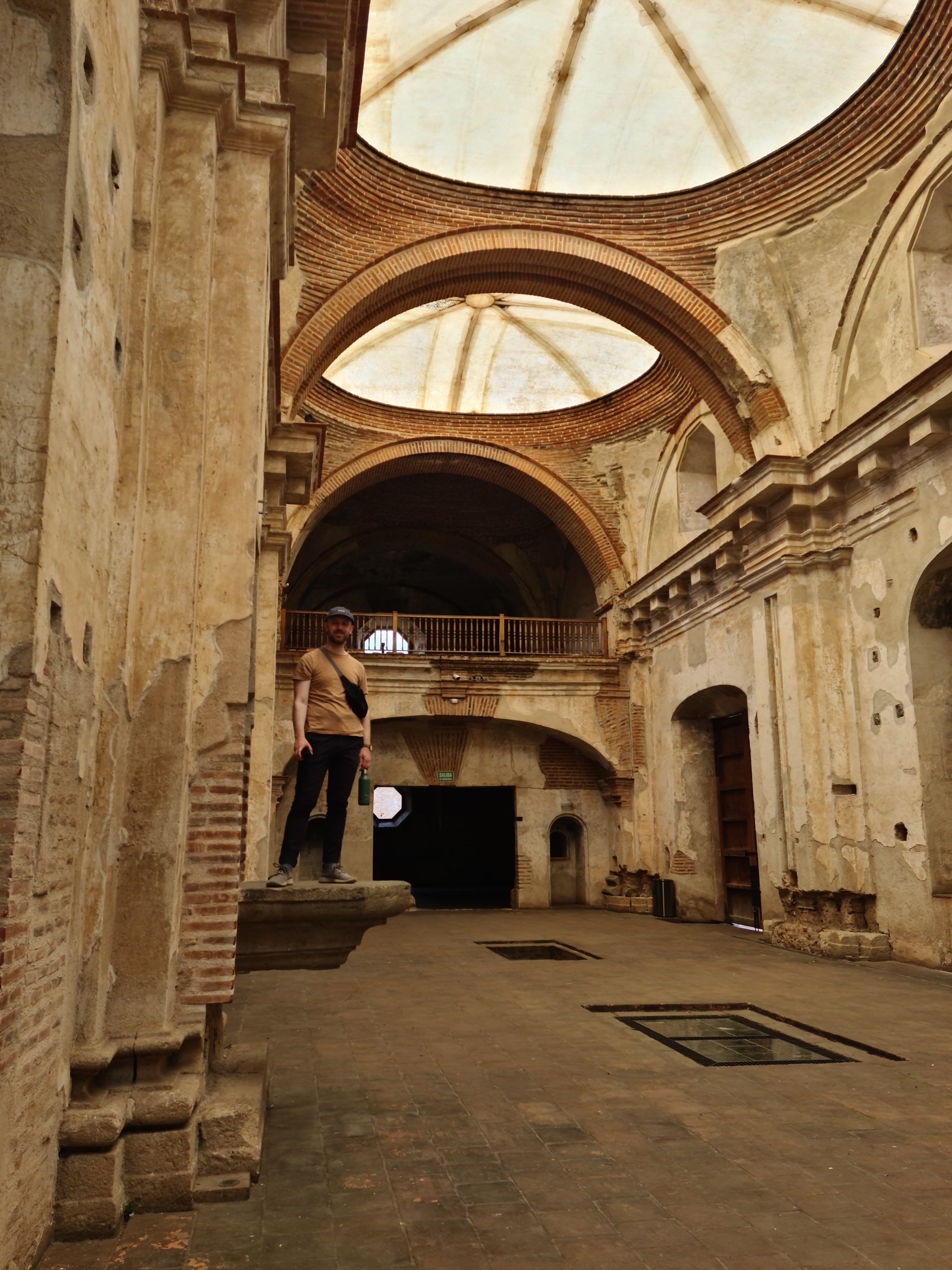
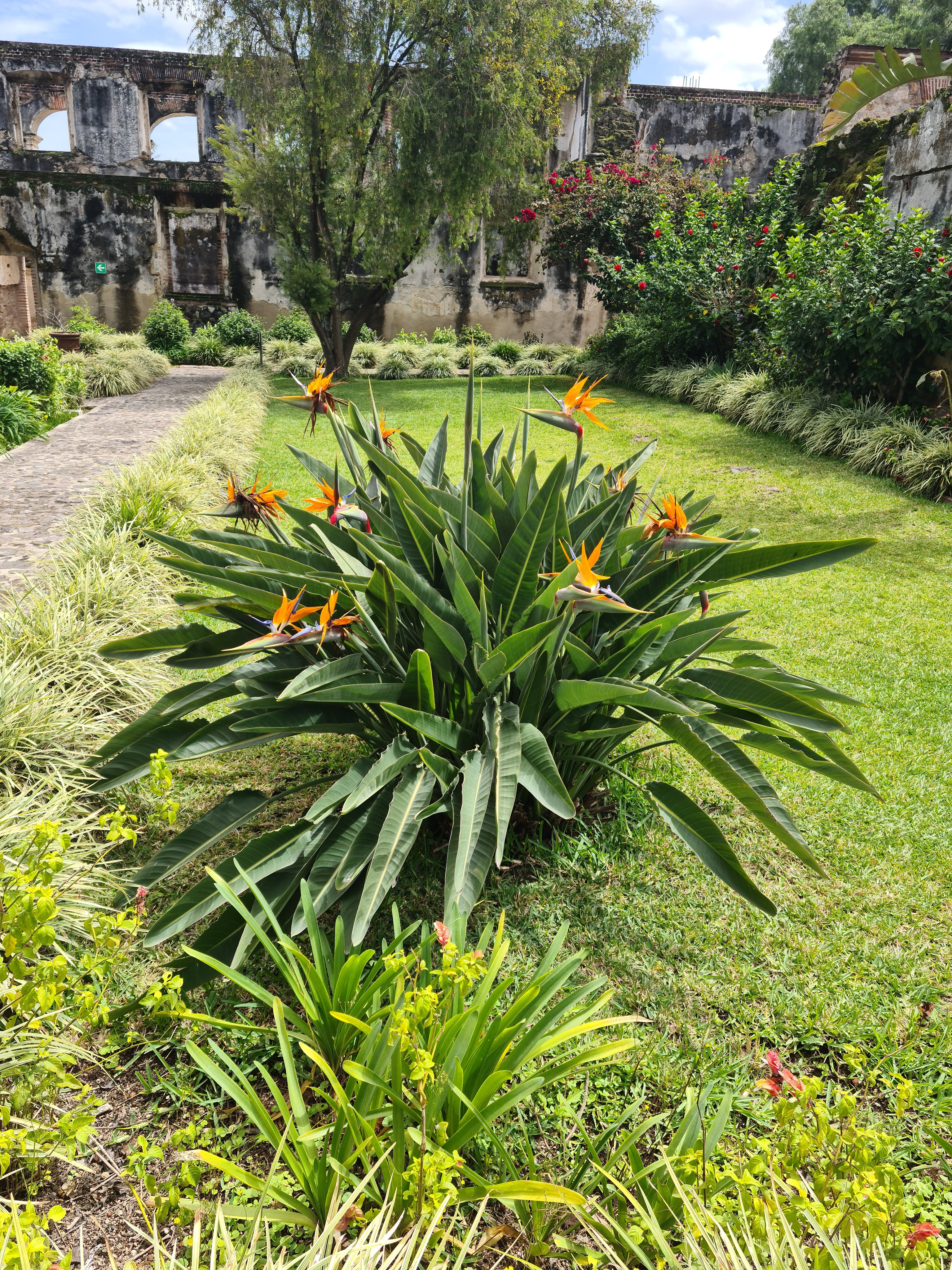
Convento Santa Clara
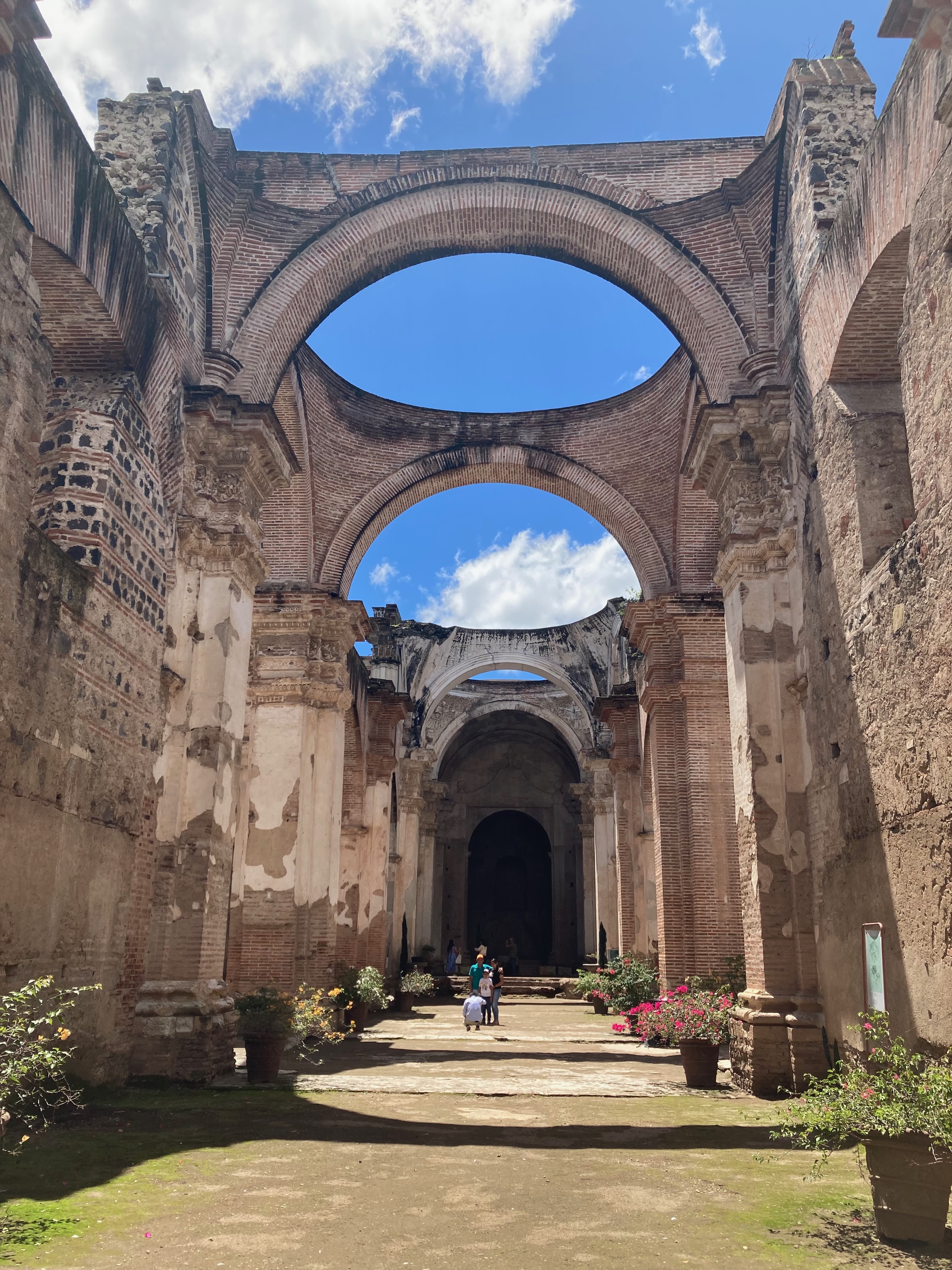
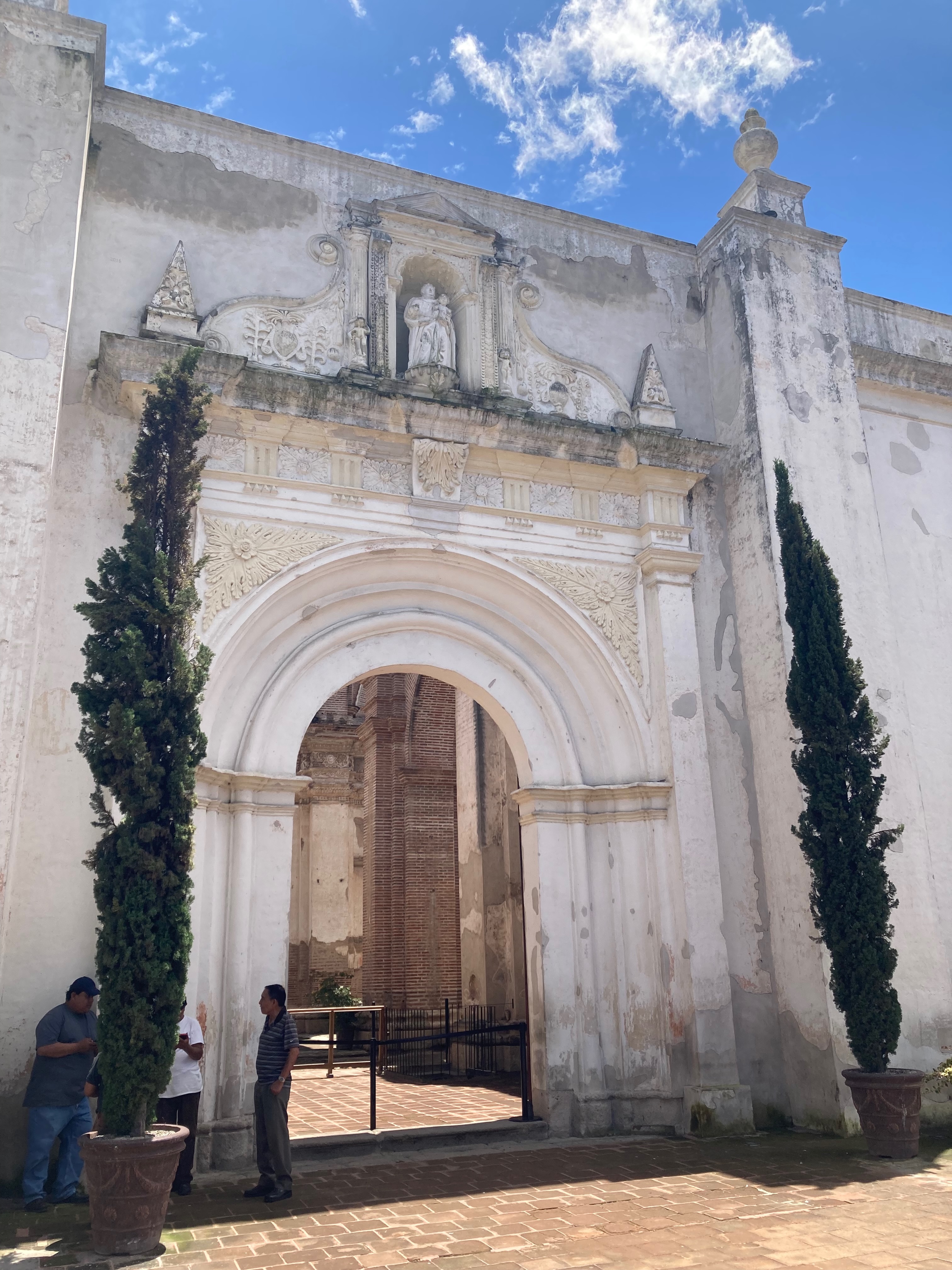
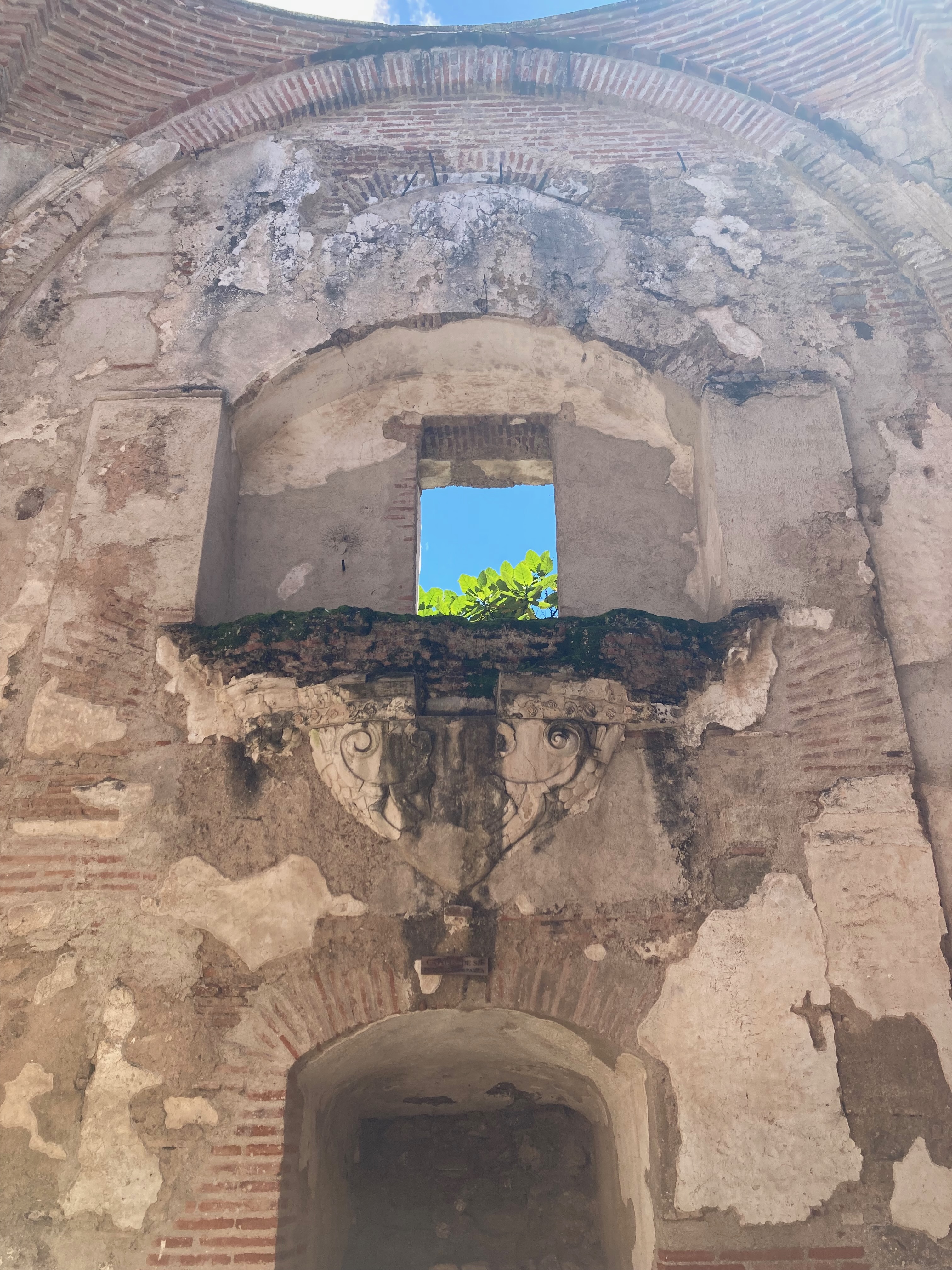
San José Cathedral ruins
Situated in the “Pacific Ring of Fire”, Guatemala is one of the most volcanic countries on Earth. Unsurprisingly then, the top attraction for visitors to Antigua is a hike taking in one or two of these geographical wonders.
We only started making plans to do this ourselves at the very end of our stay in Colombia, and so it was probably fortunate we were visiting in the low/rainy season. The most accessible volcano from Antigua is the dormant Acatenango, and most operators run it as an overnight stay either in tents or cabins. Had it been high season, the best operators and facilities would have probably been booked up.
In our circumstances though we were able to secure a trek with our first choice operator, V Hiking.
And so we found ourselves once more packing up our backpacks with our overnight belongings and enough water to cover us for both the ascent and descent – there would be no running water at the base camp. And unlike Machu Picchu, this time we’d be carrying them ourselves. Porters were an add-on luxury, and with a considerably shorter trek time than MP we decided they were an unnecessary one at that.

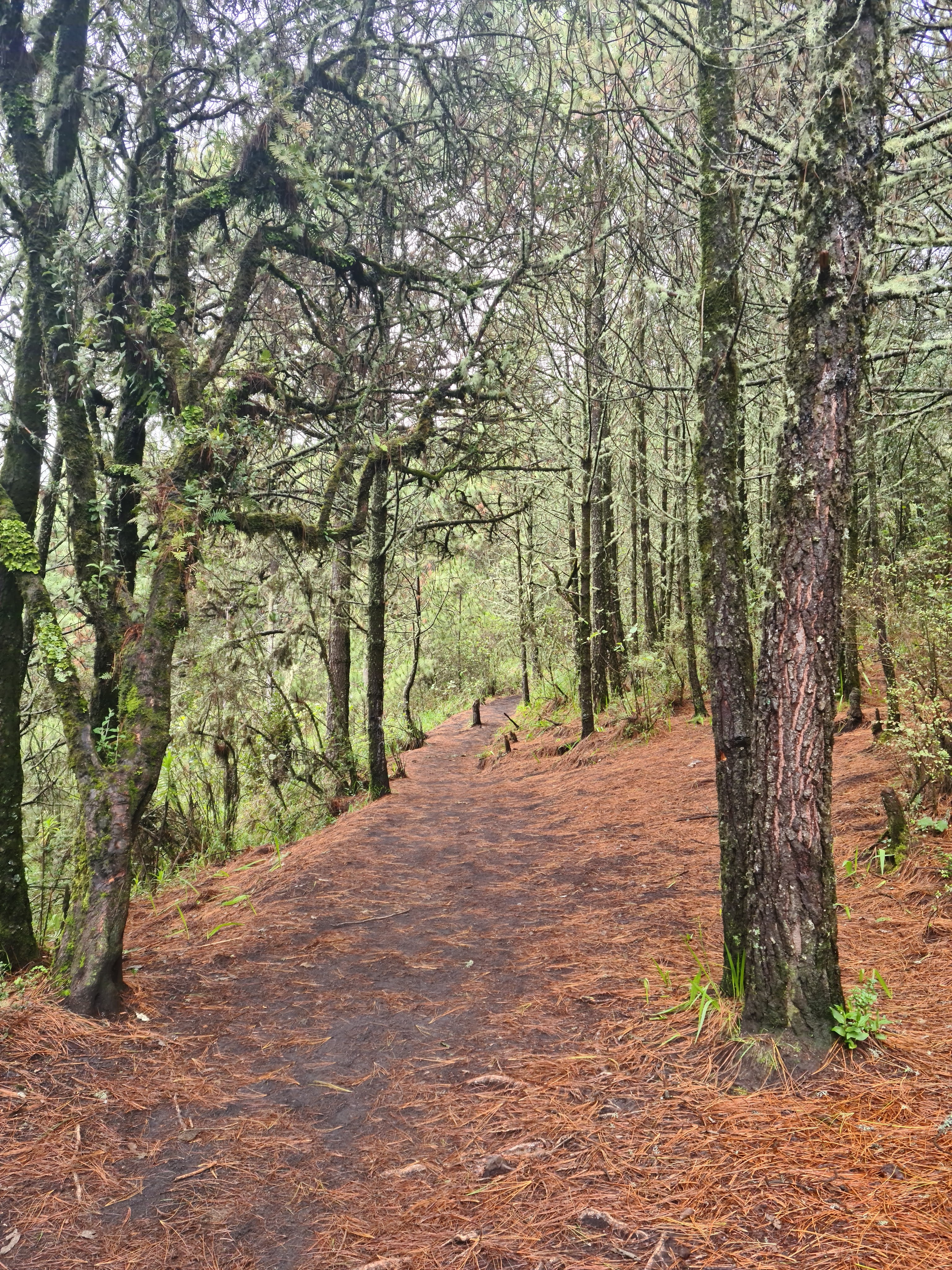
This turned out to be correct, but it wasn’t an easy hike by any means. Although the first day would only require an ascent of 1,200m to base camp, we would be starting once more at altitude, not sea level, and the trail was consistently uphill. Navigating muddy channels, steep steps and dodging descending hikers had the fatigue building quickly.


There was definitely a feeling of familiarity too for Ricki and I, as the pine trees and increasingly damp weather weren’t so different from a Scottish walking trail.
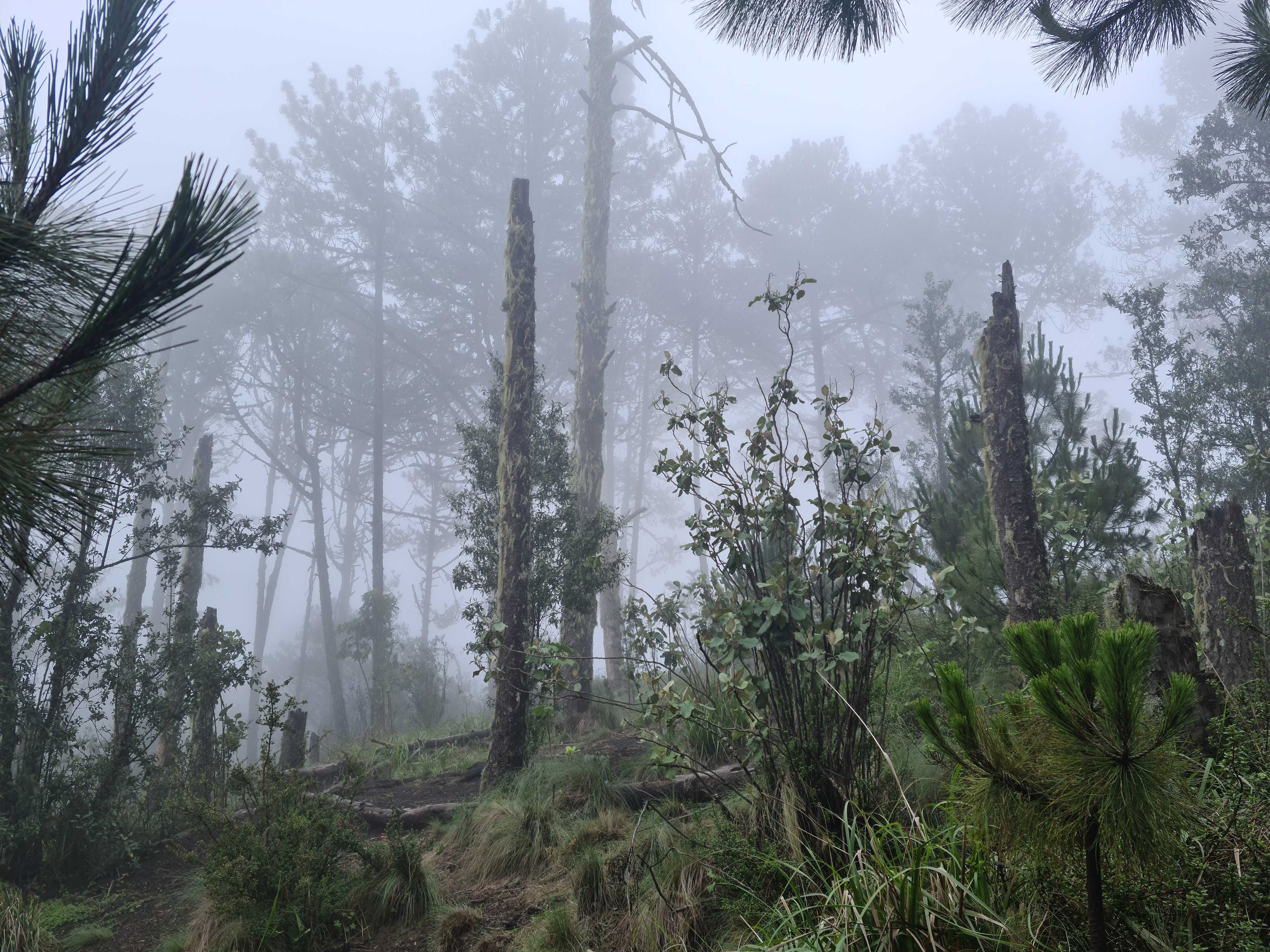
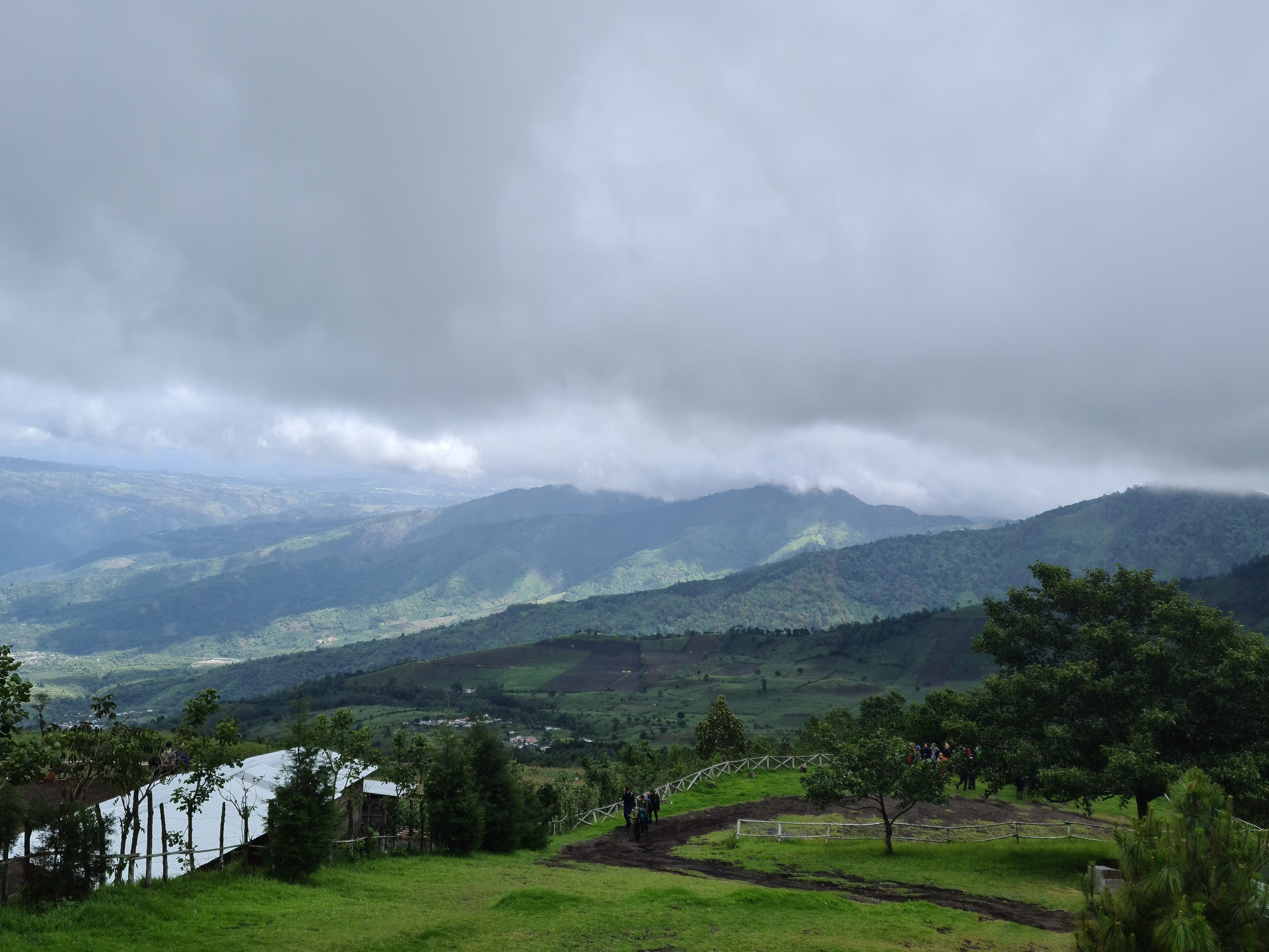
The view on arrival at base camp didn’t look too dissimilar either.
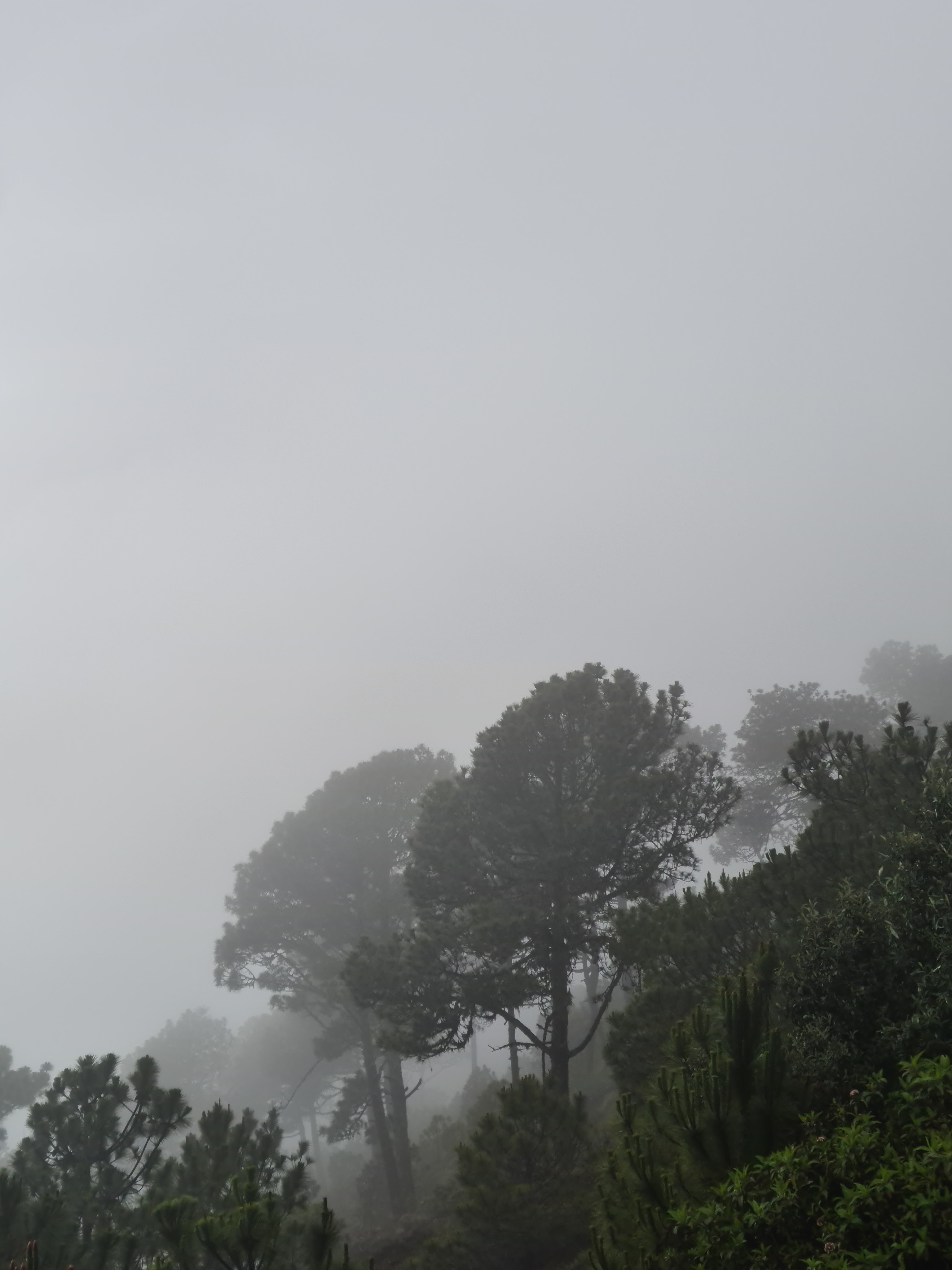
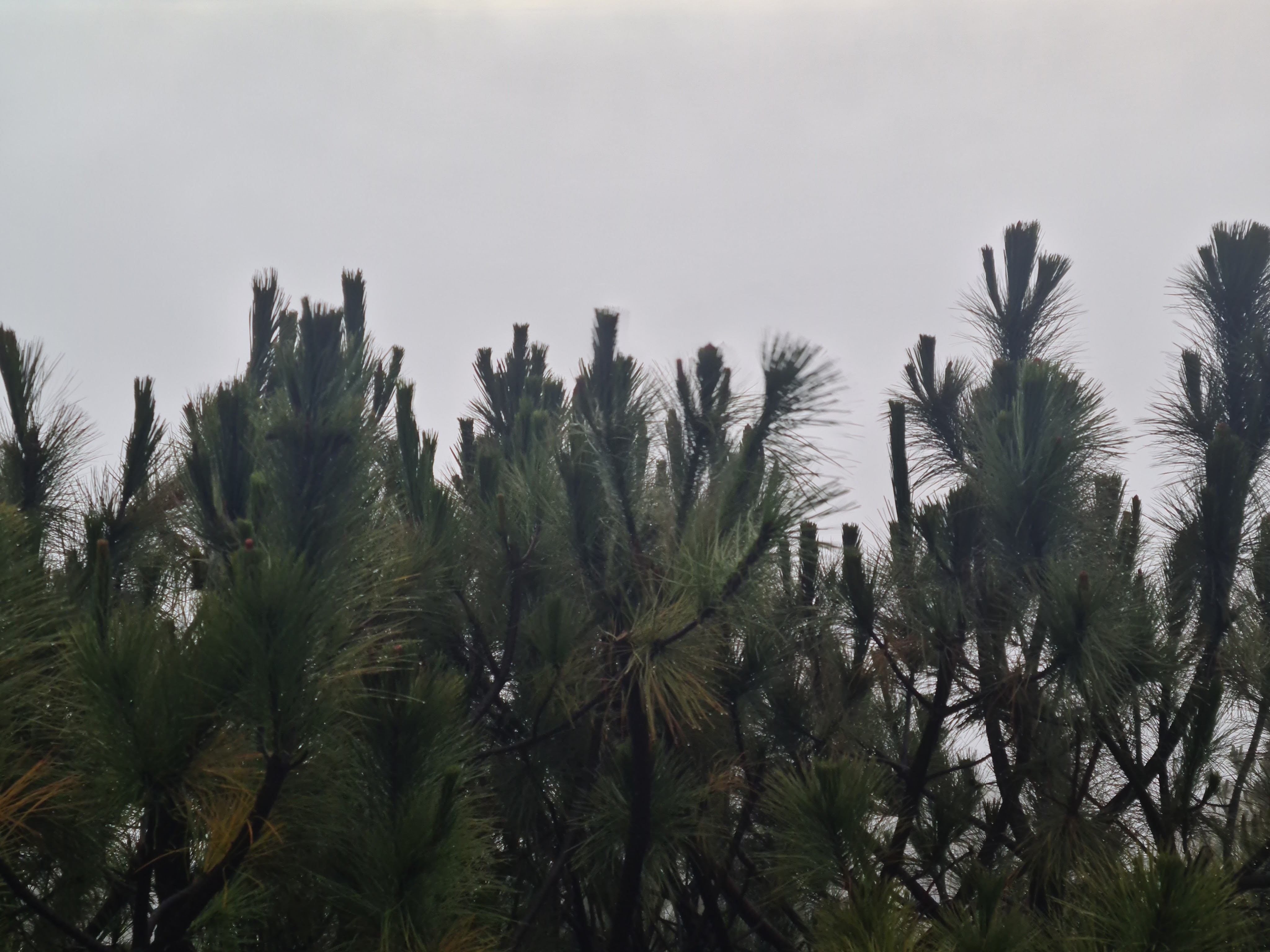
In fortuitous timing though, we had just finished our lunch packs when the threatening rain finally made its appearance. Ducking into our cabin, we had no idea we’d be confined there for two hours as the deluge worsened. At least we can confirm for you that V Hiking’s cabins are sufficiently tested, and watertight!
Emerging back outside as the downpour eased, we were pleased to see (some of) the clouds had moved on too. Now we could enjoy views of Antigua valley, Volcán de Agua and Volcán de Fuego.
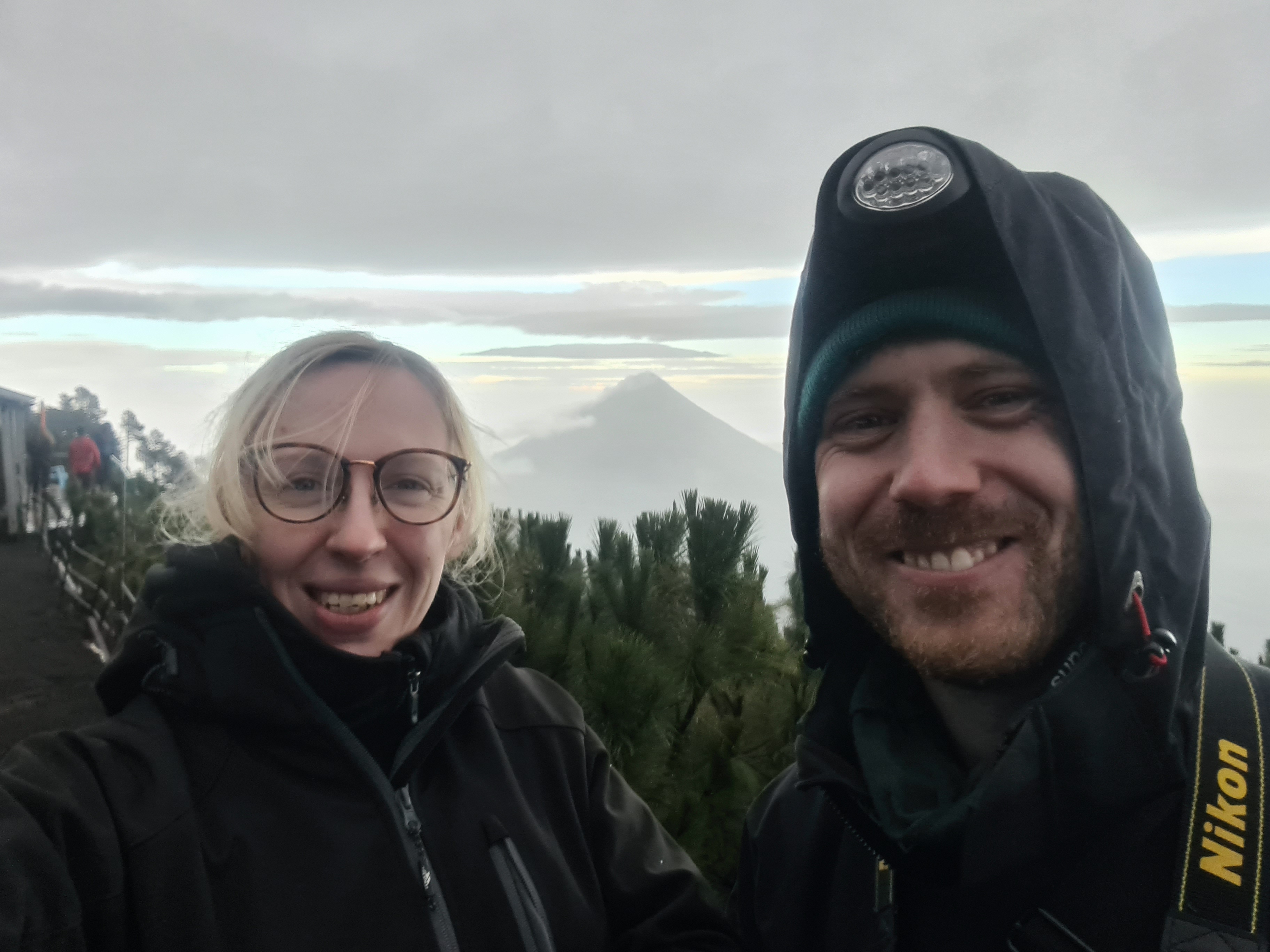

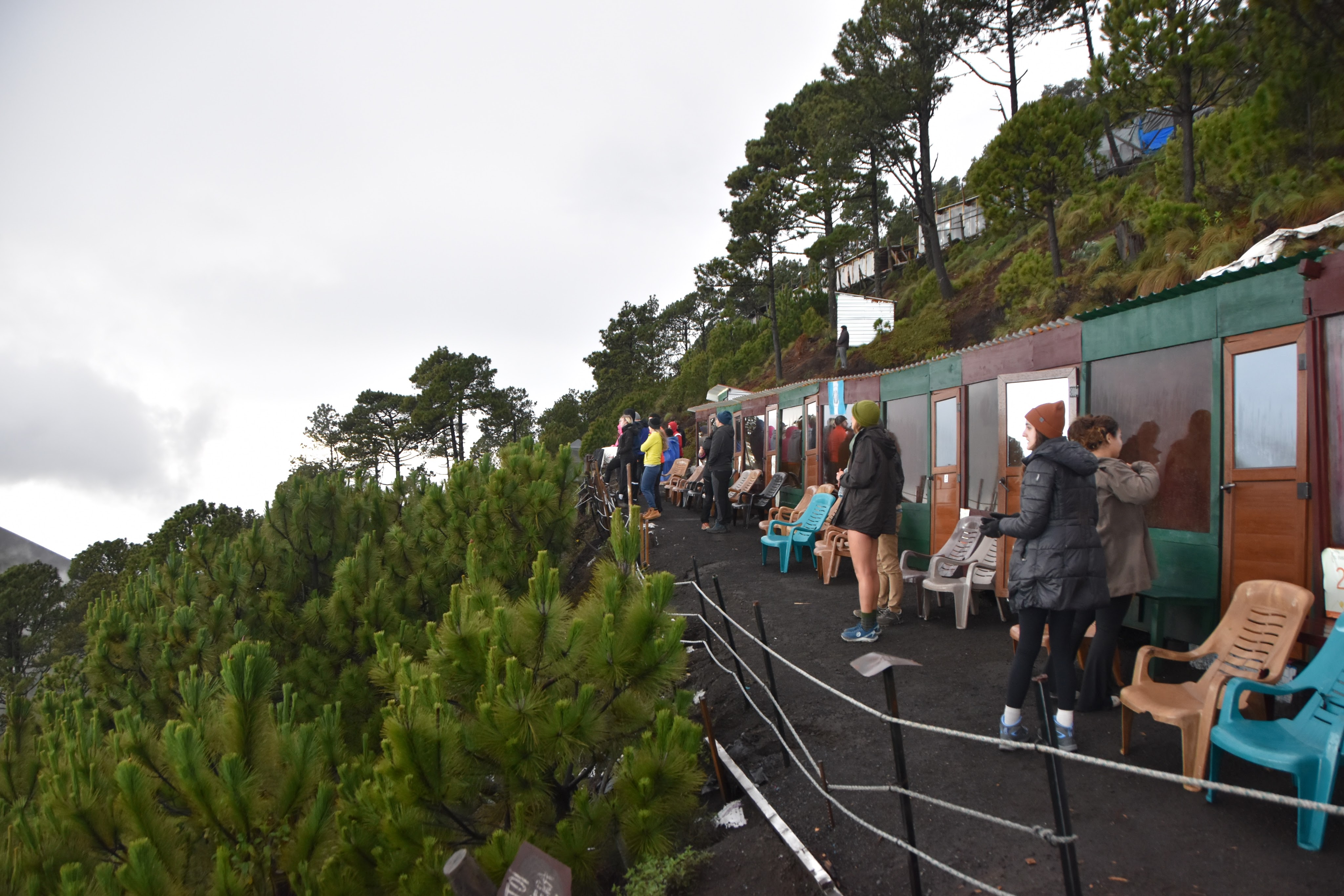

Fuego is the real reason that Acatenango is usually done as an overnight hike. While it is possible to summit Acatenango and descend in one day, the real focus for most hikers is Fuego.
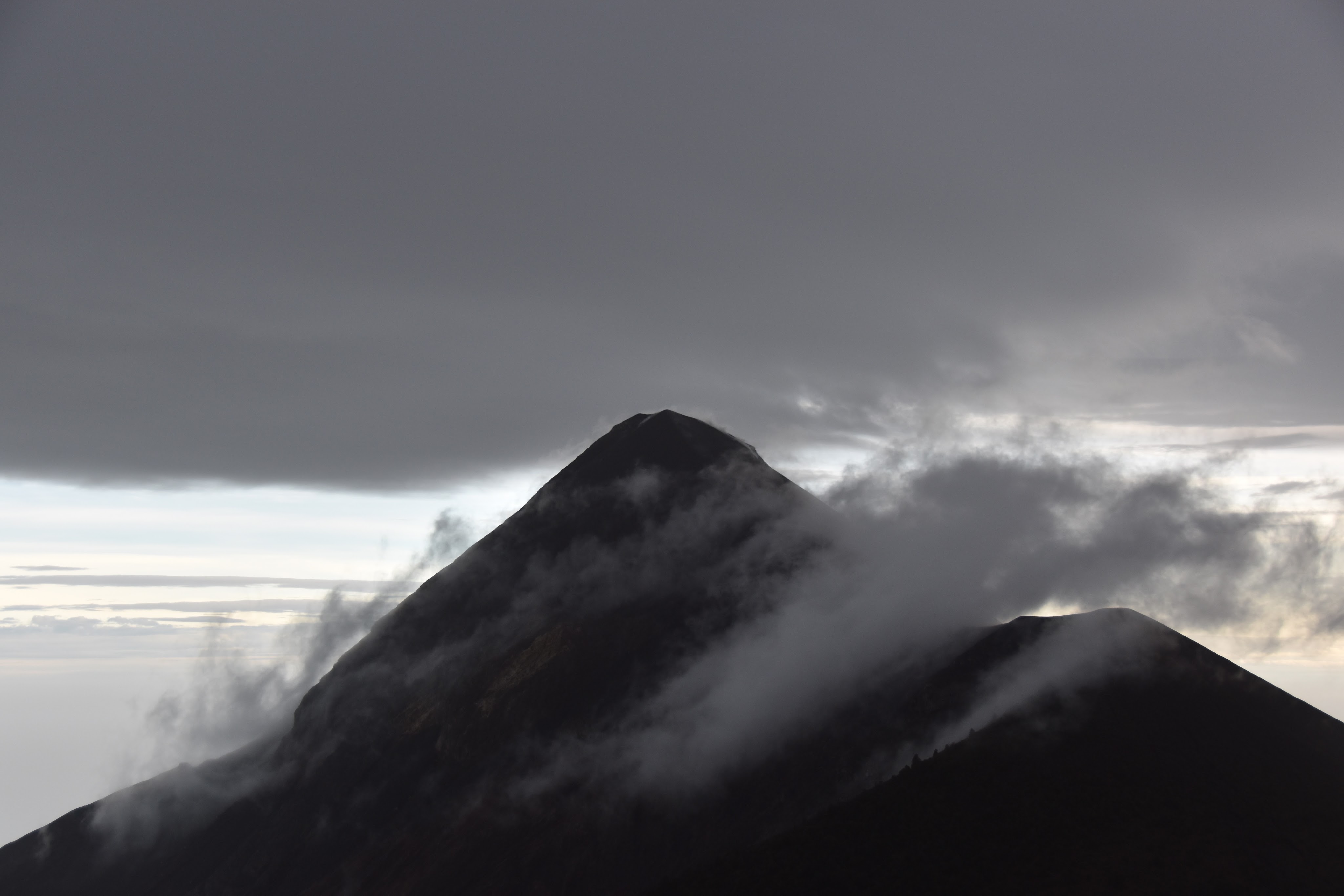
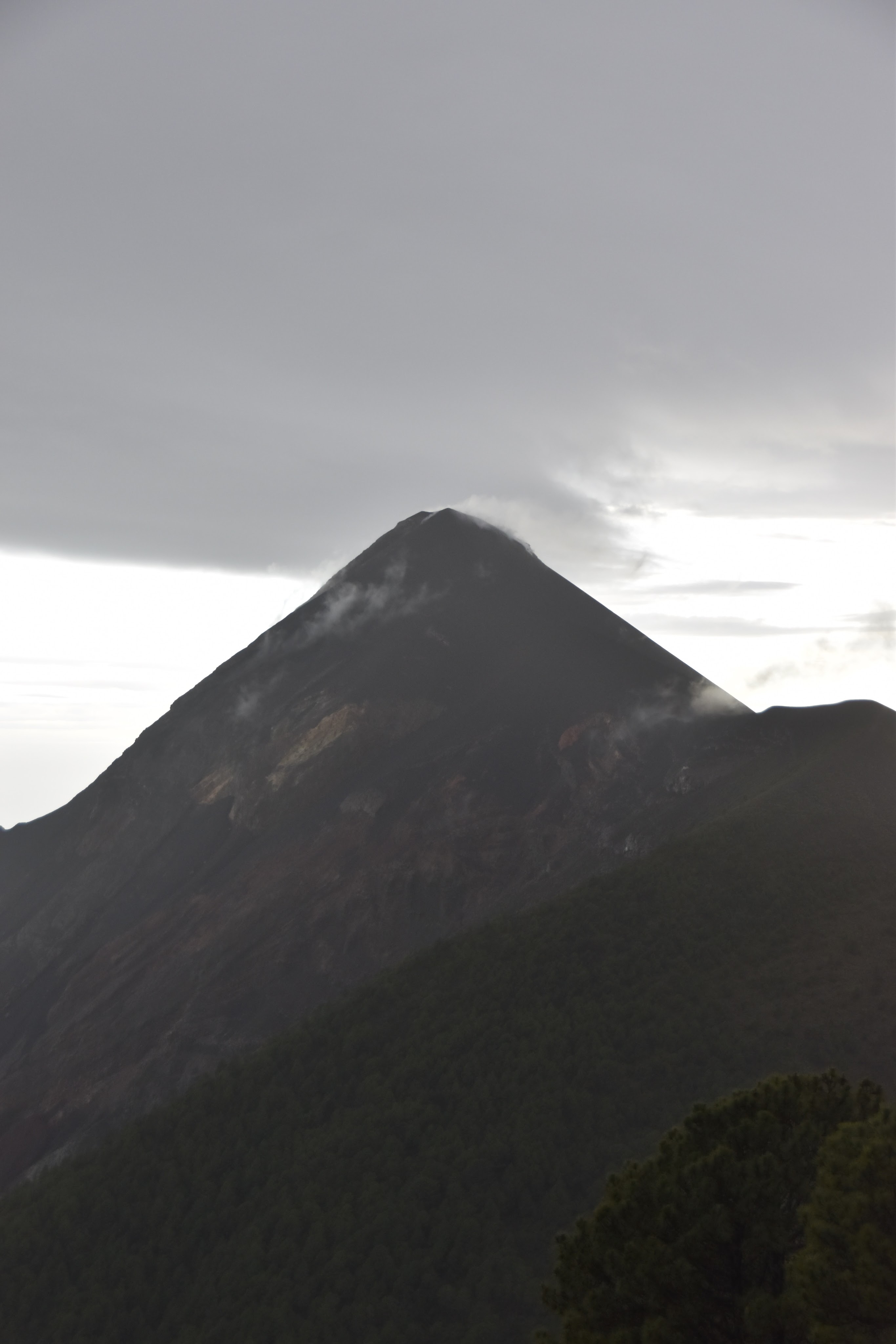
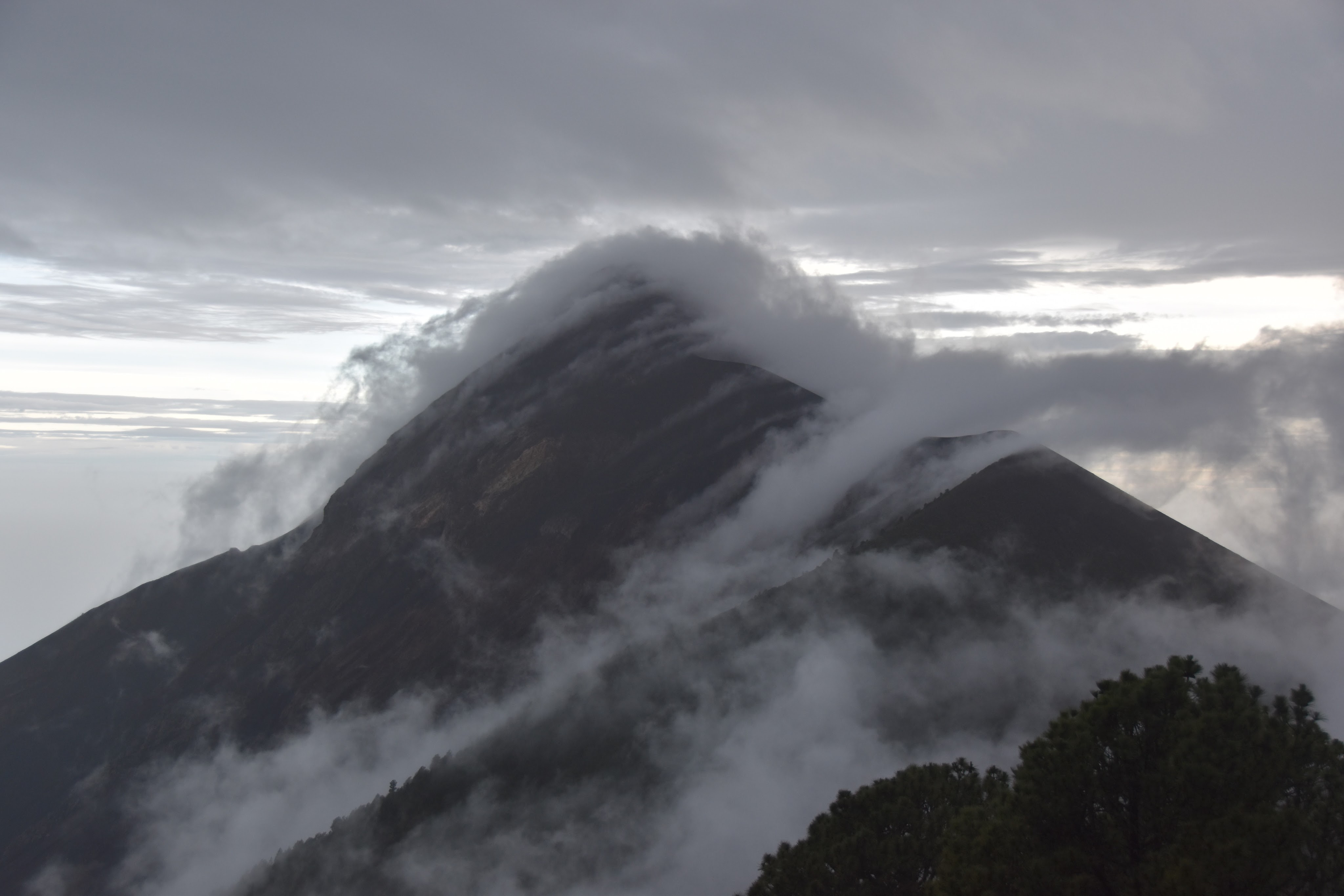
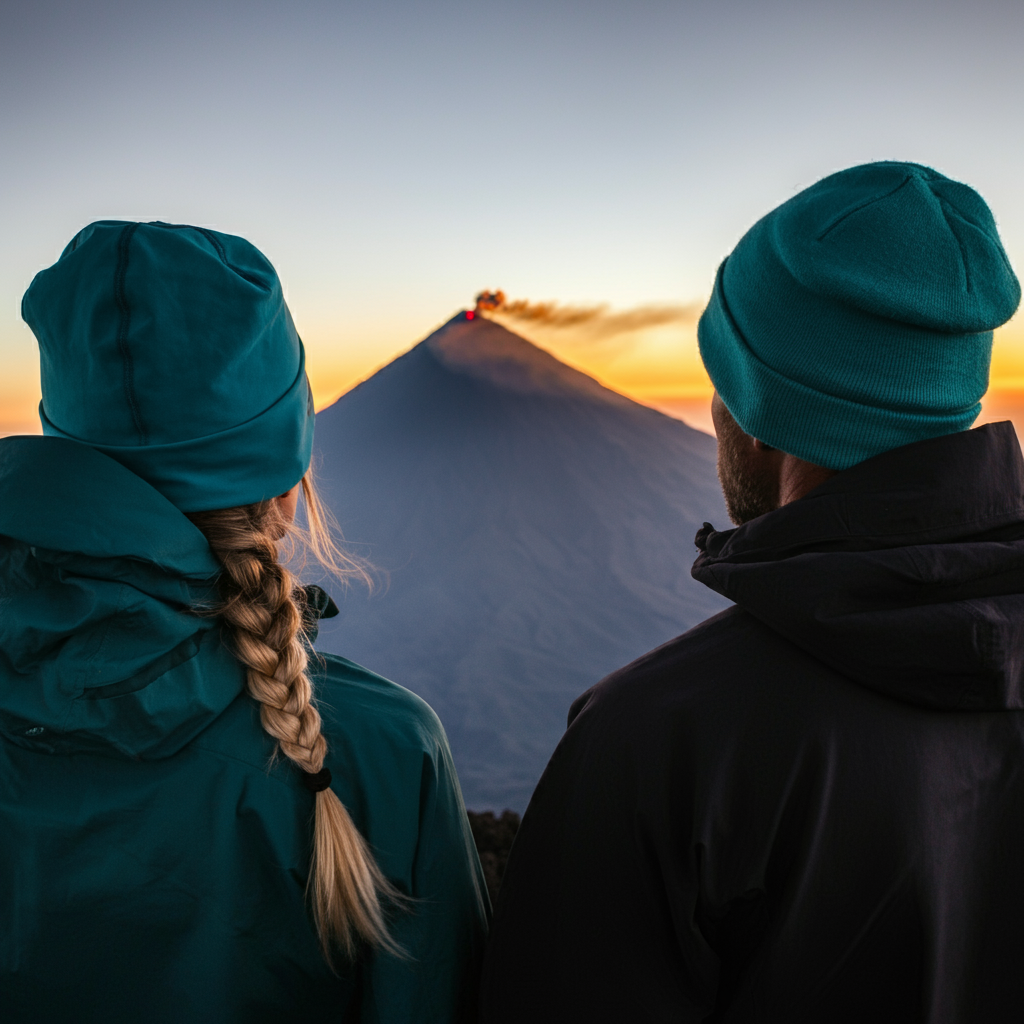
It is one of the most active volcanoes on Earth, so a prolonged visit to Acatenango base camp gives more chance to see eruptions, which are even more spectacular once the sky darkens.
It also allows hikers the time to trek the spur trail on to Fuego itself for views even closer to the crater. Just a few weeks prior though, we had seen a BBC article about the risks of doing so. Having previously watched Netflix’s documentary on the New Zealand Whakaari tragedy, we had absolutely no desire to be part of any sequel.
In fact, with the 2 hour rain delay we had thought the “extra hike” would be cancelled altogether. To our surprise though, those happy to give it a go set off in the late afternoon, making it a certainty they would have to do much of their trekking in the dark.

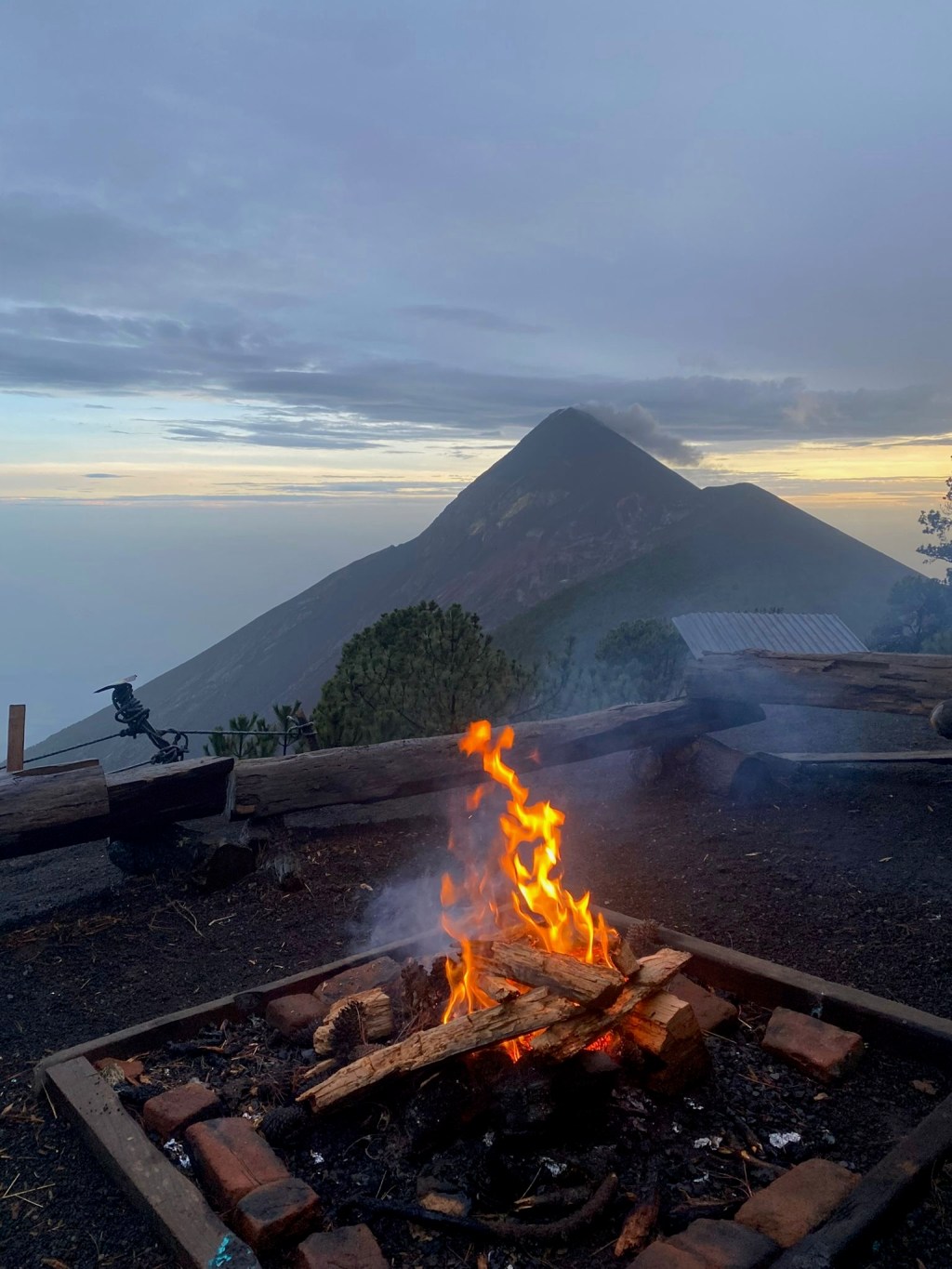
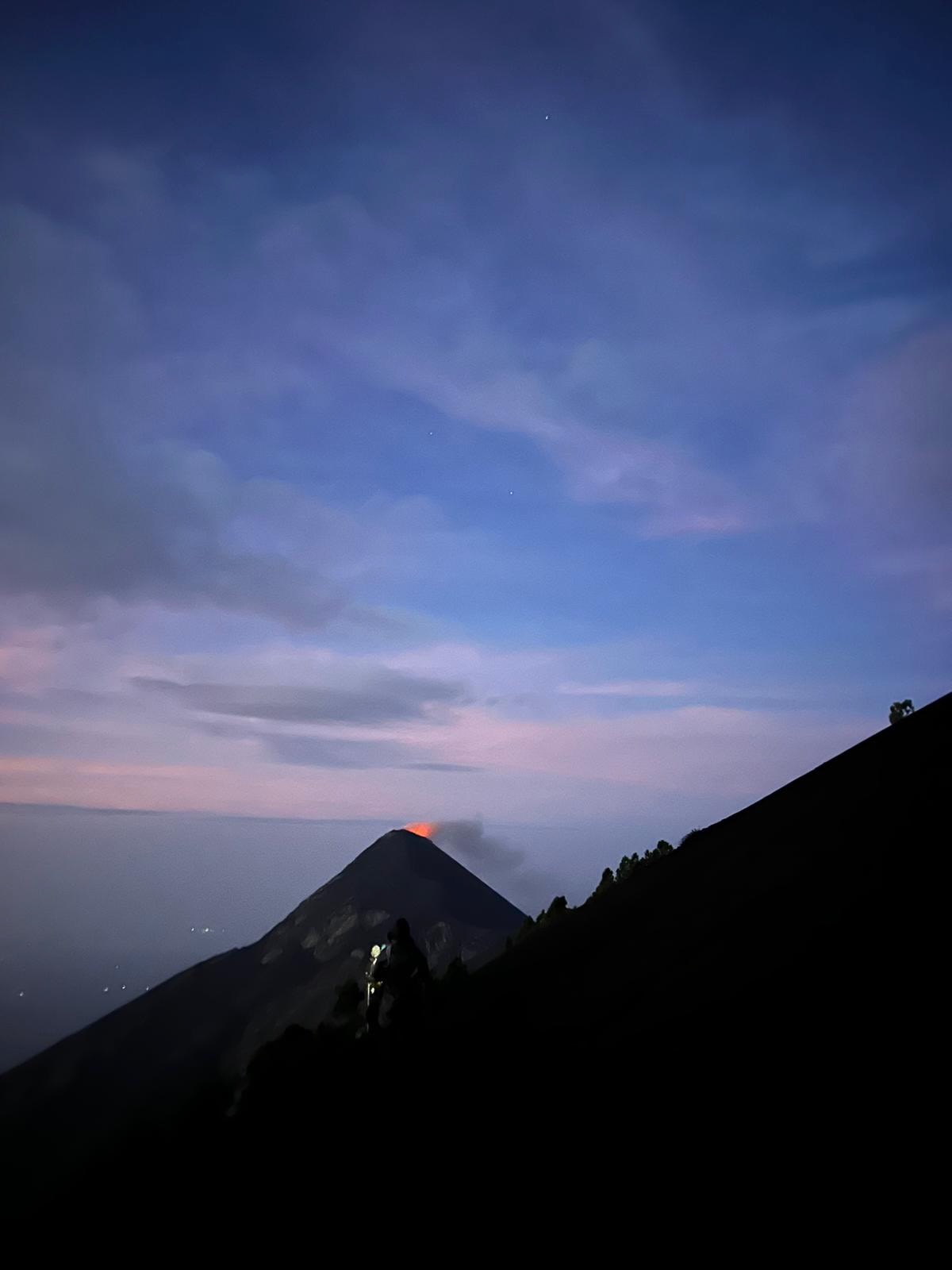
While those of us staying at camp enjoyed toasting marshmallows by campfire, we managed to catch one eruption with spewing lava. It was incredible to see the bright red shooting out against the backdrop of the night sky.


Unfortunately for those on the Fuego trek, we could see the pinpricks of their headlamps dancing towards a ridge which would block their own view of the spectacle. All that effort for nothing – and they wouldn’t return until after the rest of us had all had dinner and gone to bed. We were definitely grateful the BBC article had put us off!
A poor night of sleep (at least for me) followed, perhaps due to the cold, and certainly not helped when a neighbouring camper was rather noisily ill. We felt sympathetic, and prayed that it was altitude-induced and not food poisoning.
Thankfully we were still in fine fettle at the 4am wake up to head to the summit of Acatenango. Again, this was an optional part of the trek, but it was only an hour or so more to ascend and surely it would be magical to see the sunrise over Fuego?
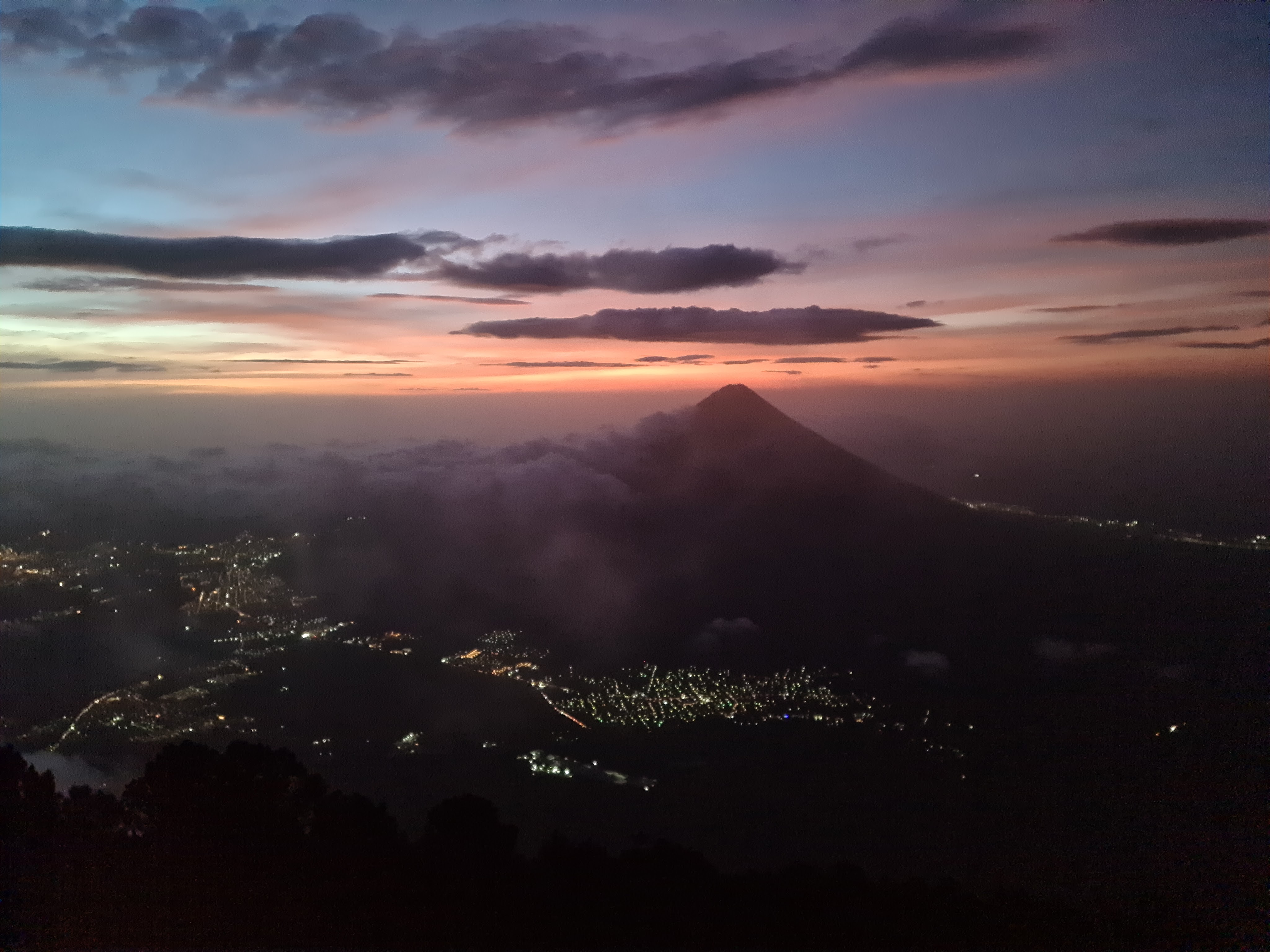
Wrong. This was the toughest part of the hike, with some steep inclines up volcanic sand. It felt like being stuck in mud, and any flat trail was a very welcome reprieve. We were on one of those flat spells when we were treated to a view of the sunrise starting to colour the sky above Antigua, and looking back at exactly the right time, caught another fiery eruption from Fuego.
In hindsight, from my perspective, this probably would have been a great place to call the finale.
Instead we trudged onwards, and once we cleared the treeline, the atmosphere became pretty hostile. Strong winds started slowing our progress further, and my walking poles became much more of a hindrance than a help. A shrill whistle kept piercing the air, and Ricki realised it was the wind whipping through the cavity of the poles. At one point I also feared they were going to be ripped out of my hands and turned into projectiles.
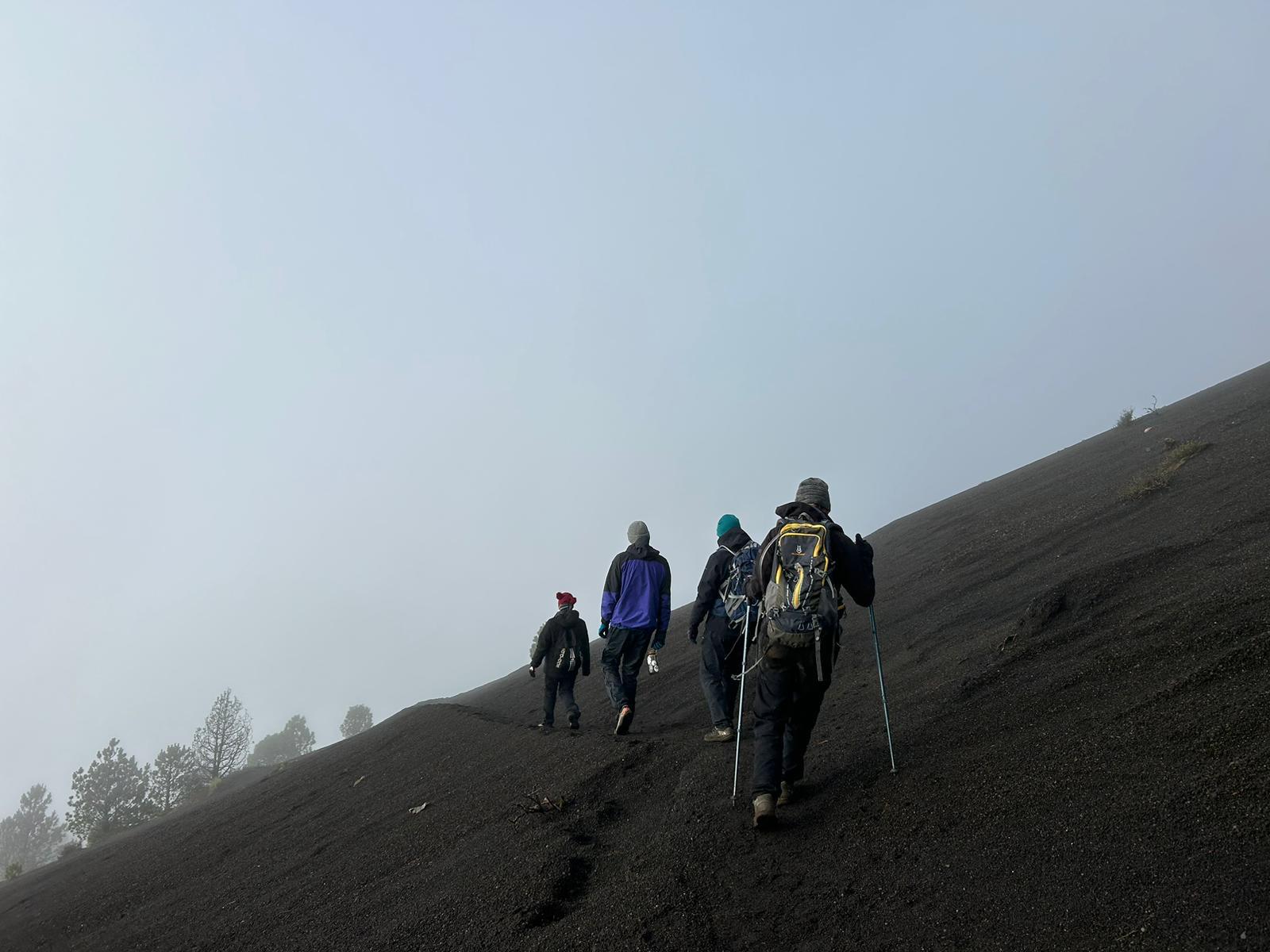
The final ascent to the summit was brutal, as combined with the wind, the volcanic sand slipping beneath our feet had us venturing one step forward and two steps back.
We should have been relieved to reach the summit. Instead, wind speeds were so strong, it was a battle just to stay upright. I couldn’t feel my fingers through my gloves and my glasses were steaming up repeatedly, impairing my vision. I’m still amazed Ricki was able to extract our camera and get a couple of snaps of Fuego. We had missed sunrise owing to my slow progress.
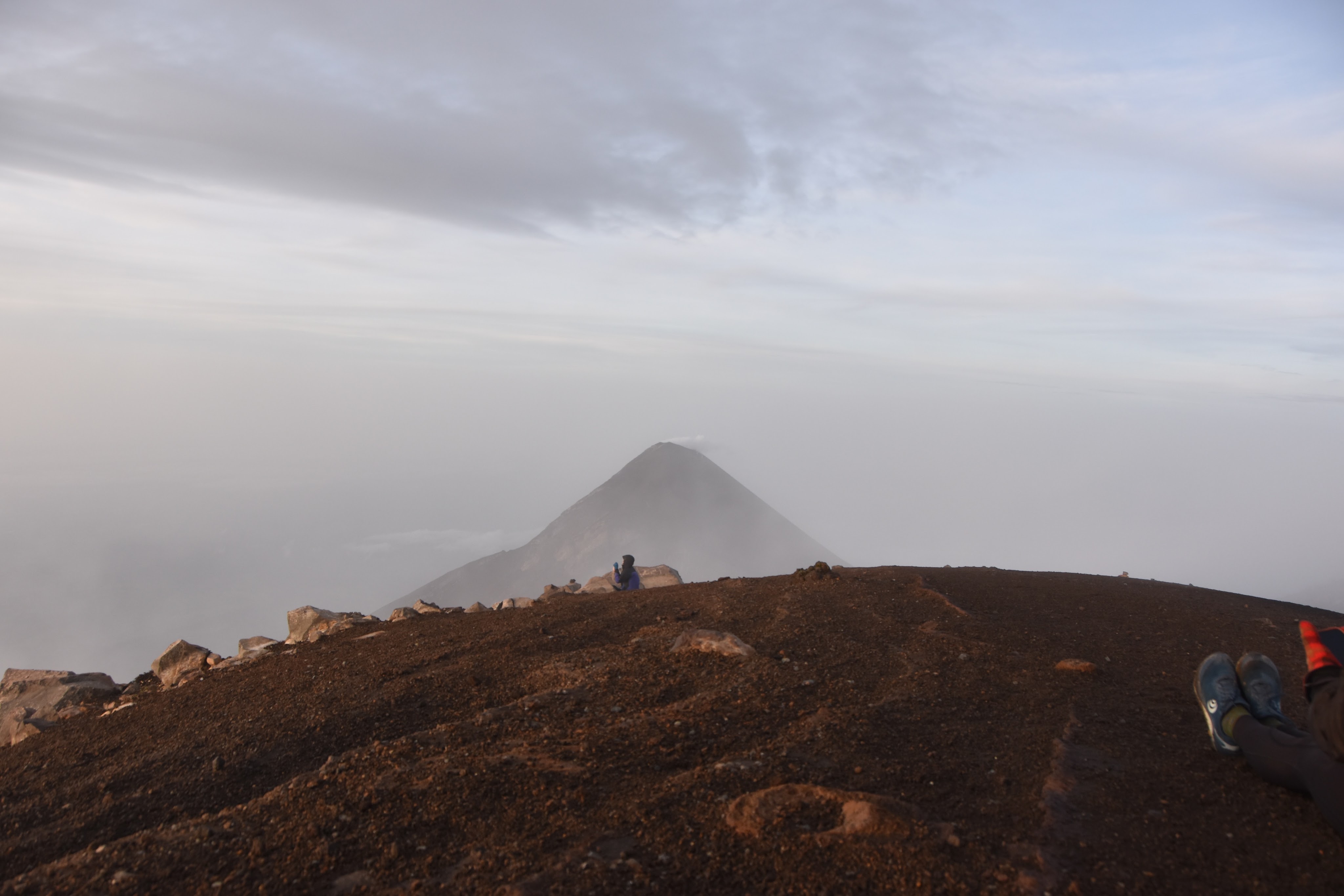
Unsurprisingly, we didn’t hang around long. The descent provided its own challenges, as gravity had you battling not to fall on the volcanic sandy slopes. The advice was to fight your instincts to tread slowly, and try to use the momentum of jogging/running to get you down. Flight rather than fight seemed to be kicking in for me though, and my legs gave up repeatedly under me. I’m not afraid to admit, scrabbling around the sand, my shouts getting carried away by the wind, tears pricking my eyes, this was not me at my finest.
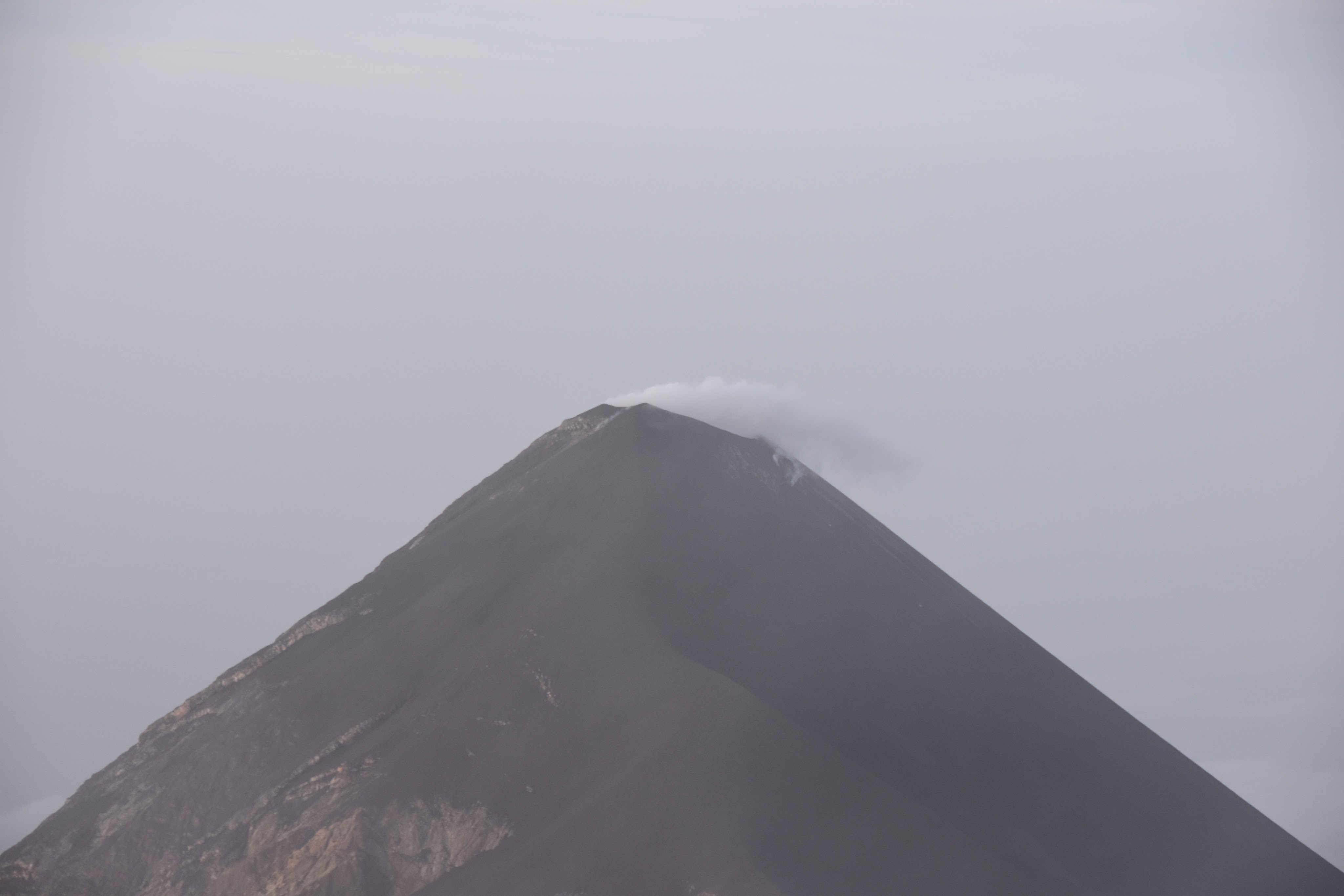
Getting back to base camp for a much needed breakfast was galvanising, and I actually managed to jog and jump the remainder of the descent at the front of the group. Perhaps it was my eagerness to get off Acatenango!
In some respects, despite being a much shorter hike, Acatenango proved to be a much more challenging experience than the Inca Trail. I’m really pleased we did it, as watching Fuego as we camped was a one of a kind experience, and I’d happily do the base camp hike and overnight again. As for the summit…I have to admit, I did utter the phrase “never again!” at Ricki in between trying to stay aloft. At least I can say I persevered and made it!
Tash’s Treats
I don’t have too many noteworthy items for Guatemala.
Unphotographed, I tried a vegan version of pepían, a spiced chicken stew considered the national dish. Why vegan, you ask? Well the night before we had shared this (and the leftovers that day for lunch):

Tacos are very popular in Guatemala due to the proximity to Mexico, so these made an easy dinner. And also from Mexico, I had a michelada. I’m sure I’d had one before in Mexico itself and really liked it. But perhaps that variation was different, as I was not a fan of the beer, spice and tomato juice combo here. And yet that wouldn’t be the worst michelada I tried this summer…
- This particular issue had some precedent. It has been seen as a retaliatory measure provoked by the UK government requiring Honduran visitors to apply for a visa as of last summer. ↩︎
 A Place Both Wonderful and Strange - Tash & Ricki's Career Break Travels
Leave a comment