

“Are you sure we’re not going to North Korea?!”
I had to supress a laugh as a fellow G-Adventurer clearly hadn’t realised what she’d signed up for when booking a tour that included Turkmenistan. As one of the world’s most secretive countries1, we had just been reminded that our usual news, messaging services and social media sites (plus VPNs) would be out of service to us once we crossed the border.
Or should that be “if” we crossed the border. As you may recall, covid had been doing the rounds in our group, and a covid test would be required on entry. Prior research this year had also alerted us that Turkmenistan can be somewhat unpredictable in their approach to granting visas. In fact, it is a requirement that tourists are registered with a local guide which was a key reason we were on a G-Adventure altogether.
Our latest (and final) CEO, Batyr, had been sent to Uzbekistan to meet us, brief us, and accompany us into his homeland. Understandably well practised in the art of border crossing, he was somewhat blase about the matter.
Even those of our tour group heading home/elsewhere instead of continuing to Turkmenistan earwigged on our briefing in curiosity.
“Will they definitely test us for covid?” – “Yes, and then you will get in.”
“But what if we do have covid?” – “You will get in.”
“But what happens if the test is positive?” – “The test will not be positive.”
“But what if it IS positive?” – Sigh. “The test is nominal. They take a single cotton bud, run it under all your noses then throw it straight in the bin. That’s a joke by the way…but it IS nominal.”
Unsurprisingly, Batyr would turn out to be completely correct and also had the various bureaucracy and queue racing down to a fine art. We just mainly had to sit around, wait and occasionally do as we were told. I don’t recall the covid swabs we used to do in the UK having such a chemical sting, but it all seemed legit. Every now and then I find myself with a strong desire to sing the Turkmenistan national anthem and pledge allegiance to the president, but that aside, no damage done.
As far as I’m aware, the only intervention Batyr had to stage was with our own bus driver, who at one point seemed set to drive us straight from Uzbekistan to our first Turkmen site without actually stopping at a border control point. Probably not the best way for foreign citizens to get on the immigration department’s good side.
After making our legitimate arrival, we had some time to wander round the ancient sites of Kunya Urgench. Batyr explained they were some of the only buildings to have survived Mongol invasion, albeit changes in trade routes, natural disasters and wars had left the site in a state of decay.
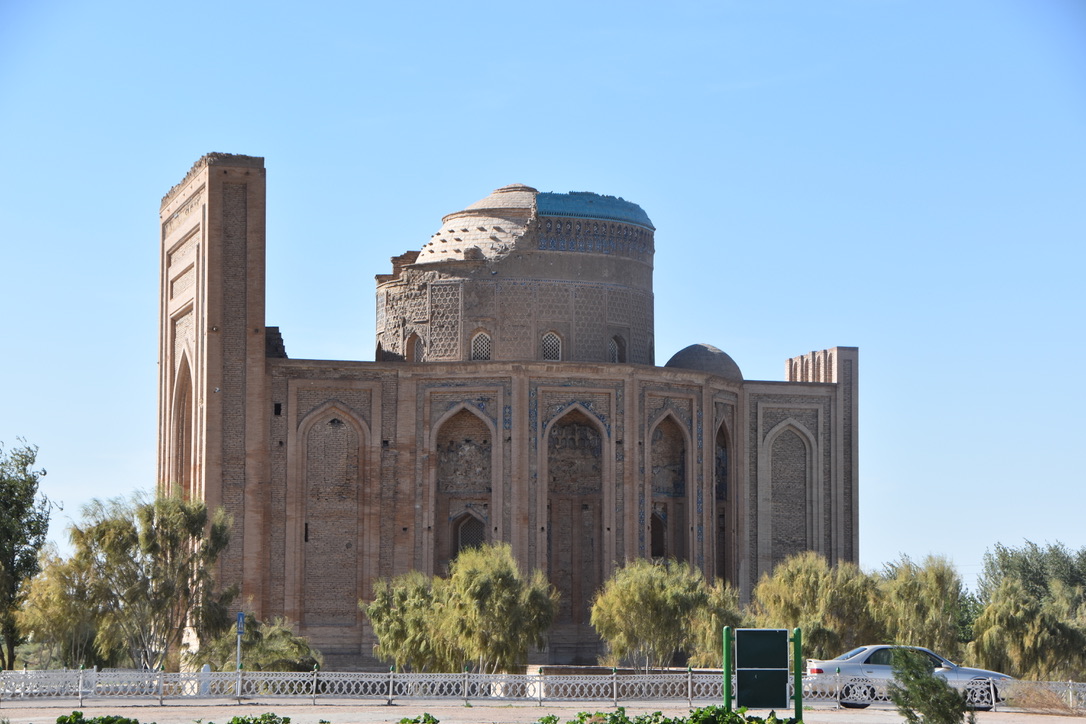
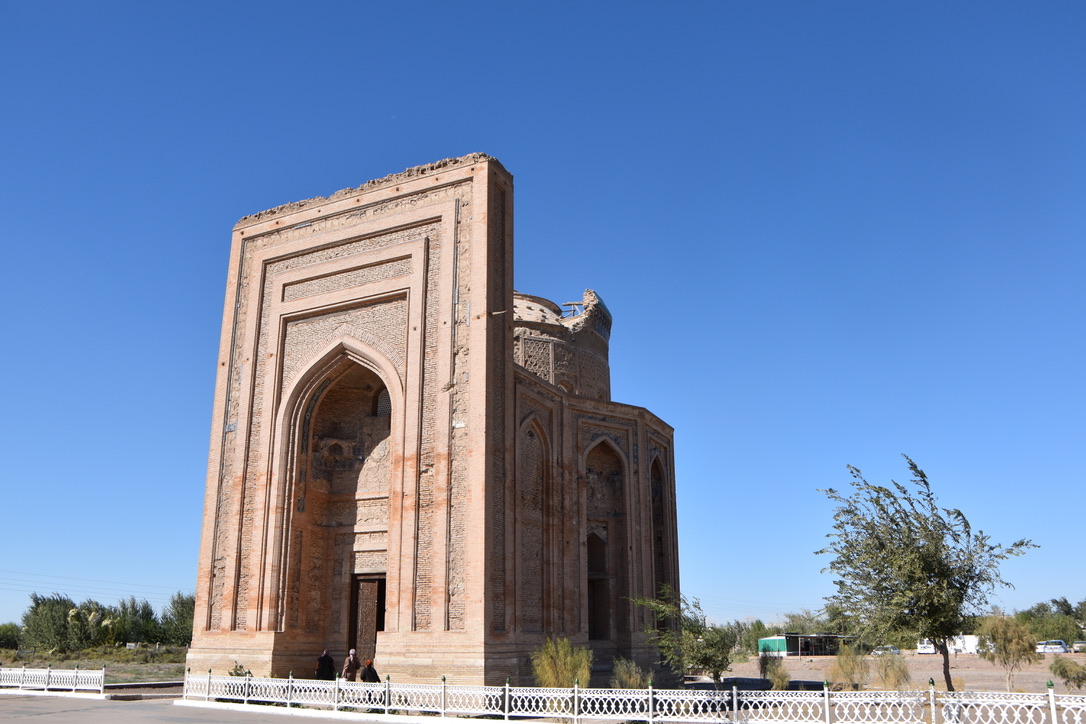
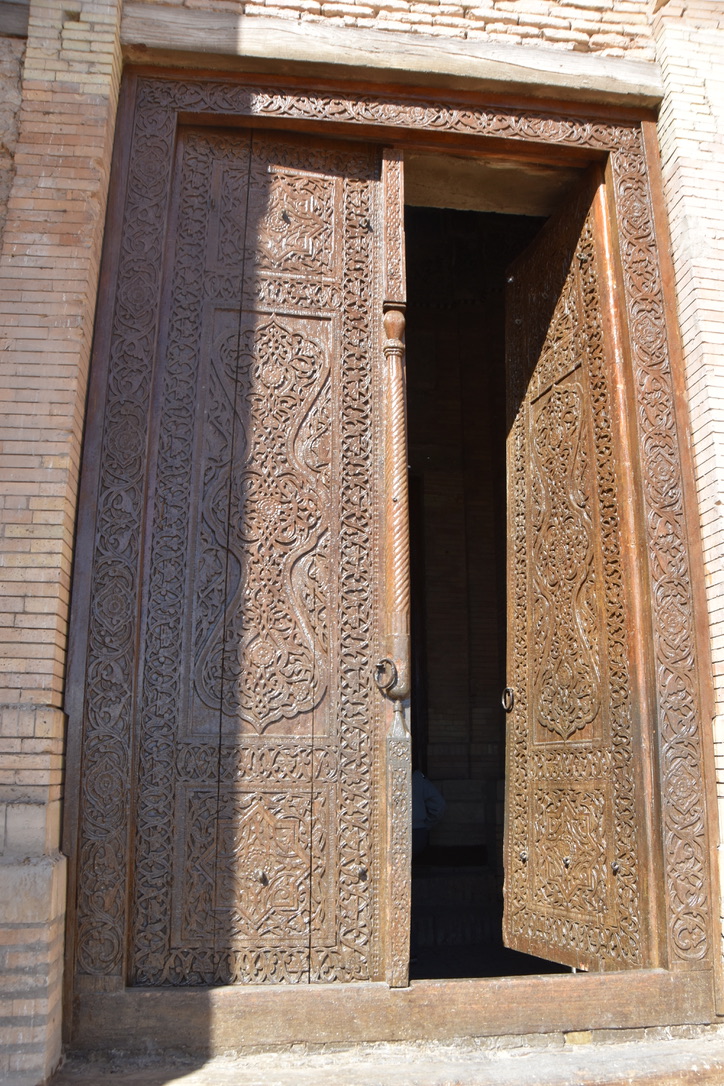
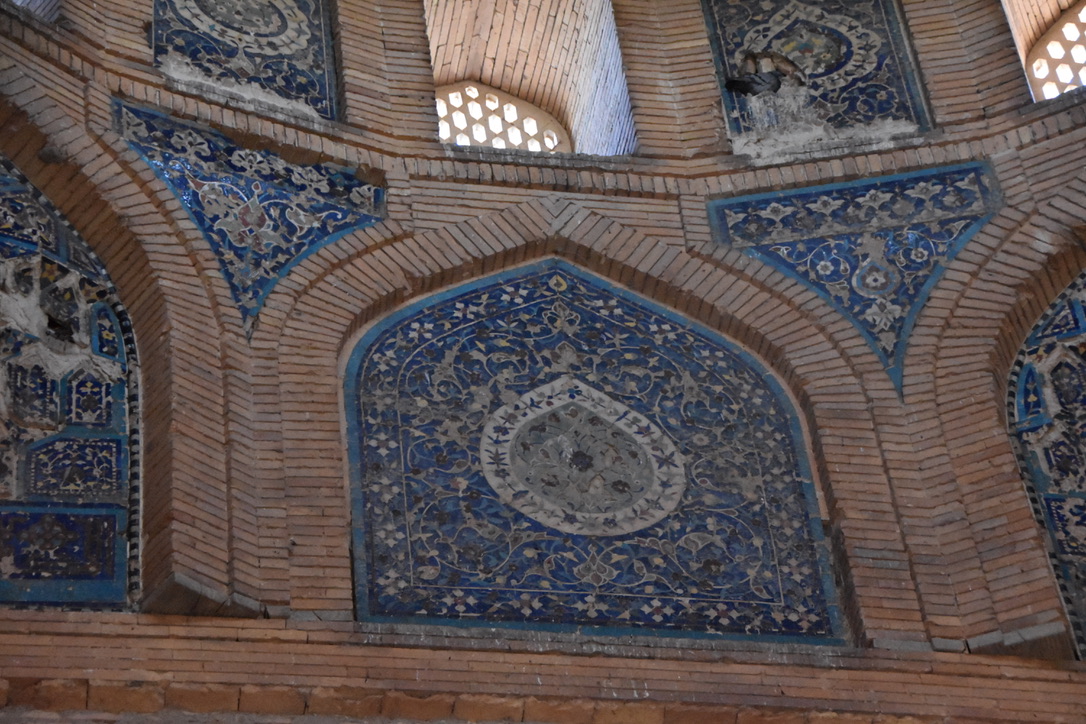

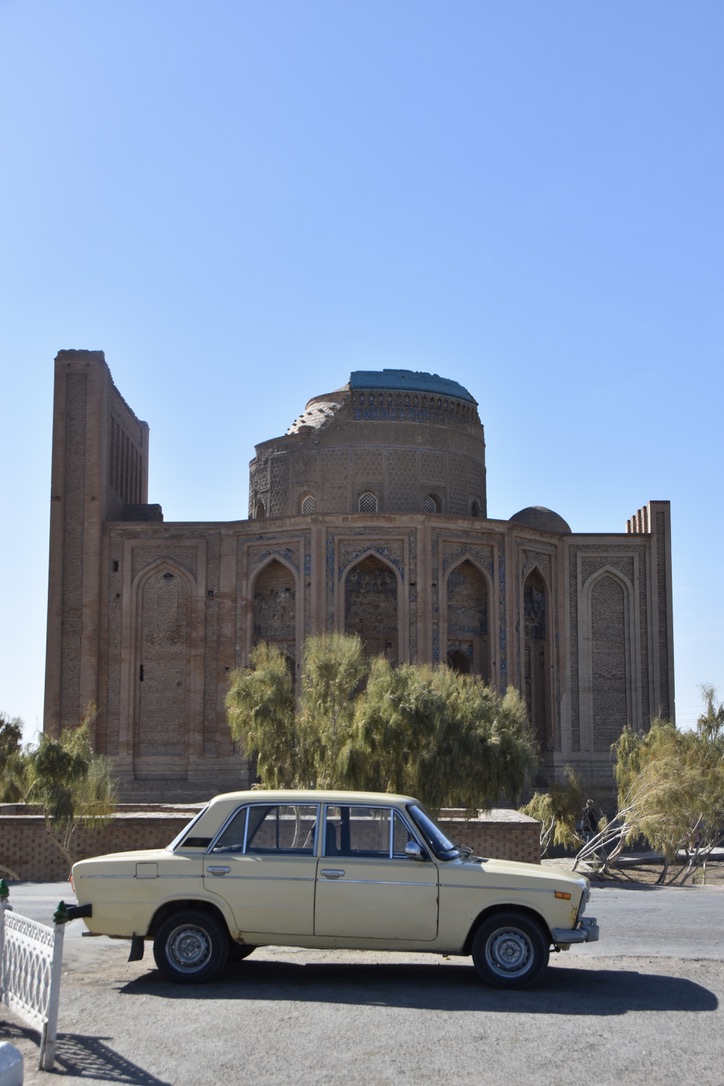
As we set off to explore on our own, he added “oh, one more thing, if anyone speaks to you in Turkmen, they are probably just asking you for a photo.”2

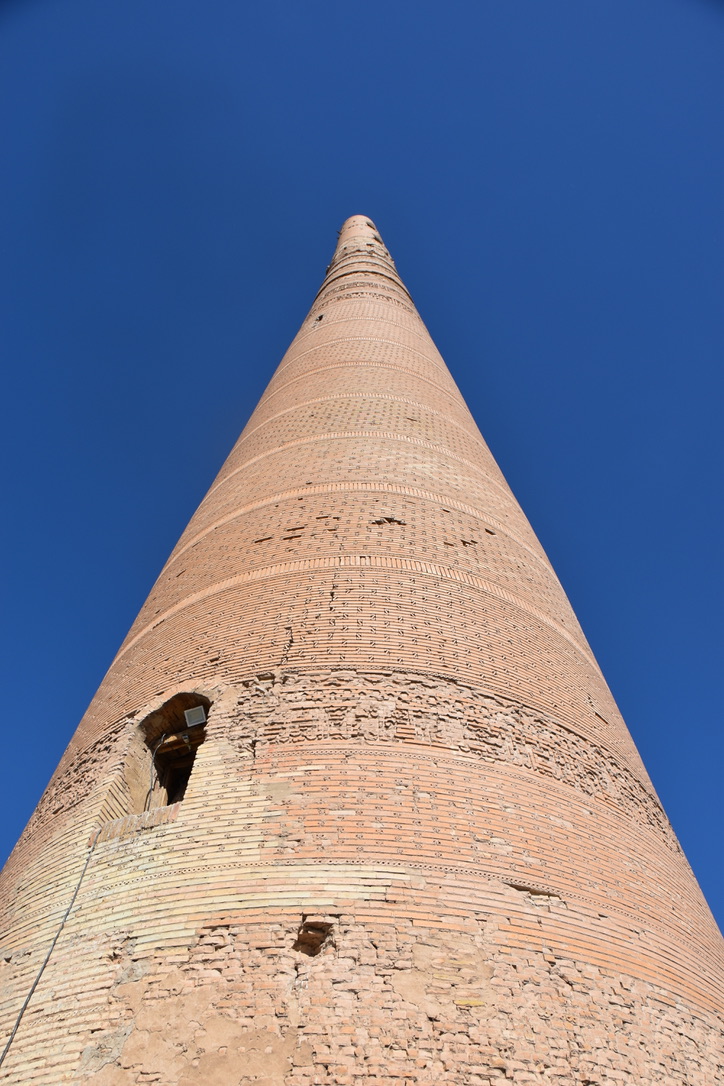

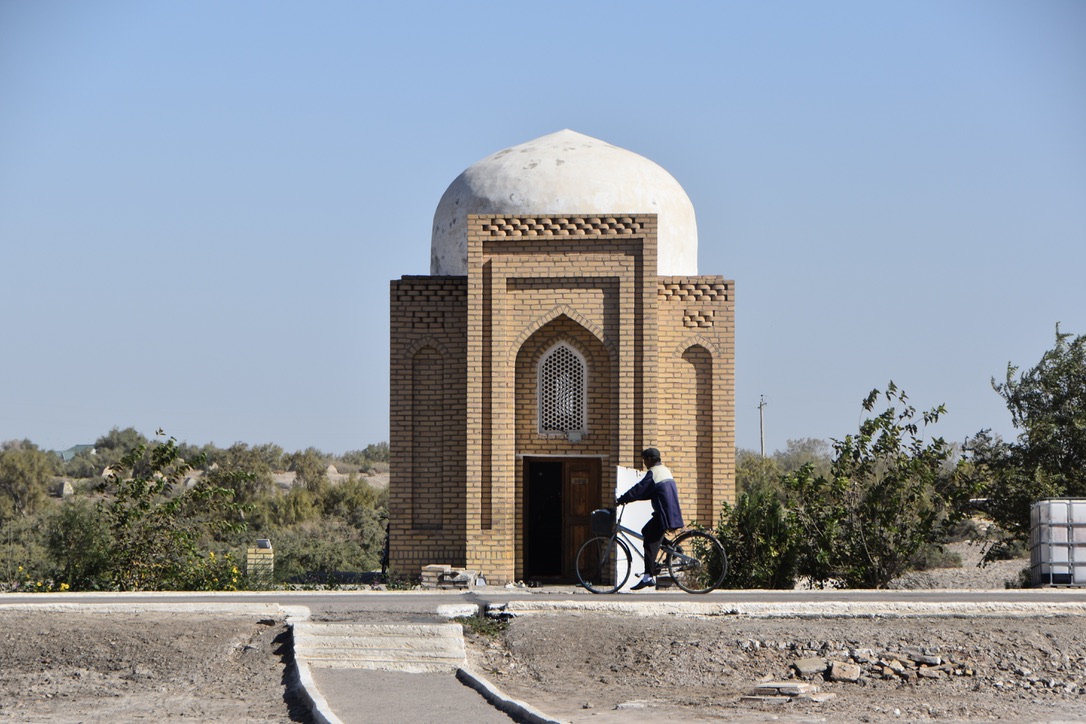
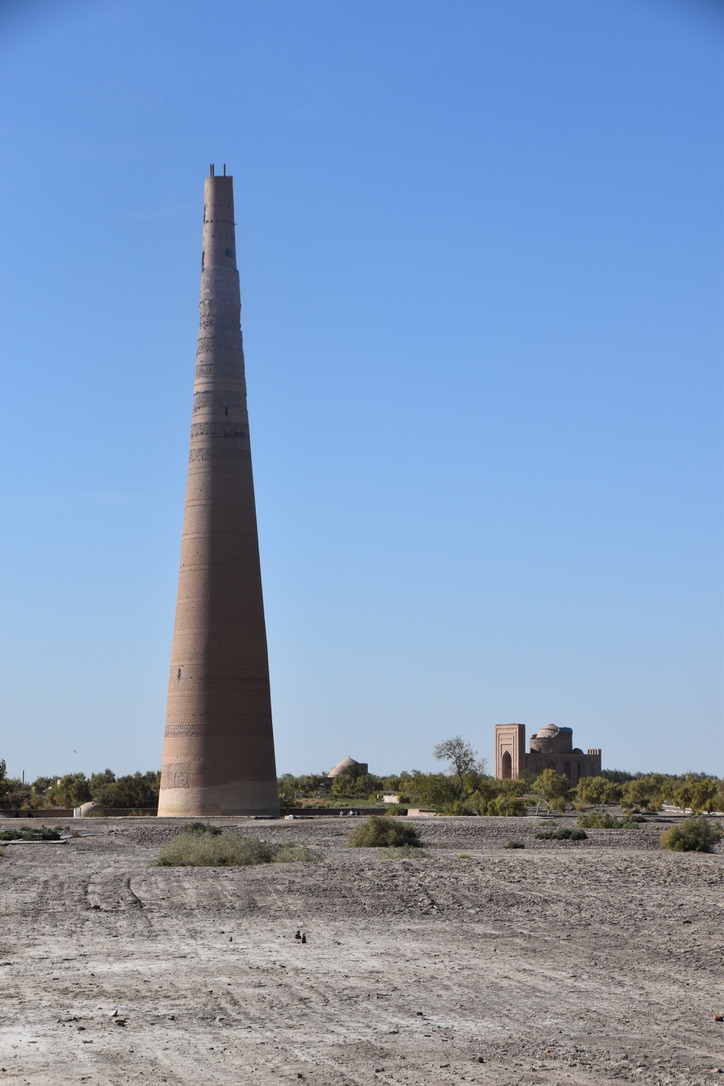

Which is exactly what the locals did. If you ever want to feel like a celebrity for the day, visit rural Turkmenistan. The citizens will be delighted to get a selfie with you. When we later visited the national history museum, one teacher went as far as smacking one of her students round the head as the class stared, waved and giggled at us.
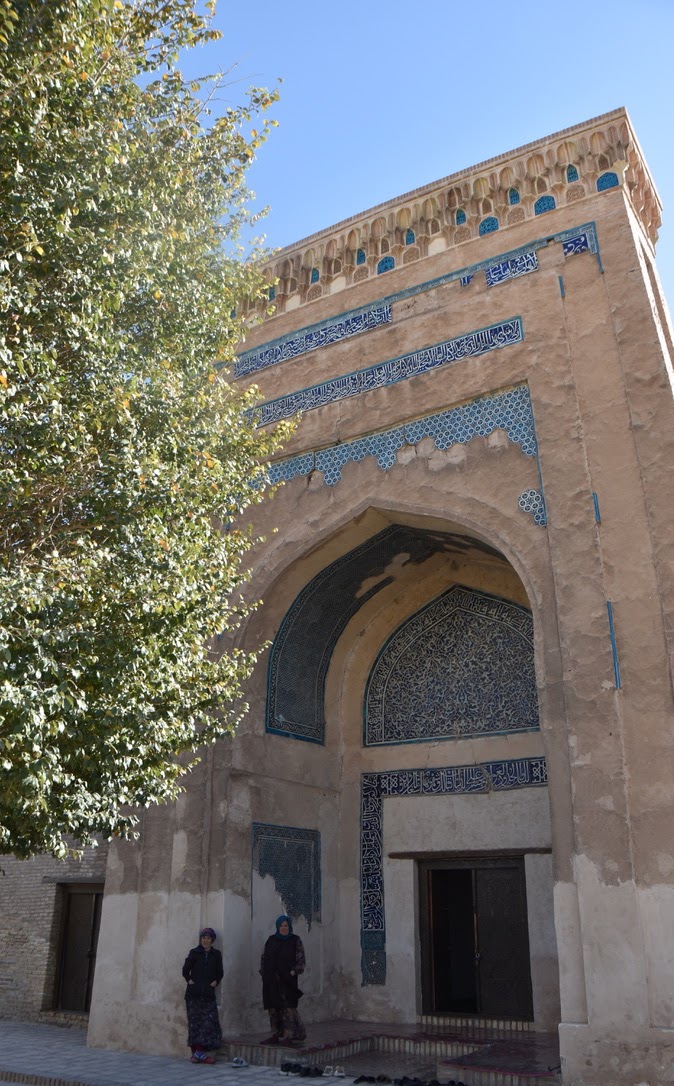
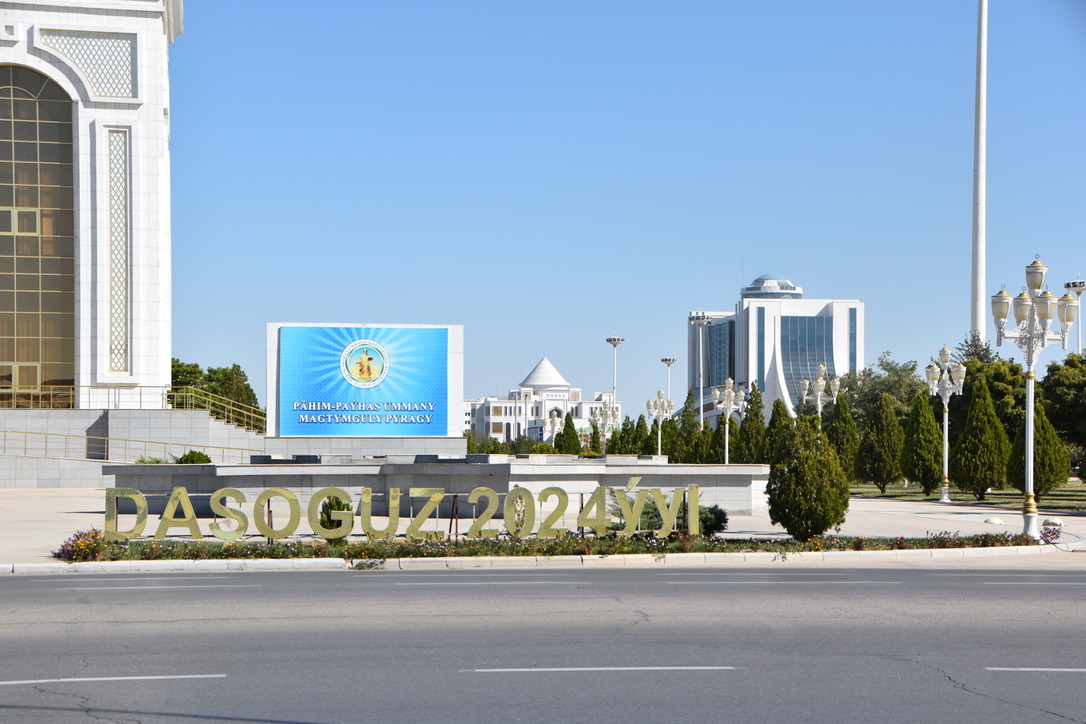
There were no such encounters at our next destination, Dashoguz. In fact, there were no encounters of any kind. We spent the night in what felt like a business park without any businesses. Batyr’s slightly more unconventional approach to tour guiding continued – “If you like, there is a canal behind the hotel you can take a look at. Though it seems like the sort of place you might find a dead body.”

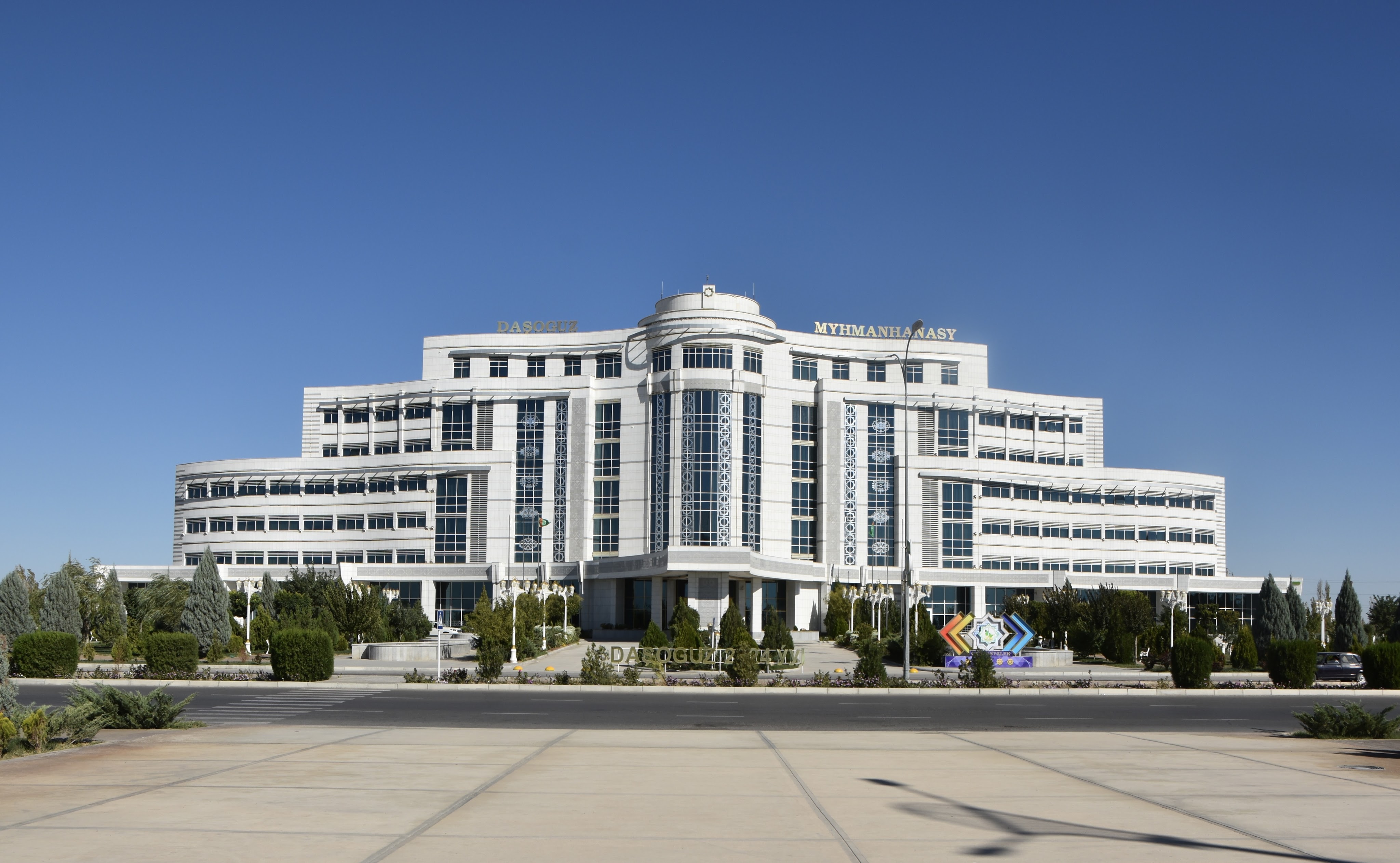
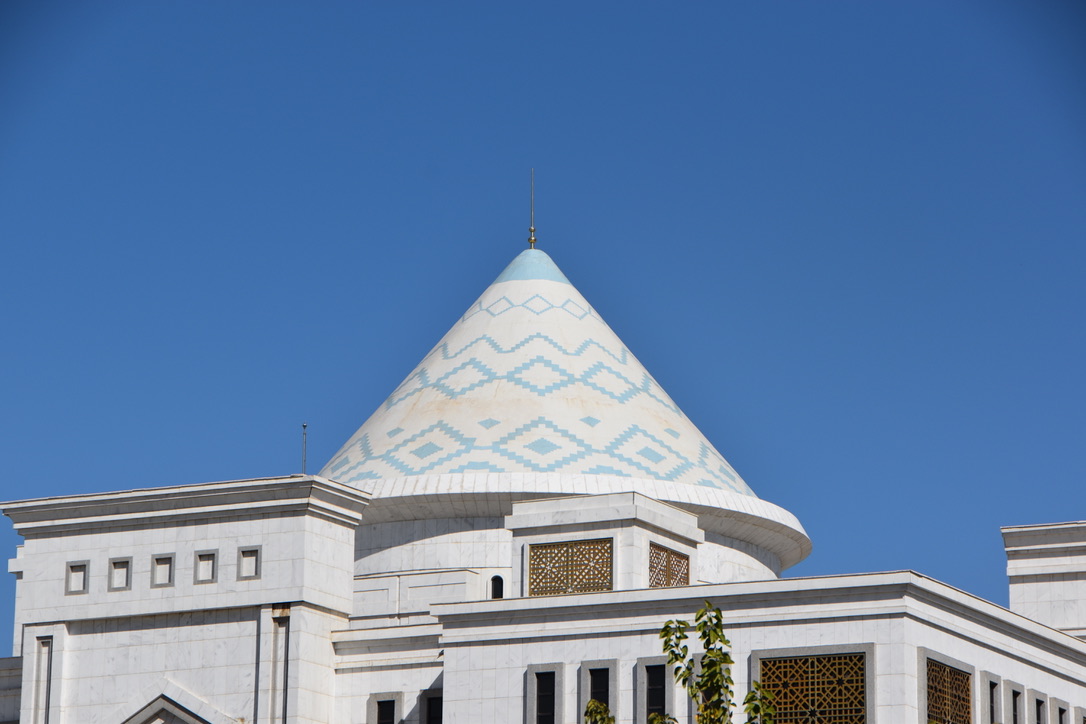
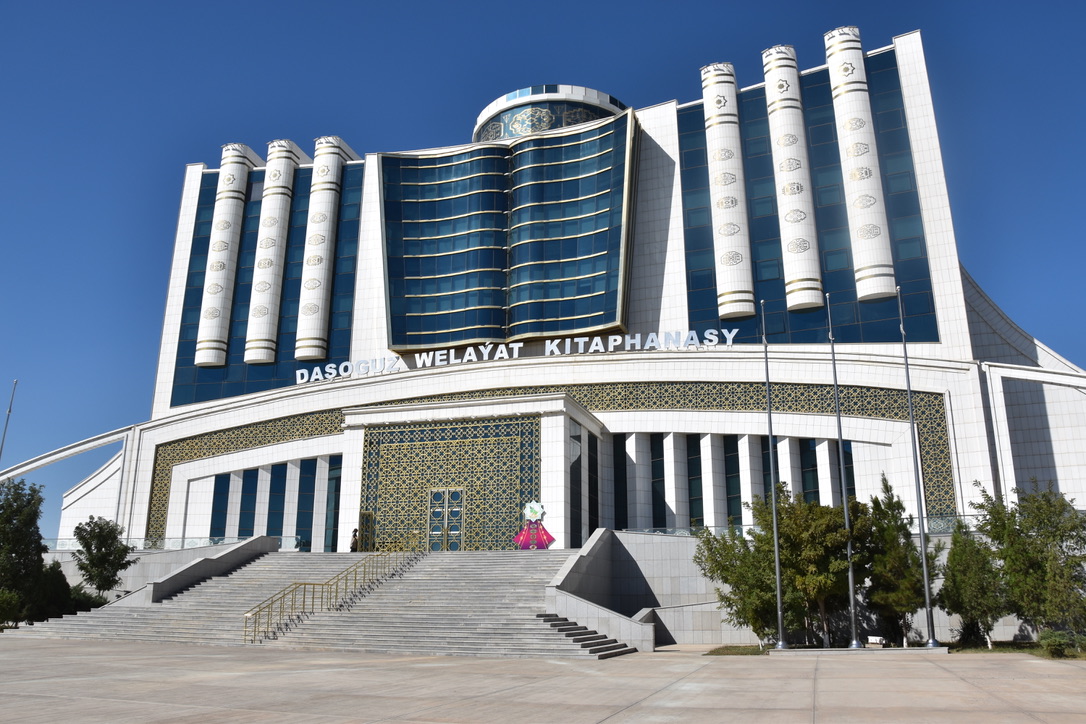
Our brief city tour the next morning was more by the book (in one case, quite literally, with a very appropriately designed library), but just as unpopulated.

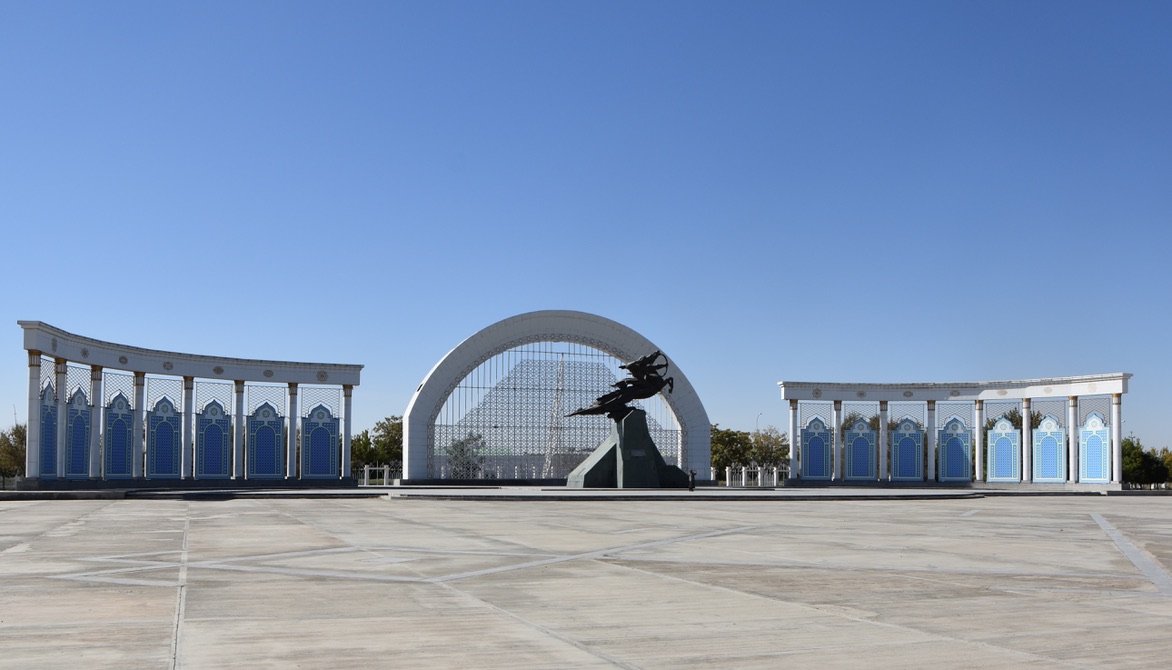
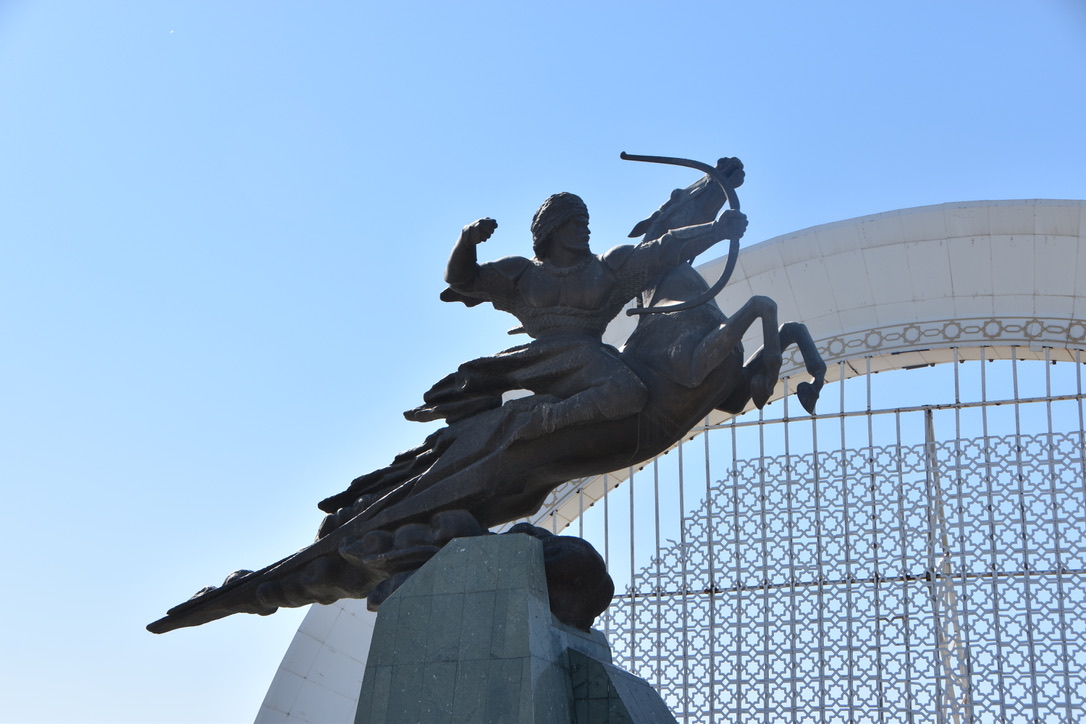

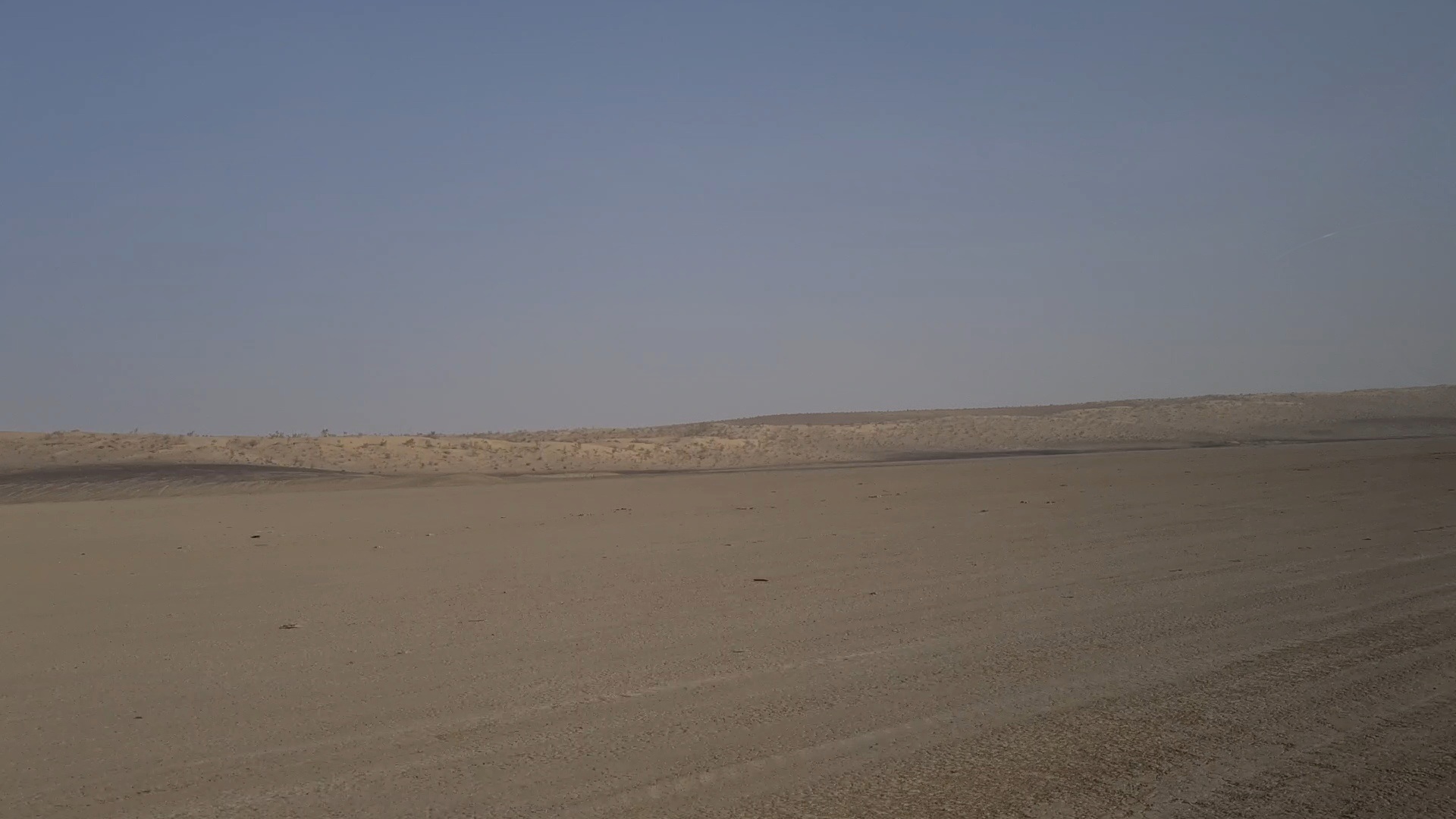
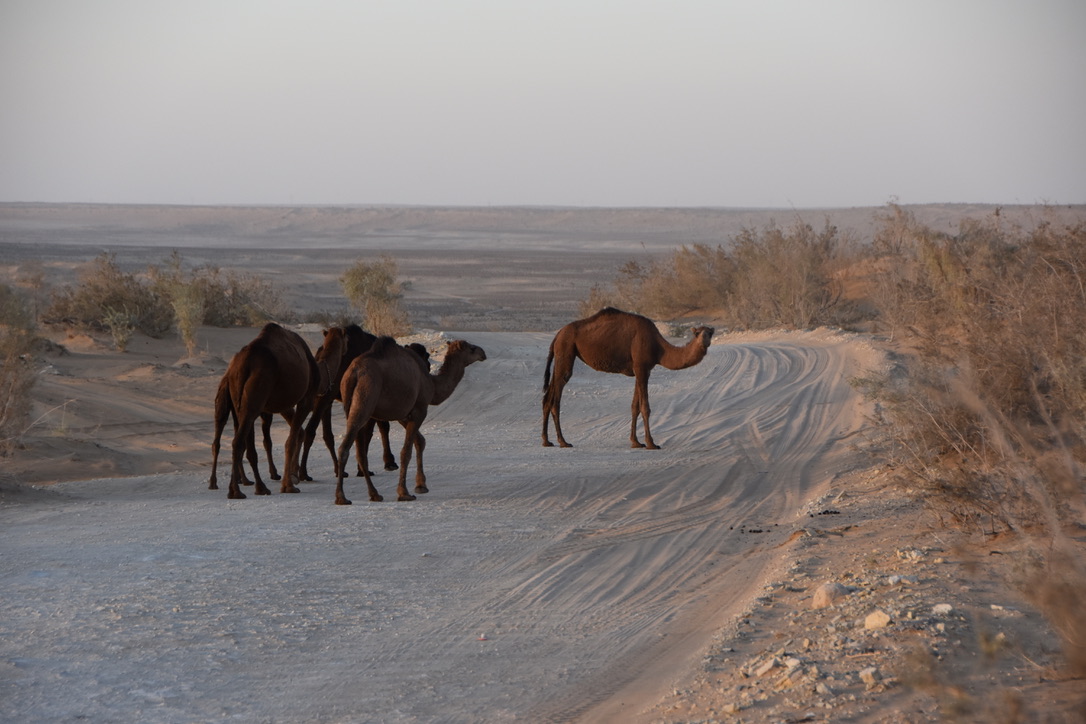
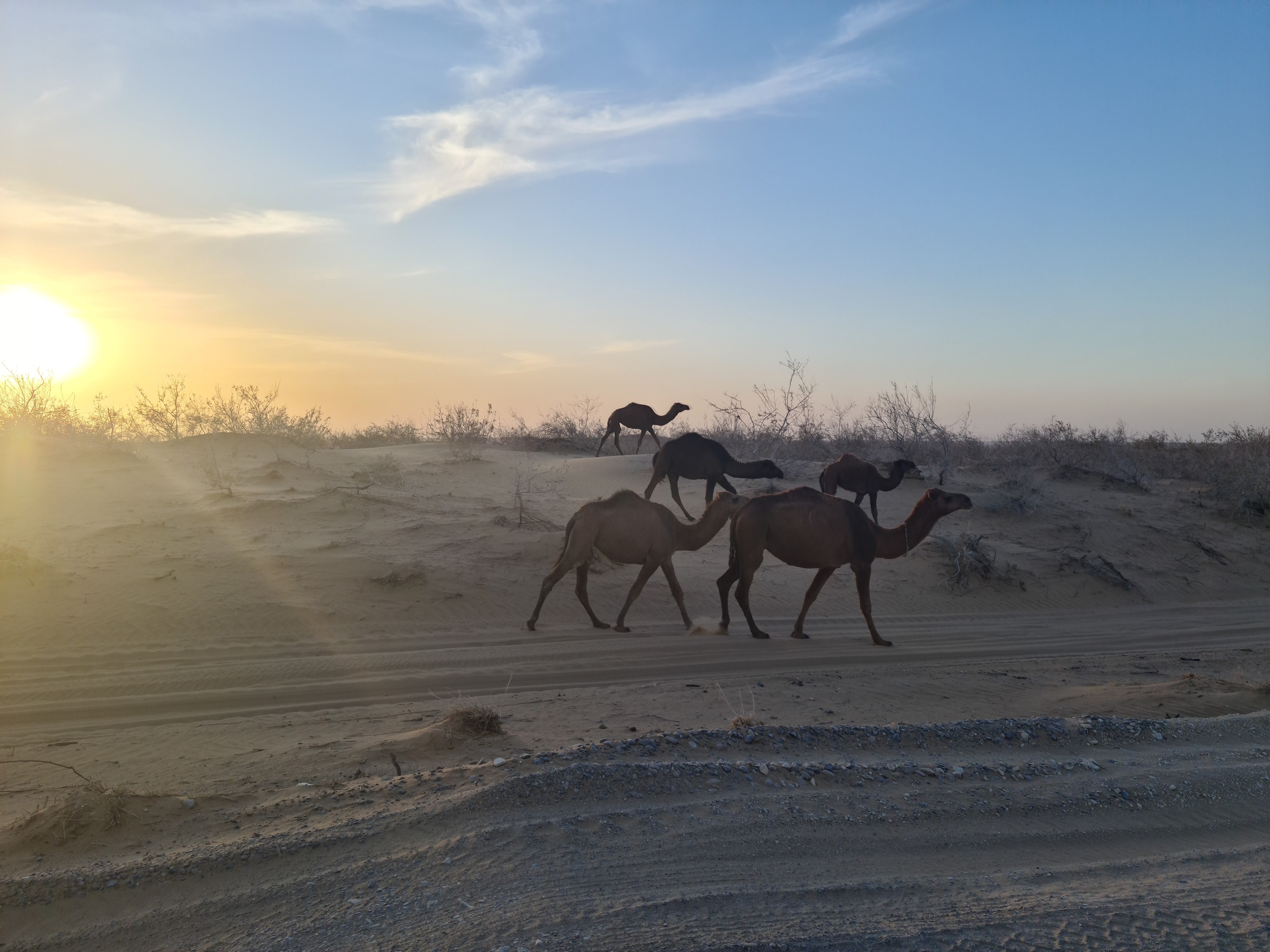
Then it was our chance to fly through desert landscapes in 4x4s again. The Karakum Desert covers about 70% of Turkmenistan’s land area, making it the dominant geographic feature of the country. Though I enjoyed the moments of off-roading, I could have done without our driver playing chicken with an HGV.

We were off to what is possibly Turkmenistan’s most well known and visited tourist attractions… a gate to hell – or at least what looks like one.
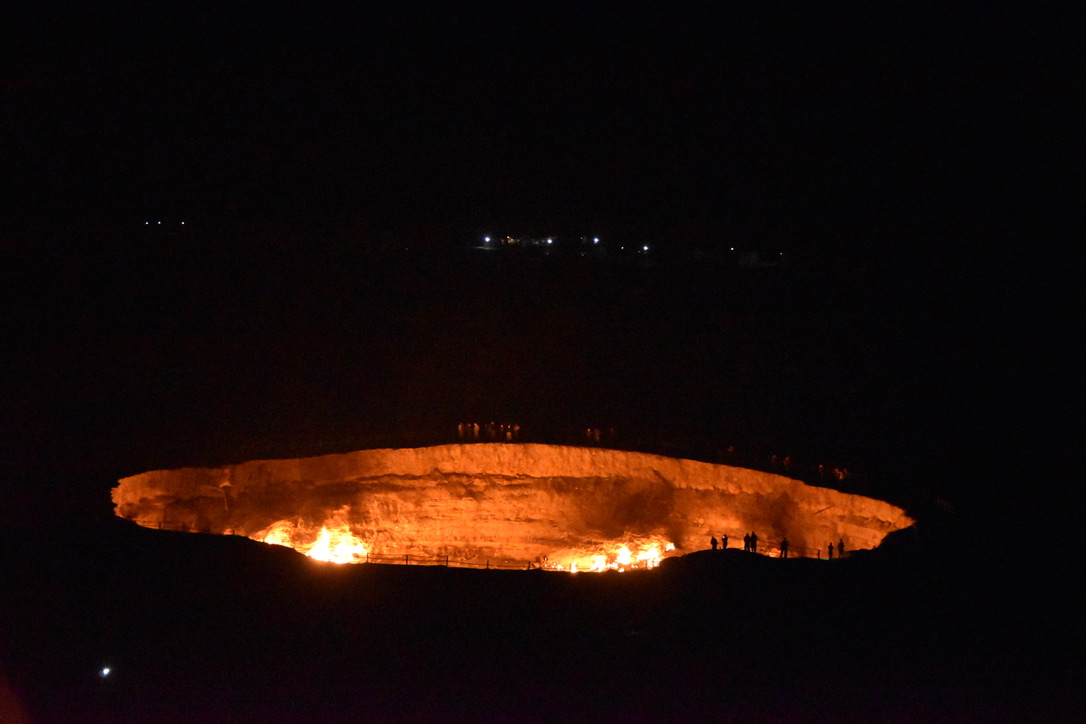
Darvaza gas crater originated when a Soviet drilling operation accidentally collapsed into a natural gas pocket, causing the ground to cave in. To prevent the spread of methane gas, geologists set the crater alight, expecting it to burn out in days…That was in 1971, and it is still burning today. If that’s not a clear enough symbol of humanity’s impact on the planet, I don’t know what is.

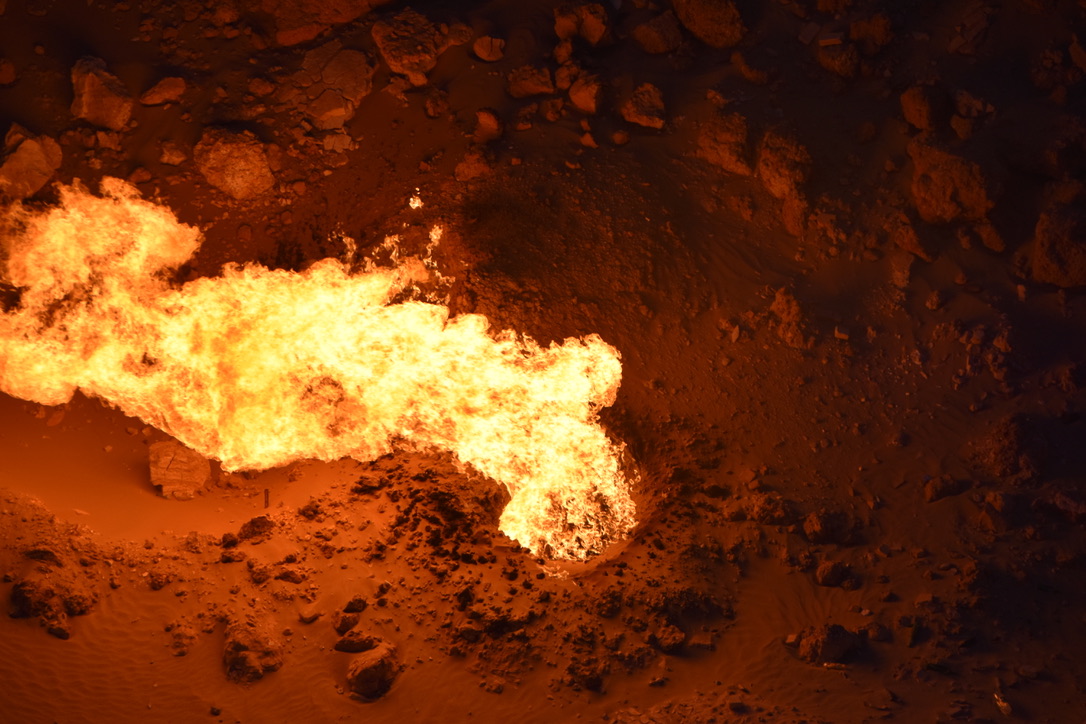
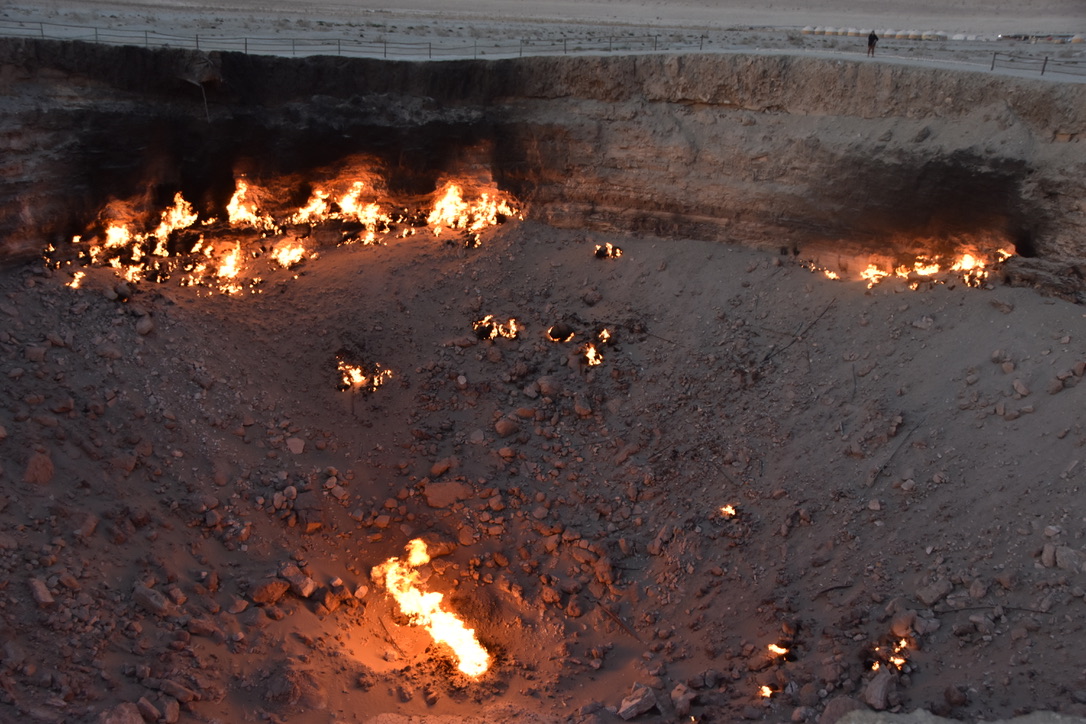

I knew we would be yurting nearby, but hadn’t appreciated we’d be as on-site to the crater as you can get. Who needs a beach or mountain view, when you can have a fiery, gaseous crater view? Ironically, this yurt camp was the only one we stayed in during the Five Stans tour where I felt cold overnight.
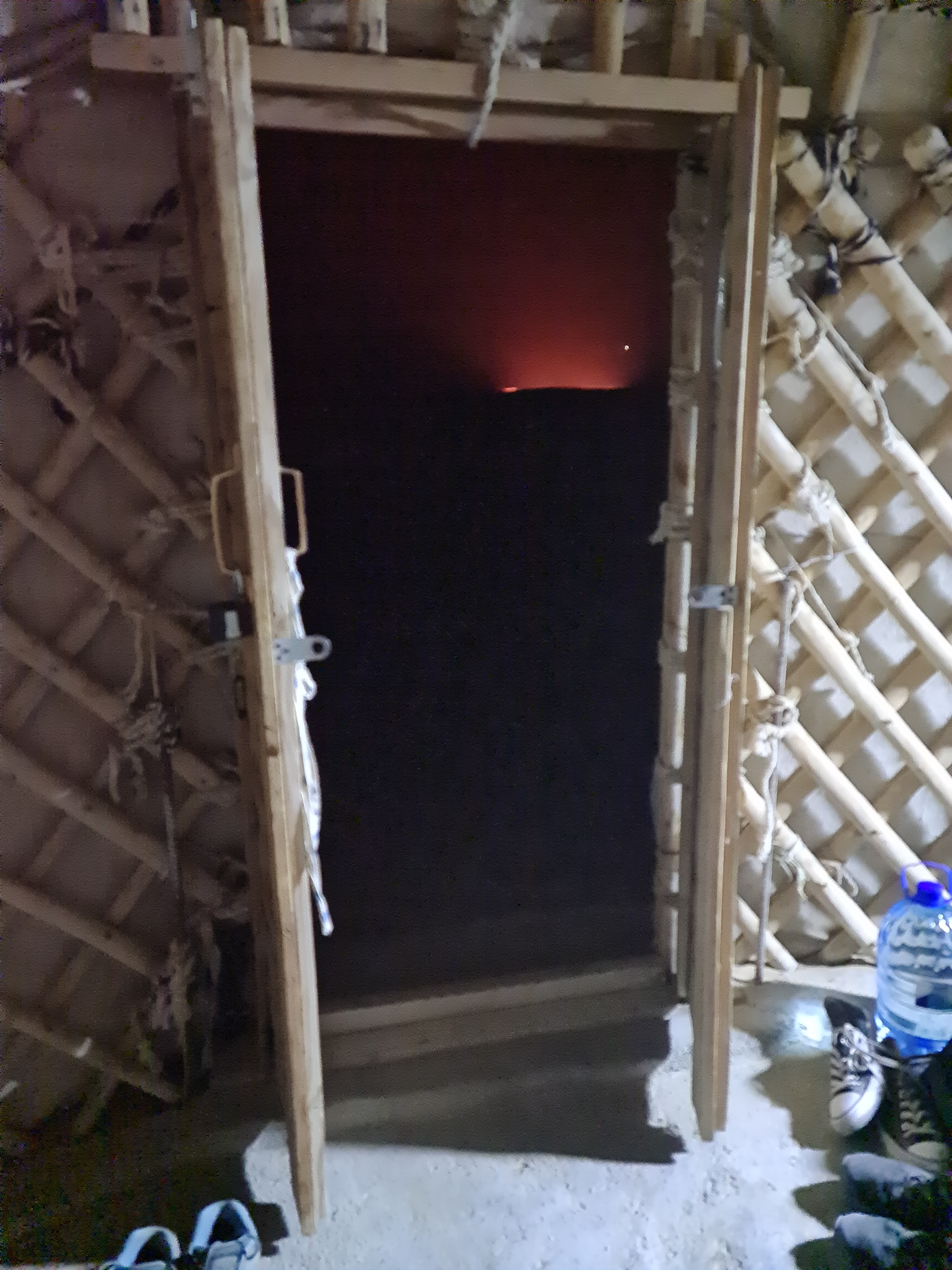
At least staying on-site meant we could see the crater by daylight, sunset and by darkness and we were encouraged to come and go as we pleased.
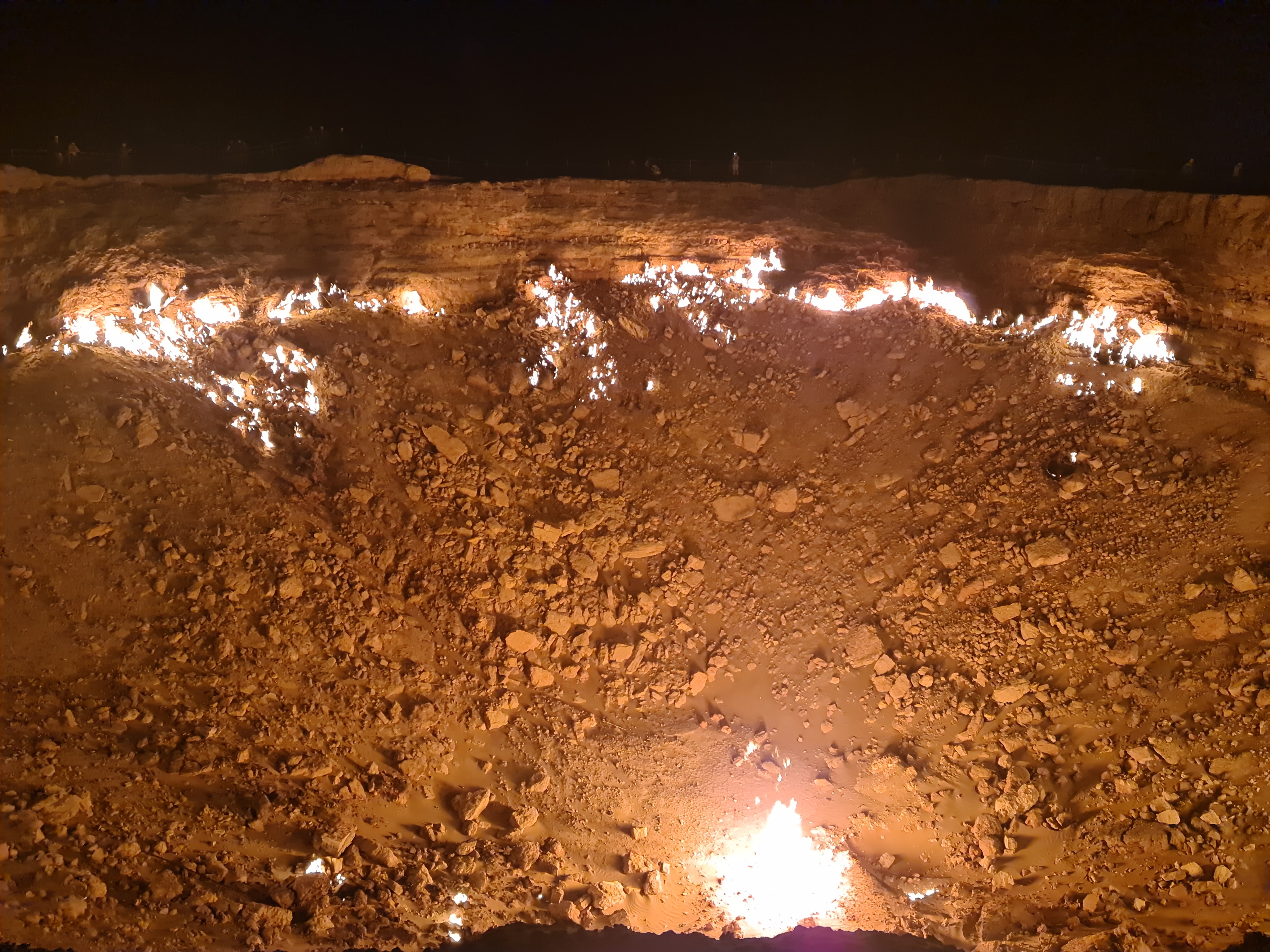
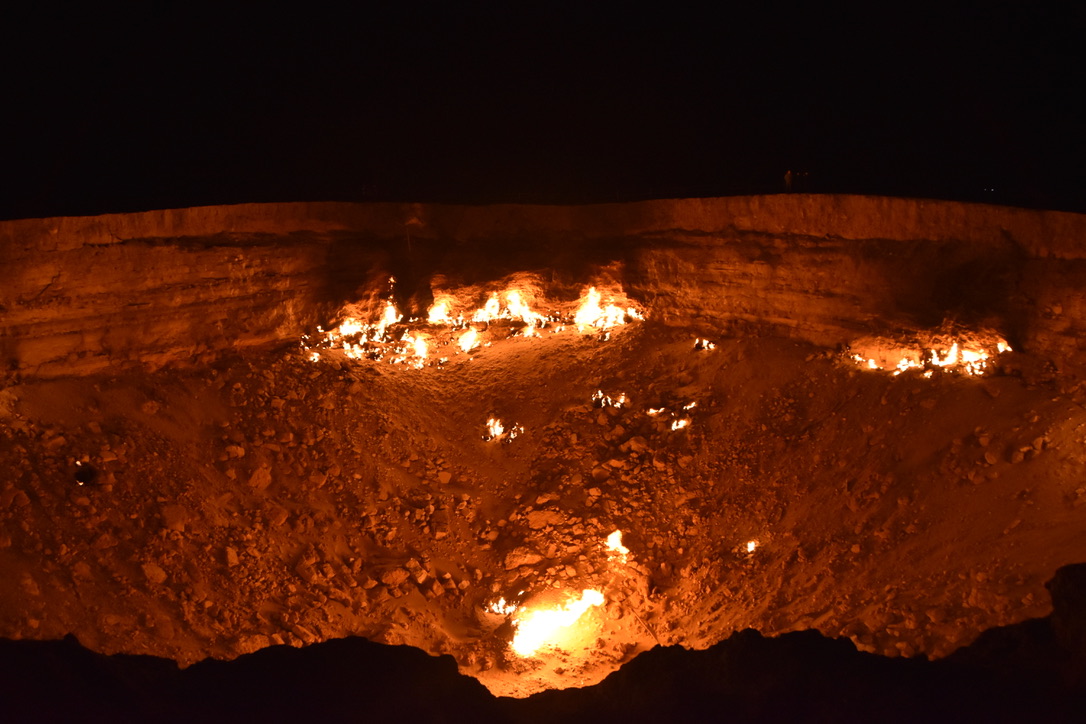
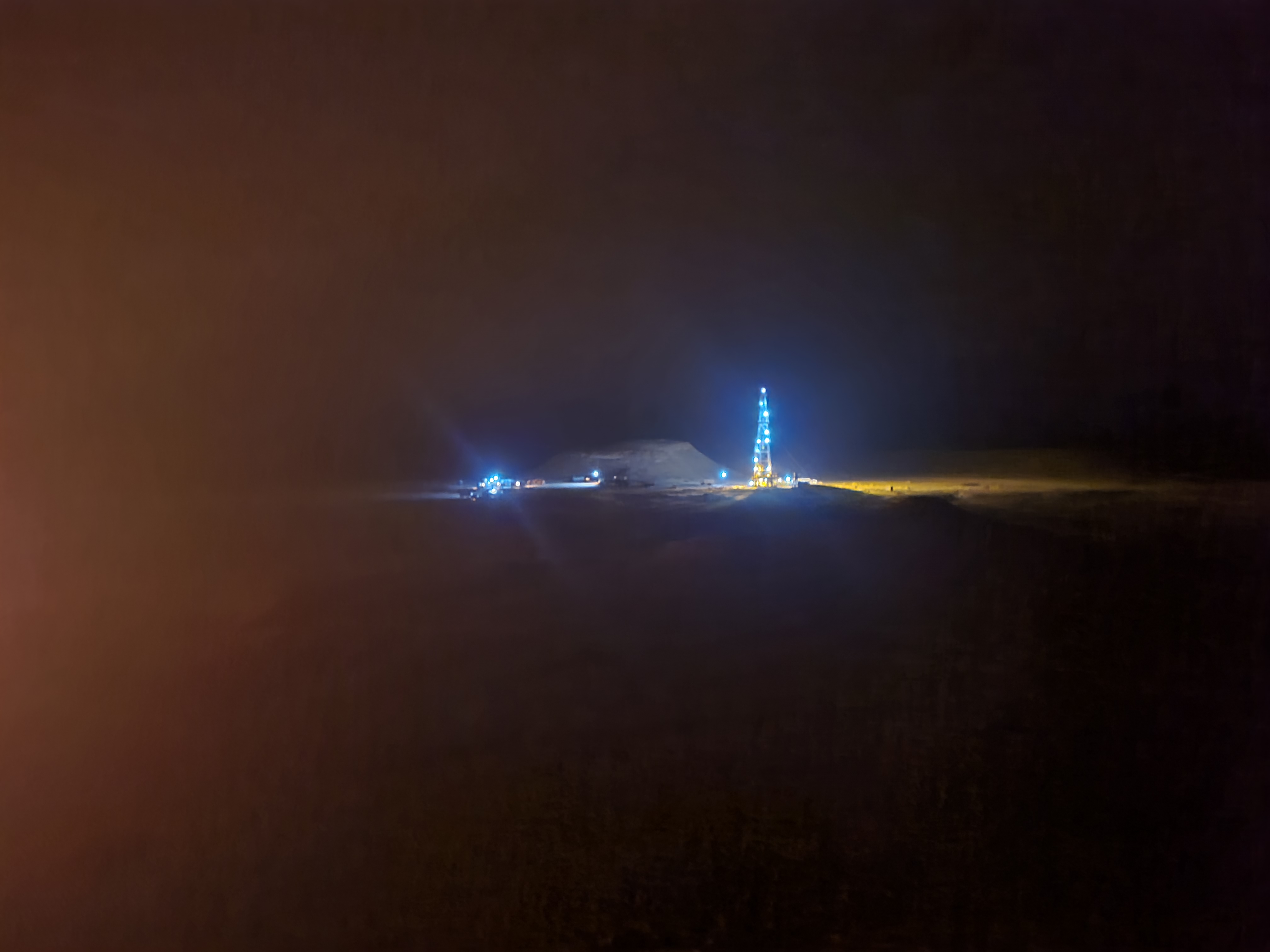
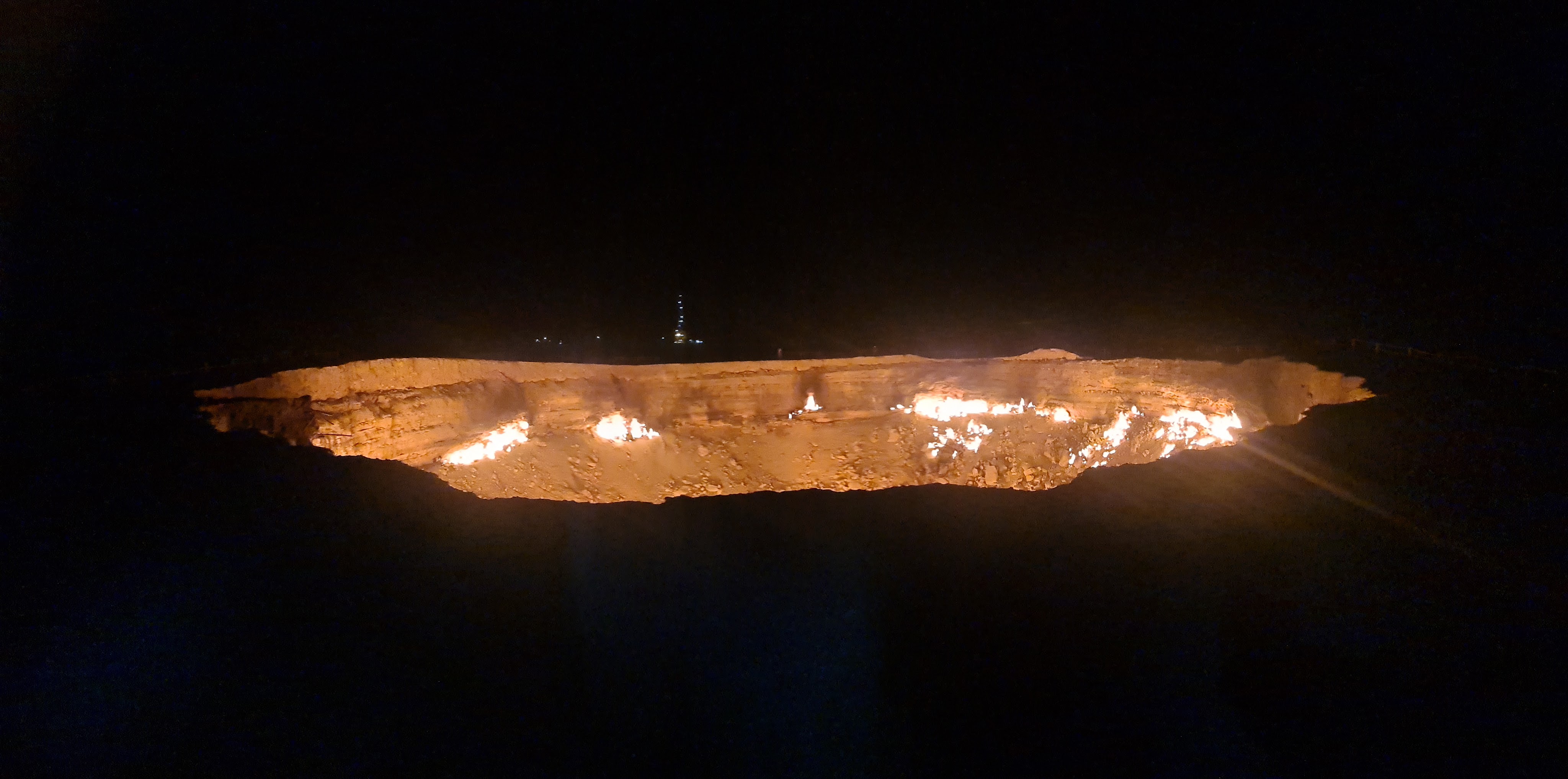
Fellow adventurer Ana did become worried when she couldn’t find Cherie, who she had last seen setting off towards the crater. With limited light and other points of interest around (unless Cherie was a secret gas-refinery enthusiast), it did seem a bit odd. Happily she did turn up a short while later.
Speaking of final destinations, the next day brought us to our last stop of the tour, the end now in touching distance. We would be staying two nights in Turkmenistan’s grandiose capital, Ashgabat.
This was where some of the more unusual characteristics about Turkmenistan came into view. As we approached the city, massive park and rides abutted the highway. Batyr explained that if your car isn’t registered in Ashgabat, it isn’t getting in. Presumably this is in support of the other Ashgabat motoring rule – cars have to be white, gold or silver. “It isn’t illegal to have any other colour of car…it’s just a bit of a headache to do so.”
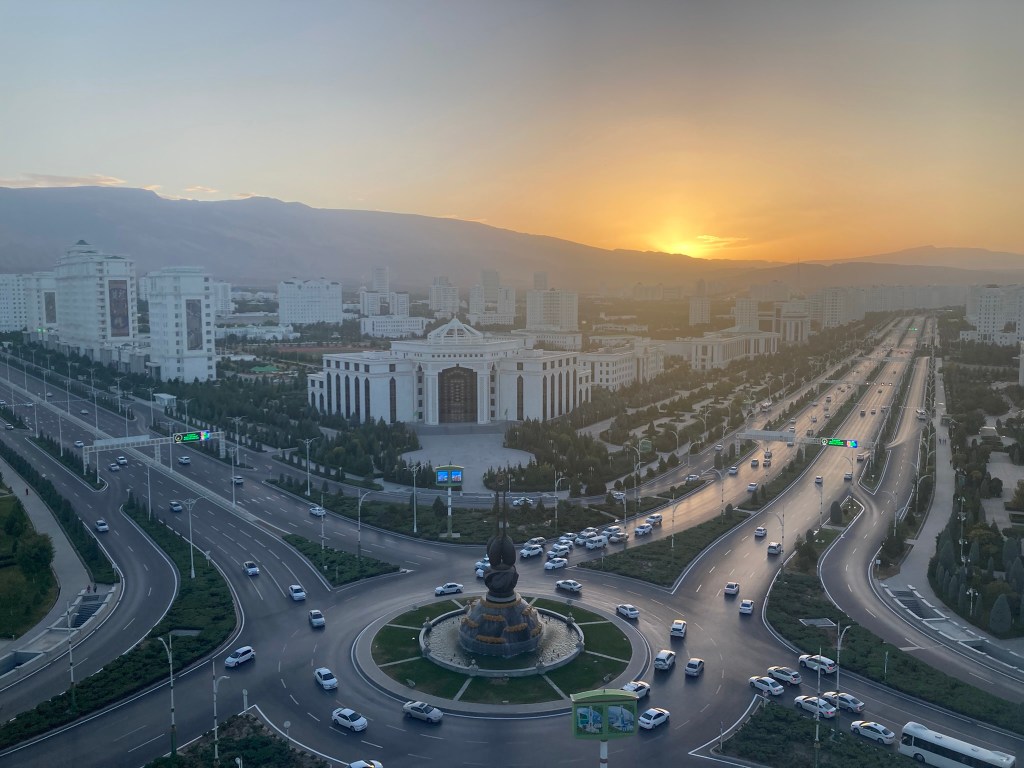
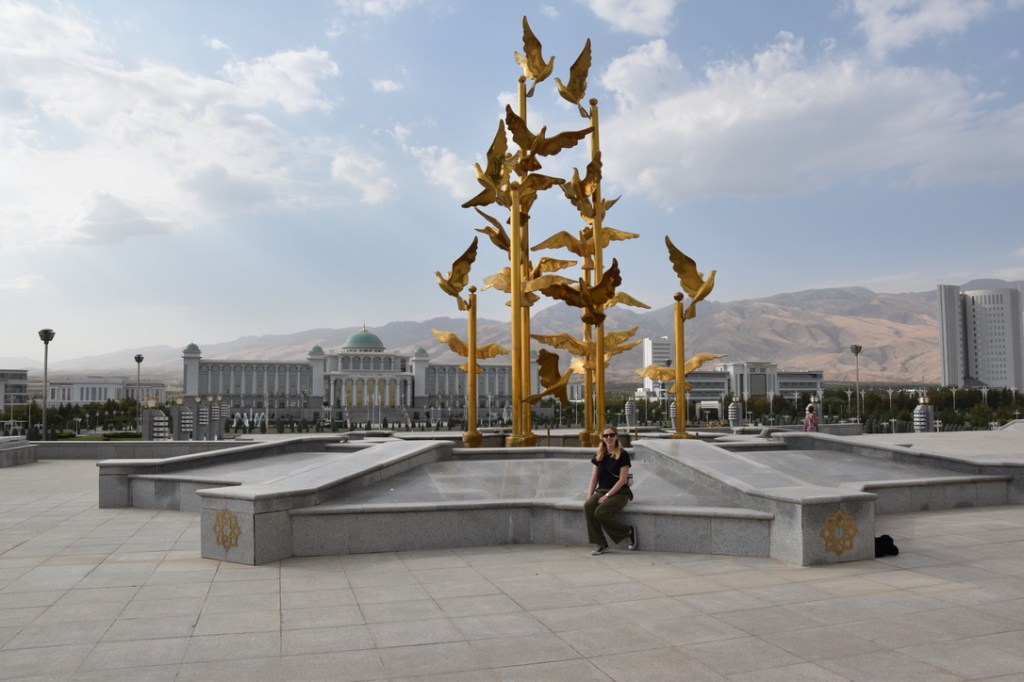
The rationale for the prescribed paintwork, is to match the white and gold buildings of the marble metropolis, Ashgabat holding the world record for highest density of marble buildings. An extreme position perhaps, but Ashgabat clearly doesn’t do anything by halves.
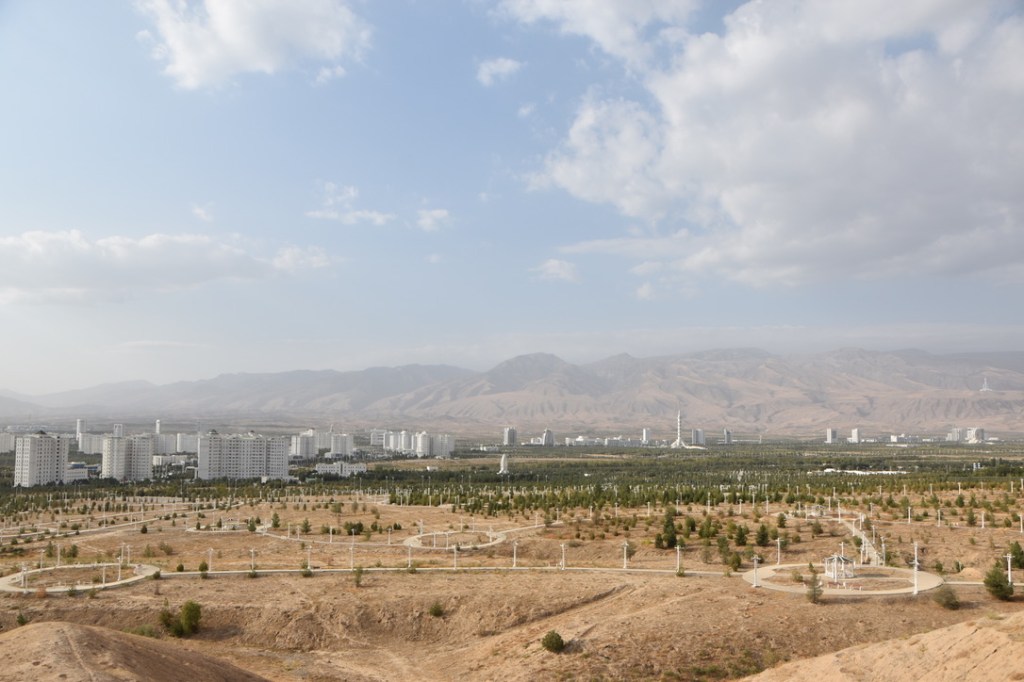
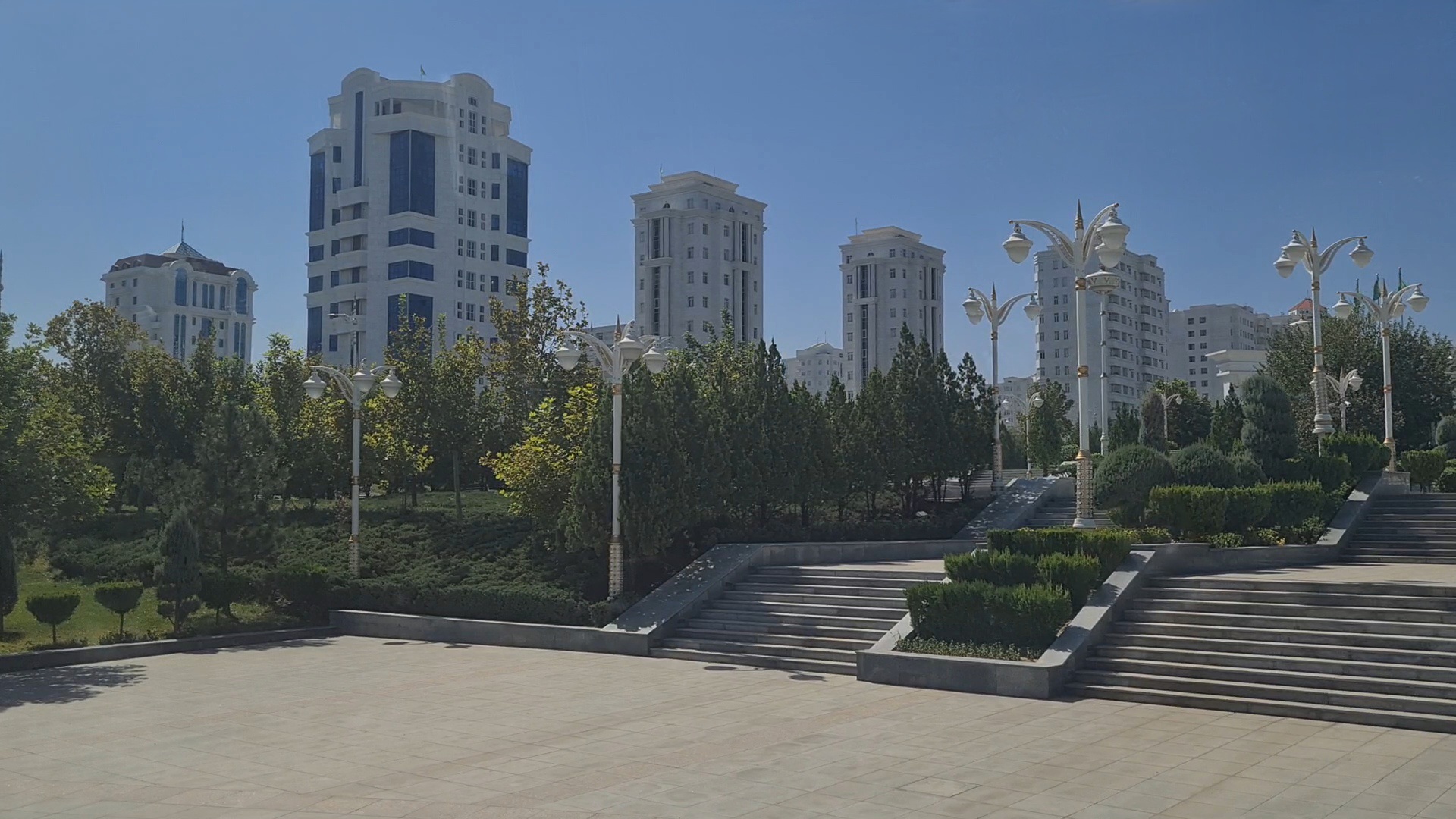


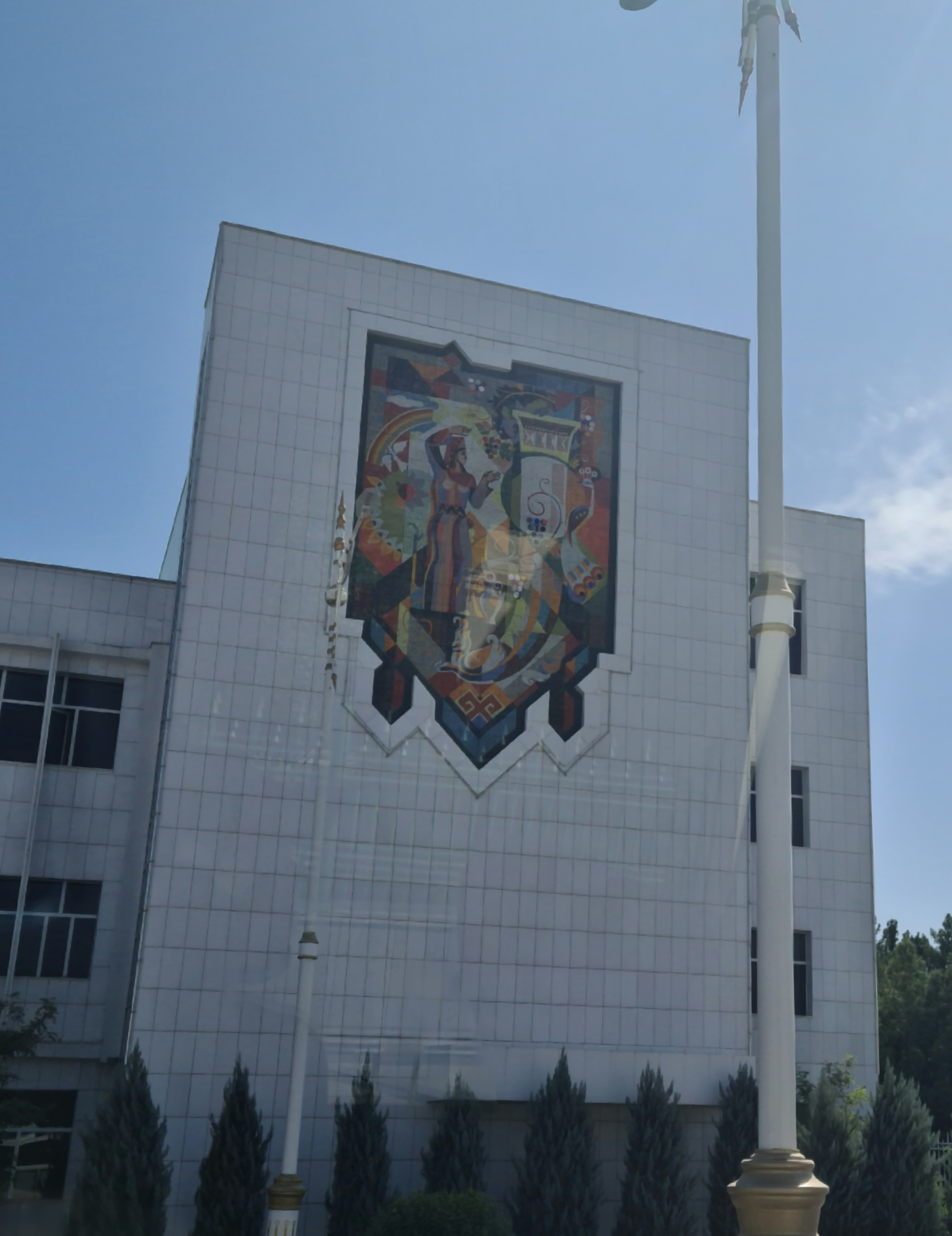
Monuments and government buildings are suitably ostentatious, with sometimes ludicrous world records attached. “World’s largest building shaped as an eight pointed star” or “largest building in the shape of a horse”.
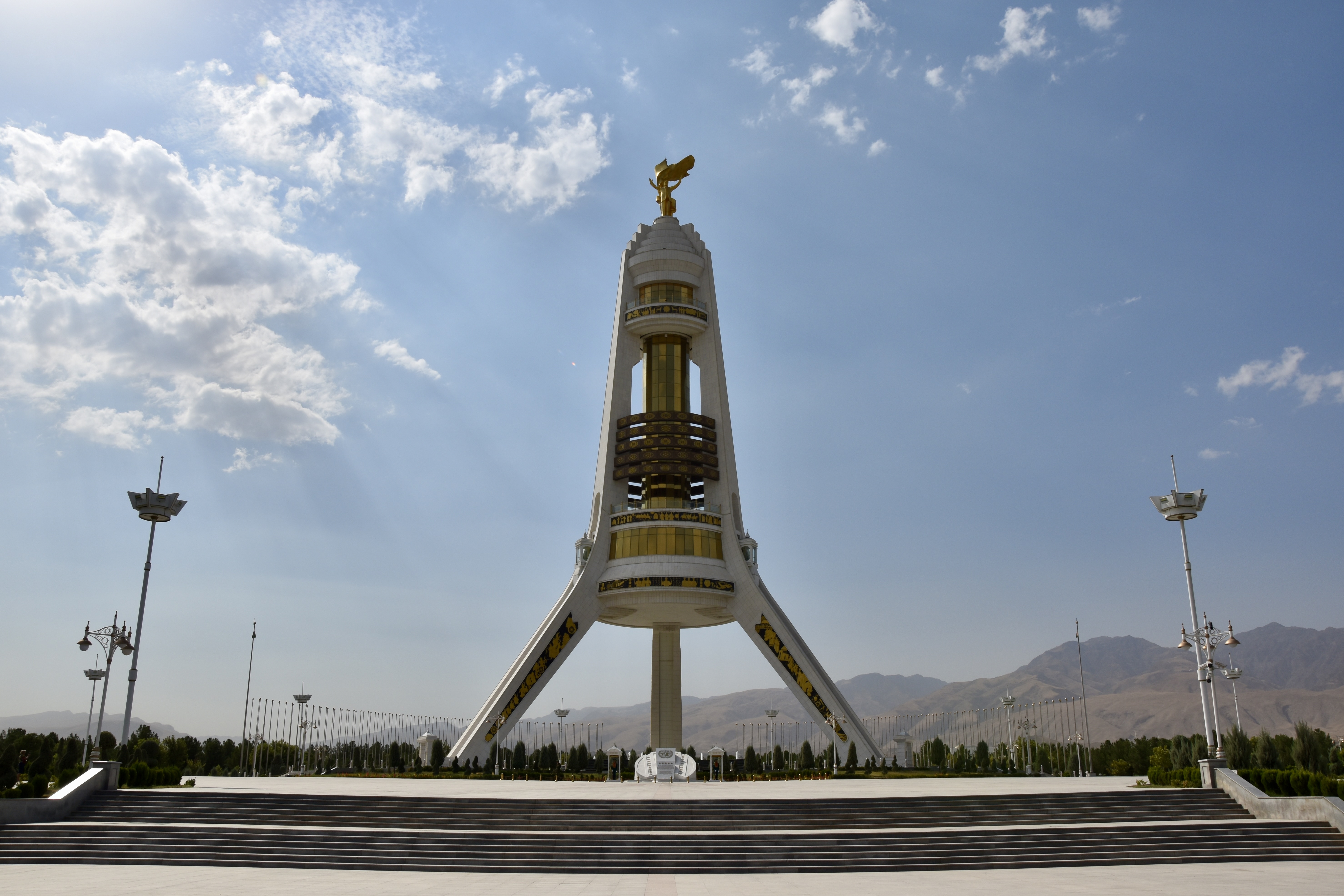
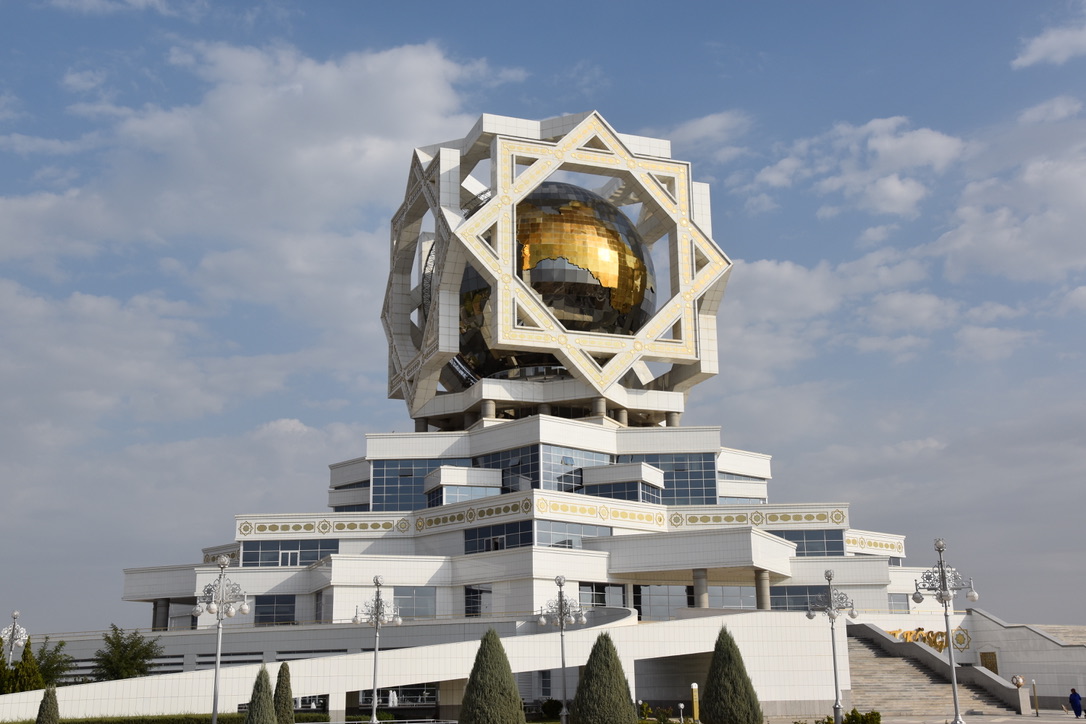
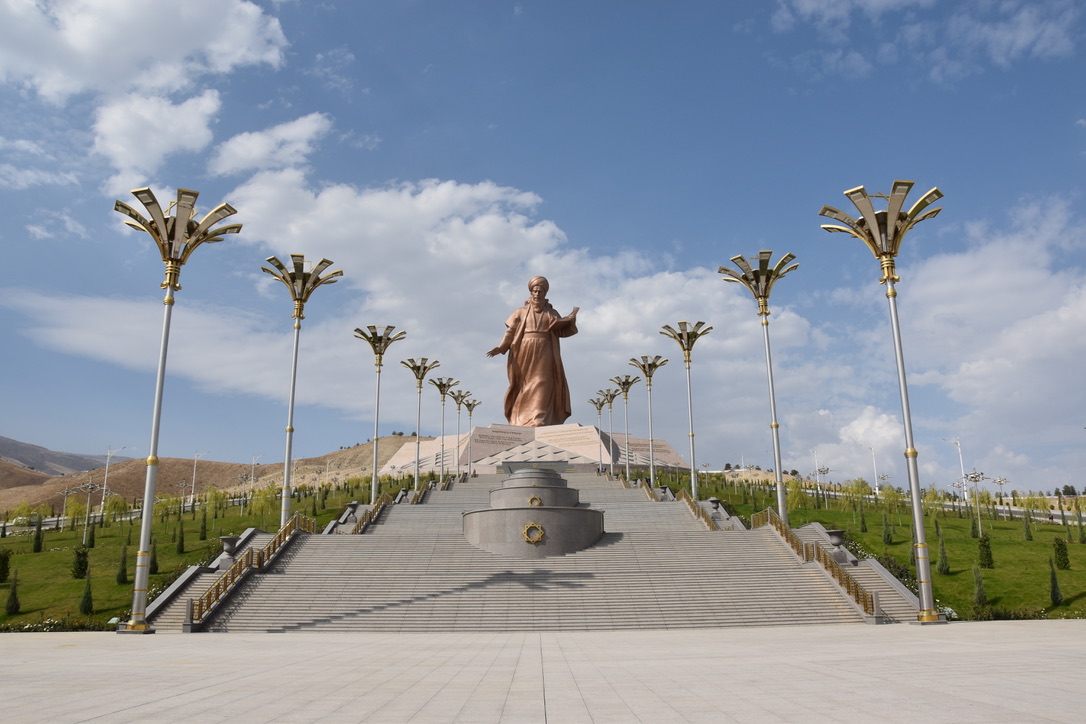
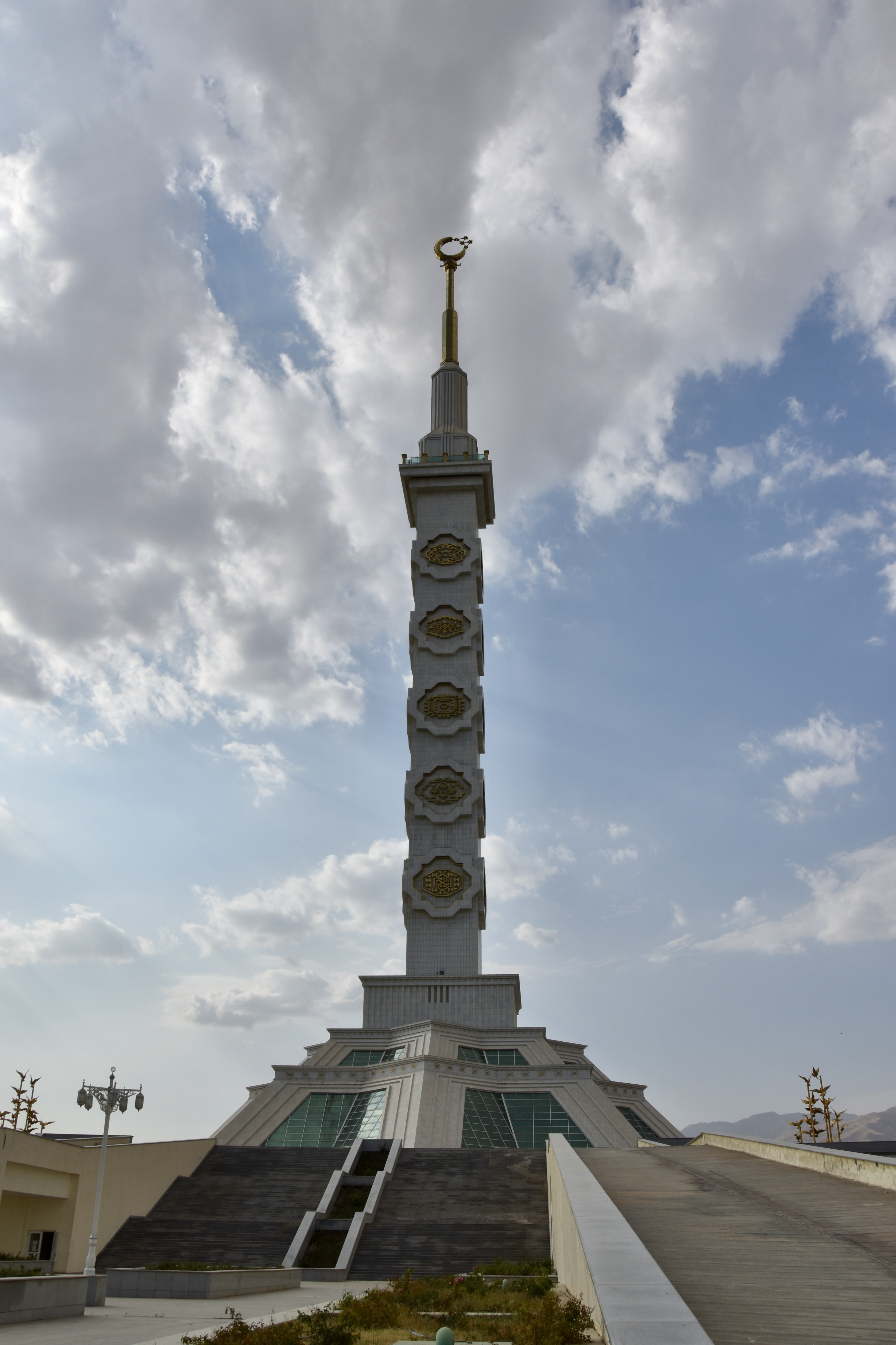
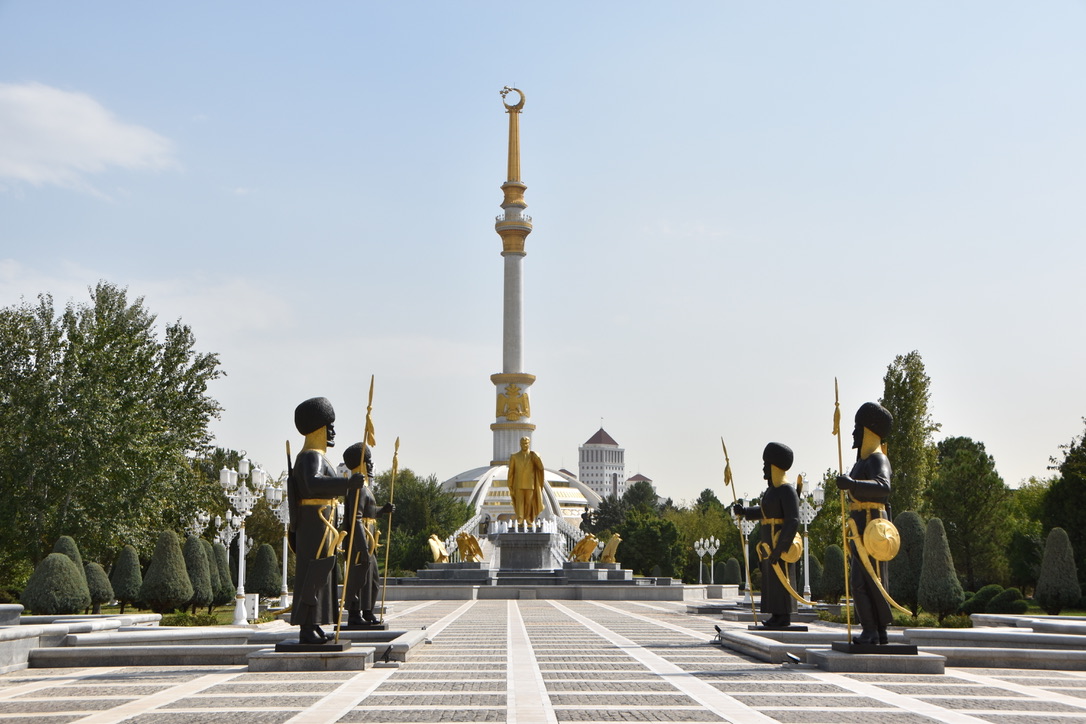
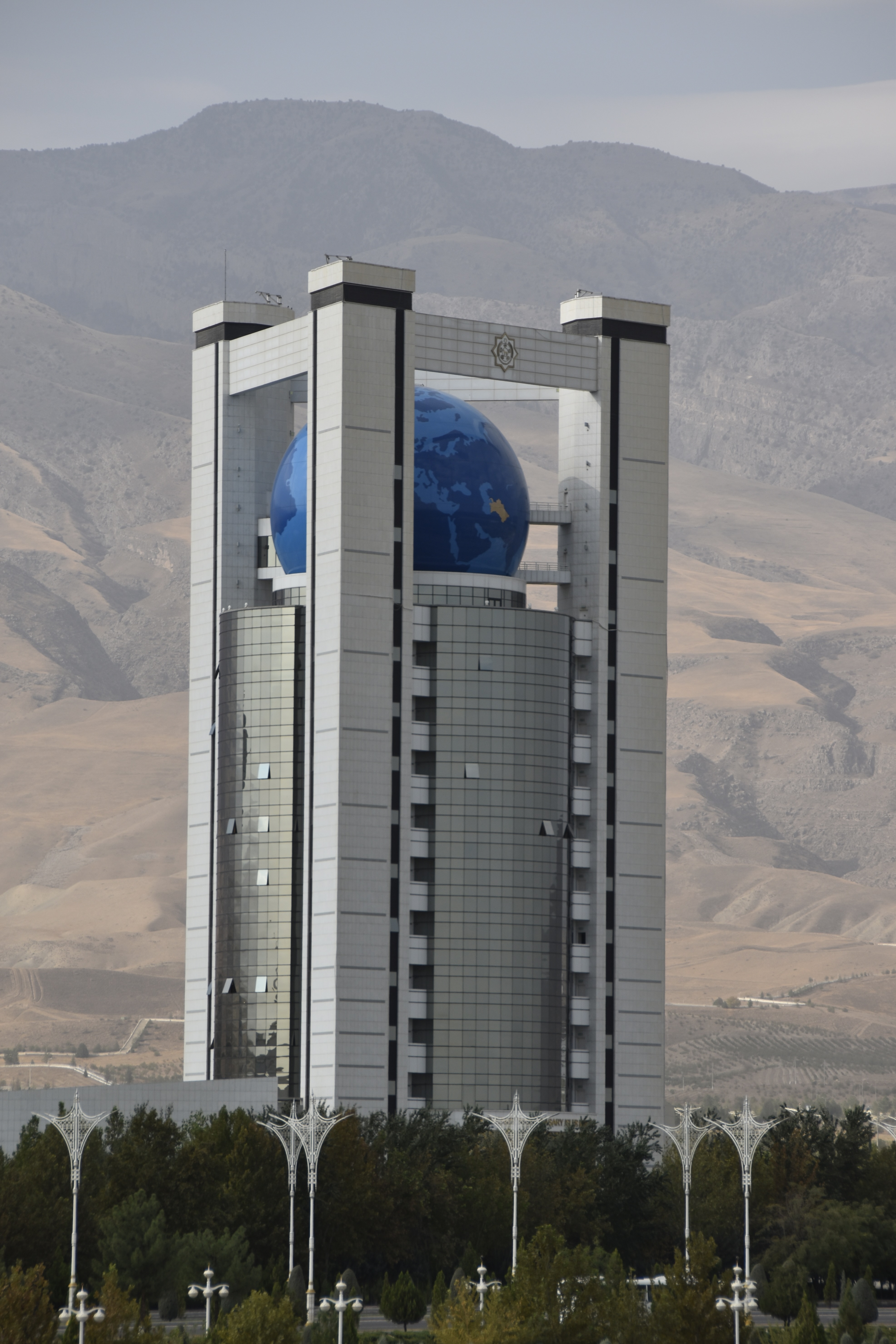




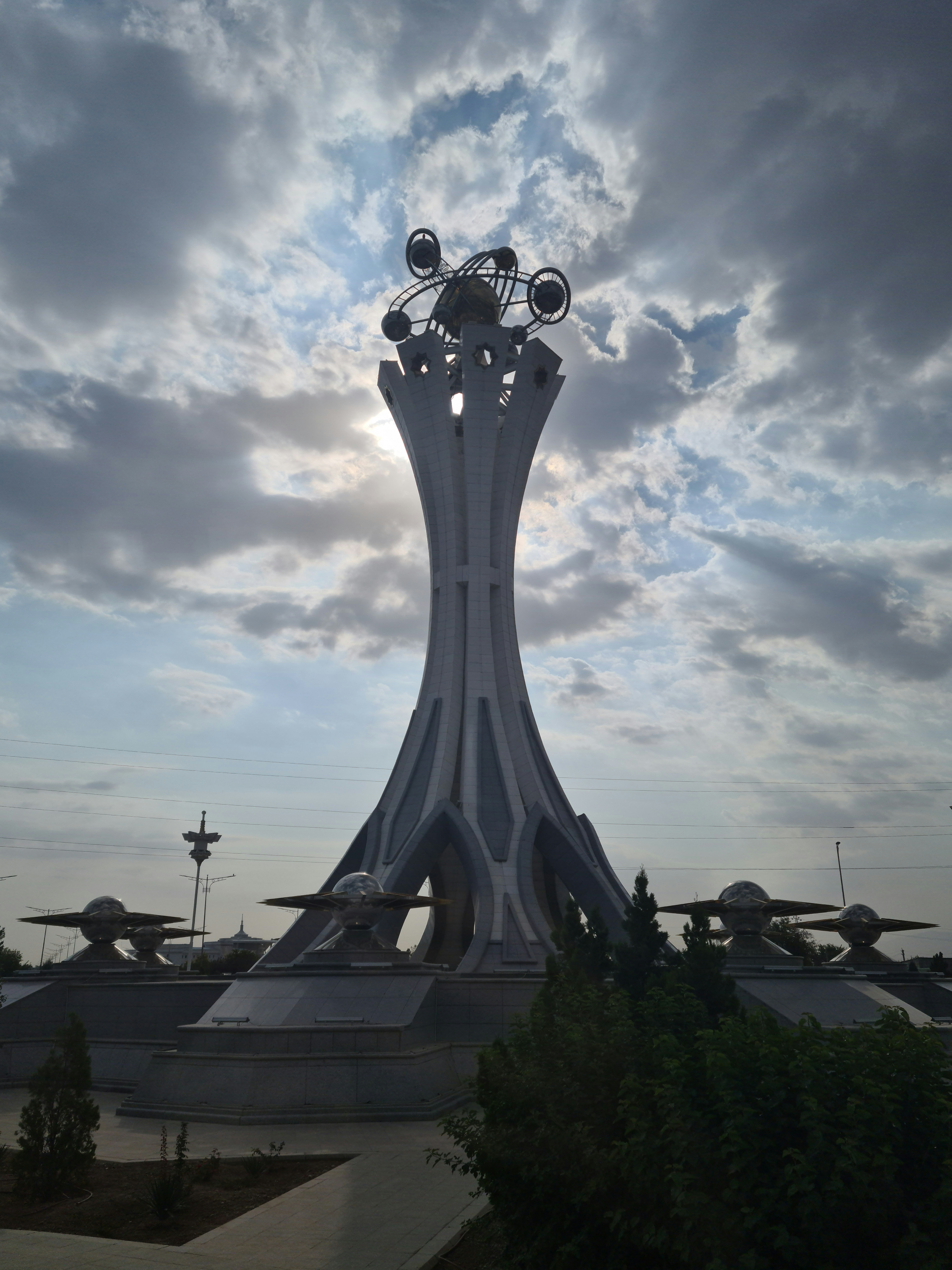

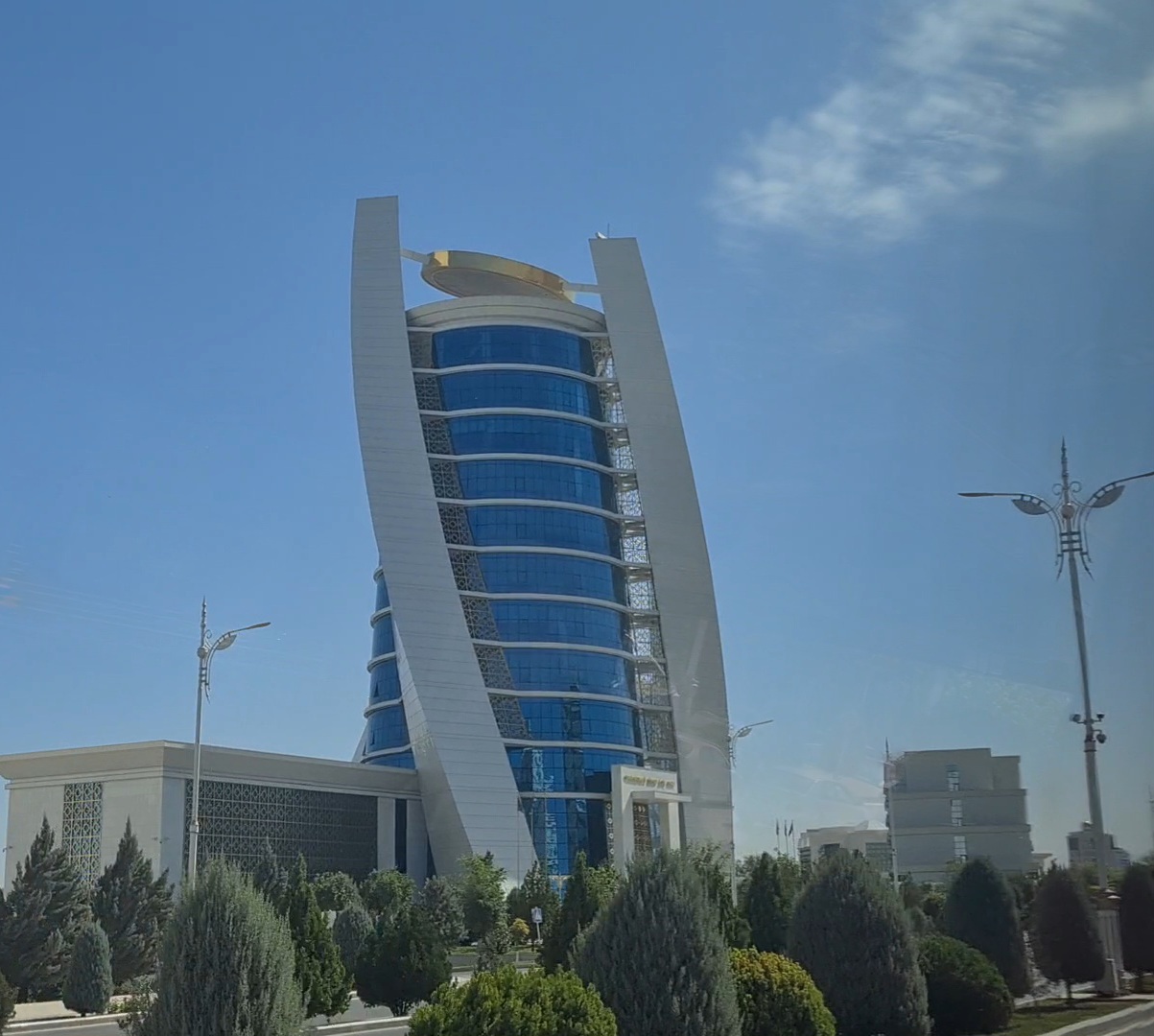
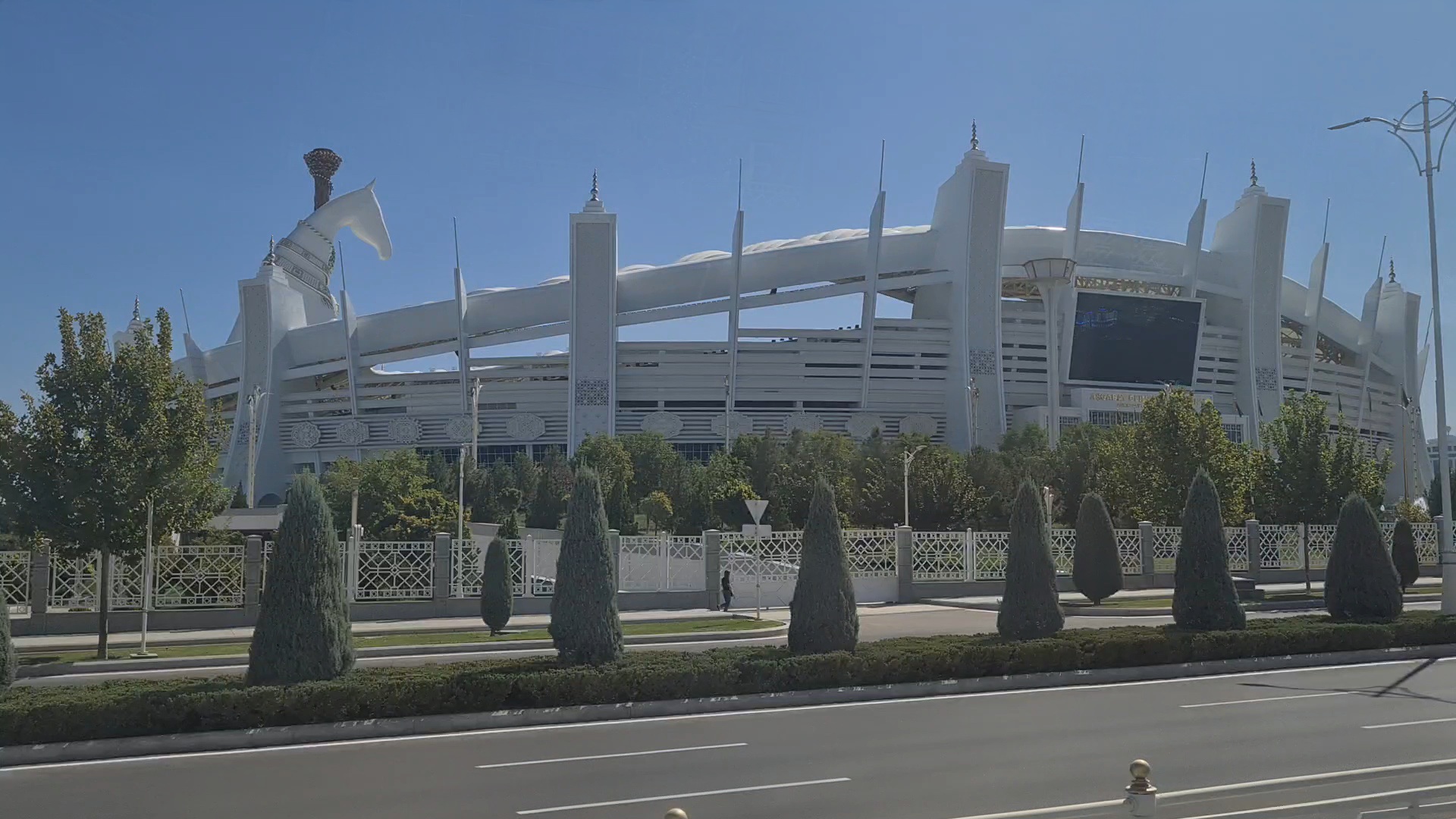
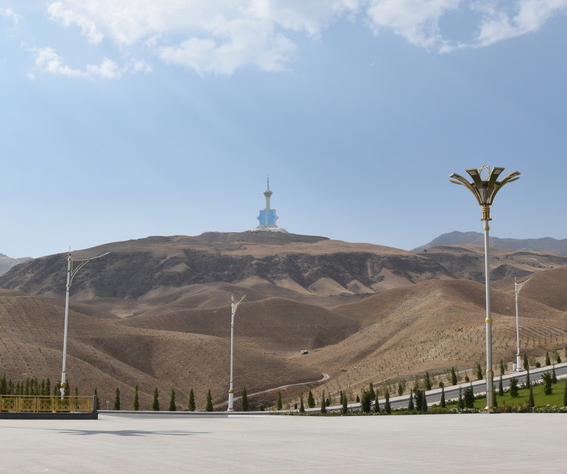
The animal themes didn’t stop at horses though. One of the most recent monuments celebrates native canine, the central Asian shepherd. This one is so extra it has its own video screen. Probably the sort of monument I’d commission if I were president. No need to worry about touchy subjects and controversial characters when you’re commemorating animals!
We actually saw one of these shepherds in the flesh while out in Darvaza. Already the size of a pony, Batyr advised us it was still a puppy…who didn’t know its own strength, so maybe don’t play with it. The fact he was already trying to encourage a donkey to be his playmate probably underlined this.
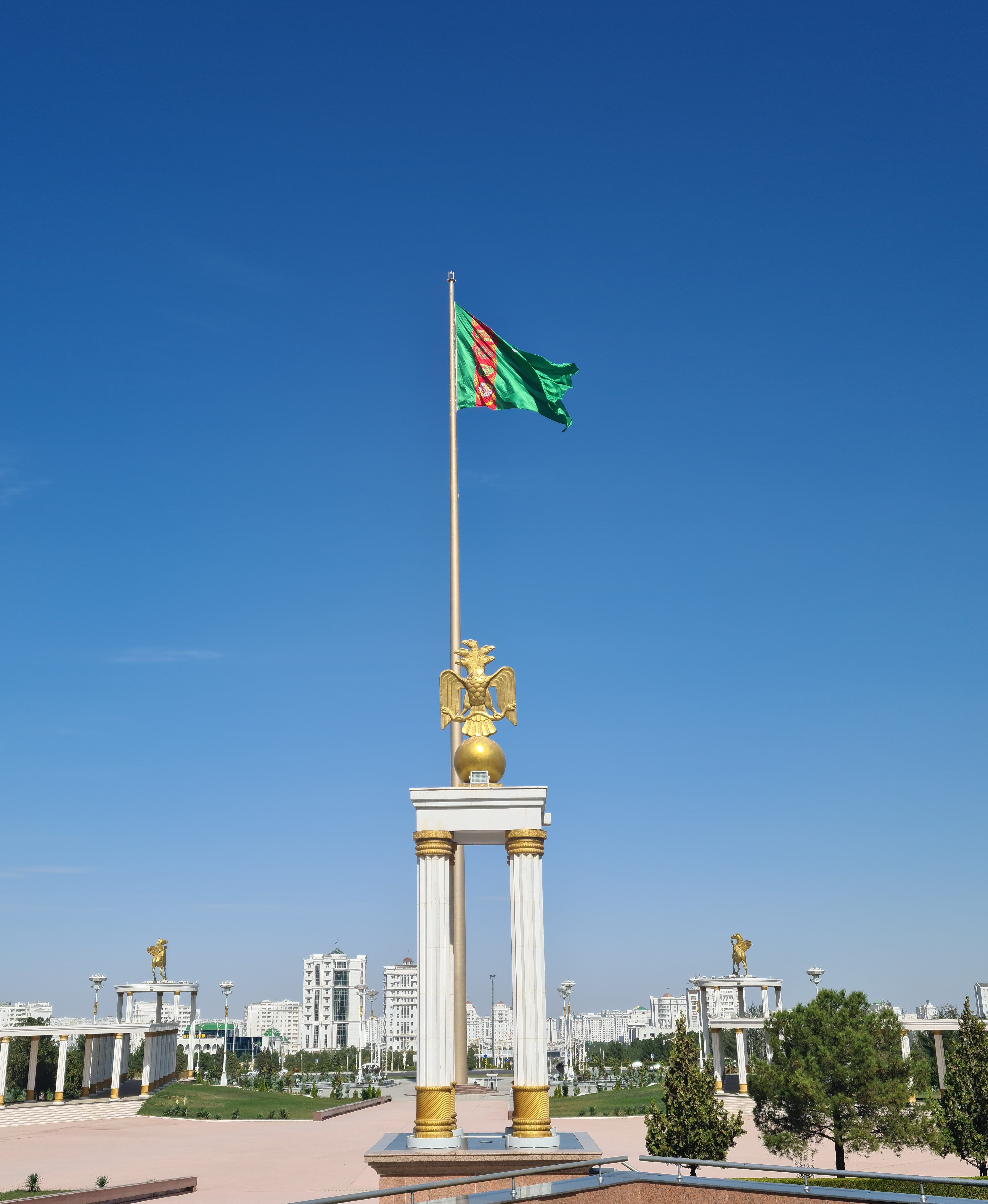
As with many of the central Asian nations, the Ashgabat flagpole had once claimed title for world’s tallest. Who knows what their leaders are all trying to compensate for…
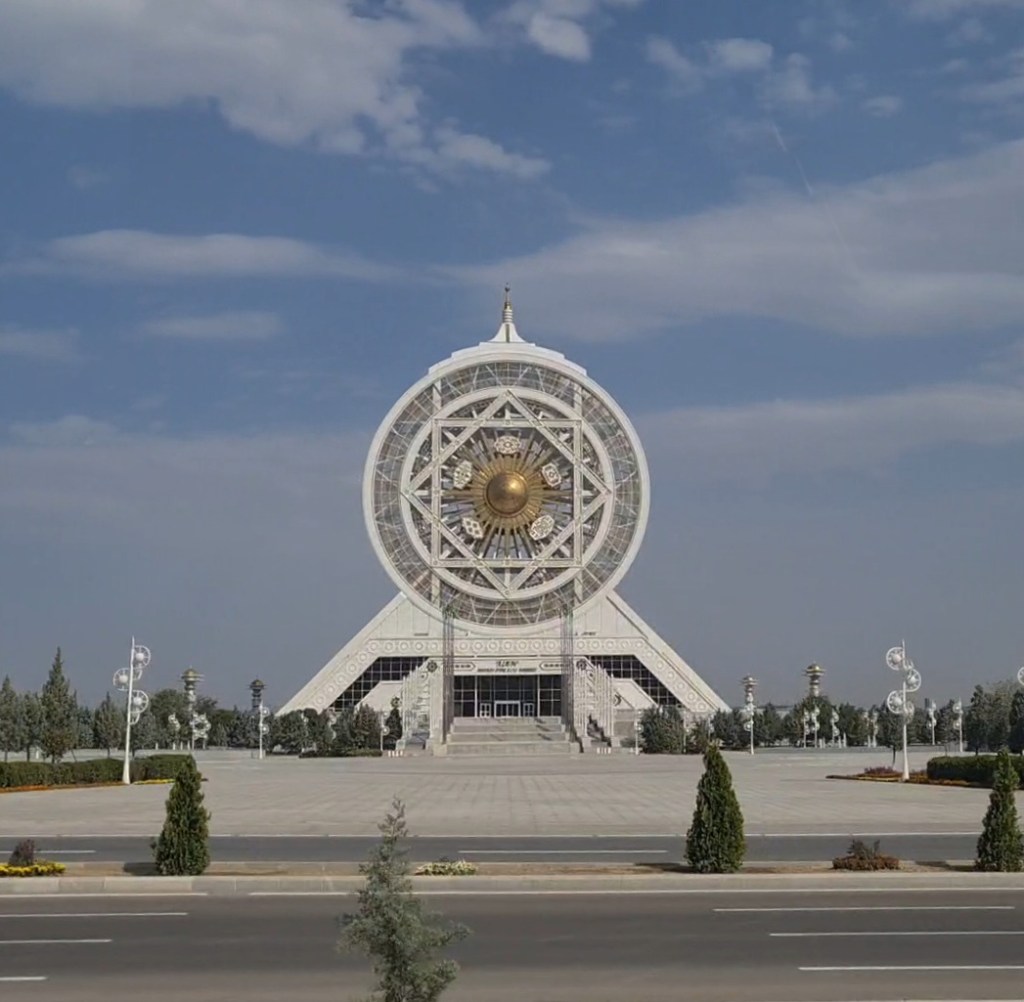



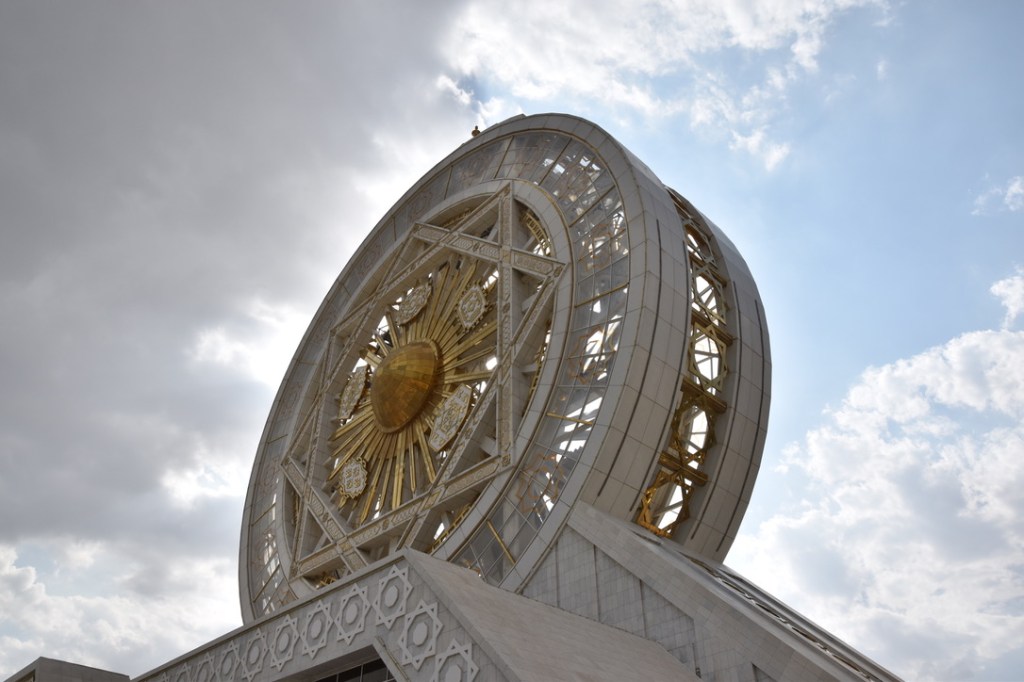
I was also surprised to learn that the monument I had been most looking forward to seeing, wasn’t even a monument at all. It was “the world’s largest indoor ferris wheel”. With a pre-arranged opening just for us.


Even the capital city had the eery quiet we had seen elsewhere in the country. Distances which felt like they would take 20-30 minutes anywhere else to traverse traffic only took 5-10. This despite the fact that nobody walks anywhere, preferring cars and public transport instead. We often had entire monuments to ourselves as tourist groups are understandably limited. Although exact numbers are difficult to verify, online sources suggest Turkmenistan receives only 10-20,000 tourists annually.
Quiet aside from the staff that is. Landscaped areas were tended to by gardeners sometimes every 3 metres, and cleaning crews practically mopped the floor right under our feet. “They clean 25 hours a day”, remarked Batyr. When we were in restaurants, it often seemed like each waiter served a maximum of three tables. Batyr was oddly insistent that people live in the tall marble apartment buildings, despite none of us challenging him on the matter.
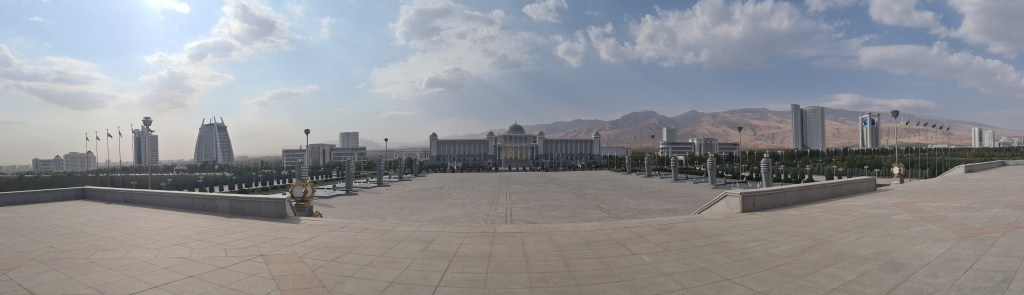
In actuality, it is perhaps mostly the central business and governmental districts which have this ambience.
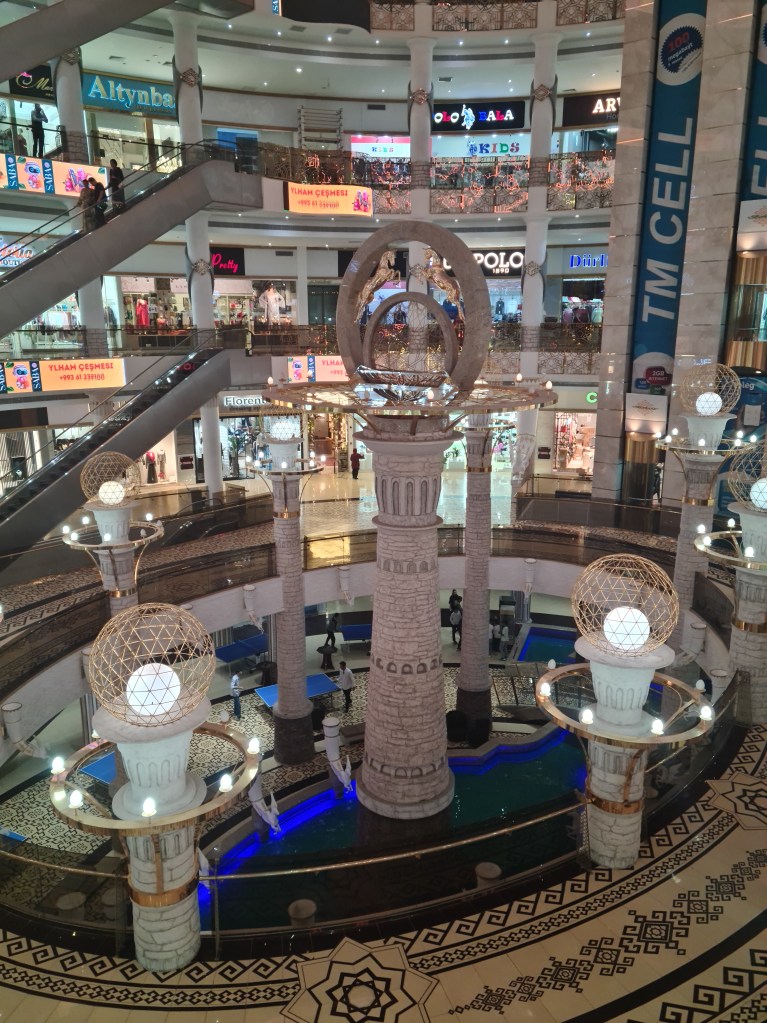
A trip to the bazaar wasn’t so bizarre at all, with plenty of locals. I must have been blending in nicely with them, as a gentleman tried to buy walnuts off me at a stall I was standing by.
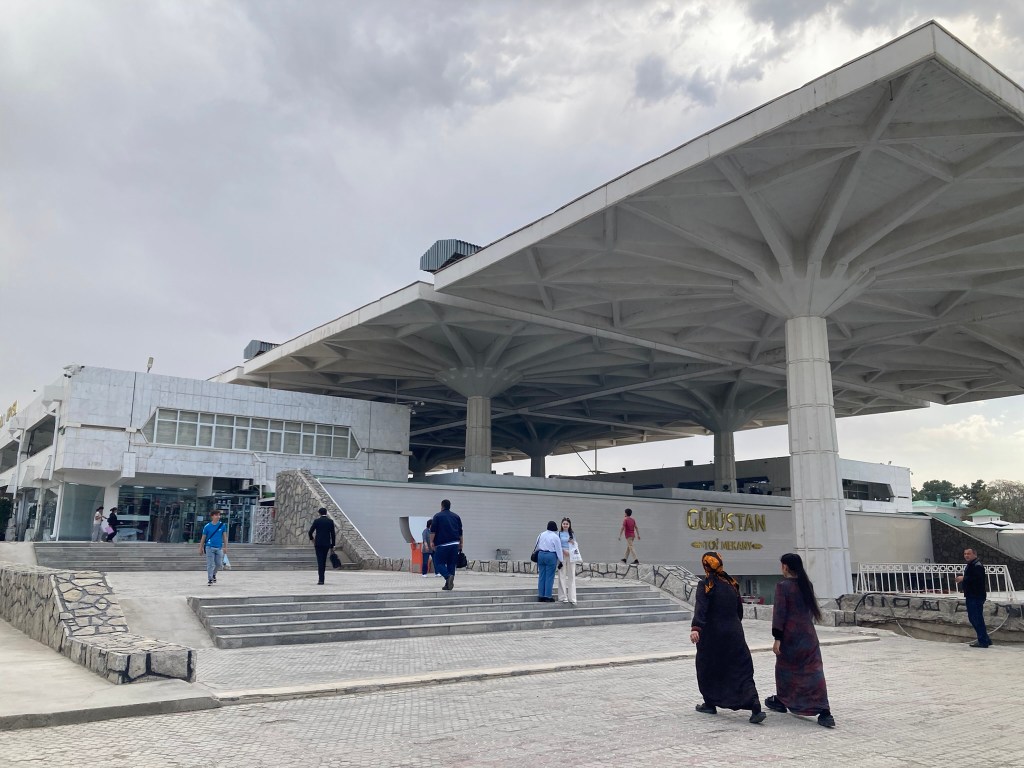
On the whole though, ostentatious architecture aside (even G-Adventures’ website aptly describes Ashgabat as “Las Vegas meets Pyongyang”), Turkmenistan didn’t feel quite as alien as expected. Perhaps the biggest reason for this was that part of the visa requirements are that you are sponsored and accompanied by a local guide. We had taken this to mean that we couldn’t leave our hotel without Batyr being present, but this wasn’t the case. In fact, we could take ourselves to dinner and round the city if we chose without any city slickers so much as batting an eyelid.
For his part, Batyr answered a lot of our questions with the beleaguered air of someone who has heard rumours about how mysterious Turkmenistan operates time and time again and would always remind us “”Why?” is not the question here.” regarding any of the stranger facets of life in the state. He was also suitably vague on politics, without mentioning the D-word.
Trish would come closest to experiencing first hand just how secretive Turkmenistan could be. In not unusual hotel practice, we had to hand in our passports on our first night in Ashgabat. What was unusual however, was when Trish went to collect hers the next morning, only to find it had gone missing (although the receptionist did apparently kindly offer her mine like some kind of lucky dip). The passport had possibly been taken to a registration office for closer inspection.
Typically, Trish was going to be the first person leaving, so the worst of us for this to happen to. As well as the fact she had a Chinese visa attached to it so that she could visit her son afterward. But then its possible this is why hers was flagged. Happily the passport was returned to her in one piece about 5 hours before she was due to leave town.
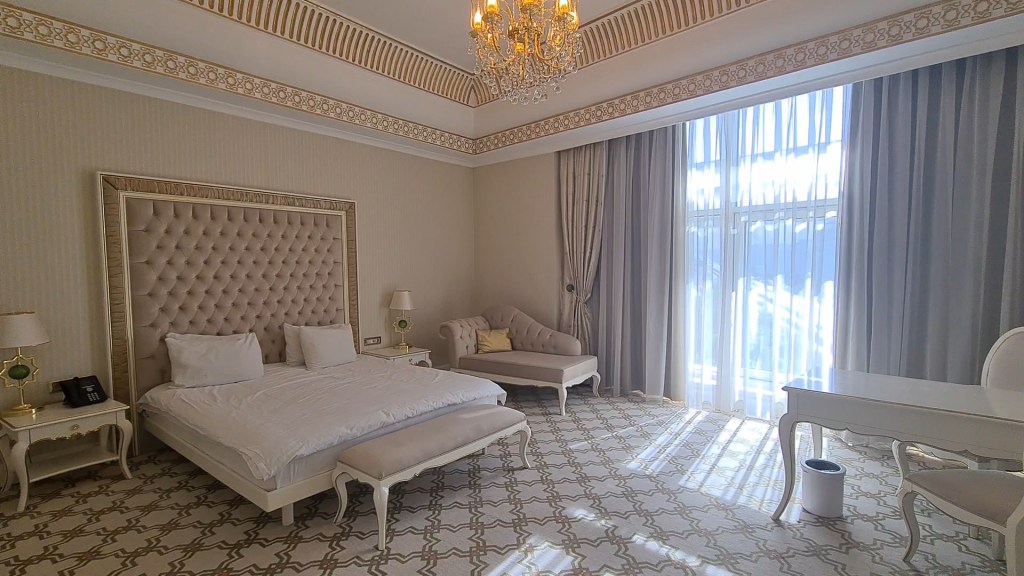
And so the departures began. After 26 days of travelling together, not always smoothly, but with plenty of entertainment, insight and camaraderie, it was time to go our separate ways.
As we headed down to the hotel lobby at 4.30am to find the security guards goofing around, playing a decent attempt at “My Heart Will Go On” on the grand piano, we found it more amusing than sentimental. 26 days of travelling together is more than enough for anyone (just ask Ricki!) and we were ready to get back to doing things on our own agenda.
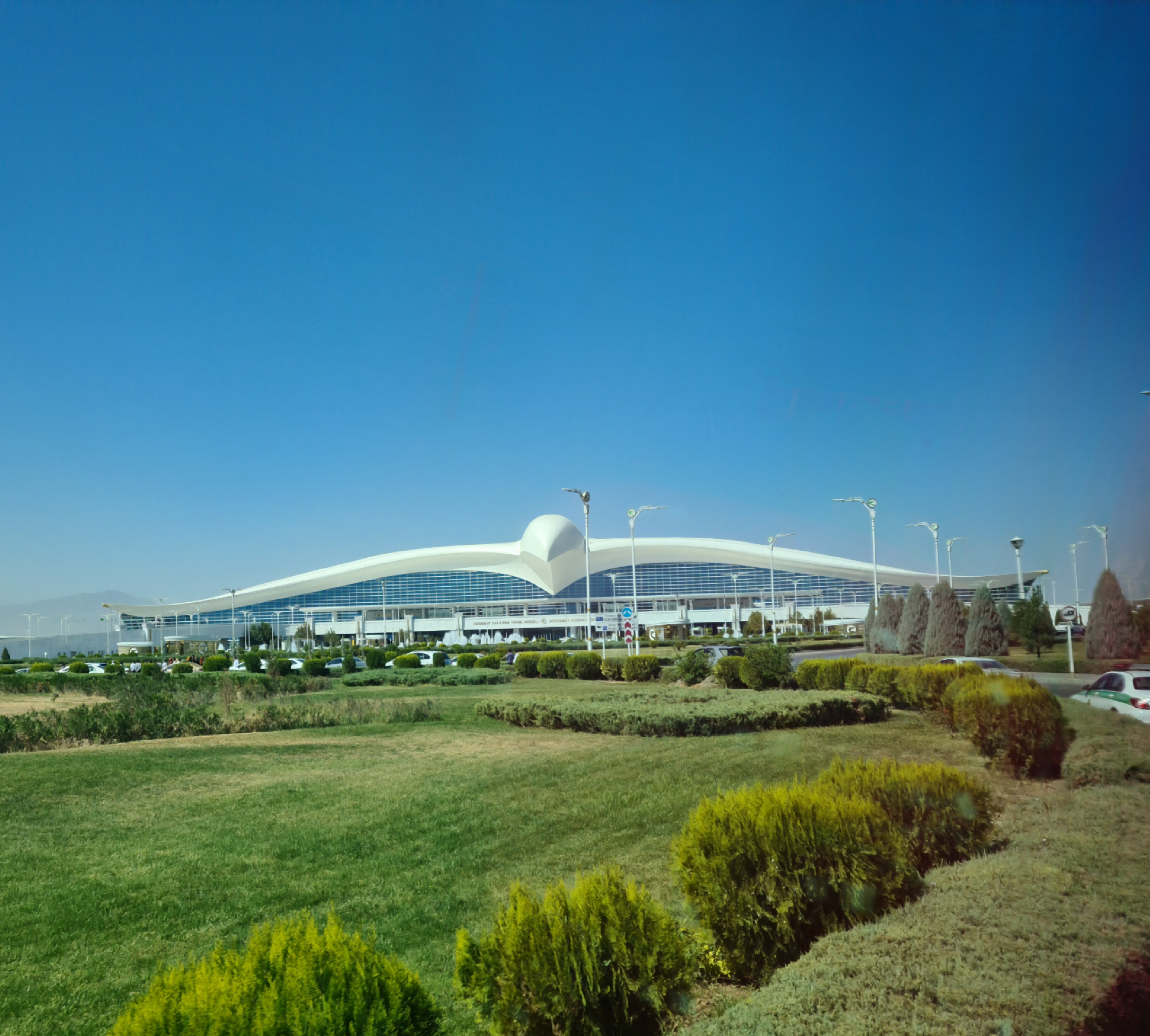

Ashgabat International Airport – many gates, few flights. No more than 10 were listed on the departures board the day we left (and all were scheduled for Gate 1).
Likely our final group venture for the year, we are pretty sure it won’t be the last forever. Not least due to the visa arrangements mentioned above, but we definitely saw the value in having guides and well-practised itineraries. This allowed us to maximise our time more than we would have managed travelling solo. And every now and again, Ricki and I definitely benefit from, and enjoy, some socialising to dilute our exposure to each other!
As well as enjoying the company of fellow G-Adventurers, we loved getting to know central Asia and the G-CEOs too. There is such a rich history and breathtaking landscapes, with no two days the same. There was a lot of information and learnings which I struggled to take in and share in these blog posts, but I hope I’ve done the region justice.
 A Place Both Wonderful and Strange - Tash & Ricki's Career Break Travels
Leave a comment