
After comfortable rail journeys in Vietnam, it was time to try out the South East Asian bus network for our crossing into, and travel through, Cambodia.
Many skip the capital, Phnom Penh and head straight to Siem Reap to see Cambodia’s crown jewel, Angkor Wat, but of course with no time constraints, that wasn’t our plan.
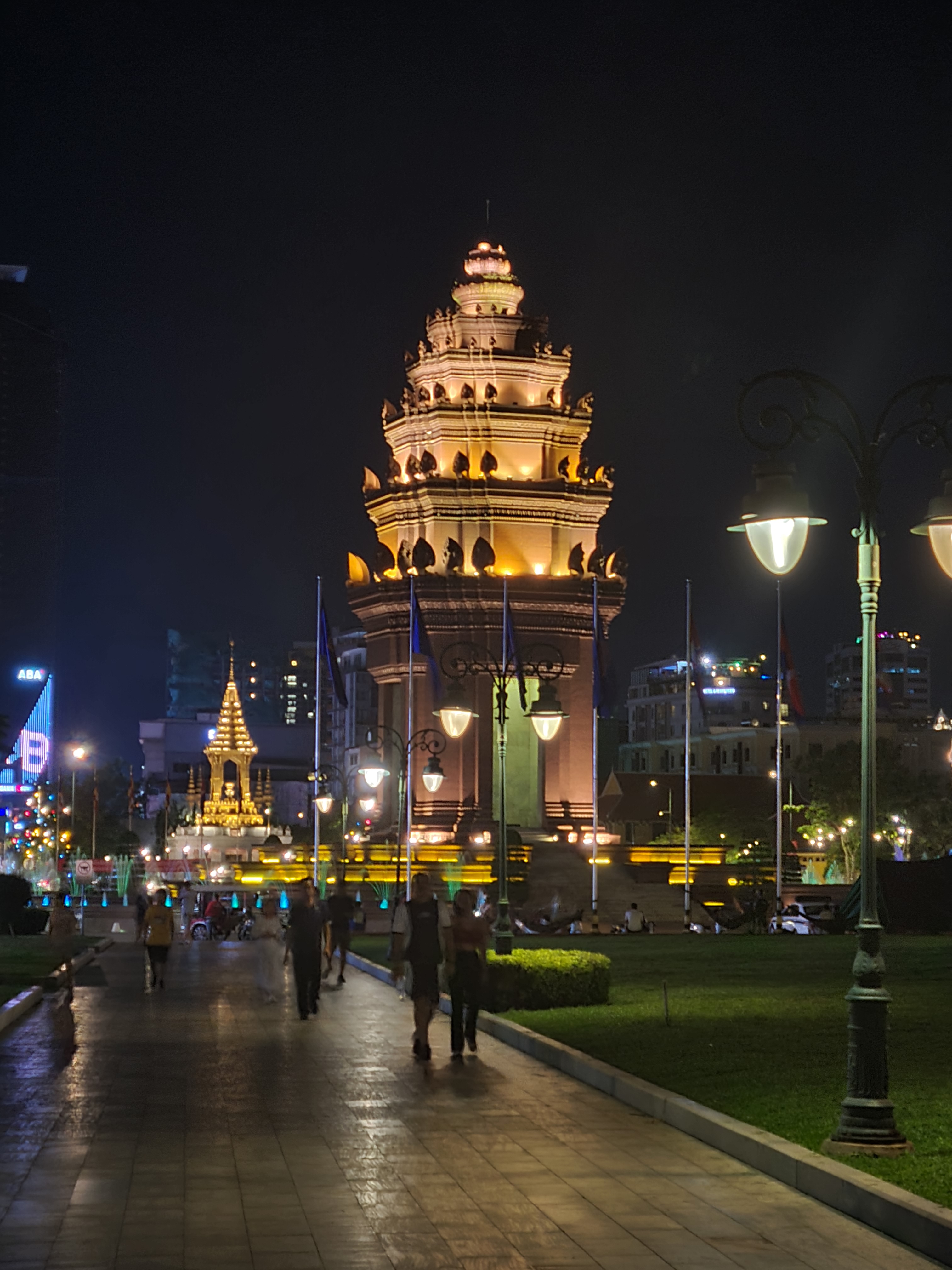
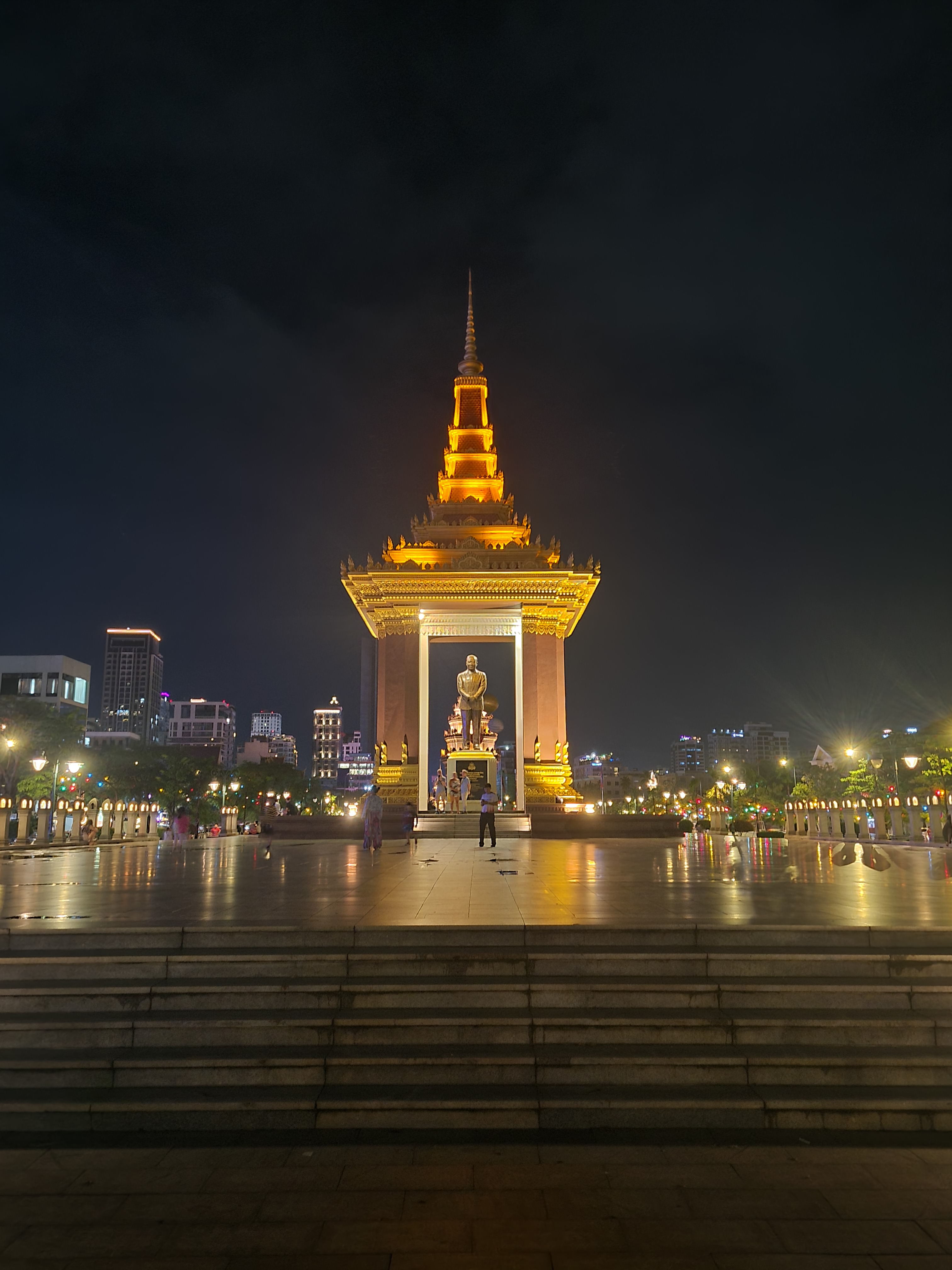

Around Phnom Penh

I hadn’t realised Phnom Penh is known as the “Pearl of Asia”, so to me it was a bit of a surprise just how cosmopolitan it is, in between its historic roots.
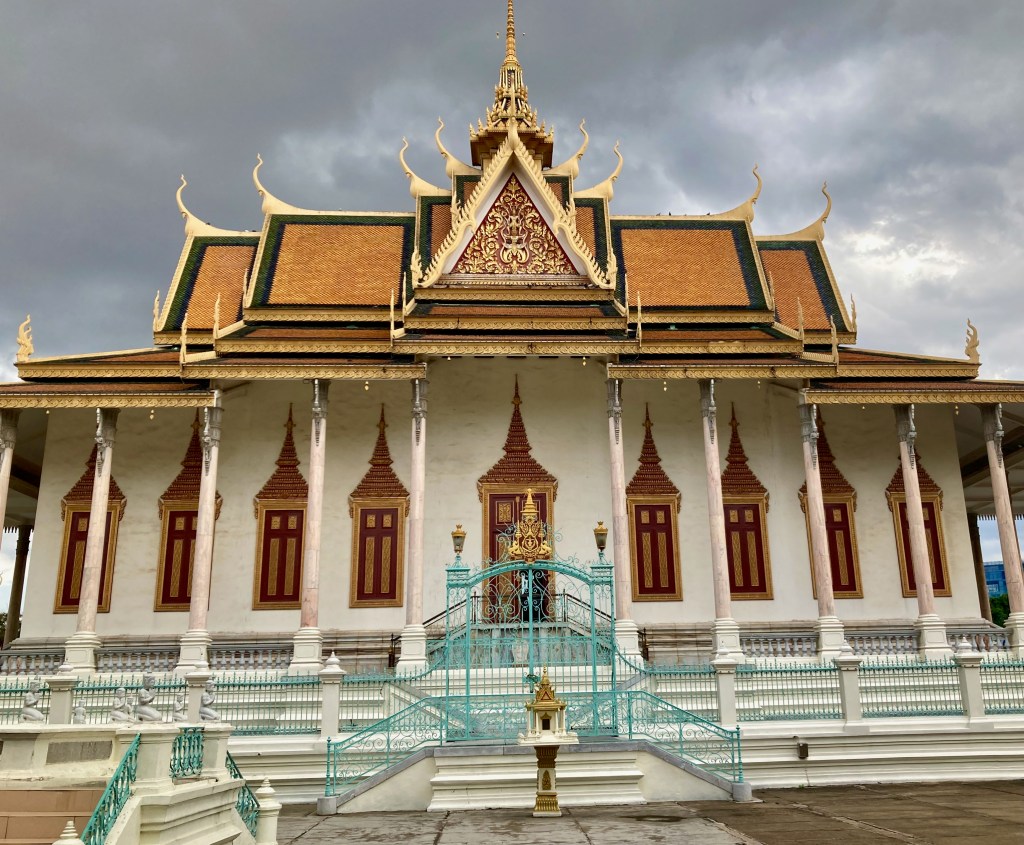
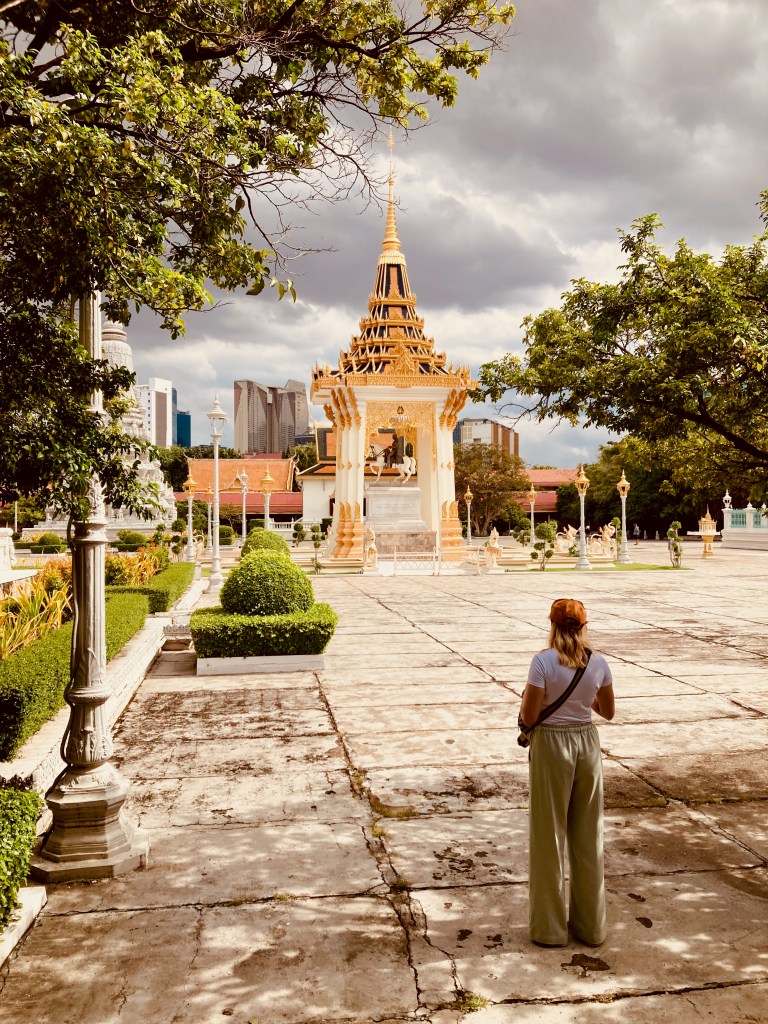

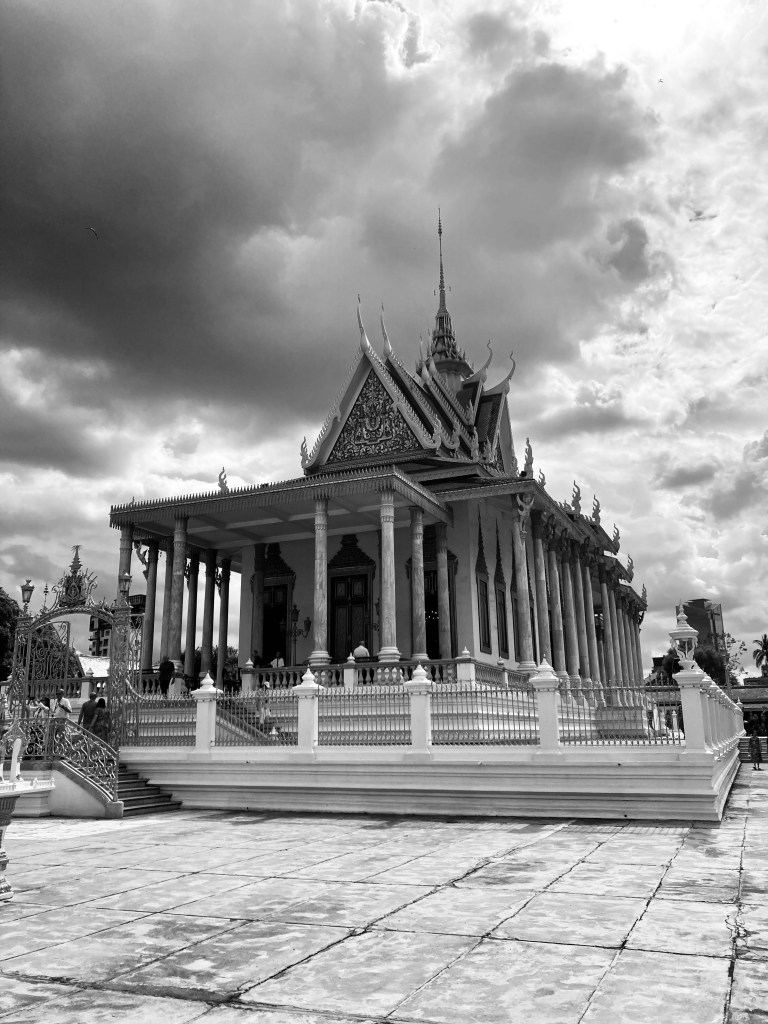


Royal Palace of Cambodia

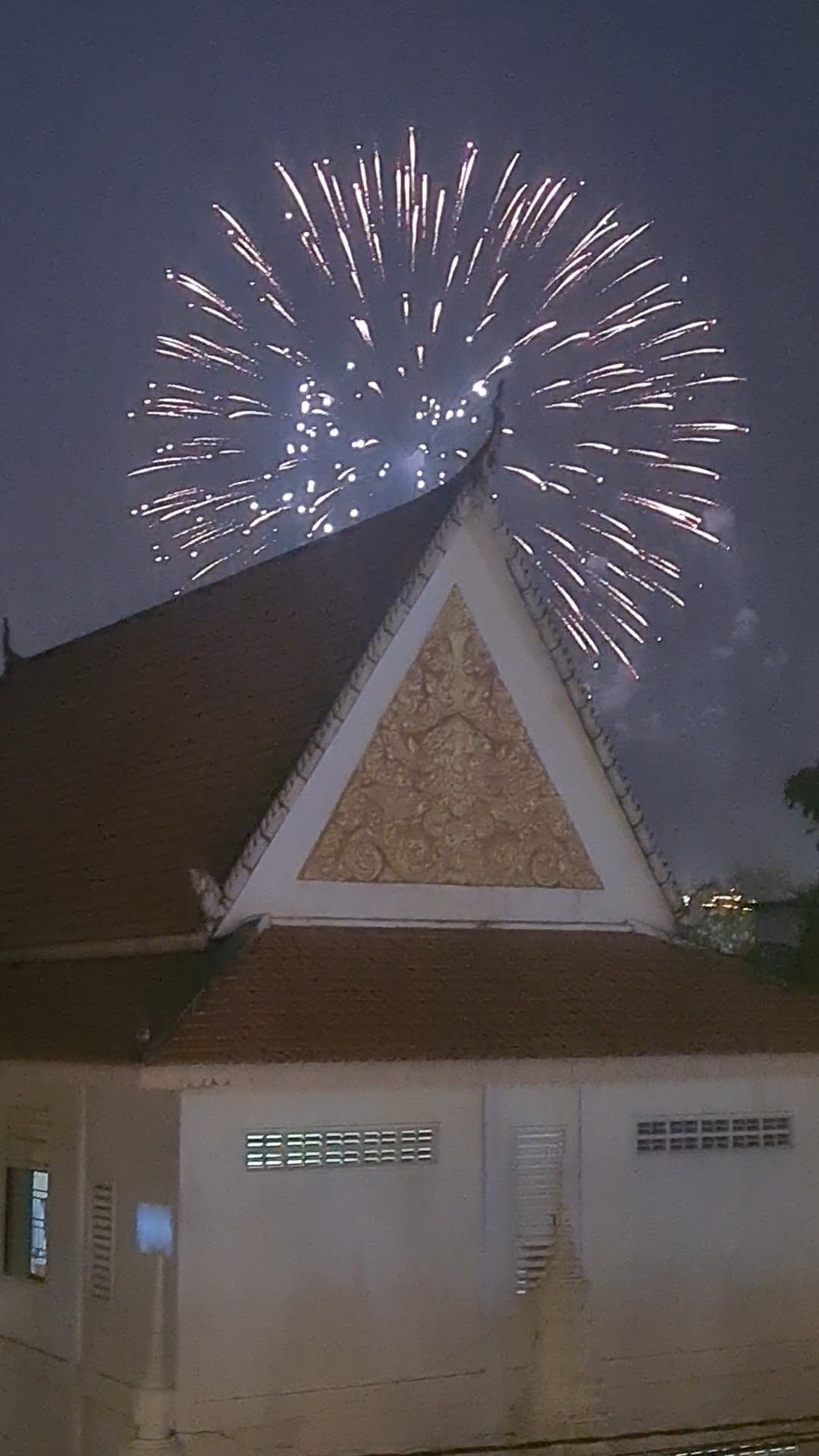

Once again, we arrived in a city to find we were right on time for a public holiday – the anniversary of the King’s coronation. Thankfully there wasn’t too much disruption other than one part of the palace being closed.
Of course, similar to Vietnam, Cambodia has a painful recent history. In some ways it’s altogether more shocking though, as the threat came from within. I only vaguely knew about Pol Pot and the atrocities he instigated. As well as torturing and killing those who his regime didn’t consider aligned with his communist ideology (and that could be as simple as wearing glasses or having well maintained hands), his distaste for capitalism extended to closing places of culture, education and religion. And most self-sabotaging of all, modern machinery was also scrapped. Civilians were forcibly evicted from cities to work in the country, harvesting rice by hand to meet unreachable quotas, completely doomed to fail.
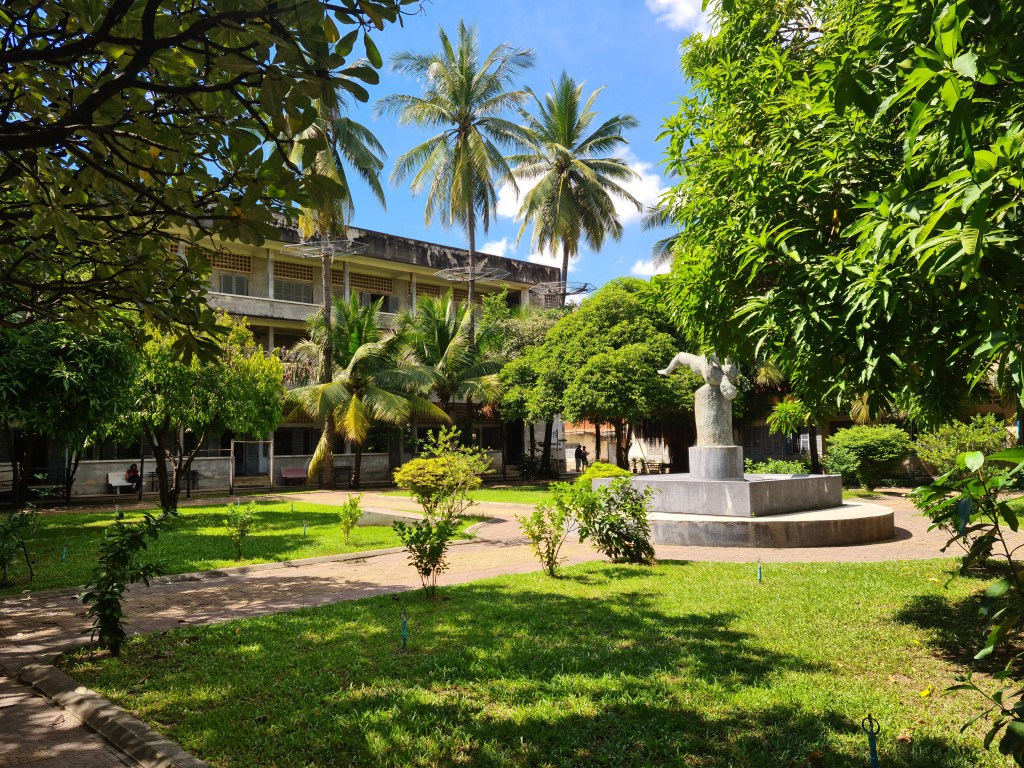
We learnt about the regime at the infamous S21 / Tuol Sleng prison, ironically once a school, a building which should foster promise for the future. Instead, thousands were tortured here, and photos of men, women, girls, boys, showed just how indiscriminate the brutal regime was. Many elements of the building are presented how they were at the time, and whilst the downstairs cells were haunting enough, it was the upstairs that caught me a little off guard. Usually curiosity overcomes any doubts, but the top floor, still complete with wooden cell dividers left me too spooked to stay any longer than a minute. Perhaps it was having inadvertently timed it so I was on my own, or perhaps I was just a little overwhelmed by the dark history.
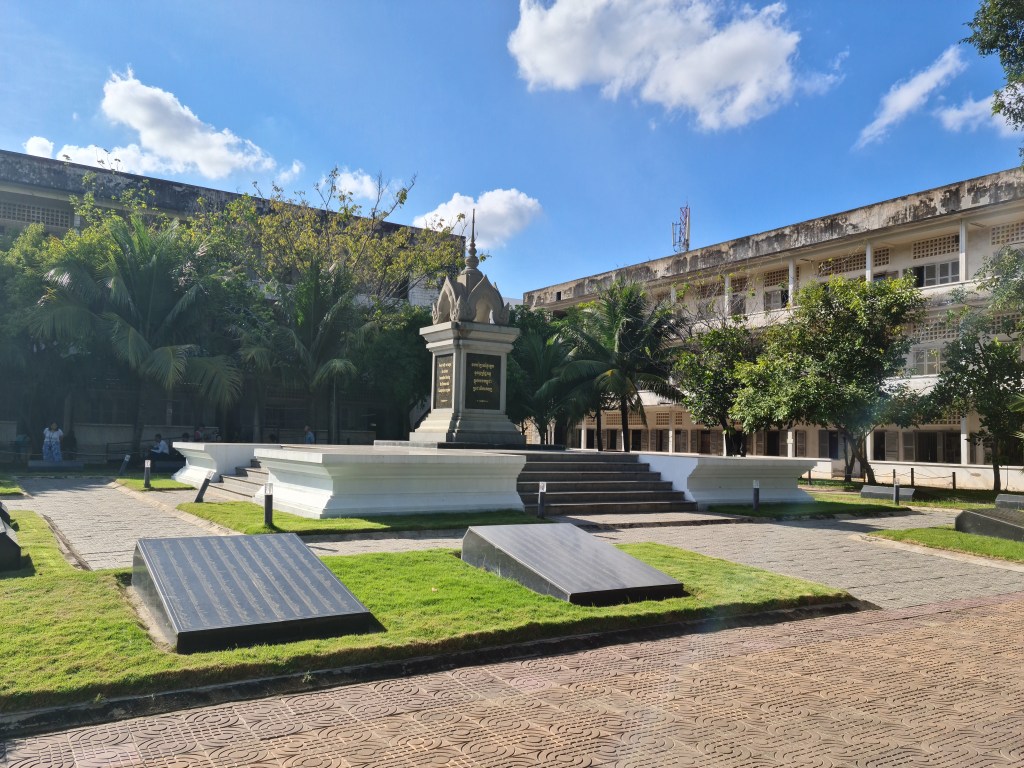
We were already all too aware of the fate that most often awaited those removed from Tuol Sleng. That morning, we had visited the Choeung Ek Genocidal Centre – also known as the Killing Fields. I’d heard of the Killing Fields before, the name conjuring up various connotations in my head. Instead of the barren, churned earth I had been expecting though, it was a surprisingly peaceful and verdant plot of land, with small orchards of trees, a calm pool of water and hens and chicks running free.1
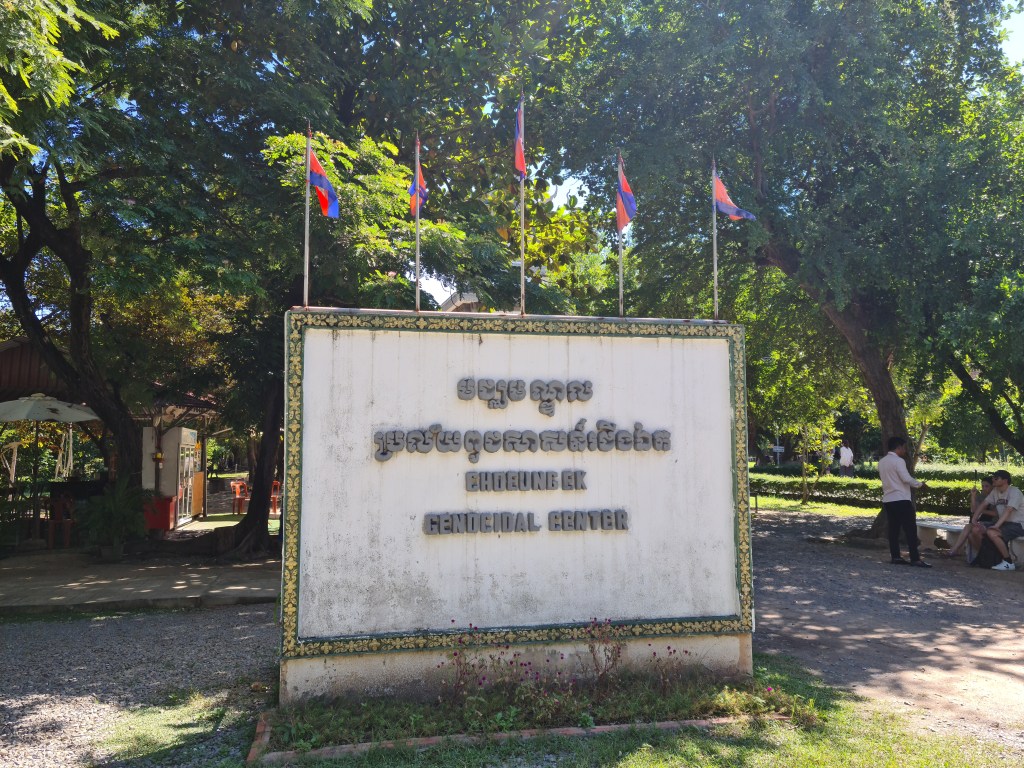
The site’s past, narrated by audio guide, was even darker than I had expected though. I’m still stunned that a regime which saw 25% of a country’s population brutally murdered (and not by gunshot as I would have thought – bullets were considered too expensive) and as recently as the late 70s isn’t commonplace learning. And Cambodians do want us to learn about it, in the hopes that lessons can be learnt from the painful past.
As a side note, I was also pretty stunned by what some visitors thought appropriate to wear in not just a conservative country, but in particular given the nature of Tuol Sleng and Choeung Ek. I know it’s not my place to declare what is and isn’t suitable, but surely most would agree a t-shirt with cartoon skulls and a flippant caption, worn metres from a stupa made up of victim’s skulls, is a pretty questionable choice. As a favourite saying I’ve learnt this year goes though, “never attribute to malice what you can to stupidity”. Please think before you dress, folks!
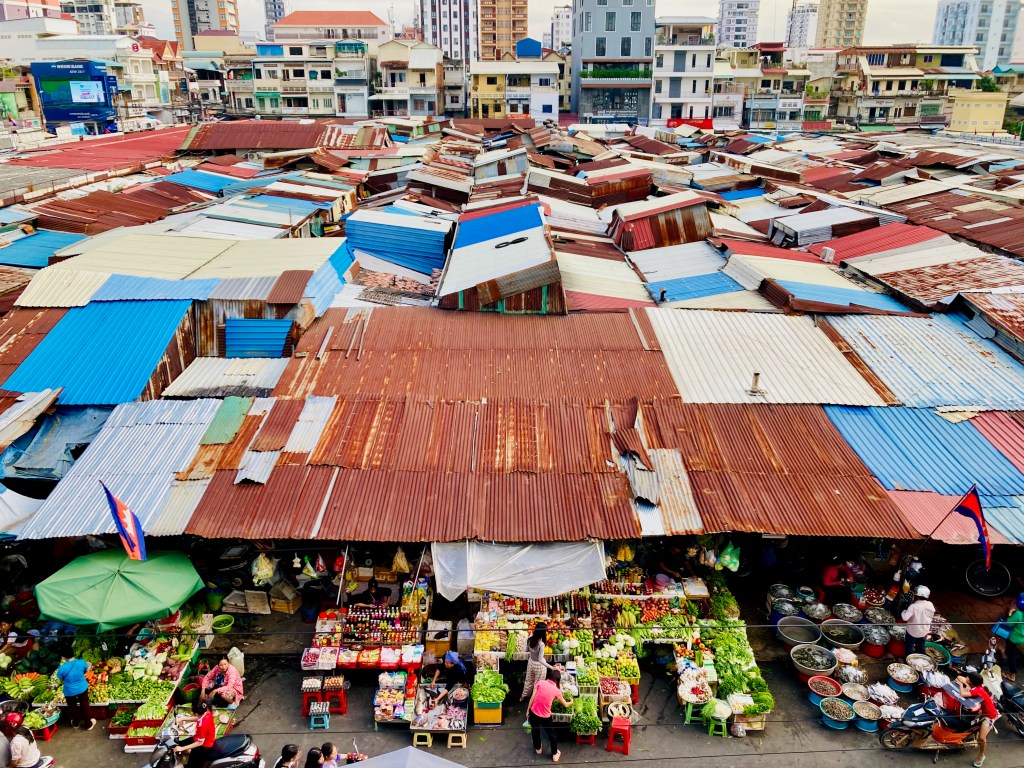



We decompressed in a casual rooftop bar, taking in the outlook over the busy central market. It had become clear that supermarkets here exist only for foreigners. Locals buy all their goods in a trip to the old-school market, grabbing the likes of spices, new shoes, home decor and tuk tuk tyres all in one place. I particularly enjoyed our view over the meat and fish section, as a no-nonsense vendor prepared fish so fresh, it needed a perfunctory “whack” to render it motionless, before she filleted so efficiently I’m sure she would fly through any Masterchef skills test.



The market, including on-site dried fish
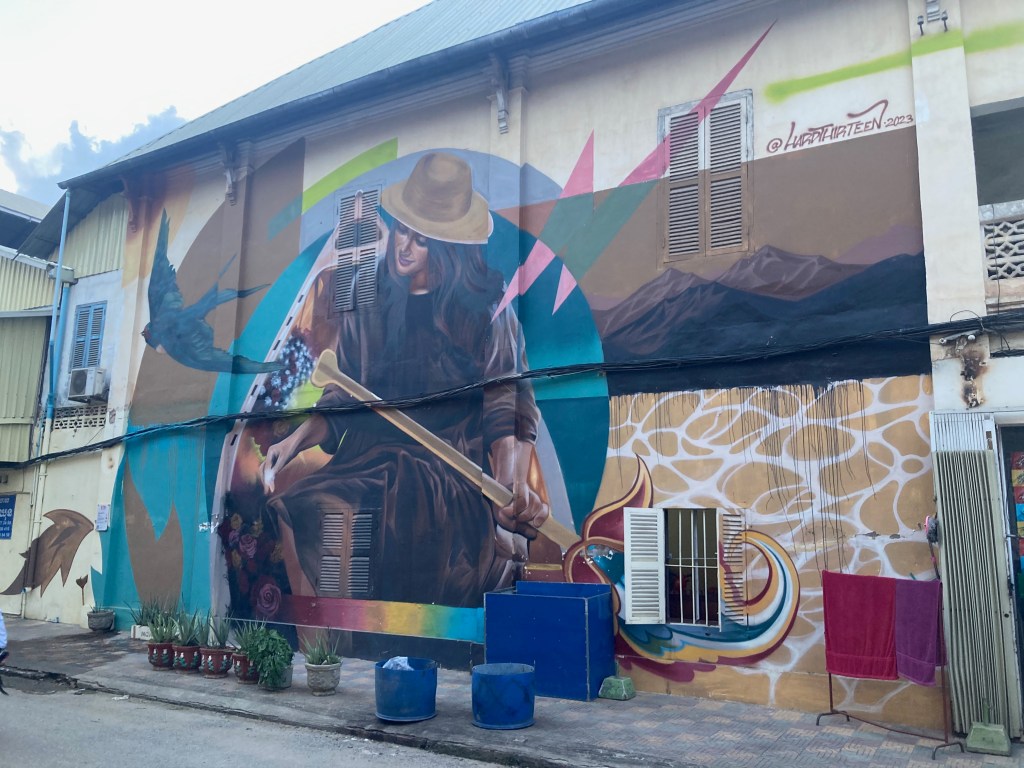
We carried on to Battambang, where the vibe is considerably more bohemian. The well-preserved French architecture is accented with numerous murals.

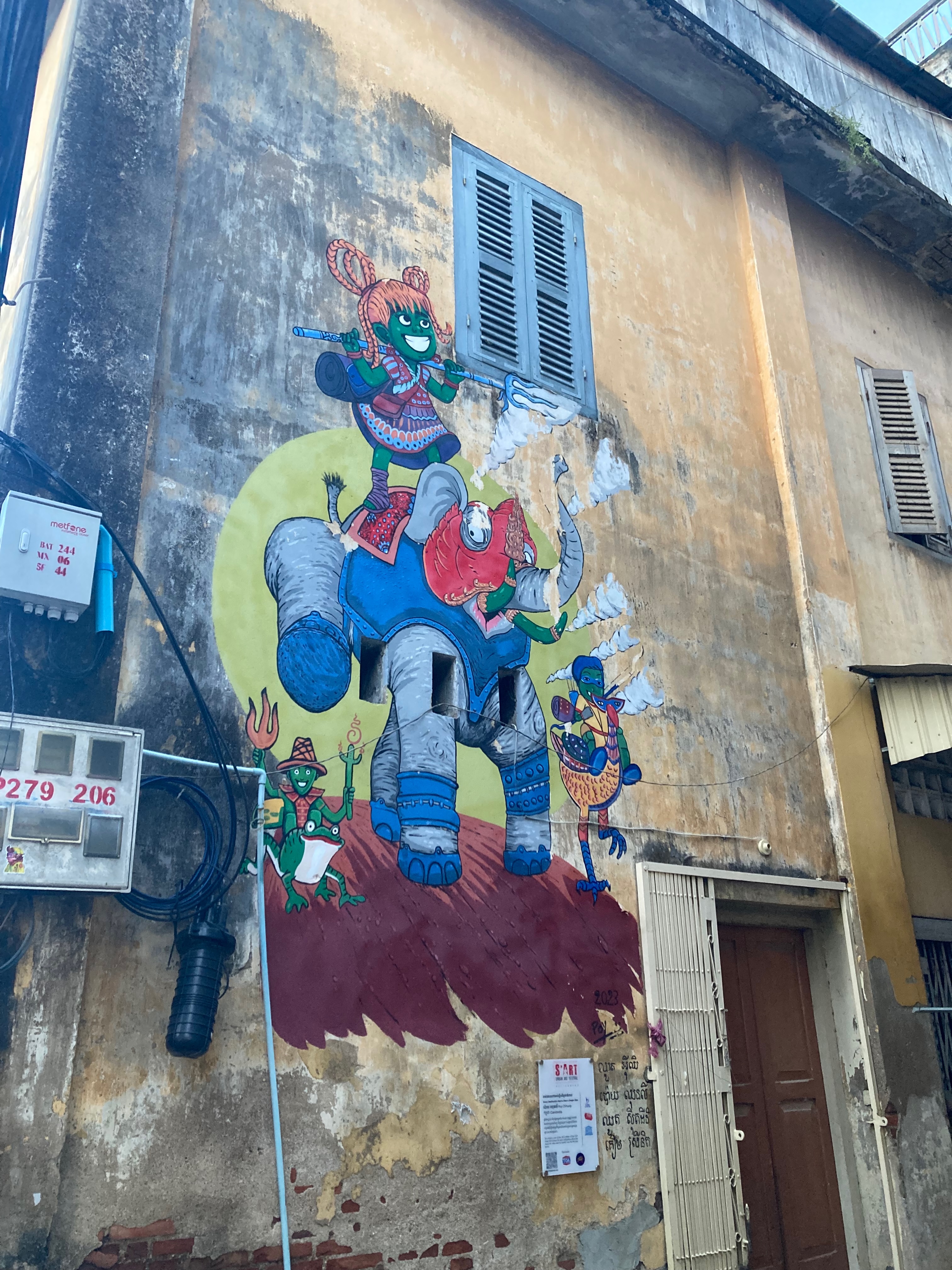
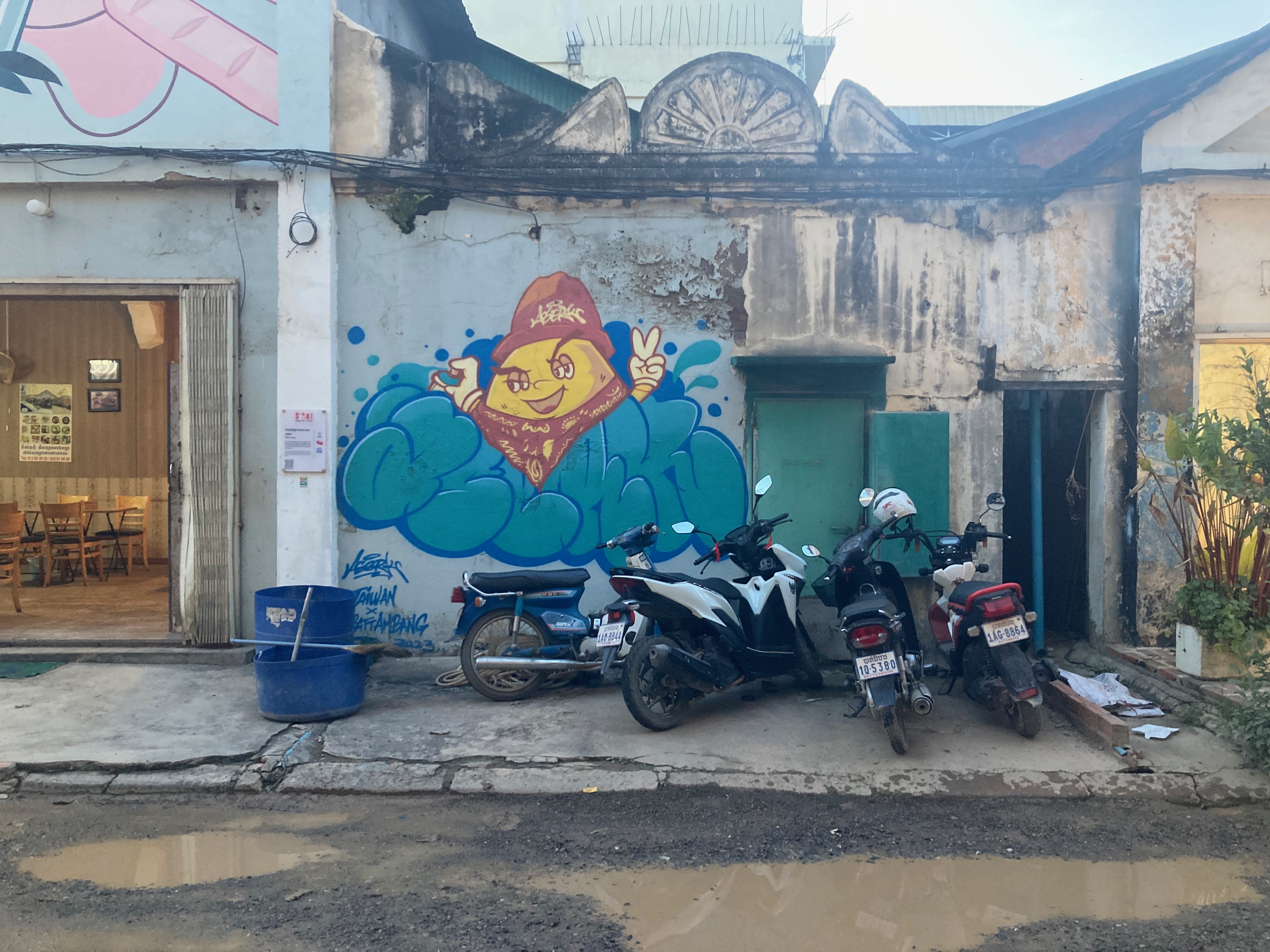
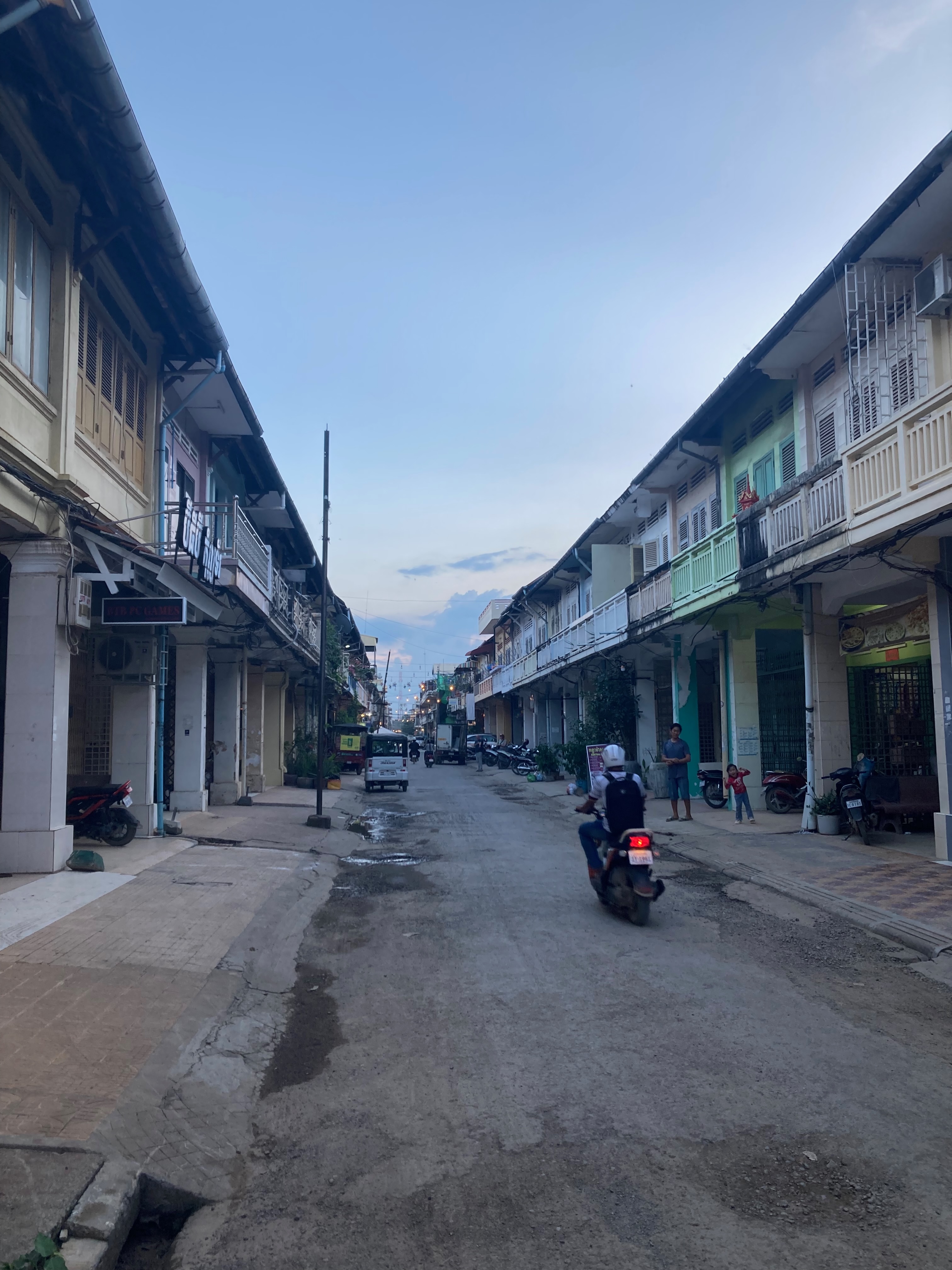
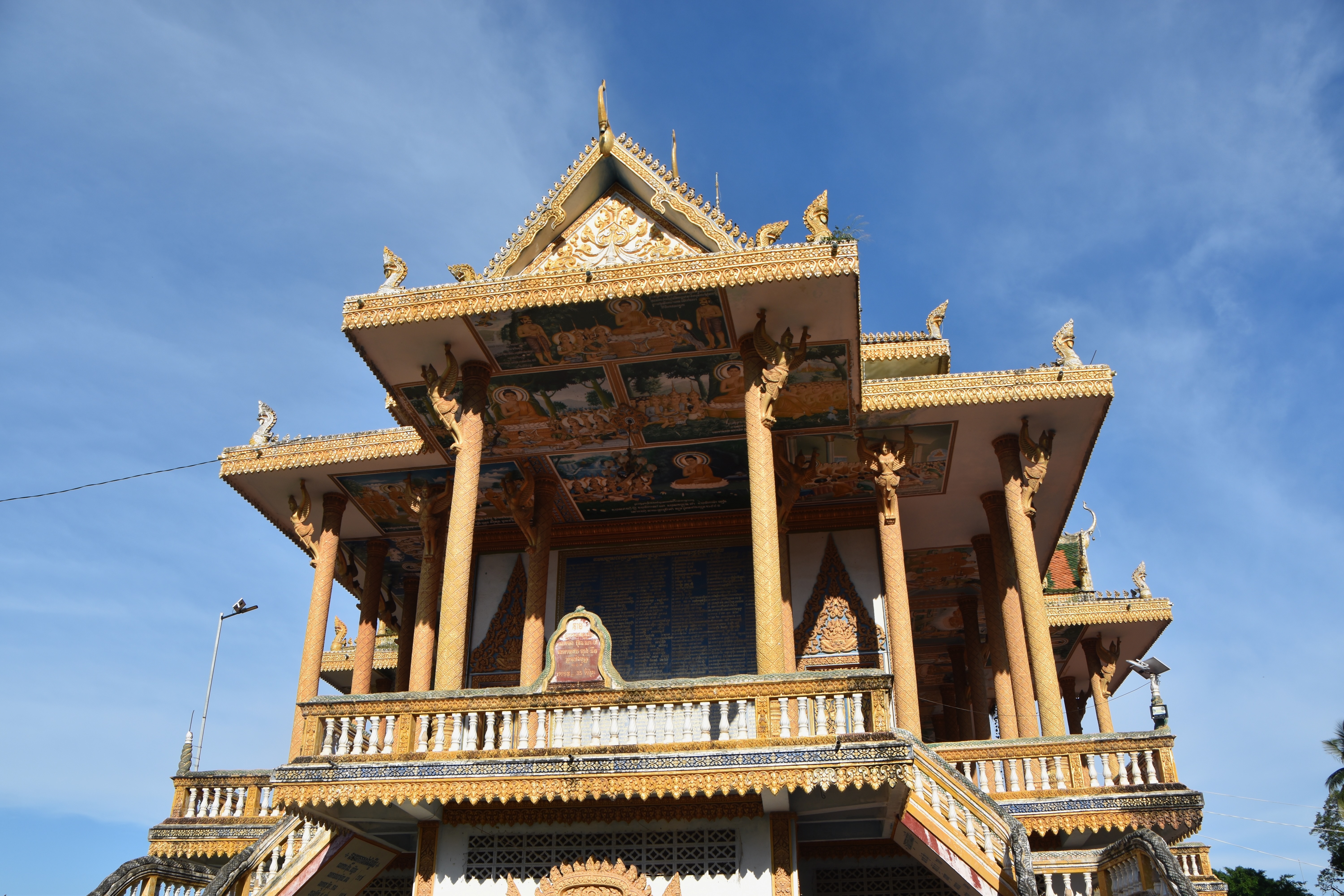
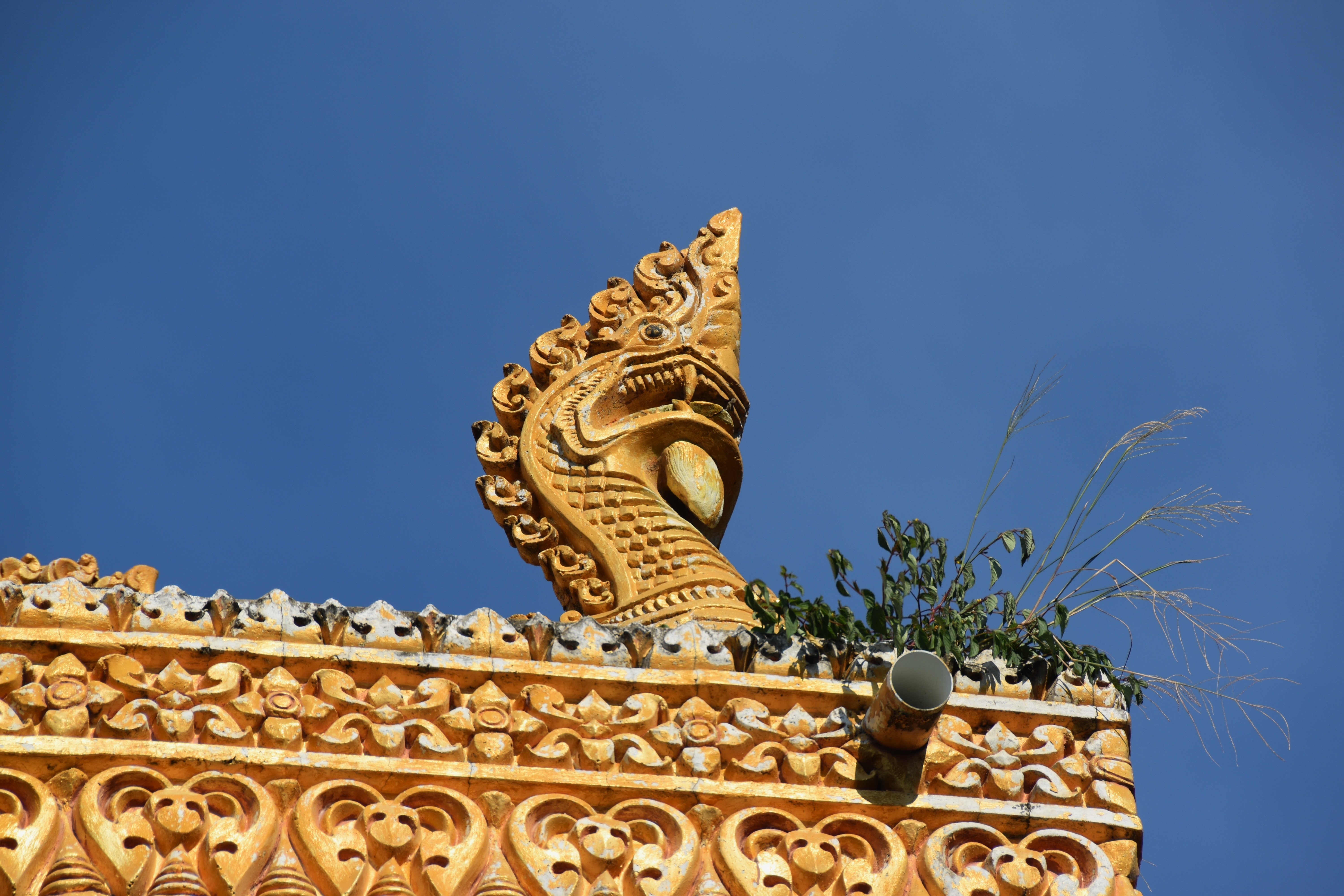
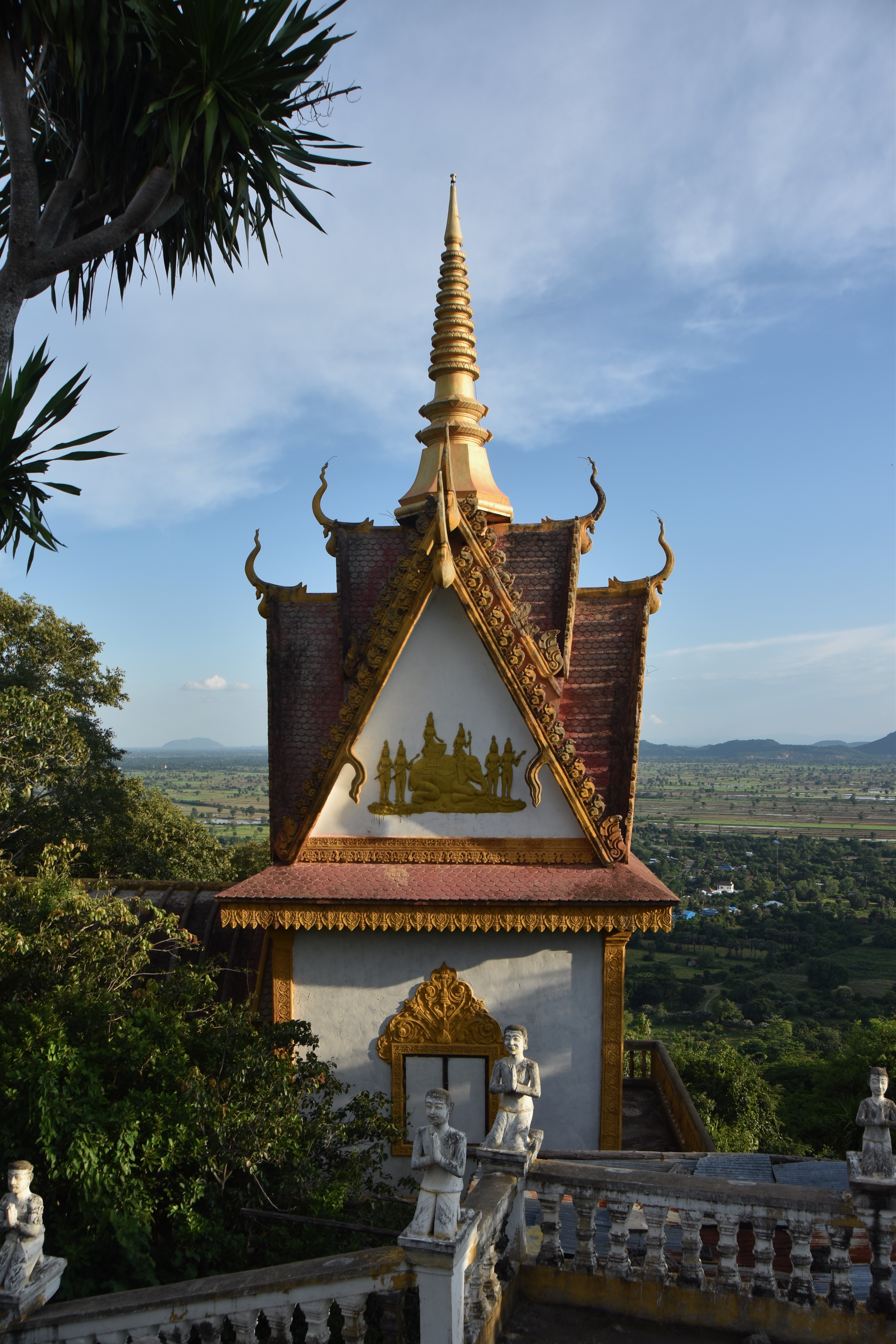
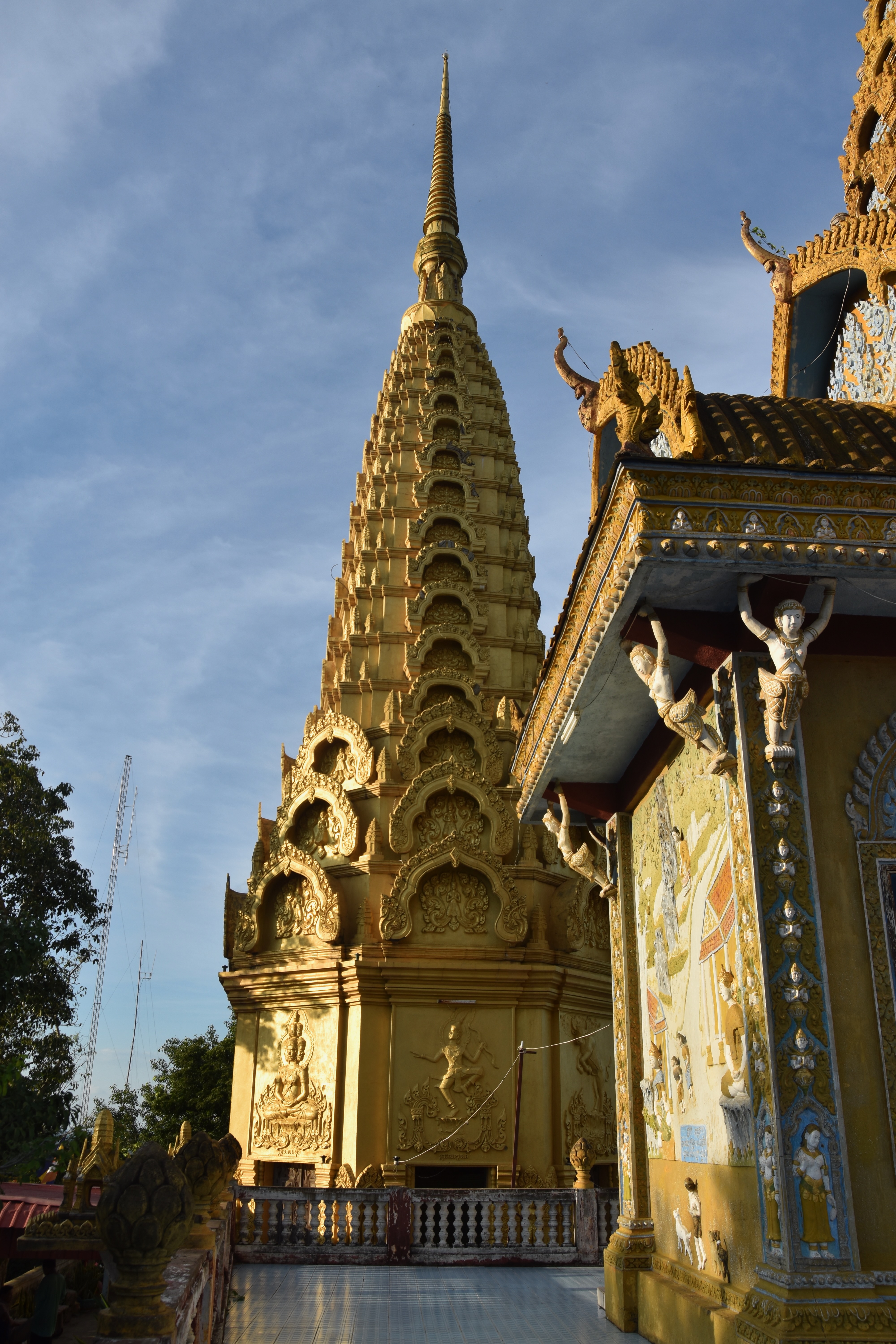
Much of the attractions lie in the surrounding rural fields and villages, unsurprisingly including various temples.
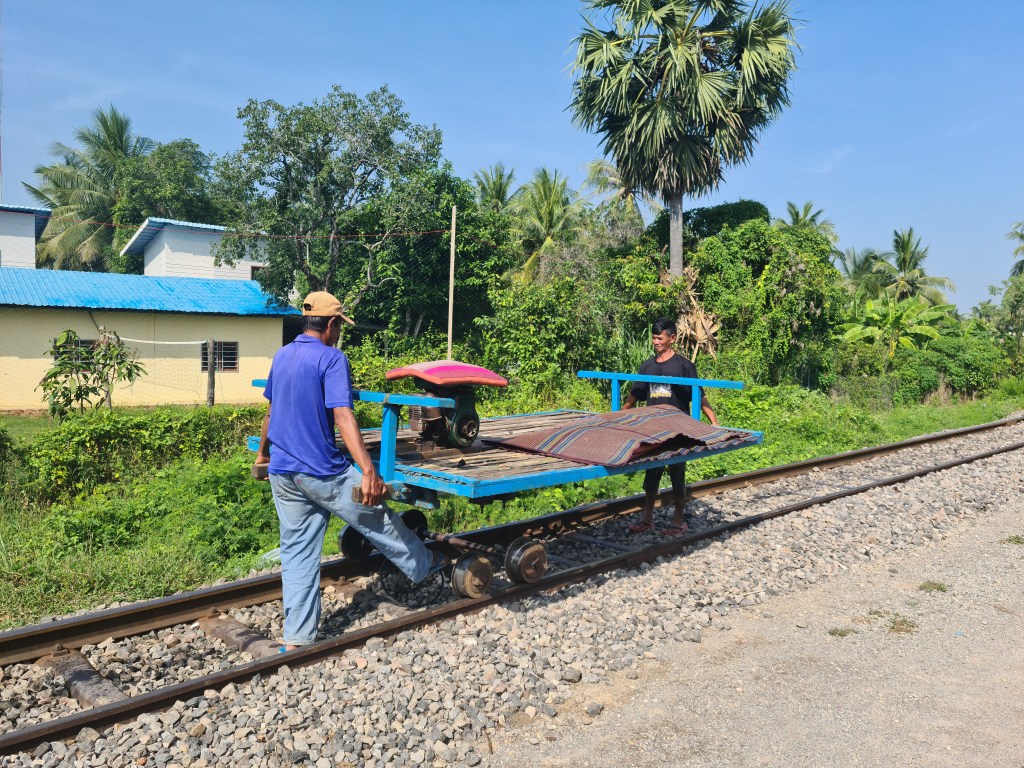
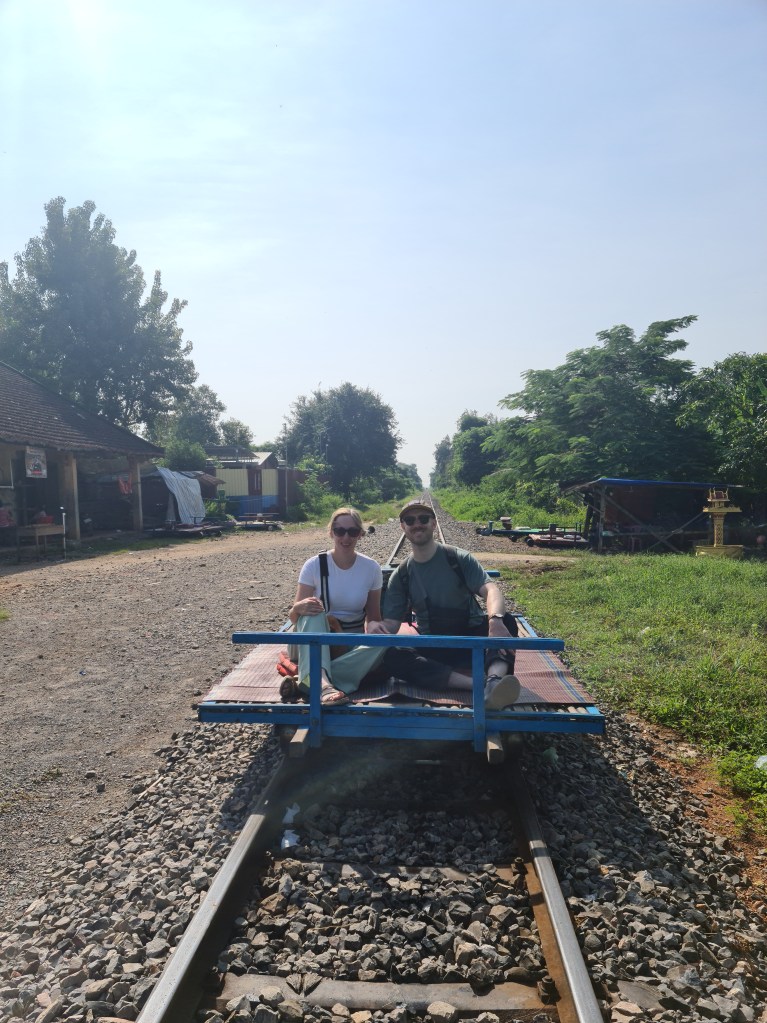
One of the most unique attractions is the bamboo train. After delivery of a more traditional rail system failed to materialise, locals originally used the bamboo train to move goods and people along the already prepared railway tracks. Now it presents another opportunity for the tourist economy. The train consists of a lightweight bamboo platform mounted on two axles with wheels, powered by a small gasoline engine. It was a great way to glide around the suburbs. Traffic was pretty slow on the day we had a go, so we didn’t get to play chicken with oncoming trains on the single track, which necessitates quick dismantling and reassembly of one of the cars.
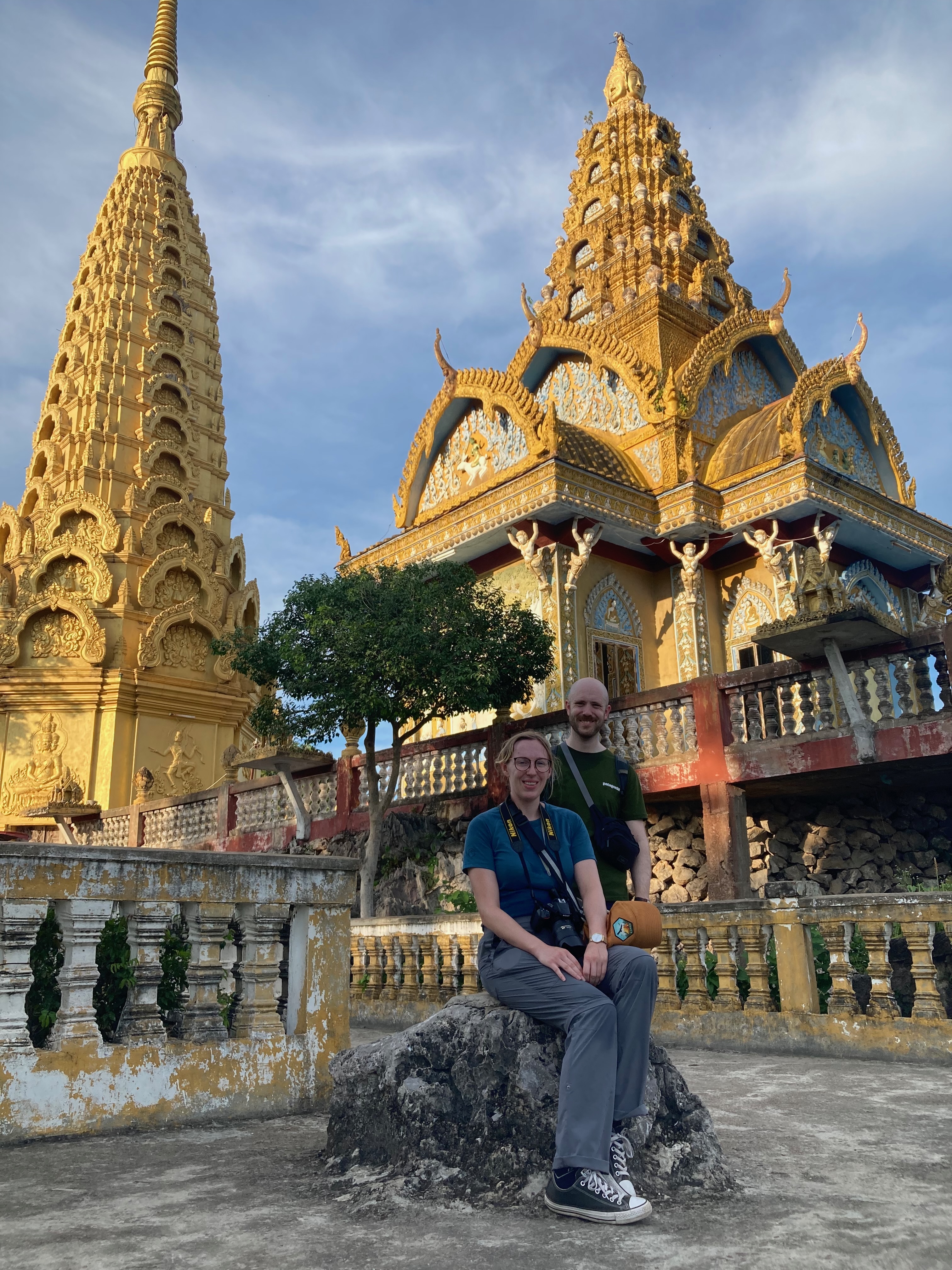
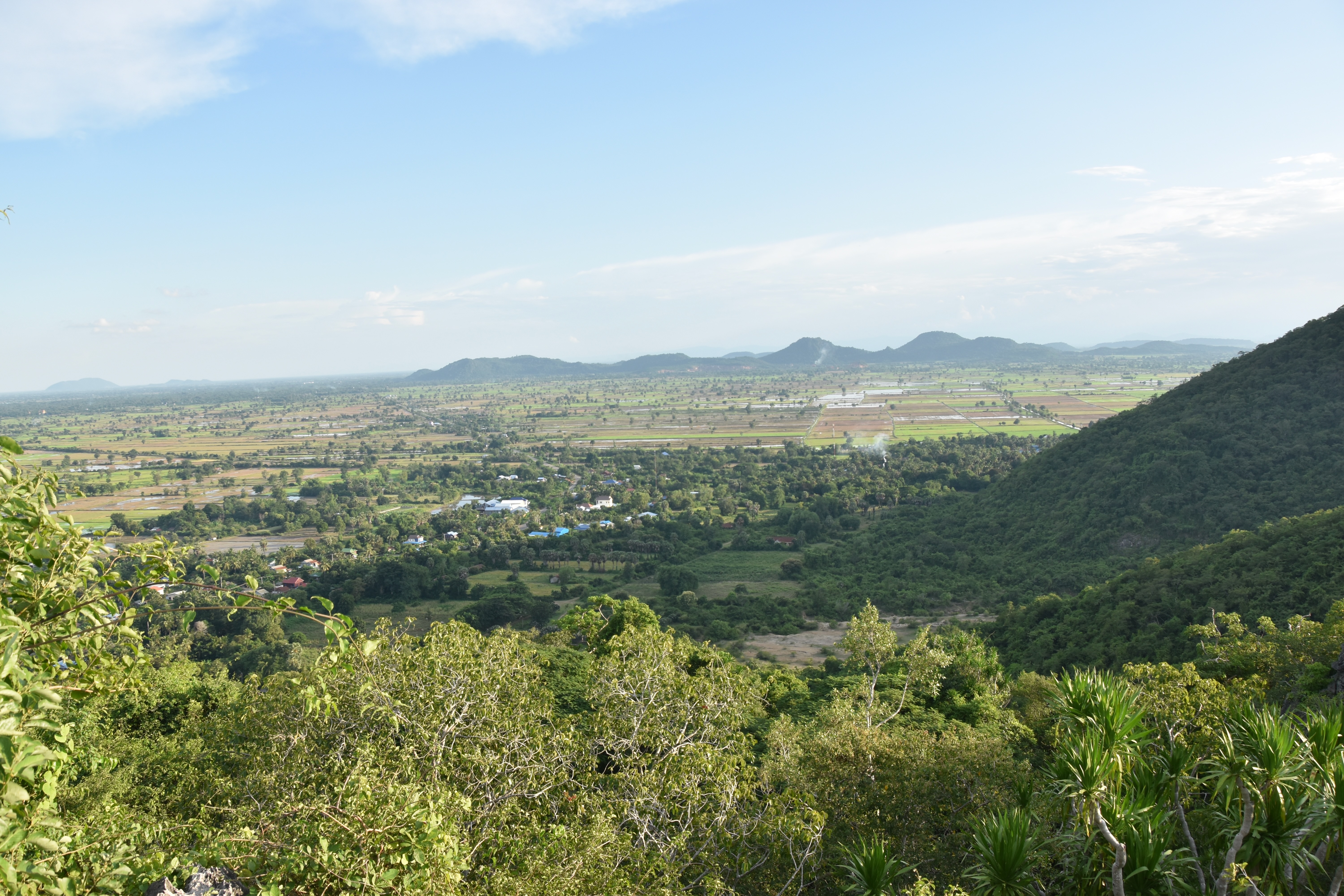
Wasting no time on our arrival into the town, we had also got sorted with an evening tuk-tuk trip to Phnom Sampeau. We inhaled the country air with wafts of jasmine and gazed across rice paddies from the temple-topped hill. It’s so strange to see the contrast of miles of flat earth, interrupted occasionally by dramatic limestone peaks such as the one on which we stood.
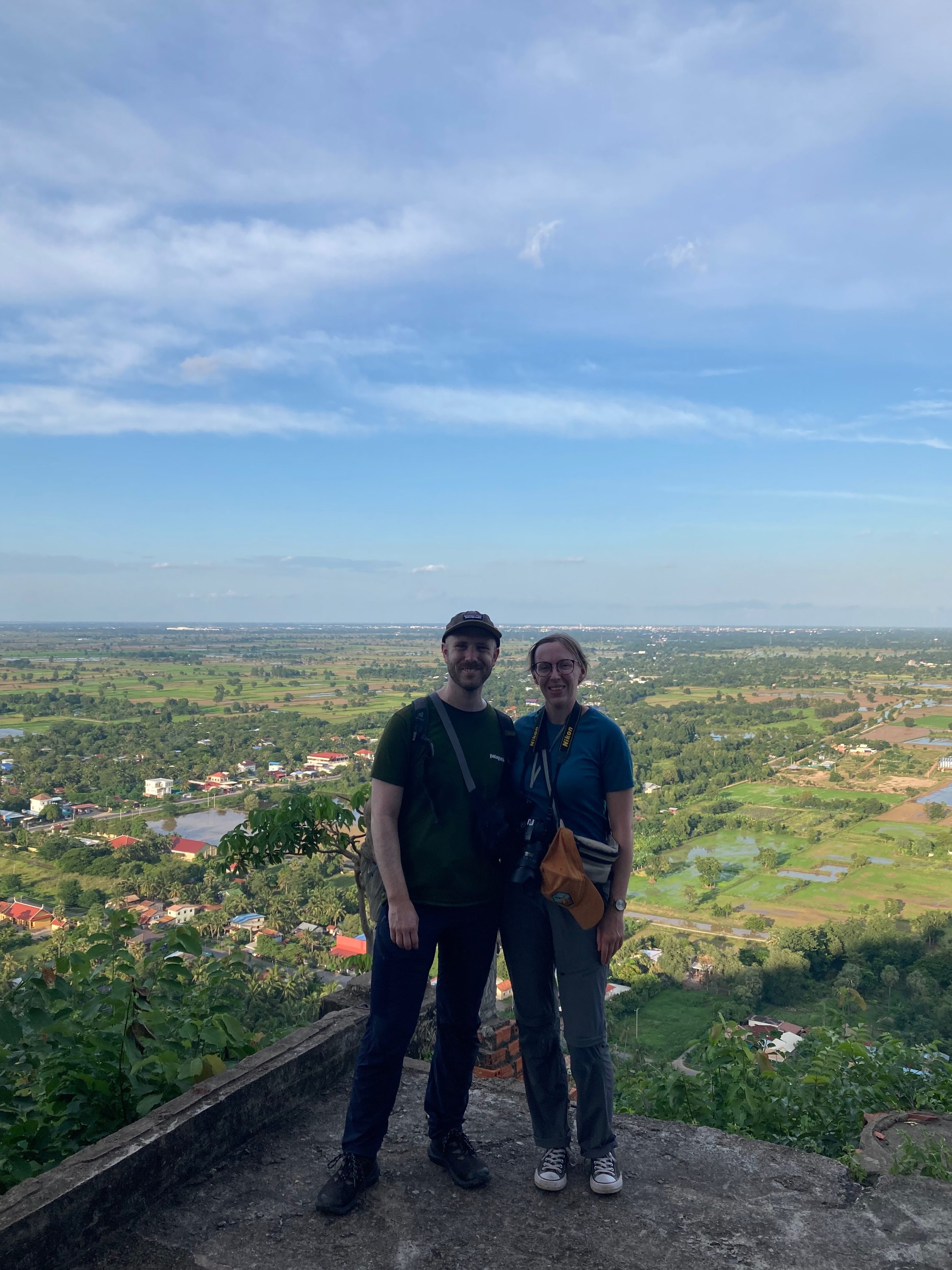
Phnom Sampeau has its own sad history. There are not just killing fields in Cambodia, but caves too, where victims would be executed or incapacitated at the top before falling into the most distressing pit. Even now, after the fragrant fresh air outside, the caves had a noticeable dark atmosphere and damp odour, reminding you that in Cambodia, you are never far from a horrific past.
There is, however, another famed cave at Phnom Sampeau which in recent years has lured an increasing number of visitors to the cliff. Appropriately for the day we visited, Halloween (yes, my writings are approaching a pathetic 3 months behind events), we were about to put the “Bat” in “Battambang”. At dusk, it is estimated 5 – 6 million of the flying mammals make their way out of the caves en masse.
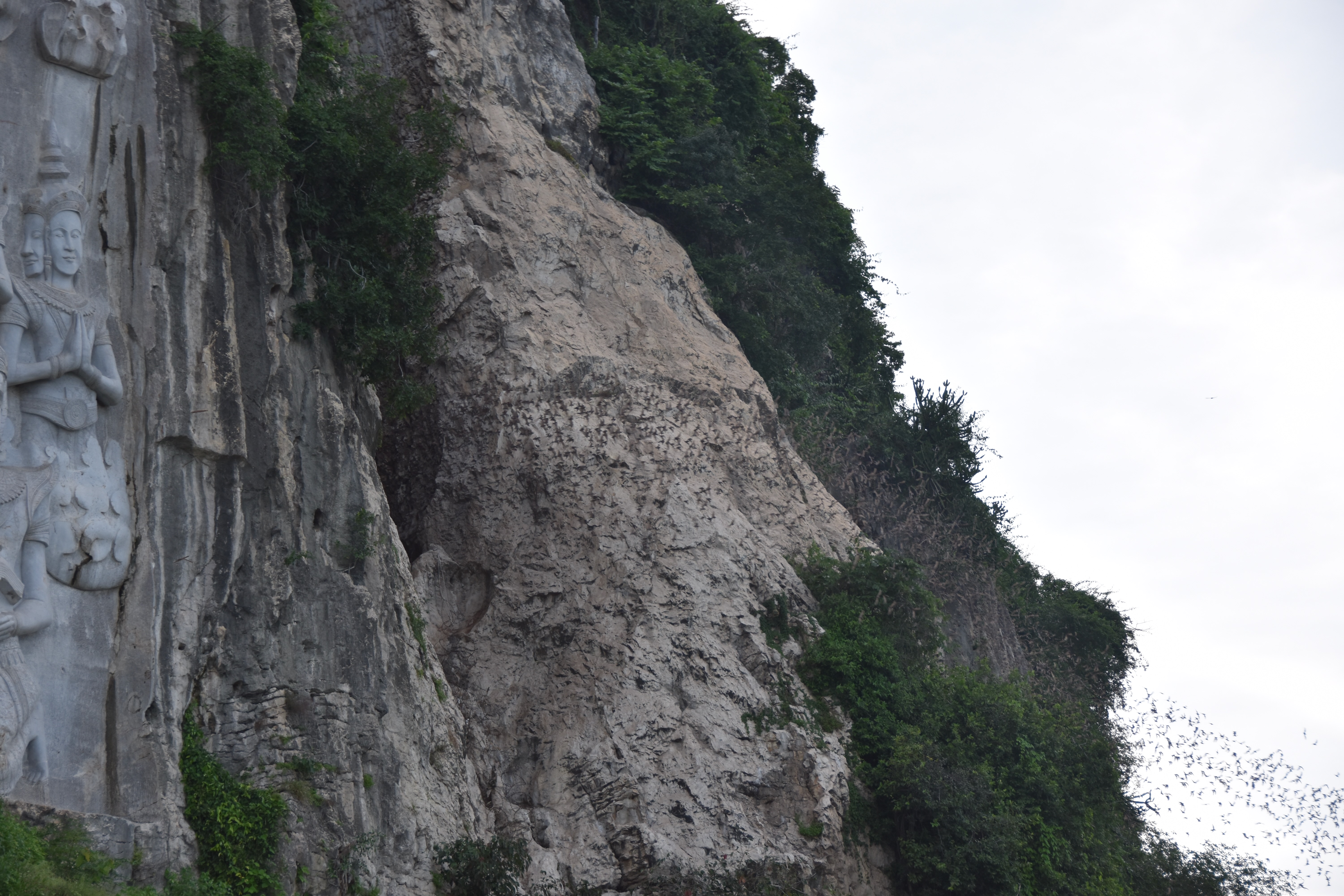
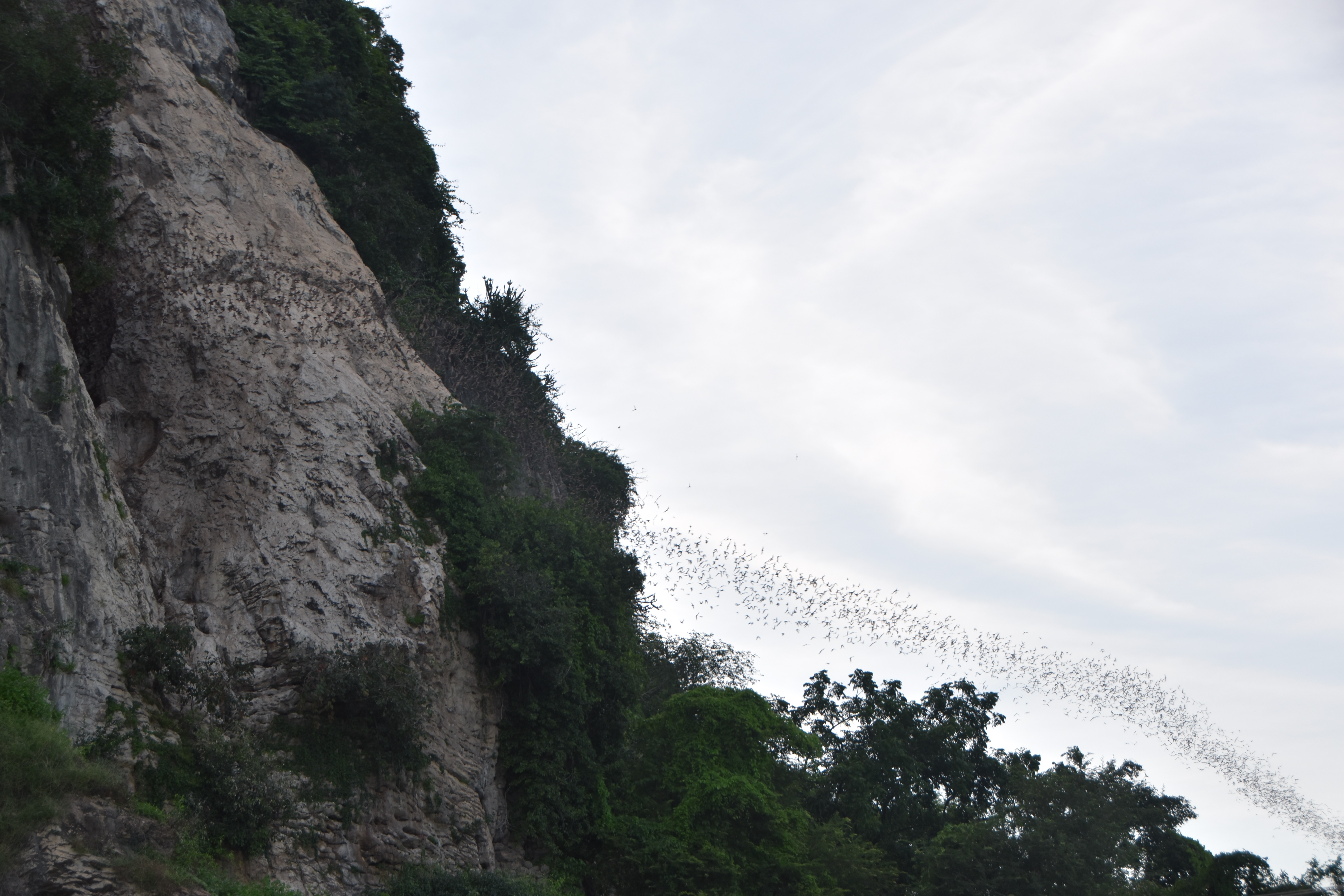
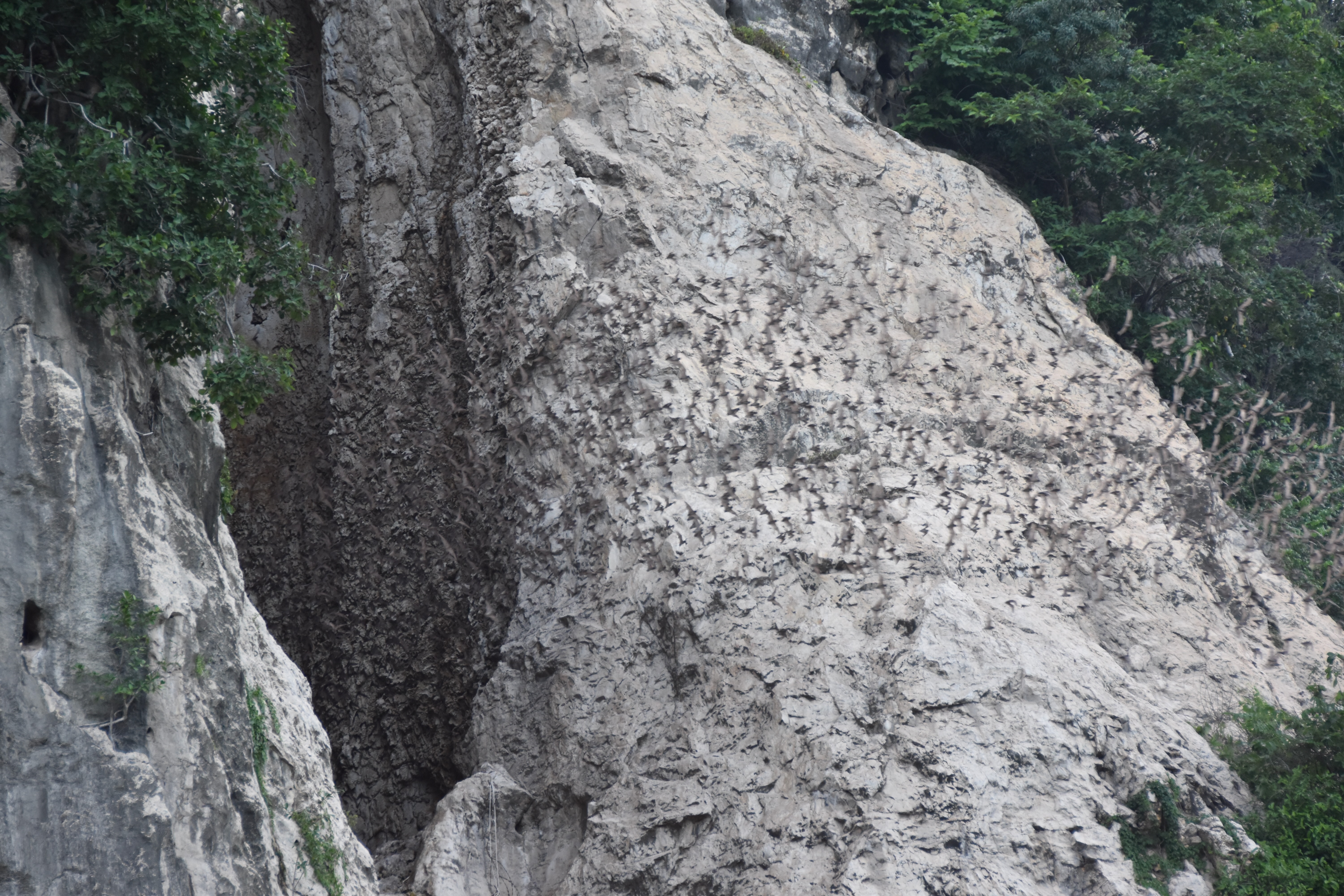
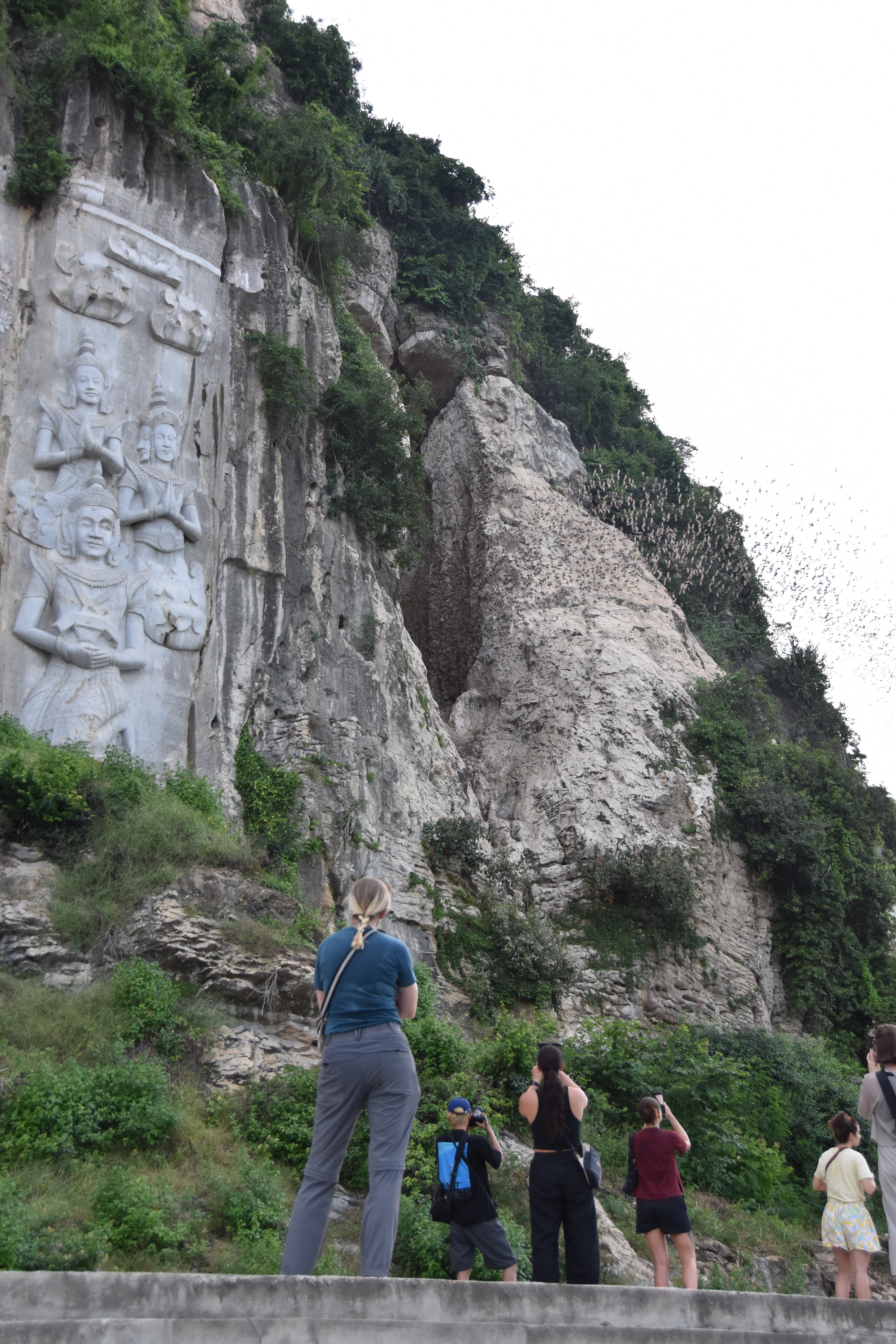
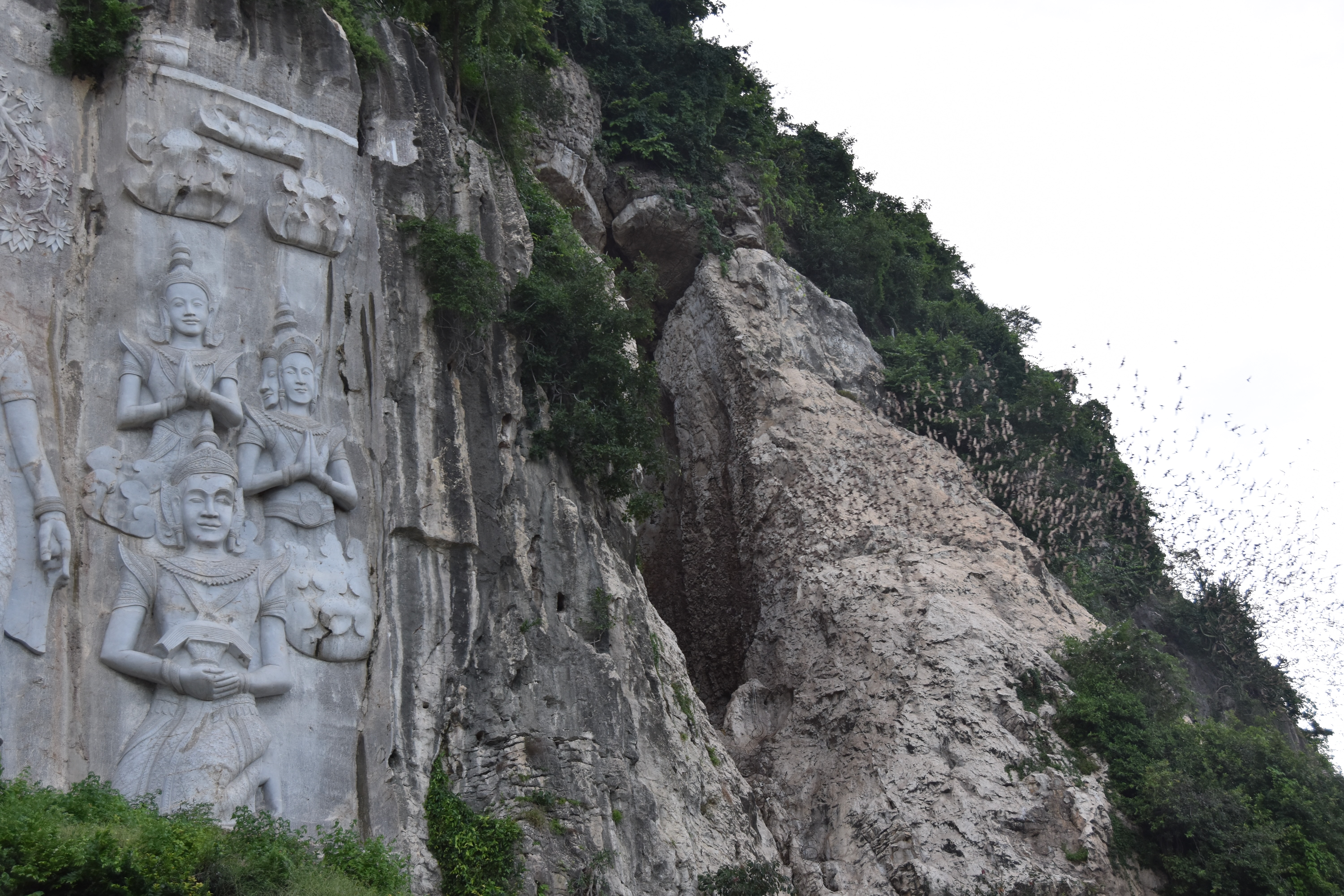
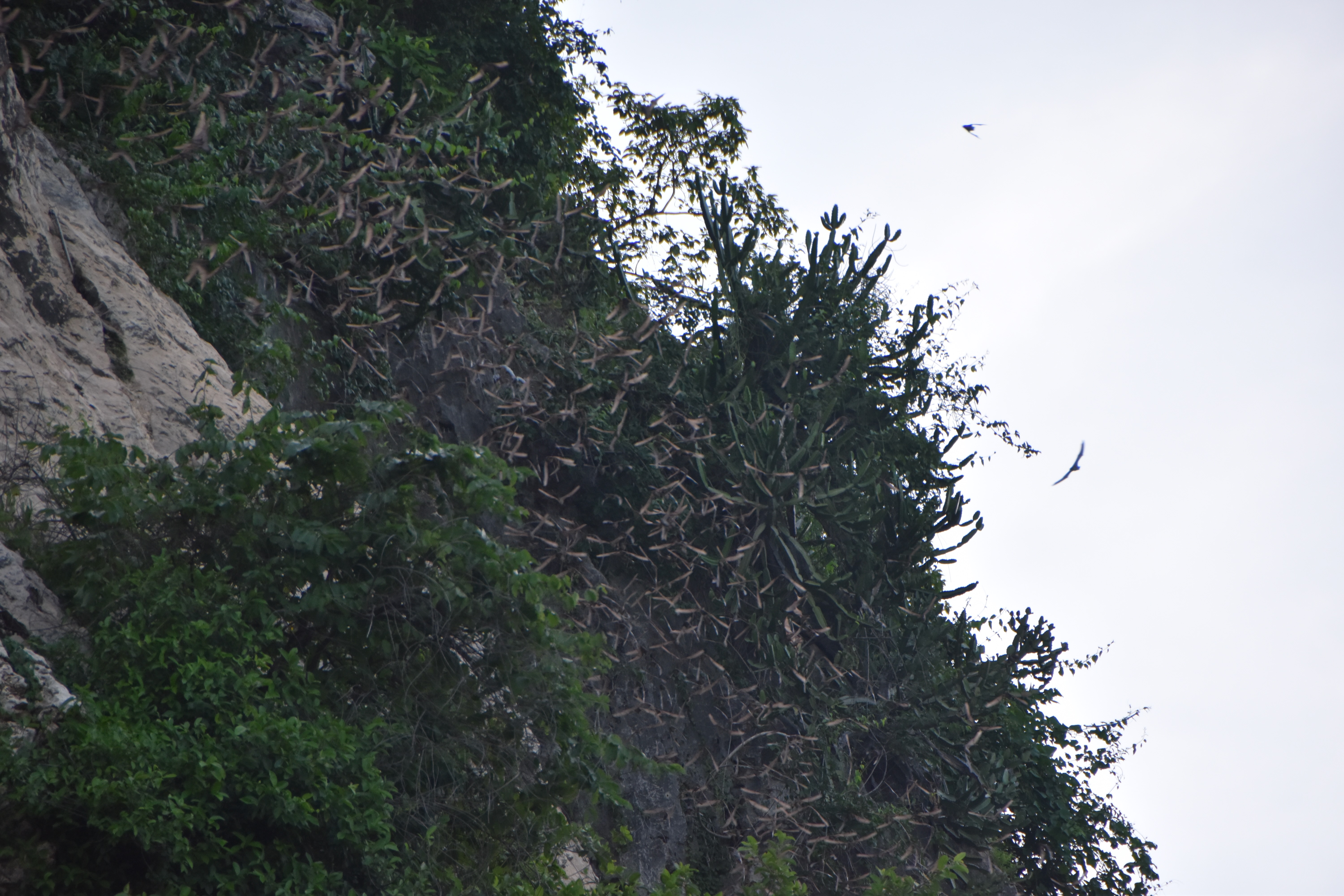
It was stunning to see the murmurations, like watching a scene from Stranger Things playing out live in front of us.
Even as we started leaving the site some twenty minutes after the first bats emerged, the stream was still only slowly petering out. The stench of bat guano certainly still lingered though.
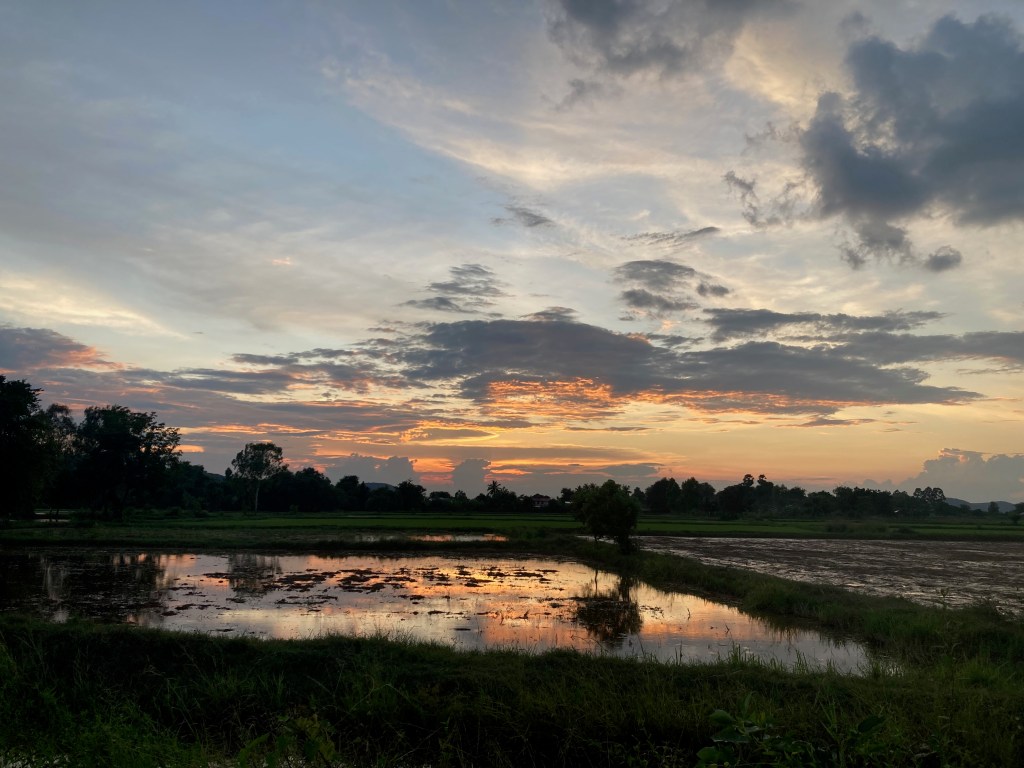
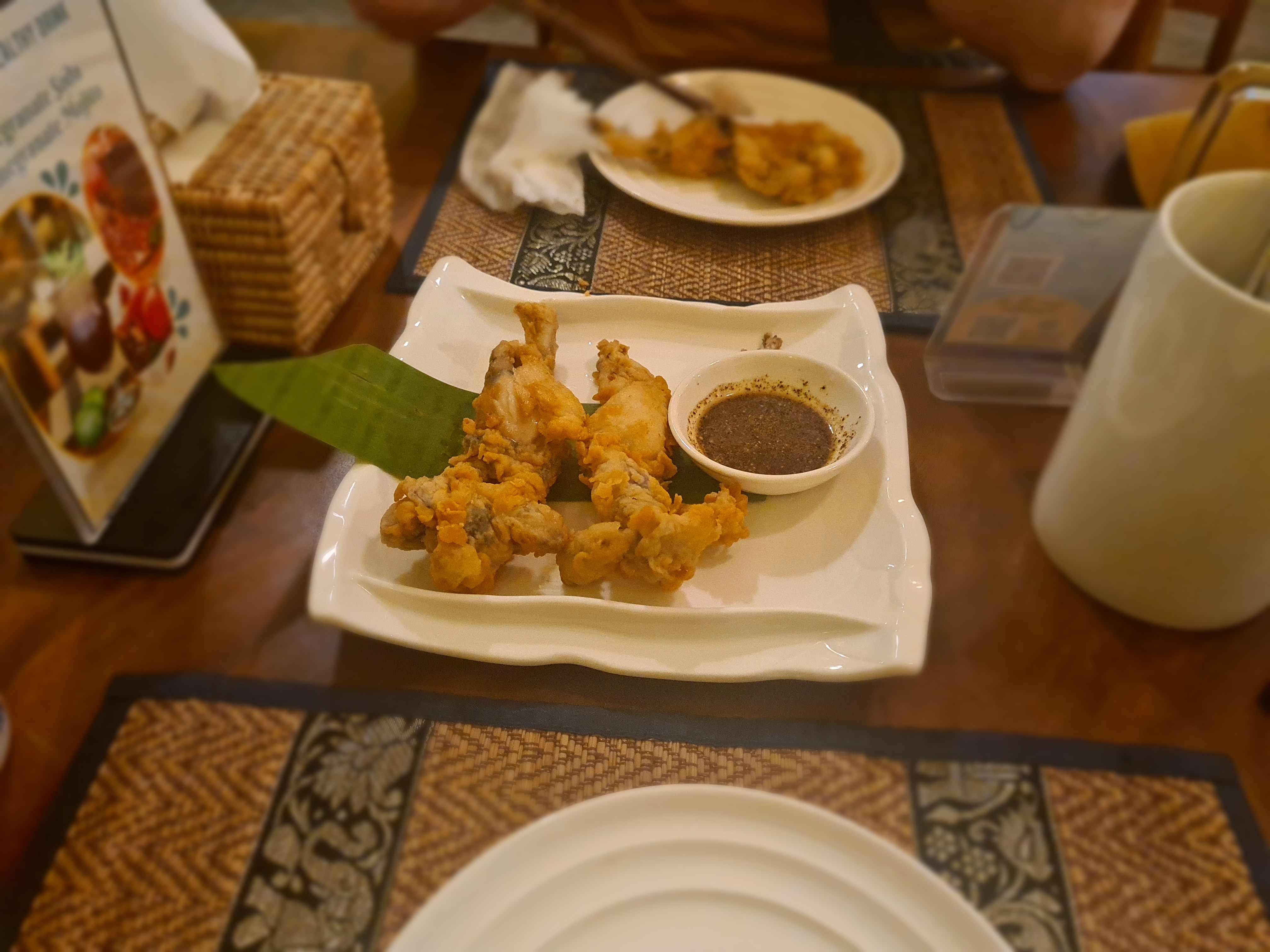
The next day we swapped Dara’s tuk tuk for our own two wheels and were guided on a cycle tour of the countryside. More extensive than our previous cycles, we were definitely grateful for the multiple snack and drink breaks in the heat of the ever-rising sun. An unanticipated stop came in the form of our guide braking suddenly as a venomous snake darted out of the undergrowth in hot pursuit of a toad. Can’t say I blame him, we tried frog legs in Phnom Penh, and they are pretty tasty!
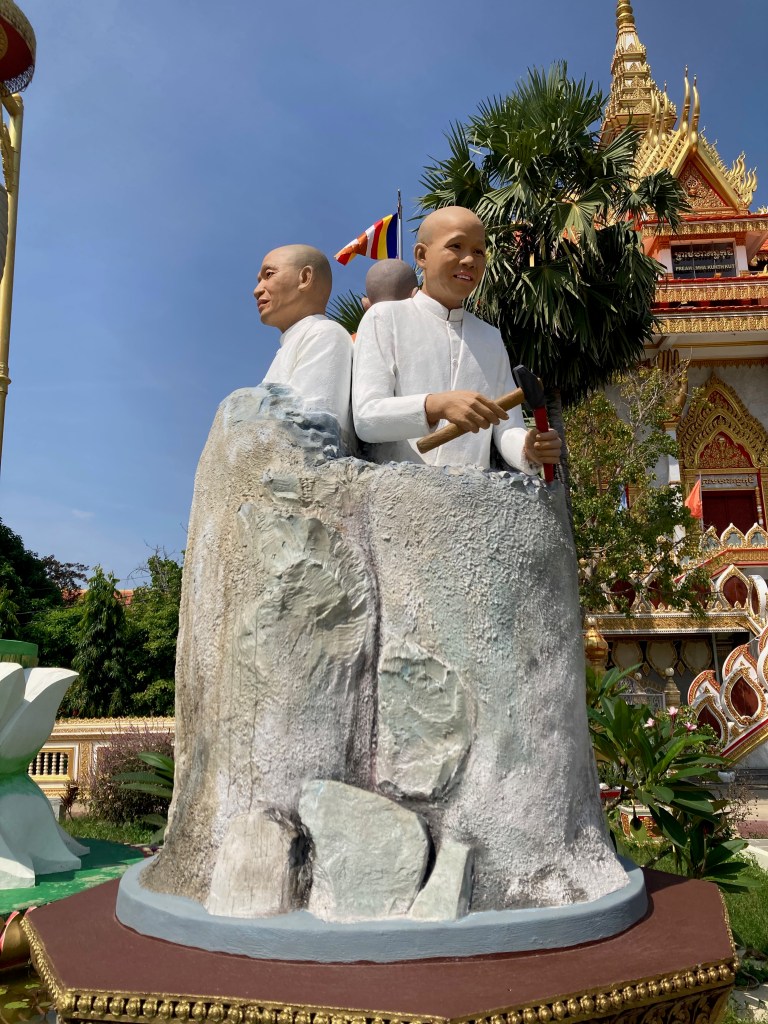
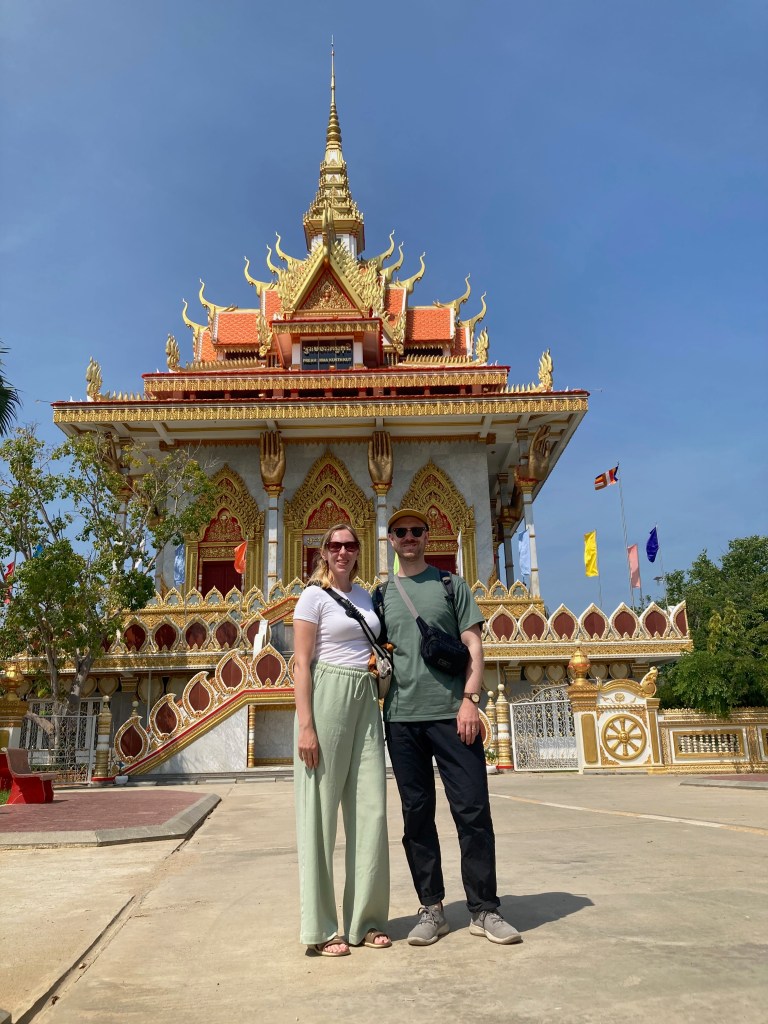
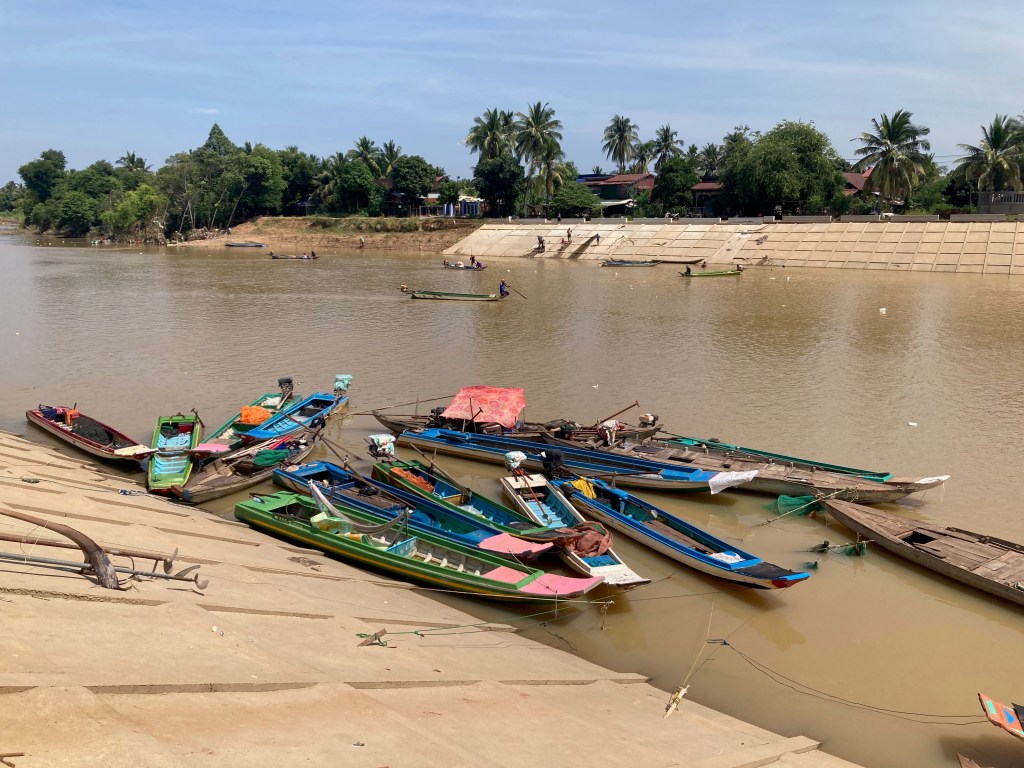
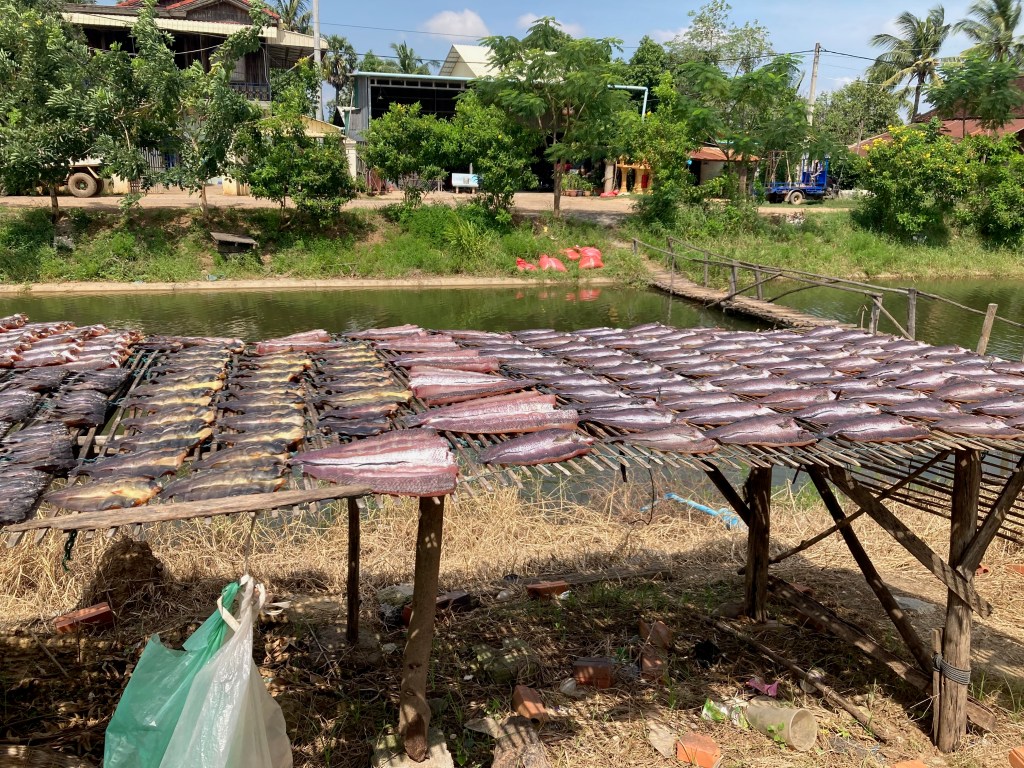
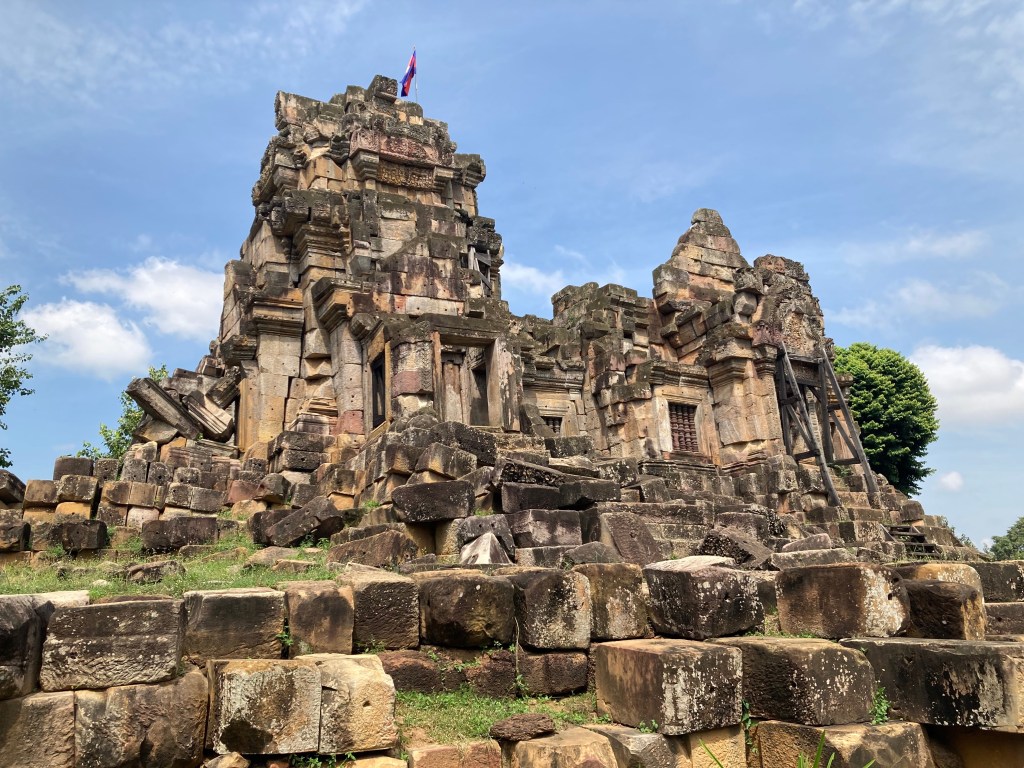


Between the tuk-tuk and cycling tours, it was wonderful getting a glimpse of life in the villages, with passers-by greeting us along the way.

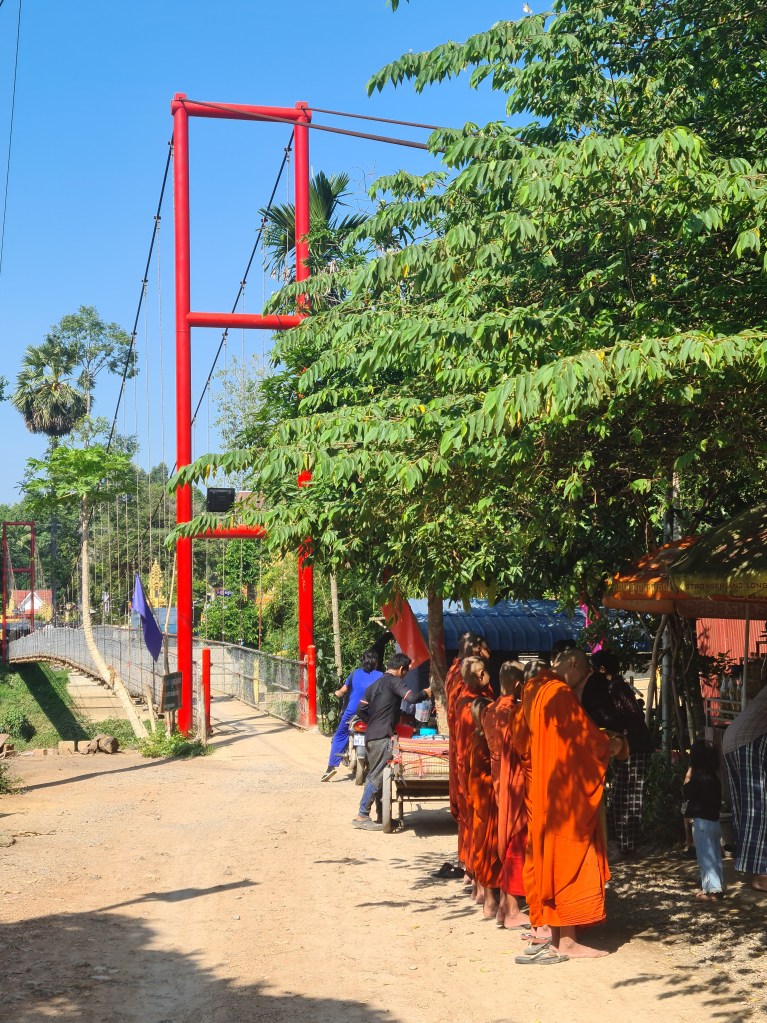
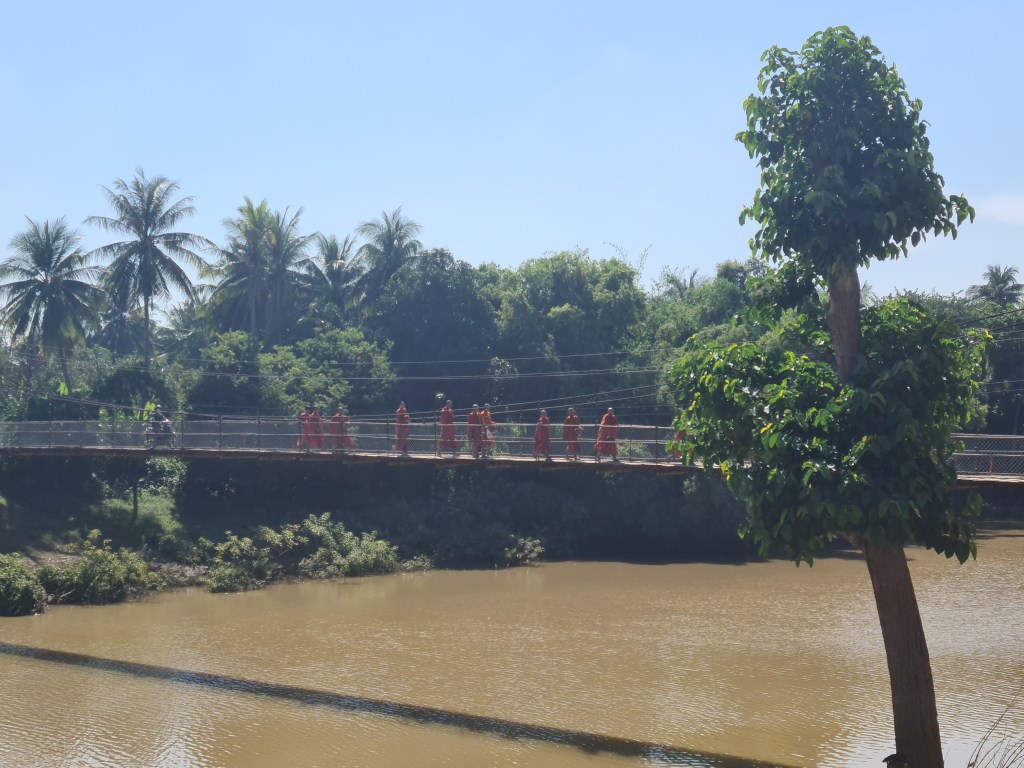
Most special of all perhaps was pausing outside a riverside temple, just as the monks were returning from collecting alms. This is the ceremonial process where the monks receive food donations from local businesses and villagers, taking their last meal of the day at lunchtime before fasting.
Of course the most spectacular religious site was waiting for us in Siem Reap. Claiming the top spot on Lonely Planet’s Ultimate Travelist, I was slightly skeptical about whether it could really exceed some of the incredible sights and experiences we had already had this year.
The largest religious monument in the world, Angkor Wat was originally built in the 12th century as a Hindu temple dedicated to Vishnu, later becoming a Buddhist site and remaining a significant spiritual center. Its stunning architecture features intricate carvings, grand galleries, and the iconic central towers, designed to resemble the mythical Mount Meru.
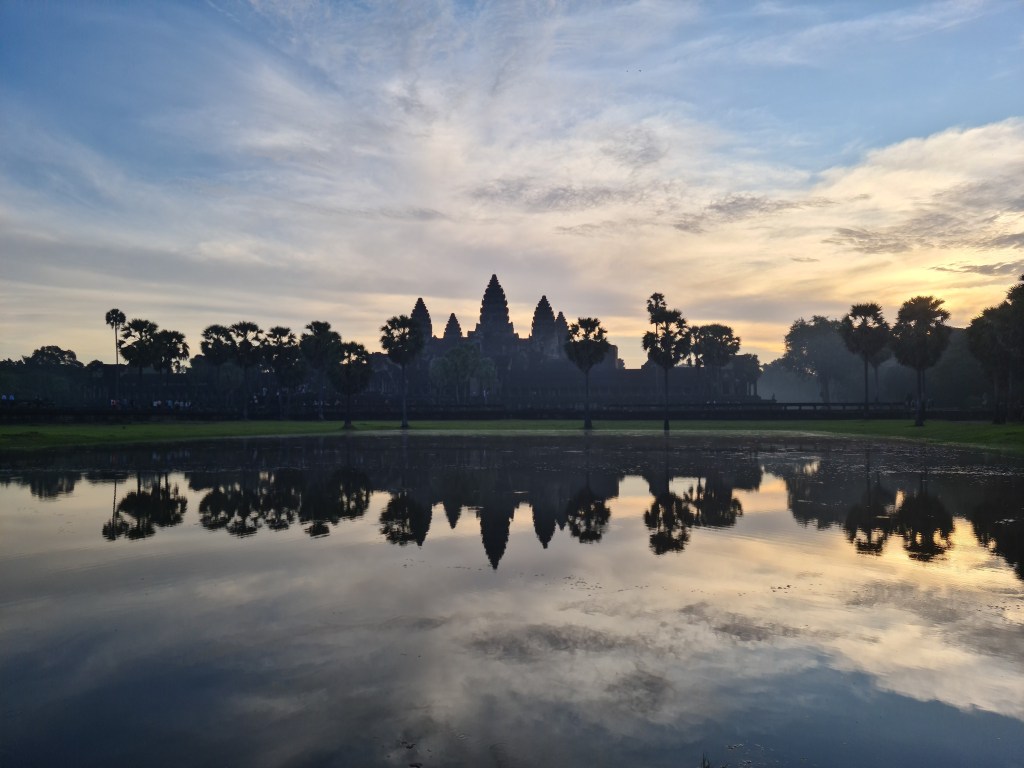
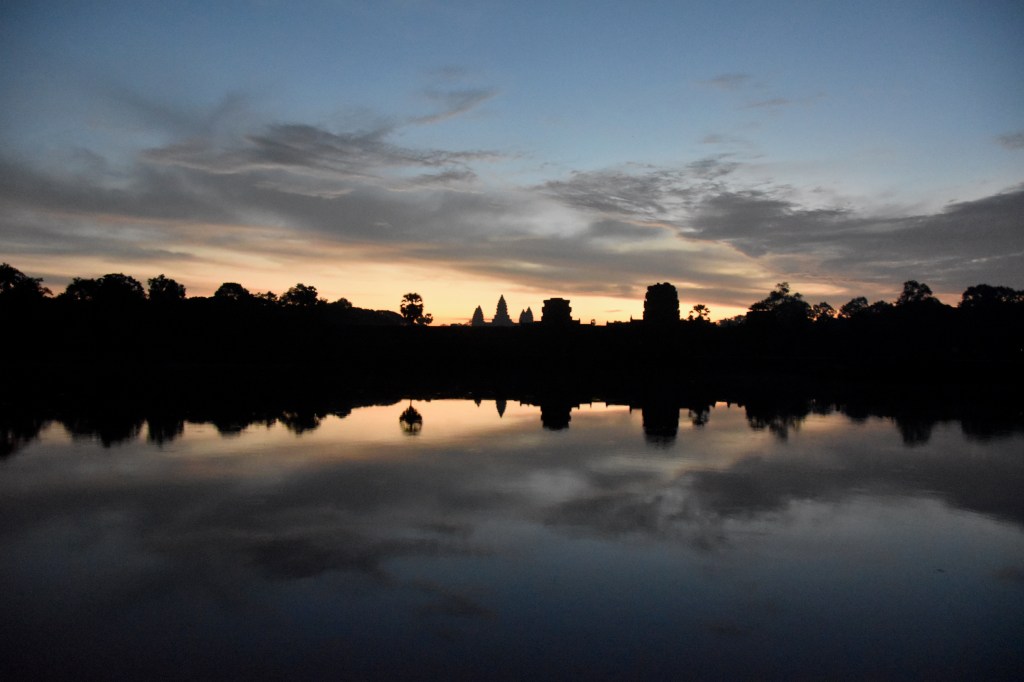
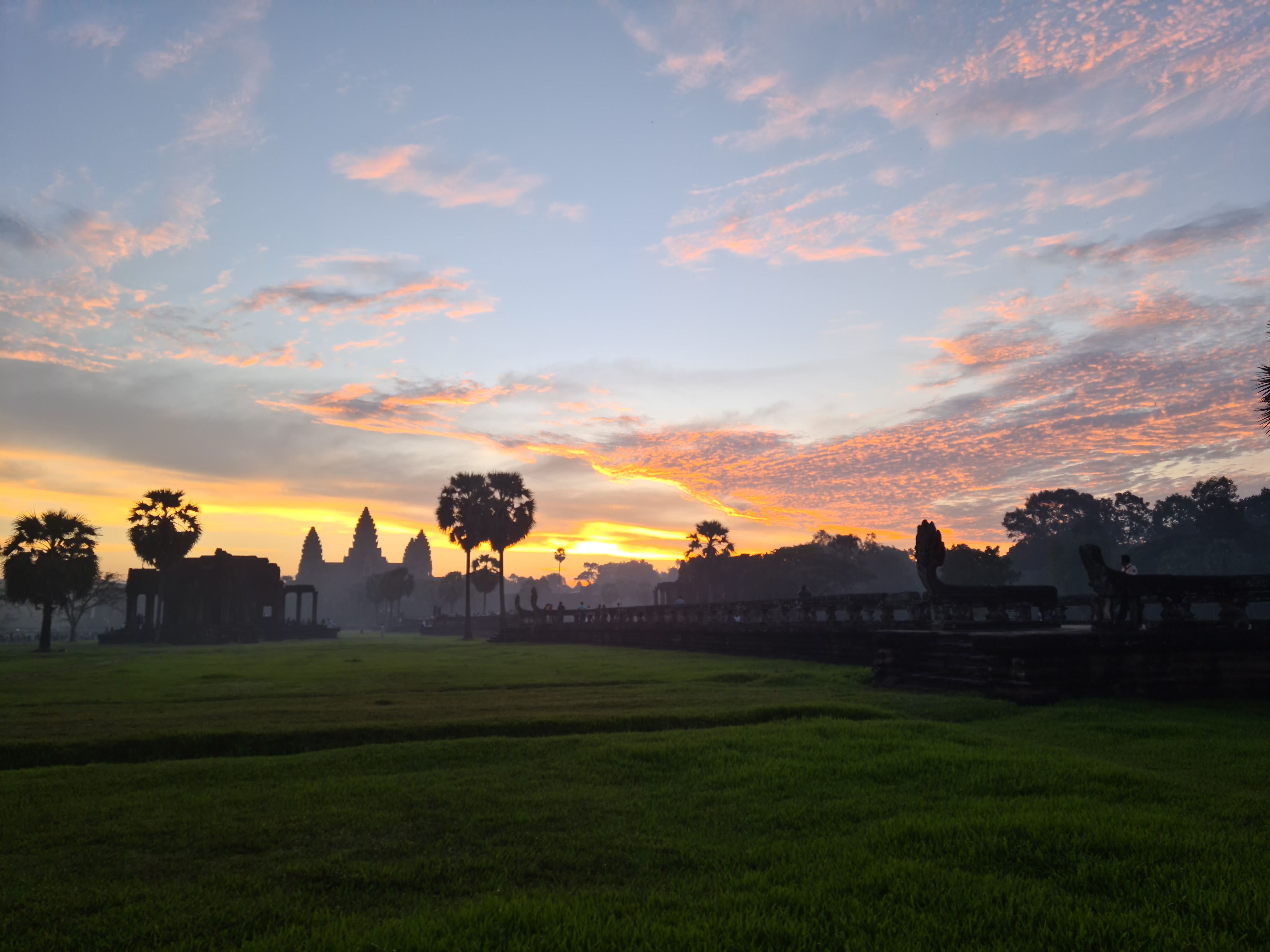
This religious, architectural and cultural significance attracts millions of tourists each year. On account of the beautiful silhouette of the towers against the sunrise, most recommend a sunrise start.
Dara from Battambang had put us in touch with a friend of his in Siem Reap, Panama, so we were all set for our 5.00am pick up.
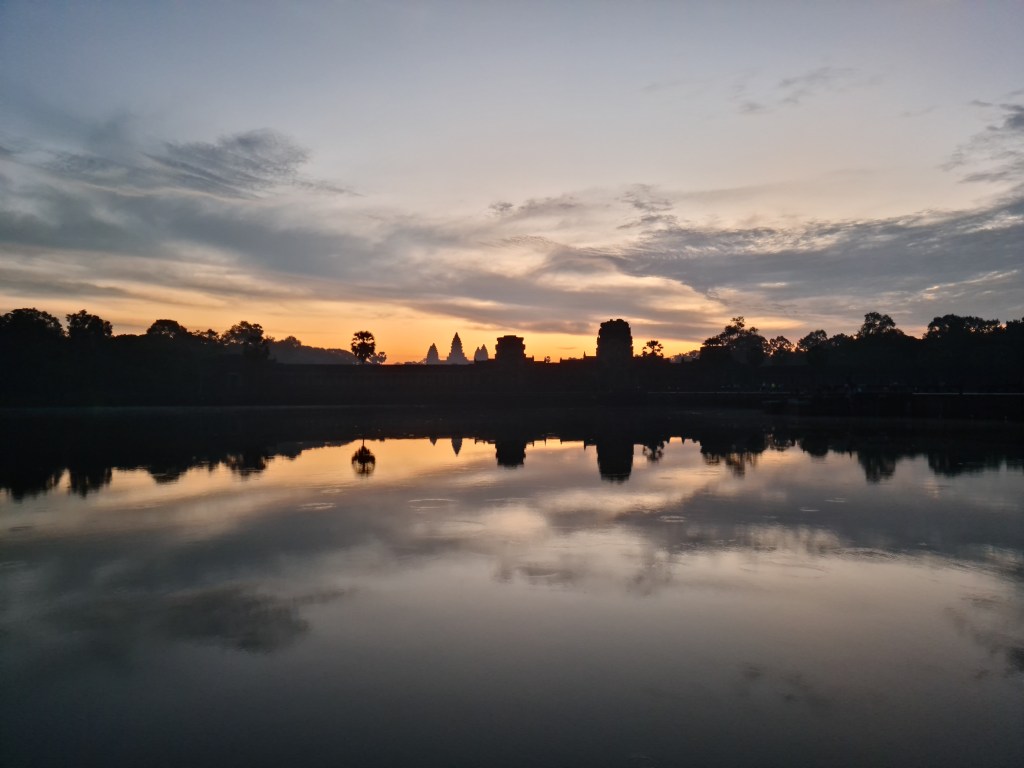
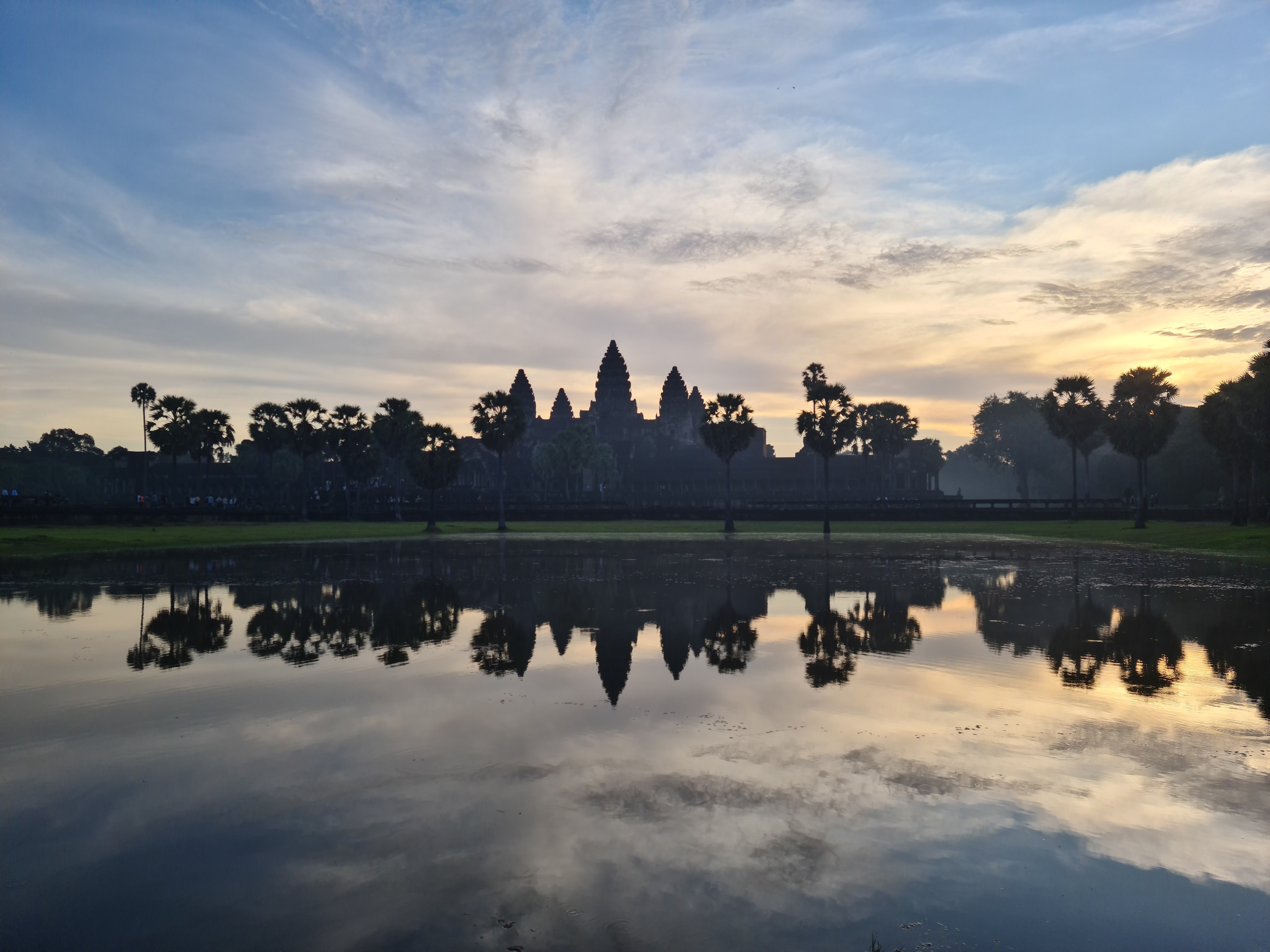
Plenty of other tourists were arriving at the same time we did, but it was still a serene experience to sit alongside the moat as the colours of the sky changed and the buildings began to reveal themselves, worthy of the early start.

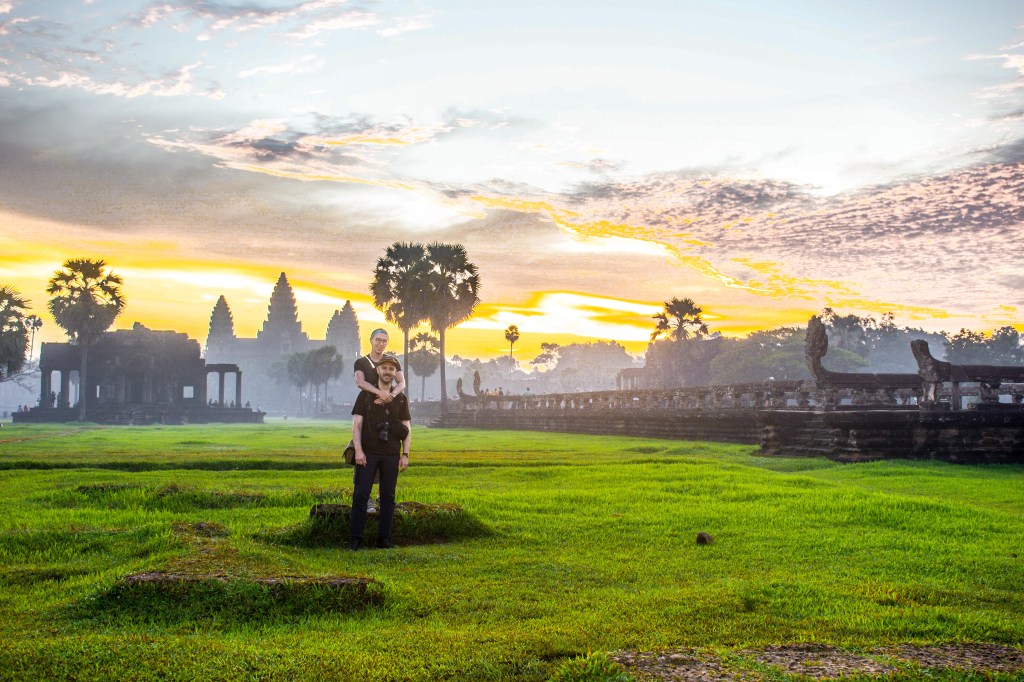
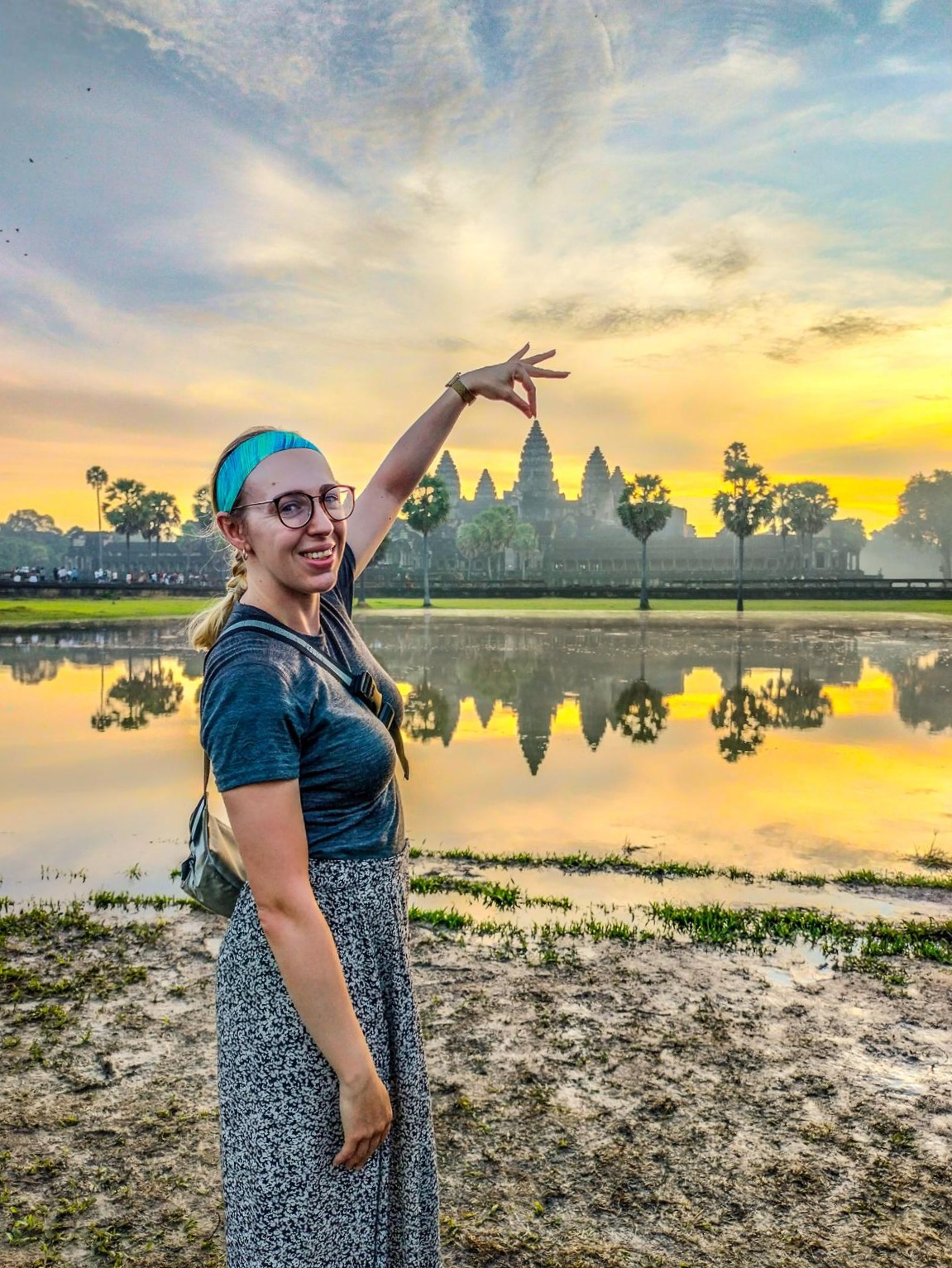

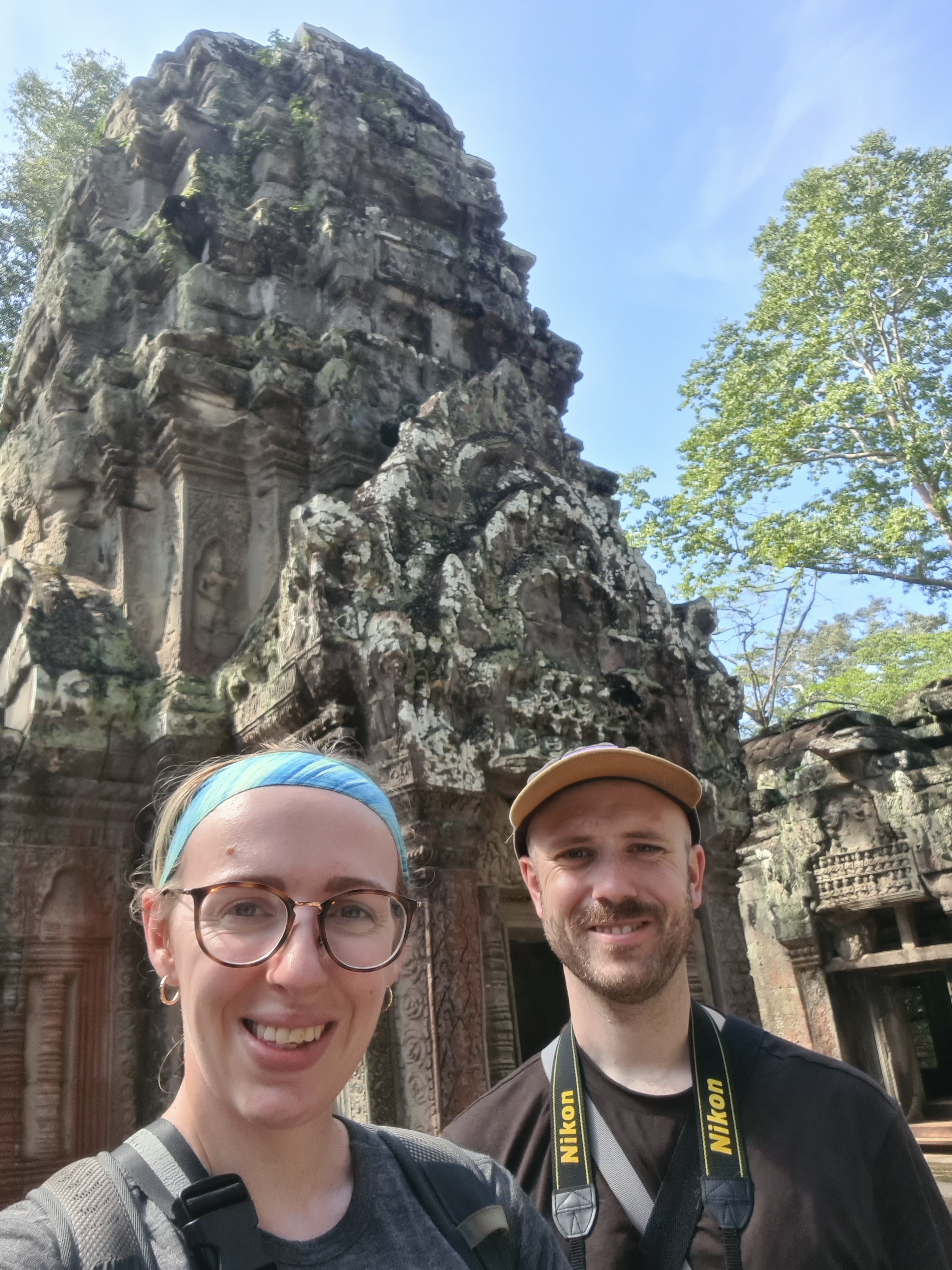
Although Panama had mentioned it was a photography tour, we were still surprised by the in-depth couple shots, bringing back memories of having our wedding photos done. I’m still lamenting the lack of hairdryer in our accommodation necessitating the hairband I’m wearing…
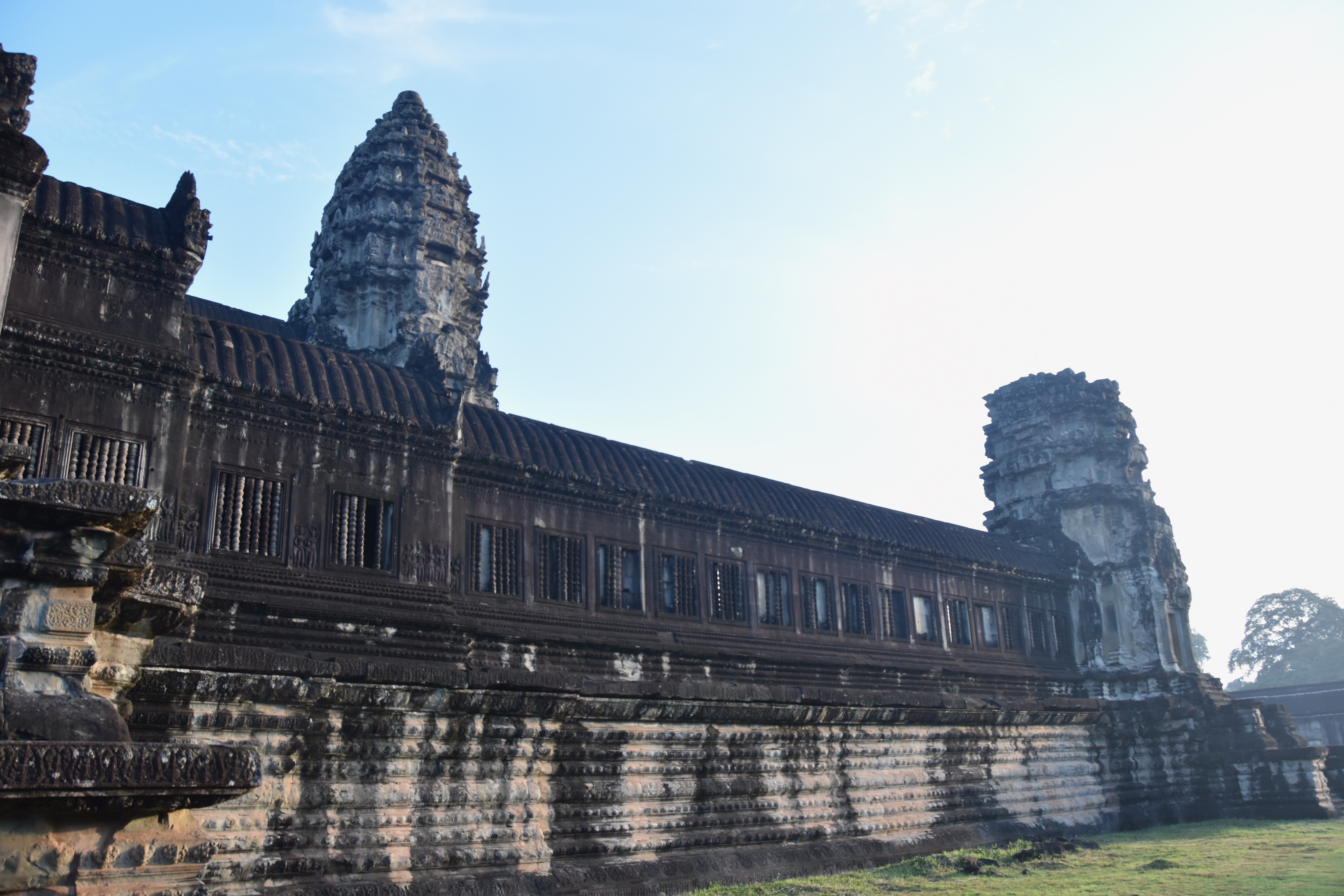
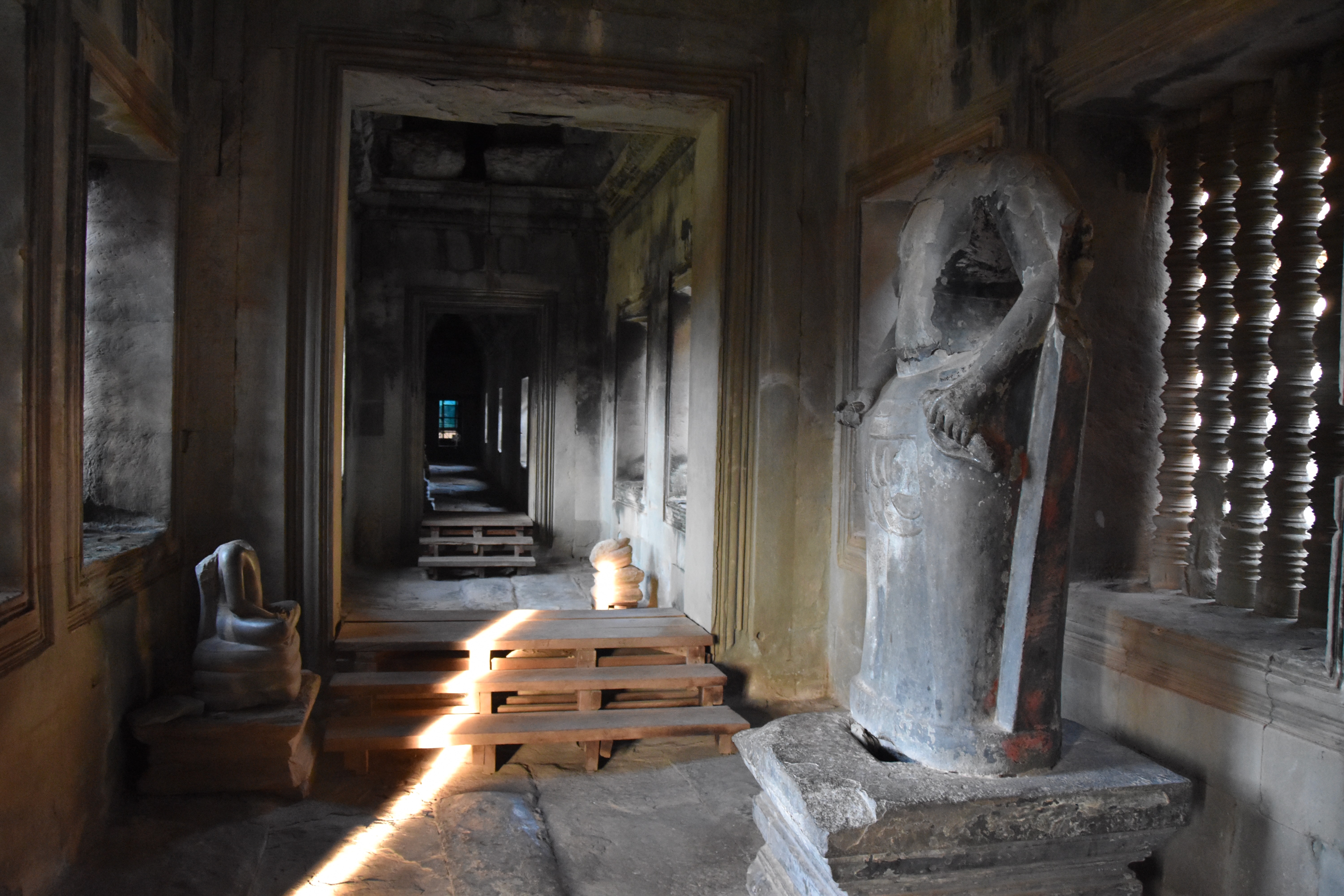
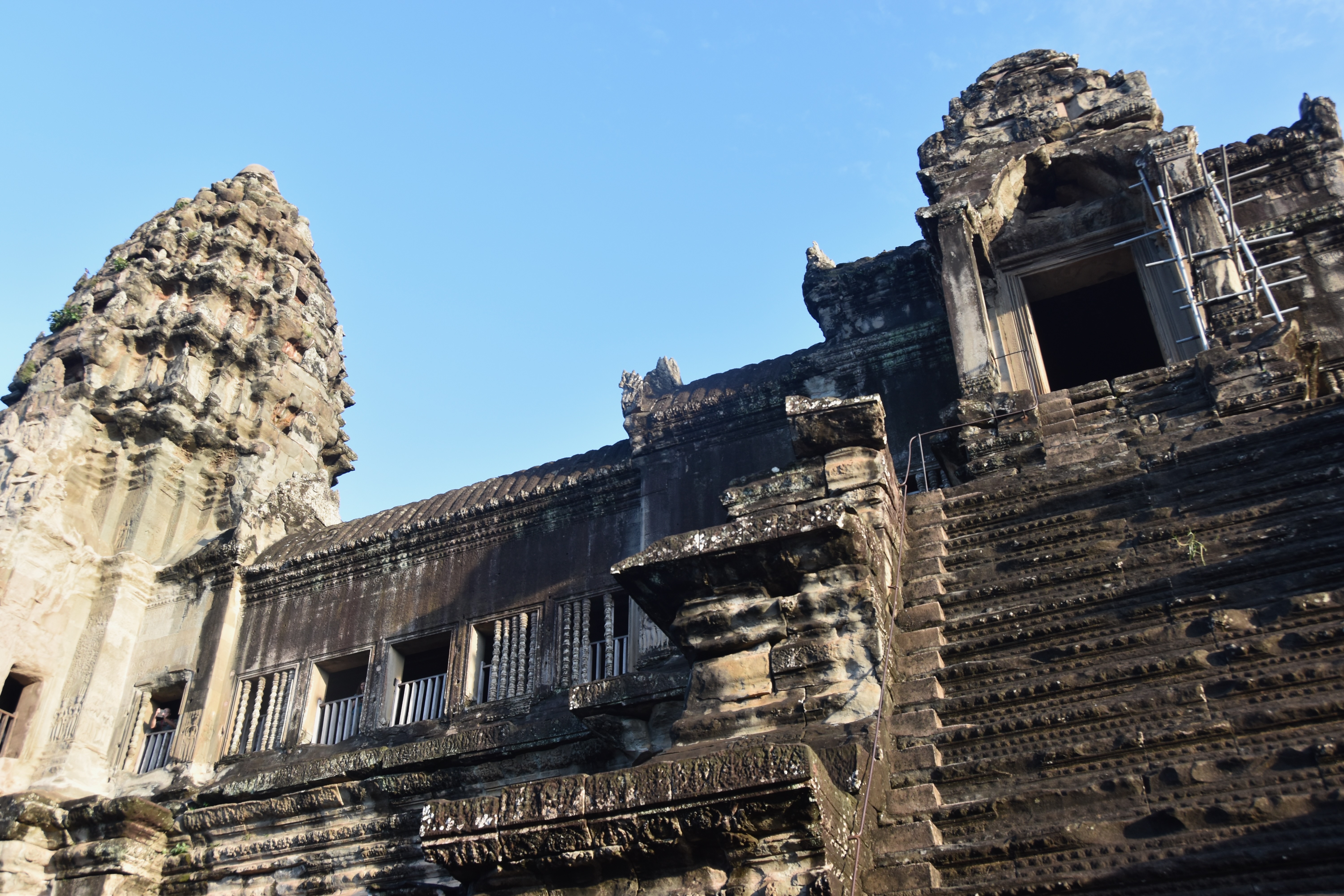
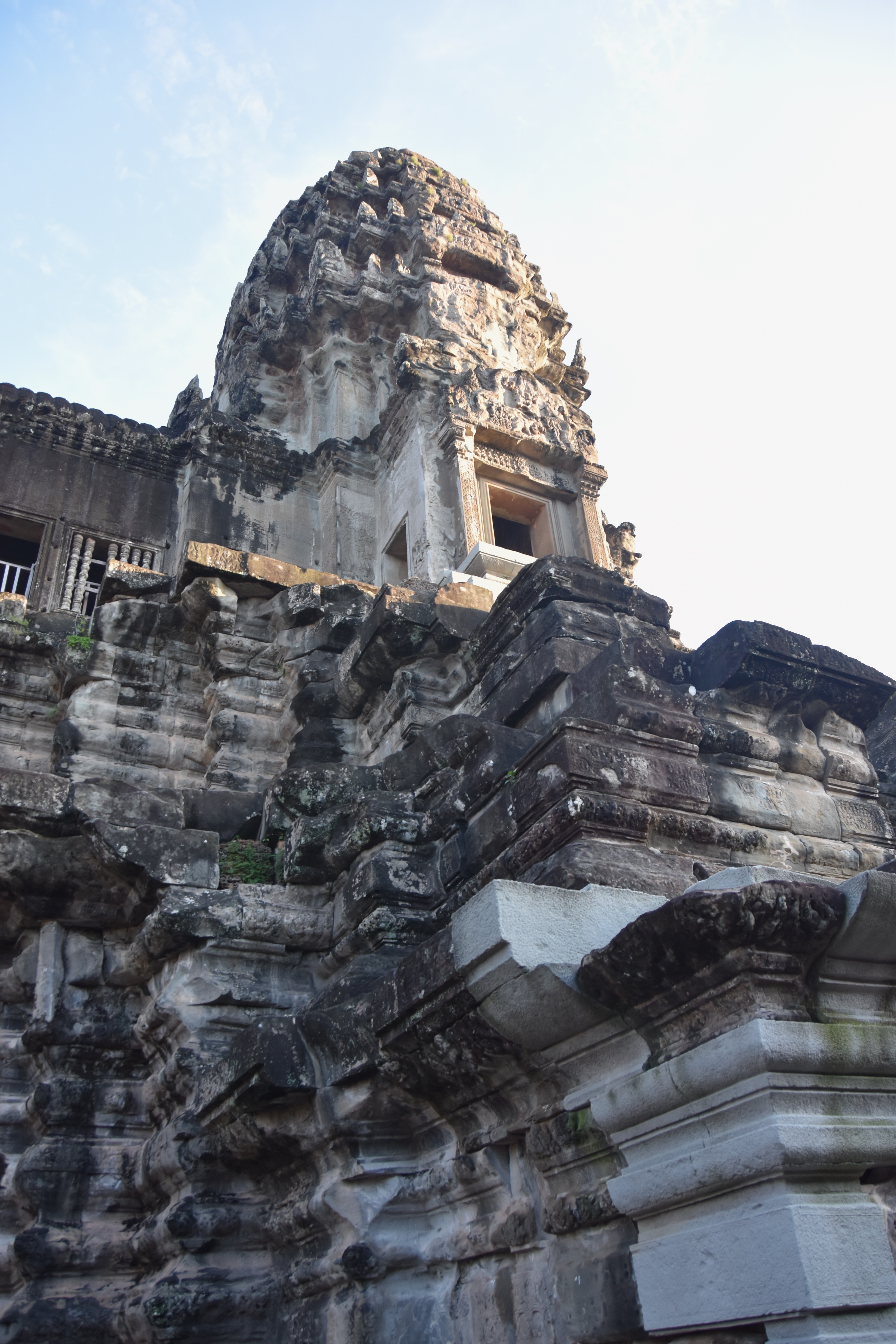
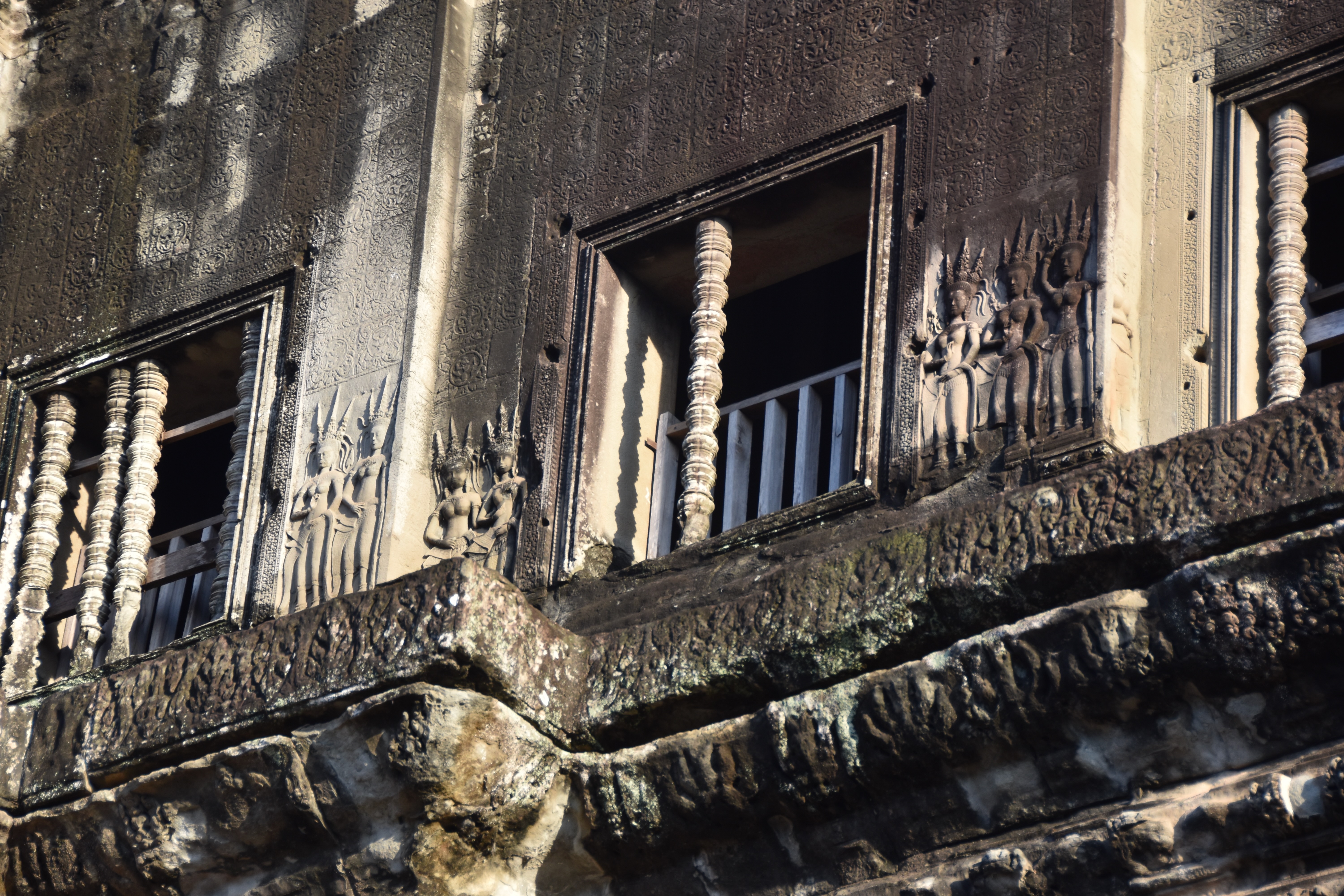
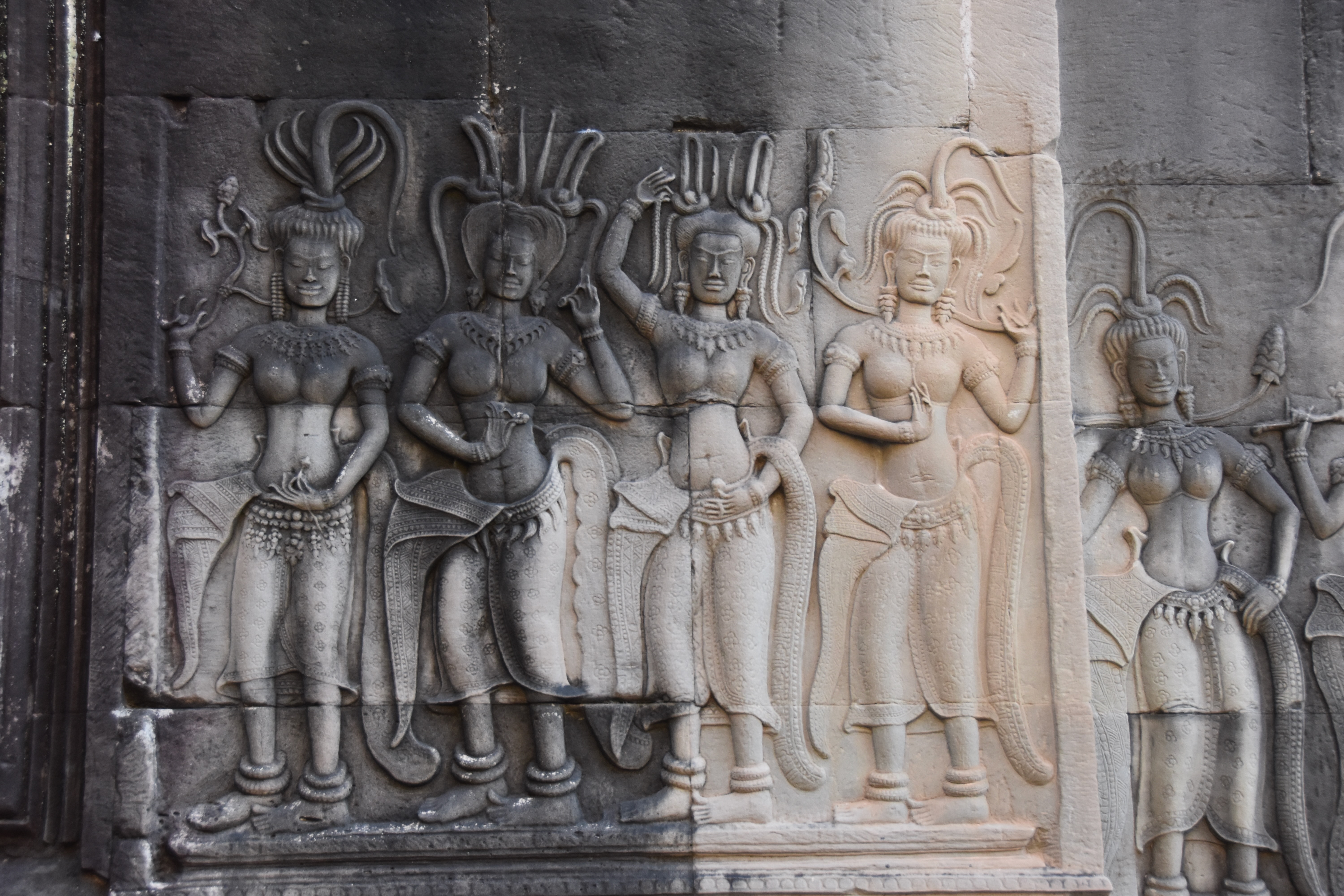
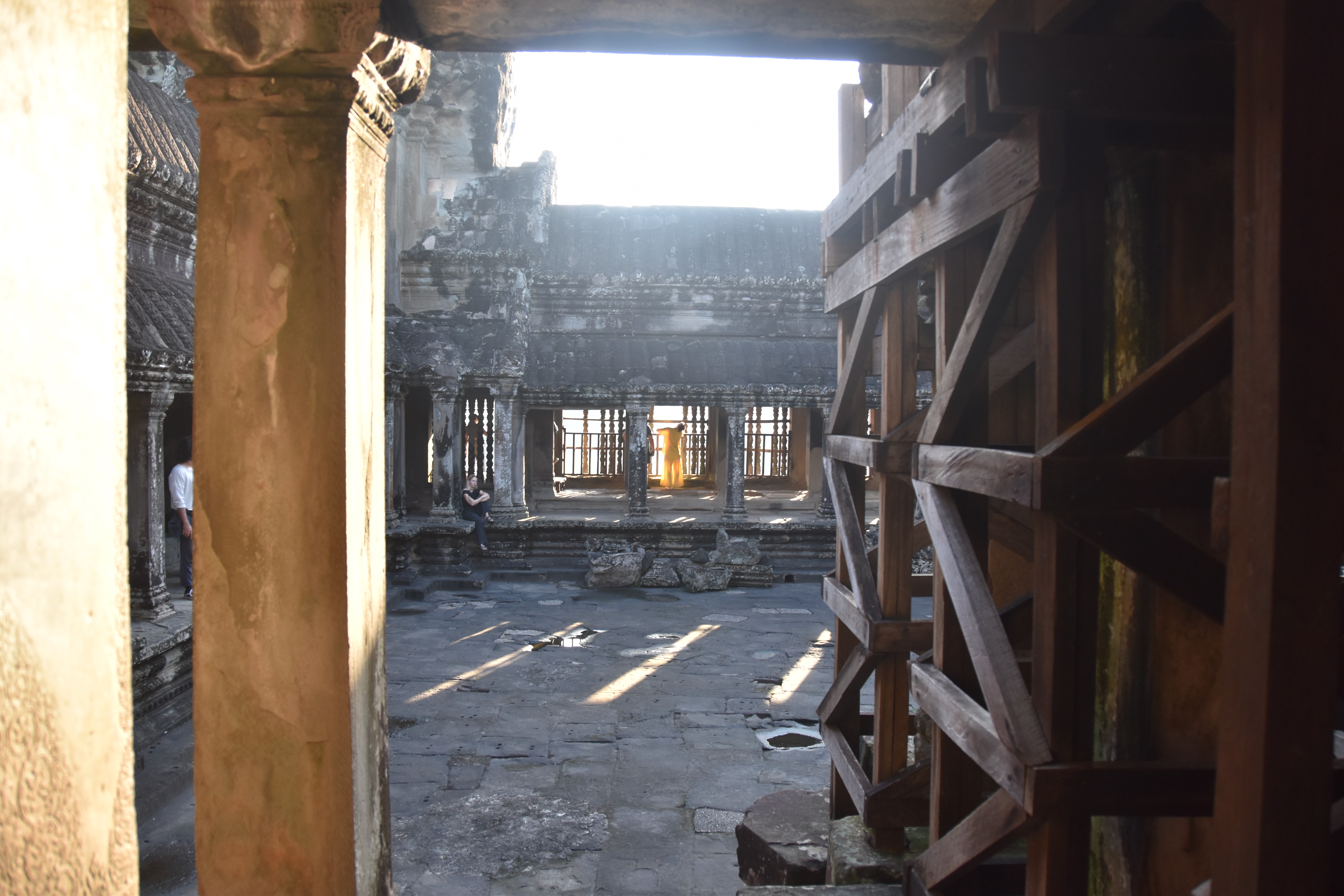
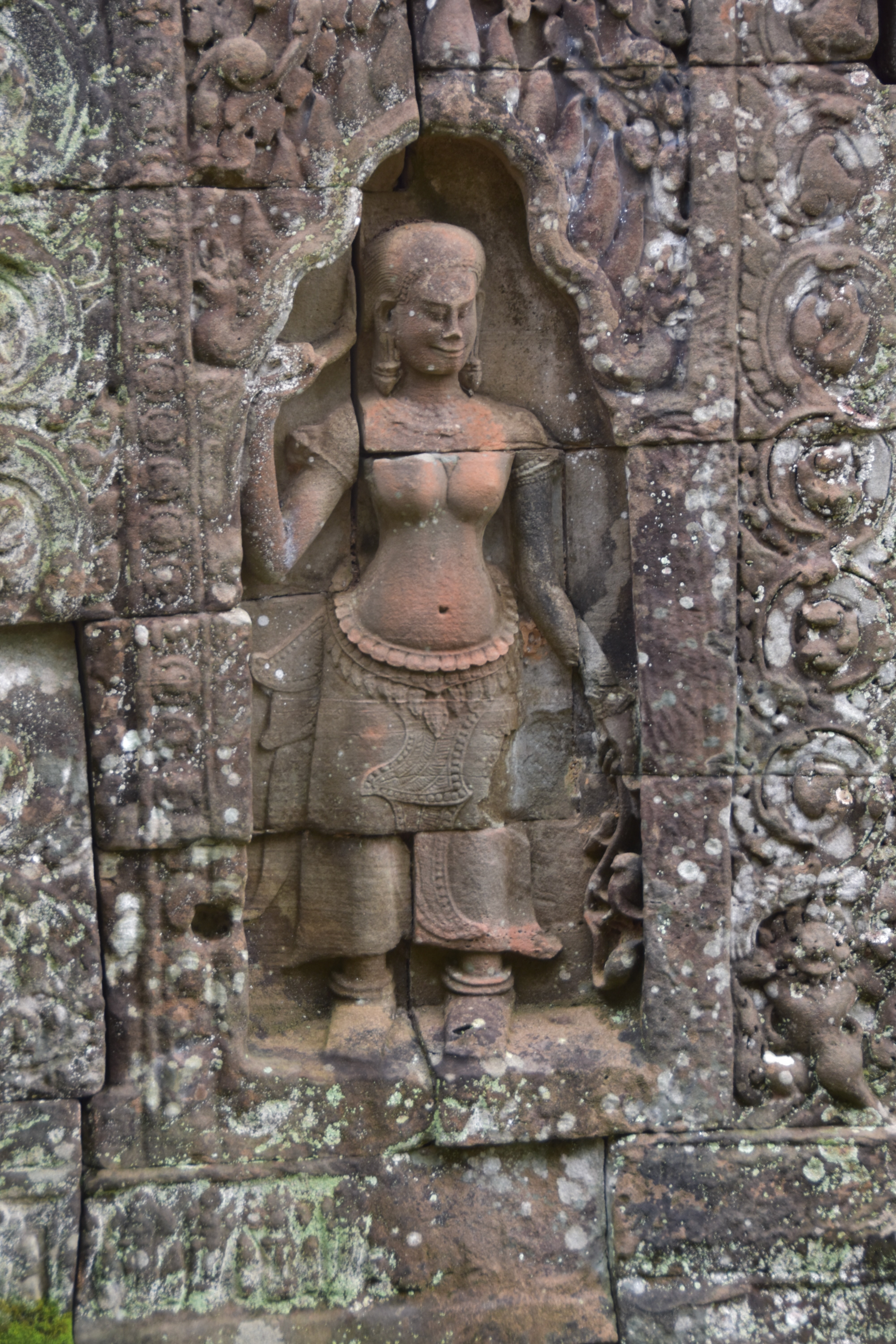

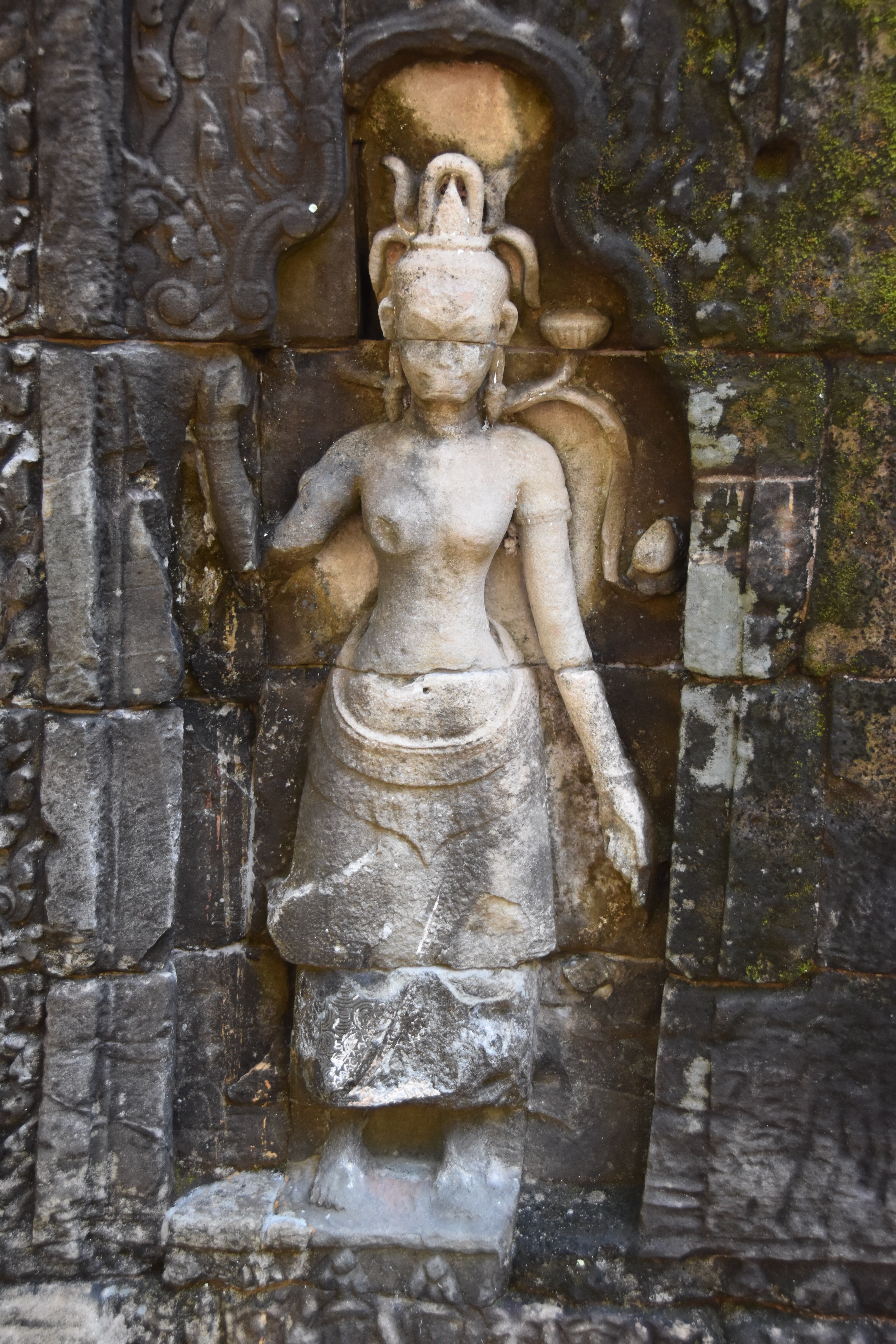
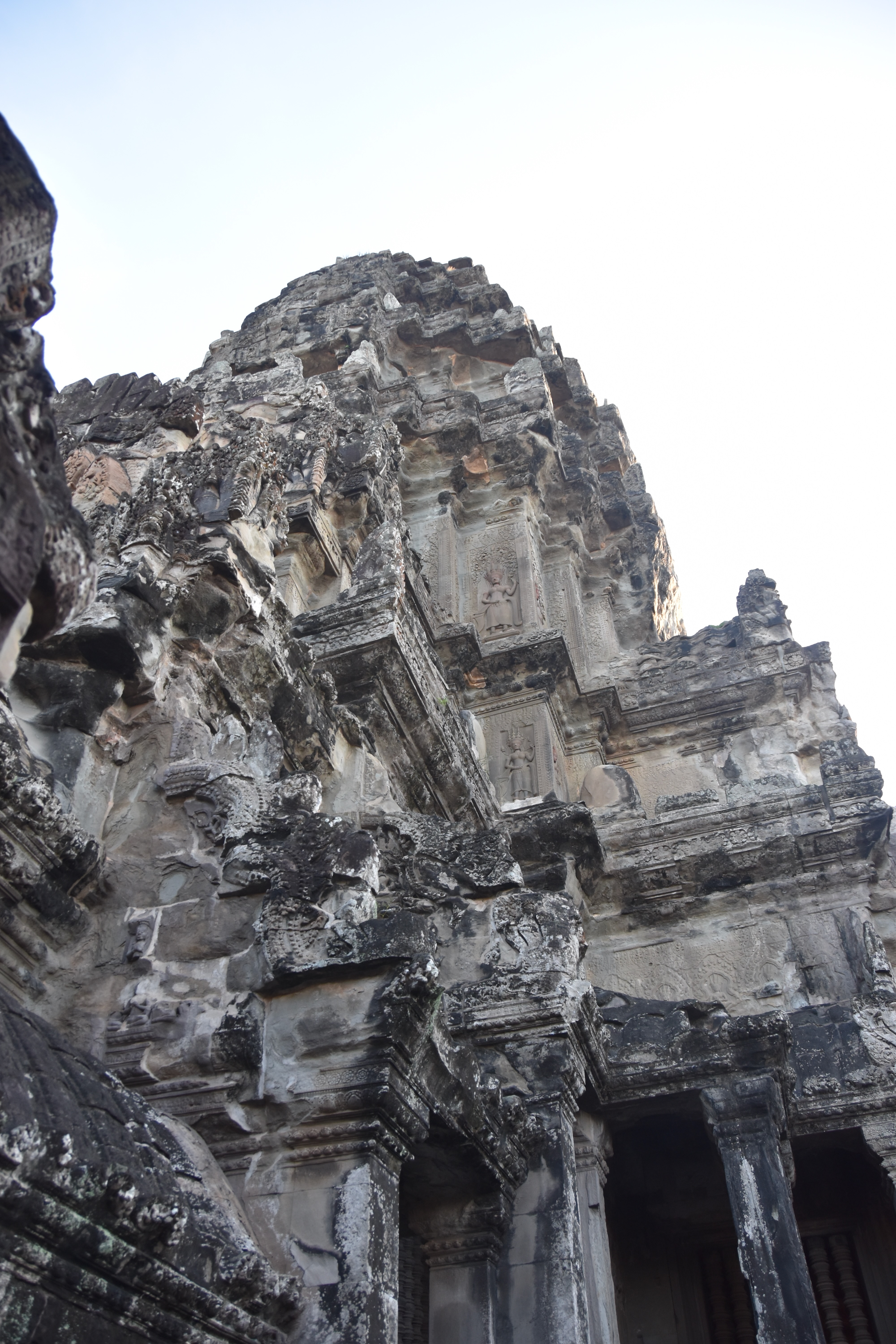

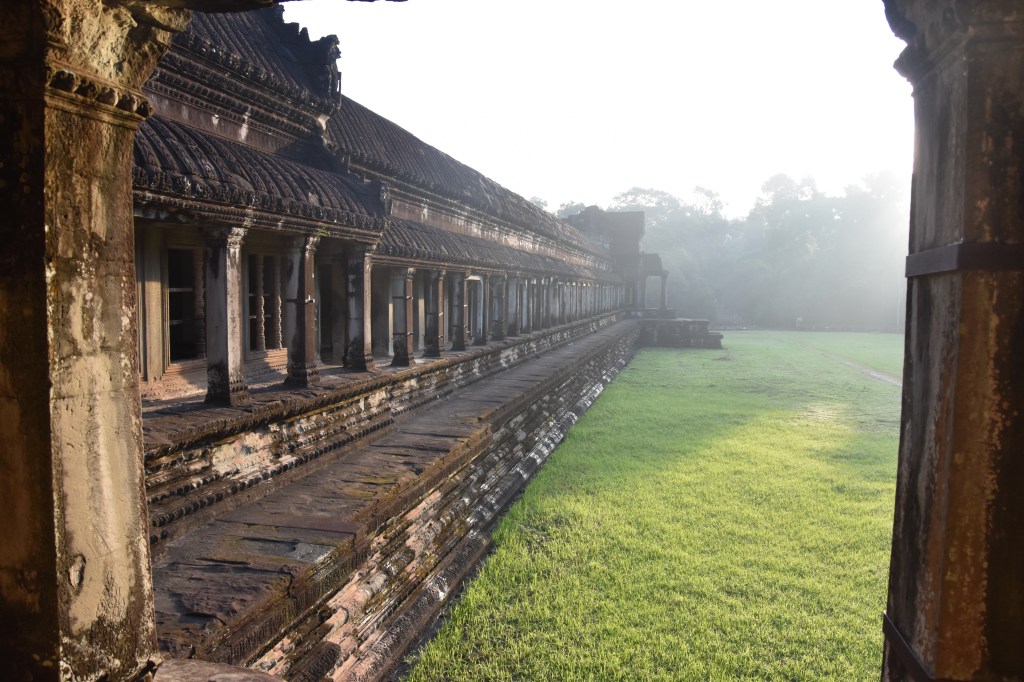
Detail shots from Angkor Wat
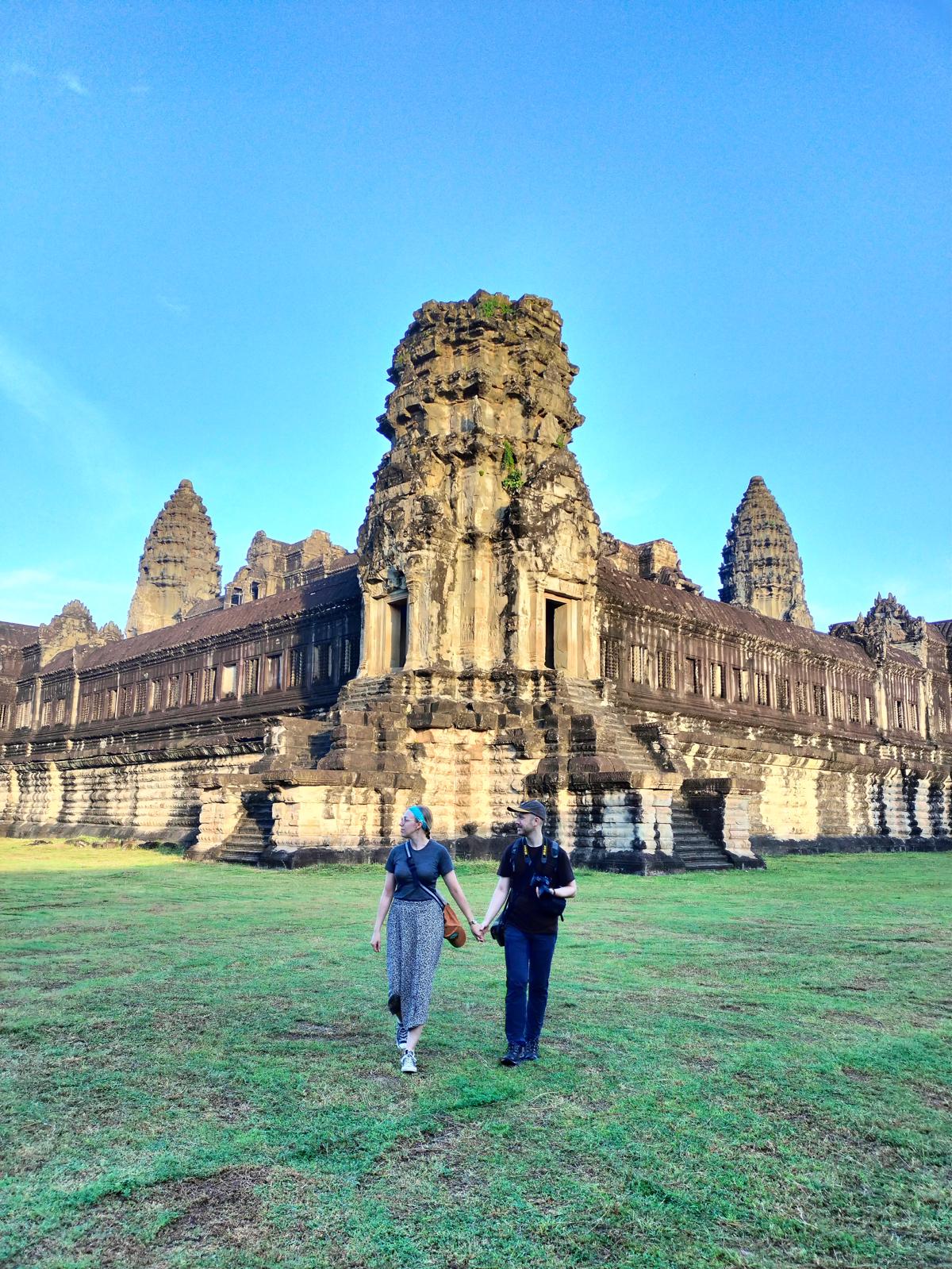
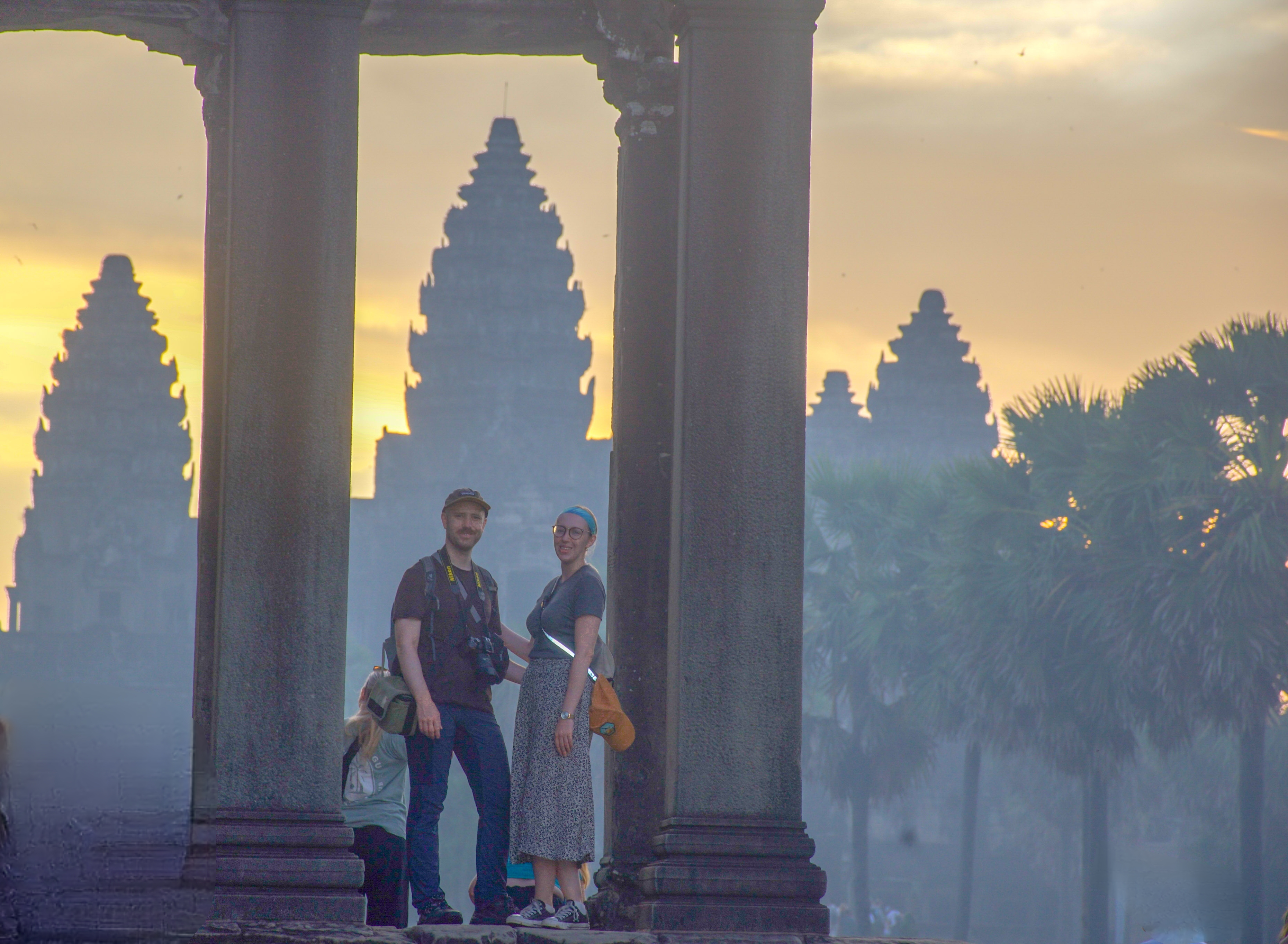


Technically this first monument we visited is the one and only Angkor Wat. However I suspect many, including myself, use the name interchangeably to refer to the Angkor Archaeological Park, an area of some 400 square kilometres. While Angkor Wat is the most iconic singular temple within the complex, there are dozens of other temples and structures worth visiting.
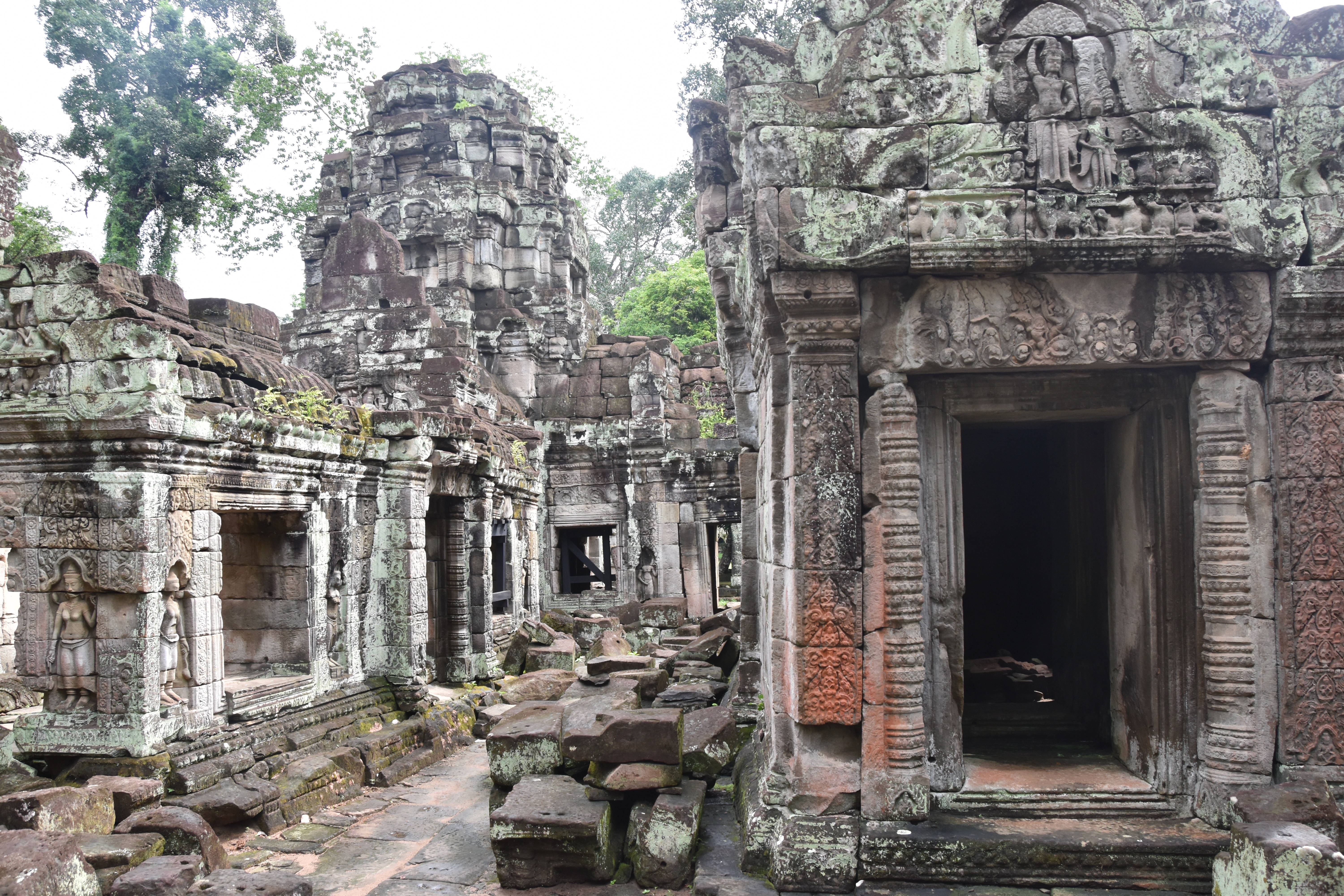
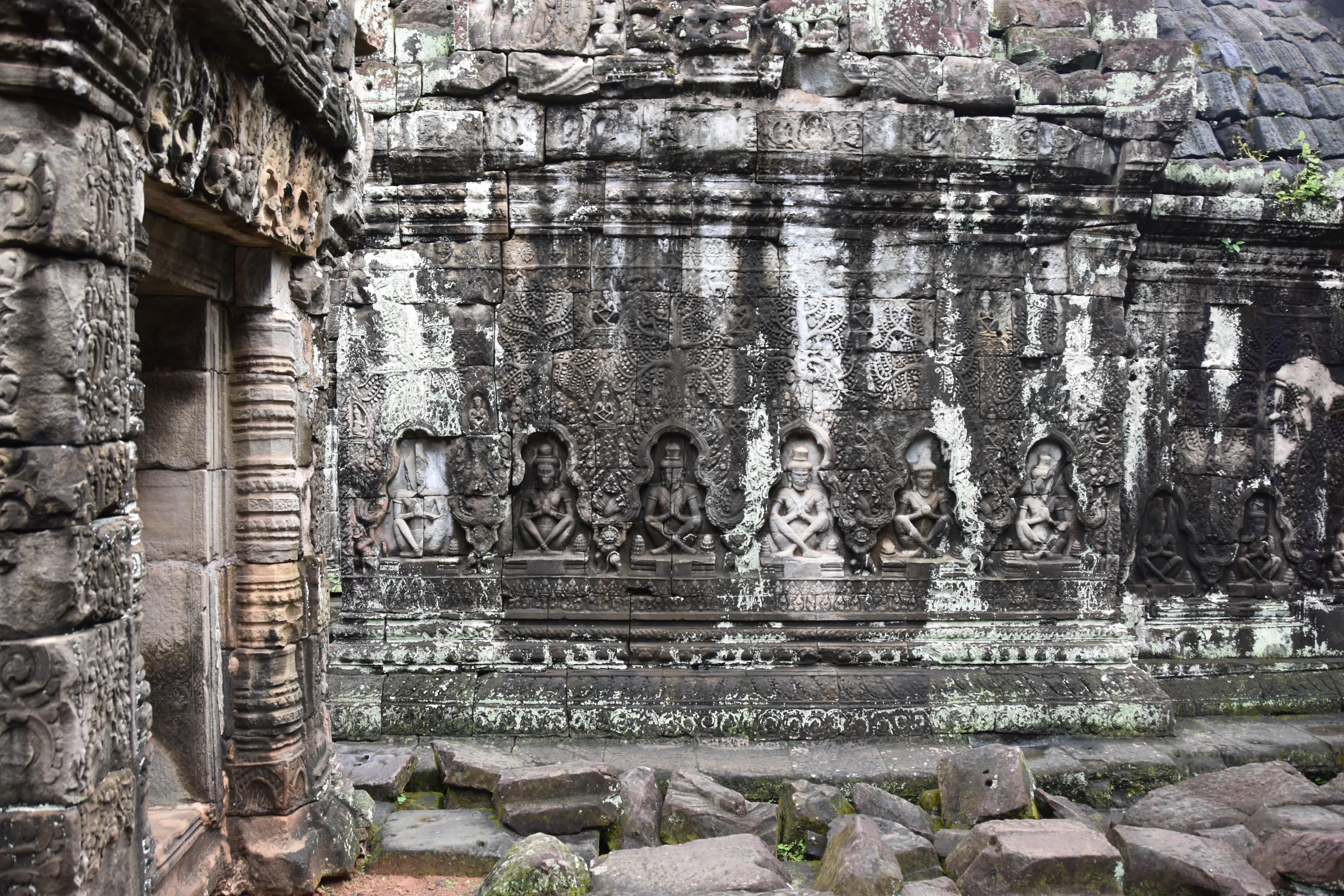

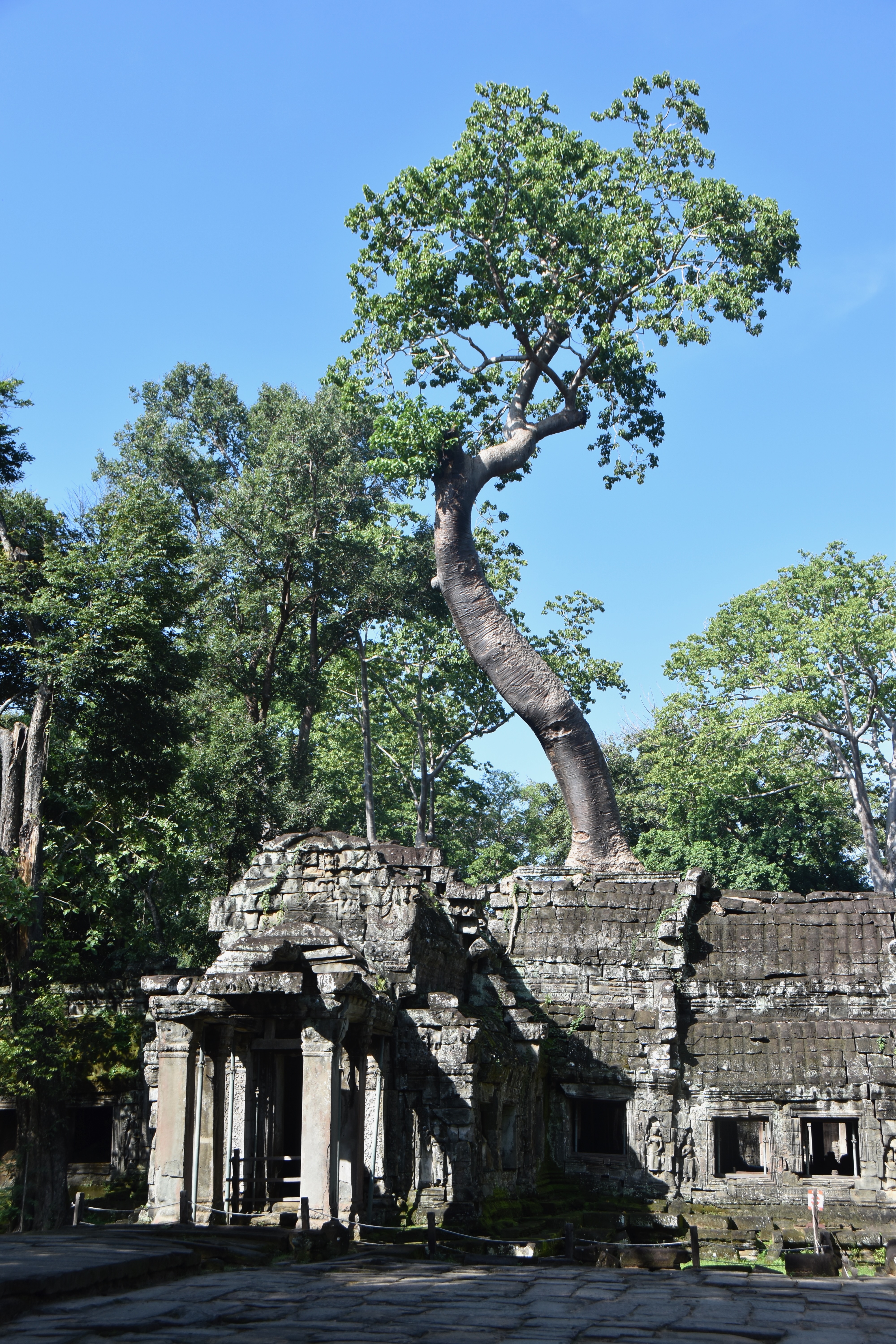
The famous Ta Prohm or ‘Tomb Raider’ temple as featured in the Angelina Jolie Tomb Raider film
I expect most attractions we have visited this year only warranted a single day’s visit (even the Salt Flats were simply a single morning themselves within our four day trip), but on advice online it became clear that the Angkor Park is so extensive, you need two or even three days to really do it justice.

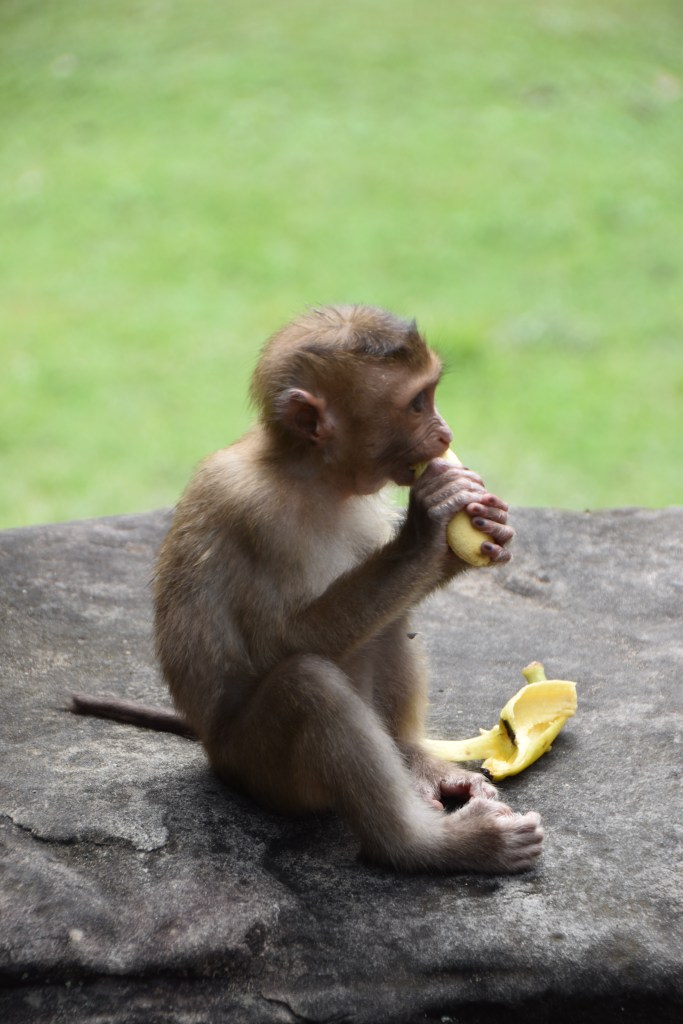
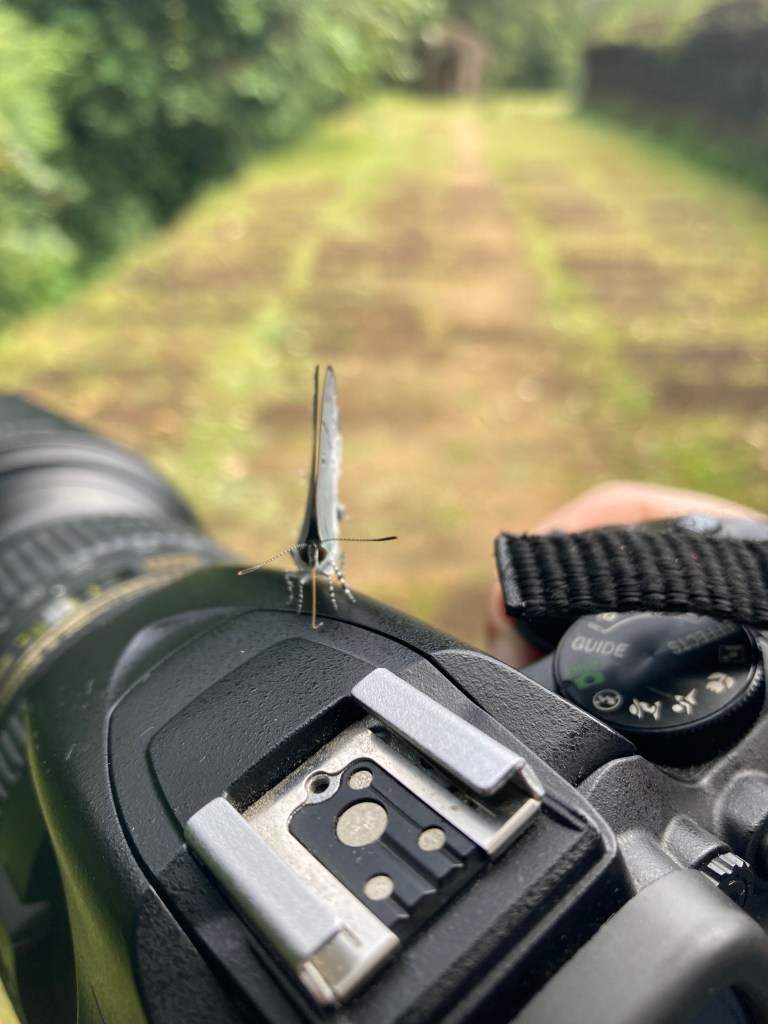
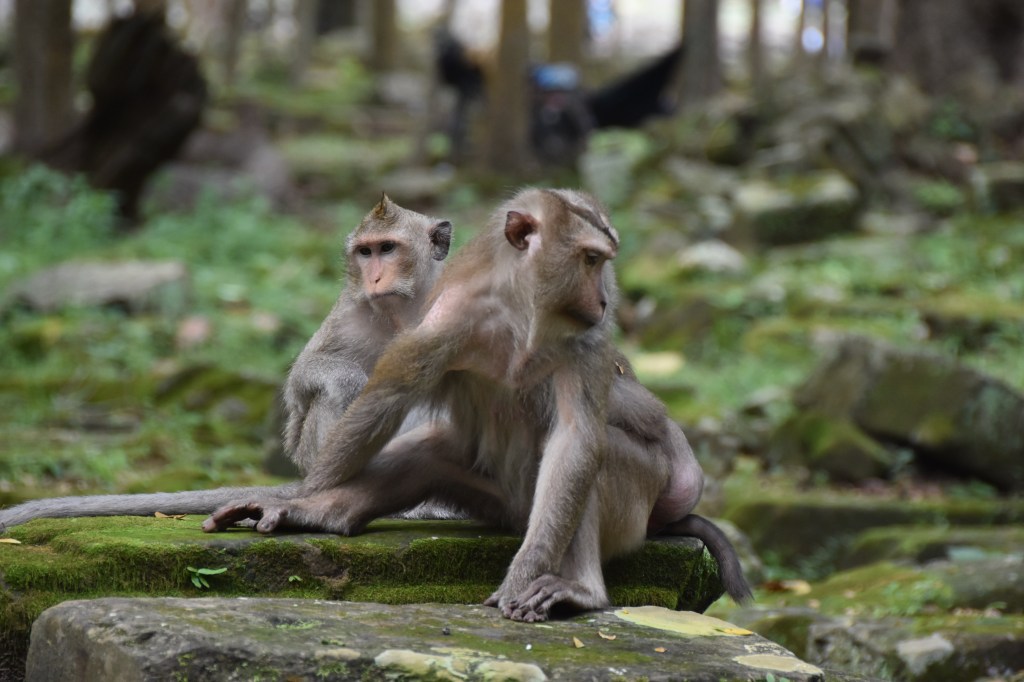
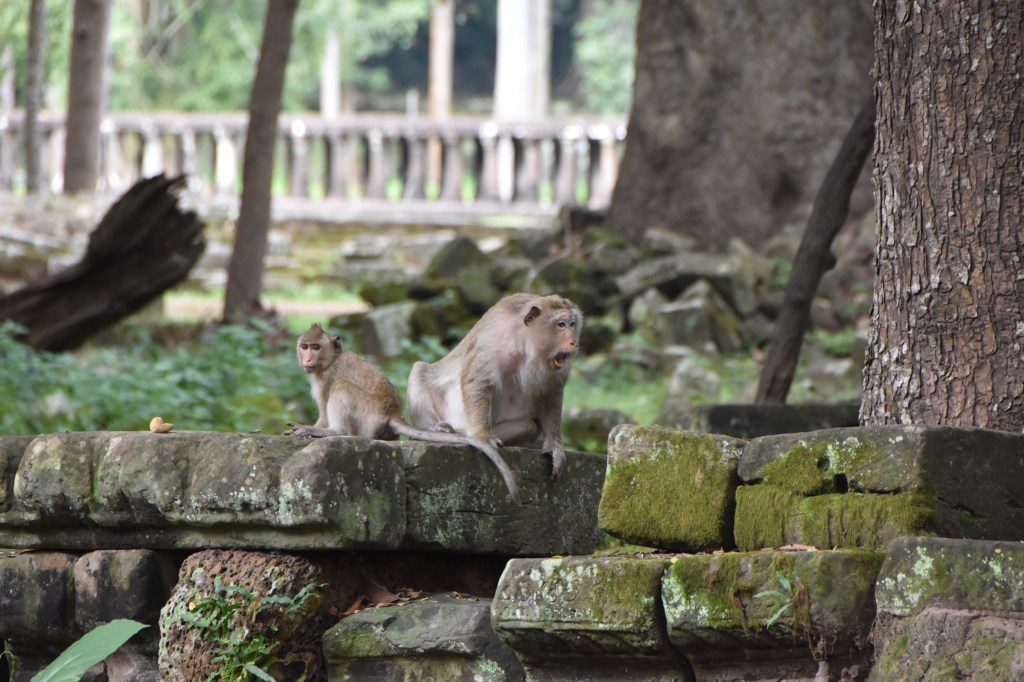
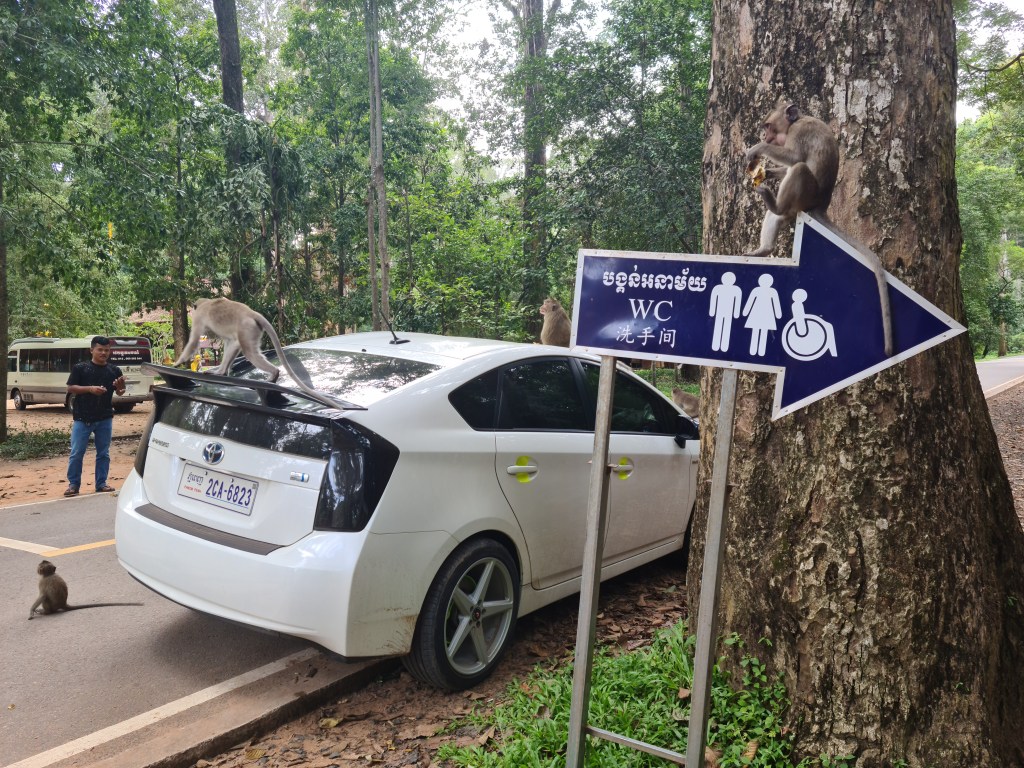
Some of the local wildlife!
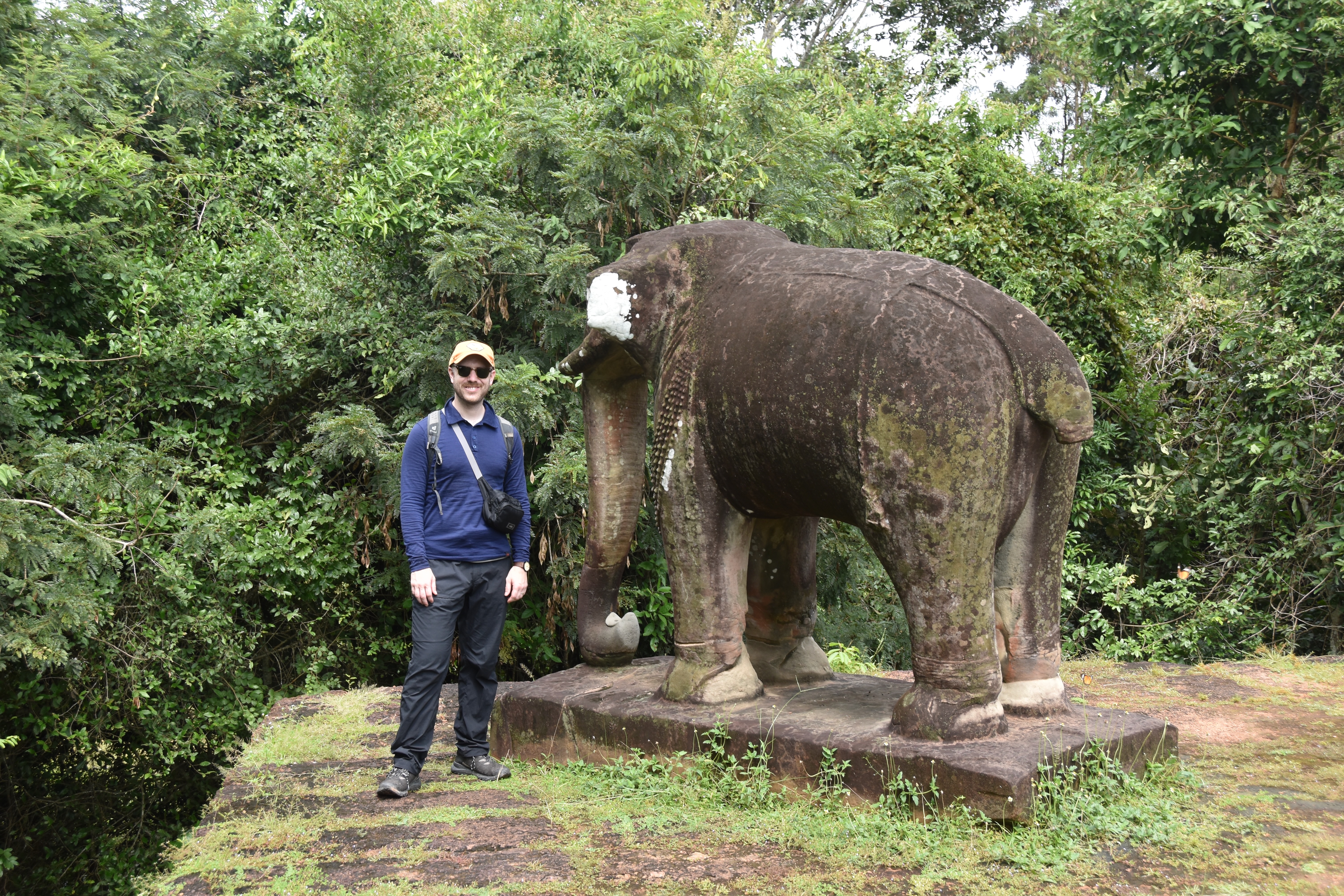
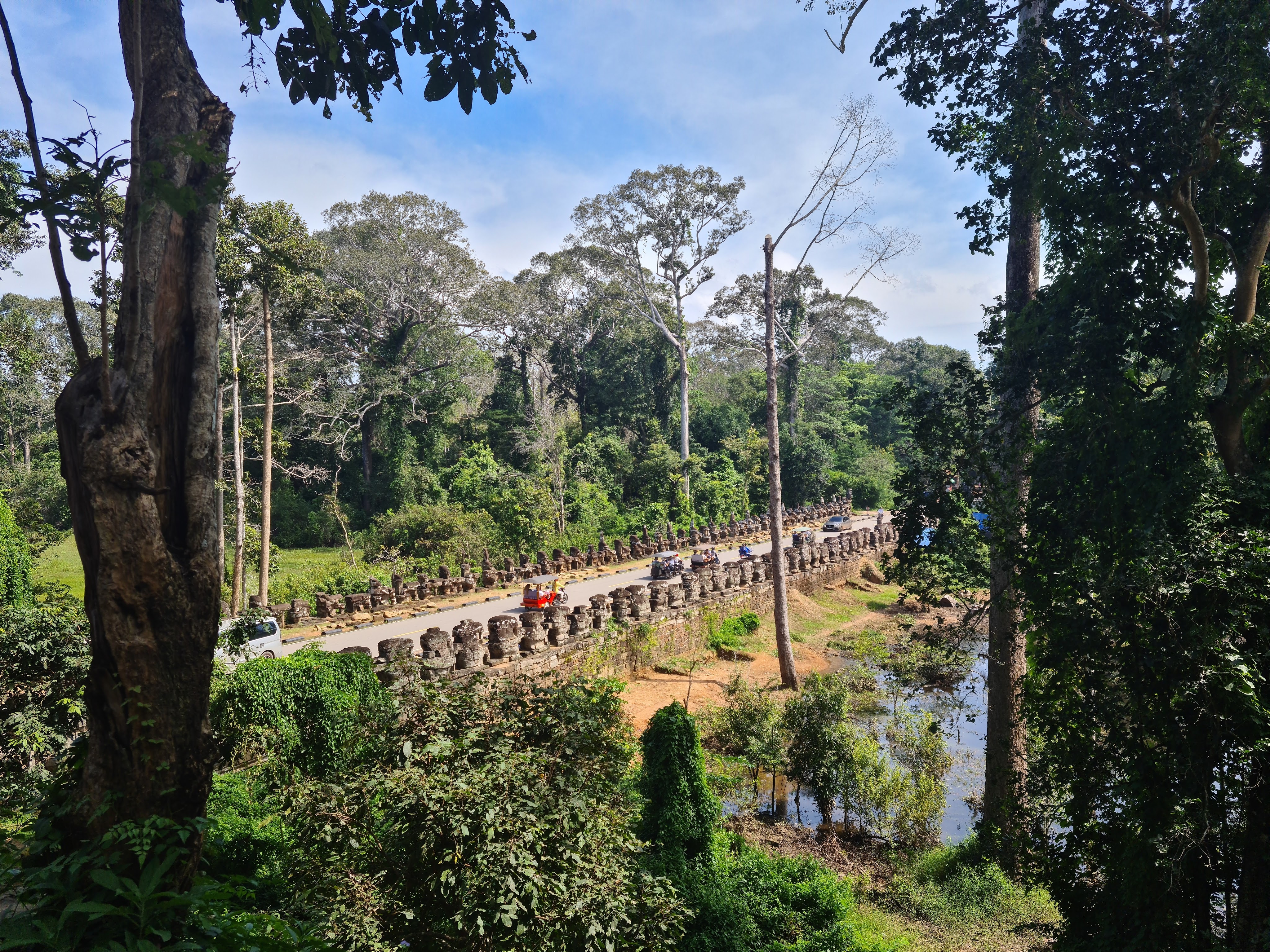
It’s so vast that it simply isn’t walkable. We were glad to have Panama on hand to shuttle us round on his tuk tuk over two separate days.
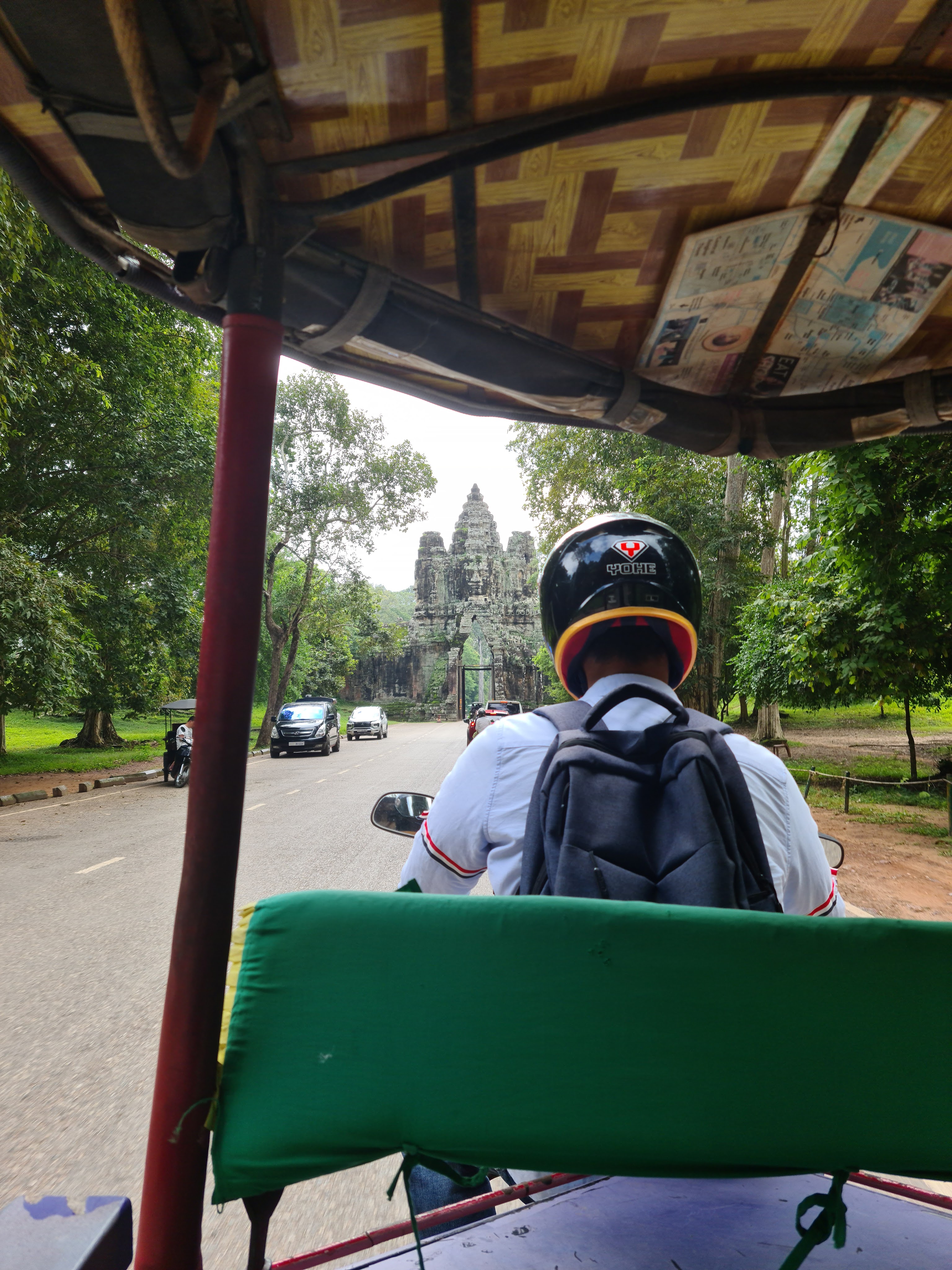
After the initial glut of photography, he struck an excellent balance of accompanying us and sharing pertinent facts about the structures, whilst also letting us explore on our own.
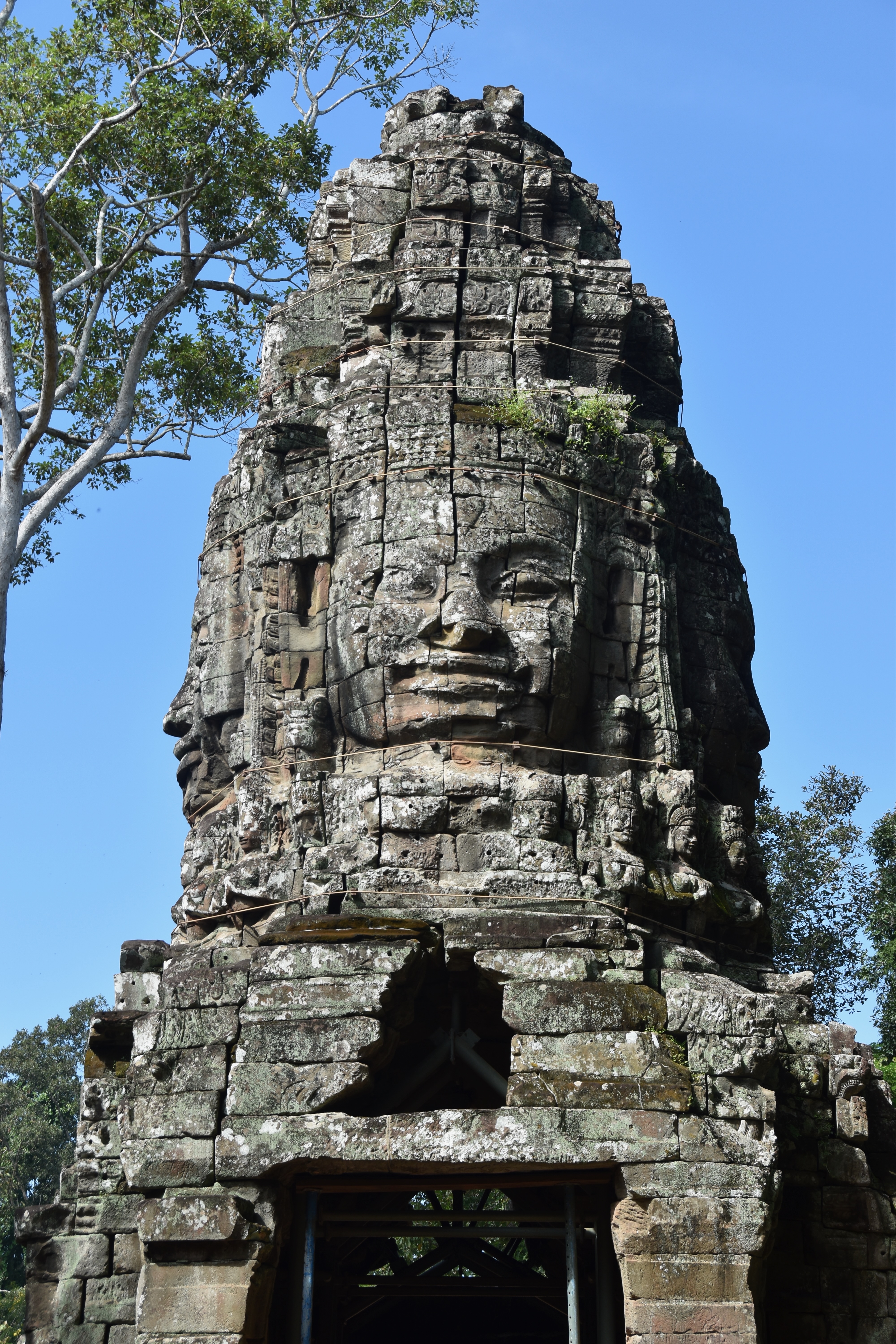
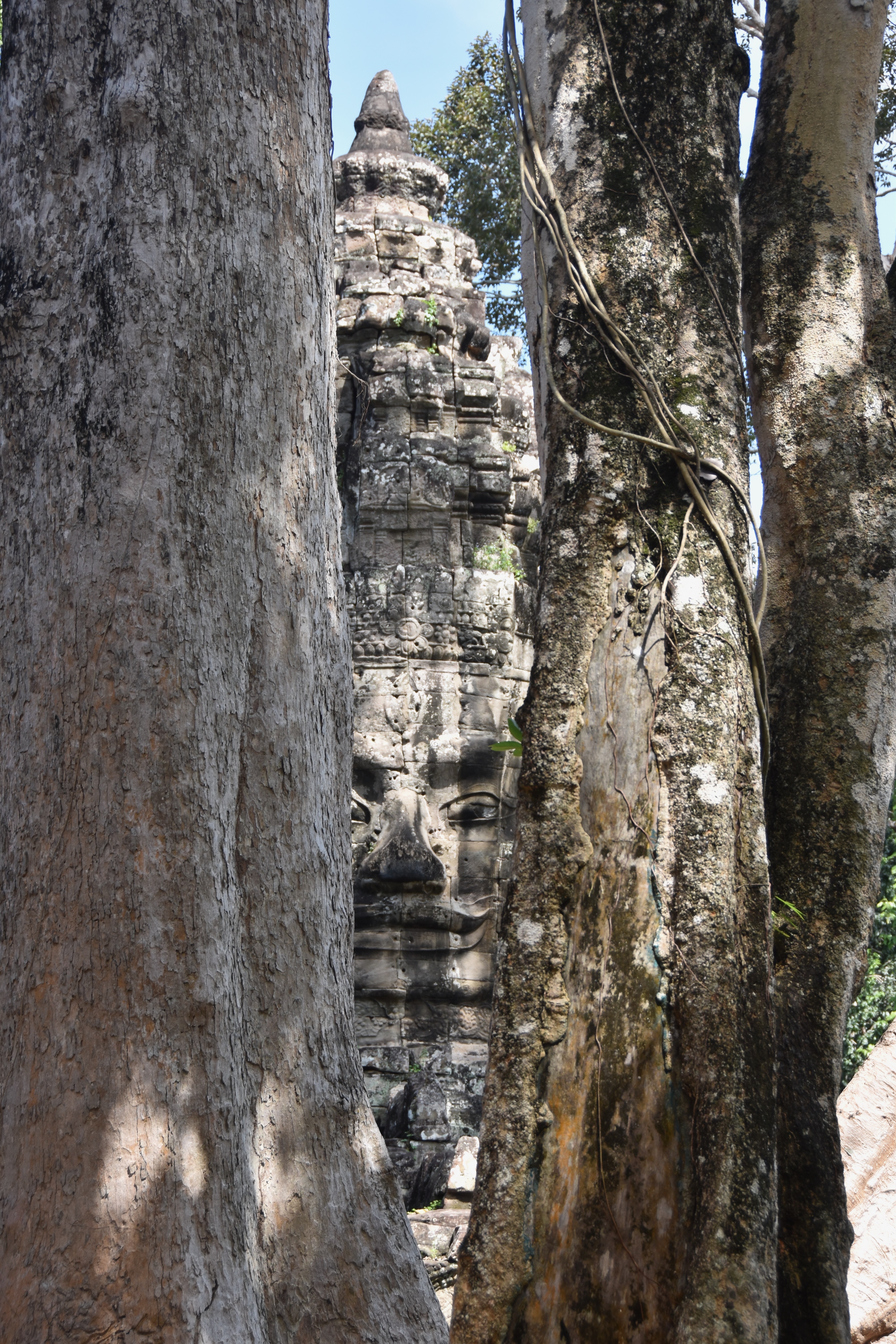
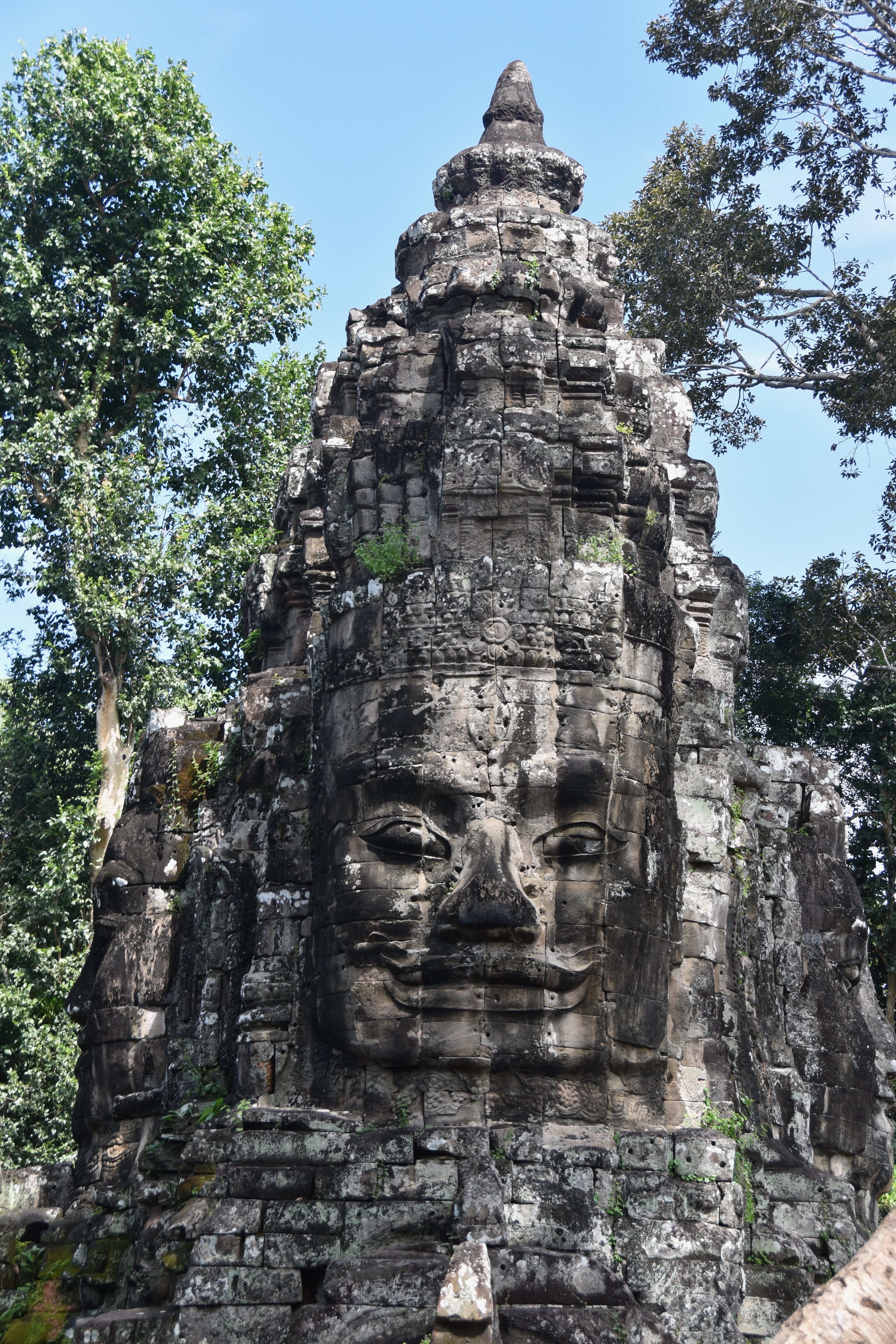
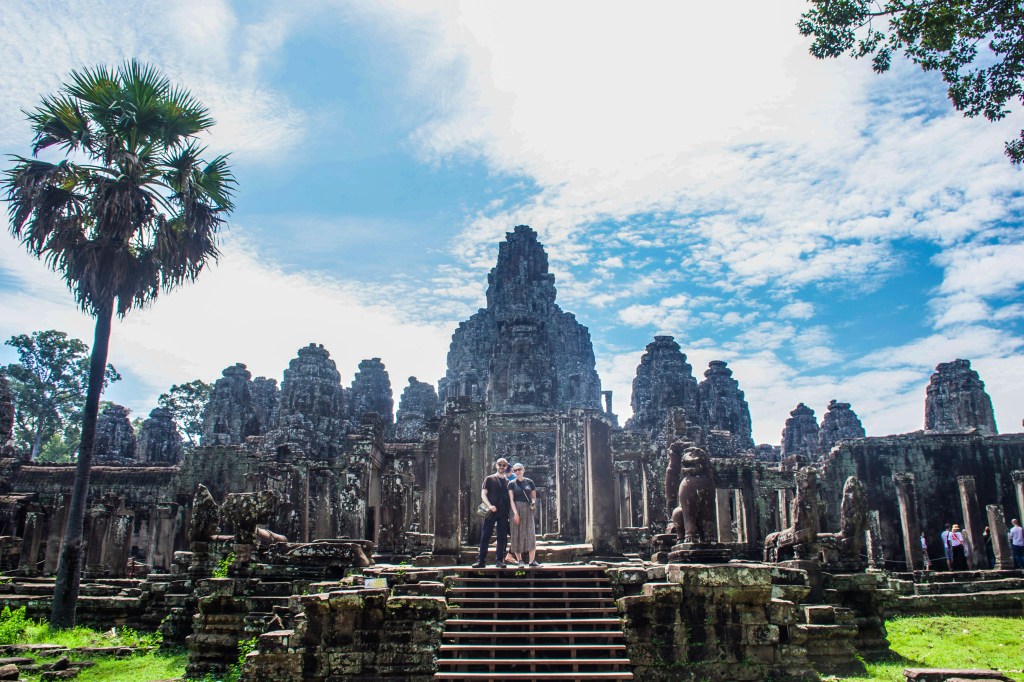
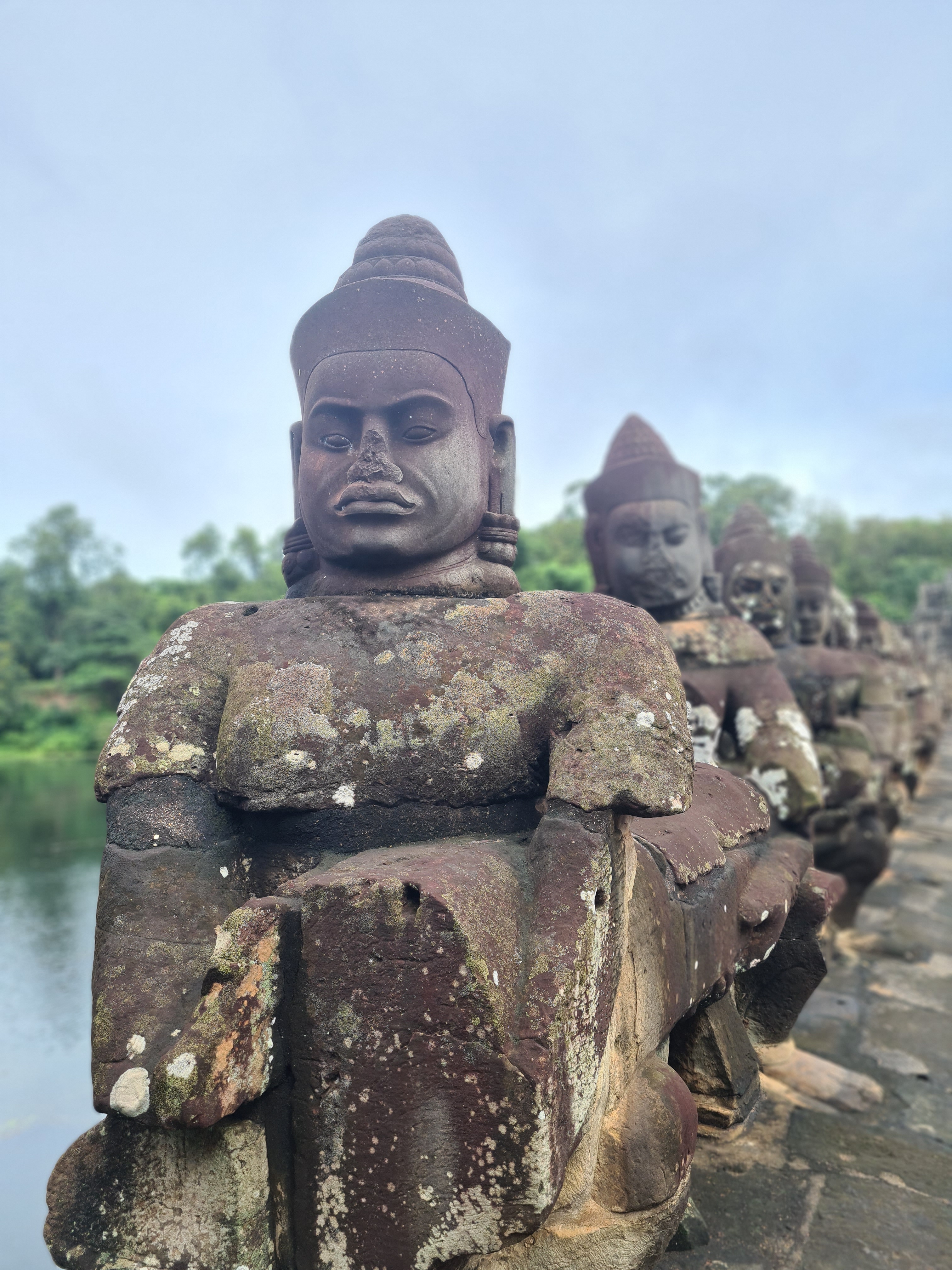
Buddha heads carved in to the five gates to the Bayon Temple complex

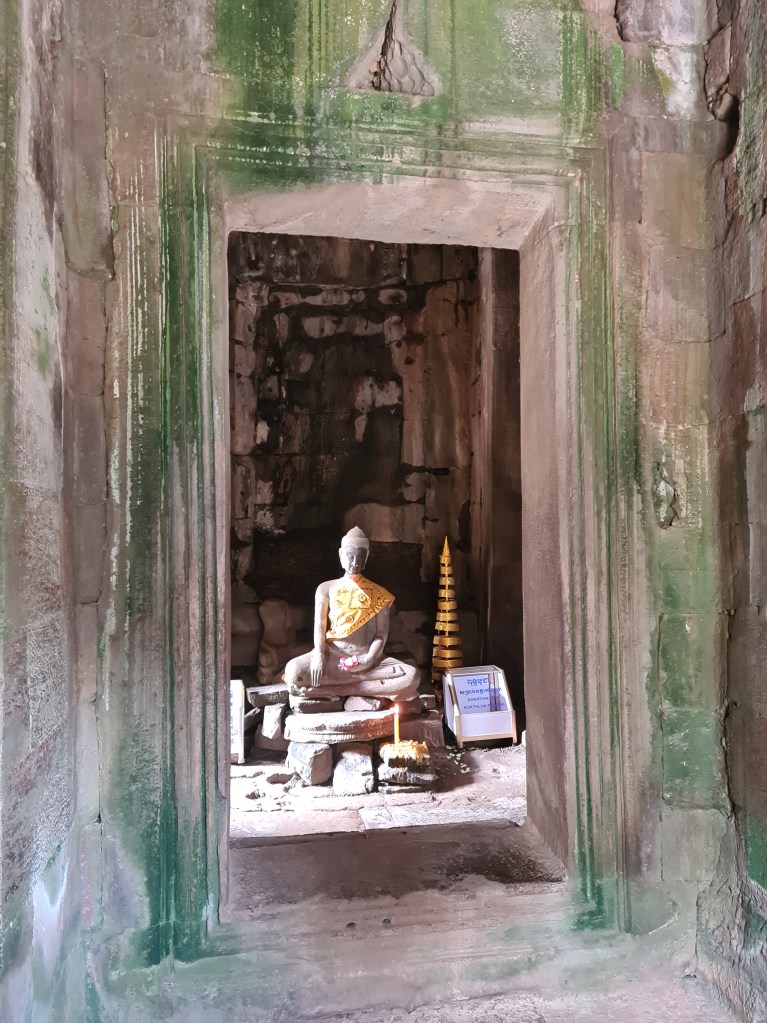
With 72 major temples, we were never going to see it all, but our two days gave us more than enough beautiful sights.

Unfortunately we didn’t build in much time to see the rest of Siem Reap, which understandably is scaling up to benefit from the visitor economy.
We did head into the town centre for a coffee one afternoon, followed by a trip to Wat Preah Prom Rath. You would think we’d be temple-d out by this point, but a large meditating Buddha was too iconic for us to miss. I even spotted Ricki uncharacteristically adding some notes to the donation box – well, if we donated to every religious site we’ve visited this year, we’d be bankrupt by now!
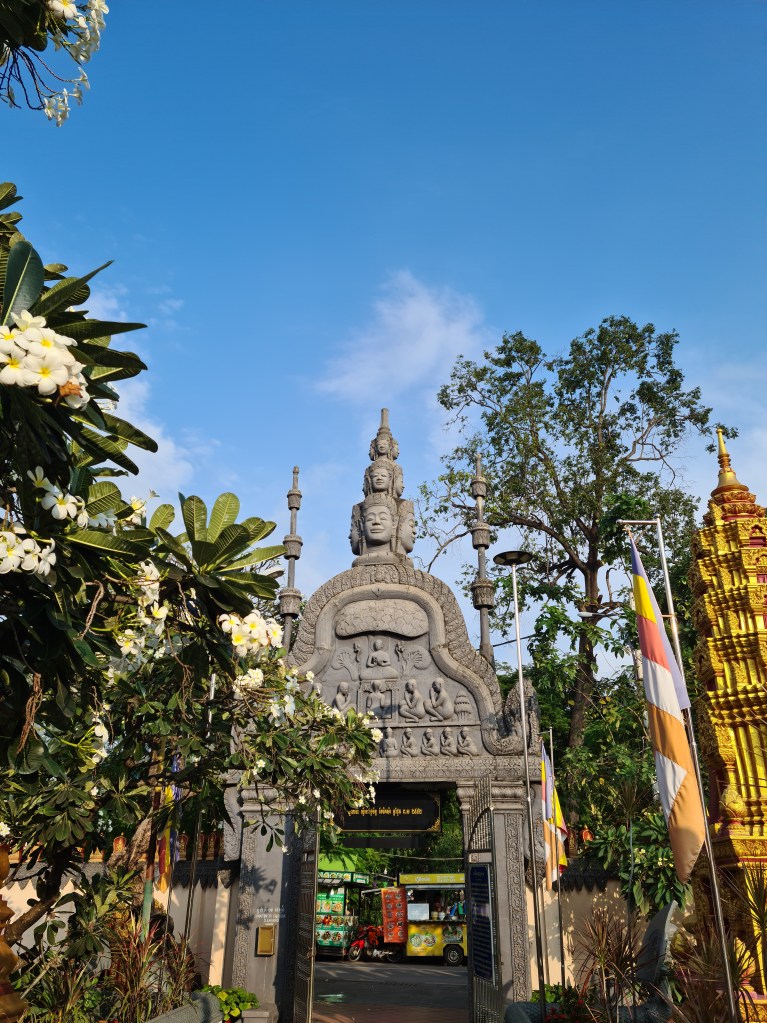
Ricki admitted he was just trying to tidy up our growing array of leftover currency. Somewhere Buddha cottoned on to the insincerity in the gesture and chuckled…
Pondering what to do next, Ricki would have been happy to stay central, whereas I was admiring the sun in the sky and thinking about how nice it would be to see Angkor Wat not just at sunrise, but sunset too. After some cajoling, I got my way, and once more we were tuk-tuk-ing back to the complex, approximately 15 minutes drive away.
Well, 15 minutes can make a big difference. As we drew nearer, the sun seemed to make an early retreat and as we passed the entry gates, a bank of cloud was visible over the towers. Here was our sequel visit, Angkor Wat 2: The Temple Strikes Back.
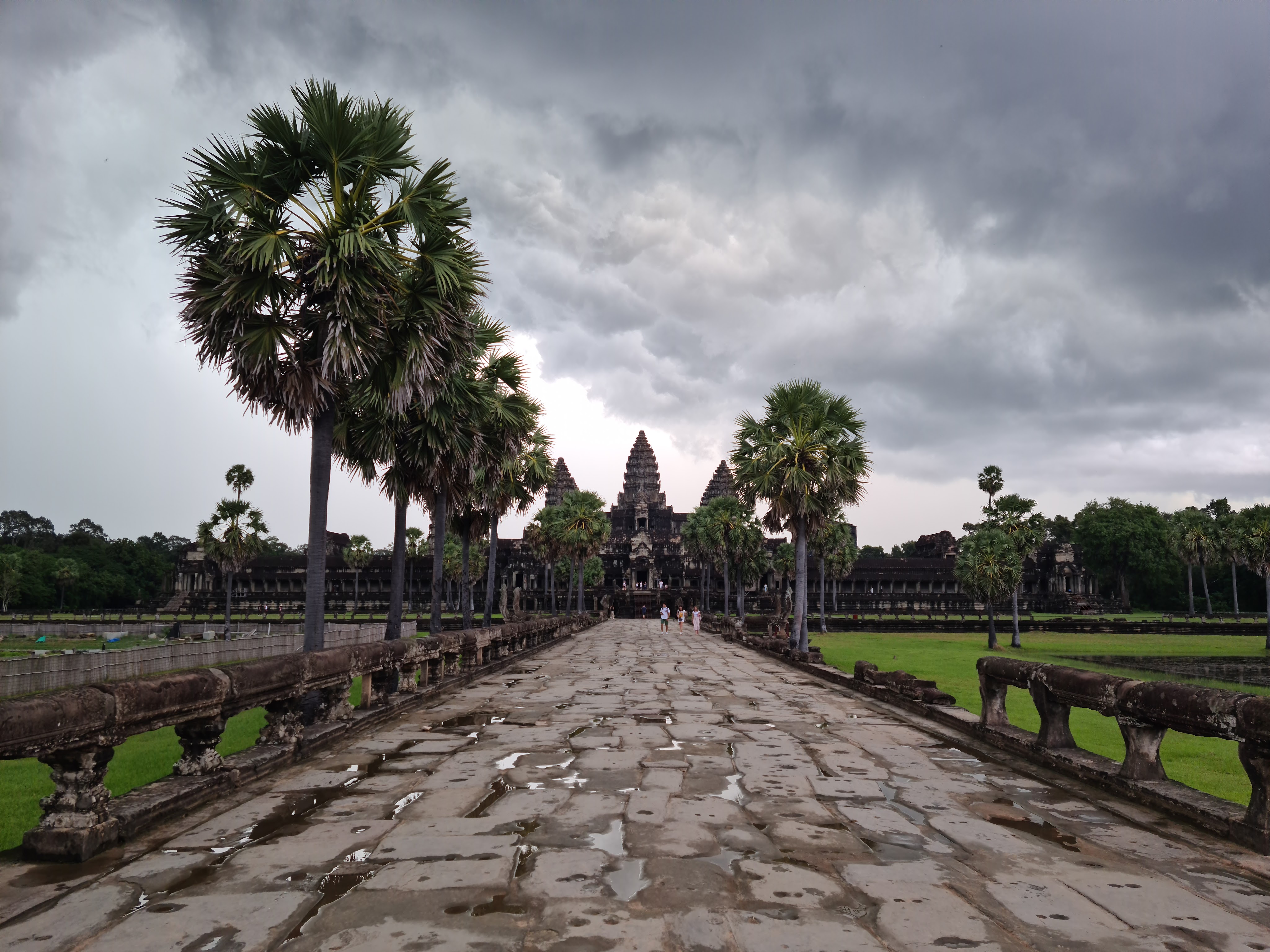
Having made the effort to get there and paid for our tuk-tuk to wait for us, we decided we might as well still head in and just pray for the best. And ignore the rumbles of thunder. The entry way seemed to stretch even longer than before as drops of rain started to fall, and soon we were simultaneously jogging and pulling our emergency ponchos out of the bag. In no time, a full rainstorm had started. Needless to say, that sunset wasn’t meant to be.
Instead we sheltered within the temple alongside the remaining tourists too stubborn or ignorant to have already fled. Maybe the sanctity of our surroundings prevented Ricki from issuing me with an epic “I told you so” rant, instead rather simply remarking “and sunset is right about now” as the gray, turbulent sky remained gray and turbulent.
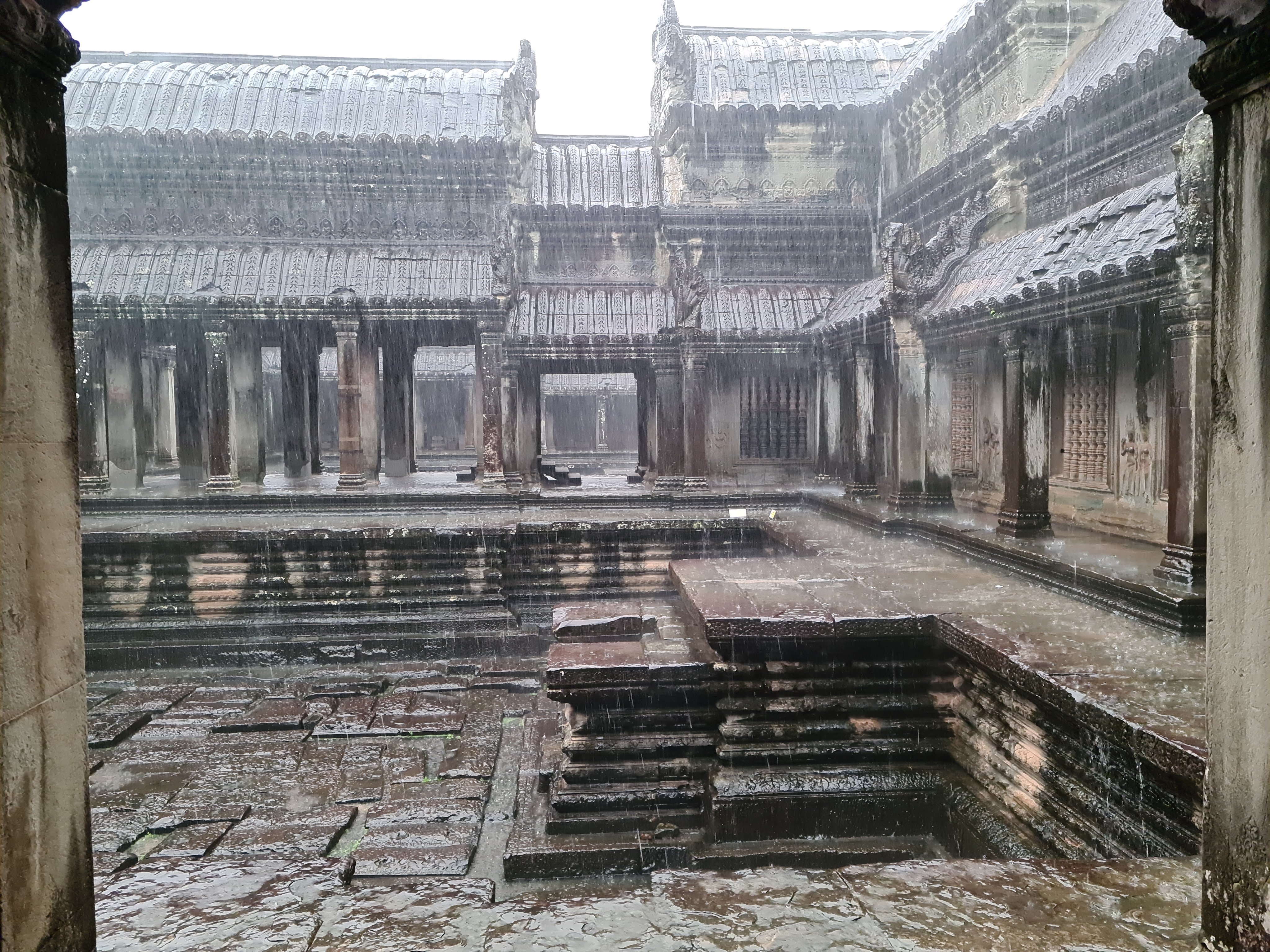
Nevertheless, Angor Wat isn’t considered the most impressive destination for nothing, and we still appreciated the experience of watching the extreme weather from within, somewhat enjoying the drama as lightning lit up the ancient stone walls.
At least until it dawned on me that sunset, funnily enough, means end of the day, or more pertinently, end of daylight. While we had been sheltering in the hopes of leaving at an opportune drier spell, now we had to weigh up whether we were prepared to wait in the dark. The thought of being unable to see the multitude of uneven steps and deepening puddles quickly drove us out. The return journey to the tuk-tuk was difficult enough in what was left of the fading light, validating the decision to take flight when we did. And even though the overall decision to risk a return sunset trip had been questionable, I was glad we had tried it, rather than always wondering if we had missed a beautiful moment.
It just gave us an extra memory of Angkor Wat to look back and smile on. The site had thankfully lived up to those lofty Lonely Planet promises and I was also glad we had taken the opportunity to see other parts of Cambodia.
There are many thought provoking and emotional things to learn in the country, but there is also a lot of beauty to see and fun to be had.
- Although there are no explicit rules forbidding photos, along with many others, I think it is insensitive to take too many shots of Tuol Sleng and Choeung Ek, hence the limited accompanying pictures. ↩︎
Tash’s Treats
Although Cambodia has its own cuisine identity, it didn’t seem quite as extensive as other countries we’ve visited this year. I was also surprised by how much similar it seemed to Indian food than Thai. The main dishes we tried were:
Lok Lak – A stir-fried dish featuring tender marinated beef (or sometimes chicken or pork) served with a tangy dipping sauce made from lime juice and Kampot pepper. Often accompanied by rice, fresh vegetables, and a fried egg on top.

Amok – A signature Cambodian dish made with fish (or chicken/tofu) steamed in a banana leaf cup, mixed with a rich, creamy curry of coconut milk, kroeung (Cambodian spice paste), and egg, giving it a custard-like texture. And more vegetation than I knew what to do with.
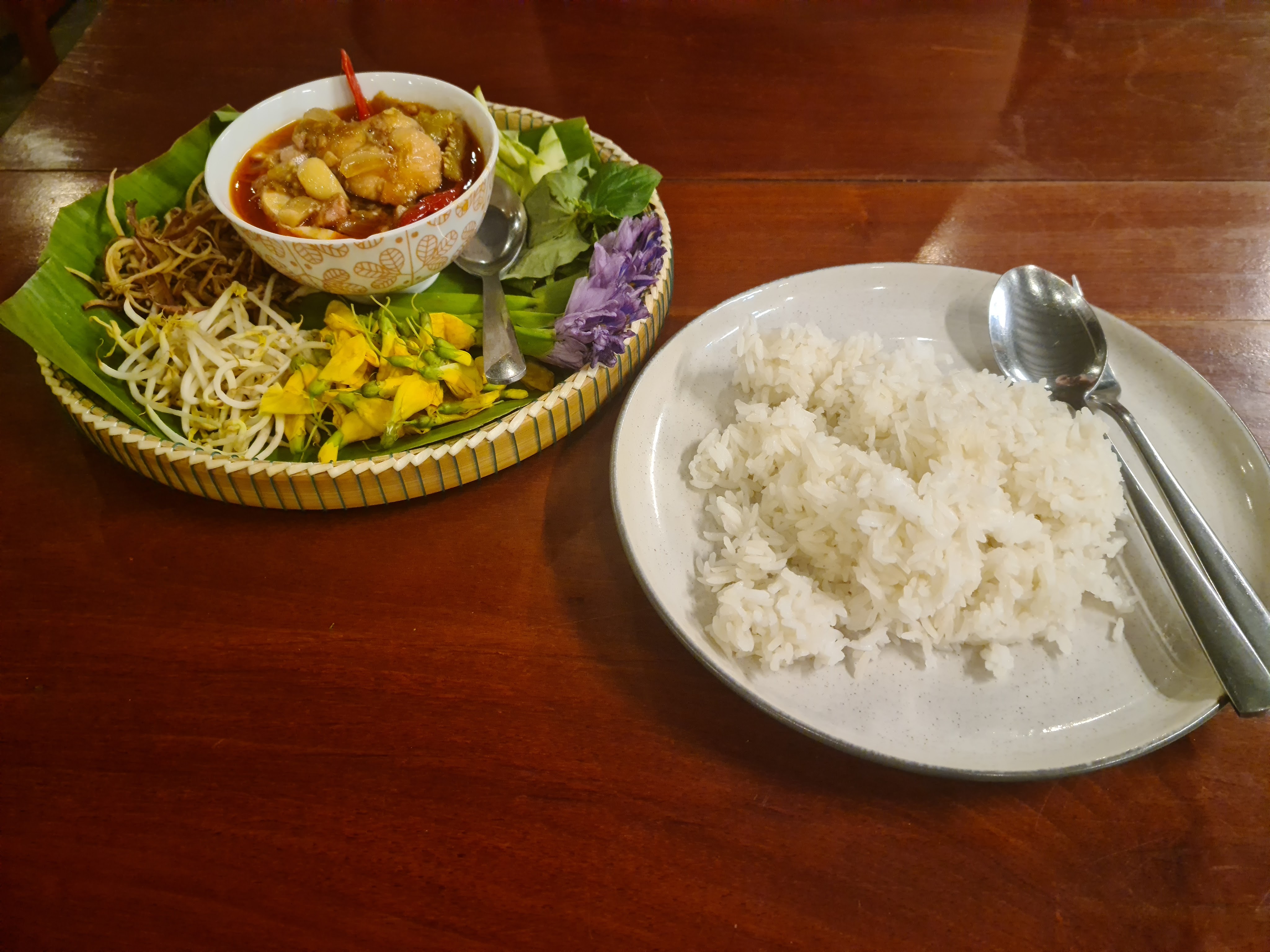
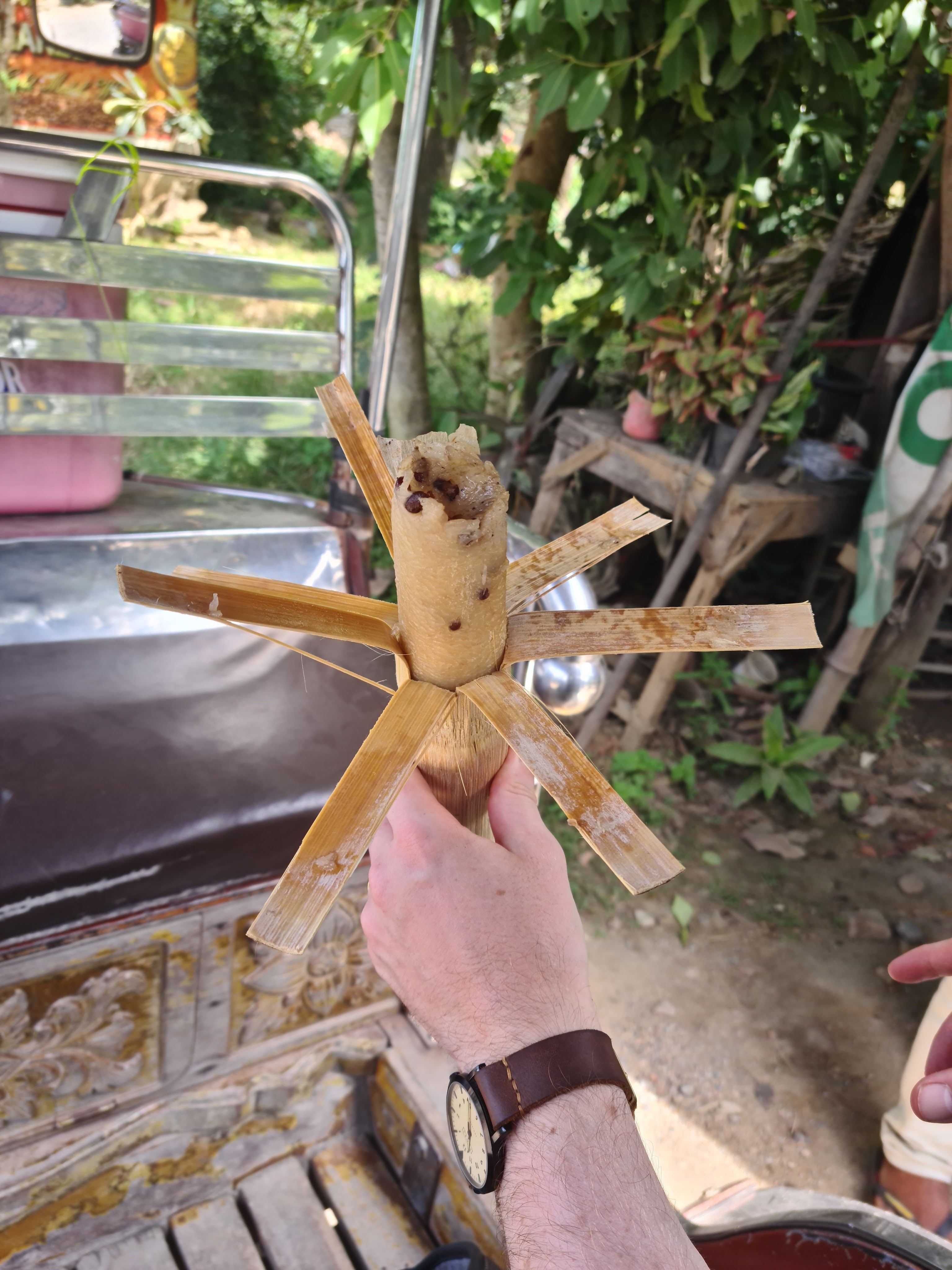
Stuffed Bamboo – A fragrant dish where hollow bamboo tubes are filled with a mixture of minced pork, sticky rice, herbs, and spices, then grilled or steamed, resulting in a savory and aromatic delicacy.
And of course, the aforementioned frog’s legs!
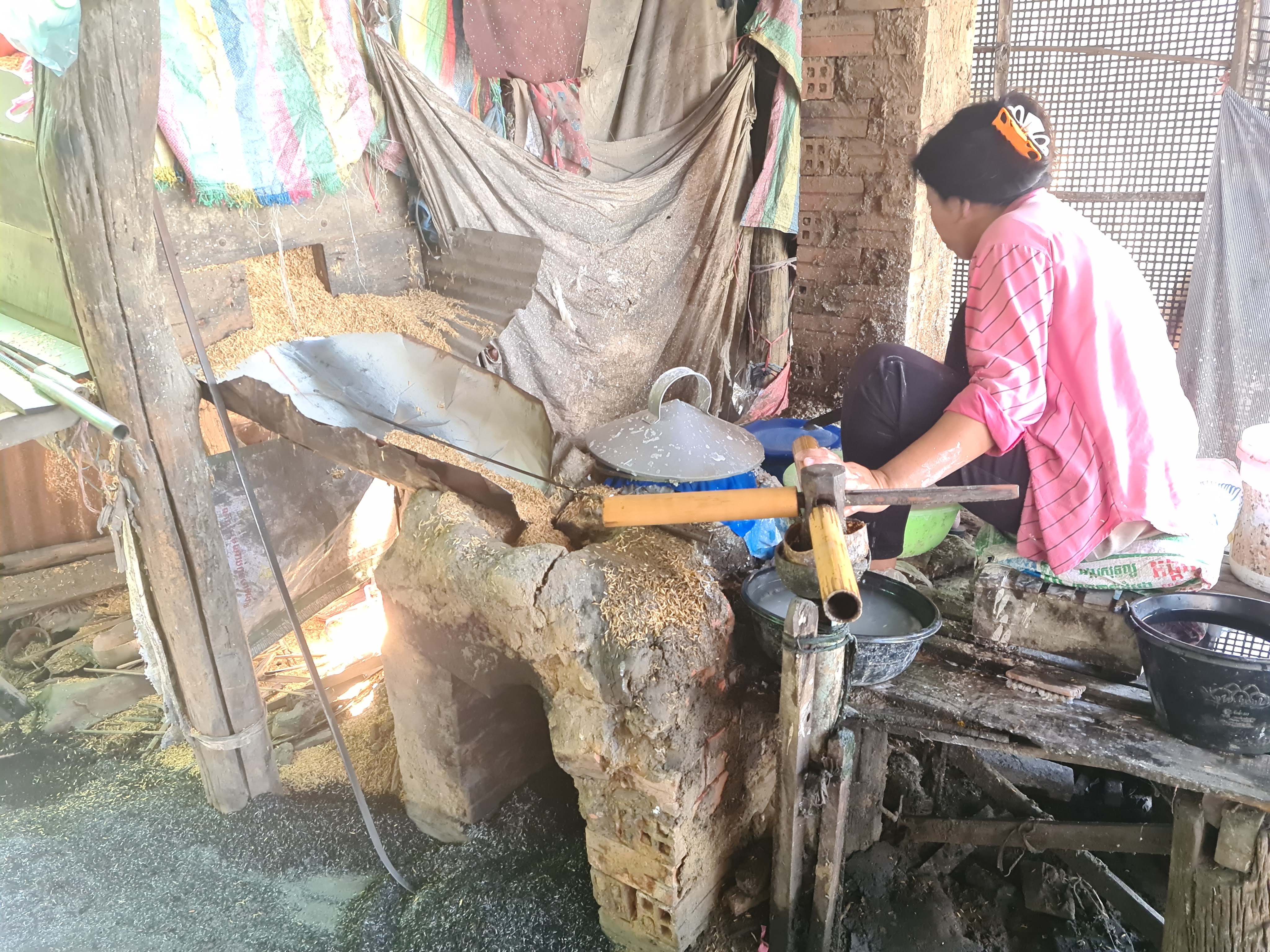
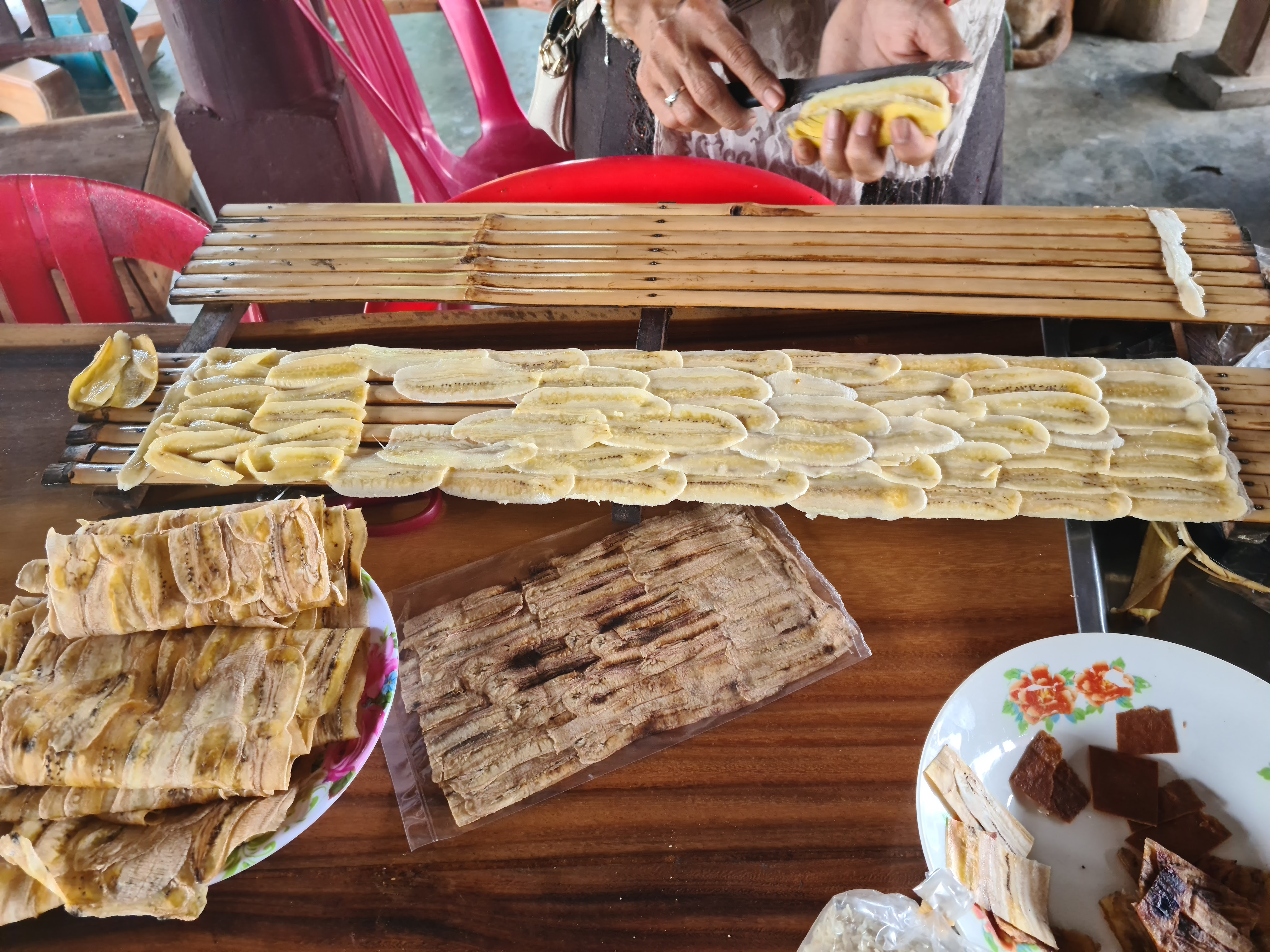
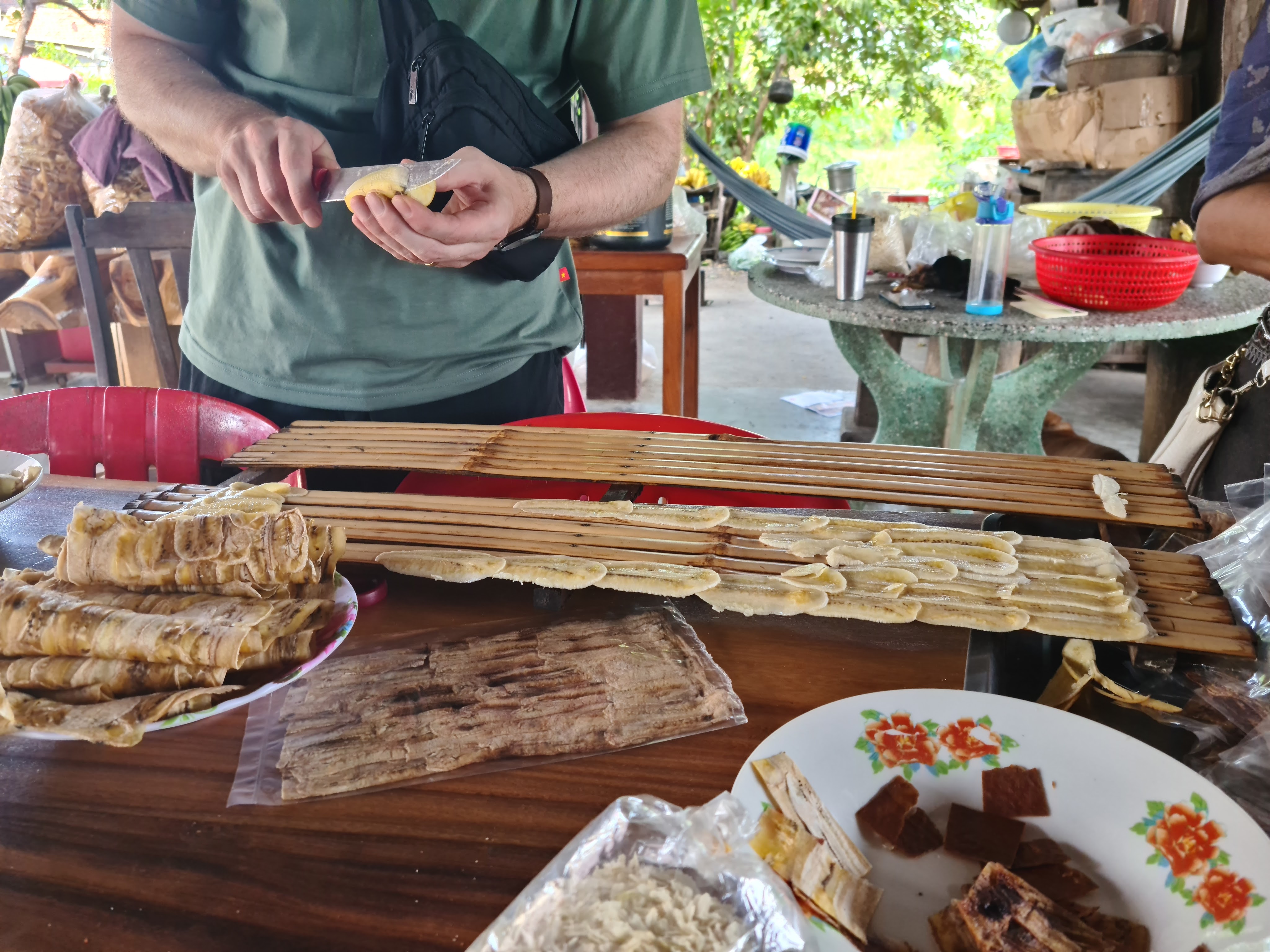
Our touring through the countryside around Battambang also let us see the local food production. Here we have the rice crackers being made:
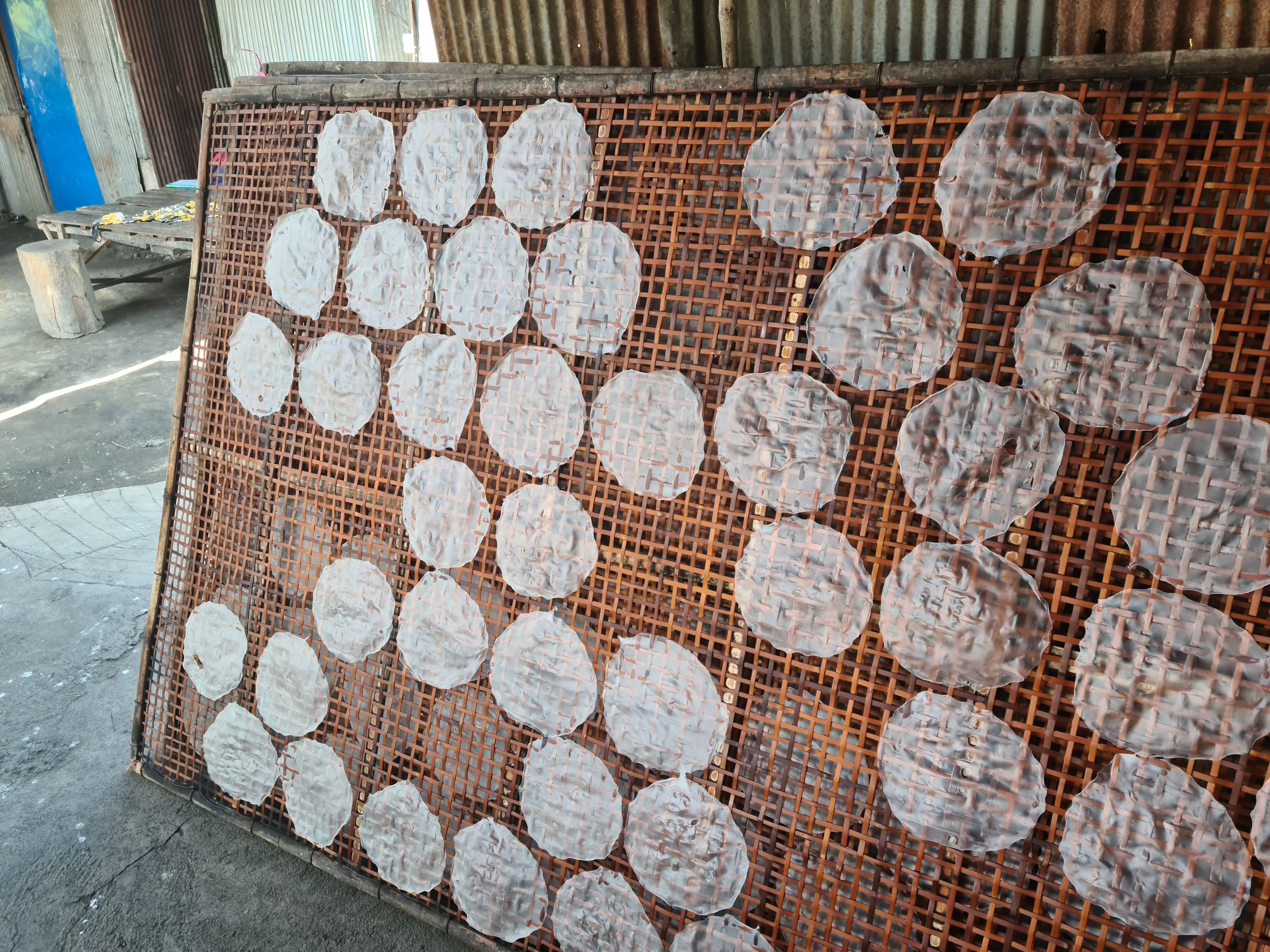
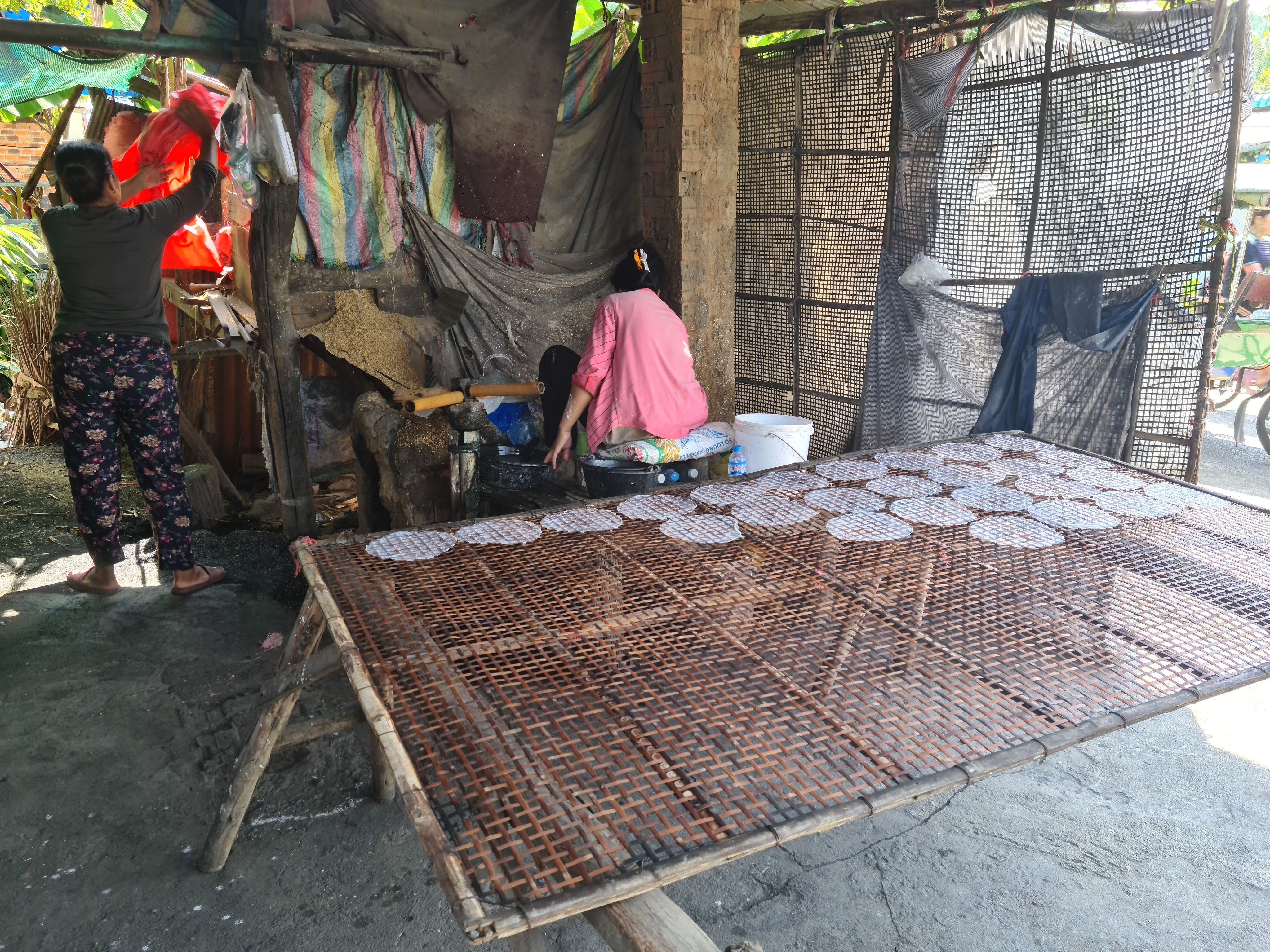
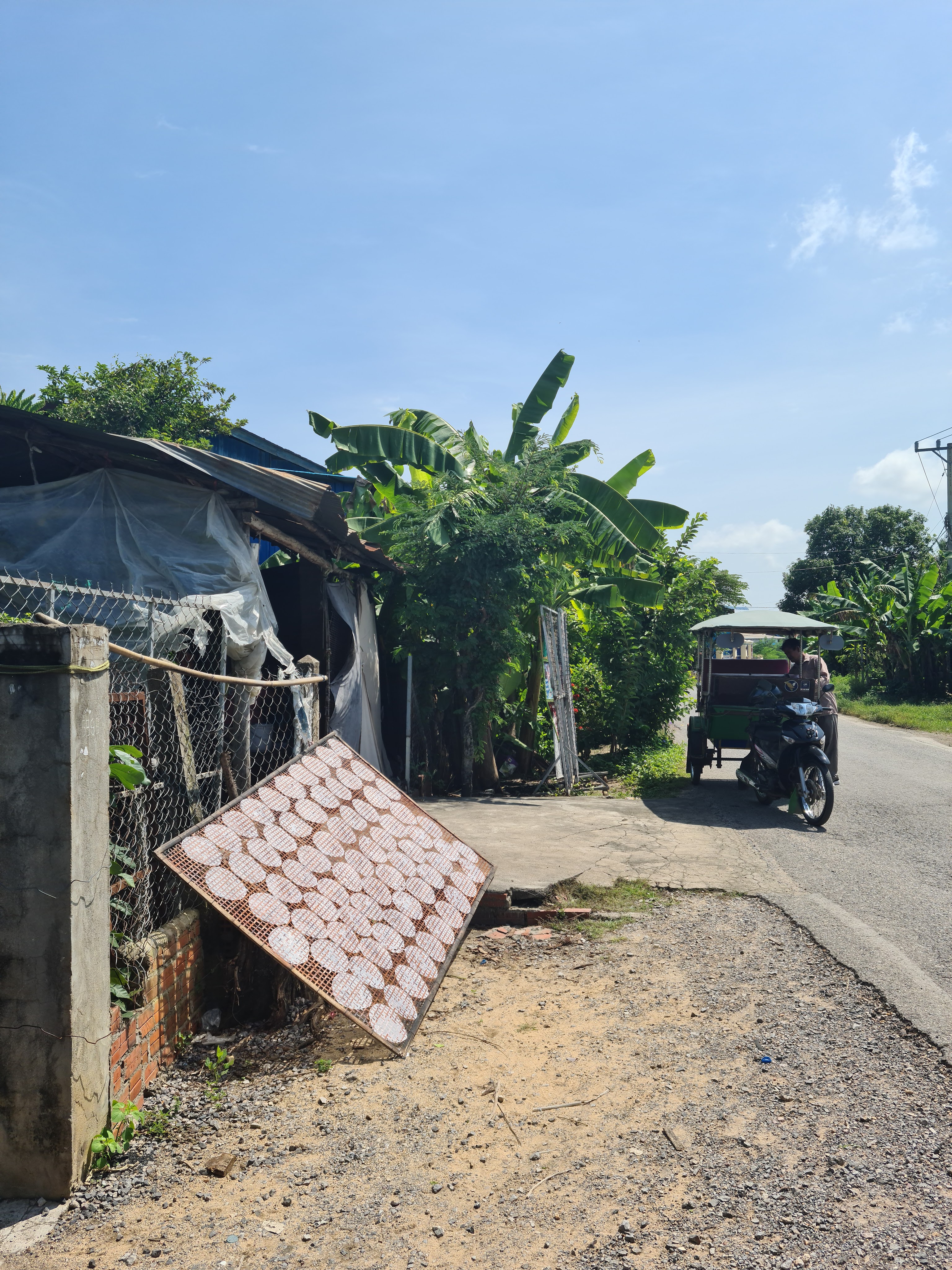
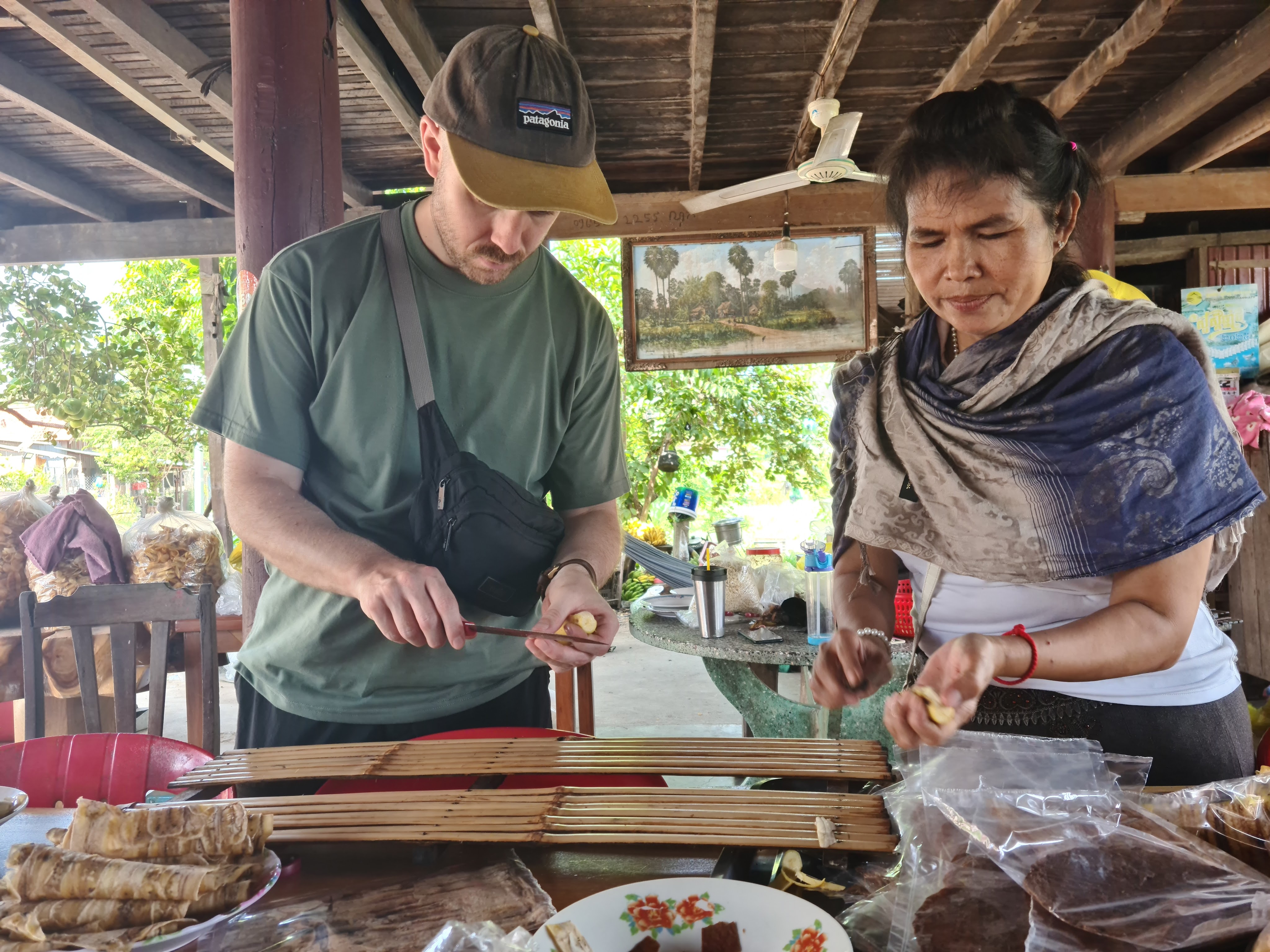
And here are the banana crisps, which Ricki got hands on with making. He has a little training before he can be as fast and precise as the lady demonstrating, but she was still very impressed with him.

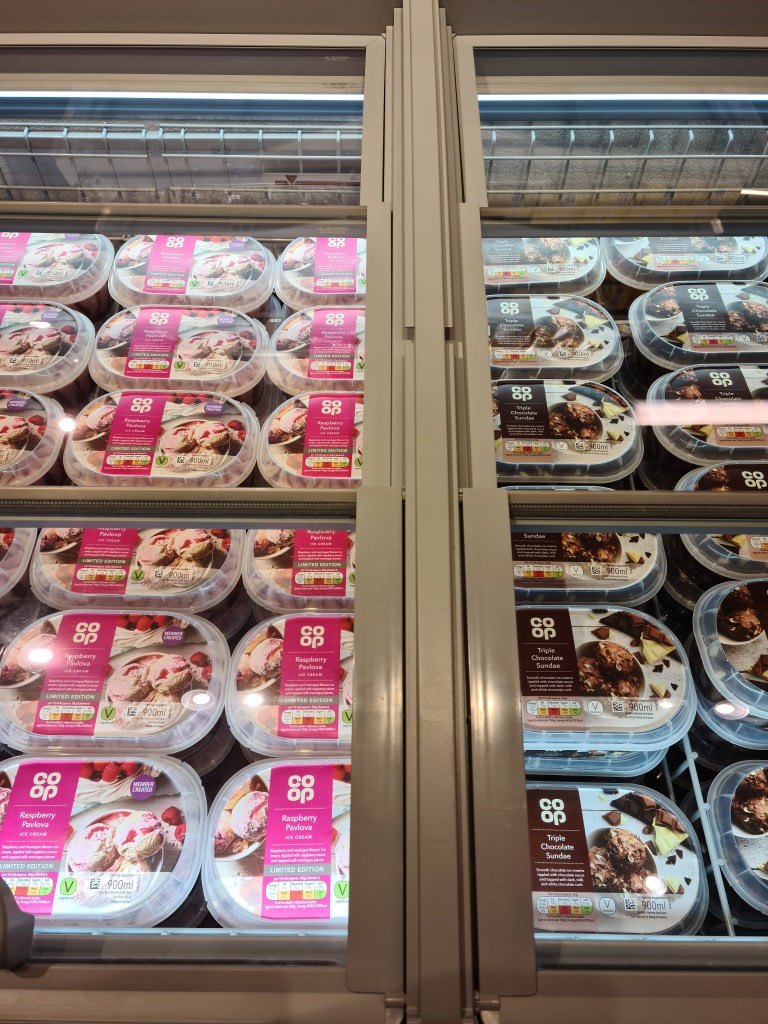
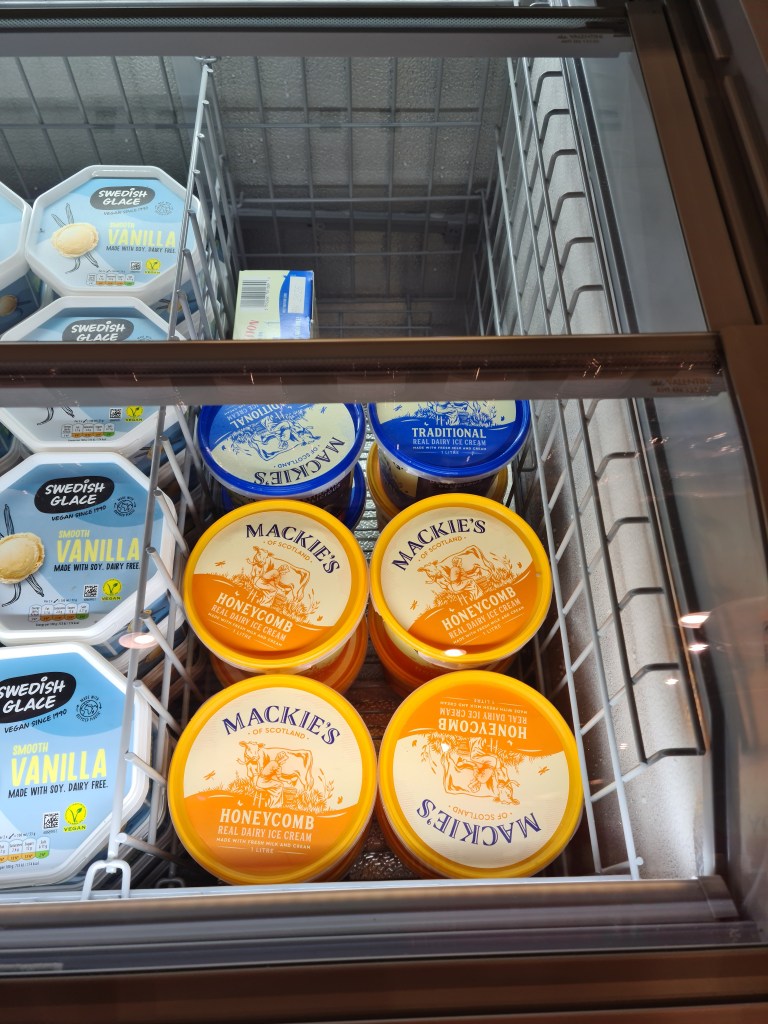
And as we gathered provisions for a bus ride out of the country, we were rather surprised to find some familiar tastes of home…

 A Place Both Wonderful and Strange - Tash & Ricki's Career Break Travels
Leave a comment