
Since watching the South American series of Race Across the World, the Uyuni salt flats in Bolivia have been high on my travel bucket list. It was a no-brainer that we’d be visiting them on the South American leg of this year’s travels. The Uyuni Salt Flats, or Salar de Uyuni, are located in southwest Bolivia, near the crest of the Andes. Formed as a result of prehistoric lakes evaporating, they’re composed of thick crusted layers of salt and are one of the most important sources of salt in the region.
What I (perhaps foolishly) didn’t realise until we started researching the practicalities, was that the salt flats have a dry and wet season. The surreal mirror effect seen on RATW and which had me completely captivated, is observable only during the wet season, whereas the dry season gives you snowy white salty vistas and the stepping stone to some playful forced perspective photography. Both have their merits, but I had been married to the idea of the glorious reflections. So it really focussed our minds to see that the wet season runs from November to March. The earliest we could get to South America was early March, but given it is advisable to acclimatise gradually to the altitude of Uyuni, we had to plan carefully.
In short, this one specific natural wonder formed the basis for our route through the continent. When guides and fellow travellers have been asking us about our journey, there have definitely been a couple of furrowed brows, as ours isn’t the most natural path. But it’s good to be different and flip the “gringo trail” on its head a bit.
I’ll spare readers the details of the various planning iterations we ran through before settling on our final itinerary. But if you read the previous blog entry, you’ll already know that we used San Pedro de Atacama in northern Chile as a base, and booked a four day jeep excursion from there.
Everything had been planned online months in advance, so it was a bit of an eyebrow raising moment the day before we left, to open our Lonely Planet book and read the following:
“Be warned that this is no cozy ride in the country and for every five travelers that gush about Uyuni being the highlight of their trip, there is another declaring it a waking nightmare.”
One way or the other, we were going, so expectations somewhat tempered, we braced ourselves for the earlyish departure the next day. We had been told to be ready for a 6.30-7.00 pick up in order for our minibus to reach the Chilean border crossing in readiness for its 8am opening.1
After some lovely sunrise scenes along the road, ears cracking and crunching as we started to climb in altitude, we joined an already formed queue of buses at the border. My Spanish is still in progress, but I think our driver aimed a barbed “this is what happens when you are late for pick up” at one of the passengers who had got in a bit of a mix up about pick up timings.
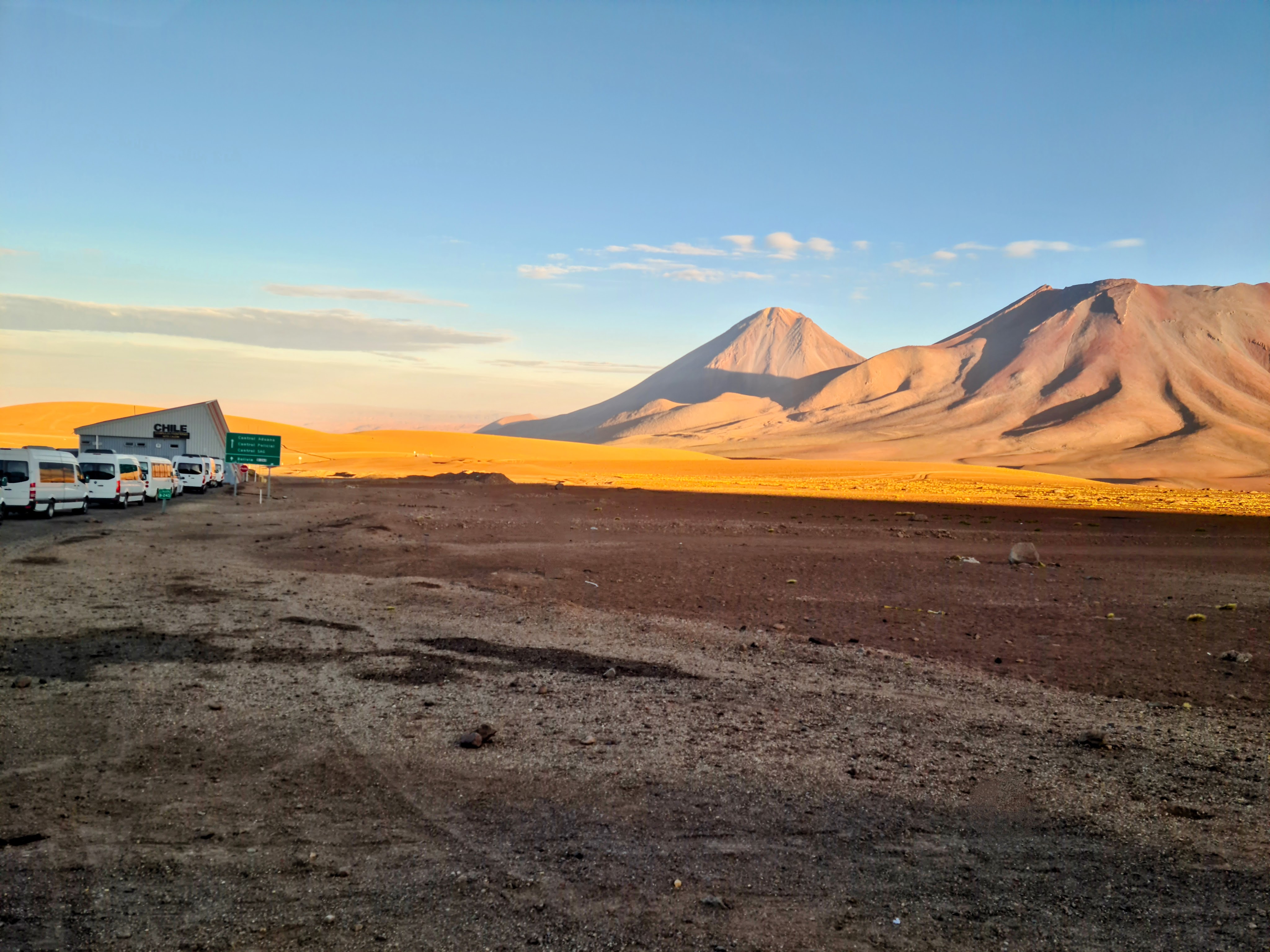
The next couple of hours crawled by, as we were ferried between various queues at the Chilean and Bolivian border points; had a standing breakfast in what I think counted as Bolivia; and waited for our jeep and other travellers to arrive.
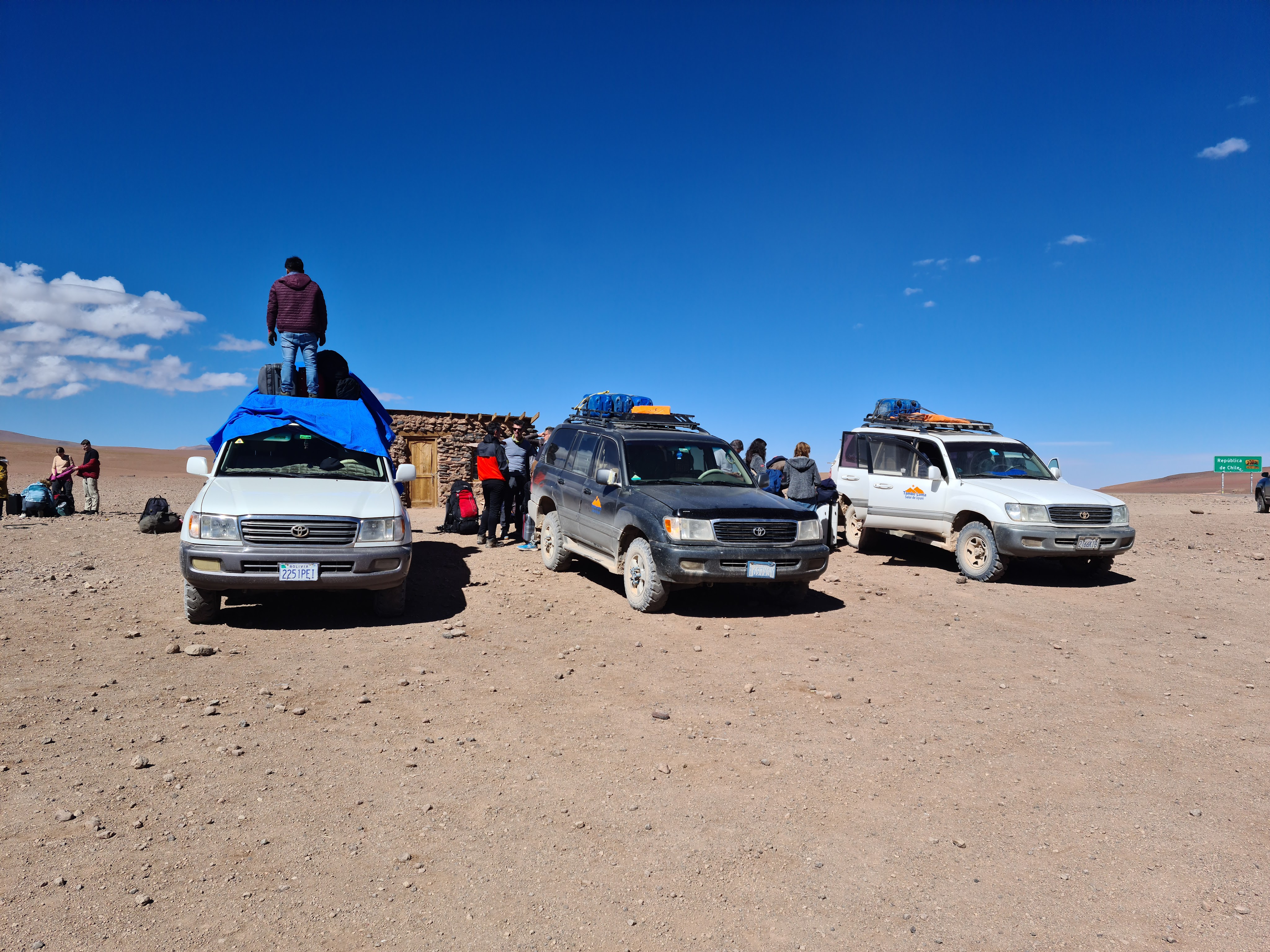
I’ll admit, by this point I was getting pretty tetchy, largely due to being kept in an area with limited shade and no toilet facilities.
Once we got on the way though, my spirits very quickly lifted.
We started getting to know Niki, Nelly and Ana who we’d be sharing the jeep with, together with our driver, Isidro (who spoke no English, so “getting to know” him would be a bit more challenging). And it was no time at all before we reached our first stop in the Eduardo Avaroa National Andean Fauna Reserve.
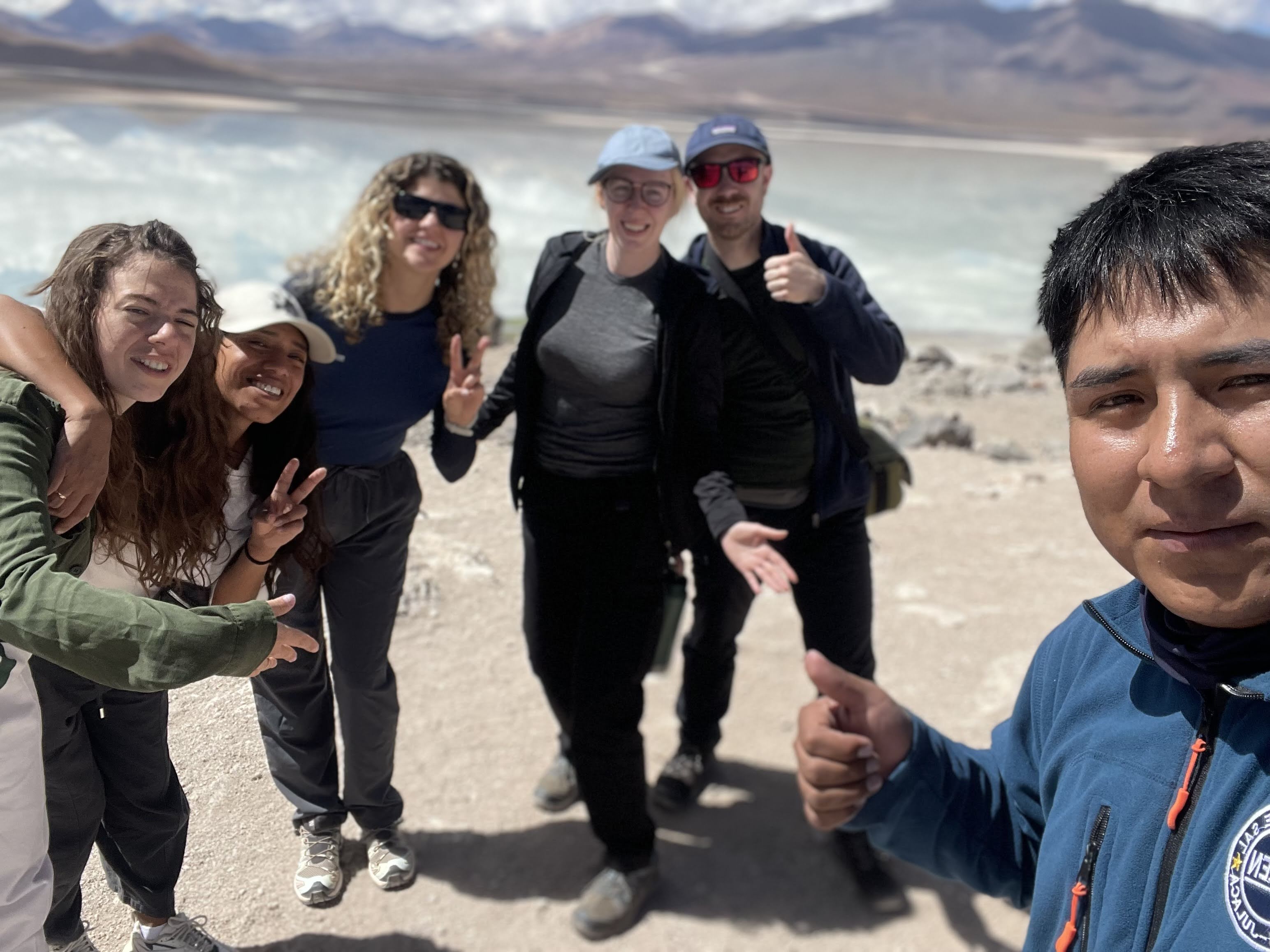
Uyuni is some 300 or so kilometres from San Pedro de Atacama so the journey was to be broken up with various other points of sightseeing. I don’t think anyone bothered committing the full itinerary to memory (or even saved/printed a copy), so for the most part, everything we visited would be a surprise as we came to it.
I’m used to doing excursions where the secondary attractions pale in significance compared to the main event – duty free shopping in Mauritius when we were on a nature tour comes to mind! As a result, I wasn’t expecting too much from day one. But we were completely buoyed by the first stops at the White and Green lagoons.
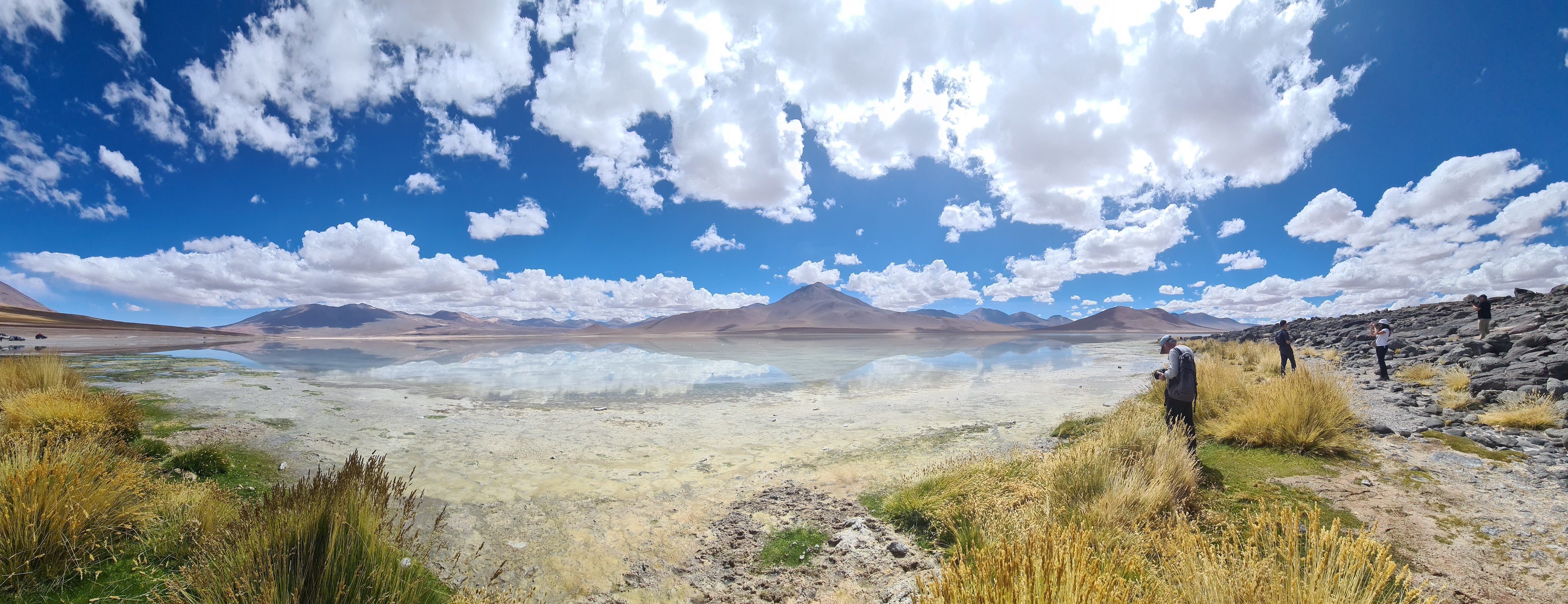
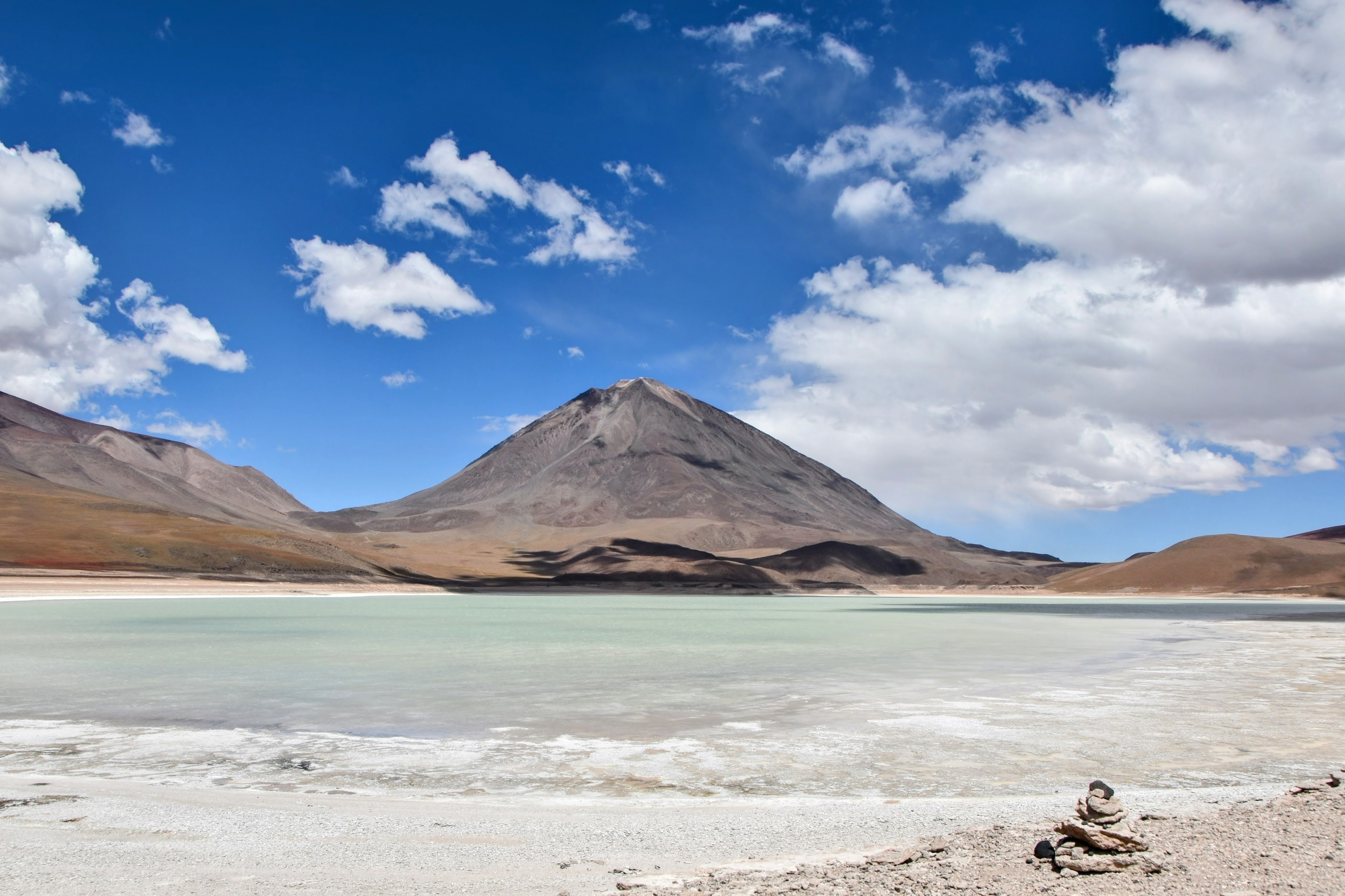
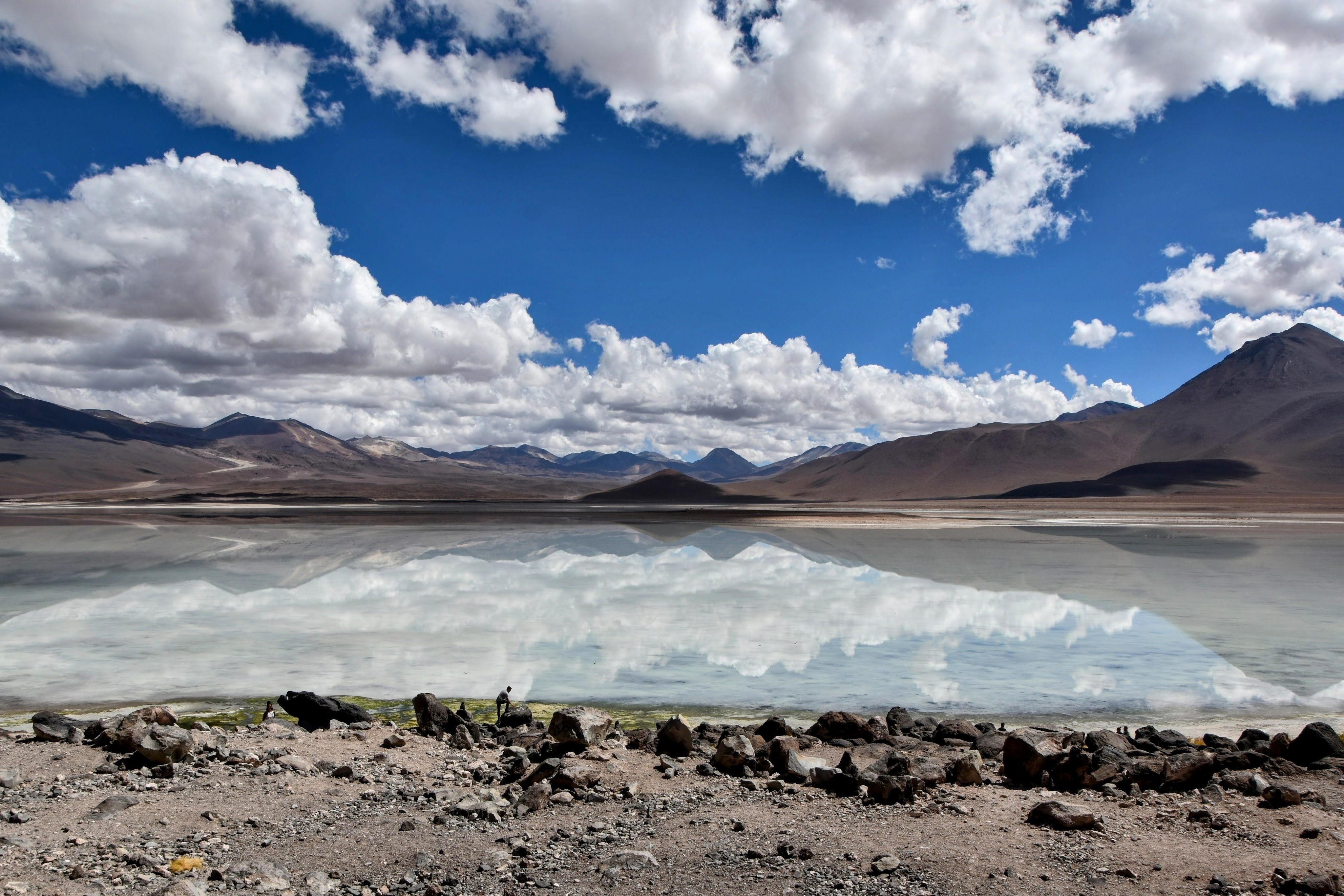
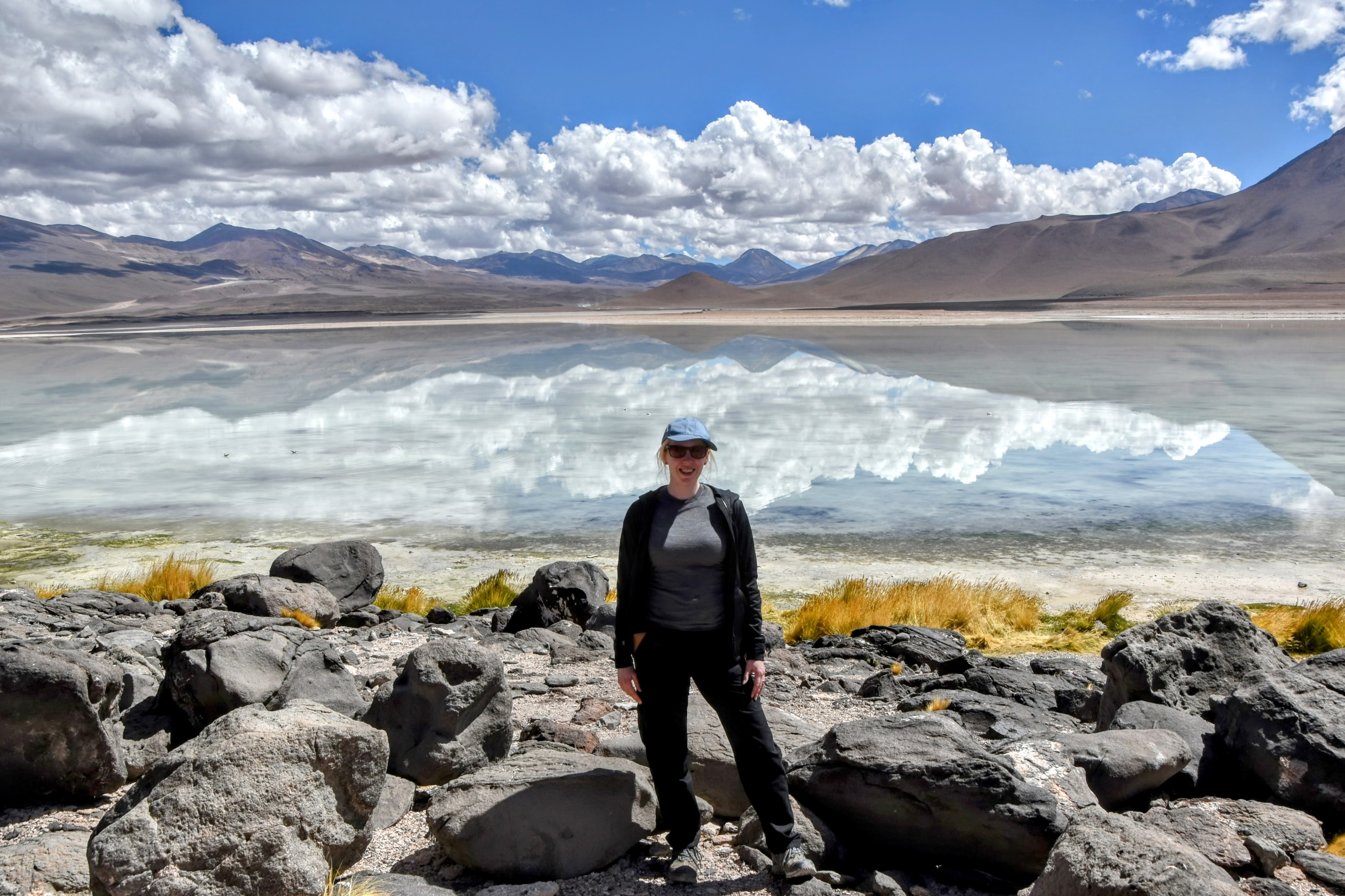
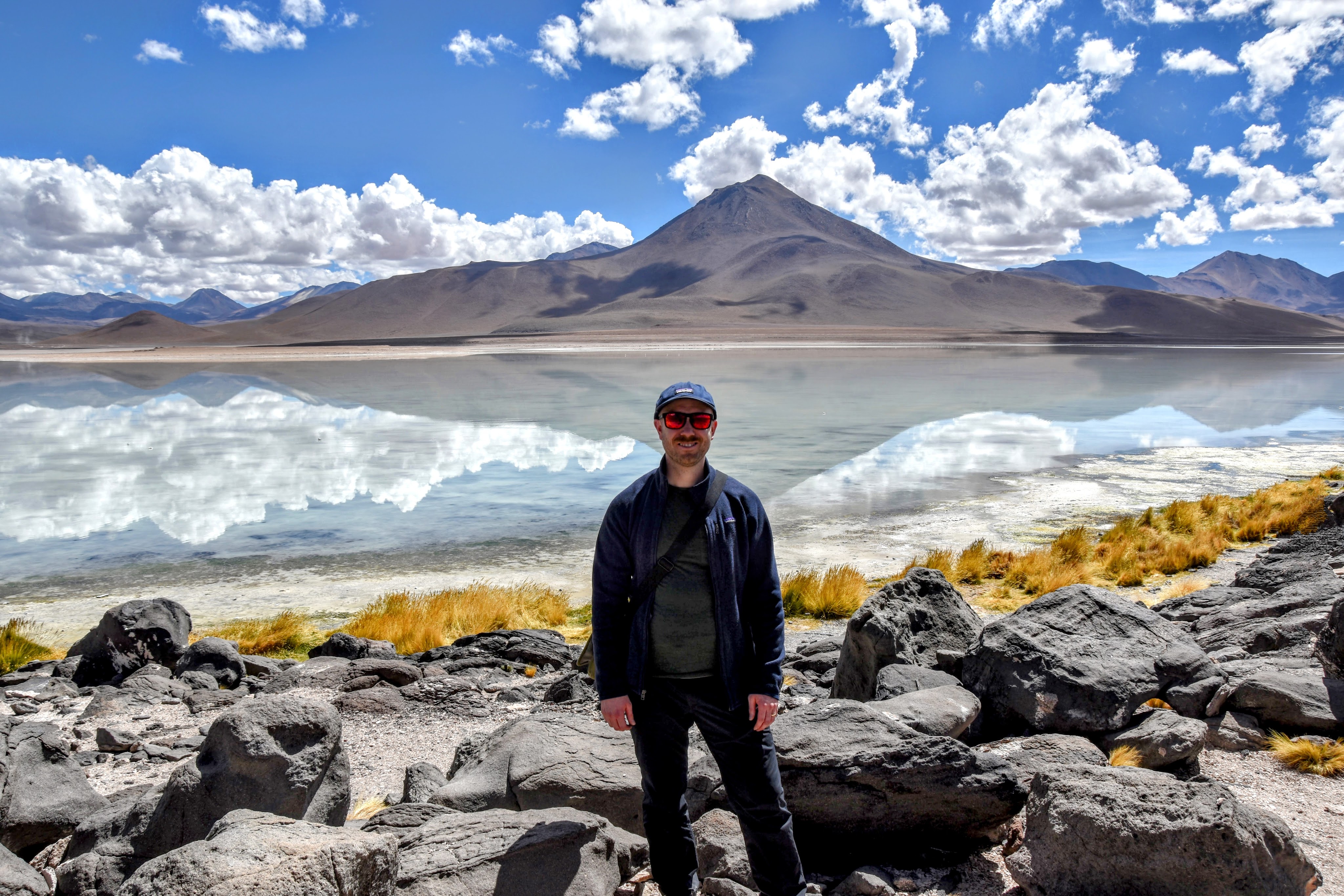
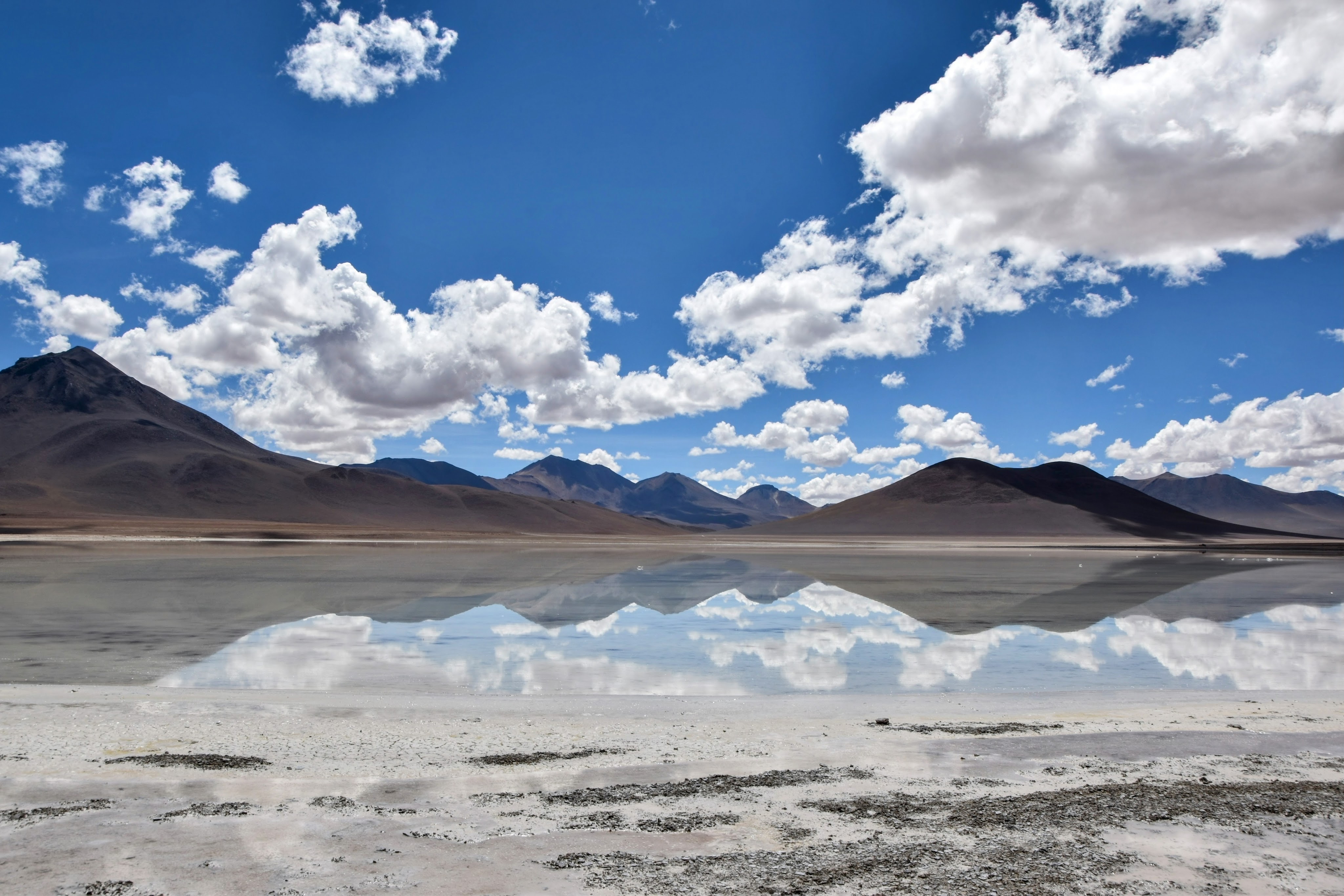
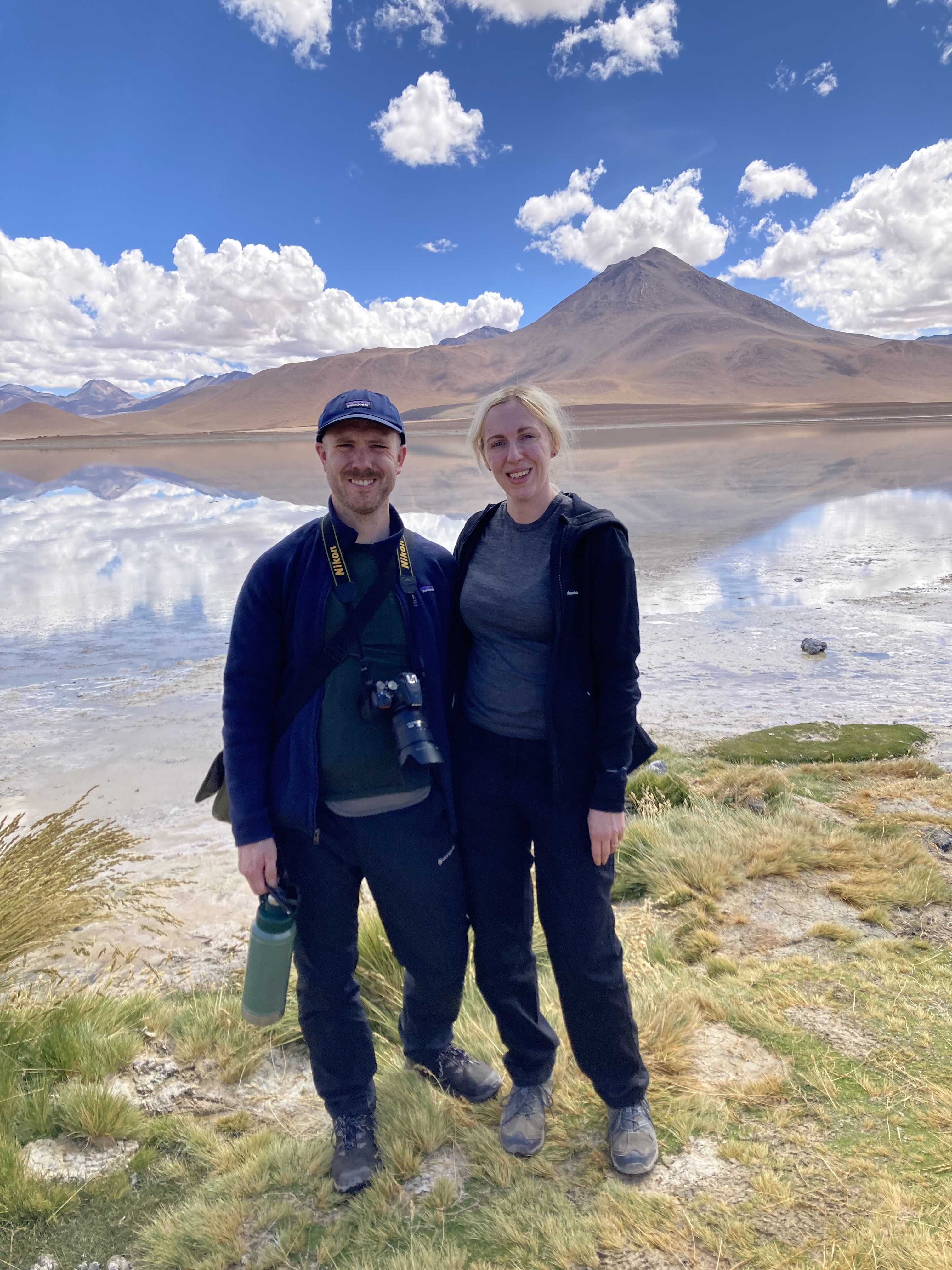
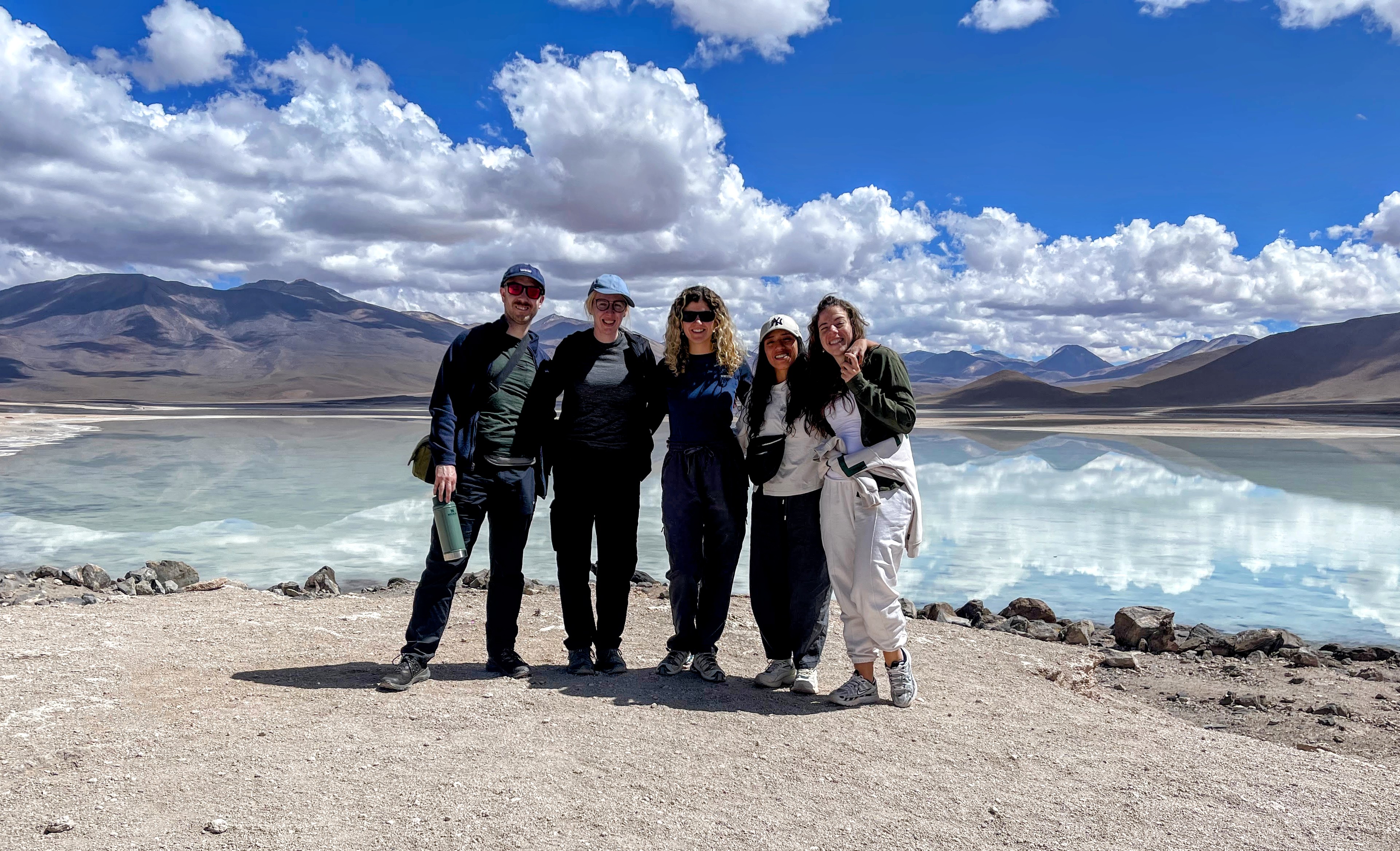
The landscape at the foot of the Licancabur volcano was stunning. Clear, still waters reflecting the undulating peaks of the surrounding hills. We could even spot some flamingos on the horizon. We chatted happily with other travellers from the convoy of jeeps, everyone’s excitement steadily mounting. Hopefully this excursion was starting as it meant to go on.
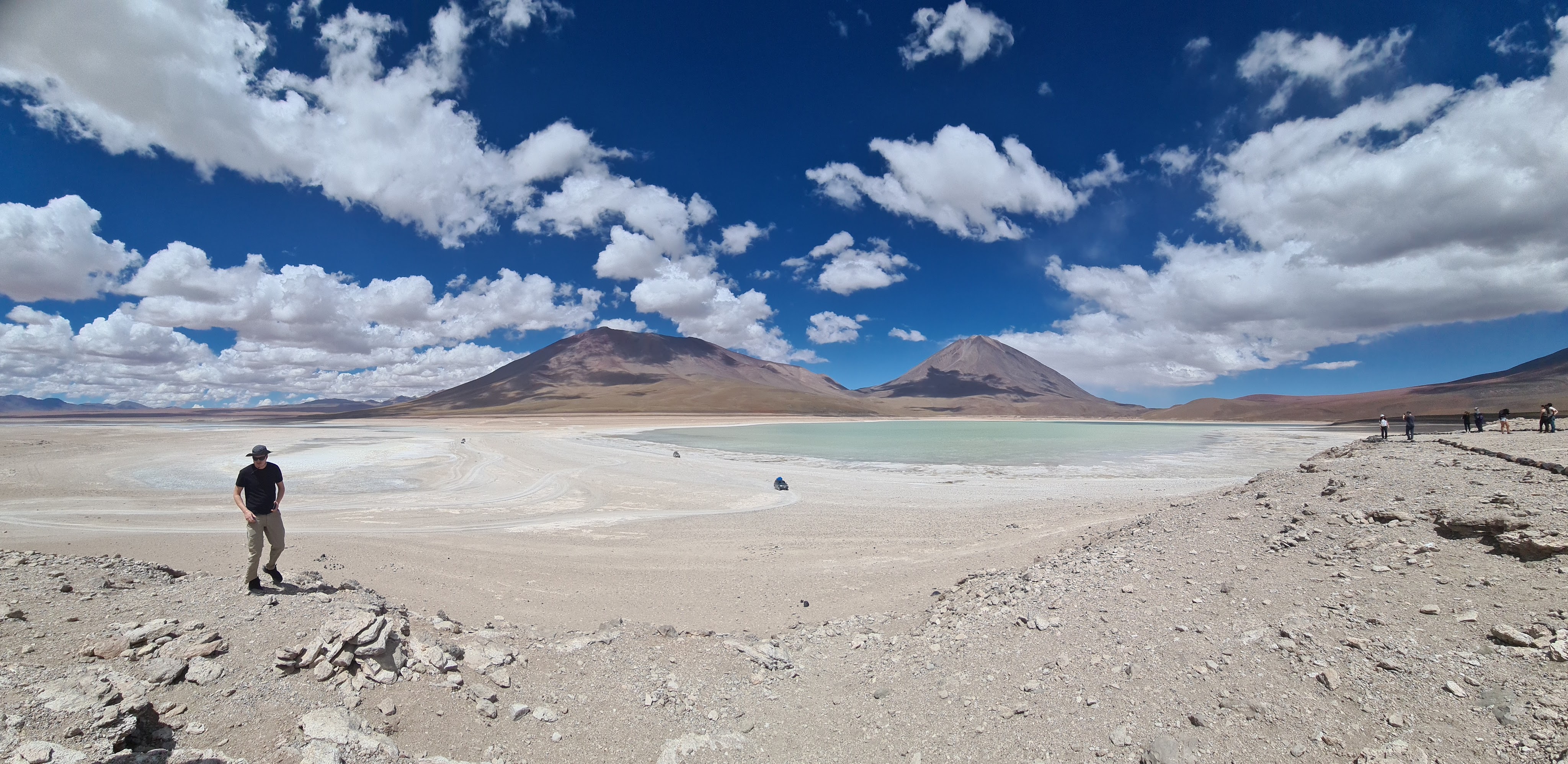

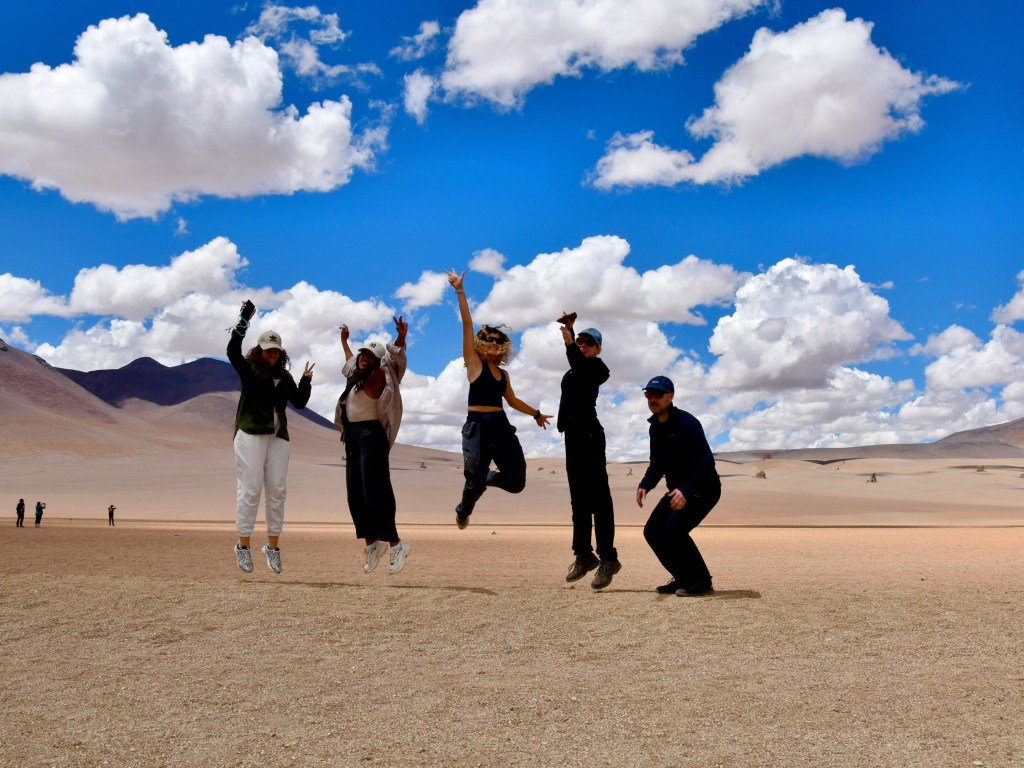
Next up was a brief stop in the Salvador Dali desert, a large plateau and one of the only true deserts of the tour. Despite the name, Salvador Dali is not known to have ever been there, but the scenery is reminiscent of his surrealist paintings – no melting clocks or lobster telephones though.
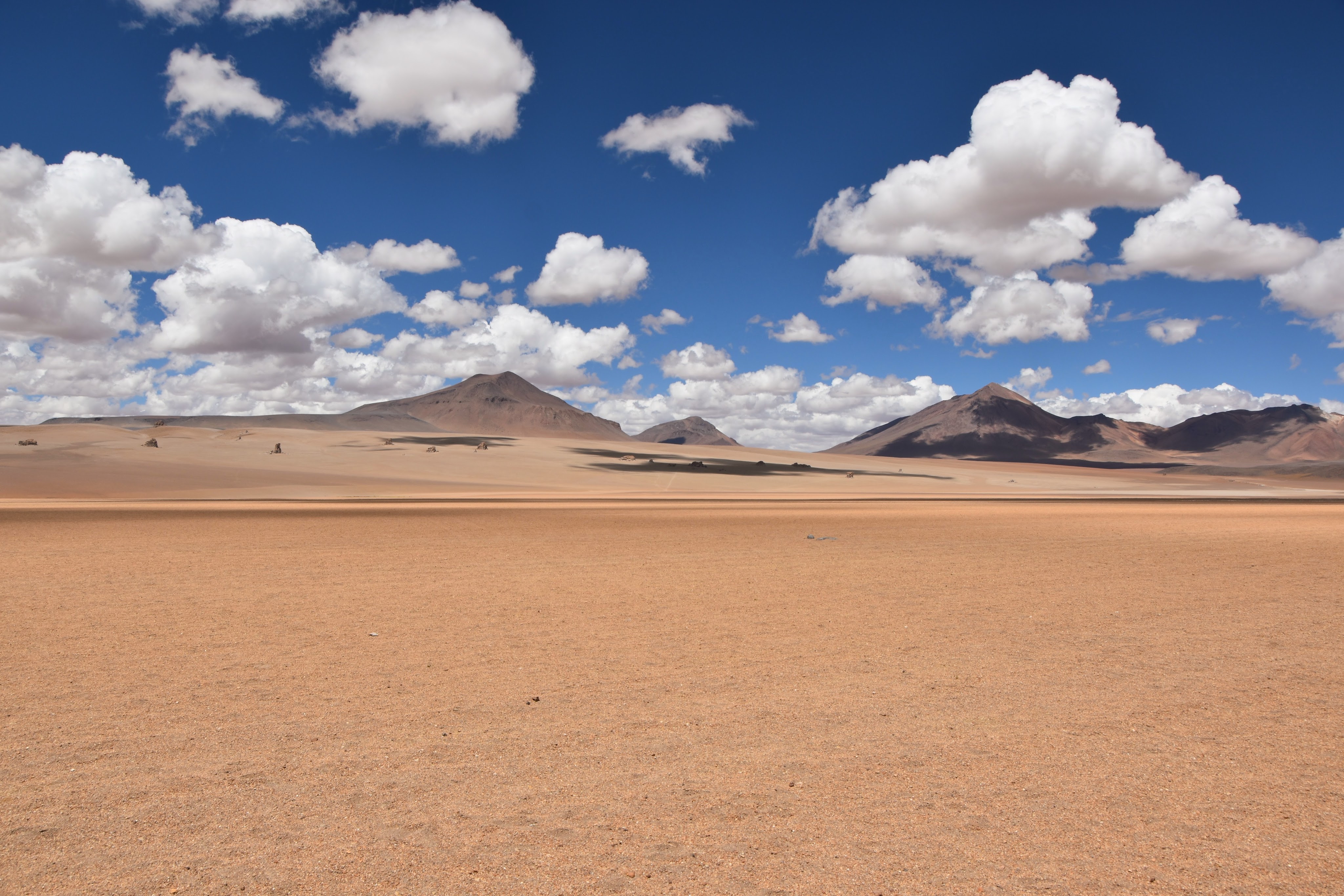
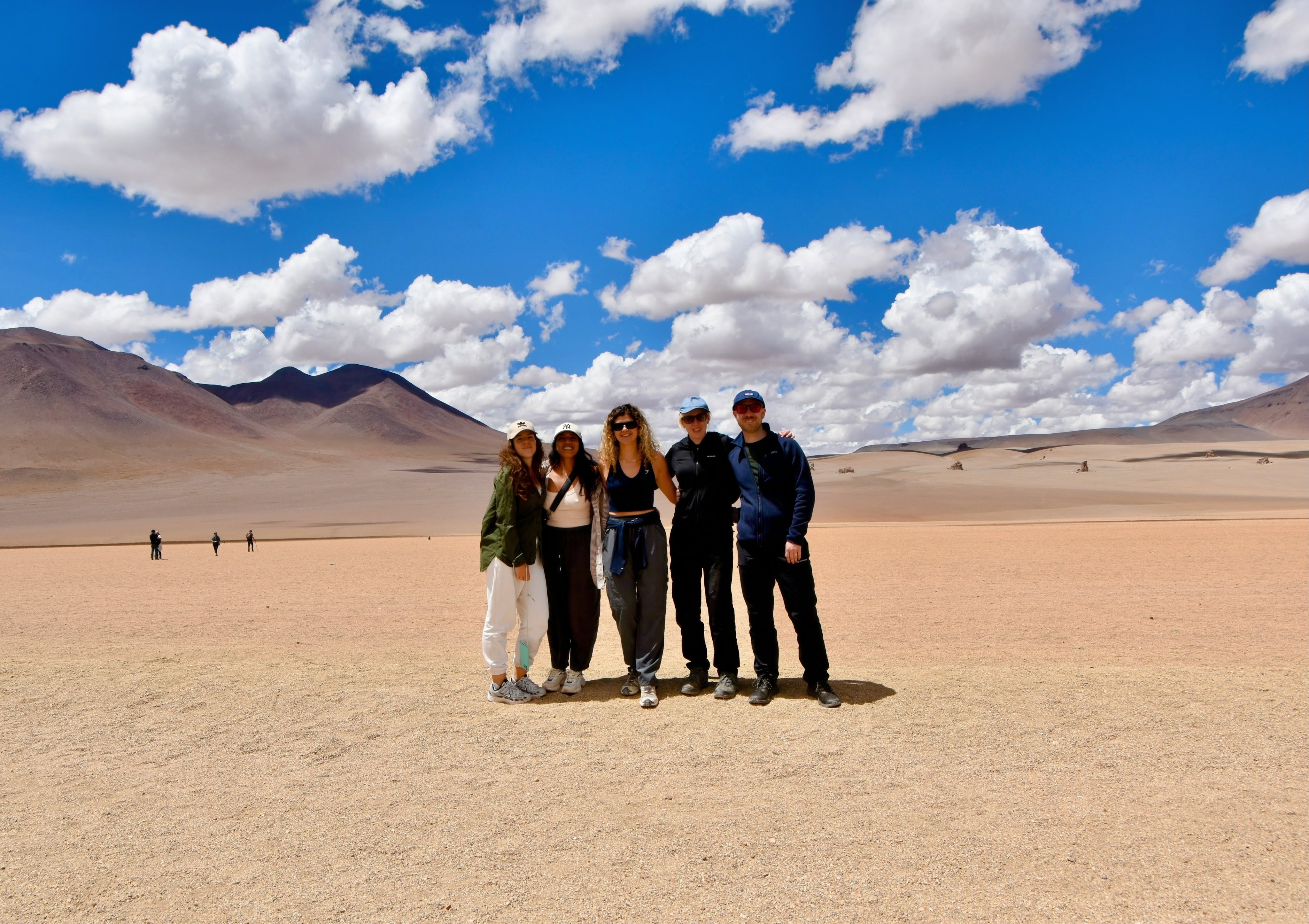
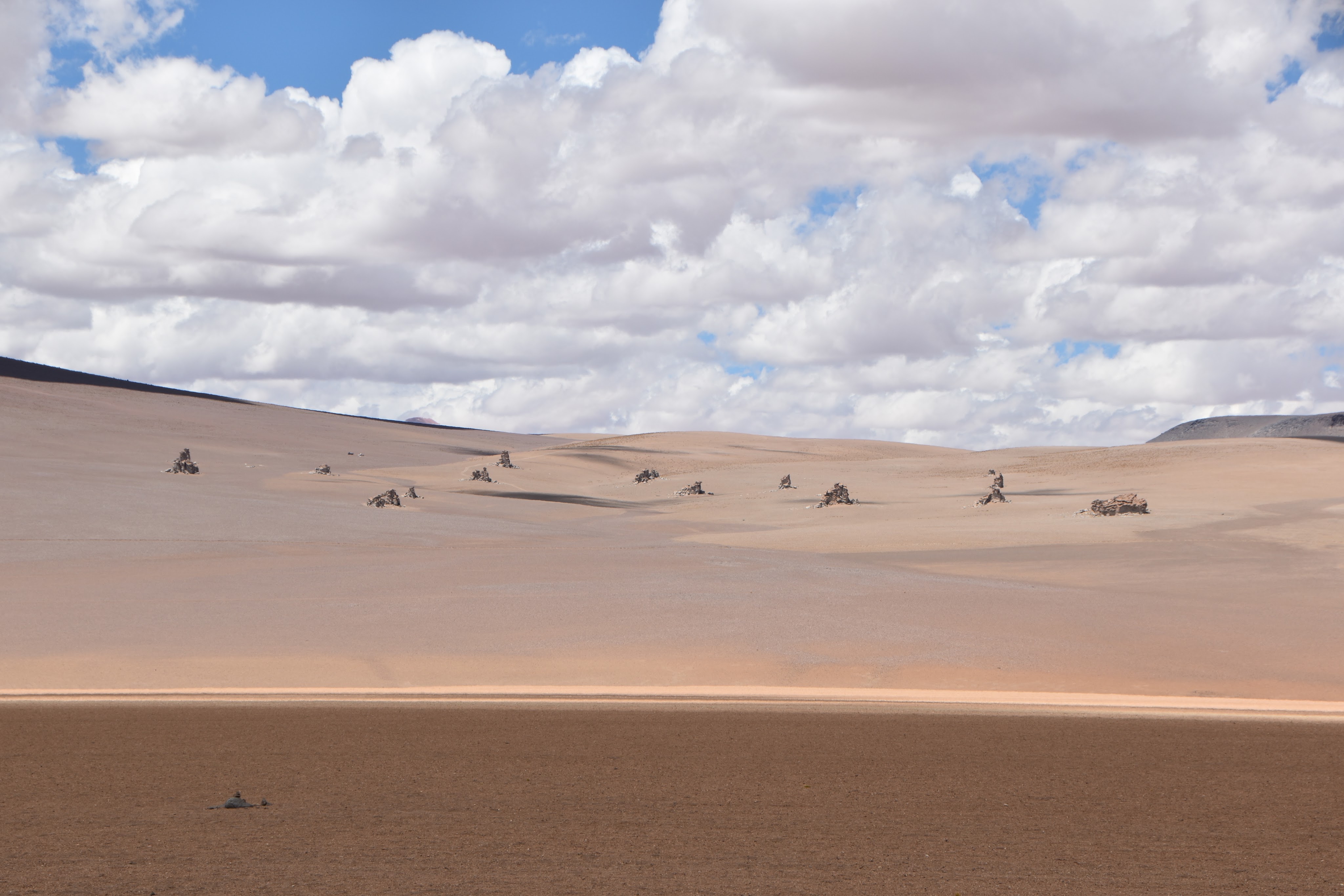
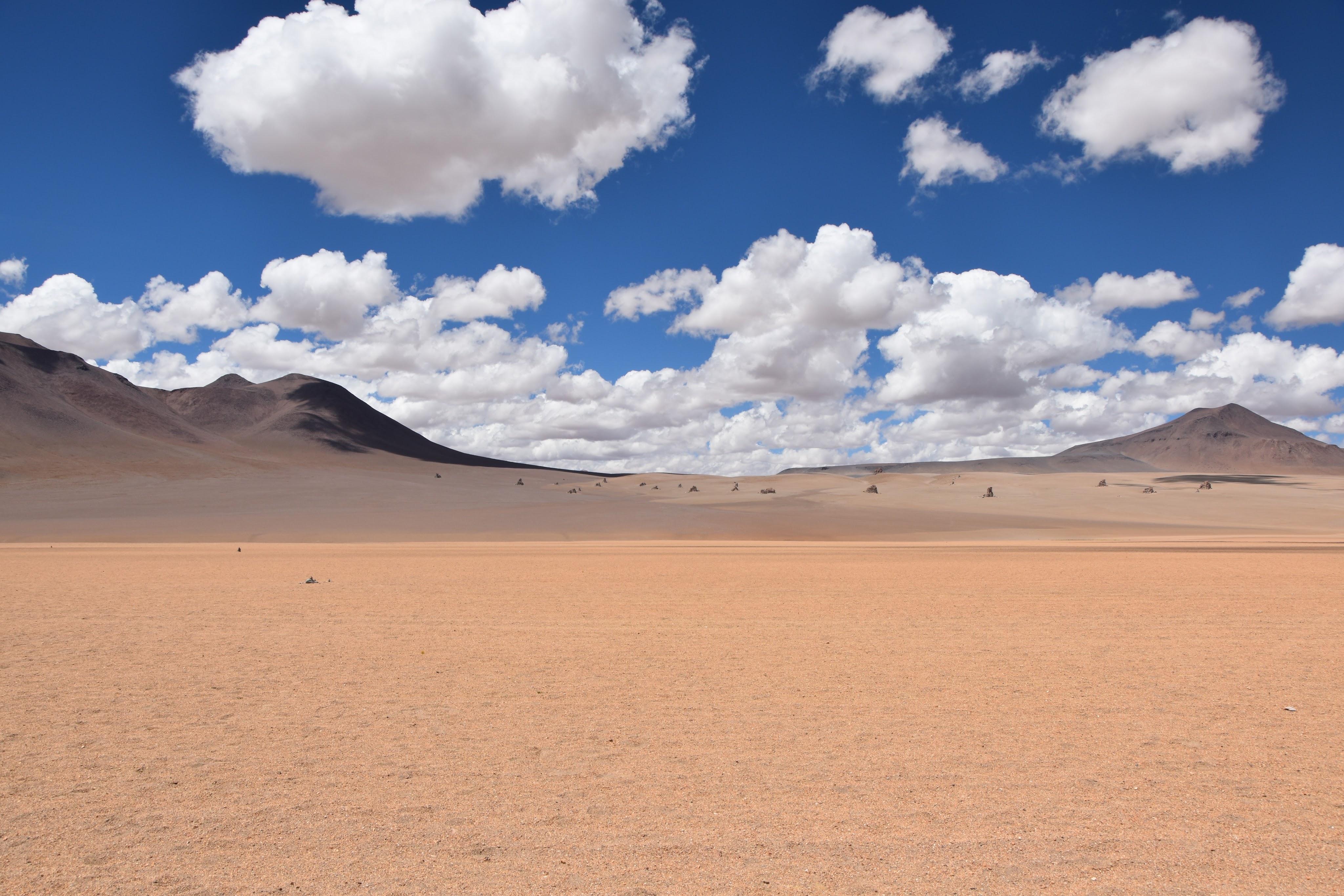
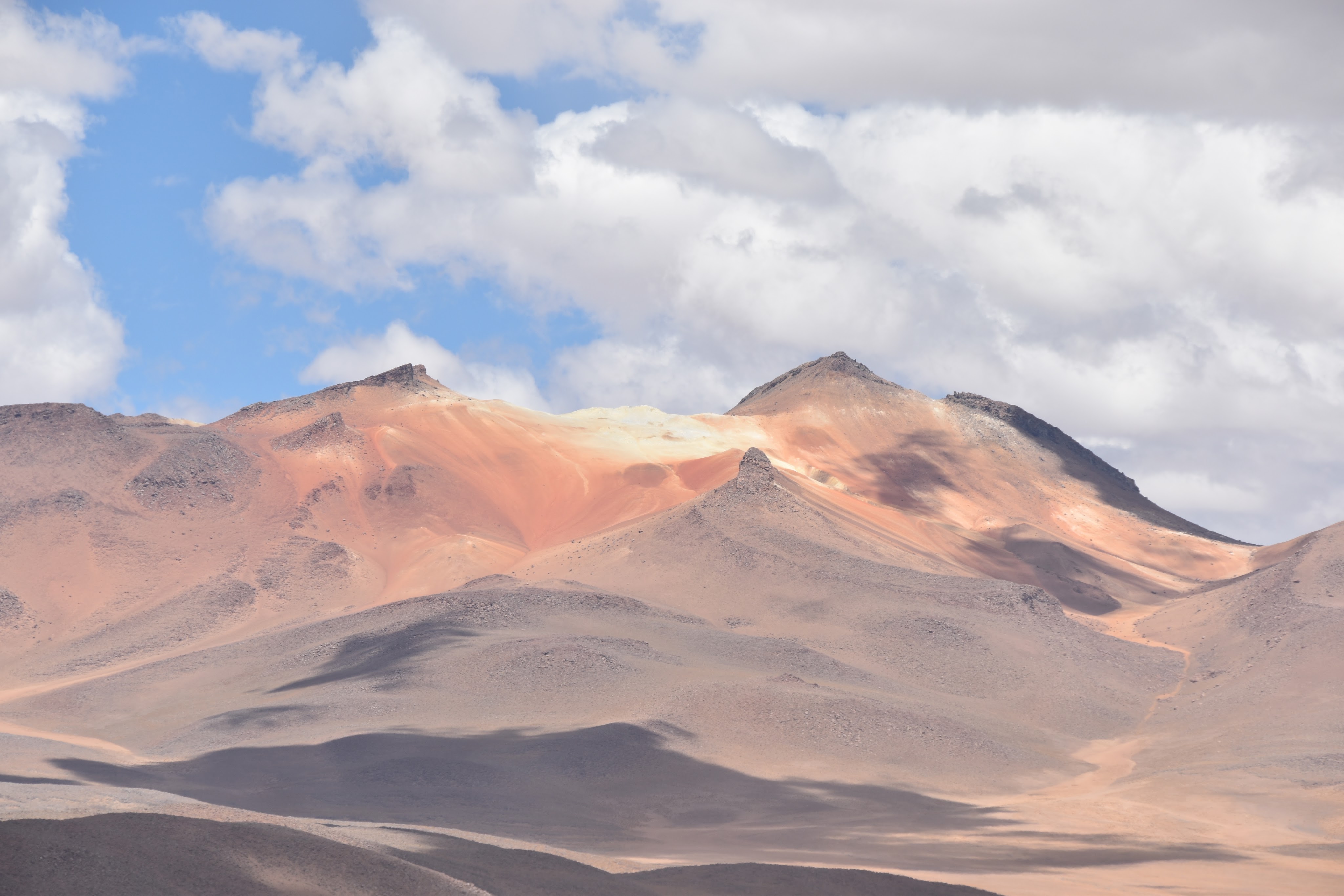
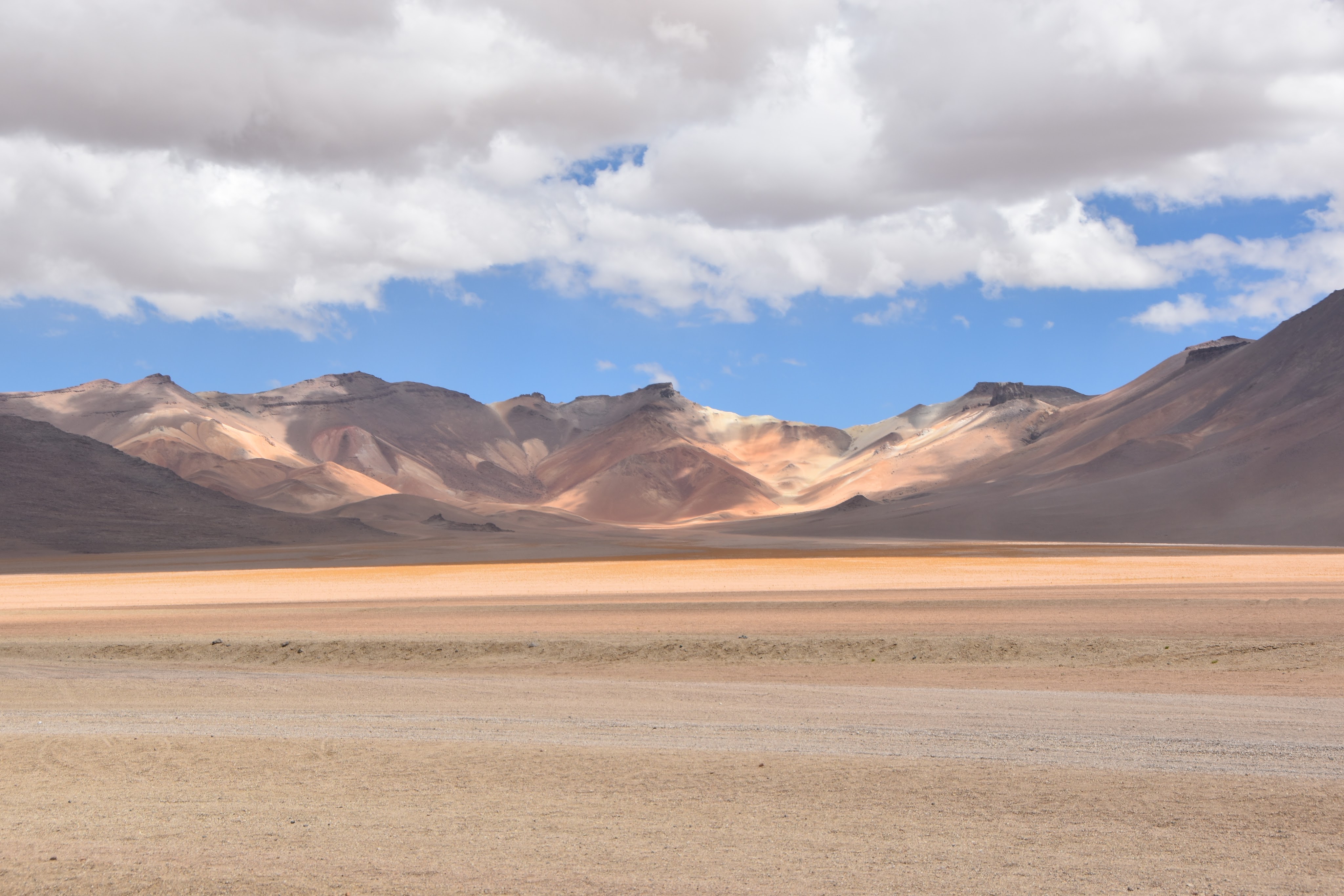
Even the way the clouds hung in the sky felt otherworldly. This was where Isidro tried to direct us through some jumping photos. Clearly a group mindset hadn’t yet sunk in and we couldn’t quite get our timings right!
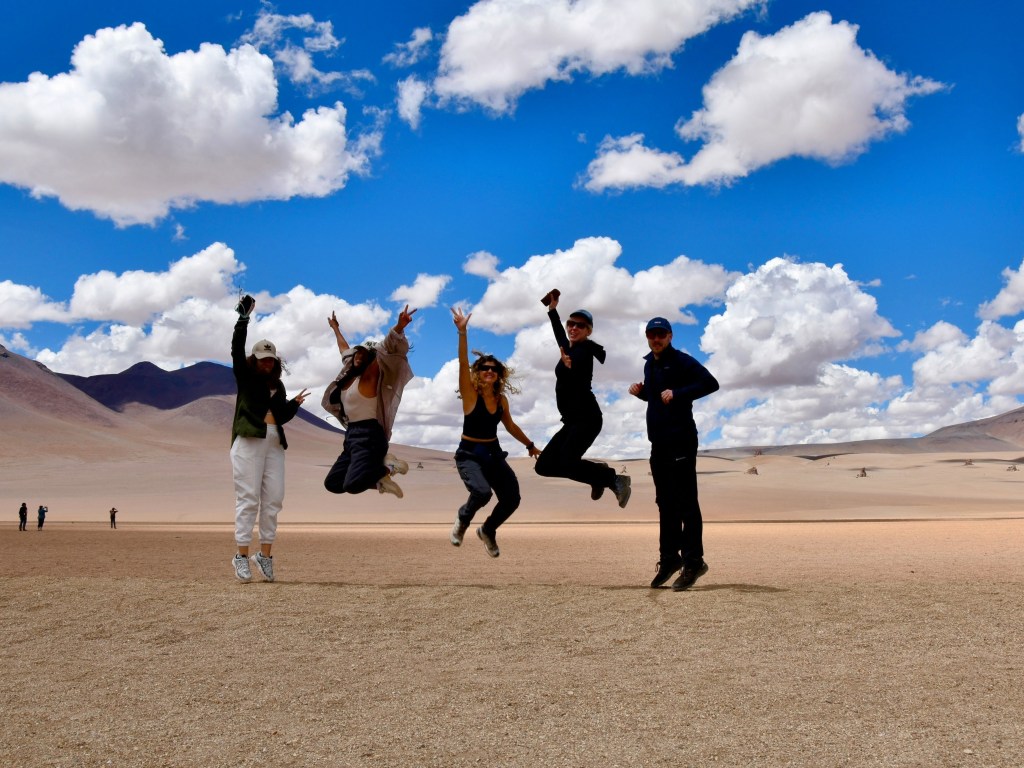


I think it was soon after leaving the Dali desert that we passed one of the other many jeeps completely flipped upside down, and front end crushed into the dust. The occupants stood at the side of the road, no doubt even more shocked than we were, looking miraculously and thankfully unharmed. We never got the full story of what occurred, but already hours from civilization, it was an early, sobering reminder of what can go wrong. There was a definite hush in the car for a while after.
The next stop we were thankfully mindful of, as it required easy access to our swimgear, was the Polque hot springs. A chance to unwind in the naturally warmed thermal baths. Given the rather wet nature of this activity, I don’t have any photos from the day itself, only this one taken on the return journey back to San Pedro at dawn.

We couldn’t unwind too much though as it was only a short stop before we needed to be at our table for lunch. From there, we headed to Sol de la Mañana Geyser field (or “geezers” as our whole group kept calling them). Bubbling mud pools and steaming ejections, it was a chance to watch the earth at its most active.
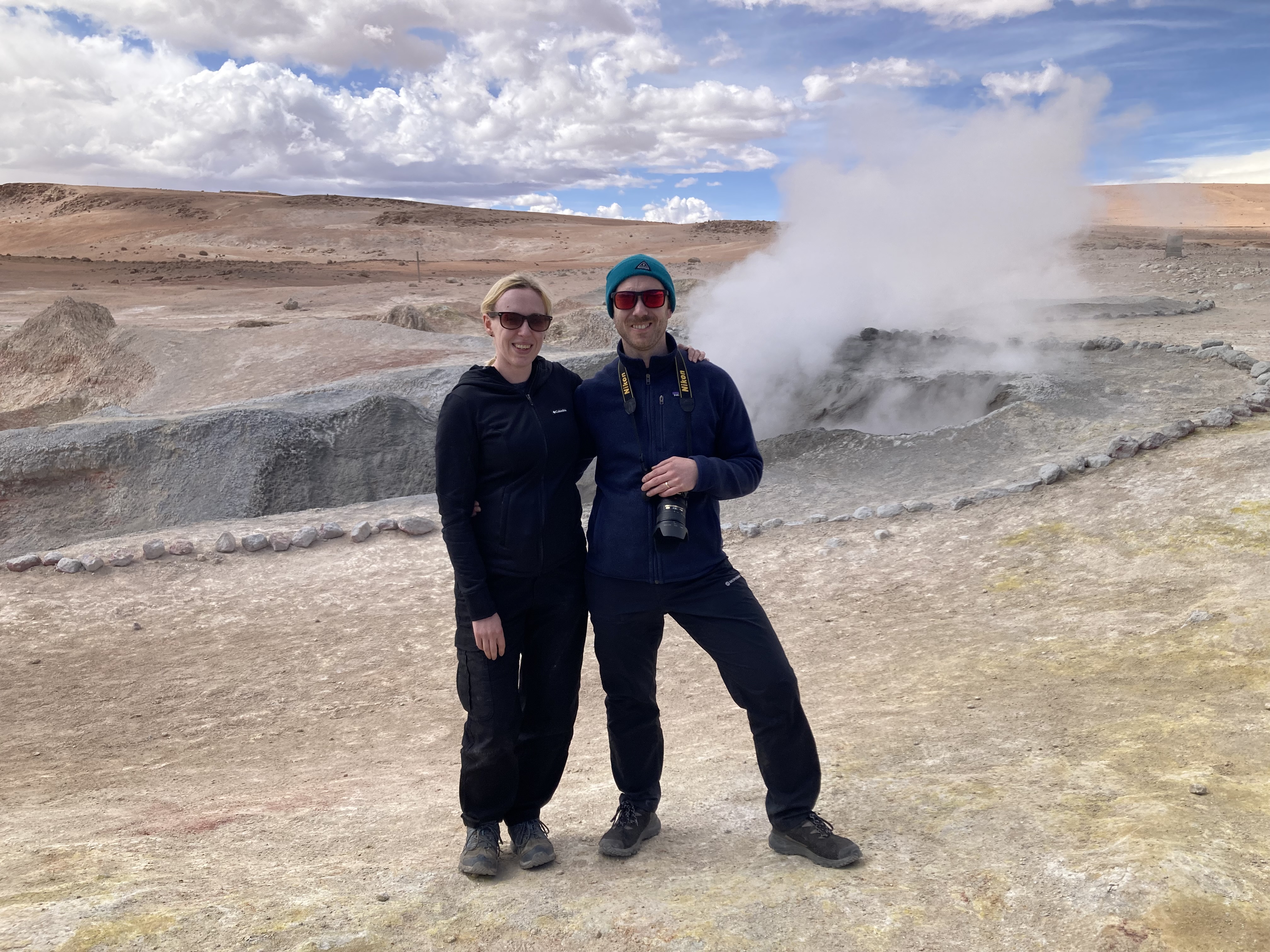
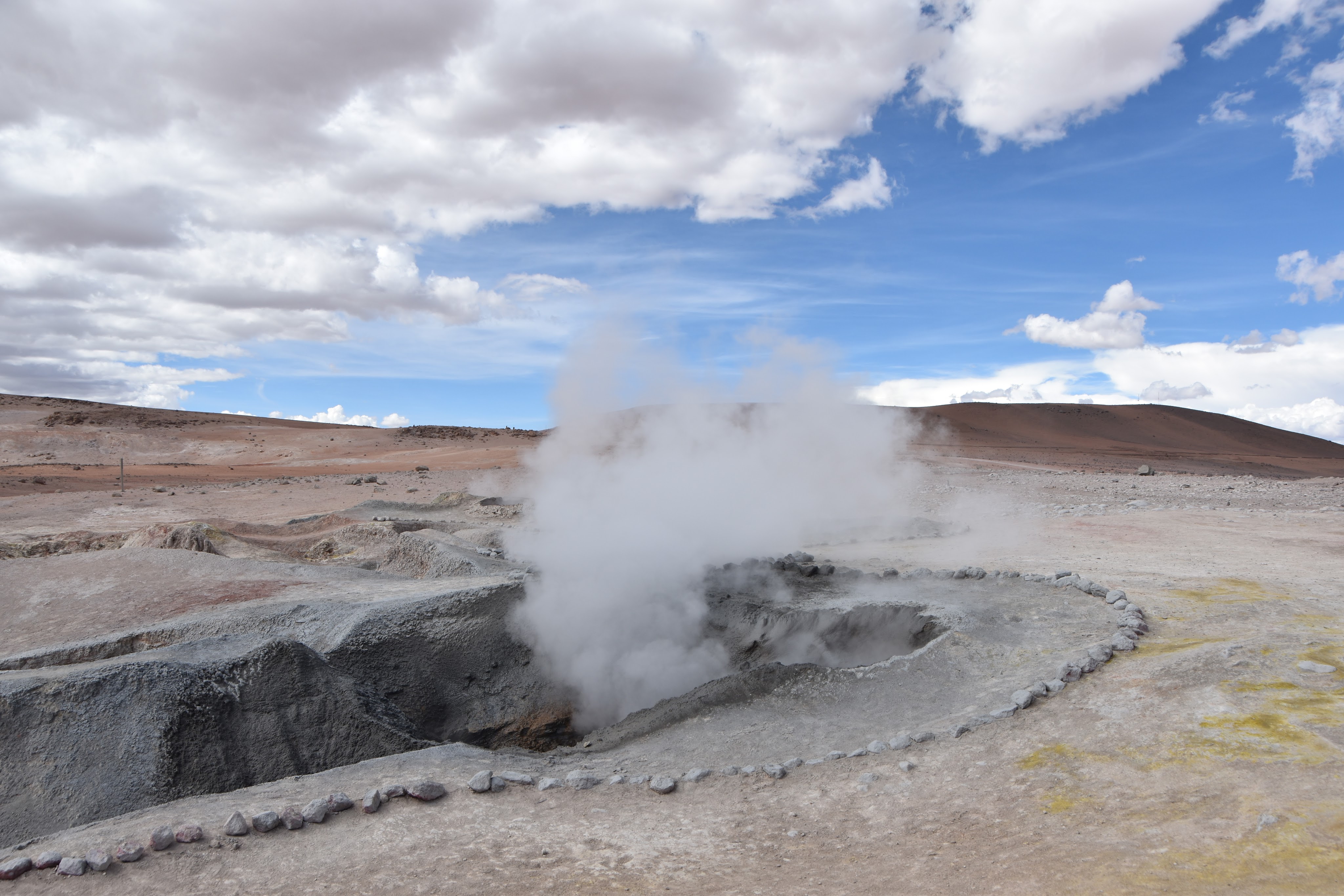

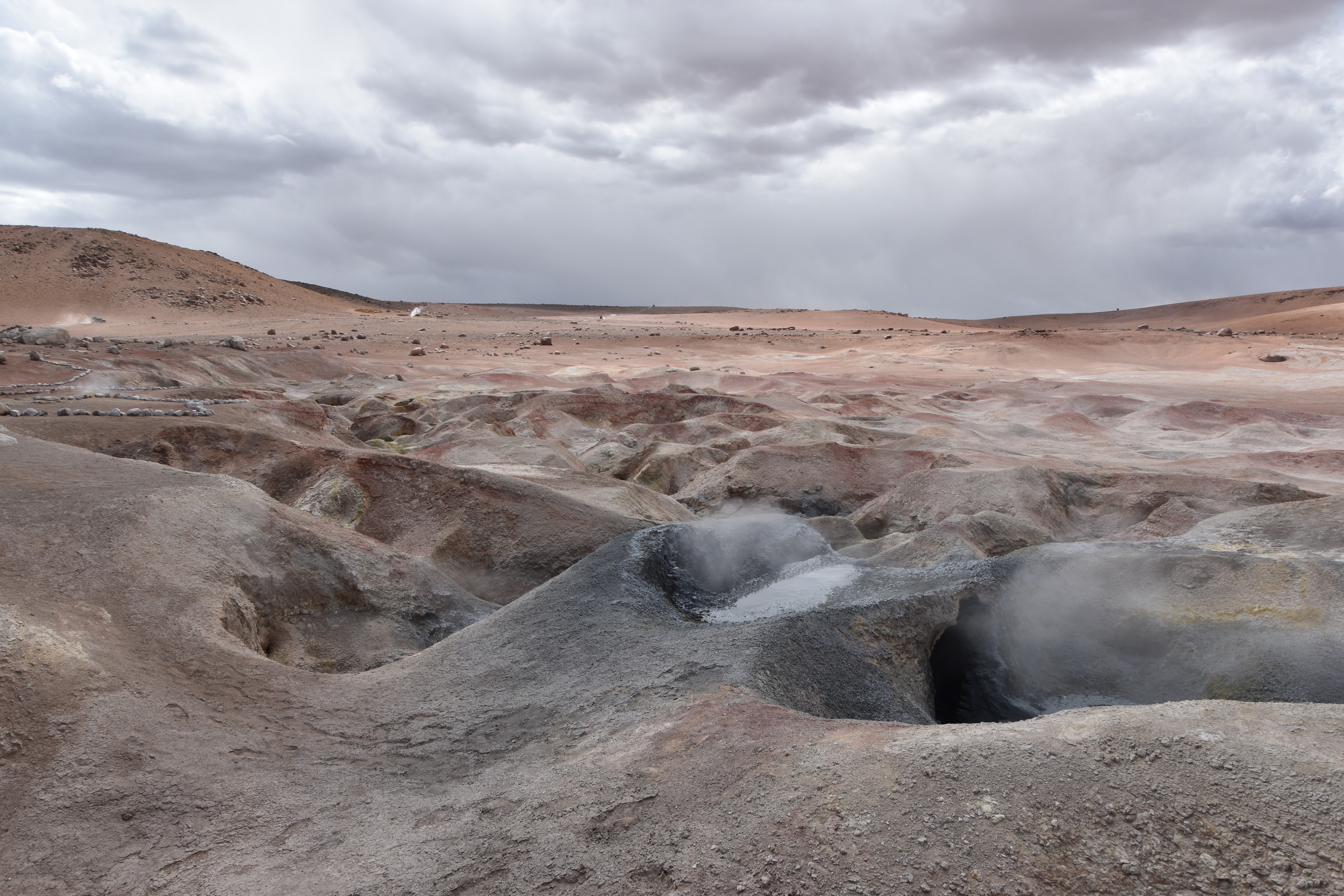
We had been warned by Isidro this would be the highest altitude the tour would reach, at 4,900m above sea level. Combined with the quick pace of the climb over the course of the day, this would make day one the most likely day we would encounter altitude sickness. I’d been feeling a bit peaky since the quick exit from the thermal pools, and hoped this would mean the worst was almost already over.
Unfortunately for me it would get worse before it got better. I think our whole jeep (except Isidro of course) felt the altitude in various ways over the tour. Ricki had been feeling breathless at the border and would feel light headed and woozy the next morning, at least until an incident we’ll come to later jolted his senses.
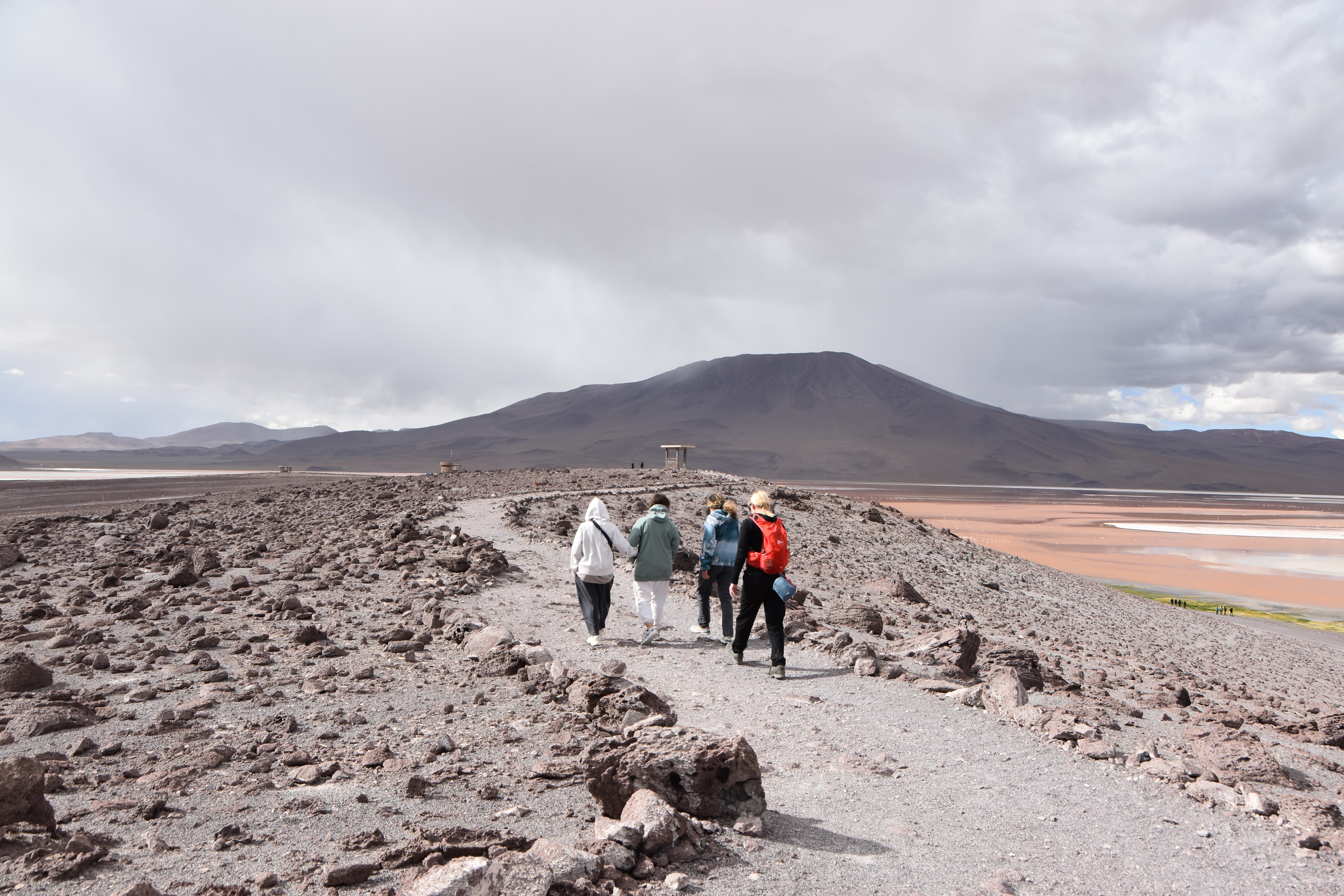
As we came to the Red Lagoon, I was feeling more out of sorts. A fifteen minute walk over a hilled gravel path might as well have been a marathon for us all. It’s amazing how much more quickly you fatigue at altitude! There was a cafe at the other end of the ridge, and we trudged on, lured by the promise of caffeine.
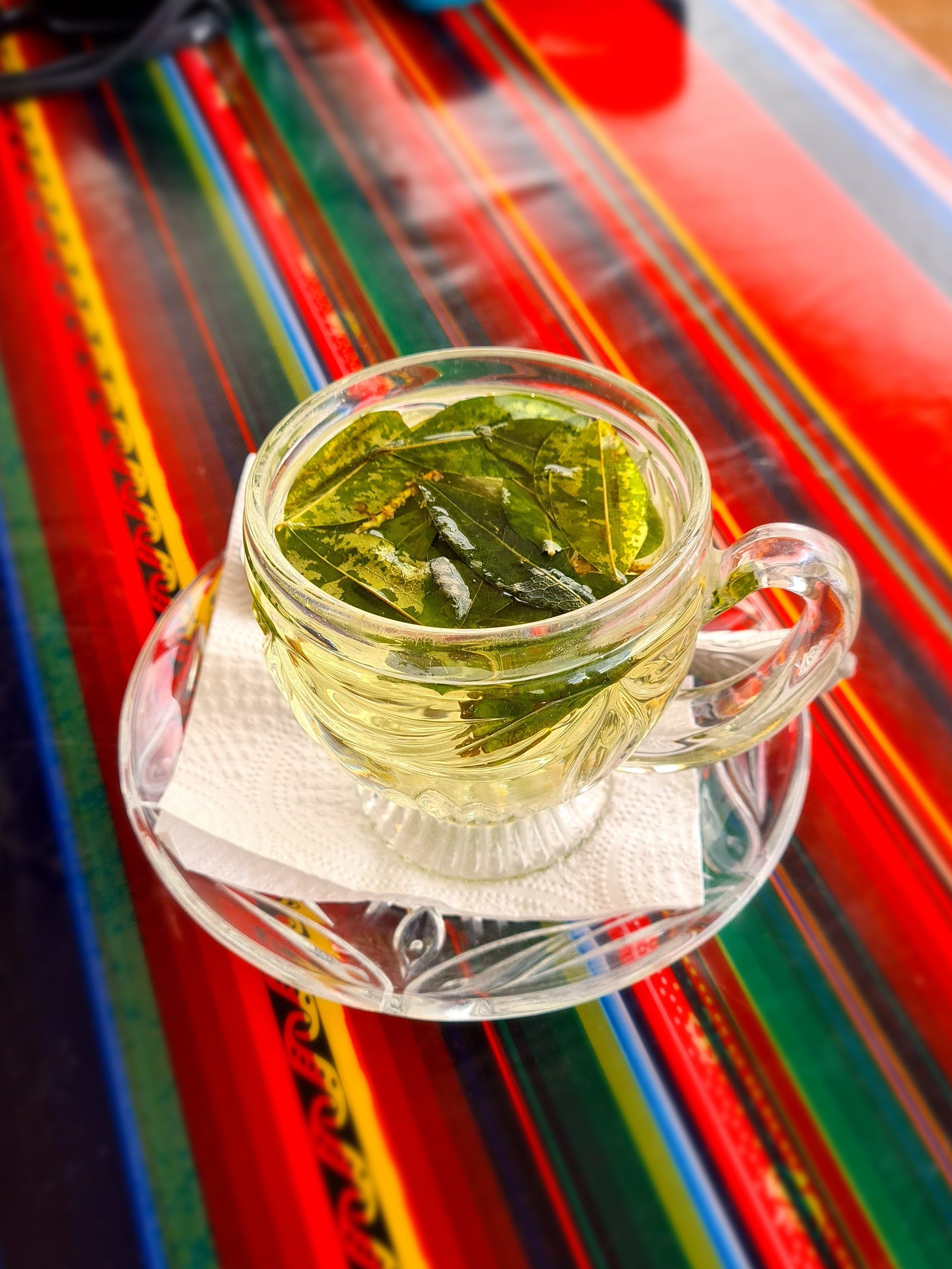
Lots of sources will tell you that the best cure for altitude sickness is the bitter coca leaves which the locals chew on, so Ricki and I were also keen to try some coca tea.
Somehow I continued to flag, and by the time we left the cafe, I felt like I was in the middle of the world’s most unjust hangover.
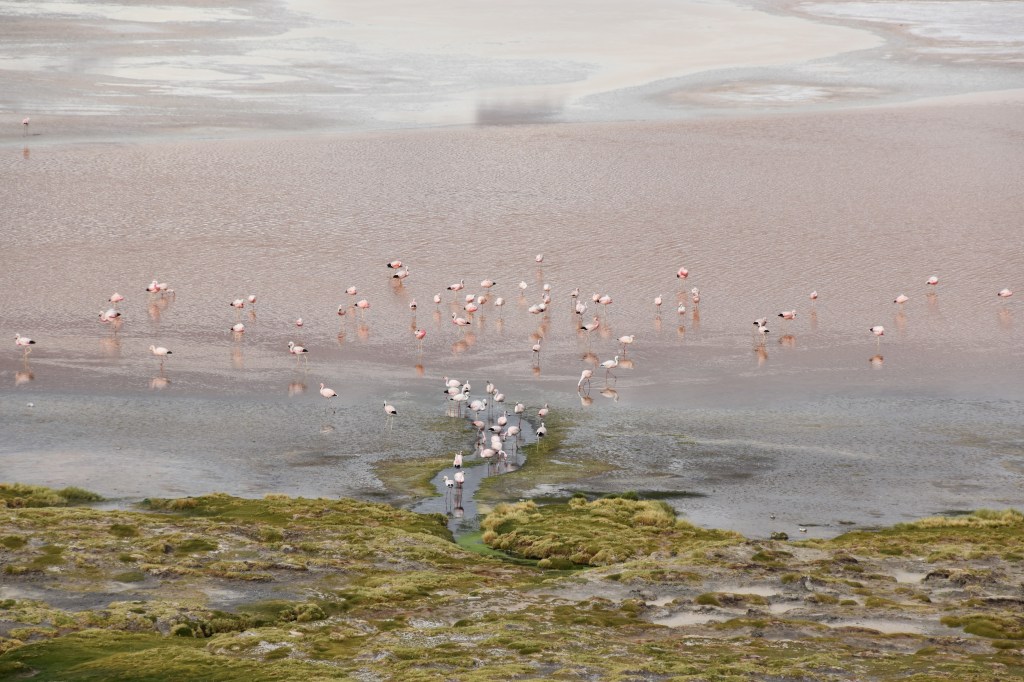
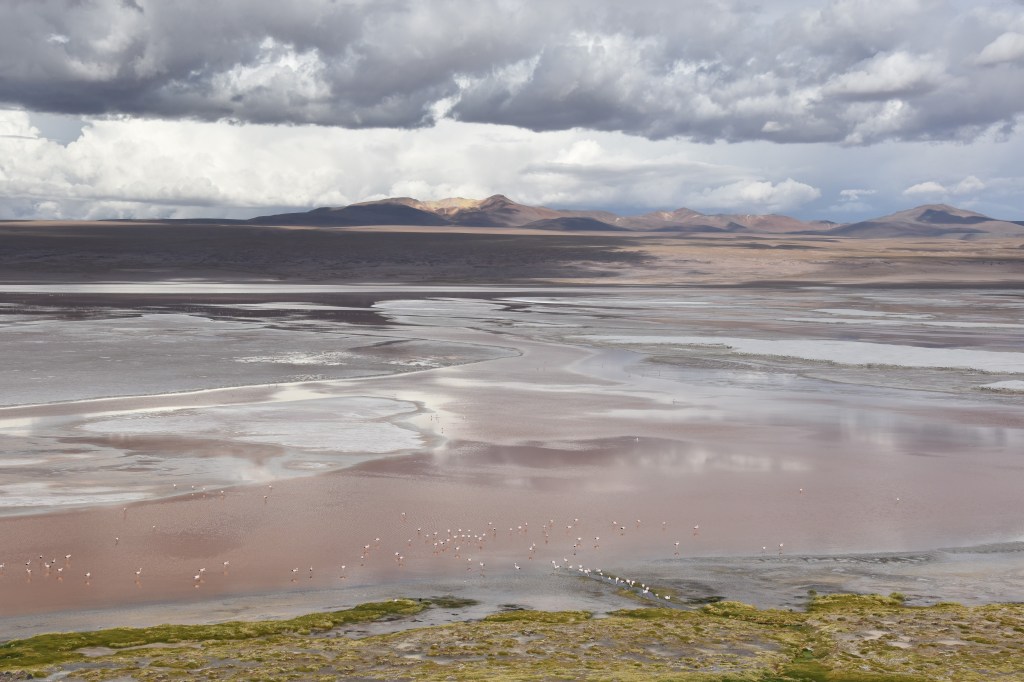
Luckily there was a distraction to keep my mind off it – flamingos. Lots and lots of flamingos. According to my online checking, a “flamboyance” of flamingos! It was amazing to see three different species all flocked together on the water’s edge and observe them taking off and landing.
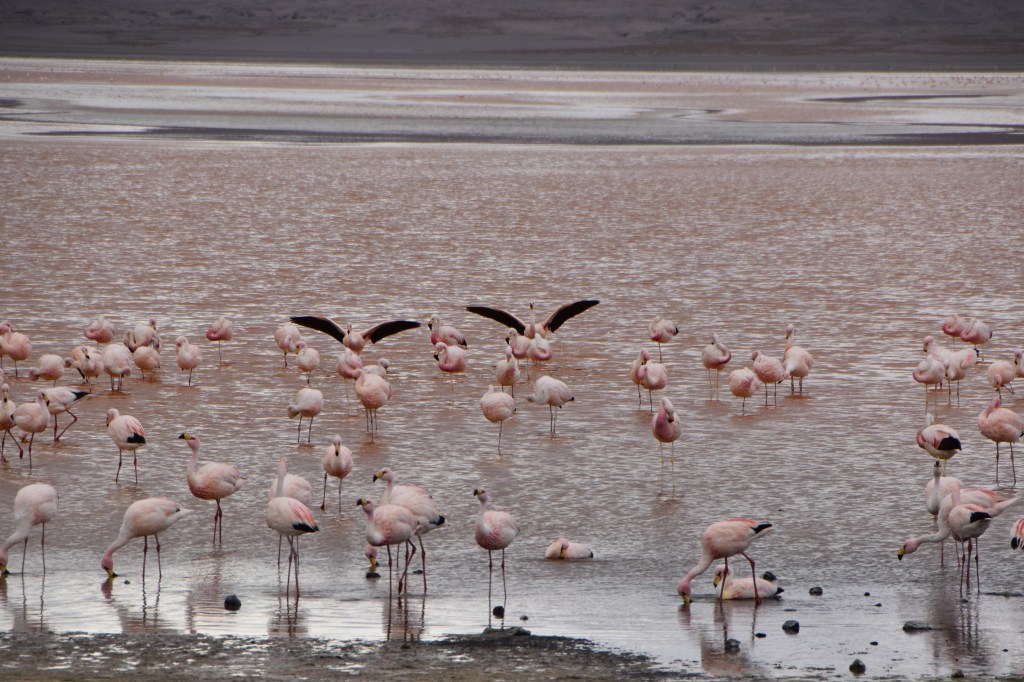
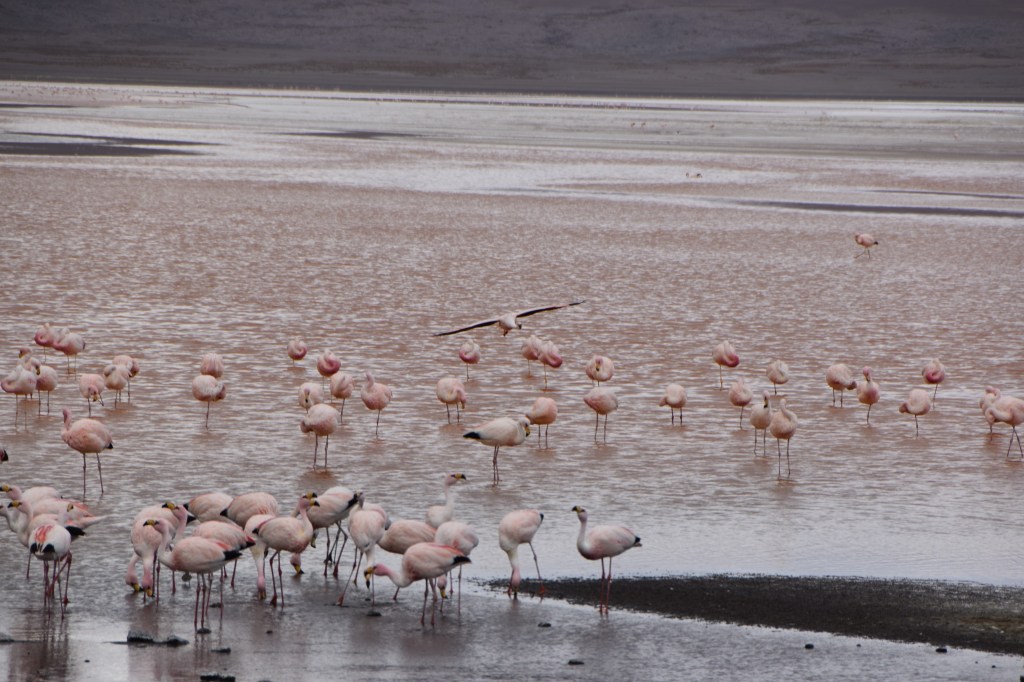
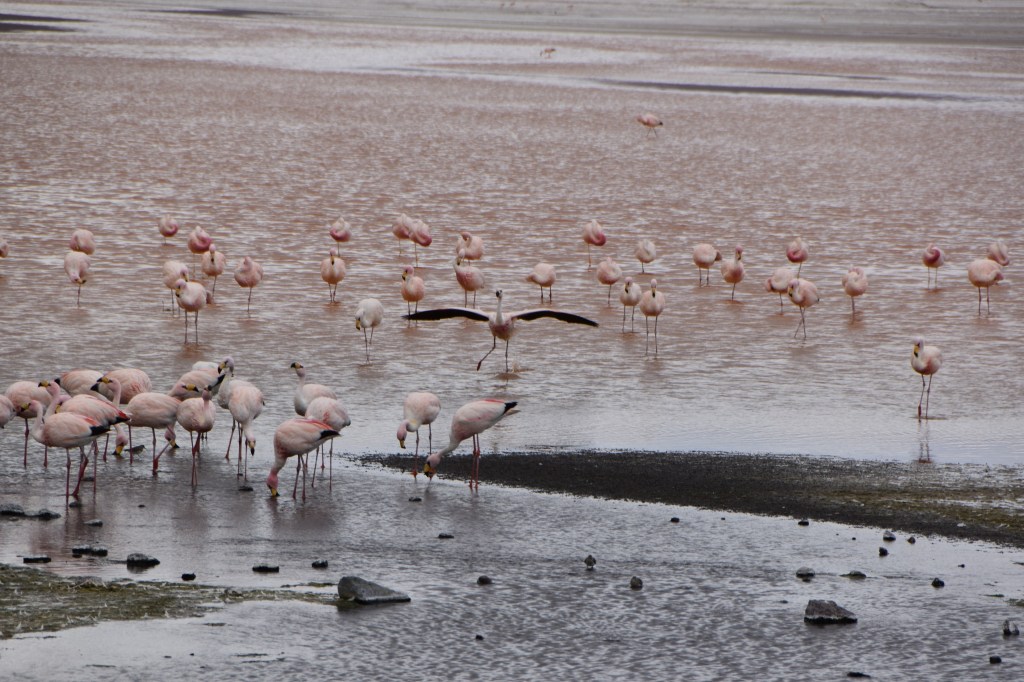
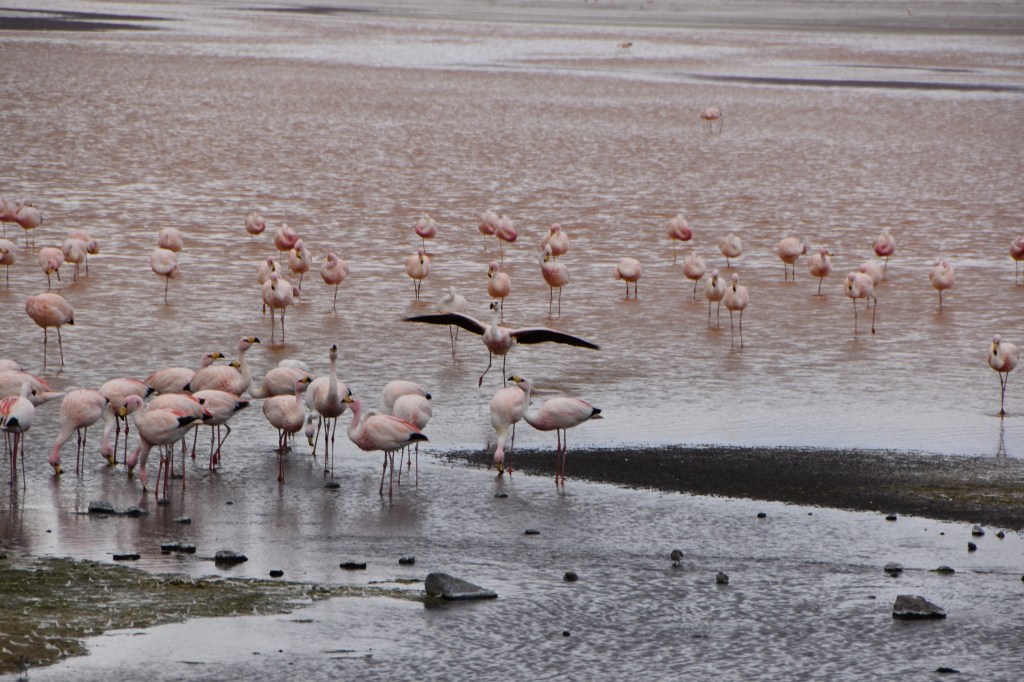
I watched as long as I could before admitting defeat and heading back to the car to request an anti-nausea pill from Isidro.
After a short doze, the remedies all started to kick in and I was able to enjoy the drive again. As Ricki remarked, the sight of the jeeps speeding across the sandy plains was reminiscent of a scene from Mad Max.
We marvelled at how Isidro and the other drivers navigated for hours without Satnav, road signs or even roads for that matter. Oncoming traffic was as rare as water features in the desert. Meanwhile, forked lightning was appearing on the horizon, confirming there was never a dull moment in the Bolivian altiplano.
Eventually we pulled into a small township and our basic digs for the night. If you feel tired after reading what was only day one of our trip, imagine how we felt living it! So we were relieved to be told we didn’t need to be up until 8am the next morning. Even better, when we had crossed the border into Bolivia, we had gained an extra hour in timezone difference – despite the fact we were further east than we were in Chile.
The time spent in the hotel felt a little like an episode of Fawlty Towers. Thankfully not due to any issue with the services (although the jerry rigged showers were a little alarming!) but the recurring presence of the presumed owner. Somehow this one single man checked us all in, served us dinner, cleaned up the tables, and next morning appeared as the cashier at the shop next door to sell us drinks and snacks.
After bidding farewell to the human whack-a-mole we were excited to see what day two held in store for us. As it turned out, the first stop would bring a little more excitement than was scheduled.
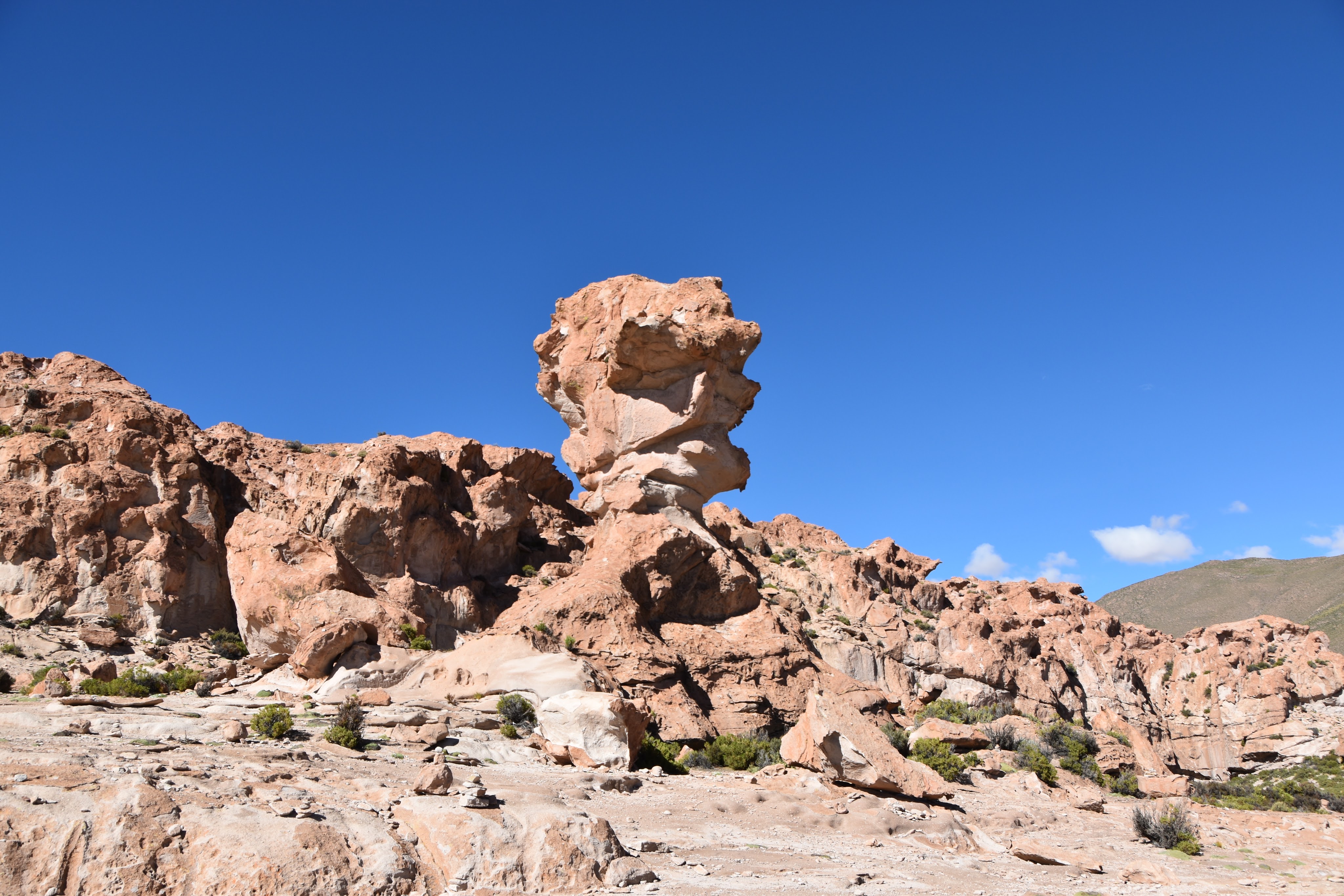
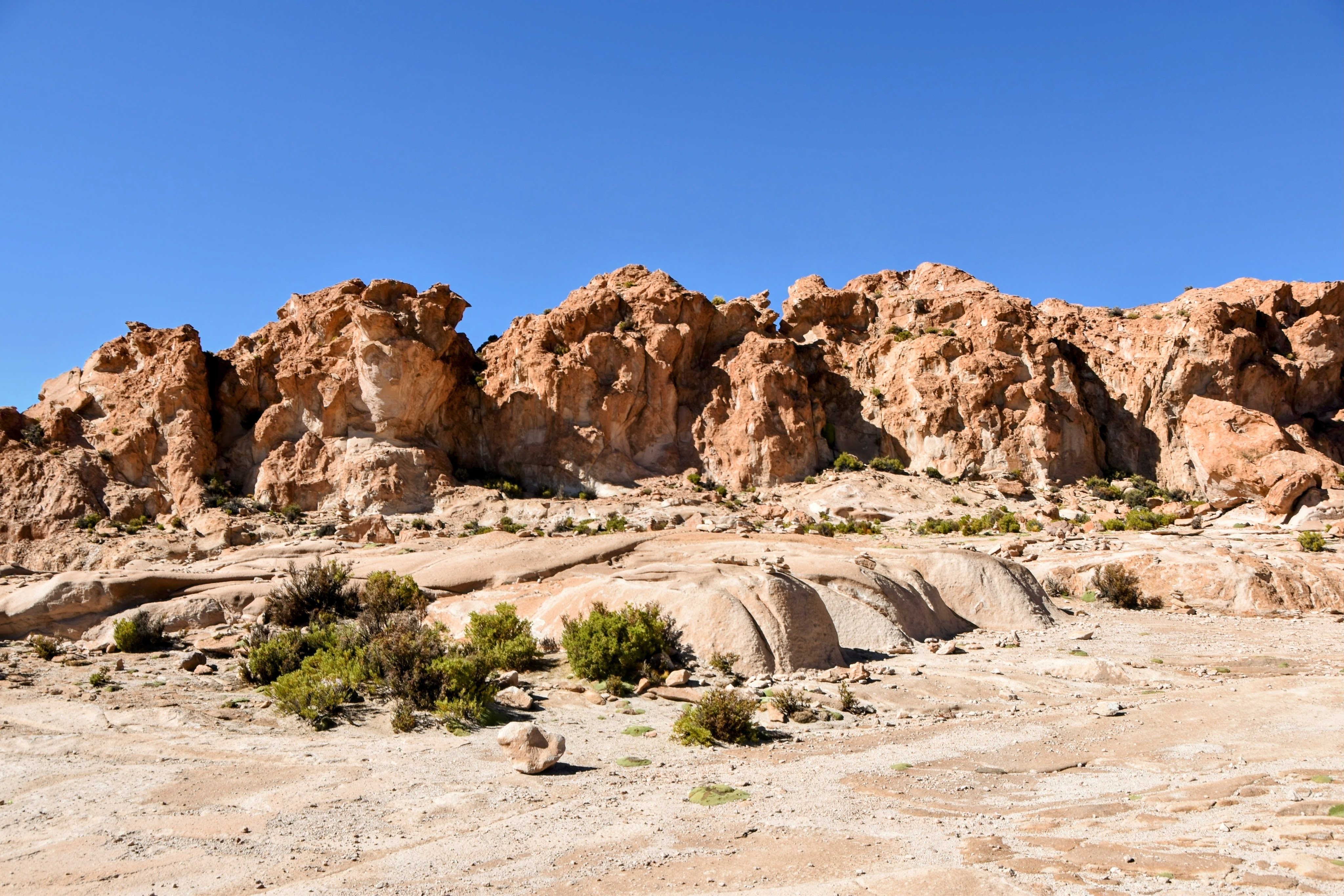
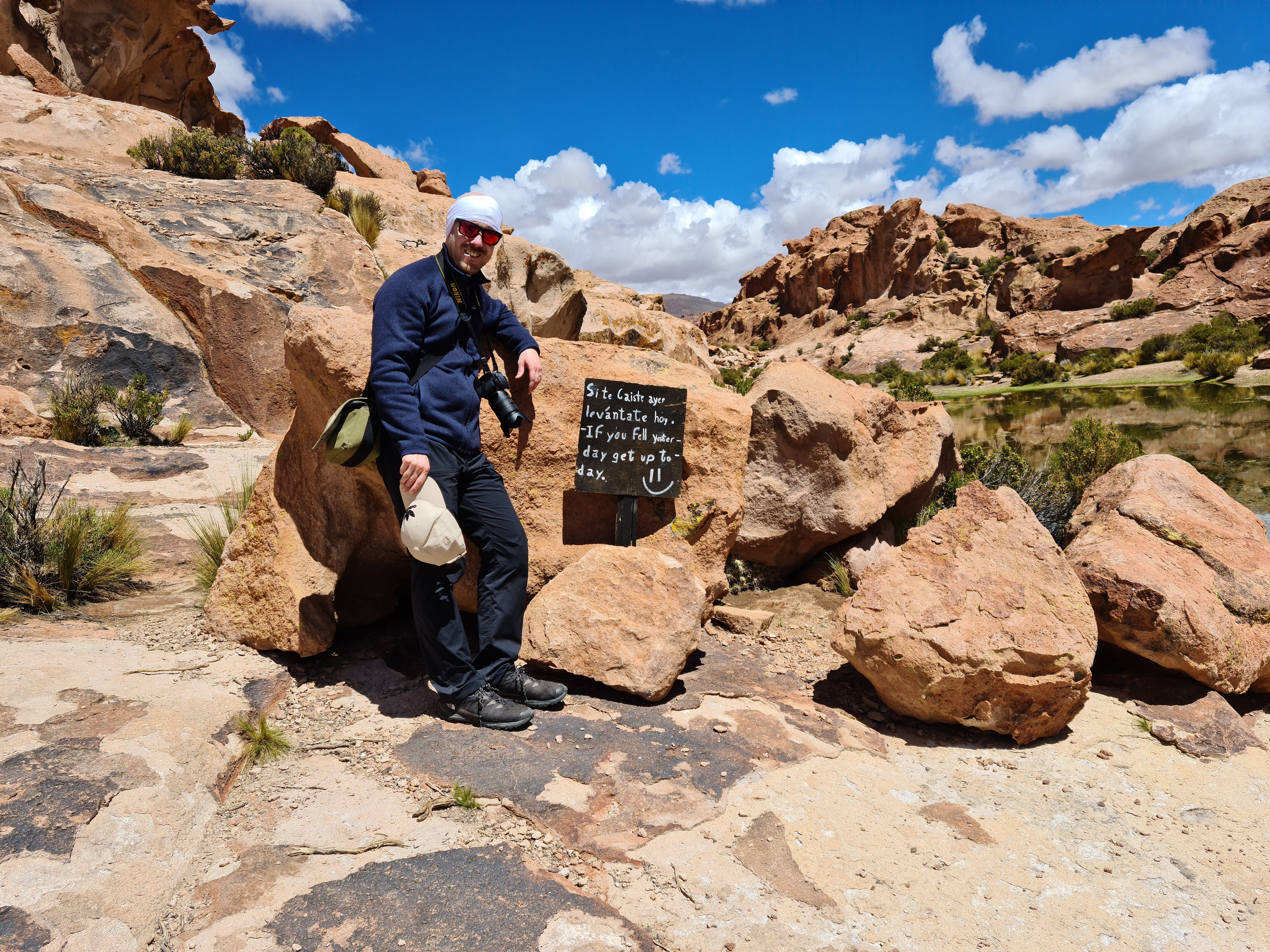
The Valley of the Rocks was very much what it said on the tin. A Mars-like expanse of red-tinged rocks, shaped and eroded by time into unusual configurations. Most notable of all being the “World Cup”, though I thought it looked more like Sam the Eagle…
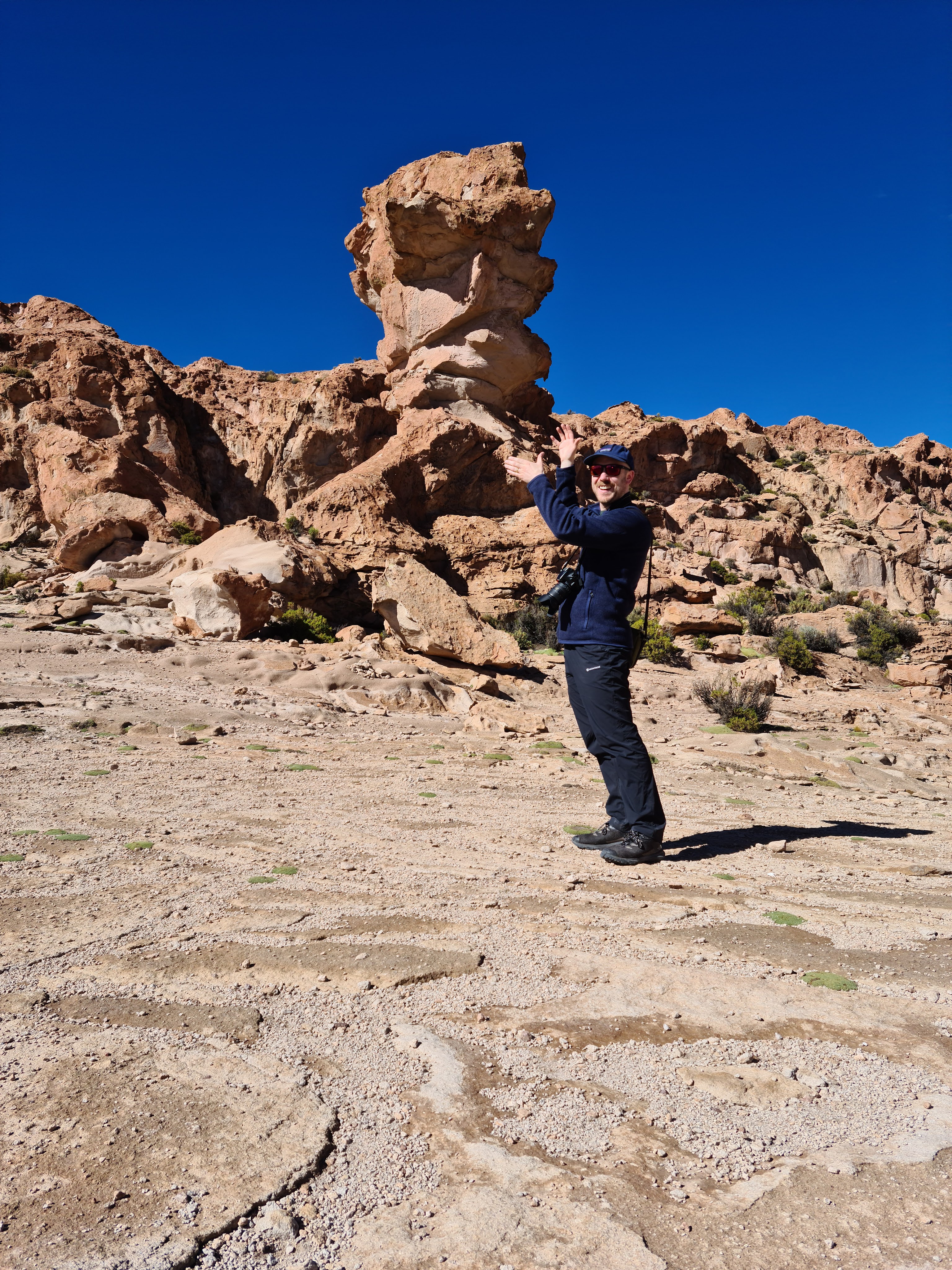
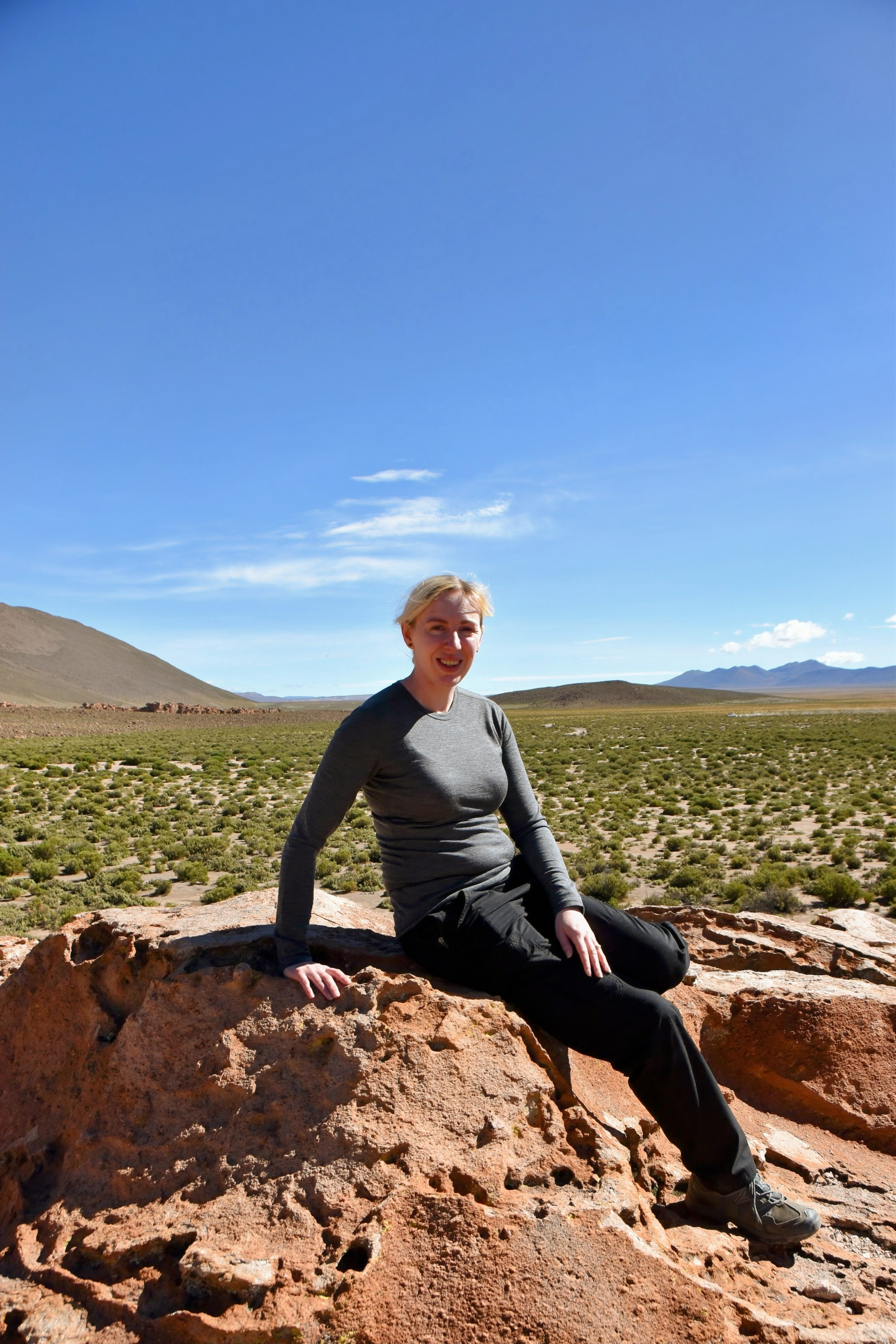

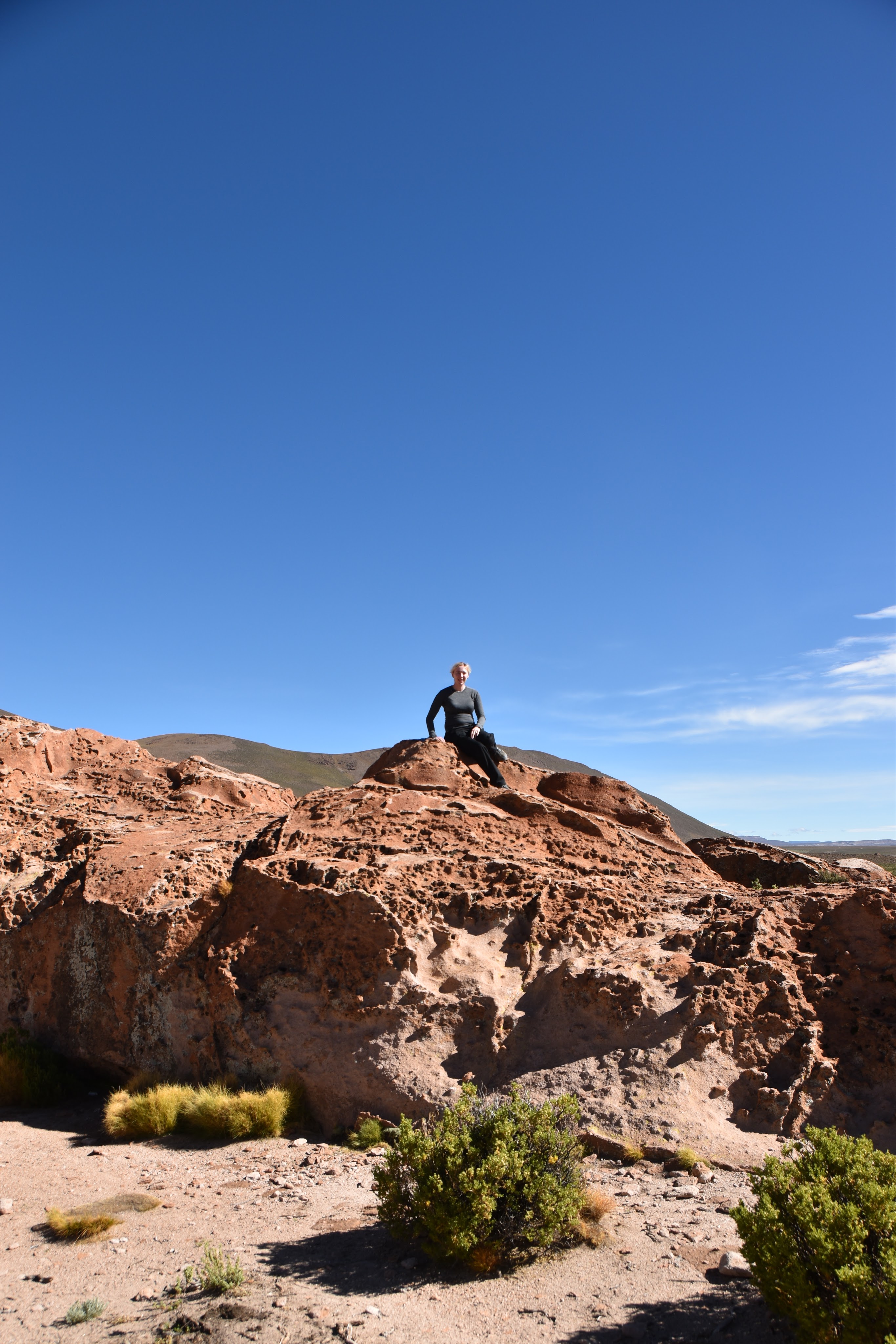
A little window like formation had also been pointed out to us, so we joined the queue to pose individually peeking through.
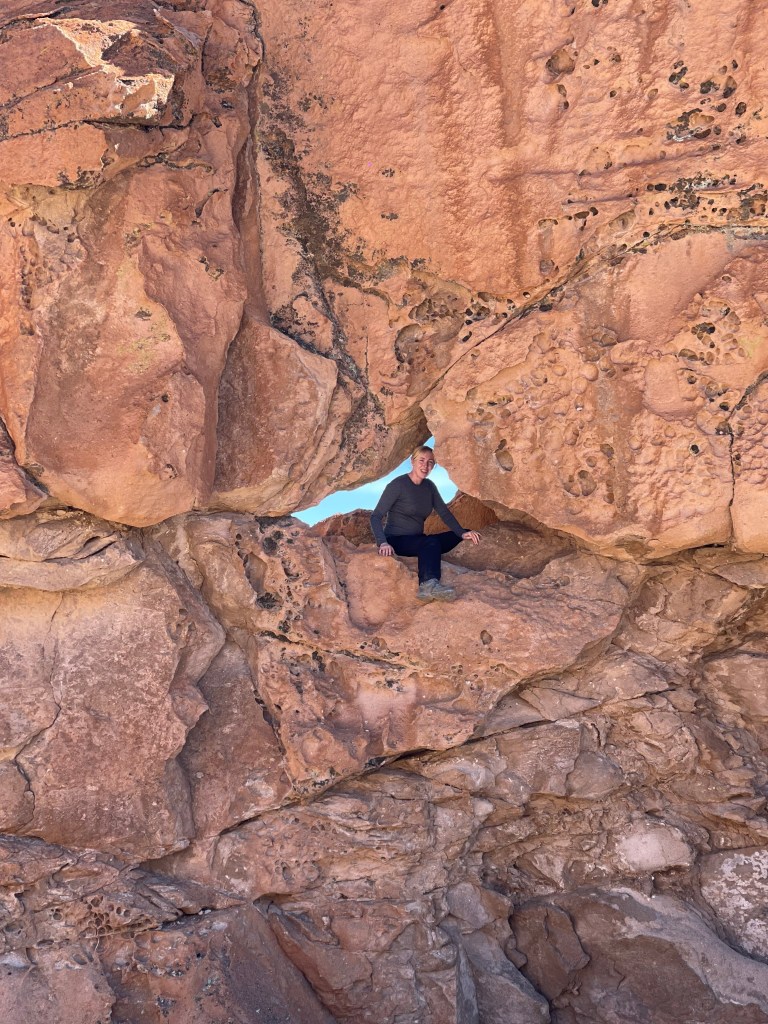

Photo credit – @ana_pricova
Mine done, with back to the rocks, I was heading back to the group when I heard Ana exclaim “S***! He’s bleeding!”. All I could think, already knowing it was futile, was “Please don’t let “him” be Ricki!”.
Of course he soon appeared, definitely Ricki, definitely bleeding. In hindsight, I don’t think I’ve ever seen so much blood in real life. It was gushing down his face from a gash on his head. Ricki explained he’d been looking so carefully at where he was putting his feet, he had completely forgotten to mind where he was putting his head, and caught the overhanging rock.
A small crowd gathered, and as we fussed around him, in true Ricki fashion he tried to explain it wasn’t that bad, he had just scratched himself. “The head always bleeds more”, and it would be “the altitude making it worse”. Catching sight of the wound and starting to apply pressure, I didn’t have the heart to say that even to my untrained eye, it looked like medical intervention was going to be needed.
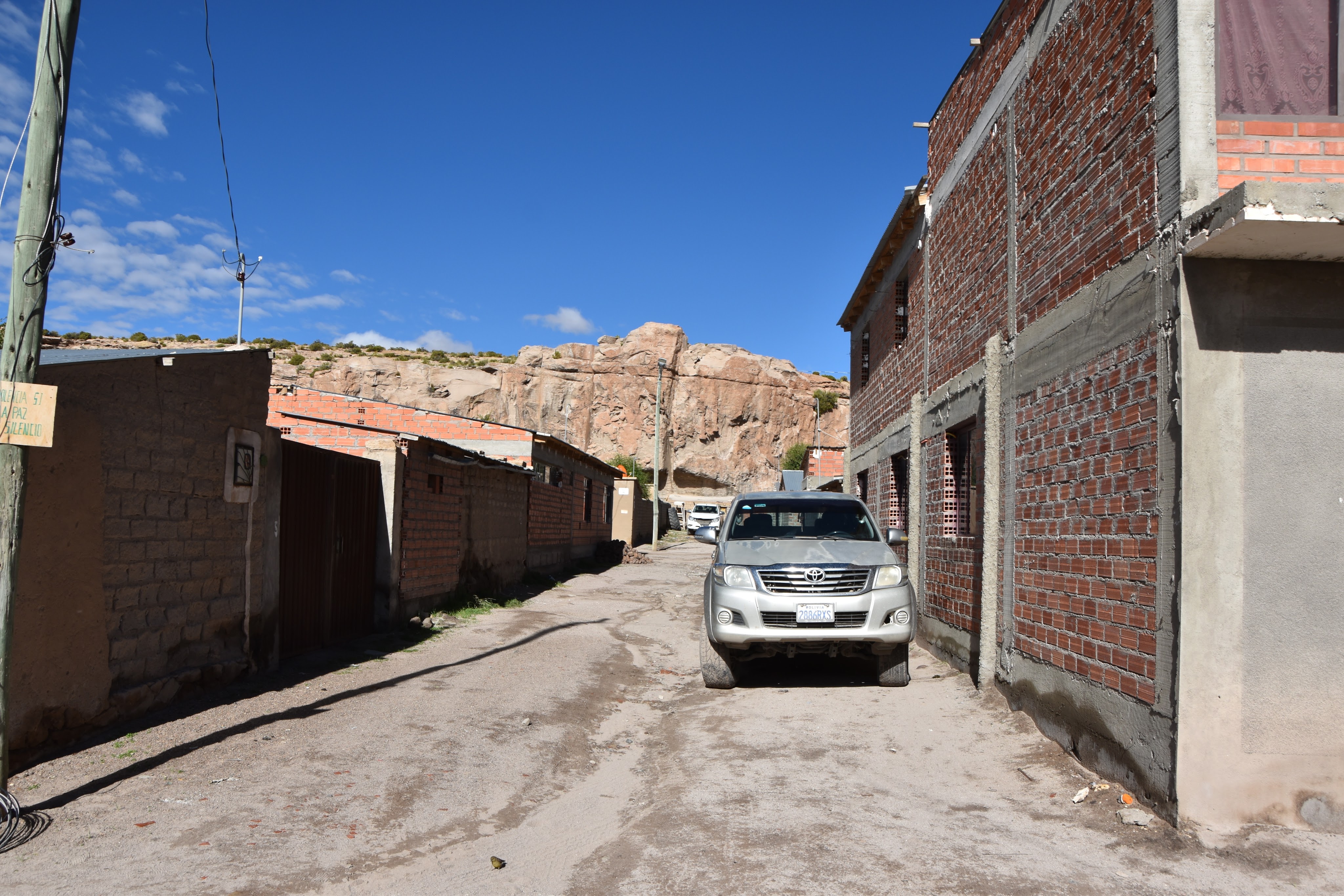
Quickly Isidro and another driver took over, thankfully calm in the crisis. Administering iodine and plasters, we caught the dreaded word “medico”. Isidro ushered our group back to the car, and it was to our immense relief he explained that we would only need to go back to Villa Mar, the village we had stayed in the night before.
I cannot understate how lucky this was. The ideal situation would be not smacking his head off a rock in the first place. But if he was going to do it anywhere, Ricki had at least picked one of only two stops in four days where we would be only 10 minutes from a medical centre.
In other good luck, the single doctor manning the clinic was not already otherwise engaged, nor on her two hour lunch break, so she got straight to work stitching Ricki up. Instead of visiting “Lost Italy”, our jeep mates got to see all the “sights” of ironically named Villa Mar, Sea Villa, which, funnily enough, doesn’t include any sea.
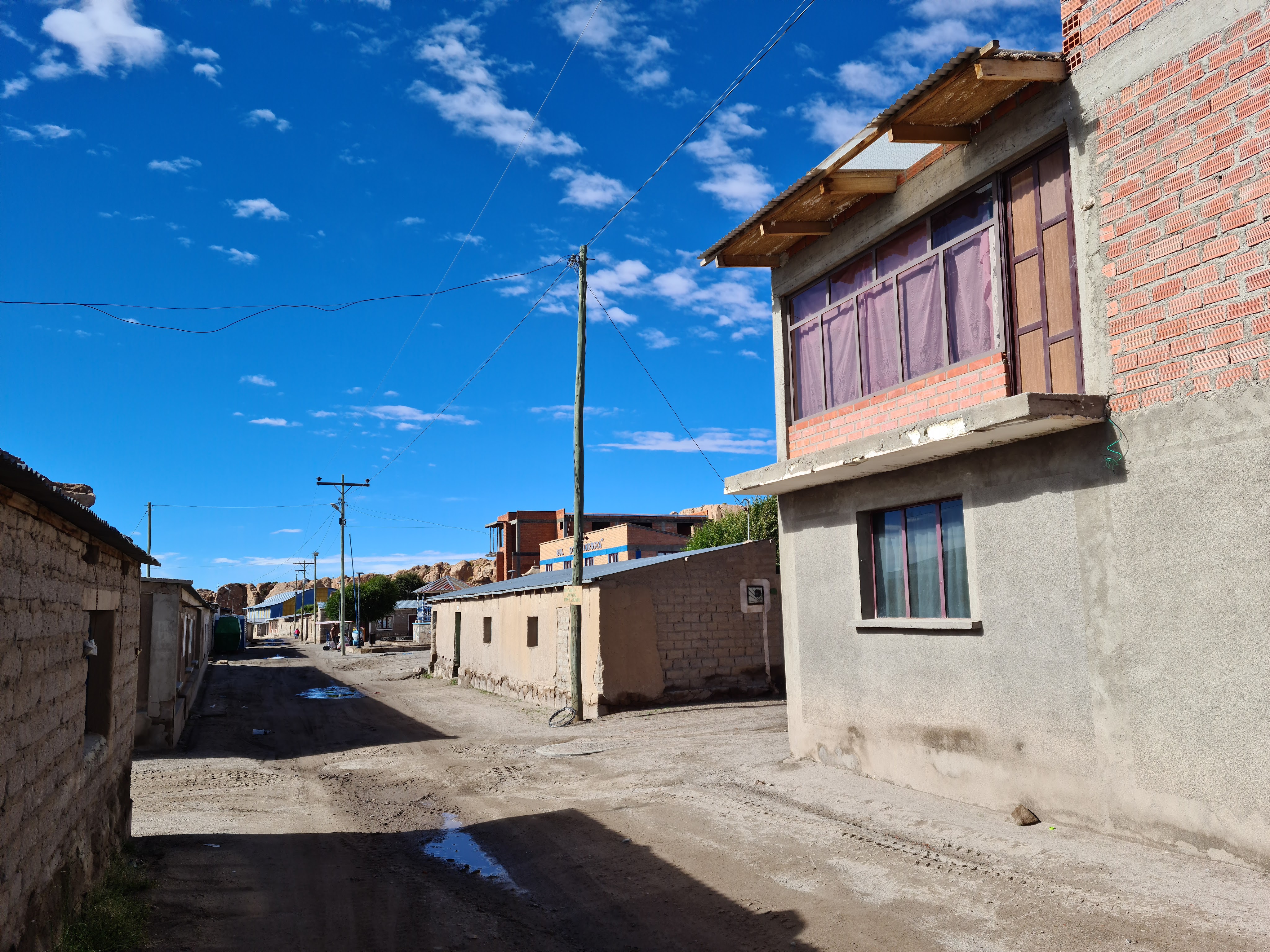
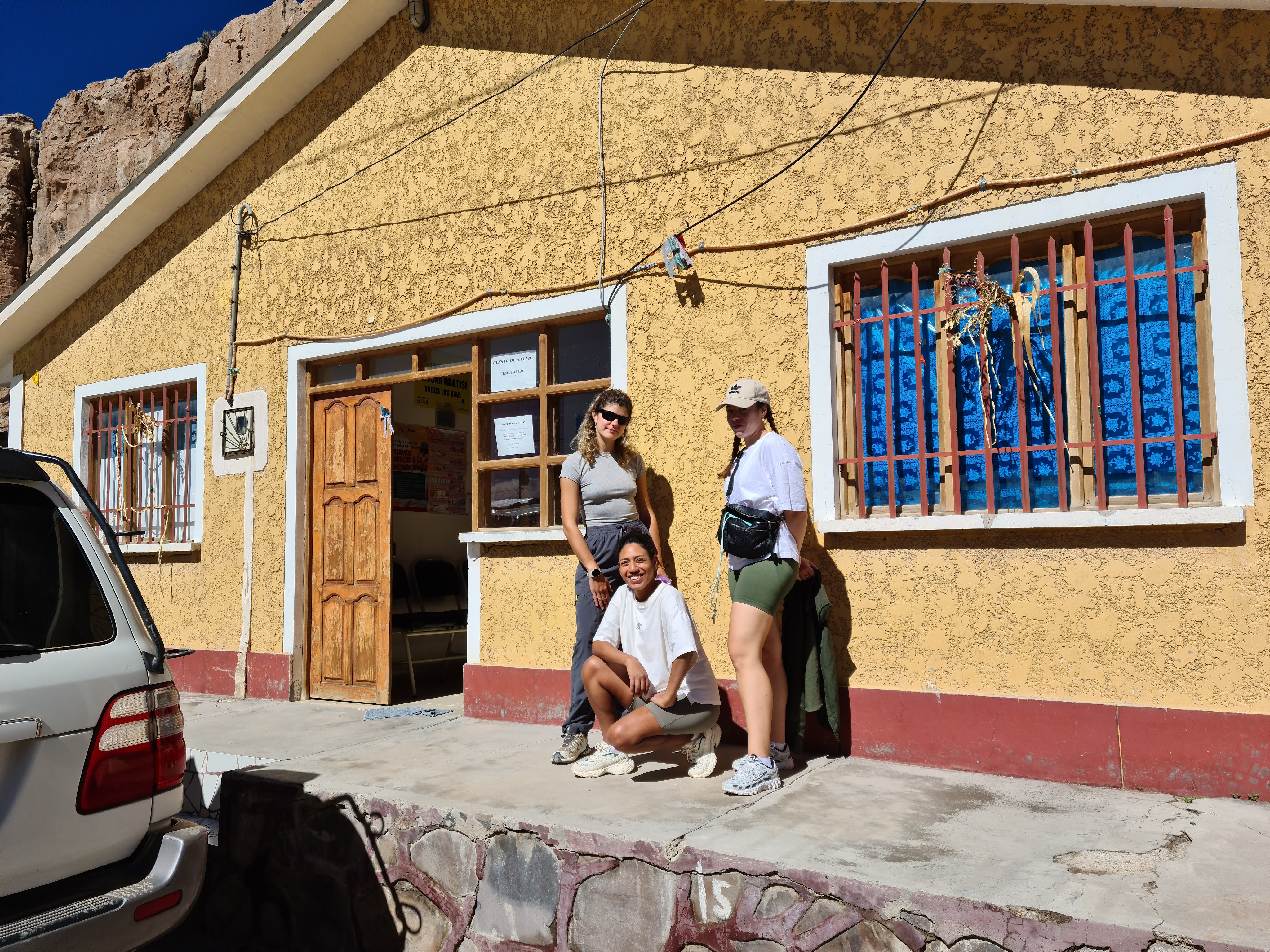
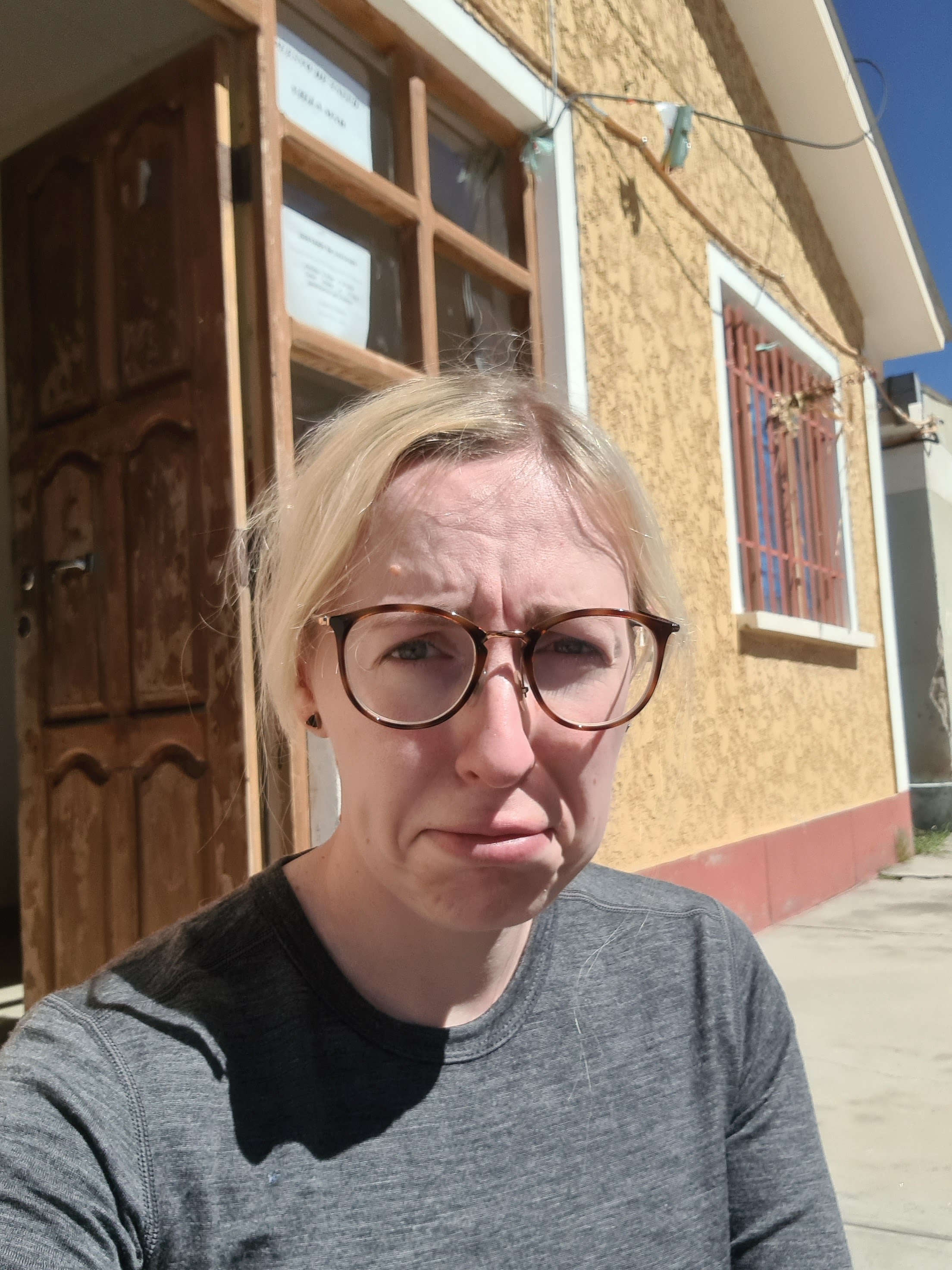
I meanwhile set to work cleaning up Ricki’s cap, the car and various belongings which were all bearing the hallmarks of a crime scene. I’d never been so grateful for all the wet wipes we’d packed. I also pondered whether this unbudgeted escapade was going to require one of us to sell a kidney to cover the bill.
Finally Mr Bump emerged, five stitches and a whole roll of bandage applied. He happily confirmed everything in the clinic had been very professional, sterile, and he’d been lucky enough to get some local anaesthetic…and all for the equivalent of £5. Probably won’t be bothering to claim on our travel insurance for that one!
Unsurprisingly, Isidro was keen to get us caught up with the rest of the jeeps so we skipped over Lost Italy entirely. I think it was just more landscapes and rocks, and safe to say we’d had enough of the latter for one day.
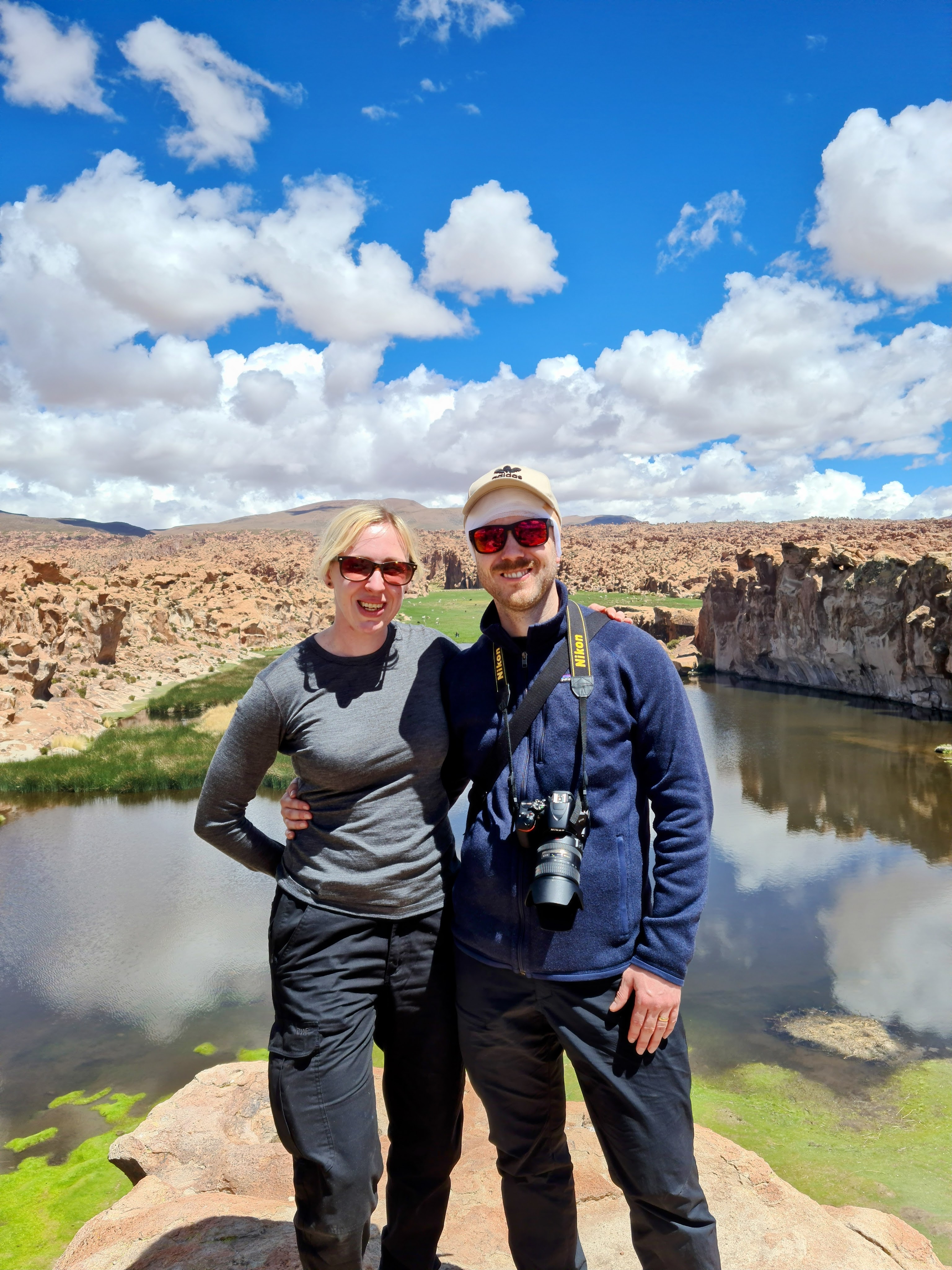
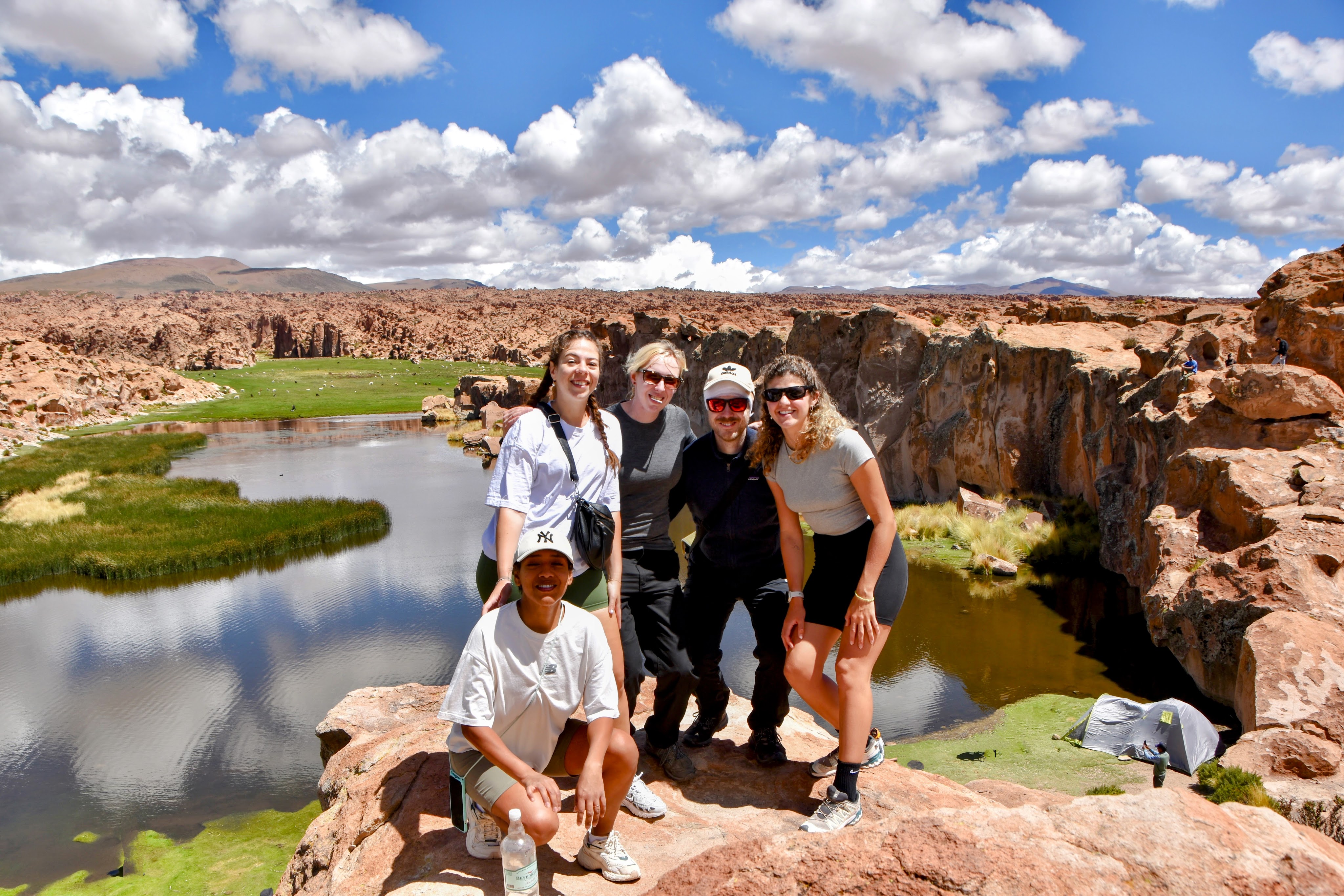
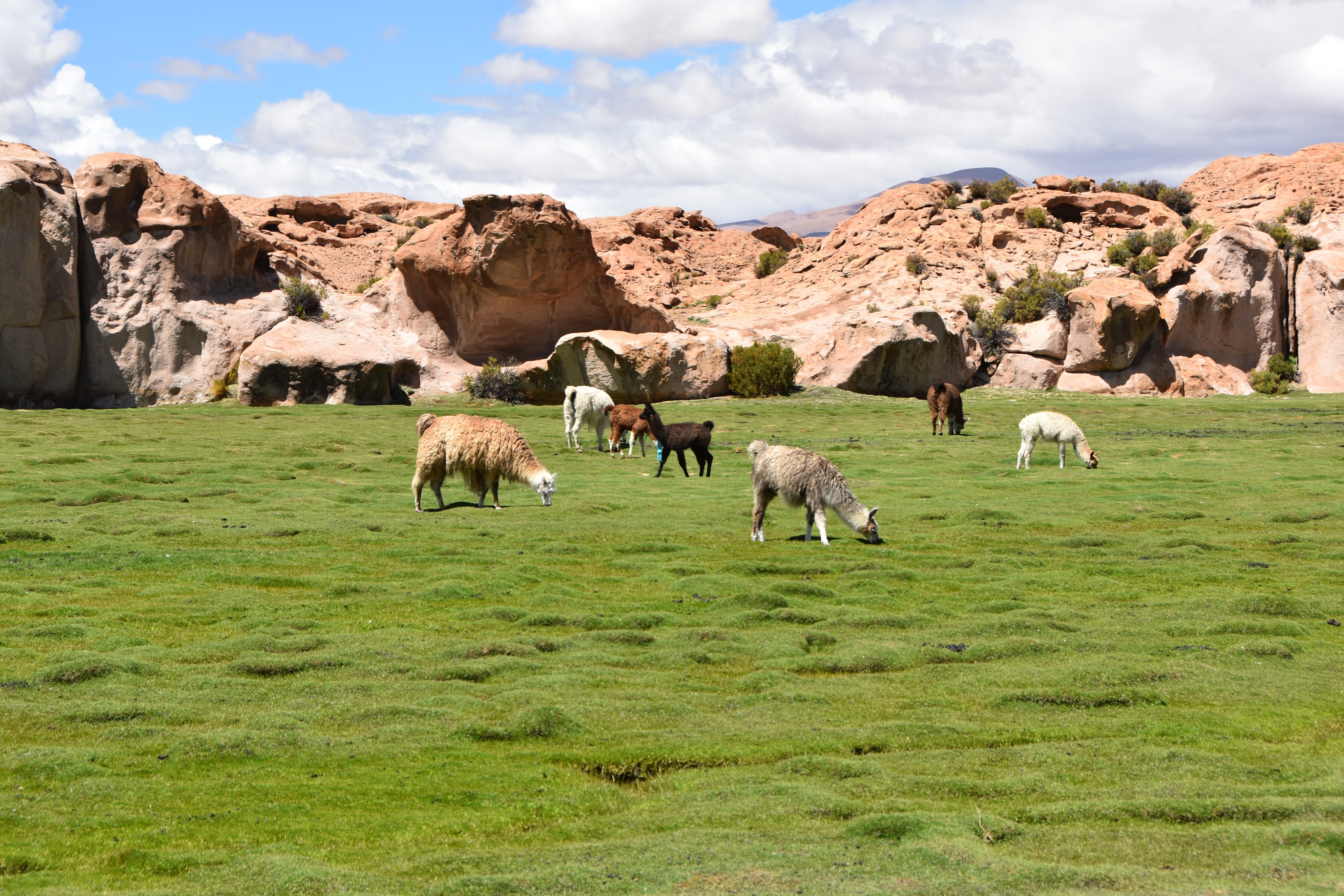
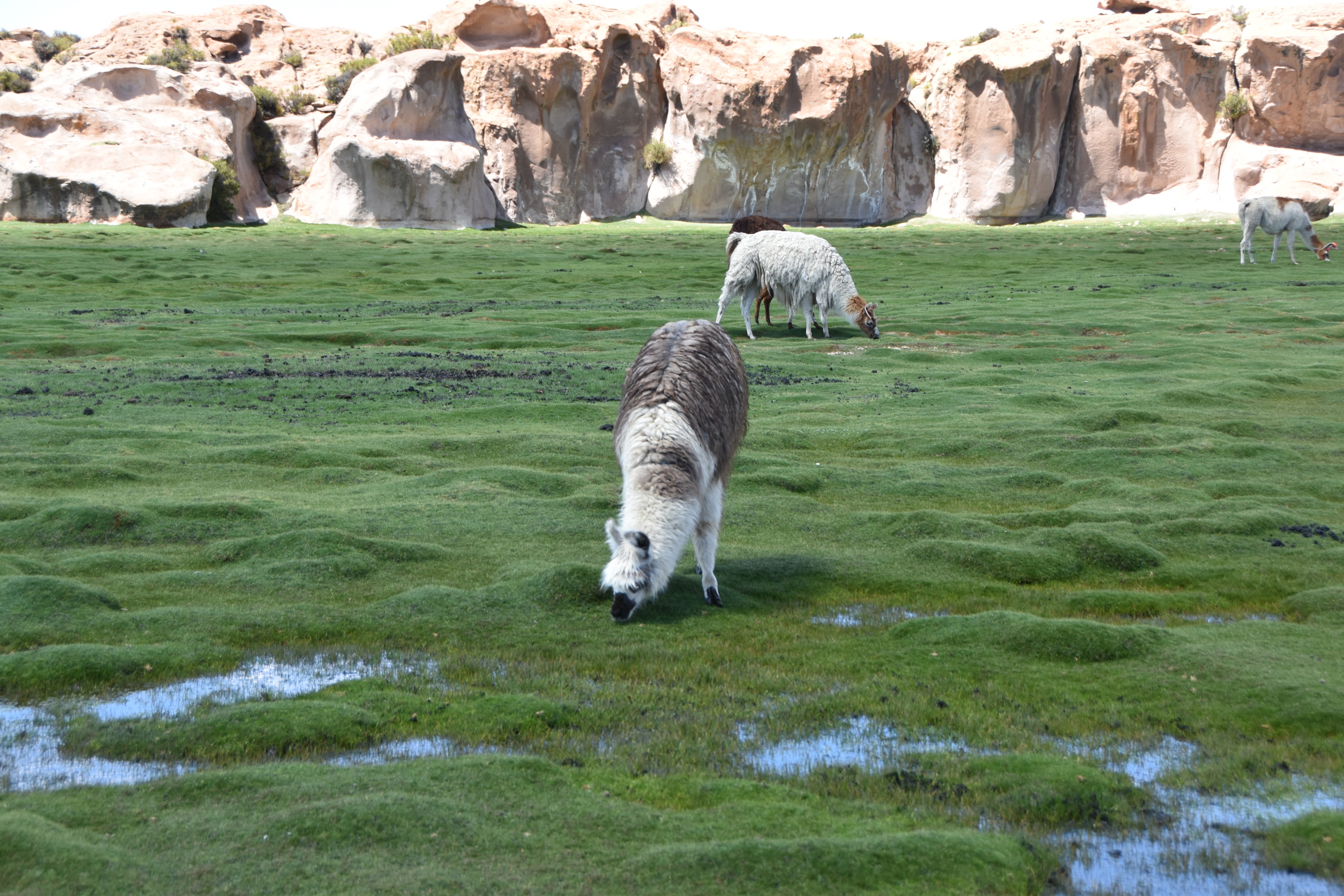
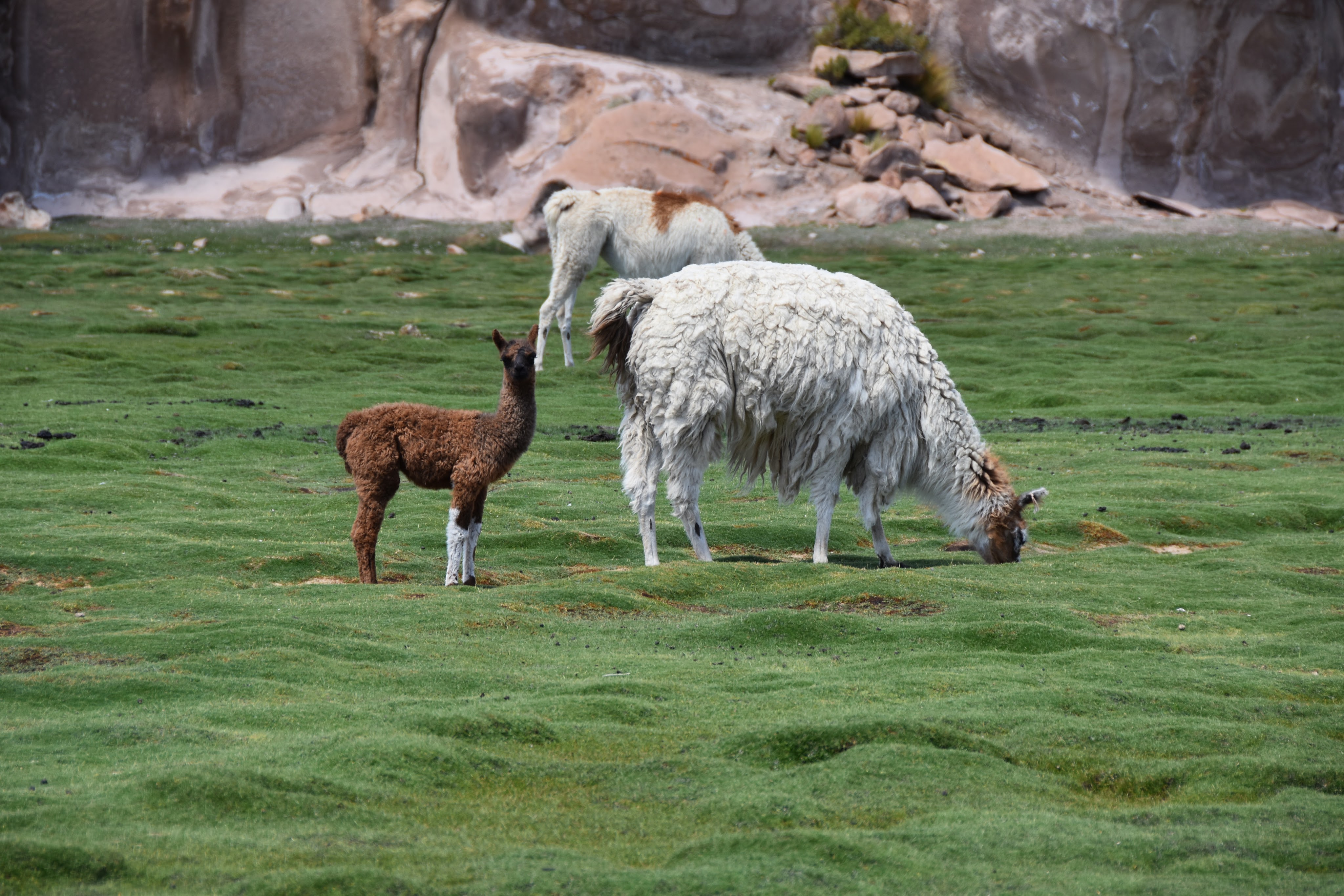
I’m really glad that we made it in time for the Black or Hidden Lagoon. This was as beautiful as the lagoons we had seen the day before, with a slight contrast in appearance due to the surrounding greenery.


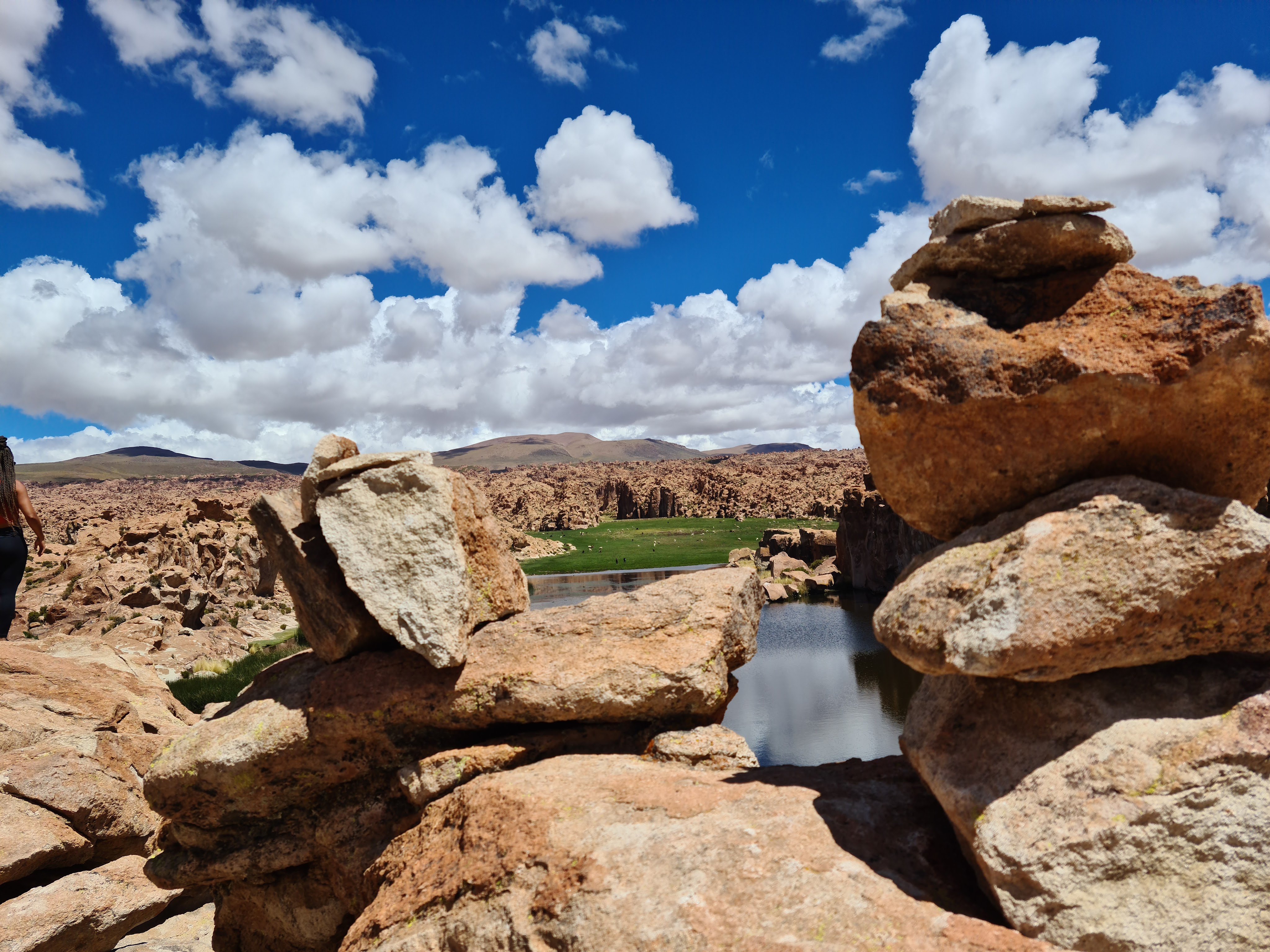
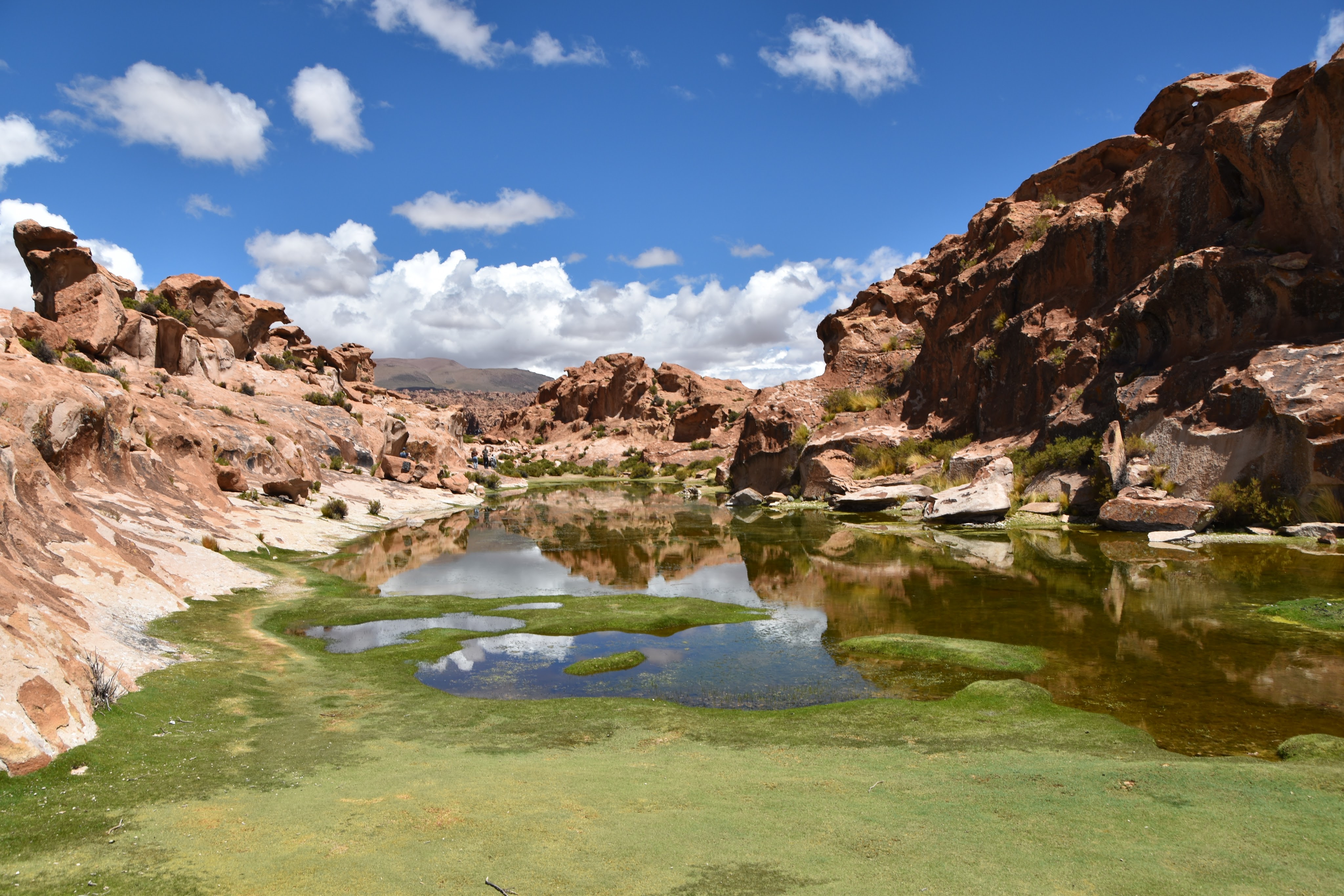
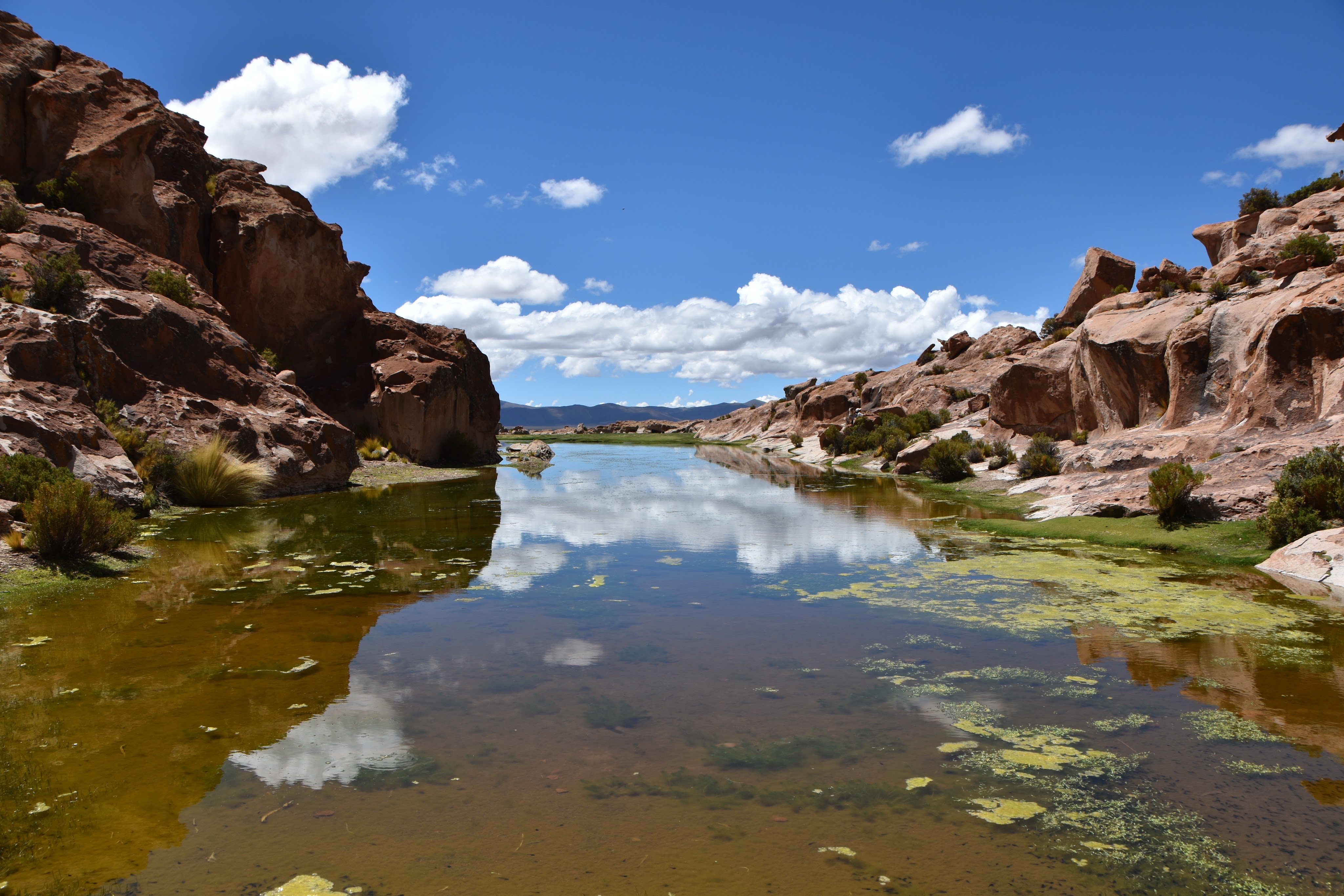
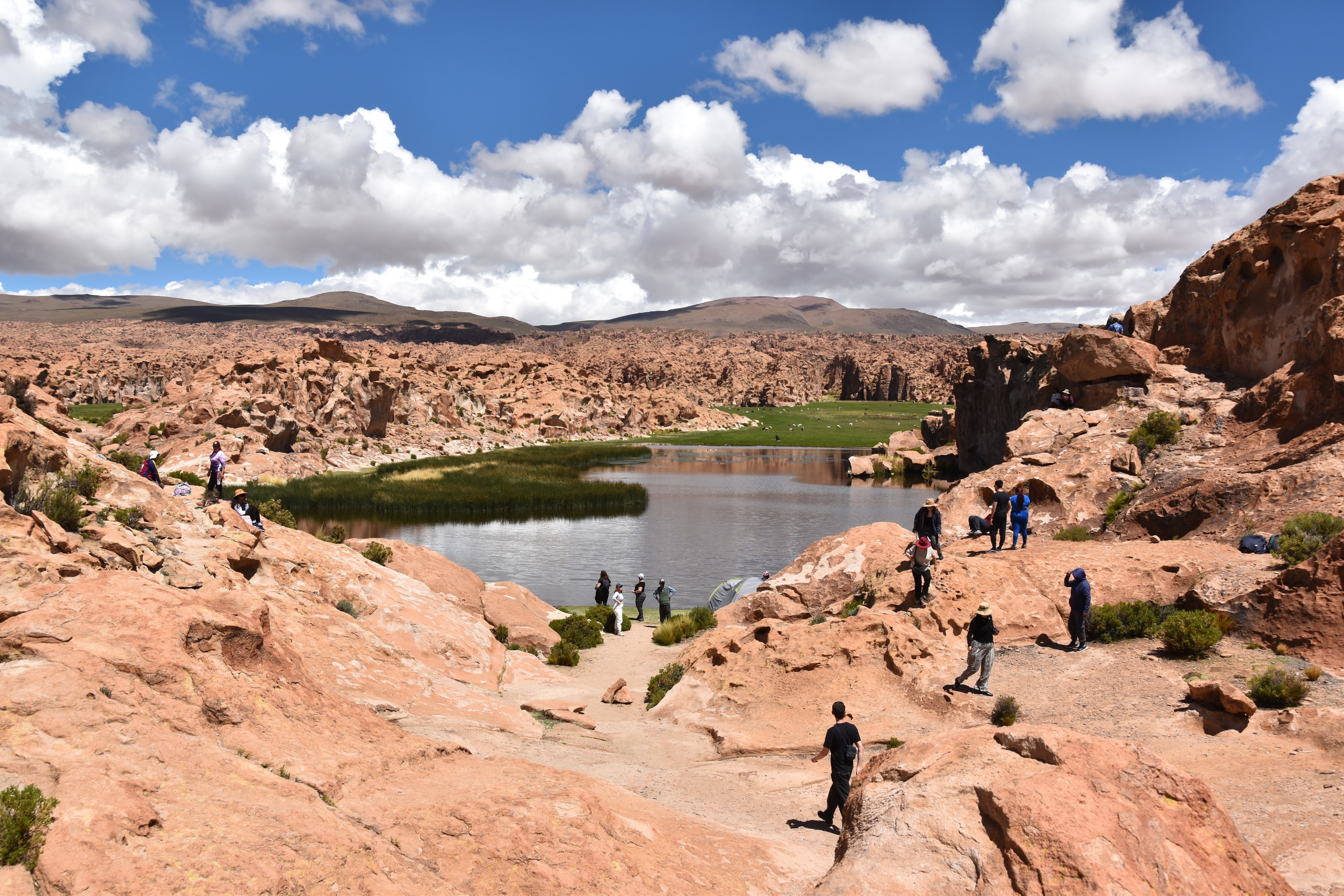

And also enjoying that greenery were lots of grazing llamas! It’s impossible not to smile around these guys, especially when there were adolescents and babies too.


Unlike any of the other places we stopped off, the Black lagoon is also a popular place for locals enjoying their days off. It was quite tempting to join the party!
Of course we had plenty else to see, so on we went to the Anaconda Canyon – only named for its shape rather than any residents thankfully.
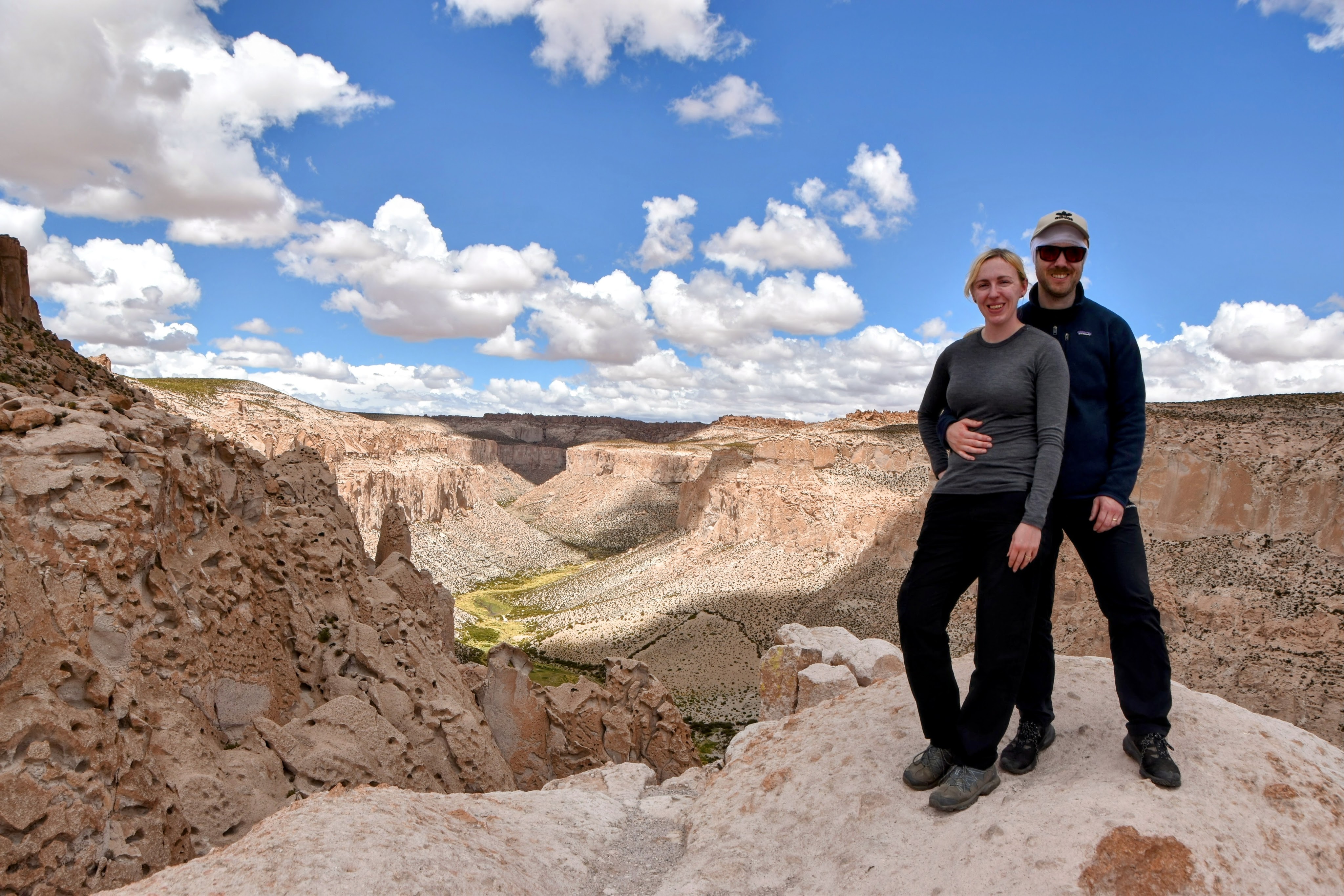
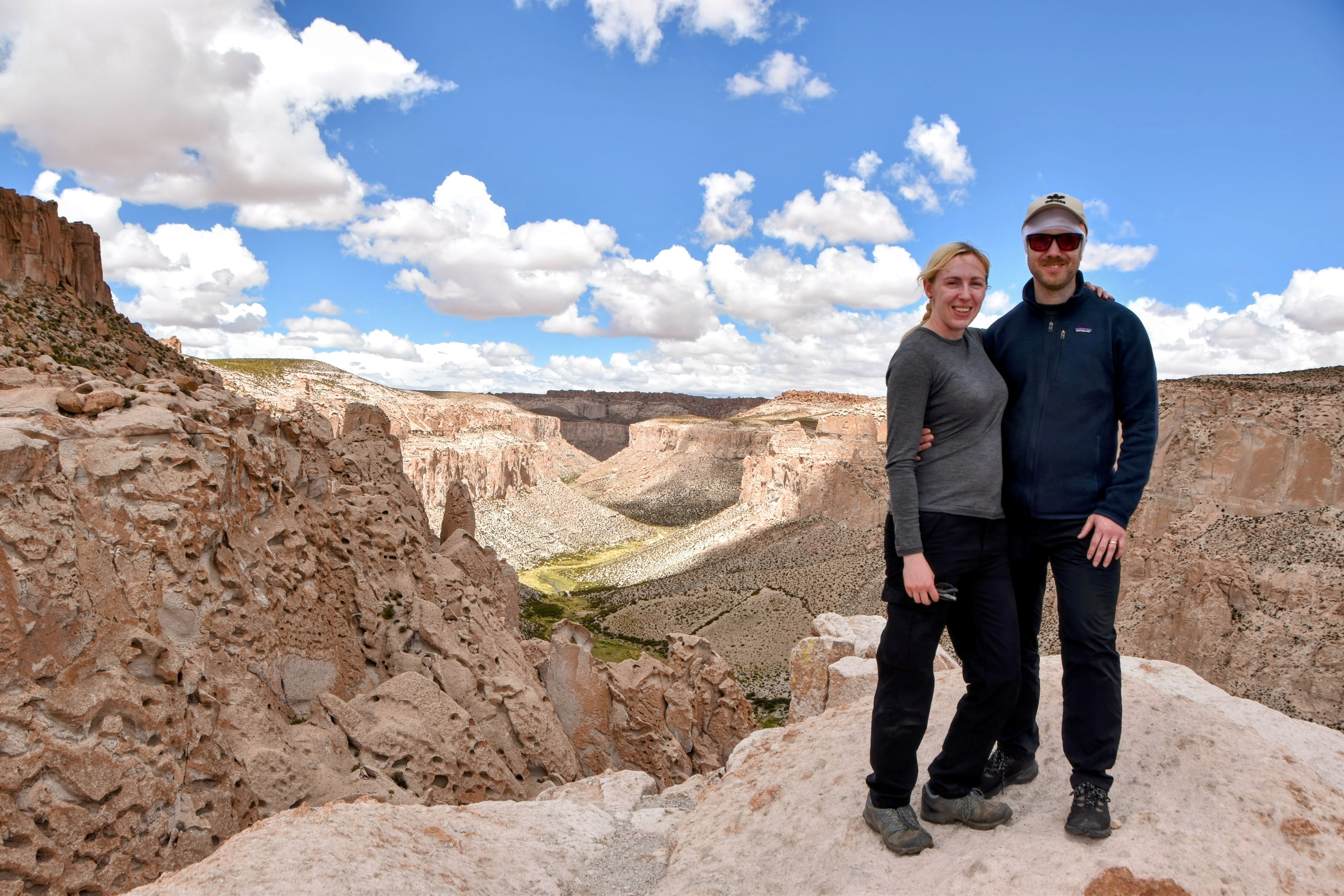
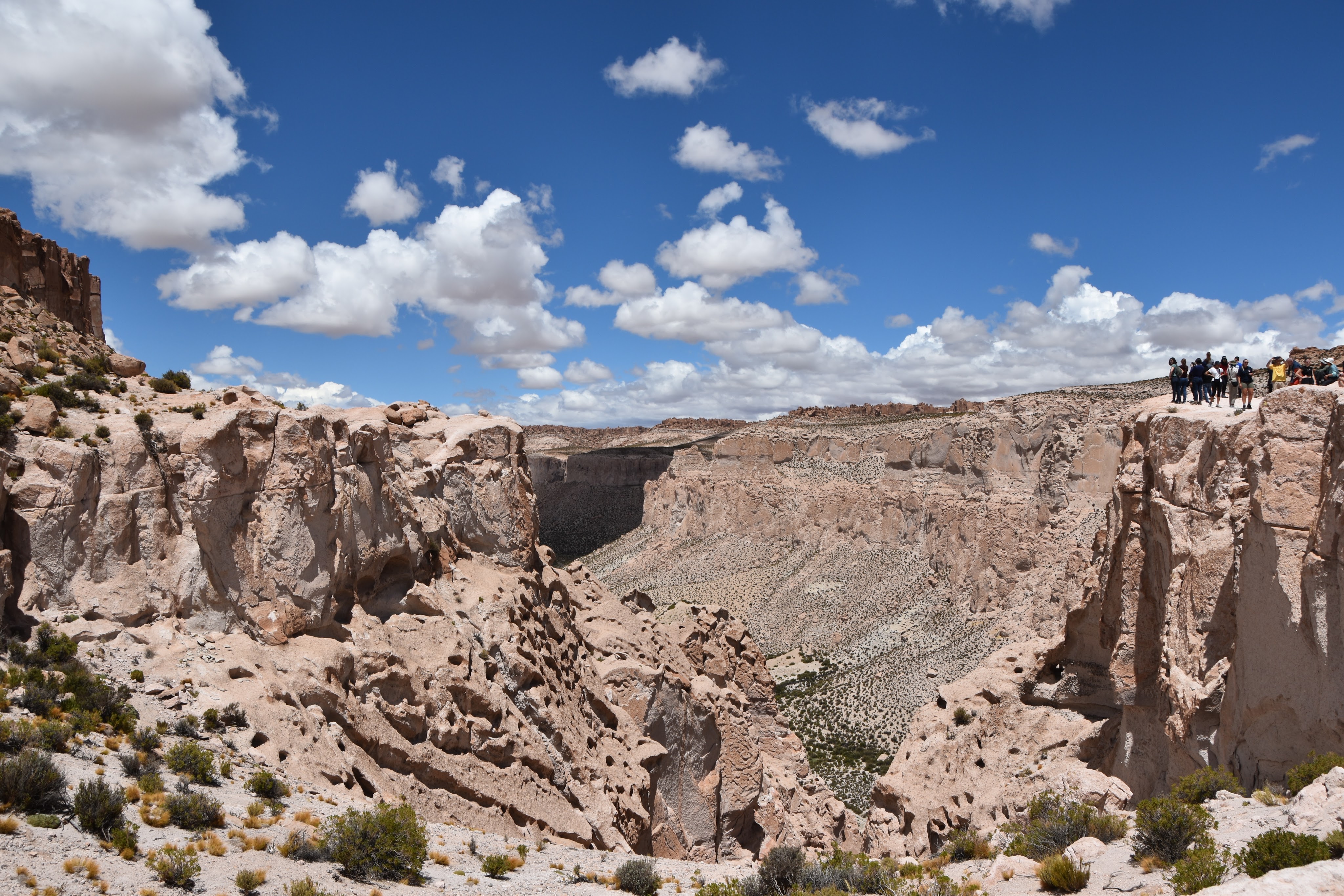
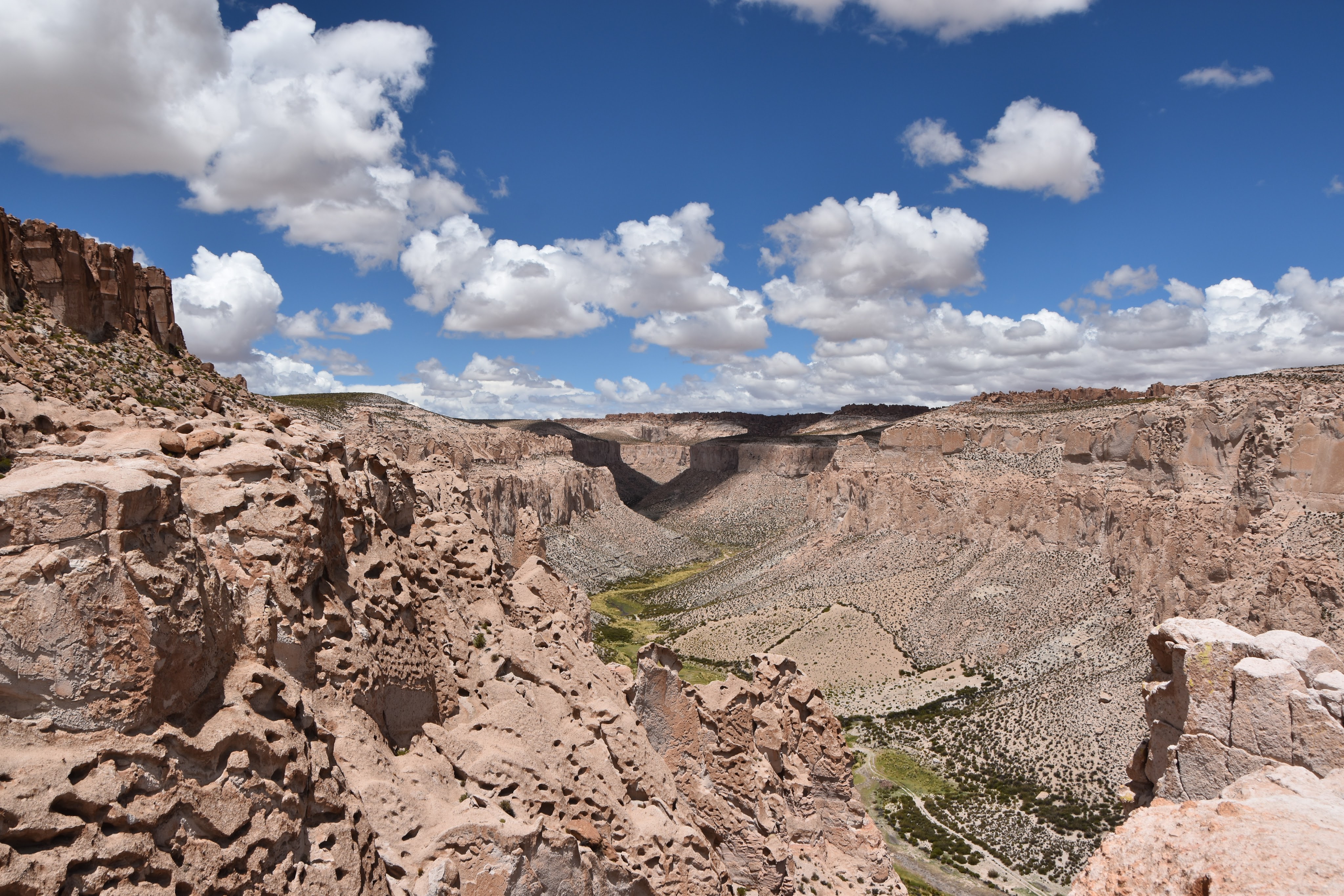
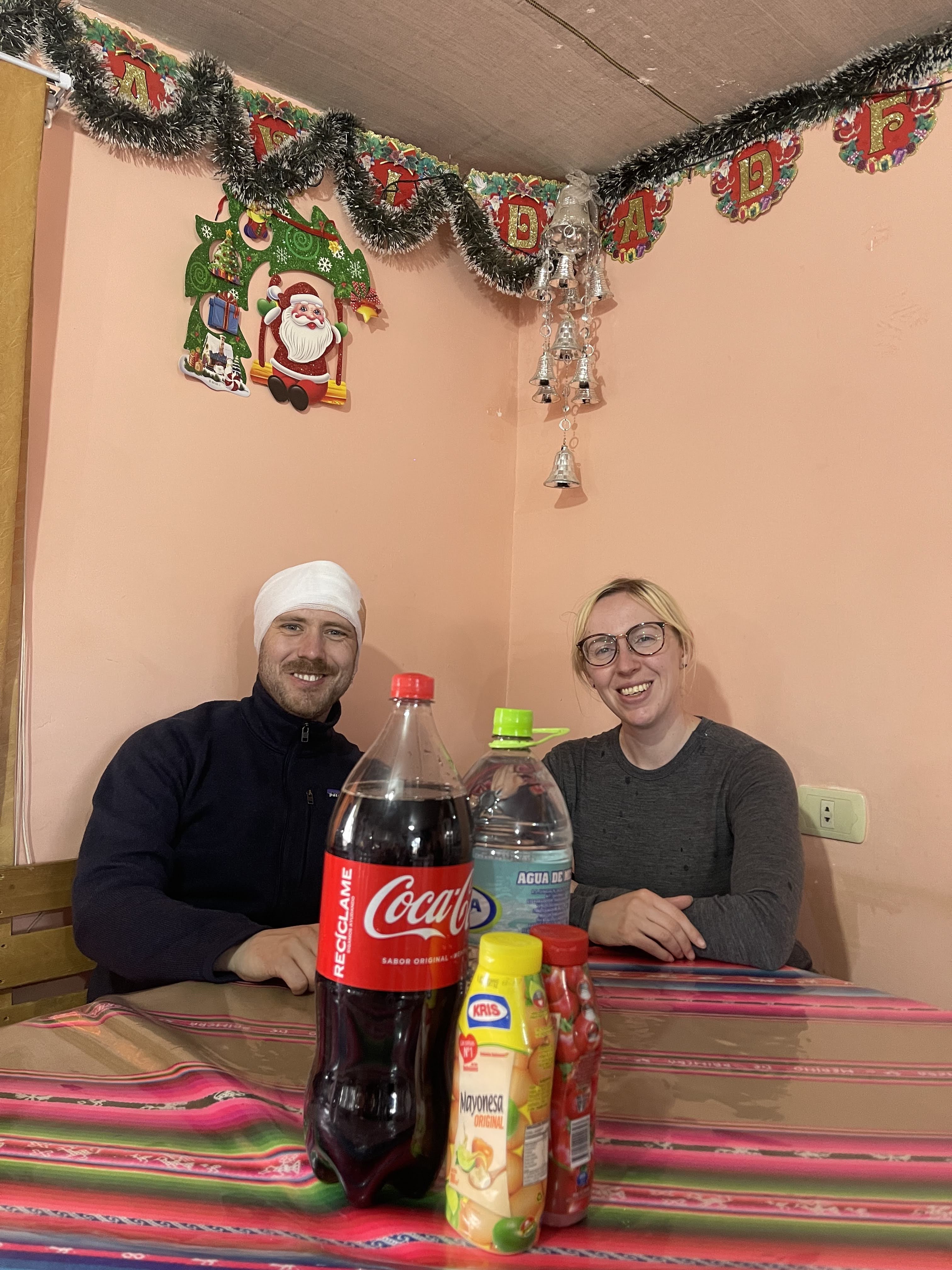
You never seem to be far away from dramatic weather in the Bolivian altiplano. After seeing more lightning in the distance and the tell-tale gray mists migrating from the clouds down to ground, we found ourselves arriving for lunch in some of the most biblical rains we’ve ever seen or felt. It was very good we were eating indoors – even if the restaurant was still fully decorated for Christmas!
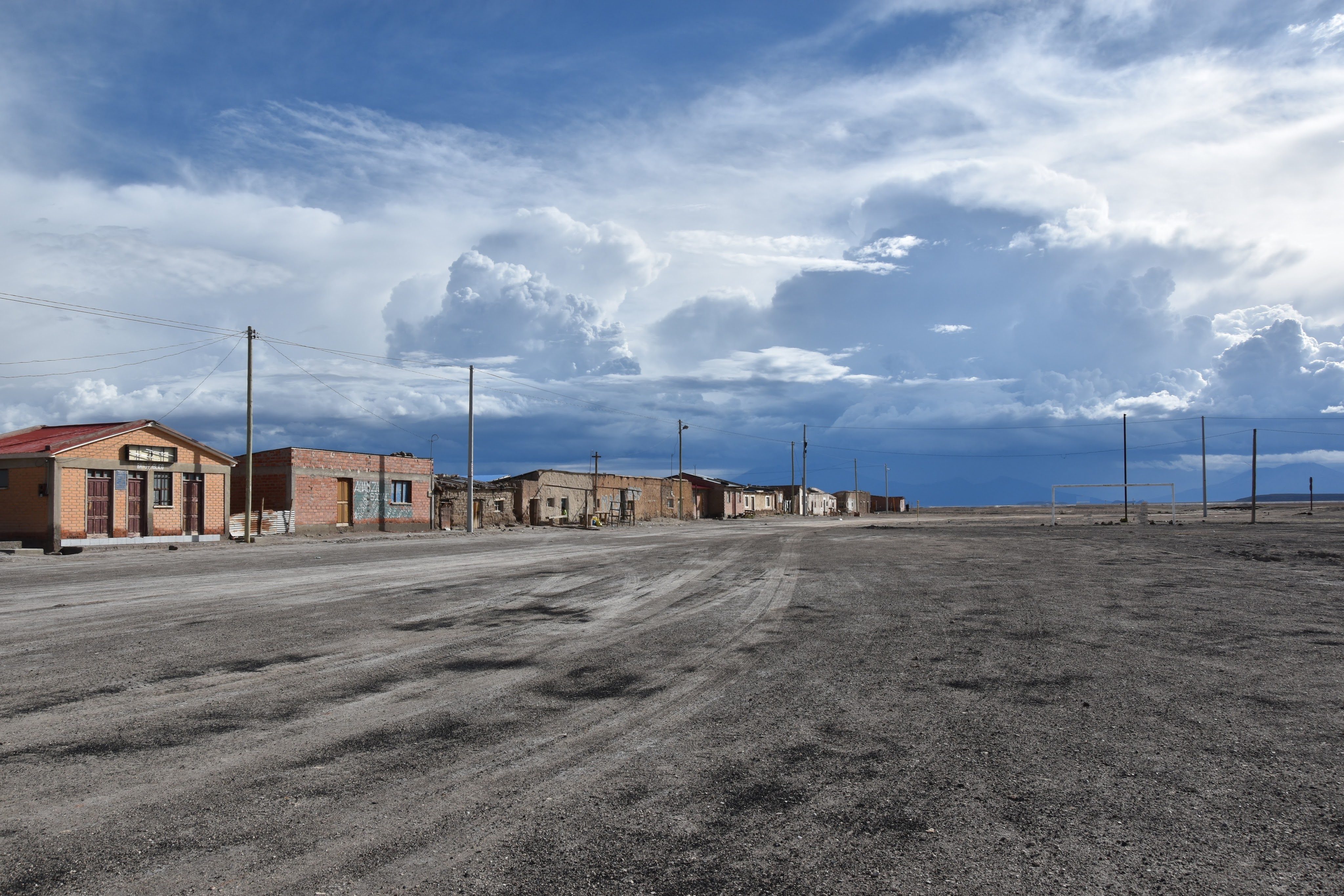
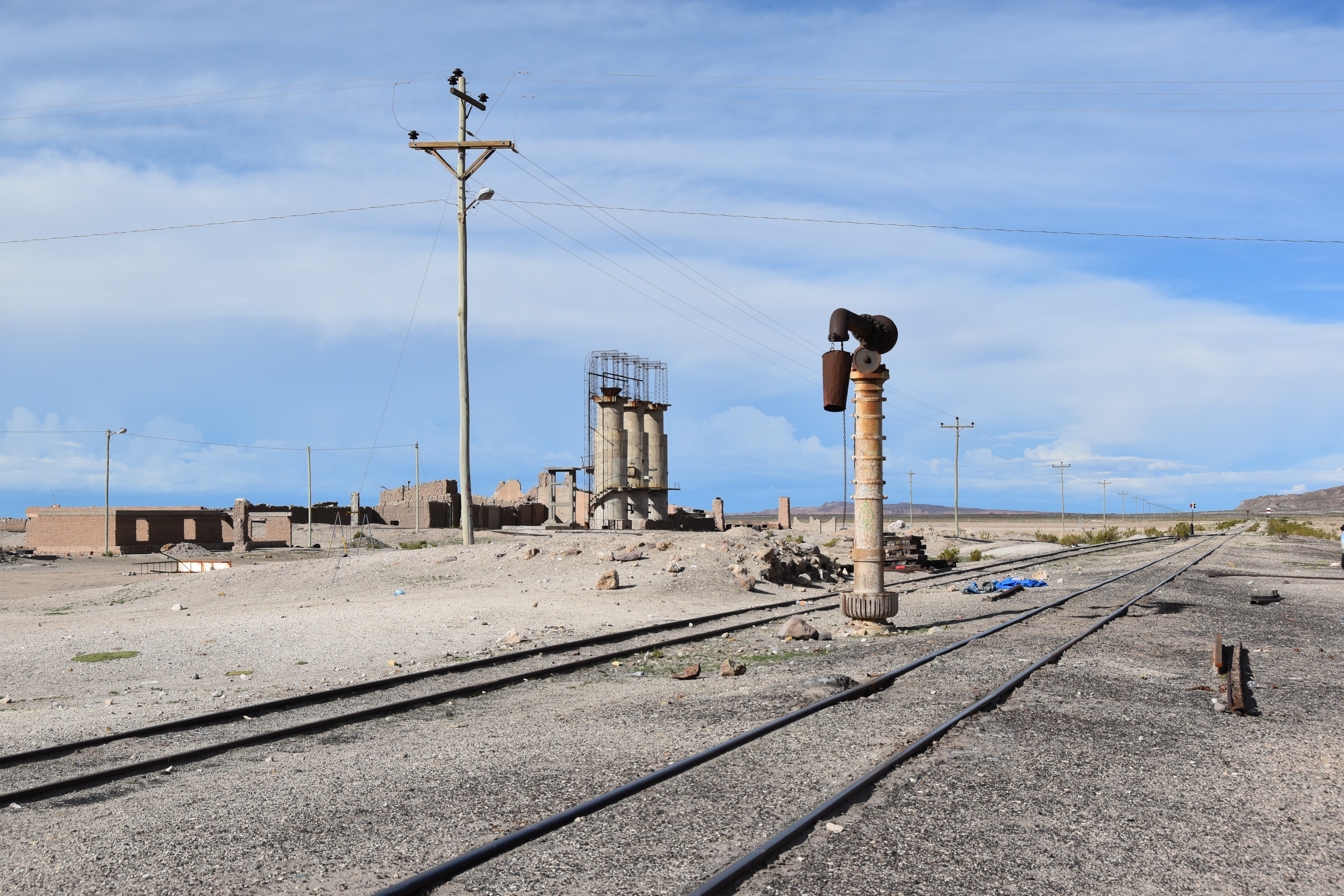
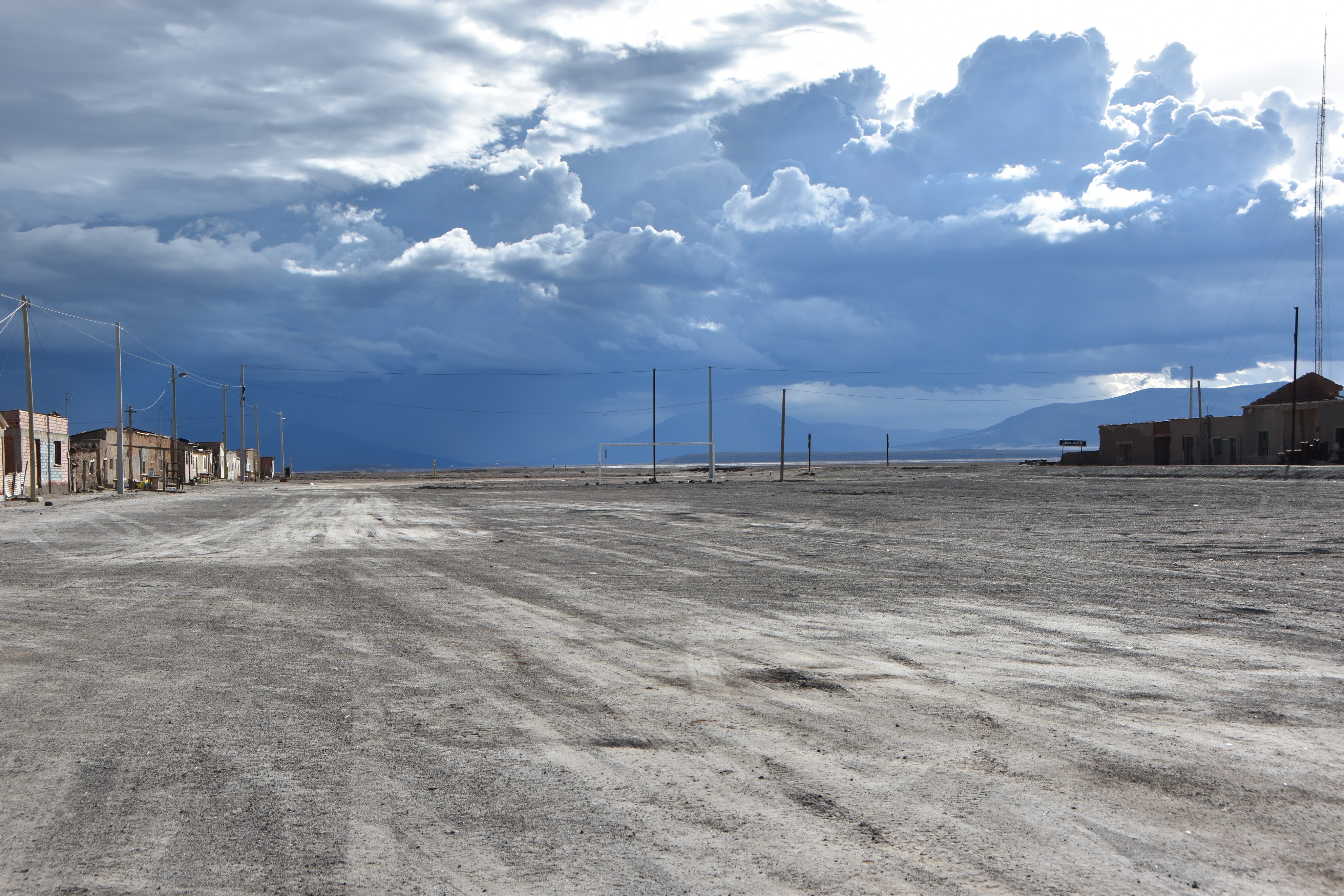
By the time we carried on our way and got to our next destination, the sun was out in full force again. I have to say, Julaca would have been quite eerie in the rain or cloud, and in a strange way, it seemed to me like a good setting for an episode of Scooby Doo. A small village, with about 60 inhabitants, it is dominated by the old railway and apparatus that runs through the centre. Since the demise of the railway line/mining industry, Julaca has found a second life as a tourist stop.
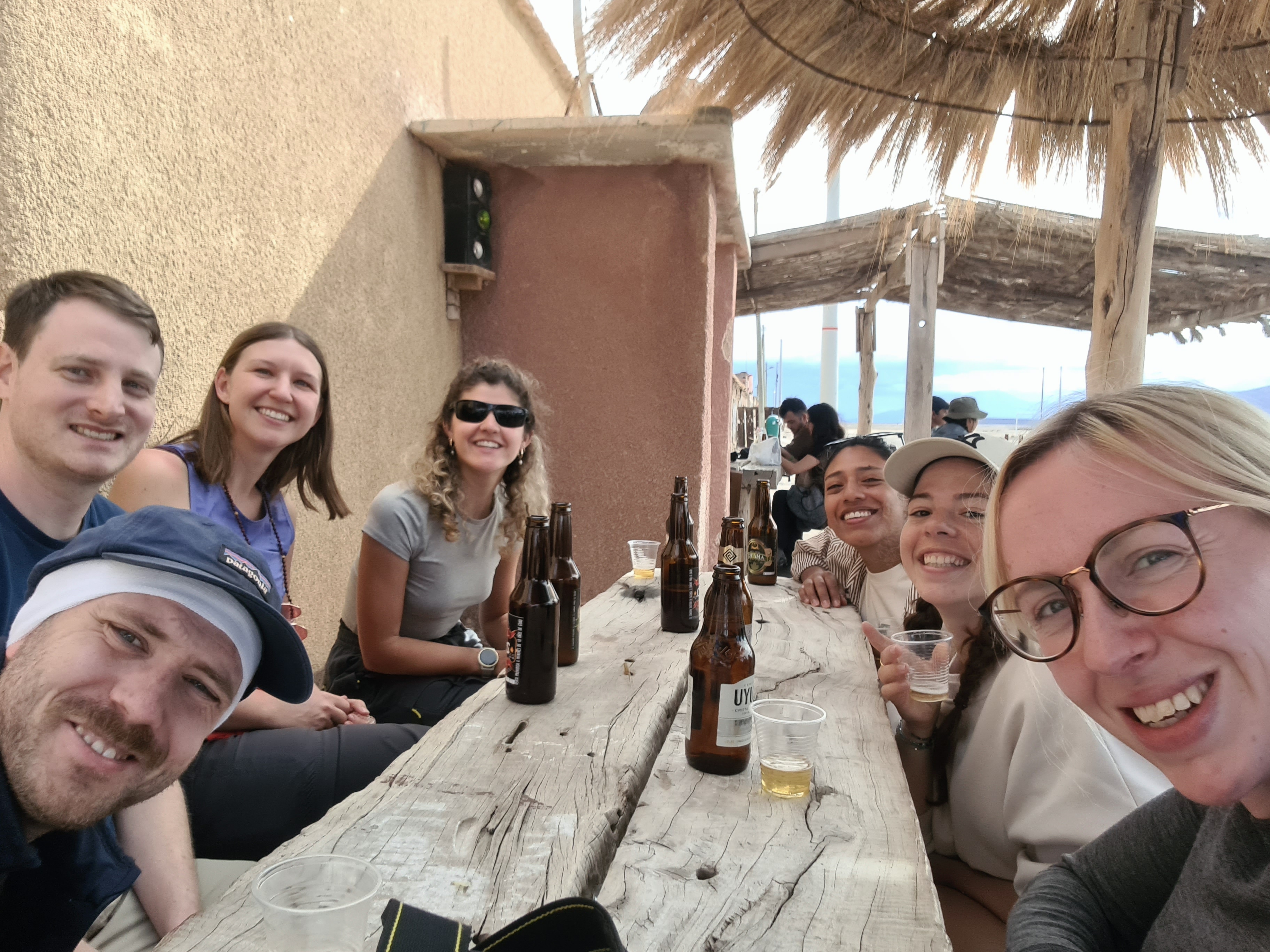
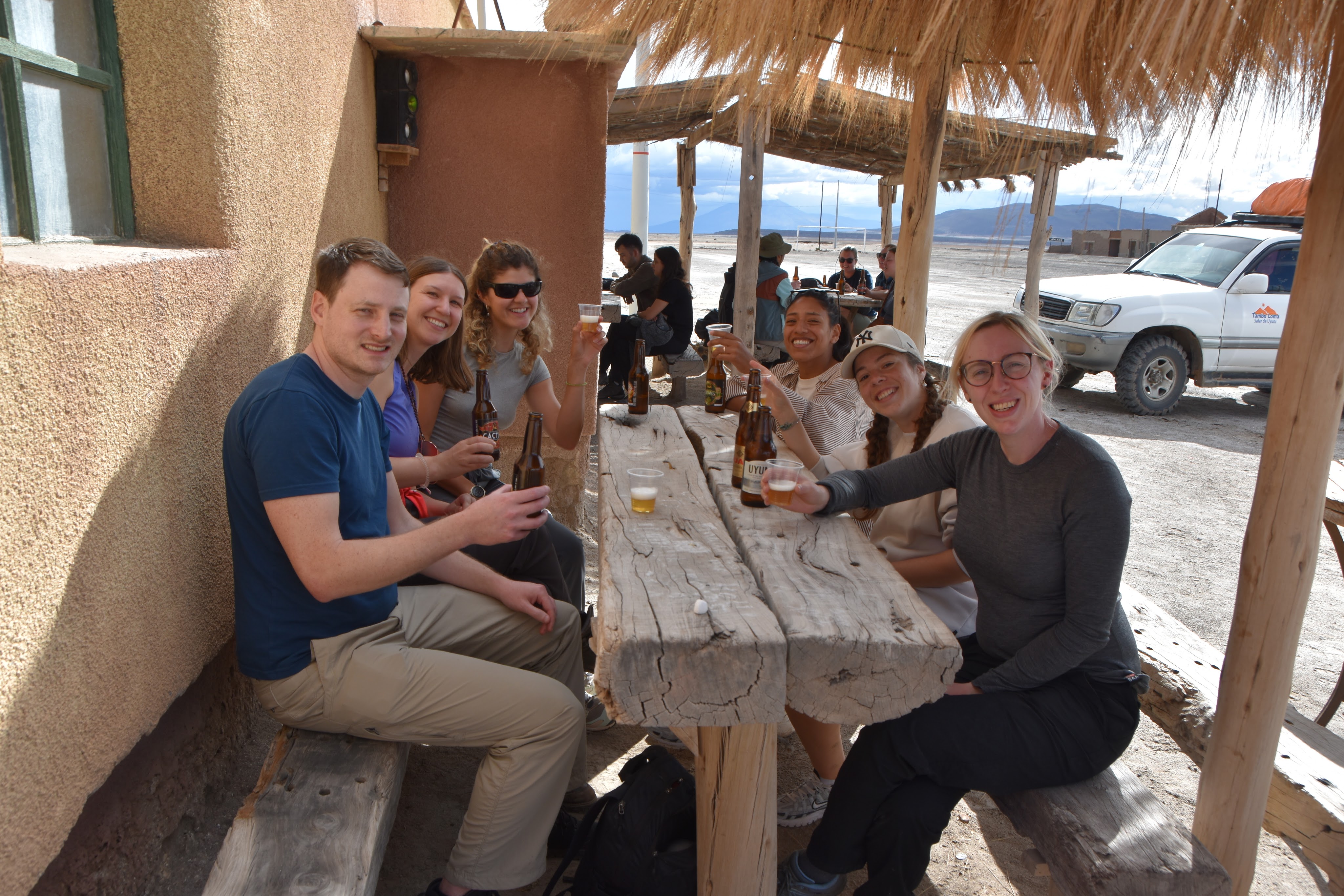
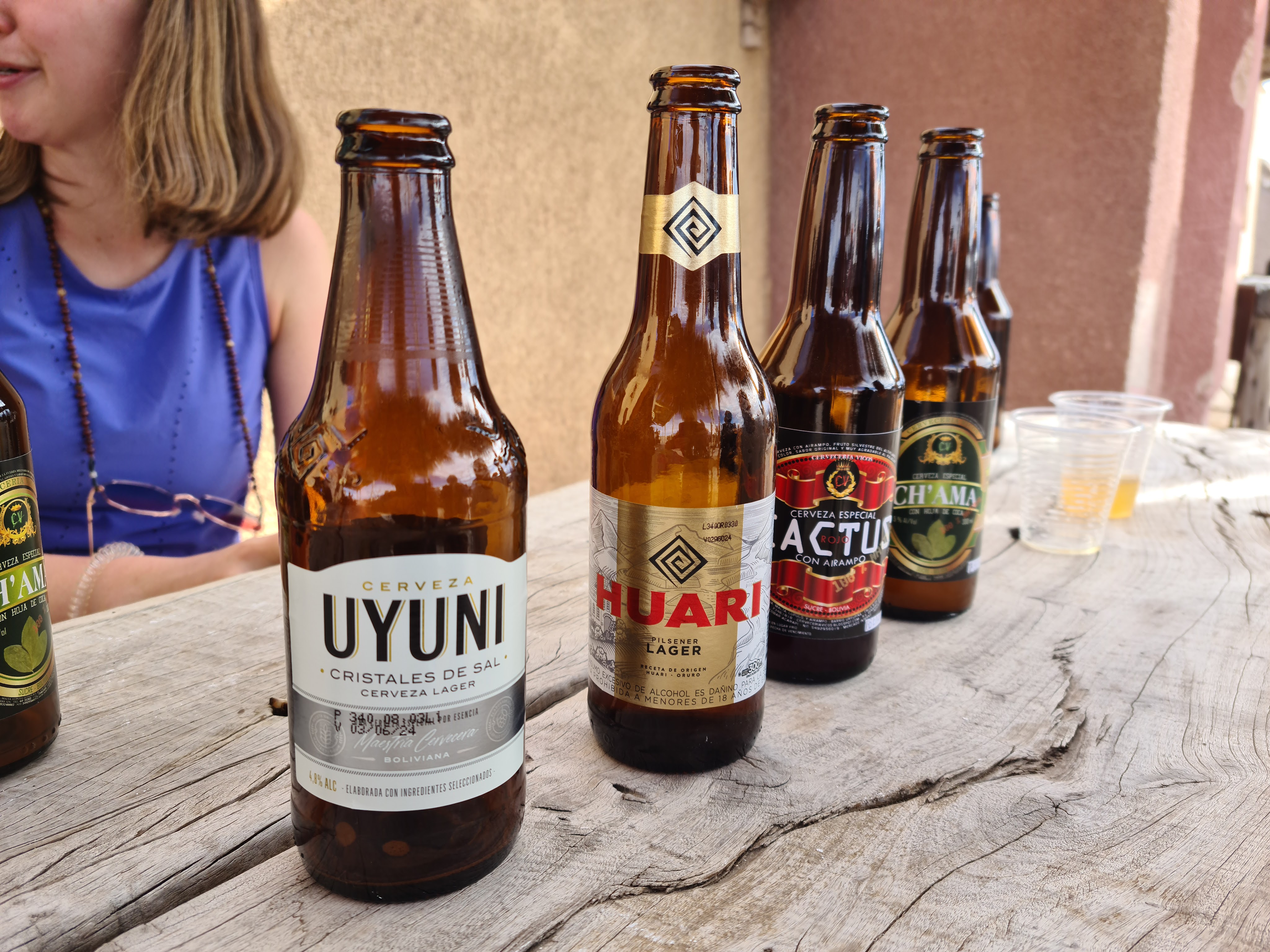
And honestly, I can’t find anything else about it online. Home to a couple of beer shops though, it was a little oasis of sorts, in the middle of nowhere. Given the surprising variety of Bolivian beers, it seemed rude not to try as many as possible. The group joined forces and we spent a very pleasant hour or so relaxing at a table outside, sharing the bottles amongst us.
For any keen trainspotters feeling short changed by Julaca, the final stop of the tour would be worth waiting for.
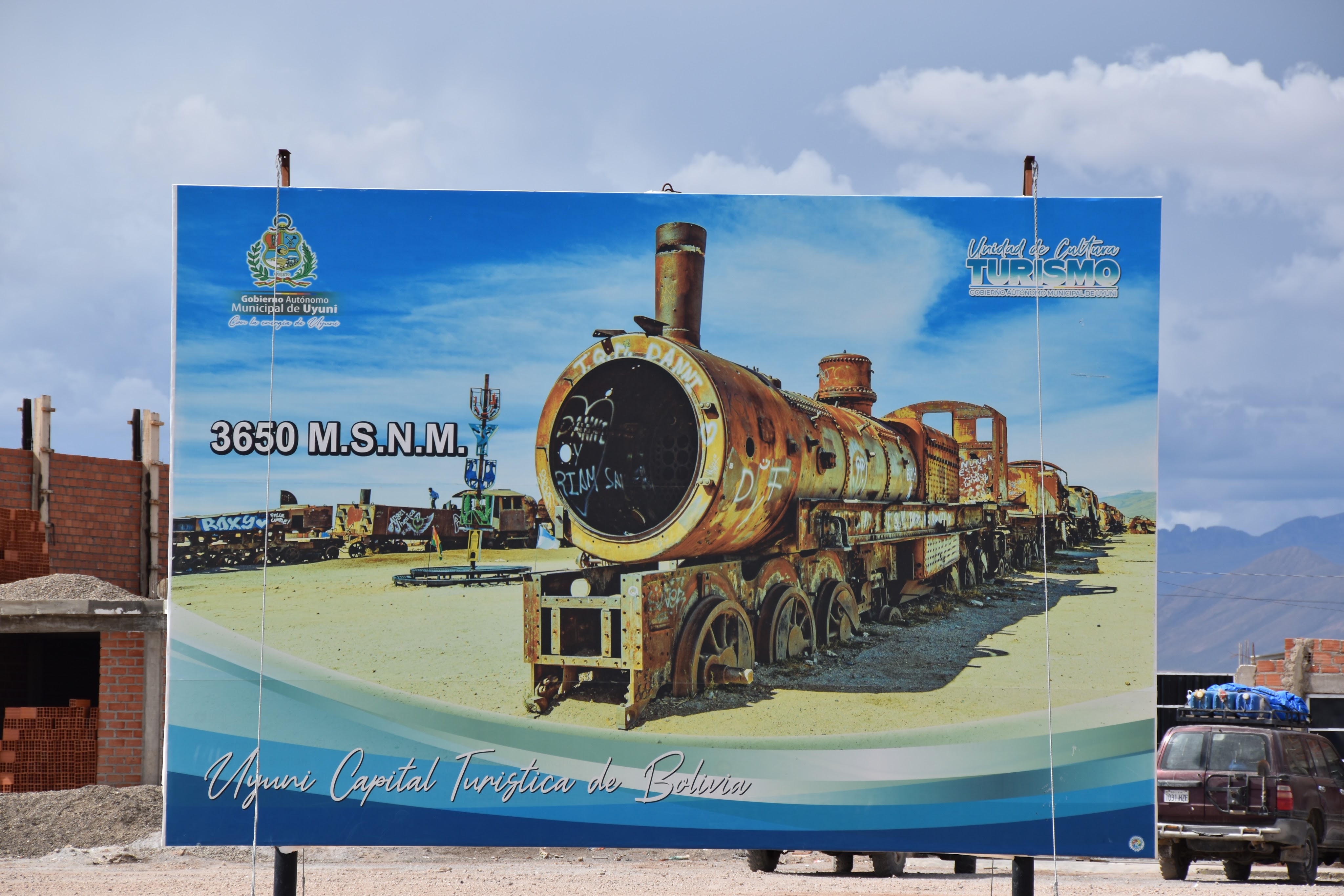
This would be the “train cemetery” in Uyuni. Even for those that aren’t rail enthusiasts, it was still a fun stop, where the scenery was man made instead of natural.
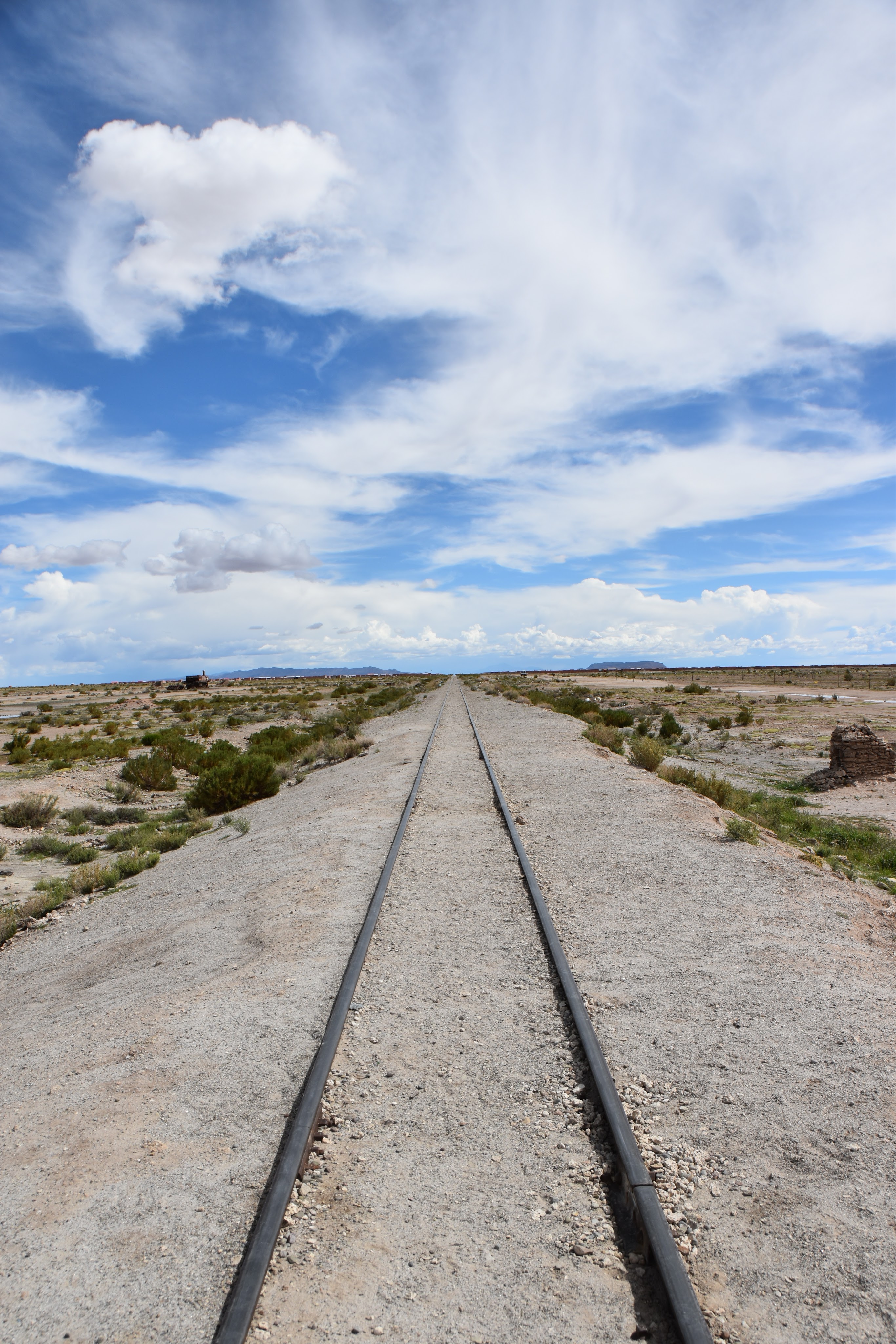
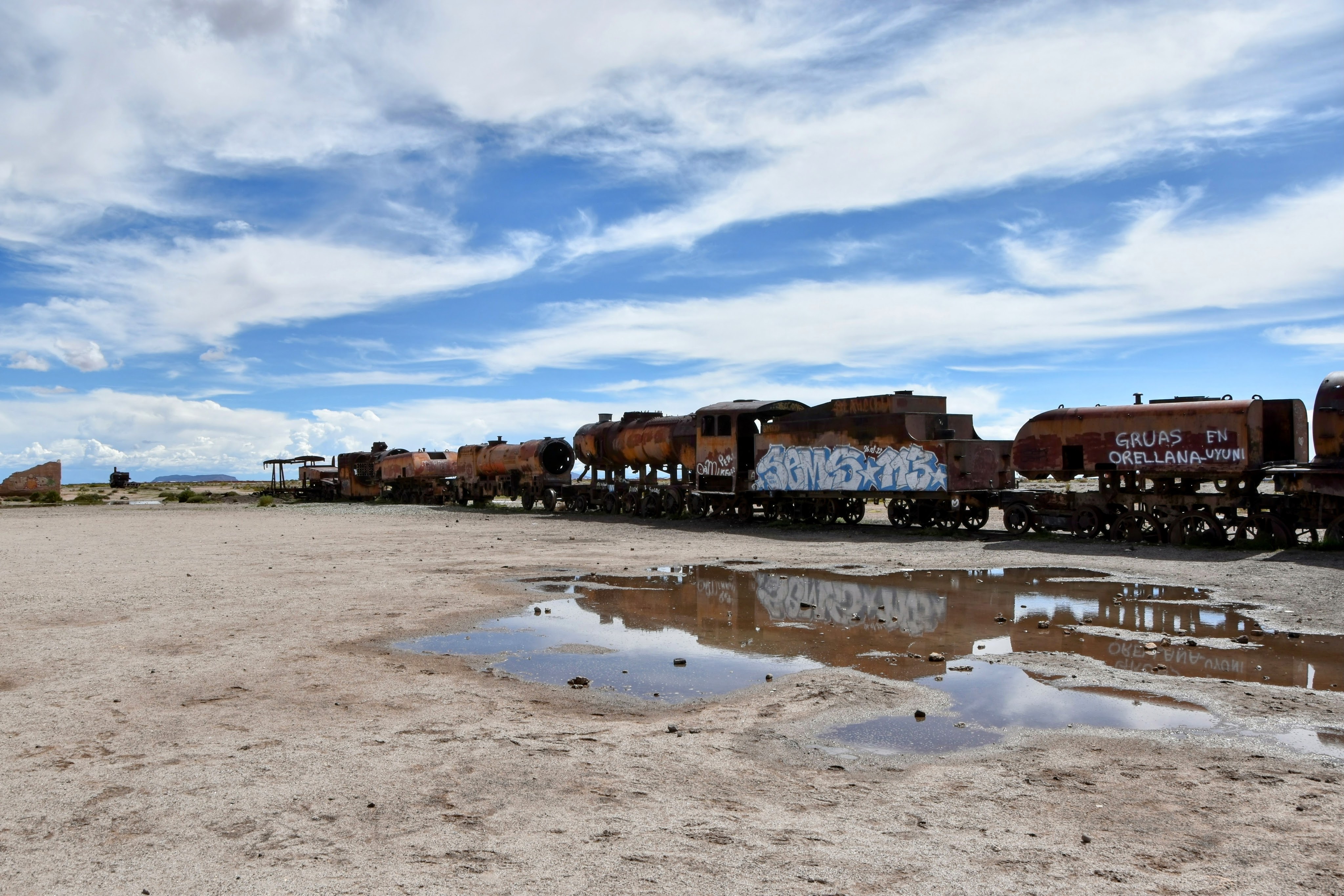
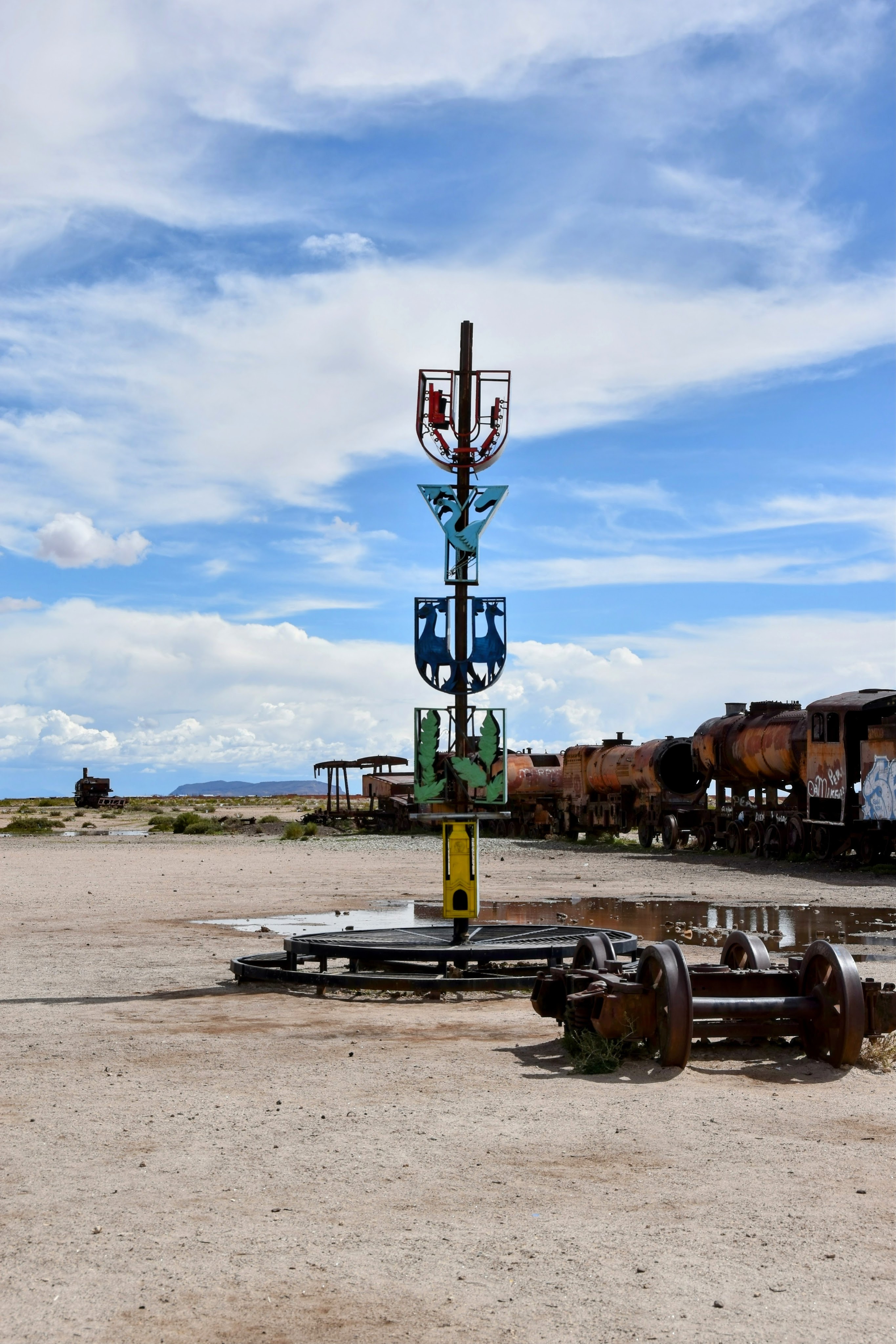
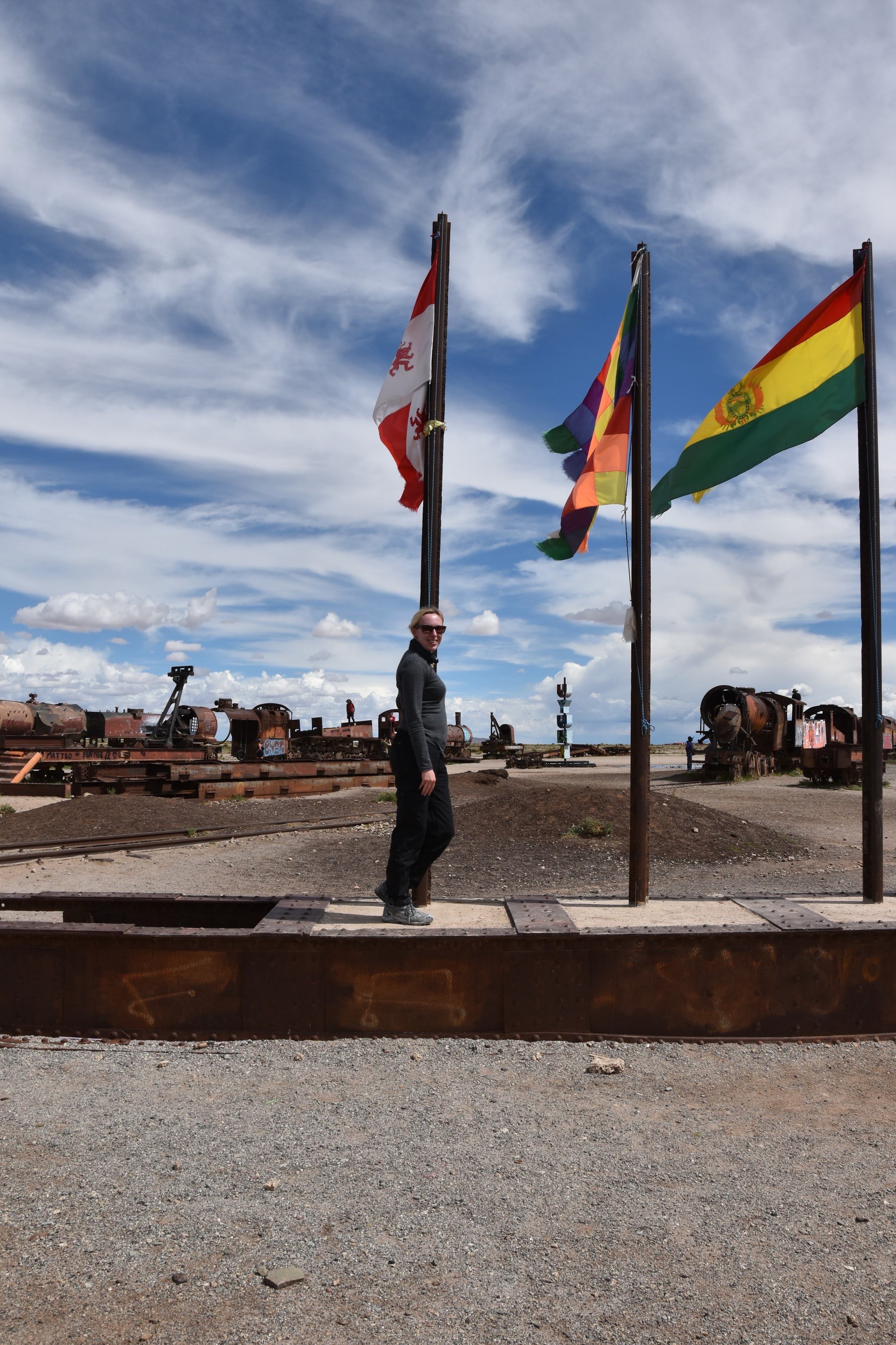

We were no longer the only Brits around, as apparently many of the locomotives had been imported from the UK. Once the Bolivian mining industry faltered though, the carriages were left to rust and rot in the desert. Just as the trains have been left alone, so too are tourists left to their own devices, and we could explore to our heart’s content…well, until Isidro came to wrap up the tour.
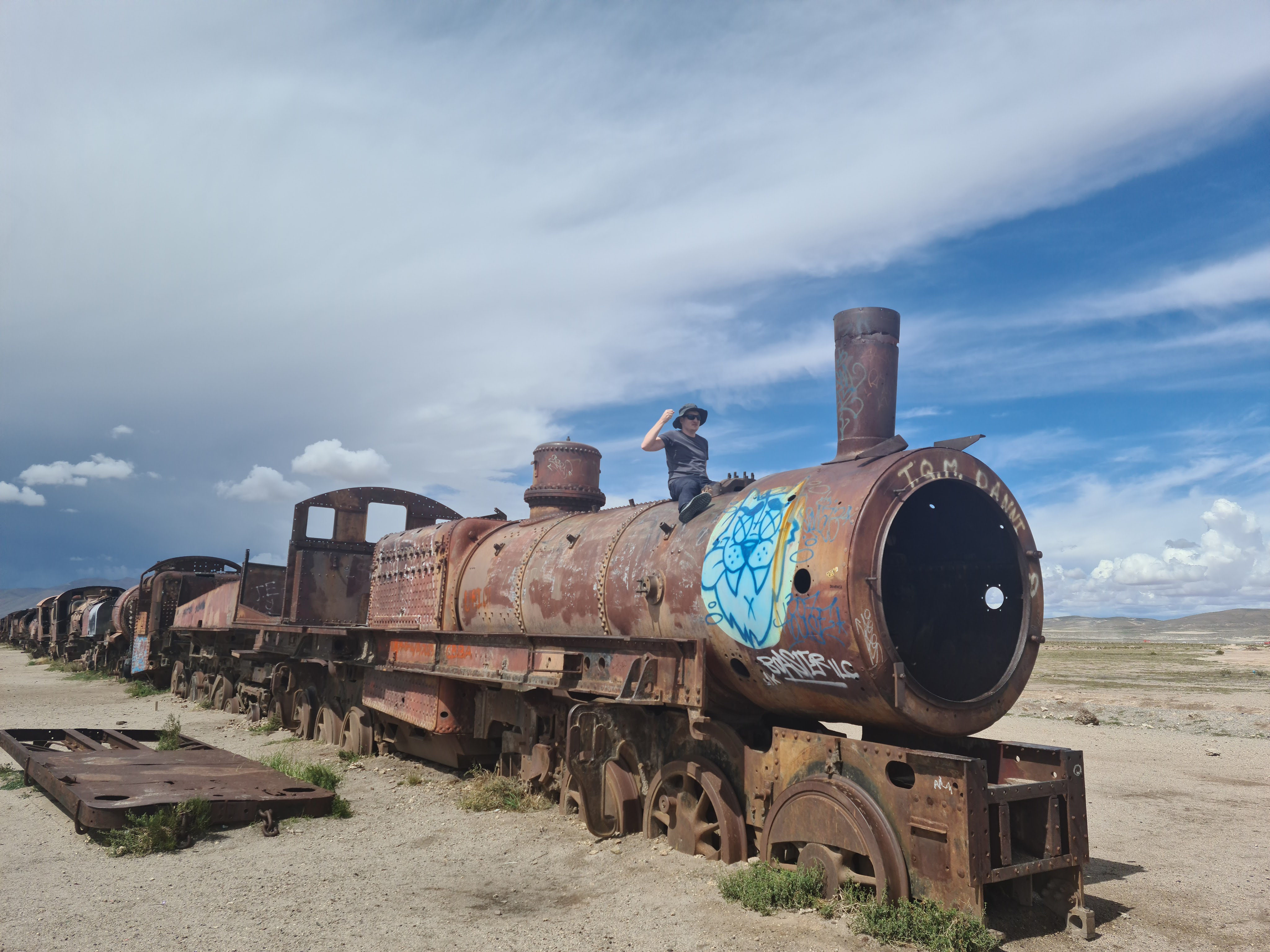
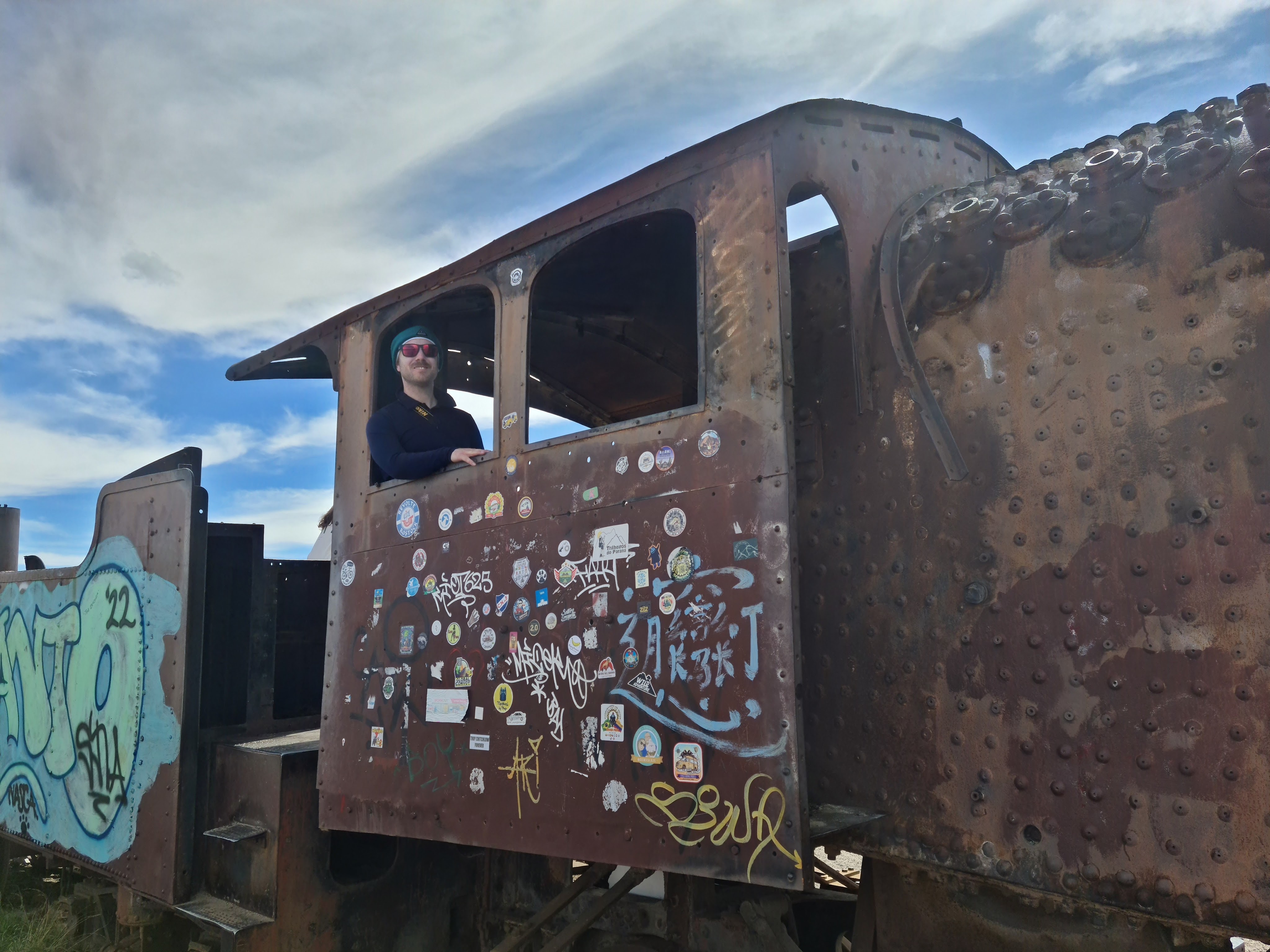
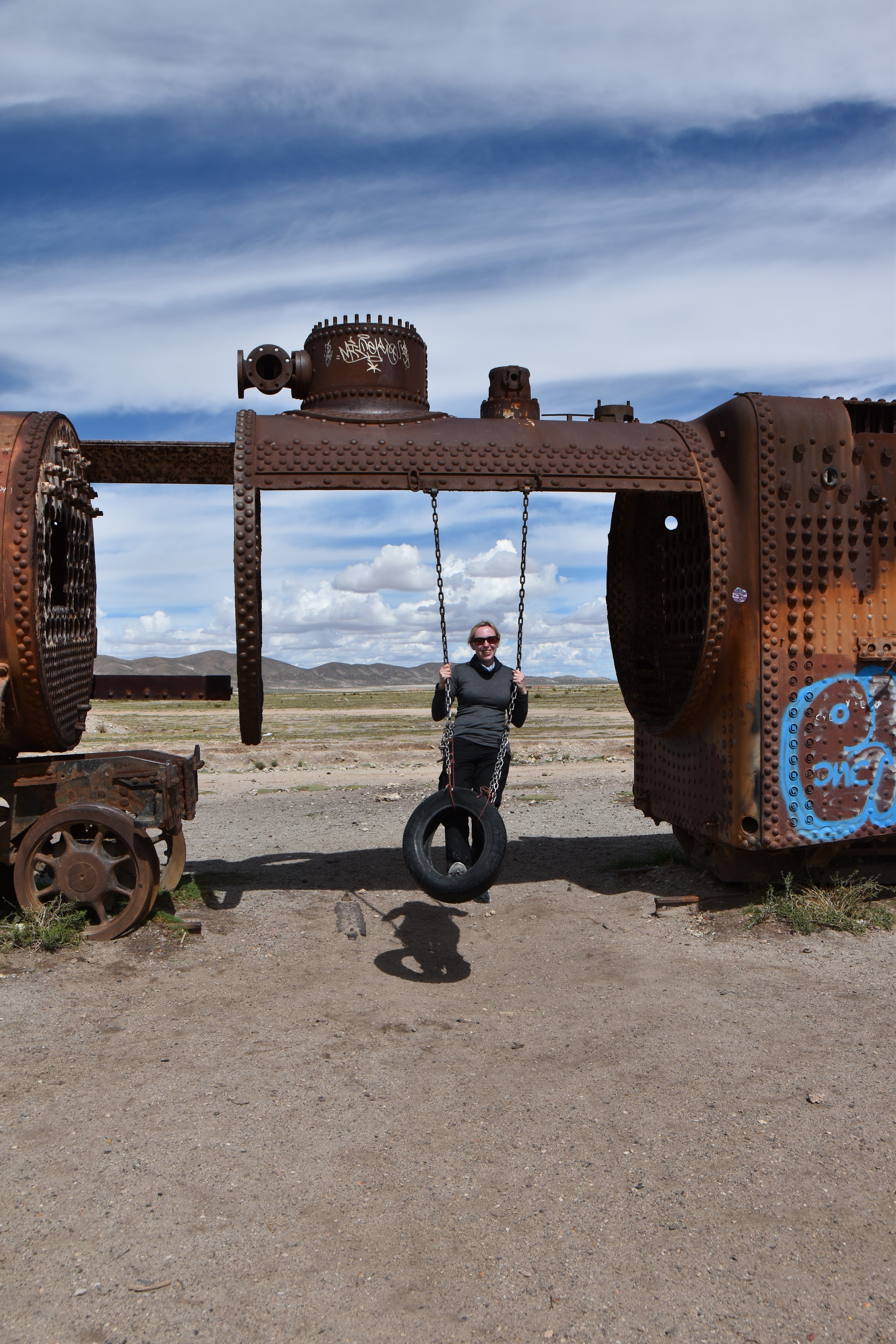
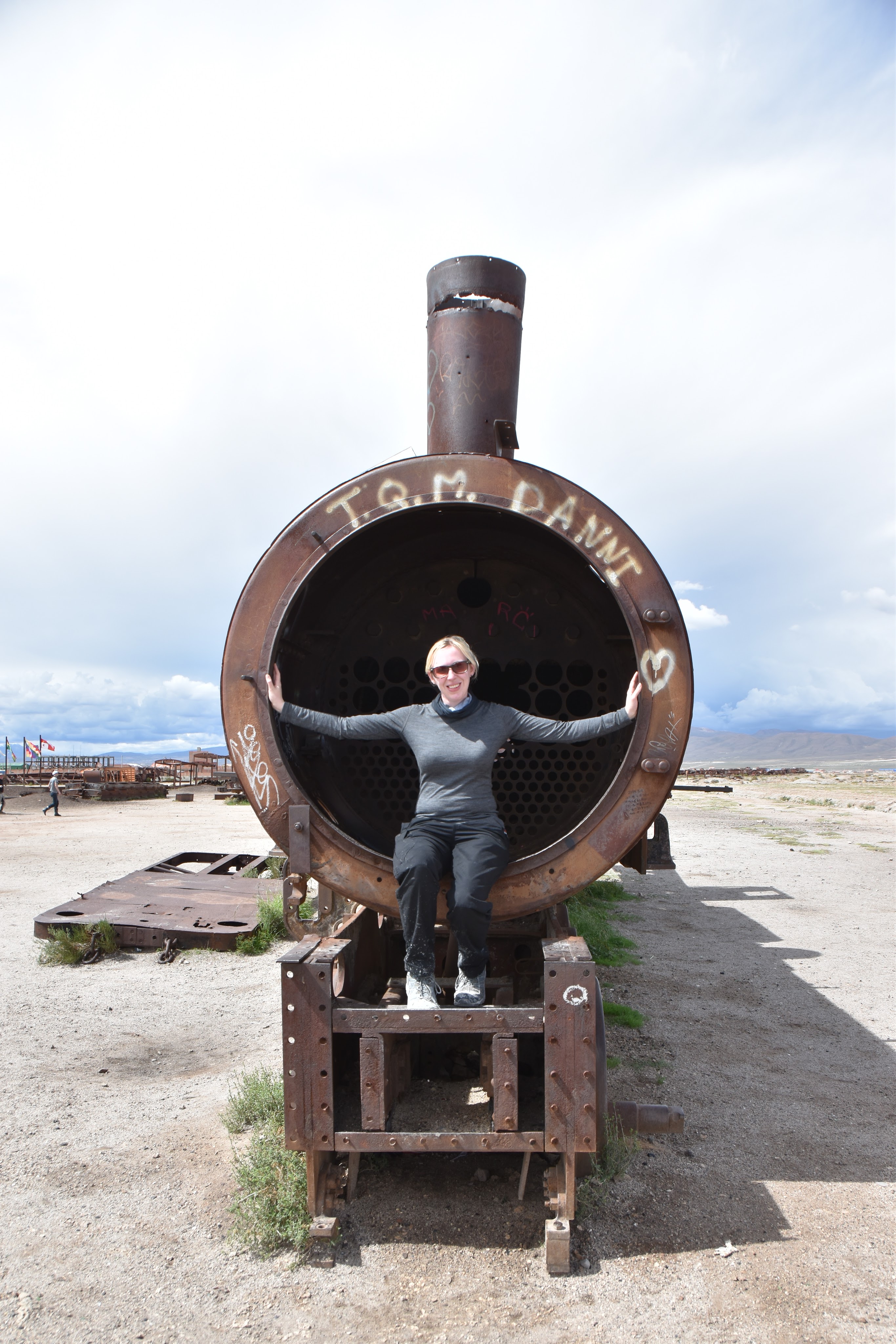
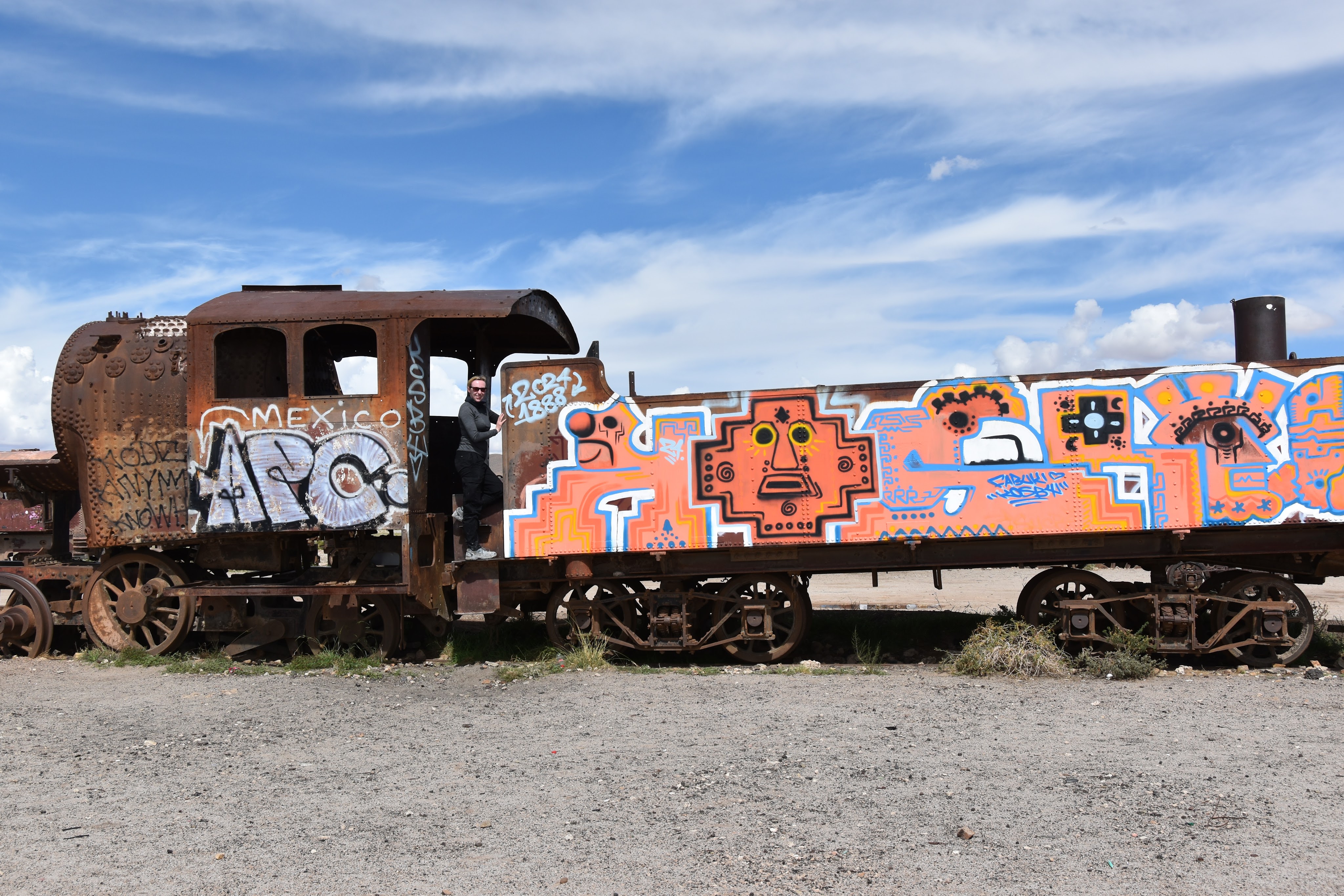
We aren’t quite there in my recap though.
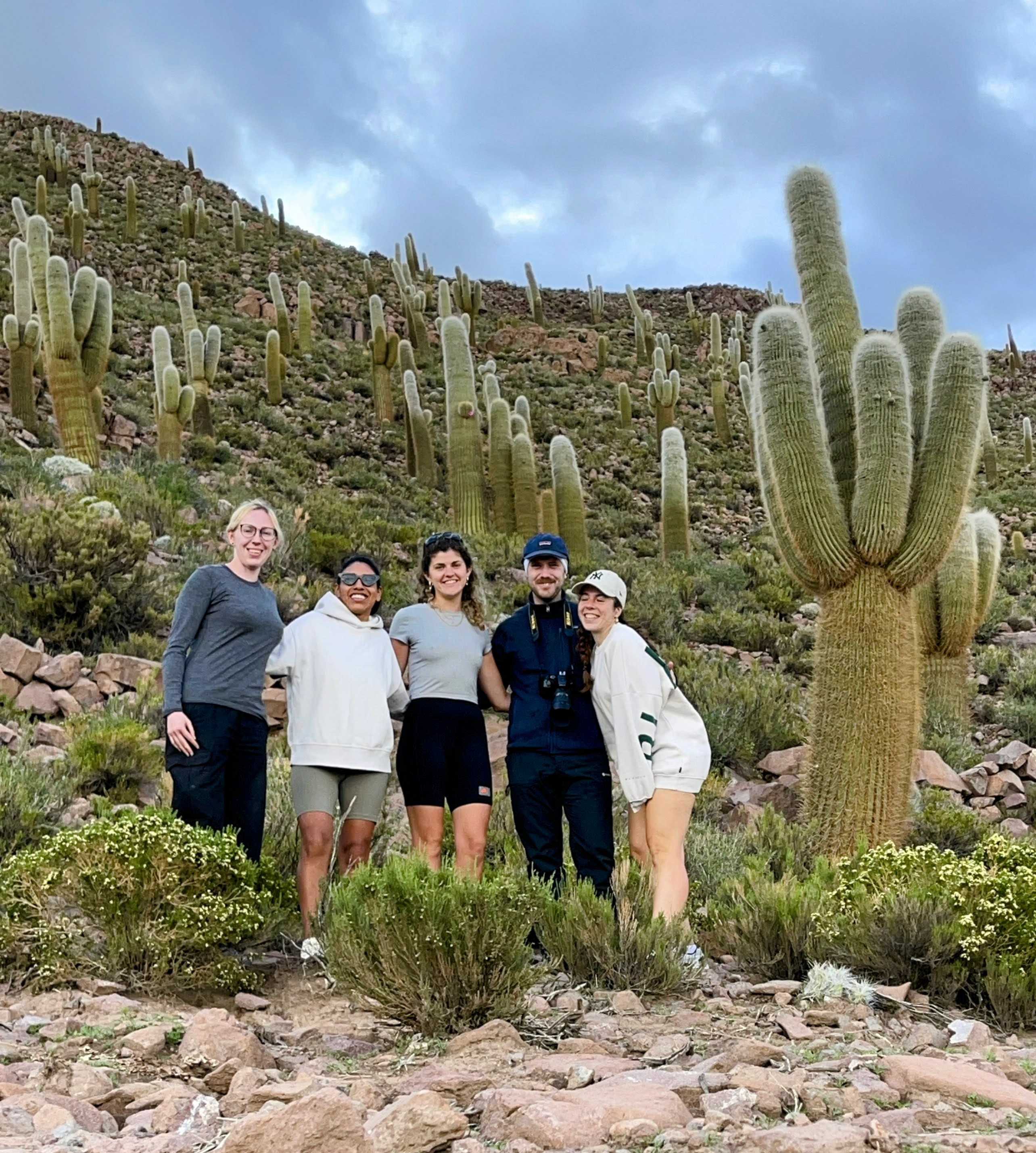
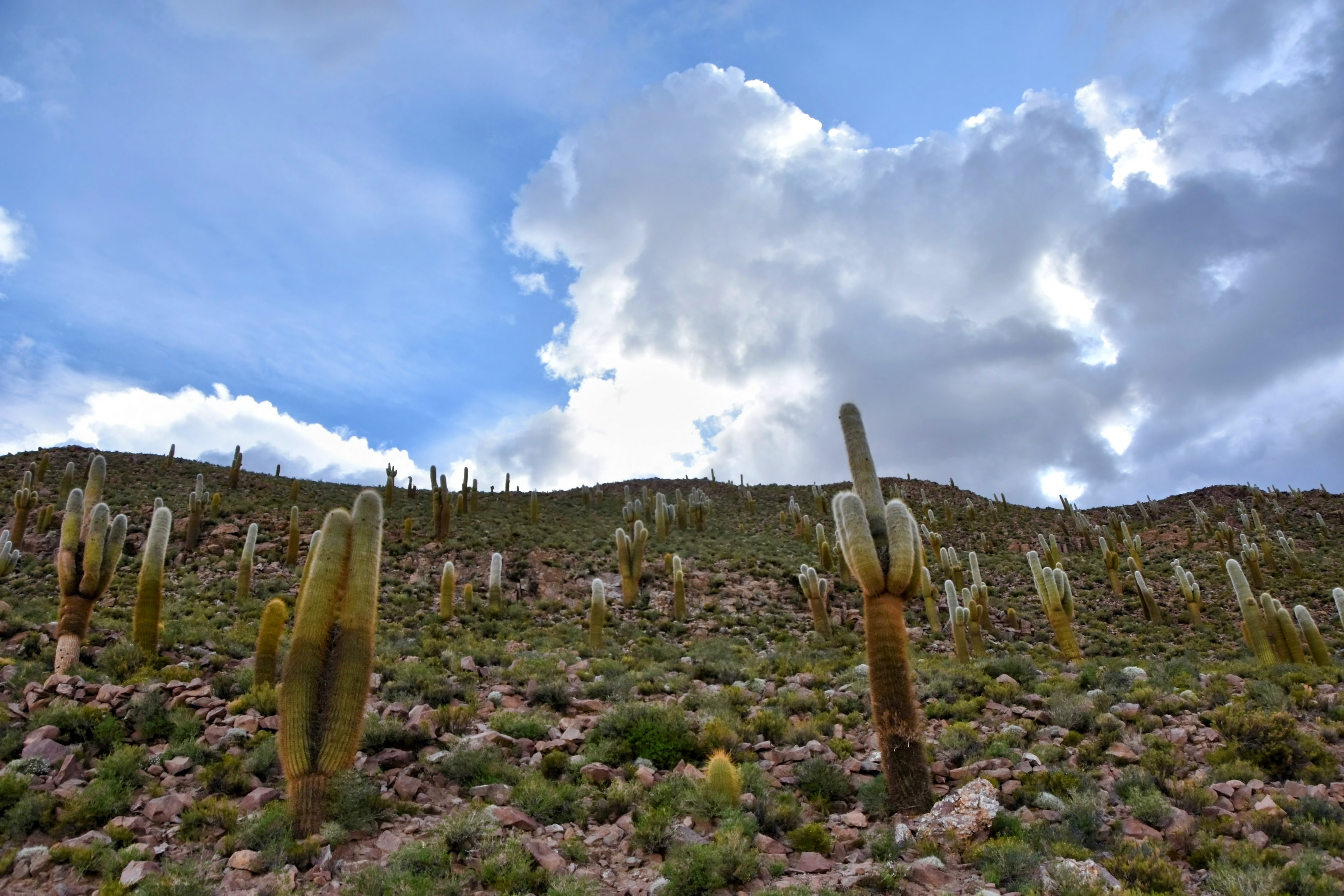
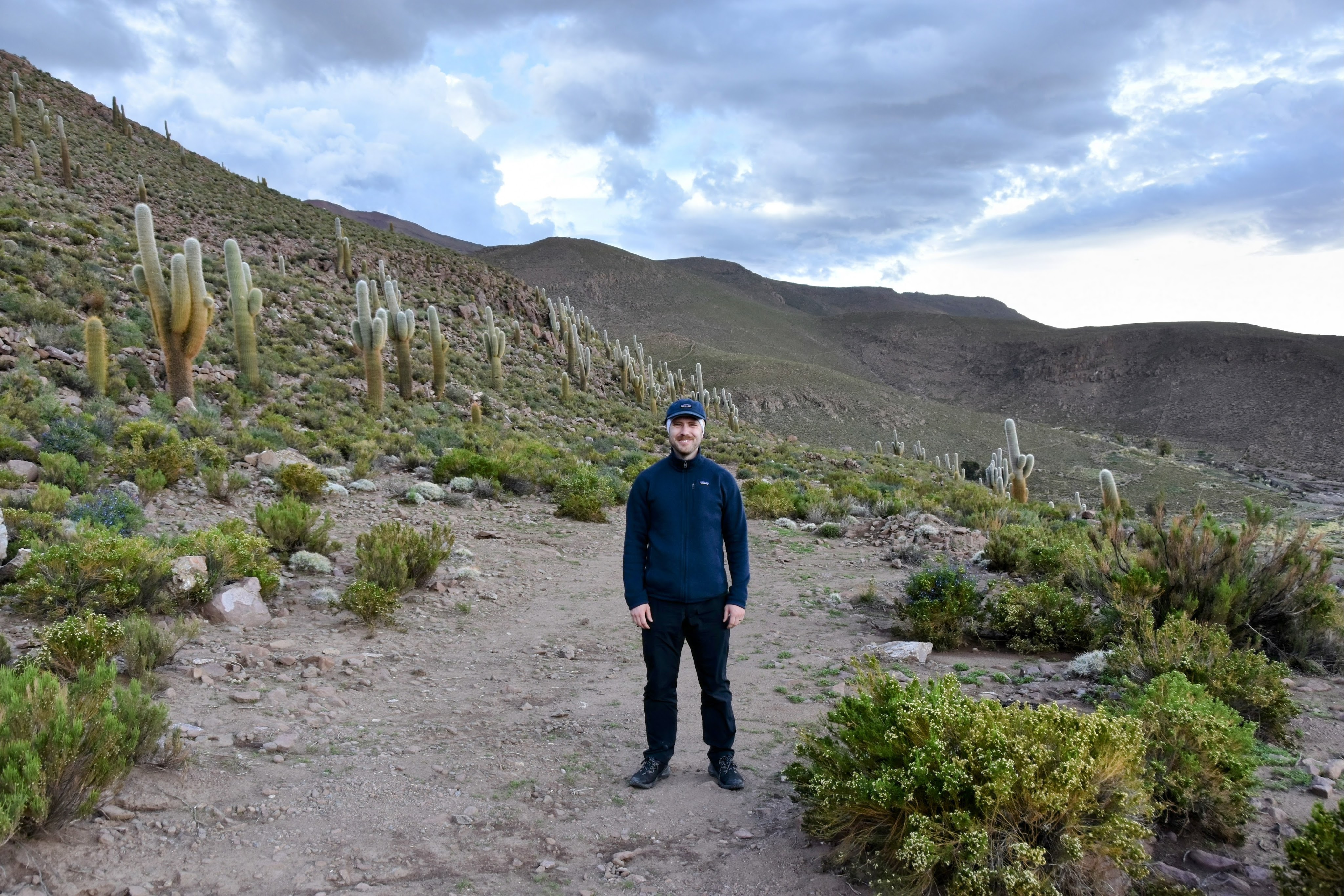
Back to day two, and after a quick stop to check out some giant cacti, we got checked into the “Hotel de Sal”. True to name, a number of features were made of salt including the wall finishes, decorations and bedroom furnishings.
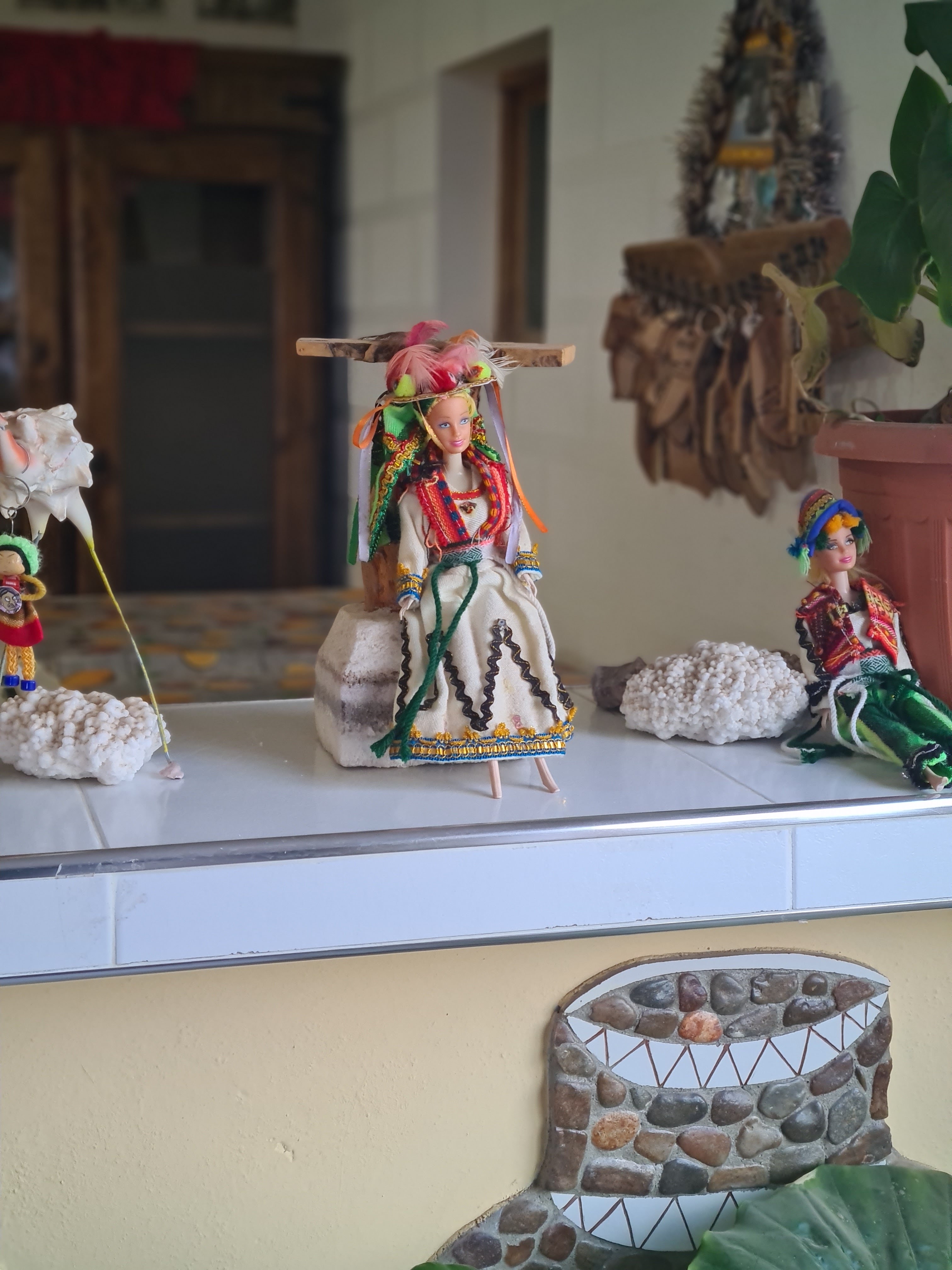
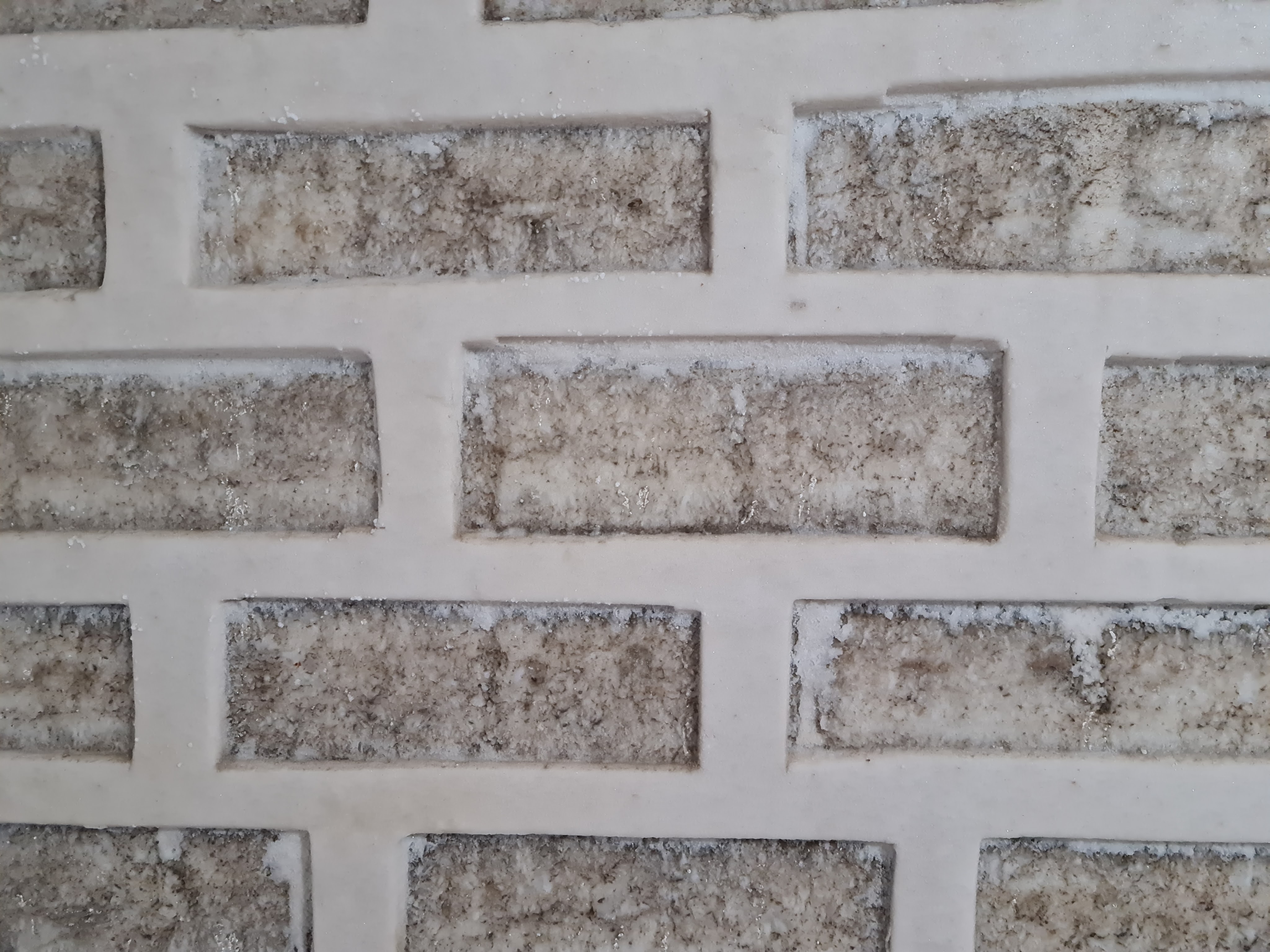

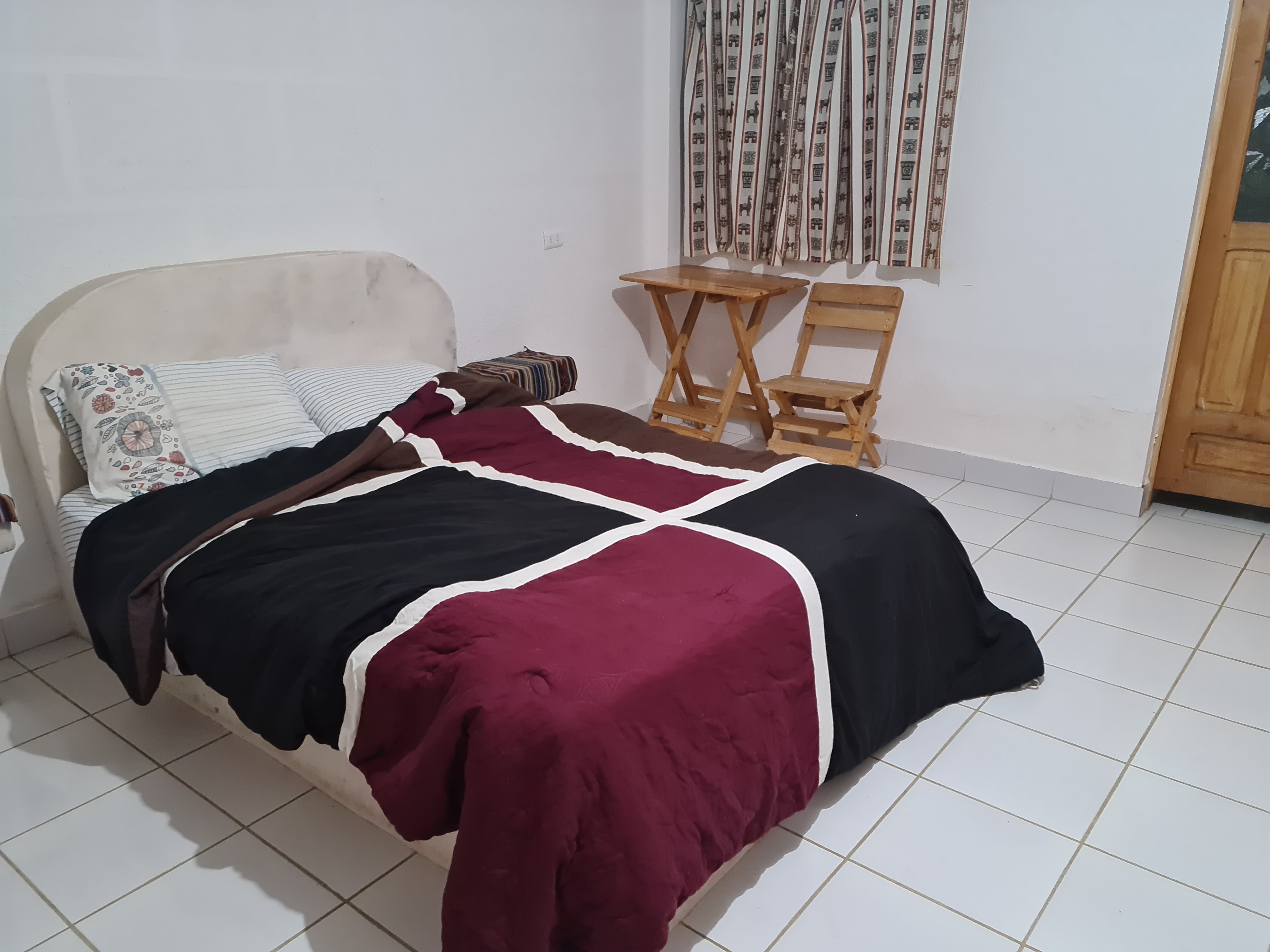
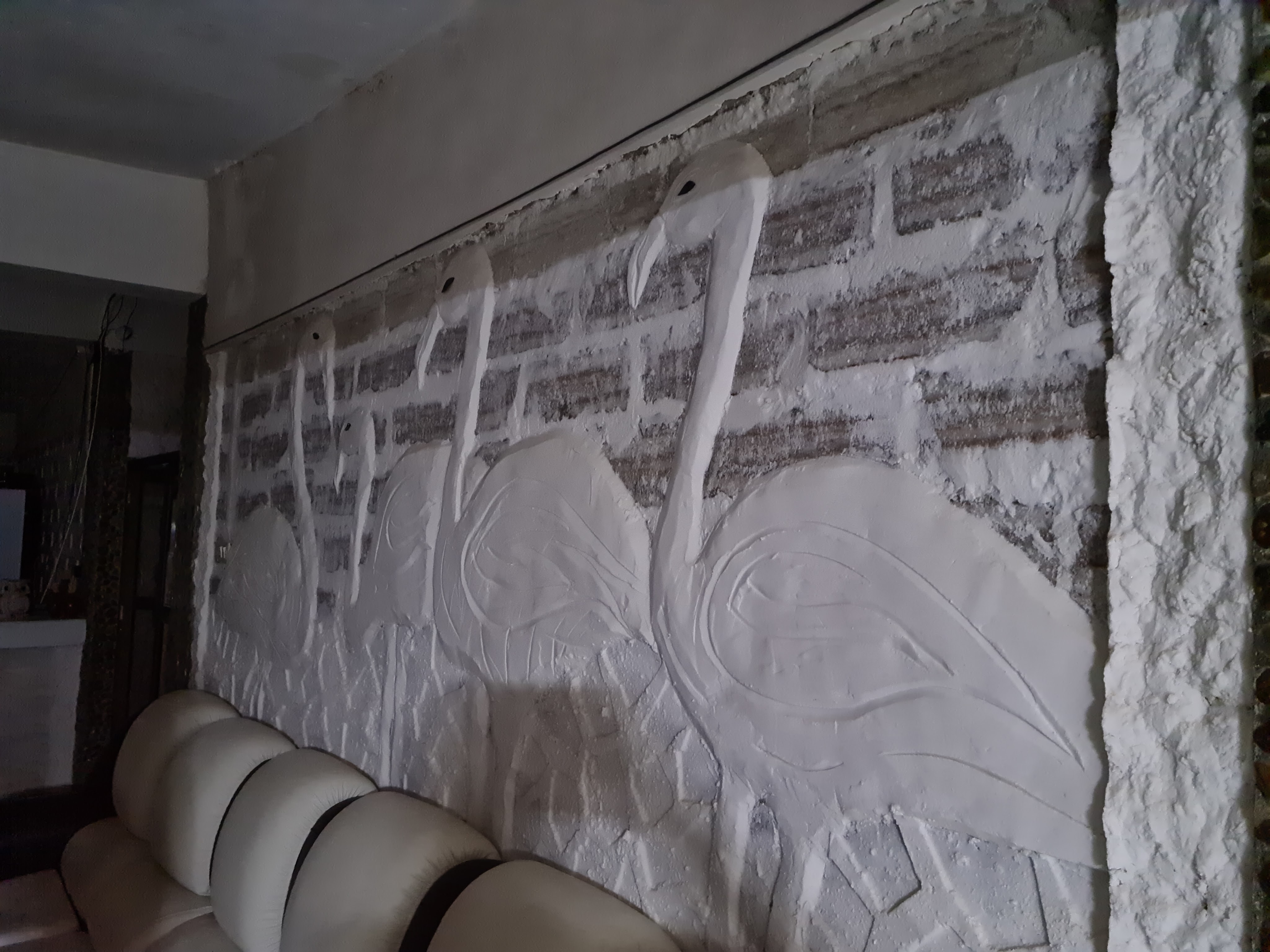
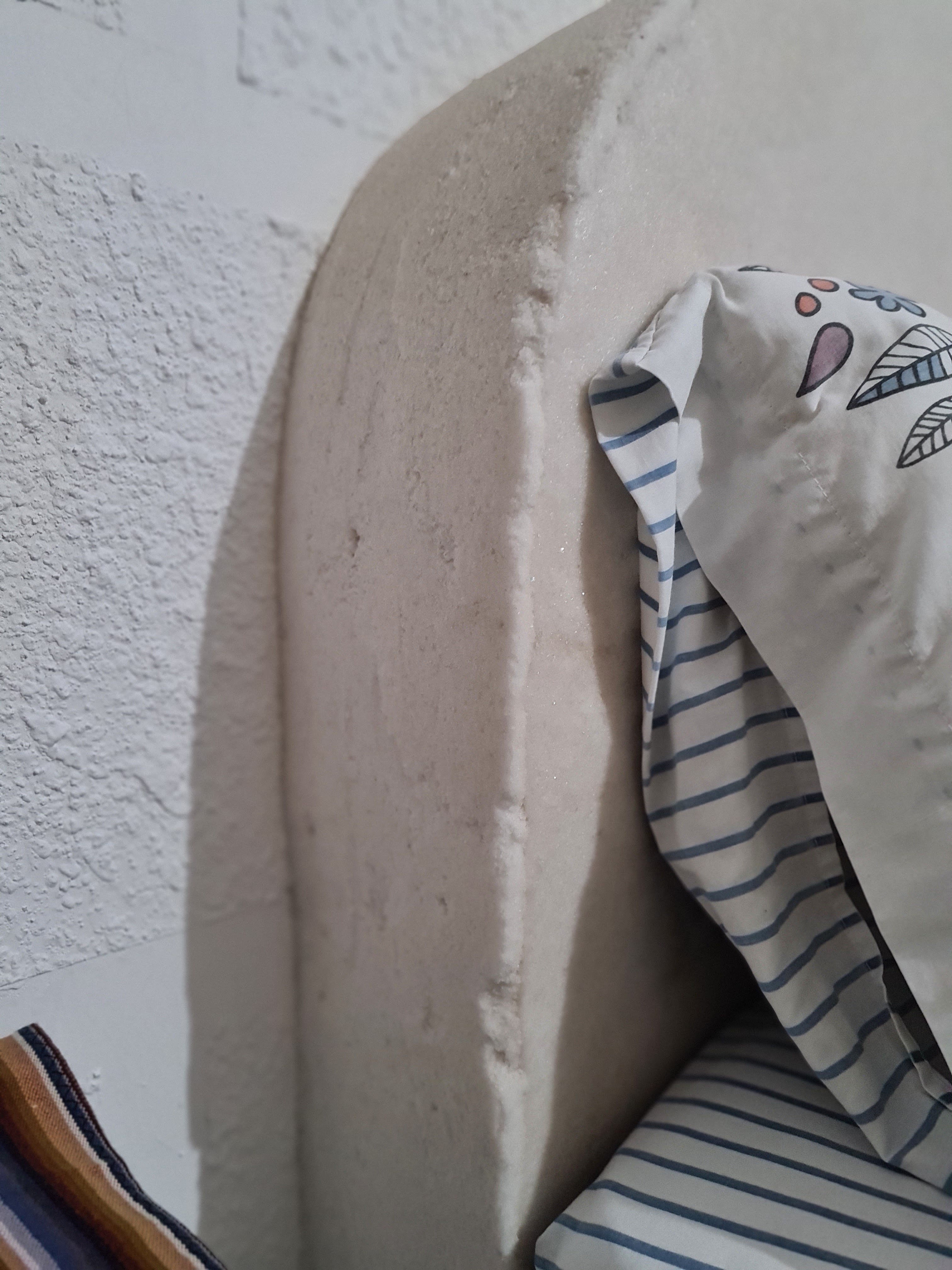
As we tucked into dinner, an unusually militant Isidro informed us that the next day the jeep was to be loaded at 4.20 and we would leave at 4.30am.
Despite our best efforts, we were not quite to time next morning, but nonetheless were the first jeep on the road. Clearly Isidro had got the measure of our group by this point and may have fudged the required departure time a little. We’d left our timekeeping skills in Chile and 30 minute stops tended to run closer to an hour. In our defence, that’s just adapting to South American custom, and if we ever asked Isidro how long it would be until the next stop, he was equally capable of understating!
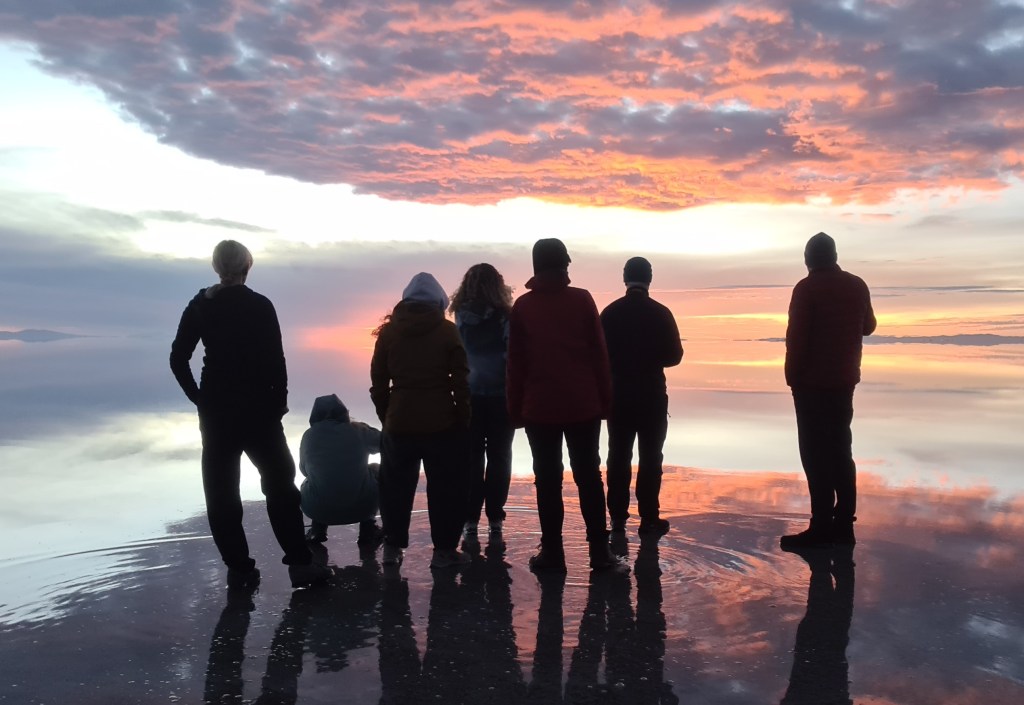
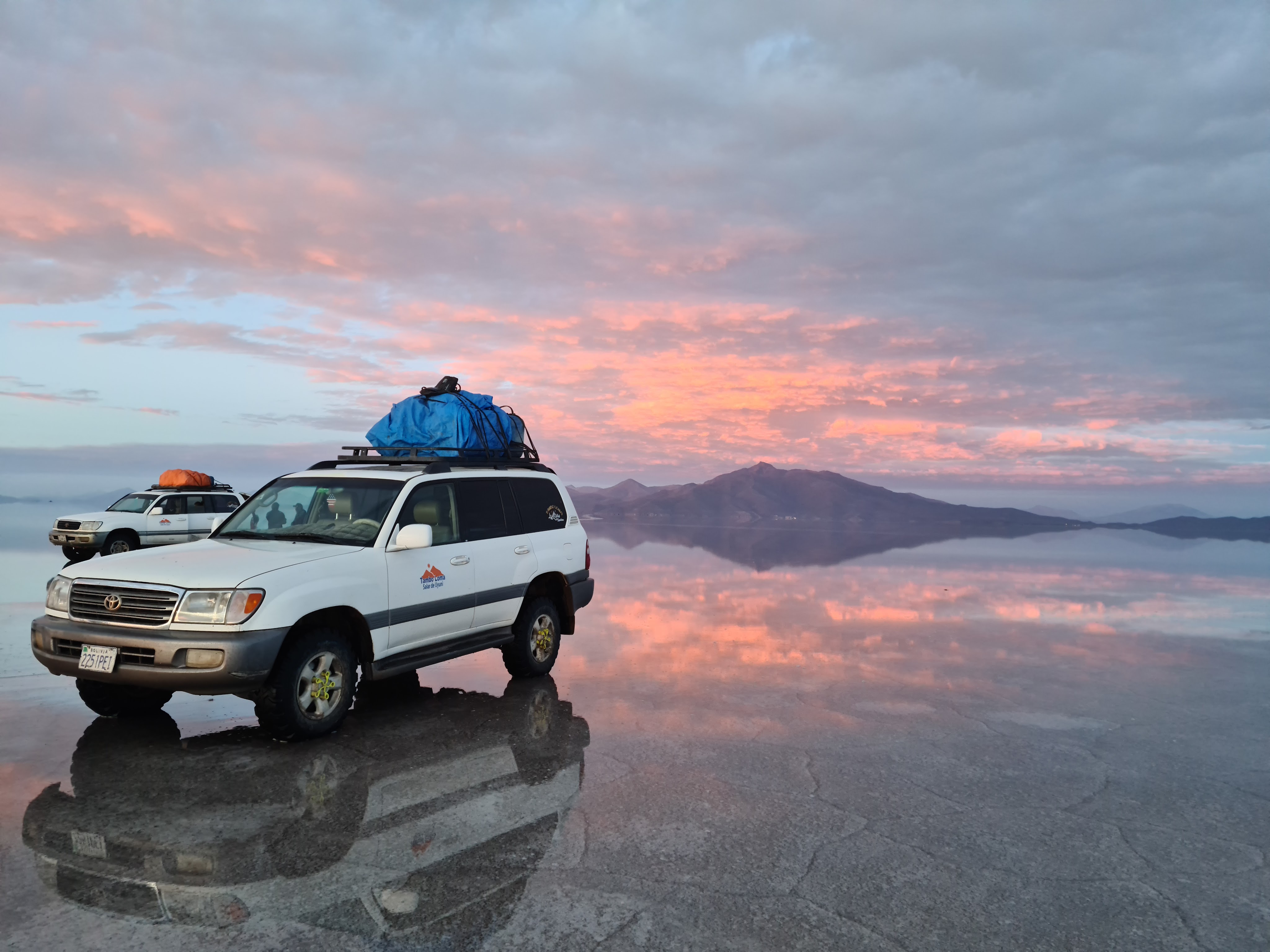
After a little bit of dozing in the dark, we woke just in time to see the distinctive orange of sunrise starting to appear through the windscreen as we headed east. Although the number of storms we’d seen had been good omens for the required flooding on the salt flats, it was still gratifying to hear the splash of water around the jeep tires as we hit the plains.
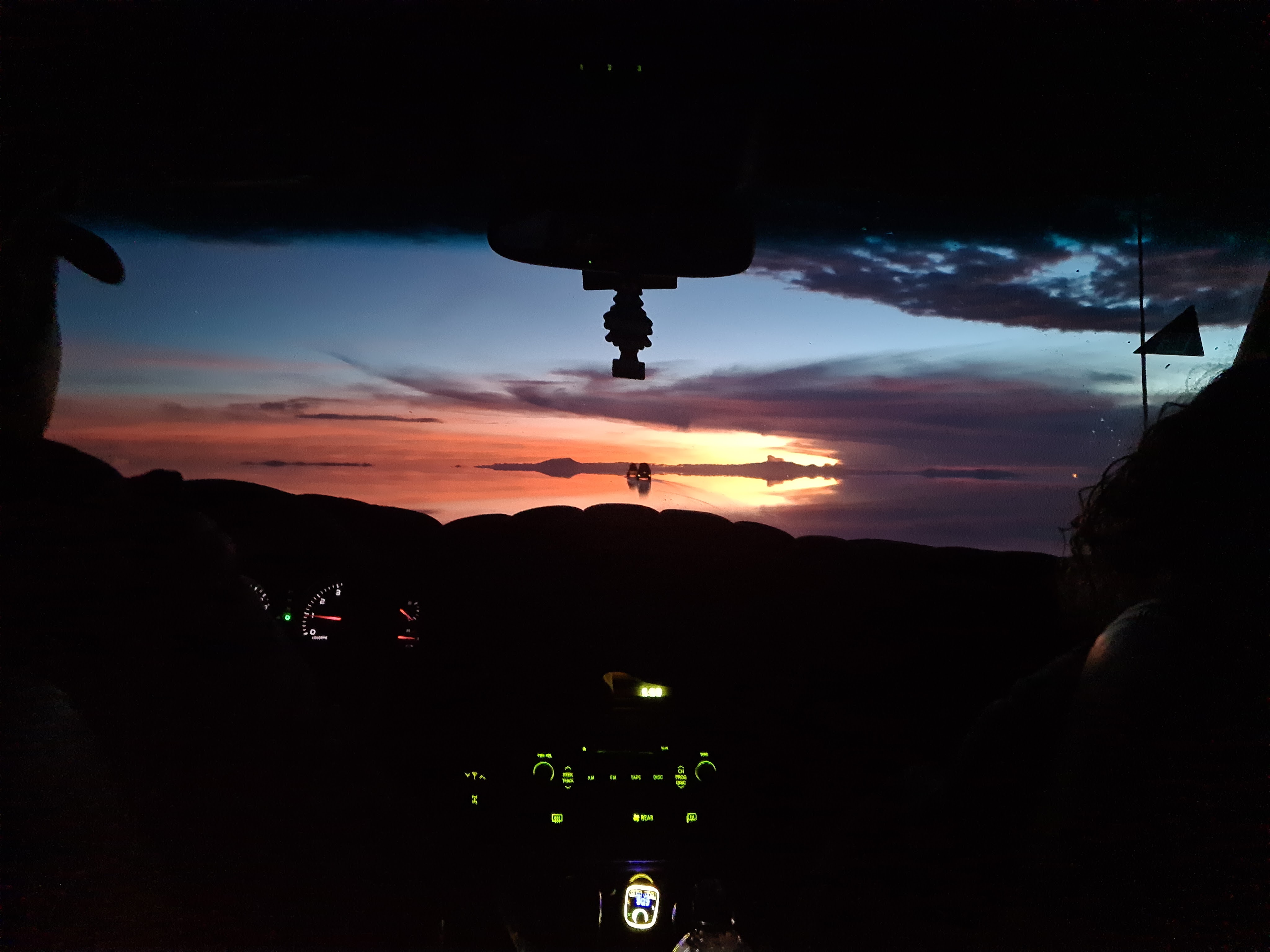
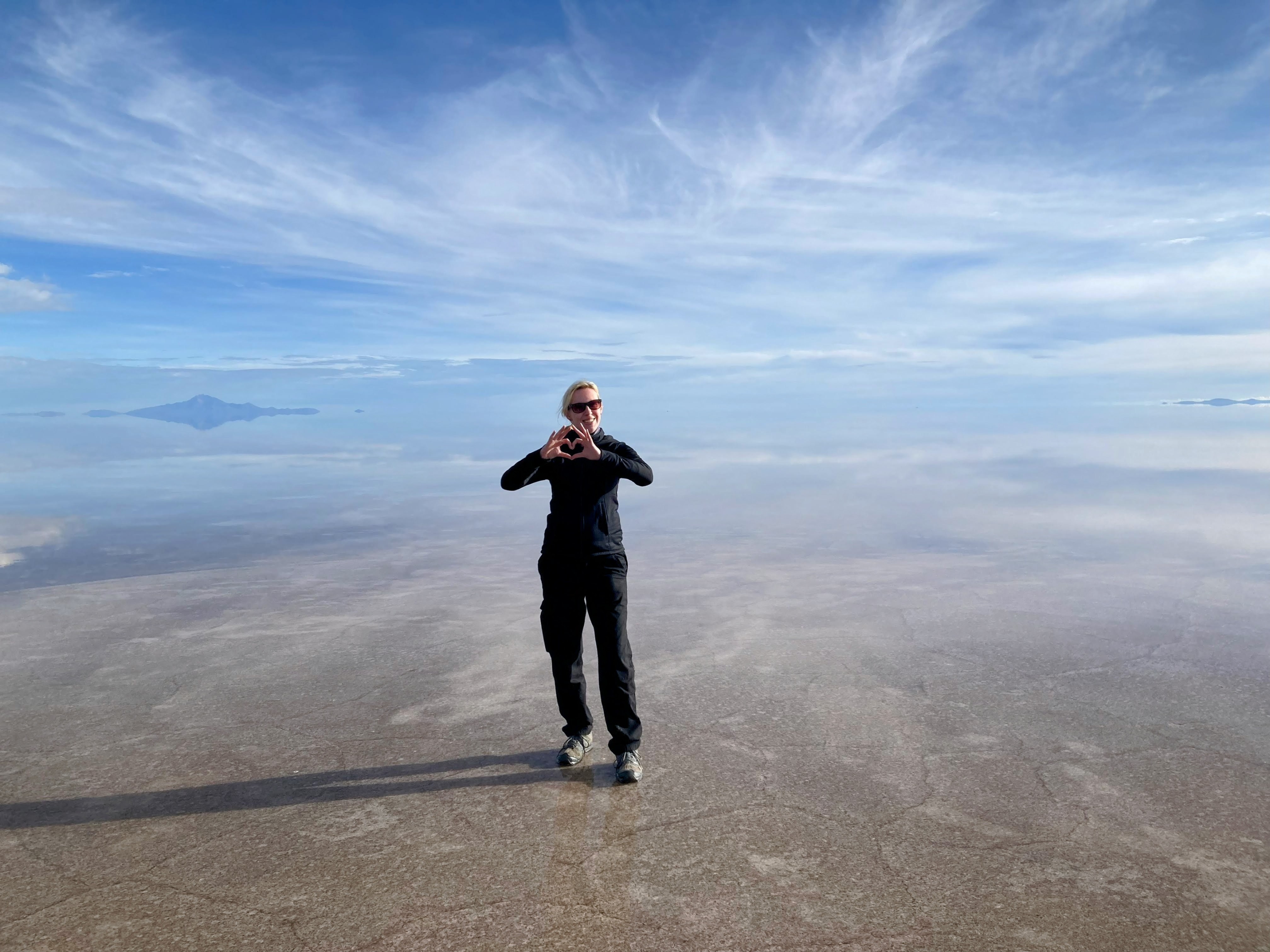
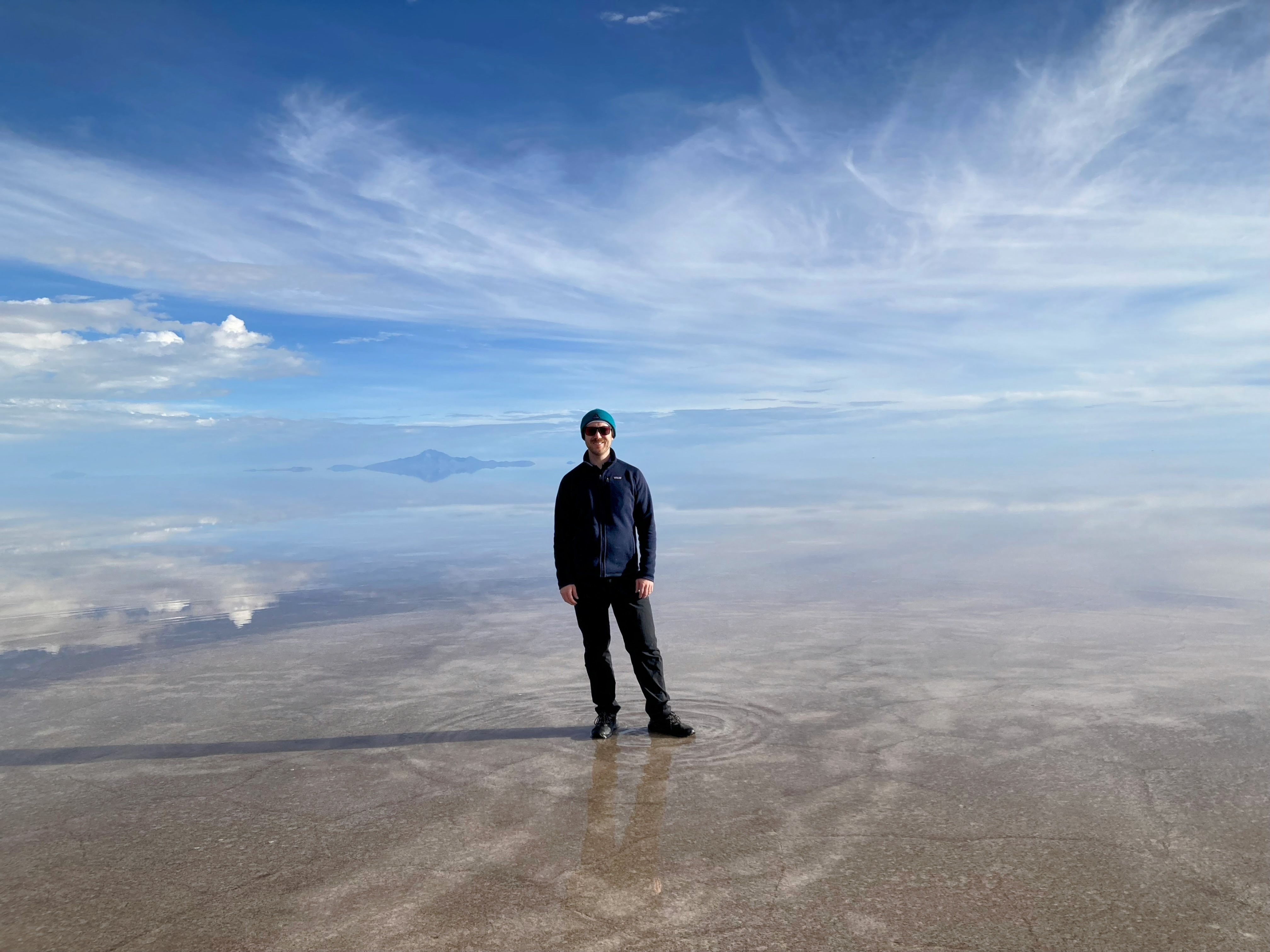
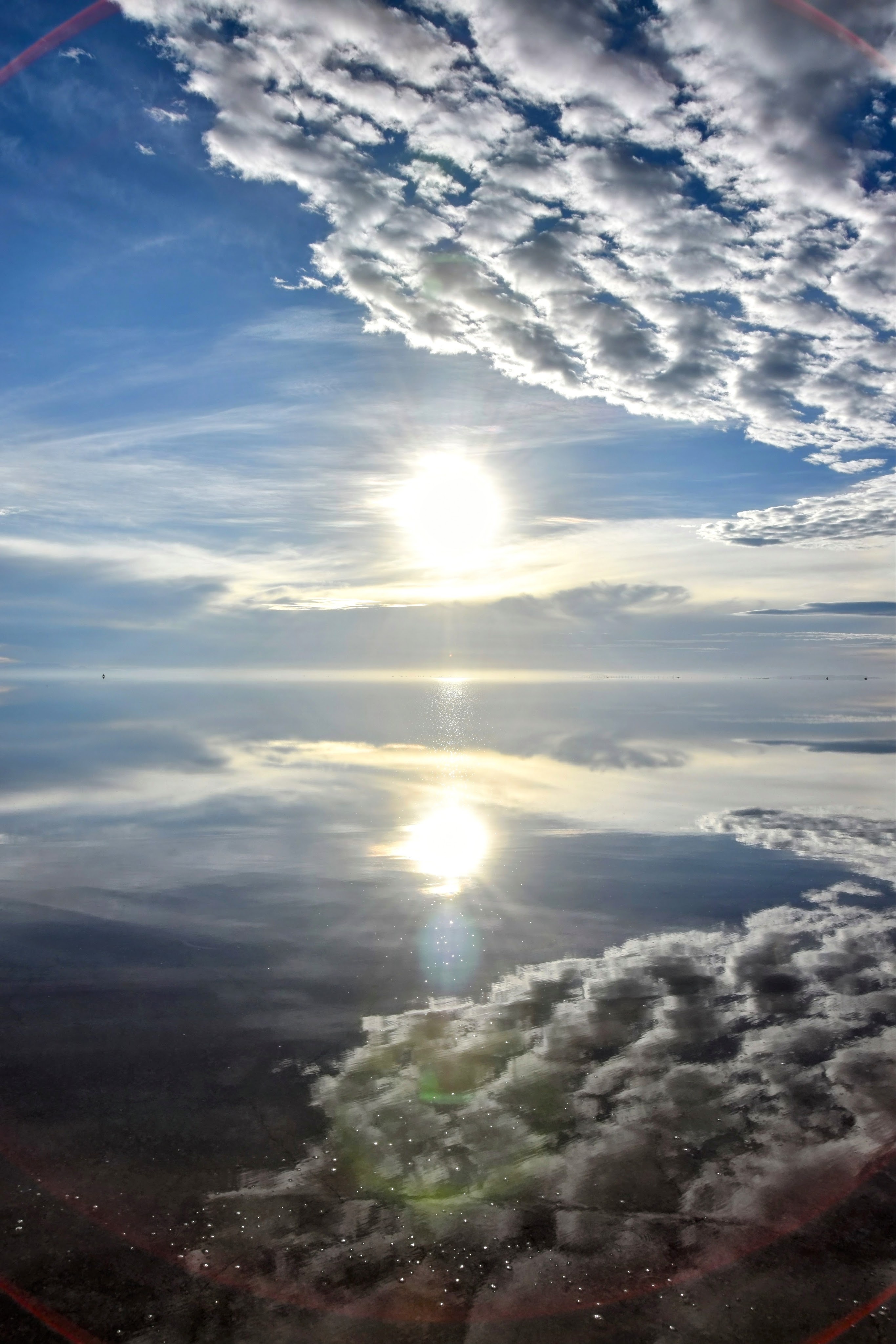
Looking out either side of the jeep, at first I thought there was some unchanging grassy land underneath us. It hadn’t occurred to me that even in the dark, the mirror effect would be visible and what I was seeing beneath us was the reflection of the clouds. As the changing light made the sky come to life, it seemed to form ginormous ink blot tests around us. Perhaps appropriate, as the more the flats lit up, the more you had to question reality.

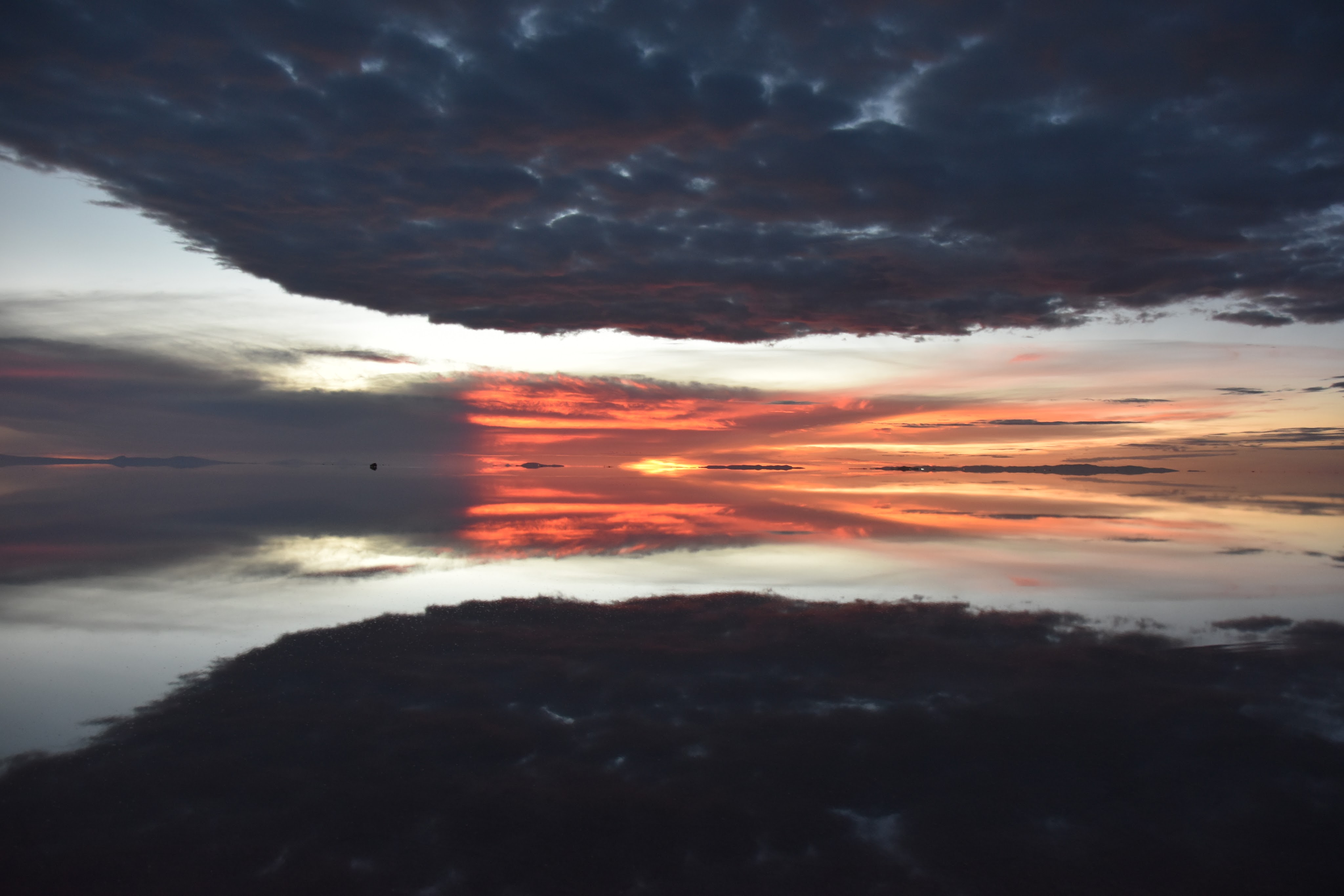
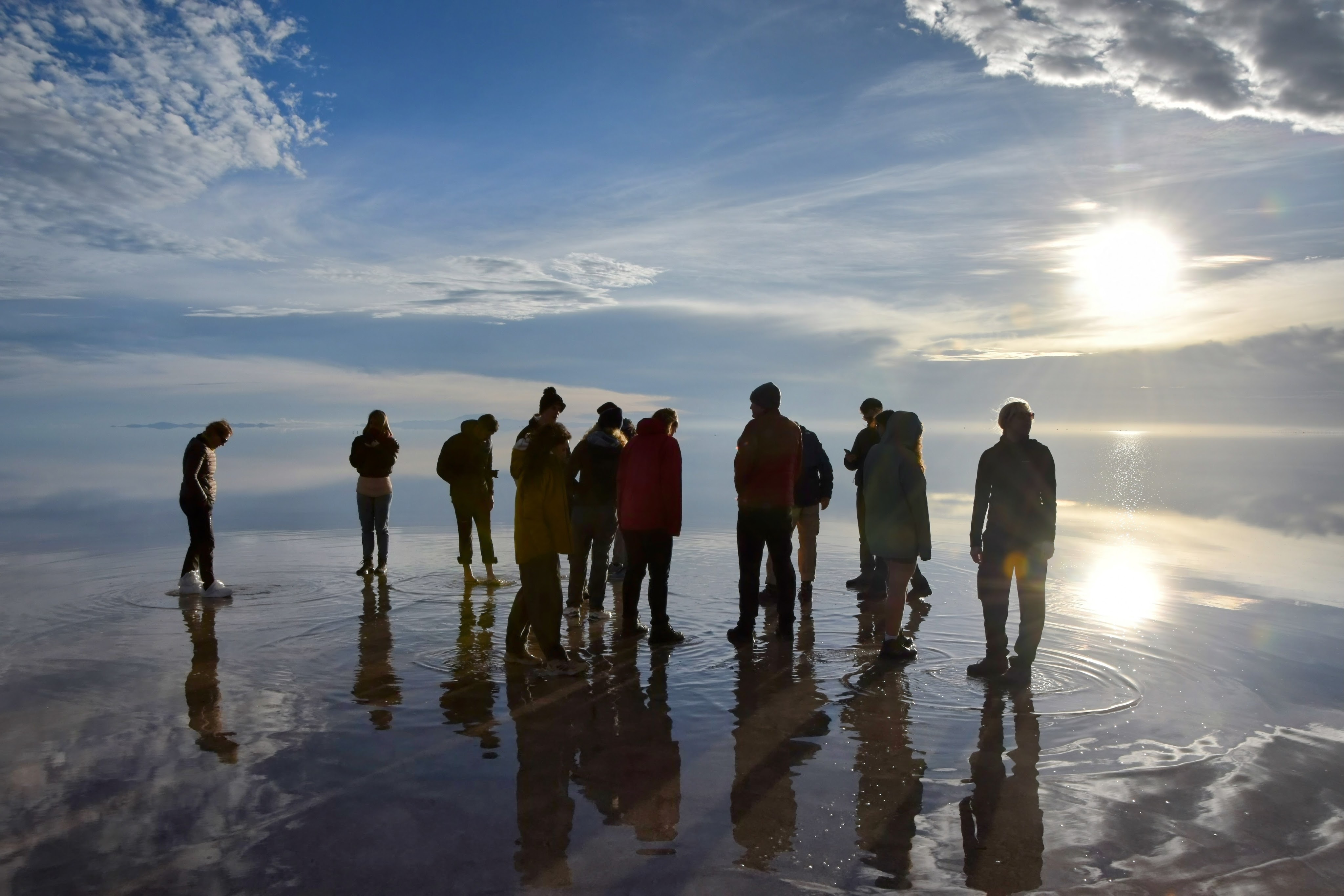
Eventually, we were far enough away from dry land to get the absolute best of the mirror effect and to enjoy the last of the sunrise. Emerging from the car into the crisp air, we were glad we had opted to wear our hiking boots instead of the suggested sandals. As much as it was a pain to have to scrub the salt out later, our feet would have ended up pretty cold otherwise. Plus it was a good test for the waterproofing of the boots!
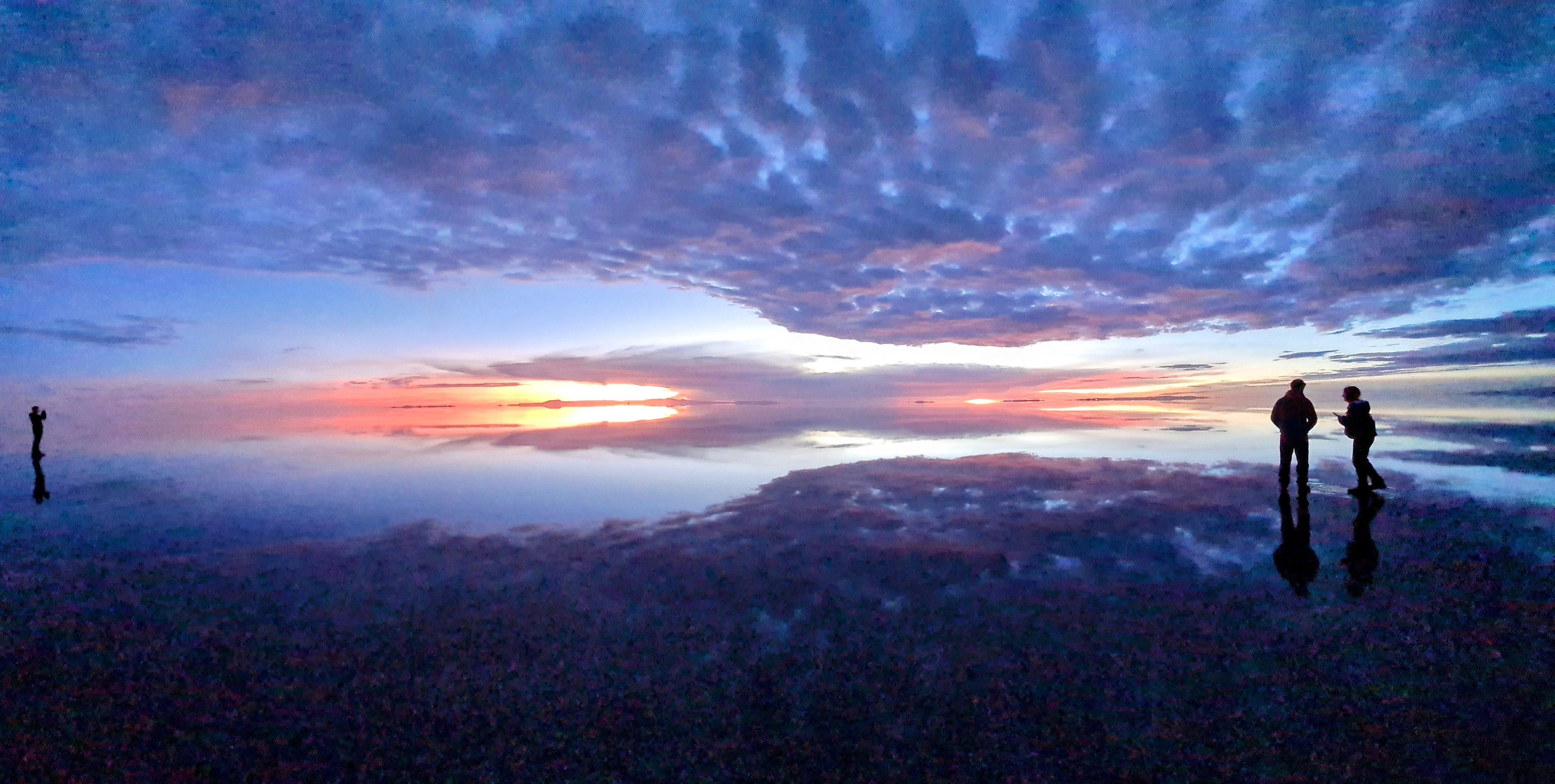
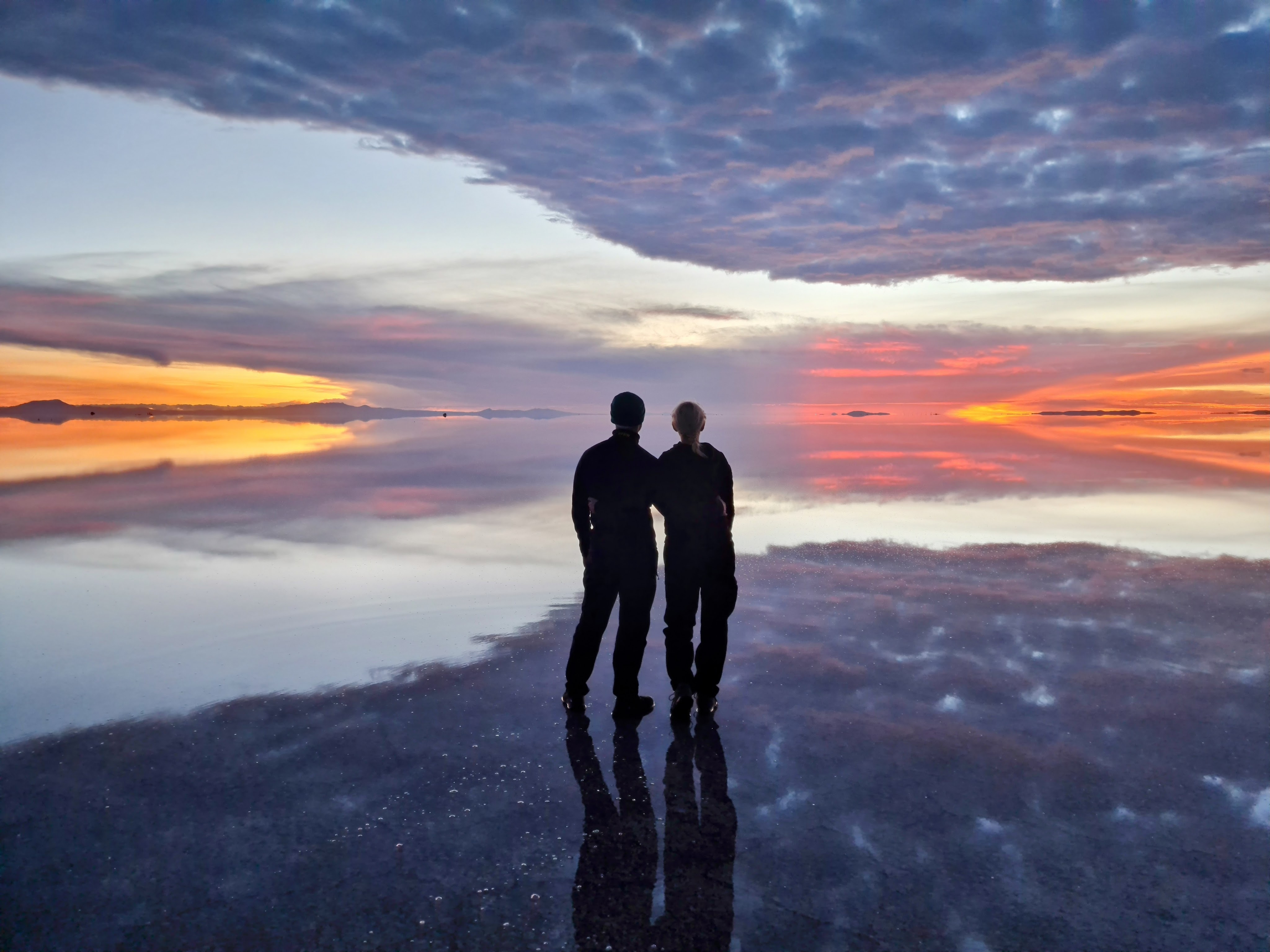
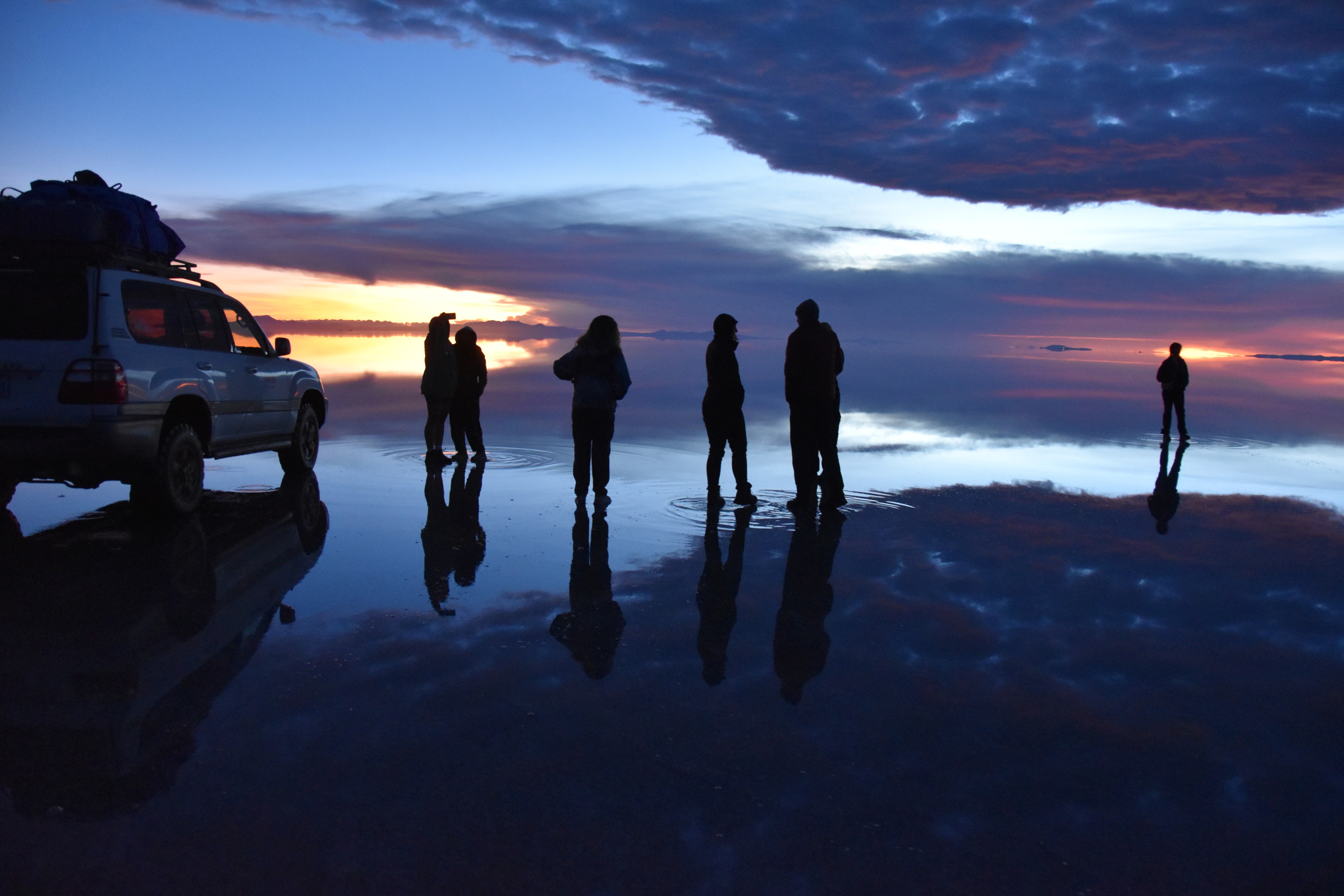
We all quietly took in the sunrise together, sometimes breaking apart for introspective or private moments to enjoy the overwhelming beauty of it all. The Uyuni salt flats are the largest salt flats in the world, and cover some 4,000 square miles. It was amazing just to be completely immersed in the natural wonder and have the most incredible panoramic views.
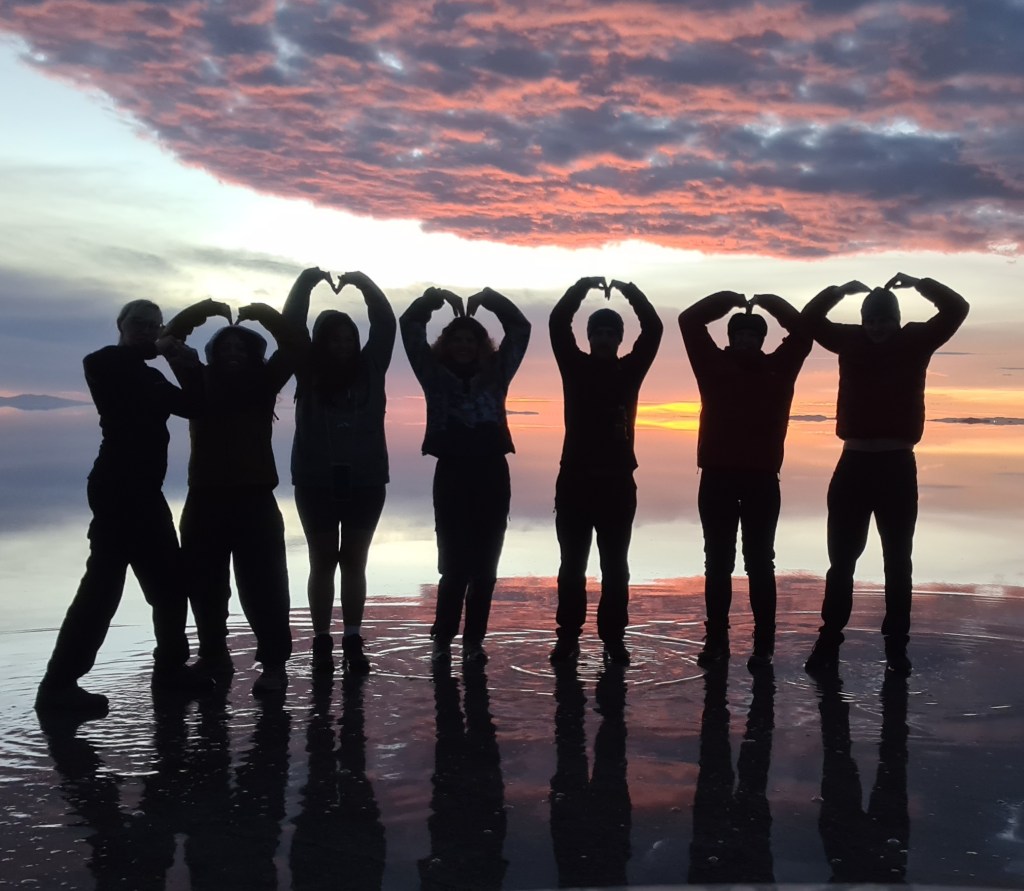
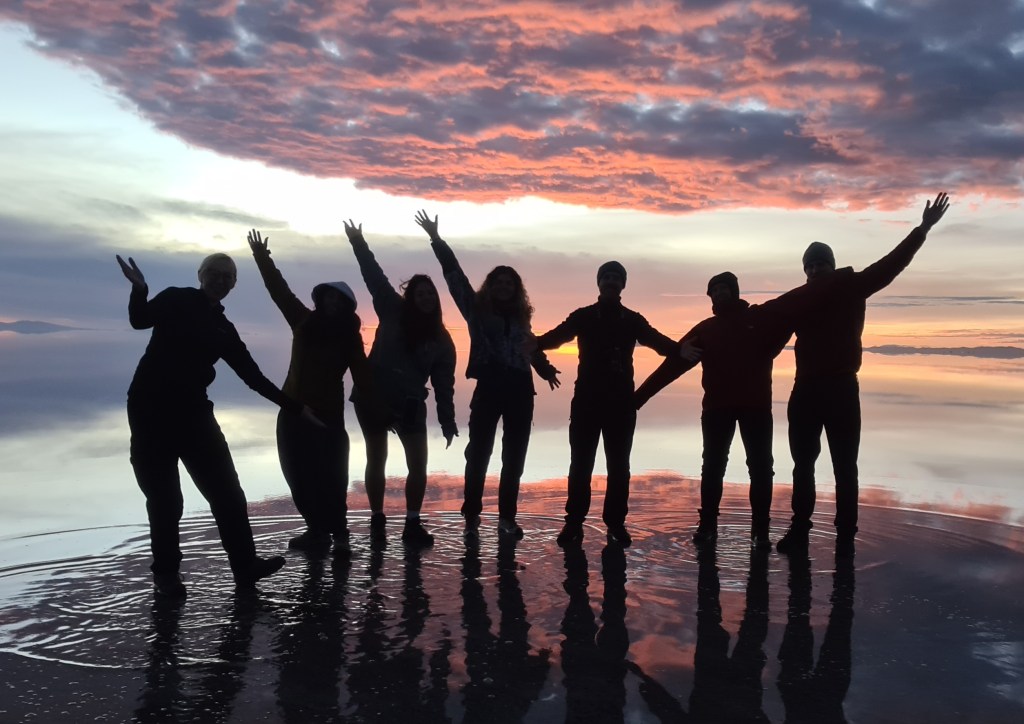

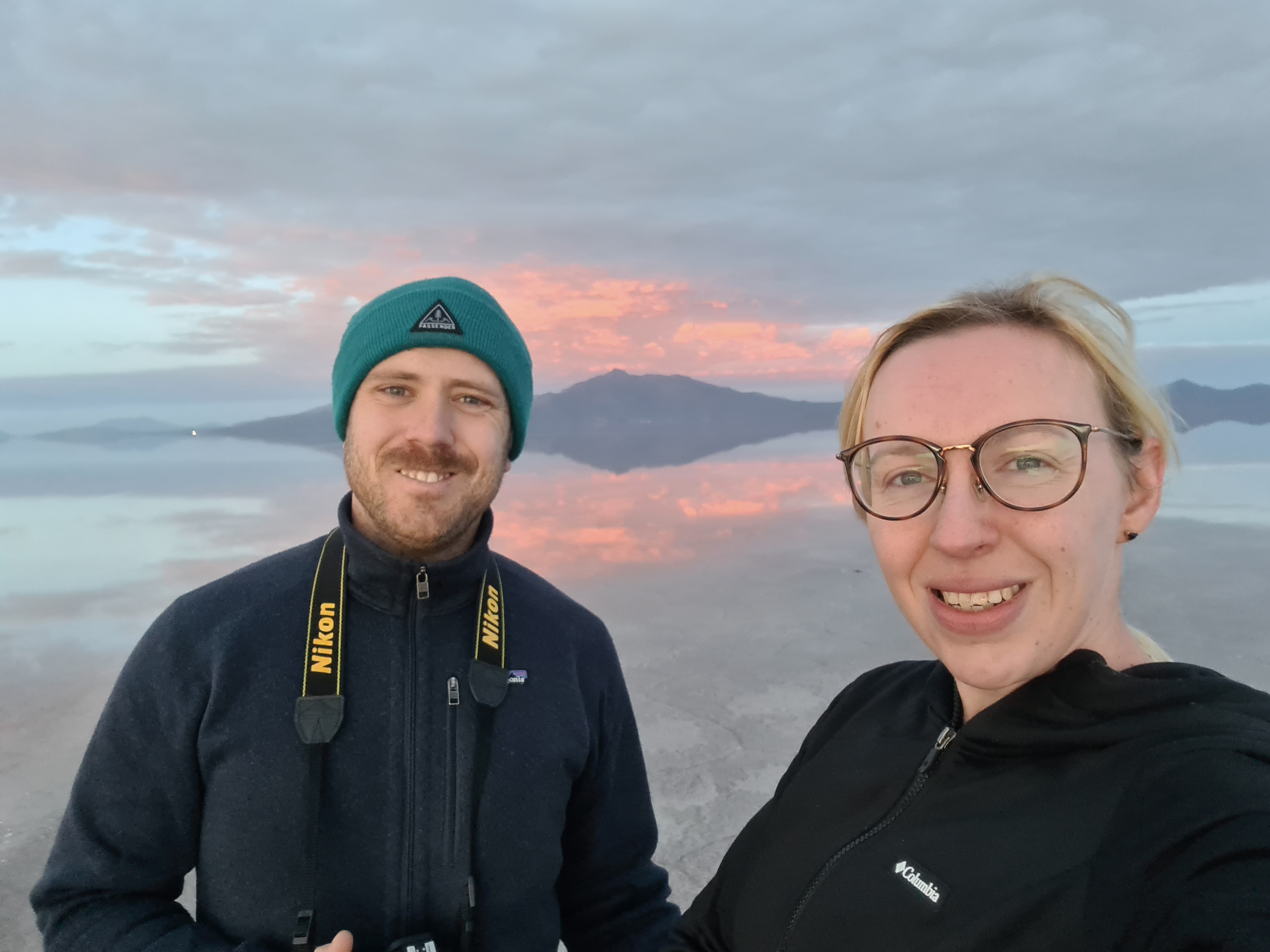

Once fuelled up with breakfast, the guides teamed up and brought the passengers from the various jeeps together.
Now, being woken at 4am, transported to the middle of a completely foreign environment, ordered into lines, then having various commands shouted at us from someone in a circling jeep – on paper, it reads like a daily routine from a detention camp. But what I’ve learnt between this exercise, and have heard elsewhere, is that Bolivians are pretty skilled in videography. The aerobic session was well worth it for the fun video created.
Not our group, but here is what it looks like being filmed…
And here is the finished result!:
We were allowed a bit more time to play around with photographs in the daylight, before reluctantly clambering back into the jeep.
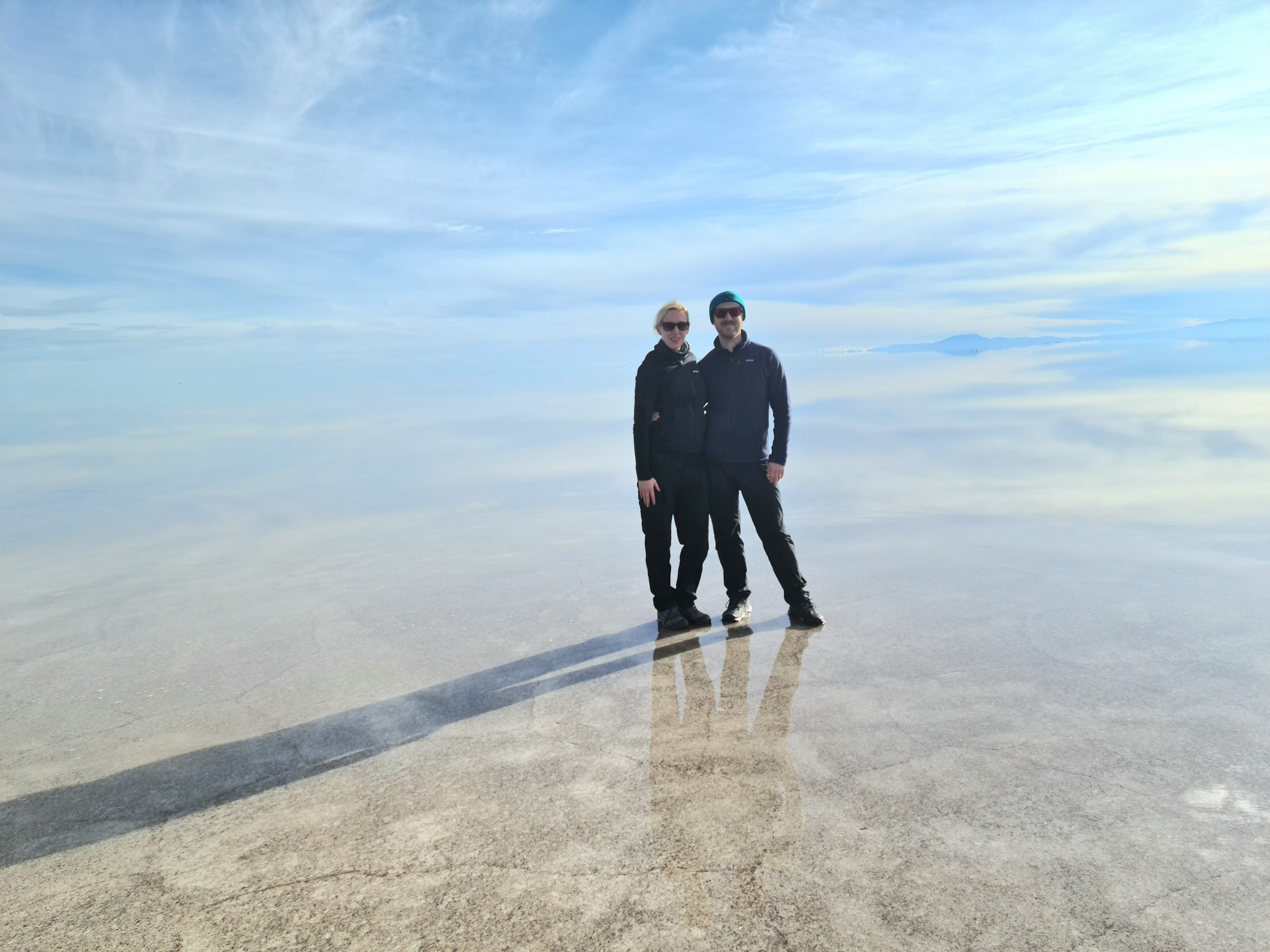
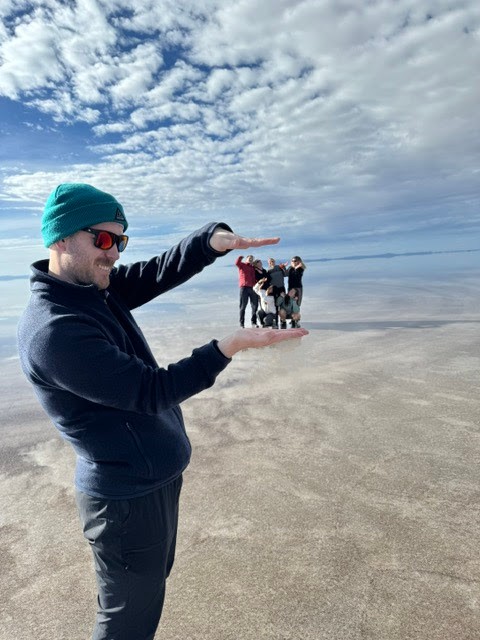
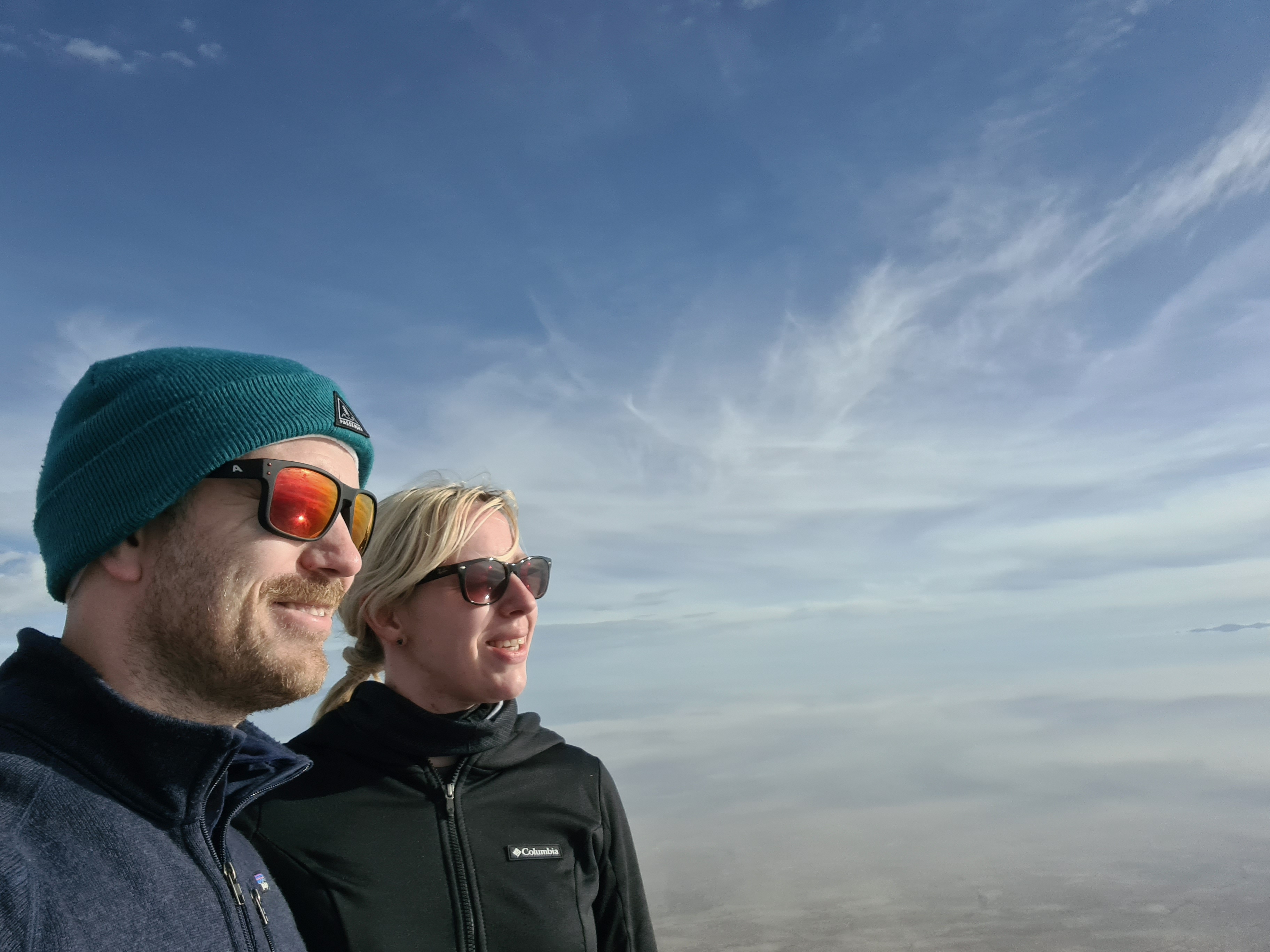
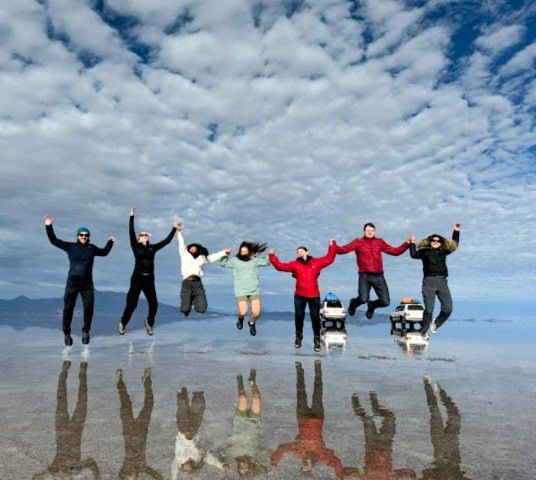
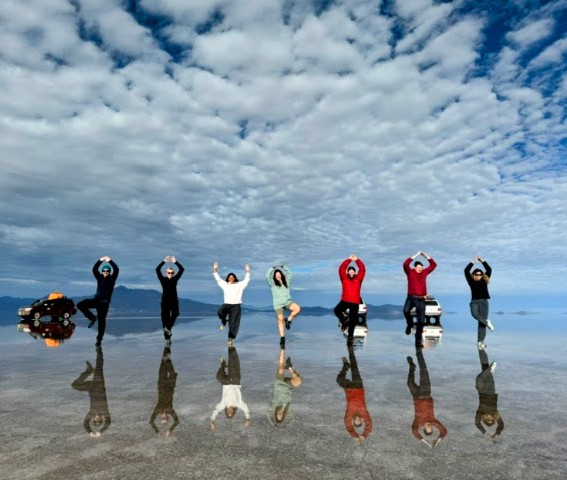

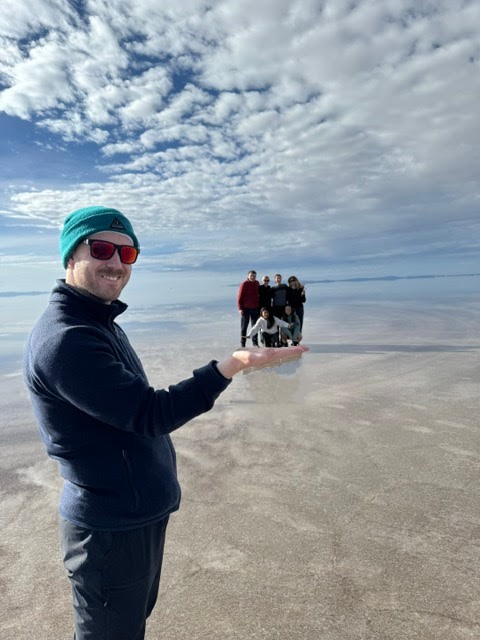
Several photo credits – @theoneandonlynikit
Due to the surface water, we could only travel at about 10mph though, so there was ample time to continue taking in the stunning scenes.
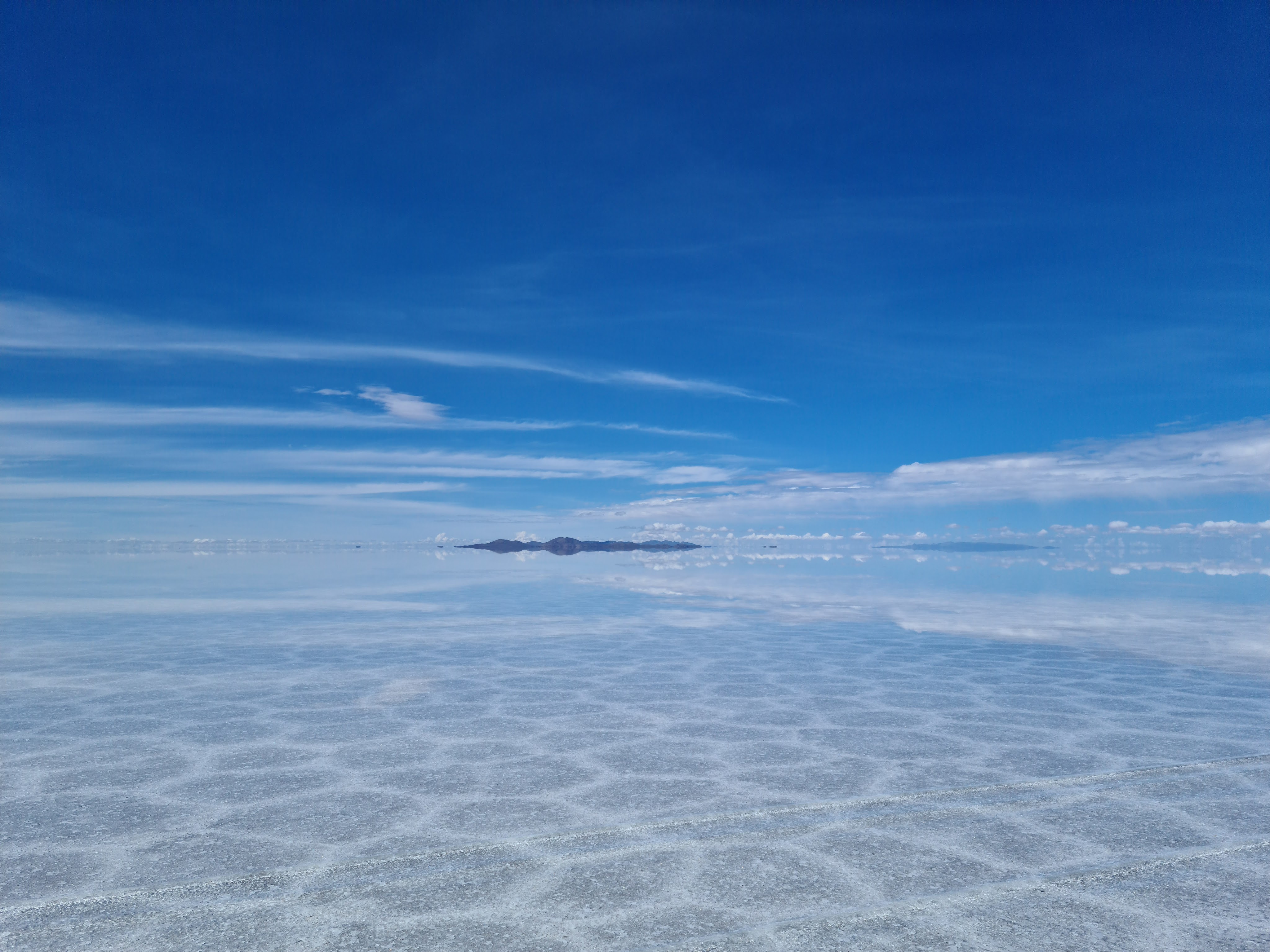
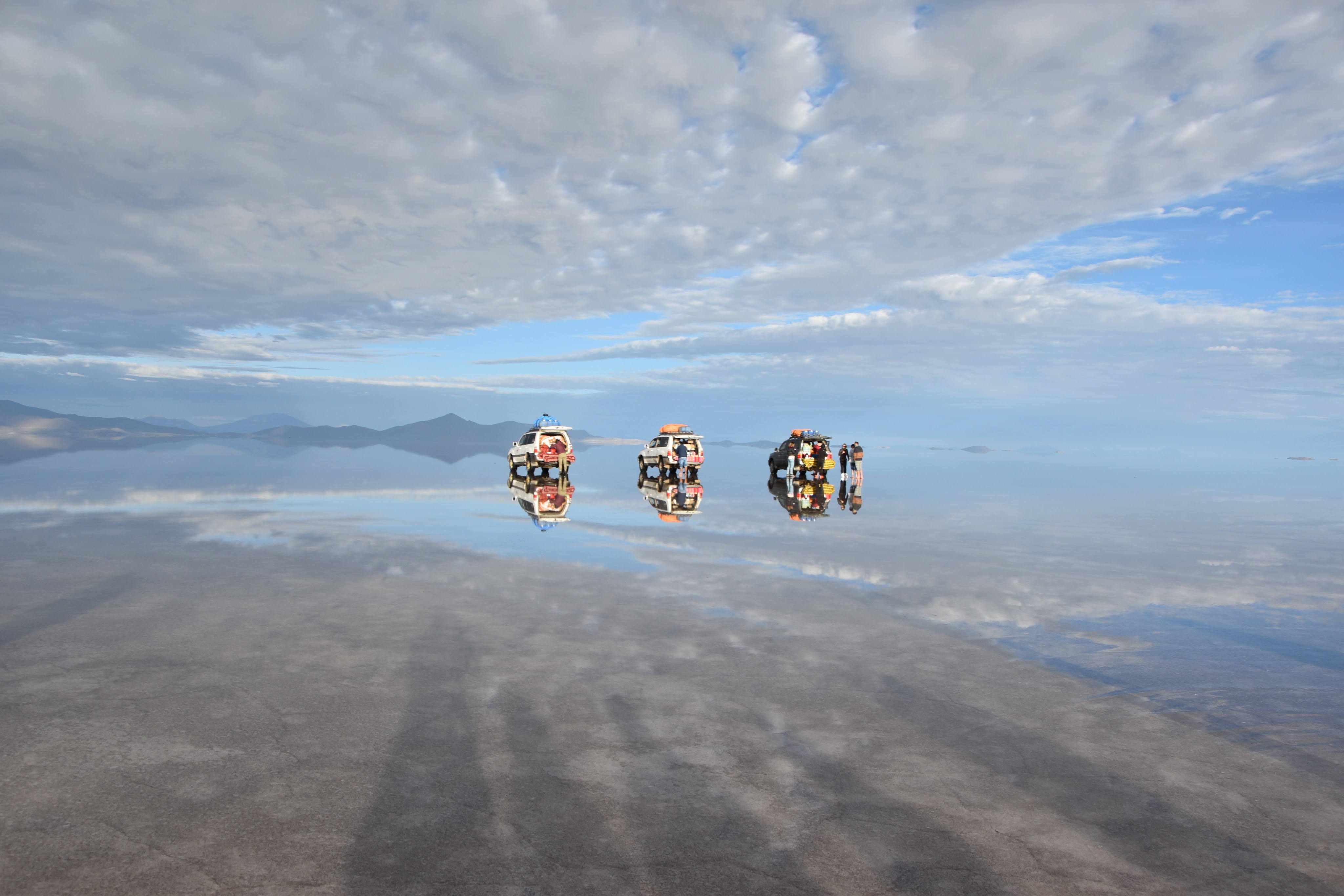
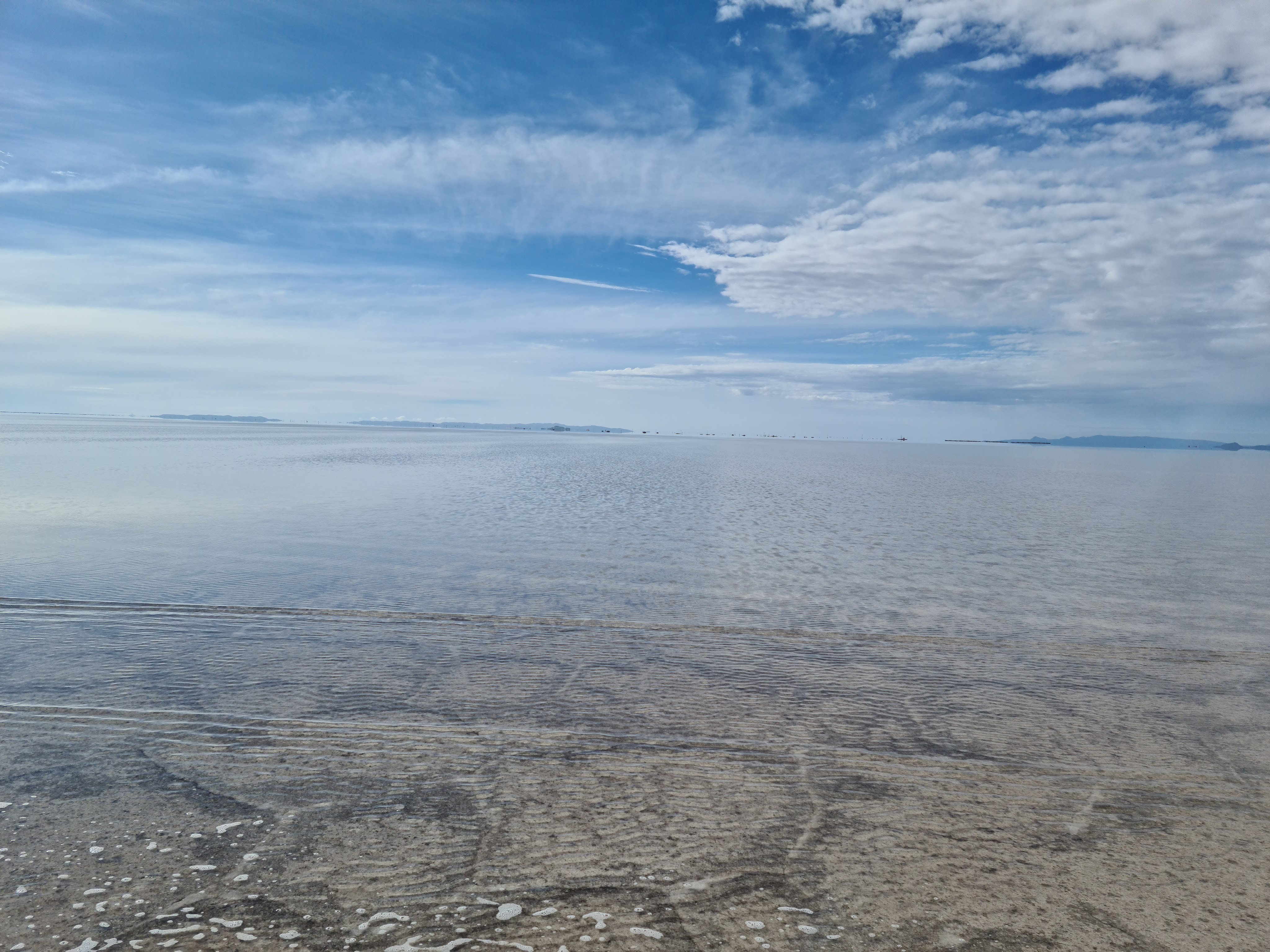
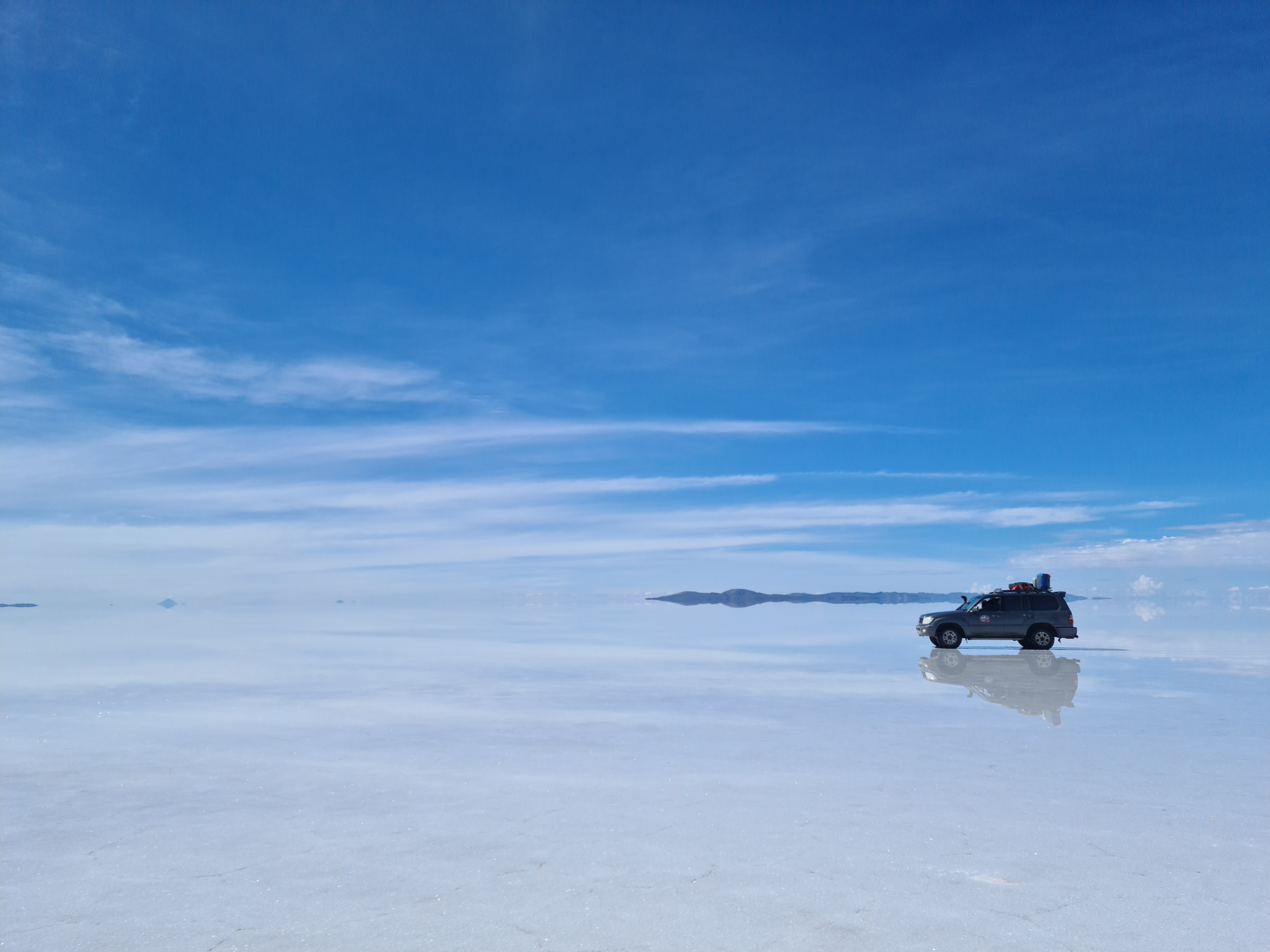
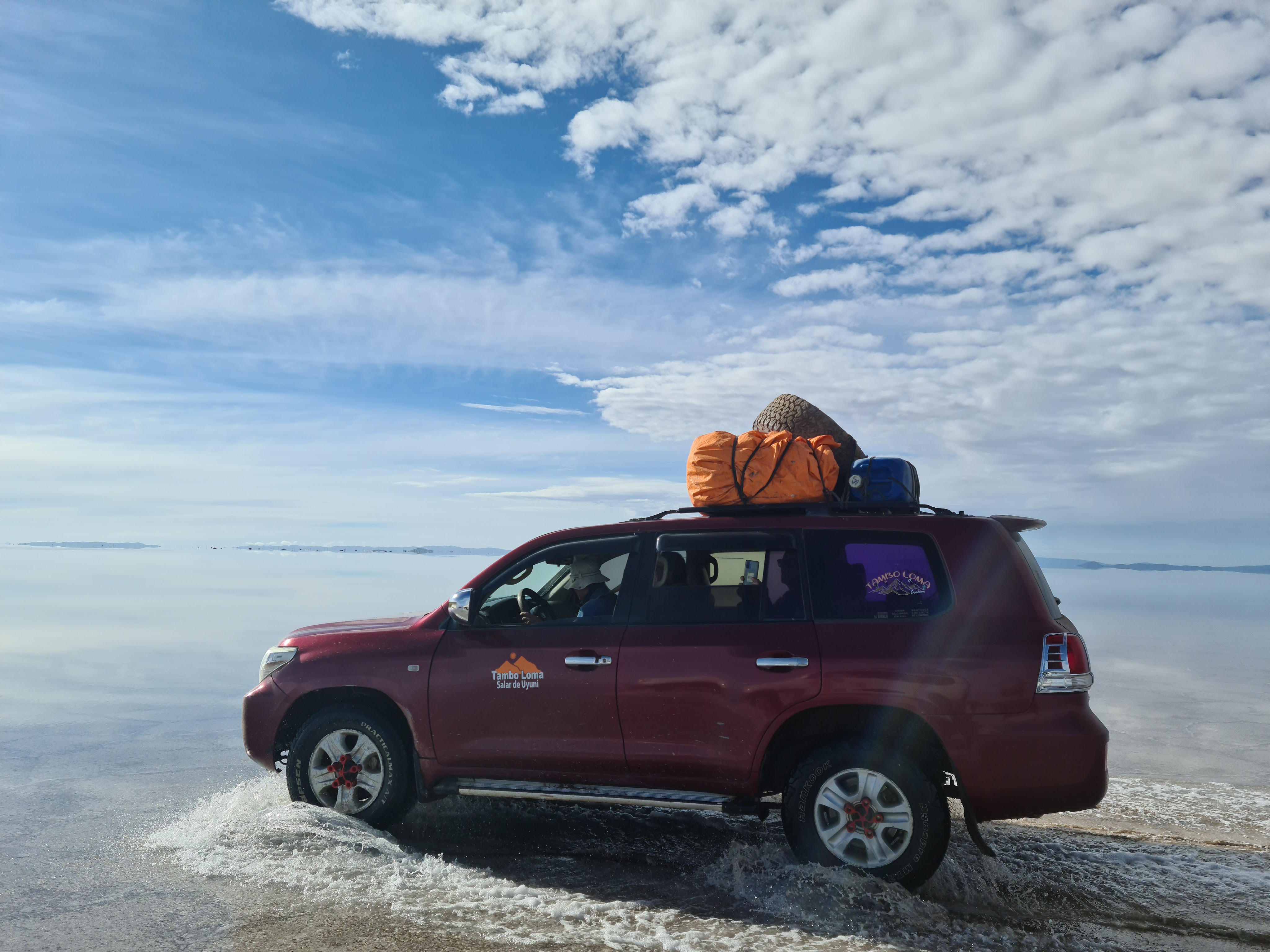
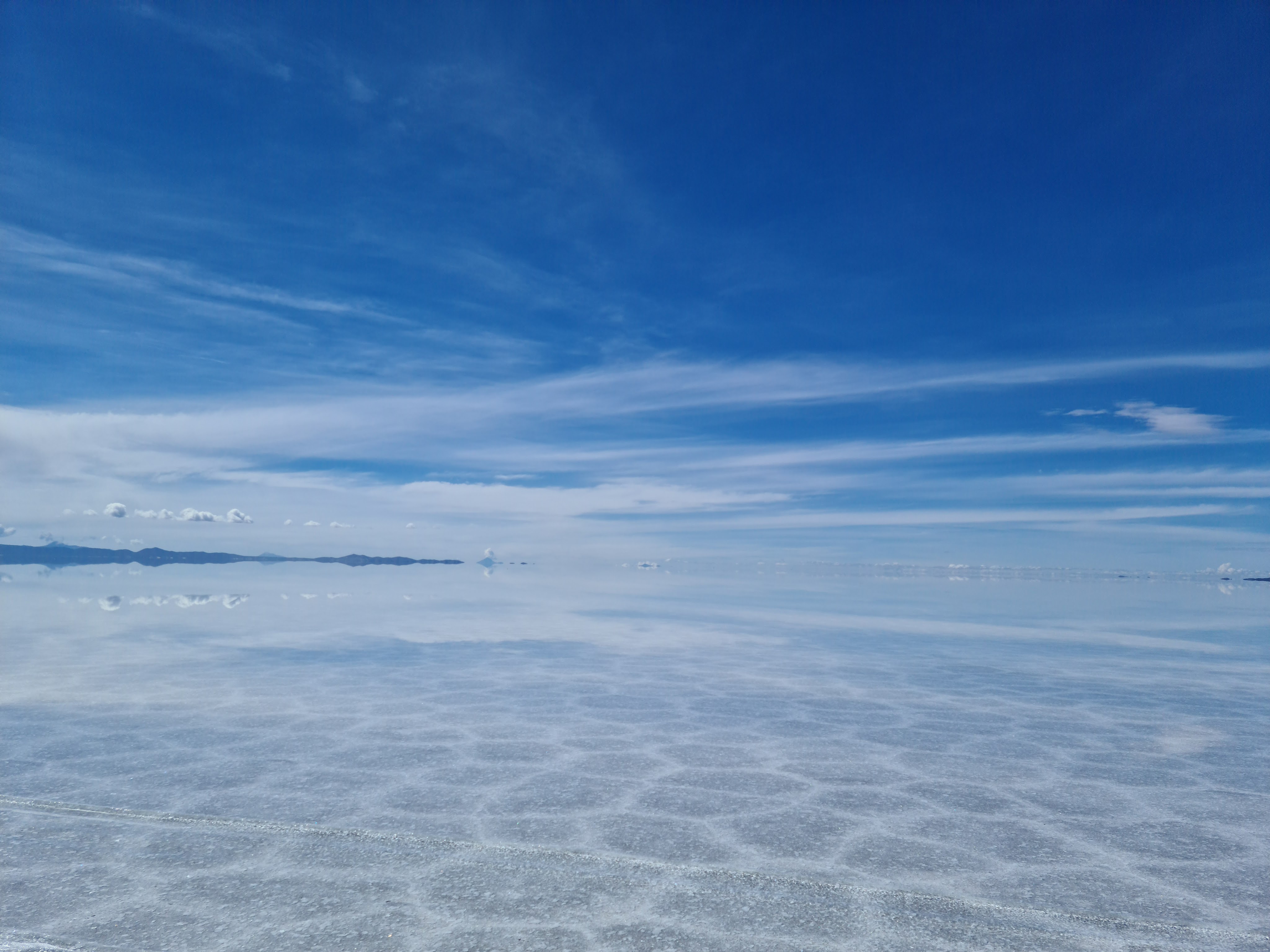
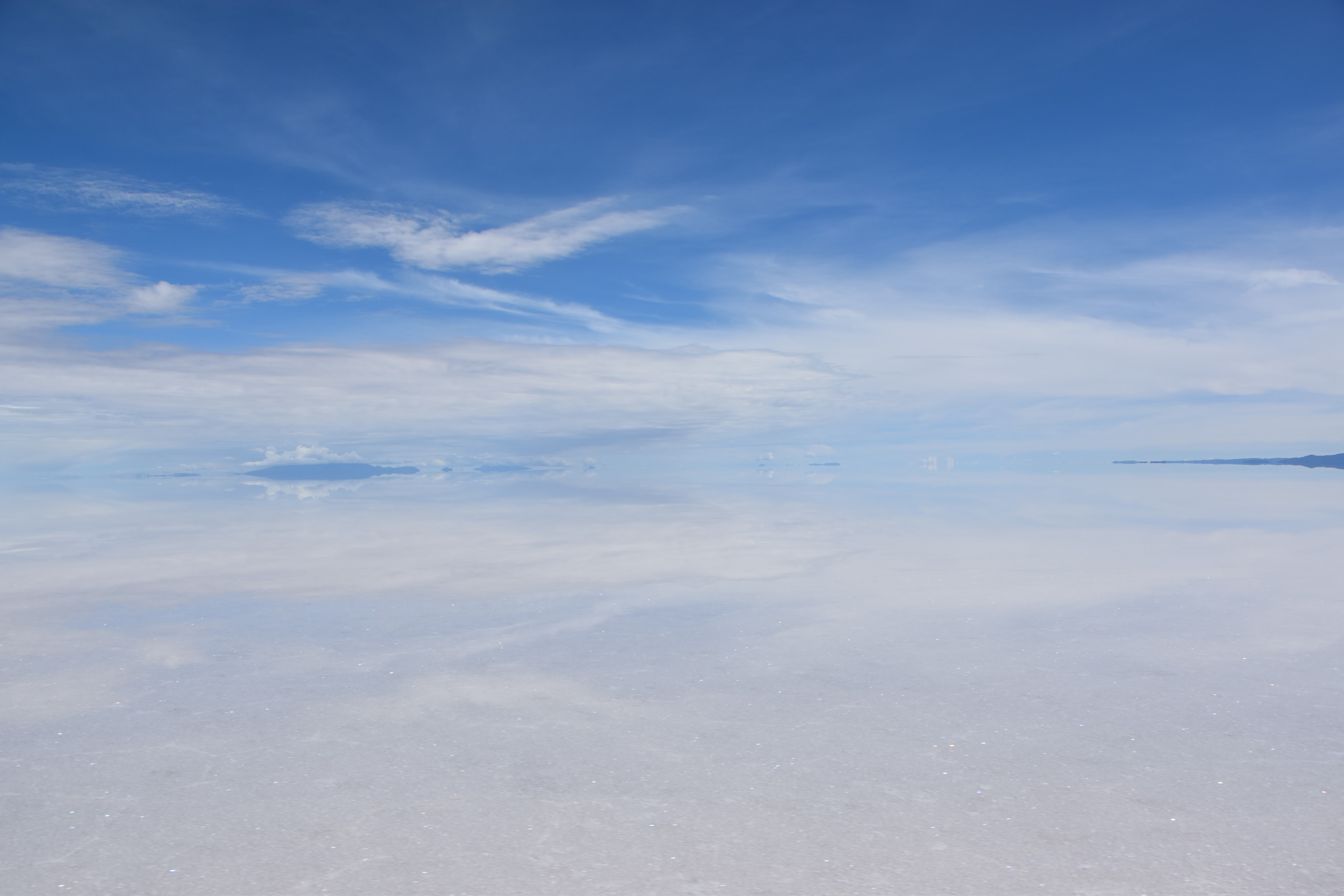
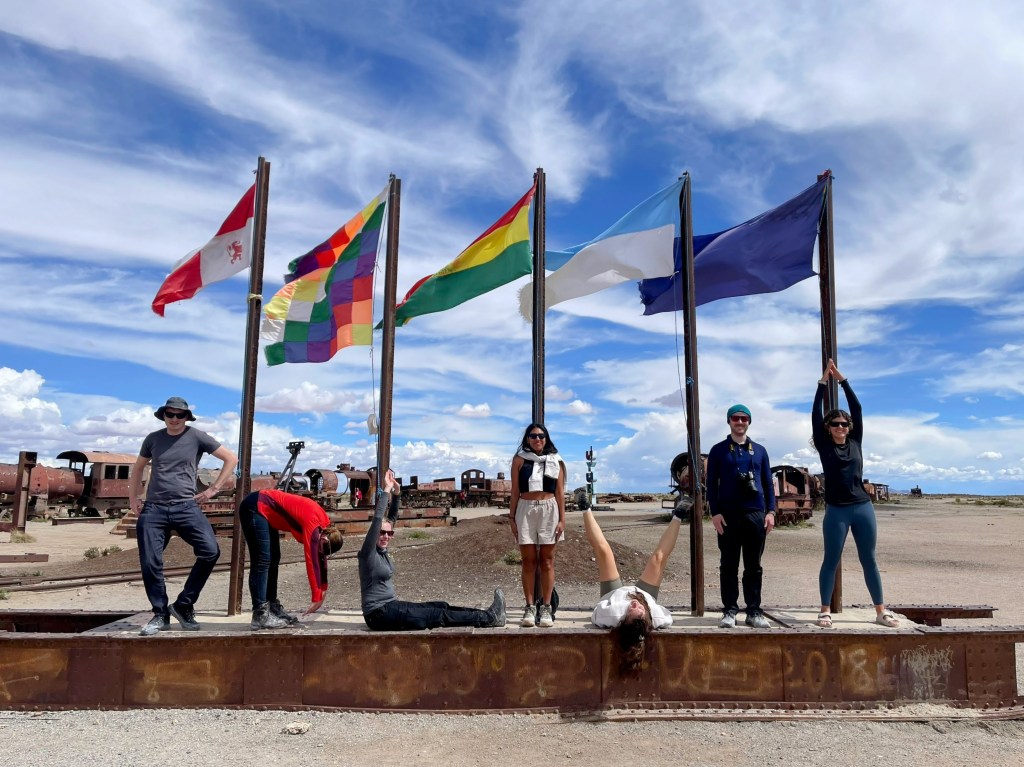
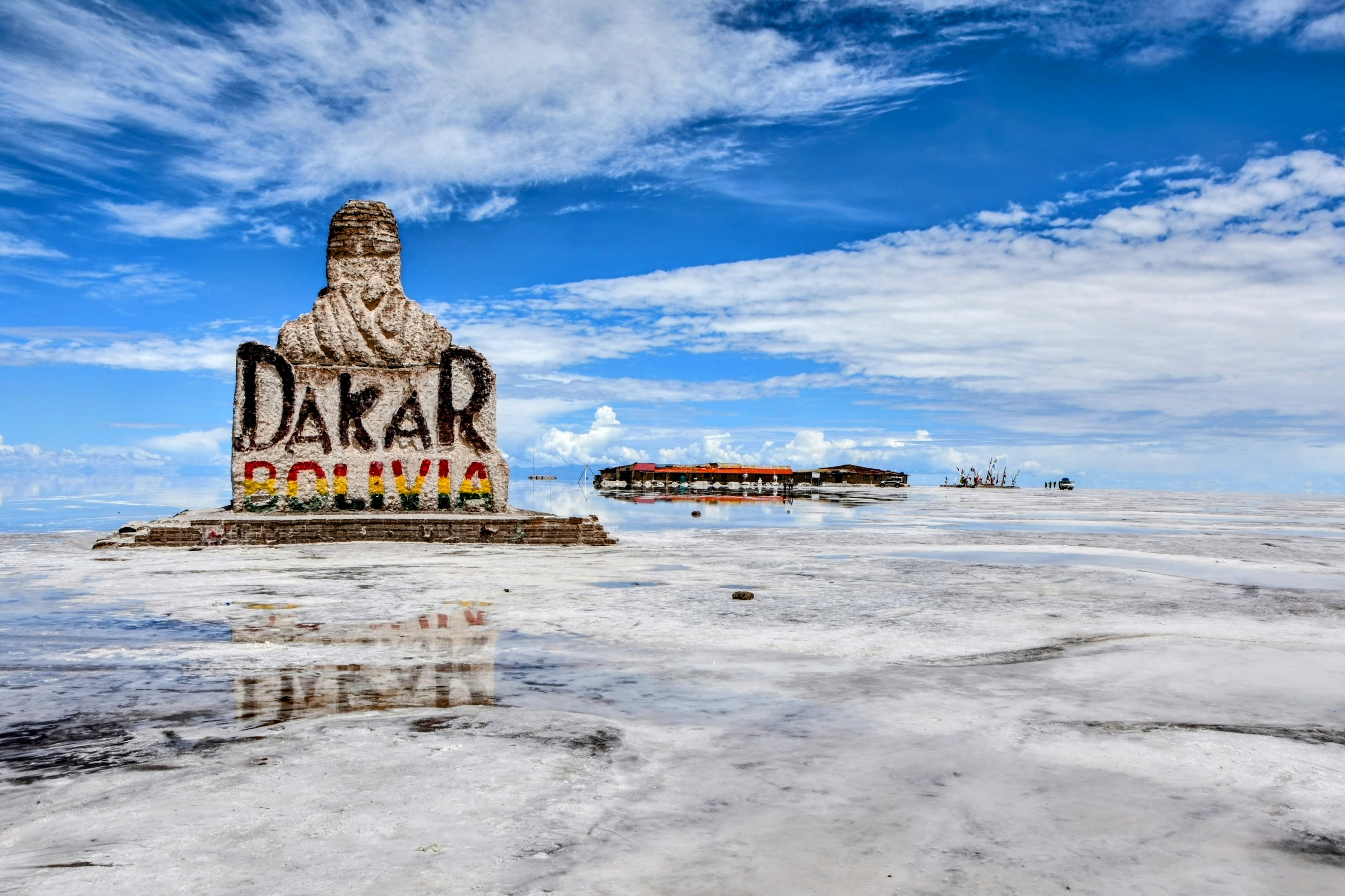
We weren’t quite done with the salt flats, and before we reached the edge of them, we made a stop at the Dakar sculpture and Island of Flags. The monument was sculpted of salt bricks in 2014 to signify the annual Dakar endurance rally race, held in South America between 2009 and 2019.
Meanwhile, at the Island of Flags, we were surprised that Wales was the only UK nation represented. If any Scots are reading this and planning a trip to Uyuni, make sure you pack a Saltire!
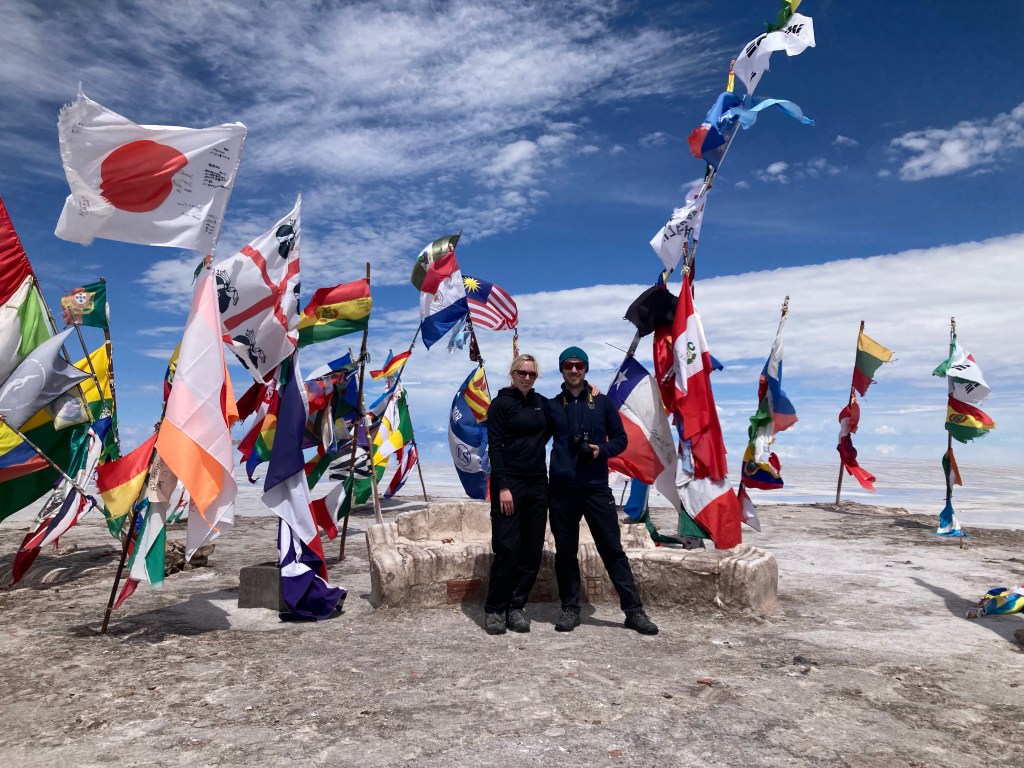
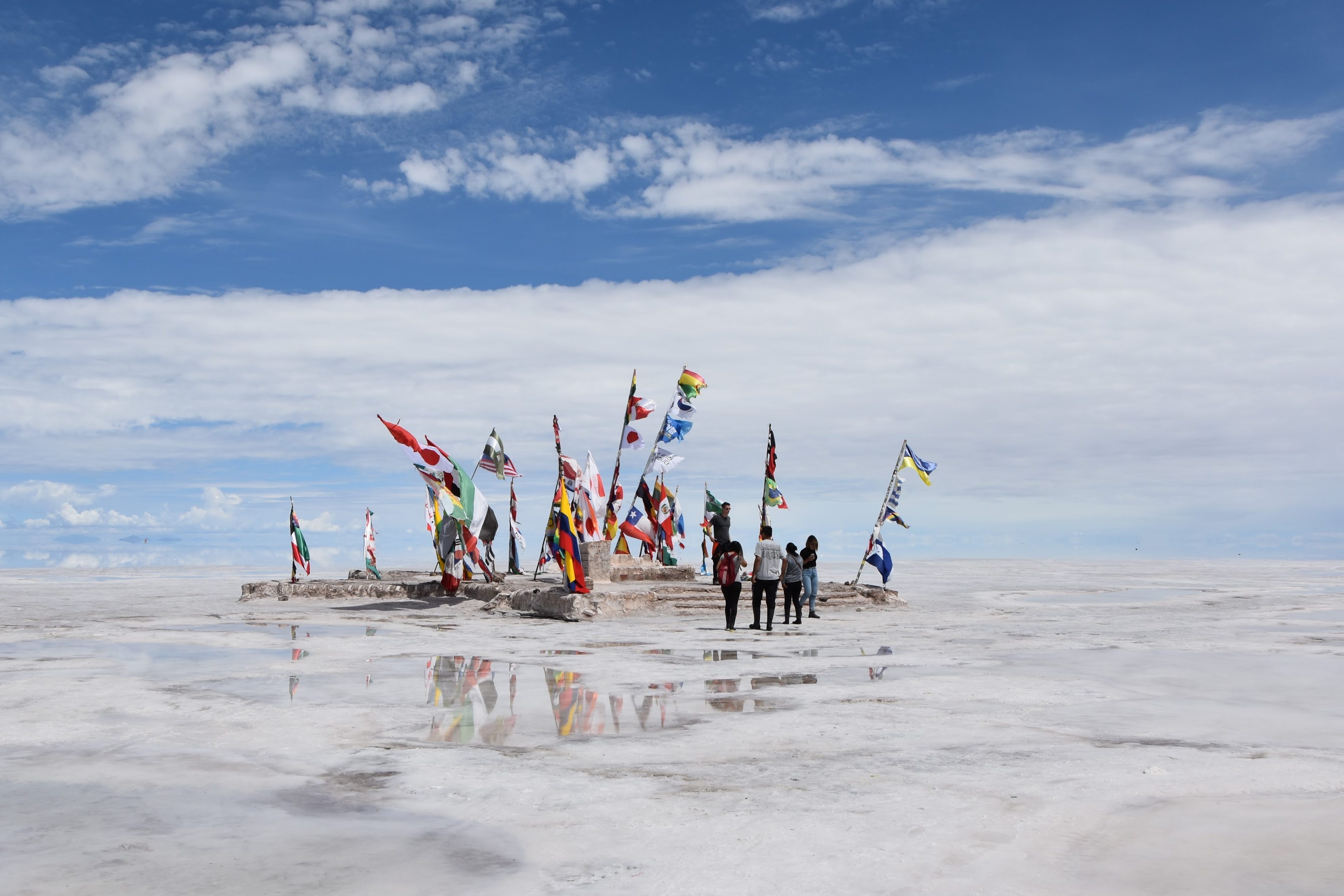
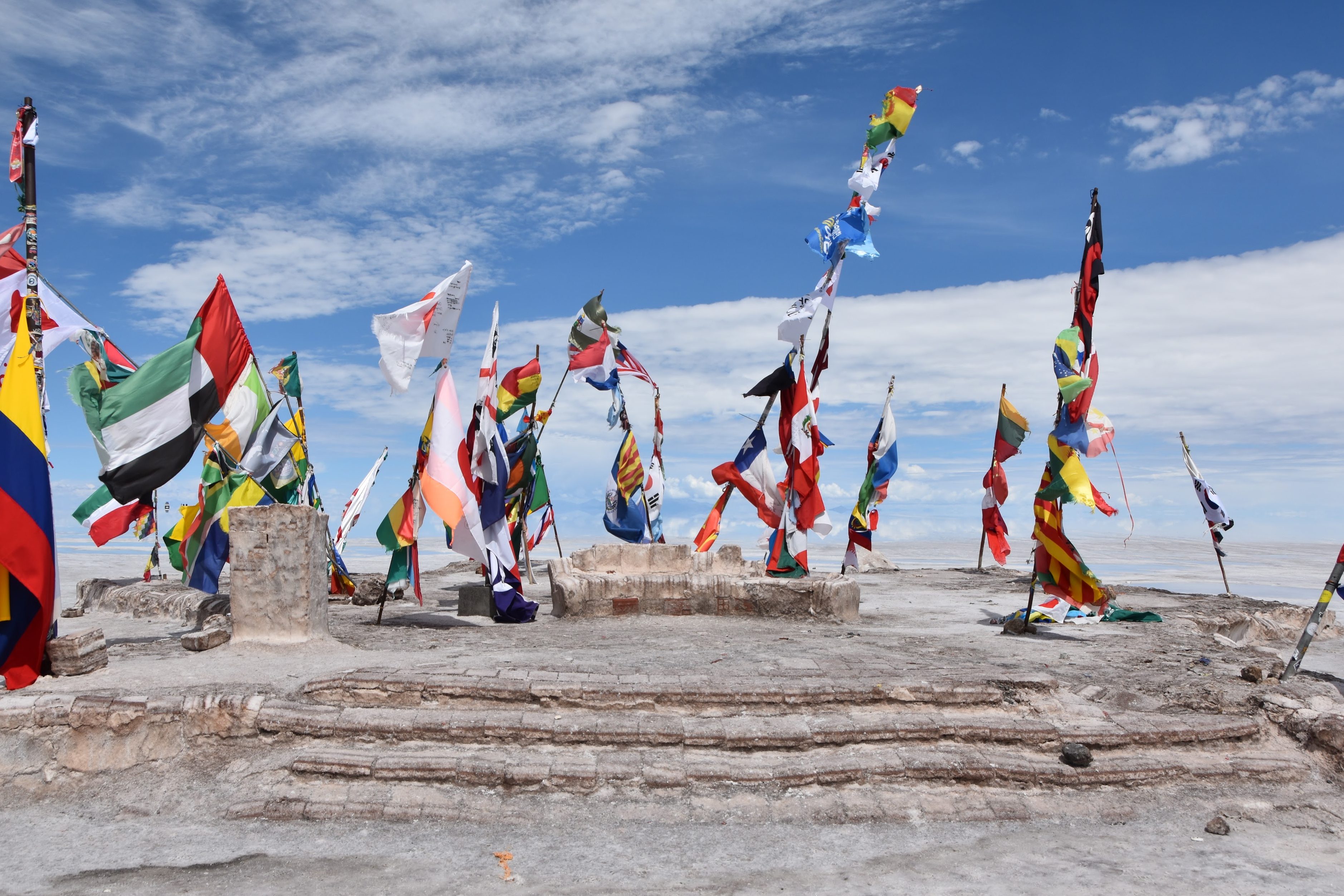
As Ana remarked, it was a lovely place to reflect on the mixing of nationalities in our tour group, and that you meet while travelling.
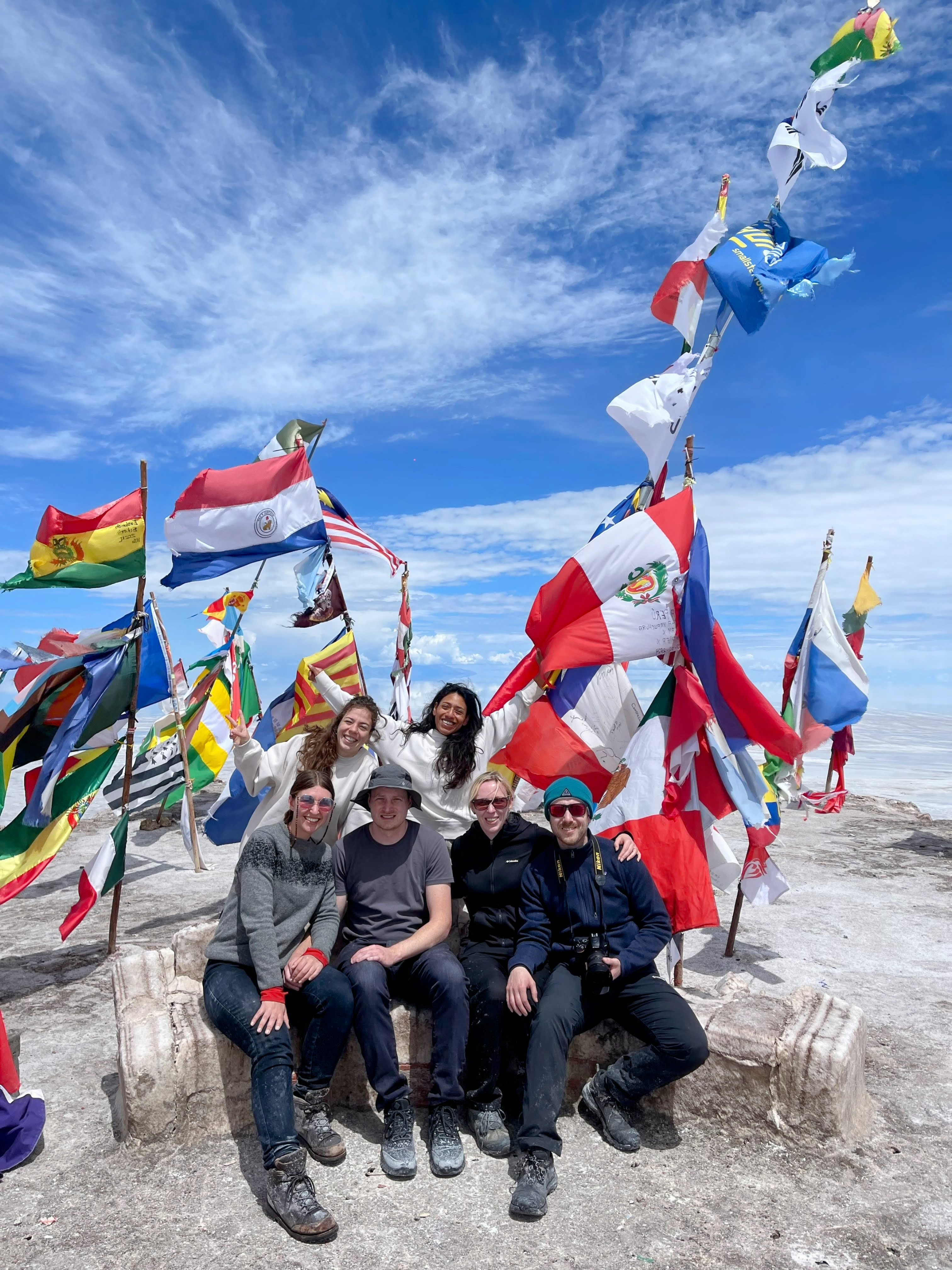
The passenger mix probably makes a huge difference to the experience. You are together at nearly all waking times – and even when asleep too if you take a nap in the car. We were so lucky to be in a car with fellow English speaking, keen travellers of a similar age range, with wonderful personalities. So if you are reading, thanks to Niki, Ana and Nelly for being such great companions. Also to Kat and Bill who rounded the group off between car journeys. This was our first time doing a multi-day group excursion, and I don’t think we could have had better company for it.
Similarly, Isidro was an excellent driver and guide. Friendly and courteous, and most importantly of all, a safe pair of hands with a well-kept, modern vehicle2. We even had the unexpected bonus of a Bluetooth connection which Isidro suggested we use for playing our music. Unprepared for this aspect of the journey, we had to make do with whatever was already downloaded on our phones. This led to quite the gamut of playlists, ranging from 90’s pop, rock, through reggaeton and even Eurovision (no prizes for guessing whose phone that was – god knows what Isidro made of that particular playlist!).
The various “supporting” attractions were even more enjoyable than we’d anticipated. It felt like we packed an incredible range of experiences into 3 days (whether they were all intended or not!) and I hadn’t banked on the sadness I felt when the trip came to its end. Even though we spent a lot of time in the car, the variety of landscapes and different wildlife spotted, meant we were never bored and even this element of the excursion could be a joy. And of course, the salt flats themselves were really a once in a lifetime, breathtaking experience, which more than lived up to what we had hoped for.
With that, I’m pleased to conclude that we were among the travellers who consider the Uyuni excursion one of the highlights of their trip. In fact, now I’m scared we have hit the highs of our year too soon – how (or where) on earth will anything else compare?!

Tash’s Treats (there was a tie between this sub-title and “Natasha’s Nibbles”, so I’ve cast the deciding vote!)
It probably comes as no surprise that there was quite a range of foods over the three days. All definitely more for fuel rather than fantastic flavours! We weren’t in this for a foodie tour though, and we were just grateful it was substantive enough that we never felt hungry (and that neither of us are fussy eaters). I will say though, that for a trip to see the largest salt flats on earth, some of the food was surprisingly devoid of seasoning!
We were also joking by the end of the trip that one of the gallon tanks on the roof of the jeep must have been for transporting vegetable soup rather than petrol – it was the starter for every lunch and dinner.
I think the lowlight had to be our final dinner, which can be best described as a salad of raw onion, veg and sausage, on a bed of soggy chips.
The high though was probably our breakfast on the salt flats. Obviously the sunrise setting was spectacular, but it was nicely complemented by quinoa sugar puffs and a delicious cake with dulce de leche.

Getting to try Bolivian wine in the salt hotel was also a nice surprise, and a warm up for all the wine tasting we’ll be doing back in Chile and Argentina!
- It always surprises me that border crossings actually close for the night. ↩︎
- A modern car is not a given. The car that took us on the return journey back to San Pedro was considerably older, with about 240,000km on the clock. It was a bit of a worrying moment when the driver pulled over on a desert track once darkness had set, and started kicking at the tires. Thankfully he was just pre-emptively reducing the pressure to cope with the terrain, and we weren’t about to be stranded overnight. ↩︎

 A Place Both Wonderful and Strange - Tash & Ricki's Career Break Travels
Leave a reply to kirstyw86 Cancel reply